
Politics
The Gentlemen Season 3: What Have The Cast Said So Far?


This article contains major spoilers for The Gentlemen season two.
If you’ve already finished the latest episodes of The Gentlemen, you’ll be pleased to know Eddie, Susie and co will be back for a third season.
Creator Guy Ritchie said in a statement shortly before season two began streaming: “The ambition of The Gentlemen has accelerated, the world has expanded, and the consequences carry weight. A third season felt inevitable, and I’m looking forward to pushing the boundaries of it further.”
While an exact release date for season three is yet to be revealed, there’s still plenty we do know already about the next outing of the hit crime drama?
So, what should we expect? Here’s what the cast has said so far…
Eddie’s story is going to take him to even darker places in The Gentlemen season 3
In the show’s latest instalments, viewers saw Eddie becoming a more brutal, violent version of the man we met in season one.
The Gentlemen’s leading man Theo James has teased that his character is going to become even darker as the show progresses, as Eddie is now “on a path to surpass Bobby” as a drug lord.
He told The Hollywood Reporter that he was interested in exploring “privilege, power and the idea that there’s an apathy and an erosion of empathy that comes with that” in season three.
Theo compared Eddie’s arc to what “happens with kings or leaders of religious cults”, claiming: “They kind of start off in a version of trying to help, but by the end, power degrades the sense of self so much that they become poisoned by it and become numb to violence and everything that happens around them.”
Apparently, this will only intensify in the next season, now that Eddie has discovered his older brother helped orchestrate the attack that killed Eddie’s wife, Bella, on their wedding day.
“We’re going to do another season, and in that season I want to continue exploring that: How far has he lost himself, and how much has he corroded his soul?” Theo pondered.

Meanwhile, Susie is waiting to step out of her father’s shadows
Kaya Scodelario believes her character, Susie Glass, is going to step out “from under her father’s shadow” when we next see her.
The end of season two saw Susie quietly establishing her own business relationships and moving away from her father, Bobby, played by Ray Winstone.
“Expect to see the young her maybe trusting her own instincts and business acumen a little bit more,” Kaya teased to Town & Country about what she hopes the Netflix series will explore in season three.
“By the very end, she realises that she can’t be under her father’s name anymore, that she needs to branch out on her own, and that she can’t rely on Eddie to be her partner anymore,” she also told Tudum.

After the new episodes of The Gentlemen took the cast to Italy, season three will continue to branch out to new locations
When asked by Town & Country what she’d like to see for Susie in season three, Kaya quipped: “Something really rogue. She decides to go scuba diving in the Caribbean for a year.”
Joking aside, the Skins star does want to see The Gentlemen continuing the tradition of travelling abroad.
“It’d be awesome if we get to go away again because that always adds so much texture to the show and kind of introduces you into the culture clashes that there are especially,” she explained.
“That’s something that we could explore anywhere in the world, because the British aristocracy is such a unique, fundamentally British thing. You’d get that conflict almost everywhere,” she added.
Meanwhile, Theo James confirmed to the same outlet: “In terms of story, we have the overarching ambition of where we’re going to go. We’re going to expand the world, go to different countries.
“But in terms of the minutiae, I mean, it’s still very much up in the air.”

Eddie and Susie could be a romantic endgame in The Gentlemen season 3
Eddie and Susie are now firmly in business, but beneath the violence and business transactions, there is a chemistry fans can’t get enough of.
Both characters explored ill-fated romances in season two, only to end up single at the end of it.
Talking to Cosmopolitan, Kaya said: “[Susie’s] relationship with Eddie has evolved from this kinship, a purely business thing, into something deeper and more interesting.”
She added: “It was important to unlock whether she feels protective of him in a personal way or purely in a business sense… She sees something in him that’s extremely unique.”
Kaya also broke down why the chalk and cheese pairing works so well in the show.
“He sees in her what she wishes her father could see in her. Their work wife-work husband chemistry is really strong,” she continued.
When asked if Eddie and Susie are “endgame”, Kaya wasn’t sure, suggesting: “I think it’s a lot more complicated than that.”
Producer and writer Matthew Read told Tudum that through all their ups and downs, the pair’s “affection and connection always comes through”, adding that they are “probably closer than ever at the end of season two”.
Theo seems unconvinced of a romance between the two characters, though.

“Our touching point in the beginning was always Moonlighting – Cybill Shepherd and Bruce Willis – and the idea of two people who kind of are in love, but never quite get together,” he told The Hollywood Reporter.
He added: “We like the idea that they’re connected, but their distance is one of mistrust. On one hand, they’re the other’s greatest ally. But they are also heading to a path where one of them has to usurp the other because we’re talking about a kind of ascension story and how that’s going to happen, and who’s going to fail and who’s going to win.
“Then beyond that, I think the realities of an indentured Duke and then peer of the realm getting with a gangster’s daughter who runs a criminal empire is pretty unlikely. There’s a sadness to it, because maybe they would, but ultimately they probably never can.”
Excitingly, it sounds like production on The Gentlemen season 3 will be underway soon
Theo told The Hollywood Reporter that production on season three is starting “very soon”.
Giving context for why it was so important not to have the same large gap between season two and three as there was between the first and second, he claimed: “We’re also cognisant of the fact that nowadays you don’t want massive lulls. There was a large break between season one and two, and I think we don’t want to be in that position again.”
He added: “That happened because people were available and then they weren’t. Then I did a film, then Guy would do a film, and [schedules didn’t align].
“ut I think we’re all aligned with the fact that if we want to keep momentum and also just tell the story and finish the story, then we should leave less of a gap between the seasons.”
And finally, what has everyone had to say about those rumours Meghan Markle could be appearing in season 3?

Over the last few weeks, there’ve been conflicting reports in the press about whether or not Meghan Markle is “in talks” about a role in the third season of The Gentlemen, which have generated a whole lot of attention and conversation.
But, could the real-life Duchess actually be making an appearance amongst the fictional aristocrats? Not if you ask Theo James, who told The Hollywood Reporter that the rumours were “mostly hot air”.
“To me, it’s fascinating how [those reports] exploded that much, and how intrigued people are, and how much kind of cultural significance [Meghan and Harry] have,” he added.
He had a good reason why he thinks Meghan would be a bad fit for the drama.
“We talk about casting all the time, but, I mean, the practicalities of that are also complex for a show like ours. Can you imagine the amount of attention, paparazzi, and so forth you’d have? So I would say it’s pretty unlikely,” he explained.
Co-star Hugh Bonneville was also dismissive of the rumours, calling them “a genius bit of marketing”, while Maya Jama said she’d “be the last person to know” if the rumours were true.
Vinnie Jones, a man who never minces his words, had thoughts about Meghan joining the show.
“We’ve got a lot of pretty women in this series, so I’m not sure there’s room for any more,” he said on the red carpet at the London premiere of season two.
The first two seasons of The Gentlemen are now streaming on Netflix.



5 min read
Anna Sabine’s emergency surgery led to the loss of her voice. The Frome and East Somerset MP tells Ben Gartside how she is returning to Parliament more determined than ever to be heard
When Anna Sabine finished a routine media appearance on Politics Live in the spring, she returned to her office and received an email that would prove life-changing.
Her parliamentary assistant warned her that they had been sent a “really weird” email, and they couldn’t be sure it was legitimate.
“It wasn’t even a constituent. It was a random man. I was on the BBC, and it was from a guy who was an ear, nose and throat surgeon in the West Midlands. He said: ‘I’m sorry, this is a really weird email, but do you know you’ve got quite a big lump on the left side of your thyroid? And I think you need to get it looked at quite quickly.’”
Sabine, initially unsure, took the decision to seek medical advice and was told the lump – the size of a lemon – required removal. Within eight weeks, she was in surgery.
While relatively routine, she was warned the procedure might cause temporary damage to her vocal nerves. In the event, however, the outcome was much more severe. One of her vocal cords was completely severed, preventing her from speaking in anything above a whisper.
As the MP sought to recuperate through the June heatwave, she could tell something was wrong before doctors told her.
“That night in hospital, I was actually not able to sleep because it was so hot. I was thinking, ‘This feels really bad. What if something really bad happened?’ And I was kind of catastrophising about the end of my career.
“I was thinking about all the things I wasn’t going to be able to do. So, when he then came and told me that’s what had happened, I was almost in the worst place for it.
“I had about two days of just uncontrolled self-pity and weeping, and thinking, ‘This is the end’. And then I pulled myself together, but it was really bad to start with.”
When she returned home, communication proved difficult. Sabine’s husband has tinnitus, and her reduced voice has made things harder.
The situation has been life-altering. She has become self-conscious about her laugh, so stifles it. Before the operation, she enjoyed being comedic and doing silly voices with her family; less so now.
In Parliament, adaptation has proved easier. With her team, she devised a plan: more breaks, shorter meetings and a discussion with the House authorities about how things could be adapted.
As Parliament returns, the Frome and East Somerset MP will be back with a special microphone for speaking in the Chamber, and has been given dispensation to bring water in.
As news got around of Sabine’s new normal, reaction varied.
Today programme presenter Nick Robinson sent supportive messages to Sabine, having suffered a similar injury after surgery for lung cancer. The two have a plan to meet and discuss their experiences later in the year.
I wait with interest to see whether people are going to talk over a woman that’s struggling to speak
On the other hand, one event organiser summarily rescinded an invitation to speak at the party’s autumn conference in Brighton, presuming Sabine would quietly step back from public speaking. On the contrary, she has no such plans.
“Someone had planned to offer me a spot speaking at an event, and then they’d rescinded the invitation because they’d heard I wasn’t coming. And I thought this is interesting, but you get written off very quickly if you’re not careful. So, I’m very clear that I am coming to conference.”
As Sabine prepares to return from recess, she’s decided not to shy away from her new role as the ‘Whispering MP’.
She plans to return to broadcast media where, before her operation, she was a reliable performer for the Lib Dems: combative and canny.
“I wait with interest to see whether people are going to talk over a woman that’s struggling to speak,” she says mischievously.
On social media, Sabine is leaning into her sense of humour. “I’ve rebranded myself. I’ve got a sub-brand, as my comms manager would say, called the Whispering MP. [My staff and I] quite enjoyed the entertainment value from it.”
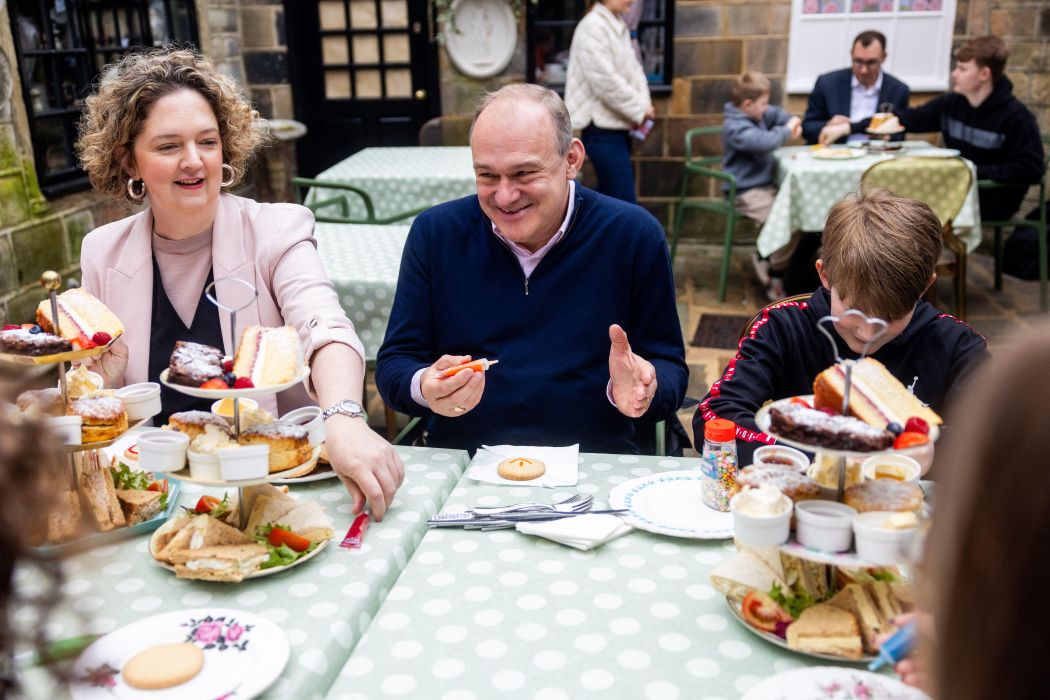
Sabine has recorded some videos for her Instagram parodying influencers who speak in loud whispers and has built an online following of people tracking her journey as a full-time whisperer.
“There’s a community of people now that kind of know my story. Occasionally, I’ll get a comment like, ‘Why are you whispering?’ or ‘Have you got a really bad hangover?’ And then, before I get to it, other people will jump in, going, ‘No, she had this happen to her.’ So it’s actually made it a real community on social media, in a really nice way.”
As politics returns after a quiet summer, Sabine is reflective about what the second chapter of her political life will look like.
“There’s a thing about: do I seem weak now? Like, does this make me seem weaker? Which is another reason to be really clear: I will do national media, and I will carry on campaigning.
“My constituents are not going to get any less of an MP than they had before. But there is something interesting about your character. How senior can you seem if you’re whispering? Basically, I don’t know.”

When you’re abroad with your partner, do you ever feel that the conversation starts to sort of run dry by a certain point?
Of course, you might spend your lives together – but there’s something about spending all day, every day with each other that can occasionally leave you both a little lost for words.
While a comfortable silence can be exactly what the doctor ordered, these lulls can sometimes feel like an indicator that your relationship isn’t quite as strong as you once thought.
However, according to relationship expert Dr Charlotte Russell, aka The Travel Psychologist, this is very normal and there’s actually a name for it.
According to research by the travel experts at Booking.com, around one in four couples experience a “dialogue drought” while on holiday.
How to keep the conversation going on holiday
For most couples, this seems to hit around day five but for some couples, it can happen by day three.
For couples who have been together for two years or less, it’s more likely, with 56% of newer couples admitting they hit a so-called dialogue drought on their last trip away.
Don’t worry if it happens to you, though. Dr Russell assures “it’s not a sign that your relationship is in trouble”.
“Spending all our time together on a trip inevitably means that the conversation will dry up sometimes,” she added.
But when there are awkward silences a-plenty, here are some ways to keep the chatter going…
1. Excursions offer great conversation material
Excursions – such as tours, boat trips or structured activities – can make a huge difference. Almost three-quarters (71%) of the people Booking.com spoke with said that they felt closer to their partners following new experiences on their trip.
Additionally, 65% of holidaymakers agreed that the best holiday conversations happen while doing something.
2. Ask your partner something you have never asked before
If there’s a time to dig out your deepest and silliest questions, it’s on holiday. You have all the time in the world to debate and discuss their answers!
Dr Russell shares her favourite conversation starters:
- What’s one weird habit of mine that revealed itself to you on this trip?
- What’s an assumption you had about me early on that turned out to be wildly incorrect?
- Which one of us would survive longest if we were stranded on a desert island, and why?
- If we could bring one person along for the rest of the trip, who would be the best addition, and why?
- If you could teleport us anywhere in the world for dinner tonight, where would we go, and what would we order?
3. Speak with other travellers
Some of my favourite travel memories stem from the experiences I’ve had when connecting with other travellers. A bartender in Barcelona, some musicians in Berlin, a writer in Brooklyn, their stories were ones that I brought back and shared with others.
Dr Russell adds that putting the effort in makes a real difference, saying: “By being intentional, we can move past everyday small talk, reignite meaningful conversation, and build deeper connections when on the road.”

As women, we are used to the more passionate sides of ourselves being denigrated. Our determination is called “bossy”, experiencing anything other than constant glee is “moody” and being loudly passionate makes us “fiery”.
In fact, according to research done by Sweaty Betty 9 in 10 women have reported being described negatively using words such as moody, icy, dramatic and temperamental.
This is so surreptitious that even our dictionaries use these stereotypes in definitions, such as:
Now, as part of its Born for the Storm’ campaign, Sweaty Betty is urging language resources to better reflect attitudes of women and society today.
Now, women are reclaiming this language
Interestingly, these words are also how we describe the weather, and this is consistent throughout history.
Between 1953 and 1979, storms were named exclusively after women*, partly because they were perceived as sharing similar qualities: dramatic, unpredictable and impossible to ignore.
Despite this, attitudes are evolving and the overall picture is one of confidence rather than caution. Yes, we are impossible to ignore and so we should be.
75% of women say being called a “force of nature” is a compliment, 76% believe women described in this way should be celebrated, and 71% would happily use the phrase to describe an inspiring woman in their own life.
Melissa Mullen, Brand President, Sweaty Betty, says: “People have spent a long-time comparing woman to storms. We see that as a compliment. Whether it’s being called fiery, relentless or a force of nature, these are the qualities that help women keep going when life gets messy.
“The research shows women aren’t interested in shrinking themselves, softening themselves or waiting for perfect conditions. They’re getting on with it. That’s exactly the spirit behind Born for the Storm. It’s a celebration of women who keep moving forward whatever the forecast, and whatever life throws their way.”
Susie Dent believes that reclaiming language will make a difference
English lexicographer and etymologist, Susie Dent who started her career working on both bilingual and English dictionaries says that if we continue to reclaim the language within society then dictionaries will follow.
Susie Dent says: “It’s remarkable that women still regularly hear and receive such adjectives as “fiery” or “icy” in their everyday lives. Dictionaries, as always, will track these uses and reflect them in their examples, which are drawn from solid evidence of current language.
“Today’s lexicographers describe the usage they document rather than prescribe how words should be used. When together we begin to shift our language from negative to positive, our dictionaries will change alongside us. This research by Sweaty Betty proves just how powerful our word choices can be.”

For 80’s and 90’s kids, E.T: The Extra Terrestrial was a real family classic. Often on the telly, this cosy sci-fi adventure was the perfect mix of comforting and a little scary.
However, originally, our little alien pal was supposed to be much, much scarier. In fact, it actually was originally supposed to be an alien invasion film called Night Skies.
In this story, a family is terrorised by hostile aliens on a Kentucky farm in the 1950’s, according to Screen Rant.
How E.T: The Extra Terrestrial was created
As Steven Spielberg and special effects legend Rick Baker got to work on creating the alien, Spielberg was unsure whether this spooky path was one that he wanted to continue on.
Slash Film explains that screenwriter John Sayles’ script, “depicted a small group of malicious aliens — Squirt, Skar, Klud and Hoodoo — that threaten a rural family and brutally kill livestock with one touch of their long, bony finger, which emits an eerie light (this device is used in “E.T.” in a very different way).
“The kind-hearted alien Budde befriends the family’s autistic son Jaybird, and their sweet, playful scenes are moments of respite from the overall terror.”
As time went on, Spielberg realised that this sub-plot was what he wanted to explore, feeling himself pulled towards the ‘gentle’ story.
In the book The Films of Steven Spielberg by Neil Sinyard, Spielberg admits that he was growing weary of dark stories around this time saying: “I might have taken leave of my senses. Throughout [the production of] Raiders [of the Lost Ark], I was in between killing Nazis and blowing up flying wings and having Harrison Ford in all this high serialised adventure.
“I was sitting there in the middle of Tunisia, scratching my head and saying, ‘I’ve got to get back to the tranquillity, or at least the spirituality, of Close Encounters.’”
E.T: The Extra Terrestrial is available to stream on Disney Plus.

Donald Trump said “everything’s going to work out fine and dandy” after an attack on a Saudi-operated oil pipeline, then gave a rather convenient answer after being asked when his costly Iran war might finally come to an end.
The US president insisted the conflict, which is now in its sixth month, would reach a conclusion “probably right after” America’s midterm elections in November.
Israel and the US launched the war at the end of February, with Trump at the time claiming it would only last around six weeks.
Asked on a visit to Dublin when it might end, he said: “I think very soon. I think it’ll be probably right after the midterms.
“They’re trying to hold out as long as they can, to complicate the election, but I think people are wise to it because Iran cannot have a nuclear weapon. It’s very simple.”
Trump took questions alongside Irish prime minister Micheál Martin during his two-day visit, repeating the decades-old talking point from Israeli prime minister Benjamin Netanyahu that Iran was “weeks” or “months” away from having a nuclear bomb.
“And they would have probably hit us too, before we put out the fire,” Trump claimed Saturday. “But they cannot have a nuclear weapon. But I would say [the war will end] shortly. And oil will come tumbling down when that happens; oil prices will come tumbling down.”
Trump’s claim that the war will end shortly after the midterms arrives amid disastrous approval ratings, largely due to his handling of the economy and unpopular Middle East conflict.
He has given several contradictory reasons for launching the war and appears to have achieved none of the core goals he set earlier this year. As a result, energy and food prices have spiked as Iran responded to US strikes by closing the economically-vital Strait of Hormuz.
The conflict escalated on Thursday after a major oil pipeline in Saudi Arabia — a US ally — was shut down following drone attacks launched from Iraq. Trump, who baselessly claimed Iran was responsible, tried to reassure the public.
“I have made a call with [Saudi Crown Prince Mohammed bin Salman],” he said. “He’s a good friend of mine, and it’s going to — I can just say everything’s going to work out fine and dandy. It’s going to be very good.”
The Iran war has already cost at least 18 US military service members and more than 3,000 Iranians their lives.
Some Republicans have distanced themselves from Trump, who is making the midterms a referendum on his supposed successes — despite his plummeting popularity.

EastEnders star Lacey Turner has opened up about her decision to sign up for Strictly Come Dancing.
Ahead of her dance floor debut later this month, Lacey – best known for her work as Stacey Slater in the long-running BBC soap – admitted that she’s “always wanted” to take part in Strictly, but until this year, she claimed she’d “just never been brave enough”.
“I’ve had a friend do it every year, so I know how hard it is,” she told the BBC. “A lot of my friends are physically fit, and they have been exhausted.”
On why she had a change of heart in 2026, she claimed that while she’s “not working on EastEnders this year”, she “thought it might be a good time to do it”.
“I’m not sure I am physically or mentally fit enough to do both jobs at the same time as well as run a household with three feral children!” she added with a laugh.

Looking ahead to her time on Strictly, Lacey enthused: “I’m actually most looking forward to the training. I think that I will enjoy that bit of it the most, and meeting everybody else.
“I’m obviously most terrified about the live Saturday nights and sitting in the makeup chair for that long, I’m not very good at that! I’m going to try my best and work on my patience.”
The award-winning actor is one of 15 stars taking part in this year’s Strictly, with the cast consisting of famous faces from across the world of TV, sport, music and beyond.
As well as the cast, Strictly is also welcoming some new faces to the ballroom in the form of its new presenters, Emma Willis and Josh Widdicombe, while former pro Johannes Radebe will complete the new hosting trio.
Strictly Come Dancing returns to BBC One on Saturday 19 September, with the first live show of the series following a week later.

April Spiller has plenty of experience with kids. She’s been a teacher for the past 11 years, has nieces and nephews, and has multiple friends with kids.
“As a childless adult who has been around and helped raise over 2,000 other people’s kids, if I am giving you advice, it’s because I have either been there or have seen others going through it,” Spiller told HuffPost.
But she’s learned the hard way that her advice is rarely taken seriously because she’s not a parent herself. So now, she keeps her thoughts to herself.
Her experience raises an interesting question: is it ever OK for childless adults to give parenting advice? Even if you don’t have kids yourself, it’s natural to have opinions about choices your siblings or friends may make when raising theirs. But having opinions and being able to relate are different experiences.
To dig deeper into this debate, we talked to parents, childless adults and an ethicist for their opinions.

nicoletaionescu via Getty Images
“It’s judgment without knowing what’s going on.”
Valentina Rebeschini is a photographer living in London with a 14-year-old daughter. She’s been on the receiving end of plenty of parenting advice, and she’s done listening to people who don’t have kids themselves.
Simply put, she finds that people without kids rarely know what it’s actually like to parent them.
“The moment I mention I have a teenager [to someone who doesn’t have kids], I get the classic ‘oh good luck,’ without them actually knowing the situation. It’s judgment without knowing what’s going on underneath,” Rebeschini told HuffPost.
It’s a situation she’s seen play out throughout her kids’ childhoods. “When my daughter was younger, people who didn’t have children would say things like, ‘I wouldn’t give a child an iPad,’ or ‘I wouldn’t let them watch TV,’ and then found themselves doing exactly that once they had their own. Now, with a teenager, it’s the same thing. People imagine what ‘teenager’ means without knowing the developmental history, the day-to-day reality or whether there’s any neurodivergence involved,” she shared.
A person does not necessarily need to be a parent to recognise patterns and issues involving boundaries, communication, respect or behaviour.
Even when it’s coming from a place of lived experience, giving advice to someone with kids can backfire if you don’t have one yourself. “If I had it all to do over again, I would not give my friends with kids parenting advice. This isn’t the only reason this friendship ended, but it definitely contributed,” said Darrin Smith, a 37-year-old childless web developer.
Smith shared that a few years ago, one of his friends had a baby and insisted on using gender-neutral pronouns. “Posts would say things like ‘my child’ or ‘my baby.’ Her reasoning was not wanting to force gender norms on her kid,” Smith said.
As a gay Black man and her friend, Smith felt entitled to offer his opinion, which was that by withholding basic gendered language, she might be creating a problem before one existed. Ultimately, the friendship unravelled.
“It didn’t matter how logical or well-intentioned my perspective was. Giving unsolicited parenting advice is almost always received as a direct attack on their values as a mother,” Smith said. “If I could do it all over again, I’d just keep my thoughts to myself.”
“People without children have every right to care about what kind of adults we’re collectively raising.”
Not every experience of a childless adult doling out parenting advice is a bad one. “Some of the best advice I have received as a new dad was from a friend who doesn’t have kids,” dad Asim Zahid told HuffPost.
Zahid said that as far as he’s concerned, the value of advice is not dependent on whether somebody has kids; it’s the way the advice is given. As long as the advice isn’t accompanied by judgment, he’s all for it. “Advice becomes unhelpful when it’s perceived as criticism,” he said.
Vanessa Gordon, a mother of two, feels similarly. Recently, she said, a friend of hers who does not have children pointed out that she interacted with her kids as if they were her friends, not her children. “He also told me that he has noticed how my children can be very manipulative and how easily I give in to them, especially as I am juggling work and time with them at the same time,” Gordon said.

Klaus Vedfelt via Getty Images
She easily could have been offended by his advice, which she hadn’t even asked for. But Gordon told HuffPost that she actually appreciated it.
“His perspective was helpful because he was observing the situation from the outside. Parents can become so immersed in the daily realities of raising children that certain patterns are missed. A person does not necessarily need to be a parent to recognise patterns and issues involving boundaries, communication, respect or behaviour,” she said.
Conor Keenan, a dad of two kids, told HuffPost that some of the best parenting advice he’s ever received came from his sister, who doesn’t have kids but used to be a special needs teacher, and from his friend Cat, who doesn’t have kids but is a court-appointed child advocate.
“I think people without children have every right to care about what kind of adults we’re collectively raising. That doesn’t mean every piece of advice is good advice. But I’d rather hear someone out and decide for myself than dismiss their opinion simply because they don’t have kids,” he said.
What an ethicist thinks
According to Byron Hyde, an ethicist and philosopher of science and public policy at Bangor University in the UK, there’s a whole field of philosophical study devoted to what makes someone a good source of knowledge called epistemology.
“Many people assume that personal experience is a good source of knowledge and tend to look down on ‘book learning’ or other sources that are perceived to be ‘too academic’ or ‘intellectual,’” Hyde explained.
But he emphasised that the reality is that personal experience is considered the weakest type of evidence. This means that just because someone is a parent doesn’t mean their advice is automatically going to be good.
With this in mind, Hyde told HuffPost that the value of parenting advice depends on the evidence for where it’s coming from. “For example, if you’re friends with a child psychiatrist, why would you ignore their free advice, for which they normally charge as a professional, just because they don’t have children themselves?” Hyde asked.
But even childless adults who don’t work in career fields having to do with children may be worth listening to. “Don’t forget that everyone was a child once,” Hyde said.
There’s a time and place for giving advice – especially when it comes to something as personal as parenting. Hyde recommends that childless adults only offer parenting advice when it either comes from specialised training or knowledge gained through personal experience, such as something that they went through as a kid.
Otherwise, it’s best to keep quiet – even if you have opinions you’d really like to share.
Even if you do have advice that stems from trained knowledge or personal experience, Hyde recommends only sharing it when you’re asked. Unsolicited advice is rarely well-received.


DALLAS — Republicans are increasingly worried that North Carolina’s Senate race is slipping out of contention.
For months, they had argued that a post-Labor Day infusion of cash could jolt new energy into the largely stagnant but critical Senate race. But as Republican nominee Michael Whatley struggles to meaningfully close the gap against Democrat Roy Cooper in the polls, some in the party fear they’re running out of time.
Republicans’ concerns were apparent in side conversations, closed-door meetings and even on-stage speeches at their splashy midterm convention in Dallas.
Sen. Rick Scott of Florida, a former National Republican Senatorial Committee chair, told POLITICO that North Carolina was “probably one of the hardest” states on the map.
“You’re running against an existing governor,” Scott said of Cooper. “So that makes it harder in an open seat.”
One person, granted anonymity to discuss a private lunch they attended with Senate Majority Leader John Thune and the Senate Leadership Fund on the second day of the convention, similarly described the North Carolina race as “tough.” The lunch was focused on the party’s battleground Senate map, and Thune zeroed in on Alaska, Maine and Michigan as top targets.
“North Carolina and Georgia are seen by most as off the map at this point, and with Michigan and New Hampshire becoming real flip opportunities as we get closer to November, it’s becoming even more challenging to justify spending in North Carolina and Georgia,” said one GOP pollster who was in Dallas for the convention and, like others in this article, was granted anonymity to speak candidly.
Public polling has consistently shown Cooper ahead, including a survey released Thursday that found the Democrat leading Whatley by 11 points among likely voters.
Even President Donald Trump appeared to acknowledge the challenge: “Now in North Carolina, you have a little more difficult case, because people don’t quite get it, but they’re going to find out,” he said during his speech on the first night of the convention, while reiterating his support for Whatley, his former handpicked Republican National Committee chair.
The White House later announced that he will travel to Gastonia, North Carolina, for a campaign rally with Whatley next week. “The president’s first visit in the coming week is going to be helpful,” said a person close to the Whatley campaign. “Roy Cooper has maxed out his support and can’t grow anymore. But voters in NC, especially on the right, tune in late and break late. The Trump visit will be a good motivator for our voters.”
North Carolina’s Senate contest has been one of the more subdued races of the cycle, especially for a perennial battleground that could play a pivotal role in determining control of the upper chamber. That could change as more money pours in during the final stretch — and if Whatley can pick up more steam.
“Some in D.C. — [Republicans] and [Democrats] — have viewed North Carolina as typically a slam dunk for Republicans,” Doug Heye, a longtime GOP strategist who is from North Carolina. “But that just isn’t true, as tight presidential and senatorial margins have shown us time and again.”
SLF, the top Senate super PAC, has pledged an initial $71 million in North Carolina through Election Day, including an initial $17 million summer advertising campaign supporting Whatley. No Going Back PAC, which is affiliated with the president’s MAGA Inc. super PAC, dropped roughly $5 million into North Carolina earlier this week. But in a state that has some of the country’s most expensive media markets, both parties may ultimately need to spend substantially more.
Whatley was at the Dallas convention, where he attended an event hosted jointly by SLF and the NRSC discussing the battleground map. He also had a speaking slot.
Whatley told POLITICO that he was confident his campaign was “going to have the resources that we need to get our message out and talk to the voters about the issues that they care about.” Asked about the prospect of an influx of support from MAGA Inc., Whatley said he would “wait and see how that entire universe is going to come.”
But some Republicans are questioning whether additional money is enough to change the race’s trajectory at this point.
“There is still time, but even with at least $100 million, [Whatley] would need a campaign team capable of turning that money into actual points,” said one North Carolina-based Republican operative.
And Whatley could run up against the overall difficult environment for the GOP, as the party needs to shore up Republicans in other expensive states — like Texas — that historically have not needed attention.
“We can’t allocate a limited amount of resources and energy to 10 Senate races and expect to do well. We should be over-indexing where we think we have an edge,” the GOP pollster told POLITICO in Dallas.
The NRSC isn’t worried about Whatley’s current standing.
“Summer polling has flattered North Carolina Senate Democratic candidates before only to be proven wrong in November,” Bernadette Breslin, NRSC national press secretary, said in a statement. In 2020, polling at this point in the cycle showed GOP Sen. Thom Tillis trailing Cal Cunningham, the Democrat, before Tillis ultimately won by roughly two percentage points. Cunningham was also caught in a late-cycle scandal.
Democrats haven’t won a Senate race or carried North Carolina at the presidential level since 2008, though they’ve come close a few times. But it’s undeniable that Republicans’ struggle to address high costs of living — voters’ top concern heading into November — and Trump’s sagging approval ratings are putting Democrats in a strong position, both in North Carolina and other key battleground states.
“When you look at Republicans who won close races in the past, the setting and political environment aren’t the same,” said a national GOP operative who was also in Dallas for the convention.
“Sen. Tillis was elected in 2014, a wave year for Republicans,” the operative said. “Tillis won reelection in 2020 with Trump at the top of the ticket, and his opponent had a huge scandal. 2022 was an open seat [and] Ted Budd was a congressman. Dems gave up on the seat and didn’t put the money needed into the race to win.”
For their part, North Carolina Democrats aren’t relying on Cooper’s current wide polling advantage to hold. The Cooper campaign noted that the former governor’s lead is already narrowing.
The political dynamics of the state also make Democrats uneasy: North Carolina has backed the Republican presidential nominee in each of the last four elections, and Whatley could still benefit from an enormous influx of outside spending.
“A Democrat has not won statewide federal office here in nearly two decades — and Whatley’s elite D.C. connections mean Republicans are going to spend whatever it takes to keep this seat,” Jeff Allen, Cooper’s North Carolina campaign manager, said in a statement. “North Carolina is a 50-50 state and this will be a margin-of-error race, which is why we’re building a campaign to earn every vote and make sure North Carolinians know that Roy Cooper will fight for them, while Michael Whatley will continue to enrich himself at their expense.”
Still, for Republicans, the challenge goes beyond money. Motivating lower-propensity Republican voters — who are loyal to Trump but who may otherwise ignore a midterm election — is central to the party’s strategy. It was an overarching goal of the midterm convention as GOP lawmakers and Trump officials repeatedly warned of a democratic socialist takeover and focused on bread-and-butter issues for their base.
Paul Shumaker, a longtime North Carolina GOP operative and top consultant for Tillis, said Whatley is running up against two key hurdles that threaten to dog Republicans this cycle: GOP voters’ low enthusiasm and Trump’s sinking standing with unaffiliated voters.
“The President is underwater with unaffiliated voters, and Michael Whatley has to win a majority of those unaffiliated who turn out this election year,” said Shumaker, who is unaffiliated in the race. “Given North Carolina’s registration number and the fact that there is little to no crossover voting between the two major parties, fixing both problems is the only path to victory.”
Meredith Lee Hill contributed to this report.
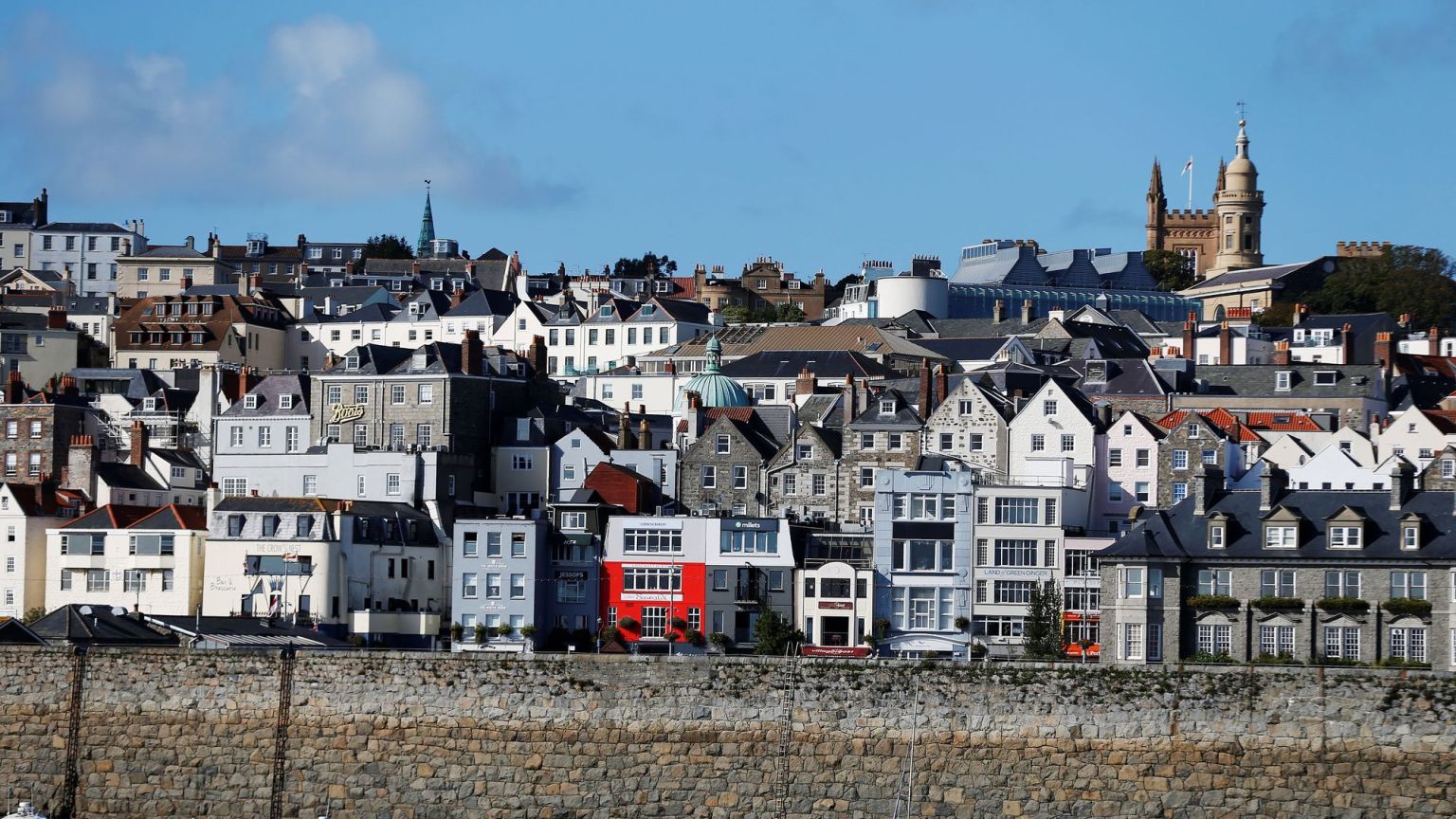
On the August bank holiday, I found myself in Guernsey. Its capital, St Peter Port, was largely as you’d expect from an island of just 24 square miles in the English Channel – something like a quaint English market town, transplanted just off the French coast. There was an abundance of cosy pubs, independent boutique shops and interesting historical tidbits.
What was unexpected, though, was the quantity and quality of opportunities for boozing. On a Bank Holiday Sunday, we had no trouble finding places to drink, even late into the night. What’s more, everywhere was packed with young people, enjoying the kind of spontaneous fun that has basically become a foreign concept in London.
In Soho – supposedly the beating heart of our capital’s nightlife – getting your hands on an impromptu late-night drink can feel nigh-on impossible. By midnight, the shutters are coming down, staff are stacking chairs and punters are rushing to drink up so they can catch the last Tube home. Staying out requires careful planning, either booking in advance or knowing the few places that open into the early hours – and risking being turned away when, invariably, the entirety of central London descends on the handful of bars still serving. The Home Office even warns against areas imposing uniform closing hours for this very reason.
What’s interesting is that Guernsey doesn’t actually have more liberal licensing laws than London. In fact, the rules are, on paper, stricter than somewhere like Westminster Council. Guernsey’s ordinary licensing hours are fairly prescriptive, with standard licensed premises like pubs and bars expected to stop selling alcohol at 12.45am. But Guernsey’s law explicitly recognises nightclubs as a separate category, with later permitted hours, generally until 1.45am. Venues are able to apply for exemptions to stay open later in some cases.
More importantly, Guernsey has not adopted anything quite like the system that constrains Soho. While the licensing of new venues is still restricted so as not to cause too much disturbance to residents, the basic approach is to regulate any nuisance caused by particular establishments, rather than to treat the existence of a thriving nightlife district as problematic in itself.
The killjoys at Westminster Council have adopted essentially the opposite attitude. Soho sits inside the so-called West End Cumulative Impact Zone. This means that, because the area already contains a lot of pubs, bars, restaurants and clubs, the council can treat further licensed activity as potentially harmful, simply because it adds to the total number of people drinking, talking, smoking and generally enjoying themselves after sundown. Any new licences are assumed to be rejected by default, unless the owner can prove that the venue will not contribute to late-night disorder.
Earlier this year, Two Floors – a Soho bar that had operated for 30 years without a single residential complaint – was refused permission to stay open until the frankly quite civilised hour of 1am on Fridays and Saturdays. Even the police conceded that the venue itself was not a source of crime. Its only offence was to be a bar in an area Westminster believes already has too many of them.
One of the parties responsible for preventing Two Floors opening later was the Soho Society. The group, which is part-funded by Westminster Council and has a formal say in the licensing-decision process, has explicitly vowed to veto any new bar and restaurant in Soho, as well as any application to operate beyond Westminster’s already restrictive core hours. The society has a history of making vexatious complaints, including last year objecting to a new gin bar and distillery on the grounds that it could spontaneously catch fire and explode at any time. Although the objection was ultimately rejected, the distillery was still left paying thousands of pounds in legal costs.
The core assumption is that there are already too many opportunities to booze in Soho – and that’s a bad thing. Last month, Westminster Council consulted on its new licensing policy, with the proposals maintaining the effective blanket ban on new pubs and bars in Soho. Even more blasphemously, it proposed to discourage ‘vertical drinking’ – thus threatening the time-honoured London tradition of standing on the pavement outside a pub.
This was all part of the council’s wider planning policy of preventing an ‘over-concentration’ of drinking establishments in Soho in order to preserve a broader ‘mix’ of uses – which is a bit like complaining that there’s an ‘over-concentration’ of jewellers in Hatton Garden. Even London mayor Sadiq Khan recognised that this was insane and denounced the proposals as far too restrictive. For once, he’s right – there is something perverse about a council looking at one of the world’s most famous nightlife districts and deciding that its problem is, apparently, too much nightlife.
It doesn’t have to be this way. While Soho is punished for its own success, somewhere like Guernsey is capable of acknowledging that nightlife is part and parcel of living in a capital city – even if that capital is only home to circa 20,000 people, rather than nine million.
Perhaps a more similar comparison to London would be somewhere like Manchester. Manchester operates under the same licensing laws as Westminster – the Licensing Act 2003 – yet has taken a markedly more enabling approach. It has no fixed core hours and, crucially, no cumulative impact zones that hamstring the creation of any new venues. This flexibility and openness to nightlife have led to Manchester often being described as having a better, more vibrant night-time scene than London does. An investigation in The Times last year actually found that Manchester ranked No1 in England for venues open past 2am, with London trailing in a dismal 10th place.
For an even more radical alternative, we can look further afield. Gibraltar’s licensing system has long designated particular districts as ‘Leisure Areas’. Here, rather than treating a nightlife hotspot as something to be discouraged, the law recognises it as somewhere bars, restaurants and entertainment venues are expected to flourish.
Under Gibraltar’s Leisure Areas legislation, a licence can permit the sale of alcohol during whatever hours the licensing authority decides – even, in principle, without any restriction on hours at all. Separate licensing rules explicitly allow for extensions until 4am in some cases.
Imagine, for a moment, if Soho were a designated late-night Leisure Area. Rather than throttling the very businesses that bring people into the West End in the first place, Westminster could embrace Soho’s natural role as the world-leading party neighbourhood. A less hostile licensing regime and more venues opening later – and more venues in general – would mean more jobs, more custom for restaurants, taxis and hotels, and more business-rates revenue for the council itself. Put aside the whinging residents who complain about the noise after moving into an internationally famous club district, then everyone’s a winner.
A serious late-night district would make London feel like a capital city again. It feels embarrassingly provincial to have to sheepishly explain to tourists that the only place for them to go after midnight is home. And, perhaps most importantly, a less puritanical approach to licensing would make nights out in London finally feel fun again.
Lauren Smith is a writer based in London.
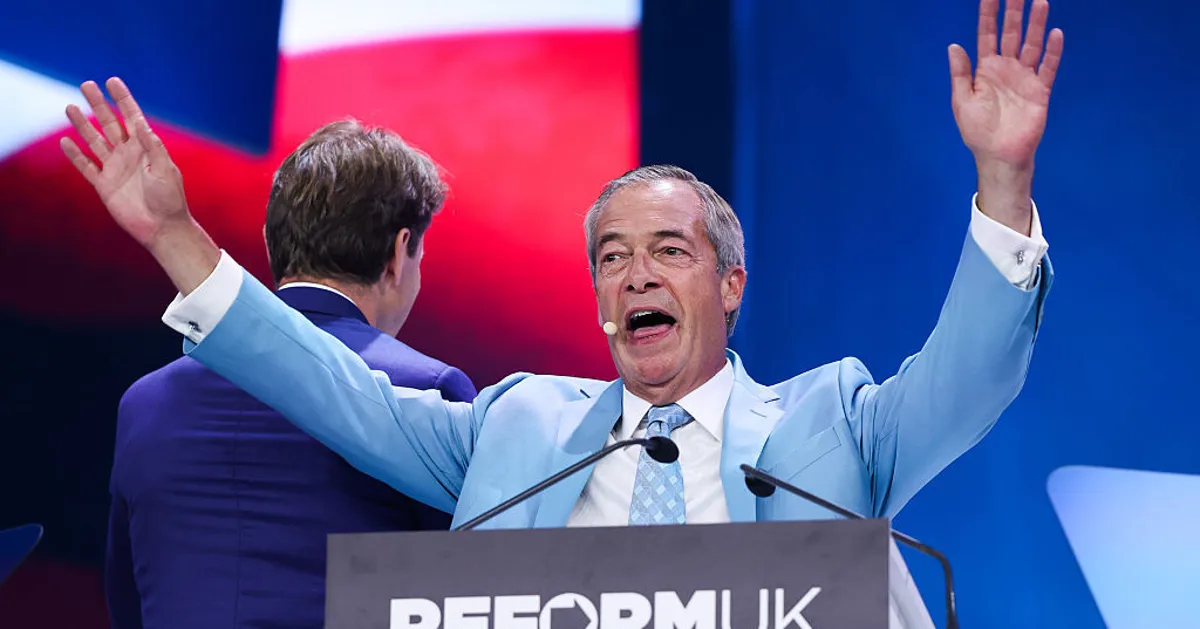
Reform UK has received a £36 million donation from a crypto billionaire who gave Nigel Farage a controversial £5m gift.
Christopher Harborne’s donation comes just hours after another crypto billionaire, Ben Delo, gave the party the same amount.
Thailand-based Harborne also gave Reform £9 million last August.
Writing in the Daily Telegraph, Harborne said the donation was “a philanthropic gift to our country” intended to help Reform prepare for government.
He said: “Whilst I have been making donations to Reform of around £1 million a month, Ben Delo told me he was going to make a record donation of £36 million.
“My competitive spirit inspired me to match it, so that is what I’ve done. And I hope others may join us.”
Farage said: “I am honoured and humbled that Ben Delo and Christopher Harborne have shown such confidence in Reform.
“Both men know that we are the only party that can turn the country around and win the next General Election – thanks to their generosity, we are now able to fight that election on a level playing field.”
The donation means Mr Harborne retains his position as Reform’s largest donor, having already given £9 million to the party last August.
The £5 million gift from Harborne to Farage is at the centre of an investigation by the parliamentary standards watchdog after the Reform leader failed to declare it in his register of interests.
In his Telegraph article announcing the donation, the billionaire said the UK needed a “profitable and dynamic economy” to be able to address the three “existential threats” of nuclear war, AI and climate change.
His donation comes a day after it was reported Delo had given £36 million to the party, saying it would ensure a “level playing field” between Reform and its opponents.
Delo, who moved back to the UK from Hong Kong in order to avoid a proposed cap on donations from overseas voters, was pardoned by US president Donald Trump last year after a conviction for violating the US Bank Secrecy Act.
The Telegraph reported he had intended to give Reform £1 million a month up until the next election, but was donating the money in a lump sum in case the government introduced a cap on all political donations.
MPs last week backed measures including a cap on overseas donations at £100,000 and a suspension of funding through cryptocurrency, but the draft legislation still needs to be passed by the House of Lords to become law.
Backbench calls for a cap on all donations have not been successful.
The twin donations offer Mr Farage’s party a boost after a summer dominated by scrutiny of Reform’s finances, including the launch of a criminal investigation into allegations it breached rules on political donations.
Reform UK denies any wrongdoing and has said it will co-operate fully with the probe.
Listen to Commons People, the podcast that makes politics easy. Every week, Kevin Schofield and Kate Nicholson unpack the week’s biggest stories to keep you informed. Join us for straightforward analysis of what’s going on at Westminster.

Vicki Gunvalson and Claudia Jordan Address Brandi’s GoFundMe

Wizkid – Money & Love (Official Music Video)
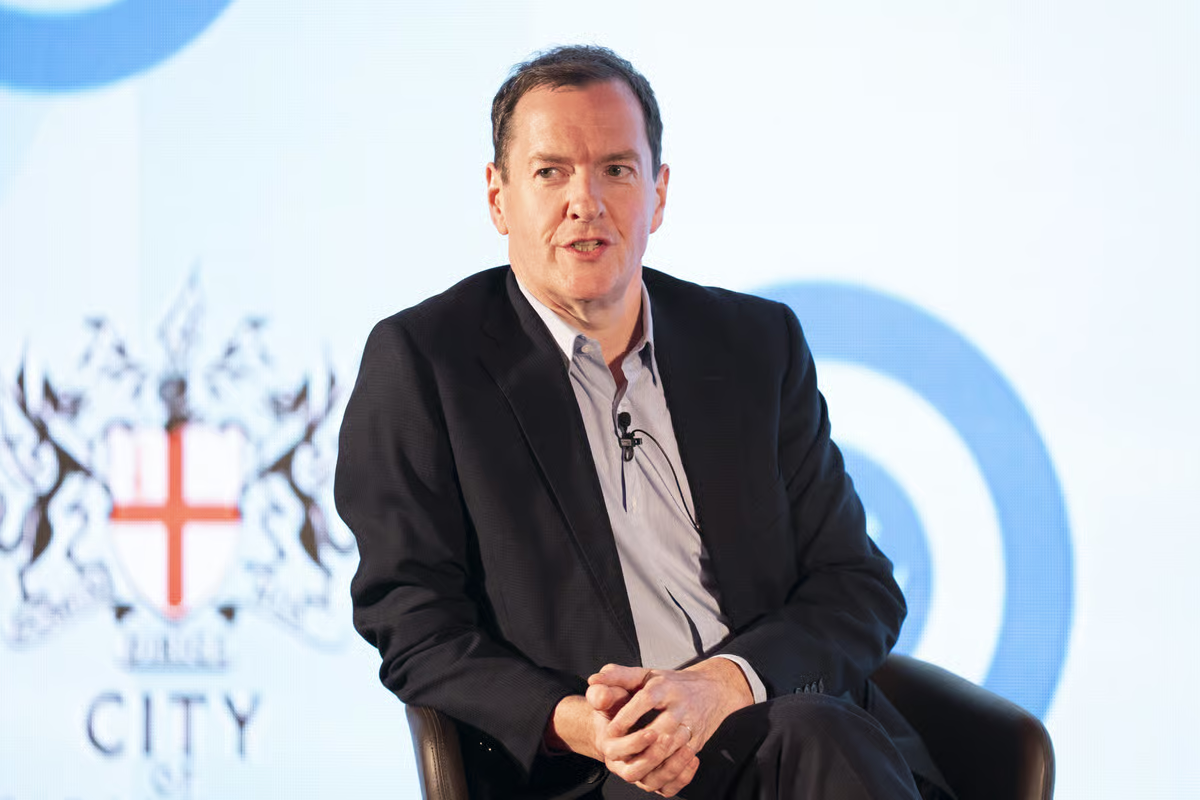
Former chancellor George Osborne says Britain should rejoin customs union

Memory prices are slowing because buyers ran out of money

Micron Stock Climbs Above $1,031 as AI Memory Crunch and a $50 Billion Outlook Fuel the Rally

AMD Stock Climbs After Management Lifts 2027 Data Center Outlook Toward $70 Billion in AI Sales


-
Tech5 days ago
Memory prices are slowing because buyers ran out of money
-
 Business3 days ago
Micron Stock Climbs Above $1,031 as AI Memory Crunch and a $50 Billion Outlook Fuel the Rally
-
 Business3 days ago
AMD Stock Climbs After Management Lifts 2027 Data Center Outlook Toward $70 Billion in AI Sales
-

 Crypto World4 days ago
Bitcoin price risks $76K drop as $78K support weakens
-

 Crypto World5 days ago
Robinhood Stock: How To Take Advantage With Reduced Risk
-

 Crypto World4 days ago
Ethereum price stalls below $2,500 as ADX drops to 11
-

 Fashion2 days ago
Weekend Open Thread – Corporette.com
-

 Crypto World2 days ago
XAG/USD: Silver’s Short-Term Rally Meets Its Moment of Truth
-

 NewsBeat5 days ago
England up in reading, maths and science rankings as Scotland and Wales dip
-

 Crypto World3 days ago
2 Chip Stocks Broke Out This Week. Neither Was Nvidia
-

 Crypto World2 days ago
OKX launches 10x OpenAI, Anthropic X-Perps in Europe
-

 Crypto World2 days ago
Diesel Tops $6 a Gallon for the First Time as 28 States Set Records
-

 Crypto World5 days ago
Intel Stock Jumps 9% on Chip Price Hike Report, US Stake Gains $36 Billion
-

 NewsBeat4 days ago
What went right this week: an ‘historic’ fall in violent crime, plus more
-

 Crypto World3 days ago
Bitcoin price risks $70K if $78K neckline breaks
-

 Tech3 days ago
Battery life is the only iPhone 18 Pro and iPhone Duo upgrade I care about. Apple didn’t disappoint
-
Crypto World2 days ago
Ethereum Price Analysis: Consolidation at $2.5K Tests Momentum as On-Chain Activity Surges
-
 Business4 days ago
Meta debuts long-awaited personal AI agent, Muse
-
 Crypto World4 days ago
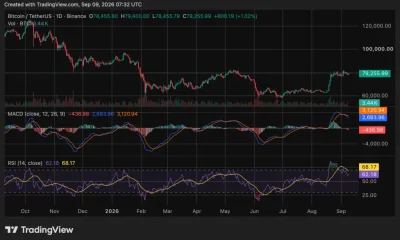
Bitcoin price holds near $79K as cycle drawdowns narrow
-

 Business2 days ago
10 Most-Streamed Songs On Spotify In 2026 So Far, Led By Ella Langley’s Dominant Run On The Charts This Year
You must be logged in to post a comment Login