

Politics
The House Article | A “fresh and furious” play: Baroness Thornton reviews ‘1536’



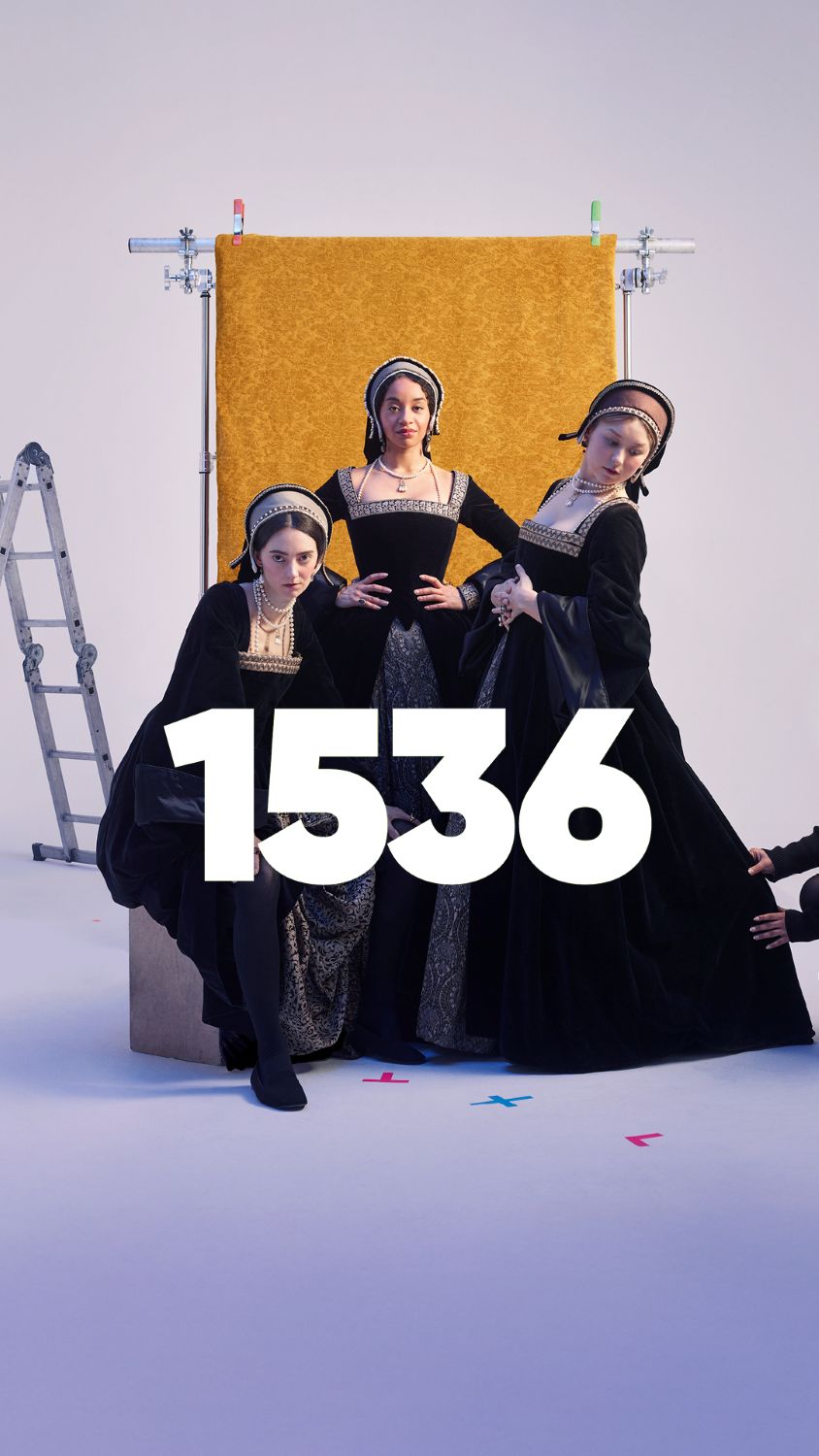
Tanya Reynolds as Mariella and Siena Kelly as Anna | Photo by Helen Murray

4 min read
Examining the ripple effect of the trial and execution of Anne Boleyn on the lives of everyday Tudor women, Ava Pickett’s play draws powerful parallels with modern day misogyny
A fresh and furious play, the performances of 1536’s central characters are absolutely brilliant. These three sparky young women of Essex are supported by a superb production which makes highly effective use of a black scrim. Yes. I had to look that up.

The early parts of 1536 present a wonderful portrayal of the kind of relationships which can exist between young women. On stage and screen we often see blokes joshing – yet not so often women, especially those with little education, wealth or ‘interesting lives’.
Before the plot unfolds, we witness loving and raucous teasing – a highly charged conduct, very rarely revealed to those outside the inner circle; the joy fairly radiates and is instantly appealing.
In the play’s programme we find a quote by Hilary Mantel: “History is not the past… it’s what is left in the sieve when the centuries have run through it.” And then the programme states this: “Women of the past were ground to such powder that history’s sieve catches nothing of them.”
In that sense 1536 is letting us hear something of the conversations that must have happened during the arrest, incarceration, show trial and execution of Henry VIII’s second wife Anne Boleyn. This is Mantel’s version of “fiction stepping in” which is not to say the conversations were ahistorical, only that they have to be inferred.
Powerful men can still have a catastrophic impact on women’s lives
Set against the backdrop of Boleyn’s arrest and execution in faraway London, 1536 is darkly comic in places, but elsewhere it resonates intensely with depressing aspects of life in the 21st century. Powerful men can still have a catastrophic impact on women’s lives, especially the lives of poor young women. But don’t get me started on Jeffrey Epstein.
Boleyn was arrested on 2 May 1536 and executed just 17 days later on 19 May with only a show trial in between.

Relying on two-day old news, at first the women find it hard to believe “the Queen” could be in any kind of serious peril. For the young women the story quickly moves on from gossip to something a great deal more serious: the nature of their lives and likely futures – and how closely they are tied to the men in their current or future existence.
The next bulletin from the capital reveals that while adultery is ordinarily a matter for the Church courts, in the case of a woman who apparently bewitched the King, and tricked him into marrying her, it becomes a capital offence for which the sentence is death.
The fact that everyone knew Henry pursued Anne for years and changed the law – and indeed the established Church – solely to make it possible for him to marry her counted for nothing.
 As further news of Boleyn’s alleged offences emerges the women realise the lurid details are having a ripple effect, feeding misogyny, and amplifying it in their everyday lives. Which brings us right back to the present day.
We have seen it often – a woman is monstered in social media and newspapers, her reputation and life trashed. Lies are created then embellished, believed particularly if she is a woman engaged in public life – or, as in this story, just a lively poor young woman with dreams and aspirations above her class and sex.
Find time to see this play – though with an age rating of 14+ (there are sex scenes but no nudity) it’s something to bear in mind when deciding who to take with you.
Baroness Thornton is a Labour peer
1536
Written by: Ava Pickett
Directed by: Lyndsey Turner
Venue: Ambassadors Theatre, London, WC2 – until 1 August



The Palestine Solidarity Campaign thanked the public after BBC’s Eurovision viewership hit a 15-year low because of Israel’s inclusion in the contest.
The BBC’s live broadcast of the Eurovision final had the lowest viewership in 15 years. Millions are heeding call from Palestinians and are refusing to watch because of the continued platforming of genocidal Israel. We will continue to boycott until Israel is excluded. pic.twitter.com/C4KnmwEAPS
— Palestine Solidarity Campaign (@PSCupdates) May 20, 2026
The group added that the boycott will continue until Israel is excluded from the contest.
Spain, the Netherlands, Ireland, Iceland, and Slovenia all withdrew because of Israel’s inclusion, with some of their national broadcasters refusing to air the show.
The BBC called the boycott the “biggest in Eurovision’s 70-year history” and warned that the fallout of the five countries leaving may “change the competition forever.”
Eurovision — Israel came second
Israel came in second for the second consecutive time. Bulgaria won the contest.
According to The National, Israeli public broadcaster Kan received a formal warning from organisers over videos posted online in which contestant Noam Bettan courted votes too aggressively, after a similar controversy involving Israel last year.
Boos could reportedly be heard in the arena when Israel’s televote tally was announced, echoing scenes from last year’s final.
An investigation, published recently by The New York Times, found that Israel spent more than $800,000 on advertising around the 2024 Eurovision contest in Malmö, Sweden, with funding linked to Prime Minister Benjamin Netanyahu’s public diplomacy office.
Clearly, Israel thinks that winning a song competition can wash the stains of a genocide. It can’t. They can spend all the money in the world and viewing numbers for Eurovision will keep falling with Israel’s inclusion.
Featured image via Heinz-Peter Bader/Getty Images
By The Canary
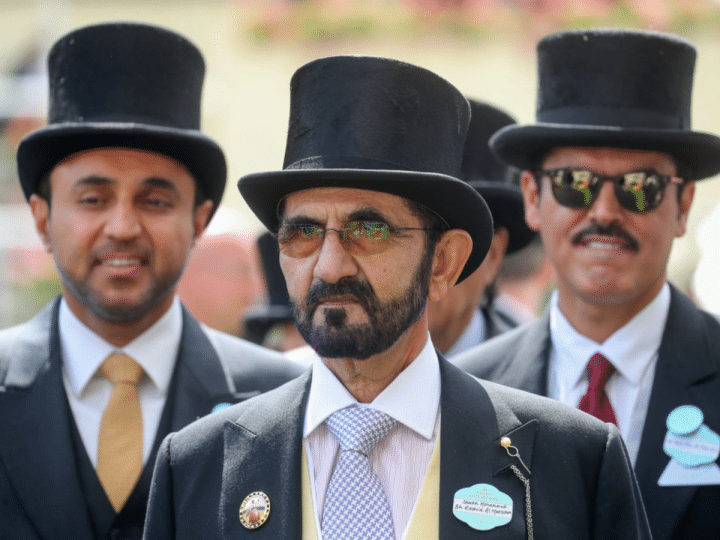

The Gulf Cooperation Council has been accelerating its crackdown on Shia Muslims, but this was no barrier in the UK signing a historic multi-billion-pound trade deal with the bloc, becoming the first G7 nation to do so.
The UK, which has backed the US/Israel’s war of choice on Iran, is celebrating the trade pact with another US ally — the GCC states, which consist of Bahrain, Kuwait, Oman, Qatar, Saudi Arabia, and the UAE.
The Financial Times reported that the:
UK has drawn praise from Gulf states” for its role in helping defend them against Iranian attacks, with British Typhoon fighter jets used to “intercept missiles and drones fired as they have flown missions over Qatar, the UAE and Bahrain.
UK exports of cereals, cheddar cheese, chocolate, and butter are just a few of the goods expected to become tariff-free, supporting British industry to grow, the UK government said. The deal is expected to boost the UK economy by an estimated £3.7 billion every year.
Blind eye to repression of Shia Muslims
The deal comes as Gulf Cooperation Council (GCC) governments are carrying out repression of increasing scale and severity.
Bahrain recently revoked the nationality of dozens of people accused of “glorifying or sympathising with hostile Iranian acts.”
Sayed Ahmed Alwadaei, Director of Advocacy at Bahrain Institute for Rights and Democracy (BIRD), posted on X, condemning the deal, adding that:
The deal comes as Gulf Cooperation Council (GCC) governments are carrying out repression of increasing scale and severity.
Much of this repression has been directed specifically at Shia Muslims in Bahrain.
UAE’s crackdown under cover of ‘Iran-linked terror’
Last month, Mint News Press reported that the UAE has launched a crackdown on Shia Muslims under the cover of “Iran-linked terror” claims.
In April 2026, UAE authorities announced the arrest of 27 individuals, describing them as members of a “Shia terrorist group” allegedly linked to Tehran. However, none of the detainees appear to be facing formal terrorism charges. Instead, they are accused of spreading “misleading ideas,” maintaining “foreign allegiances,” and forming a secret organisation — “vague” allegations that critics say are often used to justify political repression.
View this post on Instagram
The UAE has also been accused of deporting thousands of Pakistani Shia Muslims during the Iran war, though profiling of the minority community started much earlier — according to the Middle East Eye (MEE).
MEE also reported that Indian Shia organisations, including the All India Shia Personal Law Board, have raised concerns regarding the detention and treatment of Indian Shias by authorities in several Gulf countries, particularly the UAE and Saudi Arabia.
The UK and the GCC are partners united by complicity. Both support the US-Israel war on Iran. Both turn a blind eye to the repression of Shia Muslims.
Featured image via Chris Jackson/Getty Images
By Nandita Lal
Politics
Politics Home Article | Keir Starmer Will “100 Per Cent” Support Andy Burnham In By-Election

2 min read
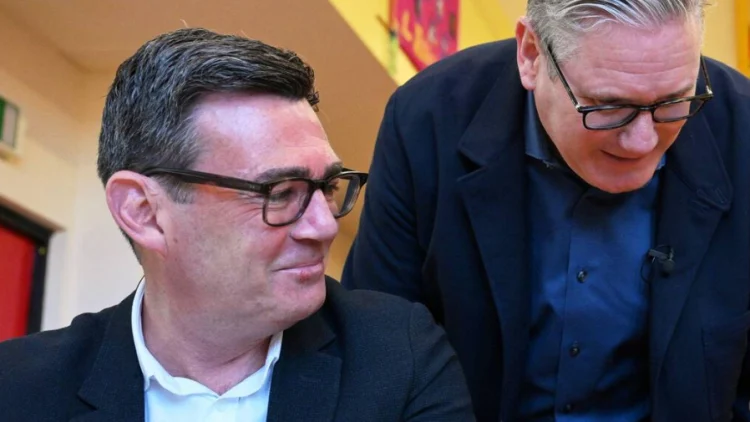
Keir Starmer has insisted he will “100 per cent” support Andy Burnham in the upcoming Makerfield by-election, which is shaping up to be a straight contest between Labour and Reform UK.
In a visit to Labour HQ, the Prime Minister said he would offer his full backing to whoever the candidate is.
Labour’s ruling body will draw up a shortlist of people this week and local members will vote on Thursday. However, it is widely expected that Burnham, the Manchester mayor, will be selected after the NEC said it would not block his candidacy.
Starmer told activists on Monday the last 10 days had “not been easy” for the party and the local election results had demonstrated that the public had not felt the fruits of a Labour government quickly enough.
The Prime Minister said: “We need to build up the urgency of what we do. We need a bit more hope in there. And we need to remember at all times what we are here to do. We were elected to government to serve the people of this country.
“And I remind myself every day that in July 2024 millions of people voted for us to come into government, to get on with the job, to govern, and to bring about the change that they want.
“So I am focused on the job that I was asked to do, which is to serve my country and to carry out my duties as Prime Minister of this country. Delivering for the very many people who voted us into office, who are saying, ‘just get on with it, get on with the job, get on with the change that I need to see in my life’.
“And that is what I am going to be doing.”
Starmer said the Makerfield by-election was a straight fight between Nigel Farage’s party and Labour, and that he wanted every Labour member and person associated with the party to support Burnham.
“A Labour candidate to beat Reform. That is the fight that we are in.”
Burnham was blocked from standing as a candidate in the Gorton and Denton by-election in February. The Prime Minister said it could have triggered a Manchester mayoral by-election, which would have cost the public at least £4million.
Burnham, who has previously served as a cabinet minister, is seen as a potential leadership challenger to Starmer if he wins the by-election. He is currently the bookmakers’ favourite to replace Starmer as prime minister and Labour leader.
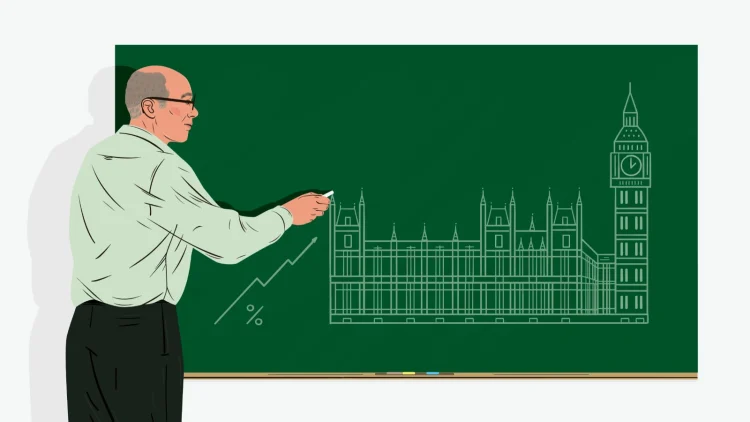

Illustration by Tracy Worrall
4 min read
Lessons in political science. This week: The Mo Salah effect
What did you think when you heard that Mo Salah was leaving Liverpool? Me, I wondered what it meant for the parasocial contact hypothesis.
Before you conclude I need to get out more, let me explain.
The idea that personal contact with people who are different – ‘out-groups’ in the lingo – can change attitudes has a long heritage; the ‘parasocial contact hypothesis’ is that indirect, mediated, contact – with celebrities, television characters and so on – has a similar effect.
Salah joined Liverpool in 2017, for what was then a club record fee. He helped them win the Champions League in 2019 and the Premier League in 2020. And in 2021, a fascinating paper published in the American Political Science Review examined the effect that having an elite player with what it called “conspicuous Islamic identity” had on Liverpool fans – and whether it reduced levels of Islamophobia.
In this case, it seems it does. After Salah’s arrival, researchers found that Liverpool fans became less likely to send anti-Muslim tweets when compared to other fans, at about half the expected rate. They also found levels of hate crime in Merseyside dropped by 16 per cent, again when compared to the expected rate. The authors concluded that “positive exposure to out-group celebrities can spark real-world behaviour changes in prejudice”.
Up to a point, at least. Because as I have said occasionally in this column before: size matters.
Take, for example, the third part of the study, in which researchers compared responses from Liverpool fans who were explicitly reminded of Salah’s religion with those who are not. The study tested three different views of Islam. In two cases, the differences were not statistically significant. In the third, when asked whether they thought Islam was compatible with British values, the primed respondents were more positive, and by an amount that was statistically significant, up by five percentage points.
To be fair, we might not expect great differences here. If the whole justification for studying responses to someone is that their identity is conspicuous, pretty much everyone should be primed already. But still, even that five per cent increase only gets you to 23 per cent. In other words, even after he’d helped them win all that silverware, the vast majority of respondents to the survey still thought Islam wasn’t compatible with British values. It’ll take a few more Salahs before that changes; and there is – in the words of the song – only one.
There are also two obvious follow-on questions. What about Liverpool’s (ahem) patchier form in some of the following seasons? A study of the Israeli football team in 2020, for example, found that when the national team were winning, the Arab players in the team were praised – but that didn’t last when things went south. To what extent do we think this effect is dependent upon performance? And second, and perhaps most important, will any effect survive Salah’s departure? The only person to have thrice been crowned PFA Players’ Player of the Year has his last game for Liverpool later this month. How long-lasting do we think any parasocial contact effect will be?
You want more Liverpool? Try Florian Foos and Daniel Bischof’s study of the effect that the boycott of the Sun had on attitudes towards the EU; they estimate the leave vote there to be around eight to nine percentage points lower as a result. Or David Jeffery’s book on the transformation of the Conservatives fortunes in the city. In the 1968 local elections, the Conservatives won almost 80 per cent of council seats; today, zero. A book examining what causes dramatic changes in local government fortunes sounds topical.
A Alrababa’h et al, Can Exposure to Celebrities Reduce Prejudice? The Effect of Mohamed Salah on Islamophobic Behaviors and Attitudes, American Political Science Review (2021); F Foos and D Bischof, Tabloid Media Campaigns and Public Opinion: Quasi-Experimental Evidence on Euroscepticism in England. American Political Science Review (2022); D Jeffery, Whatever Happened To Tory Liverpool (2023)

Image by: PA Images / Alamy

3 min read
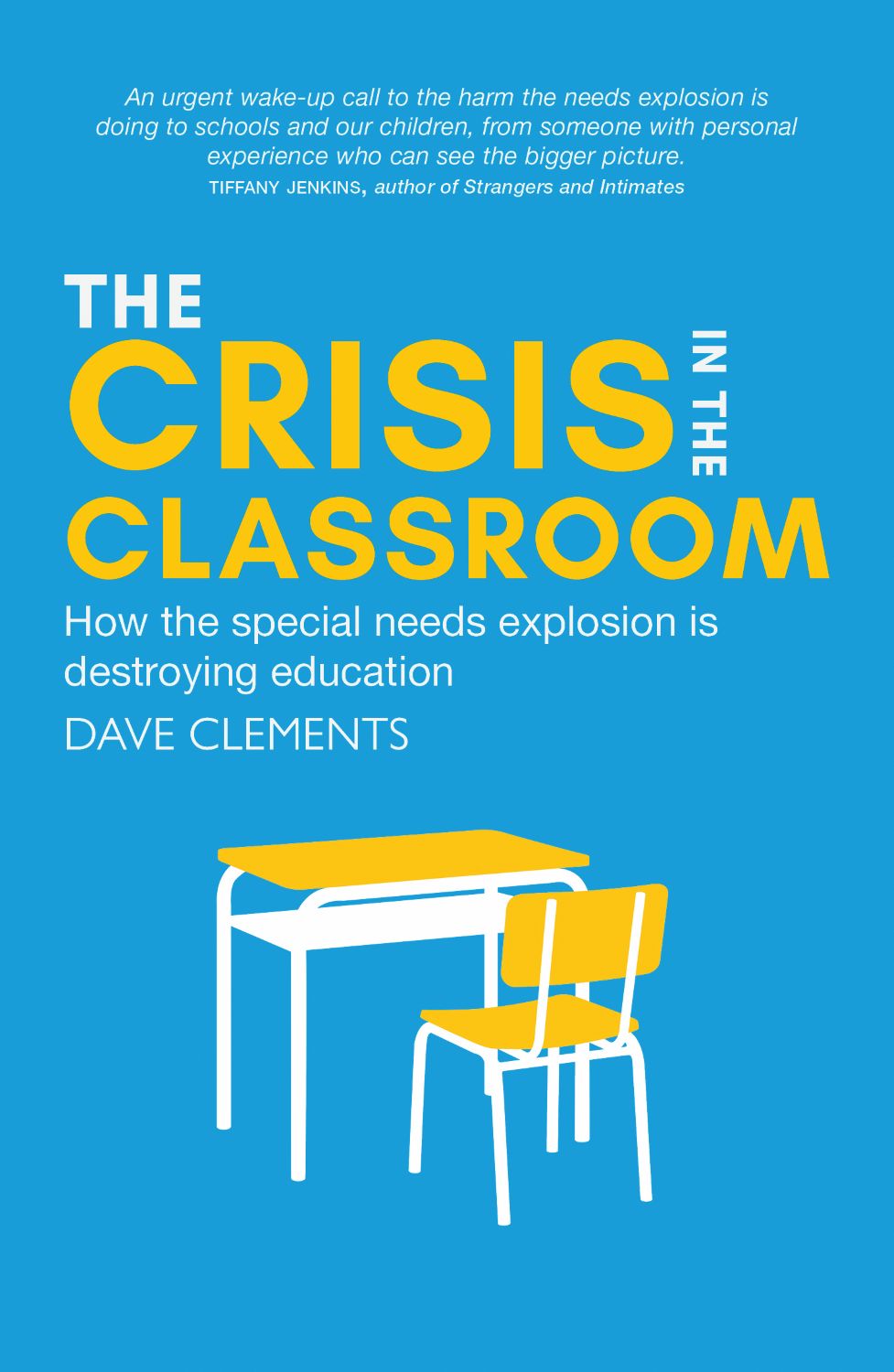
Dave Clements has written a lucid examination of the impact of unnecessary SEND diagnoses on both children and the education system
Dave Clements’ book is lucid, well-informed and honest, highlighting a plethora of problems in the SEND system that many in education are reluctant to acknowledge. It is also is a deep cry of parental pain: the author has skin in the game.
As he lays out, the recent explosion in SEND is not about physical disability or cognitive impairment. Instead it is overwhelmingly about children like Clements’s son, diagnosed with one or more conditions of autism, ADHD and other disorders linked to behavioural problems.
Clements shows that some (not all) of this come from overdiagnosis. He does not mention the highly influential 2013 American DSM-5 definition of autism, which lowered the diagnostic bar substantially. One participating psychiatrist has apologised for his part, saying the wider definition is contributing to “massive, careless over-diagnosis of autism”. The book discusses how unnecessary diagnoses can affect children, reducing their agency and self-belief as well as lowering others’ expectations of them. And it recognises the problems when services are overwhelmed by demand from children who may not need or benefit from them, at the expense of those who really do need them.
It is easier for the state to be kind than to be honest
He bravely tackles parenting: some children’s very real problems may not be intrinsic to the child but about poor parenting, without the boundaries and certainties that children need to develop healthily. But our reluctance to stigmatise makes it easier to label children without naming the likely cause.
And equally bravely, he tackles the perverse incentives in the education, benefits and welfare systems. A SEND label can unlock extra help at school and other accommodations and dispensations: a reader and scribe and extra time for tests and exams, and may entitle the family to extra benefits. A rational parent will fight to keep this even if a child no longer needs the package.
Clements describes the burdens this creates for schools, but omits the evidential gap: we know little about what (beyond coherent and well-sequenced curriculum, well taught in an orderly classroom) is effective for different types of SEND, and almost nothing about what represents good value to the public purse – there is no NICE for SEND.
 Spending more money on a child will not necessarily improve their experience or outcomes. But parents desperately want to believe that something can be done, and it is easier for the state to be kind than to be honest. This may explain why we already spend £15bn a year – more than £500 from every household – on high needs SEND and children’s disability living allowance, with no real idea of what difference this spending makes.
The tragedy is that the current system was created with good intentions, by governments of all colours. Statutory entitlements for SEND (and social care) were never expected to bankrupt local authorities and starve them of resources for other functions. But even bad law is difficult to unpick. The current government has already essentially ducked with its SEND white paper, which will create more workload in schools and, probably, more dissatisfied parents believing their children are being short-changed. Time to think again.
Baroness Spielman: Conservative peer and former Ofsted chief inspector
The Crisis in the Classroom: How the needs explosion is destroying education
By: Dave Clements
Publisher: Luath Press
The post ‘We must break the spell of trans’ appeared first on spiked.


3 min read
The Union Jacks were the first thing I noticed. As my car pulled off the M61, the streets of Makerfield announced themselves in red, white and blue. This is a place that doesn’t need to be told it can fly a flag.
I was out knocking doors the day after Josh Simons announced he’d be stepping down. I’ll be honest, I wasn’t quite sure what to expect.
This is, historically, a Labour heartland and a seat that went our way just a couple of years ago. But last week, 24 out of 25 council seats in Wigan went to Reform.
I knew it would be tough. It wasn’t what I expected. The first door I knocked belonged to a woman in a semi-detached, path of white pebbles across grey stone.
She wasn’t in any hurry to close it. Surprised Labour was out this early, she said. I told her why it matters, why this party needs to rebuild trust in places like this.
She called her husband through from where he was decorating. Yorkshire and Lancashire, together chatting over a doorstep, unhurried, the way politics almost never allows.
He’d voted Reform the week before, and in the general election. If Andy Burnham stood here, he said he’d have to have a “really deep think”, but could convince him to come back to Labour. Eight days after putting a cross next to the party in teal, this man was genuinely reconsidering.
That matters. A few doors down, someone else put it with a directness I won’t forget. “I’ve got a bit of Labour left in me, just need to find a way to get it out.”
These aren’t voters who have abandoned us. They are voters who want a reason to come back. There is a difference, and Westminster forgets it constantly.
Andy Burnham’s name came up again and again. Not as a political calculation, but with the warmth you reserve for someone you actually know. “He’s done a lot for Manchester. I’d be sad to see him go as mayor.”
But they’d be glad to have him as their MP too. Everybody had a story, a friend, a family member, one degree of separation from the man. That kind of proximity counts for more than any amount of targeted advertising. I also heard something generous about Josh Simons, who is standing down. “He’s a young lad who moved his family from Cambridge and chose to bring them up locally. You can’t ask for more than that.” People notice authenticity. They always have. It’s a small reminder that north and south aren’t opposing forces.
They’re simply waiting for the right moment to be bound together. There were doors that didn’t swing so easily. I won’t pretend otherwise.
Whether it was schoolchildren running excitedly around the corner ready for their weekend to start, or a group of people having a chat outside the local chippy, there was a sense that people here look out for each other, and that underneath the frustration, something is still there.
The argument that Reform voters are beyond reach is not just wrong, it is condescending. We have been here before. In the ashes of 2019, we didn’t win back the voters we’d lost by telling them they were wrong to choose Johnson and the Tories.
We asked them why. And then we listened, properly, and acted accordingly. That is how we won. It is the only way we ever win.
The people I met in Makerfield weren’t making an ideological statement. They were asking to be listened to. And they were, when given the chance, very willing to have that conversation. Nigel Farage is in for a fight here. This is a seat with Labour in its bones. The right candidate, with roots that people can feel, can remind it of that. We should rise to that challenge.
Despite what you or we might think, in the eyes of the Scottish Football Association this ISN’T a pitch invasion. This is simply what a football match in progress looks like.

Because according to the absolutely extraordinary statement they’ve released this evening, that was game time. The clock was still running, nothing was being added to account for the fact that there were thousands of thugs rampaging across the field, and the game was still happening in that moment, until it was ended four seconds later.
It’s far from the only astonishing line in the statement.

There’s also the admission that the game ended because Hearts manager Derek McInnes, being advised by police before the game was over, feared for the safety of his players and didn’t want to risk carrying on.

That is, in the SFA’s view, if your team’s winning a game with a minute to go and you don’t want to take a chance on the other side scoring, you should not only pile onto the pitch but also do your active best to scare the living daylights out of their players, and the ref will just keep the clock ticking until time runs out, even though there isn’t even a ball any more.
(We imagine it’s proudly sitting on someone’s mantelpiece somewhere in the East End of Glasgow at the moment.)
The laws of the game are absolutely clear.

The referee CANNOT reduce the time declared by the fourth official, and he MUST add time for both goal celebrations and “interference by an outside agent”, ie thousands of thugs on the field of play. The SFA appear to have simply unilaterally overridden those global laws put in place by the International Football Association Board and said “Nah, it’s optional if there are a load of Neanderthal morons terrifying the players”.
It merits saying again: according to that SFA statement, this is not an interruption to play. This is a football match in normal progress, before full-time.

(Just two minutes later, incidentally, the pitch had been cleared and the last minute or so of the game could have been played.)

It is no small feat for the SFA to have limboed under even the incredibly low expectations bar we set for them. But hats off to them, they’ve done it with spades to spare.

Politics
Politics Home | What is the issue uniting innovative British manufacturers, major European industrials and global technology companies?


Credit: Adobe stock

Alexander Prenter, Policy Director
| Fair Standards Alliance
The ability of businesses in the UK to use common industry standards is increasingly constrained by the lack of a sufficiently clear and balanced legal framework. This situation harms the UK’s competitiveness and economic growth
Product innovators such as Tunstall Healthcare, Nyobolt, BMW Mini, Thales, Google, Amazon, Toyota, and many others, who are significant investors and employers in the UK, are increasingly concerned about a complex and untransparent technology licensing system.
That system is the licensing of Standard Essential Patents (SEPs). SEPs cover technologies that are voluntarily contributed to standards such as 5G, wi-fi, and video compression for streaming, with a binding promise to be licensed on fair terms. While smartphones and computers have long supported these standards, the connectivity boom means that these standardised technologies now reach into key British growth sectors such as automotive, energy, and medical devices. However, the current situation acts as a brake on British ambition.
The problem lies in how these technologies are licensed. Royalty demands are often disproportionate to the technology’s underlying value and are made under the threat of market exclusion through court-ordered injunctions. The Intellectual Property Office has identified serious concerns in this area, noting evidence that licensing demands have exceeded court adjudicated rates by up to 500 times.1 UK courts, too, have repeatedly found that SEP holders demand royalties far exceeding a fair rate and rely on the threat of injunctions in negotiations.2
These are not abstract concerns, but direct costs borne by innovative companies operating in the UK. Smaller companies are often hit hardest. The government’s Telecoms Supply Chain Advisory Council noted SEPs are “very highly concentrated among a small number of companies, none of which are UK-owned.” The result is a one-way outflow of value from the UK economy.
Yorkshire-based Tunstall Healthcare provides connected devices that enable elderly and vulnerable people to live independently at home. Its wearable alarms and remote monitoring systems are used by local authorities and NHS trusts to reduce hospital admissions and improve care.
These devices depend on standardised connectivity technology like 4G and wi-fi. Hundreds of thousands of patents are alleged to be essential to just these two standards alone, meaning companies like Tunstall must negotiate licences with multiple SEP holders, often through opaque and complex processes. Despite facing unfair demands, the cost of being unable to sell products owing to a court-ordered injunction is greater. Challenging the demands is also costly; one recent litigation cost £31m. Even large companies will settle at excessive cost to avoid this outcome.
UK companies face millions of pounds in excessive fees, but the impact is not confined to balance sheets. For health-tech, higher licensing costs are passed down the supply chain – to the NHS, local authorities, and ultimately to taxpayers. Lost R&D and reduced product functionality harm businesses and customers alike. Other medium-sized businesses, such as Nyobolt – an innovative, Cambridge-based smart battery systems company – have also reported how SEP licensing uncertainty directly reduces investors’ willingness to provide growth capital.
This week, a large group of UK and global companies will gather in London for the Fair Standards Alliance’s General Meeting. Our message is clear: without reform to curb excessive demands, the current system will continue to stifle innovation, deter investment, and place innovative UK companies at a structural disadvantage.
We are calling on the government to legislate for this pro-growth measure in the next session. Find out more at www.fair-standards.org.
We are hosting a reception in Parliament, with many companies in attendance.
Please drop by from 3.30pm to 5.00pm in the Home Room on Tuesday 19 May, to hear these concerns first-hand.
References
- Intellectual Property Office, ‘Consultation on Standard Essential Patents’, 15.07.2025
- IAM, ‘Ask versus outcome: FRAND valuation, judicial analysis and the continuing gaps in SEP litigation’, 16.01.2026
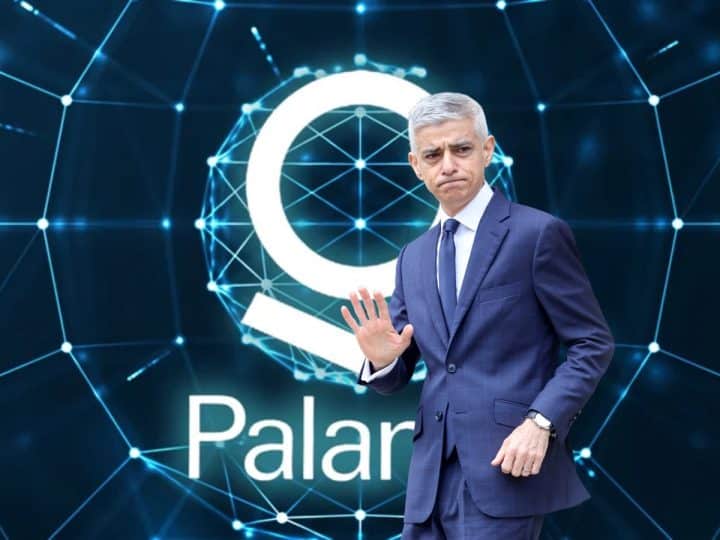

Palestine Solidarity Campaign (PSC) welcomes the news that London mayor Sadiq Khan has blocked a £50m Metropolitan police deal with notorious US tech company Palantir.
Prior to today’s announcement, over 1,000 PSC supporters in London emailed the mayor asking him to block the contract. It would have been Palantir’s largest ever contract in British policing.
In January 2024, Palantir entered into a “strategic partnership” with Israel’s Ministry of Defence to develop technology and tools to be used in “war-related missions.” Israel has used this technology to accelerate its genocide in Gaza. Palantir’s AI technology and surveillance can rapidly generate targets for Israel’s bombing campaigns. These have destroyed entire neighbourhoods, including schools and hospitals.
Khan’s spokesperson said London residents only wanted public money to go to those that “share the values of our city”.
Alongside blocking this contract, PSC is calling on Khan to intervene now to cancel the existing £500,000 Met contract to use Palantir technology in the force’s “professional service function” signed in February.
Further, PSC is calling on the UK government to to cancel all contracts with Palantir. This includes NHS England’s £330m contract to develop and maintain the Federated Data Platform to store patients’ medical data. Health workers, patients and human rights groups have all opposed this deal.
Lewis Backon, PSC campaigns officer, said:
It is welcome that following our campaigning the mayor of London has intervened to stop a £50m Met police contract with Palantir.
Palantir supplies Israel with AI and surveillance technology used as part of its genocide in Gaza, and wider regime of military occupation and apartheid against Palestinians. Companies enabling human rights abuses across the globe should not receive a single penny of public money.
We call on the mayor to intervene to cancel the existing Met police contract with Palantir, and for the UK government to take note and cancel Palantir’s contracts, including in our NHS.
Featured image via Chris Jackson / Getty Images / the Canary
By The Canary

Lenovo-branded retro handheld comes pre-loaded with tons of Nintendo ROMs

John Ramsey Urges Guthrie Family to Scrutinize Probe

Elon Musk Grok AI Predicts GOLD Price by End of 2026


-

 Crypto World6 days ago
BloFin War of Whales 2026 Grand Prix opens registration for $5M trading championship
-

 Fashion6 days ago
Weekend Open Thread: Theory – Corporette.com
-

 Crypto World6 days ago
E-Estate Announces 1 Year Live: Washington DC Summit as Real Estate Tokenization Enters Its Next Phase
-

 Tech7 days ago
Tech Moves: Microsoft AI leader jumps to OpenAI; former AI2 exec joins Meta; and more
-

 Tech6 days ago
Google reimburses Register sources who were victims of API fraud
-

 Business6 days ago
H&R Real Estate Investment Trust (HR.UN:CA) Q1 2026 Earnings Call Transcript
-

 Sports6 days ago
Napoleonic enters 2026 Doomben 10,000 field via Abounding withdrawal
-
 Crypto World6 days ago
BeInCrypto 100 Institutional Awards Nomination: KAST for Best Digital Assets Neobank and Best Digital Assets Fintech
-
 Crypto World6 days ago
Bitcoin Battles US Bond Nerves With BTC Price Dip Toward New May Lows
-

 Crypto World6 days ago
ICE and CME urge US regulators to curb Hyperliquid energy trading
-
 Crypto World6 days ago
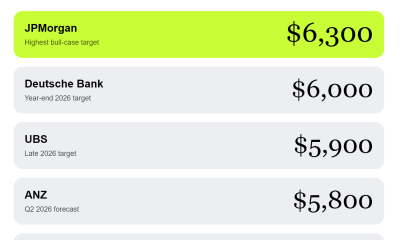
Wall Street’s Boldest Gold Prediction Has Russians Rushing to Buy
-
 Fashion5 days ago
On the Scene at Gucci’s Cruise Show in New York City: Mariah Carey, Kim Kardashian, Lindsay Lohan, Iman, and More!
-

 Entertainment6 days ago
David Letterman Returns to Late Show, Blasts Cancellation
-
 Crypto World6 days ago
IREN closes $3 billion convertible notes deal amid AI infrastructure expansion
-
 Politics7 days ago
DWP PIP Timms review continues to be an absolute farce
-

 Fashion5 days ago
Trending Western Style Vests Perfect for Summer
-
 Politics5 days ago
Watch: far-right flag-fanatics run over victim, attack locals – Setup By the Left wing for your entertainment
-
 Crypto World7 days ago
Lido Finance Selects Chainlink CCIP as the Official Cross-Chain Infrastructure for wstETH Security
-

 Fashion6 days ago
Creative Ideas for Custom T-Shirts
-

 Fashion5 days ago
Amazon Sundays: Memorial Day Hosting
You must be logged in to post a comment Login