Connect with us

Politics

The House Article | The DHSC alone cannot fix our health and care crisis

Published

on

The DHSC alone cannot fix our health and care crisis

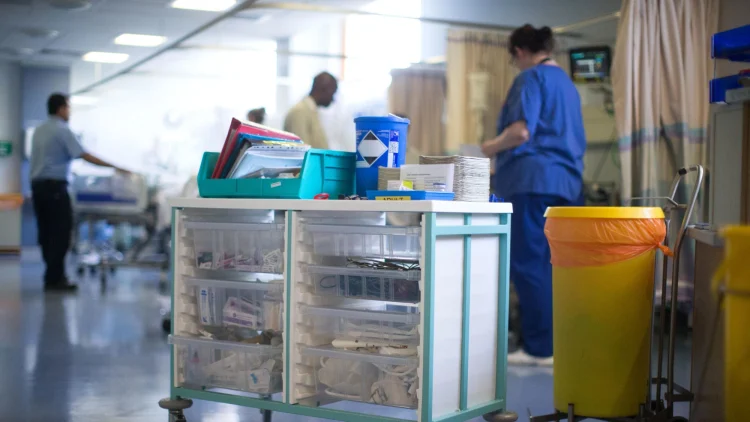
NHS hospital ward (Alamy)


4 min read

The Prime Minister is right to say that social care is too important, too difficult and too long neglected to be left to politics as usual.

Advertisement

His decision to seek a cross-party solution recognises a simple truth: Britain’s biggest challenges cannot be solved by one department, or one government, acting alone.

Health more broadly deserves the same approach. Now is the time to establish a sub-Cabinet-level Health and Care Equity Taskforce or Board, reporting directly to the Prime Minister. It should bring together ministers from Health, Housing, Education, Work and Pensions, the Treasury and local government, alongside public health experts, NHS leaders, social care, business and the voluntary sector.

Over more than three decades as an NHS consultant, I saw firsthand that the Department of Health and Social Care cannot make Britain healthier on its own.

Advertisement

As a consultant gynaecologist and specialist in reproductive medicine, I treated the consequences of inequality rather than its causes. Women with years of untreated symptoms because they could not get appointments. Couples denied fertility treatment because of their postcode. Poverty, poor housing, insecure employment, stress and poor nutrition appeared disguised as medical conditions.

I could treat symptoms and diseases, but I could not deliver warm homes, secure incomes or good educations.

As vice-chair of the British Red Cross, I saw the same pattern. In emergencies or supporting vulnerable communities, the people facing the greatest health challenges were often those already struggling with poverty or loneliness. Their problems did not fit neatly into government departmental boundaries, yet our solutions still do – that is our fundamental mistake.

Advertisement

England now has a nearly 20-year gap in healthy life expectancy between the most deprived and most affluent communities. That gap is not created by hospitals but by one’s quality of life. Around 80 per cent of health outcomes are determined by the wider social determinants of health: where we are born, grow up, learn, work, live and age.

If we continue asking the NHS to solve problems that begin decades before a patient enters a hospital, we will continue to overload the health service while failing to improve the nation’s health. The language of “fixing the NHS” is too narrow. We must also fix the conditions that make people ill in the first place.

Nor can we reform social care in isolation. Health and social care are inseparable, and both are shaped by policies reaching far beyond them.

Every major department influences the nation’s health. The Treasury determines investment. Housing affects respiratory disease and mental health. Education shapes lifelong opportunity. Work and Pensions influences financial security and employment. Transport affects access to healthcare. The Home Office influences community safety. Health is not produced by the Department of Health and Social Care alone; it is produced by government as a whole.

Advertisement

The economic case is just as powerful as the moral one. If the North of England had the same health outcomes as the rest of the country, it could add £18.4bn to our economy every year.

Poor health reduces productivity, increases welfare dependency, constrains economic growth and places ever greater pressure on public finances. Investing in healthier communities is not merely a social policy; it is economic imperative. A healthier population is one of Britain’s greatest untapped growth opportunities.

Andy Burnham has shown leadership by recognising that adult social care requires cross-party and cross-government thinking. I hope he will now take the next step and establish a central Health Equity Taskforce. Its purpose should be ambitious: to ensure that every major departmental policy is judged not only by its economic impact but by its impact on the nation’s health.

For decades, we have treated health as the responsibility of one department. That approach has failed.

Advertisement

If we truly want an NHS fit for the future, and a country fit for the future too, we must stop thinking of health as something delivered in hospitals and start recognising where it is really created: in our homes, our schools, our workplaces and our communities.

That is how we will reduce inequality, build a stronger economy and create a healthier Britain.

Baroness Nargund is a Labour peer

Source link

Advertisement
Continue Reading
Click to comment

You must be logged in to post a comment Login

Leave a Reply

Politics

I Lost Five Close Family Members In Five Years, This Is How I Rediscovered Hope

Published

on

I Lost Five Close Family Members In Five Years, This Is How I Rediscovered Hope

Since 2020, I have lost every prominent male figure in my family. My stepdad, uncle, granddad, my partner’s dad and finally, my lovely boy cat. I was very close to all of them and losing them completely undid me, to say the least.

Then, last year, I lost my pregnancy at nine weeks. It was rock bottom for me. I couldn’t convince myself to try and find hope anywhere despite it formerly being my default because it seemed I was just doomed to be heartbroken forever.

My grief is strange and like nothing I could have predicted. While I have had waves of dramatic, dark emotions, I mostly just gave up. It felt like every time I was close to something that felt like recovery, I was hit with another wave of bad news.

The current state of the world doesn’t help with this melancholy. Why would it? It feels like everything is terrible and getting worse at every turn. It’s an enduring global grief and weighs heavily on us.

Advertisement

Truly, how do you even begin to build resilience and hope in these circumstances?

Being an auntie reminded me what hope and wonder feel like

While I have felt like my world was falling apart, we have had magic in the corners of our life. My partner and I are now auntie and uncle to four children and this summer, we went to visit them for a week in their hometown.

While we have spent time with them before, these extended long days experiencing the world through their eyes made me appreciate them and their perspective so much more. Their world is so much smaller than mine, their problems are nothing like mine is and the things that bring them joy are things I have taken for granted for as long as I can remember.

Advertisement

As we wandered around Hertfordshire Zoo, I watched them take in the dinosaur park in awe. They squealed when the animatronics moved, clapped when the ‘dinosaurs’ roared and were enchanted by the small train inside the park that took us on a tour of dinosaurs.

Our youngest niece is six months old and her favourite thing to do is gurgle with glee as we make funny sounds, dance toys in front of her bright eyes and stare lovingly at her relatives. She is so small, so new to the world but she gets to enjoy small pleasures in a way that adults could never replicate.

Our two year old niece finds herself absolutely hilarious. There is nothing or nobody that can make her laugh as much as herself. If you find her funny, though, her whole face lights up. Seeing adults smiling and laughing alongside her brings her pleasure beyond measure. Something many of us do every day without thinking can completely make her day.

The older niece and nephew find joy and comfort in watching their siblings grow. They are protective and thoughtful, ensuring that hands are held, fruit is consumed and hugs are limitless. They are only nine and six but their big, loving hearts are creating the safety and security that young children need to express themselves.

Advertisement

This is their whole world and really, it’s ours too. Looking after one another and finding joy where we can is almost all that matters.

I thought I had lost the people that taught me these things but really, we never stop learning and re-learning that all we have is each other, and that in itself is gorgeous.

As the late Frightened Rabbit singer Scott Hutchison said: “When it’s all gone, something carries on.”

I am so thankful for that.

Advertisement

Source link

Continue Reading

Politics

Why UK Age-Verification Laws Are Re-Triggering Sexual Shame

Published

on

Why UK Age-Verification Laws Are Re-Triggering Sexual Shame

You’re prepared for some solo time (you know what I mean). You lie back and load up some erotic content – only to be asked to prove you’re over 18.

You have two choices: stand up, find your wallet with your ID or credit card and supply it to a third party website, or take a selfie. It’s not exactly sexy, is it?

But since 25 July 2025, UK legislation has required social platforms to check users’ age before they access adult content.

According to the government website, the The Online Safety Act (OSA) was designed to “prevent children from accessing harmful and age-inappropriate content”.

Advertisement

However, the age checks brought in under the Act are also impacting what fully grown adults can access on the internet – though they’re doing everything in their power to get around that.

After the Act came into effect, the number of people accessing VPNs immediately skyrocketed. Just three days later, VPN apps became the most-downloaded on Apple’s App Store in the UK and by December, VPN use had more than doubled since age verification was introduced.

For adults who aren’t using VPNs, though, the need to supply their ID to access porn sites is posing a problem.

Since the law came into effect, we have undoubtedly seen adults, particularly those over aged 50, raise the most issues surrounding the need for age verification,” explains Anna Richards, founder and CEO of Frolic Me, an independent porn site for women.

Advertisement

Not only are older age groups less likely to be asked for ID when buying anything ‘adult’, but they might also be less in the know about how to get around age checks.

“While many Gen Z may circumvent these laws using VPNs, older, less tech-savvy adults are finding themselves self-censoring, anxious about leaving a digital footprint,” Richards continues.

“We are seeing them turn away from accessing perfectly legal erotic and educational content due to a fear of erosion of their privacy, anonymity, and therefore also their sexual freedom.”

Despite sexual content being hidden behind a paywall, adult content sites are required to verify age upon signing users onto their content.

Advertisement

On RedGIFs, a vertical, clipped porn site, it’s a similar issue, according to CEO Jimmy Tyldesley.

Only 44% of UK users who encounter the age verification prompt on his site follow through to provide age ID. This might sound like a small percentage, but in fact the UK has the highest completion rate of regions with similar age checks.

Tyldesly, who consulted on the OSA, believes this is pushing people away from porn sites that prioritise user safety “further into the depths of the internet”.

The numbers certainly seem to suggest so: in October of last year, Pornhub announced that UK visitors to its site had decreased by 77% since the Act was introduced.

Advertisement

While the visitor numbers to sites that don’t comply with the legislation are almost impossible to track, we can hazard a guess that the need for age ID hasn’t stopped people from accessing porn altogether.

In fact, porn viewers I spoke to (and Reddit threads I trawled) confirm people are turning to less regulated sites to avoid because of fears around their porn habits being tracked.

And not without reason: in December last year, hackers accessed more than 200 million search history and viewing habits records of paying PornHub Premium members.

Plus, earlier in 2026, Spanish data protection regulator AEPD fined Yoti, a digital ID site used by UK-based porn platforms, €950,000 for mishandling biometric data under EU GDPR law.

Advertisement

According to Evie Plumb, sex educator, therapist, and founder of sex education site Cliterally the Best, the added factor of age verification can inadvertently reinforce users’ shame because it can frame porn as something that should be hidden.

“My clients are trying to unlearn that porn is ‘bad’, and learn to have a healthy relationship with it if they have compulsive sexual behaviour,” Plumb explains.

“Often the root cause of that is shame, and there’s a shame cycle: the more shame you feel, the more likely you are to feel out of control with that relationship [with porn] and turn to it as a way to de-stress.

“Even if you’ve done all the work in the world, you might still feel shame when you watch porn. When you need to provide age verification it wakes you up to that immediately, and seems like you shouldn’t be watching it.

Advertisement

While men are more likely to watch – or at least admit to watching – porn than women, this sexual shame is likely to be far-reaching.

Unsurprisingly, sexual minorities are going to bear the brunt of the impact, explains Paulita Pappel, founder of amateur, creator-led porn site, Lustery, who thinks the Act is disproportionately impacting porn sites that work hard to prioritise representation.

“The more hurdles that are being put into the industry, the harder it gets for platforms and creators that are showing more diversity: representation of identities, bodies, sexual practices, and sexualities,” she says.

“These obligations make it way harder for them to comply because they don’t have the big legal teams that other companies have.”

Advertisement

These fears are already a reality: immediately after the OSA came into effect, female-focused porn platform Bellesa announced it was blocking UK viewers due the cost of implementing age checks.

Ultimately, this will mean “less visibility for the queer user to enjoy pornography that speaks to them and is made by them and for them,” Pappel says.

What’s even more worrying is that these restrictions are not being backed up by education – both for adults experiencing shame, and for the children the aim is so vehemently trying to protect.

Last year, the Children’s Commissioner confirmed that children as young as six stumble upon porn on social media by accident.

Advertisement

But at the same time, less than half of school children learn about pornography – including its content and its impact on sex and relationships – in sex education at school.

To add insult to injury, in some cases the Act requires age ID to access educational content online and on social media.

The UK government is currently consulting on platforms such as Meta’s Instagram and Facebook suppressing and, in some cases, altogether removing content related to women’s health. That is, posts that contain words like ‘vagina’, ‘tampon’, ‘menopause’ and ‘endometriosis’, to name a few.

So where are young people supposed to go for information about sex? According to content creator and sex educator Dee Whitnell, they’re now turning to AI as a way to fill the gaps in their knowledge.

Advertisement

Speaking on a panel at The Queer Health Gala, a first of its kind charity fundraiser earlier this month, Whitnell said: “Now social media is censoring sex educators’ content, kids are now going to AI because that is unregulated and uncensored.”

A year on, we must ask whether the Act has been a success, says Tyldesley. “Has it kept kids off porn sites? Has it been a success from an enforcement perspective?” he asks.

Fines totalling £5 million have been issued to eight companies who breach the Online Safety Act, according to an Ofcom spokesperson. But “some of the fines we’ve issued have been paid and some have not yet passed their deadlines to pay,” they told HuffPost.

“Where deadlines have passed and we have yet to receive payment, we have initiated work regarding the pursuit of that debt.”

Advertisement

Although a recent report published by the regulator suggests age checks are an effective deterrent to children accessing porn sites, that barely scratches the surface of what children could stumble across elsewhere.

“I would be interested to hear whether the laws have indeed proved effective enough in protecting children, over that of the compromise to adult privacy, sexual wellness, and personal freedoms,” says Richards.

As I heard founder of Make Love Not Porn, Cindy Gallop, say on a panel to launch her Yes Sex Please We’re British campaign: “It’s not about what you disable, it’s about what you enable.” The only way forward is through appropriate sex education for everyone.

Advertisement

Source link

Continue Reading

Politics

Boy George exits ‘Jesus Christ Superstar’ after releasing pro-genocide track

Published

on

Boy George, the Israeli flag, and mass graves in Gaza

Boy George, genocide apologist

Former pop star Boy George has pulled out of his planned appearance from next week in the London Palladium’s production of Jesus Christ Superstar. The withdrawal comes shortly after the performer released a track supporting Israel’s genocide in Gaza, which he denies is a genocide.

George’s manager said the decision had been made with the “utmost respect” for those involved in the show’s production. This ‘respect’ claim is despite manager Paul Kemsley’s assumption that “many people purchased tickets in the hope of seeing George perform”.

Genocide apologist

No mention of the disgust at his support for the apartheid occupation’s slaughter and forced displacement of hundreds of thousands of Palestinians. Genocide experts, international law experts and the United Nations all judge these actions, including the specific targeting of children, to be genocide.

But Kemsley nodded to the likelihood of mass protest by those disgusted humanitarians when he said he had withdrawn his performer to allow:

Advertisement

the production to remain the focus

His claim that this would “ensure everyone involved can move forward with mutual respect and goodwill” is a bit of a stretch though, to say the least.

Featured image via the Canary

By Skwawkbox

Source link

Advertisement
Continue Reading

Politics

Burnham restores the whip to Diane Abbott and deplorable bigot Joani Reid

Published

on

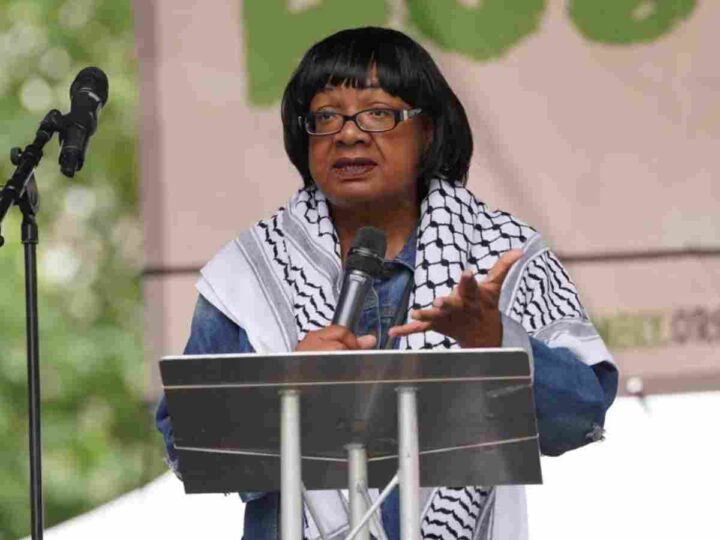
Diane Abbott

Diane Abbott

With Andy Burnham not two weeks into his tenure as PM, the new Labour leader has restored the whip to both Diane Abbott and Joani Reid. Both MPs went through independent disciplinary processes.

Starmer suspended Abbott for a second time back in July 2025. Both suspensions related to a 2023 letter in the Observer, in which Abbott claimed that Irish, Jewish and Traveller people experience prejudice but not racism. The letter triggered the first suspension, and her defence of that opinion in a 2025 interview triggered the second.

Reid, for her part, relinquished the whip voluntarily in March 2026. The Metropolitan Police had arrested her husband, David Taylor, on suspicion of assisting the Chinese foreign intelligence service.

A spokesperson for the Labour Party said:

Advertisement

The Labour party expects the highest standards from our elected representatives and party members. The party assesses any alleged breaches of such standards independently of the leadership and political interference.

Following a process conducted under Labour party rules and approved by the independent review board, Diane Abbott and Joani Reid have been readmitted to the Labour party and have had the Labour whip restored in the House of Commons.

Diane Abbott has also apologised following the independent process coming to an end. All Labour elected representatives must be mindful at all times of their platform and the responsibilities that come with that privilege.

Diane Abbott

In her 2023 Observer letter, Abbott wrote that Irish, Jewish and Traveller people:

undoubtedly experience prejudice. This is similar to racism and the two words are often used as if they are interchangeable.

Abbott later withdrew her statement and apologised, stating that:

Advertisement

there is no excuse, and I wish to apologise for any anguish caused.

Racism takes many forms, and it is completely undeniable that Jewish people have suffered its monstrous effects, as have Irish people, Travellers and many others.

However, Starmer suspended the Hackney MP pending an investigation. The Labour Party only restored the whip to Abbott in May 2024. Around 40 prominent Black public figures signed an open letter calling Labour’s mishandling of Abbott’s case an example:

of the systemic racism highlighted in the Forde report on factionalism in the Labour party commissioned by Starmer himself.

However, in a July 2025 interview BBC Radio 4’s James Naughtie asked Abbott if she regrets the comments that triggered her first suspension. She replied:

No, not at all. Clearly, there must be a difference between racism which is about colour and other types of racism, because you can see a Traveller or a Jewish person walking down the street. You don’t know. You don’t know unless you stop to speak to them or you’re in a meeting with them. But if you see a black person walking down the street, you see straight away that they’re black. There are different types of racism.

Keir Starmer once again rushed to suspend Abbott over her remarks. Labour peer Shami Chakrabarti, among others, highlighted that Starmer had no right to criticise Abbott after the naked racism of his infamous ‘Island of Strangers’ speech.

Advertisement

Joani Reid

Joani Reid was first elected to Parliament in 2024, as MP for East Kilbride and Strathaven. Her husband, David Taylor, was a former special adviser to the Welsh government.

Reid served as chair of the all-party parliamentary group on antisemitism. Notably, when over 80 MPs signed a letter calling for sanctions on Israel, Reid’s name was absent.

When the Supreme Court ruled that the definition of ‘woman’ under the Equality Act referred to sex-assigned-at-birth, Reid wrote in Labour List to celebrate. She called trans rights campaigners a “men’s rights movement”, and accused trans people of promoting homophobia and “dangerous body dysphoria”.

She also accused the Scottish National Party of having:

Advertisement

turned Glasgow into a sanctuary for asylum seekers through their own virtue-signalling policies.

We know that modern Labour is a racist cesspit, but ‘sanctuary’ is the literal definition of ‘asylum’. That’s the whole fucking point of the thing.

Back in March 2026, the Metropolitan Police arrested David Taylor and two other men, citing violations of Section 3 of the National Security Act 2023. The arrests, supported by Welsh and Scottish branches of Counter Terrorism Policing, related to Chinese intelligence services.

Reid released a statement holding that:

I have never seen anything to make me suspect my husband has broken any law.

I am not part of my husband’s business activities and neither I nor my children are part of this investigation, and we should not be treated by media organisations as though we are. Above all I expect media organisations to respect my children’s privacy.

Advertisement

The Guardian reported its understanding that Reid “has never been party to the police investigations” into Taylor, according to Labour Party sources.

Welcome back to the Mother of the House

The Canary has previously reported that Burnham abandoned his support for trans rights on the Makerfield campaign trail. The former Manchester mayor was once a vocal critic of ‘single-sex’ restrictions on bathrooms.

However, back in May, he U-turned to back the Equality and Human Rights Commission’s new deeply transphobic code of practice.

Likewise, despite his pledge to “put pressure on the Israeli government”, he’s still stopped short of naming Israel’s actions as genocide. He’s also voiced support for Shabana Mahmood’s racist immigration ‘reforms’, demonstrating that his views on asylum seekers align far too closely with Reid’s deplorable statement.

Advertisement

As such, we see Burnham’s reinstatement of the whip to Joani Reid as a demonstration that he fully intends to continue down the path of right-wing Labour politics. At the very best, he clearly doesn’t consider Reid’s out-and-out bigotry a deal-breaker, and that bodes ill for all marginalised people under a Burnham premiership.

Our congratulations to Diane Abbott, mother of the house, on getting her place back in party she helped build.

Featured image via the Canary

By Grace

Advertisement

Source link

Continue Reading

Politics

Hackney votes to end 58-year Haifa twinning, citing “anti-racist values”

Published

on

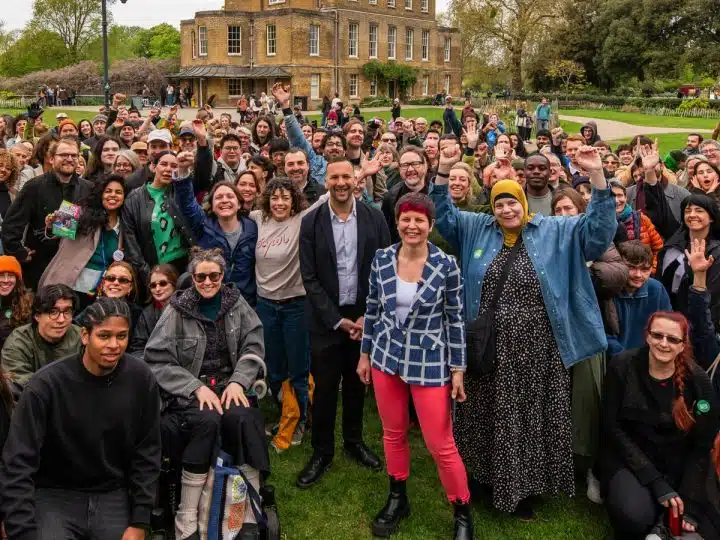
Hackney Greens vote to terminate Haifa twin city agreement

Hackney Greens vote to terminate Haifa twin city agreement

Hackney’s Green Party-led Council has voted to end its 58-year-old twin-city agreement with Haifa, a port city that “Israel” violently captured in 1948.

Councillors have upheld the vote as a commitment in their May 2026 local elections manifesto. They have pledged to end the twinning arrangement at “the earliest possible opportunity,” the details of which are under consideration.

The decision follows years of pressure by Palestine solidarity activists. The decades-long campaign involved a broad coalition of groups. These included the Greens, Stop the War, Hackney Independent Socialist Collective, and the Palestine Solidarity Campaign (PSC). The campaign gathered steam in 2024. At the time, a public petition calling out Israel’s repeated war crimes in Gaza and the occupation of the occupied West Bank received 4,000 signatures.

Advertisement

“At odds with our anti-racist values”

Hackney Council describes itself as an “actively anti-racist and human rights-respecting local authority,” and says “international partnerships remain relevant and reflect the shared values [of Hackney residents].” Councillor Sam Mathys, responsible for managing the twinning relationship has previously said that:

We want civic partnerships that are about fostering peace, justice, and equality […] For decades, we have witnessed human rights abuses committed by the State of Israel against the Palestinian people, which has escalated to a horrifying and unprecedented scale over the past years.

Advertisement

Raising similar points, Hackney mayor, Zoe Garbett said:

Given the ongoing humanitarian crisis, and the gravity of the UN Commission of Inquiry Reports concluding Israel has committed genocide, maintaining a civic connection with what is widely recognised [as] a military port city is fundamentally at odds with our anti-racist values.”

The city that houses Elbit Systems

Haifa is promoted as a progressive, left-wing model of coexistence — the very rationale used to justify the Twin City agreement six decades ago. However, this isn’t the case. Haifa is one of three Palestinian coastal cities Israel has been occupying since 1948. It is also the site of the first Palestinian ghetto post-Nakba.

Since then, Haifa has functioned as a major logistical hub for seaborne military shipments. It hosts Israel’s main naval base and the headquarters of Elbit Systems Global. Elbit is the occupation’s largest privately owned arms manufacturer, and produces 85 percent of the Israeli Occupation Forces’ (IOF) land-based equipment and drones.

Advertisement

One might wonder how we got here? In 1948, 95 percent of Haifa’s indigenous Palestinian population were violently expelled by Zionist Haganah militiamen. Those Palestinians who survived the exterminationist campaign today face unparalleled discrimination across housing, employment, education and politics, and much more.

A survey published in May 2025 found that 82 percent of Jewish Israeli citizens supported the forced expulsion of Palestinians from Gaza. They also supported wanton killings of Gazans by the IOF. According to Orly Noy, former chair of B’Tselem, it will take “decades of rehabilitation” for Israeli society to rectify and undo these views.

Defenders of “Israel”

The decision, as is to be expected, has ruffled the feathers of Labour party members and affiliates. In 2024, the de-twinning was formally presented to the council. At the time, Labour councillor Michael Desmond described it as an “appalling, abusive tirade,” and defended the agreement as one which promotes:

cultural values, religious freedom, tolerance and peaceful coexistence.

Labour councillor for Hoxton West, Ben Lucas said his party could not support the paper “in all good conscience.” He told the Greens they were punishing the “Israelis” for the actions of their government.

Advertisement

Conservative party councillor Simche Steinberger has also criticised the de-twinning decision. He cited medical exchanges between Hackney’s Homerton University Hospital and Haifa’s Rambam Hospital. At the debate, he said:

It’s probably the only twinning which actually does something because I remember a few years ago where the doctors from Haifa Hospital were here in Homerton teaching them what to do.

A license to kill

Rambam is the biggest Israeli hospital in northern Israel, situated 30 miles from the Lebanese border. For the past three decades there has been “medical cooperation” between these two hospitals. But this is not the type of medical cooperation you might expect, because Ramdam hospital also works closely with the IOF.

Ramdam not only treats tens of thousands of injured IOF, it also trains IOF doctors to treat soldiers who have killed and maimed civilians. This enables the ongoing genocide in Gaza.

The IOF act with total impunity in both the West Bank and Gaza. They detain children, steal Palestinian land, control movement, raid homes, and prevent access of emergency services to the injured. They protect illegal armed settlers, and kill and maim innocent civilians.

Advertisement

Is this the culture of tolerance defenders of Israel have in mind when excusing the genocidal and racist conduct of the colonial-settler project?

Second class citizens

Sussan Rassoulie, a key proponent of the campaign and the leader of the 2024 petition, says there are multiple reasons why Hackney should not be twinned with Haifa. She underlines the second class treatment of Palestinians from Haifa and other cities in and outside of the West Bank. In addition, citing Israel’s 2018  Basic Law, Rassoulie reminds us that the occupation:

recently enacted, explicitly racist death penalty law, passed by the Knesset, also applies in Haifa.

In conversation with the Canary, Rassoulie has this to say:

Hackney Palestine Solidarity Campaign welcomes Tuesday evening’s decision if it marks the start of a swift process to end a twinning relationship with Israel’s third largest city and principal military port. We hope that a move by Hackney’s now Green-led administration will encourage campaigners in other local authorities that may still have twinning relationships with cities or towns in a state engaged in a genocidal war in Gaza and pursuing a brutal policy of ethnic cleansing in the West Bank and East Jerusalem.

Time to Isolate “Israel”

Various other towns and cities in England are also twinned with the Zionist state. Newcastle and Portsmouth are also twinned with Haifa in Northern “Israel,” while Bournemouth is twinned with the resort of Netanya. The borough of Barnet is twinned with the Tel Aviv neighbourhood of Ramat Gan. Meanwhile, the borough of Elstree and Borehamwood in Hertfordshire is twinned with the central town of Shoham.

Advertisement

It is time all ties with the genocidal state of “Israel” were broken, and the Israeli occupation is isolated on the world stage. They only help to legitimise and normalise its horrendous crimes against the Palestinians.

Hackney Council says it will now set up an all-party committee, consult residents, and carry out an Equality Impact Assessment. It has given Haifa’s mayor until 5 October to respond to the decision.

Featured image via the Canary

By Charlie Jaay

Advertisement

Source link

Continue Reading

Politics

The House | Building resilience is a team effort

Published

on

Building resilience is a team effort - Westminster can do more to help volunteer search and rescue

A stretcher box below Great Gable, Alamy


5 min read

One rescue from the Lake District captures why volunteer search and rescue matters. A group of girls had just finished their GCSEs and set off on what should have been a three or four-day journey across the fells. As they reached the top end of Ennerdale, a major thunderstorm hit. Streams that would normally have been easy to step across were suddenly transformed into dangerous torrents.

Advertisement

One of the girls was swept off her feet and carried downstream. Thankfully, her friends managed to grab hold of her and pull her out. But the group was left stranded, soaked through and trapped between flooded watercourses in one of the most remote parts of Cumbria.

Mountain rescue volunteers were called out. They reached the group, escorted them safely across the flooded becks and into shelter. Nobody would have blamed them for calling their parents and ending the trip. Instead, after talking it through together, they decided to continue.

That moment says something important about the outdoors. It builds confidence, resilience and judgement, particularly in young people. We should want more people to experience it safely, not fewer.

But it also illustrates something Westminster too often overlooks: when things go wrong, the public rightly expects help to be there. Increasingly, that help comes from volunteer search and rescue teams.

Advertisement

Across the UK, volunteer search and rescue teams support police forces, ambulance services, fire and rescue services and other partners in some of their most demanding incidents. They search for vulnerable missing people, rescue injured walkers and climbers, respond during floods and severe weather, and provide specialist capabilities that have become an indispensable part of Britain’s emergency response system.

Yet while the public assumes help will arrive when it is needed most, far less attention is paid to how that capability is sustained. That matters because resilience has risen rapidly up the political agenda. Westminster increasingly talks about emergency preparedness, civil contingencies and public safety. But one of Britain’s most valuable emergency response assets has too often remained on the margins of those discussions.

Volunteer search and rescue does not have a capability problem. It has a recognition and sustainability problem.

Advertisement

Government already relies on volunteer search and rescue. Public policy has simply been slower to catch up with that reality.

The recent wildfires in the Peak District and in the Cairngorms in the Highlands are a timely reminder. Mountain rescue teams have worked alongside fire and rescue services, providing specialist personnel, local knowledge and increasingly sophisticated drone capability. Few people associate mountain rescue with wildfire response, yet without that support the task facing fire services would have been significantly harder.

Thousands of volunteers provide a highly skilled capability on which statutory services routinely depend. Yet the support around them does not always match the responsibility placed upon them.

Advertisement

Rising insurance costs, regulatory barriers, employer pressures and increasing operational demands all affect the ability of teams to respond. These issues rarely make headlines. But they determine whether this vital capability remains sustainable.

That is why the All-Party Parliamentary Group for Volunteer Search and Rescue was created: to turn frontline experience into practical policy change. One year on, it is already delivering results.

The clearest example is the Government’s decision to exempt search and rescue vehicles from Vehicle Excise Duty. The financial benefit is welcome, but the wider significance is greater. It acknowledges that volunteer search and rescue is a public service and a critical part of the nation’s resilience infrastructure.

Recent concerns over Care Quality Commission registration requirements for volunteer mountain rescue teams provide a good example. Nobody disputes the importance of patient safety. The question is whether regulatory frameworks designed for hospitals and commercial healthcare providers are proportionate for volunteer emergency services operating in challenging environments.

Advertisement

Good policy reflects operational reality. If regulation becomes disproportionate, the result may be fewer teams able to provide cover, higher costs and greater pressure on statutory services. The APPG is now looking at wider challenges, including insurance, workforce recognition, employer support and legislative barriers. None are glamorous issues. All have a direct impact on whether teams can respond when the call comes.

The irony is obvious. At a time when government rightly places greater emphasis on resilience, it continues to depend heavily on a capability built largely on voluntary effort. That model works because of the extraordinary commitment of volunteers. It should not be taken for granted.

Every rescue depends on training, fundraising, equipment, governance, employer flexibility and thousands of hours of unpaid commitment long before an emergency happens.

The public sees the rescue. Policymakers should see something more: a critical national capability on which the country increasingly depends.

Advertisement

The past year has shown that when Westminster engages seriously with volunteer search and rescue, progress follows.

The question is whether government is prepared to go further, because resilience cannot simply be praised when emergencies happen.

It must be supported before they do.

Torcuil Crichton is Labour MP for Na h-Eileanan an Iar andm chair of the Voluntary Search & Rescue All-Party Parliamentary Group

Advertisement

Source link

Continue Reading

Politics

Politics Home | MPs And Peers Urge Burnham To Launch National Commission On Lords Reform

Published

on

MPs And Peers Urge Burnham To Launch National Commission On Lords Reform


3 min read

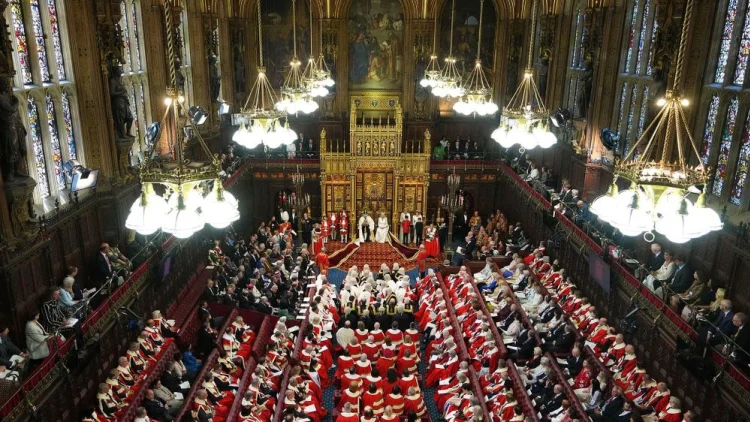
A cross-party group of MPs and peers has urged Prime Minister Andy Burnham to expedite plans to abolish the House of Lords.

Advertisement

In a letter seen by PoliticsHome, 53 parliamentarians have asked Burnham to establish a national commission to examine options for replacing it with a more representative chamber.

“Whilst we welcome the initial steps taken by the government to reform the upper chamber, we remain deeply concerned about the impact its current structure has on people’s lives,” the letter says, adding: “This institution underpins the everyday realities of communities across the UK, and with trust in politics at an all-time low – it is crucial that we have a second chamber that is representative and accountable.”

Parliament has already approved legislation brought forward by the Keir Starmer Labour government to remove the remaining hereditary peers from the upper chamber.

Responding to the letter on Friday, the government pointed to the removal of the hereditaries as an example of fundamental Lords reform, and stressed that the new Prime Minister has a long-term commitment to replace the unelected chamber with something more representative of the regions and nations.

Advertisement

However, the cross-party group expresses concern that government is not moving quickly enough, pointing to Labour’s 2024 manifesto commitment to replace the House of Lords with “an alternative second chamber that is more representative of the regions and nations”.

The letter was organised by the co-chairs of the All-Party Parliamentary Group for House of Lords Reform, Labour MP Dr Simon Opher and former Tory cabinet minister Kit Malthouse, and is signed by MPs such as Labour’s Diane Abbott, Kim Leadbeater and Rosena Allin-Khan; Green MP Ellie Chowns; Plaid’s leader in Westminster Liz Saville-Roberts; and Lib Dem MPs Christine Jardine and Wera Hobhouse.

It recommends that the national commission be made up of citizens and constitutional experts who would be asked to discuss how a more representative second chamber would work. This would be a “clear way in which this government could deliver on its pledge,” according to the group.

Advertisement

It reminds Burnham of comments he made during the Makerfield by-election, which paved the way for him to enter No 10: “I don’t think we can justify half of our national legislature being unelected”, and argues that abolishing the unelected House of Lords would complement his commitment to devolving power away from Westminster and strengthening regional representation.

“As you have committed to making regional representation a cornerstone of your Premiership, this is a significant opportunity to embed that principle into the UK’s constitutional architecture,” they write. 

The letter also points to polling from the UCL Constitution Unit and YouGov showing that 79 per cent of the public support limiting prime ministerial powers to appoint peers and 71 per cent support capping the size of the Lords so that it cannot exceed the Commons. 

“We would welcome the opportunity to discuss this with you and to work together towards a legislature that better serves people across every part of the United Kingdom,” it says.

Advertisement


Advertisement

Source link

Continue Reading

Politics

‘Try-again’ PM Burnham lauds nukes and militarism during BAE visit

Published

on

BAE Systems

BAE Systems

New PM Andy Burnham’s left-wing credentials have lasted about as long as left-out milk. Less than a fortnight into his reign, the gimmicky Scouser was spotted bowing to The Holy Nukes in a visit to BAE Systems’ Barrow-in-Furness death factory.

BAE won’t fix what’s broken

Burnham told reporters:

Keeping this country safe is the first responsibility of any government – but security is not only about what we build; it is about who builds it, and who benefits from it.

Nukes, naturally, are well known for bestowing safety. In a press release ahead of the visit on 30 July, the government insisted:

A major £8.4bn investment in the UK’s nuclear deterrent, delivering jobs and opportunity for young people for years to come, is set to be announced by the Prime Minister today.

Tens of thousands of jobs will be supported – from Barrow to Bristol – and hundreds of businesses bolstered by the major tranche of defence investment.

Advertisement

Little mention was made of the fact that military spending is one of worst routes by which to achieve economic growth. Quite the opposite, according to the Transition Security Project, who have warned:

that cuts used to fund the £15 billion in additional military spending in the Defence Investment Plan will lead to around 10,000 net jobs lost in the UK.

Great work, Andy. We’re sure you can obscure all this with a DJ set or something…

Military Keynesianism is a fantasy

And, as the Canary has reported, Labour’s current policy of recruiting the whole of society to so-called military Keynesianism – an economy built around war – is a canard.

But it isn’t the only option. The Campaign for Nuclear Disarmament (CND) has proposed an alternative defence policy rooted in:

Advertisement

…human security and common security—prioritising diplomacy, global cooperation, conflict prevention, and investment in health, education, climate resilience, social care, and the creation of well-paid, secure, unionised and socially useful jobs.

Professor Karen Bell, editor of the proposal, said:

This report offers a credible, democratic alternative to militarism: a sustainable economy grounded in social justice, global solidarity, and the urgent need to build peace—not war—for the 21st century.

Military Keynesianism is an economic ideology Keir Starmer tried to popularise. Burnham has made clear he will continue it. And the winners won’t be workers. Rest assured, arms firms are the ones rubbing their palms together at the sight of massive handouts in public money so that they can fill the armouries to order.

Featured image via the Canary

By Joe Glenton

Advertisement

Source link

Continue Reading

Politics

The House Opinion Article | Development must have a seat at Cabinet

Published

on

Development must have a seat at Cabinet


4 min read

For the first time in almost three decades, a Labour Prime Minister is chairing Cabinet without a dedicated minister – or secretary of state – for international development sitting at the table. The significance of this is not administrative; it is political.

Advertisement

If Britain is serious about global leadership, its institutions must be fit for that role. A smaller development budget makes strategic prioritisation more important, not less. Development should not sit at the margins of foreign policy but at the heart of decision-making, ensuring resources are directed where they can have the greatest impact.

Cabinet-level representation gives a minister the authority to shape decisions across government and the standing to represent Britain internationally. The question is whether development expertise carries sufficient weight when decisions are made on security, diplomacy and Britain’s engagement with the world.

That question matters now more than ever. Andy Burnham has inherited an exceptionally challenging international environment. The war in Ukraine rages on, conflict persists across the Middle East, geopolitical competition is intensifying, climate pressures are accelerating, and humanitarian needs are reaching unprecedented levels. Britain must respond with confidence and purpose, using every tool available to advance its interests and values.

As Foreign Secretary, Ed Miliband has set out an ambitious vision for Britain’s role in the world: defending democracy and the rule of law, standing with Ukraine, strengthening alliances, deepening engagement with the Global South, tackling the climate crisis and reforming international institutions so they work more effectively. These are the right priorities for a more unstable era. But delivering them will require every tool of statecraft.

Advertisement

His decision to take on the role of UK Governor to the World Bank reinforces that message. As he has argued, international development is “not an add-on to British foreign policy; it is central to it”. Today’s challenges are increasingly interconnected: climate change, conflict, economic instability, health crises and humanitarian emergencies demand an approach that brings development expertise together with diplomacy and defence. That, in turn, requires development to have the political authority to shape decisions at the centre of government.

Labour has long argued that international development is not simply an act of charity but a strategic investment in Britain’s security, prosperity and global standing. Burnham captured that principle in 2010 when he argued that international development was “not all about charity; this is good for Britain,” adding that “Labour should proudly defend our record on international development”. As Prime Minister, he now has the opportunity to put that principle into practice by giving development a voice at the decision-making table.

If international development is truly central to Britain’s role in the world, it must also be central to the way Britain governs itself

Advertisement

That authority matters particularly when difficult choices are being made. Among the decisions inherited by the new government are the latest Official Development Assistance (ODA) allocations, which raise serious questions about Britain’s ability to sustain long-term partnerships and respond effectively to global challenges.

The scale of those choices is stark: by 2028/29, ten of the 17 African countries receiving direct UK ODA support will have little or no budget remaining. These reductions will not only affect some of the world’s poorest communities, but also diminish Britain’s influence at a time when other countries are increasingly willing to fill the space we leave behind. That is precisely why development requires a strong voice at the centre of decision-making.

Britain has demonstrated the value of that approach before. During the Ebola crisis in Sierra Leone in 2014, the UK recognised the outbreak not simply as a humanitarian emergency but as a matter of national interest. At the time, Britain was meeting the 0.7 per cent gross national income aid commitment, DFID was a standalone, globally admired department, and the Secretary of State for International Development sat at the Cabinet table. That institutional strength enabled Britain to respond early, helping contain the outbreak before it reached our shores.

Advertisement

The lesson remains just as relevant today. The Ebola outbreak in the Democratic Republic of Congo shows that global crises cannot be managed through emergency response alone. They require investment in resilient health systems, effective governance and long-term partnerships alongside diplomatic and security engagement. Yet Britain now approaches these challenges with a development budget reduced to 0.3 per cent of GN, no standalone department and no dedicated Cabinet-level minister.

The choice facing the government is clear. Britain’s influence has never rested solely on diplomacy or military strength. It has also been built through enduring partnerships, stronger institutions and the trust earned by standing with allies through periods of uncertainty.

Restoring a Cabinet-level Development Minister would recognise that reality. It would ensure that development expertise is represented where Britain’s most important foreign policy decisions are made. If international development is truly central to Britain’s role in the world, it must also be central to the way Britain governs itself.


Advertisement

Libby Smith is Vice Chair of Labour Campaign for International Development and Director of Advocacy at Coalition for Global Prosperity

Source link

Continue Reading

Politics

Militarist chancellor Healey wants military oversight of defence budget

Published

on

Defence minister, Healy

Defence minister, Healy

Newly appointed chancellor John Healey has opened the door for the UK military to shape defence budgets. His proposal is another step away from democratic oversight of how public money is spent. And it’s all part of a defence spending ideology that’s full of holes!

Declassified UK reported on 30 July:

Britain’s new chancellor John Healey has asked for a military officer to accompany him at the Treasury, it has emerged.

The move indicates how much weight Healey will place on weapons procurement after resigning as defence secretary last month in protest at Keir Starmer’s military spending plans.

The UK-based outlet pointed out that the move is highly unusual:

Advertisement

Chancellors do not normally have a serving military officer assigned to their private office, with the placements typically reserved for the prime minister and defence ministers.

However, Healey has requested an army major, naval lieutenant commander or air force squadron leader join his top Treasury team for at least the next six months.

Experts were quick to warn that this could amount to undue military influence over budgets which are meant to be democratically accountable.

Notoriously wasteful military

Transition Security Project co-director Khem Rogaly told Declassified:

Stationing a military officer at the Treasury will increase pressure to cut other areas of government spending to fund the soaring military budget. Cuts to fund the Defence Investment Plan were targeted at net zero during a summer of unprecedented heatwaves and severe droughts.

Adding:

Advertisement

These cuts meant that the £15 billion added to the military budget will lead to net job losses in the UK. Further cuts will be deeply unpopular and damage the economy, taking money from schools and hospitals to fund a notoriously wasteful military.

Rogaly pointed out military spending is bad way to get growth and create jobs:

It should not escape the Treasury’s attention that military spending is one of the worst forms of public investment for jobs and growth. Military largesse is an extremely damaging economic strategy.

Who pulls the defence lever?

And that the military’s:

existing plan to increase military spending pours money into a broken system that already loses billions every year to cancelled contracts and fraud.

Added to this, large parts of the current budget seem to have less to do with national defence and more to do with spreading militarism overseas:

Despite the claim that more military spending is needed for national defence, the Defence Investment Plan commits Britain to military engagement in the Middle East, Indo-Pacific, Africa, Latin America and the Caucuses.

Declassified reported that the Treasure had not responded to questions. But that the head of the military, Sir Phil Knighton, had signed off on the new posting. It seems like the decision has already been made, with no sense that the erosion of democratic control is a concern for the Labour government.

Advertisement

Featured image via the Canary

By Joe Glenton

Source link

Advertisement
Continue Reading

Trending

Copyright © 2025