

Politics
The House Article | The government must intervene before the universities crisis worsens



Starmer’s policies have failed to meaningfully support universities and colleges (Alamy)

4 min read
During moments of political crisis it’s often said there are weeks when decades happen. This has been one such week.
Last Thursday the country overwhelmingly rejected Keir Starmer and the direction he has taken the Labour Party. As general secretary of the University and College Union (UCU), I called for him to set out a timetable for his departure. I did so, not simply because he’s lost the confidence of the country, but because his government’s policies have failed to meaningfully support universities and colleges and, in many cases, have actively deepened the crisis facing them.
For months ministers have talked about the need to support young people: at Labour Party conference, in the King’s Speech, and in repeated promises about opportunity and national renewal. Yet the rhetoric has never been matched by investment. Britain is now on course to become the first generation to leave its children poorer than themselves. That is the defining struggle of our time, and education should be at the centre of any serious response to it. Instead, Labour has adopted little more than a holding position while the crisis in higher education worsens by the week.
UCU has been sounding the alarm on university finances for years. On Tuesday, Parliament’s Education Committee finally put its weight behind those warnings. Its report describes a sector under “unprecedented” financial pressure and warned dozens of universities are at risk of going bust within the next 12 months.
This is a sector that contributes hundreds of billions of pounds annually to the economy, employs half a million people, educates three million, and projects soft power across the world, with more world leaders graduating from the UK than any other country. Campuses also act as economic drivers in many of the post-industrial towns that were once considered Labour heartlands, creating jobs and building pride in local communities. In short, UK higher education remains one of the sectors Britain leads the world in, creating huge benefits: locally, nationally and globally.
Every pound of public money invested in higher education results in a £14 return. If last Thursday’s voters had seen meaningful investment locally, they may not have turned so resolutely against Labour. But instead of growth, Labour chose to launch self-defeating attacks on international students: a new levy, stricter rules for those on graduate visas, embracing ever more hostile migration rhetoric. It chose to sacrifice our universities on the altar of Reform’s hard-right immigration agenda in an attempt to win votes. This strategy ended in spectacular failure last Thursday, with voters from the centre, the left, and the right turning against the party like never before. Now, as with many of our universities, it is terminal for Labour.
The consequences for universities, staff, students and local communities are now severe. If institutions begin collapsing before the next general election, the economic and social damage will be immense. Labour cannot claim to support growth while allowing one of the UK’s most successful sectors to fall apart.
That is why the government must implement the Education Committee report’s recommendations on protecting staff, students and local communities from institutional failure. We are calling for direct government intervention before the crisis spirals further.
This must start with a lifting of the hostile migration policies that have harmed higher education, jobs, local economies and resulted in millions of voters abandoning Labour for the Green Party and Plaid Cymru.
Ministers need to recognise the scale of intervention now required. Labour has just announced it will nationalise British Steel, protecting 2,700 jobs. This is the same number of staff that just one institution, the University of Nottingham, put at risk of redundancy this week. Over the past year, UK universities have announced more than 15,000 job cuts.
UCU members continue to fight, and marking boycotts are due to go ahead at multiple institutions if universities refuse to prioritise saving jobs and courses. But our members alone cannot resolve a crisis created by political failure and government inaction.
If Labour is serious about growth, national renewal and the future of young people, it must stop treating higher education as an afterthought. A revived university sector is essential not only for students and staff, but for the future of the UK economy and for any hope Starmer’s successor will have to rebuild public trust and ensure they are not remembered as Britain’s last Labour prime minister.
Jo Grady is general secretary of the UCU

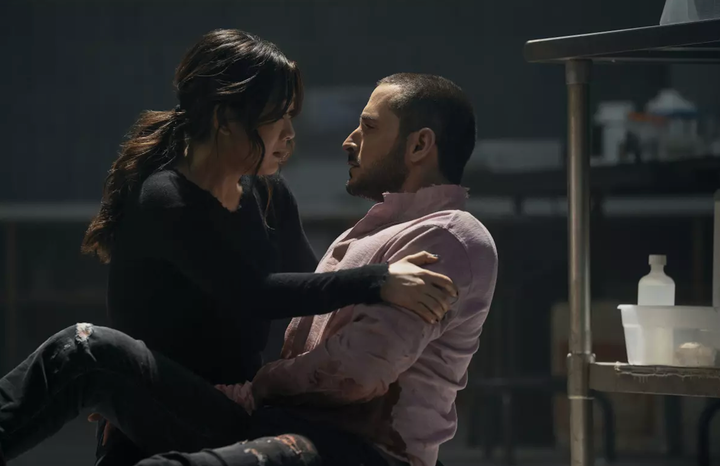
This article contains major spoilers for the most recent instalment of The Boys.
With fans still reeling from the shock death of a lead character in the penultimate episode of the The Boys (season 5), creator Eric Kripke has opened up about what went into the decision.
Now, before we go any further, we are about to say the name of the character who died. So, make sure you’ve watched the episode before you go on reading any further, OK?
So, as you hopefully know by now, episode seven of The Boys’ final season saw Tomer Capone’s Frenchie sacrificing himself in order to save Kimiko Miyashiro.
During an interview with The Hollywood Reporter, showrunner Eric Kripke said it was always the plan to “kill off one of The Boys” as the show reached its climax.

“You can’t have a shot at victory unless it costs your heroes something that’s really hard,” he insisted.
“I always think The Lord Of The Rings was so good at that, and Game of Thrones was so good at that. For narrative momentum, your heroes have to pay a steep price – because that’s how it works in the real world.”
Once he and the team came to this conclusion, they began “going through each character and deciding what was going to be the most heart wrenching”.
“I think we knew early on it was going to be Frenchie,” he said, pointing out that “in so many ways, Frenchie and Kimiko are the heart of the show”.
He continued: “Despite what killers they are, they’re both so emotionally sweet. We knew this would have real maximum destruction, and I think it had to happen.
“They would not have a chance of winning if Frenchie doesn’t sacrifice himself.”
Meanwhile, in a recent interview with the LA Times, Tomer admitted he’s not been able to bring himself to watch Frenchie’s death yet.
“It’s the longest character I ever had in my career, and I can’t. Something tells me not yet,” he shared.
Tomer continued: “I wasn’t surprised when I heard from Eric that Frenchie was continuing on to the big field [in the sky].”
He added: “I had this feeling. I didn’t want to say it out loud. It’s like, at this point, the fifth season, we all felt it. We knew where it was going.”
Following Wednesday’s instalment, there’s now less than a week to go until The Boys comes to an end for good.
While spin-off series Gen V has also been cancelled, its creators previously insisted that its central players would appear in “other VCU projects on the horizon”.


Trade union leaders, representatives and activists from across the UK are calling on the Labour government to reject the proposed Rosebank oil field, warning it would undermine climate commitments, fail workers in the long term, and risk contributing to human rights abuses abroad.
Major unions and more than 1,900 additional trade unionists published the open letter on 14 May 2026. This follows a year of union climate action which the TUC backed after COP30.
The unions supporting the letter include:
- UNISON.
- NEU (National Education Union).
- PCS (Public and Commercial Services Union).
- CWU (Communication Workers Union).
- UCU (University and College Union).
- Equity.
- FBU (Fire Brigades Union).
- BFAWU (Bakers, Food and Allied Workers Union).
- IWGB (Independent Workers Union of Great Britain).
- UVW (United Voices of the World).
The unions represent firefighters, ambulance staff, network management in gas sector, teachers, nurses, cleaners, civil servants and more. They stress that Rosebank is a ‘climate-wrecking project’ set to produce CO2 equivalent to 70 percent of UK annual emissions. This makes it incompatible with the UK’s obligations under the Paris Climate Agreement.
The signatories also argue that approving Rosebank will stall the UK’s energy transition and leave Scotland’s oil and gas workers at risk.
Jobs in the industry have more than halved over the past decade. To date, Rosebank’s rig was built in Dubai, then retrofitted in Norway – something which unions have called a betrayal.
The trade unionists behind the letter stress that the UK must focus on the long-term wellbeing of workers. It needs to invest in the clean energy industries of the future, creating secure, long-term jobs to support workers to transition.
Rosebank – huge risk, negligible benefit
Rosebank has faced increasingly intense political and public opposition in recent years, given the field will do nothing to provide energy security or lower bills in the UK at a time when the nation gears up for yet another conflict-driven price shock.
Despite repeated claims since Trump and Netanyahu’s war on Iran began, new oil and gas fields like Rosebank will not reduce the UK’s reliance on gas imports. In fact, even if Rosebank gets the green light, it will only reduce our national dependency by 1%.
The field’s reserves are mainly oil for export, set to sell on the international market. They will not power British cars or industry, with the profits benefiting Shell and Norway’s sovereign wealth fund while the UK taxpayer effectively covers most of the development costs thanks to huge tax breaks.
The project could also send over £200m towards Delek Group – an Israeli fuel conglomerate that the UN flagged for human rights violations in Palestine. The Scottish Palestine Solidarity Campaign has warned the UK government that it risks breaching its own obligations under international laws on these grounds, should it allow Rosebank to go ahead.
With a government decision due over the next couple of months, trade unionists are urging more members and organisations to sign on. You can read the letter in full here.
Andrea Egan, general secretary of UNISON, commented:
With the Iran war, UNISON members are more worried than ever about their energy bills and transport costs. New oil fields won’t do anything to reduce the prices they pay in the coming months; they will delay action for real energy security and climate justice through a shift to renewables.
At the same time, the likelihood that Rosebank will lead to significant losses for the UK Treasury, while corporations, including one linked to Israeli war crimes, pocket billions, should outrage us all. I know it outrages public service workers.
The government needs a genuine focus on how we get affordability now, get a safe and sustainable future, and get real just transition for workers.
This starts with investing in those public services that pave the way to a low carbon economy and recognising that jobs in Education, Health, Social Care alongside the many other sectors UNISON organise in are inherently Green jobs.
That’s why UNISON says no to Rosebank.
Steve Wright, general secretary of the FBU, said:
Firefighters are on the front line dealing with the wildfires and floods which are more frequent and dangerous because of climate change. There is no option for a safe future other than a transition away from fossil fuels.
We also know that companies extracting oil and gas from Rosebank would sell their product at the highest price on the global market to maximise profits. So the way to shield the UK from future oil price shocks is not North Sea drilling but a transition to renewable energy.
Sarah Woolley, general secretary of the Bakers, Food and Allied Workers Union, commented:
Whether it’s working in kitchens in heatwaves or seeing climate change contribute to rising food prices, our members can see that climate change is a trade union issue.
The government can choose to expand North Sea drilling by approving Rosebank and funnelling more money to oil company shareholders, or they can focus on solutions to tackle the climate crisis, create jobs and ensure our energy is affordable.
Featured image via the Canary
By The Canary

We’ve written before about how using a paintbrush on your tomato plants can help to ensure a fruitful bounty, as you can use the tool to self-pollinate them.
And now, gardener and author Simon Akeroyd has shared that when it comes time to water your soil – especially if it has seedlings or freshly-sown seeds – a spoon could be your secret weapon.
How can a spoon help me to water my plants better?
In an Instagram post, he said that watering soil can help new seeds germinate, but doing so over a large area can be tiring “if you only have a watering can with no attachment”.
Removable heads that attach to the nozzle of your watering can, like “rose” style sprinkler heads, can make the process faster and ensure the even distribution of water.
You can get similar results with various hose attachments, the gardener added.
But, Akeroyd continued, “my tip for a wider distribution of watering is to attach a spoon to the end of your nozzle”.
He does that using cable ties. Others have used tape.
That way, when you tip the can forward, water fans out from the bowl of the spoon rather than streaming in a straight line.
This is especially useful for “broadcast sowing”, Akeroyd continued, stating that “Seeds that you might broadcast sow include mustard, green manures, lawn seed, wildflowers, etc.”
Any other tips?
Yes. Akeroyd said in his clip that if you live in the UK, another way to water pre-seed soil is to simply wait for the rain to come.
Even if you’re using a watering can, this may still be sage advice.
Rainwater is significantly better for your plants than water from the tap, partly because its slightly acidic nature allows it and its nutrients to reach your plants’ roots sooner.
It is a little dirtier, but that’s no bad thing. The Ecological Landscape Alliance (ELA) said that a bit of grime in your water works “like a light application of fertiliser”.
And if your rainwater falls during a storm, even better. Lightning releases soil-friendly nitrates, and while most forms of nitrogen, which is crucial for soil and plant health, aren’t easily absorbed by greenery, nitrates found in rain are incredibly easy for your flowers to process.
Collect rainwater using a water butt or mulching to retain nature’s greatest gift to gardeners.

My two-year-old is definitely more of a daredevil than my eldest child ever was – she’s the stereotypical “second child” who would happily try and abseil down her high chair, or attempt to dive headfirst out of her cot.
At the park, she’ll run too close to the swings – we’ve had a few close calls where I’ve grabbed her last minute before she’s been wiped out by one.
She’ll go full-pelt on a scooter, trip over her own feet in the middle of a road or attempt to leg it away from me while brushing her teeth (cue the fear she’s going to trip and do some serious damage with her toothbrush).
She is incredibly curious, energetic, and a tad accident prone. On any given day I find myself telling her to “be careful” more times than I’d like to admit.
But experts caution against overuse of the phrase, which is vague (be careful of what exactly?) and can begin to lose all meaning or even instil fear and worry in kids.
The problem with ‘be careful’
“Toddlers are not yet able to interpret vague instructions, so when a parent says ‘be careful’, they are not extracting a clear rule or action,” senior educational and child psychologist, Dr Sasha Hall, tells me. “What they tend to pick up instead is the emotional message behind it.
“In simple terms, a toddler hears that something is not safe or that something is wrong, but they do not know what that is or what to do differently. Because the phrase is used across many different situations – climbing, running, carrying objects – they cannot link it to a specific cause and effect.”
The issue here, the expert says, is that rather than learning a usable safety rule, “they are left with a general sense that something might be risky, without the clarity needed to adjust their behaviour”.
Over time, using the phrase “be careful” too much, particularly when it becomes a frequent background message during play and exploration, can also instil fear.
“If a child repeatedly hears that something is wrong, without being shown what the risk is or how to manage it, the environment can start to feel unpredictable,” explains Dr Hall.
“For some children, this can lead to increased caution or reduced confidence.”
Meanwhile, for others, the opposite happens, and the phrase might begin to lose its meaning altogether.
And as children get older and enter their preschool years, repeated use of “be careful” can also lead to frustration or disengagement.
“The child may begin to ignore it or resist it, especially as their drive for independence grows,” says Dr Hall.
“So the impact is not only about anxiety. Overuse can also dilute the message, making it less effective when it is genuinely needed.”
What parents should say instead of ‘be careful’
Try to share something specific and actionable (I know it’s easier said than done when you’re trying to quickly stop them from harming themselves).
“This might involve naming the risk, giving a clear instruction, or showing how to make something safer. For example, ‘that wall is very high, hold the banister’, or ‘go slowly on that step’,” says Dr Hall.
By being more specific, you’re helping your little one understand what the actual risk is and giving them a practical strategy to manage it, which they can actually use going forward.
“Over time, this is what supports the development of confidence and judgement,” adds the psychologist.
“It is also important to recognise that not every situation requires adult input. Children learn where their limits are by testing them. Small mistakes and minor wobbles are a natural part of developing coordination and resilience.”
For some (hi, hello, it’s me) “be careful” can become almost like a reflex over time, which Dr Hall notes is a “very common pattern” – mainly because the phrase is often spoken in moments of instinctive concern.
If this tracks with you, instead of trying to eliminate it completely, it might help to notice it and build on it, says the expert. So, following up your “be careful” with a specific instruction like “hold on with both hands” can help offer more direction.
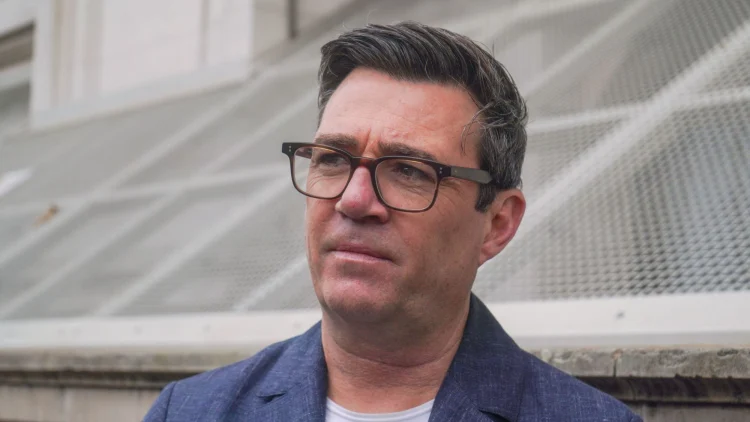
Manchester Mayor Andy Burnham announced his intention to stand for parliament on Thursday afternoon as he sets his eyes on Number 10. (Alamy)

4 min read
Manchester mayor Andy Burnham has announced his intention to stand as an MP in Makerfield in order to return to Parliament and potentially pave a path to No 10, as calls by Labour MPs for Prime Minister Keir Starmer to step down grow.
In a statement on X, Burnham announced he will attempt to stand in the seat after the Labour MP in the constituency, Josh Simons, said he would step down to pave the way for Burnham to run as an MP.
“I can confirm that I will be requesting the permission of the NEC to stand in the Makerfield by-election,” said Burnham.
“I grew up in this area and have lived here for 25 years. I care deeply about it and its people. I know they have been let down by national politics.”
Burnham also said he wanted people to “come back together as a Labour movement”, and called for giving the prime minister and the government “space and stability” while the by-election takes place.
“Millions are struggling and they need the Labour government to succeed. It has already made changes to make life better for them in its first two years,” he said.
“After this week, we owe it to people to come back together as a Labour movement, giving the prime minister and the government the space and stability they need as the by-election takes place.”
The Manchester mayor also thanked Simons for stepping down, and said he recognised “the difficult decision taken by Josh Simons and the sacrifice he and his family are making.”
“I have worked closely with him as Mayor on issues like flooding and illegal waste dumping and have seen first-hand how effective he has been,” said Burnham.
“He has put the communities of Makerfield first, made a real difference for them and should take great pride in that.”
Burnham also said he would “not take a single vote for granted” and would “work hard to regain the trust of people in the Makerfield constituency”.
The next hurdle for Burnham, aside from winning the by-election, is getting the backing of Labour’s National Executive Committee (NEC) – which blocked his recent bid to stand in the Gorton and Denton by-election.
The NEC’s argument for blocking Burnham in Gorton and Denton officially was not wanting an unnecessary by-election in Manchester for the mayoralty, which Burnham currently holds.
However, it was also widely seen as a bid by the prime minister to keep Labour’s most popular politician and possible contender for No 10 out of Parliament in the event of a leadership race.
Burnham’s announcement came after a dramatic day in Westminster, which saw Health Secretary Wes Streeting resign, saying the party currently has a “vacuum” instead of “vision”, and “drift” instead of “direction” – and that Labour’s heavy local election losses last week were “unprecedented”.
There had been mounting speculation since the local election losses on Thursday that Streeting would launch a direct challenge against the prime minister; however, he stopped short of doing so in his resignation letter.
While Streeting criticised Starmer’s leadership – stating “too often” other people had ended up “falling on their swords” for the prime minister, and suggesting he did not listen to backbenchers and had a “heavy-handed approach to dissenting voices” – he stopped short of a direct challenge.
Instead, Streeting said he was supportive of a process to replace Starmer that was “broad” – indicating a desire to include Burnham in the process, with speculation abounding that Streeting does not have the necessary 81 MPs backing him to mount a formal challenge.
“It needs to be broad, and it needs the best possible field of candidates,” said Streeting. “I support that approach and I hope that you will facilitate this.”
Streeting’s calls for Starmer to step down join almost 100 Labour MPs backing the PM’s departure, with senior Labour MP Jess Phillips resigning as a minister on Wednesday, joining a small but growing number of government ministers calling for Starmer to set out a timetable for his departure.
Education Secretary Bridget Phillipson told Sky News on Thursday afternoon that the Cabinet was behind Starmer, and that now was the opportunity to “draw a line under all of this”.
“The prime minister has my full support, and I’m really sorry to see Wes go,” said Phillipson.
“He has been a brilliant health secretary. He’s done a fantastic job, and we saw that today with the NHS waiting list numbers that are really encouraging and what people want to see. But I fundamentally disagree with the position he’s taken.”
Politics
Israeli Defense Minister attacks Lamine Yamal and incites Barcelona against him over Palestine flag


Israeli Defense Minister Israel Katz launched a sharp attack on young Barcelona star Lamine Yamal, inciting against him and demanding his club take a public stance, following him raising the Palestinian flag during the Spanish League title celebrations.
In a post via Twitter, Katz accused the Spanish player of “incitement against Israel and spreading hatred,” considering his solidarity with Palestine to be “support for terrorism,” according to his claim, before calling on Barcelona to “disavow” the actions of its player and affirm that there is no place for what he described as “incitement.”
The Israeli minister’s statements came days after Lamine Yamal appeared waving the Palestinian flag during Barcelona’s celebration parade in the streets of the Catalan city on an open-top bus, before posting a picture of himself with the flag on his Instagram account, which sparked wide interaction and great praise on social media platforms.
In contrast, the player received official support within Spain, as Spanish Prime Minister Pedro Sánchez defended him during a press conference on Tuesday, stressing that “Spain recognised the State of Palestine.”
Furthermore, the Palestinian Football Association sent a thank you letter to Yamal, in appreciation of his position and solidarity with the Palestinian cause, while his appearance with the Palestinian flag aroused a wide wave of anger within Israeli circles, including journalists, fans, and activists on social media platforms.
Yamal is considered one of the most prominent rising talents in world football, having won three Spanish League titles since his promotion to the Barcelona first team in 2023, an unprecedented achievement for a player his age in the history of the Catalan club.
Featured image via the Canary
By Alaa Shamali
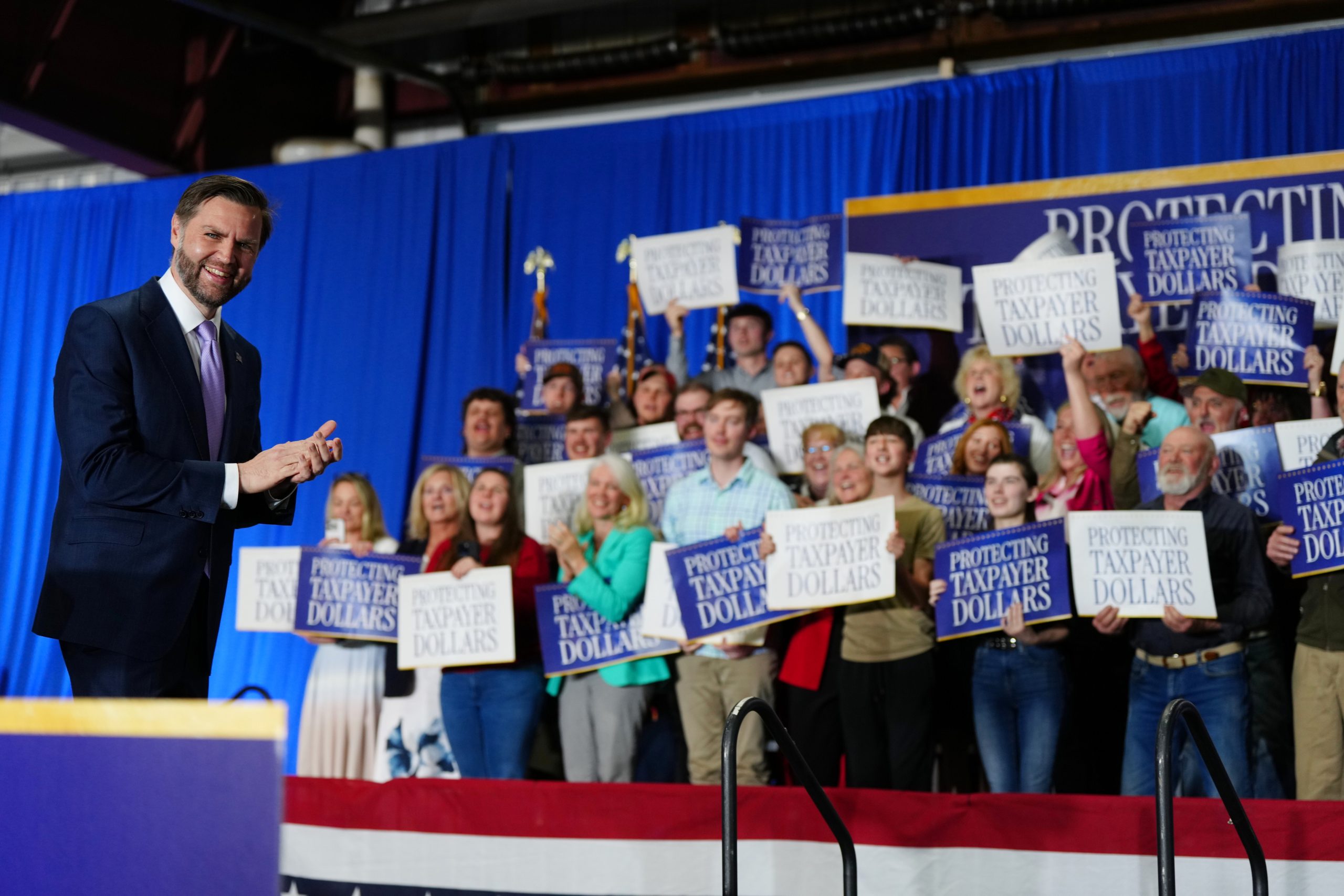

BANGOR, Maine — Vice President JD Vance took his fraud-fighting tour to Maine on Thursday, attempting to cast President Donald Trump and Republicans as responsible stewards of Americans’ hard-earned tax dollars in a pivotal purple state swing district.
The speech provided an opportunity for Vance — one of the administration’s top communicators — to throw out red meat to the MAGA base. He blasted Maine Democratic Gov. Janet Mills, blaming a rise in fraud in the state on her and former President Joe Biden. He claimed Maine was “maybe the bronze medalist” for fraud in the U.S., trailing only Minnesota and California.
“Thankfully, one of them has already been kicked to the curb and one is on her way out the door,” Vance said, speaking in a hangar at the Bangor airport steps away from Air Force Two.
But hanging heavy over Vance’s remarks — and unsaid in them — was the growing discontent voters feel as Trump’s war with Iran propels inflation to a three-year high, and the White House pushes for an unprecedented $1.5 trillion in Pentagon funding from taxpayers.
Gontran Jean, who came to see Vance speak, told POLITICO he’s “not happy about” rising prices stemming from the war — but added, “we don’t really have a choice.” He said he would back Vance if he runs for president in 2028.
Vance also used his visit to offer an olive branch to Maine GOP Sen. Susan Collins — a frequent Trump critic who earlier this week voted with Democrats to try and rein in Trump’s war powers. Back in January, Trump thrashed Collins and other Republican senators who voted with Democrats to curtail his Venezuela incursion, saying they “should never be elected to office again.”
Collins wasn’t present for Vance’s trip, with a spokesperson citing her perfect attendance for Senate votes. But Vance wasn’t bothered — and even heaped praise on the moderate senator.
“Here’s the thing I’ll say about Susan Collins, is sometimes I get frustrated with Susan Collins, I almost wish that she was more partisan,” Vance said. “But the thing I love about Susan is she is independent, because Maine is an independent state. And frankly, if she was as partisan as I sometimes wish that she was, she would not be a good fit for the people of Maine.”
It’s the latest example of a needle Vance attempts to thread between Trump’s impulses and the political realities on the ground. Collins faces a tight-looking general election contest with populist Democratic candidate Graham Platner that could partly decide the balance of the Senate.
Vance’s speech was also the latest in a series of recent visits the presumed MAGA heir made to key states ahead of a potential 2028 presidential bid, including Iowa, Michigan, North Carolina and Arizona. Vance maintains he’s thinking only about the present and not future political ambitions.
Bangor sits in Maine’s 2nd Congressional District, which broke for Trump by more than 9 points in 2024 but has been held by Democratic Rep. Jared Golden since 2019. Last year, Golden announced he would not run for reelection, opening up a crowded primary for Democrats and a seat Republicans tabbed as a high chance to flip despite mounting headwinds for the party.
Vance in his remarks shouted out Paul LePage, Maine’s former Republican governor and the frontrunner in the district, and used the opportunity to hammer home his fraud-busting message.
The vice president called LePage “the biggest advocate for your tax dollars and the biggest threat to fraudsters that ever existed in the state of Maine.” Vance said “fraud has festered in Maine because this guy is no longer the governor.” In his speech before Vance took the stage, LePage vowed a renewed push to end fraud, which received raving enthusiasm from the audience.
“Let’s kick Janet Mills to the curb, and let’s send Paul LePage to Washington,” Vance said.
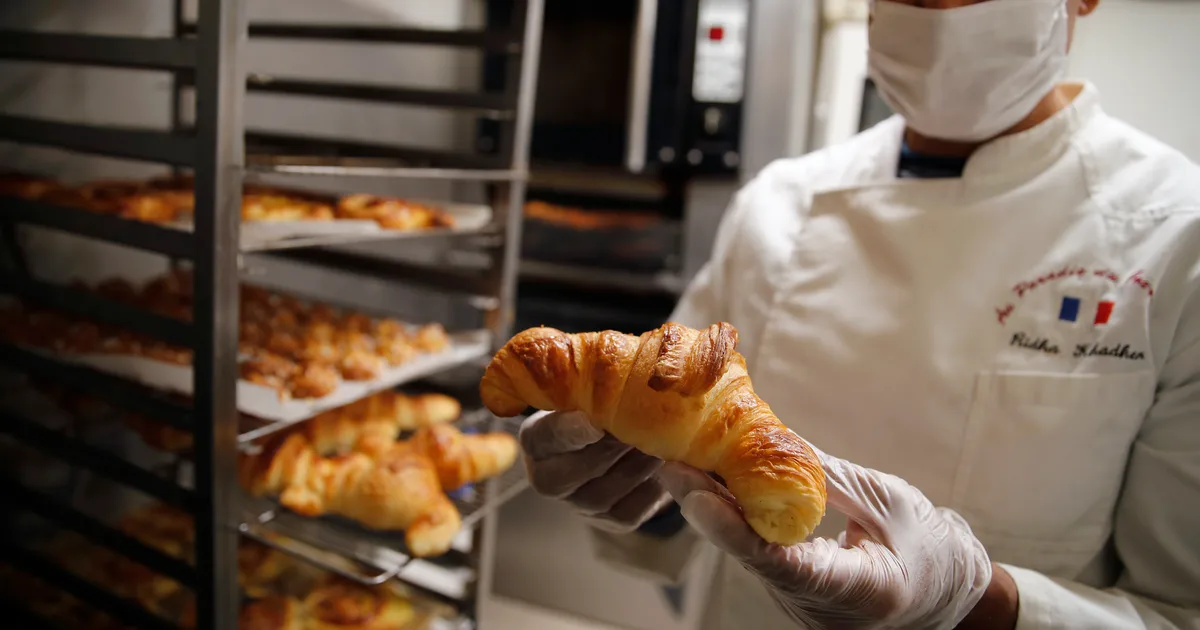
Until several months ago, I only associated the word “Cornetto” with the ice cream brand (and their tasty bottom-of-the-cone chocolate nubs).
What a waste the years prior were. Ever since I tried buttery, pillow-soft Italian cornetto pastry in a bakery dangerously close to my home, I’ve become addicted to the fluffy delight.
But despite being told the creation is basically an “Italian croissant,” I’ve since been roundly rebuffed for repeating that information.
So what is the difference?
Texture has a lot to do with it
According to Italian food YouTuber Giada de Laurentiis, “In France you’d start your day with a flaky, buttery croissant and a cafe au lait, while in Italy breakfast would be a soft and sweet cornetto with a cappuccino.”
That’s because, though they’re both laminated doughs that involve a lot of fiddly folding and time-consuming proving, they each have different ingredients.
The plainest of plain cornetto contains flour, eggs, sugar, milk, butter (or oil, or lard), yeast, and salt; while a French croissant uses more butter, skimps on the egg, and uses less sugar.
Eggs typically make bread and other doughs softer and fluffier (which is one of the reasons why, say, brioche has less bite than baguettes).
That’s because, as pastry chef, recipe developer, and author Nicola Lamb writes in her cookbook Sift, “yolks contain the powerful emulsifier lecithin, which helps retain bubble structures by stabilising the at-odds fat and water in the dough.“
So… how do I tell them apart?
Absent of a label, cornetti may be more likely to be filled with things like chocolate, jam, or custard than croissants.
The “cornetto,” whose name translates to “little horn,” may also have less defined layers ― its topmost layers are also far less likely than a croissant’s to “shatter” when you pick them up.
However, saying that, levels of cakiness differ by region and personal preference.
“Just to confuse things, in parts of Northern Italy cornetti are called “brioche,” though this can have different meanings from one region to the next,” tour site Carpe Diem Tours said.
They don’t make it easy, do they?
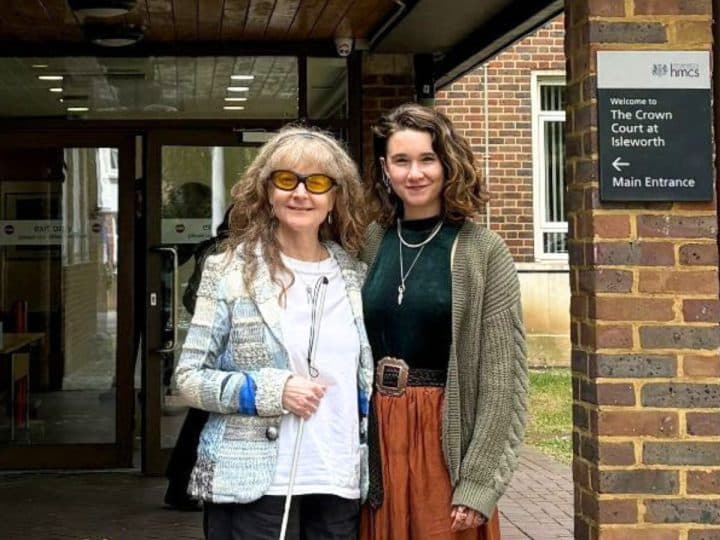

Two Just Stop Oil supporters who sprayed Heathrow departure boards with orange paint during the Oil Kills international uprising to end fossil fuels in July 2024 have been found guilty in a retrial after the jury in an earlier trial failed to reach a majority decision.
Phoebe Plummer and Jane Touil were appearing before Judge Duncan at Isleworth Crown Court for the second time on a charge of criminal damage over £5,000 for their action on 30 July 2024 to demand a fossil fuel treaty to end oil and gas by 2030.
The jury took four-and-a-half hours to reach a majority verdict of 10-2. Following the verdict, Touil said:
Since I took action, global fossil fuel use and emissions have continued to rise. More than ever, we need a global fossil fuel treaty to help governments rapidly phase out fossil fuels.
What we do at this moment in history matters. But there is a difference between laws and morality. The courts apply the law made by powerful people. Morals come from within. It is our morals that give us our conscience. I have always tried to live according to my conscience.
Plummer said:
The climate crisis is the greatest injustice that humanity has ever faced. We should all consider what to do at this time. No individual caused this crisis and no one is solely responsible for stopping it. But we can choose what we do to alleviate suffering.
I feel compelled to act to be a responsible citizen, a loving aunt and a good person. It compels me to hope for a better future and one where my nephew grows up.
I didn’t think the action would change government policy. But non violent civil resistance is a necessary part of tackling the climate crisis and I’m grateful and proud to have been part of that.
Plummer was remanded for 58 days and Touil for 14 days following the 2024 action in which the pair used fire extinguishers to spray diluted water-based paint in Heathrow Terminal 5 including at the departure boards. The Crown alleged that the action caused £8,000 worth of damages and that three of the display screens needed to be replaced.
Judge ruled out various defences for Heathrow action
At trial, Judge Duncan ruled out several legal defences for the action including those of ‘reasonable excuse’ under Articles 10 and 11 of the ECHR, ‘necessity’ and ‘self defence’ on the grounds that the threat from climate change was not proximate enough and the actions too far removed from the threat.
The defendants were allowed to argue belief in consent: that they honestly believed the owners of Heathrow would have consented to the damage if they knew of its circumstances. However, evidence of the relevant circumstances was to be limited to the fact that it was a climate protest with all evidence about the scale and urgency of the climate crisis ruled ‘irrelevant and therefore inadmissible’.
In giving evidence, Touil said:
I genuinely and sincerely believed that if the shareholders [of Heathrow] had a full understanding of the situation we are in they would have given their consent to our action.
Most people believe there is something that is wrong with climate but not many people have access to the full situation because the fossil fuel industry has used their immense wealth to ensure that governments do not act and it is not reported in the mainstream media.
So I don’t know if shareholders have a full understanding, but I know that if they did, they would be doing all in their power to stop fossil fuels because there will be no business as usual, no functioning society, half the population could be wiped out along with 50% of global GDP. I think shareholders want to protect their investment but they also want a future for their kids.
In her evidence Plummer said:
I want to make it very clear that this was not a protest against Heathrow, or anyone flying through Heathrow that day. It’s true that the aviation industry is especially harmful to the climate in terms of emissions, though it is a small number of frequent fliers and private jet users who cause the vast majority of this harm, not families who save up for a holiday once a year.
But this wasn’t about getting people to stop flying. I made this individual change to live in line with my values, but honestly I know that it’s pretty inconsequential. Even if we all woke up tomorrow and stopped flying and went vegan, it would be like mopping up a spill from an overflowing bath whilst leaving the tap on.
All individual changes are like this when we are facing a systemic issue. If fossil fuels are extracted from the ground, then they will all be burnt, even if it’s not on a flight that you’re on. We need systemic change, that has always been Just Stop Oil’s demand.
My intention was not to cause damage. My intention was to take part in an act of nonviolent civil resistance, raising a serious alarm bell to the catastrophic future in store for us if we persist in our addiction to fossil fuels.
Featured image via Just Stop Oil
By The Canary
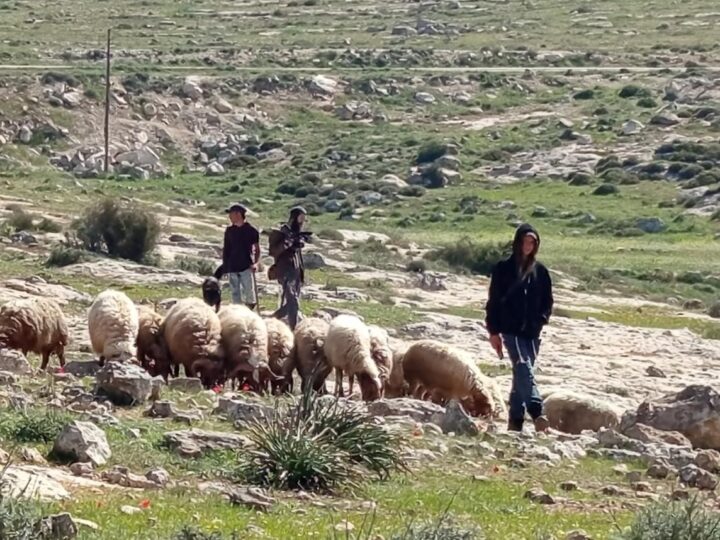

Occupation soldiers have murdered 16-year-old Palestinian Yusuf Kaabneh in the occupied West Bank for trying to stop extremist settlers stealing his father’s sheep. The boy was murdered near Sinjil, by IOF troops protecting the settlers as they stole the family’s livelihood.
150+ attacks a month in West Bank
Settlers committed at least 1,800 attacks during 2025, attacking Palestinian dwellings, crops and water sources and stealing livestock, as well as attacking people. The occupation has murdered more than one child a week since the beginning of 2025 and wounded over 850 others:
Israeli settlers reportedly stole this man’s sheep. When his 16-year-old son confronted them, an Israeli soldier shot the boy dead. pic.twitter.com/3yoNU8iXbU
— AJ+ (@ajplus) May 14, 2026
Israeli troops, courts and the whole apartheid state system protect the perpetrators, who act with impunity and inhumanity.
Israel is a terror state and we must not turn our eyes or condemnation away from its crimes.
Featured image via the Canary
By Skwawkbox

How can PBKS qualify for IPL 2026 playoffs after six-wicket loss to MI in Dharamsala?

Grad-to-be turns graduation cap into Rust-powered light show

#trading #money #crypto #cryptocurrency

Manchester United reach agreement with Casemiro over contract clause amid transfer speculation

US brings back mandatory military draft registration

Steven Gerrard disagrees with Gary Neville over ‘shock’ Chelsea and Arsenal claim | Football


-
 Crypto World6 days ago
HarrisX Poll Found 52% of Registered Voters Support the CLARITY Act
-

 Fashion6 days ago
Weekend Open Thread: Marianne Dress
-

 Fashion3 days ago
Coffee Break: Travel Steam Iron
-

 Fashion4 days ago
What to Know Before Buying a Curling Wand or Curling Iron
-

 Tech5 days ago
Auto Enthusiast Carves Functional Two-Stroke Engine from Solid Metal
-

 Politics3 days ago
What to expect when you’re expecting a budget
-
 Business5 days ago
Ignore market noise, India’s long-term story intact, say D-Street bulls Ramesh Damani and Sunil Singhania
-

 Politics6 days ago
Politics Home Article | Starmer Enters The Danger Zone
-

 Tech4 days ago
GM Agrees To Pay $12.75 Million To Settle California Lawsuit Over Misuse Of Customers’ Driving Data
-

 Crypto World5 days ago
PROS explodes 48% as Upbit and Bithumb listings ignite demand
-

 Crypto World4 days ago
CZ says US crypto rivals tried to block Trump pardon
-

 Sports7 days ago
Bayern Munich vs PSG UEFA Champions League SF2 live match time, streaming | Football News
-

 Entertainment6 days ago
YNW Melly Denied Bond Again Ahead Of Double Murder Retrial
-

 Tech3 days ago
GM agrees to $12.75M California settlement over sale of drivers’ data
-
Entertainment7 days ago
Hantavirus — cause of death for Gene Hackman's wife — at the center of Dutch cruise outbreak
-
Crypto World6 days ago
The Hantavirus Danger: Can a Potential Outbreak Spark a New Meme Coin Frenzy?
-
 Politics7 days ago
David Attenborough ‘Overwhelmed’ By Love Shown Ahead Of 100th Birthday
-
Tech6 days ago
The Most Exciting Apple Products In The Pipeline For 2026 And Beyond
-

 Sports6 days ago
After Waka Waka, Shakira now drops first teaser for FIFA WC 2026 song | FIFA World Cup 2022
-

 Sports7 days ago
Ibom Air Anniversary Football Tournament Begins May 9 in Uyo
You must be logged in to post a comment Login