

Politics
The House Article | “The perfect short novel”: Lord Black reviews ‘Operation Heartbreak’



9 July 1943: American 82nd Airborne Division paratroopers en route for the invasion of Sicily | Image by: Pictorial Press / Alamy

4 min read
Gorgeously written and deeply moving, Duff Cooper’s tale of Second World War intrigue has a truly delicious denouement
I might not have been here to write about Operation Heartbreak – Duff Cooper’s only novel – if it hadn’t been for the events which are central to it: the meticulous planning for Operation Mincemeat.
Mincemeat – the subject of Ben Macintyre’s exceptional book, and of a film in 2021, and even a musical (currently showing at the Fortune Theatre in London’s West End) – was the most successful covert operation ever undertaken in the history of warfare. It deceived the Germans into believing the allies would launch the invasion of Europe through Greece. As a result, when the allies landed instead in Sicily in July 1943 – in a turning point in the war allowing the Mediterranean to be opened up – they met significantly less resistance than they might have done. Mincemeat saved thousands of lives. And my father’s may well have been among them as he was one of the first troops ashore.

Image by: SuperStock / Alamy
The story of Mincemeat is well known. British intelligence dressed up the body of a tramp (Glyndwr Michael), placed personal items on him identifying him as Captain William Martin and ensured the body – carrying secret documents about allied plans for invasion in Greece – was washed up on the Spanish coast, where the authorities in Franco’s Spain predictably placed them in German hands. It worked like a dream.
It has been republished as a Penguin Classic, and rightly so. For classic it indeed is
What is less well known is that the first time this operation was actually written about was in an exquisite short novel by Duff Cooper – first lord of the Admiralty under Neville Chamberlain (a post from which he resigned over Munich), later becoming the first Viscount Norwich – after he heard a version of Mincemeat from Winston Churchill “in one of his expansive after-dinner moods” when Duff was ambassador to France in Paris in 1944.
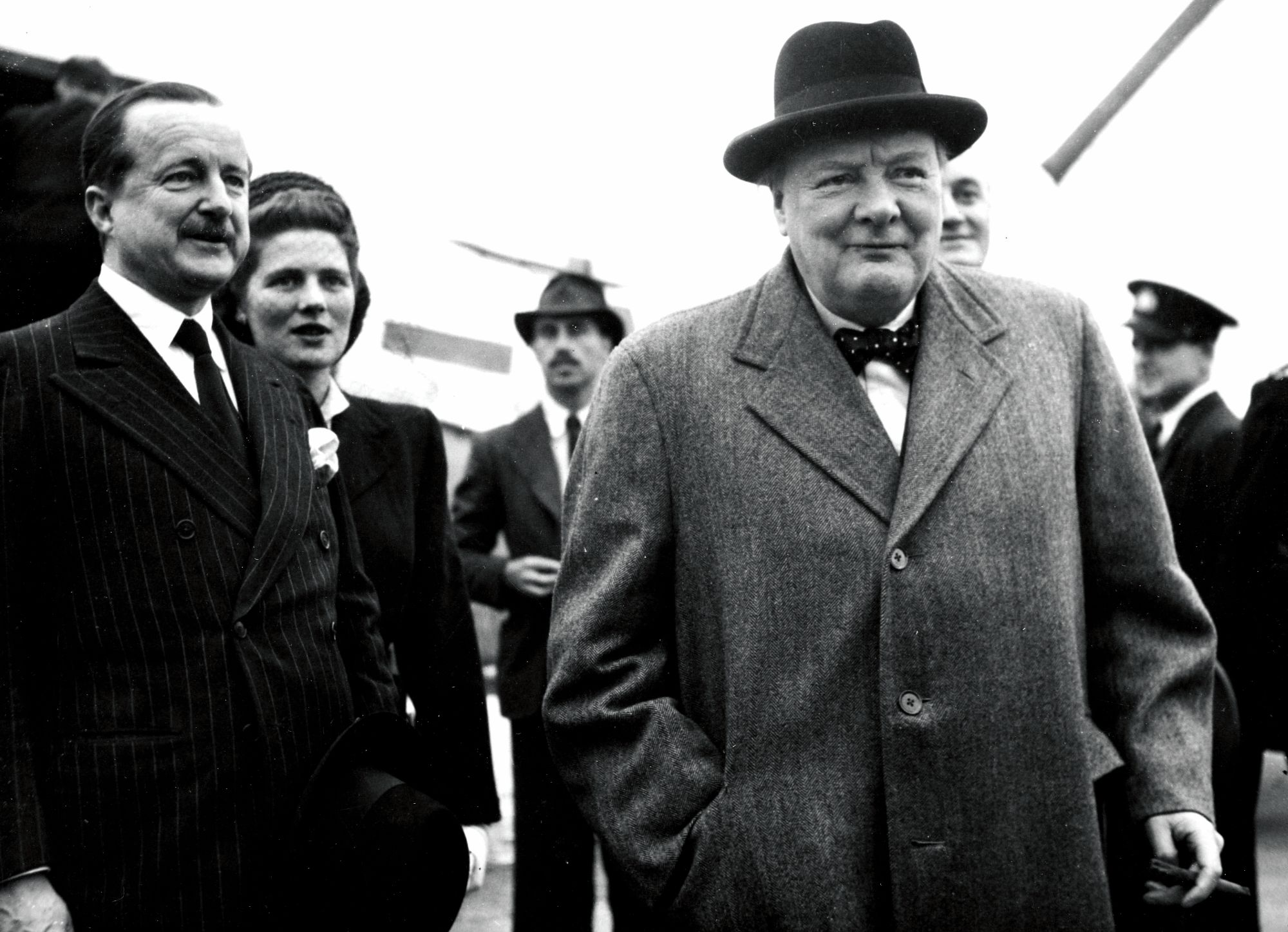
Published in 1950 – despite Cabinet Office efforts to stop its publication (not for intelligence reasons but in case it offended the Spanish) – it has been republished as a Penguin Classic, and rightly so. For classic it indeed is.
The hero of Operation Heartbreak is Captain Willie Maryngton, the tragedy of whose life was that he was desperate to fight for his country but was too young to take part in the Great War, and too old to fight in the rematch. An endearing character – “not too clever”, but with “good manners… and a happy smile which made him welcome wherever he went” – Willie was unlucky in love. After his first love, Daisy Summers, runs off with a married man, he turns his attention to Felicity Osborne who refuses to marry him “for reasons that are too difficult to explain” (though we eventually discover why).
 What happens to Maryngton – an army major by the end of the book – to make him so important to British intelligence? That would ruin the delicious denouement for you, dear reader, contained in perhaps one of the most exquisite surprise endings I have ever encountered.
This is a perfect novel – short, focused, gorgeously written and deeply moving – that you could get through in an evening, waiting for the Division Bell. I just wish my dad was around to read it, and raise a glass to Willie.
Lord Black of Brentwood is a Conservative peer
Operation Heartbreak
By: Duff Cooper
Publisher: Penguin Classics


(Alamy)
7 min read
A data investigation by The House has revealed a rise in violence against women and girls despite Labour’s 2024 pledge to halve it. Cristina Trujillo reports
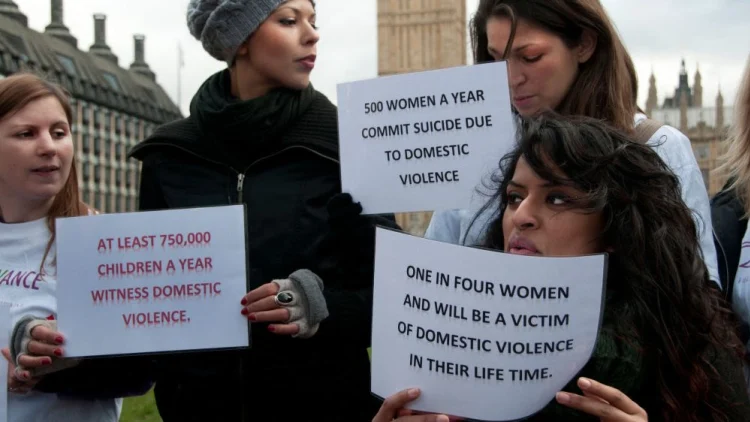
The Labour government is on a mission to halve violence against women and girls (Vawg) in the next 10 years – one of its most ambitious manifesto policies at the last general election. Yet a data investigation by The House has revealed that since 2024 Vawg has actually increased in the UK – despite a downward trend before that.
There were eight per cent more sexual offences in the UK in 2025 than in 2024, according to Office for National Statistics (ONS) data, with stalking and harassment and domestic abuse also increasing. Although the Home Office tells The House that an increase in reporting to the police does not necessarily mean that Vawg has also risen, the self-completion Crime Survey for England and Wales (CSEW) also shows some metrics increasing.
The news comes after Jess Phillips resigned as safeguarding minister last month, publishing a scathing letter that laid the blame for inaction over online child sex abuse squarely on Keir Starmer. It is “deeds, not words” that matter, she warned, using the suffragette refrain.
Birmingham City University criminologist Dr Max Hart says the increase in police-recorded offences and growing use of specialist services likely show different systems capturing different parts of an underlying rise.
“Schools, workplaces and online spaces are key sites whereby gendered harms are both produced, recorded and consumed. While we may have seen some formal progress in gender equality, the everyday production of misogynistic harms within these institutions remains,” he says.
“Thus, apparent changes in reporting behaviour, institutional responses and help-seeking can all impact data simultaneously as these underlying harms persist or intensify.”
Kevin Hoffin, a senior criminologist at the same university, adds: “I do believe there to be an increase in Vawg incidents over the last year, and I believe that a contributing factor [to] this is the experiences of immigrant women.”
A recent study by Women’s Aid showed that immigrant women were at an increased risk of domestic violence due to a range of structural factors, from barriers to advice to a national shortage of refuge spaces.
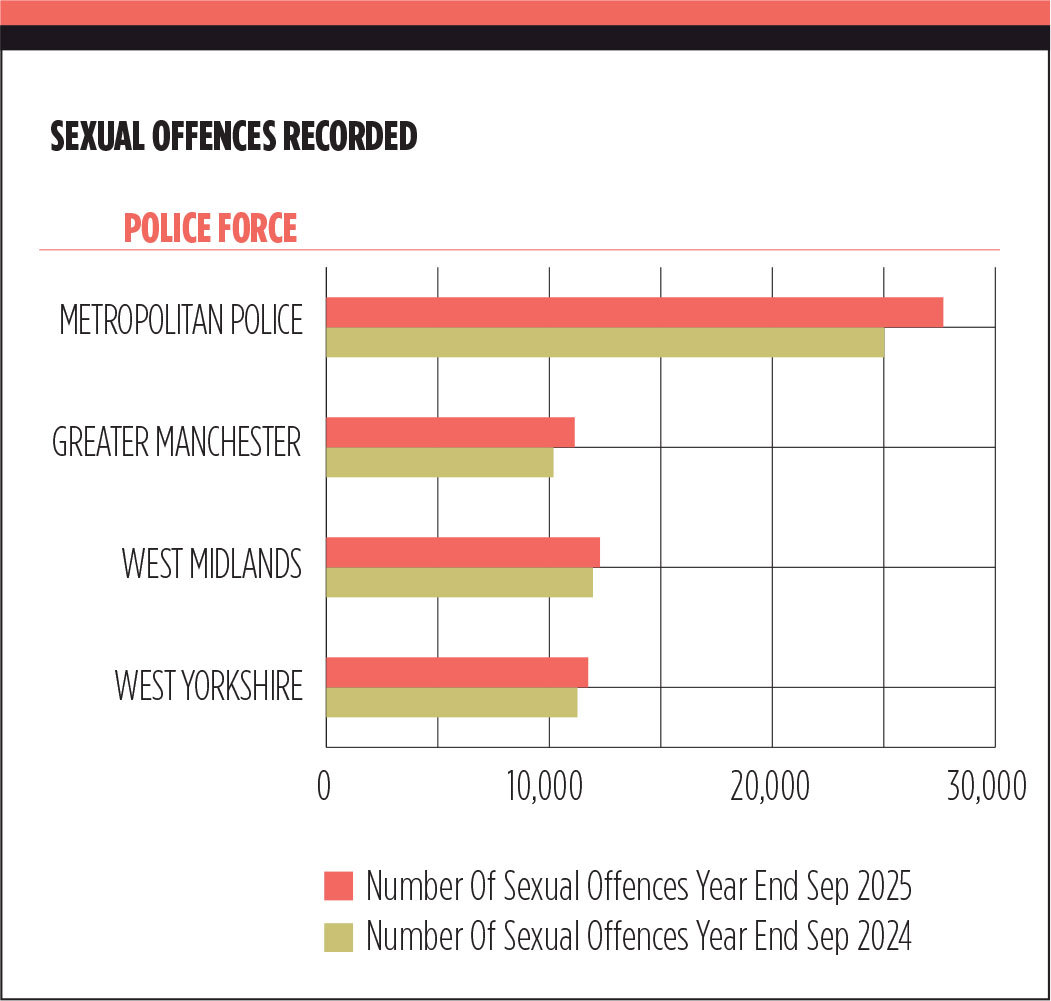
Hoffin points out that 31 per cent of Gen Z men agree that a wife should always obey her husband, according to a King’s College London study of 23,000 people released in March. Among Gen X men, the figure is 21 per cent – a difference of 10 percentage points. Sex offences went up in all of the UK’s Vawg hotspots – London, Greater Manchester, the West Midlands and West Yorkshire – which have seen more sexual offences than anywhere else in the UK consistently since 2022, according to the ONS data.
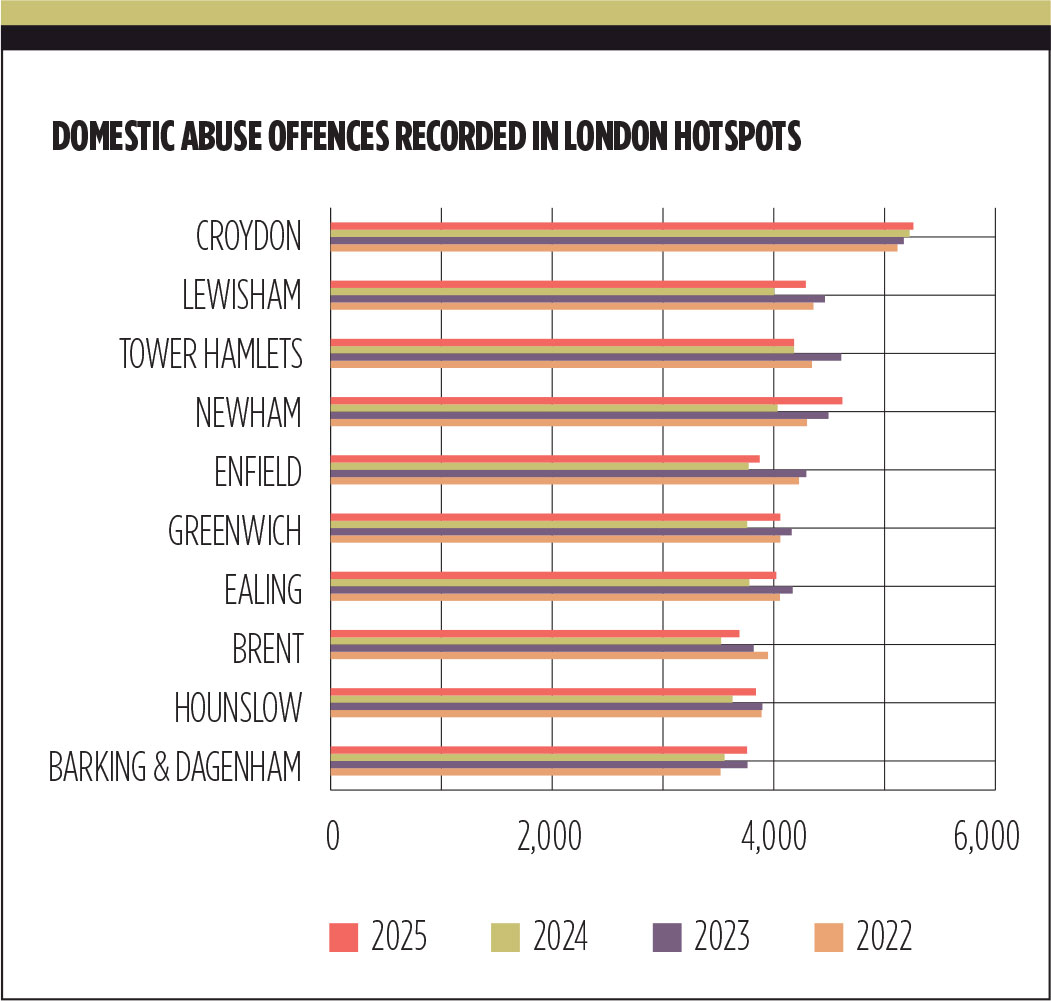
Reports of Vawg crime are highest in London, where domestic abuse rose in problem areas from 2024 to 2025 – 14 per cent in Newham, eight per cent in Greenwich, seven per cent in Lewisham and six per cent in Ealing, Hounslow and Barking and Dagenham.
Figures obtained by The House via the Freedom of Information (FOI) Act show that in Greater Manchester in 2025, there was a reduction in rape and sexual offence crimes with female victims recorded since 2018. However, both have increased in the area since 2024, along with violent crimes against female victims. Another FOI request revealed that femicide, domestic abuse, sexual offences and rape have gone up since 2024 in the West Midlands overall, and Birmingham in particular.
Meanwhile, the CSEW estimates increases of six per cent and 45 per cent in some types of Vawg, while trialling a new survey process and split sample to combine the different types of Vawg, which estimates a decrease in certain areas.
Jo Lovett, senior research fellow at the Child and Woman Abuse Studies Unit of London Metropolitan University, says: “The combined measure for Vawg is very new and still being developed and trialled, and it has a number of limitations, such as excluding certain forms of Vawg.”
While the new process is intended to foster a better understanding of Vawg in the long run, the ONS says the statistics produced are “subject to change as we evaluate future data and finalise methods”. While many ONS stats rose after 2024, domestic abuse, violent attacks against women and stalking and harassment fell between 2023 and 2024 in Vawg hotspots.
If there is a link between Labour’s work on tackling Vawg and an increase in reporting, it could be seen as a testament to the success of initiatives like Raneem’s Law, named after a woman who was murdered by her ex-husband in 2018, which was spearheaded in 2025 by then-home secretary Yvette Cooper. It placed domestic abuse specialists in nearly 1,000 control rooms across five police forces, aiming to increase specialist support for victims and improve emergency responses.
In 2023, Starmer made his promise to halve Vawg in 10 years following the publication of Baroness Casey’s review of policing, commissioned after the murder of Sarah Everard by a Metropolitan Police officer in 2021. Lovett called this “a laudable but ambitious target”.
Confirming its pledge after its landslide 2024 electoral victory, Labour proposed the Crime and Policing Bill in February 2025, which will be the main legislative vehicle in its Vawg strategy and is now undergoing the final stages of approval.
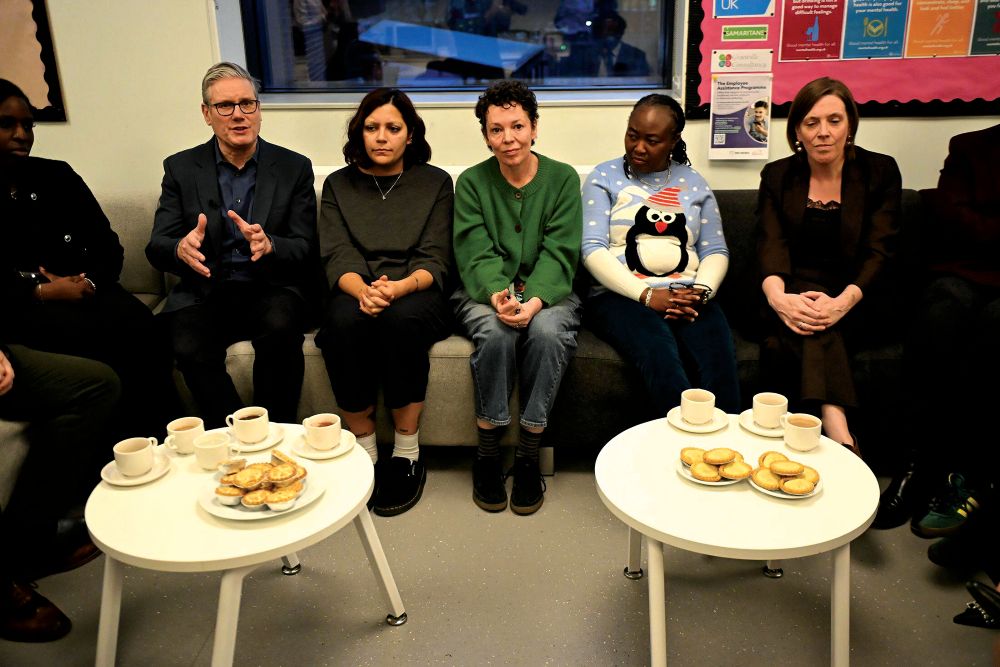
The Online Safety Act 2023 criminalised cyberflashing and intimate image abuse, accounting for about 10,000 new crimes recorded in the year ending March 2025, while March 2026 saw Raneem’s Law finish its one-year pilot.
Labour then launched its Vawg strategy in December 2025, including new legislative proposals and funding and raising awareness around abuse, against the background of the MeToo-style discussion triggered by the Epstein files.
While this focus on Vawg may well be improving reporting rates, by empowering victims to inform authorities or police to respond, experts still cite funding and policy roadblocks.
The Vawg strategy asserts, for example, that “well-lit streets, accessible transport, and thoughtful urban design can deter violence”. But there is no mention of Vawg in the December 2025 amendments proposed to the National Planning Policy Framework, overhauling urban planning, transport and housing.
Solace Women’s Aid CEO Nahar Choudhury says: “While we welcome the fact that the government has committed more funding than ever before, there is still a long way to go to provide the sustainable support this sector needs.
“Unfortunately, the number of survivors isn’t decreasing; last year alone, Solace supported more than 17,000 women and children.” The year before, the organisation supported 14,435.
Women’s Aid CEO Farah Nazeer says: “We welcome the publication of the government’s strategy. It contains many welcome interventions… particularly in health and education, which will be critical for meeting the government’s own goals on prevention. However, the reality [is] that the sector remains in a funding crisis.”
She adds: “Services supporting Black, minoritised and migrant women have faced unacceptable rhetoric by certain politicians, which is further entrenching a hostile environment for migrants, including victims or survivors of abuse.”
Laura Riley, vulnerable victims co-lead for the British Society of Criminology’s Vulnerability Research Network, says: “Countless cases of police misogyny have also been exposed, and this has clearly impacted women’s ability to feel safe and protected.” She also raised cultural threats from “toxic narratives from the likes of Andrew Tate… to a desire to return to a more overtly patriarchal family structure”.
“There is evidence that those who weaponise the idea of ‘protect our girls’ may also be furthering ideas that contribute to keeping women and girls from feeling safe to express their needs and views,” Riley adds.
The Home Office welcomes the increase in reporting of violence against women and girls, saying: “It is vital that victims feel empowered to come forward, knowing that they will be supported and their cases taken seriously.”
It highlights tougher restrictions on registered sex offenders and strengthened protections for victims implemented by Labour, but continues: “Violence against women and girls is a national emergency… We know there is more to do.”

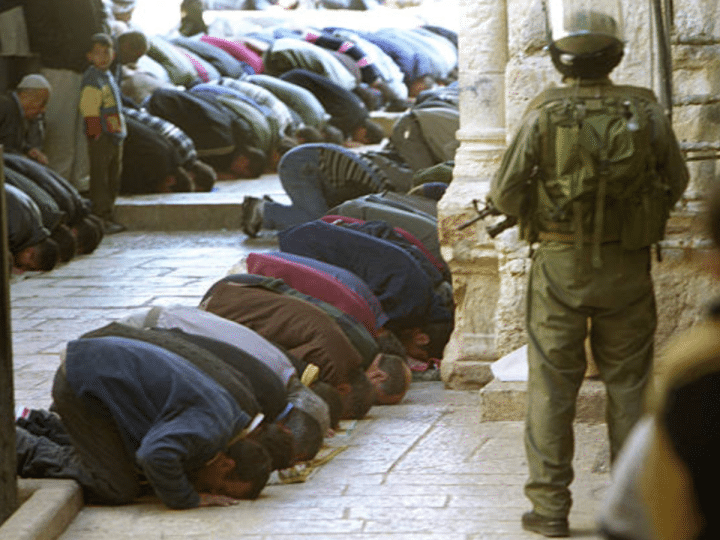
Ben-Gvir is eagerly sharing cheap content online to fan the flames of incendiary views against Palestinians. In his latest cringe-worthy video, he complains that the Islamic call to prayer disrupts his sleep and threatens to “put an end to the noise.”
For Muslims worldwide, the call to prayer — also known as adhan — holds a central place in daily life. It not only invites worship but carries profound spiritual significance, and is now the latest target of Israel’s discriminatory policies.
Israeli National Security Minister Itamar Ben-Gvir complaining about the volume of the Islamic call to prayer (Adhan) from mosques.
"Enough! I will work to change this situation and put an end to the noise coming from the mosques." pic.twitter.com/RVDtFOLZ5F — DOAM (@doamuslims) June 3, 2026
Ben-Gvir vows to silence the mosques
Back in mid-May, his Otzma Yehudit party proposed a parliamentary bill to ban mosque loudspeakers unless a state permit is obtained.
The bill would grant additional powers to the Israeli occupation police, including entering mosques, revoking permits, confiscating equipment, and imposing fines ranging from 50,000 to 10,000 shekels (£2,500-£12,500 Shekels). All mosques across occupied territories, including East Jerusalem, would be subject to these changes.
Ben-Gvir has described the call to prayer as a public health risk. Quoted by Israeli ultra-Orthodox outlet, Charedim 10, he said:
“In many places, the noise of the muezzin [who makes the call to prayer] is an unreasonable noise that harms the quality of life and health of residents. This is a phenomenon that cannot be tolerated. During my tenure, for the first time, the Israel Police began to deal with this unbearable phenomenon. Now we are giving it additional dramatic tools to eradicate the phenomenon.”
Genocide by means of erasure
The prohibition of adhan has never been about noise pollution. The policy is a continuation of genocide by means of religious erasure to remove Palestinians from public life. This is the real reason he wants to silence an ineradicable symbol of Palestine’s Islamic heritage and identity.
There have been numerous legal attempts by the Zionist regime to regulate the adhan, none of which have been voted in. Back in 2024, Ben-Gvir ordered Israeli police officers to enter mosques, confiscate loudspeakers, and issue fines for noise complaints. However, since his directive circumvented parliament, it went nowhere and faced stiff opposition from Arab mayors.
However, the latest proposal goes further than previous attempts and has advanced further in the Knesset. As “national security” minister, Ben-Gvir oversees the police and prison system — by which we mean he consistently abuses these powers to advance apartheid policies against Palestinians.
He frequents illegal settlements and the Al-Aqsa Mosque compound, the third holiest site in Islam, where he has suggested building a synagogue — to quench his sadistic desire to taunt Palestinians.
Ben-Gvir racist policies discriminate against Palestinians
Under Ben-Gvir’s watch, more settlers in the occupied West Bank have illegally acquired firearms. Gun control regulations have been loosened, and dozens of gun permits have been approved.
Thousands of assault rifles have also been distributed to settler “security teams” in the occupied West Bank. These measures have facilitated greater violence towards Palestinian communities and their forced displacement.
Over the past year, Ben-Gvir has also championed the newly approved death penalty law for Palestinian prisoners. His policies have stripped away what little human rights Palestinian prisoners had. The severe overcrowding, medical neglect, starvation and torture are intentional, and have now become the norm.
In 2023, he even ordered the occupation’s police to ban Palestinian flags from public spaces, calling them “terrorist flags.” The proposed prohibition is merely another attempt to outlaw Palestinian national symbols remains in effect today.
Whether this legislation will ultimately pass remains uncertain. One thing remains clear however, the occupation will not rest until Palestinians capitulate — which we know isn’t on the cards.
Lest we forget, the call to prayer has echoed across Palestine for centuries, long before “Israel” was established. No legislative bill can change that.
Featured image via Shaul Schwarz / Getty images
By Charlie Jaay

From thinking about whether you’re allowed to travel with a power bank to catching yourself wondering why planes have ashtrays when you can’t smoke, jetting off abroad takes some serious brainpower.
However, the one thing we can never prepare for? Poorly behaved passengers – something (or someone!) that can ruin your trip before it’s even begun.
I’ve been on so many trips where I can’t sleep or get comfortable because people are reclining in front of me – and don’t get me started on people unnecessarily blocking the aisles.
If you want to avoid becoming that person, you’re in luck. In a HuffPost UK exclusive, etiquette expert Grant Harrold spoke to SMC Coach Hire about the biggest mid-air mistakes travellers make on planes – and his golden rules for surviving the skies with your dignity intact.
Everything you shouldn’t do on a plane
1. Using the seat recliner
“If you’re on a normal day flight, you don’t need to sleep on the plane, therefore you do not need to recline in that seat. If it’s under two hours, you shouldn’t recline it. If it’s over three hours, you have the possibility of reclining it.
“People get really annoyed as they’re trying to eat, trying to watch movies, they’re trying to do stuff. If you do want to recline, ask the person behind you first out of courtesy. If they say yes, tell them to let you know if they want you to put it up at any point.”
2. Eating food that has bad odours and having nuts
“For shorter flights, some passengers opt to take on their own food – but it’s important to be courteous when making your choices. Don’t eat anything with a strong smell, it’s a small space and smells can really travel.
“Definitely avoid fish, but also things like crisps with a strong smell. Also, from a safety point of view, don’t buy anything that could put people with allergies at risk – so nuts are a definite no-no.”
3. The armrest
“There should be strict rules about the armrests. If you’ve got a window seat, you do not get the armrest on the left-hand side. You can lean on the side where the window is.
“If you’ve got an aisle seat, you’ve got the luxury of being able to go up and down to the toilet. You have got access to the whole plane. If you have the middle seat, you need to be diplomatic, and people need to allow that person to rest their arms.”
4. Putting down the window blinds
“People who put the blinds down during the day on the plane are quite annoying. While it’s technically next to them, it has an impact on everyone around them. If it’s very bright and it’s in your eyes, ask the people next to you if they mind you closing it.
“But if it’s just because you want some darkness, closing them is rude and selfish. If you plan to sleep on a daytime flight, take an eye mask with you. It’s not acceptable to make everyone else sit in darkness so you can have a quick nap.”
5. Talking loudly
“I’ve been on flights where you hear the whole conversation the whole way. I’ll have a short conversation occasionally, but also, if people are trying to sleep next to you, do not have conversations, especially if it’s a night flight.
“If you do need to talk, speak quietly in hushed tones so it doesn’t impact those around you.”
How to be the perfect passenger
Grant adds: “Offer to help people with luggage and be polite to fellow travellers. Being a good passenger is all about showing respect to those around you.
“If you’re in a three-seat situation and if somebody’s trying to pass something to the cabin crew, you should always pass it to them. Also, help people put their bags into the overhead compartments.”


4 min read
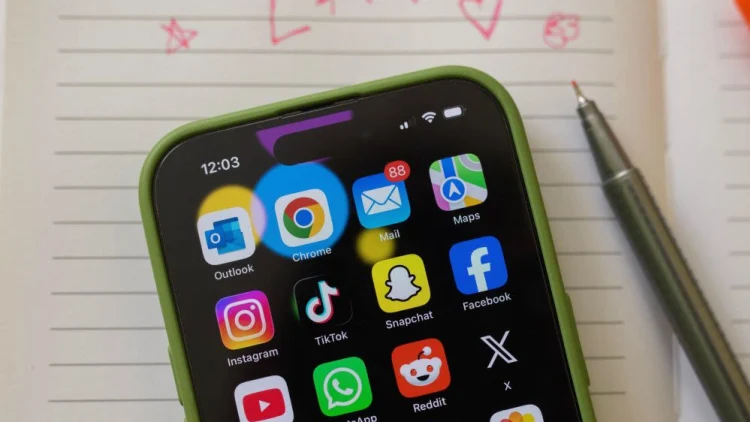
All online services – not just social media platforms – that use harmful features and functionalities should be banned from access to children.
The government is due to respond to the consultation on banning social media for under-16s. But the Westminster debate feels a million miles from the reality of young people’s lives.
I’m touring the country to promote my Big Future survey. I’ve held discussions with children in schools, hospitals and youth clubs from Carlisle to Birmingham to Leicester.
Many young people tell me they don’t want to be banned from social media. Digital spaces are where they learn, connect and play.
One of my young ambassadors, Annabel, recently told an event that she found a community on Instagram after she lost her leg. She is now the star striker for England Women’s amputee football team.
She said: “I use my social media to show children that there is life after diagnosis. Even if you’ve lost a leg or lost a limb, you can still live life to the best of your ability and have so much fun and that’s actually led to many children and parents reaching out to me online.”
But then they start to tell me about the negatives.
Young people recognise that the platforms and services are addictive.
My recent representative poll of UK teenagers aged 13 to 17 showed 26 per cent want to spend less time scrolling online. They turn off notifications, delete one or more accounts and use apps or tech to block or limit access. But they tell me it doesn’t work, and they want our help.
Others describe seeing things they don’t want to see. My research on pornography shows that more than a quarter (27 per cent) of young people who had seen pornography said they had seen it online by 11. One child seeing porn is one too many.
Strangers are also approaching children online. My polling shows that among teenagers who play video games, 51 per cent said yes to ‘While playing video games, has someone you didn’t know ever sent you a message or chat?’ We know that gaming platforms, where children go to play, are places where serious grooming offences occur.
However bad we think it is, it is often far worse.
Young people fixated on violence, often with no ideology, have become one of the fastest-growing concerns of counter terrorism police. Senior police officers have told me about the growing harm of online community groups grooming and exploiting often vulnerable children to self-harm.
The UK has passed the Online Safety Act. Ofcom has enforcement cases open and is taking action against some online services that flout UK law. I want to see them continue to work for the UK to be the safest place for children to be online.
I am also pleased to be working with the Department for Education on screen use guidance. Children and adults alike want clear, trustworthy information and advice on screens. But guidance alone isn’t enough.
The harm from technology companies’ unconditional and unfettered access to children is clear. Young people are challenging us to do better.
That is why I want to reset the debate. It is not about ‘banning children’. Children have done nothing wrong. It is about banning powerful technology companies from accessing and harming our children.
I have been calling for all online services – not just social media platforms, but gaming sites and any platforms that make use of harmful features and functionalities – to be banned from accessing children, until they can prove that they are designed in a way that will protect children’s safety and wellbeing.
This will mean drawing up a list of all the features that make online services risky for children, because they increase the risk of addiction, seeing harmful content, or being contacted by strangers.
That list will need to include persuasive design features like autoplay, infinite scrolling and popularity metrics (the “like” button and count, for instance) as well as features that allow users to share their location and livestream.
Any service using these features and functionalities should not be allowed to access children until they remove those features or genuinely mitigate the harms they cause. If and when online services prove, using a robust risk assessment system, that they are safe, the age limit can be removed.
I believe this restriction must apply equally to all children – that means until they turn 18. Because if we are genuinely seeking to safeguard children from harm, we cannot allow 16- and 17-year-olds to have lesser protection.
Childhood is changing rapidly. As I enter my sixth and final year as Children’s Commissioner, I know that the best policy is one where children’s voices are heard loudly and clearly.
I am glad that the government is acknowledging the gravity of the harm children face. I will be scrutinising the plans with care to ensure that they genuinely cover the greatest risks, can be robustly enforced, and truly make children safer.
Dame Rachel de Souza is the Children’s Commissioner for England
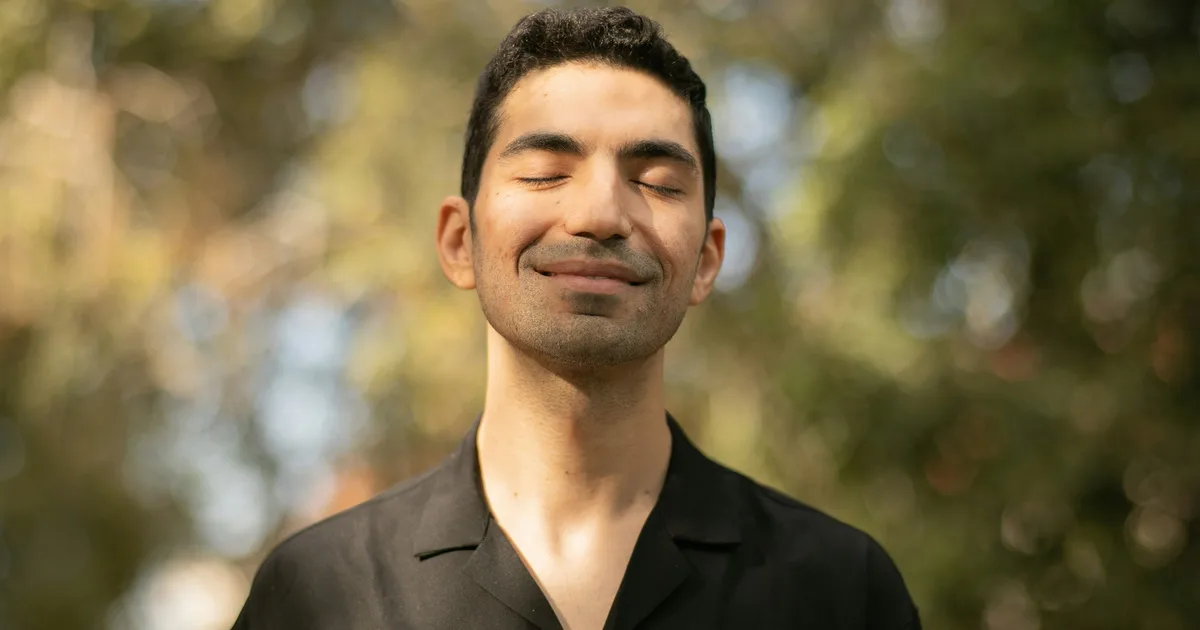
One of my favourite YouTube blunders is from creator Brittany Broski, who complained to drag queen Trixie Mattel (busy giving the online star a heavy-lashed makeover at the time): “When I close my eyes, I can’t see.”
It’s hard not to laugh at Trixie’s disbelieving “Well…”, given that we all know the world goes dark when we lower our lids.
Except ― does it? While we clearly can’t “see” the real world when our eyes are closed, many of us do start to notice patterns, shapes, and colours when our retinas are deprived of light.
Why is that, how common is it, and what does it mean?
It’s technically a hallucination
According to health information site Healthline, these are called “closed-eye hallucinations.”
They’re technically hallucinations because, well, when you close your eyes you can’t see ― the visions come completely from your brain.
Common “closed-eye hallucinations” include swirling shapes, pixel-like squares, seemingly random objects, and even flashing lights.
Mine often look a bit like the ever-moving Windows ’98 screensavers and it never occurred to me that not everyone sees them.
These come from phosphenes, healthcare providers Cleveland Clinic explains, which create “flashes of light with or without structure that you see when there isn’t an actual source of light entering into your eye.”
They’re most often present when there’s pressure on your eyes (I sleep with my face mushed into a pillow, so that makes sense) ― but they can also arise from your brain or retina.
Are closed-eye hallucinations a sign of something else?
The illusions “may or may not be” a sign of medical issues, Cleveland Clinic says ― though Healthline assures us that, “Closed-eye hallucinations aren’t typically a cause for concern.”
They can sometimes arise after a blow to the head, as a result of retinal or neurological conditions, due to chemo and radiation, or as a withdrawal symptom.
They can also appear when you cough or rub your eyes and even reveal low blood pressure.
“If you see phosphenes frequently and you have other symptoms that worry you, like double vision (diplopia) or blurry vision, you should consult an eye care provider, such as an ophthalmologist,” Cleveland Clinic shares.
“If you know you have diabetes, or if you’re seeing floaters in conjunction with the phosphenes, you should also consult an eye care provider.”
Healthline adds that “if closed-eye hallucinations are so significant that they cause insomnia or anxiety, consider seeing a doctor.”
The majority of cases, however, are nothing to worry about.
We hope you love the products we recommend! All of them were independently selected by our editors. Just so you know, HuffPost UK may collect a share of sales or other compensation from the links on this page if you decide to shop from them. Oh, and FYI — prices are accurate and items in stock as of time of publication.
Pride started as a protest, there’s no disputing that fact. And while that sentiment needs to continue today more than ever, allow me to present something radical: pleasure is resistance.
While of course it’s important to recognise and shout about the myriad ways queer people continue to be excluded from rights and society, if there’s one thing that’s going to stick it to the man, it’s us having a banging good time.
And I mean that literally: partying and drinking, duh, but also chasing that orgasm high.
So you can get your socks off this Pride month, whether you have a penis or vulva, I’ve consulted sexologist and therapist for Passionerad Sofie Roos to help me round up the best LGBTQ+ sex toys to shop now.
Best LGBTQ+ sex toys at a glance:
What are the different types of LGBTQ+ sex toys?
A sex toy is a sex toy, meaning any type can work for straight people and queer folk alike (if you get creative enough), according to Roos.
“The most common queer sex toy categories are basically the same as for straight people, which includes:
- Clit vibrators
- Dildos in all its shapes, sizes and materials,
- Anal toys such as butt plugs,
- Cock rings,
- Masturbators,
- Couples’ vibrators and long-distance sex toys, even though prostate massagers, strap-ons and harnesses always are a bit extra trendy and relevant among the LGBTQ+ community!”
What to look for when buying a sex toy as an LGBTQ+ person
1. Stimulation
“Do you want the toy to focus on the clitoris, give vaginal stimulation, stimulate the G-spot, your penis, balls, anal, the prostate, nipples or something else, and do you value how it looks or only how it feels?” Roos recommends asking yourself.
2. Materials
“Look for toys made out of bod- safe materials, such as medical silicone, glass or stainless steel,” Roos adds. “Pay attention to user reviews, try to pick well- established retailers and brands, and go for one premium toy rather than two or three budget options.”
3. It’s personal
“You don’t need to go for the most popular sex toys, but rather you should try to find something that feels right for your body and identity, and looks like it will help you discover what gives you pleasure,” Roos emphasises. A good sign you’ll like something is if the mere sight of it excites you.
Keep reading to find our round up of the best LGBTQ+ to shop, and our tips for how to figure out which you’ll enjoy the most.
19 best LGBTQ+ sex toys in 2026

Best for anal vibrations
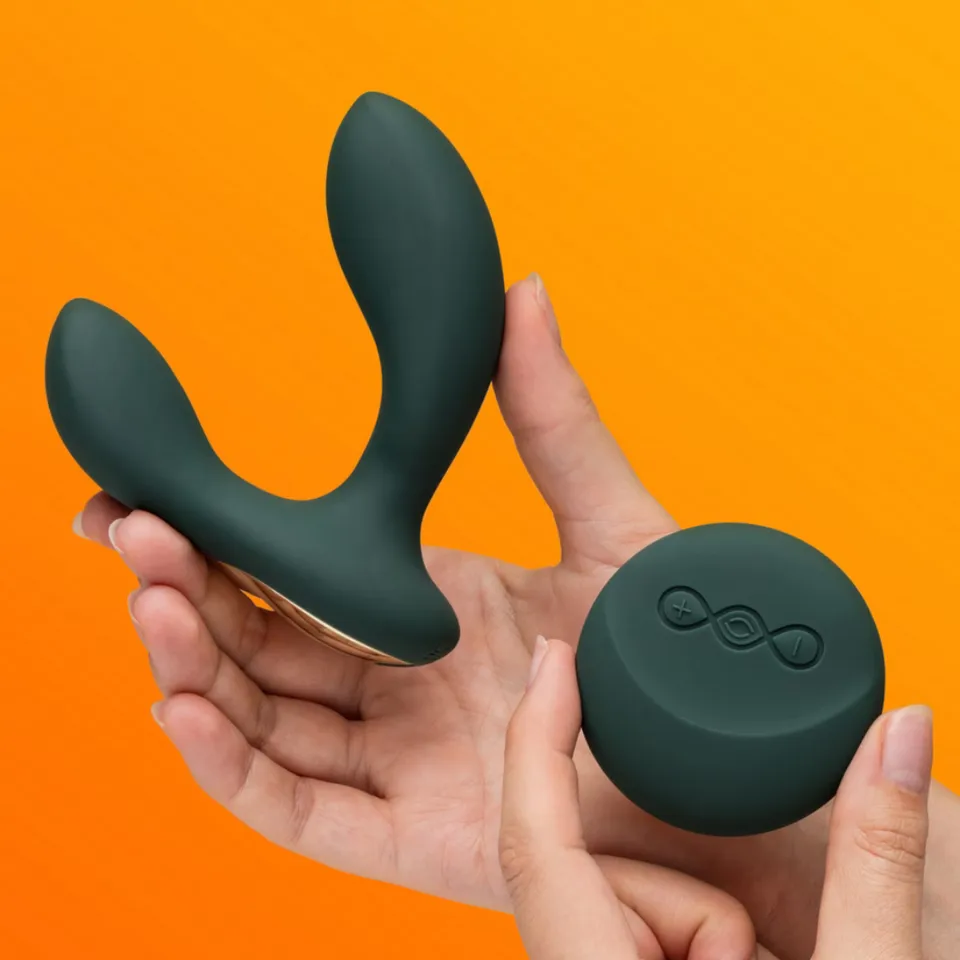
Say it with me: the perineum deserves more attention! For double anal stimulation akin to a rabbit vibrator (but for the butt) this LELO number surrounds your P-spot with as much attention as you can ask for. That curved arm sits inside the backside, while the other arm stretches along your entire underside – and all controlled by the handy motion sensor remote control. Hand it over to your partner, so they can surprise you with one of its eight vibration modes, or take the reins yourself as you buzz towards O-town.
We love: Motion-controlled remote
We don’t love: The remote is battery-powered.
Features:
Vibration modes: 8
Material: Silicone
Power: Rechargeable
Insertable inches: 3.4 inches
Waterproof: Yes.

Best non-vibrating butt plug
“This well-built and luxurious butt plug made out of exclusive stainless steel is built to stimulate the prostate, whether you’re using it passively, penetrating yourself with it, or having hands-free fun by controlling your muscles and squeezing around the plug,” says Roos. While the shape of this plug might make it a little intense for beginners, the weight of it will be ideal for more experienced anal aficionados, as the cold metal presses against your P-spot for a potent dose of pleasure.
We love: Easy to clean and that loop handle makes removal easy as pie
We don’t love: Might be too girthy for beginners.
Features:
Vibration modes: None
Material: Stainless steel
Power: None
Insertable inches: 3.4 inches
Waterproof: Yes.

Best glass lesbian toy
Sometimes double-ended dildos don’t get you anywhere: they’re too rigid, they feel like you’re miles apart, and your only option is to scissor if either of you wants any enjoyment whatsoever. To switch things up a little, this glass (hear me out) dildo is designed to enhance connection. Whether you both want G-spot stimulation, or one of you wants it in your behind, this double-ended delight will have you both squirming, and you’ll be able to keep kissing, too. Don’t run for the hills at the mention of a glass sex toy – its cold surface makes it the ideal toy for playing with temperature, as you can heat it up or cool it down in a bowl of water before inserting it – and it’s easy to clean.
We love: The vegan leather storage case and keychain it comes with
We don’t love: It’s completely rigid so it’ll take you a while to figure out how to position yourself.
Features:
Vibration modes: None
Material: Borosilicate glass
Power: None
Length: 7.28 inches
Waterproof: Yes.

Best vibrating double-ended toy
Another thing double-ended vibrators often get wrong is assuming you both want the same levels of vibration. Not all vulvas are made equal! Trust Swedish brand LELO to solve that issue: as well as being coated in ribbed silicone to transport you into a different dimension of delight, each end has its own motor, so you can choose your favourite of its eight vibration patterns and 16 intensities to match your individual levels of comfort. Not to mention, when you sync it with the LELO app, you’ll unlock two extra patterns.
We love: LELO toys always feel luxurious
We don’t love: The fact that it’s not flexible.
Features:
Vibration modes: 8 patterns (+2 on the app) and 16 intensities
Material: Silicone
Power: Rechargeable
Insertable length: 4.3 inches on each side
Waterproof: Yes.

Best penis masturbator
This masturbator does pretty much exactly what it says on the tin: that smooth silicone sleeve stimulates the sensations of penetrating an asshole. As well as being plenty tight (or at least, tighter than other masturbators) it’s filled with ribs to switch it up as you descend into its depths. “It’s definitely an massive improvement over my left hand,” shares one five-star reviewer. “The sensations were powerful and slightly addictive; we ended up fighting over who got to use it.”
We love: The lining feels realistic
We don’t love: The case looks pretty cheap.
Features:
Vibration modes: None
Material: SuperSkin TPE
Power: None
Insertable length: 8.5 inches
Waterproof: Submersible.

Best boxer strap-on
Classic strap-ons aren’t for everyone: the harness is a nightmare, it can dig in, and you might not want your arse on full display. For a more comfortable experience, these boxers are packed with an attached O-ring to slot your favourite dildo into; it even has a pocket that can house either your packer or a removable bullet that rests against your C-spot for extra vibrations as you thrust.
We love: Moisture-wicking material, because things can get sweaty.
We don’t love: A little pricey for just a harness, but worth it.
Features:
Vibration modes: 10
Material: Nylon boxers, silicone and ABS plastic bullet
Power: Rechargeable
Diameter: 1.7 inch O-ring
Waterproof: No, but boxers are machine washable.

Best suction toy overall
As the creators of Pleasure Air Technology, Womanizer knows what it’s doing when it comes to suction toys. So much so that the one and only Katy Perry featured this very toy in her music video for Woman’s World. It might be powered by 14 suction intensities, but even the lowest setting will quickly coax you towards orgasm. While we reckon you’ll struggle to keep quiet, the toy is powered by Smart Silence technology that means no one outside of your four walls with be any the wiser to your late-night antics.
We love: The long handle makes for an easy grip (and you’ll need it)
We don’t love: The mouth is pretty small, so you’ll need lots of lube and movement if you’re not into direct clit stimulation.
Features:
Vibration modes: 14
Material: Silicone
Power: Rechargeable
Length: 6.5 inches
Waterproof: Yes.

Best strapless strap
We’re ending the top/ bottom dichotomy, I’ve decided, and this toy is on board. As well as boasting a 5.5 inch vibrating shaft for the ‘receiver’, the person wearing this strap will also get a heavy hit of buzz, thanks to those rabbit ears fluttering against their clit, and the internal pony hitting their G-spot. So the wearer is getting as close to a good time as they can, the pony is totally bendable, and powered by three vibration modes. On the other end, you can choose from three vibration speeds and nine patterns to have you both humping like happy bunnies.
We love: The fact both partners can get in on the action
We don’t love: That there’s no remote.
Features:
Vibration modes: 3 vibration speeds and 9 patterns.
Material: Silicone
Power: Rechargeable
Length: 5.5 insertable shaft and 4.5 inches in the pony
Waterproof: Submersible.

Best for long-distance lesbians
As the name suggests, this toy will make you dissolve into a sloppy puddle. Its slim shape is designed with the intention of slipping between you and your lover mid sex, while the suction mouth sends 12 intensity levels to your C-spot. What’s more, you can connect it with the We-Vibe app to let your lover control it from anywhere in the world, or even sync the vibrations with your favourite tunes. “If I was prime minister every female in the country would get one of these land on their doormat on their 18th birthday,” one five-star reviewer comments. LOL.
We love: The app connectivity
We don’t love: Honestly… nothing.
Features:
Vibration modes: 12
Material: Silicone
Power: Rechargeable
Waterproof: Yes.

Best long-distance toy for people with penises
Similar to the LELO Hugo 2, this toy offers dual stimulation for your P-spot and perineum, because people with penises deserve blended orgasms, too! Leading the way in long-distance sex toys, Lovense has created an ultimate sex toy app that allows you to customise an unlimited number of vibration modes. It can be controlled by anyone anywhere in the world – seriously, there’s even a roulette feature so a stranger on the app can take control of your vibes – and can also be connected up with your favourite erotic content or a partner’s Lovense toy to sync your vibrations.
We love: It’s super flexy
We don’t love: There’s a lot of exploring to be done with this toy, so you better get going…
Features:
Vibration modes: Unlimited
Material: Silicone
Power: Rechargeable
Insertable length: Not stated
Waterproof: Yes.

Best suction toy for penises
It goes without saying that vulva owners love suction vibes, but you might be wondering where the same love is for penis possessors. Good news: Arcwave has the solution with this masturbator that stimulates the sensation of getting the best blowjob of your life. Unlike other masturbators, it doesn’t sit directly on your penis, so it won’t leave your schlong feeling numb afterwards. But don’t worry, that doesn’t sacrifice on power, as Pleasure Air Technology boots blood flow to your member for an orgasm that goes on, and on…
We love: Easy to clean
We don’t love: Open ended, so it can be hard to hold it in the exact position.
Features:
Vibration modes: 10 intensities and 3 patterns.
Material: Silicone
Power: Rechargeable
Insertable length: Not stated
Waterproof: Submersible.

Most versatile vibrator
Now here’s a toy that deserves its stars for versatility. Coming in at a smaller size than other wand vibrators, so it won’t get in the way too much, this mains-powered toy sends up to an impressive 9,000 RMPs to whatever erogenous zone you want to fire up. Forget everything you think you know about wands, because they can be used for everything from all-over massage, to perineum or shaft stimulation, and even for a little nipple play.
We love: Its dinky size
We don’t love: It’s not waterproof :(.
Features:
Vibration modes: 3,000 to 9,000 RPMs
Material: Silicone and stainless steel
Power: Mains-powered
Length: 37cm
Waterproof: No.

Best vibrating butt plug
We can’t all be anal aficionados, so Lovense has you covered no matter your experience level. This butt plug comes in your choice of four diameters, from 1 to 2.25 inches, so you can get one that fits you snugly (but not too snugly). With up to four hours of continuous use, you’ll want it to be comfy, especially if you’re handing over the reins to your lover in another country. Don’t say I gave you any ideas, but as it’s as quiet as a whisper, you could even wear it out and about.
We love: Flared base aplenty
We don’t love: Magnetic chargers can sometimes be a little fiddly.
Diameter: 1.5 inch.
Features:
Vibration modes: Unlimited with the Lovense app
Material: Silicone
Power: Rechargeable
Diameter: This one is 1.5 inch, but there are three other diameters to choose from
Waterproof: Yes.

Best app-controlled vibrating cock ring
Whether you’re playing solo or with a partner, this app-controlled vibrating cock ring will turn your thingaling into a vibrator. With 10 vibration modes, it’ll send a strong buzz to both you and a partner’s perineum, and thanks to being pretty tight, will help boost your orgasm strength. When things are pretty lubey down there, you probably won’t want to worry about getting your fingers all slippery, so it helps that you can simply switch on the Satisfyer app to power up through the intensities.
We love: Comes with a 15-year guarantee (crazy)
We don’t love: Could be stretchier
Features:
Vibration modes: 10 vibration modes
Material: Silicone
Power: Rechargeable
Diameter: 1.4cm
Waterproof: Yes.

Best anal dildo
“This is a very realistic dildo made for anal play that will give amazing P-spot orgasms thanks to its shape which makes the glans stimulate the prostate perfectly,” says Roos. “The size is beginner friendly, the dildo is handmade out of the softest silicone, there’s a suction cup in the bottom making it easy to get penetrated in different positions, and it looks super realistic.” I mean, what more could you want? While the size makes it ideal for anal, it could also be great for people exploring vaginal stimulation who are more into sensations of fullness than length, thanks to its 1.6 inch girth, just sayin’.
We love: It’s handmade, how cool is that?!
We don’t love: Not for those who aren’t into realistic dildos.
Features:
Vibration modes: None, but you can put a vibrator inside if you’re so inclined
Material: Silicone
Power: None
Insertable length: 5.1 inches
Waterproof: Yes.

Best disposable penis toy
Who knows what you’re going to get up to this Pride? They might look like eggs, but crack ’em open and you’ll find a disposable penis stroker on the inside of these toys. But that’s not all they’re good for, flip them inside out and you’ll find a textured sleeve that feels just as good rubbed against a clit. Because at the end of the day, how you play is entirely up to you!
We love: How stretchy they are
We don’t love: That they’re disposable (but sometimes it’s needed!)
Features:
Vibration modes: None
Material: TPE
Power: None
Insertable length: Not stated
Waterproof: They’re disposable, so I don’t see why not.

Best non-stretchy cock ring
Silicone stretches, but it also presses. This stainless steel cock rings simply sits atop your peen to keep it firm and girthy, while its weight pulls down for a constant snug sensation.
We love: It’s easy to clean
We don’t love: It doesn’t stretch, which not everyone will like.
Features:
Vibration modes: None
Material: Stainless steel.
Power: None
Diameter: Not stated (boo!)
Waterproof: Yes.

Best fantasy dildo
Romantasy has had a huge comeback in the last few years, so of course it’s found its way into our pleasure products. This girthy dildo will leave you feeling as fiery as a dragon’s roar, and those textured nubs and scales will make for an incredible switch up on a plain old penis/dildo.
We love: The masses of texture
We don’t love: This is obviously not for everyone
Features:
Vibration modes: None
Material: Silicone
Power: None
Insertable length: 7 inches
Waterproof: Yes.

Best dildo for lesbians
Listen up, lesbians! Not only is this made in the colours of the lesbian flag, but its non-realistic appearance means it’s approachable for beginners. With a strong suction base, you can attach it to any surface, but it’s also harness compatible and can be used for vaginal and anal penetration alike.
We love: The colours, duh
We don’t love: It’s pretty firm.
Features:
Vibration modes: None
Material: Silicone
Power: None
Insertable length: 5.5 inches
Waterproof: Yes.
What are the LGBTQ+ sex toy trends in 2026?
Fantasy and non-realistic dildos
In 2026, non-realistic dildos are especially popular, according to Roos. “This includes fantasy dildos, such as dragon or beast models, and dildos that are gender-neutral and don’t look like penises, but instead have strong colours, no glans and no balls,” she says.
Long-distance toys
“More queer people are entering relationships with folk who live far away, for example because the dating scene is too small where they live, which has made everything from WiFi controlled vibrators, to remote butt plugs, and distance controlled sleeves extra trendy,” Roos explains.
Journey not the destination
In 2026, sex toys are also starting to focus less on orgasm as the end goal, and more on the experience of pleasure as a whole, Roos adds.
“I’ve noticed a bigger interest in sexual wellbeing products, rather than to only focus on giving strong orgasms,” she says. “More and more, sex toys are talked about as an important part of mental health, in getting to know your body better, and for creating better and stronger intimacy both with yourself and your partner.”
How to discuss using a sex toy with a partner
Relaxed, honest, and curious communication
“Bring it up outside the bedroom in a situation where you’re both relaxed,” Roos recommends. Rather than bring these conversations up during sex, which can make your partner feel pressured, approach it in a neutral setting with curiosity, and ask whether it’s something your partner would be interested in.
“Bring up your expectations, boundaries, needs and what you feel comfortable and curious about, as well as what you don’t want to try, this as it gives much better opportunities for having a great experience from the start,” Roos adds. “The more you talk, and the more honest you are, the easier and safer it will be to go from theory to actually testing a sex toy together.”
Addition, not replacement
While talking about sex toys, make sure to emphasise their purpose is to add to both partners’ pleasure, rather than replace them. “Try to be clear that sex toys are a complement, and something that enriches your already fun, hot, and intimate sex life,” Roos says. “This is to avoid your partner feeling like the toy is a replacement for them.”
Aftercare
Once you’re done, talk about the experience and what you both enjoyed. “Ask what felt good, what would you want to try next time, and what didn’t feel comfortable,” Roos recommends.

Ageing can bring a variety of unwelcome surprises, from digestive changes to disrupted sleep.
But if you’ve noticed you’re having trouble reaching overhead, getting dressed or lying down comfortably due to shoulder stiffness, you might be dealing with more than just typical aches.
You could be experiencing frozen shoulder, a condition that affects women at a disproportionately high rate, particularly during midlife.
And while you may be tempted to quietly chalk it up to getting older, experts say that’s exactly the kind of thinking that can delay the care you need.
Those who have developed frozen shoulder are in good company. Amy Poehler, Naomi Watts, Amanda Peet, Sheinelle Jones, Jenna Bush Hager and Teri Hatcher have all spoken publicly about their own experiences with the condition – shining a light on something that many have suffered through in silence, assuming it was simply part of ageing.
But just because it’s common, it doesn’t mean it’s something to ignore. Here’s what you should know about frozen shoulder and what to do if you think you have it.
What is frozen shoulder? And what does it look like?
Known medically as adhesive capsulitis, frozen shoulder is a condition in which your shoulder becomes painful, stiff and tough to move over time.
“Frozen shoulder occurs when the connective tissue around the shoulder joint thickens and tightens, which results in limited movement,” said Rachael Jones, a family nurse practitioner and senior vice president of clinical client strategy at the fertility and family well-being company WIN.
“It can feel like the shoulder is ‘locking up,’ which can make daily tasks such as getting dressed, reaching overhead, lifting your arm or even sleeping feel incredibly uncomfortable.”
The condition can look different from person to person, but there are some telltale signs to watch for.
“Common symptoms of frozen shoulder include persistent shoulder pain – which is often worse at night – along with a gradual loss of motion and difficulty reaching, lifting or rotating the arm,” Jones explained.
“It can also show up in more subtle ways, like trouble reaching behind your back, avoiding certain movements because of discomfort or sleep disruption due to shoulder pain.”

MoMo Productions via Getty Images
Frozen shoulder doesn’t happen all at once. It actually develops through three phases.
“The first is a freezing phase, when pain increases,” Jones said. “The second is a frozen phase, when stiffness becomes more pronounced, and the third is a thawing phase, when recovery begins.”
She noted that the full cycle typically lasts between one and two years, which is part of why catching it early makes a difference.
Why are women more likely to get it?
Some people are more likely than others to experience frozen shoulder. And while men are more prone to some shoulder injuries linked to physical wear and tear, frozen shoulder doesn’t follow that pattern. It’s actually women who bear the greater burden.
“It is most common in adults between 40 and 60, especially women over 50, as well as people undergoing hormonal shifts or metabolic conditions,” Jones said.
“Frozen shoulder seems to be more common in women in this age group because it often coincides with perimenopause and menopause, as hormonal changes may increase the likelihood of musculoskeletal issues. Women may also experience a more gradual onset, sometimes assuming it is just normal ageing or overuse, which can delay care.”
She broke down the role that menopause can play in the development of frozen shoulder.
“As oestrogen declines, inflammation levels can change, collagen and connective tissues become less elastic, and the body’s healing capacity may slow. Musculoskeletal concerns – including joint stiffness and frozen shoulder – are regularly experienced during this transition. While menopause may not be the sole cause, it can trigger or worsen frozen shoulder.”
How is frozen shoulder treated?
The good news is that frozen shoulder is treatable, and there’s quite a bit you can do, both at home and with professional support.
“Treatment for frozen shoulder can include physical therapy, which is a cornerstone of recovery, anti-inflammatory medications and in some cases, corticosteroid injections,” Jones said.
“At home, practical strategies to treat frozen shoulder include daily gentle stretching such as pendulum swings and wall walks, using heat before stretching to loosen tissue, applying ice after activity if there is inflammation and staying hydrated.”
Other strategies she listed include adjusting your sleep position so as “to avoid lying directly on the affected shoulder” and eating anti-inflammatory foods like fatty fish, leafy greens, berries and turmeric.
“The key is consistency without pushing through sharp pain,” Jones said. “If symptoms persist and home remedies are not enough, physical therapy is strongly recommended. In some cases, steroid injections may reduce inflammation and improve mobility. In rare and severe cases, minor surgical intervention may be considered.”
She also highlighted the importance of not waiting: “Early evaluation is important because it can help prevent prolonged stiffness.”
With the right support, those afflicted with frozen shoulder can reduce pain, increase shoulder function and return to their regular activities. Jones urged women in particular to resist any urge to simply endure shoulder pain as an inevitable part of getting older.
“Women should not ignore shoulder pain as ‘just ageing,’” she said. “If pain is lingering or mobility is decreasing, early intervention can make a difference.”

The Irish government has again come to so-called ‘Israel’s’ aid by voting down two Dáil motions, to combat the genocidaires’ continued participation in international sport.
The Social Democrats introduced a motion entitled Exclusion of Israel from Sporting Fixtures, calling for:
…Israel to be excluded from all international sporting competitions, as long as the genocide and illegal occupation continues;
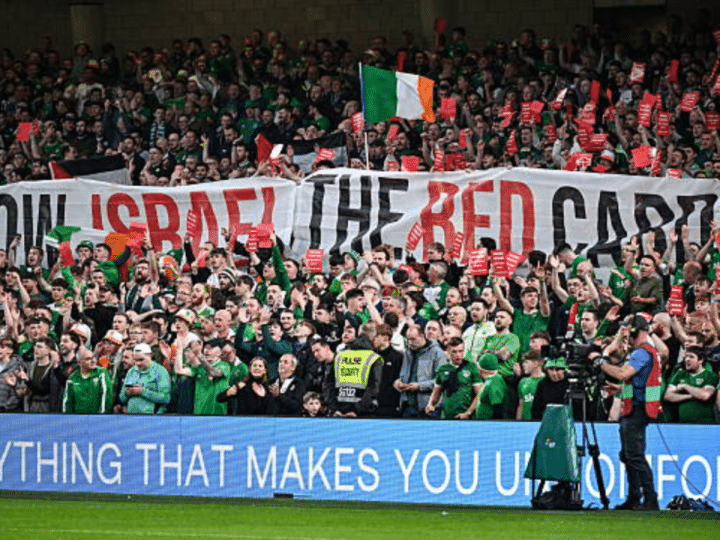
They were joined by Sinn Féin, who focused on Ireland’s upcoming Nations League fixture against the land thieves, scheduled for October. The Stop the Game Campaign and FAI Participation in Matches against Israel have called on the government to “uphold its obligations under international law” by refusing to engage in matches with mass murderers.
Irish government fails to act on Palestine
However, coalition parties Fianna Fáil and Fine Gael are proving their Zionist tendencies, working with independent TDs to sabotage the effort. They introduced an amendment to both motions. This stated that sporting bodies are independent of government, and must make their own decisions. As a result, the Zionist mob then voted through the amended motions by a margin of 81 to 68.
Of course, the Irish government is more than happy to get involved in sport by means of funding cruelty. They plough vast sums into greyhound racing yearly. While less a sport and more an exercise in barbarism, the point still stands. The Irish government regards it as a sport, and intervenes through financing. And when it comes to involvement in sport for humanitarian purposes, Micheál Martin and others are determined to shift the goalposts.
Social Democrats TD Sinead Gibney gave an excellent speech defending her motion, in which she contrasted the response to the Zionist entity with that against Russia. The latter was swiftly banned from international competitions for its invasion of Ukraine. However, no similar action has been taken against the settler-colony occupying Palestine for its far worse crimes. Speaking of the lack of consensus on banning ‘Israel,’ she said:
We do not have that. In the absence of that, and in the Minister of State’s now acknowledged acceptance that we do not have that, what we have to try to do one by one, as individual beings and as individual nations, is to stand up and say “No, we will not take that”.
What will happen is that a domino set of actions will follow, which means that we will not be the ones penalised and our sports people will not be the ones penalised but it will be Israel who will be penalised because they will not be able to stand in resistance to the actions that we start. That is what boycott, divestment and sanctions do. That is how it works and it seems to be lost on you guys completely.
In other words, given the inaction on the issue thus far, someone has to take the lead. Once meaningful action is taken, others will join, and the terrorist entity’s removal becomes inevitable. Irish football may suffer short-term pain, but given the horror of the Gaza holocaust, a moral stance is essential.
Palestine campaigners take legal action
As a recent video released by the Stop the Game Campaign put it:
Six points or 75,000 lives?
It begs the question… which of these numbers is more important? Six points would be the potential penalty for cancelling the football matches. The 75,000 figure reflects the number of Palestinians in Gaza murdered by Israeli Occupation Forces (IOF) — the true figure is likely even higher. The powerful video features notable figures like former Republic of Ireland manager Brian Kerr, and ex-Sinn Féin leader Gerry Adams.
The campaign has been busy. They have filed for legal action against the criminal Irish government for pushing ahead with the matches. Human rights specialists Phoenix Law said they had “issued a pre-action letter for judicial review” sent to the sporting authorities and the Irish government.
The solicitors accused Irish sporting bodies of “collective failure” in failing to designate the matches as unlawful. Their statement reminded the authorities that spending of public funds must comply with “domestic human rights obligations.”
The Football Association of Ireland (FAI) is seemingly looking to avoid scrutiny by simply moving the Dublin fixture to a neutral location. RTÉ reports that the FAI want to shift the match to Hungary, if European football governing body UEFA approve it.
Gibney again struck the right note, saying:
Moving the fixture is an attempt to brush this under the rug — and will deny the Irish people an opportunity to engage in peaceful protest.
It also doesn’t change the fact that this game should not be played. Ireland should be not facilitating the sportswashing of a nation which has been committing war crimes for nearly three years.
Featured image via David Fitzgerald / Getty Images

Dwayne Johnson has spoken candidly about missing out on an Oscar nomination for his role as mixed martial arts legend Mark Kerr in the sports biopic The Smashing Machine.
The former WWE star earned widespread praise for his transformation into the troubled MMA pioneer in the Benny Safdie drama, with many critics hailing it as the best performance of his career.
While it earned him a Golden Globe nomination and plenty of Oscar buzz, no Academy Award glory followed.
The wrestler-turned-actor has now revealed to Esquire that his disappointment at this awards snub has only fuelled his determination to push himself further in Hollywood.
“It would have been incredible to get nominated for an Oscar,” he explained, before adding: “I realised very quickly that it’s a rare thing to reach this pinnacle where you’re even having these conversations. And it’s exciting!”
Dwayne continued: “It would have been amazing. I wish it happened. But it didn’t.
“But in no uncertain terms did I ever think, ‘Oh, that doesn’t matter’. I always thought it mattered. And it has lit a fire in my spine, which is: Let’s go back to work.”
In December, Dwayne reflected on the experience of making The Smashing Machine to IndieWire, telling them he needed to take on the role and step outside his comfort zone for his “soul”.
“I need to challenge myself and I need to listen to my gut and my instinct and this little voice that has now become very resounding, banging on my rib cage, ’You must do this. A change has to happen, and it’s scary, and that’s K,” he said, before adding that he didn’t want to “wake up 25 years from now” and regret not having taken on the role.
Despite its critical acclaim, The Smashing Machine underperformed at the box office, but at the time, Dwayne felt like the film was more than just about numbers and making money.
“My relationship with success for The Smashing Machine is not a number,” he told IndieWire. “And it may sound convenient, but I mean this from the heart, it’s just peace. Being at peace with it, and being at peace with the performance.”
The Smashing Machine also starred Oscar nominee Emily Blunt and UFC’s Ryan Bader, and when it premiered at last year’s Venice International Film Festival, it received a 15.5-minute ovation and won the Silver Lion.
Looking ahead, Dwayne is already preparing for his next collaboration with Benny Safdie on Lizard Music.
His next film is the live-action reimagining of Disney’s Moana, which is released in cinemas in July.

Andy Burnham is likely to become Labour leader and prime minister without a contest if he wins next week’s Makerfield by-election, a former aide to Keir Starmer has said.
James Lyons told the HuffPost UK podcast Commons People that “we will see a significant number of MPs nominating Andy in a way that makes it very difficult for the prime minister to fight on”.
In those circumstances, Lyons said Starmer could agree to “some sort of stable and orderly transition” to Burnham.
The prime minister has told ministers that he will stand in a Labour leadership contest if one is triggered.
But Lyons, who was No.10 director of communications between 2024 and 2025, said that once his former boss is confronted with the reality of the situation he faces, he will be forced to think again.
He said: “The prime minister can survive, the question is ‘will he’, and I think if Andy Burnham is elected next Thursday, I don’t think he will.
“I think there’s every chance that what we will see is a coronation and we will see a significant number of MPs nominating Andy in a way that makes it very difficult for the prime minister to fight on.
“I know in his heart he will want to [fight on], he definitely feels he is the best person to be leading the country during this omni-crisis that has been created by the conflict in the Middle East and the conflict in Europe.
“Under those circumstances, if a sizeable proportion of the parliamentary party don’t want you, I think it’s very hard to carry on.”
Lyons added: “All things are possible on this earth, but if an overwhelming majority of the parliamentary party have said they’re backing somebody else I think it’s very, very hard to carry on.
“Of course he’s going to say that he’s going to fight, you saw that with Boris Johnson and Liz Truss. Right until the last they said they were going to fight, and that’s the right thing to do.
“But come the early hours of next Friday morning, if it looks like Andy’s there, then I think that’s the time to start having some conversations about whether’s it’s in his interests or the country’s interests to have some sort of stable and orderly transition.”

Burnham is currently the clear favourite to see off the challenge of Reform UK’s Robert Kenyon and win next Thursday’s by-election.
He has confirmed that he will join any Labour leadership contest, with former health secretary Wes Streeting also saying he will throw his hat into the ring.
But Lyons said that even if Burnham loses, Starmer could still be replaced without the need for a leadership election.
He said: “I still think there’s a chance that people think the stakes are so high that they coalesce around another candidate.
“One of the names that’s been doing the rounds is Ed Miliband. I think Yvette Cooper is also underpriced. A lot of people in the Parliamentary Labour Party think it’s time that Labour had a woman prime minister.
“Anything could happen, but perhaps the bigger question is whether the Labour Party is a viable political vehicle if Andy Burnham can’t win Makerfield. It’s not obvious to me that the answer is yes.”
To listen to the full interview with James Lyons, as well as our report from Makerfield, download Commons People from wherever you get your podcasts

World Cup Daily: Co-host Mexico kicks off with a bang

Jeff Bezos’s Prometheus raises $12B to build an ‘artificial general engineer’ for the physical world

samara (Money)


-

 Fashion7 days ago
Weekend Open Thread: Evereve – Corporette.com
-
 Entertainment5 days ago
The Best Mystery Series of All Time Is Surging on Streaming 30 Years After It Ended
-

 NewsBeat4 days ago
Alexander Zverev wins the French Open to finally earn a 1st Grand Slam title
-
 Crypto World7 days ago
Jensen Huang Approves Samsung, SK Hynix, and Micron for NVIDIA (NVDA) HBM4 Memory Supply
-

 Crypto World4 days ago
Anatomy of the June crypto crash: Fed, Iran, Saylor
-

 Tech6 days ago
Suspicious Polyfill login prompts pop up on Toshiba, Muji websites
-
 Crypto World6 days ago
Senator Cynthia Lummis Calls CLARITY Act the Most Consequential Financial Legislation of This Generation
-

 Tech5 days ago
Microsoft unveils seven homegrown AI models in new bid for ‘long term self-sufficiency’
-
 NewsBeat5 days ago
Alexander Zverev conquers demons and outlasts Flavio Cobolli to win French Open for first major title
-

 Tech6 days ago
Von der Leyen’s AI envoy pick draws conflict-of-interest fire
-

 Business4 days ago
High Stakes for Wembanyama as New York Pushes for 3-0 Lead
-

 Tech6 days ago
Hackers now exploit SolarWinds Serv-U flaw to crash servers
-
 Business5 days ago
The Pain Points Taking a Fragile Tech Rally Down a Notch
-

 Tech7 days ago
Meta steals a tactic from Tesla and builds data centers in tents
-
 Crypto World4 days ago
Eli Lilly (LLY) Stock Surges 4% Following Breakthrough Sleep Apnea Trial Results
-

 Tech4 days ago
Notion restores access to Anthropic after service disruption
-

 Crypto World5 days ago
Trump’s AI Ownership Plan Could Benefit Anthropic at OpenAI’s Expense
-
 Business5 days ago
The investment to transform historic St Helen’s ground in Swansea
-
 Sports3 days ago
Bangladesh beat Australia after 20 years in ODIs, register only their second win over six-time world champions | Cricket News
-

 Tech7 days ago
RCS Messages Between iPhone and Android Get End-to-End Encryption With iOS 26.5
You must be logged in to post a comment Login