

Politics
The House | Manchesterism won’t survive the painful trade-offs unless it gets citizens on board

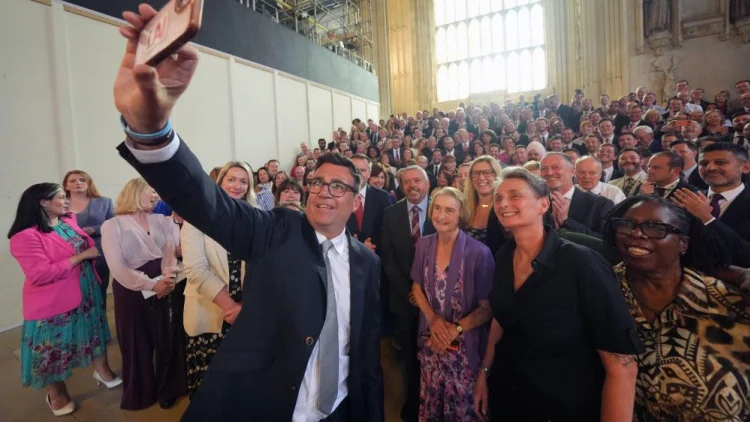

Andy Burnham takes a selfie with Labour MPs (Alamy)
4 min read
The battle of ideas over Britain’s political economy is genuinely refreshing. Manchesterism, which the King of the North is set to carry into Downing Street, sits at the forefront.
But economic reform ideas are just the first hurdle and there are many more hurdles ahead: fiscal constraints, geopolitical instability, the artificial intelligence transition, demographic pressure. Each brings painful trade-offs, which demands political craftsmanship.
So the real question is not whether Manchesterism makes sense on paper. It is whether it has a politics to match its ambition.
Manchesterism has a storm ahead
The politics is already tightening. Commitments to the triple lock and manifesto tax promises are narrowing Andy Burnham’s room for manoeuvre. Without a strategy to manage trade-offs, every new ambition risks hitting a red line. Can Manchesterism persuade a country not just to hope for change, but to endure it?
And then there is the state. Public control of utilities is a grand ambition for the capacity of the British state. But the rhetoric of economic transformation has to face the institutional reality: a weak centre, an unwieldy stakeholder state and a powerful Treasury with an instinctive caution.
Look no further than HS2 for a warning. And why should this time be different? A new economic compact has to answer that.
We have seen this before
Britain is not ‘ungovernable’. It has dealt with worse in the past and it can do again.
After the 1930s destitution and a world war, Clement Attlee and William Beveridge overhauled fiscal orthodoxy and rebuilt the institutional landscape. After the 1970s stagflation and industrial disruption, Margaret Thatcher let unemployment rise over three million to forge a new consensus. The lady was not for turning.
Whatever one thinks of those economic visions, they shared something essential: a political project around a willingness to tolerate short-term pain, and not just economic reform, but shifting communities, culture, and the very meaning of citizenship.
When Keir Starmer warned that “things will get worse before they get better”, the public heard the pain but not the purpose. “Mission-driven government” promised a new governing philosophy, but failed to materialise.
The lesson? Telling people that change will be hard and branding it as “missions” isn’t enough. You have to convince them that change is worth it and build transformational institutions. For that, citizens need to be embedded in the change. We at Demos call it the “Citizen Economy”. It’s built on the idea that people aren’t simply units of consumption or production in the economy, they are moral agents rooted in communities, with the power to accelerate or put the breaks on progress.
We need a Citizen Economy
The new leadership should start by redesigning how economic policy is made around this new assumption. We need to rewire the state’s core frameworks to ‘think citizen’, from the Treasury’s Green Book to council procurement systems. We need to connect institutions with citizens, from regional authorities to the British Business Bank. We also need to engage the public directly in economic choices.
The next task is reshaping the foundations of the economy – targeting opportunities where the role of citizens has been overlooked. This means tackling the social drivers of rising NEET numbers – be it the low social status in apprenticeships or lack of social capital. It means building citizens’ consent for falls in short-term consumption to raise investment in national renewal. It means confronting difficult questions – be it the unsustainable triple lock and welfare bill or outdated council tax – through a new fiscal contract grounded in shared values.
Can Manchesterism survive?
Britain is becoming richer in economic ideas, but short of the political strategies to sustain them. The Citizen Economy offers a way through: an economic compact in which citizens’ relationships, consent, and contribution is no longer overlooked. It is central to the New Deal between citizen and the state that is needed to reverse the ‘democratic doom loop’.
Because if citizens are not part of the project, they will become its constraint.
Dan Goss is lead researcher at the cross-party think tank, Demos

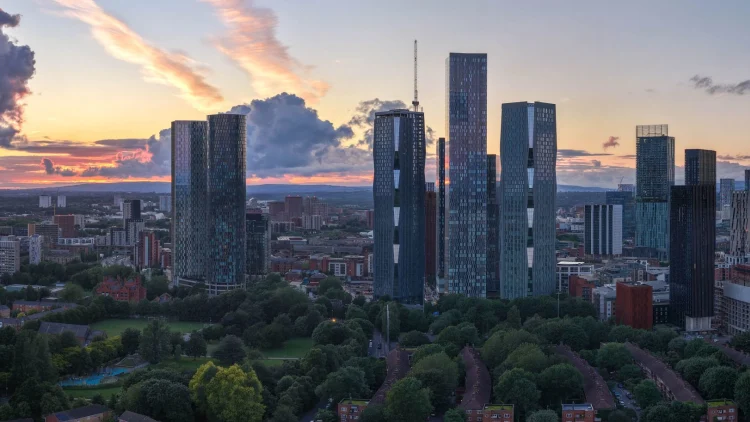

Aerial view of the Manchester skyline (Bardhok Ndoji/Alamy)
4 min read
As a nation, we have long understood that the cities we build shape the country we become.
Our most beloved and successful places were not created by accident, but through civic ambition, long-term thinking, and a belief that good design serves the public interest.
City architects have historically shaped this belief, helping to create high-quality homes and places that continue to provide lasting benefit today.
The Government is rightly focused on building new homes, new towns, and stronger regional economies. But if we want to deliver at scale, we need to think not only about how many homes are built, but equally about whether the places we create will work for the people who live in them. That’s why RIBA is calling for a three-year pilot programme to fund city architects in combined authorities across England.
At the very moment we are asking local areas to deliver more developments at a faster pace, much of the expertise needed to shape that growth has been hollowed out. Planning departments have faced severe funding pressures, and nearly a third of local authorities have reported skills gaps in urban design and architecture. Without this design capacity, too many opportunities are missed: difficult sites become stalled, planning becomes slower and more fragmented, and the quality of new places suffers.
The value that city architects provide is tangible, as demonstrated in our new report, Making the case for city architects. Using the Greater Manchester Combined Authority (GMCA) as an example, the report shows that improvements across four housing quality factors could generate £47.6 million in additional value over three years.
Our modelling further suggests that if city architects helped the GMCA increase housebuilding, even by just 1% of its existing spare capacity, this could deliver dozens of additional homes. This modest uplift would generate nearly £1 million in additional tax revenue, alongside £10.6 million in additional economic output and £4.4 million in Gross Value Added to the local economy and construction sector.
We can also see the benefit of architect-led planning in Nottingham. Access to in-house design expertise in Nottingham City Council is helping to support a consistent uplift in housing numbers on residential developments. Across the sites where design-led housing models were adopted, projects saw an increase in green spaces by 17% and up to 20% more homes.
When we prioritise good design, we do not compromise growth; we improve it
These are the kinds of outcomes we should be aiming for. Not a choice between quantity and quality, but a planning system capable of delivering both. Not development that simply meets a target, but development that strengthens the places we live in. Not short-term volume at the expense of long-term value, but growth that is more intelligent, more efficient, and more durable.
The value of a well-designed built environment cannot be overstated. It affects health and wellbeing, economic opportunity, social connection and confidence in the places around us. When we prioritise good design, we do not compromise growth; we improve it.
From Sir Christopher Wren’s reimagining of London to Edwin Lutyens’ civic grandeur, and from the great public housing and urban visions of the twentieth century to the work of architects such as Norman Foster today, this country has repeatedly shown how design can shape national confidence and improve everyday life. As we embark on another era of ambitious housebuilding, we should be making the case for the next generation of figures with that same civic imagination. Architects should be empowered not only to design individual buildings, but to help shape the towns, cities, and communities of the future.
City architects are not a relic of the past. They are a modern solution to modern problems, and a way to ensure that national ambition becomes a lasting national value.
Chris Williamson is President of the Royal Institute of British Architects
Politics
The House | Our historic Conservative win in Scotland was a victory for oil, gas and Kemi Badenoch
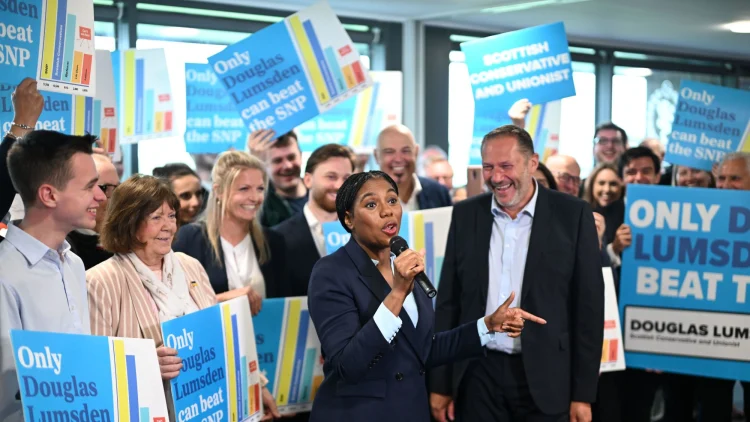

Kemi Badenoch with Douglas Lumsden on 16 June (PA Images/Alamy)

4 min read
Earlier this month, Douglas Lumsden won the first by-election in Scotland for the Conservative Party since 1967.
Many colleagues from across the House have asked me what has changed. How did we flip a seat, previously held by the leader of the SNP in Westminster, to the Conservatives – and how did we do it so resoundingly?
The answer is, like always in politics, manifold. Firstly, we turned the election into a referendum on oil and gas. Aberdeen South is among the most affected by Ed Miliband’s net-zero policies. It’s an area that has always relied heavily on its natural resources for careers and livelihoods, and the UK has relied on them for many of its crucial products.
Since Miliband took over as Energy Secretary, the country has lost 1,000 jobs a month in the sector, and few places have been as heavily impacted as Aberdeen South. You can feel it, walking along the streets in the constituency. Empty houses, for sale signs, and businesses shutting down. The by-election result was a resounding rejection of Miliband’s devastating energy policies and a vote for the Conservative Party’s pledge to get Britain drilling.
Second, this result is recognition that the Conservative Party has changed under new leadership and a vote of confidence in Kemi Badenoch. Kemi visited Aberdeen South three times during the campaign, speaking to energy workers and ordinary constituents about how the SNP and Labour have let them down and reassuring them that the Conservatives were fighting in their corner. Time and again, her visits were noted at the doorstep, with her personal popularity finally translating into votes.
Third, we put forward an excellent candidate in Douglas Lumsden, formerly an MSP for the Northeast Scotland region and an oil and gas worker from Aberdeen. A lot of behind-the-scenes work goes into a campaign – campaign managers, strategists, pollsters, etc – but an election is often won or lost by the quality of the candidate. Douglas led from the front, campaigning 12 hours a day, always with a smile on his face. He met and thanked every volunteer who came out to campaign for him, often through torrential rain and occasionally in freezing conditions (yes, I’m describing June in Aberdeen).
Under Kemi Badenoch, the Conservative Party is once more an electable force in Scotland
In terms of the results, we saw a collapse of the SNP vote. While Peter Murrell’s sentencing undoubtedly played a part in this – another reason to question its timing after the Holyrood elections – the overall failure of the SNP to deliver meaningful change was most evident. The SNP have presided over deteriorating educational standards, and some of the worst NHS waiting times in the UK. The SNP vote simply did not turn out.
Reform UK was also a non-entity. It gained well under 10 per cent of the vote in both Scottish seats, putting a spanner in the works of Malcolm Offord’s ambition, “I’m in this to be first minister.”
And finally, Labour stayed at home. Labour’s vote fell by over 86.47 per cent. Only recently, Anas Sarwar was the favourite to become first minister of Scotland. Labour now looks further from power in Scotland than ever. But it wasn’t just Labour voters staying at home – they turned up for us. Many voters who had always supported Labour voted Conservative to keep the SNP out. We don’t take these votes for granted.
Under Kemi Badenoch, the Conservative Party is once more an electable force in Scotland. Reform was irrelevant, losing heavily in both Aberdeen South and Arbroath and Broughty Ferry, and the SNP faced a resounding rejection of their and Miliband’s destructive net-zero policies.
It was a message from those who work in the oil and gas sector that we must keep drilling, not just for the essential products it provides the country but because thousands of skilled jobs depend on it.
But, most importantly, Aberdeen South has gained a brilliant new MP in Douglas Lumsden, who will advocate for all his constituents and, of course, continue to champion the oil and gas sector in Scotland.
Andrew Bowie is the Conservative MP for West Aberdeenshire & Kincardine, and shadow Scotland secretary
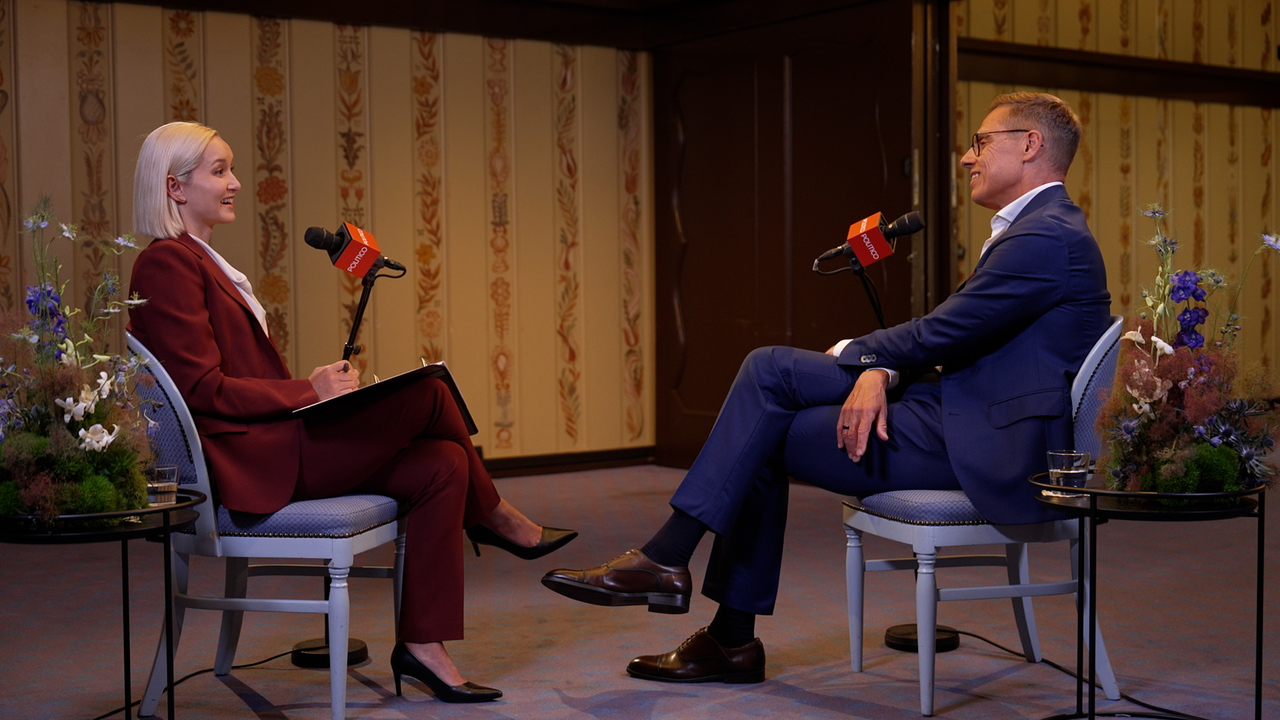 lead image
Dr Sarah Ingham is the author of The Military Covenant: its impact on civil-military relations in Britain.
“Infamy! Infamy! They’ve all got it in for me!”
Thanks to a mega-decibel boom-box, Sir Keir Starmer’s resignation speech on Monday morning failed to bring to mind any of Shakespeare’s majestic reflections on the transition of power: it was less Coriolanus, more Carry on Cleo.
For the fourth time in four years the Downing Street lectern can be likened to a scaffold, signalling the death of Prime Ministerial authority. But what should have been a solemn national moment became farcical, down to that Prat in the Hat, Steve Bray.
The fanatical Remainer has been sounding off in Whitehall and around party conference venues at a gunfire decibel-level for the best part of a decade. He imposed himself on London’s Clubland when a Boris Johnson portrait was unveiled.
Rejoiners have been only too happy to indulge their pet jester’s antics. Things Can Only Get Better at full volume when Rishi Sunak called a General Election in 2024? What larks!
The joke wasn’t quite so funny for Labour on Monday as Sir Keir’s announcement was accompanied by Beethoven’s Ode to Joy belting out across SW1 – and into ears around the world.
It is unthinkable that, with their sense of national pride, historic moments in France or the United States could be similarly marred by a monomaniac. But here in Britain, we must suck it up, buttercup.
Who said irony is dead? A human rights lawyer, Sir Keir was in no position to object. Buffoon Bray’s right to breach our peace has been legally tested and ruled to be protected in law under Articles 10 and 11 of the European Convention on Human Rights, linked to the right to protest.
On Wednesday, Kemi Badenoch wrote to Met Police Chief Sir Mark Rowley asking why the Force had not appealed the court’s finding in favour of Bray.
Alas, by not acting, the Met is making clear whose side it is on. Similarly, Gaza march protestors in London got away with chanting “Israel is a terror state, kill all Jews.” Instead of arresting them for incitement, police officers preferred to turn a deaf ear.
The Human Rights Convention was drafted in 1950, shortly after Britain’s collective national endeavour of fighting total war.
The Conservative Party is committed to leaving the ECHR, as Rowley was reminded. Bray is providing another reason for doing so. It is time to sweep away British legislation based on an antiquated Convention that no longer serves Britain as it is now, rather than how the world was back in the 1950s.
Today, the closest most will get to combat is Call of Duty: Black Ops 7. In our Insta era of influencers and selfies, it is unthinkable there could be political resignations over NHS dentures as there were in 1951. Today, who under 30 wanting Love Island-contestant teeth would trouble an NHS dentist?
Since PM Starmer’s ousting, commentators have asked whether Britain is ungovernable. With the 10th anniversary of the referendum, inevitably many blame Brexit for the political turbulence. But few are reflecting on whether out-sourcing policymaking to Brussels damaged Britain’s ability to think for itself. Spoon-fed by Eurocrats for decades, instead of asking what works, the British state has grown fat, lazy and useless.
By raising the rights of the individual over the collective, human rights legislation is now actively undermining Britain as much as fish discos, unaccountable quangos and a £270 million, 350,000-page planning application.
On Monday, the logical conclusion was reached. One person’s narcissism superseded others’ focus on a moment of political significance – which could also have an impact on the global financial markets. The turnover in No.10 is already bewildering this country’s friends and allies: throw in the jowly jester’s Yakety Sax soundtrack (the Benny Hill Show theme) and it’s no wonder bond traders have taken fright at Basket Case Britain.
Perhaps Monday’s unamusing opera buffa was loud enough to awaken some doubts among supporters of the ECHR, a charter which makes it almost impossible to deport the 43,806 detected arrivals who came to Britain via illegal routes in the 12 months to March 2026.
The illegal migrants, the Gaza marchers and the Prat in the Hat are quick to claim their rights to gatecrash this country, to disrupt London week in, week out and to impose their views on the rest of us. Me. Me. Me. It really is all about them and, probably, their social media posts. They are exempt from any balancing responsibility to Britain, their fellow citizens or to the greater good.
Britain’s unwritten social contract relies on the state maintaining good order in the public realm. “O Freunde, Nicht Diese Töne!” (“Oh Friends, Not These Sounds!”), as Beethoven wrote in Ode to Joy. But Monday illustrates that human rights protect the discordant individual rather than the silent majority.
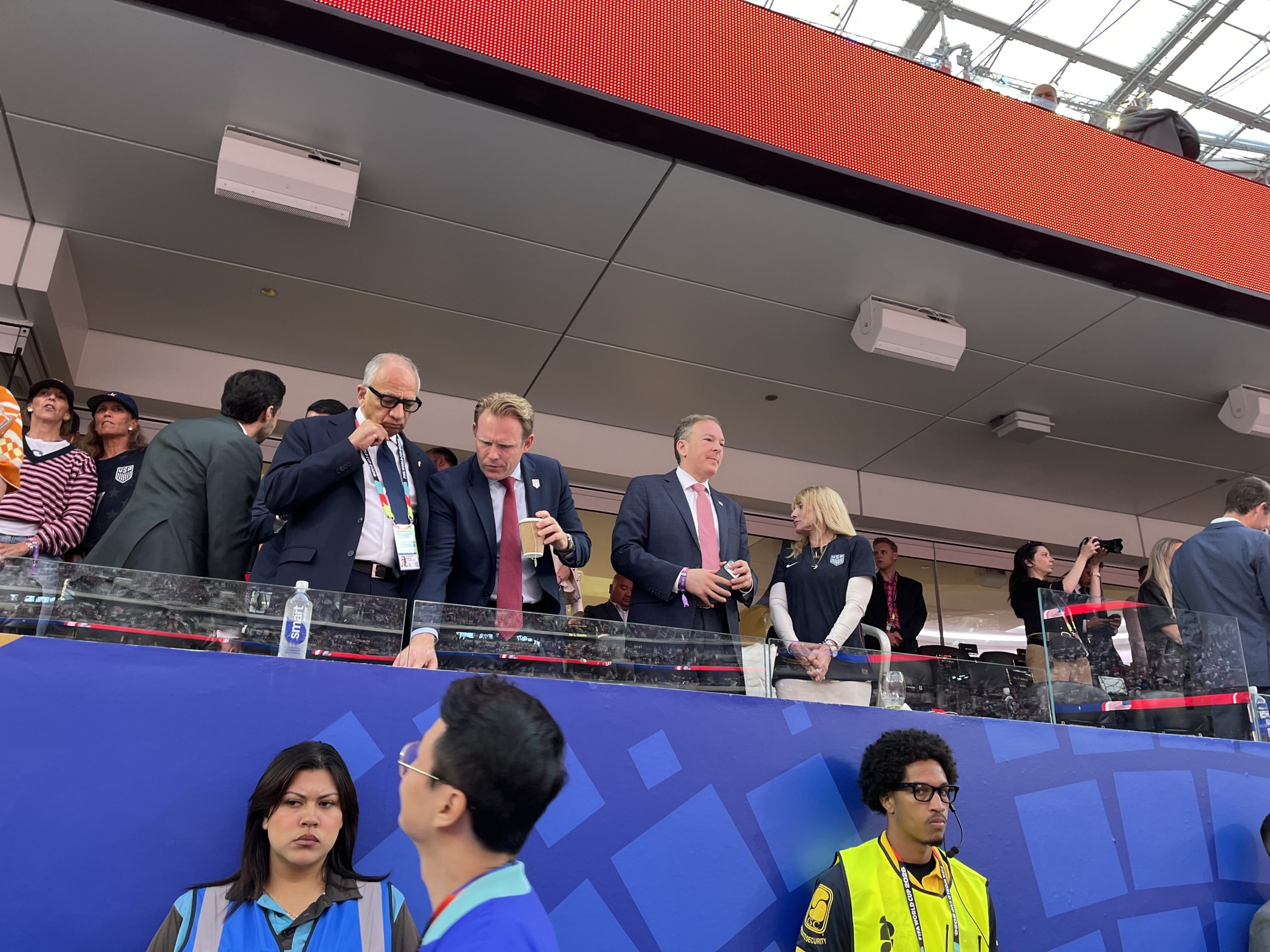
While President Donald Trump himself hasn’t attended a game yet during the World Cup, the rest of his administration has turned out in force at all three U.S. games so far.
Lee Zeldin, administrator of the Environmental Protection Agency, is at the game in Inglewood. Zeldin has clashed with California officials over issues ranging from endangered species protections to clean-air rules, while also bidding to address Mexico-California cross-border sewage pollution.

Army Secretary Dan Driscoll, who has at times served as a conduit between the White House and Ukrainian President Volodymyr Zelenskyy during the fraught attempt by the U.S. to broker peace between Russia and Ukraine, is also in attendance at SoFi Stadium. Driscoll, who is close to Vice President JD Vance, has previously been referred to by Trump as his “drone guy.“
Also in LA tonight: Richard Grenell, who was Trump’s combative envoy to Germany during the president’s first term.
Grenell, who allies pushed for a top job in the second Trump administration, ultimately missed out on a Cabinet-level role, instead being appointed special presidential envoy for special missions of the United States.


Here are the likely 2028 presidential hopefuls who have attended a World Cup game so far:
- Shapiro: 2 matches
- Newsom: 1 match
- Harris: 1 match
- Rubio: 1 match
And… according to at least one Democratic strategist, that approach may not be half bad.
Matt Bennett, of the center-left think tank Third Way, told POLITICO more prospective 2028 candidates should embrace the World Cup.
“The World Cup is fun and inspiring, with heroics, heartwarming storylines, and gritty underdogs. The US team is kicking ass. And Trump is ignoring it,” Bennett said. “Democrats should own it all – go to games, watch them in bars with fans, brag about our team, hang out with the Scots. Show the country that we’re normal, patriotic, and fun-loving.”
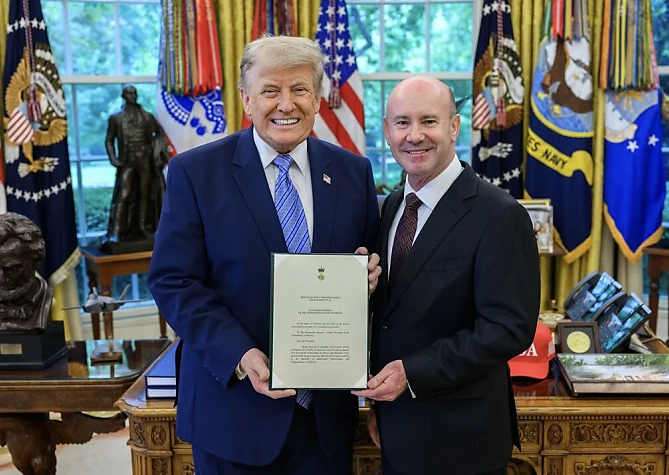

SEATTLE — In late May, Greg Moriarty formally presented his credentials to President Donald Trump as Australia’s man in Washington. But it wasn’t until mid-June that Moriarty encountered one of the U.S. officials he most needed to meet: Energy Secretary Chris Wright, whose department plays a key role in critical-minerals deals between the two countries.
Moriarty’s encounter with Wright did not take place at the Energy Department’s headquarters just off the National Mall in Washington, or at any of its many facilities around the country. Rather the men met at Lumen Field in Seattle, at last Friday’s crucial World Cup match between their countries, where Wright led the U.S. delegation — an auspicious occasion for an envoy to make connections in a new post.
“The United States is a very sports-mad country, so is Australia, so [it’s] a great opportunity to get to know them on a different level, because you might touch on one or two items of business,” Moriarty said in an interview. “But it’s generally just so that you can both enjoy the spectacle and the connection that we both have through sports.”
Moriarty also introduced himself to Health and Human Services Secretary Robert F. Kennedy Jr., a figure of particular fascination in Australia given that country’s embrace of harsh Covid-era lockdowns, as well as members of Congress in attendance. Moriarty, a former defense secretary and national security adviser, will work to keep Washington’s foreign-policy establishment focused on the Indo-Pacific in a year when its attention has drifted alternately to the Arctic, Caribbean and Persian Gulf.
“The United States is a superpower. It clearly has global commitments and global responsibilities,” said Moriarty. “But Australia, we think that the United States’s commitment to the Indo-Pacific is very solid.”
In Seattle, however, business was front of mind for Moriarty, who finds himself fighting a new 12.5 percent tariff that the Trump administration has imposed on countries accused of not doing enough to prevent slave labor in their supply chains. At the waterfront Edgewater Hotel, Moriarty joined corporate leaders — including Microsoft’s Australian-raised Deputy General Counsel Antony Cook, who has taken a leading role in the company’s approach to AI regulation, and Mikaël Limapalaër of heavyweight pension fund Australian Super — to discuss the future of the bilateral trade relationship.
Moriarty is unusual among Australia’s ambassadors to Washington for not having been a politician — his immediate predecessor, Kevin Rudd, previously served as the country’s prime minister — but he already shows a deft instinct for intertwining economic ties, military alliances and cultural affinity. At one point, he linked a coming National Football League game in Melbourne to the arrival of nuclear submarines as part of the AUKUS security partnership.
“We’re really keen to sort of see how we can use American football to grow an audience in Australia, that will again be really good for the business connections and the people-to-people connections,” said Moriarty.
“Australia will be ready to host the first rotation of U.S. submarines by the end of next year, and we’re hoping that all the Americans who come down to and live down in Western Australia bring their own love of football.”
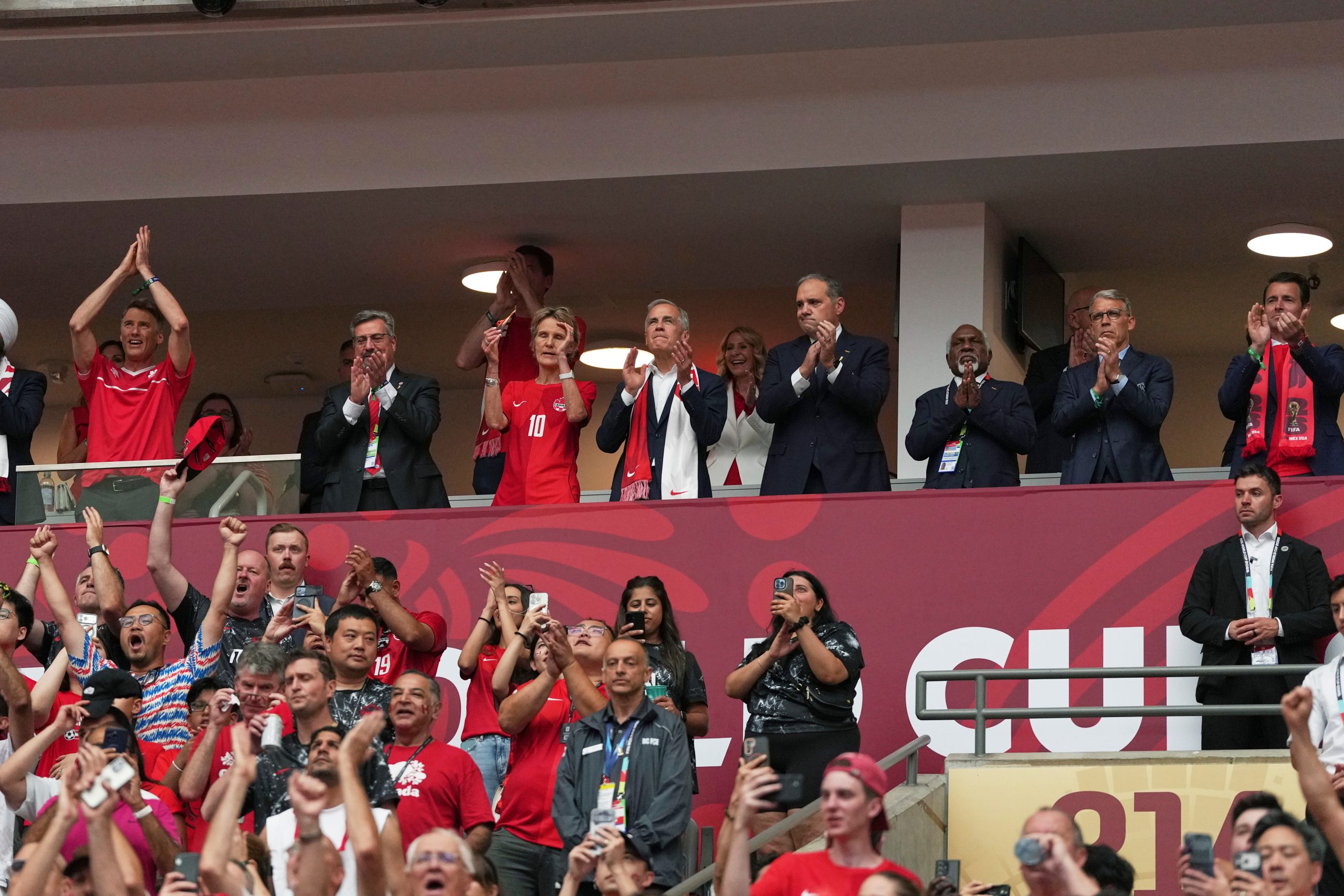

OTTAWA — Mark Carney may be Canada’s loudest booster at the World Cup, but some of his countrymen fear he may be hurting more than helping — because he always does when it comes to sports.
In March 2025, the new prime minister joined the Edmonton Oilers for a pre-game skate. That night the Oilers fell to the Winnipeg Jets, followed by a wave of injuries on the team. Former Oiler and “Spittin’ Chiclets” podcast host Ryan Whitney took to X: “The Carney Curse is real for Edmonton. What the hell just happened. Guy is on the ice with the Oil this morning and now everyone is injured.”
Now some Canadians are worried that their prime minister has brought the “Carney Curse” to the World Cup, blaming him for Canada’s defeat against Switzerland on Wednesday. His country’s only only goal coincided with a moment that Carney left his box seat at Vancouver’s BC Place.
For a brief, glorious moment last week, the Ottawa fishbowl wondered if the curse had been broken. Carney skipped Canada’s World Cup opener against Bosnia-Herzegovina. But then, after days of anxious whispers over whether he’d jinx the squad, the prime minister witnessed Canada thrash Qatar. If Canada had beaten or tied the Swiss, the team could’ve played as many as two elimination games in Vancouver. With the loss, they fell to runner-up — and a knockout-round game in Los Angeles against South Africa on Sunday.
Canada’s men’s soccer team joins an ever-growing list of inadvertent “victims” of prime-ministerial fanhood, including: the Toronto Blue Jays, who lost the World Series after Carney visited the team; the Canadian women’s rugby team, for whom he traveled to the United Kingdom to cheer on at the World Cup last summer; and the Montreal Canadiens, whom he dubbed “Canada’s team” during the Stanley Cup playoffs.
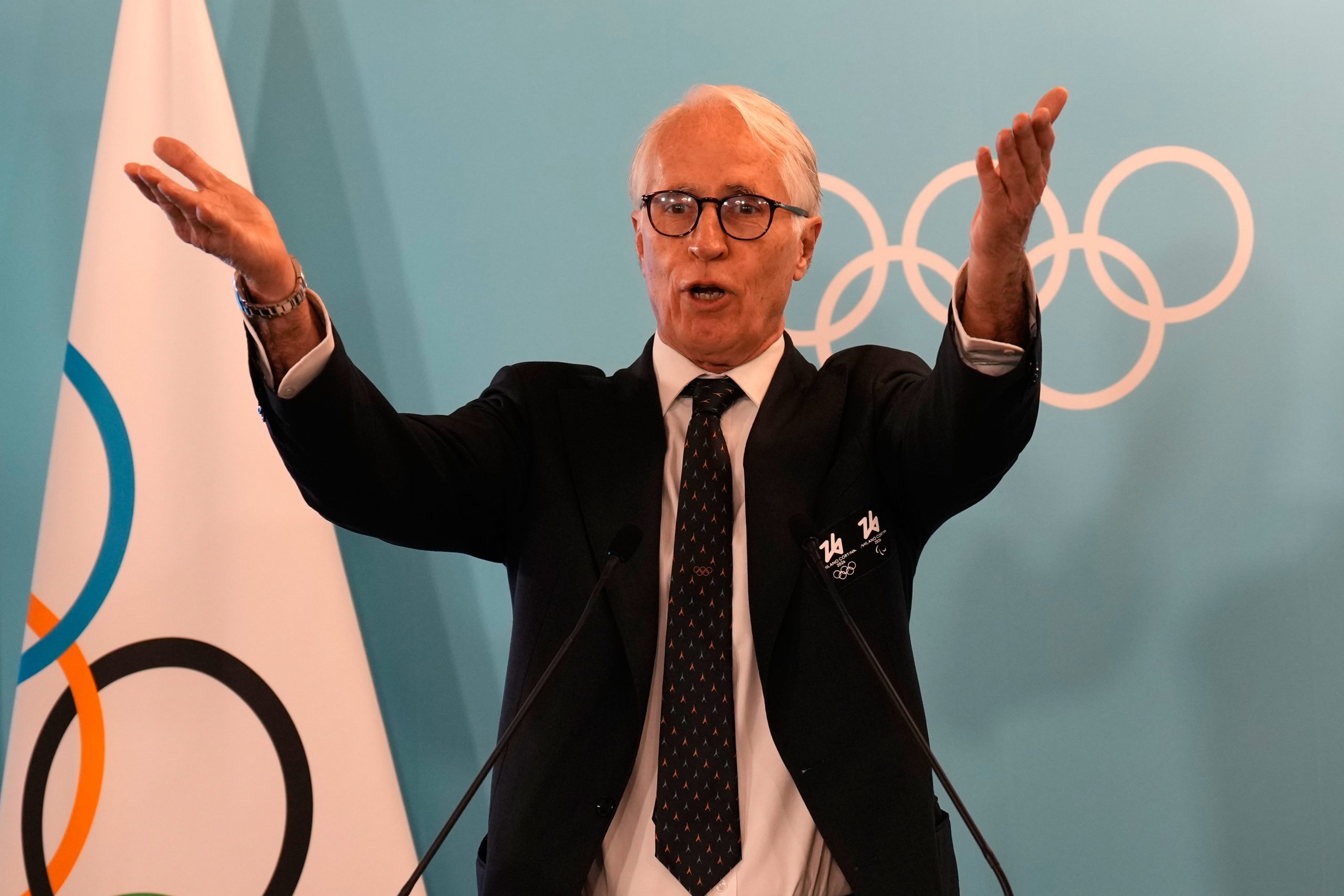

The most high-profile team to miss out on the 2026 World Cup, Italy, is picking a new crop of officials to revamp its discredited soccer association — as Prime Minister Giorgia Meloni’s allies failed in their bid to take more control over the body.
Veteran sports official Giovanni Malagò, a former president of the Italian Olympic Committee (CONI) for more than a decade, overcame opposition from Italy’s right-wing government to become the new president of the Italian soccer association (FIGC) earlier this week.
Malagò’s key challenge is to mend ties with Italian Sports Minister Andrea Abodi, with whom he has clashed in the past and who publicly questioned Malagò’s soccer credentials. Until the very last minute, Meloni’s government tried to block Malagò from clinching the FIGC’s top job — but ultimately failed.
In a soccer-mad country where the sport carries outsized cultural weight, Italy’s failure to qualify for the World Cup turned into a proxy battle over governance, reforms, investment and the Meloni administration’s willingness to extend political influence into independent institutions.
Frustrated Italian soccer fans, who have seen their country miss out on qualifying for the last three World Cups, just want Malagò to pick Italy’s new head coach.
The favorites for the job are Roberto Mancini and Antonio Conte — two soccer grandees who both previously coached the Italian national team. Another soccer legend, former AC Milan captain Paolo Maldini, is being touted for a new job as a bridge between the FIGC and the players, according to Italian media.
But that’s not the only item sitting in Malagò’s in-tray.
Italy must nominate five stadiums capable of hosting matches at Euro 2032, which it will co-organize with Turkey, by an October deadline. That’s potentially problematic given that Europe’s governing body, UEFA, warned that Italy could lose its role as co-organizer unless it upgrades its dilapidated soccer infrastructure.

This host-city mayor visited a “fan festival” in her city’s Fairmount Park, where a combined 250,000 attendees have gathered thus far to watch matches.

That’s Philadelphia Mayor Cherelle Parker inaugurating the Lemon Hill festival site early in the tournament. The city is hosting Curaçao and Côte d’Ivoire at Lincoln Financial Field today.

Fresno State Football Wins vs. Top Programs in West

Order-tracking app Shop abused to push callback phishing attacks

North York Moors: Don’t Spark Disaster campaign launched


-

 Fashion7 days ago
Weekend Open Thread: Miami – Corporette.com
-

 Entertainment6 days ago
Renter of Home in Anne Heche Crash Denies Settlement With Son
-
 Sports3 days ago
Two goals and an assist by sheer aura: Cristiano Ronaldo just entered the World Cup chat
-

 Tech4 days ago
Microsoft accidentally kills epic Outlook email threads
-

 Business6 days ago
Soccer-U.S. defends Iran World Cup travel restrictions, says discussions ongoing
-

 Politics8 hours ago
Potential 2028er World Cup attendee leaderboard
-

 Politics6 days ago
Andy Burnham and the meaning of Makerfield
-
 NewsBeat7 days ago
Keir Starmer Allies Question His Chances For No 10
-

 Tech14 hours ago
A Look At A Gaggle Of Transputer Boards
-
Crypto World2 days ago
Bitcoin (BTC) Dips Below $62K, Ethereum (ETH) Plunges 6% Daily: Market Watch
-

 Crypto World2 days ago
Securitize Wraps Roubini's SEC-Registered ETF as Dubai VARA Digital Security
-
Business2 days ago
Entergy settles forward sale agreements, raises $672 million in cash proceeds
-
 Business6 days ago
Wall Street Week Ahead: Investors see Micron earnings as pulse check of AI rally momentum
-
 Crypto World6 days ago
Can Charles Hoskinson Really Rescue Cardano?
-
 Crypto World16 hours ago
Dell (DELL) Shares Tumble Over 5% Following Analyst Downgrade to Hold
-

 Entertainment6 days ago
Jose Alvarado Wants Taylor Swift at More Knicks Games
-

 Crypto World6 days ago
HIVE shares jump as $220M AI deal speeds Bitcoin mining pivot
-

 Crypto World6 days ago
Jake Chervinsky accuses CME of protecting derivatives monopoly
-
 Tech5 days ago
Signal’s Meredith Whittaker says AI chatbots ‘are not your friends’ and calls Copilot agents a backdoor
-

 Sports21 hours ago
India vs Bangladesh LIVE Score, Women’s T20 World Cup: Bangladesh Opt To Bat; India Enter ‘Do-Or-Die’ Stage As Semi-Final Race Heats Up
You must be logged in to post a comment Login