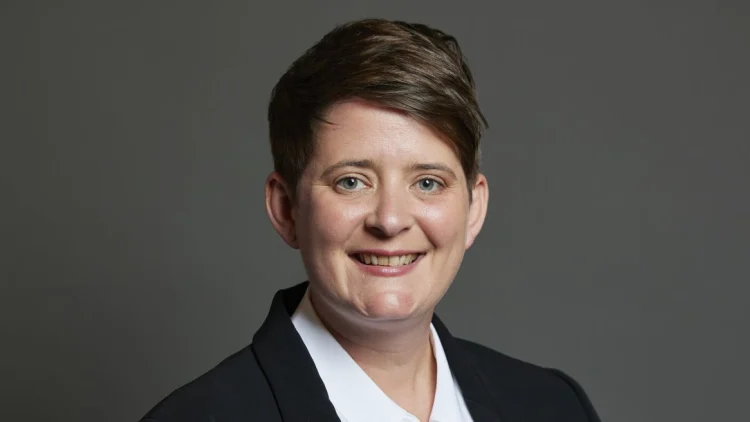
Legislation to ban abusive conversion practices has reached Parliament eight years after it was first promised. Noah Vickers quizzes equalities minister Olivia Bailey on how it will work
Advertisement
For many LGBTQ+ people across Britain, the publication of a draft bill to ban conversion practices is a long overdue cause for celebration. First promised by Theresa May in 2018, and recommitted to by Labour in its 2024 manifesto, ministers have finally drawn up legislation to outlaw practices that seek to “convert” people away from being LGBTQ+. In the time since May’s promise, bans have been passed in Germany, France, Spain and several other countries.
But the bill faces criticism from some who fear its provisions are too far-reaching and others who say it does not go far enough to stamp out abuse. Some also question why it is needed, as violent acts and many forms of psychological abuse are already unlawful.
Equalities minister Olivia Bailey insists the bill will address “gaps in the law” through which conversion practices take place.
One example, she says, is coercive control legislation, which only applies where the abuser and their victim are personally connected through an intimate or family relationship, “whereas in conversion practices, it may well be somebody that is not an intimate partner, somebody that’s not known to you”.
Advertisement
Bailey says the bill will also create a “definition in law” of what conversion practices are, to ensure the abuse is prosecuted. She points to other offences, like non-fatal strangulation and upskirting, where legal definitions were specifically devised to address them.
The bill defines a conversion practice as “any conduct” carried out with the intention of causing another person to have or not to have, or to believe they have or do not have, a particular sexuality or transgender identity.
But an offence only occurs where that conduct “amounts to an abuse of the individual”. In determining that, consideration would be given as to whether words or behaviour “of a sexual nature” or which are “violent or threatening” or “controlling or coercive” have been used, and whether “economic” or “psychological or emotional” pressure has been applied, “among other things”.
Advertisement
The victim must also have been caused “serious harm” to their “mental or physical health”, or “serious alarm or distress” that has a “substantial adverse effect on their usual day-to-day activities”.
Perpetrators would face a prison sentence of up to five years, a fine, or both.
The law will prohibit not only conversion practices aimed at making someone straight or not transgender, but also, at least in principle, practices aimed at making someone adopt an LGBTQ+ identity.
The main point of contention is how those criminal thresholds will operate in practice.
Liberal Democrat peer Lord Scriven, who welcomed the legislation as a “relief” to those who had endured an “unacceptable practice”, also pointed out in a parliamentary speech that “a parent who in good faith advises a child to take time or who expresses questions about social or medical transition is acting out of care and duty for their child’s protection”.
The bill, he said, must “guarantee that these supportive conversations within families do not unintentionally cause a crime to have been committed”.
Advertisement
Gender-critical organisations such as Sex Matters meanwhile claim that parents, teachers and others could be “at risk of being subjected to investigation if they do not affirm that someone is ‘male’ or ‘female’ (or both, or neither) based on their personal declaration rather than their biology”.
The House asks Bailey whether a parent could face criminal charges, for example, if their child tells them they are trans and the parent tells them they do not accept their identity, they will not be using their preferred pronouns and they will not allow them to wear the clothes they want to wear.
The minister replies that, in any case reaching the criminal justice system, it would be for the court to decide whether the bill’s three “tests” have been triggered, including the intent to change someone’s identity, whether the practice was abusive, and whether the victim suffered serious harm. She insists this threshold is “very clear” and in line with other forms of legislation.
“It is not the case that somebody who has an opinion about my identity – somebody may say ‘I don’t agree with the fact you’re a lesbian’; people do say that to me sometimes – that does not count as a conversion practice,” she says. “That is not an attempt to change me, it is not an abusive practice, it is not causing me serious harm.”
Advertisement
Bailey stresses: “This is about abuse – it is about a very specific form of abuse. It is not about policing opinions, it is not about policing how parents parent, and it is for the courts to determine, not politicians, but – rightly – for the courts to determine what meets that threshold of abuse.”
Asked whether she expects any parents to go to prison as a result of the legislation, Bailey replies: “I think that anybody committing abuse, no matter where you find it, no matter in what walk of life – there are not carve-outs for abuse for parents in any other legal environment.
“So, I think it is completely right that we just say very clearly in this legislation: we want to stop abuse, we want to stop abuse wherever it happens. Full stop. End of story.”
Some of the bill’s opponents suggest ulterior motives are at work. Baroness Fox, a non-affiliated peer, tells The House that the legislation seems to her “a backdoor attempt at bringing in a version of self-ID” for trans people.
Advertisement
“There are not carve-outs for abuse for parents in any other legal environment”
Bailey rejects this characterisation entirely, saying: “I just think that’s completely wrong. I would encourage Baroness Fox to engage with the detail of the legislation.
“I’m not interested in scaremongering about this legislation. I’m interested in stopping this very specific form of abuse on LGBT people, which is happening today, which is real, and is having a horrible impact on the LGBT community. That’s what this bill is about.”
Advertisement
The government has not wholly succeeded in satisfying LGBTQ+ campaigners with the draft bill either.
TransActual, a trans rights group which met with Bailey in December 2025, says the government has drafted a bill with “so many loopholes that it has practically written an instruction manual on how to get away with conversion abuse”.
Healthcare services, they point out, are exempt from the bill’s provisions, which they say will mean the “tortuous practice will be allowed to continue in healthcare settings, regulated and unregulated alike”.
Bailey says the clause was included following feedback from therapists who “raised concerns about a chilling effect” on clinicians’ ability to have exploratory conversations with patients.
Advertisement
The bill’s explanatory notes confirm that “people working in all public and private, regulated and non-regulated sectors” of healthcare will be exempt, with the broad nature of that wording prompting concerns that it could provide a get-out to anyone who says they are a therapist.
Bailey insists: “If somebody comes along who is intending to conduct an abusive conversion practice and attempts to claim that they’re a healthcare professional in order to try and avoid this legislation, that will not be possible.”
The healthcare exemption ceases to apply, she points out, if someone using it “acts in a way that falls far below the standards reasonably expected of a person in their position”.
What qualifies in each case as falling “far below” such standards would be another decision for the courts, with the bill’s explanatory notes stating it would be “equivalent to a threshold of gross negligence”.
Advertisement
Saba Ali, chair of the Ban Conversion Practices Coalition, tells The House: “We understand that the clauses on healthcare have raised alarm for some, especially the trans community, and pre-legislative scrutiny will be vital to ensure the draft bill strikes the right balance.
“LGBTQ+ people must be able to access healthcare services, and professionals must be able to practice with confidence. Legislation must also ensure all abuse is captured, whether perpetrated by regulated or unregulated professionals.”
Bailey acknowledges that the government may have to accept changes to the bill during its parliamentary journey.
“We’ve published this bill for pre-legislative scrutiny deliberately,” she says. “I actively encourage and want people to debate it with us, discuss it with us, tell us where we’ve got it right, tell us where we need to improve it…
Advertisement
“I think we’ve got this right, personally… but we will continue to discuss it, we will continue to debate it, and I am really open: if we’ve got it wrong, if we need to tweak it, whatever, we’re really open to doing that.”
Jarrar was arrested for supposedly making “public statements that advocated for the detestation and harm against members of the Israeli and Jewish communities”, Toronto police said.
Advertisement
The force added that he “acted for the benefit of, and in association with, Hamas, a designated terrorist group”. His reported actual words did not mention the banned group:
Teach your children the Zionist entity is the enemy. Teach your children that the resistance is an honour.
Jarrar’s lawyer said his client was innocent and being targeted for speaking against the murder of civilians. He added that Jarrar had not been charged with what the police said he was arrested for.
He faces a single charge arising from speaking at public demonstrations. No violence, no weapon, no one harmed. Speaking out at a protest about the killing of civilians is protected expression, not terrorism.
The police told the media he ‘advocated for detestation and harm’ but he is not charged with that. We’ll be looking closely at how and why this case came to be, and we’re confident it won’t hold up when measured against the law.
Police have provided no additional details or evidence, citing court restrictions for reporting on the case.
Advertisement
Impunity for the opposite side
Meanwhile, the Canadian double standard is no less clear than its equivalent in the US. In 2024, Ilan-Reuben Abramov attacked anti-genocide demonstrators with a nail gun while screaming:
Every fucking Palestinian will die.
Abramov was charged but has never been brought to trial, leading campaigners to suspect the charges have been quietly dropped.
In February 2025, far-right extremist Eli Schwarz was arrested after threatening anti-genocide protesters. He admitted to police that he was a member of the terrorist group, Jewish Defence League.
When arrested, he was wearing a t-shirt praising Zionist terrorist Meir Kahane. Police found a rifle with scope at his home, along with 10 boxes of ammunition.
Advertisement
Schwarz was charged with making threats and improperly storing ammunition but has not been prosecuted.
In December 2025, Gabriella Bodis was charged with assault after threatening anti-genocide protesters with ‘reagent grade’ (high strength) ammonium hydroxide, which is capable of severe damage to the eyes and skin. She has not yet been prosecuted.
Students in Canada have denounced the charges against Ahmad Jarrar.
We’ve written before at HuffPost UK about how Hobnobs’ name actually has a meaning ― the “hob” refers to their homemade look, while the “nob” part (ooer missus) has to do with its knobbly texture.
So you’d expect Snickers to have a similarly self-referential or witty brand, right? Maybe the “snick” is like “sneak”, because of the hidden peanut layer?
Advertisement
No. It was named after a horse.
What?
Yep! According to none other than Mars, the owner of Snickers, “The very first SNICKERS Bar, named after the family horse, was manufactured in Chicago, US, and sold for five cents.”
And per Mars Equestrian (yep, they’re the same Mars ― seems they really like horses), “Frank C. and Ethel V. Mars’ Milky Way Farm in Tennessee was well known for producing Thoroughbred racing champions, including the 1940 Kentucky Derby Winner, Gallahadion.”
Advertisement
The Mars family still breed thoroughbred horses and even has an equestrian sponsorship across multiple disciplines.
Per The Equine Chronicle, the family had good reason to appreciate Snickers the animal ― he was a winning racehorse.
Advertisement
Unfortunately, Snickers passed away “less than a month” before the launch of the bar in 1930. Hence the family named the iconic bar after their recently-departed horse (aww).
Well, sad as that is, I’m struggling to think of a better legacy…
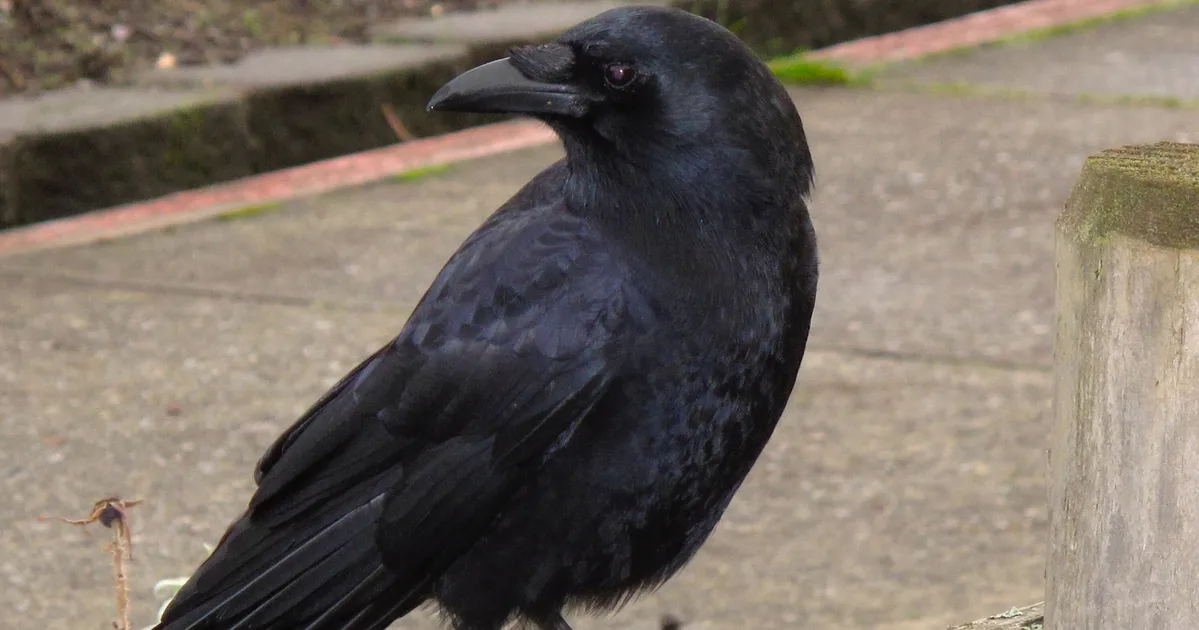
According to National Geographic, crows are some of the most intelligent birds in the world. They have also always been held in incredibly high esteem and are considered to be symbols of prophecy, transformation, change, and freedom.
However, as majestic and revered as these birds are, they are also not to be messed with.
According to Science World: “Crows are incredibly territorial during May and June. They are known to dive and strike humans not just once, but repetitively until the human in question has moved a good distance away from the nest.”
In fact… you may actually want to be a little more friendly with crows and even befriend one. Yes, really.
Advertisement
Why you should befriend a crow
So, maybe you don’t need to specifically befriend a crow but you definitely need to stay on their good side.
This is because a five-year study by scientists at the University of Washington has found they possess an unusually good memory for human faces linked to a stressful event.
Not only do crows remember the faces of humans for five years, but these clever corvids can also warn their friends and family about you, too. I don’t know about you but being the target of a murder of local crows sounds bloody terrifying.
Advertisement
However, if you do choose to buddy up with a crow, they’ll actually bring you gifts. They may be fiercely protective and hold a hell of a grudge but they are generous souls, too!
John Marzluff, conservation ecologist at the University of Washington said that crows take part in “gifting” by leaving behind keys, lost earrings, bones, or rocks, for the people who feed them.
How to befriend a crow
According to Pet Helpful, following these steps can help you to become friends with a crow:
Advertisement
Find food that the crows seem to like and keep it in stock. Crows tend to like nuts and seeds
Establish a regular feeding schedule so they know when to expect you and can create a rhythm with them
Don’t overdo it — you don’t need to feed them meals, just enough for them to know that you care and want to befriend them
Don’t overdo it. Don’t feed them so much or so often that they become dependent—just a handful of something to show you care.
Don’t just throw the food out there and walk away. Stay at a respectful distance to watch them eat. You may see them eat it on the spot, or they might choose carefully and fly off to cache it for later
Don’t get too close to them as they prefer to be standoffish and may feel threatened
But that doesn’t mean every author is a fan of their works’ film or telly counterparts.
Advertisement
Here, we rounded up eight authors who criticised adaptations of their books:
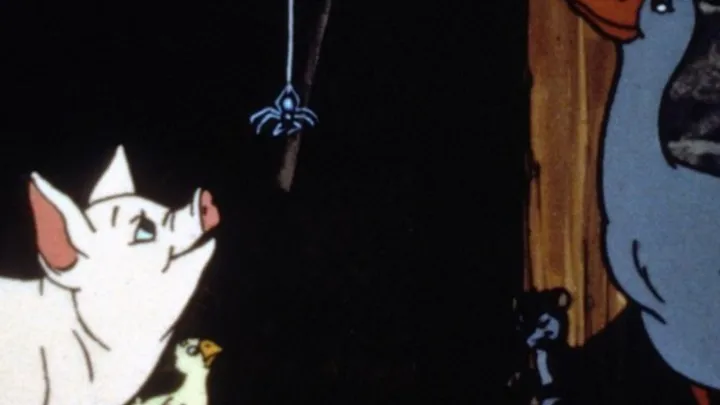
1) E.B. White wasn’t delighted with 1973’s Charlotte’s Web
E.B. White, who wrote the 1952 children’s book, had been in negotiations with the production team John and Faith Hubley.
Eventually, Hanna-Barbera got the rights instead. After their animated 1973 movie came out, White wrote: “The movie of Charlotte’s Web is about what I expected it to be. The story is interrupted every few minutes so that somebody can sing a jolly song. I don’t care much for jolly songs. The Blue Hill Fair, which I tried to report faithfully in the book, has become a Disney World, with 76 trombones.”
His wife, meanwhile, told would-be director of the abandoned original adaptation, Gene Dietch, “We have never ceased to regret that your version of Charlotte’s Web never got made. The Hanna-Barbera version has never pleased either of us.”
Advertisement
2) Truman Capote didn’t love 1961’s Breakfast at Tiffany’s
Author Truman Capote spent many years disparaging the movie based on his 1958 novel, calling it the “most miscast” movie (he’d wanted Marilyn Monroe for the part Audrey Hepburn got).
When asked what he didn’t like about the adaptation, he replied, “Oh god, just everything” – the book’s narrator role changes, as does the book’s ending.
3) Stephen King had issues with 1980’s The Shining
Advertisement
Speaking to The Paris Review about Kubrick’s version of his story, King said he thought the movie was “Too cold. No sense of emotional investment in the family whatsoever on his part”.
He added that Shelley Duvall as Wendy was “insulting to women. She’s basically a scream machine…
“And Kubrick didn’t seem to have any idea that Jack Nicholson was playing the same motorcycle psycho that he played in all those biker films he did… The guy is crazy. So where is the tragedy if the guy shows up for his job interview and he’s already bonkers? No, I hated what Kubrick did with that.”
The writer had penned his own version of the script, which Kubrick didn’t use.
4) Rick Riordan disavowed the 2010 Percy Jackson and The Lightning Thief flick
Advertisement
Author Rick Riordan let his feelings about the adaptation be known on X, where he likened the movie to “my life’s work going through a meat grinder when I pleaded with [the studio] not to do it.”
He also posted, “I still have not seen the movies, and don’t plan on ever doing so… I judge them from having read the scripts because I care most about the story. I certainly have nothing against the very talented actors. Not their fault. I’m just sorry they got dragged into that mess.”
Still, the writer hinted he was “gonna fix” this with Disney+’s 2023 series, Percy Jackson and the Olympians, for which he had more oversight.
5) Michael Ende called 1984’s The Neverending Story “revolting”
Advertisement
Going so far as to remove his name from the movie’s credits, Ende publicly described the movie as “revolting” and claimed, “the makers of the film simply did not understand the book at all”.
The author even reportedly tried (and failed) to sue in order to stop the movie from going out, saying his “moral and artistic existence is at stake in this film”.
6) PL Travers had such a contentious relationship with Disney due to Mary Poppins, there’s a whole film about it
The film, which won a remarkable five Oscars, had a very different nanny to the one in PL Travers’ books (she “never wastes time being nice”) – Travers also disliked the fact that Disney made Mrs Banks a Suffragette.
Advertisement
So contentious was her relationship with Walt Disney that the movie Saving Mr Banks was made to chronicle the making of the film.
7) Alan Moore, the mind behind V for Vendetta’s comics, called the 2005 movie’s writing “rubbish”
When asked to weigh in on the adaptation, Moore said: “I’ve read the screenplay. It’s rubbish”.
He also told the New York Times that for a lot of the DC projects that had become movies, “I don’t want anything more to do with these works because they were stolen from me – knowingly stolen from me.”
8) Moore also slammed the Watchmen film
Advertisement
The writer, who claimed the studio was using his brother’s serious illness to pressure him, said of the movie: “curse this wretched film and everything connected with it”.
Speaking to GQ, meanwhile, he said: “I would be the last person to want to sit through any adaptations of my work.
“From what I’ve heard of them, it would be enormously punishing. It would be torturous, and for no very good reason… It seemed to me that what people were taking away from works like Watchmen or V For Vendetta wasn’t the storytelling techniques, which to me seemed to be the most important part of it. It was instead this greater leeway with violence and with sexual references. Tits and innards.”
We hope you love the products we recommend! All of them were independently selected by our editors. Just so you know, HuffPost UK may collect a share of sales or other compensation from the links on this page if you decide to shop from them. Oh, and FYI — prices are accurate and items in stock as of time of publication.
I’ve said it before, and I’ll say it again: the more I shop, the more I want. That is the plight of a shopping writer.
While I’m lucky enough to test probably close to a thousand products a year, I can’t help but build a wishlist of more fashion, beauty, jewellery, and wellness bits and bobs I want along the way.
And while I’ve already rounded up all of the products I loved in July, if you’re looking for shopping inspiration, I thought I’d be generous and share what’s on my wishlist this payday. Just don’t sell it out before I have a chance to buy it too!
The parliamentary standards watchdog has opened an investigation into Reform UK deputy Richard Tice. The allegation focuses on Tice failing to declare an interest that related to a Commons debate on Israeli influence.
Tice himself has disputed media reporting, although the following claim is in part at odds with what the Parliamentary Commissioner for Standards stated.
Contrary to garbage in media:
I am being investigated for standing against antisemitism. You could not make it up.
Advertisement
Standards Commissioner is considering complaint by anti semitic anti Israel lobby group over whether I should have referenced my register of interests at start of…
Richard Tice claims probe is over antisemitism stance
In full, Tice said:
Contrary to garbage in media:
I am being investigated for standing against antisemitism. You could not make it up.
Advertisement
Standards Commissioner is considering complaint by anti semitic anti Israel lobby group over whether I should have referenced my register of interests at start of a debate on UK democracy and Israeli influence.
The same anti Israel group failed to notify Commissioner that Ayoub Khan MP did not declare his substantial donation received from a pro Palestine group.
Reform said Tice did not mention in his 22 June speech that he had been on a trip to Israel last September, funded by a pro-Israel lobbying group.
The trip has been listed in Tice’s Declaration of Members’ Interests.
Here is what the Parliamentary Standards Commissioner published regarding the ongoing investigation:
Therefore, it is not the case that the commissioner is investigating Tice for “standing against antisemitism”, as he suggested.
The ‘Rule 6’ stipulates:
Advertisement
Members must always be open and frank in declaring any relevant interest in any proceeding of the House or its committees, and in any communications with ministers, members, public officials or public office holders.
Additional guidance states that MPs can refer to register of interests entries but:
Such a reference will not suffice on its own, as the declaration must provide sufficient information to convey the nature of the interest without the listener or the reader having to have recourse to the Register or other publication.
Israeli influence
The debate in question happened as a result of a Parliament petition passing 100,000 signatures. The petition read:
We are concerned about reported Israeli state-linked and pro-Israel lobbying activity in UK politics. We believe it is important to determine the scope and impact of any such influence campaigns.
We feel that the horrific devastation in Gaza, the ongoing suppression of Palestinians in the West Bank, and the UK’s political response underline the urgent need to scrutinise how pro-Israel organisations, networks, and lobbying efforts may shape government decisions, party policy, and public debate.
Our family bathrooms may not be dedicated to them the way that they were in the ’90s, but dolphins are still a really popular mammal. I mean, of course they are, look at their wee faces!
One thing we have been learning over time, however, is that they are a lot more mischevious than we first thought. For example, did you know that dolphins like to swim through self-made bubbles and surf in waves? Adorable!
However, I just learned something about these scamps of the ocean that is both horrifying and, to be honest, absolutely hilarious.
The reason why dolphins taunt pufferfish
Advertisement
In a BBC series called Spy In The Pod, a documentary that used hidden cameras disguised as tuna and squid, to go into the heart of the dolphin’s world and get up close with their everyday lives.
One part of the footage revealed that dolphins appear to get high off pufferfish defence chemicals.
According to The Smithsonian, pufferfish produce a potent defensive chemical, which they eject when threatened. In small enough doses, however, the toxin seems to induce “a trance-like state” in dolphins that come into contact with it.
In the documentary, the dolphins gently played with the pufferfish, passing it between one another (puff, puff, pass, anyone?) which was in direct contradiction to what they did with other fish, which they immediately tore apart.
Advertisement
In a hilarious development, the dolphins were also filmed floating just underneath the water’s surface, mesmerised by their own reflections. Just like we do in club toilets at 2am!
Researchers believe this was not a one-off
Speaking to the Daily Mail, series producer Rob Pilley said that he didn’t believe this was a one-off encounter, saying: “The dolphins were specifically going for the puffers and deliberately handling them with care.”
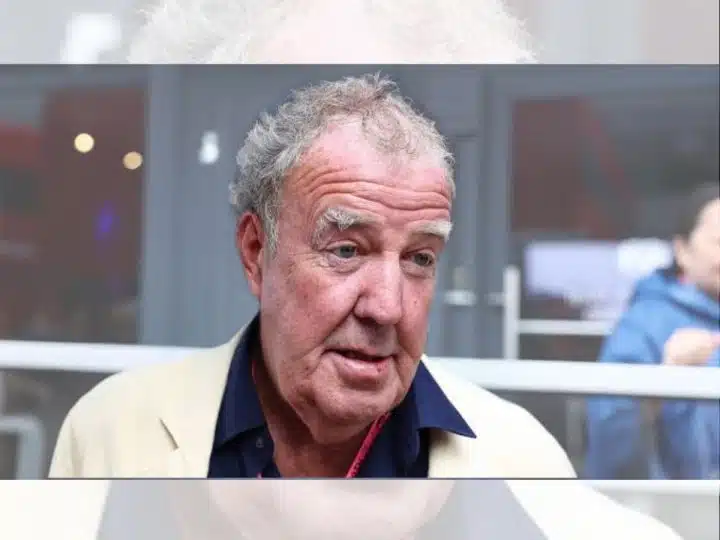
There are many miserable people in Great Britain who love to spread their misery around. One such person is Jeremy Clarkson, who seemingly spends his free time devising new ways to belittle benefit claimants.
NEW: Jeremy Clarkson says benefits claimants should be forced to write a genuine thank you email to a random worker every week
“It is SO kind of you to go to work every day so that I don’t have to. Thanks to you I was able to buy an even bigger television this week”
As many have pointed out, Clarkson himself is a beneficiary of government money. In other words, expect a thank you letter from him sometime soon.
Jeremy Clarkson, the meat w*nker
In his latest piece for the Times, Clarkson compares welfare recipients to dogs. As if that wasn’t bad enough, the broadcaster suggested that welfare recipients are actually worse than animals, because “at least dogs are grateful”.
Speaking of gratitude, now is a good time to remind you Clarkson once punched a man because the platter of meat he brought was cold — not hot, as Jeremy would have preferred. Is this the famous ‘gratitude’ he’s speaking of?
As I’m sure you’ve heard, there are now more than a million young people in this country who are not working. They’re not even looking for work. They’re just sitting at home all day, gormlessly watching shortform nonsense on their massive vulgarsonic televisions.
Nearly a million young people being out of work is true. The idea that none of them are “even looking for work” is some shite he made up. Also, we’re not sure he should be criticising people for “gormlessly watching nonsense on television” given that he was the host of Top Gear.
If you live in the world, you’re no doubt unsurprised to learn that a significant number of young people are out of work. The high streets are run down, many jobs have been lost to automation, and people can’t afford to go out, which means fewer jobs in hospitality. These are all areas in which young people traditionally worked, so of course fewer of them are in work.
While he’s coming at it from the wrong angle, Clarkson isn’t wrong to suggest social media is having an impact. Because of phones, we’re never more than a swipe away from seeing how the other half lives. You don’t think that will instill a sense of hopelessness in young people who can’t even get an interview in retail?
Clarkson clueless about PIP
Like everyone on the right, Clarkson doesn’t understand how Personal Independence Payments (PIP) work. Clarkson suggests they’re given to people for not working, but Rachel Charlton-Dailey explained:
PIP isn’t an out-of-work benefit and has nothing to do with employment.
Here’s what Clarkson said:
And what makes this especially dispiriting is that if they’ve got ants in their pants, or ADHD as it’s now called, or some other head-based issue with an acronym, the state will give them up to £194 a week. Which is £100 more than they’d get if they got off their arses and did some kind of part-time work in the local shop.
Charlton-Dailey reported that about four in 10 claimants with ADHD receive the top rate of £194. As this is PIP, many will be in work because that’s how PIP functions.
Advertisement
Misery loves company
Clarkson’s piece contains a long section about his dogs, in which he admits that they sometimes shit in his house (training issue). He then gets to his idea to belittle benefit claimants:
It’s very simple. Every week, when the benefits are paid, the recipient is given the email address of a randomly selected person who is getting up and going to work every day. And they are told that unless a proper and genuine email is sent, thanking the working person for their generosity, the benefits will stop. And I’m not talking about a cursory “thanks mate”. I want fulsomeness. I want to hear what they’ve done with the £194 I gave them that week. And I want effusiveness as well. I want to feel their gratitude.
“It is SO kind of you to go to work every day so that I don’t have to. Thanks to you I was able to buy an even bigger television this week”
This way, the communists in the Labour party would be happy because the benefits are still being paid. And the taxpayer will feel a bit better too because they’re at least being thanked.
This might not need pointing out, but this is blatant right-wing propaganda. We have a benefits system to ensure:
Advertisement
Those who become unemployed can survive between jobs
Sick and disabled people don’t become homeless
People of retirement age are able to retire
£29 a week doesn't even cover a basic grocery top-up, yet @JeremyClarkson thinks disabled people and trauma survivors owe the public a handwritten thank-you note for it. https://t.co/KonzXmfD2v
The benefits system was designed to benefit everyone besides the ultra-wealthy — the people who will never require government support for themselves or their loved ones. The reason they’ll never require it isn’t because they’re inherently better than us; it’s because they and their ancestors benefitted from the fruits of other people’s labour.
Jeremy Clarkson benefits from govt handouts
These ultra-wealthy people use their position of influence to highlight the small numbers of people who are, admittedly, taking the piss, to tarnish the reputation of the entire benefits system. For what? So they can get away with paying less tax?
Advertisement
Clarkson has an estimated net worth of £50 million by the way. Despite this, he’s accepted the following government and EU subsidies:
Environmental Stewardship scheme (£116,352)
Basic Payment Scheme (£133,733)
The government subsidises things like farming because crops — much like people — are needed to ensure society remains functional. The right-wing press doesn’t criticise farming subsidies because the land barons who benefit from them are often right-wing themselves. Funny how that works, isn’t it?
Says the man who bought a farm partly to avoid inheritance tax! He should write one to the 35,000 grieving relatives who have to pay it this year saying thanks for paying it so farmers can have a £2.5m allowance and half the rate of tax above that! https://t.co/cuVU9XH26S
This aside, there is a method for people to make money without working, and that method is to be born wealthy.
If a person has a million pounds, they can pay a second person to turn that fortune into more money through investing and asset hoarding. Over time, this has led to a situation in which global wealth is concentrated in the hands of fewer and fewer people. And wouldn’t you know it, this has also coincided with there being fewer opportunities for ordinary working people.
To be fair to Jeremy Clarkson, he does seem like someone who works hard. The problem is, he works hard at being a f*cking knucklehead.
The longer we allow the rich to seize all the wealth, the worse things will get. The worse things get, the more that the rich will blame us for the problems they created.
It depicted himself seated at a table with Presidents George Washington and Abraham Lincoln. Trump in the image is wearing clothing almost identical to Lincoln’s, and the three are shown signing an upside-down U.S. map:
Some of Trump’s other weekend images included him gazing at a younger version of himself in the uniform he wore during his time in a private military academy as a teen, as well as one of himself as some kind of Revolutionary War hero.
Trump, however, never actually served in the military.
Trump was of draft age during the Vietnam War, but received four deferments for college and one for bone spurs in his heels.
Advertisement
He later infamously told radio host Howard Stern that avoiding sexually transmitted diseases was “my personal Vietnam.”
Trump’s critics slammed him for obsessively posting AI slop images of himself instead of focusing on the war in Iran, affordability or any other issue far more important to the American people:
Iran is “playing Donald Trump like a fiddle” as the US president struggles to strike a peace deal with the Tehran regime, Andrew Neil has said.
In a brutal takedown, the veteran broadcaster said there are now “no good options” for America, despite the US president’s repeated claims to have won the war.
His comments on Times Radio came after Iran denied it was planning to hold peace talks with America to end the conflict, which began when the US and Israel launched attacks at the end of February.
That came after Trump claimed to have called off “massive” strikes on Iran so that negotiations could resume.
Advertisement
Neil said Iran was stringing Trump along until the US midterm elections in November, when his Republican Party is expected to suffer a heavy defeat.
He said: “The truth is there are no good options [for Trump].
“You escalate this war, as he has threatened to do many times, Iran will escalate right back and create a mess among the Gulf states.
“You don’t do that, basically Iran has the upper hand and in the end you have to scuttle away.
Advertisement
“There is no deal in the offing. Iran is playing Trump like a fiddle on this. This is a very evil regime in Tehran, but it’s not a stupid regime.
“They know what’s happening in America. They follow the midterms as closely as we do. They know this is a deeply unpopular war.
“The impact on the American economy has been very unpopular, his handling of the economy now has an approval rating of 30% [and] 78% of Americans want the war to end now.
“They are just going to drag this out through the summer months, until Trump gets a kicking in the midterm elections.”
Advertisement
He added: “It’s a terrible time for America with no good options, and none of this rhetoric coming from Trump – we waste our time even analysing it because it’s either meaningless or he U-turns on it within 24 hours.”
Andrew Neil jokes that “nobody of good conscience can deny Donald Trump the Nobel Peace Prize” as he has brought peace to Iran “eight times already”.
“On Trump’s rhetoric we waste our time even analysing it because it’s either meaningless or he’s done a U-turn on it within 24… pic.twitter.com/sF4cQWfM6e
Listen to Commons People, the podcast that makes politics easy. Every week, Kevin Schofield and Kate Nicholson unpack the week’s biggest stories to keep you informed. Join us for straightforward analysis of what’s going on at Westminster.













 (@TiceRichard)


 NEW: Jeremy Clarkson says benefits claimants should be forced to write a genuine thank you email to a random worker every week











































You must be logged in to post a comment Login