Trapping Value is a team of analysts with over 40 years of combined experience generating options income while also focusing on capital preservation. They run the investing group Conservative Income Portfolio in partnership with Preferred Stock Trader. The investing group features two income-generating portfolios and a bond ladder.
Trapping Value provides Covered Calls, and Preferred Stock Trader covers Fixed Income. The Covered Calls Portfolio is designed to provide lower volatility income investing with a focus on capital preservation. The fixed income portfolio focuses on buying securities with high income potential and heavy undervaluation relative to comparatives. Learn more.
Analyst’s Disclosure: I/we have a beneficial long position in the shares of PSA.PR.F, PSA.PR.P either through stock ownership, options, or other derivatives. I wrote this article myself, and it expresses my own opinions. I am not receiving compensation for it (other than from Seeking Alpha). I have no business relationship with any company whose stock is mentioned in this article.
We are long some other series for our clients.
Advertisement
Seeking Alpha’s Disclosure: Past performance is no guarantee of future results. No recommendation or advice is being given as to whether any investment is suitable for a particular investor. Any views or opinions expressed above may not reflect those of Seeking Alpha as a whole. Seeking Alpha is not a licensed securities dealer, broker or US investment adviser or investment bank. Our analysts are third party authors that include both professional investors and individual investors who may not be licensed or certified by any institute or regulatory body.
Ford is recalling about 1.4 million F-150 pickup trucks in the U.S. following a National Highway Traffic Safety Administration (NHTSA) investigation into reports of unexpected downshifts, the regulator said on Friday.
NHTSA’s recall announcement said Ford was aware of two injuries and one accident that were potentially related to the issue, and that dealers would update the trucks’ powertrain control module (PCM) software as a remedy.
Advertisement
Earlier this year, the regulator had expanded a safety-related investigation into the issue. A preliminary evaluation was first opened in March last year, after receiving complaints related to the unintended downshifts. Ford’s review evaluated trends observed in customer reports, including those involving vehicles driving on wet surfaces or towing trailers.
The vehicle recall covers model year 2015–2017 F-150 pickups equipped with the “6R80” transmission.
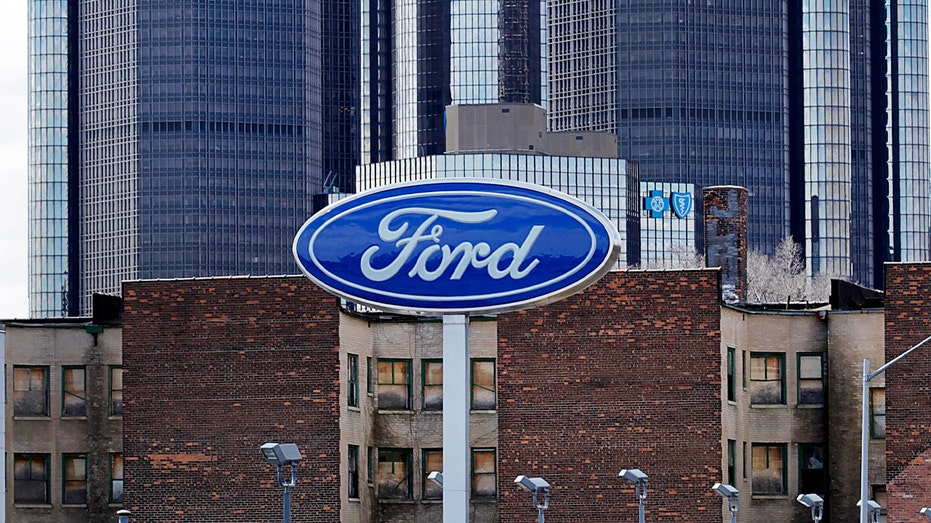
A model year 2015-2017 Ford F-150 pickup truck at Ford’s Rouge Center. (Ford Motor Co.)
Ford had earlier said that the issue may have been caused by electrical connections wearing down over time due to heat and vibration, leading to signal loss from the transmission range sensor.
Advertisement
The regulatory agency said that incorrect signals likely lead to an unintended downshift.
Owners of affected F-150 pickups will be notified by mail and instructed to take their vehicle to a Ford or Lincoln dealer to receive a software update for their PCM to remedy the issue.
If an affected vehicle previously exhibited certain diagnostic trouble codes relating to this condition prior to installing the software, dealers will replace the lead frame in accordance with a corresponding extended warranty program. There will be no charge for that service.
Between January and June 2025 five UK-licensed online casino operators shut down, each citing compliance costs and the administrative burden of new regulations as primary reasons.
They were not caught breaking rules. They were not fined out of existence. They just looked at the cost of staying compliant and decided it was not worth it.
The business lesson here is not about gambling. It is about what happens to any sector when a regulator raises the compliance floor simultaneously for everyone in the market.
What the Gambling Commission Actually Did
The reforms rolled out between 2024 and 2025 were the most significant overhaul of UK gambling regulation since the Gambling Act 2005. The headline changes were well documented: stake limits on online slots capped at £2 per spin for under-25s and £5 for adults, affordability checks triggered when a player’s net deposits exceed £150 in a rolling month, a mandatory 1% gross gambling yield levy paid to the NHS and public health bodies, and a ban on autoplay and rapid spin cycles in online casino games.
The practical overhead was significant. EY estimated the annual cost of running affordability checks alone at over £125 million across the industry, covering technology upgrades, credit reference agency integration, and additional compliance staff. That is before the levy, before the legal work, before the game redesigns.
Advertisement
Larger operators had compliance teams already. They absorbed the cost, spread it across their engineering and legal functions, and moved on. Mid-market and smaller operators faced the same obligations but without the infrastructure. Several of them concluded the maths did not work.
The Operators That Came Out Stronger Did Something Counterintuitive
The instinct when compliance costs rise is to do the minimum required, implement exactly what the regulations demand, and protect margin everywhere else. The operators who have genuinely strengthened their position over the past two years did the opposite. They treated the regulatory requirements as a product specification rather than a tax.
Affordability checks, when integrated poorly, create friction and annoy customers. When integrated well, they are almost invisible to players who are not at risk and genuinely protective for those who are. Mandatory deposit limit prompts at onboarding, done badly, are a box-ticking exercise.
Done well, they build trust with the kind of player who was going to stay anyway. The game redesigns required under the new rules forced studios to think harder about session experience rather than just spin speed.
Advertisement
The platforms that survive and grow in the current environment are not necessarily the ones with the biggest marketing budgets. They are the ones with the cleanest user experience, the most transparent bonus terms, and the most reliable withdrawal processes. Competition has been forced onto the axis that actually matters to customers.
For anyone wanting a practical benchmark of what that looks like, a current look at the leading slot sites in the UK shows the meaningful variation between licensed operators on exactly those measures: app quality, payout speed, game selection, and how clearly the terms are presented. The gap between the best and the rest is wider now than it was three years ago.
The Market Consolidation Nobody Warned Small Operators About
Here is the thing about compliance costs that every SME owner instinctively understands: they do not scale linearly. A £125 million industry-wide bill hits a company with ten employees very differently from one with a thousand. The fixed costs of staying compliant are nearly identical regardless of your revenue. That means high compliance environments inherently favour scale, and they are a slow but effective mechanism for consolidation.
The UK iGaming sector has been consolidating for three years. Larger groups have been acquiring mid-market brands not just for their players but for their licences and their compliance infrastructure. Pre-transaction regulatory due diligence has become one of the busiest growth areas in gambling law precisely because acquirers need to know whether the operator they are buying has a clean compliance record or a liability buried in their historical affordability data.
Advertisement
For business owners in other sectors watching this unfold, the pattern is recognisable. When a regulator raises the floor, the market contracts at the bottom and consolidates at the top. The businesses in the middle, too big to ignore the costs but too small to absorb them efficiently, face the hardest decision.
The Lesson That Transfers
The Gambling Commission’s approach to the White Paper reforms has been studied closely by regulators in other sectors. According to Chambers UK’s 2025 gambling law analysis, the reform package has transformed gambling compliance from a niche legal specialty into a multidisciplinary function spanning regulatory, data protection, and corporate law. That is not unique to gambling. It is what happens to any regulated industry when the compliance requirements become complex enough to create a professional services ecosystem around them.
The businesses that navigated this best share something with the best-run SMEs in any sector facing a similar squeeze. They did not wait for the rules to force change. They read the direction of travel early, invested ahead of the mandate, and treated the incoming requirements as a reason to improve the product rather than just a cost to manage.
Five casinos closed because they ran the numbers and walked away. Others are now in a stronger competitive position than they were before the regulations arrived. In a market where everyone faces the same rules, how you respond to them is the only variable left.
The latest NatWest Growth Tracker show a slowing of growth from private sector firms
The Newcastle skyline, viewed looking across from Gateshead towards the Tyne Bridge and the Glasshouse(Image: Newcastle Chronicle)
Business activity in the North East remained in growth last month but slowed as global events weighed on confidence, a new report suggests.
The latest Growth Tracker data from NatWest showed a slowdown in activity growth in the North East private sector in March, with the slowest rate this year and companies highlighting softer sales growth.
Respondents to the survey reported higher prices and lower demand, in part due to the war in the Middle East.
Cost pressures surged to the highest since the start of 2023, the survey suggests, and business confidence fell. The headline North East Growth Tracker Business Activity Index, which measures change in the region’s manufacturing and service sectors, fell from 53.8 in February to 50.4 in March, indicating only a slight increase in business activity. The expansion in the North East was broadly in line with that seen in the UK as a whole.
Advertisement
Malcolm Buchanan, chair of the NatWest North Regional Board, said: “The North East private sector economy closed the first quarter of 2026 on uneven footing.
“The region registered only a fractional increase in business activity, following the trend seen at the UK level, with panel members often linking the moderation in growth to a steep jump in cost pressures, largely related to energy price rises following the outbreak of war in the Middle East.
“In fact, the rate of input cost inflation surged to the highest since January 2023, which pushed firms to raise selling prices to the greatest extent in just under three years as businesses looked to protect profit margins.
“At the same time, the pace of growth in new business slowed to a crawl during March, with some companies stating that fading client confidence had weighed on sales.
Advertisement
“That said, evidence of demand resilience encouraged firms to raise employment levels.
“Concurrently, business optimism regarding the year-ahead outlook softened from February’s recent high, and was the least pronounced since August 2025.
“While growth was expected to be boosted by new product launches, private sector businesses in the North East cited concerns regarding the health of the domestic economy and the wider impact of the war in the Middle East.”
Despite the more challenging business environment, the North East saw a slight improvement in staffing levels. It was one of only three increases seen out of the 12 monitored UK regions and nations, with only Northern Ireland and Scotland also seeing job creation.
Advertisement
The growth tracker has been released ahead of a week of key economic data being released. Next week sees the publication of monthly unemployment and inflation figures.
Iran declared the strategically vital Strait of Hormuz completely open to all commercial vessels Friday, easing weeks of global shipping disruptions and sending oil prices sharply lower as a fragile ceasefire between Israel and Lebanon appeared to hold.
Iranian Foreign Minister Abbas Araghchi announced the move on social media, stating that passage through the narrow waterway would remain open for the remaining period of the ceasefire in line with the truce halting fighting between Israel and Hezbollah militants in Lebanon. Ships must follow a coordinated route designated by Iran’s Ports and Maritime Organization, he added.
The announcement came hours after a 10-day ceasefire took effect in Lebanon, offering a potential de-escalation in a broader regional conflict that has drawn in the United States and raised fears of wider war. President Donald Trump welcomed the development, posting that Iran had agreed the strait would stay open and describing the situation as progressing toward a longer-term deal.
Yet confusion and caveats quickly surfaced. Trump emphasized that a U.S. naval blockade targeting Iranian vessels and ports would remain in full force until a permanent peace agreement is reached. Iranian officials warned that any continuation of the blockade could jeopardize the fragile truce.
Advertisement
The Strait of Hormuz, a narrow chokepoint between the Persian Gulf and the Gulf of Oman, carries roughly one-fifth of the world’s seaborne oil trade and significant volumes of liquefied natural gas. Its closure or disruption in recent weeks had stranded vessels, spiked insurance costs and rattled energy markets worldwide.
Oil prices plunged more than 5% in early trading Friday following the news, with Brent crude falling below key psychological levels as traders bet on resumed flows. Global stock markets rallied, particularly shares in shipping companies, airlines and energy-dependent sectors, reflecting relief over restored navigation in one of the planet’s most critical maritime arteries.
Here are five key things to know about the development:
First, the declaration is explicitly tied to the Israel-Lebanon ceasefire rather than a broader Iran-U.S. agreement. Araghchi framed the opening as a goodwill gesture aligned with the truce that began late Thursday. Celebrations erupted in Beirut with gunfire into the air as displaced families considered returning home, though U.N. peacekeepers reported minor alleged violations including Israeli airspace incursions.
Advertisement
Second, the U.S. position remains firm on enforcement. While commercial traffic from third countries may now proceed via designated routes, American officials clarified that the blockade on Iranian ports and vessels continues. Trump stated Iran had committed to never again using the strait as a weapon, yet Pentagon sources indicated monitoring would be intense and any perceived threats could prompt renewed restrictions.
Third, the timing gives shipping operators a narrow window. With the Lebanon ceasefire set for 10 days, operators have limited time to reposition stranded tankers and move thousands of sailors out of the Persian Gulf before the truce potentially expires. Major carriers like Maersk said decisions on transits would depend on ongoing risk assessments.
Fourth, the move highlights the strait’s enduring geopolitical importance. Iran has long threatened to close the waterway in response to sanctions or military pressure, a capability that has shaped decades of U.S. naval strategy in the region. The recent effective closure, triggered by escalating strikes involving the U.S., Israel and Iran, disrupted supply chains far beyond the Middle East and contributed to higher fuel costs globally.
Fifth, broader peace talks appear to be gaining momentum. Trump suggested negotiations with Iran could advance rapidly, possibly over the weekend, as mediators seek a more durable end to hostilities that have killed thousands across Iran, Lebanon, Israel and beyond. European leaders, including those from the U.K. and France, planned meetings on freedom of navigation, signaling international interest in stabilizing the route.
Advertisement
Analysts caution that the announcement offers only temporary relief. The ceasefire in Lebanon remains fragile, with both sides accusing the other of violations in the early hours. In southern Lebanon, residents reported sporadic artillery fire despite the truce terms allowing Israel self-defense actions but barring offensive operations.
For global energy markets, even a short reopening provides breathing room. Energy analysts noted that hundreds of tankers had been idled or rerouted around Africa at enormous extra cost. Resumed traffic could ease immediate pressure on Asian importers, particularly China, India and Japan, which rely heavily on Gulf crude.
Shipping industry sources reported cautious optimism. While the designated Iranian route offers a pathway, concerns persist over potential miscalculations, naval presence and insurance premiums that remain elevated. Some operators planned to wait for clearer signals from insurers and flag states before committing vessels.
The conflict’s human toll remains stark. Fighting has claimed more than 3,000 lives in Iran, over 2,100 in Lebanon, dozens in Israel and additional casualties among U.S. service members and Gulf states. The ceasefire and Hormuz opening represent a diplomatic pause, but underlying tensions over Iran’s nuclear program, regional proxies and sanctions continue to loom.
Advertisement
Iranian military commanders had previously warned that a prolonged U.S. blockade would be viewed as a ceasefire violation. The Islamic Revolutionary Guard Corps maintains significant capabilities in the strait, including fast-attack boats and missile systems that could rapidly alter the security picture if talks falter.
On the diplomatic front, the Trump administration has framed recent developments as evidence of successful pressure yielding results. Iranian officials portray the opening as a sovereign decision tied to de-escalation in Lebanon, where Hezbollah has been a key Iranian ally.
Economists warned that while Friday’s market reaction was positive, volatility could return quickly if the ceasefire breaks or if U.S.-Iran negotiations stall. Long-term resolution would likely require addressing sanctions relief, security guarantees and verification mechanisms for shipping safety.
Environmental and safety concerns also factor in. The strait’s confined waters have seen past incidents involving oil spills and collisions. With potentially hundreds of vessels transiting in coming days, maritime authorities called for heightened vigilance.
Advertisement
For ordinary consumers, the news could translate to modest relief at the pump in coming weeks if flows stabilize, though experts stressed that full normalization depends on sustained peace.
As the 10-day clock ticks, all eyes remain on whether this Hormuz opening becomes a stepping stone toward comprehensive talks or merely a brief interlude in a protracted standoff. Diplomats from multiple nations are expected to intensify efforts in the coming days to extend the Lebanon truce and address the wider U.S.-Iran confrontation.
The development underscores the delicate balance of power in the Gulf, where a single waterway can influence global economies, energy security and the prospects for regional stability. For now, the strait flows again — but the underlying currents of tension run deep.
The Federal Aviation Administration (FAA) announced on Thursday that it would implement a scheduling reduction at Chicago’s O’Hare International Airport after the airlines that serve the airport planned to scale up flights despite significant levels of cancellations and delays.
O’Hare is the busiest airport in the U.S. based on flight volume and had over 3,080 flights planned on peak days for summer 2026, an increase of 14.9% from peak days in summer 2025 when just 60% of arrivals and departures were on time.
Advertisement
The FAA’s scheduling reduction will limit O’Hare’s daily operations to 2,708 flights to prevent a dramatic increase from last summer’s peak daily schedule with the goal of preventing a high volume of delays and cancellations. The flight limitations will be in effect from May 17 to Oct. 24, 2026.
“If you book a ticket, we want you and your family to have the certainty that you’ll fly without endless delays and cancellations,” said Transportation Secretary Sean Duffy, who added that the FAA will follow a similar template to what it used at another one of the nation’s busiest airports as it seeks to streamline O’Hare’s operations.
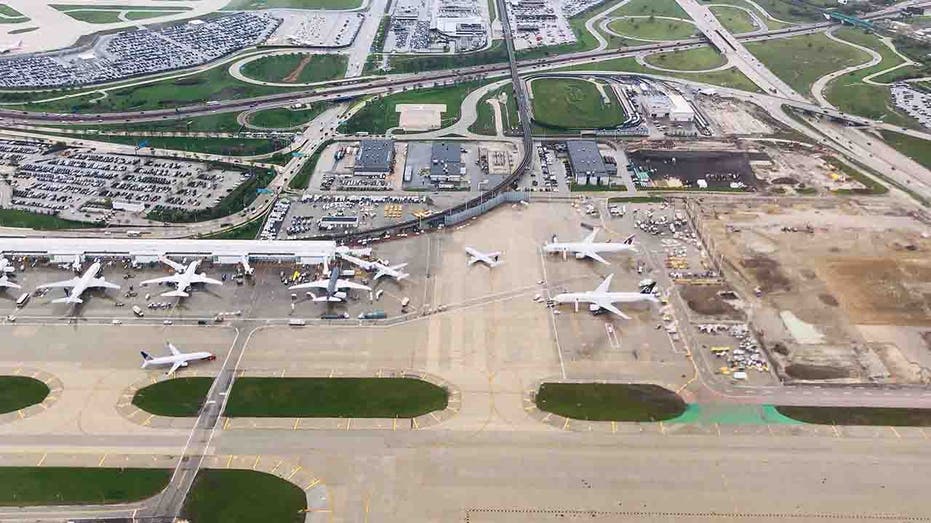
The FAA is limiting the flight volume at Chicago O’Hare International Airport during the summer travel season. (Daniel Slim/AFP via Getty Images)
“We successfully turned Newark Liberty International into the most on-time airport in the Tri-State Area by fixing telecoms issues at record speed and reducing overcapacity,” Duffy said.
Advertisement
“Applying that same strategy at O’Hare – where unrealistic schedules were set to dramatically exceed what they could handle – will reduce delays and make this busy summer travel season a little easier,” he said.
“Along with our work to modernize air traffic control and boost staffing, the Trump administration is using every tool at its disposal to deliver a safe, efficient, and seamless flying experience,” Duffy added.
The FAA’s move comes despite airlines’ plans to increase flight volumes on peak summer travel days. (Kamil Krzaczynski/AFP via Getty Images)
The FAA’s announcement said that O’Hare’s proposed flight volume of 3,080 per day on peak days was an increase of 400 compared with last year.
Advertisement
That proposal came against the backdrop of air traffic controllers dealing with constrained gate capacity and ongoing taxiway closures due to construction.
Airline representatives worked in one-on-one meetings with the FAA to find a balance between scaling back operations at O’Hare and meeting the airline’s needs.
Chicago O’Hare International Airport is the nation’s busiest airport. (Daniel Slim/AFP via Getty Images)
Aside from limiting flight volume at O’Hare, the FAA also said that it’s bringing in more air traffic controllers and improving the speed of controller training while optimizing routes and airspace around Chicago to reduce delays. It’s also increasing collaborative decision-making (CDM) calls between the FAA, airlines and airports during potential high-risk periods.
Advertisement
“Our number one priority is the safety of the flying public, and that means ensuring airline schedules reflect what the system can safely handle,” said FAA Administrator Bryan Bedford.
“We appreciate the airlines working together with us to reach a responsible level of operations that strengthens safety and delivers a more reliable travel experience for the American public,” Bedford added.
The headline number is striking. The UK digital economy hit a $1.2 trillion valuation in 2025, making it the largest in Europe.
Thirteen new unicorns were created last year alone, more than any other European country. Venture capital investment reached $17 billion, outpacing France, Germany, and Switzerland combined. One in ten British adults plans to start a business in 2026.
The story those numbers tell is not just about big tech. It is about a structural shift in what a viable UK business looks like. The companies growing fastest right now tend to share a few characteristics: digital-first, low physical overhead, scalable without proportionate headcount growth, and designed for a consumer base that increasingly expects to access everything from a screen. Understanding which sectors are driving this matters if you are thinking about where to build, invest, or pivot.
Fintech Is Still the Engine Room
Financial technology continues to dominate the UK’s digital growth story. The sector is projected to reach £34.7 billion in revenue by 2026, growing at nearly 20% annually. That pace is being sustained not by a handful of large players but by a broad ecosystem of payment infrastructure companies, open banking platforms, personal finance apps, and embedded finance tools that are quietly becoming part of how every British business operates.
For SMEs, the practical implication is that the financial tools available to you today are structurally better than they were five years ago. Faster payments, smarter invoicing, better cash flow visibility, and real-time credit decisions are all downstream benefits of fintech investment.
Advertisement
The businesses that have adopted these tools have a measurable operational advantage over those still running on legacy bank accounts and spreadsheets.
Digital Entertainment Is a Serious Industry Now
It is easy to underestimate how much of the UK’s digital economy growth is being driven by entertainment. Streaming, gaming, and online gambling are three of the fastest-growing digital consumer sectors in the country, and they share the same structural advantages that make digital businesses compelling from an investment perspective. No physical premises.
Marginal cost of serving an additional customer that approaches zero at scale. Consumer demand that is largely recession-resilient.
Online casino gaming has matured considerably as an industry. The UK Gambling Commission introduced significant regulatory reforms in 2025 that raised the floor for operators, including stricter financial checks, stake limits, and marketing controls.
Advertisement
The effect has been a market that is better for consumers and more defensible for operators who built their platforms properly. Newer platforms launching into this environment are doing so with a much higher baseline of compliance and product quality than was typical even a few years ago.
If you want to see what the current competitive landscape looks like, a guide to the leading new casinos gives a clear picture of what serious operators are offering UK players in 2026.
The Government Has Finally Built a Plan Worth Paying Attention To
The UK’s Modern Industrial Strategy, launched in spring 2025, is a 10-year framework designed to give businesses the certainty they need to invest and scale. For digital businesses specifically, it includes a £100 million Advance Market Commitment for AI startups, expanded support for tech scale-ups, and a commitment to making the UK one of the most attractive locations globally for digital and technology businesses.
The CNN Business analysis of the UK tech ecosystem is worth reading for the full picture of how the government strategy and private investment are combining. The Secretary of State for Business and Trade has been unequivocal: more unicorns than France and Germany combined, and the intention to keep it that way.
Advertisement
The Structural Advantages of Building Digital
The businesses that are genuinely thriving in the current UK environment are not necessarily the ones with the most funding or the biggest teams. They are the ones that built for digital from the ground up and can grow revenue without a proportional increase in costs. This is a meaningful structural advantage when wage bills, energy, and rent are all under pressure.
The pattern shows up consistently. A digital entertainment platform serving a hundred thousand users looks almost identical from a cost perspective to one serving ten thousand. A software business can add a new product line without hiring a warehouse team.
A data company can enter a new market without opening an office. None of this is new in theory, but the tools available to UK founders in 2026 to build this way have never been better or more accessible.
What This Means for SME Owners Thinking About the Next Move
The one in ten Brits planning to start a business this year are not all wrong about the timing. The infrastructure is better, the tools are cheaper, and the government has at least committed to a strategy that takes digital growth seriously.
Advertisement
What has changed is that the bar for standing out has risen. More digital businesses means more competition, and the ones that do well are the ones that understand their market thoroughly before they launch into it.
Hennion & Walsh Asset Management President and CIO Kevin Mahn analyzes Walmarts earnings and the state of the U.S. economy on Mornings with Maria.
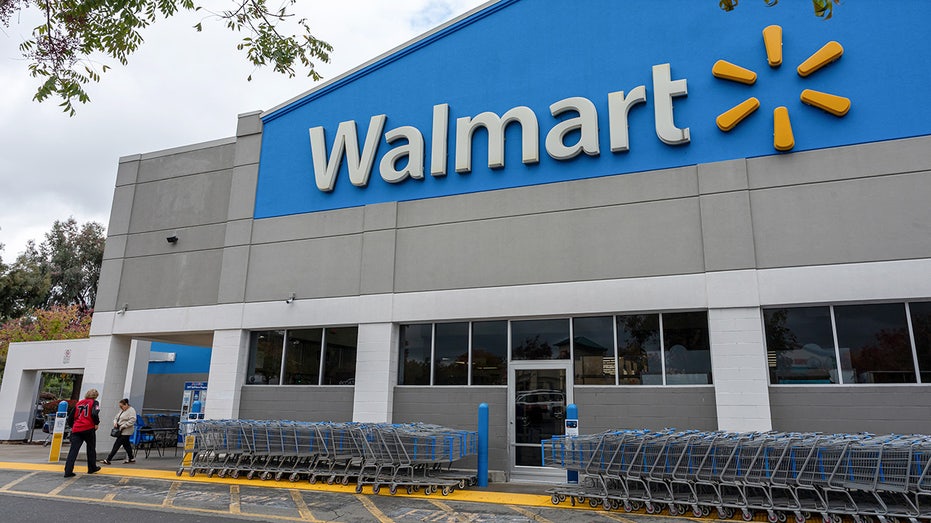
Walmart announced that it’s planning to remodel more than 650 of its stores around the U.S. while it also will open about 20 new stores in 2026 and early 2027.
The retail giant said on Thursday that the plan builds on its 2024 commitment to open or convert over 150 new locations while updating its existing store portfolio.
Advertisement
“This investment is intended to create jobs, help strengthen local economies, and make shopping faster and more convenient for our customers,” Walmart said, adding that the new stores and remodels will drive construction jobs during the projects while creating long-term roles in retail, pharmacy and store leadership.
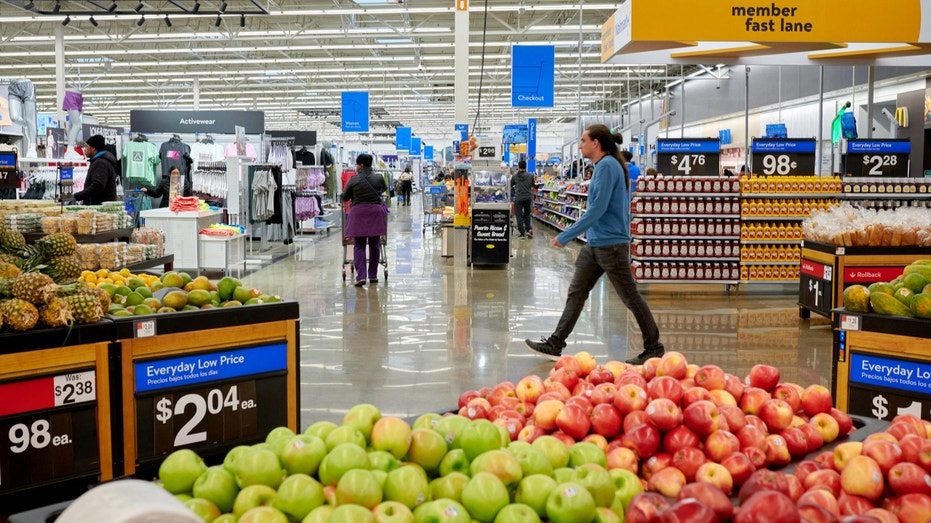
Among the changes that customers may notice at updated stores are wider aisles and updated layouts, new displays with expanded assortments, more pickup and delivery service options including express delivery, refreshed interiors and exteriors with improved parking and landscaping, plus new digital touchpoints to show the company’s online assortment for in-store shoppers.
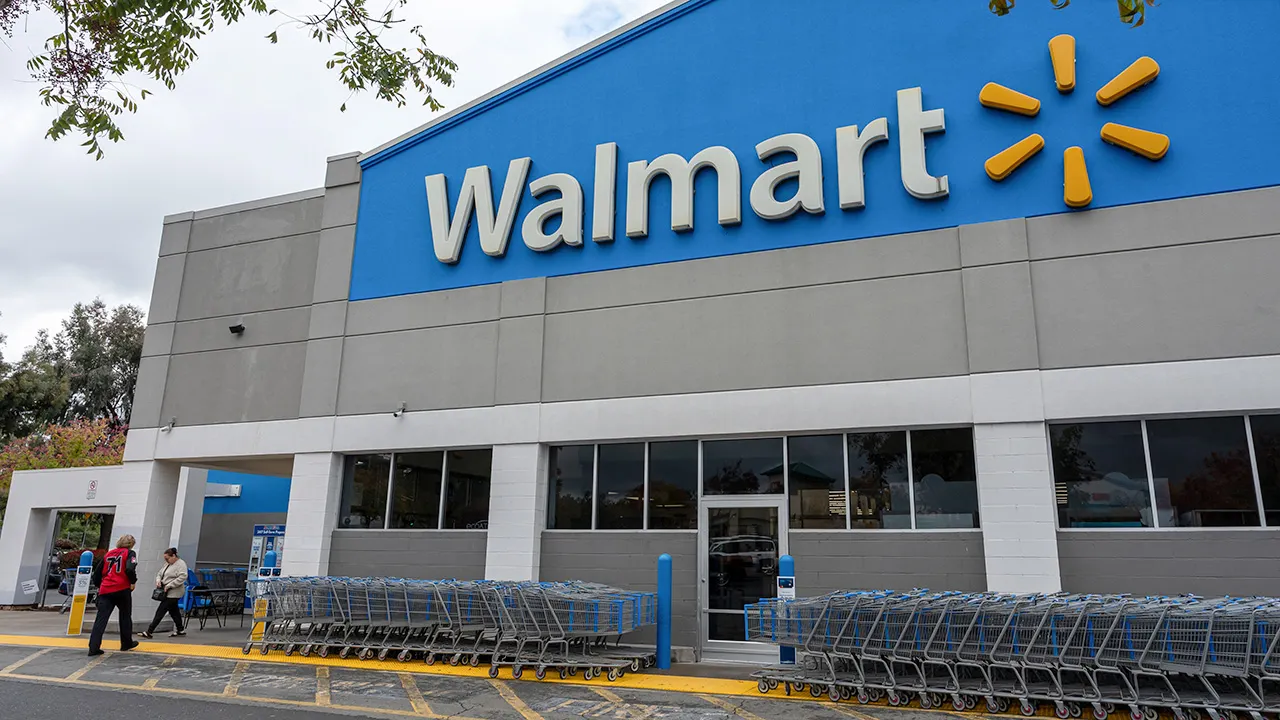
Walmart plans to remodel more than 650 stores in the U.S. (David Paul Morris/Bloomberg via Getty Images)
Walmart’s Neighborhood Markets will see expanded deli and hot bar selections, pharmacy delivery options, improved lighting and fixtures, as well as upgraded areas for fulfilling online grocery orders.
Select Neighborhood Markets are being updated through a rapid remodel program that aims to complete the project quicker with minimal customer disruption.
“Our goal is simple: we want shopping to feel easy, intuitive, and connected while continuing to deliver the everyday low prices our customers expect,” Walmart said.
Advertisement
The company’s announcement noted that this year it already opened new Walmart Supercenters in Eastvale, California, along with Apollo Beach, Jacksonville, and The Villages, Florida. It also opened a Walmart Neighborhood Market in Ocala, Florida.
Later this year, Walmart said that it will expand its Supercenter in Tucson, Arizona, while opening a new Supercenter in Celina, Texas. Walmart also noted that it opened nine new stores across Alabama, California, Florida, New Jersey, Texas and Utah in 2025.
The remodels will also update Walmart’s vision centers and pharmacies. (Gabby Jones/Bloomberg via Getty Images)
The retailer’s announcement on store remodels and openings comes after it announced on Wednesday that it was moving forward with a sweeping redesign of its flagship Great Value label, covering nearly 10,000 food and household products.
Advertisement
The effort marks the brand’s first full refresh in over 10 years and is the largest private-label update in Walmart’s history.
Instagram appeared largely operational Saturday but users continued to voice frustration over intermittent posting and publishing issues, according to real-time tracking sites, even as no widespread global outage was confirmed by Meta Platforms Inc.
Instagram
Downdetector, a popular service that aggregates user reports, showed elevated complaints centered on the “Posting / Publishing” category, accounting for about 73% of recent submissions in the United States. Smaller spikes appeared in the app itself and feed loading, though overall volume remained far below levels seen during major past disruptions.
Other monitoring tools, including DownForEveryoneOrJustMe, reported no broad detection of problems with Instagram as of early Saturday morning. The last significant detected outage occurred on March 20, 2026, lasting roughly 36 minutes. Scattered individual reports from April 17 mentioned error messages, but these did not indicate a coordinated service failure.
Meta, which owns Instagram along with Facebook, WhatsApp and Threads, had not issued an official statement on any current technical difficulties by mid-morning Eastern Time. The company’s business products status page showed no known issues for core Instagram services as recently as April 16.
The latest wave of user gripes arrives amid ongoing scrutiny of Meta’s platform stability and algorithm changes throughout 2026. Creators and everyday users alike have complained about fluctuating Reels performance, reduced reach and occasional random account restrictions, topics that frequently trend on Reddit and X.
Advertisement
Instagram, with more than two billion monthly active users worldwide, has become a critical tool for social connection, influencer marketing, small business promotion and news consumption. Even minor glitches can disrupt millions, prompting swift backlash on rival platforms when the app falters.
Recent months have seen several notable Instagram hiccups. On April 8, Meta platforms experienced fluctuations lasting nearly 10 hours, affecting Reels posting and general stability, according to user posts and outage trackers. Earlier incidents in March included widespread DM failures that left thousands unable to send or receive messages, with reports peaking above 10,000 on Downdetector.
On March 11, users primarily in the United States reported trouble accessing the app, server connection errors and feed loading problems. Similar patterns emerged on March 27 and April 7, often involving login difficulties or frozen interfaces that resolved within hours.
These episodes highlight the growing complexity of Meta’s infrastructure as the company integrates artificial intelligence features, expands shopping tools and pushes short-form video to compete with TikTok. Engineers routinely roll out updates that occasionally introduce unintended side effects.
Advertisement
When problems strike, users typically turn first to Downdetector or X to check if the issue is widespread. Hashtags such as #InstagramDown and #InstagramOutage quickly gain traction, often accompanied by memes and screenshots of error screens. Many express relief upon discovering they are not alone, while others vent about lost productivity or missed engagement opportunities.
For influencers and brands, downtime carries financial stakes. A halted posting schedule can mean lost sponsorship revenue or diminished audience interaction during peak hours. Small businesses reliant on Instagram Shops or direct messaging for customer service face particular headaches.
Meta has improved its transparency in recent years by acknowledging outages more quickly on its status channels or through official accounts. In past major blackouts, such as the December 2024 event that took down multiple Meta apps for hours, the company cited “technical issues” without providing deep technical details.
Experts attribute recurring glitches to several factors: massive scale requiring constant server synchronization, sophisticated content moderation systems that sometimes flag legitimate activity, and the relentless pace of feature rollouts. End-to-end encryption changes planned for direct messages after May 8, 2026, have also sparked separate debates about privacy and functionality.
Advertisement
Despite occasional disruptions, Instagram’s core appeal remains strong. The platform continues to evolve with new AI-powered editing tools, enhanced Reels analytics and tighter integration with Meta’s broader ecosystem. Users in Seoul and other global hubs, where mobile-first usage dominates, often notice issues faster due to high traffic volumes.
Saturday’s reports appeared more localized or tied to specific features rather than a full platform collapse. Some users noted difficulty uploading Stories or Reels, while others experienced delays when trying to publish carousels or tagged posts. Refreshing the app or switching between Wi-Fi and mobile data frequently resolved the problems.
Analysts monitoring social media reliability suggest that partial outages affecting posting are becoming more common than complete blackouts. These “soft” failures frustrate users because the app still opens and scrolls, creating the impression that only their account or action is broken.
For those encountering issues, common troubleshooting steps include updating the Instagram app, clearing cache, restarting the device, or checking internet connectivity. Meta generally advises waiting a short period, as many glitches self-correct once backend systems stabilize.
Advertisement
The broader context includes heightened regulatory attention on Meta. Lawmakers in multiple countries continue to examine platform stability, data practices and algorithmic impact on mental health, particularly among younger users who spend significant time on Instagram.
Parents and educators have expressed concern when outages coincide with school hours or family time, underscoring society’s growing dependence on these digital spaces. At the same time, the rapid spread of outage news demonstrates the platform’s cultural centrality.
As Saturday progressed, Downdetector graphs showed the spike in posting complaints beginning to level off, suggesting any localized problems were easing. No evidence pointed to a coordinated cyber incident or major hardware failure.
Instagram’s engineering teams work around the clock to maintain uptime, employing redundant data centers and sophisticated monitoring. Still, with billions of daily interactions involving photos, videos, messages and live streams, absolute perfection remains elusive.
Advertisement
Users in different time zones often experience issues at varying intensities. Reports from the United States and Europe frequently dominate trackers during North American business hours, while Asian users may notice glitches during evening peak usage.
Looking ahead, Meta is expected to continue investing heavily in infrastructure to support emerging features such as longer-form content, advanced shopping experiences and deeper AI integration. Each new capability brings additional layers of complexity that must be stress-tested.
For now, most Instagram users can likely access their feeds, view Stories and scroll Reels without major interruption. Those still facing posting troubles are advised to try again later or use the web version as a temporary workaround.
The episode serves as another reminder of how quickly social media can shift from seamless utility to source of collective anxiety. In an always-on digital world, even brief service hiccups generate headlines and millions of concerned messages across the internet.
Advertisement
Whether this latest round of complaints signals routine growing pains or hints at deeper scalability challenges, Meta will almost certainly monitor the situation closely. In the meantime, users worldwide continue refreshing their apps, hoping their next post goes through without a hitch.
Instagram’s resilience has improved over the years, but Saturday’s scattered reports illustrate that perfect reliability remains an ongoing pursuit for one of the world’s most-used social platforms.
















































You must be logged in to post a comment Login