

Politics
Three-time Trump Voter Reveals Why He Regrets Supporting President In C-SPAN Call


A longtime Donald Trump supporter called in to C-SPAN on Saturday to lay out his buyer’s remorse over the president.
“Now I understand how somebody like Adolf Hitler was able to brainwash millions of people,” the caller told host Taylor Popielarz on C-SPAN’s “Washington Journal.”
“I never I thought I’d see that again in my lifetime. But it’s happened, right? I thought we got past that, but we don’t learn from history.” (Check out his call in the clip below.)
The caller — who was identified as a three-time Trump voter named “Thomas” from Hawaii — began his message with, “It’s hard for me to say this, but I think if I can open up about it in public that it might help others.”
He said he wanted to believe Trump was “the real deal” although he had doubts as he “knew enough about his business history to think otherwise.”
“But now I regret my support for him, and I should’ve known better,” Thomas explained.
“He’s making it plain as day. He’s a con man, a liar, doesn’t keep his promises. He’s in office all for himself, and he doesn’t even try to hide his corruption anymore.”
He continued: “So unless you get all your information from what I call the ‘right-wing propaganda-for-profit, disinformation media industrial complex,’ he’s the worst president we’ve ever had, and he’s the most corrupt president we’ve ever had.”
Thomas said it was “hard” and took him “a while” to express such a sentiment, suggesting it was difficult due to his commitment to believing Trump.
He explained he considered third-party candidates and voting for a Democrat before sticking with Trump in the end.
Thomas, when asked whether there was a “straw that broke the camel’s back,” said it wasn’t just one thing that caused him to split with the president.
“It has been a cumulative process, and it’s gotten so blatant now,” he explained.
“He [said he was] going to lower prices on day one, he was going to do this on day one, only he could fix all this stuff.”
Thomas emphasised that Americans ought to slow down Trump by holding him accountable and voting for “as many Democrats, whether you like ’em or not, just to get some balance back into our system of checks and balances.”


Times columnist Matthew Syed last week bemoaned what he described as the ‘hysteria’ surrounding calls to replace UK prime minister Keir Starmer. According to Syed, Britain has entered an era of permanent leadership speculation in which no prime minister, whether Labour, Conservative or Reform, will ever be secure for long. He concluded with the dire warning that ‘Britain is becoming ungovernable’.
Syed is far from alone in this diagnosis. A growing number of centrist commentators now argue that Britain has entered an age of chronic political instability in which governments can no longer sustain authority or maintain public trust. They have portrayed Britain – and Western democracies more broadly – as increasingly fragmented, volatile and difficult to govern.
Starmer’s trajectory in government has hardly helped this mood of elite despair. He entered Downing Street with a huge majority and the promise that, after years of Tory psychodrama, the ‘adults’ were back in charge. Barely two years later, his popularity has collapsed, and the knives are out in the Labour Party. As of this week, more than 90 of 402 Labour MPs have called on Starmer to resign. A leadership contest appears to be imminent.
Among centrist commentators and their social-media fellow travellers alike, one increasingly hears nostalgia for the supposedly steadier age in which Britain expected two or three prime ministers a decade, not six (and counting). To the centrists, this proves Britain has become impossible to govern – a nation of capricious ingrates forever turning on whoever occupies No10.
But perhaps voters are not so irrational. Perhaps they simply do not wish to be governed in the way that Starmer and his Tory predecessors have been governing. Yet when the public complains about policy and implementation, centrists conclude not that the government has failed, but that the public itself is the problem.
Governing with a reasonable level of public consent need not be this tricky. Governments do not operate in total darkness. Polls, elections and public reactions provide fairly clear signals about what voters want.
A government genuinely interested in democratic legitimacy might try listening. Yet modern governments increasingly campaign on what they think the public wants to hear, only to govern as though the electorate had voted for something else entirely. They then react with bafflement when support collapses.
Immigration is the clearest example. For years, voters have consistently said they want lower levels of immigration. For years, politicians have promised to deliver exactly that. David Cameron promised to bring net migration down. Theresa May promised it, too. Boris Johnson rode to power presenting himself as the man to deliver Brexit and who finally understood the electorate’s desire for border control.
Yet, once in office, all three presided over soaring numbers of legal and illegal immigration. Johnson was the most spectacular case. Having styled himself as the tribune of popular frustration with mass immigration, he went on to oversee an influx of foreigners so unprecedented they now bear his name – the ‘Boriswave’.
Starmer’s own pledge to ‘smash the gangs’ has followed the same pattern. There have been headline-grabbing raids, press conferences and operational announcements, yet the broader picture remains one of record crossings and continued public frustration. All of this has unfolded amid a steady stream of reports about serious sexual crimes committed by illegal migrants, deepening the sense that the government is failing to protect the public.
On this issue and many others, voters are not issuing incomprehensible demands. They want lower immigration, affordable energy, safer streets, functioning services and economic stability. These are hardly exotic requests. Yet successive governments have dismissed demands for them as mere ‘populism’.
The very people complaining that Britain has become ‘ungovernable’ are the same people who have spent decades refusing to govern in accordance with the public’s clearly expressed wishes. Presenting themselves as sober managerial technocrats, they increasingly come across as a caste of haughty administrators unwilling to alter course, no matter how loudly voters object.
Any serious disagreement is treated as evidence that the public has been misled, radicalised or insufficiently educated. Politics ceases to be representative and becomes a series of attempts to impose the correct attitudes on hoi polloi.
The complaint that Britain has become ‘ungovernable’ recalls Bertolt Brecht’s famous satirical line that, rather than changing the government, it might be easier to dissolve the people and elect another. Democracy requires our leaders to adapt themselves to public priorities, not the other way around.
Centrists work from the opposite assumption. The policy framework is treated as settled and largely beyond democratic challenge, while the public is expected to regulate itself accordingly. When voters refuse to comply, their demands are treated not as legitimate democratic claims, but as evidence that democracy itself is malfunctioning.
Britain is not ungovernable. Britons are perfectly willing to support governments they believe are acting in their interests and responding to their concerns. ‘Ungovernable’ is shorthand for the death of the old centrist assumption that politicians can indefinitely ignore public priorities.
When voters reject this arrangement, centrist commentators diagnose a crisis of democracy. In fact, democracy is the one thing the public is still trying to assert.
James Martin Charlton is an English playwright and director. Follow him on X @jmc_fire.


Tesco’s CEO pay increased by almost a million last year from £9.93m to £10.8m. Fat cat salaries and the profits of privatised essentials show the cost of living crisis is manufactured. In fact, Tesco sets a stark example.
Manufactured, not a real ‘cost of living’
The real cost of living is when essentials come at cost price. Whether that’s supermarkets, housing, water or energy, the concept remains. But the supermarket giant Tesco made £3.2bn in operating profit in 2025/26. Also, its CEO’s pay packet, which includes his bonus, is entirely unnecessary. Instead, we should have cost price supermarkets. This would avoid middleman wealth extraction.
And when it comes to housing, the average private renter spends an average of £902 a month. That accounts for 41% of a £2,200 take-home salary. In total, this adds up to £119 billion a year across 11 million renters.
Instead, we should have cost price housing. That means the person can pay back the cost of building and designing the house in affordable monthly payments. Then, the person can enjoy full home ownership. This would end the housing bubble and bring down prices across the board. Much like Tesco could lead the way in supermarkets by implementing similar affordability principles.
Easy money, extractive practises
The alternative approach demonstrates that the current ‘cost of living crisis’ is manufactured. That’s because landlords would no longer be extracting over a hundred billion per year in rent that doesn’t go towards home ownership for the tenant, and retailers such as Tesco wouldn’t be able to profit excessively from essentials.
Water and energy companies are also making significant profit that further shows the ‘cost of living crisis’ is manufactured by the current system. In 2022/23, water utilities in the UK made £1.7bn — almost double what they made in 2018/19. And in the first quarter of 2026, BP more than doubled its profits. Clearly, the same trend is seen with Tesco in food retail.
Modernising the UK could further lower costs. That’s through automating industries like farming and vehicles. Re-imagining the system to ensure people pay cost price for essentials would transform the affordability crisis into one where people have the money to enjoy life.
Featured image via Leon Neal/Getty Images
By James Wright


More than 71,000 children under five are at risk of acute malnutrition in Gaza as Israel continues to restrict fuel, flour, and humanitarian aid imports, pushing Gaza closer towards famine, TRT World reported.
Israel tightens the squeeze on Gaza imports
Israa Al-Afifi, a pediatrician in Gaza, told TRT World that:
Children have been directly impacted by a policy of starvation . A growing number of children are suffering from malnutrition while the nutritional products and supplements essential for both prevention and treatment have become unavailable
Quds News Network posted pictures of queues at a food distribution point, which included many children — captioned “starvation continues in Gaza”.
Starvation continues in Gaza | Palestinians, including children, crowd around a food distribution point in Al-Bureij refugee camp in central Gaza, waiting to receive a meal. pic.twitter.com/VK4qnmT84x
— Quds News Network (@QudsNen) May 15, 2026
Times of Gaza also posted on X, saying :
Officially, Gaza is facing famine once again.
Officially: Gaza is facing famine once again. pic.twitter.com/o6o8fgO7xk
— TIMES OF GAZA (@Timesofgaza) May 16, 2026
Growing bread queues
A fourteen-year-old called Muhammed al-Roubi told Al Jazeera he waits for hours under the beating sun, often returning empty-handed.
View this post on Instagram
Calling attention to the aid squeeze by Israel, the report emphasised that:
Recent shortages stem from Israel’s decision to close the crossings into Gaza on February 28, when Israel launched a joint war with the United States on Iran. The crossings partially reopened after a few days, but traffic through them has been limited.
Israel ultimately decides how much will be let through, despite last year’s “ceasefire” with Hamas stipulating that Israel must significantly ease the restrictions.
Genocide unabated
Israel’s murders in Gaza are continuing unabated. The genocidal entity fatally struck a soup kitchen over the weekend, killing three charity workers.
Journalist Abubaked Abed shared a picture of the strike.
About yesterday in Deir al-Balah, Gaza.
A picture louder than millions of words. pic.twitter.com/oyoj2LZ0cJ
— Abubaker Abed (@AbubakerAbedW) May 18, 2026
The missile strike launched by Israel in Deir al-Balah killed at least three Palestinian people and injured dozens.
Journalist Motasem Dalloul also shared a picture of the attack, saying:
Israeli occupation army claimed it “assassinated armed terrorists” in this attack yesterday.. The two people who were killed in the attack were aid workers distributing cooked rice to the people starved by the Israeli occupation.
Israeli occupation army claimed it “assassinated armed terrorists” in this attack yesterday..
The two persons who were killed in the attack were aid workers distributing cooked rice to the people starved by the Israeli occupation.. pic.twitter.com/feawvUXCQ4
— Motasem A Dalloul (@AbujomaaGaza) May 18, 2026
The Palestinian Health Ministry in Gaza said Israel has killed at least 871 people since the so-called ceasefire began last October.
Israel’s bombing of Gaza and its starvation blockade have never paused, despite the supposed ceasefire in place since autumn 2025. Israel is a terror state, and the UK continues to equip and enable it.
By The Canary
Politics
The House | The Global Partnerships Conference is an opportunity to show what Labour stands for

5 min read
Amid the political upheaval of recent weeks, a post from a former colleague caught my eye.
Amid the political upheaval of recent weeks, a post from a former colleague caught my eye.
Alia Al Bwary, a nursery teacher, was killed in an airstrike in Lebanon along with her husband and three-year-old son. Her nine-year-old survived. The International Rescue Committee, the post said, had funded her work and were mourning the loss of a woman who loved her family and her community, and believed in the power of education to bring stability and hope.
This week, the government is hosting a Global Partnerships Conference in London. I fear it will pass unnoticed, a side show while the main event remains the future of our party and country.
But this is to miss an opportunity – for people like Alia, but also for us in the Labour Party.
In the local elections, voters told us repeatedly that they simply don’t know why we’re in government, what we stand for, who we stand with, and how we’ll make their lives better.
When it comes to Britain’s role in the world, voters see our determination to keep us secure in the world, for example by increasing defence spending and boosting homegrown energy production. This is a fundamental necessity of government. But is it enough?
A foreign policy agenda that drives both security and hope, even in this world in turmoil, could be exactly what is needed to answer voters’ doubts. Not a side show but the main event.
Why are we in government? Across the Labour Party we share a core belief that people – here and across the world – should be able to live together freely, in a spirit of solidarity, tolerance and respect. This belief is under global threat like no time in my life and we are here to fight for it.
What do we stand for? We don’t have to look far for clarity when it comes to foreign policy. It’s right there, in Clause IV of the Labour Party’s Constitution: “Labour is committed to the defence and security of the British people and to co-operating in… international bodies to secure peace, freedom, democracy, economic security and environmental protection for all.”
Who do we stand with? First and foremost, the people of Britain. But when we look internationally, that means three things. First, the global and regional institutions who share our beliefs and priorities. This includes re-embracing the European Union, deepening our defence and security collaboration but also re-building responsible, collective advancement of scientific research, artificial intelligence, the rights of women and girls and so much more.
Second, we stand with like-minded countries from Japan to South Africa, from Jordan to Indonesia, alongside longer standing and still valuable allies like the US, Canada and Australia. We won’t agree with them on everything, but where we do, we must act together.
And third we stand with people like Alia, who share our beliefs our values, and seek to realise people’s potential, alongside their community and their international partners.
How will it help make voters’ lives better? The people of our country – many of whom rejected us at the ballot box last week – rightly expect government to offer them security and hope. It’s been proven repeatedly, from Covid to the economic fallout of the Iran War, that Britain can’t do this in isolation. It is hard when the global order established in the wake of World War II is crumbling. But it can still be achieved through the right proactive, strategic alliances – just look at how we’ve led the Coalition of the Willing in Ukraine to deter Russian threats to our security.
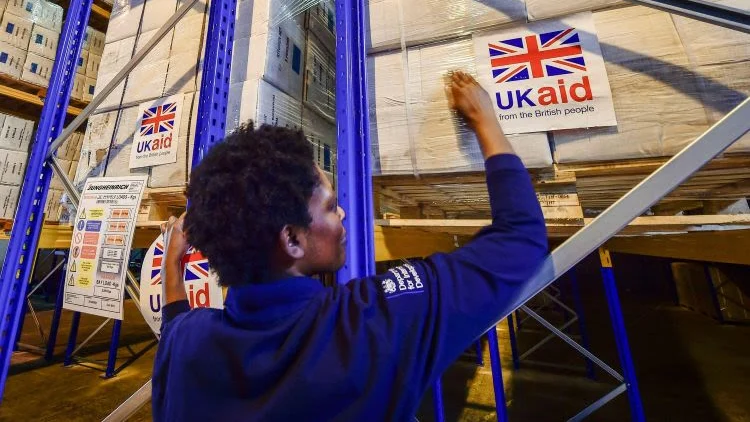
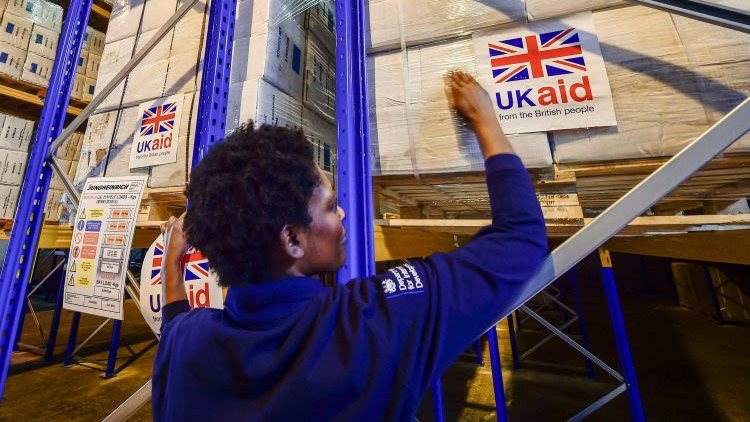
Going back to this week’s Global Partnerships Conference, let’s look briefly at what this means in practice in the sector I know best, which is humanitarian aid.
Why does it matter to government? Because humanitarian aid is a source of stability and a first line of defence. Just look at the work to stop Ebola reaching our shores from West Africa, or the support for Sudanese refugees in Chad, which has meant they can stay alive close to home without risking onward journeys. But also, what could be a more hopeful agenda, aligned with our core belief, than to save and strengthen lives when they’re at risk?
What do we stand for? The Labour Party came into government with a commitment to return aid spending 0.7 per cent of GNI as soon as fiscal circumstances allow. Instead, we’ve seen cuts. The fiscal constraints are real but that shouldn’t constrain our conviction, ambition or expertise. Yvette Cooper is determinedly working to reduce violence against women and girls, but we could stand proud for so much more, from reforming the institutions and frameworks that provide development and climate finance, to championing international humanitarian law.
Who do we stand with? Vital institutions like the UN Office for the Coordination of Humanitarian Affairs and the World Bank need our time and energy. From the Gulf to Brazil, we can find countries willing to partners in humanitarian delivery. And across the world, people like Alia need us to call out attacks on civilians and play our part in humanitarian response.
How will it help make voters’ lives better? Because it helps keep us secure in a world where problems cross borders, and because it’s the manifestation of the solidarity, tolerance and respect that we stand for as a party and that voters know is our country’s strength.
The stakes could not be higher: If Reform maintains this level of popularity, Nigel Farage is our next Prime Minister, and he’d scrap our remaining aid commitments almost entirely.
Security, stability, but also hope. Even in this troubled world we can strive for that, as Alia knew.

Going out to eat should be a treat, but we never know how clean the restaurant’s ice dispenser is or if the person preparing our food has washed their hands recently – and that can mean trouble.
Even though germs are everywhere and most of them are harmless, some of them can make us sick. So if there are simple strategies to stay safer when we’re dining out, why not use them?
That’s why Raj Punjabi and Noah Michelson, hosts of HuffPost’s Am I Doing It Wrong? podcast, asked microbiologist Jason Tetro, aka The Germ Guy, to brief us on what might be lurking at our tables and in the kitchens of even the fanciest restaurants.
During our chat, we learned what to avoid when we’re ordering from the bar, the dirty truth about the “five-second rule” and the number one germiest part of the restaurant.
A few years ago, “I was going around to different places in the city, and I was looking for the germiest items, and when I would go into restaurants, it was always the menus,” Tetro told us.
“The reason for that… was that the menus themselves were not so dirty, it was the cloth that they used to clean the menus,” he said.
Too often menus are cleaned using dirty cloths, which spread the germs from one item to the next, or the cleaning products don’t have time to be effective.
“You can use a detergent, you can use a disinfectant, and that’s great, right? But if you spray it into the cloth, well, you’ve just disinfected your cloth, and, yeah, you’ve maybe disinfected a small area of the cloth while the rest of it is still germy,” Tetro, the author of The Germ Files and The Germ Code, explained. “What you really need to be doing is you need to be taking that disinfectant and putting that onto the menu itself and then letting it sit.”
The sitting is incredibly important.
“We never talk about [this] in the media when we’re talking about hygiene, which is something called ‘contact time,’” he said. “When you spray a disinfectant onto a surface, it has to sit there, and it will say so on the label.”
The contact time to fully disinfect a surface can be anywhere from 30 seconds to 10 minutes, and if the product isn’t left to sit for the prescribed amount of time, it may not work correctly.
“We did this study, and it’s not with restaurants, but it was actually with gyms. … You looked at the disinfectant and it said ‘leave on for 10 minutes,’” Tetro told us.
“And then we went to the patrons and were like, ‘So, how long do you keep the disinfectant on for?’ And they’re like, ‘Well, we spray it and wipe it. Why?’ [And we told them] ‘Well, it says here in the label, 10 minutes.’ And they’re just like, ‘Oh, my God.’”
Thankfully companies are now making faster-acting disinfectants, and many of them are more natural.
“We’ve got things that are made of hydrogen peroxide and citric acid, as opposed to some of the names that you can’t pronounce,” Tetro noted.
But the high volume of people handling menus combined with the user errors by the folks cleaning them means we could very likely come in contact with a big helping of germs whenever we’re choosing what to order.
“When you’re wiping down a menu, you’ve got to make sure that there’s that contact time, and, of course, [using] a disinfectant wipe for 30 seconds is your best option,” Tetro said. “Unless you’re doing that sort of continually after each and every time someone is touching it, the menus are going to continue being the germiest place in a restaurant.”
Because it’s hard to know exactly how our menu was cleaned (if it was at all), our best bet to stay as germ-free as possible is to wash our hands or use hand sanitiser after we use a menu or, if there’s a menu QR code on the table, use that instead.
And, of course, the same cleaning practices should be used in our homes too. When you’re using disinfectants, make sure you’re reading the labels and if they require prolonged contact time, make sure you’re waiting to wipe until the cleaners have had time to properly and fully do what they’re intended to do.
For more tips on staying safe while dining out, listen to the full episode here or wherever you get your podcasts. And for more from Jason Tetro, visit his website here.
Need some help with something you’ve been doing wrong? Email us at AmIDoingItWrong@HuffPost.com, and we might investigate the topic in an upcoming episode.

!function(n){if(!window.cnx){window.cnx={},window.cnx.cmd=[];var t=n.createElement(‘iframe’);t.display=’none’,t.onload=function(){var n=t.contentWindow.document,c=n.createElement(‘script’);c.src=”//cd.connatix.com/connatix.player.js”,c.setAttribute(‘async’,’1′),c.setAttribute(‘type’,’text/javascript’),n.body.appendChild(c)},n.head.appendChild(t)}}(document);(new Image()).src=”https://capi.connatix.com/tr/si?token=8b034f64-513c-4987-b16f-42d6008f7feb”;cnx.cmd.push(function(){cnx({“playerId”:”8b034f64-513c-4987-b16f-42d6008f7feb”,”mediaId”:”4c2615b8-caae-4d5a-bab7-30953fac6785″}).render(“6a072631e4b098065be96d90”);});
As we head into summer, your garden might start to suffer from a lack of sweet H2O.
There are some tests you can run to make sure your grass is getting all it needs, though. Placing a pan of water on your lawn will tell you how much has evaporated from your soil, while footprints that stay imprinted on your garden long after you’ve strolled over it might mean it’s on the verge of drying out.
Additionally, the Royal Horticultural Society (RHS) said that looking at your leaves in the morning could help gardeners evaluate their hydration situation.
Why should I look at my leaves in the morning?
The RHS stressed that “Established trees, shrubs and herbaceous perennials in beds and borders will only need watering in extreme drought,” adding you should only water the most stressed plants in these cases.
And one of the signs of that dehydration-related stress shows in their leaves, they added.
“Drooping leaves, especially in the early morning, often indicate drought,” they advised.
The Duchy of Cornwall Nursery said that often, established and slightly dehydrated plants “perk up” at night.
But the University of California Agriculture and Natural Resources added “Wilting or drooping leaves that do not return to normal (without additional water) by
morning” are a sign of drought-related plant stress.
What should I do if I suspect drought?
Try to water slowly and evenly, so that the soil is hydrated 15cm or so beneath the surface, the RHS said.
Rainwater is better for plants than tap water. And it’s generally best to water in the morning – this both helps to repel hungry slugs at night and gives grass more of a chance to absorb the liquid.
If you’re watering garden plants, try to point the nozzle of your watering can right at their base, so that you hit the roots instead of the leaves (watering leaves on a sunny day can sometimes scald them).
And potted plants sometimes benefit from a jacuzzi: if dehydrated, sit them in a sink or bath of water and let them drink for a while.
Related…



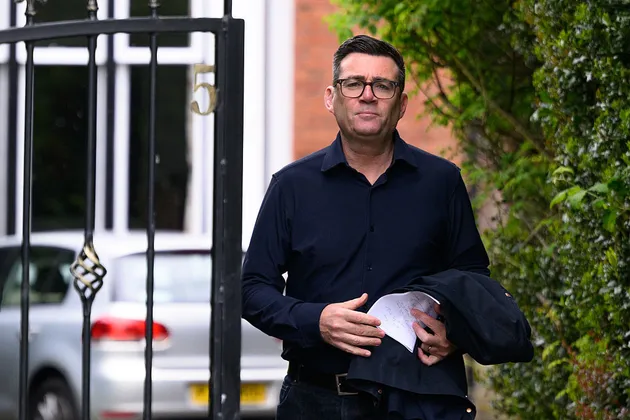
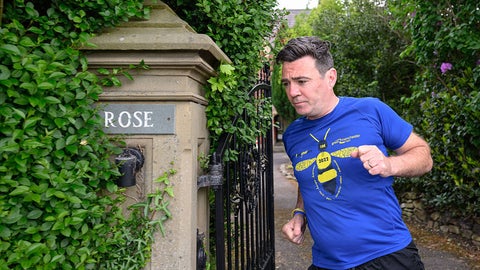
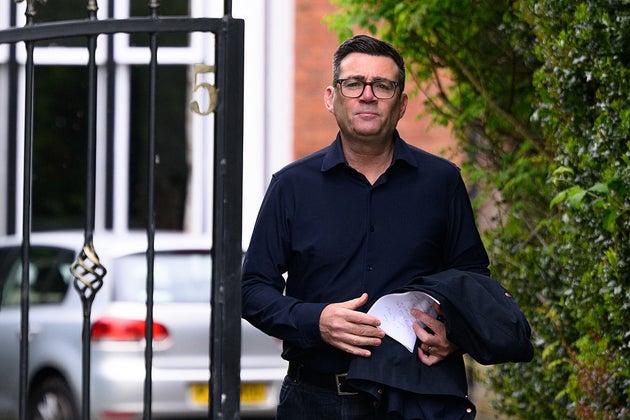 Andy Burnham leaving his home before going to Wembley to watch the FA Cup Final.
Former Labour members are returning to the party to help Andy Burnham win win the crunch Makerfield by-election, HuffPost UK has been told.
Supporters who quit in protest at the direction of the party under Keir Starmer’s leadership are signing up to help the Greater Manchester mayor defeat Reform UK, it is claimed.
“They are all offering to help Andy win the by-election,” a senior Labour source said. “He is attracting support from long-standing members who left over the last two years.”
A pro-Burnham MP confirmed that ex-Labour members have returned to back his bid to return to parliament after nine years.
Burnham has said he wants to become an MP again to “save” the Labour Party, but stopped short of confirming he wants to replace Starmer as leader.
He told the BBC: “We’ve got to see this as a moment to reclaim the Labour Party, to save it from where it’s been. We can’t just carry on as we are.”
Burnham has yet to be confirmed as Labour’s by-election candidate, although the party’s ruling national executive committee (NEC) has said it will not block him, as they did when he tried to stand in Gorton and Denton earlier this year.
Josh Simons won the seat for Labour at the last election with a majority of 5,399 from Reform.
Simons announced on Thursday that he was standing down to make way for Burnham, who is expected to challenge Starmer if he wins the by-election, which takes place on June 18.
On BBC 1′s Sunday With Laura Kuenssberg, Simons said he had done it in the “best interests” of his party, community and country.
He said: “I think doing things for your community and your country that are very much not in your own personal reasons is the kind of thing we should do in politics sometimes.
“This has been a really tough decision for me and my family. I have very young kids, I’ve got a three-week-old baby.
“This was not an easy thing to do, and I wouldn’t have done it unless I really, really believed, at the end of the day, that this was in the best interests of the Labour Party, my community, and most importantly, the country.”
It was revealed last week that 1,600 new members had joined Labour in the wake of the party’s drubbing in the elections on May 7.
Party sources claimed the vast majority had done so to support the prime minister.
Subscribe to Commons People, the podcast that makes politics easy. Every week, Kevin Schofield and Kate Nicholson unpack the week’s biggest stories to keep you informed. Join us for straightforward analysis of what’s going on at Westminster.
Related…


Donald Trump has issued a fresh genocidal threat to Iran if the country’s regime does not agree to a peace deal to permanently end the war.
The US president said “there won’t be anything left of them” in a post on Truth Social.
Although a ceasefire remains in place in the conflict, the Strait – which used to carry one-fifth of the global oil supply – remains closed to maritime traffic.
Trump said: “For Iran, the Clock is Ticking, and they better get moving, FAST, or there won’t be anything left of them. TIME IS OF THE ESSENCE!”
Despite Trump’s repeated threats – and erroneous claims that America has won the war – no peace deal has yet been agreed to end the war.
The president sparked a furious backlash when he threatened to end Iranian civilisation.
Keir Starmer told MPs: “In relation to the language about destroying a civilisation, can I really be clear with this house – that was wrong.
“A threat to Iranian civilians in that way is wrong. These are civilians, let’s remember, who’ve suffered immeasurable harm by the regime in Iran for many, many long years, and that’s why they are words and phrases that I would never use on behalf of this government, which are guided by our principles and our values throughout all of this.”
Subscribe to Commons People, the podcast that makes politics easy. Every week, Kevin Schofield and Kate Nicholson unpack the week’s biggest stories to keep you informed. Join us for straightforward analysis of what’s going on at Westminster.

We warned them. Zia Yusuf warned them. Anyone with a functioning understanding of how corporate compliance works in the face of punitive state regulation warned them. And now here we are.
TikTok has removed a video posted by Reform UK’s home-affairs spokesman, Zia Yusuf, in which he set out the party’s new immigration policy. It is an entirely legal, mainstream argument about the consequences of mass migration and the failure of successive governments to control it. The platform’s justification for blocking the video was ‘hate speech’ and ‘hateful behaviour’. The removal was triggered by a report made under the Online Safety Act.
Let that settle for a moment. A senior British politician, who is effectively shadow home secretary of the unofficial opposition, has had his political speech – policy announcement, not abuse or incitement – deleted from a major platform under legislation this government told us was about protecting children from pornography. Yusuf was also warned that further violations could result in his removal from TikTok altogether.
To be clear, this was not TikTok acting on its own instincts. Failing to comply with the Online Safety Act’s requirements can incur fines of up to £18million or 10 per cent of a firm’s global annual turnover, whichever is greater. When the penalty for inaction is that large, corporations do not sit and deliberate the merits of each complaint. They reach for delete. They err, always, on the side of caution – which is to say, on the side of whoever filed the report. GB News presenter Tom Harwood put it simply and correctly: regulation of this kind has a deadening effect on liberties, not because it commands censorship directly, but because it creates an incentive for corporations to censor first and think later. Companies do not need to knock on the door when it has already made the cost of opening it prohibitive.
Yusuf had predicted precisely this. Speaking last year, he pointed to section 179 of the Online Safety Act, which makes it illegal to say something false that causes ‘non-trivial psychological harm’, and warned that this would force social-media companies to ‘proactively censor’ speech. ‘It’s going to create an incentive structure for social-media companies to over-censor’, he said, ‘because that’s the rational thing to do’. He was right. He is now the living proof.
There is a rich and nauseating irony here that should be stated plainly. Yusuf noted that TikTok, which has just removed his immigration-policy video on the grounds that it is hate speech, happily hosts videos calling for the assassination of Nigel Farage. Fayaz Khan, an illegal immigrant from Afghanistan who threatened Farage’s life, stood before a camera in October 2024 and announced his murderous intentions on TikTok. While that video remained up (although Khan was jailed for five years in October for the threat), a video on Reform’s migration policy was taken down. You could not construct a clearer demonstration of where the algorithm’s political sympathies lie – or rather, where its risk calculations land.
Then there is the parallel case of Katie Lam. Last year, shortly after the Online Safety Act came into force, the Tory MP gave a speech in the House of Commons criticising Labour’s response to the grooming-gang crisis. While not removed altogether, the speech was age-restricted on X under the same legislation. Words spoken under the protection of parliamentary privilege, in the mother of all parliaments, were deemed unsuitable for general viewing. We have arrived somewhere genuinely dystopian.
Yusuf told me: ‘This is exactly what we said would happen as the law targets social-media companies in a punitive fashion.’ He is right. And the political class that passed this legislation in 2023 – with cross-party support, let it be remembered, the Conservatives as guilty as Labour – knew or should have known what its results would be. Section 44 allows the culture secretary to unilaterally force Ofcom to change the rules about what social-media companies must censor without an act of parliament, without a vote. A single minister, in private, can redraw the boundaries of acceptable political speech. That is not about ‘safety’ online. That is power without accountability, dressed in the language of child protection.
This is the precautionary principle in its most corrosive form, our worst European inheritance, transplanted into British law and handed to Whitehall to enforce. In medicine, in environmental regulation, in financial compliance, we have watched this principle devour common sense for 30 years. When in doubt, prohibit. When the cost of action is lower than the cost of inaction, act. The corporations have done their maths. They will keep doing it.
The Online Safety Act must be repealed. Not reformed, not adjusted at the margins, not reviewed after a suitable period. Repealed. What was sold as a shield for children has become a sword in the hands of whoever holds office. That was always the risk. It has now become the reality.
We said so. Now you have seen it.
Gawain Towler is a commentator and an elected board member of Reform UK.

We hope you love the products we recommend! All of them were independently selected by our editors. Just so you know, HuffPost UK may collect a share of sales or other compensation from the links on this page if you decide to shop from them. Oh, and FYI — prices are accurate and items in stock as of time of publication.
Not to sound dramatic, but the bane of my existence is my expensive pans constantly getting scratched, and thus everything I cook sticking to them.
And before you ask – no, I don’t use metal tools on them, or put them in the dishwasher. I don’t know what I’m doing wrong, but it’s something.
Understandably (I hope) that means when the time comes to buy a new pan, I’m always on the look out for one that won’t leave me screaming silently into my sink as I try to scrub scraps of egg away.
As an avid cook, I use a pan every day; sometimes multiple times a day – meaning I’m after a pan that won’t scratch, works on an induction hob, and is easy to clean.
Trust me, I’ve been through so many, I’ve earned the title of pan slut. But, ladies and gentlemen, I’m thrilled to say I have finally found a pan that won’t fail me.

Co-owned by Gordon Ramsay, Hexclad is designed by chefs for chefs. Using some kind of magic beyond my scientific understanding, each of its many varieties of pans uses a hybrid of stainless steel and non-stick technology.
I’m not ashamed to say that I’ve never checked out so quickly. Its 30cm Hybrid Pan (with a lid) was really calling to me, not least because it’s an ideal size for everything from cooking eggs, to a perfectly golden fillet of fish, or even a tangy Thai curry.
When it finally arrived on my doorstep, it didn’t disappoint. Thanks to those laser-etched hexagons on the base, the pan has a perfectly smooth bottom that heats up completely evenly.
The result is an even surface that browns, sears, and (joy of joys) releases in equal measures.
And, because Hexclad knows how to check all my boxes, it’s also induction hob and oven friendly (up to 480 celsius), can be chucked in the dishwasher when you’re done with it, and is chemical-free.
You might be thinking, okay, stop with all the pan PDA. Sorry, not sorry. I simply don’t care, because any true home chef will know that the right cookware makes the difference between an excellent meal and a flop on a plate.
It’s not just a plain old frying pan, either. Hexclad has saucepans, frying pans, and roasting tins for every eventuality; it even has a pizza steel and the smartest chopping board I’ve ever seen.
Okay, enough of my waxing lyrical. If you, too are looking for The Pan that will upgrade your cooking game from 0 to 100, here’s my round up of the best on Hexclad right now.

A baby version of my go-to, which is a great size for eggs, or a meal for one.

If you can’t summon up the smell of burnt milk in your mind at a moment’s notice, congrats: you’re winning at life. No prizes for guessing that it’s awful. But this pan wouldn’t do that to you! It’s non-stick, and just the right size for heating milk or making a hot choccy.

If you’re never sure whether to go for your wok or frying pan, allow me (or Hexclad) to introduce a hybrief pan – what a concept!

Wed to a wok? Don’t worry, Hexclad has you covered. You can even choose to get it with a lid, or not. Pretty sweet.

Allora, we all know the struggle of choosing the right sized pan for pasta. We see this coming in handy for your next alla Norma, or even for simmering a chilli con carne.

Who doesn’t want a pan that can do it all? Roast a chicken, check. Make a soup? Check. We could keep going…

If you’re more bound to your oven than your hob, you’ll be pleased to know HexClad also layers its technology into this frankly huge roasting pan.

Don’t think one will be enough? Go for a bundle, like this set that saves £70 on two sizes of its signature pan.

As a pancake pro, I can reassure you that a griddle is truly the best implement to get a good flip going. This one will also be great for fajita night, or your next cheese toastie (elite, IMO).

Hosting season is nigh, so you better brush up on your pizza-making skills. This steel will help you get the base of dreams, while remaining plenty light, so you don’t strain your wrists.

The moment you get excited about a chopping board is when you realise you’re truly an adult. Seriously, though, how cool is this? On one side, it’s a carving board for meat, but flip it around and you’ve got a practical smooth surface and stainless steel tray for all your offcuts. I’m fangirling so hard right now.

Just as important as a good pan is an excellent knife. I can’t think of a day when I haven’t used a paring knife, and this one made from Japanese steel is truly the best of the best.

I dare you to tell me this chef’s knife isn’t a thing of beauty. Right, you can’t, because it’s forged by a mind-blowing 67 layers of steel, and reinforced by that gorgeous forest green handle. Delightful.

How the Premier League title is decided if Man City and Arsenal finish level on points

Manchester Code Named IEEE Milestone

Pep Guardiola set to leave Man City this summer after 10 years

Manchester United reach agreement with Casemiro over contract clause amid transfer speculation

US brings back mandatory military draft registration

Steven Gerrard disagrees with Gary Neville over ‘shock’ Chelsea and Arsenal claim | Football

XRP Ripple Major 5-Digit High-Rise Expansion in Chicago + BlackRock, Circle & SWIFT Aggressive Moves
![COUNSELLOR for FINANCIAL LITERACY CENTRE [SNEHA] | INDIAN OVERSEAS BANK | TENKASI JOBS 2026](https://wordupnews.com/wp-content/uploads/2026/05/1779136351_maxresdefault-80x80.jpg)
COUNSELLOR for FINANCIAL LITERACY CENTRE [SNEHA] | INDIAN OVERSEAS BANK | TENKASI JOBS 2026

Types of Financial Markets – Money Market, Capital Market, Currency Markets
-

 Crypto World3 days ago
BloFin War of Whales 2026 Grand Prix opens registration for $5M trading championship
-

 Fashion3 days ago
Weekend Open Thread: Theory – Corporette.com
-

 Crypto World3 days ago
E-Estate Announces 1 Year Live: Washington DC Summit as Real Estate Tokenization Enters Its Next Phase
-

 Politics7 days ago
What to expect when you’re expecting a budget
-

 Tech4 days ago
Tech Moves: Microsoft AI leader jumps to OpenAI; former AI2 exec joins Meta; and more
-
Crypto World6 days ago
Bitcoin Suisse expands with Digital Asset License and Investment Business Act Registration Approval in Bermuda
-

 Tech7 days ago
GM agrees to $12.75M California settlement over sale of drivers’ data
-

 Politics6 days ago
Pakistan to enter Chinese capital market as war inflation bites
-

 Crypto World6 days ago
Bitcoin Suisse expands with Digital Asset License and Investment Business Act Registration Approval in Bermuda
-

 Crypto World4 days ago
Google’s Gemini AI Predicts Incredible Solana Price by the End of 2026
-

 Business3 days ago
H&R Real Estate Investment Trust (HR.UN:CA) Q1 2026 Earnings Call Transcript
-

 Tech3 days ago
Google reimburses Register sources who were victims of API fraud
-

 Sports3 days ago
Napoleonic enters 2026 Doomben 10,000 field via Abounding withdrawal
-

 Politics7 days ago
The geopolitics behind the UK’s South Atlantic hantavirus rescue mission
-

 NewsBeat6 days ago
Comment on Keir Starmer surviving the day as Prime Minister like a turd that wont flush
-

 Politics7 days ago
The Board of Deputies just smeared Polanski to suck up to Farage
-

 Fashion6 days ago
The Best-Kept Makeup Secret for a More Defined Face
-
 Entertainment4 days ago
Zara Larsson Has Blunt Response To Chris Brown Diss
-

 Politics6 days ago
The Trial of Majid Freeman, Verdict
-
 Tech6 days ago
Why AI is making typography a boardroom conversation
You must be logged in to post a comment Login