
Politics
Tony Devenish: How can councils appeal to Gen Z?


Cllr Tony Devenish represents Knightsbridge and Belgravia Ward on Westminster City Council. He is a former member of the London Assembly.
I knocked on a front door ahead of the May 7th 2026, Council Elections. A 20-something Gen Z opened the door on a chain lock and shouted:
“I voted for Keir Starmer. I will never EVER bother voting again!“
Then she slammed it shut in my face.
The cost of living is hurting young people, and Starmer is looking increasingly tired and middle-aged.
So Councils and Mayors need to answer this urgent question:
How can we appeal to Gen Z?
How can we serve anyone who is under 30 years of age?
I am now in my 20th year as a Westminster City Councillor and a former London Assembly Member. This demographic isn’t my natural comfort zone.
Opinion polls report that two-thirds of young women are considering voting Green and similar numbers of young men may vote for Reform UK.
I recommend a carrot rather than a stick: offer a 100 per cent rebate on annual council tax for those under-30s who volunteer for community leadership roles. That might mean working a few hours a week as a volunteer in a community-run sports club, a library, a rough sleeper charity or perhaps even becoming a Police Special. With unemployment hitting young people worse than at any time since the 1990s, the more work experience on offer, the better.
And we definitely can afford the loss of council tax income. The Treasury can cap any steep loss in Council tax for Councils with disproportionately large numbers of Gen Z. Participating as community volunteers may save the taxpayer billions of pounds over the medium and long term. An example of joined up budgeting, that the public sector often talks about, but rarely achieves.
Cheaper energy for Gen Z and all of us : Councils must continually pressurise Ed Miliband to honour his manifesto promise to reduce energy bills and ensure that Whitehall passes on the funding to make Gen Z’s (mainly) landlord housing better insulated.
City living: 20 somethings still want to live in our cities. Despite that, at the recent excellent Conservatives Together inaugural graduation, I was concerned to hear that a 2024 Tory parliamentary candidate had moved to Hampshire, even though he worked in Central London. Councils have, with one or two exceptions, an appalling record on building new homes. Labour-run Westminster City Council all but eliminated intermediate housing for young professionals so that they could build more homes for those trapped on welfare. Shamefully, not one single new home has been initiated in the last three years by Westminster Council. So it’s no surprise that supply and demand rental costs continue to crush Gen Z aspiration.
Safe streets : younger people are disproportionately victims of crime. The solution is not the one proposed by Reform UK’s “Vigilante Mum”. The real solution is joined up enforcement between the police and Council local eyes. I-phones enable rapid real time reporting of crime. When the police want to, they are capable of assembling responsive teams to crack down on crime, including masked cyclists snatching phones, watches and handbags. Councils and Mayors must ensure that this is the norm.
On Con Home last year, I outlined how Councils can get young people working. I agree with New Labour’s Alan Milburn that Councils must be at the forefront of the fight to ensure no young person is a NEET (Not In Employment , Education or Training). Successive Governments since Covid: now five years’ ago, have negligently left hundreds of thousands of Gen Z to live their lives as NEETS.
Milburn recently described the existence of NEETS as:
“A moral, social and economic crisis.”
We Conservatives agree.
Councils and Mayors must stop waiting for Government to act. We need to come up with the practical solutions that embrace Gen Z, or else they will turn to the Greens or Reform UK or other radical alternatives.
Finally, a plea to all young people. Please get involved in the May 7th local elections and more widely in our democracy. Our politics is dominated by older generations because they are the ones who always vote. Crime, our Environment , Housing, Jobs and the NHS are all issues that matter, no matter how young you are.
Don’t let others decide your future.
Postscript : I have completed my three years’ as an elected member of the CCA Councillor Board (London rep). I wanted to thank Con Home, CCHQ, all Conservative Party members , especially our councillors for the honour to serve. Clr John Cope and I hope to see many of you at Harrogate Spring Conference on March 6th-8th.

Nigel Farage and Yusuf are in Millbank Tower “to announce new plans to reverse illegal migration.” Reform says it will review all asylum claims granted in the last five years. It expects to make 400,000 liable for deportation with the plans…

We hope you love the products we recommend! All of them were independently selected by our editors. Just so you know, HuffPost UK may collect a share of sales or other compensation from the links on this page if you decide to shop from them. Oh, and FYI — prices are accurate and items in stock as of time of publication.
No one will admit it, but we’re all secretly fighting for the spot of the best hostess.
Especially when it comes to summer – there are way too many outdoor dining opportunities to pass up to not have your garden ready for any social event you can think of.
It’s all part of the experience of summer: sipping on a glass of wine or Aperol, picking at various carbs, veggies and dips, and giggling late into the evening.
Just like any other occasion, you want to look cute while you’re doing it, and that includes giving your table a makeover ahead of all the guests that will soon be flooding it.
So whether you’re more of a barbecue, brunch, or boozy gathering type host, we’ve found all of the tableware you need to accessorise your garden get togethers this summer.
Politics
The House | Families In Greatest Need Of Social Housing Wait Years In Some Areas, Data Reveals
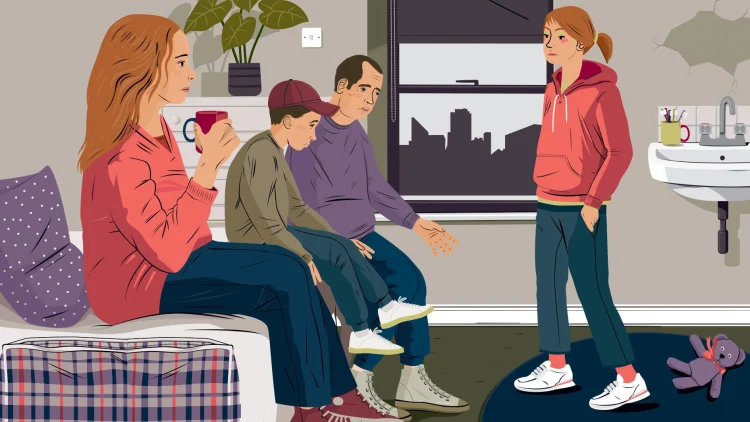

Illustration by Tracy Worrall
8 min read
A data investigation by The House has revealed that those with the greatest needs are being forced to wait years for social housing, leaving families in a miserable limbo. Chaminda Jayanetti reports
People with the greatest housing needs are waiting months or even years in the highest priority bands of councils’ social housing registers in many parts of England, according to data compiled by The House.
In some local authorities, people in the highest priority band are placed in social housing after waits of more than two years. Among those in this band who have not yet been rehoused the waits are even longer.
Recent years have seen many reports of overall waiting times for social housing lasting many years in parts of London, but these tend to cover everyone on the waiting list, including people in low priority bands.
Figures obtained by The House under the Freedom of Information (FOI) Act focus specifically on people in each council’s highest priority band – which are meant to cater to the most severe housing needs – and separately those in each council’s second-highest priority band.
The figures show that applicants who were placed in social housing by 147 councils in 2024-25 had on average spent 319 days – around 10 months – in their council’s highest housing priority band. In 40 council areas the average wait in the highest priority band was more than a year.
Among applicants who had not been rehoused at the point that councils responded to the FOI request, the average wait in the highest priority band was 551 days and counting – around a year and a half – across the 152 councils that supplied this data.
The average wait in councils’ second-highest priority bands was 501 days for applicants who were placed in social housing in 2024-25, and 669 days for applicants who were not rehoused.
Overall, there are around 300 councils in England responsible for maintaining housing registers, the waiting lists for social housing.
Deborah Garvie, policy manager at housing charity Shelter, says the long wait times are due to the “absolutely chronic shortage” of social rent homes.
“In some areas a lot of the households on the waiting list will be families that need family homes. So, if most of what comes up [as available] is one-bedroom flats, that’s not going to be suitable for them, particularly where people might need a larger family home.”
“People on the housing register often have extremely limited options for rehousing and can spend years in unsuitable or overcrowded accommodation with very little clarity on when, or if, their situation will improve,” adds Niki Lampaski, a housing activist in Hackney. “That creates a constant sense of living in limbo.”
“Being stuck on social housing waiting lists means putting our lives on hold for months and years,” says Laura Vicinanza of disabled people’s organisation Inclusion London. “The consequence is living in homes that do not meet our needs. Homes where we struggle to get in and out of the front door. Homes where we cannot access basic facilities like kitchens and bathrooms.”
“For families with disabled children, the situation can be particularly distressing,” Lampaski adds. “When medical or disability needs are involved, families often have to repeatedly evidence and re-explain the extent of their child’s condition through assessments, reviews and appeals. This leads to long periods of back and forth with the council, adding further barriers and delays with little prospect of resolution.”
Separate data published by the Ministry of Housing, Communities and Local Government (MHCLG) shows that the percentage of new mainstream social housing lettings that went to people who’d been on the waiting list for less than a year fell in 2024/25 to 50.7 per cent, its lowest level since the data was first published in 2018/19.
There’s the impact of conditions in temporary accommodation… often very cramped, with families living in one room, having to share beds
Garvie says long waits for social housing mean families who have been made homeless get stuck in often unsuitable temporary accommodation for extended periods – which brings its own knock-on costs.
“A lot of temporary accommodation doesn’t have access to Wi-Fi, there are no laundry facilities so you’re having to pay for laundry, there’s often no or inadequate cooking facilities so you can’t bulk buy food or batch cook, or in some cases you’re having to buy takeaways and ready meals which are obviously very expensive,” she says.
“And then there’s the impact of conditions in temporary accommodation as well – often very cramped, with families living in one room, having to share beds.”
Greenwich has among the longest waiting times of those councils that supplied figures. Excluding backdated cases, 33 applicants were rehoused into social housing in 2024/25 having spent on average 1,748 days – more than four and a half years – in the council’s highest priority band.
Meanwhile Greenwich’s 212 non-backdated applicants in the top band who are still yet to be rehoused have waited 2,703 days on average – nearly seven and a half years – in that highest priority tier.
The extreme length of wait times in Greenwich may be partly because the council’s highest priority tier – Band A in its housing allocation policy – is geared towards people who the council want to rehouse, rather than who necessarily want to be rehoused themselves. This includes social housing tenants who are under-occupying homes with spare bedrooms, and those living in homes with disability-related adaptations they don’t need.
Some councils said in their FOI responses that their average wait times were pushed up by under-occupying social housing tenants who the council placed in the highest priority band in order to free up family homes, but who rarely bid on properties and are reluctant to move despite potentially being hit by the ‘bedroom tax’.
“Lots of people who are affected by it don’t want to lose their home, and so they may not be bidding on homes even if they’re at the top of the list,” says Garvie. “If they are settled and happy in their home and it’s their family home, then they’re going to try and do their best to hang on to their home, like anyone would.”
Instead, it is Greenwich’s second highest priority tier – Band B1 – that covers homeless people, severely overcrowded housing, insanitary living conditions, domestic abuse and hate crime victims, and households with housing-related medical needs. But they too face ominously long waits – excluding backdated cases, average waits in Band B1 were 761 days for applicants who were placed in social housing in 2024/25, and 1,152 days for those yet to be rehoused – more than two years and three years respectively.
A Greenwich Council spokesperson says: “Our multi-million-pound Greenwich Build programme will deliver 1,750 sustainable new homes, with over 588 homes now complete or underway. This programme is the largest for any local authority in the country and we are on course to rehouse around 2,000 households this year.”
In Hastings, applicants who were placed in social housing in 2024/25 had spent 1,042 days on average in Band A, while those still waiting for housing have spent 709 days in the top tier. Hastings’ Band A covers under-occupiers, but also people whose housing conditions present an immediate threat of serious injury or death, or who urgently need to move to significantly improve their medical condition or disability.
Glenn Haffenden, leader of Hastings Borough Council and lead councillor for housing, says: “We have seen record rises in house prices and rents and with Local Housing Allowance failing to rise alongside rents, residents on lower incomes have found it impossible to meet their own need for housing without seeking help from the council.”
The longest wait times are generally in London, the South East and Essex – but average waits of more than a year can also be found in Coventry, Newark and Sherwood, Bradford, East Suffolk, Cornwall, Chesterfield, Birmingham, Nottingham and Trafford, among others.
Some councils ‘backdate’ certain types of social housing applicant, such as children’s care leavers, to boost their chances of being housed. This can make their average wait times seem longer than they really are. The House’s FOI request specifically asked councils to exclude such backdated applications from their figures.
Last year the government announced £39bn in funding for social and affordable housing over 10 years, with an aim of delivering 300,000 homes, with at least 60 per cent at social rents. The announcement was welcomed by Shelter as a “good start”.
A spokesperson for MHCLG says: “We know waiting lists are often far too long and we’re taking action to give people the stability and security they deserve. We’re building 1.5 million homes and investing a record £39bn in social and affordable housing to help councils get spades in the ground.
“This is alongside our changes to right to buy, which will make sure councils can keep hold of desperately needed homes.”


Reform attracted controversy recently after it conducted a prize giveaway. This upset people for a couple of reasons: the first was that Nigel Farage’s motley crew are supposed to be a political party, not a daytime TV show. The second was that the two winners had a historic connection to Nigel Farage.
The prize in question should have seen Reform paying the electric bill for everyone in the winners’ street for a year. Now, various residents have come forward to claim Farage is stiffing them:
This is just cruel. First you entice people to sign up for something they need to get their personal data and then you only reward those who are already your devoted fans. https://t.co/tWKq40NsaK pic.twitter.com/MsYOYHdIZo
— Stella Tsantekidou (@Stsantek) April 19, 2026
Stiffed by Reform
Obviously the purpose of all this was to grab headlines and make it look like Reform are the anti-nasty party. Odd, then, that they’d decide to leave out some households. This was always going to generate negative press, and now here we are.
This is what widow Angie Ecclestone told reporters:
I thought to myself I’ll believe it when I see it but I didn’t realise I had been excluded and that my neighbours had all received a letter and instructions.
Nigel Farage said the whole street [would be included] but we haven’t heard anything. I am in shock. I am the first house on St Malo Road. It’s the whole street or not the street. I am mortified.
Additionally:
My husband died in August last year and one of my kids has his GCSEs in three weeks.
I have the biggest house in the street. It’s five bedrooms. I pay £400 per month on energy. All the other houses are semi-detached but this one is fully detached. I am really up against it.
We’re unsure why the party decided to leave out Ecclestone, but it seems like they couldn’t have picked a worse person to screw over from a marketing perspective.
Obviously the human element should come before marketing, but let’s be real; Reform aren’t doing this because they’re caring human beings; they’re doing it because they want to look good in the papers.
It doesn’t end with Ecclestone either:
Nigel Farage promised to cover a "whole street’s" energy bills. Now, at least three households say they were excluded and haven’t received a penny. Including the first house of the street.
— Mukhtar (@I_amMukhtar) April 19, 2026
“Absolutely not a Reform fan”
Fraser Hayes is another of the un-rewarded neighbours. In his own words:
I have no qualms about depriving Reform of the money and giving to a local kids’ charity or maybe even the Labour candidate.
[The stunt] is appalling. It’s obviously a data grab. They’re trying to get loads of people to write in and they ask, ‘Who did you vote for last time. Who will you vote for this time?’
I am absolutely not a Reform fan and I am appalled that anyone is.
Did Farage leave Hayes out because he can’t stand them?
And if so, would it not have been smarter to just give him the juice and avoid the bad press?
The third resident is Matt Johnson, who said:
We thought we would hear something from Reform by email or post but at the moment we haven’t heard anything.
I mean if Reform said at the time it would be the whole street, then we feel like we should be included in that.
Our energy bills keep going up and down but they are around £3,500 a year. Having them paid for would make a huge difference.
What we’re seeing here is what the UK will be like under a Reform government.
Farage’s party will sweep in on a wave of big promises, but nothing will happen, and they’ll ignore anyone asking ‘what gives?‘
Thinking ahead
Looking at St Malo Road on Google Maps, there seems to be about 18 properties. You have to wonder what would have happened if the winner lived on a street with some hundred or so detached houses. Would Reform really have paid for every one of them?
We imagine it didn’t consider that, because they don’t seem to have considered anything.
For more on Farage’s party’s chaotic local election campaign, check out the following:
- Reform activist said ‘Hitler was right’.
- Reform candidate wants to ‘tear down’ the NHS.
- Reform UK accused of ‘nil vetting’ as another racist candidate exposed.
- Reform welcome candidate who thanked Putin.
- Day One Reform activist accuses party of ‘sewer’ politics in explosive resignation letter.
- Farage heckled at Reform’s Jimmy Saville-aping London launch.
- Video emerges of Reform’s ‘Nazi salute’ candidate drink driving.
Featured image via The Canary
By Willem Moore

As my daughter and I stepped out of our respective stalls in the airport bathroom, I saw my son standing in the corner waiting for us, having come in after he had used the men’s room next door. He has a habit of eloping at airports, so I was relieved to see him.
“Love,” I told him. “Thank you for coming in and waiting for us.” The three of us moved to the sink to wash our hands. That’s when things got weird.
My son has high-functioning autism, what used to be called Asperger’s syndrome, now called autism spectrum disorder, level 1 support. When people look at him, they notice nothing different. When they hear him speak, they are often impressed at his verbal comprehension and articulation (indeed, his IQ is very high in this area). His challenges lay in perseverations (obsessions or ruminations), recognising social cues, and having spatial and environmental awareness.
He received his diagnosis at age 7, in March 2020, days before the COVID shutdowns. Suddenly every resource in our small town was unavailable. We started homeschooling and would continue it long after schools reopened. My son loved our home routine, probably because he got to see the family dog whenever he wanted. He’s always had a special connection to animals (music too).
He’s a seasoned and easy traveler, having taken his first flight at 2 months old, which I’m thankful for. Still, traveling is not without stress. He tends to wander away at airports. Over the years I’ve had several moments of pure fear when I didn’t immediately know where he was. One time, after landing and coming into the airport, he bolted for the bathroom without telling me. Another time he proceeded to try and leave the airport because he didn’t want to wait in the TSA line.
Over the years I’ve accepted that most of the time he lives in another world — his inner dimension. While it’s rich and creative and weird and wonderful, there have been moments where I’ve begged him to live in our world more often, not for my convenience but for his safety. Since, on this day, we were in Los Angeles International Airport, one of the busiest airports in the world, I was on high alert. Because of his relatively young age (11), I didn’t think it was strange that he was in the crowded women’s bathroom with us.
My son also has a fascination with sink and toilet holes. He studies the shape of them, talks about them, wants to see as many of them as he can, both in people’s homes and in public places. It’s always been his way. And, according to him, this particular sink hole in this bathroom at LAX had a unique shape — it was less round and more square than most sink holes.
After retrieving his phone from his pocket, he took a photo of it. That’s when an older woman – one I’d noticed had been watching us – snapped. She was washing her hands in the sink next to where my son was, and I saw her look over at him. She started yelling, “This boy took a picture in the women’s room!” She repeated this loudly for everyone to hear as she dried her hands, as she grabbed her luggage, as she followed us out the door.
I felt a combination of embarrassment and anger at the scene she was making, trying to call attention to my son’s odd but harmless behaviour. She was still repeating it as we all walked out the door: “He took a picture in the women’s room!” Her posture was menacing and meant to be intimidating.
We separated from her and moved to the side of the hallway to regroup. My son and daughter, not fully comprehending what was happening, stood close to me with their suitcases. Even though we were now a few yards away from her, I could still feel her eyes on us, particularly me. I could sense her judgment for allowing such behaviour from my child. I could tell she was waiting for me to berate my son for taking the photo.
What happened next was horrifying. I did exactly what she wanted me to.
Against my gut feeling, which told me my son was innocent, against my understanding of his diagnosis, against my hard-won advocacy of him at school and with medical providers, against my purported assertiveness with strangers and others who may not be conscious of why he behaves the way he does, I scolded him for his actions. I asked him, not in a friendly way, why he chose to take a photo of the sink, even though I knew exactly why. I told him it was inappropriate and that he knew better, even when I knew it wasn’t true, that he didn’t know. I made sure the woman was within earshot. As I went on, my son looked stunned, confused and hurt.
The worst part is that I love his innocence, his youthful quirkiness, his sweet naiveté that sometimes comes with autism. And here I was chipping away at that, all because a stranger assumed the worst of him. I was doing the opposite of what I’ve always done.
The woman’s gaze was gone. She had folded herself into the crowd and disappeared. My son, overwhelmed and teary with emotion, bolted toward our departing gate, which fortunately wasn’t far. I took a breath, took my daughter’s hand and followed my son to the gate. It was there, in our seats waiting for the boarding call, that I apologised. I cried. Never in all of motherhood had I felt so low. I told him I was aghast at my behaviour, that I should have stood up for him, that I knew what he had done was innocent. I asked for forgiveness. I told him to take his time. I am perpetually grateful that I got it.
An hour later in the air, I was still brooding, replaying the scene over and over in my head. I found myself looking for the woman, imagining, relishing in what I’d say to her in a raised voice: that she had no right to yell at us, to shame us, to treat my son as though he was a paedophile. That she had been bullying an autistic boy. See that boy over there? Do you know he has autism? You should be ashamed of yourself.
That last thought gave me pause. Would I really disclose his diagnosis? To what end? Is it her business? Would it have made a difference? Would I be hoping to better explain his behaviour or to make her feel bad? And as my children grow older (my daughter also has autism), I find myself regarding their privacy more, wanting to protect them. Because I constantly wonder if the world will be too much for their sensitive souls. Or perhaps they will be too much for the world.
The diagnosis of “autism” first appeared in 1980 in the Diagnostic and Statistical Manual, the bible for all things psychological, under the category of Pervasive Developmental Disorders. Before then, it was considered to be part of schizophrenia. In 1987, the DSM was revised (as it is every five to seven years), and the criteria for the diagnosis was broadened to include more mild symptoms of autism. That, coupled with improved early screening tools and an increased awareness, have led to a perception of a significant rise in the disorder, though it’s actually that we’ve gotten better at recognising it.
In the latest DSM, it is listed as autism spectrum disorder, typically followed by the level of support needed (1 through 3). My children are both level 1, which include accommodations such as extra time to transition between activities, managing perseverations and inflexibility in routine, and navigating pervasive and narrow interests (such as sink holes).
In the end, I arrived at the conclusion that no, I would choose not to disclose his diagnosis to this angry stranger. She didn’t deserve to know. She didn’t deserve an explanation. In a different setting, where emotions weren’t so charged, I might have a different answer.
With my son’s blessing, I wrote this essay to give voice to the fine line that parents of children with autism walk, the line between advocating for our kids and guarding their privacy, the line between explaining and keeping quiet, the line between supporting a need and excusing behaviour. It’s within these nuances where we live day by day, sometimes hour by hour. Sometimes I don’t get the answer right, but all answers come from a place of care and love.
For people who may not have or even know children like mine, I wrote this to encourage more empathy in the world. These days it is too easy to rush to conclusions about a child’s behaviour, judge another’s parenting and shame what is not acceptable to us. I encourage everyone to lean into curiosity and compassion as much as possible, know that we are doing the best job we can, and that our children are amazing people.
As my daughter and I stepped out of our respective stalls in the airport bathroom, I saw my son standing in the corner waiting for us, and I was so proud of him. Going forward, I refuse to feel anything else about him — and I’ll make sure he and everyone else know it.
Lorna Rose is a Pacific Northwest writer and speaker. Her writing has been recognised by Pacific Northwest Writers Association and the Oregon Poetry Association, and has appeared in About Place Journal, Jellyfish Review, Painted Bride Quarterly, Writers Resist, and elsewhere. Previously she has written about raising children with autism for Scary Mommy and Motherwell. Currently an MFA candidate at Augsburg University, Lorna is at work on a memoir about going from L.A. party girl to trail worker in rural Alaska. When not wrangling her two children, she fantasises about being interviewed on NPR’s “Fresh Air.” You can find more about her at www.lornarose.com.
This piece was previously published on HuffPost and is being shared again as part of HuffPost Personal’s “Best Of” series.
Do you have a compelling personal story you’d like to see published on HuffPost? Find out what we’re looking for here and send us a pitch at pitch@huffpost.com.

This April is a good month for stargazers. There’s the “planet parade” of Saturn, Mars, Mercury, and Neptune, ending on the 23rd.
And the Lyrid meteor shower, which started on 16 April and will end on the 25th, is set to show us its most dazzling display this week too.
What is the Lyrid meteor shower?
First recorded in 678 BE, the phenomenon includes debris which once followed in the wake of comet C/1861 G1 Thatcher.
They look from the Earth’s perspective like they’re shooting from the constellation Lyra, right beside the star Vega; hence the name.
It’s not exactly that they’re “shooting” towards from across space, though. We’re passing through the patch of space rubble in our journey around the sun, and we draw in some of the material as we do so.
That means the path of the Earth’s orbit determines the direction the meteors seem to come from.
When they enter our atmosphere, the objects move so fast that they compress the air and heat it, raising their surfaces to 1600°C.
That leaves them with a bright surface as they burn, which looks like a streak to us.
It’s rare for objects in a meteor shower to make it to the Earth’s ground, as most are too small and burn out too quickly. If they do reach us, though, they become “meteorites”.
When can I see the 2026 Lyrid meteor shower in the UK?
It will end on April 25, but the most dazzling displays are expected on Wednesday, 22 April, when the shower peaks.
To get the most out of the meteor shower, look at the dark for 20-30 minutes to help your eyes adjust to the light levels (don’t look at your phone during this period!).
The best shows may come after midnight.
Where can I watch the 2026 Lyrid meteor shower in the UK?
While April’s planet parade will be a lot harder to see in the northern hemisphere than it is in the south, the opposite is true of the Lyrid meteor shower.
If you have access to unobstructed, clear, dark skies, your odds of seeing the event are higher. Beaches, the tops of hills, and fields are all good spots.
How should I watch the 2026 Lyrid meteor shower?
It should be visible to the naked eye.
The longer you look, Space.com noted, the likelier you are to spot something out of this world.

Nick Robinson monstered a cabinet minister over the Peter Mandelson scandal in an extraordinary live radio clash.
The veteran Today programme presenter told Scottish secretary Douglas Alexander it was “frankly preposterous” to claim Keir Starmer knew nothing about the shamed former peer’s business and personal links before making his the UK’s ambassador to Washington.
Mandelson was sacked after just six months in the role after the full extent of his friendship with convicted paedophile Jeffrey Epstein was revealed.
It emerged last week that he was also failed security vetting, allegedly over his lobbying company’s links to China, but was still cleared to take up the job.
The prime minister is facing calls to resign over the scandal and will face MPs in the House of Commons on Monday afternoon to explain himself.
On the Today programme, Alexander insisted the PM had done nothing wrong and had in fact been let down by civil servants.
But Robinson told him: “What more did you need to know? We know that Peter Mandelson had business links with China, we know that he had business links with Russia, we know that he had personal links with Jeffrey Epstein.
“And not only do we know it, the prime minister knew it, because we know as a matter of record that Jonathan Powell, the national security adviser, said ‘this appointment process is weirdly rushed’.
“So why did the prime minister appoint someone without waiting for the vetting?”
Alexander insisted “information was withheld from the prime minister and from other ministers” during the vetting process.
Robinson told him: “To come on the radio and claim that there was any surprise that Peter Mandelson had any links to Jeffrey Epstein, links to China, links to Russia … it is frankly preposterous.”
But the minister said: “The deep vetting process is undertaken specifically to look at information that was not in the public domain.
“If this process really matters, then I think your listeners will reasonably think why wasn’t the outcome of that deep vetting shared with ministers making their decisions?”
Subscribe to Commons People, the podcast that makes politics easy. Every week, Kevin Schofield and Kate Nicholson unpack the week’s biggest stories to keep you informed. Join us for straightforward analysis of what’s going on at Westminster.


Bayern Munich have clinched the German football league title for the 35th time in their history, with four matches remaining in the season, following a 4-2 home victory over Stuttgart on Sunday 19 April at the Allianz Arena in Matchday 30, thus rounding off a perfect week both domestically and in Europe.
Bayern Munich: winners again
The Bavarian side, who are still in contention for the domestic treble of the league, cup and Champions League, had previously reached the semi-finals of the continental competition after knocking out Real Madrid, thus continuing their strong season on all fronts, whilst also edging closer to the domestic cup final, where they will face Bayer Leverkusen.
With this triumph, Bayern continues its dominance of German football, as this title marks their 13th in the last 14 Bundesliga seasons, with Bayer Leverkusen having broken this run only in the 2023–2024 season.
The team have taken their tally to 79 points at the top of the table, 15 points clear of second-placed Borussia Dortmund, who stumbled to a 2-1 defeat against Hoffenheim in the same round.
Bayern now face a series of crucial fixtures, taking on Bayer Leverkusen in the Cup semi-final next Wednesday, then Mainz in the league on Saturday, before travelling to France to face Paris Saint-Germain in the first leg of the Champions League semi-final on 28 April, with the return leg scheduled for 6 May.
Featured image via the Canary
By Alaa Shamali

No one said relationships were easy ― even the strongest couples will inevitably hit a few bumps in the road. But your partner shouldn’t be a constant source of stress, hurt feelings or resentment.
So how do you know if your relationship has hit the point of no return? Automatic dealbreakers like abusive behaviour aside, many issues can be worked through with time, commitment and help from a therapist.
But if you’ve tried and tried and things still don’t improve, or if your partner is simply unwilling to do the work, it could be time to move on.

stock-eye via Getty Images
We asked experts to share the signs that a relationship may no longer be worth fighting for. (Note that the advice below is meant to serve as general suggestions. The circumstances of each relationship are different; there’s no one-size-fits-all approach.)
1. You’re being abused — physically or emotionally.
“If your spouse pushes, shoves, grabs or hits you for any reason, it’s not worth trying to change them. If this is happening on any level, get out NOW. Are they gaslighting you or being emotionally abusive? If your partner tells you that you are imagining any type of abusive behavior or that you are just ‘too sensitive,’ get out. You deserve to be treated with respect. It’s not worth fighting about.” ― Tammy Nelson, a sex therapist in New Haven, Connecticut, and author of The New Monogamy: Redefining Your Relationship After Infidelity
2. You feel like you’re the only one fighting for the relationship.
“I actually don’t think it’s a good idea to be in a relationship if you feel like you are always fighting to remain in it. However, sometimes it does make sense to try very hard for a period of time to get through a rough patch and move on. If you’re always the one putting in effort and your partner shows minimal effort, that is a sign that it’s not worth fighting for. If you are embarrassed to tell people about the amount of effort you have to put into the relationship to keep it going, that is a sign that you may have exceeded an appropriate amount of effort.” ― Marie Land, a psychologist in Washington, D.C.
3. Your partner refuses to seek help for personal issues or problems within the relationship.
“It takes much caring and courage to be vulnerable enough to reach out for help. We all need it sometimes. If you’re consistently feeling miserable in the relationship and your partner is unwilling to accept help, whether it’s couples counseling or addressing an addiction that is damaging the relationship, it may be time to consider leaving.” ― John Amodeo, marriage and family therapist in San Francisco and author of Dancing with Fire: A Mindful Way to Loving Relationships
4. You can’t stand kissing your partner.
“Yes, this feeling can come and go. Sometimes you like to kiss, other times you don’t even want your partner’s face anywhere near yours. But if your mouth is telling you that you really cannot stand to kiss your partner anymore and that feeling doesn’t change over time, it might be over.” ― Nelson
5. Your close friends have serious doubts about the relationship.
“Who is the person that sees your relationship most clearly? The research shows that your friends actually have more insight into the state of the relationship than you do, particularly female best friends. If they’re starting to express concerns, it can reveal underlying issues that you may not be aware of yourself.” ― Gary Lewandowski, professor of psychology at Monmouth University in New Jersey and co-creator of ScienceOfRelationships.com
6. Your partner isn’t reliable.
“I’ve been married 30 years, and here is why I have fought for my marriage during challenging times: My husband is trustworthy and reliable. A reason to leave is when the trust is irrevocably broken — by lies about money spent, adultery or repeated emotional and physical abuse. You deserve someone you can unfailingly count on. To me, reliability is the sexiest quality you can hope for — a quality that is essential in an intimate partnership, as we live in a shaky and inconsistent world.” ― Iris Krasnow, author of Surrendering to Marriage and The Secret Lives of Wives
7. You or your partner has had multiple affairs.
“Are you using infidelity as a ‘can opener’? Be fair. End your relationship now. Don’t make your partner responsible for your ambivalence.” ― Nelson
8. You’ve stopped making progress in other areas of your life because of the relationship.
“If your relationship has taken up so much emotional energy and attention that it has prevented you from moving forward with other goals such as a career, family and friendships, that’s a sign that your relationship may not be worth fighting for. Some sacrifice is fine but the cost should be minimal and not impact your progress in other areas for an extended period of time.” ― Land
9. Your partner routinely dismisses your concerns.
“It’s not an encouraging sign if your partner is unwilling or unable to hear your feelings, your hurt and pain and take it to heart. If your feelings and needs (for respect, kindness, communication) are coldly and consistently dismissed, if stonewalling and defensiveness are creating an impenetrable barrier, it may leave you feeling lonely, angry, or depressed, and maybe hopeless about the relationship.” ― Amodeo
The original version of this story was published on HuffPost at an earlier date.
Help and support:
If you, or someone you know, is in immediate danger, call 999 and ask for the police. If you are not in immediate danger, you can contact:
- The Freephone 24 hour National Domestic Abuse Helpline, run by Refuge: 0808 2000 247
- In Scotland, contact Scotland’s 24 hour Domestic Abuse and Forced Marriage Helpline: 0800 027 1234
- In Northern Ireland, contact the 24 hour Domestic & Sexual Violence Helpline: 0808 802 1414
- In Wales, contact the 24 hour Life Fear Free Helpline on 0808 80 10 800.
- National LGBT+ Domestic Abuse Helpline: 0800 999 5428
- Men’s Advice Line: 0808 801 0327
- Respect helpline (for anyone worried about their own behaviour): 0808 802 4040

Olivia Colman’s character in Heartstopper will be played by a different actor in the show’s upcoming film.
The Oscar winner received widespread praise for her portrayal of Nick’s mum, Sarah Nelson, in the first two seasons of the Netflix teen drama.
However, in its third iteration, Olivia was unable to appear, with Hayley Atwell instead appearing as Nick’s aunt, who served a maternal role in his life for these episodes.
Over the weekend, it was confirmed that in the forthcoming movie Heartstopper Forever, the character of Sarah has been completely recast due to Olivia’s unavailability.
In her absence, the role will now be played by Line Of Duty and Motherland star Anna Maxwell Martin.
Heartstopper creator Alice Oseman told Netflix’s Tudum: “When beginning to work on the Heartstopper Forever screenplay, I knew how important it was that Sarah, Nick’s mum, appeared in the story.
“Since season one, we have seen how close Nick is with his mum; she’s one of the few people he can turn to in moments of crisis. While in season three, we were able to tweak the story to avoid any appearance of Sarah, it felt nonsensical for her to be absent from this final chapter, given some of the emotional struggles Nick faces.”
They continued: “Sadly, Olivia Colman was not able to join us for the film, so we made the very difficult decision to recast the role, rather than exclude the character. We are deeply grateful for Olivia’s beautiful performance as Sarah in seasons one and two of Heartstopper, through such iconic moments as Nick coming out as bisexual, and we know that her performance will live on in the hearts of every Heartstopper fan.
“We are overjoyed to welcome the incredible Anna Maxwell Martin into the role of Sarah for Heartstopper Forever. Anna perfectly embodies Sarah’s gentle, down-to-earth energy, and it was magical to witness her scenes with Kit Connor during the film shoot. I can’t wait for Heartstopper fans to experience her interpretation of Sarah Nelson.”

Heartstopper Forever will premiere on Netflix later this year, and serve as the final outing for Nick and Charlie, played by Kit Connor and Joe Locke.
As well as the usual returning cast members, including Yasmin Finney and Will Gao, it’s been confirmed that Bafta winner Derek Jacobi will also be playing a new character in the film.
Bitcoin heads into a $7.9 billion options expiry with heavy positioning at $75,000
LIVE: Farage and Yusuf Announce Review of Granted Asylum Claims

WrestleMania 42: Iyo Sky helps Rhea Ripley win WWE women’s title over Jade Cargill


-

 Crypto World7 days ago
The SEC Conditionalises DeFi Platforms to Be Avoided for Broker Registration
-

 NewsBeat6 days ago
Trump and Pope Leo: Behind their disagreement over Iran war
-

 Fashion3 days ago
Weekend Open Thread: Theodora Dress
-

 Crypto World7 days ago
SEC Signals Exemption for Crypto Interfaces From Broker Registration
-

 News Videos5 days ago
Secure crypto trading starts with an FIU-registered
-

 Sports3 days ago
NWFL Suspends Two Players Over Post-Match Clash in Ado-Ekiti
-

 Crypto World6 days ago
SEC Proposes Certain Crypto Interfaces Don’t Need to Register as Brokers
-

 Business19 hours ago
Powerball Result April 18, 2026: No Jackpot Winner in Powerball Draw: $75 Million Rolls Over
-

 Crypto World2 days ago
Russia Pushes Bill to Criminalize Unregistered Crypto Services
-

 Politics3 days ago
Palestine barred from entering Canada for FIFA Congress
-
 Business4 days ago
Creo Medical agree sale of its manufacturing operation
-

 Politics1 day ago
Zack Polanski demands ‘council homes not luxury flats for foreign investors’
-
 Entertainment6 days ago
Brand New Day’ Footage Reveals the Devastating Impact of ‘Now Way Home’
-

 Tech5 days ago
Microsoft adds Windows protections for malicious Remote Desktop files
-
 Entertainment6 days ago
Karol G’s ‘Ultra Raunchy’ Coachella Set Gave ‘Satanic Vibes’
-

 Sports7 days ago
Aaron Judge says Yankees need to ‘simplify’ approach amid offensive slump
-

 Entertainment7 days ago
How Babylon 5 Turned Brief Side Story Into Emotional Masterpiece
-

 Tech6 days ago
What was the first ransomware attack to demand payment in Bitcoin?
-

 Tech4 days ago
‘Avatar: Aang, The Last Airbender’ Leaked Online. Some Fans Say Paramount Deserves the Fallout
-

 Crypto World2 days ago
Russia Introduces Bill To Criminalize Unregistered Crypto Services
You must be logged in to post a comment Login