

Politics
Trinidad and Tobago’s stance on US imperialism could upend trade bloc



Is Caribbean unity at a turning point? Since the brazen and horrific US attack on Venezuela in January, the Caribbean’s regional trade bloc CARICOM has been in crisis. What has been left out by much of the media is the assistance that some Caribbean countries like Trinidad and Tobago gave the United States in its imperialist attack on the South American country.
Trinidad and Tobago support of the US
The Dominican Republic and Guyana all played a role in providing the US with bases and logistical support. However, more than any other country, Trinidad and Tobago provided temporary radar surveillance and the airbase that the US could use to launch its criminal attack that killed at least 80 Venezuelans.
Since then, Prime Minister Kamla Persad-Bissessar has defended the strikes and launched her own verbal attacks on CARICOM member states. She has even gone as far as to question CARICOM’s viability and failure to reflect the economic and geopolitical interests of Trinidad and Tobago.
These tensions have brought into sharp focus the growing challenges in working to bring about regional integration in the Caribbean.
Caribbean collaboration
The region has a long history of regional integration attempts going back almost 70 years with the most recent — the short-lived West Indies Federation — collapsing in 1962.
This latest division will likely test the resilience of CARICOM at a critical time when US imperialism is particularly volatile and a threat to the entire region. As small island states, Caribbean countries have managed to survive the post-independence period through regional cooperation and negotiating as a single bloc.
However, beneath this resilience hides an elite-driven, state-centric approach to development that reproduces economic dependency and creates the conditions for wealthier member states, like Trinidad and Tobago, to pursue unilateral agreements with larger powers.
T&T’s grievances are a decade in the making
To understand how we got here, we have to look at what is motivating the Trinidad and Tobago government to take the position it has against CARICOM.
For months, Persad-Bissessar has been questioning CARICOM’s effectiveness on maintaining regional security, challenging the idea of Trinidad and Tobago’s place within the bloc — especially as the country contributes up to 20% of CARICOM’s annual budget, which amounts to $20 million.
She has since demanded that CARICOM’s secretary general, Carla Barnett, step down once her five-year term ends later this year.
Persad-Bissessar has also repeatedly defended the US’ controversial actions in the lead up to its attack on Venezuela. Between September and December 2025, the US murdered 115 people in the Caribbean Sea on the unproven pretext of “drug smuggling”.
Since then, many fishermen across the region have been reluctant to go out to sea for fear of a US strike, which has had adverse effects on people’s livelihoods.
In September 2025, Roosevelt Skerrit, Prime Minister of Dominica, asserted that the Caribbean Sea should remain a “zone of peace” in response to the increased US military build up against Venezuela.
However, Persad-Bissessar also defended the US’ presence, stating:
CARICOM has chosen to support the Maduro narco-government through the fake zone of peace narrative.
Demographic shock
For Trinidad and Tobago, the position on the US strikes on Venezuela is different from other Caribbean countries. This is in part due to the proximity of the island nations, which is only 11-12km (7 miles) away from Venezuela, making the Caribbean country the closest to South America.
This is important because, for over a decade, migration from Venezuela to Trinidad has steadily increased, due in part to the economic mismanagement of the Maduro government, and the brutal and coercive US sanctions that were designed to cripple the Venezuelan economy. As a result, more than 30,000 Venezuelans have settled in Trinidad and Tobago, adding to the population of 1.5 million people in a short space of time.
This demographic shock has produced familiar anti-immigrant rhetoric around integration, crime, housing and competition for jobs that often emerge in migration discourse in the West. However, in Trinidad and Tobago, this migration wave has exacerbated existing issues, including public service provision for citizens and general unpreparedness for refugees outside of the Caribbean.
Persad-Bissessar’s frustrations stem from what she and other Trinidadian elites view as the disproportionate humanitarian focus that CARICOM has prioritised in relation to the Venezuelan migration.
For Trinidad and Tobago, the priority is to militarise its border as a measure against what it sees as the threat of drug trafficking. These priorities have found a perfect synergy with the US’ refocus on controlling the Caribbean on the dubious basis of security.
Whether Persad-Bissessar knows it or not, she is positioning her country as a key node of US imperialism in the Americas, which will continue to increase tension within CARICOM itself.
CARICOM and the global economy
It could be argued that the tensions between CARICOM and Trinidad and Tobago are structurally rooted in the roles that both polities play in the global economy.
For CARICOM, its state-centric and elite-driven structure means that a lot of its decision making is dominated by heads of government, senior technocrats and private sector lobbies.
It has been said that CARICOM is designed to manage capitalism in the Caribbean. Many critics, such as Jamaican economist Norman Girvan, have argued that such a structure ensures that narrow interests centred around attracting foreign investment, harmonising tax incentives for multinationals and maintaining a tourism-focused development model, deepens the Caribbean’s position at the periphery of the global economy.
To-date, regional integration through CARICOM has failed to include workers or unions in regional decision making, develop plans for regional public ownership in energy, transport and food systems — all of which could strengthen state and regional systems.
Defenders of CARICOM would argue that, as small island states, CARICOM was created to strengthen and amplify the diplomatic power of individual Caribbean countries through collective action. This allows them to better resist absorption into US foreign policy and economic interests.
CARICOM’s foreign policy machinery, the Council for Foreign and Community Relations (COFCOR), was designed specifically for this. It creates coordinated foreign policy positions for CARICOM member states to act as a collective in drafting and creating treaties and trade agreements outside of the US sphere. The aim being to reduce dependence on the United States.
The consequences of foreign dependence
For Garvin and earlier thinkers (prior to CARICOM’s inception) like Walter Rodney, the issue is that Caribbean elites reproduce and maintain Caribbean dependency on foreign investment, remittances, extractive industries and trade with global powers like the US and European Union (EU). This is because they benefit directly from those structures in terms of having access to those markets. They are more inclined to compromise on policy in order to enjoy the benefits that they as a class could access from the developed world.
As a result, we have a region with a weak industrial policy, limited economic diversification and low wages.
It is a region also beholden to EU development funds, IMF frameworks and WTO rules. Even if CARICOM resists US imperialism in a limited context, the elite structure ensures that this resistance will never go far enough in creating full economic and political self-determination.
The bloc’s limitations in assisting Cuba as it faces economic strangulation by the US is an example of this. This weakness cascades into its relationship with wealthier members like Trinidad and Tobago, which clashes with CARICOM regionalism when it starts to obstruct its own attempt to align with global capital.
There is a perception among wealthier Caribbean countries that CARICOM holds them back from acting with full autonomy. Trinidad and Tobago policymakers increasingly question why they must go through their lower-income CARICOM counterparts to craft foreign policy given the country is significantly more industrialised than its neighbours.
As such, Trinidad’s own elites seek to assert their country’s ability to form independent agreements with the US and dictate their own migration policy. Trinidad and Tobago’s elites do not feel as dependent on regional integration as less developed Caribbean countries. Meanwhile, CARICOM does not have any real mechanism to enforce regional integration and cooperation of member states.
Is CARICOM at risk of collapse?
The unilateral foreign policy positions taken by Trinidad and Tobago are concerning for the long term viability of the bloc.
Last year, as US military build-up was increasing, Trinidad’s foreign affairs minister stated there was “no need to consult CARICOM”. Her comments indicate that at least in this moment, Trinidad and Tobago’s government is prepared to move the country away from multilateralism.
The effect is that distrust and suspicion have increased among other CARICOM member states towards Trinidad which could have an effect on regional cooperation in other areas.
However, Trinidad and Tobago is one of the biggest beneficiaries of CARICOM, accounting for a significant share of Trinidadan manufactured goods, energy products and financial services.
If Trinidad and Tobago was to leave CARICOM, it could incur trade losses of up to $3 billion. As such, a sudden Brexit-style departure would be unlikely, even with the current tensions.
The effects of CARICOM hostilities
Nonetheless, a departure is not impossible, but Trinidad and Tobago’s issues, if left unresolved, could weaken CARICOM in the long term.
Trinidad and Tobago doe not have to formally leave CARICOM to undermine the bloc and its neighbours. It could simply reduce or cease engagement altogether over time if the government determines the bloc is unable to serve its interests.
As CARICOM lacks the regional mechanisms to enforce unity, there is space for Trinidad and Tobago to undertake this. However, Trinidad and Tobago’s lack of engagement would weaken CARICOM.
This is the threat that Trinidad and Tobago’s position poses, and it has already started.
The Prime Minister of Barbados, Mia Mottley, urged governments across CARICOM to negotiate as a single bloc since historically, the US has taken Caribbean states and interests more seriously when they negotiate together. The actions of Trinidad and Tobago sets a greater precedent for the US to expect bilateral negotiations going forward for other Caribbean countries.
Regional shifts
These changes are not without their consequences. Venezuela, in response to Trinidad and Tobago’s US assistance, has cancelled a number of key oil and gas deals. Relations with the two countries have remained cold, even with Venezuela’s new President, Delcy Rodriguez.
Rodriguez, on her first foreign visit in April, skipped past Trinidad and Tobago and went to Grenada and then to Barbados to discuss partnerships on a range of issues, such as food and energy security. Unlike Trinidad, both Caribbean countries resisted US pressure to install a radar system and to allow their territories to serve as launch points for an attack on Venezuela.
This signals another trend going forward: if CARICOM continues to pull away from each other, many other countries will see the opportunity to form partnerships with individual states rather than the collective bloc. In the short to medium term, this could seem like an opportunity. But over time, as small island states, this builds dependency and locks the region into internal competition with each other.
For regional integration to work, the Caribbean must rethink how CARICOM functions. It faces too many internal contradictions that will undermine it. This is the challenge facing the Caribbean: how can it create and maintain regional integration that accommodates all the economies in the region?
An alternative to CARICOM?
Perhaps a completely different model is needed to resolve the tension between national and regional interests with a goal of liberating the Caribbean from the divergent and competing capitalist priorities that CARICOM operates under.
The Bolivarian Alliance for the Peoples of Our America (ALBA) demonstrated the possibility in 2004. Both Cuba and Venezuela founded ALBA to challenge neoliberal blocs like CARICOM, and the US-led Free Trade Area of the Americas. They did this by implementing a different economic model of regional integration that does not foment competition amongst its members.
ALBA prioritised solidarity through shared development plans, joint public enterprises, mutual aid during crises and energy integration through barter arrangements as opposed to market determinants. It was deliberately post-capitalist by design and sought to empower Caribbean countries to delink from US-led capitalism.
Countries like Grenada, St. Vincent and the Grenadines, Dominica and Antigua and Barbuda joined ALBA at the time, benefiting from Cuban doctors and engineer exchange, as well as public ownership in the development of regional institutions like the development bank.
But ALBA would go into decline in 2014, due to Venezuela’s economic crisis and the devastating US sanctions imposed.
However, it represents the most recent attempt at creating a regional integration alternative in the Caribbean that resolves the internal contradictions of regional integration in its current form. It shows that such alternative models of regional integration are possible.
What does the Caribbean need now?
If models that prioritise public ownership over elite control are implemented, then the tensions between regional integration and national self determination that define the conflict between Trinidad and Tobago and CARICOM can be mitigated. And in time, completely dissolved.
Solving the conflict is essential for the Caribbean not only to meet the challenges presented by US imperialism but on other issues, such as the climate crisis and growing food and energy security.
Featured image via Roberto Schmidt/ Getty Images

So, outside Downing St this week, Two-Tier Keir turned into Two-Tear Keir. He followed Weepy Reeves into the crying game with a very confident and effective performance. The manful containment of emotion could easily have been genuine and as a prime ministerial achievement it probably tops all his others. Let it lead his political obituary:…
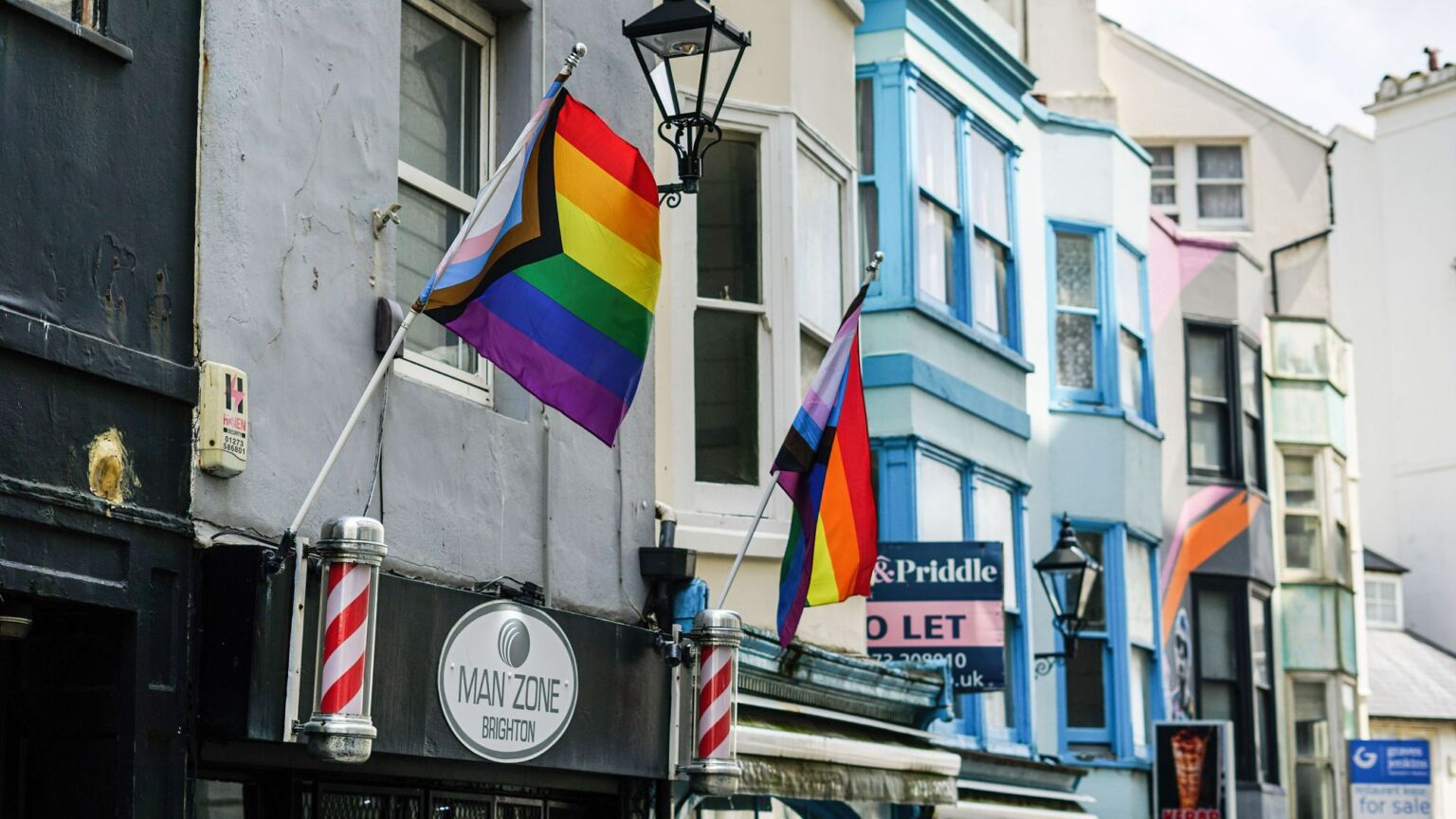
The publication of an NHS investigation into a GP clinic in Brighton deserves to be a watershed moment in the never-ending scandal of so-called gender medicine.
The findings, published last month, concern the WellBN practice – and they are excoriating. According to the investigation, 78 young people and children – some as young as 12 – at the clinic’s ‘Trans Health Hub’ were given puberty blockers and cross-sex hormones from January 2023 to December last year. In 22 cases, gender treatment was given to patients without even a face-to-face consultation. Disturbingly, the report found that 53 of the 78 patients might have had neurodevelopmental issues. The NHS guidance formulated in the wake of the Cass Review says that puberty blockers should never be prescribed, outside of a clinical trial. As of March 2026, NHS England no longer prescribes cross-sex hormones to under-18s, and has never recommended prescribing them to anyone under-16.
Yet perhaps the most striking aspect of this scandal is not what happened inside a Brighton GP practice. It is how many people knew enough to raise concerns long before the NHS finally acted. According to the report, NHS Sussex was aware something was amiss at WellBN as early as September 2024.
In fact, authorities should have acted even sooner. Last year, Hannah Barnes wrote in the New Statesman that the General Medical Council and NHS England had concerns over WellBN going back to 2019. Barnes wrote that, if the investigation ultimately concluded there had been malpractice, ‘none of the organisations responsible for protecting these young people and ensuring they receive safe care will be able to say it could not have been prevented’. Now, the NHS has confirmed that those warnings deserved to be taken seriously all along.
One of the most revealing details concerns WellBN’s use of an ‘informed consent’ model. Under this approach, the patient – usually a minor – is treated as the expert on themselves. Legitimate mental-health assessments are sidelined. The role of the clinician becomes less about investigation and diagnosis, and more about facilitating the patient’s stated wishes.
It is this kind of lax thinking that has characterised so much of the trans debate in Britain. Traditionally, adults had responsibilities precisely because children were not expected to navigate every complex question alone. This was particularly the case when it came to medically ‘transitioning’, which involves medication and sometimes surgery that will carry lifelong consequences for those who choose to undergo it.
Parents, teachers and doctors were expected to exercise judgment, ask questions and sometimes challenge assumptions. In the gender-identity field, however, questioning increasingly came to be regarded as harmful. Affirmation was seen as kindness, while scepticism was seen as suspicion.
The result was not merely a lack of scrutiny. It was a culture in which scrutiny itself became suspect. Brighton offers perhaps the clearest example of this.
Long before the NHS investigation into WellBN, parents had raised concerns about local gender-identity practices in the area. Some alleged that schools were facilitating the social transitioning of children – that is, letting them adopt the pronouns, dress code and a name fitting the opposite sex – without any parental involvement. Others questioned the influence of activist organisations working in schools. Some warned about pathways that appeared to steer vulnerable children towards medicalisation.
Whatever anyone thought about those concerns, they were plainly safeguarding questions that deserved to be examined. Instead, critics often found themselves represented as the problem. In 2023, Labour councillor Bella Sankey accused local parents of spreading ‘baseless smears’ when they were concerned about the fact that their daughter’s school had allowed her to use chestbinders without their permission.
This pattern has become familiar across Britain. Institutions increasingly retreat behind process, guidance and procedure. Questions are acknowledged but never really answered. Concerns are noted but never seriously investigated. The appearance of engagement replaces the reality of scrutiny.
One parent quoted by Barnes captured the problem with WellBN perfectly: ‘The tragedy isn’t that nobody knew. The warnings were known, the prescribing was celebrated, and institutional curiosity went missing precisely when it was needed most.’
That observation should trouble anyone concerned with safeguarding. Because the real lesson of WellBN is not that there was too little compassion. If anything, everyone involved believed they were acting compassionately.
Many questions remain. The NHS report tells us what happened at one GP practice. It does not tell us how so many children arrived there. It does not explain the role played by schools, local authorities or activist groups. It does not explain why so many adults acted like rabbits in the headlights, frozen in fear, seemingly unable to ask obvious questions.
The WellBN scandal should prompt a reckoning not only with one clinic, but also with an entire institutional culture. A culture in which scepticism was treated as hostility, parental concerns were too easily dismissed, and curiosity itself became something to tiptoe around.
The children at the centre of this story deserved better than. Some of them – now adults with profound medical problems – are likely to ask why on Earth their schools sent them along a classroom-to-clinic pathway.
They deserved adults willing to ask difficult questions before the harm was done. They deserved a system that prioritised the interests of children and young people, instead of the interests of trans activists. They deserved so much better.
Downing Street says Keir Starmer will stay on as the MP for Holborn and St Pancras after he leaves Number 10 in a few weeks. He won’t be triggering a by-election – unless he U-turns, obviously…
Politics
Politics Home Article | Labour members are not as unrepresentative of voters as widely assumed

(UrbanImages / Alamy)
6 min read
Descriptions of ‘unrepresentative anoraks’ are wide of the mark, write Patrick Seyd and Paul Whiteley, who find that Labour Party members are only a little to the left of the average voter
It now seems overwhelmingly likely that Andy Burnham will be crowned as the next Labour leader, thus becoming prime minister, without a full contest ending in a vote of party members.
Plans are being drawn up that would see the decision instead lie principally with Labour MPs. Some might argue that this is acceptable, or even good, because members are not representative of the public anyway. Our findings suggest that assumption is not quite right, however.
Over the past 50 years, the powers of party members in the UK have increased significantly. All seven British parties now competing for electoral support have leadership election systems in which party members participate, with the sole exception of Reform UK. This trend in membership empowerment has resulted in both significant benefits and costs for the parties concerned. The benefits have been primarily financial, involving donations and subscription income in a climate of strict regulation of campaign finance, and also electoral, involving campaigning foot soldiers and online keyboard warriors. But the cost of this membership empowerment trend has been, on occasions, the election of party leaders who are unrepresentative of the party’s voters.
In 2015 the power to elect the Labour Party leadership was given to party members, registered supporters and affiliated members. These are the prevailing rules today, although the registered supporters’ section has been abolished and in 2021 the preliminary MP nomination threshold was raised from 10 per cent to 20 per cent of the parliamentary party. In the current House of Commons, candidates require the support of 81 Labour MPs.
To progress, candidates reaching the MP nomination threshold are then required to obtain support from at least five per cent of Constituency Labour Parties or three affiliated organisations (representing a total of five per cent of the affiliated membership), before the process usually moves on to a one-member-one-vote ballot. Party members are required to have a continuous membership of at least six months before they can participate in such a leadership ballot.
Thus, Labour Party members, in their choice of party leaders, typically play a key role in influencing the performance of the party in Parliament and in elections. This raises the question of whether this system is more likely to produce successful or failed leaders. The answer depends, in part, on how representative members are of the party’s wider supporters in the electorate. It also depends on the reliability of members’ judgements about who would make a successful leader.
A key to understanding this relationship between Labour voters and party members is to examine their respective views with respect to broad ideological beliefs. If the two differ in broad beliefs, this is more of a problem than if there are differences on specific issues that have always existed in political parties. Accordingly, we investigated this in relation to the two major ideological dimensions in British politics: the left-right division, which is primary; and the liberal-authoritarian division, which is secondary in importance.
We can identify the extent to which the attitudes of party members are representative of the electorate using data from the British Election Study internet panel wave 27, which contained questions about party membership and measures of ideology. This survey of the British electorate was conducted in 2024, shortly before the general election, with a sample size of 30,445. Some 471 respondents indicated that they were Labour Party members, making it possible to compare the opinions of the members with those of the voters.
The survey contained a battery of questions designed to measure the left-right ideological dimension in British politics. These are Likert scaled items in which respondents indicate if they agree or disagree with the various statements using a five-point scale. The statements are as follows:
- Government should redistribute income from the better off to those who are less well-off
- Big business takes advantage of ordinary people
- Ordinary working people do not get their fair share of the nation’s wealth
- There is one law for the rich and one for the poor
- Management will always try to get the better of employees if it gets the chance
By combining voters’ responses to these five statements, we can devise an overall Left-Right scale. The mean Left-Right ideology score for all voters is 10.5, which shows that the average voter in Britain is very much on the centre-left of the scale, whilst the mean score for Labour party members is 8.5. The distance between the two shows how ideologically close the members are to the average voter, although unsurprisingly Labour members are clearly more left-wing than voters.
Turning to the second ideological scale in British politics, the Liberal-Authoritarian scale, the survey included a battery of five items which can be used to identify this dimension. Agreement with the statements is consistent with an authoritarian set of values favouring tradition, obedience to authority, strict morality reinforced by censorship, and a punitive approach to dealing with crime. In contrast, disagreement with statements implies that the respondents are more liberal in their attitudes. The statements are as follows:
- Young people today don’t respect traditional British values
- For some crimes, the death penalty is most appropriate sentence
- Schools should teach children to obey authority
- Censoring is necessary to uphold moral standards
- Lawbreakers should be given stiffer sentences
Among respondents there is a clear skew towards the authoritarian end of the scale with a mean score of 16.7 for all voters. Labour members score 13 on the scale. They are clearly significantly more liberal in their values on this scale than voters in general.
But overall we conclude that Labour Party members are not that unrepresentative of their voters. A recent assertion by The Economist that the party membership is “an unrepresentative body of left-wing anoraks” is wide of the mark.
That Labour members could, within weeks or months, elect a new leader and prime minister should concentrate their minds on the qualities required for this role. So, what ought they be looking for?
Archie Brown, the distinguished political scientist and historian, has suggested the following desirable qualities: integrity, intelligence, articulateness, collegiality, shrewd judgement, a questioning mind, willingness to seek disparate views, ability to absorb information, flexibility, good memory, courage, vision, empathy and boundless energy. To this list of desirable virtues we would add another – excellent communication skills.
It is, to put it mildly, unlikely that such a paragon is waiting in the wings. And however good the system for finding a new leader, it cannot identify someone who does not exist.
There is a good argument that nomination and scrutiny procedures should be as extensive as possible, given it is not just Labour’s leader that will emerge victorious but our prime minister. Yet on this occasion, the responsibility may well lie almost solely with Labour MPs.
Patrick Seyd and Paul Whiteley are professors of politics

The independent ‘Rape Gang Inquiry’, set up by Restore Britain leader Rupert Lowe, published its report last week. So did it add anything fresh to our collective understanding of grooming-gang activity or shed new light on the factors driving this decades-long, nationwide scourge?
Credit should certainly be given to the inquiry for thrusting grooming-gang activity, formally known as group-localised child sexual exploitation (GLCSE), back into the spotlight. And the survivors who contributed their testimonies to the inquiry – describing the torture, abuse and exploitation they endured – are deserving of the utmost admiration.
Furthermore, Restore’s inquiry has at least injected some urgency into proceedings. The UK government’s own national statutory inquiry into grooming-gang activity – reluctantly being held by the Labour government after it was recommended by Baroness Louise Casey in her national audit – is moving at a glacial pace. Restore has reminded us that Britain needs to face up to these horrific, unspeakable crimes against some of the most vulnerable and exposed members of our society, and explore the institutional mismanagement and neglect that allowed it to happen.
However, the report has not gone down as well as its authors may have hoped – even among those who have a proven track record of highlighting the horrors of grooming-gang criminality. Much of this criticism stems from the nature of the inquiry. It already had no statutory powers to compel witnesses to attend and provide evidence under oath. And it compounded these limitations by proceeding with no clearly defined objectives or ‘terms of reference’.
The report itself provides little in the way of fresh insight. It fails to dig into the scale of this nationwide epidemic or explore the societal, cultural and economic drivers of grooming-gang activity. Instead, the report is overly reliant on the victims’ admittedly harrowing testimonies. These then form the basis for what often amounts to pseudo-intellectual analysis. Much of the report reads more like punditry than a genuine examination of how these vile paedophilic crimes have been allowed to take place over decades.
The report is simply not a credible piece of research. Some of it is closer to anti-Muslim slop. There is an entire chapter dedicated to the ‘influence of Islam’ in the context of grooming-gang activity. It is true, as academics Kish Bhatti-Sinclair and Charles Sutcliffe argue in their 2020 paper on GLCSE (which was not cited at all in the rape-gang inquiry report), that Muslims dominate grooming-gang prosecutions. But they clearly show that it is specifically Pakistani Muslims originating from the Mirpur district of Azad Kashmir who comprise the vast majority of perpetrators. As they put it in their analysis of GLCSE prosecutions in local areas, ‘the proportion of the local population of Pakistani origin is more powerful in explaining the level of GLCSE than the Muslim proportion’. By the same token, the proportion of Bangladeshi-origin people (overwhelmingly Sunni Muslim) in an area had no effect on the level of GLCSE, in their analysis.
While it may be tempting for some on the radical right to exaggerate the role of Islam in the context of grooming-gang activity, it doesn’t do them any favours. The tight-knit, biraderi-style multi-generational kinship networks (reinforced by cousin marriage) and the patriarchal clan structures dominant within certain British-Pakistani communities seem to have played a far greater role than religion. These kinship and clan structures provide the bonds of secrecy and mutual protection that allow such large grooming gangs to operate undetected.
It is also somewhat baffling that Bradford is barely mentioned in the report. It should have been a case study in its own right, especially since previous local investigations into grooming-gang activity in the city have been threadbare at best. What needs to be thoroughly investigated is not only how these child-abuse networks operate within communities, but also how they were allowed to do so by public institutions – including local councils, police forces, schools, social services and safeguarding partnerships.
Tellingly, grooming-gang convictions involving non-Muslim criminal enterprises receive no mention whatsoever. Hence the exclusion of the Romanian grooming gang jailed last October for raping and sexually abusing 10 women in flats across Dundee in Scotland.
The Rape Gang Inquiry was a golden opportunity for fresh and hard-hitting insights on grooming-gang activity. It had the potential to be a serious and illuminating piece of work. Unfortunately, as someone who wanted this to be the case, the report has proven a profound disappointment.
Rakib Ehsan is the author of Beyond Grievance: What the Left Gets Wrong about Ethnic Minorities, which is available to order on Amazon.
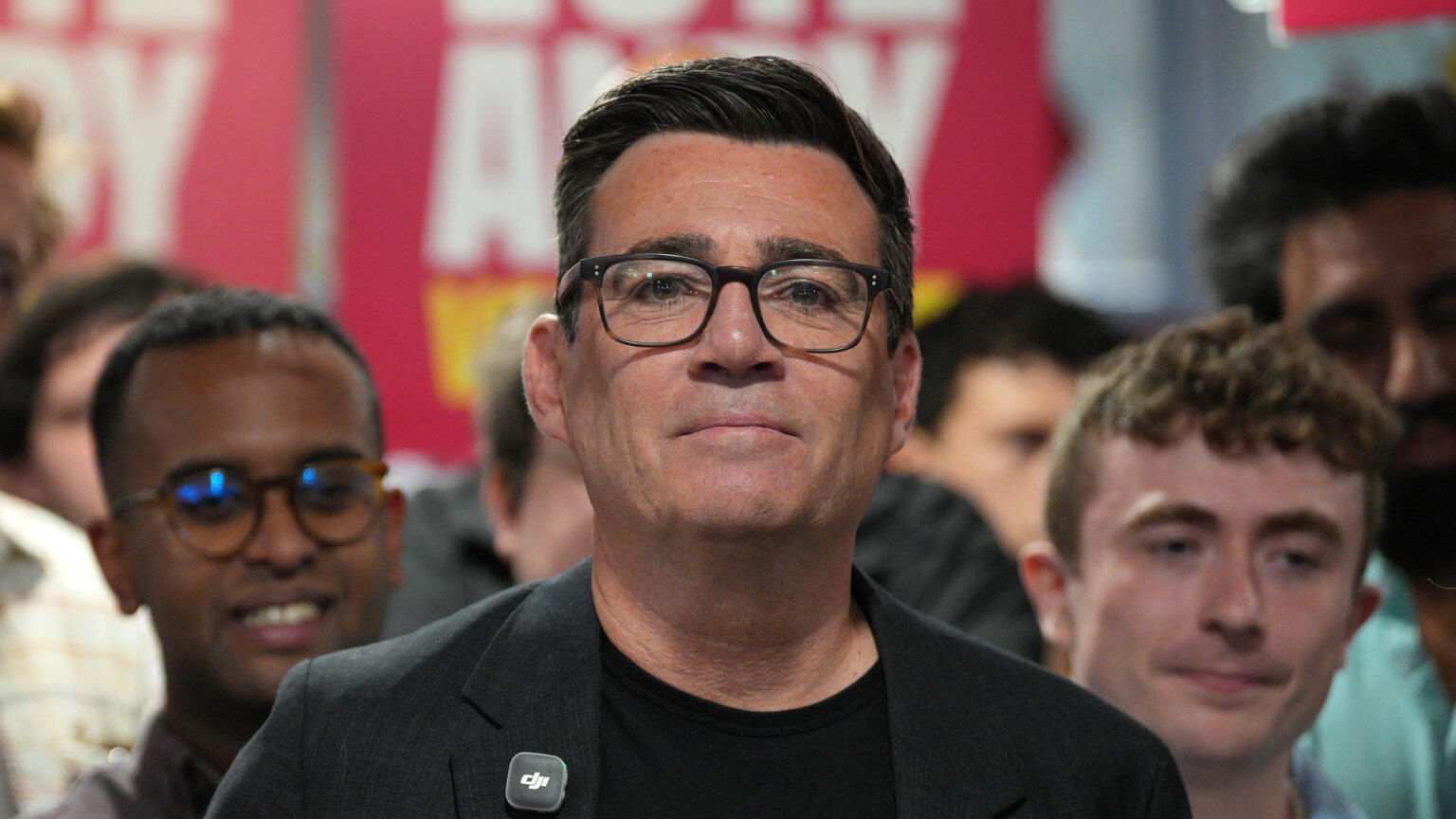
Which Andy Burnham walks into Westminster? The Blairite centrist? The European Remainer? The man cheered on by uber-liberal luvvies like Hugh Grant and Carol Vorderman? The Guardian’s coverage of the Makerfield by-election, and of its new great white liberal hope, has been saccharine sweet. It is probably just as well the people of Makerfield do not read it – I am not sure what they would make of the praise.
Will Burnham do what so many Labour MPs have done before: use working-class votes to get to Westminster and never look back? Or will he be true to his acceptance speech in the early hours of 20 June, when he promised Makerfield would not be a ‘stepping stone’ but a ‘touchstone’? His ‘Makerfield test’, he said, would mean fairness for the places Westminster has neglected.
During the by-election, Burnham carefully courted Makerfield – a large, predominantly white, working-class area on the edge of Greater Manchester. Its people work in supermarkets, care homes and warehouses. This is the Red Wall: old Labour country, hollowed out by the closure of coal mines, engineering works and textile factories. Makerfield represents the English working class left out of the national conversation about who and what this country is for.
I know places like Makerfield because I know Ashfield in Nottinghamshire, where I was born and raised. It has the same story: deindustrialised, struggling to get by, and overwhelmingly Leave-voting in 2016. Ashfield voted Labour because it was working class, until people realised Labour was no longer for them. Like so many Red Wall constituencies, they learned that the party used their votes to send its favourites to Westminster, only to ignore them as soon as they took their seats in parliament.
Ashfield stopped voting Labour in 2019, backing local man Lee Anderson, who moved from Labour to the Tories and then to Reform UK in 2024. It now has a Reform MP and Reform councillors, alongside some independents. The message is clear: Ashfield has left Labour behind. Just over a month ago, when Reform replaced every Labour member on the Wigan council, Makerfield looked to be heading the same way.
So what does the ‘Makerfield test’ actually mean inside a Labour Party now dominated by liberal, middle-class, wealthy voters, who would not give the people of Makerfield the steam off their piss? Can it survive when the interests of the deindustrialised Red Wall working class are so often the opposite of Labour’s new electoral base?
The British Electoral study says Labour’s voter core has shifted towards higher-income, middle-class and highly educated voters. Its study, analysed by The Economist, showed a profound political realignment: the old pattern of the working-class voting Labour and the middle-class voting Conservative has been turned on its head. Labour’s support has collapsed among voters whose household income is under £30,000.
This is not just about income or education. It is about priorities. If Burnham becomes prime minister – and it is all but certain he will – whose priorities will the Makerfield test serve?
On the cost of living, Burnham has room to manoeuvre. Most people agree housing is too expensive and food inflation needs tackling. But energy is different. Apply the Makerfield test to Ed Miliband’s Net Zero zealotry and the commonsense outlook of the deindustrialised working class would tell him that the promise of well-paid ‘green jobs’ is a fantasy. As it turns out, there are no ‘green jobs’ for the people who kept Britain’s lights on for generations – only crippling energy prices and creeping poverty.
Then there is the small-boats crisis. In Red Wall communities, illegal immigration represents a deep unfairness: more than 40,000 undocumented men have arrived so far this year, a figure that will inevitably explode over the summer months, when illegal immigration is at its highest. They will live off the taxpayer, while working people struggle to get by – no amount of middle-class Labour voters shouting ‘racist’ changes that. To these communities, it isn’t only unfair – it represents the visible loss of control, and the blatant disregard of the one wish they have expressed in election after election.
Burnham claims to have a story about Britain – who we are and who we can be. But if that story asks the Red Wall working class to swallow the priorities of the urban, city-dwelling middle class, then he isn’t selling a story, just another stitch-up.
The Makerfield test will not be passed by slogans, selfies and least of all applause from the Guardian. It will be passed only if Andy Burnham is prepared to choose the people who sent him to Westminster over the people waiting there to claim him.
Lisa McKenzie is a working-class academic.


Artist’s impression of a Forest City
6 min read
Critics dismiss it as a fantasy but Shiv Malik’s plans for a huge new city outside Cambridge has attracted some credible backers. Ben Gartside explores whether Forest City will ever leave the drawing board
“If you want my secret trick,” Shiv Malik teases, “I ask for an impossible task.”
The former journalist, now would-be developer, is trying to build a new city for a million people, and has been working on his skills of persuasion.
Forest City, as Malik and his co-founder Joe Reeve have dubbed the project, is the most ambitious British infrastructure project in a generation. The plan is for the city to be east of Cambridge, and to consist of 400,000 new homes and 18,000 hectares of land developed.
Malik’s stated goal is to combat the housing crisis, which he holds responsible for Britain’s lost growth and pessimistic outlook. Though, as of today, Malik has neither land for the project nor planning permission, and minimal local support. It’s also his first attempt at a development of any kind and the project would require support from Whitehall to stand a chance of success.
The pair are undeterred by their many detractors and present themselves as warriors in the cause of intergenerational fairness. Reeve has said of the naysayers, “The cavalry aren’t coming. We are the cavalry.”
“The journey started for me when I wrote Jilted Generation,” says Malik. “That was in September 2010, and just before the student riots. In that book, what we said [was] if we didn’t sort housing and infrastructure, the country would be much worse-off.
“We were proven right on that – and there was a shrug about it being so. I don’t think people comprehend that in 150 years of economic history this hasn’t happened before. Britain’s lack of housing is an abomination and an existential threat and I got tired of talking about it and wanted to do something.”
The plans are ambitious but lack clarity. Alongside housing, the proposal includes a reservoir and small modular nuclear reactors. In marketing material, luxurious mansion blocks are pictured on empty streets, as are modern timber buildings in pedestrianised areas, intersected by tramways and cycle paths.
He excitedly discusses passenger drones as a possibility for transport, but is less clear on how the project comes about on the ground.
And yet Forest City has some high-profile backers on its advisory board. These include former health secretary Patricia Hewitt, who also happens to be Malik’s mother-in-law. Malik tells The House that the board does not receive any money directly for their work, but will get a “very tiny equity stake” in the project.
He recently managed to persuade Paul Johnson, the former Institute for Fiscal Studies director, to join the advisory board after he completed his impossible task of getting more people with direct experience of development involved. To cajole Jackie Sadek, an influential voice on urban development, he convinced one landowner to support the project. One down, thousands to go.
Despite ticking off some of his impossible tasks already, he has many more ahead of him. Given the project’s 32-year planned timeline, it could well be the 45-year-old’s last too.
The odds seem stacked against success – the project needs to raise £250m in capital from institutional investors in the next two years. Nick Timothy, the local Conservative MP, initially ignored the project, labelling it “ridiculous”, but has begun to organise politically against it.
“Nick Timothy writes about building new towns in the south, but when someone proposes it in his area he says ‘No’,” counters Malik. “Everyone knows a local MP is going to oppose a development in their area, so no one pays attention any more.”
But even former supporters have grown frustrated at the frequent changes to the plan.
“There are definitely not rigid plans – there can’t be,” Malik justifies. “For us, one of the most central things is the cost of a house. Excluding the land costs, where we already have an advantage, can we build a four-bed house for £350,000? The rest of the market is saying, ‘No way’, we think we can. Those things are quite fundamental.”
“Britain’s lack of housing is an abomination and an existential threat”
While the pure numbers sound like a great investment opportunity, it comes with a very heavy caveat. As part of the agreement to buy, a complex financial structure would mean buyers would not be able to profit from future sales.
Currently, the arrangement would render mortgages far more complex in the million-person city complex. Simon Dudley, the former interim chair of Homes England, and briefly Reform UK’s housing and infrastructure spokesperson until his sacking, labelled the project a “recipe for disaster” and raised questions about the land value structure’s impact on mortgages.
Malik acknowledges the existing problem, but believes it can be overcome. “Nationwide already has a mortgage for community land trust housing, it’s not quite the product we need but we’ll get there.”
In spite of his grand plans to revolutionise mortgages, cities and British development, he says his role currently is more akin to that of a door-to-door salesman, albeit selling the biggest urban development in the UK since the Second World War.

“Most of my job is going house by house in a village, they’ll make cake and we’ll talk for two hours and they say, ‘I get why you’re doing it, I just don’t want it here’ – most private developers don’t do that.”
While his attempts to persuade locals and get answers might be regarded as admirable, he leaves the door open to pressing ahead without agreement.
“It is a bit of a dead end… really, then, it’s about… where do we draw the line on democratic consent?
“If you own the land and everyone has a veto, then everyone vetoes it. People in villages know the extent of their remit, and it is a much larger project. It’s a difficult trade-off and it’s one that should be compensated, and you don’t want to get miserly on,” he says, adding another few columns on an ever-inflating mental spreadsheet of potential costs.
As the project develops, political support becomes more important.
He outlines a thesis of how the development is in tune with the sort of politics Andy Burnham has championed in Manchester.
“If the next prime minister is Andy Burnham, what he’s talking about is what Forest City should deliver – place-based politics, thinking about the fundamentals. How to do this differently in a globalised world in a place owned by distant shareholders.”
“We’re very close at this point to moving to phase two – and we must give investors enough confidence that this is a seriously considered project,” he outlines. “At that stage, we need to raise £250m within two years. We need to demonstrate we’re not just stuck in the planning world and that good enough is good to go.”
If successful, the project will likely take more than 30 years to complete, at which point Malik will be in his late 70s. He hopes to be retired by then and living in Forest City.
Politics
Politics Home | Darren Jones Says He Will Not Stand Against Andy Burnham For Labour Leadership

(Alamy)
3 min read
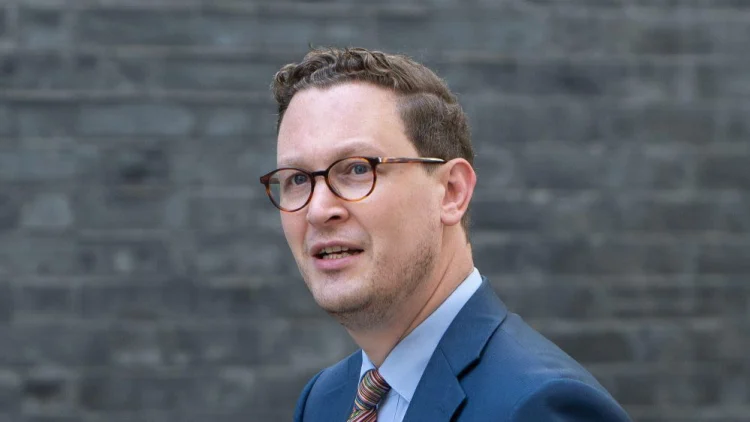
Chief Secretary to the Prime Minister Darren Jones has said he will not be standing in a leadership contest for Labour leader, bringing Andy Burnham one step closer to No 10.
Speaking to Sky News, Jones claimed that he had the backing of enough MPs to run for Labour leader, but had decided not to challenge Burnham after being “reassured” over the former Manchester mayor’s plans for economic policy.
Asked by Sky News if he was going to stand for Labour leader, Jones said: “I’m not”.
PoliticsHome was the first to reveal in May that Jones had sparked suspicion among colleagues that he was quietly sounding out support for a future leadership bid of his own.
When asked this week if he had the 81 nominations necessary to allow him to stand in a contest, Jones said: “Well, there were definitely upwards of 100 MPs who have expressed concern, either around contest, or economic policy, or who were just feeling pretty depressed off the back of Keir Starmer resigning.”
“Andy Burnham is going to be the next prime minister. And if there was a contest of Labour Party members, he would win. So the question for me is, well, what would the benefit be to the country and to the party of a leadership contest?”
Starmer announced on Monday that he would resign as PM this summer, triggering the process to replace him as leader, which could conclude as early as next month.
After winning a resounding victory in the Makerfield by-election last week, Burnham was sworn in as an MP on Monday and has confirmed his intention to stand as leader to replace Starmer.
PoliticsHome reported last week that Burnham would use his first day in Westminster to meet with Labour MPs with whom he does not have strong relationships, like those elected at the 2024 general election.
On Monday, former health secretary Wes Streeting, who had been expected to stand in any leadership contest, announced his support for Burnham. In a post on X, Streeting said: “We could spend the summer exaggerating small differences, or we can roll up our sleeves and help him to deliver the change our Party and our country needs. That is the choice that I am making and I hope that everyone else will back Andy, too.”
Jones, who is a key Starmer ally, told Sky News that he felt “disappointed” about the way the PM had been treated.
“I felt, in many ways, I felt a bit disappointed in the way that Keir has been treated,” he said.
“But look, if you were to ask Keir that question, he’s pretty pragmatic, too.
“He recognises this as the cut and thrust of politics. There’s been no wrongdoing here.”



Greece is emerging as a destination not just for tourists but for talent and investment
For years, Greece’s international reputation rested on an image of its recognisable coastlines and ancient ruins – a place people associated with escapism and holidays. Today, it is carving out a new image as a place of opportunity.
The numbers tell one part of the story. According to the Bank of Greece, the country welcomed 40.7 million inbound travellers in 2024 and generated €21.59 billion in travel receipts. Those figures confirm Greece’s position as one of Europe’s tourism powerhouses. Yet today, that is just one part of Greece’s story.
A decade ago, professionals largely followed jobs. Today, many jobs follow professionals. Technology has untethered millions of workers from a fixed location, creating a new class of internationally mobile talent with genuine freedom over where they base themselves. For these individuals, Greece has become an increasingly attractive proposition.
Its appeal is not difficult to understand. It combines a high quality of life with strong international connectivity, access to the Schengen Area, a favourable climate and a cost base that remains competitive compared with many Western European cities. For someone able to work from anywhere, those factors carry real weight.
The introduction of Greece’s Digital Nomad Visa in 2021 was an early recognition of this trend. More importantly, it signalled that policymakers understood a larger reality: attracting talent is becoming just as important as attracting tourists.
Recent decisions also demonstrate how seriously Greece takes its tourism sector. In response to concerns that the European Union’s new Entry/Exit System could create lengthy queues and disruption for travellers, Greek authorities moved to simplify arrival procedures for British visitors, one of the country’s most important tourism markets. The move reflected a broader willingness to prioritise visitor experience and maintain Greece’s competitiveness in an increasingly crowded international travel market.
Meanwhile, digital nomads are often dismissed as little more than holidaymakers with laptops. In reality, they can be something much more valuable. They rent apartments, support local businesses, build professional networks, and, in many cases, stay far longer than traditional visitors. Some eventually establish companies. Others invest in property. Many become repeat residents. In that sense, digital nomads sit at the intersection of tourism and investment. They are often the bridge between the two.
The same logic can be seen in Greece’s approach to investment migration. The country’s restructured Golden Visa programme, with investment thresholds of €800,000, €400,000 and targeted €250,000 options, reflects a shift away from volume and towards longer-term contribution. The objective is not simply to attract capital, but to attract people with a stake in Greece’s future.
What makes Greece particularly well-positioned is that these trends reinforce one another. Tourism creates familiarity. Familiarity encourages longer stays. Longer stays lead to investment and, in some cases, relocation. Few countries possess such a strong tourism brand while simultaneously offering pathways for residence, investment and remote work.
The relationship between tourism and mobility is becoming increasingly important. Millions of British travellers visit Greece every year, and policymakers understand that today’s visitor can become tomorrow’s remote worker, investor or resident. Measures designed to make travel smoother and more accessible help strengthen that pipeline, turning short-term tourism flows into longer-term economic participation.
Spain has built an impressive ecosystem for digital nomads. Portugal has long been a leader in international mobility. Italy continues to benefit from its cultural prestige and global appeal. Greece does not necessarily dominate any one category. Its advantage is that it performs strongly across all of them.
For decades, Greece’s reputation was built on what people came to see. Its future may depend just as much on the people who decide to stay.
Katie Lam is a shadow Home Office minister and MP for Weald of Kent.
In his farewell speech to the nation, Keir Starmer talked of “what [he’d] achieved in just two years”. You’d be forgiven for thinking that this was a bad attempt at a joke – but the outgoing Prime Minister seemed to be completely serious.
After nearly two years of Starmer, we’ve made little-to-no progress on the major problems facing our country. In fact, he’s made a lot of our existing issues worse, and created a whole host of new ones.
Take his talk of “an economy that is stronger, growing faster than our peers”. The British economy has in fact grown by just 1.1 percent a year since Labour came into Government – less than half of what the US has achieved. The latest quarterly national accounts data says that, on a per person basis, our economy is actually shrinking.
The Prime Minister says that we should be grateful for, “wages rising faster than inflation”. In July 2024, wages were growing at more than 5 percent a year, while inflation was at 2.2 percent (2.8 percentage points less). By this April, inflation was up to 2.8 percent, while wage growth was down to 3.4 percent — so the gap has shrunk to about half a percentage point. In short, it’s becoming more difficult for people to afford the essentials, just as their wages aren’t growing as fast as they were.
Starmer spoke of “investment secured, infrastructure being built”. That’s despite the fact that, in the first quarter of 2026, business investment was nearly 2 percent lower than a year before. Meanwhile, more than half of new infrastructure projects signed off by this Government have been delayed. The Cambridge Waste Water Treatment Plant was delayed by six months before being cancelled – but not before £80 million of taxpayer money was spent on planning.
Next came his appeals to the Labour left – “an end to austerity”. If by “an end to austerity”, he meant “putting up taxes, despite promising not to, to pay for more welfare”, he was right – thanks to Starmer, we’re spending billions more on people who don’t work.
Then he claimed to have overseen “the biggest improvement in rights for workers and renters in a generation” – but making it harder for people to get a job, or to find somewhere to rent, isn’t an “improvement” in anybody’s rights. Thanks to Labour’s changes, the number of job opportunities is at the lowest level since the pandemic, and rents continue to rise.
“The biggest uplift in defence spending since the Cold War” – despite the fact that his own Defence Secretary resigned just last week, saying that Starmer was “unwilling to commit the resources that the nation needs to defend the country”.
“Small boat crossings falling” – despite the fact that crossings have actually increased by nearly 10,000 people a year since he came into office.
“Asylum hotels closing” – but only because the Government is now pushing illegal migrants directly into our communities.
And then there are the things that Starmer didn’t mention. Scrapping jury trials, enabling vexatious prosecutions against Northern Ireland veterans, letting tens of thousands of criminals a year avoid prison, and taking the disastrous decision to appoint Peter Mandelson as US Ambassador. He let Bridget Phillipson wreck the curriculum, let David Lammy continue to inject group-based grievance politics into our judiciary, and let Ed Miliband blow up our homegrown oil and gas industry.
His record speaks for itself. Keir Starmer was a complete failure.
If there was a silver lining to Starmer’s tenure as Prime Minister, it was his weakness – which made it possible for Kemi Badenoch and the Conservatives to force him into u-turn after u-turn. He was dragged into holding a national inquiry into the grooming gangs, into watering down his family farm tax, and into scrapping his plans for digital ID.
Of course, Keir Starmer didn’t act alone. He was supported along the way by more than 400 Labour MPs, almost all of whom supported these changes. When they pushed back, it wasn’t because they recognised how terrible Starmer’s instincts were – it’s because they wanted him to double down. They rebelled when he tried to reduce the growth of the welfare bill – not the total amount, just the growth. As Labour’s own Welfare Secretary said, the first question raised by Labour MPs is always “who can we tax in order to pay benefits to others?”.
And so, while Starmer might be going away, the Labour Party isn’t. Their MPs will remain the same, and so will the challenges facing the country. Though much-touted as a fresh face, Andy Burnham is an establishment Labour man, through and through. He was first elected as a Labour MP in 2001, while I was still at primary school; he served in Gordon Brown’s Cabinet.
Regardless of the churn at the top, the fundamentals remain the same. Labour will not secure our borders, they will not cut our ballooning welfare bill, and they will not do what’s necessary to keep our country safe. They are simply not dispositionally or ideologically capable of making the trade-offs that we need to make in order to fix any of these problems.

Europe heatwave: Power outages hit France as it records hottest day since measurements began

Trump refuses to sign law with U.S. CBDC ban, demands approval of elections bill
Lizzo's new album debuts to shockingly low sales 3 years after backup dancer controversy


-

 Fashion5 days ago
Weekend Open Thread: Miami – Corporette.com
-

 Entertainment4 days ago
Renter of Home in Anne Heche Crash Denies Settlement With Son
-

 Tech2 days ago
Microsoft accidentally kills epic Outlook email threads
-
 Sports22 hours ago
Two goals and an assist by sheer aura: Cristiano Ronaldo just entered the World Cup chat
-

 Business4 days ago
Soccer-U.S. defends Iran World Cup travel restrictions, says discussions ongoing
-
Crypto World13 hours ago
Bitcoin (BTC) Dips Below $62K, Ethereum (ETH) Plunges 6% Daily: Market Watch
-

 Politics6 days ago
BBC Reporter Discusses Cross Party Criticism Of Trumps Iran Deal
-

 Crypto World10 hours ago
Securitize Wraps Roubini's SEC-Registered ETF as Dubai VARA Digital Security
-
Business16 hours ago
Entergy settles forward sale agreements, raises $672 million in cash proceeds
-
 Business5 days ago
Wall Street Week Ahead: Investors see Micron earnings as pulse check of AI rally momentum
-

 Politics4 days ago
Andy Burnham and the meaning of Makerfield
-

 Tech6 days ago
AWS enters the context layer race with a graph that learns from agents, not manual curation
-
 Crypto World4 days ago
Can Charles Hoskinson Really Rescue Cardano?
-

 NewsBeat5 days ago
Keir Starmer Allies Question His Chances For No 10
-

 Crypto World5 days ago
HIVE shares jump as $220M AI deal speeds Bitcoin mining pivot
-

 Crypto World4 days ago
Jake Chervinsky accuses CME of protecting derivatives monopoly
-

 Tech2 days ago
Nearly 7,000 fake Amazon domains registered ahead of Prime Day 2026, researchers warn
-

 Entertainment5 days ago
Jose Alvarado Wants Taylor Swift at More Knicks Games
-
 Tech3 days ago
Signal’s Meredith Whittaker says AI chatbots ‘are not your friends’ and calls Copilot agents a backdoor
-

 Business6 days ago
Brexit cost 6% of UK economy, Bank of England company data suggests
You must be logged in to post a comment Login