

Politics
Trinidad and Tobago’s stance on US imperialism could upend trade bloc



Is Caribbean unity at a turning point? Since the brazen and horrific US attack on Venezuela in January, the Caribbean’s regional trade bloc CARICOM has been in crisis. What has been left out by much of the media is the assistance that some Caribbean countries like Trinidad and Tobago gave the United States in its imperialist attack on the South American country.
Trinidad and Tobago support of the US
The Dominican Republic and Guyana all played a role in providing the US with bases and logistical support. However, more than any other country, Trinidad and Tobago provided temporary radar surveillance and the airbase that the US could use to launch its criminal attack that killed at least 80 Venezuelans.
Since then, Prime Minister Kamla Persad-Bissessar has defended the strikes and launched her own verbal attacks on CARICOM member states. She has even gone as far as to question CARICOM’s viability and failure to reflect the economic and geopolitical interests of Trinidad and Tobago.
These tensions have brought into sharp focus the growing challenges in working to bring about regional integration in the Caribbean.
Caribbean collaboration
The region has a long history of regional integration attempts going back almost 70 years with the most recent — the short-lived West Indies Federation — collapsing in 1962.
This latest division will likely test the resilience of CARICOM at a critical time when US imperialism is particularly volatile and a threat to the entire region. As small island states, Caribbean countries have managed to survive the post-independence period through regional cooperation and negotiating as a single bloc.
However, beneath this resilience hides an elite-driven, state-centric approach to development that reproduces economic dependency and creates the conditions for wealthier member states, like Trinidad and Tobago, to pursue unilateral agreements with larger powers.
T&T’s grievances are a decade in the making
To understand how we got here, we have to look at what is motivating the Trinidad and Tobago government to take the position it has against CARICOM.
For months, Persad-Bissessar has been questioning CARICOM’s effectiveness on maintaining regional security, challenging the idea of Trinidad and Tobago’s place within the bloc — especially as the country contributes up to 20% of CARICOM’s annual budget, which amounts to $20 million.
She has since demanded that CARICOM’s secretary general, Carla Barnett, step down once her five-year term ends later this year.
Persad-Bissessar has also repeatedly defended the US’ controversial actions in the lead up to its attack on Venezuela. Between September and December 2025, the US murdered 115 people in the Caribbean Sea on the unproven pretext of “drug smuggling”.
Since then, many fishermen across the region have been reluctant to go out to sea for fear of a US strike, which has had adverse effects on people’s livelihoods.
In September 2025, Roosevelt Skerrit, Prime Minister of Dominica, asserted that the Caribbean Sea should remain a “zone of peace” in response to the increased US military build up against Venezuela.
However, Persad-Bissessar also defended the US’ presence, stating:
CARICOM has chosen to support the Maduro narco-government through the fake zone of peace narrative.
Demographic shock
For Trinidad and Tobago, the position on the US strikes on Venezuela is different from other Caribbean countries. This is in part due to the proximity of the island nations, which is only 11-12km (7 miles) away from Venezuela, making the Caribbean country the closest to South America.
This is important because, for over a decade, migration from Venezuela to Trinidad has steadily increased, due in part to the economic mismanagement of the Maduro government, and the brutal and coercive US sanctions that were designed to cripple the Venezuelan economy. As a result, more than 30,000 Venezuelans have settled in Trinidad and Tobago, adding to the population of 1.5 million people in a short space of time.
This demographic shock has produced familiar anti-immigrant rhetoric around integration, crime, housing and competition for jobs that often emerge in migration discourse in the West. However, in Trinidad and Tobago, this migration wave has exacerbated existing issues, including public service provision for citizens and general unpreparedness for refugees outside of the Caribbean.
Persad-Bissessar’s frustrations stem from what she and other Trinidadian elites view as the disproportionate humanitarian focus that CARICOM has prioritised in relation to the Venezuelan migration.
For Trinidad and Tobago, the priority is to militarise its border as a measure against what it sees as the threat of drug trafficking. These priorities have found a perfect synergy with the US’ refocus on controlling the Caribbean on the dubious basis of security.
Whether Persad-Bissessar knows it or not, she is positioning her country as a key node of US imperialism in the Americas, which will continue to increase tension within CARICOM itself.
CARICOM and the global economy
It could be argued that the tensions between CARICOM and Trinidad and Tobago are structurally rooted in the roles that both polities play in the global economy.
For CARICOM, its state-centric and elite-driven structure means that a lot of its decision making is dominated by heads of government, senior technocrats and private sector lobbies.
It has been said that CARICOM is designed to manage capitalism in the Caribbean. Many critics, such as Jamaican economist Norman Girvan, have argued that such a structure ensures that narrow interests centred around attracting foreign investment, harmonising tax incentives for multinationals and maintaining a tourism-focused development model, deepens the Caribbean’s position at the periphery of the global economy.
To-date, regional integration through CARICOM has failed to include workers or unions in regional decision making, develop plans for regional public ownership in energy, transport and food systems — all of which could strengthen state and regional systems.
Defenders of CARICOM would argue that, as small island states, CARICOM was created to strengthen and amplify the diplomatic power of individual Caribbean countries through collective action. This allows them to better resist absorption into US foreign policy and economic interests.
CARICOM’s foreign policy machinery, the Council for Foreign and Community Relations (COFCOR), was designed specifically for this. It creates coordinated foreign policy positions for CARICOM member states to act as a collective in drafting and creating treaties and trade agreements outside of the US sphere. The aim being to reduce dependence on the United States.
The consequences of foreign dependence
For Garvin and earlier thinkers (prior to CARICOM’s inception) like Walter Rodney, the issue is that Caribbean elites reproduce and maintain Caribbean dependency on foreign investment, remittances, extractive industries and trade with global powers like the US and European Union (EU). This is because they benefit directly from those structures in terms of having access to those markets. They are more inclined to compromise on policy in order to enjoy the benefits that they as a class could access from the developed world.
As a result, we have a region with a weak industrial policy, limited economic diversification and low wages.
It is a region also beholden to EU development funds, IMF frameworks and WTO rules. Even if CARICOM resists US imperialism in a limited context, the elite structure ensures that this resistance will never go far enough in creating full economic and political self-determination.
The bloc’s limitations in assisting Cuba as it faces economic strangulation by the US is an example of this. This weakness cascades into its relationship with wealthier members like Trinidad and Tobago, which clashes with CARICOM regionalism when it starts to obstruct its own attempt to align with global capital.
There is a perception among wealthier Caribbean countries that CARICOM holds them back from acting with full autonomy. Trinidad and Tobago policymakers increasingly question why they must go through their lower-income CARICOM counterparts to craft foreign policy given the country is significantly more industrialised than its neighbours.
As such, Trinidad’s own elites seek to assert their country’s ability to form independent agreements with the US and dictate their own migration policy. Trinidad and Tobago’s elites do not feel as dependent on regional integration as less developed Caribbean countries. Meanwhile, CARICOM does not have any real mechanism to enforce regional integration and cooperation of member states.
Is CARICOM at risk of collapse?
The unilateral foreign policy positions taken by Trinidad and Tobago are concerning for the long term viability of the bloc.
Last year, as US military build-up was increasing, Trinidad’s foreign affairs minister stated there was “no need to consult CARICOM”. Her comments indicate that at least in this moment, Trinidad and Tobago’s government is prepared to move the country away from multilateralism.
The effect is that distrust and suspicion have increased among other CARICOM member states towards Trinidad which could have an effect on regional cooperation in other areas.
However, Trinidad and Tobago is one of the biggest beneficiaries of CARICOM, accounting for a significant share of Trinidadan manufactured goods, energy products and financial services.
If Trinidad and Tobago was to leave CARICOM, it could incur trade losses of up to $3 billion. As such, a sudden Brexit-style departure would be unlikely, even with the current tensions.
The effects of CARICOM hostilities
Nonetheless, a departure is not impossible, but Trinidad and Tobago’s issues, if left unresolved, could weaken CARICOM in the long term.
Trinidad and Tobago doe not have to formally leave CARICOM to undermine the bloc and its neighbours. It could simply reduce or cease engagement altogether over time if the government determines the bloc is unable to serve its interests.
As CARICOM lacks the regional mechanisms to enforce unity, there is space for Trinidad and Tobago to undertake this. However, Trinidad and Tobago’s lack of engagement would weaken CARICOM.
This is the threat that Trinidad and Tobago’s position poses, and it has already started.
The Prime Minister of Barbados, Mia Mottley, urged governments across CARICOM to negotiate as a single bloc since historically, the US has taken Caribbean states and interests more seriously when they negotiate together. The actions of Trinidad and Tobago sets a greater precedent for the US to expect bilateral negotiations going forward for other Caribbean countries.
Regional shifts
These changes are not without their consequences. Venezuela, in response to Trinidad and Tobago’s US assistance, has cancelled a number of key oil and gas deals. Relations with the two countries have remained cold, even with Venezuela’s new President, Delcy Rodriguez.
Rodriguez, on her first foreign visit in April, skipped past Trinidad and Tobago and went to Grenada and then to Barbados to discuss partnerships on a range of issues, such as food and energy security. Unlike Trinidad, both Caribbean countries resisted US pressure to install a radar system and to allow their territories to serve as launch points for an attack on Venezuela.
This signals another trend going forward: if CARICOM continues to pull away from each other, many other countries will see the opportunity to form partnerships with individual states rather than the collective bloc. In the short to medium term, this could seem like an opportunity. But over time, as small island states, this builds dependency and locks the region into internal competition with each other.
For regional integration to work, the Caribbean must rethink how CARICOM functions. It faces too many internal contradictions that will undermine it. This is the challenge facing the Caribbean: how can it create and maintain regional integration that accommodates all the economies in the region?
An alternative to CARICOM?
Perhaps a completely different model is needed to resolve the tension between national and regional interests with a goal of liberating the Caribbean from the divergent and competing capitalist priorities that CARICOM operates under.
The Bolivarian Alliance for the Peoples of Our America (ALBA) demonstrated the possibility in 2004. Both Cuba and Venezuela founded ALBA to challenge neoliberal blocs like CARICOM, and the US-led Free Trade Area of the Americas. They did this by implementing a different economic model of regional integration that does not foment competition amongst its members.
ALBA prioritised solidarity through shared development plans, joint public enterprises, mutual aid during crises and energy integration through barter arrangements as opposed to market determinants. It was deliberately post-capitalist by design and sought to empower Caribbean countries to delink from US-led capitalism.
Countries like Grenada, St. Vincent and the Grenadines, Dominica and Antigua and Barbuda joined ALBA at the time, benefiting from Cuban doctors and engineer exchange, as well as public ownership in the development of regional institutions like the development bank.
But ALBA would go into decline in 2014, due to Venezuela’s economic crisis and the devastating US sanctions imposed.
However, it represents the most recent attempt at creating a regional integration alternative in the Caribbean that resolves the internal contradictions of regional integration in its current form. It shows that such alternative models of regional integration are possible.
What does the Caribbean need now?
If models that prioritise public ownership over elite control are implemented, then the tensions between regional integration and national self determination that define the conflict between Trinidad and Tobago and CARICOM can be mitigated. And in time, completely dissolved.
Solving the conflict is essential for the Caribbean not only to meet the challenges presented by US imperialism but on other issues, such as the climate crisis and growing food and energy security.
Featured image via Roberto Schmidt/ Getty Images

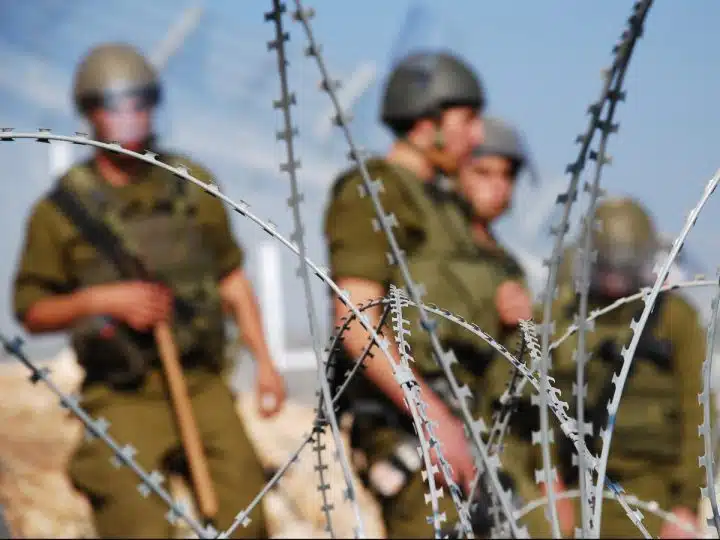

Every minute of every day there are numerous Israeli settler attacks against Palestinians taking place somewhere in the occupied West Bank.
Many attacks involve direct violence, but settlers also intimidate, steal and destroy land and property.
Their purpose, by whatever means possible, is to steal Palestinian land for the Zionist’s colonial project of a “Greater Israel”, in the occupied Palestinian territory. And they have the full support and protection of the occupation’s police, military and government.
Here are just a few of the recent attacks on Palestinians by these illegal settlers…
Israeli settlers terrorise towns and villages
On 19 May, settlers and the occupation’s military stormed Madama, a town south of Nablus. They entered an area classified as ‘Area B’ under the Oslo Accords and vandalised property.
The following day, they destroyed parts of the town’s electrical network, including electricity poles.

A few days later, Israeli occupation soldiers raided the village, forcing shop owners to close their businesses.
No access for medics and ambulances
On 30 May, in the early morning, there was a coordinated attack.
Armed settlers assaulted residents with clubs and live ammunition, and targeted their homes. The occupation’s soldiers fired live bullets and tear gas, while the settlers attacked residents. They prevented ambulances from reaching injured people, as commonly happens. Dozens of sheep were also stolen.
The Palestinian Red Crescent Society reported that the attack hospitalised at least seven Palestinians. They were beaten with clubs, hit on the head with rocks, and shot at.
The settler attack in Madama was just one of several taking place in the Nablus district that day.
Settlers also raided the Jabal Bir Quza area in the town of Beita, in south Nablus. Video footage shows them wielding clubs and throwing rocks at a house. They also smashed the windows of several cars.
The moment Israeli settlers launched an attack on the Jabal Bir Quza area in the town of Beita, south of Nablus, vandalizing and setting residents’ property on fire. pic.twitter.com/mHcl4tA2uL
— Ramy Abdu| رامي عبده (@RamAbdu) May 30, 2026
Israeli settlers carried out another attack on the Bir Quza area of Beita, south of Nablus in the occupied West Bank. Dr. Rabee Shourfa, Deputy Mayor of Beita, described the damage inflicted on residents property during the raid. pic.twitter.com/B6ETz7aaeh
— Government Communication Center (@pal_gcc_en) May 31, 2026
Settlers from the same outpost attack again
Then, in the evening, the settlers targeted Palestinian-registered vehicles on the road between Beita and Awarta.
They sprayed adults and children with pepper spray, and attacked homes in Ras al-Ein, in the village of Qusra.
One resident was stabbed while trying to defend his home before being taken to hospital with moderate injuries. This resident was the cousin of Amir Odeh, 28, who was shot in the chest and killed in the same area in March by settlers from the same outpost.
When Amir’s father, Mutasem, went to his aid, he was beaten unconscious with a stick and stabbed in both legs. Amir was pronounced dead before he arrived at hospital in Nablus.
Northwest of Ramallah, settlers also pushed a car off a slope, near the village of Deir Abu Mashal. Soldiers had chased it while it was on a nearby road. Soon afterwards, the car stopped and parked.
Settlers then beat the driver while he refused to hand over his keys. In retaliation, they pushed his car down a steep slope and left the scene without being stopped by the soldiers.
No action from authorities
Recently, there have also been many arson attacks on Palestinian agricultural land, by both the occupation’s army and settlers.
In Duma, near Nablus, settlers arrived on all-terrain vehicles, which the occupation’s government supplies. They blocked the only village entrance and then burnt olive trees and agricultural produce.
The army was there but did nothing to prevent the attack or arrest the illegal settlers.

A new outpost has now been set up on land belonging to Abu Falah, north-east of Ramallah.
Settlers set fire to agricultural land planted with olives on the outskirts of the village. Several hours later they set fire to the land again, this time next to a chicken shed.
Soldiers did nothing to prevent the crime or help put out the fire.
Abu Falah is the neighbouring village to al Mughayyir, which has also experienced numerous fires over the past weeks. Settlers shot at villagers while they tried to extinguish the flames.
In Saffa, west of Ramallah, Israeli occupation forces set light to land planted with wheat, olive trees and figs. The fire burnt more than 15 hectares of land. When residents and volunteers attempted to extinguish the fires, the occupation opened fire.
Disregard for Oslo accords
The occupied West Bank is divided into three administrative zones — Area A, B and C — according to the Oslo Accords.

In Area A, the Palestinian Authority (PA) officially has full civil and security control. In Area B, the PA must coordinate security with the Israeli occupation, while Area C is under full “Israeli” control. But the occupation wants to control all of the West Bank and steal as much Palestinian land as possible. It is doing this in a variety of ways.
The aim of the occupation is to control all of Area C, significantly expand Israeli occupation settlements there and declare “Israeli” sovereignty over the entire area.
In February this year, the security cabinet officially began the permanent acquisition and registration of title deeds in Area C. The PA has issued deeds and documents for decades to help local communities record their land rights, but the occupation has refused to recognise any of these.
It now says any Palestinian land in Area C lacking formal private ownership documentation from the Israeli occupation registry system — an institution designed to exclude them — belongs to the Israeli occupation government. But displacement, document loss and lack of recognition by Israeli courts, mean few Palestinians have this documentation.
Oslo Accords under threat
Members of the Knesset have also recently introduced legislation to formally scrap the Oslo Accords. They propose to replace the existing framework with full Israeli occupation sovereignty over Palestine. The aim is to block the establishment of a Palestinian state and encourage settlements in Areas A and B.
For decades, settlement outposts were almost exclusively established in Area C, but since October 2023, there has been a shift. There is now a push by the occupation to establish new outposts in Area B and, in some cases, even inside Area A — areas supposedly under at least partial Palestinian control.
Settler outposts extending into Areas A and B, ensure intimidation and settler attacks towards Palestinians do not only occur in Israeli occupation controlled Area C, but throughout the occupied West Bank. The eventual aim of the criminal Zionist regime is to forcibly displace Palestinians from their land, ethnically cleanse the territory, and steal it for themselves.
Featured image via the Canary
By Charlie Jaay
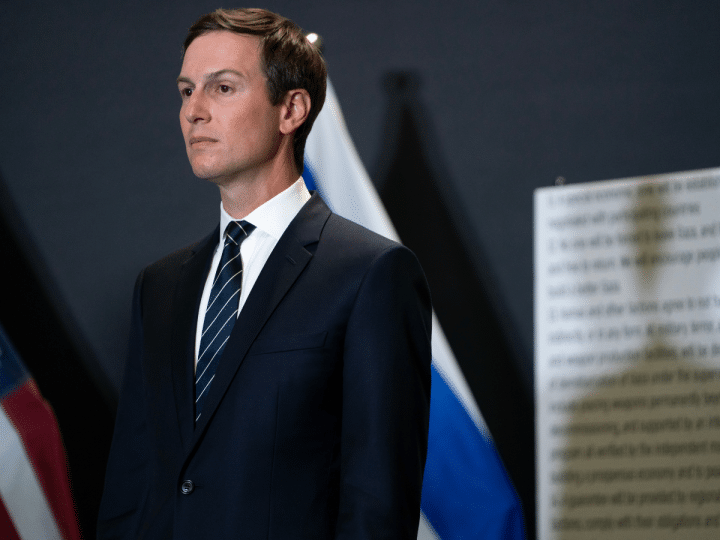

Albanians have continued to protest against a luxury resort linked to Zionists Jared Kushner and his wife, Ivanka Trump, being built in the Vjosa-Narta protected landscape and the island of Sazan.
Albanians are back on the streets for a third day — protesting a luxury resort linked to Jared Kushner.
Demonstrators are calling for the project to be cancelled, citing its threat to the Vjosa-Narta Protected Landscape, a key habitat for migratory birds. pic.twitter.com/VMfrCPlXQ2
— euronews (@euronews) June 3, 2026
Reuters reported that protesters were outside the office of Albania’s Prime Minister Edi Rama on Tuesday evening with signs that read “Nation is not for sale” and “I don’t want Albania like Dubai.”
Ivanka boasts of the “discovery” on a podcast
The daughter of the current deranged President of the United States said that she first discovered the 1,400-hectare island whilst swimming off a friend’s boat.
She said:
Well, it’s an unbelievable, beautiful 1,400-hectare private island in the middle of the Mediterranean. We were on a friend’s boat, and we stopped for a swim. Effectively, that’s how we found it. We swam to the islands. We went on a hike barefoot all the way up to the top, and we were just captivated, and it stayed with us ever since. And over the course of many years, we developed the opportunity to help realize its potential and transform it….
View this post on Instagram
POLITICO has, however, reported some good news. Albania’s anti-corruption office confirmed on Monday that it had opened an investigation into controversial changes in the area’s protected status and land ownership in 2024, which opened the door to tourism development.
However, they also reported that Kushner had unveiled plans for Affinity Partners to turn the site into a luxury resort in August 2024. The Zionist couple then visited the site in January 2026.
Edi Rama had recently confirmed to POLITICO that talks were ongoing between the government and Kushner over the deal, which is set to include 10,000 hotel rooms.
Kushner and Gaza waterfront
The Kushner’s clearly do hold the white supremacist belief of “terra nullius.”
Terra nullius, or “land belonging to no one,” was the theory that foreign lands “discovered” by European explorers were vacant of any preexisting title and, therefore, claimable.
This concept, rooted in a series of 15th-century Papal Bulls, sanctioned Christian explorers like Christopher Columbus to colonize and exploit non-Christian nations and seize their lands. Trump’s administration frequently boasts of Columbus.
View this post on Instagram
In Albania today, that same logic is being repackaged as luxury development, and as we have also seen in the live-streamed genocide of Gaza. Kushner envisions Gaza as his “waterfront” property.
Like his wife gushing about the ‘discovery’ on a podcast, Kushner gushed about Gaza’s waterfront property:
It could be very valuable, if people would focus on building up livelihoods.
The genocidal profiteer sits on the Board of Peace for Gaza.
The Vjosa-Narta protected landscape is a wetland home to flamingos, seals, and sea turtle nesting sites.
Genocide and ecocide are preconditions of the desire of Zionists like the Kushners, and they don’t care about it. That precondition is acceptable to them.
Featured image via Getty/Nathan Howard
By The Canary
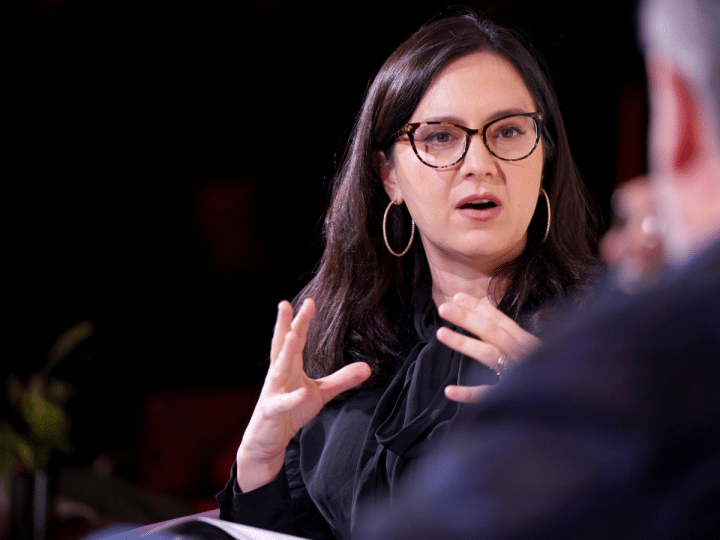

The latest journalist to be fired by Bari Weiss, the freshly-minted editor-in-chief of CBS News, was Scott Pelley. Clearly, self-declared “Zionist fanatic“ Weiss is overhauling the news division.
Oracle’s David Ellison, another Zionist, acquired CBS owner Paramount and installed Weiss last year.
Just last week, on Thursday morning, CBS News fired correspondent Sharyn Alfonsi, who had feuded with Weiss over a delayed 60 Minutes segment, and executive producer Tanya Simon.
Washington Post’s Scott Nover listed the four correspondents of CBS’s 60 Minutes who have been fired or resigned since Weiss became head.
2025-26 “60 Minutes” Correspondents:
• Lesley Stahl
• Bill Whitaker
• L. Jon Wertheim
• Norah O’Donnell
• Anderson Cooper (resigned)
• Sharyn Alfonsi (fired)
• Cecilia Vega (fired)
• Scott Pelley (fired)https://t.co/zNRuTTEq0O https://t.co/fDGqGSXSI8— Scott Nover (@ScottNover) June 3, 2026
Nover also reported that “60 Minutes” staffers, past and present, were outraged about Pelley’s firing.
Bari Weiss ‘was brought in to kill it’
Just a day before Pelley was fired, he said in a tense meeting with CBS colleagues that:
She is murdering ‘60 Minutes. She does not love this place. She was brought in to kill it, and she’s been doing exactly that.
He aimed this at Nick Bilton, a Bari Weiss loyalist. Bilton is the programme’s new executive producer, installed by Weiss.
Following his termination the next day, Pelley accused CBS of pressuring him to insert bias into stories. Journalist Mehdi Hasan called CBS, “the new Fox.”
Fox News is a rabidly right-wing news channel.
“Mr. Pelley also wrote that senior managers at CBS News had pressured him to insert bias into stories for “60 Minutes” this past season, though he did not provide details about specific segments.”
Pretty important part of the story. Maybe *the* most important part. CBS = new Fox https://t.co/kmW5ZAIo1I
— Mehdi Hasan (@mehdirhasan) June 3, 2026
More Fox News is not what we need, but in this topsy-turvy world, it’s what we are getting.
Featured image via Getty/Leigh Vogel
By The Canary
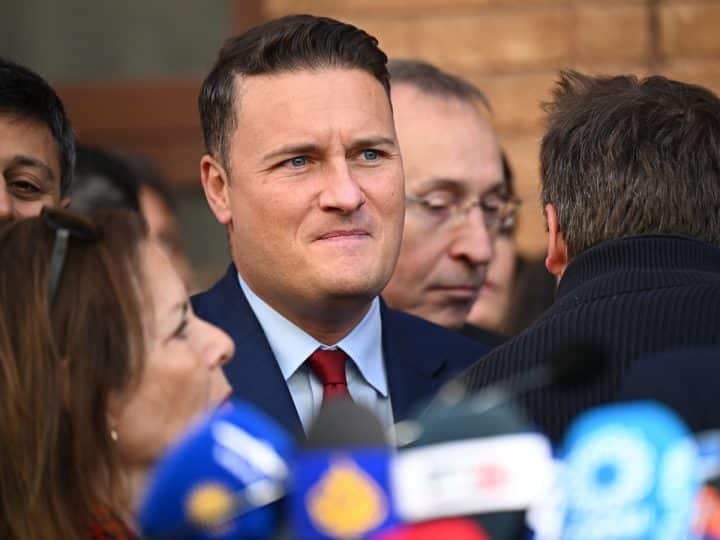

Wes Streeting appears to be attempting to rewrite history over his position on Gaza, after supporting Israel’s genocide for years.
You spent two years supporting genocide and now pretend you didn’t? Just staggering dishonesty from
these human pieces of excrement. https://t.co/Vz7iEYsHIW— Bog Standard Marxist
(@muskeatsbogeys) June 2, 2026
Recently published conversations between Streeting and Peter Mandelson, a friend of Epstein and a former government advisor, show Mandelson calling Streeting “hysterical” and “pathetic,” saying:
I think Wes is experiencing an early mid-life crisis.
Previously, Streeting released some messages between himself and Mandelson to clarify the nature of their relationship. In them, he described Israel as a “rogue state” and admitted that:
Israel Is Committing War Crimes Before Our Eyes.
Now, Streeting has told the Guardian that he was “horrified by the war in Gaza”. He stated that he “did everything I could” to get the government to act with the “moral urgency the conflict demands”. Supposedly, he shared eyewitness testimonies from doctors on the ground in Gaza, to ensure what was happening “wasn’t a war without witnesses”.
He added:
I’ve always supported Israel’s right to defend itself and Palestinians’ right to a state of their own. I’ve met survivors of October 7th and was the first shadow cabinet minister to visit Israel. I visited the West Bank a decade ago, I called for sanctions on Israeli settlements when I was a backbencher – this wasn’t some emotional or one-sided reaction; it is what I and other ministers believe.
I was proud to be part of the government that eventually recognised a Palestinian state, but we took far too long to get there.
Streeting and Israel’s ‘right’ to self-defence
Streeting has publicly supported Israel for the entirety of his career, since his days at the National Union of Students. He has been a member of Labour Friends of Israel for over twenty years, and was Starmer’s first shadow minister to visit Israel. Labour Friends of Israel – a highly secretive Israeli lobby group- paid for the visit.
According to Declassified UK, as of June 2024, Streeting had taken nearly £30,000 from Britain’s powerful pro-Israel lobby. This included donations from Sir Trevor Chinn, Lord Mendelsohn, and David Menton.
Streeting has previously criticised specific Israeli policies. This included illegal settlements and denying British MPs access to the Occupied West Bank. However, he has also regularly made comments about Israel’s ‘right to self-defence’ – despite that right not actually existing under international law.
Yet Streeting is a member of the same government that walked back comments from David Lammy, in which he claimed Israel had violated international law.
You were part of a cabinet that armed and supported a genocidal apartheid Israeli state.
Spare us the crocodile tears.
No amount of revisionism erases your role in that. You’re complicit, whether you like it or not. https://t.co/ctF6YX630H
— Zarah Sultana MP (@zarahsultana) June 2, 2026
Streeting was also caught on camera saying “persuade Hamas” in response to a question about Israel’s war crimes and “why can’t we have a ceasefire?”
This is despite armed resistance being legal under international law when living in an occupied territory.
Last year, after Israel had already destroyed a number of hospitals and attacked ambulances, Wes was asked what his party would do to force a ceasefire, he arrogantly shrugged and said his constituent should “persuade hamas” https://t.co/ETY0HzV5vM pic.twitter.com/cxCJP9k9f1
— Chłoddy (@OfSymbols) July 24, 2025
Complete contradiction
Additionally, Streeting doesn’t seem to realise that Israel’s right to self-defence completely contradicts the ‘two-state solution‘. Which, of course, he is also in favour of.
Aside from the fact that the two-state solution is a colonialist idea that legitimises the displacement of indigenous Palestinians, the two ideas completely clash in both international law and politics. No state can claim self-defence against a territory it occupies and exercises control over. Yet a two-state solution means recognising Palestine as a sovereign and, therefore, independent state.
As long as Israel claims “self-defence” to justify illegal occupation, bombing, and blockades, Palestine cannot function as an independent state. This would be required for the two-state solution, which Streeting is so keen on.
If Streeting truly believes his texts to Mandelson, why on earth has he accepted so much money from Labour Friends of Israel? And why has it taken him until now to say these things publicly?
Streeting has no backbone. If he truly cared about Gaza, he’d have spoken out and publicly condemned Israel’s war crimes. He would not have just done it via text to Epstein’s pal. He also wouldn’t wait until now, when there is a potential leadership contest in the not-so-distant future. It’s pretty convenient that he’s suddenly taking a hardline stance against a genocidal terrorist state. What good are your faux morals if they only appear to benefit your potential run as party leader?
Featured image via Leon Neal/Getty Images
By HG
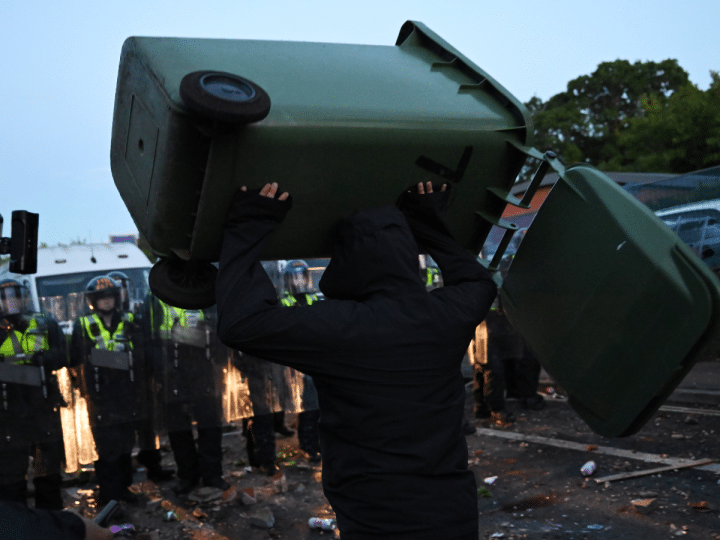

On the 2 June, far-right bigot Nigel Farage put out a statement ostensibly aiming to avoid societal dissolution in response to police treatment of murder victim Henry Nowak. Roughly 24 hours later, rioters took to the streets of Southampton to throw wheelie bins at cops.
Farage tried to despicably weaponise the murder of Nowak to incite racial hatred. He specifically called for “pure, cold rage.” Lo and behold, fellow racists rioted in Southampton, and the riots trended on social media as #FarageRiots.
In the UK, this is precisely how white supremacy functions: politicians, mainstream media, and regular people all do their bit to keep the wheels of racism turning.
Farage got what he wanted
Yesterday, Reform UK Ltd. put out a video video statement by their party leader calling for “pure cold rage” in response to the murder and police treatment of Henry Nowak. He claimed to make demands hoping to avoid the breakdown of society:
The most important thing that needs to change, that has to change, if our society is not to be ripped apart, where communities start to distrust each other and deeply distrust the police and all the other institutions of this country, is we need a change in culture.
For Farage, this meant:
Enough of anti-white prejudice, a promotion of the idea that white lives matter just as much as black lives.
The very next day, like clockwork, hundreds of assorted racists, white supremacists and card-carrying neo-Nazis gathered outside a Southampton police station to riot. Far-right grifter Tommy Robinson addressed the crowd, launching into a rant about Muslims (in spite of the fact that the murderer was a Sikh person).
It’s precisely this kind of riot that the Reform leader claimed he wanted to prevent. After all, this is the same man who actually lost the (extremely lucrative) support of billionaire Elon Musk for preventing Robinson from joining Reform, given that Robinson was a former member of the British National Party (BNP).
This is white supremacy
The thing is, this is precisely how white supremacy functions – all around the world, but especially in the UK.
A compliant media aids and abets Farage, Robinson, and their ilk with its reporting. Despite their claims of in-fighting, it’s hard to believe any of them are particularly aggrieved when violent rioters are throwing bins around and hoisting flags. Whether it’s allowing Reform to grab uncritical headlines and puff pieces like GB News’:
Or merely dangerously misleading reporting like the BBC’s claim that the murderer used:
a ceremonial blade Sikhs are required by their faith to carry.
The national broadcaster used that line in the very same article where it quoted Sikh leaders explaining, very patiently, that the knife was not a religious requirement, and certainly wasn’t a kirpan. Likewise, the same community leaders also reported a massive uptick in anti-Sikh hatred as a consequence of the trial.
This kind of reporting primes the public to focus on the murderer’s Sikh faith, and ultimately his race. It fosters the idea that the problem is that Sikhs in general are allowed to carry knives, which quickly slips to the idea that brown people are treated better than white people (in spite of abundant evidence to the contrary).
The same tired line
With the public primed and readied, Farage doesn’t actually have to say ‘I would like my followers to riot’. In fact, he can stand in front of a camera acting as if he wants to prevent a riot.
Meanwhile, he continues to bleat about ‘anti-white discrimination’ and ‘two-tier systems’ – the exact dogwhistles (foghorns) that will prompt his followers to riot. This was so utterly predictable that the Canary drew yesterday’s article on Farage’s address to a conclusion with the line:
Clearly, the far-right leader has now pivoted from avoiding media scrutiny to a frantic attempt to create a distraction. If he has to incite another race-riot to do so, then so be it.
It was so utterly predictable because this is exactly the same attack line the racist right used to incite the 2024 race riots. In fact, an Institute of Race Relations report in the aftermath of the riots stated that:
Even as the ‘riots’ were ongoing, a range of figures sought to spread the notion that white defendants were victims of a ‘two-tier’ policing system that treated them more harshly ‘because of their race and political views’
Shocking nobody, one of those figures bleating about ‘two-tier policing’ was Farage himself. Then, as now, politicians and commentators highlighted that the Reform leader’s words were dangerous.
But, of course, he knows his words are dangerous. He knows they’re driving the rise of white supremacy; he knows they’ll spark white riots. We’d wager that he was counting on it.
That’s wholly a feature, not a bug – Farage knows that he’s the ‘acceptable’ political face of white supremacy in the UK, whether or not he’d call himself that openly. Inciting a race riot is probably cheaper and more effective than hitting the campaign trail for Reform UK.
Featured image via Getty/Finbarr Webster
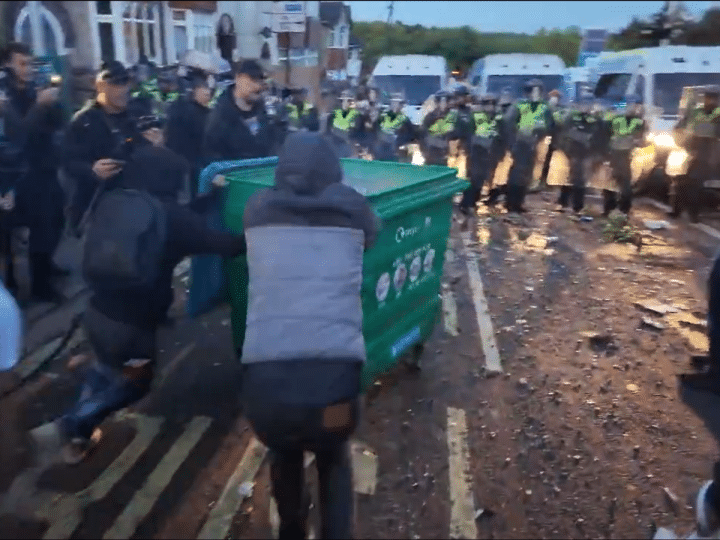

Far-right race-hate activist ‘Young Bob’ has posted footage of himself among neo-nazi thugs as they rioted in Southampton and attacked police.
The footage does not blur his friends’ faces, but no one ever accused the far right of being too weighed down with brain matter. The video is shown below in case ‘Young Bob’ realises what he’s done and deletes his X post.
Far-right rampage
The thugs were part of a mob that rampaged through Southampton’s streets yesterday, egged on by their hate-preachers. The mob attacked police and spewed anti-Muslim hate on the pretext of the conviction of a Sikh (not a Muslim) for murder.
‘Bob’ and his footage will have been very helpful to the police and Crown Prosecution Service. Assuming, of course, that the state can spare the resources from its persecution of anti-genocide protesters to prosecute actual hate and violence.
Featured image via X/ YoungBobRB
By Skwawkbox
Politics
Politics Home | Keir Starmer Accuses Nigel Farage Of “Unforgiveable” Response To Henry Nowak Murder
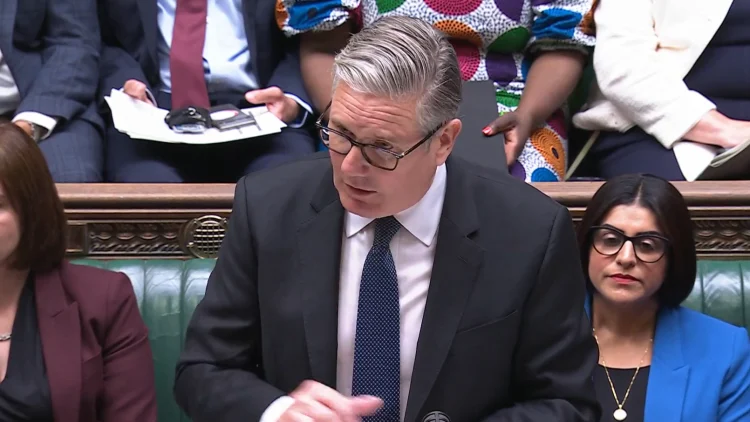

Prime Minister Keir Starmer told MPs on Wednesday “there is no justification for more violence and disorder” following riots in Southampton.

4 min read
Prime Minister Keir Starmer has told MPs “there is no justification for more violence and disorder” following riots in Southampton and criticised Reform UK leader Nigel Farage’s calls for “pure cold rage” in response to the murder of Henry Nowak.
Footage released this week by police showed 18-year-old student Nowak being handcuffed and arrested as he lay dying on the ground in Southampton in December, telling officers he was not able to breathe.
Nowak had been stabbed by 23-year-old Vickrum Digwa, who had falsely told officers at the scene that he himself had been a victim of a racist attack. On Monday, Digwa was sentenced to life in prison with a minimum term of 21 years.
There was unrest in Southampton on Tuesday night following the publication of the footage showing Nowak’s arrest. At the time of writing, two people had been arrested for their role in the protests, which resulted in 11 officers being injured, according to Hampshire Police.
Speaking in Prime Minister’s Questions (PMQs) on Wednesday, Starmer said now is “time for serious work, not rage”, and described attacks on police officers in Hampshire last night as “disgraceful and completely unacceptable”.
He paid tribute to the “extraordinary dignity” shown by Nowak’s family, “after their son’s life was stolen in appalling circumstances”.
“He was clearly a kind, thoughtful, and much-loved young man. There are serious questions to answer, including how accusations of racism informed police thinking. And we’re supporting the IOPC (Independent Office for Police Conduct) to get to the bottom of what happened,” he said.
The IOPC police watchdog has initiated an investigation into the conduct of the Hampshire and Isle of Wight Constabulary, while at the same time, the Attorney General’s office is considering whether to review Digwa’s sentence.
Later in PMQs, Farage asked Starmer about “two-tier policing”.
“Following the horrendous circumstances of Henry Nowak’s death, can I urge the Prime Minister to consider this: it is now clear to growing millions in this country that we’re living under two-tier policing,” the Reform leader said.
“The instructions that are given to police officers from police bosses are clear and written down in ink: it says he must treat different ethnic groups in different ways.
“That apart from the upset and the anger at the circumstances of his death, the anger that you saw spilling out in Southampton last night, and which is in danger of getting considerably worse.”
Starmer said he doesn’t believe there is two-tier policing in the UK, then accused Farage of pretending to respect Nowak’s family.
“I’m really shocked that he pretends to have respect for Henry’s family, and then acts in this way.
“A grieving family have asked us not to respond in the way that the leader of Reform has responded: they’ve asked us not to, they have lost their son in the most appalling circumstances.
“They make a simple plea of us, as human beings, to please not exploit that. That is their plea to us, but we all need to reflect on those words of Henry’s father. My response, and the response of others… has been focused on the lessons to be learned, so we can deliver justice.
“His response has been to appeal for rage. Rage. That’s his response to a father who’s lost his son and asked for that not to happen. Exploiting this tragedy to create grievance and division would be wrong in any circumstances, but to do it when the family are expressly saying please don’t, is unforgivable.
“It shows exactly who he is.”
Conservative Party leader Kemi Badenoch struck a similar tone to the PM, telling MPs it was the “responsibility of everyone to bring people together, not divide them”.
“I also want to share my deepest condolences to the family and friends of Henry Nowak,” said Badenoch.
“The circumstances around Henry’s wrongful arrest and tragic murder must be a wake-up call to the entire country and to our institutions that every life matters. And that it is the responsibility of everyone in this house to bring people together, not divide them.”
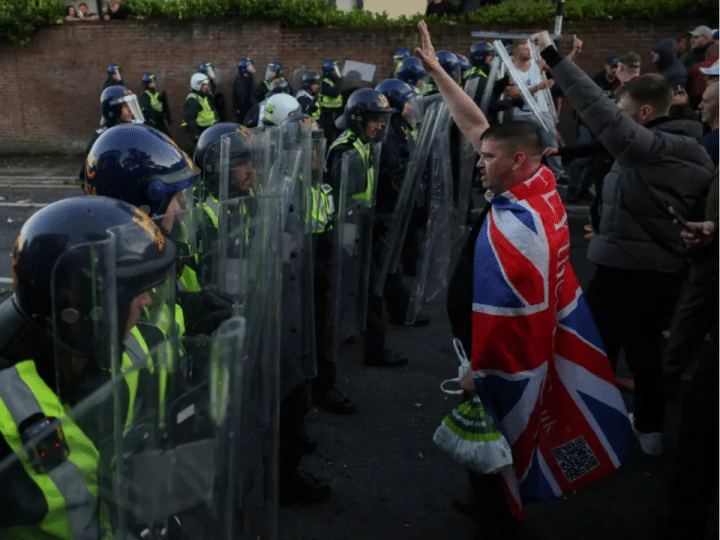

Israel lobbyists — and UK politicians who take donations from Israel lobbyists — characterise protests against Israel’s genocide as ‘hate’. It’s a bare-faced lie. But the far-right is full of hate yet many MPs refuse to say so.
The ‘protest’ (riots) in Southampton on Tuesday, egged on by fascists Nigel Farage and Tommy Robinson, put it beyond doubt.
View this post on Instagram
Israel-aligned politicians attack humanitarians instead
Yet the Starmer regime is treating this real hate as a side issue. It’s too busy waging war on peaceful protest, free speech on genocide and the humanitarians who resist mass murder and war crimes.
The ‘mainstream’ media are no better. While peaceful marches are ‘hate’, fascist race-riots are both-sided and branded as “clashes with police”. Britain is being broken on purpose.
Featured image via Isabel Infantes/AFP
By Skwawkbox
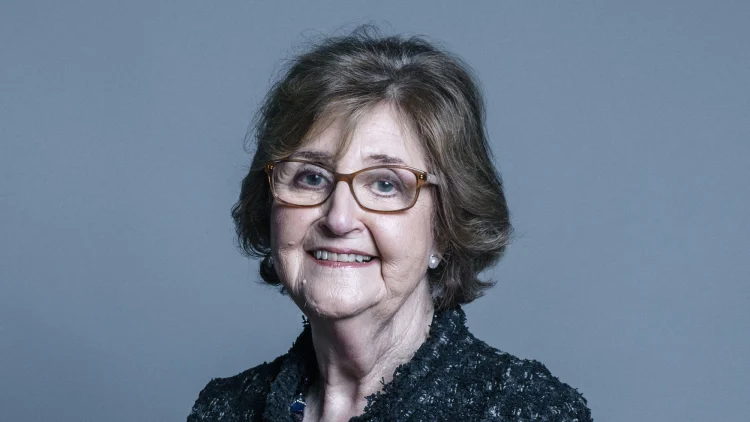

Baroness Ramsay of Cartvale: 12 July 1936 – 28 May 2026 | Image courtesy of UK Parliament

4 min read
Former spy and later a government minister and whip, Meta Ramsay was an exceptional person in so many ways. Loyal to her country, her party and her friends, she was a mentor to many of us. Words by Lord Foulkes
Meta Ramsay was an exceptional person in so many ways: a powerful woman in a man’s world, a most generous friend in every sense, and a mentor to many of us. She was loyal in every way: to her country, the Labour Party and, above all, to her friends.
Her background was relatively modest. Those who knew her mother, Sheila – the daughter of Jewish refugees from Ukraine – could see where Meta got her strength of character. Her father, Alexander, was a gentle man in every sense, but nevertheless an avid supporter of Glasgow Rangers. This likely explains why Meta, though not a football follower herself, would always know the Hearts result by the time we spoke on Sundays.
After happy years at her local Battlefield Primary School, her parents saved enough to send Meta to Hutchesons’, then a fee-paying corporation school, which enabled her to gain a place at the University of Glasgow. There, she joined a cohort of formidable debaters and politicians – including Donald Dewar, John Smith, Ming Campbell, and Douglas Alexander (father of the current secretary of state) – and was able not just to hold her own, but to better them.
At Scottish universities, the men’s and women’s unions were social and debating centres, but the students’ representative council (SRC) was the true hub of power. Meta became the first woman to serve as president of the Glasgow University SRC, a foretaste of things to come. Scotland also had its own national student body, the Scottish Union of Students, and, once again, Meta was the first woman to become its president. It was then that we met, when I attended their conferences as a representative from the Edinburgh SRC.
At the time, the Cold War was at its height, and the international student scene was divided between the Communist International Union of Students (IUS) headquartered in Prague and the International Student Conference (ISC) in Leiden. In a further portent of things to come, Meta moved to the ISC to serve as assistant secretary.
Meta’s service in MI6, the Secret Intelligence Service, was known to very few at the time, long before the organisation became as open as it is today. Her frontline work in Finland, and her role in the defection of Oleg Gordievsky in particular, is now the stuff of legend – and rightly so.
One disobliging colleague said to Labour leader John Smith, ‘Be careful, she was a spy,’ to which John retorted, ‘I know, that’s why I’m appointing her!’
Away from the intense world of intelligence, Meta maintained a warm and deeply grounded personal life. She was utterly devoted to her dear Cairn Terrier, Tam, so much so that she once prevailed upon me to chauffeur him from Glasgow to London! How could I refuse?
When she retired from the Foreign and Commonwealth Office (FCO), she soon moved to work as foreign affairs adviser to the Labour leader, John Smith. One disobliging colleague said to John, “Be careful, she was a spy,” to which John retorted, “I know, that’s why I’m appointing her!”
She was appointed to the House of Lords by Tony Blair and became a whip, skilfully piloting the Scotland Bill through the Lords and keeping her flock in line. And when Labour moved into opposition, she served, fittingly, as a member of the Intelligence and Security Committee and on the North Atlantic Assembly, Nato’s parliamentary body.
Her activity in the Labour Party spanned her entire adult life, bookending her foreign service, including joining the Scottish Executive Committee to provide vital senior female leadership during the period when Ian Murray was Labour’s sole Scottish MP.
She fell ill in London but returned home to Glasgow, where she passed away accompanied by her longstanding friend, assistant, and executor, the wonderful Caroline Thickett. She has since received glowing tributes from all sides of the House of Lords and beyond.
Lord Foulkes of Cumnock is a Labour peer
Ahead of the ten year anniversary of the EU referendum on 23 June, UK in a Changing Europe experts have written a short series of blogs reflecting on some of the issues at the heart of Brexit then and now. Here, Jill Rutter considers how Brexit has impacted the civil service.
We could never persuade former Brexit minister and European Research Group chair Steve Baker to relive Brexit for UK in a Changing Europe’s Brexit Witness Archive. But two quotes from his recent Ministers Reflect interview for the Institute for Government are perfect illustrations of the way in which Brexit impacted the civil service.
Speaking of his own civil servants in his brief ministerial stint at the Department for Exiting the EU (DExEU) he said: “The officials were absolutely excellent in the Department for Exiting the EU, absolutely brilliant and brilliantly led”. But a few paragraphs later he describes how officials reacted to the DExEU ministerial team concluding that the UK had to leave the EU with an FTA-style agreement: “officials all sat there looking crestfallen. They’d all briefed us individually that we should do something hybrid that involved the customs union and alignment. We all said no individually. So they put on a summit. Again, notice they’re managing us, which is a thing to come back to. We gave them very clear directions on what we required as a team.” That sounds much more like the scepticism about the civil service to be expected from Eurosceptic ministers.
But Baker himself acknowledges that the civil servants were pursuing the Brexit that the Prime Minister and Chancellor wanted – and his real frustration (which resulted in his post-Chequers resignation) should be directed at his ministerial bosses, as they were the ones taking the policy in a direction he did not like, not the civil service.
The good news for the civil service is that it managed to deliver a Brexit which was broadly the one chosen by the Johnson government. Gaping holes did not emerge – either in UK legal frameworks or at the borders for goods (failure to stem cross-Channel irregular migration has become a running sore post-Brexit). UK regulators have mostly been able to substitute adequately for their EU counterparts – and, even before the final completion of Brexit, the UK’s medicines regulator gave the first approval for a Covid 19 vaccine. The UK developed missing trade capacity, rolled over EU-era trade agreements and negotiated its own new free trade agreements (FTAs) with countries such as New Zealand and Australia.
The price of that delivery was a massive expansion in the size of the civil service, which is now over a third bigger than it was in June 2016. Not all of that is down to Brexit itself – it was inflated by the need to deal with the pandemic and more recently by attempts to get on top of the asylum backlog. Nonetheless, that is an expansion that is way in excess of initial estimates of the impact of Brexit on the size civil service (and the expansion in the number of public servants in some arm’s length bodies should be added as well to take full account of Brexit as a driver of state expansion).
The bad news for the civil service is that Brexit catalysed a breakdown of relations with a significant segment of the political and ministerial class.
In the Theresa May government, civil servants were collateral damage as her cabinet could not agree on the model of Brexit it wanted to pursue. In some departments, Brexit supporting ministers were reluctant to confront the problems officials raised with them in implementing Brexit. The UK’s permanent representative, Ivan Rogers, resigned after being “stabbed in the back” by Theresa May’s chiefs of staff briefing against him. The Treasury was already bruised by what then-Chancellor Philip Hammond described as “being painted as the villain of the referendum campaign”. Ministers went on the record rubbishing official forecasts. Senior officials who had specialised in European relations found that their CVs were regarded as what former Deputy Permanent Representative to the EU Katrina Williams described as “unfortunate”. Theresa May herself repeatedly denied she was a puppet of her Europe adviser, Olly Robbins.
Although, in one part of the forest, Lord Frost was working more effectively with civil servants to deliver the Trade and Cooperation Agreement, relations elsewhere in government became ever tenser under the Johnson administration. In that administration’s version of Henry VIII, one permanent secretary resigned (the head of the Government Legal Department) over government willingness to break international law; the services of the Cabinet Secretary, Mark Sedwill, were dispensed with and several more permanent secretaries were sacked or not extended as part of Dominic Cummings’s war on the bureaucracy. Meanwhile Johnson’s ministers went on the warpath against civil service wokery and working from home, while attempting to impose headcount reductions to roll back the increased numbers since Brexit.
Keir Starmer came in, determined not just to reset relations with the EU, but also with the civil service. But he too became disillusioned with a government “machine” which he never got to grips with managing – within months of taking office he was complaining about the civil service being too happy in the “tepid bath of managed decline”. Starmer’s peremptory sacking in April 2026 of Olly Robbins, who had rejoined the civil service eighteen months earlier, over Peter Mandelson’s vetting has reportedly had a dire effect on ministerial-civil service relations and on civil service morale, which intriguingly peaked in 2020.
Meanwhile, Starmer’s political opponents used his recruitment in opposition of former civil servant Sue Gray as chief of staff as evidence of political sympathies within the civil service – and to argue the case for the politicisation of appointments more along US lines. That remains a significant plank in Reform UK’s vision for the future state. Starmer’s actions make it harder for Labour to defend the current set-up.
The increasing frustration of ministers with the system and their civil servants is rooted in their own failure to deliver people’s aspirations for higher living standards, make inroads on regional inequality and improve public services, all while navigating an increasingly hostile external environment. That frustration contributed to the initial decision to vote for Brexit in June 2016. It is clear that ten years on, that frustration has grown rather than diminished.
By Jill Rutter, Senior Fellow at the Institute for Government.
“ANTM” judge rips Jay Manuel for 'disgusting' treatment of Tyra Banks in blistering tirade: 'F— off!'

Google offers Android app developers cash in exchange for code to train AI

Last call to enter best new buildings awards



-

 Tech5 days ago
Waymo dominates autonomous vehicle registrations as Tesla trails behind
-

 News Videos5 days ago
This is BROKEN! INSANE 5x MONEY CAR WASH WEEK! The NEW GTA Online UPDATE Today! (GTA5 New Update)
-
 Tech4 days ago
SpaceX just won a second Golden Dome contract. This one is $4.16 billion.
-

 News Videos5 days ago
SHE IS KILLING XRP!!! WATCH URGENT AND ACT FAST
-

 Business2 days ago
Jade Biosciences, Inc. (JBIO) Discusses Positive Interim Results From JADE101 Phase I Healthy Volunteer Study and Development Plans Transcript
-
 NewsBeat5 days ago
FIRST NIGHT REVIEW: Take That bring the Circus back to life in spectacular sun-soaked style
-
 Crypto World5 days ago
CFTC Has Approved the First Regulated Bitcoin Perpetual Contract in the U.S.
-

 Business4 days ago
Is the Spurs Phenom Already Better Than Prime Diesel?
-
 NewsBeat5 days ago
Novak Djokovic v Joao Fonseca LIVE: French Open latest scores and results after Jannik Sinner’s shocking collapse
-
 Crypto World5 days ago
Snowflake (SNOW) Stock Rallies on Strong Q1 Results and AI Product Growth
-
 Entertainment5 days ago
Weak ‘Supergirl’ Box Office Tracking Amid Milly Alcock Backlash
-

 Business4 days ago
Demand Conditions Improve In Chemicals Sector In April 2026
-
 Crypto World5 days ago
MicroStrategy Moves $30 Million in BTC to Coinbase Prime: Is the Bitcoin Sell-Off Already Here?
-
 Politics4 days ago
The House | Inside Andy Burnham’s Makerfield Campaign: “Nobody Thinks This Is In The Bag”
-
 Entertainment4 days ago
One of the Greatest Sitcoms of All Time Shoots Up Apple TV’s Charts 11 Years Later
-

 Tech5 days ago
This Week In Security: Ubiquiti Fixes, And FreeBSD Joins The Club You Don’t Want To Join
-

 Entertainment5 days ago
Maddox Jolie-Pitt Legally Requests to Drop Brad’s Surname
-
 Entertainment4 days ago
Britney Spears Shares Troubling Update After Hard Year
-
 Crypto World1 day ago
Seagate (STX) Stock Surges to Record High on AI Boom and Legal Settlement
-
 Entertainment5 days ago
Bruce Willis’ Generosity Resurfaces Amid His Dementia
You must be logged in to post a comment Login