

Tech
Google offers Android app developers cash in exchange for code to train AI



According to a report from 404 Media, Google has emailed some Android app developers with a “confidential content offer pilot,” inviting them to share their codebases with the company to help train its AI coding tools. Google said the program would provide participating developers with an additional way to monetize…
Read Entire Article
Source link



Metroid Prime arrived on the GameCube in 2002 with a first-person view that already set it apart from most games of its time. Players explored alien ruins and fought through creatures while guiding Samus through a living world. A new fan project now carries that perspective into virtual reality on PC with controls that respond to actual body movements.
Nobbie built PrimedGun from the ground up, using Dolphin ReduX as a foundation. His goal was to take the ancient NTSC version 1.0 of the GameCube game and apply some very modern tracking and input technology that feels right at home in a headset. As a result, you may now play the game from start to finish without affecting the basic gameplay.
Arm cannon movements are intricately tied to the movement of your hand, so you’re not just moving a stick around; you’re leveraging your full arm to track targets. That is, shooting or scanning enemies necessitates actual movements with your body. The head tracking is equally effective, as you can move your head around to get a better view and use hand gestures to make selections or toggle menus.

However, the gunplay really takes off when you can use your cannon to target enemies, much like in the real game, rather than relying on the camera or a lock-on system. The end result is that, while the fighting and traversal cycles are intact, they feel noticeably more responsive after a few hours.

PrimedGun is all about making you and the game feel comfortable with each other right immediately. One click on the right stick adjusts the height, so all you have to do is stand there and let it do the work. Then there’s a menu where you can alter the cannon location and spin to get everything just right and play for longer periods of time without cramping. You may also change the texture of the cannon with a simple in-app tool that requires no additional software.
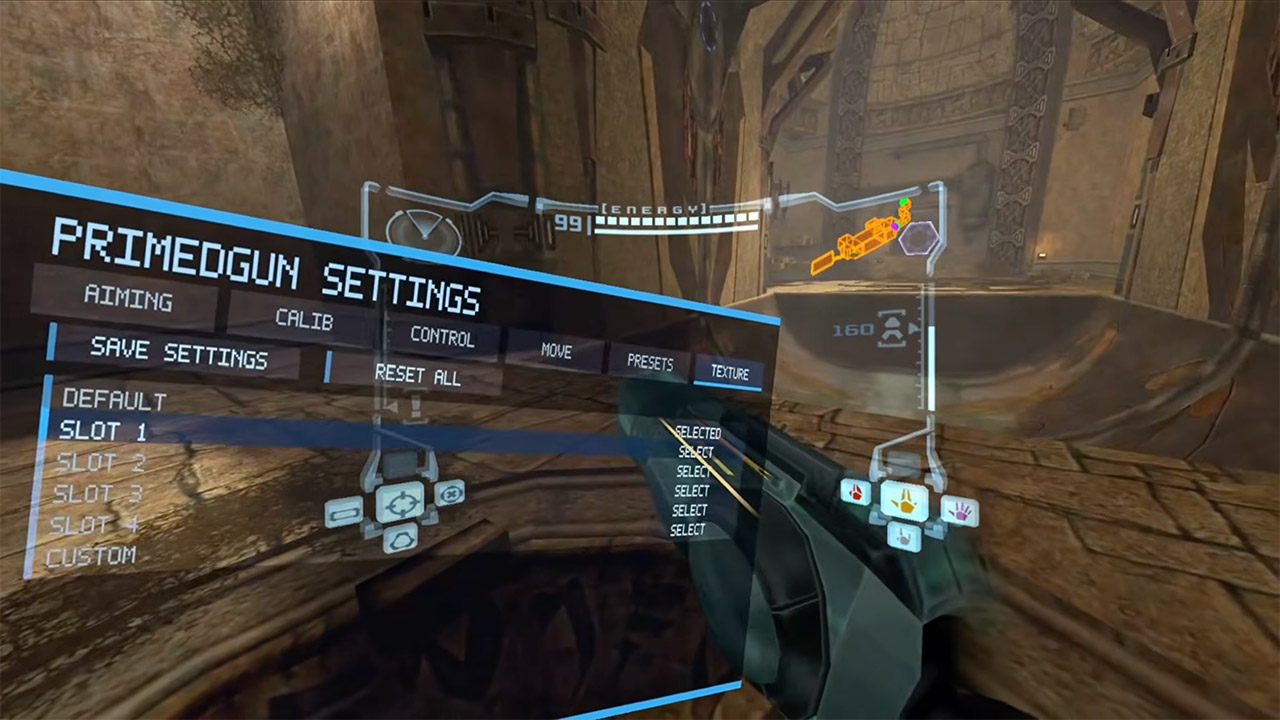
To play the game, you only need the original game file and a download from the GitHub releases. From there, simply open the program, select the NTSC version 1.0 ISO, and let it do its job. You can even copy save files from your previous memory card, and they will appear in the User folder. There is a layout option that allows you to customize the controls, and you can even disable auto setup if you want to create a custom profile.

To get everything functioning well, you’ll have to run your headset at 120 hertz, which makes a big difference. Having a strong connection from SteamVR or Virtual Desktop is the best choice, and if you have a Meta headset, it will also function, though the project notes state that you should probably use Steam if possible. To ensure smooth tracking, simply stay centered and look straight ahead during the calibration process, and then continue with the game.
[Source]

Figma on Wednesday showed off an update that adds a new code layer, support for motion and shaders, and the ability to create custom plugins for various tasks using AI.
The design platform has been working on bringing code integration into its tool for a while. Last year, it unveiled an AI prompt-based prototyping tool, Figma Make, and has since launched integrations with Claude Code and Codex to improve the hand-off between coding and design.
The company is now adding code layers directly to the collaborative canvas, helping teams clone repositories and extract flows from code to design layers for testing.

Figma’s chief product officer, Yuhki Yamashita, said code layers make it easier for designers, product managers and programmers to iterate on ideas rather than focus on creating pristine code that goes into production.
“We think the multiplayer canvas is really powerful because this is an environment where you don’t really care about the quality of the code. If you’re rapidly exploring or need to kind of explore a bunch of new directions, you can do that in this spatial way. We hope that this feature produces different behaviour not just with designers, but also with engineers and PMs,” he said over a call.
Figma now also supports animations, transitions and 3D transforms. Previously, designers had to create animations in other software and convert it to code that the app could understand. Now, designers can integrate animations and transitions directly into Figma.

You can now use AI to create some of these assets, and the update is adding support for adding shader effects and fills using AI, too.
Figma acquired node-based tool Weavy, which helped designers run workflows through different models to compare outputs, last year, and is now working to integrate the two apps better. In an update rolling out later in the year, users will be able to generate Weavy workflows directly within Figma.
The company’s also adding new skills to make its AI assistant more useful with its collaborative canvas. Users can now write text prompts to create repeatable skills that AI agents can use. You can also connect tools like Notion, Granola, Excel and GitHub, or attach files to give the AI bot more context about what you want it to do.
The company is also adding a feature to help users create custom plugins, like layout generators or vector path tracers, with prompts.
When you purchase through links in our articles, we may earn a small commission. This doesn’t affect our editorial independence.
AMD’s Ryzen X3D processors are already among the best gaming CPUs you can buy right now, but GIGABYTE thinks there’s still some extra performance left on the table. The company has announced X3D Turbo Mode 2.0, a new feature designed specifically for Ryzen X3D chips that can automatically boost gaming and productivity performance without requiring users to manually tweak BIOS settings or overclock their systems. According to GIGABYTE, the feature is exclusive to its X3D Series motherboards and supports Ryzen 7000, 8000, and 9000 Series X3D processors.
Up to 34% Higher Performance in Some Games

GIGABYTE claims X3D Turbo Mode 2.0 can deliver noticeable gains across several popular games. In the company’s internal testing, Call of Duty: Black Ops 7 saw performance improvements of up to 34%, while Cyberpunk 2077 saw improvements of up to 25%. Battlefield 6 reportedly delivered gains of up to 21%, and Counter-Strike 2 saw improvements of around 12%.
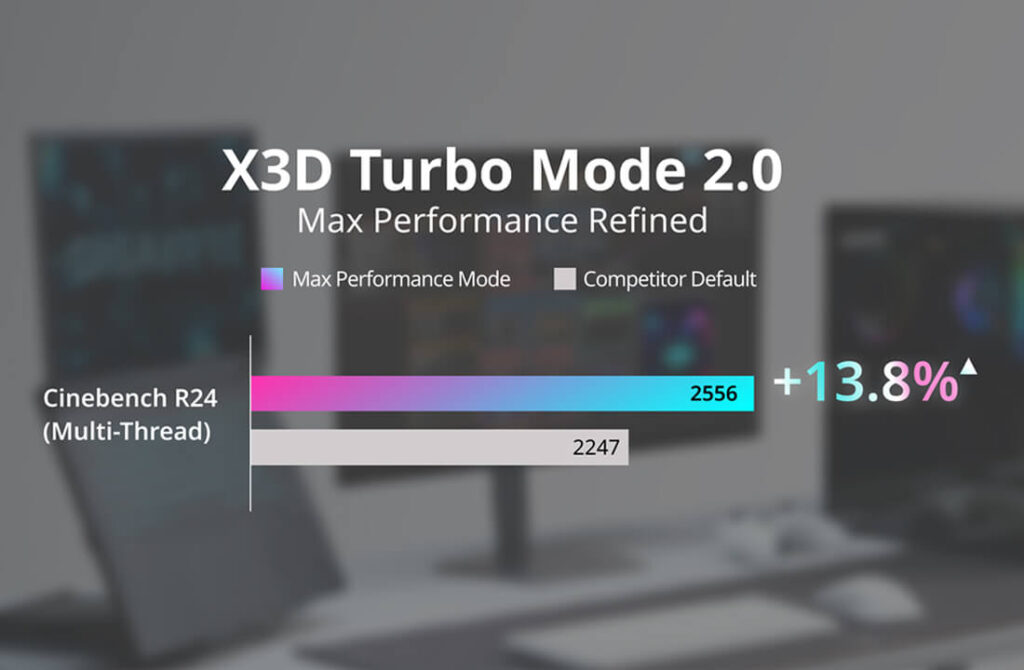
While real-world results will naturally vary depending on your hardware configuration and game settings, the numbers suggest that the feature could offer a free performance boost for users already running compatible Ryzen X3D systems. The benefits aren’t limited to gaming either. GIGABYTE says productivity workloads also see improvements, with Cinebench R24 Multi-Core scores increasing by up to 13.8%. That could make the feature useful for creators, streamers, and users who regularly run CPU-intensive applications.
How X3D Turbo Mode 2.0 Works

Instead of relying on traditional manual overclocking, X3D Turbo Mode 2.0 uses what GIGABYTE calls its Dynamic OC Engine. The system continuously analyzes workloads and adjusts CPU behavior in real time through a dedicated hardware controller built into supported motherboards. By working directly with the board’s power delivery system, the feature aims to extract additional performance while maintaining system stability.
In simple terms, the motherboard automatically determines when extra performance is available and adjusts settings accordingly, removing much of the trial-and-error typically associated with CPU tuning.
Availability and Compatibility
X3D Turbo Mode 2.0 is currently available on GIGABYTE’s X3D Series motherboards and supports AMD Ryzen X3D processors across the Ryzen 7000, 8000, and 9000 families. Supported models include several X870E and X870 boards, such as the AORUS XTREME X3D AI TOP, AORUS MASTER X3D, AORUS PRO X3D, AORUS ELITE X3D, AERO X3D, and EAGLE X3D series.
With Ryzen X3D processors continuing to dominate gaming benchmarks, GIGABYTE is positioning X3D Turbo Mode 2.0 as an easy way for users to squeeze even more performance out of their existing hardware without diving into manual overclocking.
Tech
You can upgrade your TV for the World Cup even if you’re on a budget, with this Philips Prime Day deal

Want to level up your World Cup viewing but don’t have the budget to splurge on too-pricey a TV? This deal was made for you.
Nab the Philips Ambilight 4K LED TV (55PUS8200) for just £209 in Amazon’s Prime Day sale. If you’re not a Prime member then you’ll have to fork out £369 for the non-deal price.
Upgrade to a Philips Ambilight TV for just over £200 this Prime Day
Level up your World Cup viewing without spending a fortune, with this unbelievable deal on the 55-inch Philips Ambilight TV.
With a 55-inch LED display, Dolby Atmos sound and running on the Titan OS platform, the Philips Ambilight is a brilliant all-rounder for those looking for an affordable smart TV that’s packed with plenty of features.
Despite being a budget-friendly TV, the Philips Ambilight certainly looks sleek as it’s fitted with integrated LED lights at its back that react to what you’re watching. While we haven’t reviewed this exact TV, we have reviewed other Philips Ambilight screens with this feature, and find the rear LED lights help create an immersive viewing experience.
Otherwise, and perhaps most importantly for the TV, you’ll benefit from a 4K picture while the Philips Pixel Precise Ultra HD engine helps to optimise picture quality for sharp images, rich colours and smooth motion too. Not only that, but with Dolby Atmos sound you can enjoy multidimensional audio and lifelike surround sound too – perfect for immersing yourself in football matches.
The Philips Ambilight TV runs on Titan OS, which is a smart TV operating system found across select Philips TVs and offers access to many streaming apps including BBC iPlayer, ITVX, Netflix, Disney Plus and more. We’ve found Titan OS to be an intuitive system to use and, although there are adverts present, they don’t necessarily feel too intrusive either.
Finally, although naturally the TV comes equipped with a remote, it’s also fitted with Alexa which means you can access apps and find content simply by asking.
Overall, if you’re keen to upgrade your TV and enjoy 4K content and easy access to your favourite streaming apps then this deal on the Philip Ambilight is not to be missed.
from the good-deals-on-cool-stuff dept
The Modern No-Code Creator Bundle is an extensive online curriculum specifically developed to enable individuals to construct professional websites, applications & automated workflows without the necessity of writing any code. It has five courses, covering leading no-code platforms and tools like ChatGPT, Mendix, and Tabnine. It is ideally suited for novices and non-technical professionals, empowering users to successfully launch digital products independently of developer assistance. It’s on sale for $20.

Note: The Techdirt Deals Store is powered and curated by StackCommerce. A portion of all sales from Techdirt Deals helps support Techdirt. The products featured do not reflect endorsements by our editorial team.
Filed Under: daily deal
It’s 2026, and AI is being shoved into almost every aspect of our lives, whether we want it or not. Still, there’s one category of AI products that has not seen much innovation: wearables. Some of you might remember the Humane AI Pin and the Rabbit R1, and their goal was simple. Observe your surroundings to better understand the world, and help you do normal smartphone things by just talking to it. Well, both devices were massive flops due to their inability to perform even the most basic tasks. Surprisingly, the AI wearable market isn’t ready to give up yet, and there’s a new Indian startup trying to shake things up: Neosapien.
Imagine this: You’re a busy professional trying to juggle a full-time job and a side hustle after work. This is the reality of most people today. You don’t get time for yourself, and it becomes easy to lose track of important information. Maybe your boss asked you to do a presentation at home and present it tomorrow, but you forgot. That’s where Neosapien Neo 1 wants to help you. It’s essentially an outsourced memory farm that listens to important conversations and remembers things for you. The idea is pretty clever, but is the Neo 1 worth ₹13,499? To find out, I used the device for the better part of three weeks and even took it with me to Jaipur to cover an esports tournament.
Neosapien Neo 1 Review
Summary
The Neosapien Neo 1 serves a niche purpose. It’s for busy people who have trouble managing multiple jobs or hobbies, yet still want to do their best. I’ve never been the kind of person who consistently uses reminder apps because setting everything up feels like extra work. So a device that listens to and understands what I’m saying and keeps track of everything I need to do, like a personal assistant, is great
Design & Build

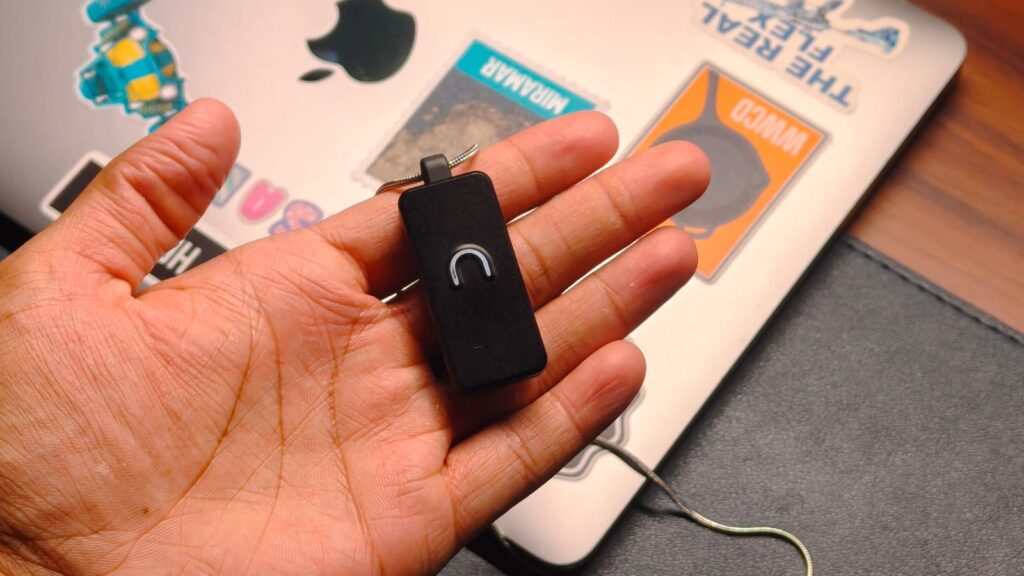
Unlike the Humane AI Pin, the Neosapien Neo 1 is elegantly simple. There are no screens or speakers. Instead, you get a sophisticated pendant-shaped wearable that’s not very heavy. I do wear a simple silver chain, so I thought it would take me some time to get used to it, but that wasn’t the case. After just 5 minutes, you simply forget it’s even there. The rectangular wearable on the front houses a metal shell with the Neo logo centered. The logo glows when it’s working, so you don’t have to pull your phone to check. Underneath the logo is a touch-sensitive area you can tap to turn the device on, and that’s pretty much it.
Some might argue for an AI wearable you can only use via your phone, but I do like the idea of it not being in your face. I already have a million different things bombarding me for attention, like my smartwatch, my earphones, and my doomscrolling beacon of death, the phone. So an AI device that sits quietly on my chest is great.
Performance

All this talk about Neosapien Neo 1 centers around one key idea. It’s supposed to remember things for you. And I’m one of those people who constantly forgets important information. Had a plan with me to go out and get lunch together? Too bad, I’ve forgotten. Part of this behavior, which I’m not proud of, is that I’m always distracted by some work. Never a day goes by that I’m not rushing to complete something. So, as you may imagine, I was quite excited to test the Neo 1 out, and, maybe, finally lend a helping hand to my brain.
When you first set up the Neo 1, it trains to recognize your voice. This, in theory, helps it sort memories more effectively. It listens constantly to whatever conversation you’re having and uses AI to transcribe, summarize, and even set reminders of important meetings, once you connect to Google Calendar. I did all of that and took it to cover the BMPS Grand Finals happening in Jaipur last week. One of the stories I worked on was a daily recap covering the biggest moments from each match. While this is usually a labor-intensive process of me writing the highlights in real time as the game is being played, I gave that task to the Neo 1 instead. It heard the commentary and recorded everything.
For the most part, the experience was better than expected. The device transcribed the commentary, which was in Hindi, and summarized the information game by game. This included the different strategies teams used, the commentators’ analysis, and how they played throughout the tournament. I could use those summaries as a foundation for my article without constantly referring back to handwritten notes.
App Experience
The best part about the Neo 1 is that you can sort through different memories and even ask the integrated chatbot questions. For example, I often remember that I’ve forgotten something important, but can’t quite figure out what it is. So, I just asked the bot, and it gave remarkably accurate answers. There’s also the obvious benefit of recording meetings, which are mostly boring with just sprinkles of useful information. That’s the part the Neo 1 excels at. I don’t have to worry about checking the deadline; I can just use the wearable.
Everything we just talked about is handled by the app, which is also pretty simple. There are four different sections: Home, Ask Neo, Memories, and Reminders. All of them are pretty self-explanatory, and they work quite well. I’m a fan of the reminders section because it highlights everything I haven’t done yet, which is usually a lot. The battery lasts a full day on a single charge, and it uses the standard USB-C port for charging.
As useful as the Neo 1 is, it isn’t without its flaws. The Neo 1 is a first-generation product, and it comes with a few quirks you should know about. The biggest hurdle is psychological rather than technical: the device is always listening. I don’t know about you, but it took me a few days to be comfortable with an AI device listening to all my conversations and recording things the other person is saying.
The other is that the Neo 1 struggles with names. Don’t get me wrong, its Hindi transcription is great, but it needs a little more work to get the names of people and teams correctly. Beyond those, the Neo app requires many permissions, the most important being the ability to disable battery optimization. I know it’s necessary for the app to work and use the AI features, but it drains a lot of battery. I had to shift the app from my primary phone to my secondary phone for that reason. So, it’d be great if Neo could optimize the app a bit more.
Verdict

At ₹12,999, the Neosapien Neo 1 serves a niche purpose. It’s for busy people who have trouble managing multiple jobs or hobbies, yet still want to do their best. I’ve never been the kind of person who consistently uses reminder apps because setting everything up feels like extra work. So a device that listens to and understands what I’m saying and keeps track of everything I need to do, like a personal assistant, is great. Don’t get me wrong, it’s still a first-generation product, and there are some problems like the increased battery drain or the fact that someone is listening to everything you say. But after three weeks of use, I found myself relying on it more often than I expected. And that’s probably the strongest compliment I can give a first-generation product.


Amazon Prime Day is back, running from June 23 through June 26. While this year’s event isn’t overflowing with must-buy discounts, there are still a handful of genuinely worthwhile deals on laptops, OLED gaming monitors, SSDs, processors, headphones, and other tech we’ve tested, reviewed, or would happily recommend. We’ve done…
Read Entire Article
Source link
Tech
Microsoft says its data centers use 90% less water than its earliest facilities as public concern grows


Microsoft announced Wednesday that over the past two decades, it has become dramatically more efficient in its use of water to cool data centers, slashing its consumption rate by 90% compared to levels when it opened its first facilities in the early 2000s. The company used 0.27 liters per kilowatt-hour last year, about three times better than the industry average.
Microsoft has for the first time replenished more fresh water globally than it consumes, making important progress on its 2030 goal of being water positive across its operations.
And if this sounds familiar, you’re not wrong. Earlier this month, Amazon shared similar water usage stats (though it performed better) and Google came out with updated pledges around being water positive.
The tech giants are working to quench concerns about water use, which has become a key point of contention nationwide. Communities and local leaders are protesting and passing moratoriums on new data center construction. Other concerns include significant energy use that could drive up utility rates and noise complaints.
At the start of the year, Microsoft tried to get ahead of those fears by launching its Community-First AI Infrastructure initiative, in which it vowed to cover its electricity costs and forgo local tax breaks. Last week, it came out in support of the Ratepayer Protection Act, a congressional measure addressing data center utility bill impacts, though it earlier opposed Washington state legislation targeting some of the same concerns.
Microsoft remains “deeply committed” to water protections, said Judy Priest, CTO of Cloud Operations & Innovation, and Steve Solomon, vice president of Datacenter Engineering, in a blog post Wednesday.
“We continue to advance datacenter innovations that reduce water use intensity while supporting the growing performance demands of cloud and AI services,” Priest and Solomon said.
Data centers use a variety of strategies to keep electronics cool, including fans, evaporative cooling, air conditioning and direct liquid cooling. The approaches involve tradeoffs: air conditioning draws more electricity but saves water, while evaporative cooling is less energy-intensive but consumes more.
Microsoft’s approaches to curb its water use include:
- Cooling primarily with fans, supplemented by evaporative cooling when outside temperatures exceed 85 degrees.
- Using chip-level cooling that recirculates water through the system.
- Auditing data centers to ensure facilities are operating as designed and conserving water optimally.
- Expanding its use of recycled, reused or non-potable water.
Comparing companies on this front is tricky. Microsoft’s liters-per-kilowatt-hour figure applies only to data centers it owns, while Amazon’s includes both its own computing facilities and leased ones.
And although Microsoft made notable progress on the goal set in 2020 of becoming water positive within a decade, it takes a global tally of water use and replenishment. In theory, that means water used in a desert climate could be offset by Microsoft’s actions in a wetter region as regards its overarching target.The Community-First AI Infrastructure initiative, however, pledges to replenish more water than it uses in each district where it operates AI data centers.
That aligns with the approach used by Amazon and Google, though Amazon’s replenishment goal covers only data centers, not all of its operations.
While concern about data center water use is growing, it remains relatively modest in the broader context: data centers account for about 0.5% of all industrial water use worldwide, as Amazon recently noted.
In terms of total volume, Microsoft withdrew 2.7 billion gallons of water in fiscal year 2024 across its data centers and its other operations. For context, Seattle Public Utilities delivers roughly 43 billion gallons each year to 1.6 million people in its service area.
Editor’s note: Story updated to clarify that progress on the 2030 water positive goal is ongoing.

Prime Day has become one of the biggest shopping events of the year and something many shoppers look forward to. For a lot of people, it’s the perfect time to finally replace products they’ve been meaning to swap out.
Some of the best purchases are the ones you end up using every single day. Whether it’s the hair dryer you reach for every morning, the grooming tools sitting on your bathroom counter, or the products that help you get ready for work, a night out, or whatever the day has in store, these are often the items that deliver the most value over time.
Laifen has built a reputation around creating personal-care products that combine sleek design with high-performance technology. This Prime Day, the brand is offering 40% off two of its standout products: the SE 2 Hair Dryer in Purple and the P3 Pro Electric Shaver.
Part of what makes Laifen stand out is its focus on bringing premium personal-care technology into everyday routines. Products like high-speed hair dryers and advanced electric shavers were once considered specialty purchases, but consumers today are increasingly looking for tools that combine performance, convenience, and thoughtful design. Prime Day makes that experience more accessible, giving shoppers an opportunity to try products that can improve routines they already have.
A Better Hair Dryer for Busy Mornings

Most people don’t spend much time thinking about their hair dryer until they’re standing in front of the mirror wishing the process would go a little faster. Getting ready in the morning is already time-consuming enough, especially on busy days when every minute counts.
Powered by Laifen’s high-speed motor technology, the SE 2 delivers fast drying performance in a lightweight design that’s comfortable to hold. Instead of spending extra time drying your hair before you can move on to styling, it’s designed to help streamline the process. When you’re using a hair dryer every morning, even saving a few minutes can make a noticeable difference over time.
High-speed hair dryers have become increasingly popular over the last few years, and it’s easy to see why. Many people are looking for ways to make their morning routines more efficient without sacrificing results. Whether you’re heading into the office, getting ready for a weekend event, or simply trying to get out the door on time, spending less time drying your hair is always a plus.
Beyond speed, many shoppers are also looking for styling tools that help them achieve smoother, healthier-looking results without spending extra time getting ready. That’s part of the appeal of newer high-speed dryers. They help simplify the process while still delivering the polished look many people want before heading out the door.
Available in a vibrant purple, it offers a fun pop of color compared to the traditional styling tools most people are used to. It’s also built with everyday use in mind. The lightweight design makes it comfortable to hold whether you’re doing a quick dry before work or spending a little more time getting ready for a night out.
The compact design also makes it easy to toss into a suitcase or weekender bag. For frequent travelers, having a styling tool that delivers strong performance without taking up too much space is always a plus. Whether you’re packing for a weekend getaway or a longer trip, it’s nice to have a dryer you can bring along instead of relying on whatever happens to be available at your destination.
The SE 2 also feels like a more modern take on a product that many people have owned for years without ever thinking about replacing it. For anyone looking to replace an older hair dryer, this feels like the time to do it. It combines speed, portability, and everyday convenience in a product you’ll likely reach for long after Prime Day comes to an end.
A Better Grooming Experience
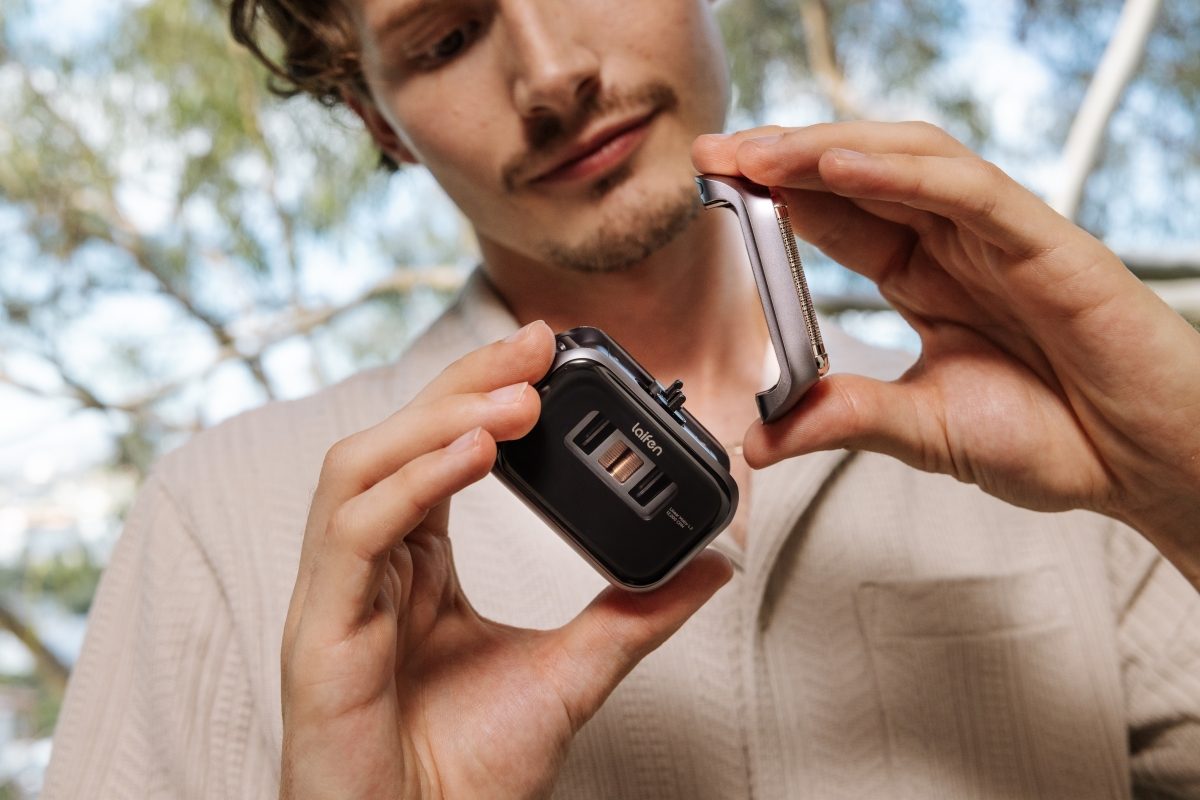
While the SE 2 is focused on helping streamline the morning routine, the P3 Pro Electric Shaver tackles another task that many people do on a regular basis.
A good electric shaver is one of those products you don’t think much about until you’re using one that isn’t getting the job done. Older models can require multiple passes, take longer to complete a shave, and create unnecessary irritation in the process. When grooming is part of your daily or weekly routine, those inconveniences can add up quickly.
The P3 Pro features a powerful linear motor and advanced three-blade shaving system that helps deliver a close, efficient shave. It has a sleek look and aims to create a more comfortable shaving experience while helping users spend less time standing in front of the mirror. For anyone still using an older electric shaver, those improvements are likely to be noticeable right away.
Just like a quality hair dryer can improve a morning routine, a reliable electric shaver can make daily grooming feel less like a chore. Most people aren’t looking to add more steps to their routine. They simply want products that work well, feel comfortable to use, and help them get on with their day.
The P3 Pro focuses on achieving a close shave while helping make the overall experience smoother and more comfortable. It keeps the focus on performance and convenience, making it a practical choice.
Small improvements to products you use regularly can make a bigger difference than you might expect. A more comfortable shave, fewer passes, and less time spent standing in front of the mirror may not sound dramatic, but those benefits add up over time. For shoppers looking to simplify everyday routines, that’s often where the biggest value comes from.
Taken together, the SE 2 and P3 Pro help bookend the day. One helps make busy mornings a little easier, while the other helps simplify grooming at the end of the day. Rather than focusing on products that only get occasional use, Laifen’s Prime Day event centers on products that become part of everyday life.
Prime Day Is a Good Time to Refresh Everyday Essentials
Prime Day is an opportunity to save on products that deliver value long after the sale ends.
The Laifen SE 2 Hair Dryer and P3 Pro Electric Shaver can easily become part of your daily routine, whether you’re getting ready for work in the morning or winding down at the end of the day. Because they’re products used on a regular basis, the value goes beyond the initial purchase. They’re the kinds of items you’ll continue reaching for day after day.
With both products available at 40% off during Prime Day, shoppers can save on two everyday essentials while taking advantage of one of Laifen’s biggest promotions of the year. For anyone who has been considering replacing an aging hair dryer or finally swapping out their current shaver, now may be the perfect time to do it.
Sometimes the best Prime Day purchases are the ones you’ll end up using the most. Whether it’s a hair dryer you reach for every morning or a shaver that’s part of your regular routine, these are the kinds of products that continue delivering value long after Prime Day is over.
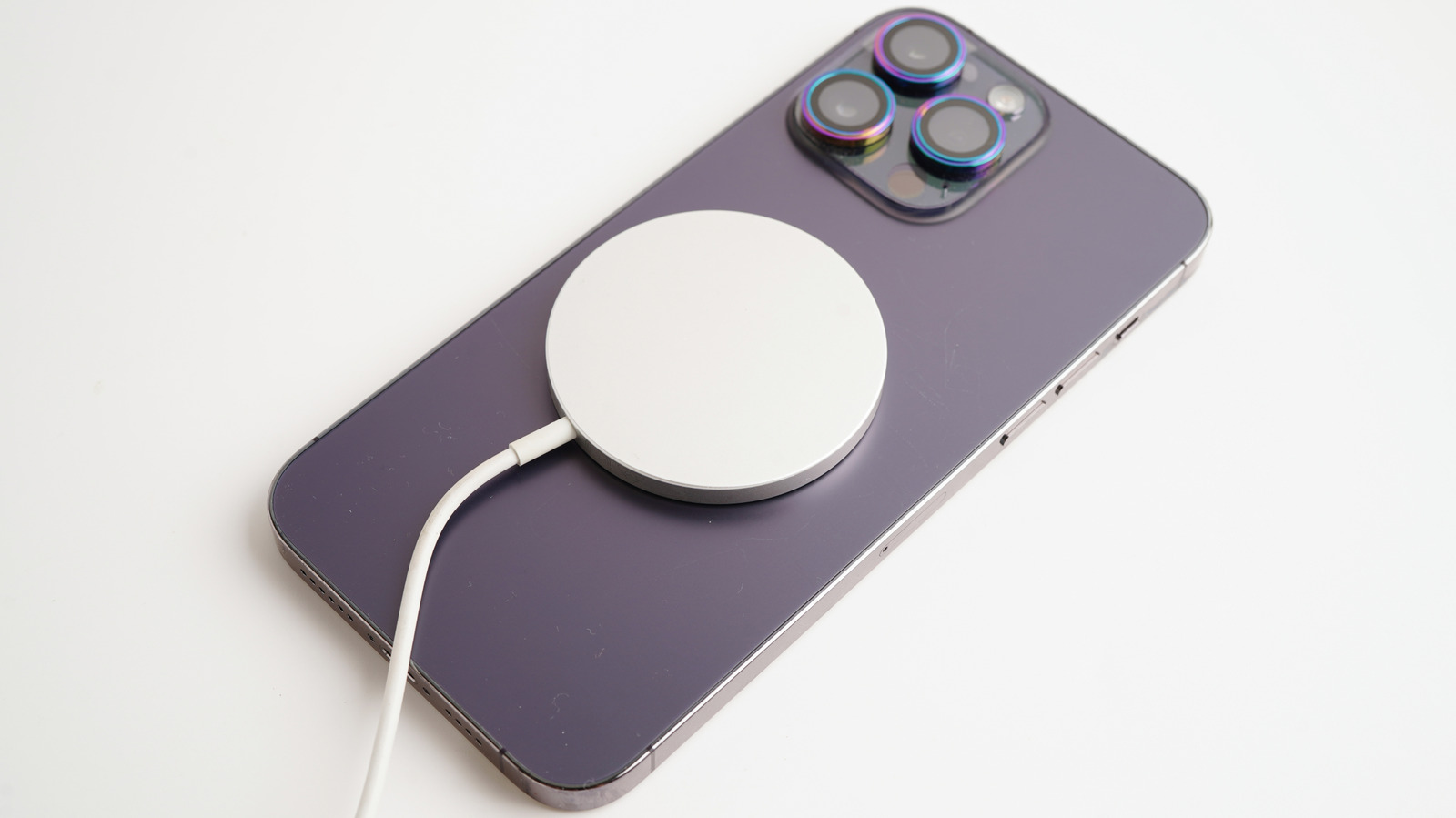
Wireless charging has become ubiquitous in recent years, with companies like Apple, Samsung and Google all embracing the technology. The benefit is obvious. It’s easier to plop a device on a charging pad than it is to wiggle in a USB-C cable.
Despite the convenience, there are some downsides with wireless charging tech. Generally speaking, wireless charging is inefficient, wasting more energy than wired charging. Let’s get into the why of it all and detail other risks associated with wireless charging.
How is wireless charging less efficient?
Wireless chargers use more power to completely charge a device, when compared to a cable. A modern smartphone is a great example of this. Charging a smartphone with a wire from zero to 100 percent takes around 15Wh (watt-hours measure the amount of energy needed for a device to run for an hour). The same phone will require around 21Wh (40 percent more) to juice up via a wireless charger, according to a 2020 study by the enterprise platform OneZero. That number could vary based on the charger and how you use it — a 2024 test by iFixit found the energy gap between Apple’s MagSafe charger and wired charger to be slightly better at around 36 percent more power used, and also showed how misalignment on a charging pad could halve the efficiency of a wireless charger.
Wireless chargers also generate and waste more heat than wired chargers. Charging pads get pretty hot during use, which is a sure sign of wasted energy.
Is this discrepancy a big deal?
Yes and no. A daily difference of around 6Wh isn’t that big of a deal when considering a single wired charger versus a single wireless charger. However, it adds up when considering every wired charger versus every wireless charger. A year of charging up a smartphone with a cable takes around 5.5 kilowatt-hours (kWh) and that shoots up to 7.6kWh with a wireless charger.
Studies have indicated that 30 to 66 percent of smartphone owners use wireless charging pads and related accessories at home, according to the Wireless Power Consortium and the Deloitte Mobile Consumer Survey UK. There are around 7.6 billion smartphones in the world. If 30 percent of those smartphones are being charged wirelessly that would indicate an annual global power waste of 4,830GWh. This amount of energy could power hundreds of thousands of homes for a year. Wireless charging products are becoming more popular every year, so this metric will only go up.
Why is wireless charging less efficient than wired charging?
Wireless chargers transfer power through electromagnetic induction. This is simply not as efficient as a direct charge, as the energy has to go through more steps to be usable. There’s also an air gap between the phone and the charger, which lets heat escape.
This is compounded by phone cases and the like, which increase the air gap. All told, wireless chargers lose anywhere from 20 to 30 percent of power throughout the whole process, due to heat dissipation. That’s on top of the 5-10 percent of losses that all chargers incur by converting the AC energy coming from an outlet to DC.
Are there any dangers when charging wirelessly?
The heat that wireless chargers produce could degrade your phone’s battery over time. Modern phones have safety mechanisms in place to prevent overheating that could seriously degrade your battery or result in a fire hazard. These mechanisms, however useful, will result in your charging session being throttled to a lower speed if the battery reaches high temperatures around the 45C (113F) mark. Make sure to use the charging pad in a well-ventilated area and never put it underneath something like a blanket or pillow.
There are hundreds of chargers out there, and they aren’t all created equal. Cheap, unbranded chargers may lack crucial safety features like temperature sensors and foreign object detection. To that end, it can be dangerous to place metal objects between the phone and the charger. Finally, some powerful chargers can interfere with medical devices like pacemakers, as they generate magnetic fields strong enough to trigger the health aide’s “magnet mode” and alter the pacing rate.
Is wireless charging bad for the environment?
Wireless charging uses more energy than wired charging, so it has a higher environmental impact than wired charging. Additionally, the charging pads will eventually become electronic waste. The technology’s tendency to degrade lithium-ion batteries over time could, in extreme examples, lead consumers to swap out their phones earlier than usual, which would have an additional environmental impact.
Is wireless charging getting more efficient?
Wireless charging is getting more efficient, which is great news. This is due to better coil alignment and industry standards set by MagSafe and Qi2 products. However, it’s highly improbable that wireless charging ever catches up to wired charging. A wired connection is simple. It’s a plug that goes from point A to point B. Wireless charging requires energy to transmit through magnetic fields.
Are there negatives to wired charging?
Despite some obvious benefits, there are some drawbacks to going with a wired charging solution. Cables degrade over time, and technology changes can force users to upgrade. We all have that cardboard box in the basement filled with dozens and dozens of barely functioning cables of various types. Also, charging ports can wear out after several years of use. Finally, it’s just more fun to plop a smartphone on a magical pad, when compared to plugging in a cord.

World Cup 2026: Ronaldo answers critics as Portugal get back on track – Sports

PrimedGun Brings Complete VR Motion Controls to the Original Metroid Prime

Council tax discount scheme set to continue in County Durham


-

 Fashion5 days ago
Weekend Open Thread: Miami – Corporette.com
-

 Entertainment4 days ago
Renter of Home in Anne Heche Crash Denies Settlement With Son
-

 Tech2 days ago
Microsoft accidentally kills epic Outlook email threads
-
 Sports21 hours ago
Two goals and an assist by sheer aura: Cristiano Ronaldo just entered the World Cup chat
-

 Business4 days ago
Soccer-U.S. defends Iran World Cup travel restrictions, says discussions ongoing
-
Crypto World13 hours ago
Bitcoin (BTC) Dips Below $62K, Ethereum (ETH) Plunges 6% Daily: Market Watch
-

 Politics6 days ago
BBC Reporter Discusses Cross Party Criticism Of Trumps Iran Deal
-

 Crypto World10 hours ago
Securitize Wraps Roubini's SEC-Registered ETF as Dubai VARA Digital Security
-
Business16 hours ago
Entergy settles forward sale agreements, raises $672 million in cash proceeds
-
 Business5 days ago
Wall Street Week Ahead: Investors see Micron earnings as pulse check of AI rally momentum
-

 Politics4 days ago
Andy Burnham and the meaning of Makerfield
-

 Tech6 days ago
AWS enters the context layer race with a graph that learns from agents, not manual curation
-
 Crypto World4 days ago
Can Charles Hoskinson Really Rescue Cardano?
-

 NewsBeat5 days ago
Keir Starmer Allies Question His Chances For No 10
-

 Crypto World5 days ago
HIVE shares jump as $220M AI deal speeds Bitcoin mining pivot
-

 Crypto World4 days ago
Jake Chervinsky accuses CME of protecting derivatives monopoly
-

 Tech2 days ago
Nearly 7,000 fake Amazon domains registered ahead of Prime Day 2026, researchers warn
-

 Entertainment5 days ago
Jose Alvarado Wants Taylor Swift at More Knicks Games
-
 Tech3 days ago
Signal’s Meredith Whittaker says AI chatbots ‘are not your friends’ and calls Copilot agents a backdoor
-

 Business6 days ago
Brexit cost 6% of UK economy, Bank of England company data suggests
You must be logged in to post a comment Login