
Politics
UK Polls Today: Closing Times And How To Vote

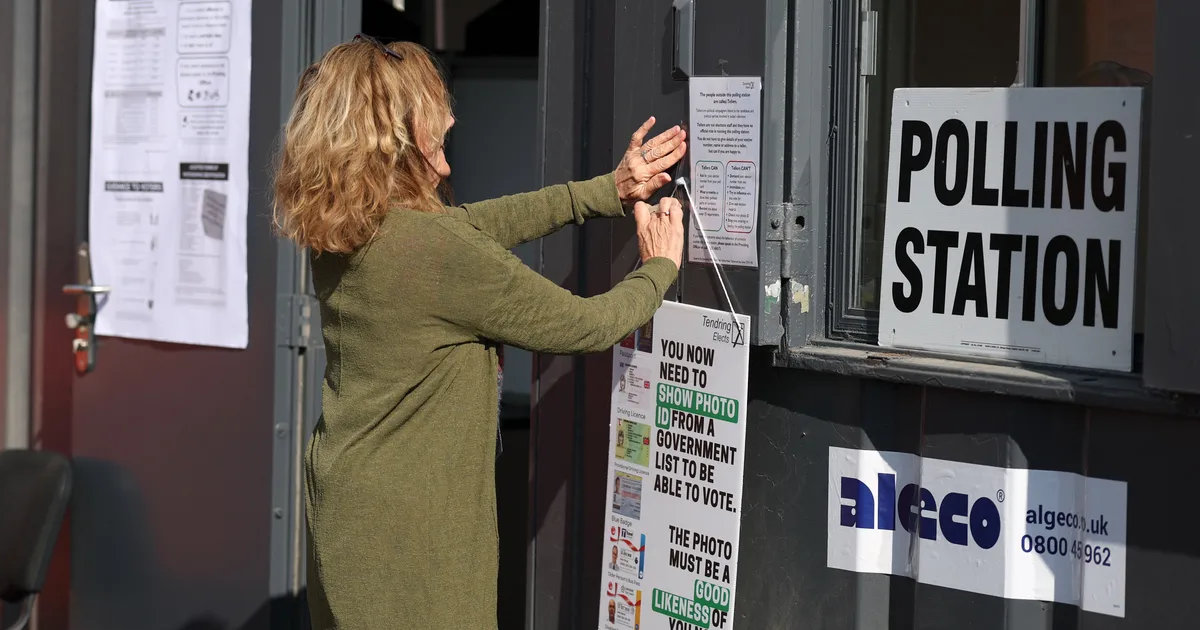
Today, Thursday 07 May 2026, will see voters across the country flock to the ballot box.
In England, voters will have their say in close to 5,000 seats across 136 councils.
Parliamentary elections are also taking place in Scotland and Wales, though there will be no elections in Northern Ireland until May 2027.
Here’s some crucial facts you need to know about the polls today – including some dos and don’ts.
When do the UK polls open and close on 7 May 2026?
The polls have been open since 7am and will close at 10pm tonight, Thursday 7 May.
You will be able to cast your vote after 10pm if you were in the queue to vote before that point.
What if I can’t make it to the polling station?
You can get an emergency proxy vote if you are unable to make it to the polls today due to urgent circumstances you couldn’t have foreseen by the regular proxy vote deadline (usually six days before the polls open).
Emergency proxy applications close at 5pm on 7 May.
That means you can get another person you trust to vote for you in person.
Some reasons to get an emergency proxy vote include:
- A medical emergency,
- Being away for work,
- Lost, stolen, or damaged ID that became missing or got damaged after the deadline to get a Voter Authority Certificate passed. This applies to polls that require ID,
- Acting as a medical companion to someone receiving medical care (Scottish Parliament elections only),
- Needing to change your existing proxy (Scottish Parliament and council elections only),
- Being detained in a mental health institution in relation to criminal proceedings (Scottish Parliament and local council elections only).
If you think you may qualify for an emergency proxy vote, the Electoral Commission said you should contact your local electoral registration office in Scotland or the electoral services team at your local council in England or Wales.
They offer PDFs for various circumstances on their site.
What are some voting dos and don’ts?
How do I know if I can vote?
Firstly, you do have to be registered to vote. The deadline to sign up for these elections has passed, but if you’re not sure whether you can vote or not, you can check here.
If you are registered to vote, you should have been sent a polling card. You don’t have to bring this with you, though the BBC said this can speed things up.
Can I vote anywhere?
You can only vote in your local polling station, which you can find here. However, voters in four parts of England – Cambridge, North Hertfordshire, Milton Keynes, and Tunbridge Wells – will be able to vote in other places as part of a pilot which hopes to make voting easier.
Do I need to bring ID?
You don’t have to use a photo ID when voting in person for the Scottish Parliament or Senedd, but you do when voting in person in the English local elections.
Acceptable forms of photo ID include:
- A passport,
- A driver’s licence,
- A Blue Badge,
- An identity card bearing the Proof of Age Standards Scheme hologram,
- Older or Disabled Person’s bus passes,
- A 60+ Oyster card,
- Armed Forces Veteran Cards.
“You only need to show one form of photo ID. It needs to be the original version, not a photocopy,” The Electoral Commission said. They added that you can still use your photo ID if it’s out of date, so long as it looks like you. The address on your ID does not have to match your current address.
Can I take photos?
You’re encouraged not to take a picture inside the polling station. This could risk the secrecy of your vote and that of other people.
In fact, if you reveal how someone else voted, even by accident, you risk a £5,000 fine and up to six months in jail.
You can usually take a picture outside the polling station, though.
You also cannot discuss politics inside a voting station.
Subscribe to Commons People, the podcast that makes politics easy. Every week, Kevin Schofield and Kate Nicholson unpack the week’s biggest stories to keep you informed. Join us for straightforward analysis of what’s going on at Westminster.

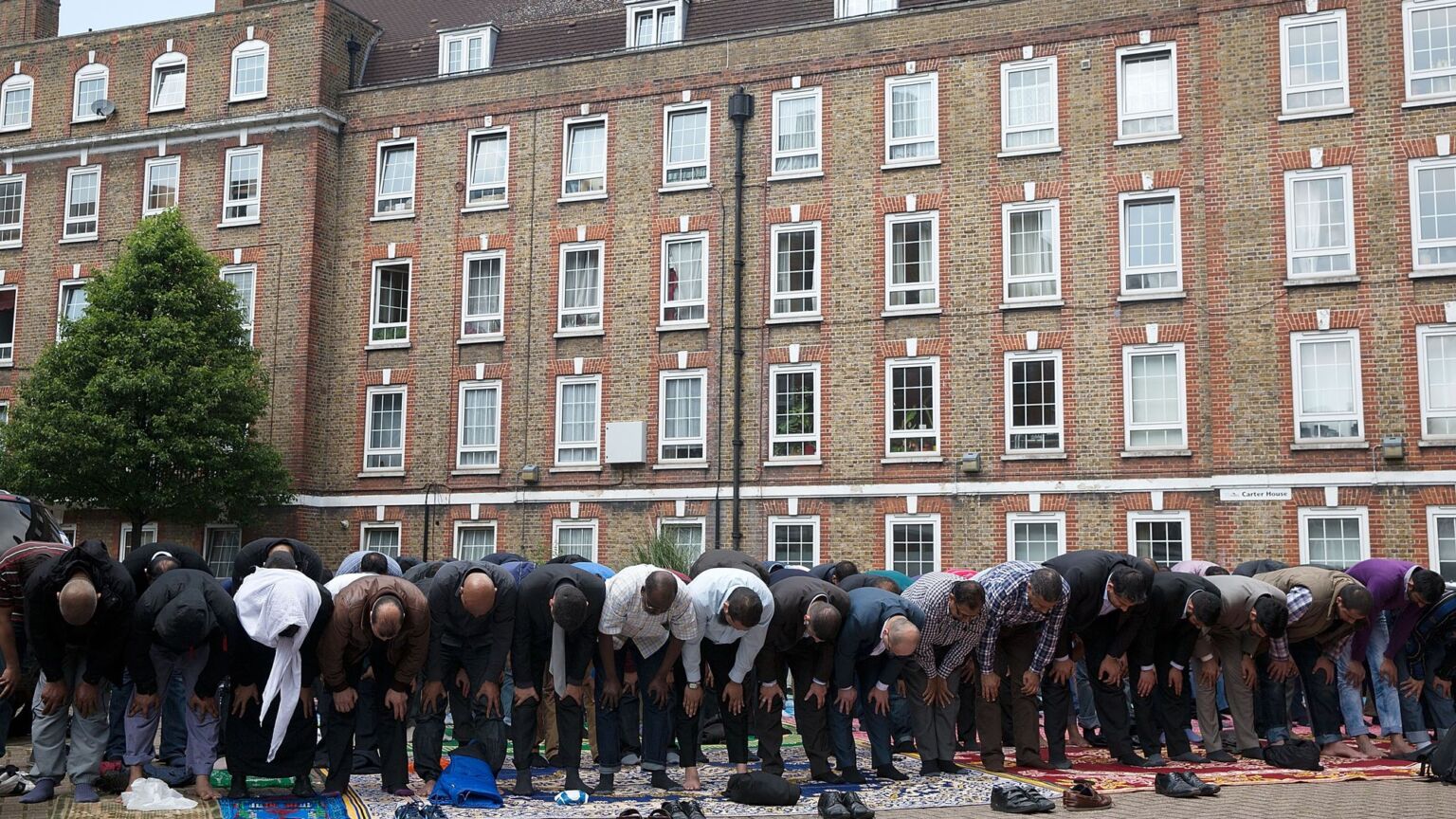
Even before a single ballot has been counted, Islamic sectarianism has already emerged as one of the defining stories of these English local elections. Significant proportions of Muslim voters are expected to swing towards Green or Muslim independent candidates, and away from a Labour Party that could once depend on their vote. A new report by spiked columnist Rakib Ehsan for the Policy Exchange think-tank explains why.
‘Understanding Islamopopulism’ looks at the distance between Muslim voters and the British mainstream, and what this might mean for British democracy. Policy Exchange commissioned pollsters JL Partners to survey the views of more than 1,000 British Muslims. And the results are stark. According to the polling, the most important concern for Muslim voters is not the economy, education, housing or healthcare, but Gaza. The poll also found that 63 per cent – nearly two-thirds – prioritise their Muslim identity over their British identity.
This has been something of an open secret in British politics for some time. And although the left furiously denies this is the case, the Green Party and Muslim independent candidates have made major gains by presenting themselves as the vehicles for Muslim interests. Most notoriously, in February this year, the Greens’ Hannah Spencer triumphed in the Gorton and Denton by-election on the back of an unashamedly sectarian campaign. Campaign leaflets and videos were produced in Urdu (the national language of Pakistan), warning of Reform UK’s ‘Islamophobia’ and painting the Labour government as overly supportive of Israel.
The report also found shockingly high levels of anti-Semitism. The Muslims surveyed were more than twice as likely as the average Briton to believe that Jews have ‘too much power’ over banking, parliament, the media, the legal system and the entertainment industry. A quarter of respondents also had a ‘favourable’ view of Hamas – a proscribed terrorist organisation in the UK, and a group committed to the violent destruction of Israel and the expulsion of Jews from the Middle East.
Given this hostility towards Jews, it is hardly a surprise that the Greens – having established themselves as the new face of the Islamo-left alliance – are now attracting so many anti-Semites. Just last week, two candidates were arrested on suspicion of stirring up racial hatred against Jews. Just as disturbing is that, if recent polling is anything to go by, the anti-Semitism scandals swirling around the Greens have not made much of a dent in their electoral prospects.
Other cultural attitudes uncovered by the report are just as alarming. Polling found that a majority of British Muslims are in favour of criminalising depictions of the Prophet Muhammad and the desecration of the Koran. In an age when hostile mobs have forced schoolteachers into hiding for showing a cartoon of Muhammad, and when the authorities are already arresting dissidents for burning the Koran, these are not academic questions.
The consequences of ‘Islamopopulism’ will be profound. Already, we are witnessing the strange spectacle of a Middle Eastern conflict taking centre stage in local elections that, until recently, had far more to do with potholes than Palestine. Where prospective councillors might once have sought the support of their communities by promising cleaner streets or more frequent buses, they now promise to be the ‘voice’ of Gaza and to sever whatever (minimal or non-existent) ties their area has with Israel.
Should they persist until the next General Election and beyond, the forces of sectarianism will be even more damaging to British democracy. It isn’t clear how parliament can be expected to act in the interests of Britons as a whole if an increasing number of representatives are elected solely to advance the concerns of one religious group.
It should go without saying that most British Muslims are proud and productive members of society. And as the report confirms, most are not anti-Semites and do not support Islamist terrorism. But the rise of Islamic identity politics seems almost guaranteed to drown out those voices who are closest to the British mainstream. Unless it is defeated, the new sectarianism could prove poisonous to society and democracy.
Hugo Timms is a staff writer at spiked.
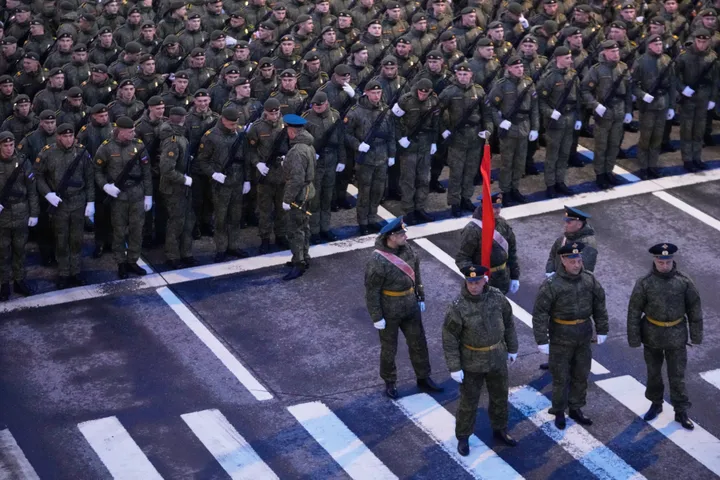
The Kremlin has been forced to respond to leaked European intelligence that Vladimir Putin has starting hiding in an underground property for weeks at a time out of fears for his safety.
A leaked report from an unnamed agency – shared by CNN this week – claimed the Russian president has spent significant periods hiding in upgraded bunkers hours away from Moscow since the invasion of Ukraine in 2022.
The report suggested how Putin had stopped using his home in Moscow or his summer property in Valdai town after unsubstantiated claims Ukraine was trying to target the president at his personal residence.
The report also noted that Putin has not visited a military facility this year so far despite making regular trips throughout 2025.
Personal security has been increased and surveillance systems have been installed in his homes.
Bodyguards, cooks and photographers have to be screened twice before gaining access to the autocrat, too, according to the leaked intel.
The employees can only use phones without internet access and are not allowed to travel on public transport.
The Institute for the Study of War, a US-based think tank, also said it had seen “corroborating evidence of enhanced security measures for Putin and high-ranking Russian officials”.
But the Kremlin dismissed any suggestions that extra security has been installed around Putin out of fears of a coup or assassination attempt.
Spokesperson Dmitry Peskov said: “What ‘European intelligence agency’ are you referring to? I am not aware that such an agency exists. Unfortunately, I don’t know what it is.”
According to Russian state news agency TASS, he added: “I don’t read such material.”
But, the spokesperson did admit extra security has been installed for Putin in case of a Ukrainian attack on May 9 celebrations, the date when Russia celebrates its victory over Nazi Germany in 1945.
Peskov added: “You know that on the eve of major holidays, and, of course, perhaps most importantly, Victory Day in our country, additional security measures are always taken by the relevant special services.”

Russia tried to declare a unilateral ceasefire with Ukraine for May 8-9, dates which coincide with the Victory Day parade.
However, Ukrainian president Volodymyr Zelenskyy rejected the suggestion, claiming it was a move to protect the celebration – not a step towards peace.
Zelenskyy had already suggested a ceasefire starting from May 6 which would last until after the parade.
But that proposal was ignored by Russia as Moscow continued to target areas across Ukraine.
“We have repeatedly offered the Russian leadership the option of moving toward peace. In response, we have received only new Russian strikes,” the Ukraiian president said in a post on X on Thursday.
“That is exactly why Ukraine’s long-range sanctions are extending to distant locations in Russia linked to its military-industrial complex, war infrastructure, and the financing of its aggression.
“Every day, Russia can make a choice and end its war.
“And not for a few hours in order to receive our permission to hold a parade in Moscow, but in a way that protects human lives.”
He added that Russia had failed to respond to his longstanding calls for a ceasefire, saying: “human life is incomparably more valuable than the ‘celebration’ of any anniversary”.
Moscow also sent a note to foreign diplomatic missions and international organisations warning that it would launch a “retaliatory” strike on Kyiv – including against “decision-making centre” – if Ukraine disturbed the Victory Day celebrations.
The message called for a “timely evacuation of personnel from diplomatic and other missions, as well as citizens from the city of Kyiv”.
Zelenskyy hit back: “If the one person in Moscow who cannot live without war is interested only in a parade and nothing else, that is another matter.
“Russia has fought to the point where even their main parade now depends on us.”
Moscow also declared last week that for security reasons May 8 would be a slimmed-down format, and weaponry like tanks and missiles will not be on display, unlike usual.
It comes after a high-rise building was hit by a drone on Monday. Russia also claimed its air defences had destroyed 32 drones heading to the capital on Thursday.
Subscribe to Commons People, the podcast that makes politics easy. Every week, Kevin Schofield and Kate Nicholson unpack the week’s biggest stories to keep you informed. Join us for straightforward analysis of what’s going on at Westminster.
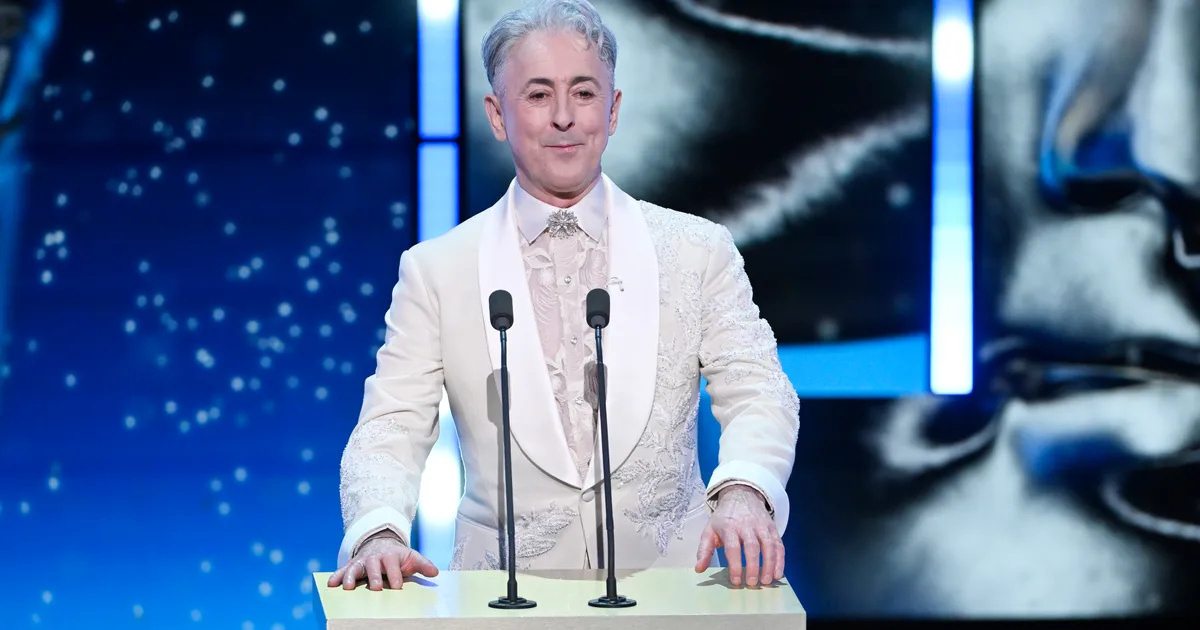
Alan Cumming has made it clear we shouldn’t expect to see him back at the helm of the Baftas next year.
Exacerbating the furore even further was the fact that the incident made it into the BBC’s coverage of the event, uncensored, despite it airing on a two-hour delay.
“It was an international scandal,” the Scottish actor and presenter told The Times in an interview published on Thursday.
“Then poor John gave this interview saying, ‘I’m not a racist. I called Alan Cumming a paedophile too’. Oh great! He’s equal opportunities and my name and ‘paedophile’ were in the same sentences all over the world.”
Alan went on to criticise Baftas organisers for their part in the incident, lamenting: “It was bad, bad, bad, bad leadership. Bad people who weren’t doing their jobs properly, who really had not prepared and let people down.”
The Traitors US host claimed that because of the earpiece he had to wear on stage, he couldn’t “hear very specifically” what went on during the ceremony, casting doubt on whether the Sinners stars would have “heard the actual slur” in the moment, either.
Later on in the ceremony, he apologised on behalf of Bafta, without understanding exactly what it was he was addressing.
He claimed: “I watched myself back. I was very smiley, I didn’t do it with the gravitas and tone I would have used had I known. That pissed me off.”
Alan added: “You could say they didn’t know [what might happen], but they clearly did, because apparently John had said the n-word at a party the day before.”
Ending the interview, Alan ruled out the possibility of hosting the Baftas for a second year, claiming that before the event had even begun, he’d asked his agent to “remind me, I never want to do this again”, as the job itself had already proved to be so “tough”.
The week after the Baftas, Alan addressed the controversy for the first time, writing on Instagram: “What should have been an evening celebrating creativity as well as diversity and inclusion turned into a trauma-triggering shitshow.”
He continued: “I’m so sorry for all the pain Black people have felt at hearing that word echoed round the world.
“I’m so sorry the Tourette’s community has been reminded of the lack of understanding and tolerance that abounds regarding their condition.”
After Delroy Lindo publicly voiced his disappointment over how Bafta had handled the incident, the awards body issued a public apology, and accepted “full responsibility” for what transpired.
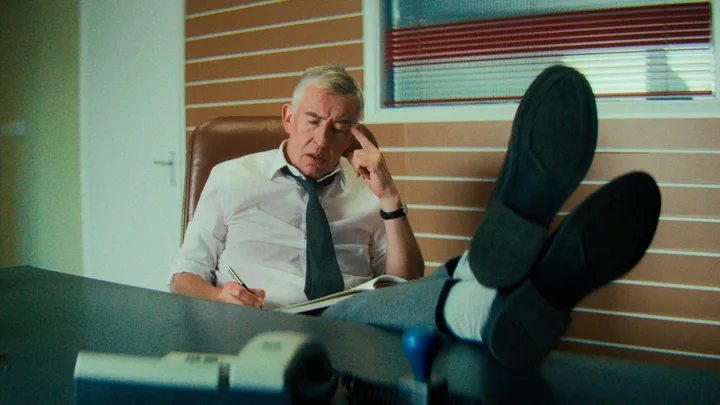
If you’re a fan of a British drama, you’re definitely going to want to check out Netflix’s latest true crime adaptation.
On Thursday morning, the streaming giant unveiled Legends, a star-studded drama telling the story of the undercover customs investigators who took part in an elaborate operation to take down a gang of illegal drug traffickers.
An official synopsis for the show teases: “In the early 1990s, Her Majesty’s Customs and Excise was losing its battle with illegal drug smuggling across Britain’s borders. The solution was extraordinary. In a top-secret operation, a small team of Customs employees were sent undercover. Their task – to infiltrate Britain’s most dangerous drug gangs.
“But these were not trained spies. They were normal men and women, plucked from ordinary lives around the UK, put through a basic training regime and tasked with building new identities in the criminal underworld. These identities were called Legends.”
So far, critics have been heaping praise on the “gripping” series, praising performances by cast members Steve Coogan and Tom Burke, and indicating that it’s perfect for binge-viewing.
Here’s a selection of what the reviews have been saying…
“Together with directors Brady Hood and Julian Holmes as well as a uniformly strong cast, led by a gravel-voiced [Steve Coogan] and Tom Burke as Don’s star pupil, Forsyth makes Legends a gripping tale of found potential and assumed identity.”
“While everyone in this strong ensemble cast delivers, the standout performance comes from Burke […] This is glossy, big-budget drama filled with adrenaline — and a mighty fine early Nineties soundtrack — but it’s not without moments of comic relief, giving it a British feel that will undoubtedly please fans of Forsyth’s previous work on the BBC.”

“Forsyth’s skill for paring a narrative down to just the fun parts makes this irresistible. Steve Coogan is in his element […] Don’s lone-wolf eccentricities, boosted by Coogan’s gift for the little tics and gestures that say a character has formed their own unique view of the world, give Legends a running seam of humour.”
“Neil Forsyth has turned this little-known episode in British history into a sure-footed six-part thriller. You will never stop marvelling throughout at the fact that it really happened.”
“There are too many names and too many side players running at once, and somewhere between Liverpool and Green Lanes, you start wishing someone had taken a red pen to the cast sheet. None of that ruins it, though. If anything, the messiness is part of why the show feels so alive.”

“Perhaps because Legends tells a less well-known story, Forsyth’s dialogue works overtime to remind us of the stakes involved. Within the space of a few minutes, we’re told that the operatives are trying to ‘pull off the biggest result in customs history’ while the smugglers are plotting the ‘biggest heroin importation the country has ever seen’.
“Thankfully, there’s enough intrigue to keep you persevering through some protracted moments.”
“In its competence, Legends feels like it was born to be on BBC One but has somehow ended up on Netflix. How the series will play to international audiences remains to be seen, but it lacks the pizzazz of Peaky Blinders or the relentless rug pulls of Line of Duty.
“What’s left is Forsyth’s trademark brand of period drama: engaging but not gripping, authentic but not original, well-crafted but not striking. Legends, is, in short, what a lot of British telly is: an exercise in risk-free repetition.”
“The energy spent keeping things serious prevents the series catching fire. But it remains a brilliant story, here well told.”
All six episodes of Legends are now streaming on Netflix.
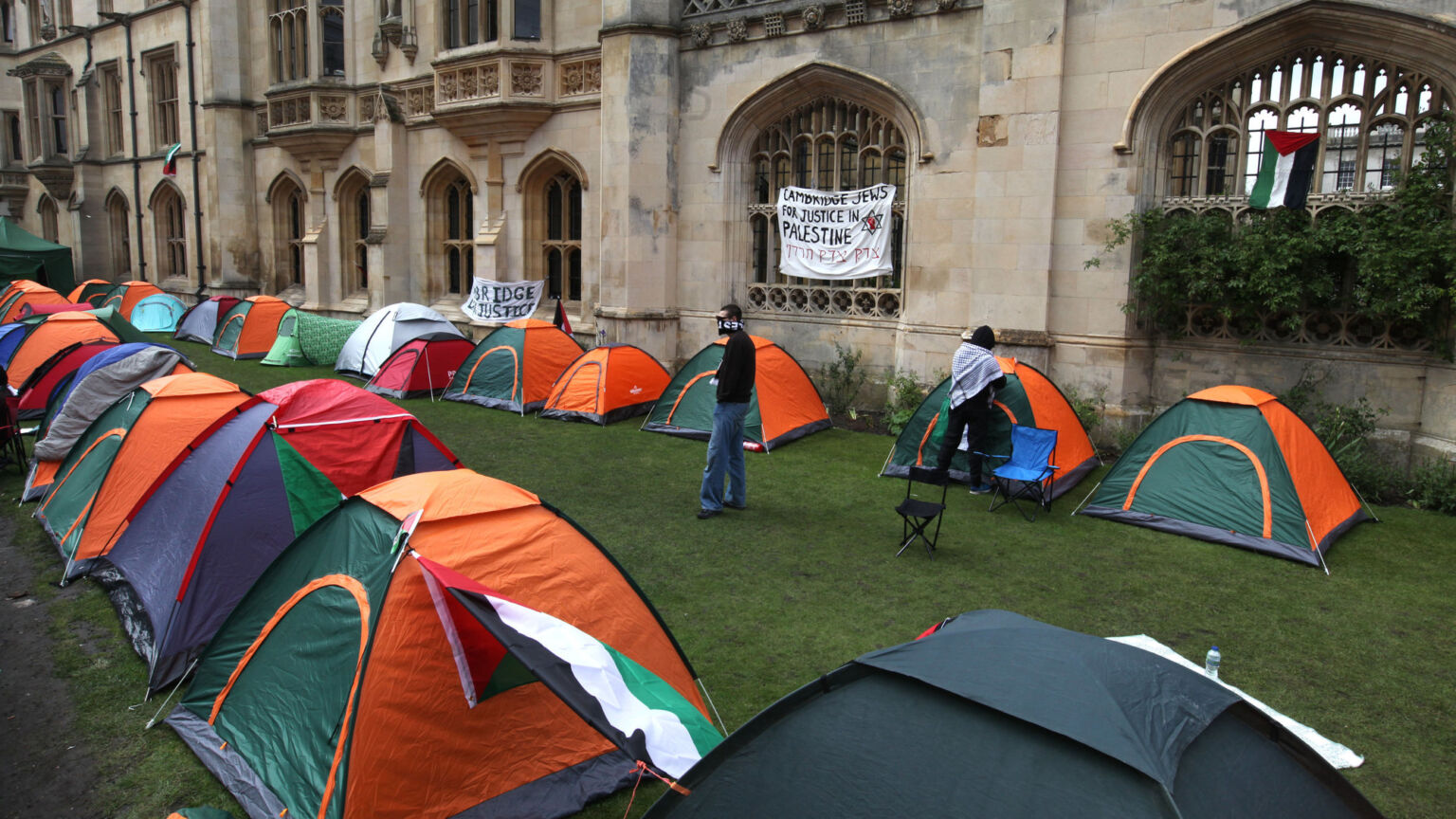
Finally, anti-Semitism on campus is beginning to get the attention it deserves. For too long, the vile abuse experienced by Jewish students at some of the UK’s leading universities has been ignored or, worse, condoned as just criticism of Israel. But following last week’s horrific attack on two men in Golders Green, and – before that – the killing of two people at a Manchester synagogue, the prime minister has had to do more than offer thoughts and prayers to the Jewish community. This week, Starmer announced that ‘every part of society’ has a responsibility to tackle anti-Semitism, including universities where it has been allowed to fester unchecked.
From now on, universities will be required to monitor and publish data exposing the scale of anti-Semitism, along with specific details of how they plan to respond to it. Starmer warned that there will be ‘zero tolerance for inaction’, although he did not spell out the consequences for universities that do fail to act. In addition, the government wants to see increased efforts to protect Jewish university staff and students, and will provide a £7million budget for anti-Semitism training for staff in schools, colleges and universities.
At the same time, Vivienne Stern, chief executive of Universities UK, also decided the time was right for universities to be expected to do more to tackle anti-Semitism. She said she had written to vice-chancellors to ask them to ‘review security arrangements in light of evidence of escalating violence’ and announced she was working with the Union of Jewish Students to promote its anti-Semitism training.
What’s astonishing is that such measures are not already in place. Jewish students have been raising the alarm about anti-Semitic abuse on campus for more than two years now. Every twist and turn of the war in Gaza became an excuse either to target Jewish students directly or to create a climate of hostility on campus where any expression of sympathy to Israel could prompt vitriol.
In March this year, the Union of Jewish Students published findings from a survey showing that anti-Semitism has ‘become normalised’ on British university campuses. It revealed that almost a quarter of students ‘of all faiths and none’ had witnessed behaviour targeting Jewish students because of their religion or ethnicity, and nearly half had encountered people justifying the 7 October attacks by Hamas. Half of the students questioned said they had heard slogans or chants glorifying Hamas or Hezbollah, and almost two-thirds said they had had their learning disrupted by protests. Perhaps most shocking of all was the revelation that one in five students would either be reluctant to, or would never, share a house with a Jewish student.
Why did these findings not prompt a government announcement about tackling anti-Semitism? It is impossible to imagine a survey showing that one in five students would refuse to share a house with a black or transgender student being met with such a muted response. Why did Universities UK not step up anti-Semitism training at this point?
Repeated failure to tackle anti-Semitism on campus has meant the problem has been allowed to escalate. This week, it emerged that a student at Cambridge University, Bradley Smart, received death threats after he returned from a think-tank-organised visit to Israel designed to help people better understand the Gaza conflict. Smart, who is not Jewish, posted photos of his trip on Instagram and, in response, became party to a group chat in which identifiable individuals from within his own college wrote, ‘I’m going to kill him’, ‘kill him’, and ‘he needs to die’. The chat included anti-Semitic slurs and degrading language, including people drawing comparisons between Israel and the Nazis.
Smart reported the threats against him to college officials, but was told to speak to welfare staff or consider moving rooms. Again, it is completely inconceivable that a student from any other minority group would be advised to move rooms if they had been the target of death threats. He writes: ‘For 31 nights after I saw the threats, I remained living in a room where the person who stated directly that I needed to die had unrestricted lift access to my room.’ Eventually, concerns for his own safety prompted Smart to move out of Homerton College.
Cambridge University has said it issued ‘formal warnings’ and ‘made it clear’ that ‘the behaviour in question’ – that is, sending death threats – ‘was entirely unacceptable’. As Smart says, this response is, ‘polite and procedural’ but shows the university was far more concerned with managing reputational risk than genuinely safeguarding its students.
We need to ask why it took the stabbing of two Jewish men on the streets of London for anti-Semitism on campus to be taken seriously. And while Starmer’s decision to act now is better than nothing, there is a real risk that his announced crackdown is too little, too late. Indeed, students and commentators are already mounting their defence, complaining that they are being blamed for attacks that did not happen on campus and that anti-Zionism is being conflated with anti-Semitism. That these criticisms are even getting airtime suggests there is a lot further to go to turn the tide on anti-Semitism in higher education.
Starmer can bluster about ‘zero tolerance’ all he likes. But having been allowed to fester for so long, tackling endemic Jew hatred on campus will take more than tracking and publishing data.
Joanna Williams is a spiked columnist and author of How Woke Won. Follow her on Substack: cieo.substack.com.

We’ve written before about how everything from a paintbrush to a pot full of water can help you look after your garden.
And now, it seems a cup of chamomile tea may help those with seedlings and young plants.
It can save them from “damping off”, a wilting process which involves fungal pathogens like Pythium and Rhizoctonia. These can sometimes take out an entire tray of young plants in a matter of hours.
How does chamomile tea prevent “damping off”?
Chamomile oil has been found to have properties that could help to ward off unwanted fungi. And another paper found that the plant’s tea is antifungal too.
Per Gardening Know How, those benefits may help to keep damping off at bay.
That’s because, they explain, the drink is high in tannins and compounds like apigenin and chamazulene.
These contribute to the beverage’s potential fungus-fighting power. And they mimic the same fungicidal process sulphur achieves in plants, but more gently, and in a way that’s delivered straight to the plant’s roots.
Additionally, the tannins could provide a slightly more stressful environment than usual for new spores without affecting your seedling’s growth.
A word of caution, though. The strongest evidence-based results have come from chamomile oil, and not its weaker, harder-to-titrate tea counterpart.
How can I make chamomile water for my plants?
Gardening company Vego Garden shared in a TikTok video that you should take the following steps:
- Brew some chamomile tea and let it cool,
- Pour it into a spray bottle, and
- Spray the mixture over your seedlings to help protect them.
If you like, you can add some cinnamon to the mix, which may be helpful because it contains cinnamaldehyde.
This is another natural antifungal agent, though it might not be as suitable for very young plants, as it’s a little stronger than chamomile.
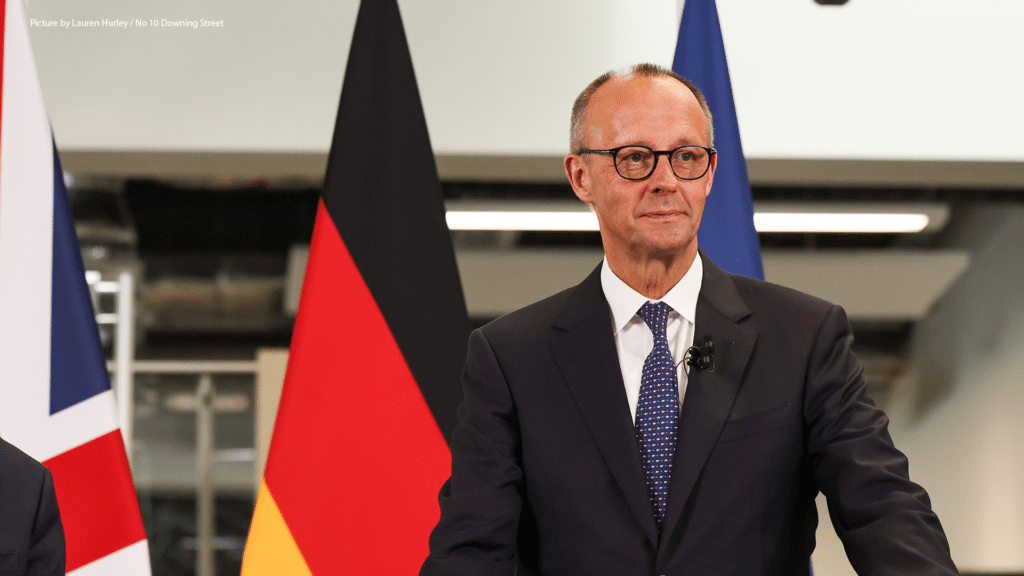
Andreas Busch assesses German Chancellor Friedrich Merz’s first year in office. He scores his performance in different areas and highlights his key successes and challenges.
A year ago, when Friedrich Merz was elected Chancellor I wrote on this site that his background in business and transatlantic networks would draw him especially to foreign policy. With both the Chancellery and the Foreign Office in CDU hands for the first time in almost sixty years, the ingredients for a more coherent German foreign policy seemed to be in place. One year on, the picture is more complicated than that early optimism suggested.
Merz did indeed hit the ground running on the international stage. Even before taking office, he had engineered Germany’s most consequential fiscal policy shift in a generation: a constitutional reform of the debt brake passed with the outgoing Bundestag, unlocking a €500 billion infrastructure fund and exempting defence spending above one per cent of GDP from borrowing limits. The geopolitical rationale was explicit — the Trump administration’s unpredictability, the continuing war in Ukraine, and the infamous Oval Office encounter between Trump and Zelenskyy. Merz invoked Mario Draghi’s ‘whatever it takes’ to justify a sharp U-turn for a party that had made fiscal discipline a core identity marker.
Foreign Minister Johann Wadephul, a CDU colleague and former defence spokesman, proved a competent partner. The government navigated the Gaza crisis with more nuance than its predecessor, temporarily restricting arms exports that could be used in Gaza in August 2025 before lifting the restrictions after a ceasefire in November. On migration — the issue that dominated the election campaign — Interior Minister Alexander Dobrindt (CSU) acted from day one intensifying border controls and ordering the rejection of asylum seekers at Germany’s internal EU borders. He even pressed on when a Berlin administrative court ruled the rejection of three Somali asylum seekers at the Polish border unlawful.
Yet for all the foreign policy ambition, domestic politics refused to stay in the background.
The CDU/CSU–SPD coalition — the fifth grand coalition in the Federal Republic’s history but by far the smallest, with just 52 per cent of Bundestag seats — has been beset by conflict from the start. With a working majority of only twelve seats, every backbench rebellion becomes an existential drama.
The pattern was set early. In July, the coalition’s agreed candidate for the Federal Constitutional Court, Frauke Brosius-Gersdorf, had to withdraw after CDU backbenchers revolted over her positions on abortion, demonstrating that the party leadership could not control its own parliamentary group on sensitive issues.
In the autumn, Merz promised a ‘real change’ in social policy. Critics soon labelled it the ‘autumn of commissions’ — expert panels substituting for decisions. The pattern is familiar in German politics but sits poorly with a Chancellor who promised a departure from the Merkel era’s incremental caution.
The most dangerous episode came in December, when eighteen younger CDU/CSU members — the so-called ‘pension rebels’ — threatened to block a pension stabilisation package. With the coalition’s majority razor-thin, even a small revolt could bring down legislation. In the end, the package passed with just two votes to spare, leaving ‘deep scars in the coalition and within the Union.’
The SPD, meanwhile, has struggled with its role as junior partner. Party chair Bärbel Bas called Merz’s suggestion that Germany could no longer afford its welfare state in its current form ‘bullshit’ — hardly the language of a harmonious coalition. When Merz made an ill-judged remark about ‘the problem’ still visible ‘in the cityscape’ in relation to migration, SPD deputy faction leader Wiebke Esdar joined the resulting street protests.
The coalition’s most serious public rupture came in April 2026, when Economics Minister Katherina Reiche (CDU) openly attacked Finance Minister Lars Klingbeil (SPD) over his proposals for a windfall profits tax and energy price relief. Crisis talks that were to lead to a package of ‘comprehensive reforms’ instead only produced an emergency fuel tax cut of 17 cents per litre for two months — an echo of the Scholz government’s ‘Tankrabatt’ in 2022, a questionable energy policy, and a disappointment when compared to announcements beforehand.
The public has noticed. The ZDF Politbarometer in mid-April showed government satisfaction at a record low of 27%. Merz’s own approval had fallen to 30%, and only 18% rated coalition cooperation as good. Most strikingly, polling now puts the AfD ahead of the CDU/CSU — the governing coalition would no longer have a parliamentary majority if an election were held today.
Asked whether the coalition would last until the next scheduled election in 2029, Merz offered a notably un-reassuring answer: ‘Nobody can guarantee anything.’, Recently, however, the Merz cabinet managed to agree both on the fundamentals of the 2027 budget and a reform of the health system that is to help solve the latter’s deficit problem by producing savings of approximately €15 billion. If this gets passed in the Bundestag, the coalition may in the future look back on this as a turning point.
So how would one grade Chancellor Merz’s first year? In the spirit of the German school system (where 1 is the best mark and 6 is the worst):
Foreign and security policy: 2 (good). The debt brake reform was bold and consequential. Merz has established himself as a credible interlocutor in European capitals and handled the Gaza situation with more agility than Scholz. The alignment of Chancellery and Foreign Office has delivered the coherence I predicted a year ago.
Domestic reform: 4 (adequate). The ‘autumn of commissions’ label stings because it is fair. The welfare-to-work rebrand (from Bürgergeld to Grundsicherung) is largely cosmetic. The pension deal nearly collapsed. The new military service model is an awkward compromise. The ambition is there; the delivery is not.
Coalition management: 4 (barely adequate). A majority of twelve seats would test any leader, but the repeated near-misses — the investiture fiasco, the pension rebellion, the Reiche–Klingbeil blow-up — suggest a Chancellor who has not yet found a reliable method for managing his own side, let alone his coalition partner.
Communication: 5 (poor). The ‘cityscape’ gaffe, the ‘bullshit’ exchange, the nobody can guarantee anything’ — Merz repeatedly creates unnecessary turbulence through imprecise or provocative language. For a Chancellor who hired a respected foreign policy journalist as government spokesman, the domestic messaging has been surprisingly clumsy.
Overall: 3 (satisfactory, with reservations). Merz has shown that he can act decisively when the stakes are high enough — the debt brake reform proved that. But his first year has also revealed a government that lurches from crisis to crisis, held together more by the absence of alternatives than by shared purpose.
The SPD is visibly unhappy but trapped: the FDP’s experience of walking out of the Scholz coalition and being punished by voters serves as a cautionary tale. Whether that deterrent holds through three more years of austerity arguments and migration rows is the central question of German politics heading into 2027.
By Andreas Busch, Professor of Political Science, University of Göttingen.
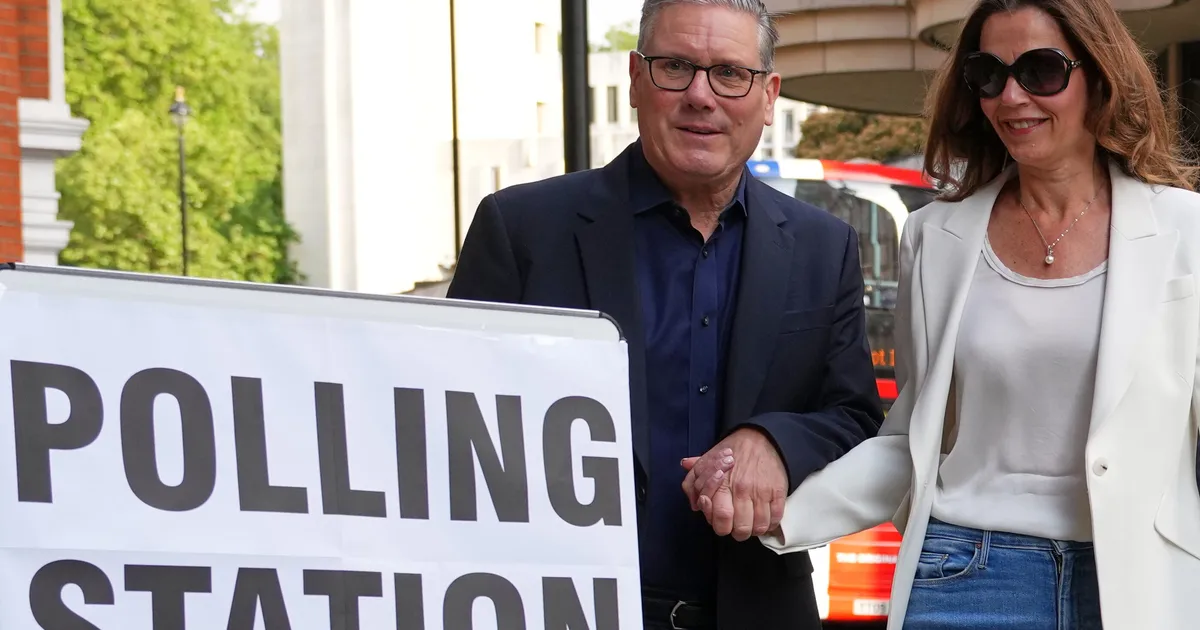
Keir Starmer knows his premiership is in danger.
Pollsters have been charting his decline in popularity over the last 22 months, with divisive policies – such as scrapping the winter fuel payments – and a mounting pile of U-turns, setting voters against Labour.
And that’s before the scandal surrounding Starmer’s decision to make Peter Mandelson – friend of the convicted paedophile Jeffrey Epstein – the UK’s ambassador to the US dominated the national conversation.
Thursday marks the first major test of public opinion towards the government since its landslide victory in July 2024.
It’s also the biggest threat Starmer’s faced since winning the Labour leadership in 2020.
With almost 5,000 councils in England up for re-election, along with the devolved parliaments in Scotland and Wales, the political scene in the UK could be turned upside-down over just a few days.
The results are expected to be brutal for Labour.
The party is on course to lose control of the Senedd altogether after more than a century of dominance in Wales.
Some forecasts suggest Labour could lose 1,860 councillors in England too, while also failing to make any breakthrough in Scotland against the SNP.
All eyes are on Labour MPs to see if they will choose to oust the prime minister in response to the anticipated upheaval.
The party’s rules state any challenger within the Commons needs the support of 20% (81) of all Labour MPs to successfully topple the leader.
This would trigger a leadership contest and Starmer’s name would automatically on the ballot paper.
The party has struggled to unite over regicide in the past, and failed to oust Jeremy Corbyn, Gordon Brown and Tony Blair.
Some MPs fear chopping and changing No.10′s occupant would not help improve the party’s popularity, especially when most of the public want assistance with the cost of living, not another leadership race.
However, allies of Starmer’s rivals have been briefing journalists for weeks about their plans.
Friends of health secretary Wes Streeting claim he has the support of enough MPs to pose a clear challenge to Starmer – despite speculation about how popular he really is within the party.
Former deputy prime minister Angela Rayner also appears to be on manoeuvres, and allegedly has the backing of various trade unions – though she is still haunted by the tax affair which saw her quit government last year.
Andy Burnham, currently the Greater Manchester mayor, is not an MP and so would need to be elected into parliament before he could pose a serious leadership challenge.
But reports suggest he has a plan up his sleeve to be parachuted into a safe seat, with some Labour MPs supposedly willing to step aside for him.
The prime minister is not willing to go quietly, though.
Senior government figures have told HuffPost UK that Downing Street is assembling a top team to save Starmer’s job in anticipation of a challenge in the days after the May elections.
Could the summer end up being a bloody Labour civil war?
Listen to this week’s Commons People as we unpick the trouble ahead for Starmer – and what party insiders are really thinking about Labour’s future.
Subscribe to Commons People, the podcast that makes politics easy. Every week, Kevin Schofield and Kate Nicholson unpack the week’s biggest stories to keep you informed. Join us for straightforward analysis of what’s going on at Westminster.
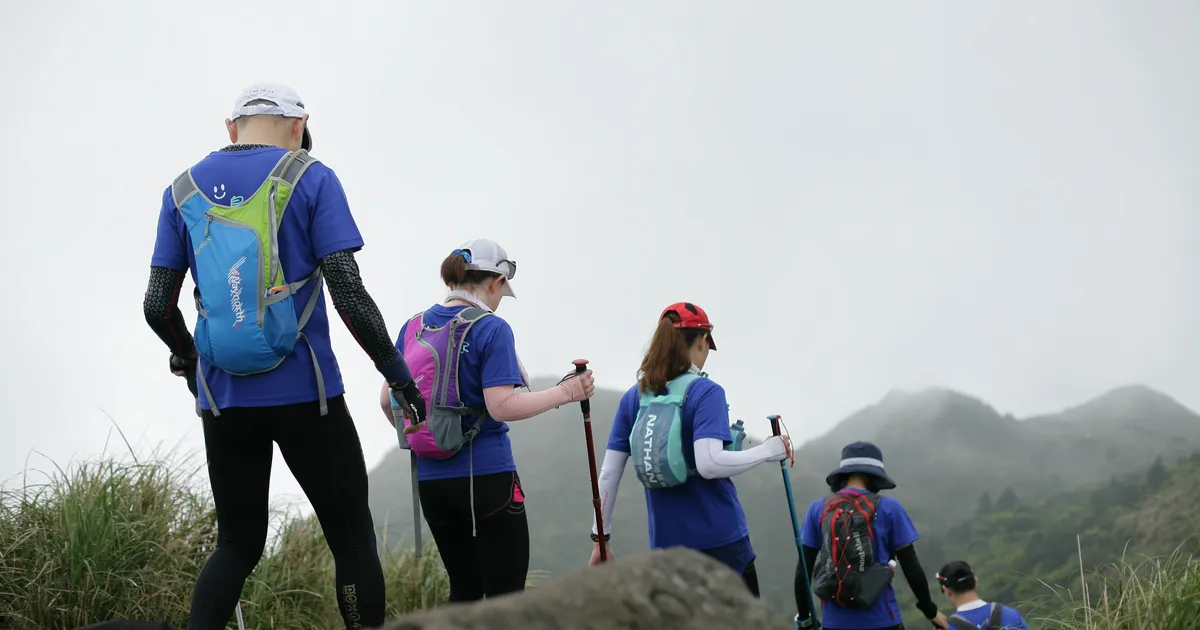
Amidst what can sometimes feel like a barrage of exercise advice, the NHS says that the benefits of a simple walk often go “overlooked”.
The movement, after all, is linked to better heart, brain, and mental health.
And, some posit, “Nordic walking” may be even better for you than the “regular” kind.
It’s been associated with higher calorie expenditure and less joint pain than going for a normal stroll, while some research suggests it may even ease chronic fatigue.
Here, we spoke to Dr Giuseppe Aragona, GP and medical adviser for Prescription Doctor, about why “Nordic walking” seems to be so good for us – and how it stacks up against the oft-repeated 10,000 steps rule.
What is “Nordic walking” and is it better than 10,000 steps?
Nordic walking involves using two poles to propel yourself as you walk. It was first popularised in the ’90s by skiers, hoping to build their strength off-season.
Because it involves the use of your torso and arms, it engages more of your muscles (up to 90% vs regular walking’s 50-ish %, Harvard Health said).
“In many ways,” Dr Aragona told HuffPost UK, “it offers advantages over simply aiming for 10,000 steps a day”, provided you move enough to meet fitness recommendations.
After all, she explained, the figure “was never based on robust medical evidence; rather, it emerged as a marketing concept in the 1960s.
“What we now know is that meaningful health benefits can be achieved with far fewer steps, and that the quality and intensity of movement matter just as much as the number of steps taken.”
Nordic walking may be a more vigorous activity, the GP continued, because it gets more of your body moving.
“Studies suggest it can increase energy expenditure by around 20% compared with ordinary walking at the same speed, so people often achieve a moderate-intensity workout more quickly,” she stated.
“For most adults, around 150 minutes of moderate-intensity activity per week is the recommended target, and Nordic walking is an excellent way to meet that… Nordic walking can make each step ‘count’ a little more towards cardiovascular fitness.”
Who might benefit most from “Nordic walking”?
Dr Aragona explained that the technique is an excellent choice for those suffering from joint pain, “including those with mild-to-moderate osteoarthritis”.
That’s because “The poles act almost like a support system, distributing some of the body weight through the arms and reducing the load going through the hips, knees, and ankles. This can make walking more comfortable and allow people to walk further or more confidently than they might otherwise manage.”
Additionally, Nordic walking encourages better posture and a longer stride – both of which the GP says can reduce stiffness.
And the added stability and balance the poles offer “can reduce the fear of falling and allow [people] to remain active, important for joint health in the long run”.
The sport, which is often associated with older people, can “be an excellent full-body workout for any age group,” as “It strengthens the core, improves coordination, and provides a cardiovascular boost without the higher impact of running,” Dr Aragona shared.
“Younger adults who find walking ‘too easy’ often enjoy the increased challenge and pace they can achieve with poles,” she ended.
“It can also be ideal for people recovering from injury, those who want a low-impact form of cross-training, or anyone looking for an outdoor activity that improves fitness and strength simultaneously.”
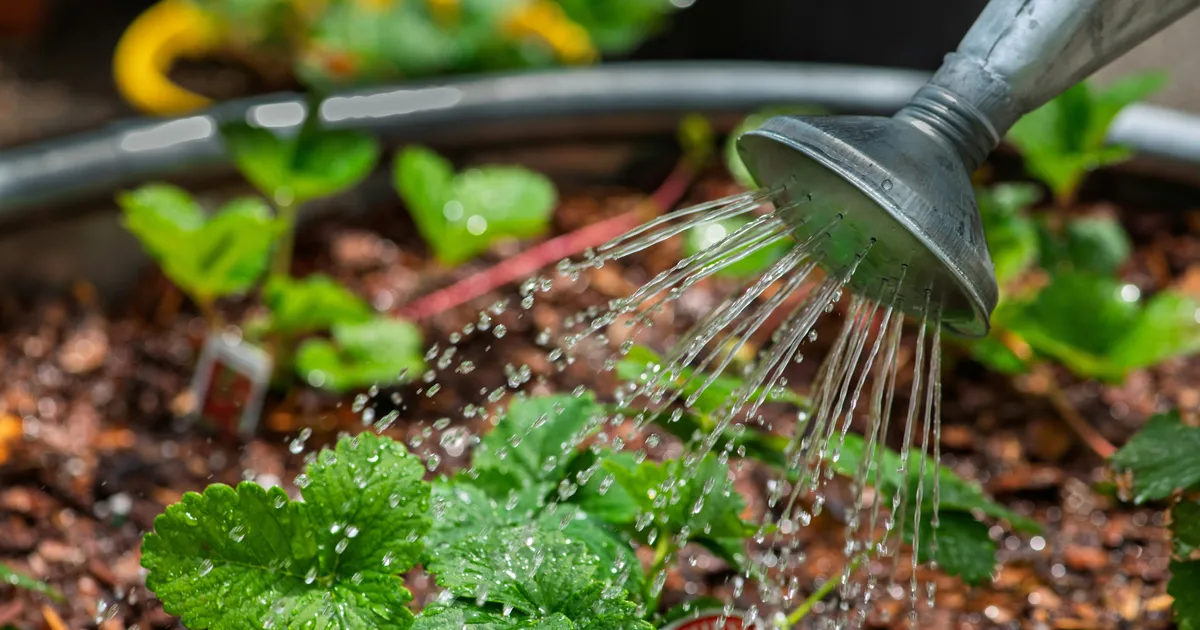
Watering should be so simple; pour water on thirsty plants, which gratefully sup up exactly what they need to flourish.
Unfortunately, Mother Nature is a bit more complicated than that.
There are wrong and right times to water your plants. You can over-water and under-water them. And plants lose some water through transpiration that can be hard to measure.
So, we thought we’d collect the best watering tips we’ve seen so far.
1) Pick up plant pots
Dehydrated potted plants will feel lighter than usual as the moisture content has left the dirt. If it’s less heavy than it should be, water it.
2) Generally speaking, you should water in the morning
Not only does this help to stop slugs from eating your leaves, but it is also when plants are most able to absorb water. It comes just before their most active and water-heavy part of the day, too.
3) Use the “knuckle test” to check soil moisture
It might seem like your flourishing flowers prove they’re getting enough H2O. But actually, you can’t tell if the soil beneath is properly hydrated without touching it.
Place your fingers into the soil until at least knuckle depth to see if it’s truly wet enough.
4) Water containers with 10% of their volume
Plants in containers tend to need more water than those in the ground, because their soil isn’t as deep. When watering them, try adding 10% of the container’s volume (so 1L for a 10L pot), the Royal Horticultural Society (RHS) said.
5) Choose rainwater when possible
Rainwater has a pH and mineral content that plants really, really love. Try to use a water butt throughout the year, keep the rainwater in your plants by mulching them, and/or place saucers under your containers.
6) Aim water right at the base of your plants
When watering garden plants, place the nozzle of a watering can right at their base, below the foliage, so that the roots have a chance to access it.
Some potted plants, meanwhile, will benefit from having their entire base submerged in water from time to time instead of the odd sprinkling.
7) Know the signs of dehydration
Plants all need a different watering schedule. But most of them share similar signs of dehydration, including dull leaves, decreased flower and fruit production, downward-facing or curling leaves, and lighter potted plant weight.
8) And learn the signs of overwatering, too
Wilting, which can also be a sign of underwatering, happens when you’ve overwatered them too; lift the plant up to see if water’s gathered at its base to see what you’re dealing with.
Other signs include yellowing leaves, mouldy patches, stem rot, and dark roots.
9) Don’t let leaves stay wet for too long
This can cause disease and even scald the leaves, especially “hairy” ones, in heatwaves.
10) Use water smartly
I can’t remember the last summer we didn’t have a hosepipe ban (and it turns out hoses aren’t usually the most efficient watering method anyway). Embrace “grey water” from your bath, sink, and shower; soil is usually more than capable of filtering out detergents.
Having a rain butt, keeping grass clippings on your lawn after mowing, and mulching with everything from stones to coffee grounds can help too.

New York Fed finds surging gas prices hit low-income households hardest

Kraken Parent Payward Buys Reap Technologies in $600M Deal

Islamic sectarianism is warping democracy

Manchester United reach agreement with Casemiro over contract clause amid transfer speculation

US brings back mandatory military draft registration

Steven Gerrard disagrees with Gary Neville over ‘shock’ Chelsea and Arsenal claim | Football


-

 NewsBeat4 days ago
Channel 5 – All Creatures Great and Small series 7 new post
-

 Crypto World6 hours ago
Upbit adds B3 Korean won pair as Base token gains Korea access
-
 Tech6 days ago
Trump’s 25% EU auto tariff breaches Turnberry Agreement that also covers semiconductors and digital trade
-
 NewsBeat8 hours ago
NCP car park operator enters administration putting 340 UK sites at risk of closure
-
 Sports6 days ago
Paul Scholes issues Marcus Rashford reality check as agreement emerges over Man United star
-

 Entertainment6 days ago
Met Gala 2026 Rumored Guest List Is Turning Heads
-

 Business6 days ago
Strait of Hormuz Blockade Persists Amid US-Iran Standoff, Sending Oil Prices Soaring
-
Entertainment6 days ago
New on Prime Video in May 2026 — Full List of Movies and Shows
-

 Sports6 days ago
Cavaliers vs. Raptors Game 6 live score, updates, highlights from 2026 NBA playoffs first-round series
-

 Tech6 days ago
Meta ends Sama contract after Kenyan workers report seeing intimate footage from Ray-Ban smart glasses users
-

 Entertainment6 days ago
Kylie Jenner Hit With Second Lawsuit From Ex-Housekeeper
-
 Sports6 days ago
David Benavidez responds to team Canelo saying the fight will never happen
-

 Entertainment6 days ago
Young and the Restless Next Week: Cane Arrested & Matt’s Deadly New Scheme!
-
Entertainment5 days ago
New Netflix Movies in May 2026 — My Top 3 Picks to Stream
-
 Sports6 days ago
IPL 2026: ‘Love you darling’- Hardik Pandya’s reaction to MS Dhoni steals the show |Watch | Cricket News
-

 Business4 days ago
Luka Doncic Injury Update: Doncic’s Hamstring Recovery Slows Lakers’ Hopes Against Thunder: Can He Run Yet?
-
 Crypto World5 days ago
Pi Network Mandates Protocol 23 Upgrade for All Mainnet Nodes Before May 15 Deadline
-

 Entertainment4 days ago
Melissa Joan Hart and More Stars Attend 2026 Kentucky Derby
-

 Sports6 days ago
Bayern won’t hand bottom side Heidenheim ‘gifts’ despite PSG game
-

 Sports6 days ago
What Preity Zinta Said After Punjab Kings’ First Defeat Of IPL 2026
You must be logged in to post a comment Login