

Politics
What Is The Lamp Theory?


Imagine you have met the love of your life and over time, you get married and have children. You have a long, happy 10 years as a family and everything is as it should be.
Then, you look at your living room lamp and it just looks… weird. Still 3D but somehow inverted.
You can’t look away from this lamp. For days on end, you just stare. Your wife is worried, nobody can distract your from this. Then, you realise, thanks to this lamp’s distortion, that your life isn’t real. Your wife, your kids, your home, none of it is real.
This is apparently what happened to Reddit user u/temptotasssoon, who said: “My last semester at a certain college I was assaulted by a football player for walking where he was trying to drive (note he was 325lbs I was 120lbs), while unconscious on the ground I lived a different life.”
He explained that while he was staring at the lamp, it got ‘wider and deeper’ but still with inverted dimensions before he eventually woke back up.
He said: “I heard voices, screams, all kinds of weird noises and I became aware of pain…. a fucking shit ton of pain… the first words I said were “I’m missing teeth” and opened my eyes.
“I was laying on my back on the sidewalk surrounded by people that I didn’t know, lots were freaking out, I was completely confused.”
Following the accident, he was still haunted by the memories he made when he was unconscious.
He said: “I went through about 3 years of horrid depression, I was grieving the loss of my wife and children and dealing with the knowledge that they never existed, I was scared that I was going insane as I would cry myself to sleep hoping I would see her in my dreams.
“I never have, but sometimes I see my son, usually just a glimpse out of my peripheral vision, he is perpetually 5 years old and I can never hear what he says.”
Now, the story has taken off on TikTok with ‘The Lamp Theory’
Now, TikTok has given the story a new lease of life and users are sharing what their dream lives would be before realising the lamp was weird.
Grandma Droniak, a creator with 14 million followers shared her own, saying: “When my parents tell me how proud of me they are because I wanted to be famous since I was a little girl. They always believed in me but then the lamp starts to look weird.”
Another user, Nalle, said: “When I finally don’t feel excluded, I don’t compare myself to others, I actually feel good about myself and I’m not the angry daughter anymore but then the lamp starts to look weird.”
Is the lamp theory possible?
While the Reddit user’s grief may be enough to believe this really happened to them, any skeptics can rest assured that scientists widely agree that we still don’t fully understand consciousness, meaning that we definitely can’t dispute this.
Help and support:
- Mind, open Monday to Friday, 9am-6pm on 0300 123 3393.
- Samaritans offers a listening service which is open 24 hours a day, on 116 123 (UK and ROI – this number is FREE to call and will not appear on your phone bill).
- CALM (the Campaign Against Living Miserably) offer a helpline open 5pm-midnight, 365 days a year, on 0800 58 58 58, and a webchat service.
- The Mix is a free support service for people under 25. Call 0808 808 4994 or email help@themix.org.uk
- Rethink Mental Illness offers practical help through its advice line which can be reached on 0808 801 0525 (Monday to Friday 10am-4pm). More info can be found on rethink.org.


I love potatoes, so it makes sense that my favourite pasta has long been gnocchi.
The fluffy, pillowy clouds are especially delicious when made with extra-dry, floury spuds – chefs like a salt-roasted Maris Piper or King Edward for the job.
But writing for AllRecipes, chef John Mitzewich, also known as Chef John on his YouTube channel Food Wishes, said there’s a type of gnocchi that involves no potato at all.
He said: “I feel like I’ve eaten a fair amount of Italian food, and I’ve been to Rome, but it wasn’t until late in life that I discovered [this] virtually unknown [gnocchi recipe].”
He was talking about Gnocchi alla Romana, or Roman gnocchi.
What is Roman gnocchi?
They’re a kind of dough-based dumpling which are baked in a pan.
Roman gnocchi is usually made with semolina flour (the kind Mary Berry uses to make her roast potatoes and parsnips crispier), butter, milk, egg yolks, and Parmesan.
Some recipes use nutmeg, too – we’ve written before about how crucial the spice is to a lot of Italian dishes, even though it’s often ignored in savoury dishes in the UK.
This type of gnocchi is “much simpler to pull off than the classic potato gnocchi,” Great Italian Chefs’ site reads.
Rather than kneading, rolling, cutting, and shaping the dumplings, as you would with potato gnocchi, you simply spread Roman gnocchi’s mixture onto a tray before slicing and baking it.
It works as a comforting main or a low-fuss side (it’s delicious alongside a tomato-based sauce, too).
How do you make Roman gnocchi?
Like “regular” potato gnocchi, there’s no single recipe.
The ratio of semolina flour to milk, for instance, ranges from 1:4 in one recipe to just over 1:2 in another. Still, a higher amount of milk is more common.
And while some use the aforementioned nutmeg to season the dish, others use cayenne pepper, or nothing at all.
Some methods remain constant, however: cook the semolina flour like polenta in stove-hot milk before laying it on the tray.
Before you cook it, add another layer of tangy Parmesan, and if you like, cover it in melted butter too.
Roman gnocchi recipe
This should serve about 4.
Ingredients:
- Milk: 630ml
- Semolina flour: 150g
- Butter: 40g (plus extra for the dish)
- Grated Parmesan or Parmigiano-Reggiano: 60g (plus more for sprinkling)
- Egg yolks: 1-2
- Salt and nutmeg, to taste.
Tools:
- Round cutter, like a scone cutter (or the floured bottom of a glass)
- Baking-paper-lined baking tray
- Grater, for the Parmesan
- Nutmeg grater, if using fresh nutmeg
- Heavy-bottomed pan, for the milk
- Shallow baking tray or large oven-safe cast iron skillet, buttered to ensure the dumplings don’t stick.
Steps:
- Simmer your salted milk, ideally with nutmeg, over a stove and whisk in the semolina.
- Keep stirring until it comes together and begins to pull away from the sides of the pan. This should take about 10 minutes.
- Remove the thickened mixture from the heat and allow it to cool a little before adding the egg yolks (stirring fast so it doesn’t scramble), all but a tablespoon of the butter, and 60g of the cheese.
- Place the mixture on a baking-paper-lined baking tray (about 1.5cm deep), then let it cool. You might want to add clingfilm to the top of this and put it in the fridge, in which case it should take about 30-60 minutes to chill.
- When you’re ready to bake the dumplings, preheat your oven to 180°C fan, 200°C conventional, or gas mark 4.
- While it’s heating up, use a round cutter like a scone cutter (or the floured bottom of a glass if you’re stuck) to cut out circles from the semolina mix.
- Layer these onto a buttered baking tray in overlapping circles.
- Melt the remaining butter – a few seconds in the microwave in a suitable container will do – and drizzle it over the dumplings. Add the rest of the Parmesan.
- Bake until golden (about 25-30 minutes).
- Sprinkle more Parmesan on top before serving, if you like.

Nigel Farage has been described as “completely unfit for high office” after a fresh report claimed he may have broken parliamentary rules by not declaring benefits from an ally.
The Sunday Times says the Reform UK leader received support, including security and social media staff, from George Cottrell in the year leading up to Farage’s election as the MP for Clacton.
Cottrell was convicted of fraud in the US back in 2017.
The newspaper alleged Farage also used a property rented by Cottrell near Buckingham Palace.
All MPs must declare gifts or benefits worth over £300 to parliament dating back to the year before they are sworn into the Commons.
The guidelines add that purely personal gifts or benefits do not need to be registered.
The revelation comes as the Clacton MP is already facing a parliamentary sleaze probe for failing to declare a £5 million donation from a crypto-billionaire shortly before he decided to run for parliament.
Farage has offered differing explanations for the lump sum. He initially claimed it was to fund security, then alleged it was a reward for Brexit campaigning and finally told the media it was “none of your business” and he could spend the money on “Ferraris” if he wanted to.
His team have argued “no parliamentary rules have been broken” over Farage’s association with Cottrell, either.
Responding to the new report, a Labour Party spokesperson said: “Nigel Farage and Reform are engulfed in a huge and growing scandal.
“It’s not going to go away, and trying to take the public for fools by saying it’s ‘none of your business’ won’t help.
“These new allegations of secret payments from a wealthy convicted criminal are on top of the ongoing scandal of his secret £5 million gift from a crypto billionaire.
“How much money has he been given, what did his donors get in return, and why has he tried to cover them up and avoid legitimate questions?
“Time and again Farage pretends to be on the side of working people.
“In reality he’s just in it for himself and can be bought by the highest bidder. He’s completely unfit for high office.”
Farage did register a £9,253 trip to Belgium in April 2024 donated by Cottrell, and added later a £15,276 donation for a US domestic flight from December 2025.
A spokesman for Farage hit back at the report, claiming: “It comes as no surprise that the Sunday Times has chosen to publish this baseless and contrived story, covering a period of time when Nigel Farage was not even an active politician let alone an elected one, given that the newspaper backed the Labour Party at the last general election.
“Contrary to the story’s tone, no parliamentary rules have been broken.”
Listen to Commons People, the podcast that makes politics easy. Every week, Kevin Schofield and Kate Nicholson unpack the week’s biggest stories to keep you informed. Join us for straightforward analysis of what’s going on at Westminster.

In a recent report about the “fibre gap,” the British Nutrition Foundation (BNF) said that only about 4% of us eat the recommended 30g of fibre a day.
They added that the report identified “several priority areas for action,” including a “health by stealth” approach to improving people’s diets.
But what does that mean, and how can we achieve it?
Here, HuffPost UK spoke to Bridget Benelam, a nutrition scientist with BNF, about the term.
What is “health by stealth”?
It’s a way of making your diet better for you without you really noticing.
Benelam told us, “It’s mostly used to talk about industry reformulating products – e.g. reducing salt and sugar, or adding extra fibre to things like bread or pasta so that people get healthier food without having to change their habits”.
One example might be zinc added to breakfast cereals or flour enriched with folic acid.
These aren’t individual choices consumers consciously opt for – they come from policies or industry changes many of us never realise have been made.
But, the nutrition expert continued, “it’s a concept that could be applied at home by making small, manageable changes”, too.
If you want to consume more fibre, for instance, she said you could take barely-noticeable steps like “adding beans or lentils to every day dishes like bolognese sauce or curry, adding brawn to your usual white rice, [or] swapping white for 50:50 bread”.
You might be surprised by how far little changes can go. One study found that eating a meagre half-portion more of fruits or vegetables a day, when combined with minutes more sleep or exercise, could add a year to our life.
And while eating the recommended 30g of fibre a day is linked to an impressive array of health benefits, advantages start much sooner.
For every 7g of fibre you eat daily, you may enjoy an 8% reduction in bowel cancer risk, a 9% reduction in heart disease and heart attack risk, a 7% reduction in stroke risk, and a 6% reduction in type 2 diabetes risk.
That’s the equivalent of two slices of wholemeal toast.
Try “choice editing,” too
“Health by stealth” can involve adding nutrients to your diet you wouldn’t have otherwise. But it might also mean taking some foods away from easy reach, Benelam said.
“You can also do something that scientists call ‘choice editing’, where you make healthier choices more obvious and available – e.g. having veg ready prepared for snacks, having a fruit bowl in reach and either not having or putting less healthy foods out of sight/reach,” she suggested.
“It’s also something that parents could think about with kids meals to encourage extra fibre/veg.”
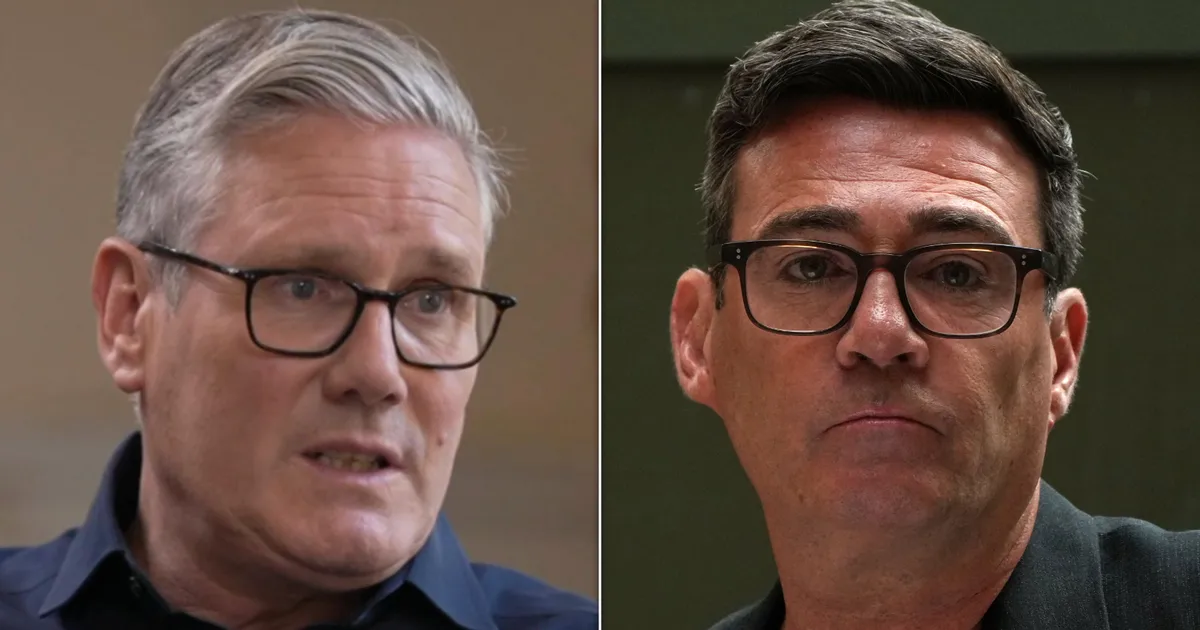
Keir Starmer has issued a warning to his expected successor Andy Burnham over his approach to foreign policy.
The outgoing prime minister, who was dubbed “never here Keir” by his critics due to his frequent trips abroad, reminded the new MP for Makerfield that he will have to put the same effort into international relations.
He claimed internal issues, like the rising cost of living, are linked directly to the UK’s standing on the world stage.
Burnham, who is currently running uncontested to be the next PM, is expected to focus more on his domestic agenda when he gets into No.10 on July 20.
Speaking to the BBC, Starmer said: “If you’re prime minister and you care about what bills are going to be like in any part of the country, you have to care about finding a lasting solution to the situation in Ukraine, you have to care about what happens in the Strait of Hormuz.”
Vladimir Putin’s illegal invasion of Ukraine meant European allies stopped buying Russia’s cheap oil exports.
Meanwhile, the US-Israeli strikes on Iran saw Tehran close the Strait of Hormuz, a major shipping lane which transports a fifth of the world’s oil supply.
A strain on international fossil fuels subsequently pushed prices up all over the world, including in the UK.
Starmer said he is “proud” that the UK has been a crucial part in dealing with both of these crises.
“I’m proud that the UK is now regarded as a leader, that other countries look to and want to engage with, and that is in our best interests here at home,” he said. “It’s not sensible to think we can just separate these two things out.”
He added: “The suggestion that in the modern era you could simply split up international and domestic… it just doesn’t make sense, it isn’t true, it isn’t right.”
“Whoever’s my successor is going to face the same global conflict,” Starmer continued. “We keep saying, and it’s true, we’re in a more dangerous and volatile world than we’ve been in for probably most of my lifetime. That’s not just a phase, that’s reality.
“That’s not going to change. And the domestic challenges aren’t going to change.”
Burnham has dodged a lot of scrutiny since winning a seat in parliament by not holding any press conferences.
He invited the public to ask him anything during a Reddit forum on Friday, where he said he would “100%” give the same amount of support to Ukraine as Starmer and wanted to continue his efforts to broker a closer EU relationship.
However, he did not answer any questions about his approach to Donald Trump.
Starmer has committed to staying on as MP for Holborn and St Pancras but promised to “keep my mouth shut” when his replacement takes over, adding that he has “always got on” with Burnham.
The outgoing prime minister had vowed to stay in post after Burnham won the Makerfield by-election last month, but – amid growing pressure from his party – U-turned three days later.
He told the BBC that it was a “really, really tough” decision, adding: “Taking the decision that your political career is over, it is an intensely personal matter, or at least it was for me. I wanted to do that with [my wife] Vic, and that’s what I did.”
Listen to Commons People, the podcast that makes politics easy. Every week, Kevin Schofield and Kate Nicholson unpack the week’s biggest stories to keep you informed. Join us for straightforward analysis of what’s going on at Westminster.

President Donald Trump on Friday railed against communism during a bizarre speech at Mount Rushmore.
But as critics were quick to point out, his definition of what “communists” do sounds a lot like what he, his family and his associates have been accused of doing since he returned to the White House last year.
“Our American ancestors did not shed their blood at Concord and Trenton, Gettysburg and Shiloh, Midway and Normandy, just so that a band of thieves, radicals and lunatics could come in and loot, pillage our nation,” Trump said days after financial filings showed he earned more than $2 billion last year.
The Wall Street Journal editorial board this week accused Trump and his family of “profiting off the presidency in ways that demean the office.”
Trump’s windfall includes more than $1 billion from his crypto businesses ― money he pocketed, while The New York Times reported that some 764,000 other crypto wallets suffered massive losses.
The president has also struck gold by buying stocks in companies just before his administration announces decisions favourable to those firms.
“The Trump clan is cashing in on the Presidency in big and sketchy ways,” the Journal said.
Meanwhile, Americans have been struggling with a spike in the inflation rate ― something Trump dismissed only last month.
“I love the inflation,” the president insisted.
Trump’s speech was full of other lines about supposed “communists,” a word he is turning to with increasing frequency. The president has been falsely calling everyone who disagrees with him a “communist” as he tries to drum up Red Scare tactics. The move comes amid a deep plunge in his approval ratings and an increasing likelihood that his party will lose the House and possibly even the Senate in November’s midterm elections.
But it was his line about looting and pillaging ― which comes amid his own massive increase in wealth ― that had everyone pointing the finger right back at the president:
Listen to Commons People, the podcast that makes politics easy. Every week, Kevin Schofield and Kate Nicholson unpack the week’s biggest stories to keep you informed. Join us for straightforward analysis of what’s going on at Westminster.
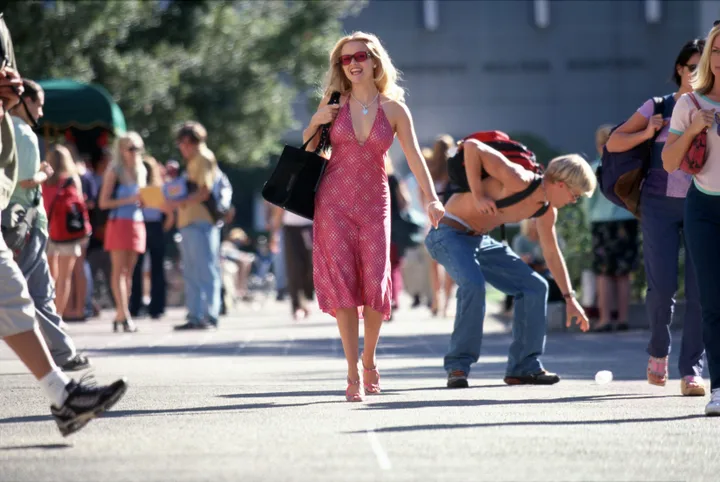
It’s been 25 years since Elle Woods got into Harvard, introduced the world to the bend and snap and taught us all to never judge a book by its cover.
Legally Blonde premiered in 2001, becoming an instant hit with fans, inspiring viewers all around the globe and catapulting Reese Witherspoon to the A-list.
After Elle first donned her pink courtsuit, Legally Blonde became a global phenomenon, spawning a 2003 sequel, a Broadway musical and countless memes.
Now, the iconic character is back on our screens in the new prequel series Elle, which explores the iconic character’s life as a 16-year-old in Seattle in the 1990s.
To commemorate 25 years since the release of Legally Blonde, and the premiere of Elle on Prime Video, here are 21 behind-the-scenes facts you might not have known about the cult classic…
Elle Woods was loosely inspired by the author of Legally Blonde novel, and her real-life experiences at law school
The Reese Witherspoon film is based on a 2001 novel by Amanda Brown – also called Legally Blonde – which itself was inspired by her own life at Stanford.
The author shares more than a passing resemblance to Elle, admitting to the San Francisco Chronicle: “I wanted to go to Stanford when I saw the mall.”
During her first week at Stanford Law, she realised how difficult it was to find another woman who shared her interests in fashion and shopping. So, she started writing letters home, lampooning her lecturers and students. These 300 pages became the basis of her book.

Tracy Bennett/Mgm/Kobal/Shutterstock
“I was sitting in tort class when the novel popped into my head,” recalled Amanda Brown to Stanford Magazine. “I wanted to do a parody of law school.”
“I wrote it all on pink paper, with my pink furry pen,” Amanda told the SF Gate in 2003, claiming she “finally found an agent” when they picked out of a pile of manuscripts solely “because it was on pink paper”.
Amanda self-published her book, but it soon found its way onto the desks of a production company, who then sent it to the team who would go on to write the Legally Blonde film.
“It immediately struck us as one of the greatest movie ideas ever, and we pitched it as ‘Clueless meets The Paper Chase’, one of those law school movies from the 1970s. I might have worn a lot of pink in the meeting,” writer Kirsten Smith said, as reported by The News Daily in an oral history article.
The original script for Legally Blonde had a very different message
Legally Blonde has become known as a modern-day feminist classic, addressing topics like misogyny, sexual harassment in the workplace and power dynamics between men and women. But, the original script was much raunchier and had far less of a positive female-empowerment message.
“The first script was very raunchy, to be honest, in the vein of American Pie,” Jessica Cauffiel, who plays Margot, told The New York Post in 2021.
“What we know now as Legally Blonde, and what it began as are two completely different films. It transformed from nonstop zingers that were very adult in nature to this universal story of overcoming adversity by being oneself.”
The writers also explained there were a few other differences between the original manuscript and the final product.
“It wasn’t a murder trial, and she ended up with a professor, so we made some changes. It was a matter of finessing the details and adding a few characters, like Paulette and her friendship,” screenwriter Karen McCullah explained in that same interview.
There’s a reason that Elle Woods attended Harvard rather than Stanford

In the Legally Blonde book, Elle attended Stanford, like its author. However, this was changed in the film adaptation, for the simple reason that the university wouldn’t let filming take place there.
The university has long implemented a no-filming rule due to “year-round campus activity” and in order to protect “the privacy and safety of its students, faculty and staff.”
After being turned down by Stanford – where, ironically, Reese Witherspoon also studied – the producers approached USC, which rejected the offer, telling Vulture that there was “too much stereotyping going on” in the script for their liking. The team then reached out to UCLA, Yale, and the University of Chicago — all of whom also wanted nothing to do with Elle Woods.
Finally, Harvard agreed to being mentioned in the film, although they didn’t want the movie filmed there.
If you think the film’s campus looks sunny for Massachusetts, where Harvard is actually situated, that’s because the movie they filmed at institutes in California.
While USC and UCLA didn’t want to be associated with Elle, they were happy for the filming to take place on their campuses all the same.
Reese Witherspoon and Jessica Cauffield spent time with a sorority to prepare for their roles
“We [talked] an entire sorority into going out to dinner at a Mexican restaurant. Reese offered to buy them free margaritas all night,” Jessica recalled to the New York Post.
“She leans over to me as the drinks are on the way and goes, ‘We’re not drinking anything. We’re drinking water’. We stayed sober as they got tanked, and we took notes.”
In a 2001 interview with Entertainment Weekly, Reese called her time with the sorority girls “an anthropological study”.
“You learn what they eat, how they behave, how they take care of their young, that sort of thing,” she quipped. “Seriously, though, I’ve learned that people don’t know what their worst characteristics are.”
She added: “It’s inherent to our nature that we don’t know what, in ourselves, is abhorrent to other people. So it’s really easy to infiltrate people’s lives. They showed all sides of themselves. Sometimes I’m shocked, like, I can’t believe they just said that to me!”

Tracy Bennett/Mgm/Kobal/Shutterstock
The infamous bend and snap move was created on a whim
Jennifer Coolidge co-starred in the movie as Elle’s manicurist turned BFF Paulette.
In one of the decade’s most iconic film moments, she tries the infamous “bend and snap”, a move which “has a 98 percent success rate of getting a man’s attention”, according to her trainee lawyer friend.
Legally Blonde’s writing team have revealed to Entertainment Weekly that they invented the famous move at the L’ermitage Hotel bar in Beverly Hills over some drinks.
“We were in between meetings and working on the script,” writer Karen McCullah recalled. “And we were trying to come up with a B-plot that happened in the nail salon and we were working in weird directions. Like, maybe it gets robbed, all sorts of crazy stuff.”
The writing duo then realised that they were overthinking the moment, which is when the “bend and snap” was invented.
“Kirsten jumped off her barstool and was like, ‘Like this?’ And then she did that move,” Karen said, revealing that the team came up with the “bend and snap” name the spot.
“It just cracks us up that that’s become such a lasting thing that people remember. It’s literally the silliest thing in the movie,” Karen added.
Legally Blonde’s bend and snap scene had a very famous choreographer behind it
The now-iconic move was choreographed by 80s icon and Mickey singer Toni Basil.
“I choreographed iconic things for David Bowie and Tina Turner,” Toni told The New York Times in 2021. “People interview me and they go, ‘You did the bend and snap?’ It’s like, ‘what, a one-and-a-half-minute number in the movie?’. But it was such an integral part.”
The original idea was for the bend and snap to be a full-length musical number, but this was eventually shortened for the final cut.
Ultimately, Reese explained, “it just felt odd” to have a full bend and snap number, “because there was just one musical sequence”.

Tracy Bennett/Mgm/Kobal/Shutterstock
Legally Blonde was not written with any specific actor in mind to play Elle
Screenwriters Karen McCullah and Kirsten Smith didn’t picture any specific star in mind when adapting Amanda Brown’s book.
However, they were delighted when Reese Witherspoon signed on to play the lead, as she was a rising star at the time, having already appeared in Election and Cruel Intentions.
“We loved her in Freeway. She had so much moxie in that,” Kirsten told Business Insider. “She had the perfect balance of comedic ability, the intellectual vibes, and the real dramatic chops, too. She’s the entire package.”
Reese Witherspoon admitted the auditioning process for Legally Blonde was not the most positive experience
Reese doesn’t look back too fondly on her Legally Blonde audition, explaining to The Hollywood Reporter in 2019 that her manager told her to dress sexy, to differentiate her from her “shrew” character from Election.
After a string of failed auditions and missed roles, her team had an idea.
“My manager finally called and said: ‘You’ve got to go meet with the studio head because he will not approve you. He thinks you really are your character from Election and that you’re repellent,’” she explained.
During the audition process to play Elle, Reese had to speak to studio execs while in full glam.
“I remember a room full of men who were asking me questions about being a coed and being in a sorority, even though I had dropped out of college four years earlier and I have never been inside a sorority house,” she recalled.
Another A-lister was almost cast as Elle Woods before Reese Witherspoon, but turned it down

Dead To Me star Christina Applegate admitted she rejected the lead role in Legally Blonde, calling the decision a “big fucking mistake”.
In a 2023 interview with Vanity Fair, Christina said she turned it down as the role was too similar to her famous sitcom character in Married With… Children.
“I wouldn’t toy with the idea of Legally Blonde because it felt too fresh getting out of Married…With Children,” she explained, referring to her dumb blonde character Kelly Bundy in the family comedy. “It was very similar on paper.”
She joked that she would have “Witherspoon money” now if she had signed on to the role, but conceded: “You can’t imagine anyone playing Elle Woods other than Reese Witherspoon? I would have completely screwed it up.”
Interestingly, both Christina and Reese went on to play sisters of Jennifer Aniston’s Rachel in Friends, although they never shared the screen in the award-winning sitcom.
Meanwhile, a famous pop star was also considered by the producers
Producer Marc Platt put Britney Spears’ name forward as a suggestion when Christina Applegate turned down the part.
“Marc once [mentioned] Britney Spears, and I was like, ‘No, that’s not a good idea’,” writer Kirsten Smith revealed. “I think she hosted SNL the night before, and his kids were into her, so he threw her name out there.”
While Britney writes about being offered roles in Chicago and The Notebook in her autobiography, The Woman In Me, she never mentions Legally Blonde, so it could be that the pop diva was unaware her name was ever on the table.

Chloe Sevigny was among the stars who turned down a part in in Legally Blonde, too
Selma Blair’s performance as the “frigid bitch” Vivian Kensington is now considered iconic, but another actor almost wore those infamous pearls.
“I remember talk about getting Chloë Sevigny to play Vivian,” screenwriter Kirsten recalled to The New York Times. “That didn’t work out, and we ended up with our queen Selma Blair.”
She noted that “Selma and Reese were close, because they had done Cruel Intentions together”, meaning their friendship served as a “great anchor for everything” on screen.
“I was the last person cast, and I remember Chloe Sevigny passed,” Selma also told Entertainment Weekly.
“Her fingers are much too elegant; they needed someone with a bony little finger,” the actor joked.

Jennifer Coolidge apparently thought she was auditioning for the role of Elle
Reese Witherspoon and Jennifer Coolidge recently reunited for a 25th anniversary catch-up, where they shared their experiences of working on the film.
During this chat, they spilled some gossip, including why Jennifer auditioned for the movie.
“I thought this was the funniest thing. I was so lucky to get cast in this movie, and it is one of my favourite jobs of all time,” she recalled, joking: “But I stupidly thought that when I was auditioning, I thought I was gonna be Elle.”
Before Jennifer Coolidge was cast in Legally Blonde, a rock legend was apparently in consideration for her role
Jennifer Coolidge’s gives an iconic performance as Elle’s beautician, but she wasn’t their first choice.
In The New York Times’ piece on Legally Blonde, Jennifer shared some of the other actors she’d heard were in the line-up to play Paulette.
“I don’t know if they’re true [but I heard] that Courtney Love was up for [my] role,” she claimed. “I heard Kathy Najimy was up for it, [too].”

Alanna Ubach had a creative way of impressing casting directors to land the part of Serena
Future Euphoria star Alanna Ubach used an unusual tactic to land the role of Elle’s sorority sister.
Jessica Cauffiel had already been cast as fellow Delta Nu Margot when she met Alanna in the bathroom during a chemistry read.
“She’s like, ‘Hey, hey, are you in this movie?’” Jessica recalled during the virtual 20th anniversary reunion.
Jessica then claimed that Alanna begged for help booking the job, telling her: “I don’t have any money, I need to make rent, will you help me make rent?”
“She was so funny and so ballsy, I said, ‘Okay’,” Jessica continued.
From there, the two put their heads together and “choreographed simultaneous moves”, which Jessica made the casting directors think they were naturally in sync.

Tracy Bennett/Mgm/Kobal/Shutterstock
The Legally Blonde writing team only had one actor in mind for the role of Emmett, Elle’s love interest
“We spent a lot of time faxing the casting director, like ′Luke Wilson, Luke Wilson!’” Kristen explained.
“And then, finally, after the table read where a different actor played Emmett, we were like ‘Luke Wilson, Luke Wilson!’. And he was like, ‘That’s a really good idea.’ We were like, ‘We’ve been telling you!’”
Luke was subsequently offered the role without even needing to audition.

Tracy Bennett/Mgm/Kobal/Shutterstock
The actors added their own flourishes to the script
While the Legally Blonde script didn’t leave a lot of room for improvisation, the screenwriters recalled to Business Insider that the cat still found room to add a personal touch to their characters.
During rehearsals, Jason Christopher came up with the line “you bitch!” – which his character shouts after his boyfriend Enrique denies their relationship in his testimony.
The screenwriters also revealed that it was Alanna Ubach’s idea to speak fluent Vietnamese at the nail salon.
“I thought, ‘How funny would it be if we frequent this nail salon so much that I’ve been immersed in Vietnamese and I’ve picked up the language?’” the actor said.
Life as a new mum took was taking its toll on Reese Witherspoon while shooting Legally Blonde
Reese took on the role of Elle Woods just months after welcoming her daughter Ava in September 1999. As a result, while she looked fresh and bright on camera, she didn’t always feel that way.
“Some nights Ava would wake up screaming because she had the flu, and I would spend most of the night trying to rock her back to sleep and then have to be on the set at seven in the morning for make-up!” she explained to Cinema.com in 2001.
“And then you throw in the fact that I’m supposed to be playing a very bubbly and energetic California preppy who is smiling all the time!”
“I kept thinking, ‘I’m going to kill myself! I’m never going to make it!’” she joked.

Tracy Bennett/Mgm/Kobal/Shutterstock
Another famous face was supposed to make a scene-stealing cameo
While putting Legally Blonde together, screenwriter Kirsten had read an article which said that video applications were the done thing when trying to impress professors at places like Harvard – and they wanted Elle’s to be extra special.
“We wanted to shoot [Elle, Serena and Margot] chasing Judge Judy wherever she tapes her show and them being like, ‘Judge Judy! Judge Judy! Can we get an autograph?’ Kirsten said. Unfortunately, the team couldn’t get the real-life judge on board, so the idea was ditched.
Alanna Ubach’s alternative idea was also cut.
“I thought, ‘Reese, what if Ryan Phillippe played a really famous judge who had his own show, and we have him on billboards’,” the actor said of Reese’s then-husband.
Reese wasn’t keen on the idea of adding her partner to the film, though, reportedly telling her: “Alanna, no one’s going to believe that my husband’s a judge. Are you kidding me?”
Matthew Davis, who plays Warner, admitted he had a major crush on Reese Witherspoon, which affected his performance somewhat

Tracy Bennett/Mgm/Kobal/Shutterstock
In a 2001 interview with Movieline, Matthew admitted he acted like a “bumbling idiot” around his co-star because of his crush – despite her being married to Ryan Phillippe at the time.
“At first I was such a bumbling idiot with her, the producers pulled me aside one day to see if I was OK,” he revealed.
When the actor later confessed his feelings to the Election star, she let him down gently.
“She was like, ‘That’s so sweet!’,” he explained. “OK, let’s work on the scene…’.”
In hindsight, Matthew admits his behaviour on the set of Legally Blonde wasn’t always the most professional.
“I felt starstruck by all this because it happened so quickly and I hadn’t adjusted,” he told Teen Vogue in 2017. “I definitely wasn’t cool. At the first table read, I just kept going on and on about how much I loved her work, fawning all over her.”
Matthew told News.com.au that he also “adored” his on-screen girlfriend, Selma Blair, during filming.
“I developed a crush on her at the time but she was with someone else — I think she was dating the guy from Rushmore [actor Jason Schwartzman] but he was coming around and I was kind of like ‘who is this guy?!’” Matthew shared.
Legally Blonde almost had a sapphic happy ending
Legally Blonde famously ends with Elle freeing her client, graduating at the top of her class, becoming best friends with her former nemesis and staying with doting boyfriend Emmett.
However, the cast told The New York Times that the ending in the script was markedly different.
“The first ending was Elle and Vivian in Hawaii in beach chairs, drinking margaritas and holding hands,” said Jessica Cauffiel. “The insinuation was either they were best friends or they had gotten together romantically.”
Another alternative ending for Legally Blonde didn’t go down too well with test audiences

Tracy Bennett/Mgm/Kobal/Shutterstock
At the 2015 Vulture Festival, the screenwriters revealed that their original script wrapped at the courthouse right after Elle won the case, with her and Emmett kissing on the steps.
“It was just kind of a weak ending,” Karen McCullah admitted. “The kiss didn’t feel right because it’s not a rom-com — it wasn’t about their relationship.
“So test audiences were saying, ‘We want to see what happens – we want to see her succeed.’ So that’s why we rewrote for graduation.”
“We screened the movie two or three times, and every time people didn’t want to end it with a kiss,” she also explained to the New York Times.
“They thought it wasn’t a story about [Elle] getting a boyfriend, which was really cool to have people say that.”
An interesting part of this axed ending would have fast-forwarded to a year later, with Elle and a now-blonde Vivian starting their own Blonde Legal Defence Club at Harvard Law School.
“There was an ending that Vivian was blonde, and I did [go blonde],” Selma admitted to the podcast Shut Up Evan. “I have the Polaroids. I looked just like Faye Dunaway in Bonnie And Clyde – the beret was on and the blonde.”
Legally Blonde is now streaming on Prime Video, as are the first episodes of Elle.
Politics
The House | It’s half a century since a prime minister who wasn’t a full-time occupant of No 10

4 min read
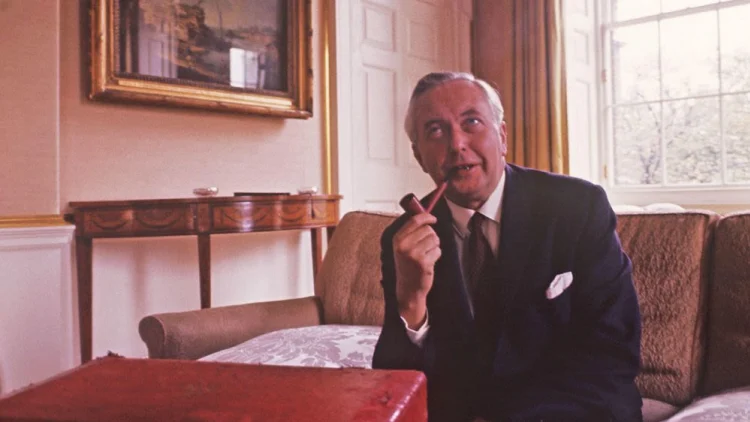
Andy Burnham will be the first Labour leader and first prime minister of any persuasion born in the north of England since Harold Wilson in the 60s. It’s not the only similarity between them.
Andy says he’s likely to follow Harold’s example of living away from Downing Street for at least part of every week, portraying it as an escape to the North. That said, the only northern aspect of Chez Wilson was its address: Lord North Street, a five-minute amble from Parliament.
Like Burnham, Wilson nourished his northern roots. Born in Huddersfield and representing a Merseyside constituency, he was a cabinet minister in Attlee’s government by the age of 31. In newsreel footage of the time, a young president of the Board of Trade speaks like a BBC announcer, replicating the clipped tones of Attlee. That was how senior politicians were meant to sound in the 1940s. It was Nye Bevan who convinced his friend not to suppress his Yorkshire vowels (nor to over-burden his speeches with statistics).
By following his advice, Wilson wasn’t adopting a persona, but discarding one.
As the social historian David Kynaston records in ‘A Northern Wind’, when Wilson entered No 10 in 1964, the cultural essence of the country was migrating in that direction – in music, cinema, literature, theatre, art and sport. There was even rugby league on the telly every Saturday afternoon. It was a decade dominated by Tom Courtney, David Hockney, Bobby Charlton, Alan Sillitoe and, overwhelmingly, by the Beatles.
Wilson was part of the zeitgeist, but it wasn’t northernness that determined his decision to keep the family home at Lord North Street when he returned to the premiership in 1974.
When Harold proposed to Mary, he was a very young university don; when they married, he was an extraordinarily successful civil servant, and by the time an election was called in 1945, he was back lecturing at Oxford. He was a ‘B list’ candidate (i.e. with no union sponsorship) in a hopeless seat, and anyway Churchill, the Great War leader, was bound to reap the rewards of victory. Mary was entitled to think her future would be amongst Matthew Arnold’s ‘dreaming spires’ pursuing her interests in art and literature and writing poetry. She detested Downing Street and what she saw as the skulduggery of political life.
Evicted by Ted Heath in 1970, the Wilsons’ only home was a modest holiday bungalow on the Scilly Islands (paid for by the royalties from Mary’s book of collected poems which sold an incredible 70,000 copies). Having sold their previous home in Hampstead Garden Suburb, the couple rented for a while before buying a twenty-year lease on the elegant Georgian terraced house close to Labour Party HQ in Smith Square. With one of their two sons still living at home, Mary was grateful for the escape from constant turmoil in No10 and had no wish to return to it.
So when Labour came back to power in 1974, Harold simply acted in accordance with his wife’s wishes, as he did two years later, keeping the promise made to Mary that he’d retire on his 60th birthday.
The two years spent working in Downing Street but living elsewhere had been a success. Some have suggested that was because Marcia Williams was Harold’s political wife, compensating for Mary’s disinterest, but that’s unfair to both women. Williams had been Harold’s political secretary since 1956, one of the first women to hold such a powerful position. Had she been a man, the arrangement wouldn’t have raised an eyebrow. In any case, Marcia and Mary were close friends, and Harold benefited from Mary’s private advice as well as Marcia’s professional wisdom.
After leaving office, they bought a flat in Ashley Gardens close to Westminster Cathedral, and it was there that Mary nursed Harold through the cruel onset of Alzheimer’s disease until he died in 1995. Mary occupied the flat alone for the next 23 years until her death aged 102.
Burnham is unlikely to have the time to match Wilson’s record of winning four elections, but just a couple would be enough for Labour supporters – with perhaps a plebiscite on Europe, the first of which Harold won in 1975. On the subject of homes, Harold Wilson’s record of 425 new houses built in a single year remains to be broken.
Alan Johnson is a former Labour cabinet minister and author of Harold Wilson: Twentieth Century Man
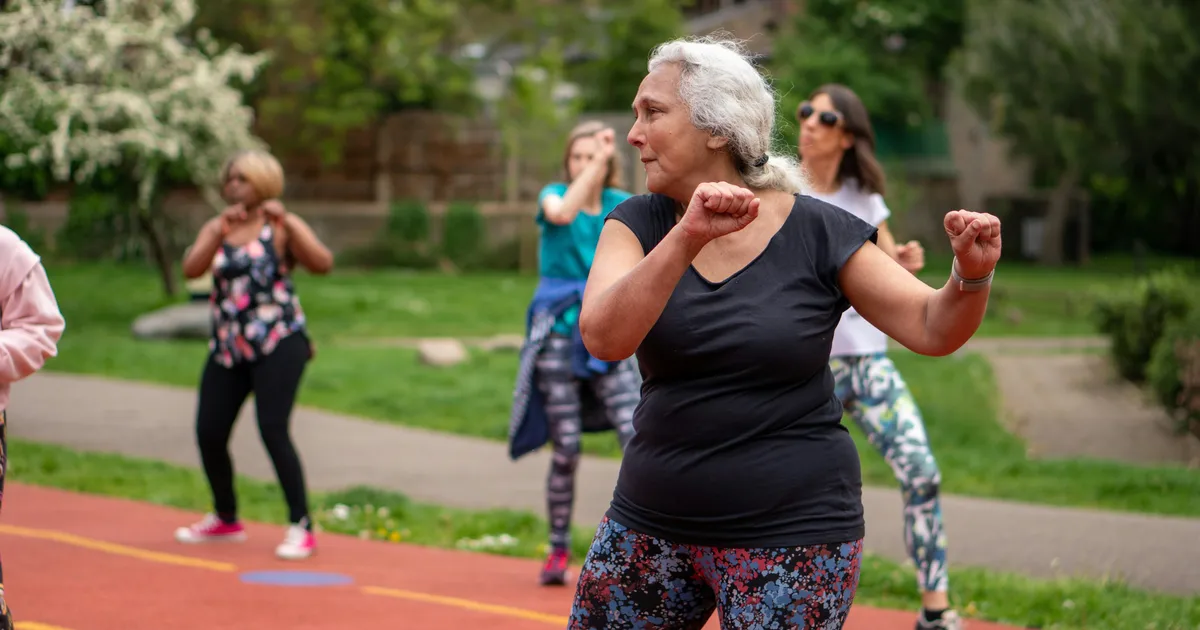
You probably already know that exercise can help us to live longer.
Research has shown that walking 7,000 steps a day can lead to a 47% risk reduction in all-cause mortality, while strength training has been linked to up to four years of extra life.
In fact, the Mayo Clinic stated that strength training could “slow and, in many cases, reverse the changes in muscle fibres associated with ageing”.
But why exactly does that happen? And what do we mean when we talk about exercise “reversing” or “slowing” ageing?
A paper published in the Journal of Sport and Health Science said: “Current evidence suggests that exercise favorably modulates all 14 hallmarks of ageing.”
Here’s what those markers are, as well as how exercise improves them:
1) Genome instability
As we get older, our DNA is more likely to mutate, sustain damage, and lose the ability to repair itself.
This amounts to “genome instability”, which has been described in some research as the main driver of physical ageing.
But, the paper reads, regular physical activity “appears capable of promoting genome stability by reducing DNA damage and enhancing DNA damage repair”.
2) Telomere shrinking or loss (attrition)
Our telomeres – DNA structures that humans have at the ends of our chromosomes, and which keep our cells working better for longer – tend to shrink when we age.
Telomeres have been compared to “the protective plastic caps at the end of shoelaces”. Shorter telomeres are associated with a shorter life.
Thankfully, the review said: “Exercise can also activate telomerase [a special enzyme that maintains telomere length] and increase telomere length and thus decrease telomere attrition”.
3) Less epigenetic regulation
Epigenetic factors are those that seem to be able to switch certain genes on or off without changing a person’s actual DNA. Those genes could be beneficial or harmful to someone’s health.
“Remarkably, recent evidence suggests that changes in epigenetic information are not merely consequences but also potential drivers of mammalian ageing,” the paper said.
Exercise could help our bodies to express our genes in a more beneficial way, they added.
“Accumulating evidence indicates that exercise-induced epigenetic modifications contribute to improved health outcomes in older adults” by regulating things like our DNA “off switches” (DNA methylation).
4) Less effective proteostasis
Proteostasis is the short term for “protein homeostasis”. It refers to the “delicate balance between protein synthesis, folding, trafficking, and degradation, which is essential for cellular function and organismal health”.
As we age, that network of processes can fall out of whack, increasing our risk of disease and, possibly, brain degeneration.
But “Increasing evidence indicates that exercise can restore proteostatic mechanisms disrupted by ageing”, the review said.
5) Decreased macroautophagy
Ageing well isn’t just about keeping the things we want going for longer. It’s also about getting rid of the stuff we don’t want and preventing unwanted buildups – which is where autophagy, sometimes called the body’s “cellular recycling system”, comes in.
Autophagy can help your cells to work more efficiently. But it slows down when we get older, giving e.g. cancer and other diseases better odds of taking hold.
“Several studies have shown that exercise can reverse ageing- and diet-induced impairments in autophagy across various tissues,” this study stated.
6) Dysregulation of nutrient-sensing signalling
Our nutrient-sensing network helps us to recognise the nutrients in our body and tells our cells how to respond appropriately.
A faulty nutrient-sensing network “has emerged as a key mechanism that contributes to ageing and age-related disease,” the review said.
“Importantly, exercise is capable of modulating multiple nutrient-sensing pathways, and thus exerting anti-ageing effects and promoting healthy ageing.”
7) Mitochondrial dysfunction
You probably learned in secondary school that mitochondria are the powerhouses of the cell. More specifically, they generate a lot of the energy our cells need to do their jobs.
And – you guessed it – ageing doesn’t exactly help our mitochondria to excel.
Yet “In elderly individuals, regular exercise is associated with improved mitochondrial health and enhanced physiological outcomes, including greater insulin sensitivity, superior muscle function, and elevated exercise capacity and efficiency, even when compared to older adults who engage in recommended daily [physical activity] levels but lack structured training,” the paper reads.
8) Cellular senescence
Older people have more senescent cells, sometimes called “zombie” cells, which stop dividing and build up over time. As they accumulate in larger and larger amounts, our bodies are at greater risk of ageing-related diseases.
A process called senolysis usually clears these “zombie cells” away, but when we get older, that cleaning system becomes less efficient.
Regular exercise seems to help lessen the burden of senescent cells.
9) Ageing-related extracellular matrix remodelling
The extracellular matrix (ECM) is the non-cellular part of our body that supports and maintains our tissues and organs. When it’s not working well, issues like arthritis and organ fibrosis can appear.
“ECM remodelling is a prominent feature of ageing tissues,” said the paper.
But “increasing evidence indicates that regular exercise can counteract these detrimental ECM alterations and preserve tissue structure and function”.
10) Stem cell decline
A decline in the regenerative power of our stem cells – very adaptable cells which are considered the building blocks of the body, and which can renew themselves – is considered “one of the defining hallmarks of ageing… resulting in impaired tissue maintenance and repair”.
However, regular “exercise has positive effects on the function of multiple types of stem cells and can promote tissue regeneration in aged organisms”.
11) Changes to intercellular communication
Our cells have to communicate with one another to make our body function. Changes to this communication form yet another “hallmark” of ageing.
But exercise seems to improve it. In fact, “exerkines”, which are secreted by tissues when we exercise, “mediate many of the systemic adaptations to exercise and play crucial roles in mitigating aging-related decline”.
12) Chronic inflammation
We’ve written before at HuffPost UK about “inflammaging” – a term GP Dr Suzanne Wylie told us refers to “the low-grade, chronic inflammation that develops as we age, even in the absence of obvious infection or illness”.
It can increase our risk of age-related disease.
Luckily, per the research, “An increasing body of epidemiological research indicates that engaging in regular physical activity or exercise can reduce aging-related chronic inflammation”.
13) Dysbiosis
Dysbiosis – a disruption to or imbalance in your gut’s microbiome, or community of microorganisms – could become more likely as we age.
And, the review found, that might “contribute to frailty and the development of age-related conditions”.
Once again, though, regular exercise might make dysbiosis less likely.
14) Psychosocial changes
“As individuals age, they often face a gradual contraction in the size and quality of their social network, increasing their vulnerability to social isolation and loneliness,” the review said.
That’s a shame, as isolation and related mental health struggles are linked to a higher risk of dementia and even a shorter lifespan.
“Increasing evidence suggests that the mental health of the elderly can be improved through exercise,” though, the paper ended.
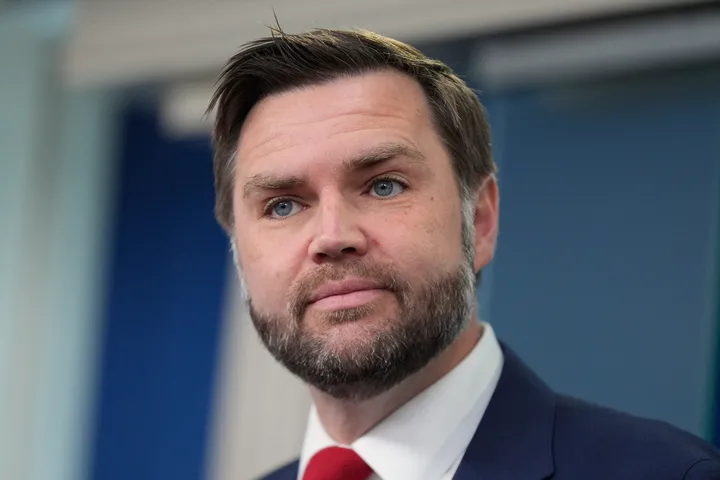
The Atlantic used the Fourth of July as an opportunity to republish a 10-year-old op-ed that sharply criticized then-Republican presidential candidate Donald Trump, comparing him and and his MAGA politics to heroin.

AP Photo/Manuel Balce Ceneta
“We are republishing it on the occasion of its tenth anniversary, so that our readers can judge for themselves how well his assessment of the man he now serves as vice president has stood the test of time,” read an editor’s note from the publication.
Vance’s July 4, 2016, op-ed, titled “Opioid of the Masses,” argued that Trump was offering the public an “easy escape” from their pain.
“He never offers details for how these plans will work, because he can’t,” Vance wrote. “Trump’s promises are the needle in America’s collective vein.”
The editor’s note stated that the piece was published not long after Vance published his memoir, “Hillbilly Elegy.” The book deals, among other topics, with the opioid crisis in rural America. In his op-ed, he wrote that “many Americans have reached” for a “new” pain reliever.
“It enters minds, not through lungs or veins, but through eyes and ears, and its name is Donald Trump,” he wrote.
Read the 2016 op-ed here.
Vance, of course, went on to become Trump’s vice president in his second term. He has repeatedly addressed his once fierce criticism of the president — including reportedly musing that Trump could be “America’s Hitler.”
“I don’t hide from that,” Vance told Sean Hannity in 2024. “I was certainly sceptical of Donald Trump in 2016, but President Trump was a great president, and he changed my mind. I think he changed the minds of a lot of Americans.”
Listen to Commons People, the podcast that makes politics easy. Every week, Kevin Schofield and Kate Nicholson unpack the week’s biggest stories to keep you informed. Join us for straightforward analysis of what’s going on at Westminster.

President Donald Trump evoked the threat of a “communist menace in our land” on Friday to push Republican lawmakers to pass his SAVE America Act and end the filibuster, promising them election wins for the next century if they do.
“America will never be a communist country. We can only lose the midterms if we allow ourselves to lose the midterms, if we are foolish, stupid and unwise,” Trump said in front of Mount Rushmore in South Dakota. “But if we terminate the filibuster as we should do and immediately vote for the SAVE America Act, then we will not lose an election for 100 years.”
The president has been urging Republicans to end the filibuster for months, causing a greater divide in the party. Senate Majority Leader John Thune (R-S.D.) has said, “The votes aren’t there, one, to nuke the filibuster, and the votes aren’t there for a talking filibuster.”
In addition to the filibuster’s termination, Trump demanded Congress pass the Safeguard American Voter Eligibility Act, more commonly known as the SAVE Act, legislation that would require voters to provide in-person proof of citizenship to register to vote.
“We do that, we’re not going to lose an election for 100 years,” Trump said before going on an anti-communist tangent.
The president’s pressure on Republicans comes amid right-wing fear-mongering about democratic socialists following their recent primary victories, mislabeling them as “communist,” which is a distinctly different ideology.
“The Communist Party is made up of illegal immigrants, criminals, and everybody that doesn’t want to work. Communism is a loser. It always was, and it is right now,” Trump said. “It’s a big loser. Look at the people that are promoting it. They are not the people you’re going to follow.”
Listen to Commons People, the podcast that makes politics easy. Every week, Kevin Schofield and Kate Nicholson unpack the week’s biggest stories to keep you informed. Join us for straightforward analysis of what’s going on at Westminster.

BBC newsreader goes viral for the unbelievable way she pronounces ‘Socceroos’: ‘Said it like the team is a Greek player’

M-cap of 6 of top-10 most valued firms surges Rs 1 lakh cr; Airtel, Bajaj Fin top winners

Lucas Glover tied atop 2026 John Deere Classic leaderboard with Max Homa, Zach Johnson among chasers


-

 Fashion2 days ago
Weekend Open Thread: High Hopes
-

 Politics2 days ago
The House | “Reframing the debate from a binary discussion of winners and losers”: Yuan Yang reviews ‘We Are Not Machines’
-

 Crypto World5 days ago
Strategy authorizes up to $1.25B in Bitcoin sales under new capital plan
-

 News Videos7 days ago
MAJOR BITCOIN & MARKET UPDATE!!!! (MUST WATCH ASAP!!!)
-

 Tech5 days ago
Anonymous researcher drops 0-day ‘exploitarium’ repo
-

 Business5 days ago
Australia treasurer says alleged access of prime minister’s bank data ’incredibly concerning’
-
 NewsBeat4 hours ago
Taylor Swift and Travis Kelce wedding staffer hilariously struggles to keep her cool while checking in megastars
-
 Business6 days ago
The AI boom won’t burst all at once. It will pop in ‘rolling bubbles’: Macquarie
-

 Sports4 days ago
Broncos roster: OL Ben Powers (No. 74) entering final year of contract
-

 NewsBeat4 days ago
Presenter Caroline Flack’s brother Paul Flack dies aged 55
-

 Crypto World3 days ago
Binance stock trading tops $1B in first month after launch
-

 News Videos5 days ago
How to Build INSANE Live Financial Dashboards With Claude
-

 Crypto World3 days ago
Alibaba-affiliate Ant Group enters the humanoid robot market with 12 deals
-
 NewsBeat3 days ago
New exhibition reflects five decades of movement between island of Ireland and GB
-

 Business2 days ago
What a 10 Percent Drop Means for Buyers, Sellers and Renters
-

 Business3 days ago
Meta Platforms Stock Jumps 7% Today as Bloomberg Reports Company Plans to Enter the Cloud Business
-

 Crypto World2 days ago
Binance Re-Enters Philippines As EU MiCA Rules Restrict Access
-
 Crypto World4 days ago
Airdrop Registration Becomes Key Focus For Remittix As RTX Launch Updates Approach
-

 Tech6 days ago
The attack that hijacked Claude Code came through Sentry. Datadog, PagerDuty, and Jira have the same exposure.
-
 Business5 days ago
PRISM’s IPO filing mentions Zostel case, CCI investigation
You must be logged in to post a comment Login