
Politics
Why Emotional Permanence Can Be Harder For Some People With ADHD


You send your partner a text. Hours pass without a reply.
Logically, you know they’re probably busy. But emotionally, your brain starts spinning. Are they upset with you? Did you do something wrong? Do they still love you?
Most people have moments like this from time to time. But for many people with attention-deficit/hyperactivity disorder (ADHD), those feelings can be much more intense, and may be tied to something often referred to as emotional permanence.
Emotional permanence is a non-clinical term used to describe the ability to hold on to the feeling that someone loves, values or cares about you even when they aren’t physically present or regularly communicating with you.
“Emotional permanence is not an officially recognised diagnostic symptom of ADHD, although many individuals with ADHD report experiencing symptoms that closely resemble it,” said therapist Stephanie Lewis.
“Many report a lack of ability to maintain the emotional reality of a relationship as long as the individual involved is not physically present or actively engaged in communication with them. The phenomenon is much more than simply forgetting another person exists; rather it involves loss of access to the feeling of being loved, valued and/or connected to another person during short periods of time.”
A delayed text, a missed call or a quiet day from a partner or friend can suddenly feel like evidence that the relationship has changed and can cause not only anxiety for the person with ADHD, but also possible friction within a relationship.

Catherine Falls Commercial via Getty Images
How A Lack Of Emotional Permanence Affects Relationships
People who struggle with emotional permanence don’t necessarily doubt their relationships all the time. Rather, they may suddenly feel as though an emotional connection has disappeared simply because it hasn’t been recently reinforced.
For example, someone with ADHD may intellectually know their partner loves them, but after a day without hearing from them, begin wondering whether something is wrong.
“In my work with individuals with ADHD I have met patients who intellectually understand their partner’s love for them,” Lewis said. “Yet, upon going one full day without receiving a text message from their partner, they begin to wonder whether something is wrong and/or if they have caused their partner to become upset with them.”
That uncertainty can quickly snowball.
“This emotional uncertainty will often result in anxiety, increased reassurance-seeking behavior or increased conflict within the relationship,” Lewis said.
The same pattern can show up outside romantic relationships. A delayed response from a friend can feel like rejection. A lack of feedback from a manager can feel like criticism. Even when nothing has objectively changed, the emotional certainty that someone cares can suddenly feel precarious.
Why Emotional Permanence Can Be Harder For Some People With ADHD
Although emotional permanence is not part of the diagnostic criteria for ADHD, experts say several characteristics commonly associated with ADHD may help explain why many people with ADHD identify with this experience.
Lewis points to working memory challenges, difficulties with emotional regulation and rejection-sensitive dysphoria – an intense emotional response to perceived criticism or rejection that many, though not all, people with ADHD experience.
“A number of variables may also contribute to the existence of emotional permanence,” Lewis said. “For example, working memory deficits may limit the ability to retain emotional information, whereas difficulties with emotional regulation and rejection-sensitive dysphoria may increase the fear of rejection or disconnection.”
Clinical psychologist Navvab Tadjvar said these challenges can make the absence of emotional reassurance feel much more significant.
“Because the ADHD brain is so intensely bound to the immediate present, when the feedback stops, the internal anchor collapses,” Tadjvar explained. “Silence doesn’t evoke the possibility that the care will return; it evokes the feeling of total abandonment, leaving us helpless and all alone in the world.”
That doesn’t mean someone with ADHD doesn’t understand that they are loved or cared for. But it does make it difficult for them to access emotional connection in the moment, especially when there’s a gap in communication or they’re missing reassurance.
The Impact Extends Beyond Romantic Relationships
While emotional permanence is often discussed in the context of dating and relationships, ADHD coach Dom Passantino, who also has ADHD, said one of its biggest impacts is actually how people see themselves.
“People often flop into discussions of ADHDers’ lack of emotional permanence with the mindset, ‘They forget they’re in love if someone isn’t there,’” he said. “But it’s a lot more than that, and I feel like the darkest impacts of it are on how we view ourselves and not others.”
According to Passantino, many people with ADHD find themselves craving validation from people who rarely offer it while dismissing reassurance from the people who do.
“And when hypersensitivity is thrown on top, you turn these traits from upsetting to actively damaging,” he explained. “This becomes a breeding ground for dysfunctional and abusive relationships for both parties.”

Justin Paget via Getty Images
How To Strengthen Emotional Permanence
Lewis said: “A critical first step would be the recognition of the phenomenon without judgment.”
One strategy she often recommends is creating an “evidence file”: saving thoughtful text messages, kind emails, handwritten notes or voice messages from loved ones that can be revisited when self-doubt starts creeping in.
“I frequently instruct my clients to develop ‘evidence files,’” Lewis added. “They may then refer back to the evidence file at times when insecurity regarding their partner increases.”
She also says cognitive behavioral therapy (CBT), dialectical behaviour therapy (DBT) and ADHD coaching can help people learn to pause before assuming silence equals rejection and become more comfortable tolerating uncertainty.
Passantino agreed that keeping reminders of positive interactions can be especially helpful for people with ADHD. He compares it to the everyday systems many people with ADHD already use to remember tasks.
“In very much the same way that an ADHDer will need a Post-it note stuck on their monitor to remind them to buy milk or brush their teeth, we need to remind ourselves of the positive interactions we have with people,” he said.
He said this can be particularly important for people who have spent years masking their ADHD traits and learning to question whether positive feedback is genuine.
“Because we spend so much time masking, we just assume any positive interaction is fake, that people were just humouring us or being polite,” Passantino said. “Celebrating your own personality, not turning down the colours on it, is very important – it’s the classic ADHD coach mantra of ‘being yourself on purpose.’”
According to Tadjvar, strengthening emotional permanence is not only an individual process; loved ones can also help by creating more predictability and consistency within relationships.
“Cultivating emotional permanence requires a collective commitment to building a predictable world,” he said.
He encourages partners, friends and family members to create that sense of security through small, consistent acts of communication. “Sending a quick, ‘Thinking of you, buried in work until 5 p.m.,’ text rather than going radio silent provides the sturdy, predictable scaffolding the ADHD brain needs to feel safe,” he explained.
Ultimately, Tadjvar said, “Cultivating this skill is a practice of rewriting the intervals of absence: transforming silence from a terrifying void of abandonment into a secure, shared space where the connection remains safely intact.”
Keep in mind that it’s important not to self-diagnose. While many people with ADHD relate to emotional permanence, Lewis stressed that it is not unique to ADHD.
Similar experiences can also occur in people living with anxiety disorders, depression, post-traumatic stress disorder (PTSD) or attachment-related difficulties.
According to Lewis: “If you find that your inability to emotionally connect with others consistently affects your relationships and/or your daily functioning, consider consulting with a licensed professional mental health provider.”

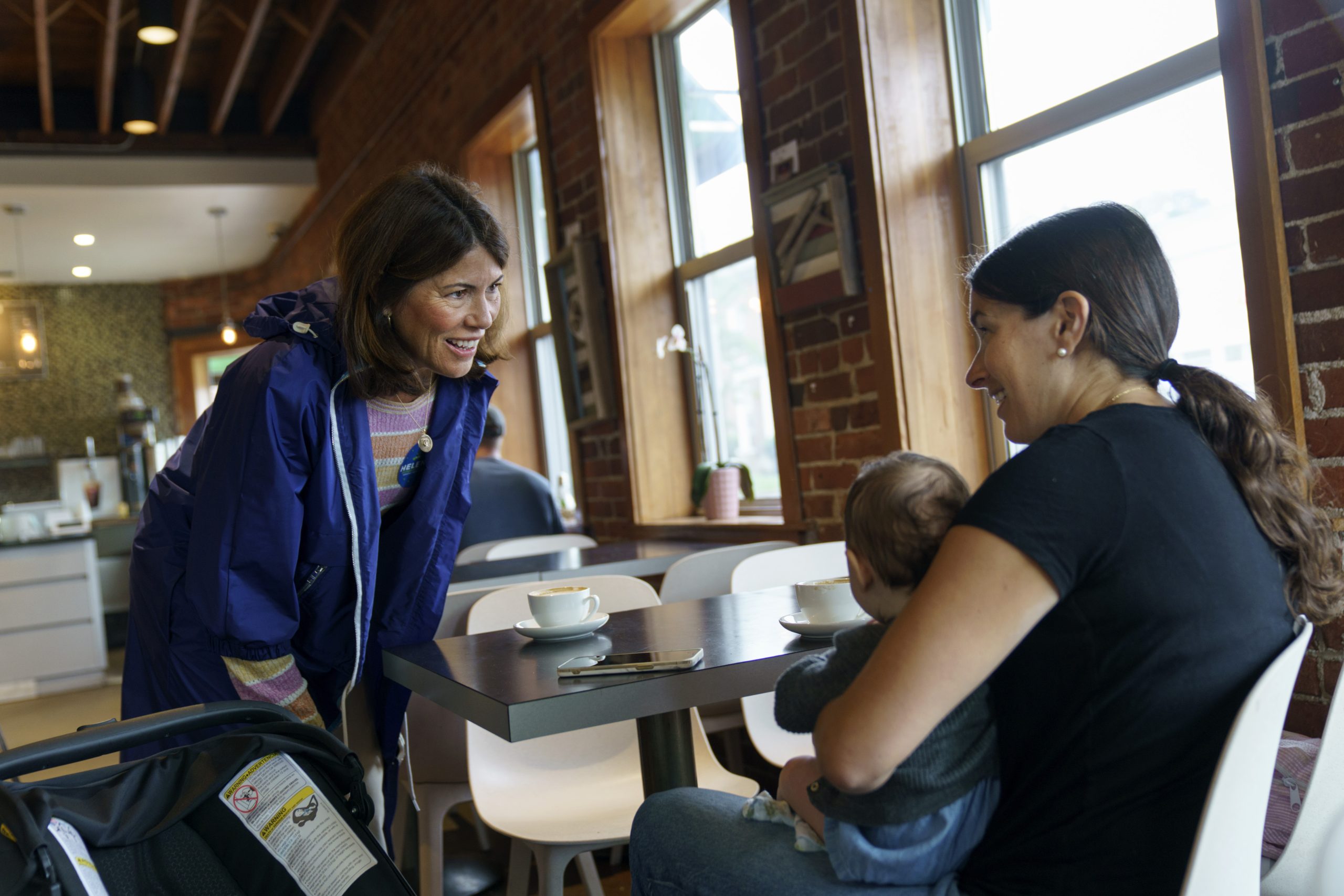

Rhode Island Gov. Dan McKee has a month to turn around primary challenger Helena Foulkes’ 20-point lead or become the first sitting U.S. governor to lose a primary in eight years.
The race represents another crest in the world’s post-pandemic anti-incumbent wave, which has transcended ideological lines as voters express broad frustration with high costs of living and governments they don’t feel are working for them. It’s a throughline from insurgent progressive victories to Kamala Harris’ 2024 loss to President Donald Trump’s growing unpopularity.
And it’s all down to a bridge.Signs outside Rhode Island’s partially closed Washington Bridge tell drivers: “Thank you for your patience.”
But voters who’ve lived through the resulting traffic crisis since emergency safety concerns emerged in 2023 keep telling Foulkes the messages make them feel the opposite. Despite some improvement, they’re fed up with commuting and economic troubles stemming from the bridge’s slowdown. One older woman told Foulkes she wanted to take out her BB gun and shoot the signs.
The contest is a rematch of the 2022 primary, when McKee (who’d been elevated to governor when Gina Raimondo became Commerce secretary) narrowly edged out Foulkes in a multi-candidate race. The primary doesn’t fall neatly along the ideological lines that have riven Democrats elsewhere. Foulkes and McKee, both baby boomers, have positioned themselves as relatively mainstream, center-left Dems.
“I’m running against people’s belief that the status quo is maybe just as good as we’re ever going to be,” Foulkes told Playbook. She’s proposed funding 20,000 new housing units with a millionaires tax. “It’s so important that people feel a sense of momentum and energy … because I think oftentimes government doesn’t feel urgent to people, and their lives are really hurting.”
Rhode Island is small enough — an hour’s drive from one corner to the other — that a single bridge symbolizes the trend. (The Washington Bridge is a key conduit between Providence and East Providence.) Almost everybody says the bridge is the No. 1 issue in the race and voters’ perception of McKee’s tenure. He and Foulkes have squabbled over the pace of rebuilding, the bidding process and the state Department of Transportation leadership. Residents are also struggling with some of the country’s highest electric rates and worst housing affordability metrics.
But McKee is mounting a vigorous defense of his time in office, saying he’s delivered for Rhode Islanders — despite Trump’s obstacles — on jobs, SNAP, wind energy, education, hospitals, housing and energy. The governor argues he’s prioritized safety on the bridge after previous leaders kicked the can down the road. One recent poll by McKee allies found a closer race, with Foulkes ahead by just 6 points.
“My record is going to really be the important factor,” McKee said in an interview. “My opponent’s record’s been in the corporate boardroom, really putting profits over people.”
That’s the heart of McKee’s message, which banks on another crucial Democratic 2026 narrative carrying the day: a working people’s populism taking on the elite business class. McKee has long had a base of union support. In Foulkes, he has an opponent who’s no democratic socialist. She was a longtime CVS executive and comes from a storied political lineage (her grandfather and uncle, Thomas and Chris Dodd, were both senators).
“It’s kind of a running bit here that her campaign is, in a very real way, being run from the deck of the Dunes Club in Narragansett,” said McKee campaign manager Drew Shannon, referring to the exclusive, members-only beach club.
And McKee has gone negative on the airwaves, accusing Foulkes of cutting people’s health care and turning a blind eye to opioid addiction during her time at CVS. “She’s a denier: someone who denies the progress we’re making,” McKee told Playbook. “Just like she denies the role she played in fueling an opioid crisis.” Both candidates got fiery in a radio debate this week. As of July 31, Foulkes had five times McKee’s cash on hand.
McKee has been rolling out a string of notable endorsements, many from labor, including teachers, firefighters, building trades and Planned Parenthood Votes! Rhode Island PAC. If he can pull off a comeback, it’ll likely be on the strength of union support.
But his positioning as a labor champion from the working-class Blackstone Valley — the birthplace of the U.S.’ Industrial Revolution — has been partially undercut by high-profile defections in his base. The Rhode Island SEIU State Council backed Foulkes. The state Democratic Party and the state AFL-CIO voted not to endorse in the race, both of which were seen as big blows to McKee.
“The labor movement is going to be in both camps,” AFL-CIO President Patrick Crowley said.
And a number of Democratic city committees have sprung for Foulkes. Cumberland Mayor Jeff Cutter, who serves in the role McKee once held, is among those now supporting her. “There’s been some stances taken that I don’t think represent the same person who was a mentor of mine,” Cutter said of McKee, calling his endorsement a difficult personal choice.
“It’s one of those times,” Cutter added, “where the advantage of incumbency might not be an advantage at this point because there’s just so much kind of frustration.”
Like this content? Consider signing up for POLITICO’s Playbook newsletter.
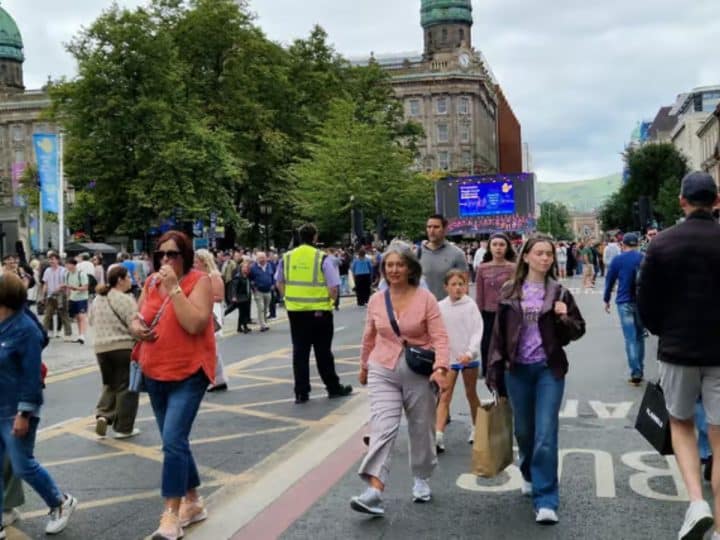

Campaigners have called on north of Ireland infrastructure minister Liz Kimmins to ensure Belfast stays a walkable city. The demand comes after pedestrianisation of the city centre has proved a huge success during a major festival.
The north’s largest city is currently hosting the Fleadh Cheoil na hÉireann for the first time. The event is the world’s largest celebration of Irish music and culture. It is likely that over one million people will visit Belfast throughout the Fleadh, and they have been able to enjoy the festival’s cultural hub unimpeded thanks to the removal of traffic.
As part of a petition addressed to Kimmins, campaigners Act Now said:
With no cars and more public space, it has created a safe and lively environment for all of us to soak up all the music and craic this week. What the Fleadh has proved is that pedestrianisation can work in Belfast City Centre and other places across the North.
However, this is only temporary. When the Fleadh ends on Sunday, so will the temporary pedestrianisation of our streets. But that hasn’t stopped thousands of us asking the same question to friends and family: what if Belfast’s streets were like this all the time?
We call on Infrastructure Minister Liz Kimmins to pedestrianise more streets in Belfast and other places across the North.
Benefits of walkable cities: cleaner air and more active people
Reducing traffic in cities is hugely popular among Europeans. As City Changers point out:
…a 2020 YouGov survey across 21 European cities, 74% of responses – including drivers – supported the reallocation of space from vehicles to people-centric transport.
Cities jammed with traffic waste people’s time. Belfast is a prime example, as the most congested city across Britain and the north of Ireland. People breathe in toxic fumes as a result. City Changers say:
Emission levels are unsafe for breathing in at least 80% of cities and around 15% of all greenhouse gases are attributed to transport.
Using cars to get everywhere means people are less active by walking or cycling. The result of these factors is a poisoned, sedentary population suffering ill health. This in turn leads to increased costs for health care systems. More walkable areas, served by nearby public transport stops, would address these issues.
The Australian City Renewal Authority, which seeks to improve Canberra’s urban environment, point out that areas formerly filled with traffic can be replaced with trees. This results in more pleasant city spaces, cooler temperatures and cleaner air.
A report from Living Streets showed that there’d even be an economic boost from making cities more walkable. They say:
…pedestrians spend more money than people arriving by car, and pedestrianised town centres have higher sales.
Britain’s National Active Travel Commissioner is Olympic gold medallist Chris Boardman. He elaborated, saying:
Making the centres of our towns, cities and villages easier and safer to get about on foot means people are more likely to spend more time there supporting local shops, pubs, cafes and restaurants.
Belfast Greens: “Pedestrianise the living daylights out of the city centre”
Local politicians approve of the Fleadh’s initiative with Green Party councillor Brian Smyth saying:
Pedestrianise the living daylights out of the city centre.
He acknowledged there could be:
…challenges around transport and those with mobility issues but I believe with consultation and the will we could find a way around this.
This is an issue sometimes raised by opponents of reducing car presence in cities, but Mother Jones point out that:
…disabled people are actually less likely to drive than non-disabled people….
That means they rely more on public transport. Mother Jones also point out that navigating a torrent of traffic is a greater hazard for disabled people, with:
…vehicle-pedestrian deaths among wheelchair users was 36 percent higher than that of the overall population.
For disabled people who do rely on a car, access could be granted for blue badge holders.
Even the Democratic Unionist Party (DUP) resisted their reflexive tendency to scream ‘no’ at anything remotely positive. Belfast councillor Sarah Bunting acknowledged that the pedestrianised spaces are:
…creating a welcoming atmosphere and allowing people to enjoy the city in a different way.
However, similarly to Smyth, she caveated her remarks by emphasising the need to plan properly for the needs of “elderly people and those with mobility issues”.
Those with mobility issues might include revellers who are the worse for wear after contributing to the possible 2.5 million pints of booze consumed during the Fleadh. Enabling them to stagger home safely on car-free streets is just one more reason for permanent pedestrianisation in Belfast.
Featured image via NewsLetter

President Donald Trump filed an emergency motion in his $10 billion defamation lawsuit against the BBC to prevent the disclosure of his financial records in court — and withdrew allegations that the network had damaged his brand and businesses.
The emergency stay granted Thursday in the Southern District of Florida by US Magistrate Judge Enjoliqué Lett temporarily blocks the BBC from obtaining detailed financial information on the Donald J. Trump Revocable Trust, which is managed by the president’s son Donald Trump Jr.
“Counsel for the Plaintiff—who also represents the Trust—testified at the July 27, 2026, discovery hearing that the Plaintiff no longer intends to pursue a damages theory premised on injury to the plaintiff’s brands and businesses,” Lett wrote in her motion-granting order.
Trump sued the BBC in December over a documentary that aired on its flagship “Panorama” news program, which spliced together two different sections of a speech he gave on Jan. 6, 2021 — before rioters stormed the Capitol.
Trump argued in his lawsuit that the program caused economic damage to his businesses, but dropped that particular claim ahead of a deadline Thursday to produce financial records corroborating this — which would have included tax returns, financial statements and ownership records.
A lawyer for Trump said during the hearing last month that Trump’s attorneys “don’t want to acknowledge that the brand has or has not suffered any injury,” and are “not pursuing that as part of our damages,” concluding, “It is simply the reputational injury to the President, full stop.”
The president is still seeking $10 billion in damages from the broadcaster.

Alex Brandon/Associated Press
Attorneys for the BBC argued Wednesday in a memorandum opposing the motion that Trump could have focused only on his supposed reputational harm when he first filed the lawsuit, and decried that he is still seeking damages without providing any actual disclosure.
“In fact, claiming $10 billion in harm while purporting to disclaim damage to Plaintiff’s business and professional interests renders it all the more implausible that Plaintiff will ever be able to show such damages,” the attorneys wrote Wednesday in the memo.
Trump’s lawyers on Wednesday had called the BBC’s request for disclosure “shockingly broad,” arguing it would cause irrevocable harm to the trust overseeing his companies. While Trump succeeded Thursday, the emergency stay does not necessarily shield his records forever.
The court could still decide that the BBC is entitled to obtain relevant financial information. The emergency stay itself will remain in effect until Lett rules on whether or not to lift it — following updated filings from Trump and his attorneys regarding the ongoing lawsuit.
During my senior year of college, I dated a boy who was tall, dark-haired, and smoked a lot of weed. (If I’d had a checklist, those would have been the boxes on it at the time.)
We talked easily, about everything from medieval art to music, and I found his lanky limbs and soulful eyes very appealing. But despite how much we enjoyed each other’s company, both in bed and out of it, I didn’t, fundamentally, feel anything. If he’d told me he never wanted to speak to me again, I wouldn’t have cared, except that I’d have needed to get my weed from someone else.
That’s when I came up with the theory of the third thing.
The premise is that there are three things that make you fall for someone. The first is a physical connection. The second is an intellectual connection. And then there’s the third thing… whatever mysterious ingredient makes you imagine a future together. My friends and I spent hours sitting on the floor of my dorm room, listening to Matchbox 20 and drinking diet Snapple with vodka, trying to unravel what the third thing could be.
I was a good student. I was naturally shy and awkward, but I was also used to thinking things through and figuring them out. In middle school, I’d analysed my classmates’ social interactions, realising that when someone told a story about themselves, you were supposed to respond with a story on a similar topic.
In high school, I’d made a checklist of all the things I needed to do to be cool (start reading Seventeen magazine, stop walking around with a book in front of my face, keep gum in my backpack and offer it to my classmates after lunch).
In college, I’d turned my attention to boys. It was easy to kiss them on sticky bar dance floors and meet them for coffee dates at the student centre. But I wanted to fall in love, and I wasn’t sure how to do it. If I could figure out the third thing, then I’d know the formula. I’d know how to find someone who I was really excited about.
I dated regularly throughout my 20s, but nothing lasted. Then, following another breakup, I found myself spending a lot of time on the phone with my friend Dan. We’d dated briefly when we first met years before on study abroad. He was awkwardly, gawkily handsome, and was one of the smartest people I’d ever met, dropping references to Byzantine emperors into casual conversation. However, at that time, there just wasn’t that third thing.
Then, suddenly, eight years later, there was. I wasn’t sure what had changed. I still didn’t know what the third thing was, but something was different, even if I couldn’t identify it. For years we’d just been friends – albeit friends who drunkenly made out occasionally when we ended up in his car together late at night. And now we were spending all our time thinking about each other. How had this happened? And what were we going to do about it?
As it turned out, we were going to get married. Three years later, we found ourselves holding hands and saying vows in a historic library in Providence. We ate cupcakes, drank prosecco, and spent the night dancing with our friends and family among the stacks. It was the happiest day of my life; I’d found a smart, handsome man whom I loved, and who loved me. We had chemistry; we could spend hours talking, and most importantly, we had the third thing. I felt like I’d gotten exactly what I wanted.
Except that after 10 years of marriage, it wasn’t what I wanted anymore. Dan’s brooding moroseness, which I’d found appealing, had begun to seem whiny. My quest for self-improvement, which he’d found admirable, had begun to seem exhausting. It had started to drive me crazy that he sang to himself. It had started to drive him crazy that I left the cupboard doors open. These were things that we’d lived with for years. They hadn’t been a problem. And now, suddenly, they were, and I wasn’t sure why.
There were other, bigger issues. We were politically divided. We wanted to spend our time in very different ways. My marriage didn’t end just because we no longer had the third thing. But that was part of it. We were still attracted to each other. We still talked about everything as easily as we always had. But we no longer had that ineffable thing that made us feel romantic about each other.
We tried. We left our son with his grandparents over the 4th of July weekend, went to a local brewery for IPAs and pepperoni pizza, shared a joint and had sex in front of a mirror. We sat side by side, feeling miles away from each other, and watched fireworks explode into distant sparks of light. We went to two different couples’ therapists. They gave us worksheets. We did the worksheets. We still didn’t love each other anymore.
The hardest thing about the end of the marriage wasn’t the loss of the present. At the time, we were sleeping on separate floors of our old suburban house, trying not to touch when we passed each other in the stairway. But in my imagined future, we were going to be one of those elderly couples who travelled around the country in an RV, who went to see independent films and had season tickets to the local symphony. We were going to sit side by side at our son’s graduation, and when he crossed the stage, unimaginably tall but still wild-haired and bright-eyed, we were going to squeeze each other’s hands.

Instead, I was single and dating again in my 40s. From everything I knew about ageing while female, I figured that dating at that age would be some kind of barren wasteland. Instead, I discovered that the apps had come along and made it easy. I could go on a date with someone new every night if I wanted, and for a while I did. I was doing things I thought I’d never do again, like kissing strangers at the entrance to the subway. And for the first time, I was dating women, which was something I’d always wondered about. When I was younger, I’d gone from one man to another, and suddenly I wondered if maybe the reason I’d had trouble figuring out the third thing was that I didn’t want to be with a man. Maybe my newfound queerness held the answer I’d been seeking.
I started dating a beautiful woman with long blonde hair, tattoos and a sweet smile. We sent each other passages from books, we talked about theatre, we spent hours making out. Still, despite how much we enjoyed each other’s company, both in bed and out of it, there was no third thing. We were mutually unserious, and after a few months things came to an end.
I think someday I’d like to fall in love again, but I’m also terrified because I’m finally coming to understand that there isn’t a formula. I’m realising that the third thing is different at different times, or for different people. That it’s something that can appear out of nowhere… and can disappear, too. That sometimes love just goes away, and if I find it again, it might go away again, no matter how hard I try not to let that happen.
I’ve finally figured out that I might never figure it out. If the third thing comes my way again, it’s just going to be because I’m lucky. I can’t control whether I find it; I can only control whether I’m brave enough to say yes to it. I don’t know whether I will be.
For now, I write, I teach and I worry about the world, and I watch my son use Magna-Tiles to build rainbow castles reaching up towards the sky. Sometimes I swipe right on strangers, and meet them for hikes or cups of coffee. I walk my dog around the neighbourhood in the spring and watch the crabapples bursting into improbable, extravagant bloom. The flowers drift down from the trees as I walk underneath them. I reach out my hands to catch them, and I end up empty-handed, but later, when I get home, I find myself picking delicate pink petals out of my hair.
Lia Romeo is a playwright, essayist, novelist, and screenwriter. Her plays have been produced off-Broadway, as well as regionally and internationally, and her essays have appeared in the Washington Post, the New York Times, and other national publications. She is currently at work on a screenplay.
Do you have a compelling personal story you’d like to see published on HuffPost? Find out what we’re looking for here and send us a pitch at pitch@huffpost.com.
People are lonelier than ever – that’s hardly breaking news. Everyone has a theory about why. Social media usually gets the blame; streaming platforms like Netflix are often part of the conversation; and, increasingly, AI is making the list.
In 2023, the U.S. surgeon general warned that the country was facing a “loneliness epidemic.” The diagnosis was clear. But what if we’ve been looking at the problem the wrong way?
Maybe loneliness isn’t about how many friends we have. On paper, many of us have larger social circles than previous generations, whether that’s hundreds of Facebook friends or a busy group chat alongside real-life relationships. We’ve come a long way from the days of small, close-knit communities where everyone knew your business before lunch.

Yoshiyoshi Hirokawa via Getty Images
The real issue may not be the size of our networks but the depth of our connections.
That idea is backed by decades of research. The landmark Harvard Study of Adult Development, one of the longest-running studies ever conducted on human happiness, found that the strongest predictor of a happy, meaningful life isn’t wealth, success or even physical health. It’s the quality of our relationships.
And that’s where many of us are struggling. We’re surrounded by people, yet starved of genuine connection. We call this the “Friendship Depth Gap,” and it may be one of the biggest reasons so many of us feel lonely.
What is the “Friendship Depth Gap”?
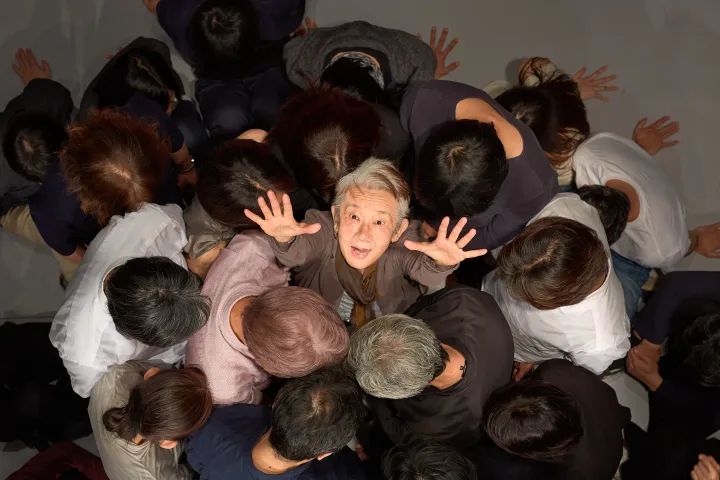
Many people have plenty of friends, active group chats and a steady stream of social interaction, yet still feel strangely disconnected, unseen or unfulfilled. A term gaining traction on social media – the “Friendship Depth Gap” – puts a name to that feeling. The idea is simple: We’re surrounded by connection, but lacking genuine emotional intimacy.
Elisabeth Crain, psychotherapist and author of The Friendship Lab, has become one of the leading voices behind the concept.
“The research shows that we aren’t actually lacking friends. In fact, we have plenty of friends,” Crain said. “The issue is the level of closeness we have with our friends … the depth, or lack thereof, in these relationships. There’s a fear of vulnerability holding people back from becoming more intimate or close with their friends.”
In other words, most of us don’t need more names in our contacts list, we need to spend more meaningful time with the people already in it.
And there we have the frustrating paradox of modern friendship. We’re more connected than ever, yet many of us don’t have someone we’d instinctively call in a crisis. Our social circles may be wide, but too often they lack the depth that turns acquaintances into lifelong pals.
“I have a big group of friends, but I feel lonely a lot of the time,” said Maya S., 26, who asked to withhold her last name for privacy to talk about her relationships. “I don’t feel like my friends really know what’s going on in my life or care enough.”
For Charlie F., 29, the issue is around the quality of hangouts: “I feel like we’ve fallen into catch-up culture. I see a friend, we talk for an hour over dinner, bringing each other up to speed, then we don’t meet up again for a month, and repeat. It doesn’t feel like we get the chance to dig deep, as we’re so busy updating on dating and job stuff.”
Why is the Friendship Depth Gap worsening?
Crain believes the “Friendship Depth Gap” is, in some ways, an inevitable consequence of adulthood.
“I think one big factor is that the barrier to entry into friendship increases throughout our lives,” Crain said. “For example, when we’re in grade school, we are somewhat forced into friend groups or social situations. This continues into college, where we are again in a pool of people we don’t always get to choose.”

Thomas Barwick via Getty Images
She continued, “But throughout our lives, that pool gets smaller and smaller, and we do get to choose who we surround ourselves with. However, our ability to make friends becomes harder because of factors like a busy career, family or children or proximity (e.g., people move away). The irony is that making friends is not less important later in life. In some ways, it may be even more important because so many seismic things happen, such as grief, loss, divorce, career changes and raising families, and it’s important to have real, supportive friends along for the ride.”
If friendship has always required effort, why does the gap feel bigger than ever now?
One reason may be that we’ve started optimising friendship the same way we optimise so many other parts of our lives: for convenience. We’re wearing smartwatches, listening to podcasts on double speed and rushing our friendships.
Once again, optimising is taking another good thing from us.
How can we bridge this gap to form stronger connections?
Even if Crain is right that the “Friendship Depth Gap” is a natural part of getting older, that doesn’t mean we’re powerless against it. Just as we can take steps to protect our physical health as we age, we can also be intentional about protecting and deepening our relationships.
Building deeper friendships doesn’t necessarily require a dramatic life overhaul. It doesn’t have to be a full-time job. It can start with small changes: replacing the surface-level catch-up with a more meaningful conversation, asking questions you wouldn’t normally ask or creating space to talk without distractions.
Activities like question-based games such as “We’re Not Really Strangers” can help break down some of the barriers that keep conversations on the surface. And while shared activities, from watching sports to taking an exercise class, can be a great starting point for connection, the moments before and after, when people are simply talking and being present, are often where intimacy grows.
Crain also emphasises that deep friendships require continuing to make new connections. Over time, some friendships naturally fade. People move away, priorities change, and the closeness that once felt effortless can become harder to maintain. New friendships will likely initially feel more superficial, but depth is something that can be built with the right foundation in place.
“One of the most important things to consider when making new friends is taking calculated risks,” Crain said. “By that I mean trying people on for size, vetting them, seeing if you get along with them, and connecting with them in the early phases of friendship. If you want to deepen the friendship, you must open up, share intimate parts of yourself and let people get to know you.”
She continued, “Ultimately, the only way to deepen friendships is by allowing ourselves to be seen and known. By allowing others to see and know us, we can also see and know them. The ability to be vulnerable, however scary or daunting it may be, helps deepen our friendships. When we share, someone else gets to share about themselves, which helps us create meaning in the relationship.”
Closing the “Friendship Depth Gap” doesn’t require more friends. It requires more honesty, staying present and the willingness to let the people already in our lives truly know us. A scary thought.

Did you know that Wi-Fi kind of means nothing?
I’d always assumed that because hi-fi stands for high fidelity, Wi-Fi was short for wireless fidelity. Nope: Phil Belanger, a founding member of the Wi-Fi Alliance who led its name selection, said that “Wi-Fi doesn’t stand for anything. It is not an acronym. There is no meaning.”
Huh. So what about USB, the connection ports used for everything from chargers to keyboards and printers?
What does USB stand for?
Unlike Wi-Fi, USB is actually short for something: Universal Serial Bus. Its first known use was in 1995.
Until 1996, computers had “one or two serial ports, a parallel port, mouse and keyboard ports, and, in some cases, a joystick port,” Britannica said.
USBs solved that problem, providing a standard way to transfer information faster between devices.
But, like me, you’re wondering what buses have to do with the port, let’s break down each word:
- Universal – that means it fits a range of devices, as we just mentioned. It’s “built to a universally accepted standard,” so all USB products have to follow exact specifications, Erik Gross, co-founder of The Tech Academy, explained on YouTube.
- Bus – you’ll see why I put this before “serial” in a minute. In tech, a “bus” transmits information within a computer and/or over short distances (which allows, for example, a USB mouse to work); it’s usually a wire or collection of wires.
- Serial – During this transfer, Gross said, you can “either send the pieces data along one wire”, which happens when bits of information drip through the channel, one after the other. Or, you can spread that information across many wires, which each carry pieces of information in the order of the entire transmission, not one-by-one. A serial transfer therefore travels down one wire “one bit at a time in a sequential fashion,” reads What Every Engineer Should Know About Data Communications. The other type, with multiple wires, is called “parallel” transmission.
Therefore, a universal serial bus (USB) is a standard port that transmits information to or from your computer to or from another device, and which only requires a single wire to do so.
So… why are there different types of USBs?
For something “universal”, there are a few types of physical USB connections: USB-A, USB-B, USB-C, Micro-USB, and Mini-USBs.
USB-C is the type you might use for your charger. They’ve become more popular than the larger USB-As (the rectangular computer one that only works when you put the port in the right way).
Wired suggests this is partly because they’re smaller and can be more powerful than USB-A because of how their hardware works. They also can’t be plugged in “upside down”; their design is reversible.
Still, USB-C (and all other USB types) are standardised according to their category and (of course) transfer information across a single wire. So, they qualify.
If you want to live a longer life, your diet might be more important than you realise. One study found that in the UK, we could expect to enjoy 10 years more life by eating “more whole grains, nuts and fruits and less sugar-sweetened beverages and processed meats”.
The Mediterranean diet, meanwhile, has been linked to better heart health, a longer life, and even a lower likelihood of developing type 2 diabetes.
Speaking to HuffPost UK previously, GP and ex-Embarrassing Bodies host Dr Dawn Harper said that “there is no one single silver bullet that will enhance your chances of living a long and healthy life… when I read claims that a single ‘super food’ will achieve just that, I tend to glaze over”.
She, among other experts, believes that your overall eating pattern is what matters. The odd inclusion of one food or another will neither save nor condemn your health (unless you have allergies, of course!).
With that caveat, some research has found that certain foods can encourage healthy ageing, while others could increase issues related to getting older.
Here are some to consider when thinking about your overall diet:
5 foods that may help with healthy ageing
1) Nuts
2013 research, which followed roughly 120,000 participants over 30 years, found that the more often people in the study ate nuts, the lower their risk of early death seemed to be.
Eating them daily was linked to a 20% lower likelihood of dying throughout the study.
Regular nut consumption has also been associated with longer telomeres (a marker of slower ageing), a lower risk of sarcopenia, or age-related muscle loss, and better cognition in older adults.
2) Good ol’ fruits and veggies
It sounds obvious, but yep, fruits and vegetables do seem to help us live longer. A 2014 meta-analysis showed that a higher consumption of fresh produce is linked to a lower risk of mortality, especially heart-disease-related deaths.
Eating vegetables could help to slow the effects of ageing thanks to bioactive compounds that help to keep your cells healthy, while older adults who eat more fruit and veg report higher levels of happiness and a greater sense of purpose.
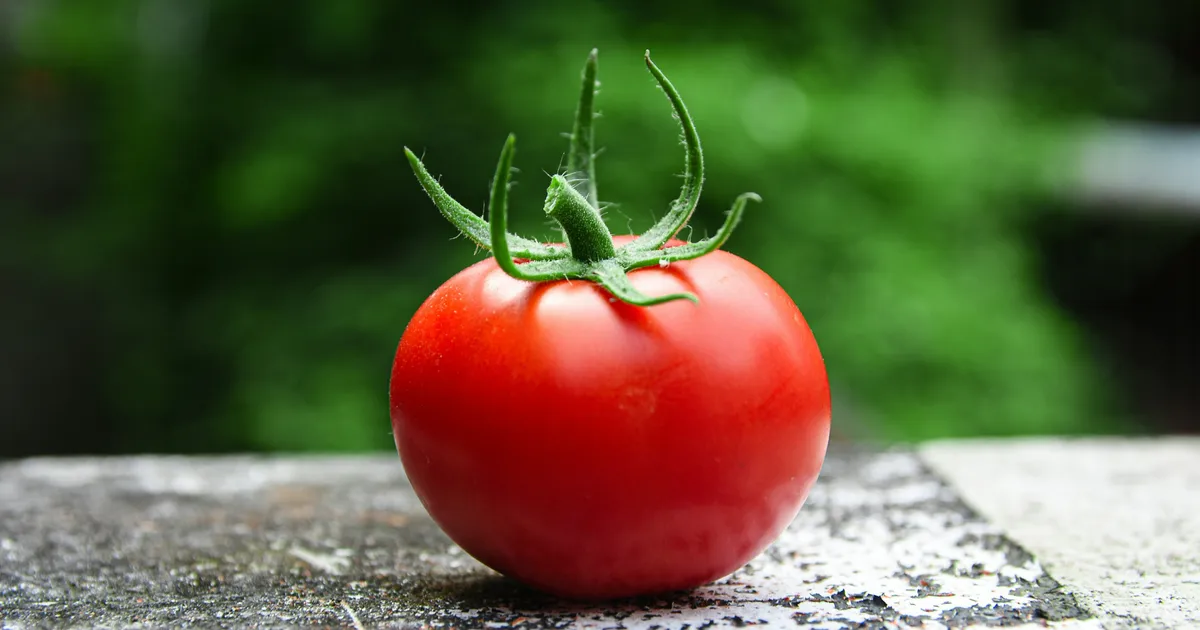
3) Red or purple fruits, like plums, tomatoes, cherries, and papaya
The reason these fruits have such a rich, deep colour is because they contain lycopene, a carotene. Our levels of lycopene go down as we age, which is a shame, as researchers think not having enough of it could be linked to an increased likelihood of conditions like diabetes, stroke, and prostate cancer.
Here in the UK and in other Western countries, tomatoes account for about 80% of our lycopene consumption. BTW, tinned tomatoes have a higher lycopene content than fresh ones: tomato paste has even higher levels.
4) Extra-virgin olive oil
Extra-virgin olive oil has been associated with the “preservation of physical function and reduced pain perception in ageing” among physically active adults, a 2026 paper concluded.
Researchers think that might be because of its “healthy” monounsaturated fatty acids, potentially brain-boosting polyphenols, and antioxidants.
5) Fish
Some data suggest that eating oily fish is linked to better cognitive function in later life.
And it could help your sight, too: research shows that eating fatty fish, like mackerel, pilchards, salmon, sardines, and herring might protect against age-related macular degeneration, a progressive condition that can lead to vision loss.
The British Heart Foundation recommends eating at least one portion (140g when cooked) of oily fish a week.
2 foods that might be bad for healthy ageing
1) Too much added sugar
It’s not great to overdo it on the sweet stuff at any age. But when we age, too much sugar appears to be linked to an increased risk of frailty – especially among older adults who get a lot of their added sugars through processed foods, a 2018 paper suggests.
Meanwhile, a 2024 study found that a vitamin-rich diet lower in sugar seemed to be associated with a lower biological age (biological age refers to a person’s cell-level wear and tear and is different from how long they’ve lived, or their chronological age).
Its co-senior author, Professor Elissa Epel, said: “We knew that high levels of added sugars are linked to worsened metabolic health and early disease, possibly more than any other dietary factor.
“Now we know that accelerated epigenetic ageing is underlying this relationship, and this is likely one of many ways that excessive sugar intake limits healthy longevity.”
2) Processed meats
A study has found that eating processed meats, like sausages, bacon, ham, salami, corned beef, and pâté, seemed to be linked to shorter telomeres.
Telomeres are structures that humans have at the ends of our chromosomes and which keep our cells working better for longer; shorter telomeres are linked to a shorter life.
And another paper said that for every extra daily serving of processed meat, participants’ cognitive ageing speed rose by 1.6 years.
The NHS said that no matter your age, “If you currently eat more than 90g (cooked weight) of red or processed meat a day, it is recommended that you cut down to 70g”.
Politics
Politics Home | British Safety Council launches new flagship campaign to shine a light on hidden hazards in the workplace

British Safety Council has today launched Hidden Hazards, a new UK-wide campaign to raise awareness of the invisible risks that affect millions of workers, and encourage more concerted action by employers, the Government and others to prevent harm before it occurs.
While visible workplace hazards are widely recognised, many of the biggest workplace killers remain out of sight and out of mind. Exposure to hazardous substances, excessive noise, poor air quality, work-related stress, fatigue, and other less visible hazards can have devastating, life-changing consequences for workers, their families, the businesses that employ them, as well as the wider economy.
Through the Hidden Hazards campaign, British Safety Council is seeking to raise awareness and provide employees with the knowledge and resources they need to stay safe; while also calling for meaningful and lasting policy change.
Mike Robinson, Chief Executive of British Safety Council, said: “A workplace risk doesn’t have to be visible to be serious. Indeed, we know many thousands of lives are lost each year due to dangers that remain unseen. Every day, workers are exposed to hidden hazards that can have profound consequences for their health and wellbeing, often with effects that only become apparent years later.
“Our Hidden Hazards campaign is about bringing these risks into the open, raising awareness, and making lasting policy change to prevent harm before it happens.”
At the heart of the campaign is a commitment to prevention through awareness. By promoting early intervention, effective risk management and practical solutions, Hidden Hazards aims to help organisations and individuals to identify and control risks before they lead to illness, injury or long-term health conditions. It will be looking at a different hazard every six months, starting with silicosis in the autumn. Next year it will move on to look at stress, then asbestos, and finally air quality.
Hidden hazards are the biggest cause of work-related deaths each year and impact more workers than any other risks in the workplace. Diseases linked to silica and asbestos contribute to the deaths of around 9000 workers each year in the UK.1,2 Figures from the HSE show that 964,000 workers suffered work-related stress, depression or anxiety in 2024/25.3 Meanwhile, poor workplace air quality affects hundreds of thousands of workers across the UK.4
Recognising that lasting change requires collective action, the Hidden Hazards campaign will bring together employers, workers, policymakers, regulators, professional bodies and industry partners to improve workplace health outcomes across the UK. By building a broad coalition around a shared commitment to prevention, the campaign aims to accelerate progress in tackling occupational health risks that have too often gone unnoticed.
Through its Hidden Hazards campaign, British Safety Council will undertake new research into under-explored issues, including silicosis and the lived experiences of workers affected, and use this to make policy recommendations and create new guidance. The campaign will seek to improve how hidden hazards are managed in the UK, working with employers, workers and policymakers to achieve meaningful change in workplace safety.
For more information about British Safety Council’s Hidden Hazards campaign: https://www.britsafe.org/impact-and-influence/hidden-hazards-campaign
References
- Cancer and construction: Silica – HSE
- Introduction to asbestos safety: Overview – HSE
- Key figures for Great Britain 2024 to 2025 – HSE
- Work-related ill health and occupational disease in Great Britain – HSE
We already know exercise is crucial for health – and can be protective against everything from heart disease and stroke, to dementia and even some types of cancer.
The NHS suggests adults should aim to do at least 150 minutes of moderate intensity activity a week (or 75 minutes of vigorous intensity activity a week). Ideally, spread over four to five days.
Two of these days should focus on strengthening activities, the health service added.
And a new study has suggested as little as four minutes of daily strengthening exercise can dramatically improve quality of life for older adults.
Exercise is complicated and it can put some people off
Routine length and pain are just some of the reasons why fewer older adults regularly exercise, the authors of the study – published in PLOS One – noted.
Co-author Smita Dandekar, associate professor of paediatrics at Penn State College of Medicine, said exercise is “complicated” as you have to decide how many repetitions, how far, how many sets, how much rest and how many times per week.
“It’s hard work, so there’s huge problems with people wanting to do exercise. If we can make it short, we’re part way there,” she said.
The four-minute exercise helping stave off ageing
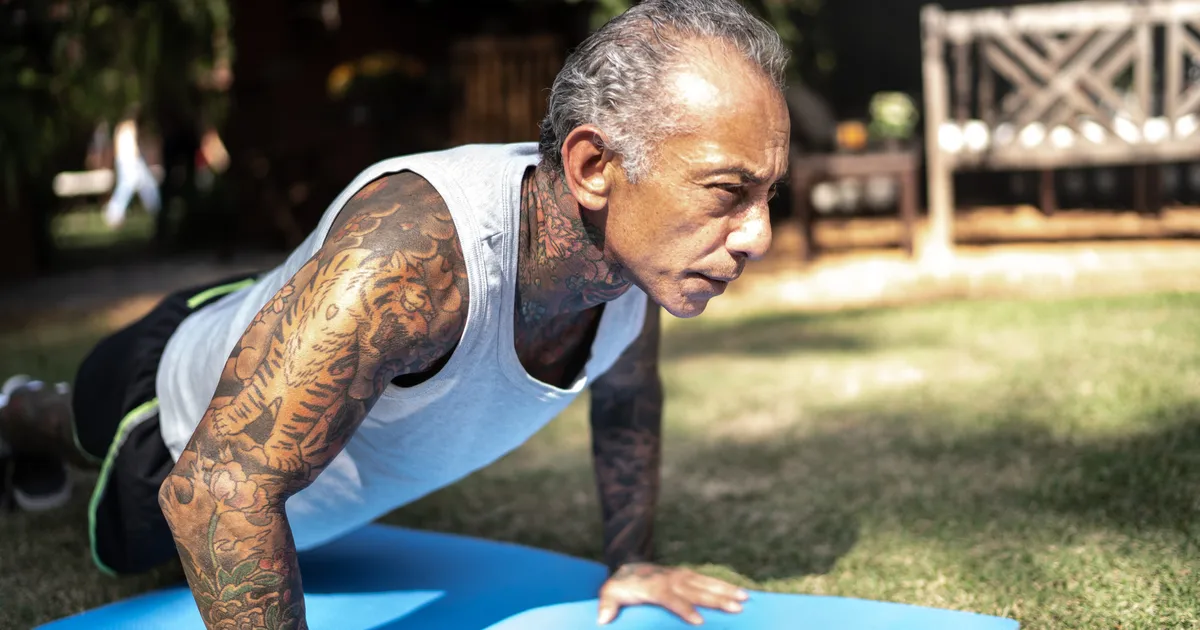
Previously, the team had conducted a study where 24 older adults performed 30 seconds of push-ups and squats daily, resulting in improved squat performance over six months.
For the new study, they tested the effects of a program, called FAST-2, to see if it improved mobility and physical capability in over-65s.
A total of 97 participants (average age of 74) were randomly assigned to receive either the exercise regimen treatment or no intervention.
FAST-2 involved four exercises:
Participants performed each movement for 30 seconds followed by a 30-second rest. Written explanations and modifications were provided for the exercises, such as performing pushups with hands on a countertop or wall, or chair stands with hands on the knees.
As participants improved, they were encouraged to progress to higher levels of difficulty.
Researchers assessed the participants’ ability and speed at standing up and ability to stand on one leg at the beginning, middle and end of the study.
The authors found that this exercise regimen, which included only 60 seconds of lower body resistance training, was enough to give significant improvements in functional performance over 12 weeks.
Lead author Christopher Sciamanna, professor of medicine and of public health at Penn State College of Medicine, said: “The human body is designed to improve very quickly. And just a few repetitions of an exercise performed regularly can lead to huge improvements.”
Politics
Politics Home Article | Public Concern About Climate Change Rises After Summer Of Extreme Heat
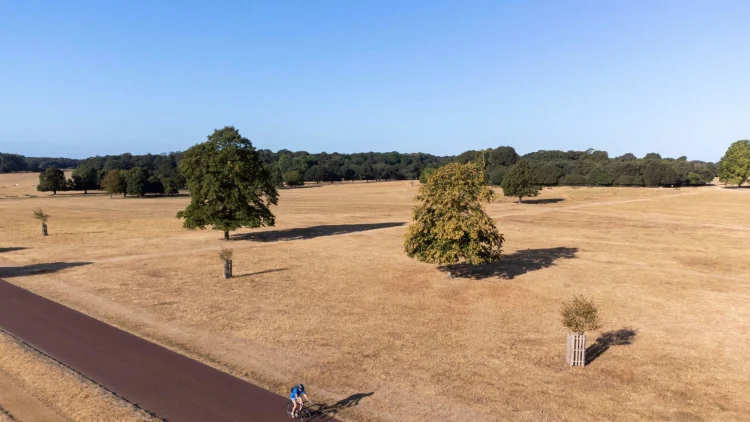

This summer has been the driest summer in England and Wales since records began in 1836. (Alamy)

4 min read
There is growing public concern about climate change after weeks of wildfires and drought in the UK, according to polling shared with PoliticsHome.
Around three-quarters of people (74 per cent) told an Ipsos poll they are concerned about climate change, up from 69 per cent before the summer. At the same time, the share of people who say they are unconcerned has fallen from 28 per cent to 24 per cent.
Over half (56 per cent) said recent high temperatures had affected everyday activities like work, exercise and sleep either a great deal or a fair amount.
Eighty-seven per cent said it is likely that the country will face similar summer heatwaves in the future, compared with just 3 per cent who said it is unlikely.
The online poll of 1,085 people was carried out against a backdrop of heatwaves, drought and wildfires across the UK.
July was the driest month in England and Wales since records began nearly two centuries ago, with the Environment Agency warning that the heat was affecting farmers, wildlife and water availability. Large parts of the country are subject to hosepipe bans, while a recent wildfire in Suffolk was described as the size of 210 football pitches.
Major wildfires have also impacted European countries like France, Greece and Spain.
Raquel de Luis, Head of Energy and Environment at Ipsos in the UK, told PoliticsHome: “The intense heat this summer and visible wildfires across Europe have served as a visible focus point around discussions on climate change, which may be driving a clear uptick in immediate concern and leaving nearly nine in ten convinced that these heatwaves are our new normal.”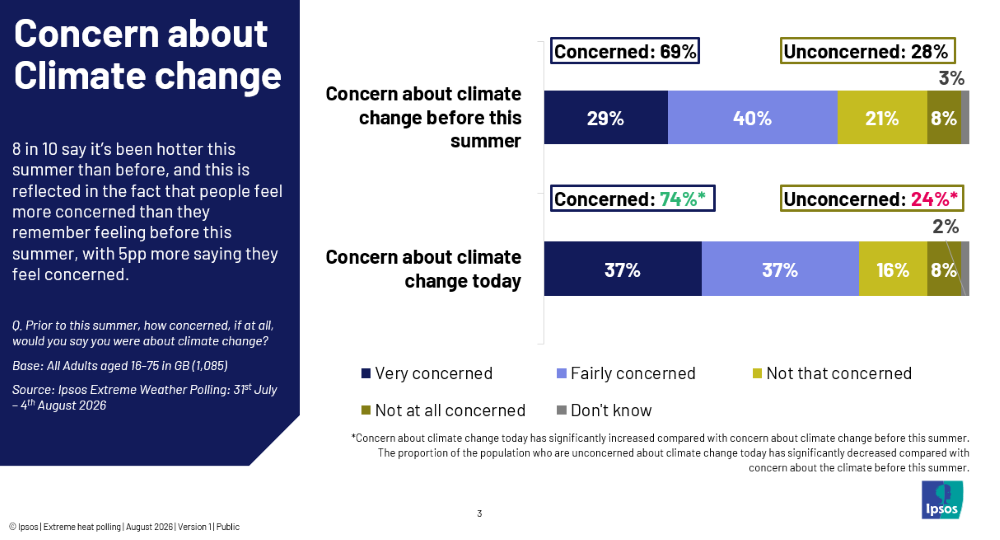
When respondents were asked what measures they planned to install in the next two to three years to help cool their homes, portable air conditioning was the most selected option (29 per cent), followed by a fixed air conditioning unit (23 per cent) and blackout blinds or curtains (19 per cent).
Of those who told Ipsos they do not plan to make changes to their homes to cope with heat, the most common reason was affordability (39 per cent).
“The key challenge for Westminster will be delivering accessible, cost-effective infrastructure and adaptation support that enables households to build resilience against recurring summer heat without adding to their financial burdens,” said de Luis.
Paul McNamee, Director at the Labour Climate and Environment Forum, said the findings show that Labour MPs are right to keep making the case for the UK’s net zero targets at a time when parties on the right are calling for them to be relaxed.
“It has been really good to see Andy Burnham knock some money off energy bills to address people’s concerns [about cost of living],” he added.
“But we also need to keep on rolling out renewables and upgrade our grid to make sure it’s fit for purpose for a future of clean energy, and our main ask is [making] sure that the government makes the absolute most out of the electrification benefits that sit beneath it.”
However, he said there is more that can be done in the short term to boost community resilience in the face of extreme heat, like creating green spaces where people can cool down and better managing land to help avert wildfires.
Managing Director of the Conservative Environment Network, John Flesher, said the government needs to do more on adaptation because the country isn’t “well enough prepared” to deal with the effects of extreme hot weather as things stand.
“We need to think a lot more about preparing for this,” he told PoliticsHome, pointing to water security and agriculture as areas of high importance. “It’s terrible what this [extreme heat] could mean for the cost of food, for farmers’ abilities to conduct their harvest as normal.”
Tom Bradshaw, President of the National Farmers Union, recently told the BBC that the UK has taken its food supply for granted for far too long and called for more resilience planning.
“Those other countries around the world that we currently rely on to produce our food and vegetables, their climates are changing as well,” said Bradshaw.
“It does feel like there is going to be some shortages of [food] products.”

Lionel Messi’s father Jorge Messi passes away after health battle, aged 68 | Football News

Money Man – Hit Different (Official Audio)
Arbroath FC to hold minute’s silence in memory of tragic Minnie Merriman after alleged murder in town


-

 Politics6 days ago
Zack Polanski: an incitement to murder Nigel Farage?
-

 Crypto World7 days ago
MicroStrategy Post-Earnings CLARITY Act Push Could Add New Catalyst for Its Stock
-

 Crypto World6 days ago
Crypto PAC spending tops $2M in Michigan House race
-

 Fashion1 day ago
Frugal Friday’s Workwear Report: Cap-Sleeve Pointelle Crewneck Sweater
-

 Business6 days ago
DTCR: Deleveraging And A Hedge Fund Collapse Point To A Possible AI Bottom
-

 Tech6 days ago
ESET tracks rise in malicious AI skills and adaptable malware
-

 Crypto World6 days ago
XRP Ledger urges node upgrade after manifest flood
-

 Fashion20 hours ago
Weekend Open Thread: Mattifying Sunscreen
-

 Sports2 days ago
Jordan Coyle & Cordiamo take Laya Arena Stakes at RDS
-

 News Videos7 days ago
Financial Crash Expert: The 90-Day Collapse Timeline They Are Desperately Hiding.
-

 Crypto World5 days ago
US Tech Stocks See Largest 5-Week Inflow in History: Can Nasdaq Break Its Downtrend?
-
 NewsBeat7 days ago
Tourist plane on sightseeing flight in Peru crashes into a field, killing all 13 people on board
-

 Tech6 days ago
Page Not Found | WIRED
-
 Business3 days ago
US stocks: Dow closes at record on Mideast optimism; SpaceX, AMD drag Nasdaq
-

 Politics2 days ago
Reform UK And Greens Sink To Lowest Favourability Ratings To Date
-
 NewsBeat7 days ago
Bikini-clad Jennifer Aniston, 57, kisses hypnotist boyfriend Jim Curtis as they enjoy a romantic getaway aboard a luxury yacht in Spain
-

 Crypto World4 days ago
Polymarket targets $20 billion valuation as competition heats up in prediction market sector
-

 Business4 days ago
Nvidia Stock Climbs 2.5% as Chip Sector Rally Builds Ahead of AMD Earnings, Nvidia’s Own Report Looms
-
 NewsBeat7 days ago
MICHAEL GOVE: Burnham’s Labour doesn’t believe in aspiration, just the soft bigotry of low expectations. From education to home ownership, their message to the working class is… know your place
-

 NewsBeat6 days ago
Trump says he is cancelling strikes on Iran subject to ‘rapidly’ making deal
You must be logged in to post a comment Login