
Politics
Why You Should Always Pack A Tennis Ball In Hand Luggage


Some experts think we should avoid using wheeled suitcases where possible, both because they can make slightly annoying rattling sounds when rolled across certain cities’ cobblestones and because, e.g., a duffel bag is usually suitable to bring in your carry-on.
But any luggage you’re bringing on board should contain a bright green tennis ball, sleep therapist Tracy Hannigan told Metro.
Why should I bring a tennis ball in my carry-on?
Hannigan recommended using a tennis ball as a massage roller to help with any muscle aches as you travel.
“A tennis ball is small and light and can help you to apply soothing pressure to points you might otherwise not be able to reach,” she advised.
If you like, you can place it in a rolled-up hand towel to prevent it from slipping away.
Healthline writes that lacrosse balls can help to ease sore muscles, too.
They reccomend a variety of exercises, like placing a ball between your shoulders and a solid surface (like a wall or the back of a chair) and moving your body so the ball massages a selected area.
On Instagram, personal trainer Laura Coleman added that “Two tennis balls in a sock make driving and aeroplane travel better,” explaining that they can be used as a makeshift foam roller when you’re seated for a long period of time.
Holidaymakers seem to love the trick
In a Reddit post about the tennis ball travel advice, jetsettrader2 said: “Being a frequent flyer, I always do this. One of the best hacks hands down.”
Another commented that they prefer the Healthline-approved lacrosse version for “something stronger”. One Redditor explained that they cut the end off of a pool “noodle” float: “that way it still rolls, but less likely to roll away under a seat”.
And u/nader0903 added: “I do a golf ball to roll-massage my feet after a long day of walking.”

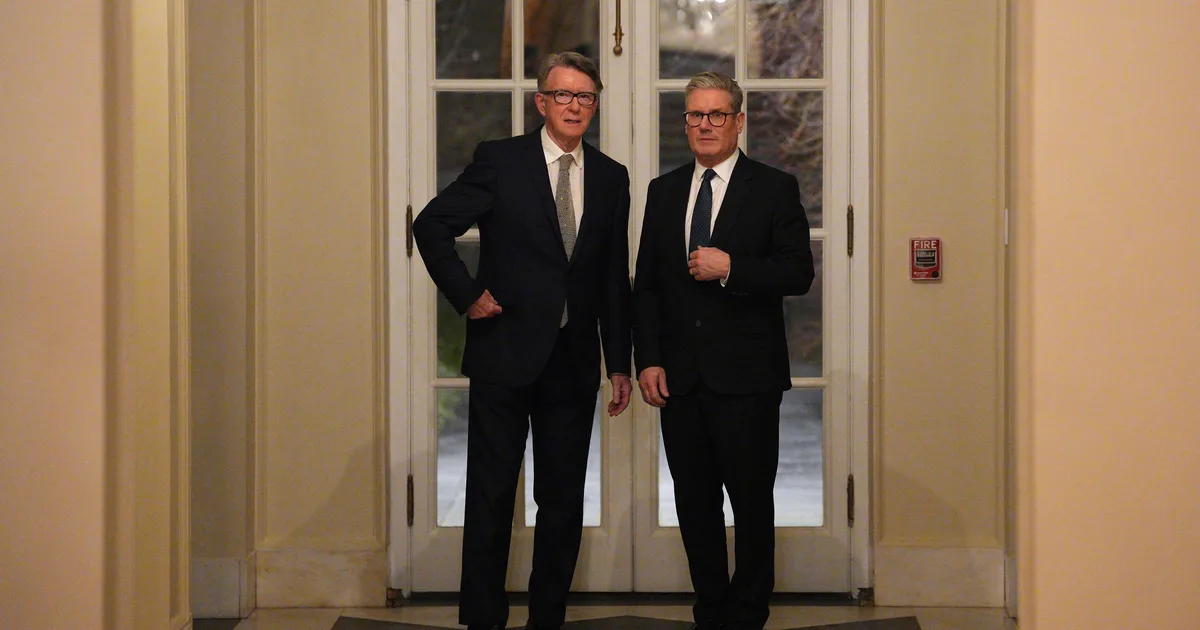
Keir Starmer is facing yet another bruising week over the Peter Mandelson vetting scandal.
Parliament’s Foreign Affairs Committee will continue its probe into the affair, with the prime minister’s former chief of staff, Morgan McSweeney, giving evidence on Tuesday.
But it is the possibility of Starmer being investigated by the cross-party Privileges Committee for misleading parliament which is causing most concern inside 10 Downing Street.
Commons Speaker Lindsay Hoyle is expected to announce on Monday afternoon if MPs will be given a vote tomorrow on whether the PM should be referred to the powerful committee.
Here, HuffPost UK explains the background to the latest controversy to hit Starmer and assesses the damage it could do to the beleaguered PM.
What Is Starmer Accused Of?
There are two strands to the accusations against the PM.
His critics say he misled the Commons by previously insisting that “due process” was followed when Mandelson was vetted for the role of UK ambassador to Washington.
It has subsequently emerged that UK Security Vetting had recommended the then Labour peer be denied clearance to take up the role.
However, the Foreign Office decided that the risks highlighted over his business links to Russia and China could be mitigated, and he was given the highest security clearance, known as “developed vetting”.
The second accusation centres around comments Starmer made at prime minister’s questions last week.
He said that “no pressure existed whatsoever” in getting the Foreign Office to give Mandelson security clearance.
But that had been contradicted the previous day by Sir Olly Robbins, who was sacked by Starmer for not telling him about UK Security Vetting’s concerns.
Giving evidence to the Foreign Affairs Committee, Sir Olly said there was “constant pressure” on his department from No.10 and there was an “atmosphere of constant chasing”.
What Has Starmer Said?
In a Sunday Times interview, the PM insisted there was no inconsistency between his comments and Sir Olly’s.
He said there was “different types of pressure” in government.
“There’s pressure – ’Can we get this done quickly?’ – which is not an unusual pressure. That is the everyday pressure of government,” he said.
Starmer said a pressure “essentially, to disregard the security vetting element and give clearance” would be something different, and that Sir Olly “was really clear in his mind that wasn’t pressure that was put on him”.
Will He Face A Sleaze Probe?
Even if Hoyle grants MPs a vote on referring the PM to the Privileges Committee, it would require a huge Labour rebellion for it to pass.
According to The Times, No.10 is planning to whip Labour MPs to vote against a probe, making it a major test of the under-fire prime minister’s authority.
One Labour MP told HuffPost UK the issue was a “complete waste of time” and insisted there was no comparison with the Privileges Committee investigation Boris Johnson faced over partygate.
He said: “Boris Johnson’s parties in breach of lockdown rules were of a wholly different magnitude of severity. Besides, the PM has been truthful about due process throughout.”
Emily Thornberry, the Labour MP who chairs the Foreign Affairs Committee, accused the Tories of playing political games ahead of the elections on May 7.
She said: “It may be that at some stage in the future some of the questions haven’t been answered and it is decided that they are of sufficient importance that the Privileges Committee should be involved but I don’t really see why we are doing it at the moment apart from potentially people trying to score points in advance of the local elections.
“I’m sorry to say that and I’m not supposed to be partisan on this but it is plain as the nose on my face what’s going on here.”
Subscribe to Commons People, the podcast that makes politics easy. Every week, Kevin Schofield and Kate Nicholson unpack the week’s biggest stories to keep you informed. Join us for straightforward analysis of what’s going on at Westminster.

Though people with dementia tend to face sleep disruptions, it’s a bit of a “chicken and egg” link: “Does poor sleep increase dementia risk, or does dementia lead to poor sleep?” Alzheimer’s Society said.
“Some researchers believe that both of these theories could be true, and the relationship could be circular.”
Whatever the direction of the link, though, one paper found that those who got fewer than six hours of sleep in midlife were less likely to develop dementia.
And a new paper published in PLOS One, which involved data from dozens of other studies, says there may be a “sweet spot” for reducing dementia risk.
Seven to eight hours’ sleep may be best for reducing dementia risk
The data the researchers used came from millions of people aged 35 and over across decades of research. It looked at day-to-day habits, like rest and movement, and compared those to the rate of dementia among participants.
Parmis Mirzadeh, who helped to write the study, said these studies “provided an opportunity to better understand how daily habits like physical activity, sedentary time and sleep collectively shape brain health over time”.
They found that seven to eight hours’ sleep was linked to a lower dementia risk, while both more and less sleep were associated with an increased likelihood of developing the condition.
The longer sleep pattern (regularly getting more than eight hours’ sleep) was most associated with higher dementia risk.
Previous research has shown that people who sleep more than nine hours a night are more likely to develop dementia 10 years later.
Any other links?
Yes. These researchers also looked at how physical activity and sedentary behaviours seemed to be linked to people’s dementia risk.
They found that people who stuck to the recommended 150 minutes of physical activity a week were 25% less likely to face dementia.
“One of the more surprising findings was how sparse the data remains for sedentary behaviour, despite it being recognised as a distinct health risk for more than a decade,” Mirzadeh stated.
Nonetheless, researchers think sitting for more than eight hours a day may increase dementia risk.
“We hope this work helps raise awareness that everyday behaviours such as physical activity, sedentary time and sleep are associated with brain health,” Mirzadeh added. “Because these are modifiable, they represent practical targets for interventions aimed at reducing dementia risk at the population level.”
It’s worth noting, however, that this paper only looked at associations and did not prove a causal link.

The BBC has issued an apology for inadvertently broadcasting a racial slur twice in one day on Radio 1.
Earlier this month, Radio 1 producers put together a Newsbeat package about the new Super Mario movie, which was soundtracked by a song from the rapper Childish Gambino.
However, the clip of the song, which aired at 12.45pm, contained an uncensored use of the N-word, which went undetected before it was aired again five hours later.
A BBC spokesperson told The Sun: “We are very sorry this was broadcast. We should not have included this clip in this news report, and we removed the clip from Sounds when we realised the error.”
This latest controversy comes just months after the BBC faced widespread condemnation for including another uncensored utterance of the N-word in its coverage of the 2026 Baftas.
During the Baftas ceremony in February, Tourette’s campaigner John Davidson – attending the event alongside the cast and crew of I Swear, which was inspired by his life – experienced an involuntary tic while Sinners actors Delroy Lindo and Michael B Jordan were presenting on stage, resulting in him shouting the slur from his seat.

Anthony Harvey/Shutterstock
After a clip of this was included in the BBC’s broadcast of the event, despite it airing on a two-hour time delay, an investigation was “fast-tracked” by outgoing director-general Tim Davie.
Earlier this month, the BBC’s executive complaints unit concluded that “the inclusion of the N-word in the broadcast (which was also streamed live on iPlayer) was highly offensive, had no editorial justification and represented a breach of the BBC’s editorial standards”, even if the breach in question “was unintentional”.
The morning after the Baftas, chief content officer Kate Phillips sent an internal memo to BBC employees, which read: “The edit team removed another racial slur from the broadcast. This one was aired in error and we would never have knowingly allowed this to be broadcast.
“We take full responsibility for what happened.”
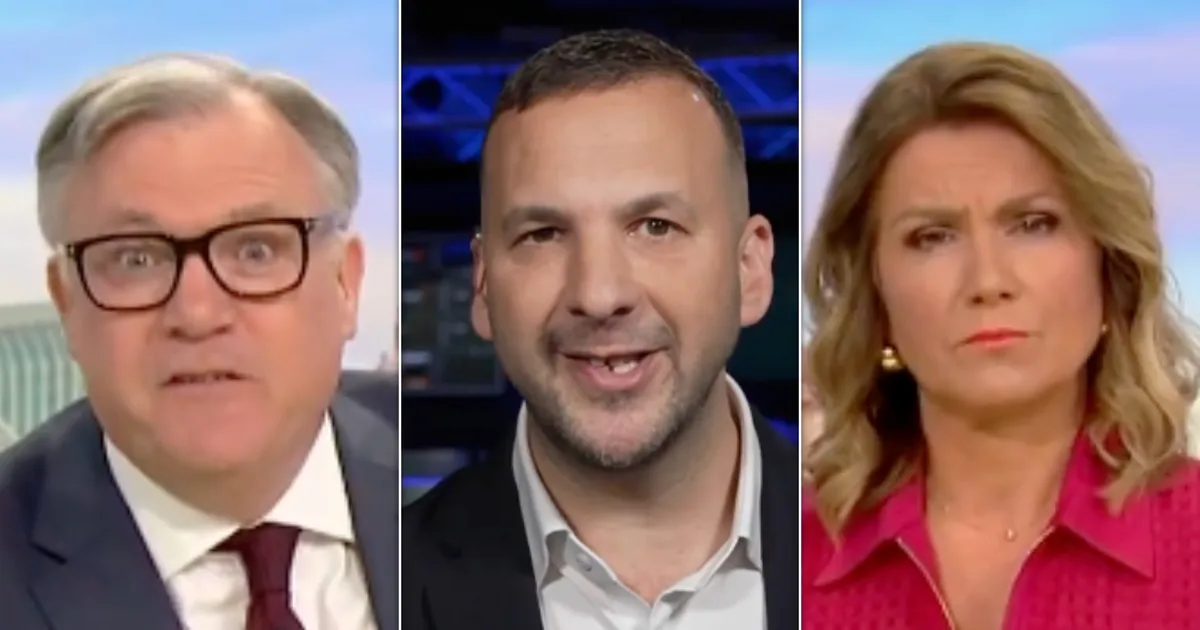
Zack Polanski clashed with presenter Ed Balls on Good Morning Britain and declared “people hate the media” in a tense interview.
The Green Party leader was speaking to the ITV programme on Monday when he hit back at Balls over his Labour Party background.
After a clash over reports from the Daily Mail that Polanski wants to change certain party policies, the party leader said: “Do you know what I’m enjoying?
“The fact that a Labour politician who is married to a senior Labour minister is allowed to ask questions to the leader of the Green Party.”
Balls, who is married to foreign secretary Yvette Cooper, said: “Are you accusing me of being a Labour politician?”
“You might have been a Labour minister fairly recently, in the last 20 years..” the Green leader replied.
Balls cut in: “Unfortunately Mr Polanski, I lost my seat in 2015 and I’ve not been a Labour politician for 10 years.”
After more back and forth with Balls, the Green leader interrupted: “I think you’re really struggling here.
“Ten days until local elections and today I’m announcing that I want to bring buses into public control, and reducing bus fares in cities and rural communities.
“I also want to talk about what’s happening in Manchester, Newcastle, London, and in Wales in the Senedd, where the Greens are picking up incredible momentum.
“It’s interesting that you don’t want to ask me about any of these things. You want to just do shock-jock tactics.
“And by the way, this is why people hate the media.”
Balls’ co-presenter Susanna Reid then tried to ask about Polanski’s previous claims that hypnosis could enlarge women’s breasts.
“You can accuse us as much as you like for not asking the questions that you want to answer – that is absolutely your prerogative,” she said.
“I think it is reasonable to ask you about something you said back then which was demonstrably untrue and to ask you about when you did actually change your mind.”
Polanski said: “This feels very much like this has been a set-up, where the Green Party hasn’t been able to talk about our actual plans at these local elections. That’s what I’m exposing.”
“I don’t think it’s unreasonable Zack Polanski to ask you about your integrity, about your beliefs, about what you say and whether that is the case or not,” Reid replied.
“You can be as angry as you like at the media. You might take issue –″
He hit back: “I’m not angry! This is what I expect sometimes when coming on this programme. But this is what I hear over and over again when speaking to the public, that they think political discourse has been eroded in this country.”
He ended the interview by adding: “You can annoy GMB by voting Green.”
Subscribe to Commons People, the podcast that makes politics easy. Every week, Kevin Schofield and Kate Nicholson unpack the week’s biggest stories to keep you informed. Join us for straightforward analysis of what’s going on at Westminster.

It probably won’t come as a surprise that May is the peak season for children to call Childline about exam stress.
Between 1 April 2025 and 31 March 2026; the free, confidential service for kids delivered 1,679 counselling sessions where exam or revision stress was mentioned.
These sessions peaked in May, coinciding with the start of exam season. There were 359 counselling sessions about exam stress in May 2025, making up 21% of all counselling sessions about the topic.
In England, Wales and Northern Ireland, GCSEs start in early May, while AS and A Level exams take place from mid-May into June. In Scotland; National 5, Higher and Advanced Higher exams are already underway, finishing on 1 June.
The majority of concerns about exam stress were from children aged 12-18 years old, however younger students are also impacted, with 11% of contacts coming from children aged 11 and under.
One young person, aged 16, told the service: “If I’m not revising for exams, I feel this panic in my chest, but the panic also stops me focusing on the revision when I try and do it.”
Another 16-year-old girl said they have plans for their future, but have completely lost motivation to revise. “I have no idea why, my friends are trying to help get me back on track but I’m so overwhelmed,” they said.
A 15-year-old boy said when they list everything they need to revise, they get “immediately” overwhelmed. “My parents don’t get why I’m so stressed but also aren’t helping me. I need someone to tell me where to even start,” they explained.
Which themes are emerging when children seek support for exam stress?
Here are the common themes Childine counsellors identified:
- Young people are putting pressure on themselves to do well.
- Young people are struggling to balance revision and other life pressures, like caring responsibilities or housing issues.
- They are feeling pressure from parents, family members and teachers.
- They feel they have to miss out on friends, hobbies and relationships due to revision and exam pressures.
- They struggle with knowing how to revise and where to get information on how to do this.
- The stress and worry of upcoming exams makes it hard to focus on revision.
- They are losing sleep over revision, exams and the idea of failing.
- They are feeling upset that some subjects are harder for them than others.
- They are comparing themselves with friends in regards to how well they’re doing in class/mock exams and how much revision they’re doing.
- They are losing motivation to revise or confidence around exams based on comments from teachers and friends that they won’t do well.
- They are feeling hopeless about the future if they don’t do well in exams.
- Their parents and teachers are being dismissive about exam stress.
Childline Service Head, Cormac Nolan, noted many children feel guilty about taking breaks and worry about letting people down if they don’t achieve the results they hope for.
“We want to remind young people that no matter what happens, exam results do not define worth or future prospects,” Nolan said, adding that Childline is available 24/7 to support any child who may be struggling.
How can parents support kids through exam season?
- Reassure your child that you are here to support them.
- Talk to them over text or on the phone if they don’t feel able to talk in person.
- Recognise that their feelings are valid and let them know it’s OK for them to be honest about what they’re feeling.
- Help them think of healthy ways to cope. You could try things like yoga, breathing exercises or mindfulness together.
- Help your child maintain perspective about their exams. Remind them that while it’s important to try their best, their self-worth isn’t defined by their grades.
Help and support:
- Childline – free and confidential support for young people in the UK – 0800 1111
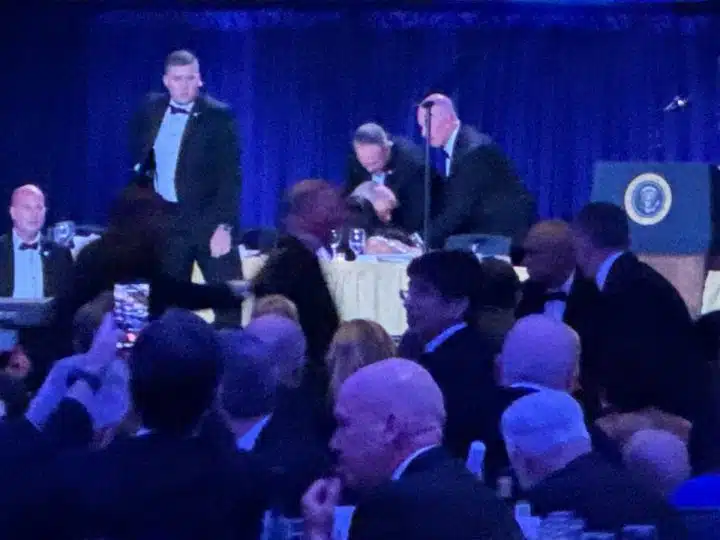

The US Fox News channel cut off one of its own reporters just as she seemed about to give away what people are saying is foreknowledge among Donald Trump’s inner circle about the ‘assassination attempt’ at this year’s White House Correspondents Dinner.
White House Correspondents Dinner ‘shooter’
Trump had said, for the first time ever, that he would attend. An alleged shooter then tried to rush past guards before being detained.
View on Threads
But many people on social media are wondering if Trump knew about it beforehand. This is because Fox correspondent Aishah Hasnie was seated with Nicholas Riccio, the husband of Trump’s press secretary Karoline Leavitt.
Riccio, she said, told her “You do a good job… you need to be safe tonight” then looked around the room suggestively. But Fox stopped Hasnie even finishing the sentence:
View this post on Instagram
That was far from the only weird aspect of the event. Several journalists talked about the lack of security at the event. Bags were not even being checked, and at least two correspondents said they left almost as soon as they arrived because it “felt wrong”:


Trump looked entirely unconcerned, even smirking, as the White House Correspondents Dinner ‘attack’ happened:
Chaotic footage of President Trump being evacuated pic.twitter.com/KzageVO0h0
— Acyn (@Acyn) April 26, 2026
The lack of urgency among bodyguards to remove Trump was clear, with vice-president JD Vance rushed out relatively quickly – before anyone went to remove Trump:
Pro-Israel Trump figures seemed to know the identity of the alleged shooter before the name had been announced:
View this post on Instagram
A photo of Allen, face down and handcuffed, was given to Trump within moments so he could post it on his ‘Truth Social’ platform, as political commentator Tom Santos observed:
Active crime scene. Alleged shooter in the same building as the President and Vice President of the United States.
And someone gets to snap pictures like this of the shooter and then send them to Trump so he could use them on his socials moments later.
Totally legit. pic.twitter.com/gBNU2AhkRv
— Tom Santos (@tommysantos14) April 26, 2026
Trump later took the opportunity to say the attempted shooting justified his ridiculous new White House ballroom – and was amplified by dozens of MAGA accounts in a clearly coordinated campaign.
Build the White House Ballroom. pic.twitter.com/3CBVZtf4cK
— The White House (@WhiteHouse) April 26, 2026
Santos found it all a bit too much to swallow:
You want me to believe that:
– This is something like the 3rd or 4th Secret Service failure.
– Tump boycotts the correspondence dinner every year.
– He’s pitching an unnecessary ballroom no one asked for.
– And there happens to be a shooter incident at the event when a large…— Tom Santos (@tommysantos14) April 26, 2026
He’s surely not the only one.
Featured image via the Canary
By Skwawkbox
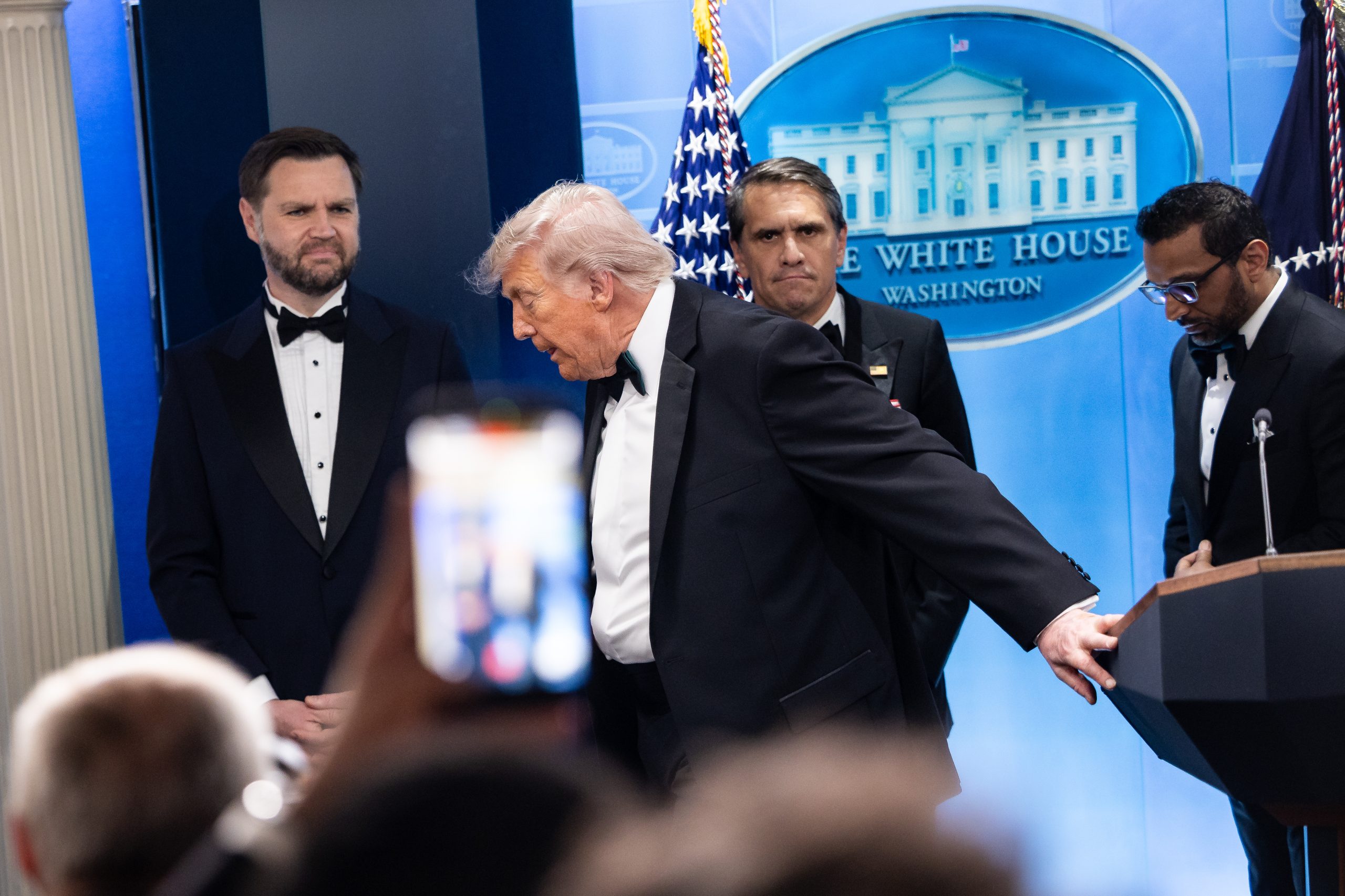

It’s becoming a pattern: A possible threat to President Donald Trump’s life. Calls from both sides to turn down the temperature. And then, a pivot.
Republicans on Sunday rushed to turn the shooting at the White House Correspondents’ Dinner into a campaign cudgel, accusing Democrats of opening the door to political violence with “dangerous and inflammatory rhetoric” against the president. And they’re leveraging the attempted security breach to try and break the congressional stalemate over Department of Homeland Security funding.
Less than 24 hours after calling on Americans to “resolve our differences,” Trump said in an interview with CBS’ “60 Minutes” that “I do think that the hate speech of the Democrats … is very dangerous.” Republican National Committee Chair Joe Gruters cast Saturday’s incident as “the inevitable result of a radicalized left that has normalized political violence.”
Official GOP social media accounts accused prominent battleground candidates of stoking political tensions. “Democrats like Abdul El Sayed fuel this hate,” Republicans’ Senate campaign arm wrote of the progressive candidate in the Michigan Senate race. In Maine, the group posted that Graham Platner, the Democratic primary polling leader, “said that violence with a gun was a necessary means to achieving social change.” It’s a reference to since-deleted Reddit posts from 2018; Platner has disavowed the violent rhetoric in them. And in North Carolina, an RNC account criticized Senate candidate and former Gov. Roy Cooper for not publicly condemning the attack while previously calling Trump “a significant threat to our democracy.”
It’s a playbook Republicans forged in the aftermath of the two assassination attempts against Trump in 2024, when early calls for unity gave way to accusations that Democrats had spent years stoking threats of violence against the president by casting him as a threat to democracy. They’ve deployed it amid a surge in high-profile incidents of political violence, including last year’s killing of Charlie Kirk, when top Republicans from Trump down blamed the “radical left” for inciting political violence.
There’s no evidence Democrats’ rhetoric was behind either of the 2024 assassination attempts on Trump. The motive behind the shooting in Butler, Pennsylvania, in July 2024 remains a mystery; the gunman, Thomas Crooks, was killed by federal agents. Ryan Routh, who was convicted of trying to assassinate a major presidential candidate after he hid in the bushes at one of Trump’s Florida golf courses with a semiautomatic rifle that September, was reportedly concerned about the war in Ukraine.
Democrats on Sunday broadly condemned political violence. They offered gratitude to the Secret Service, including the agent who took shots to his protective vest during the scuffle and was released from the hospital Sunday. They rejected Republicans’ attempts to assign blame and reiterated their calls to pass a bill that cleared the Senate last month that would fund most of DHS, except for immigration enforcement.
“Here in America, we can have strong disagreements. But it’s important for us to agree to strongly disagree without being disagreeable with each other,” House Minority Leader Hakeem Jeffries said on “Fox News Sunday.” “And it is certainly the case that violence is never the answer, whether it’s targeted at the right, the left, or the center.”
It was not immediately clear what motivated Saturday’s attack, though the man being held in connection with the incident reportedly criticized Trump administration policies in writings sent to family members shortly before he rushed a security checkpoint while armed with guns and knives. Acting Attorney General Todd Blanche told NBC’s “Meet the Press” Sunday morning that it appeared the suspect “did in fact set out to target folks that work in the administration, likely including the president.”
Some battleground Republicans — including in top races for Senate, House and governor — moved quickly to fill the void.
In the heated Michigan Senate race, former GOP Rep. Mike Rogers said in a statement that Democrats “know exactly what they’re doing and continue to inspire violent acts. Why else would they continue to block funding for DHS, the very agency meant to keep us safe?”
He referenced a clip of El-Sayed, one of his Democratic rivals, urging Democrats at a “fighting oligarchy” rally last year to do more to push back against Republicans. “When they go low, we don’t go high — we take them to the ground and choke them out,” El-Sayed said at the time.
Senate Republicans’ campaign arm circulated the clip Sunday morning.
In a statement Sunday, El-Sayed criticized Republicans’ attacks, saying there is “never any excuse for political violence” and calling on everyone, “regardless of party, to bring the rhetoric down.”
“It’s sad to see the NRSC shamelessly politicize this awful act so quickly,” El-Sayed said. “Needless to say it strains credulity to believe that these acts had more to do with what a candidate in Michigan said in 2025 than what the MAGA movement has done to normalize violence through Jan 6, endless war, and violent rhetoric.”
Republicans have yet to put any significant cash behind a line of attack that was still taking shape on Sunday and playing out largely on social media and in public statements.
Still, Democrats called for them to back down.
“Instead of politicizing the shooting, Republicans should look in the mirror first. If they were actually serious about public safety, they should allow a vote on the bipartisan legislation the Senate passed to re-open DHS,” Viet Shelton, a spokesperson for House Democrats’ campaign arm, said in a statement.
Democratic operatives working on battleground campaigns argued that Republicans were being hypocritical, pointing to Trump and GOP lawmakers who’ve mocked acts of political violence against Democrats and worked to rewrite the history of the deadly Jan. 6 Capitol riot. They also cited Trump’s suggestion last year that the actions of a half-dozen Democratic lawmakers who encouraged servicemembers not to follow illegal orders were “punishable by death.”
“Last time this many top government leaders were in one place and facing [the] threat of violence was [Jan. 6, 2021],” Democratic strategist Jesse Ferguson said in a text message. “Hopefully they don’t give anyone pardons this time.”
Mark Longabaugh, another veteran Democratic strategist working on midterm races, said: “To any Republican making those accusations, my response is two words: January Sixth.”
But Republicans weren’t letting up.
Shawn Roderick, a spokesperson for GOP Sen. Susan Collins in battleground Maine, issued a statement slamming her Democratic rivals, Gov. Janet Mills and newcomer Graham Platner, for criticizing efforts to fund DHS.
“The Secret Service is funded through the Department of Homeland Security, the very department responsible for protecting our country and employing the officers who put their lives on the line every day,” Roderick said. “Yet some, like Graham Platner and Janet Mills, have criticized efforts to fund DHS, including Senator Collins’ vote to keep it operating, as part of a broader political agenda.”
That, he added, “has real consequences.”
Platner and Mills’ campaigns did not respond to a request for comment.
“Democrats have spent years pouring fuel on the fire, attacking law enforcement and stoking division, and now they want to pretend they’re the party of public safety,” said Mike Marinella, spokesperson for the National Republican Congressional Committee. “We’re going to make sure voters see the full picture and hold every one of them accountable for the rhetoric they’ve embraced and the chaos it’s helped create.”
Erin Doherty and Jessica Piper contributed to this report.


British charity law presents itself as fair. In practice, it tends to favour organisations with the resources to navigate an increasingly complex system. What larger charities absorb as routine compliance often becomes a barrier for grassroots groups.
The Fundraising Regulator, set up in 2016, operates as an independent self-regulatory body. But like many such systems, influence tends to follow resources. While registration is voluntary for most, charities spending over £100,000 on fundraising are expected to register and pay a levy, a threshold that can feel less like a clear line and more like a shifting one for smaller organisations.
Charity fundraising law protects big players
The most significant recent change arrived in November 2025, when a revised Code of Fundraising Practice came into effect. Framed as a modernisation effort, it stripped back prescriptive rules in favour of broader principles, described by its architects as “future-proofing” the sector for innovations like AI-driven donor outreach.
What it also did, less discussed, was change responsibility for interpreting detailed compliance rules onto individual organisations. This includes cross-references to bodies like the ICO and HMRC, adding layers of administrative complexity.
According to the updated Code of Practice, charities must now justify fundraising decisions at senior governance levels and maintain robust internal processes, including whistleblowing mechanisms.
That kind of infrastructure is standard at large, well-staffed charities. For a community group run mostly by volunteers, it’s a significant operational burden. The new principles-based approach sounds progressive, but flexibility tends to work best for those who can afford professional interpretation.
Small groups navigate a compliance minefield
Smaller operators don’t just face higher relative compliance costs; they also find the most lucrative fundraising channels blocked off by structural advantage. Major donor programmes and corporate partnerships require networks and credibility that take decades to build.
Commission-based fundraising models, already controversial for their incentive structures, are now less prescriptively regulated under the new Code, which in practice benefits wealthier organisations that can construct compliant arrangements. The switch to principles means charities bear greater responsibility for demonstrating compliance, a burden that falls unevenly across the sector.
This is where accessible formats become essential survival tools for grassroots groups. Online platforms offering prize draws competitions have given smaller campaigns a competitive entry point. These sites remove the need for scale, infrastructure, and existing donor networks.
Instead of building long-term relationships or funding complex campaigns, organisations can offer a simple, low-cost incentive that encourages immediate participation.
The format does much of the work: low ticket prices encourage micro-donations, digital promotion widens reach, and platform-managed systems handle payments, compliance, and winner selection. That combination allows smaller groups to raise funds and attract attention without the institutional backing larger charities rely on.
Prize draws offer grassroots campaigns a foothold
Prize draws occupy a practical middle ground in fundraising. They don’t require the donor relationships that underpin major gift programmes, and they don’t demand the scale that makes direct mail campaigns viable.
For a local community group or single-issue campaign, they represent a low-barrier route to income that sits within the Code’s broad principles without triggering complex compliance requirements. That accessibility matters enormously when your entire operation relies on a handful of committed volunteers.
The irony is that these formats succeed partly because they’ve been overlooked by the regulatory architecture that governs larger fundraising activity. Where the system has tightened around established channels, smaller organisations have adapted by finding routes that weren’t worth regulating heavily in the first place.
Regulatory reform remains stalled under both parties
Neither Labour nor the Conservatives have shown a serious appetite for reforming the structural imbalance in charity fundraising regulation. The Charity Commission periodically updates its guidance. The Fundraising Regulator consults widely before major changes, but consultation processes themselves tend to be dominated by voices from larger organisations with the staff to respond meaningfully.
According to guidance from the Chartered Institute of Fundraising, navigating UK fundraising rules requires understanding multiple regulatory bodies. This is an expectation that assumes a baseline of professional resources most grassroots groups simply don’t have.
The result is a regulatory environment that performs neutrality while delivering advantage. Bigger institutions adapt quickly, absorb compliance costs, and shape future consultations. Smaller campaigns work around the edges, finding what flexibility remains.
Reform conversations tend to start and stall in the same committee rooms, with the same stakeholders. Until the regulatory architecture genuinely centres smaller organisations in its design, the imbalance isn’t a bug, it’s a feature.
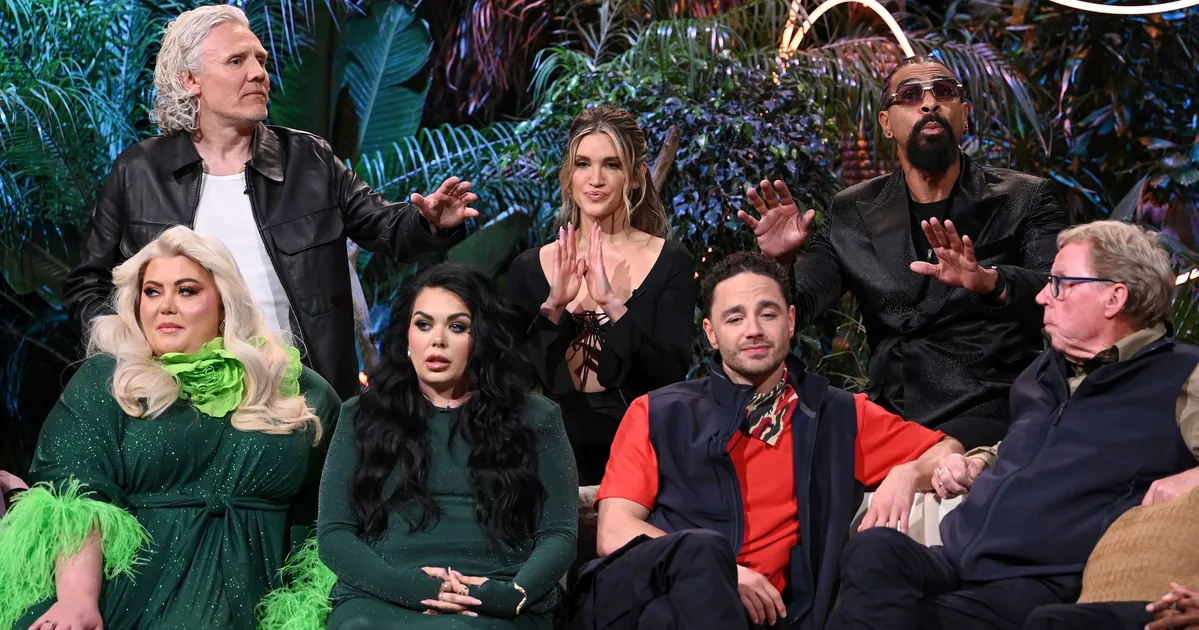
Things went a little off the rails, to say the least, during the I’m A Celebrity: South Africa live finale.
While the series itself was pre-recorded last year, the last episode aired live on ITV1 on Friday night, during which Ant and Dec announced who the public had chosen as their latest I’m A Celebrity “Legend”.
Almost the entire cast were reunited for the live special (aside from Beverley Callard, who was unable to attend on medical grounds), during which old arguments between certain campmates resurfaced.
Things first began taking a chaotic turn when David Haye called out Adam Thomas over his heated argument with Jimmy Bullard
Early on in the show, David Haye interrupted a segment involving Adam Thomas to question whether the Emmerdale star thought he “deserved to win this” after “calling Jimmy the c-word a couple of times” during their heated row towards the end of the season.
Ant and Dec then assured David that they would “come to this” a little bit later – and that’s when things became even more chaotic.
Jimmy Bullard then accused Adam Thomas of ‘abusive, aggressive and intimidating’ behaviour when the argument broke out between them
Later, Jimmy Bullard brought up the row again, criticising ITV for editing out the C-bombs dropped by Adam during their argument.
Ant McPartlin pointed out that Adam’s language had been “unbroadcastable”, which Jimmy agreed, but referred to the soap star’s conduct as “abusive, aggressive and intimidating”.
“I was there, I didn’t think it was intimidating,” Ant responded, before inviting Adam to share his side of the story.
The Waterloo Road actor then insisted he takes “full responsibility” for his conduct during his row, and had “nothing but love for Jimmy”, at which point David interjected, retorting: “Funny way of showing it…”
Ant and Dec then struggled to keep things on track as David Haye waded into the row between Adam Thomas and Jimmy Bullard – with Sinitta and Gemma Collins then leaving the set
Declan Donnelly then pointed out David wasn’t “even there” for the row, having already been eliminated, with the former heavyweight champion going on to accuse the show of “a lot of editing to make this poor guy look like a victim”, referring to Adam.
Following this, Gemma Collins and Sinitta disagreed about who was in the right, with the So Macho singer going on to walk off set completely.
“You weren’t there, I was there, it was aggressive and abusive,” she insisted, as Gemma left the sofa to join her off stage.
At the end of the turbulent episode, Adam was voted as the public’s winner, over runner-up Mo Farah, and had something of a muted reaction to the news.
David Haye and Jimmy Bullard later claimed they’d been ejected from the I’m A Celebrity studio
The Sun has since published a report claiming that Jimmy and David were “kicked out” of the studio between the live final and the recording of the companion podcast I’m A Celebrity: Unpacked.
In footage shared by the tabloid, David was heard saying: “We’ve been kicked out the show. What’s that about? Genuinely?”
Jimmy then agreed: “We got kicked out.”
“For trying to tell the truth,” David added.
A show source said: “Some campmates were uncomfortable being on stage with David and Jimmy, so we sent them home during Unpacked.”
HuffPost UK has contacted ITV for comment.
What has Adam Thomas said since his I’m A Celebrity win?
Writing on Instagram over the weekend, Adam claimed: “I walked through this journey with my heart first, no matter what came my way. It was not always easy, there were moments that could have broken me, but I stayed true to myself and that is something I will always be proud of.
“I have realised that when people try to dim your light, it says more about them than it ever will about you. This experience has shown me my strength in ways I never imagined. Not because of any title or recognition, but because I stayed kind, I stayed grounded and I stayed real.”
“Those who doubted me or tried to bring me down, I carry no negativity towards you,” he added. “I have already won in the ways that matter most.
“I have love, I have happiness and I have stayed true to myself, and that is something no one can ever take away from me. I hope one day you can do the same.”

A peace deal to end the Iran war “will take a long time” to be reached, the BBC’a chief international correspondent has declared.
In a gloomy assessment, Lyse Doucet said “neither side wants to back down”.
Her comments came after Donald Trump said American officials would not take part in planned negotiations with their Iranian counterparts in Pakistan.
The US president has declared victory on several occasions since the conflict began with Israel and America’s began bombing Iran two months ago.
An indefinite ceasefire is currently in place, but with the key waterway the Strait of Hormuz still blocked and America blockading Iranian ports, Doucet said hopes of a perman end to the war seem remote.
She told Radio 4′s Today programme: “Neither side wants a ‘no war, no peace’ situation. Neither side wants to back down.
“Both sides are saying they won the war. President Trump has his own political and economic pressures at home, the Iranians have their pressures at home. So a deal may be in reach but a reach is not days, it will take a long time.
“Does President Trump want to make that time? How long does Iran want to drag it out and thrash out every day? It’s within the realm of possibility, but right now they’re just not there.”
Subscribe to Commons People, the podcast that makes politics easy. Every week, Kevin Schofield and Kate Nicholson unpack the week’s biggest stories to keep you informed. Join us for straightforward analysis of what’s going on at Westminster.
Can’t Live Without Your Headphones and Earbuds? Vote for Your Favorite

HP Inc.: Near 52-Week Low, 6% Yield, Valuation Attractive Amid Dynamic Memory Environment

Digital asset funds draw $1.2 billion as Bitcoin leads inflows: CoinShares

Manchester United reach agreement with Casemiro over contract clause amid transfer speculation

US brings back mandatory military draft registration

Steven Gerrard disagrees with Gary Neville over ‘shock’ Chelsea and Arsenal claim | Football


-

 Politics7 days ago
Gary Stevenson delivers timely reminder to register to vote as deadline TODAY
-

 Fashion3 days ago
Weekend Open Thread – Corporette.com
-
 Crypto World2 days ago
Hyperliquid $HYPE Rally Builds Momentum as AI Sector Enters Prove-It Phase
-
Crypto World7 days ago
Bank of Hawai’i (BOH) Q1 2026: Net Income Drops to $57.4M as Net Interest Margin Expands
-

 Politics5 days ago
Making troops accountable for war crimes threatens US alliance, ex-SAS colonel warns
-

 Politics5 days ago
Disabled people challenge government SEND proposals over segregation concerns
-

 Business5 days ago
Rolls-Royce Voted UK’s Most Iconic Trade Mark as IPO Register Hits 150
-

 Business3 days ago
Patterson-UTI Energy, Inc. (PTEN) Q1 2026 Earnings Call Transcript
-

 Politics5 days ago
Zack Polanski responds to home secretary’s taser threat
-
 Sports22 hours ago
IPL 2026: Ruturaj Gaikwad registers slowest fifty of the season, enters all-time unwanted list | Cricket News
-
 Crypto World6 days ago
Five Value Stocks with Recovery Potential in 2026: PayPal (PYPL), Nike (NKE), and More
-
Politics5 days ago
Wings Over Scotland | How To Get Away With Crimes
-

 Politics5 days ago
Starmer handler McSweeney to be dragged from shadows by Foreign Affairs Committee
-

 Crypto World6 days ago
New York sues Coinbase, Gemini over prediction market offerings
-
 Business5 days ago
HCL Tech share price tank over 9% after weak Q4. JPMorgan, HSBC & 3 others cut target price
-

 Politics5 days ago
‘Iran is still a nuclear threat’
-
Entertainment6 days ago
Sydney Sweeney cameo cut from “The Devil Wears Prada 2”, source explains why (exclusive)
-

 Crypto World5 days ago
Crypto’s great hope in Senate’s Clarity Act still has a path to survive tight calendar
-
 Sports4 days ago
Tim Bradley names the current best in the world: “Better than Inoue and Usyk”
-

 NewsBeat1 day ago
LK Bennett closes all stores after entering administration
You must be logged in to post a comment Login