You’ve had a few pretty gruelling pieces to get through in the last week or so, readers, so here’s something a little more light-hearted.
It’s from an episode of Broadcasting Scotland on 27 November 2020, a month after we confirmed our big story about the SNP accounts and the missing fundraiser money. In it, snug-toed SNP MP Pete Wishart opines that there really is nothing to worry about, and we should all just put our trust in the party.
We’ll leave you to judge whose opinion stood the test of time.
In an ideal world, we’d all be able to tell our partners exactly what we’re feeling, as soon as we’re feeling it.
But real life often falls short of that. Maybe it feels too vulnerable to express a need outright; maybe you’re worried about being dismissed, ignored or met with hostility if you do.
“Passive aggression is an indirect expression of emotions or unmet needs,” explained Tara Rullo, a trauma and couples therapist and owner of Middle Way Psychotherapy.
Advertisement
“Underneath passive-aggressive comments are vulnerable emotions like sadness, loneliness, overwhelm, fear, or longing.”
PhotoAlto/Frederic Cirou via Getty Images
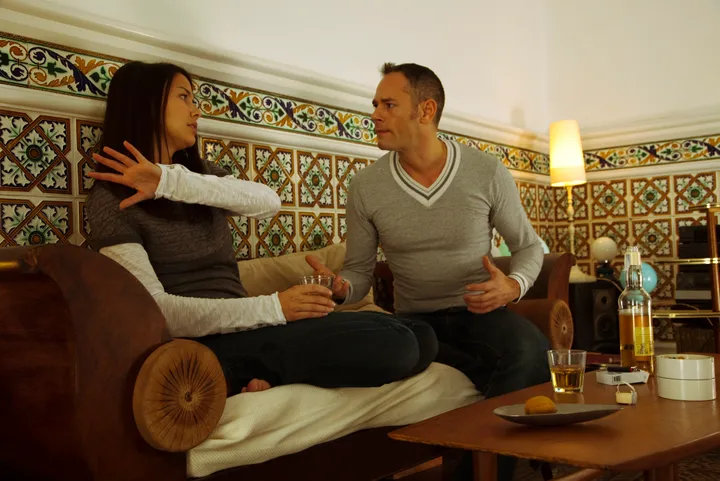
Underneath passive aggression between partners, there could be unmet needs just under the surface.
As an example, Rullo described a couple where one partner has been retreating into their phone: “Instead of their partner saying, ‘I’m feeling ignored,’ or ‘I want to connect with you,’ the bid may come out sideways through comments like ‘Don’t let me interrupt your phone’ or ‘Must be something really important on there,’” she said.
“Underneath these comments is a natural longing for connection, but because the need is wrapped in irritation and sarcasm, the receiving partner hears criticism, contempt or undefined emotional distress instead,” Rullo continued.
Below, relationship experts describe some of the most common passive-aggressive phrases they hear used with significant others, then break down how to turn those moments into a genuine opportunity for connection instead.
Advertisement
‘It’s fine’ / ‘I’m fine’
This is one of those examples where the words mean one thing, but “your partner can clearly pick up on a tone,” Alexandra Solomon, a clinical psychologist and the author of Love Every Day, told HuffPost. “If the tone doesn’t match, the tone is all your partner’s gonna focus on.”
They’ll sense your distress, but have no way of knowing what’s wrong – only that you’re upset with them.
If you catch yourself saying this, Elizabeth Earnshaw, a licensed marriage and family therapist and author of Til Stress Do Us Part, recommended that you do your best to catch yourself in the moment and try to name the real feeling instead. A quick script might look like: “Actually, I’m not fine. I don’t know why I said that. I am feeling [angry/sad/etc].”
Advertisement
‘Must be nice’
Rullo flagged this kind of comment as one of the most concerning patterns she sees. “Must be nice” – as in, “must be nice to have zero responsibilities” or “must be nice to relax while I do everything” – can veer into contempt, which she said “is considered the single strongest predictor of relationship breakdown”.
What contempt signals, Earnshaw said, is that “you’re not only frustrated but have also lost a fundamental sense of respect for the other person.” The sarcasm in this kind of comment allows you to disguise it as humour, but the underlying message is loud and clear.
‘I guess I just can’t do anything right’
Advertisement
“Your partner gives you feedback or raises a concern, and you say, ‘Well, I guess I can’t do anything right then,’” Solomon said. “It’s passive-aggressive because you’re not addressing your partner’s concern and you’re generalising.”
It’s also a form of what Earnshaw called “chronic victim-playing”.
Instead of engaging with the specific issue – or taking a second to acknowledge that you’re feeling criticised and having a response to that – you turn the moment into a referendum on your worth.
It shuts down the conversation your partner was trying to have and takes it to a much more global and less productive place.
Advertisement
‘I shouldn’t have to ask’
Couples therapist Zach Brittle described “should” as a common tell that there’s some passive aggression at play: “I shouldn’t have to ask” and “you should know” are both common culprits.
Ideally, Brittle said, the speaker would communicate “from a place of desire (rather than demand).” This might look like reframing “you should” statements as “I would really like…”
Earnshaw also gave the example of a partner who’s feeling neglected and snaps at their significant other, saying, “If you cared, you’d know.” Instead, that partner might try saying, “I’m feeling lonely, and I’d love it if we could plan a date night soon.”
Advertisement
‘Wow, look who finally decided to help’
This is another comment that can be defended as a joke if it lands badly – but the person on the receiving end will find it almost impossible not to respond to the cutting tone underneath.
As with the “must be nice” genre of comments, this kind of comment can communicate “superiority, disgust, disrespect, ridicule or disdain,” Rullo said. “Instead of ‘I’m upset with you,’ the message becomes ‘I’m above you’ and ‘there is something fundamentally wrong with you.’”
That kind of atmosphere – where one or both partners “consistently feel looked down on, mocked or dismissed” – can be hard to repair.
Advertisement
DejanMilic via Getty Images
Even arguments about household chores can spiral into something much more intense and hurtful with passive aggression leading the way.
‘Someone else’s partner always does this / never does this’
This kind of comment can take a few forms: “My sister’s husband gives the kids a bath every night” or “Dave’s wife never asks him to help with the laundry.” Instead of directly communicating something you wish your partner would do, you use comparison to express your unhappiness.
The subtext, as Solomon explained, is always the same: “Why can’t you?” Your partner is put in the position of either asking you directly why you’re bringing that up, or – more likely – reacting defensively to the way you’ve just put them down.
‘I’m just the kind of person who likes to focus on what other people need’
Advertisement
Again, the subtext is the issue here. Solomon said that this is an example of “describing yourself in a particular way that’s positive, and the subtext is you’re describing your partner in a negative way.” In other words, “I’m the kind of person who likes to focus on what other people need – unlike you.”
The more honest version, she said, would sound something like, “I’m feeling troubled by the fact that I feel like there’s an imbalance here,” or, “Sometimes I don’t understand the choices that you make, because they’re so different than the choices that I make.”
‘Whatever you want’
This comment, when intended passive-aggressively, is often accompanied with a “heavy tone or eye roll,” per Earnshaw. Like “I’m fine,” it’s a form of stonewalling, what Earnshaw described as “withdrawing emotionally while making it obvious something is wrong.”
Advertisement
If you’re feeling the urge to say something like “whatever you want” about a suggestion you’re clearly not happy about, Earnshaw recommended two things: first, taking whatever time you need to cool down and communicate more clearly; and second, being honest that you aren’t satisfied with the current plan. You might try saying something like, “I’m not excited about that option. Let’s keep looking for a solution that works for both of us.”
Jacob Wackerhausen via Getty Images
The damage passive aggression can do is all too real
Because these kinds of comments don’t directly address an emotion or unmet need, they can provide a cover for the speaker: If the comment is received badly, they can pretend they were just joking or accuse the other person of reading too much into it. But this kind of retreat doesn’t negate the harm that these comments can cause.
“Passive-aggressive comments aren’t like yelling and screaming and name-calling,” Solomon said. “But they chip away at connection, they erode connection, and they erode intimacy. It is a big deal.”
Advertisement
There’s harm in both the passivity – the listener is left confused about what’s actually being communicated – and the aggression, which leaves the listener feeling defensive.
Earnshaw described passive aggression as “corrosive” over time: “the giver feels chronically unheard; the receiver feels constantly criticized but can’t respond cleanly.”
When that becomes a pattern, that’s where communication really starts to break down.
These kinds of comments can also be used as a defensive strategy in equally harmful ways – if one partner feels attacked, they might say something like “I guess I’m just a bad person” or “I guess I can’t do anything right” as a way to deflect criticism or otherwise derail the conversation. The effect is the same: The listener is left confused, defensive and ill-equipped to respond, since the real emotion driving the comment is never named.
Advertisement
At the core of the problem is how passive-aggressive comments can reframe the way couples tackle challenges.
“Whenever there’s conflict with our partner, there’s always an opportunity to put the problem in front, to move into a side-by-side stance and look together with our partner at the problem,” Solomon said. “Passive-aggressive comments reflect and reinforce this idea that it’s me versus you instead of you and me against the problem.”
There is a better way to communicate
All the experts polled here shared similar advice on how to communicate rather than resorting to passive aggression: Take the time to figure out what’s really going on with you, then do your best to communicate that directly, using “I feel” and “I need” statements as much as possible.
Advertisement
For both the person making passive-aggressive comments and the person on the receiving end, suggesting you pause the conversation until you can communicate more clearly and gently calling out the behaviour that you’re seeing can be good ways to set the conversation back on track.
For the person engaging in passive aggression, that might mean saying something like, “I notice that I tend to move into passive-aggressive behaviour when I feel overwhelmed. I’m really trying to change that behaviour.”
For the listener, that might mean saying something like, “When you say ‘whatever,’ I feel shut out. Can we talk about what’s actually going on?” In both scenarios, it acknowledges the aggression that was previously masked, and it tells your partner that you’re committed to communicating more directly.
If you’re recognising these passive-aggressive comments from your own relationship, don’t be too hard on yourself – and don’t take it as a sign that all is lost.
Advertisement
“[Passive aggression] is not like a personality trait,” Solomon clarified. “The vast majority of us grew up not seeing conflict handled well, and so we come into our intimate partnerships with legitimate skill deficits. The good news is that this is all something that can be learned.”
Ultra-processed foods, or UPFs, have been linked to everything from gut disruption to “hedonistic hunger”. The Royal College of Physicians has even expressed concern about some UPF ingredients’ possible links to cancer.
But not all experts agree on why they might be detrimental to our health.
Some, like Chris Van Tulleken, author of Ultra-Processed People, seem to argue that the ultra-processing itself causes harm. Others, like psychologist Professor Eric Robinson, said this hasn’t been proven. Then there are those who think issues, when they arise, are probably largely due to UPFs’ nutritional content.
A new review of studies published in the journal Science, which asked whether the adverse effects of UPFs are caused by ultra-processing or nutritional properties, may have an answer.
The Royal College of Physicians describes them as being “characterised by their long list of ingredients that are not typically found in freshly prepared homemade food,” including additives and colourings.
But the definition most experts reach for is set by the NOVA system.
Advertisement
This describes UPFs as foods which contain “formulations of ingredients, mostly of exclusive industrial use, typically created by a series of industrial techniques and processes”.
The nutritional content and even texture of UPFs, not their manufacture, may be the issue
Researchers looked at five randomised controlled trials that linked UPFs to obesity. These were conducted in different countries, including the USA, UK, Denmark and Japan.
After reviewing those studies, co-author Professor Eric Robinson (you might remember his earlier comments on UPF risks, mentioned above), said: “Collectively, available randomised controlled trials provide weak support for an ultraprocessing-specific effect of UPFs on body weight regulation and cardiometabolic function that is independent of established nutritional determinants”.
Advertisement
In other words, this review didn’t find enough evidence from the trials they looked at to suggest processing itself made UPFs a risk factor for weight gain or heart issues.
It tracks with what the British Nutrition Foundation (BNF) previously said, that UPF studies are “largely based on observational studies that, by design, cannot demonstrate cause and effect”.
There’s a lot more evidence, though, that the typical nutritional profile of many UPFs could be an issue, the Science paper suggested.
A soft texture, which might make people eat UPFs faster,
High calorie density,
High levels of saturated fat and salt,
Low fibre and low protein content.
Dr Suzanne Wylie, GP and medical adviser for IQdoctor, previously told HuffPost UK that some UPFs, like tinned beans, can be good for us.
In this study, researchers suggested that nutritional guidelines should focus less on whether foods are technically UPFs and more on whether they’re nutritionally poor, calorie-dense, and easy to eat quickly.
The BNF has previously warned against steering people away from UPFs based on the controversially “broad” NOVA classification system alone.
We hope you love the products we recommend! All of them were independently selected by our editors. Just so you know, HuffPost UK may collect a share of sales or other compensation from the links on this page if you decide to shop from them. Oh, and FYI — prices are accurate and items in stock as of time of publication.
Shorts for summer? Groundbreaking. It’s not like shorts are a completely new phenomenon, women have been wearing them for around a century now, because, duh, it’s only natural to want to get your legs out when the sun makes a rare appearance.
Of course, us humans have gotta keep things fresh by switching up the length and style of shorts we wear each year.
Back in the late 19th century it was only acceptable for women to wear shorts – or rather, long bloomers – while playing sports.
Advertisement
Jump forward to the 1920s and 30s, though, and short hemlines rose into mini french knickers. Towards the end of the century and early noughties, baggy shorts and jorts dominated.
The point being that now, we have the choice of every kind of short under the sun, which can make it tricky when it comes to buying a new pair.
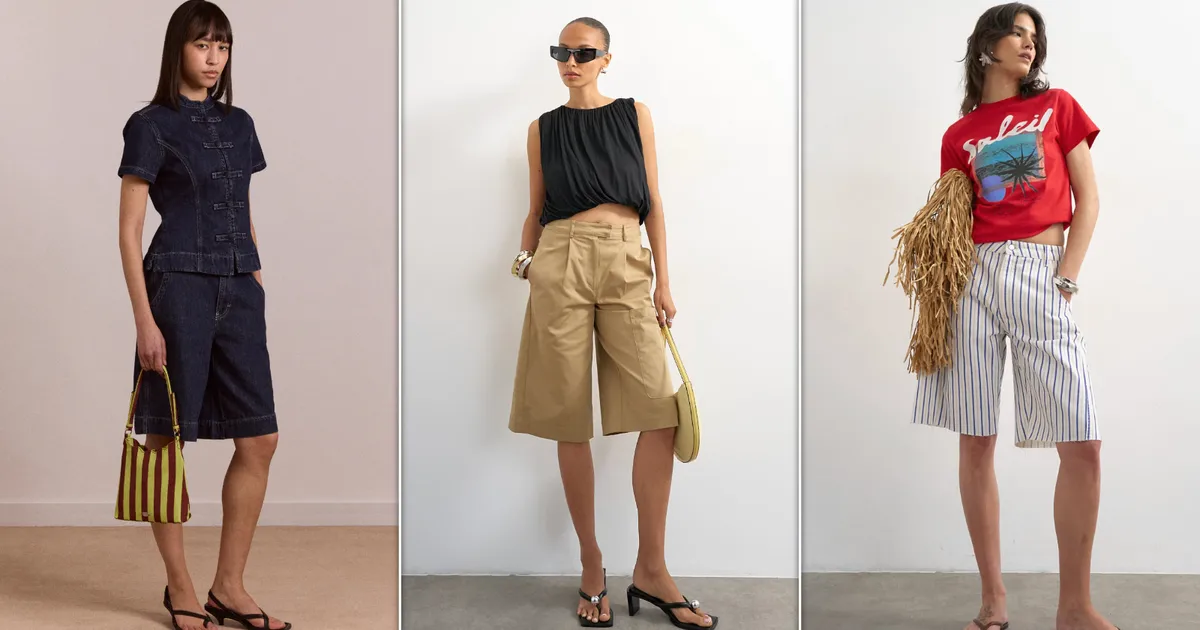
To help you out, we’ve consulted Pinterest’s summer trend report to find out what trends are in style right now, and found the best long, mini, and micro shorts to shop ahead of the heatwave.
In 2026, the DIY trend has made its way to our shorts. According to Pinterest’s summer report, searches for ‘bedazzled jorts’ are up 212%, while searches for ‘diy micro shorts’ are up 186%. Plus, cargo and baggy shorts are making a comeback, alongside long linen shorts.
Steven Spielberg has made a dramatic return to the sci-fi genre with his new movie Disclosure Day, a star-studded blockbuster about aliens, religion and government secrets.
The film follows a meteorologist and a cybersecurity expert who find themselves in the middle of a government conspiracy to expose the cover-up of extraterrestrial secrets.
Its stacked cast has also been lauded with praise, with the film featuring some of Hollywood’s biggest and brightest stars alongside some exciting upcoming talent.
Advertisement
Here is where you’ll have seen Disclosure Day’s stars before…
Emily Blunt
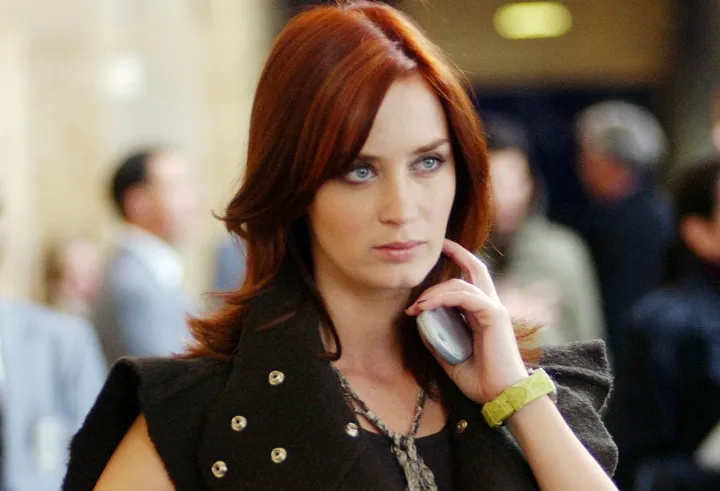
Emily Blunt as Emily in the first Devil Wears Prada movie
She earned acclaim for her role as Queen Victoria in The Young Victoria, starred alongside Ewan McGregor in Salmon Fishing In The Yemen and appeared in the 2016 adaptation of The Girl On The Train.
She’s also a triple threat, having appeared in numerous big-screen musicals, including 2014’s adaptation of Into The Woods where she played the Baker’s wife and Mary Poppins Returns, in which she took over the role of the magical nanny.
She earned her first Oscar nomination in 2024 for her role as Kitty in Christopher Nolan’s Oppenheimer, before scoring a Golden Globe nomination for her role in the MMA biopic The Smashing Machine opposite Dwayne Johnson.
In 2010, Colin earned his first Academy Award nomination for playing a grieving man in Tom Ford’s A Single Man, before winning the following year, thanks to his leading performance as King George VI in The King’s Speech.
He followed this win with a varied range of projects including the John le Carré adaptation Tinker Tailor Soldier Spy, the Taron Egerton spy flick Kingsman: The Secret Service and the Sam Mendes war epic 1917.
Early in his career, Josh became known for playing Lawrence Durrell in the ITV drama The Durrells, before landing the role of the future King Charles in seasons three and four of The Crown.
Advertisement
TV fans may remember him from his early work in the Doctor Who episode Cold War, playing Ada’s roommate James in Peaky Blinders and for his eight-episode arc in Father Brown as PC Bobby Grace.
His other film credits include the queer cult love story Gods Own Country, the 2020 Austen adaptation of Emma, and the 2025 period drama The History Of Sound, co-starring Paul Mescal.
The Oscar nominee has been working in the industry for years, with his past roles including the villainous Victor Strand in Fear The Walking Dead as villainous Victor Strand and a breakthrough part in Ma Rainey’s Black Bottom, in which he appeared alongside Viola Davis and the late Chadwick Boseman.
In 2024, his career exploded after he became the first American openly gay actor to be nominated for an Oscar, whe hem received a Best Actor nom for playing civil rights activist Bayard Rustin.
A year later, he received another Academy Award nomination for playing John “Divine G” Whitfield in the prison drama Sing Sing.
His other film credits include the film adaptation of the Broadway musical The Color Purple, Ethan Coen’s Drive Away Dolls and Edgar Wright’s remake of The Running Man.
She made her feature acting debut in the 2013 Clive Owen film Blood Ties before appearing in Enough Said with the late James Gandolfini and the 2017 remake of Papillon with Charlie Hunnam.
Disclosure Day is not Eve’s first time working with Spielberg, having previously appeared in 2015’s Bridge Of Spies alongside Tom Hanks and Mark Rylance.
In 2018, she played Maid Marian to Taron Egerton’s Robin Hood, and in 2020 had a role in the biopic Tesla, which saw Ethan Hawke play the inventor.
Oh – and if you’re not familiar with Eve, you’ll definitely know her dad, U2 frontman Bono.
Wyatt Russell
Wyatt Russell as Lee Shaw in Monarch: Legacy Of Monsters
Another celebrity offspring in the Disclosure Day cast is Wyatt Russell, the son of acting icons Kurt Russell and Goldie Hawn.
You may recognise Wyatt for playing a younger version of his dad in Apple TV+’s Monarch: Legacy Of Monsters or for playing failed Captain America John Walker in numerous Marvel projects, including The Falcon And The Winter Soldier and Thunderbolts.*
Advertisement
Wyatt’s other film credits include Richard Linklater’s Everybody Wants Some!!, nazi zombie thriller Overlord and Blumhouse horror Night Swim.
Elizabeth Marvel
Elizabeth Marvel in Homeland
Under the nun’s habit in Disclosure Day is Elizabeth Marvel, a prolific character actor best known for her regular role as Nancy Parras in crime procedural The District.
Elizabeth also portrayed Heather in Netflix’s political drama House Of Cards, and the president-elect Elizabeth Keane in Homeland.
Her other notable TV credits include appearing as Defence Attorney Rita Calhoun in Law & Order: Special Victims Unit, the mysterious Major-General in Manifest and the defence attorney’s wife Lo in Jake Gyllenhaal’s Apple TV+ drama Presumed Innocent.
Advertisement
Hettienne Park
Hettienne Park as Detective Seung in Black Rabbit
Before being cast in Disclosure Day, Hettienne Park’s biggest role was as crime scene investigator Beverly Katz in the TV show Hannibal.
She has also had notable roles in two recent Netflix projects. She appeared alongside Jude Law in Black Rabbit, where she plays Detective Ellen Seung and alongside Claire Danes as Agent Erika Breton in The Beast In Me.
In 2025, she landed her biggest film role to date when she played the attorney who conducts the jury pool interview in Sorry, Baby.
Gabby Beans
Advertisement
Gabby Beans in Presumed Innocent
Theatre fans may well be with Tony nominee Gabby Beans’ work already.
After making her Broadway debut in The Skin Of Our Teeth, she landed the dual role of Mercutio and Friar in the 2024 musical production of Romeo + Juliet, in which she shared the stage with Rachel Zegler and Kit Connor.
On TV, her biggest role to date came when she starred in Presumed Innocent as a young defence attorney, Mya.
Jeremy Shamos as Dickie Glenroy in Only Murders In The Building
Jeremy Shamos is a Tony-nominated actor who is best known to TV fans as Dickie Glenroy in Only Murders In The Building.
He also appeared in Better Call Saul as the treasurer for Bernalillo County Craig, as Norwegian exec Johanes Karlsen in Nurse Jackie and Mr Gilbert in period drama The Gilded Age.
His other film roles include Best Picture winner Birdman, Hugh Jackman’s political thriller Bad Education and Ma Rainey’s Black Bottom, in which he appeared with fellow Disclosure Day star Colman Domingo.
Elliot Villar
Elliot Villar as Daniel Jiménez in Succession
Elliot is most recognisable for his role as the violent drug dealer Fernando Vera in the Ramli Malek led Mr. Robot.
He also appeared in five episodes of Succession as politician Daniel Jiménez, with his other TV credits including The Affair, crime comedy Sneaky Pete and Law & Order: Organized Crime.
Advertisement
As for his movie work, his biggest big-screen credit is playing a driver in the film The Internet.
Michael Gaston
Michael Gaston as Burt Peterson in Mad Men
You might know Michael Gaston for the many authority figures he has played on TV over the years.
Some of his most notable roles include playing Gray Anderson in Jericho, advertising exec Burt Peterson in Mad Men, CBI director Gale Bertram in The Mentalist and Deputy Director of the CIA in Tom Carter in Blindspot.
The character actor has more than 100 credits in films and TV to his name, including projects as varied as the satirical George W Bush biopic W, the Mark Wahlberg action comedy Spenser Confidential and another major Spielberg production, Bridge Of Spies.
Advertisement
You might have recently also see Michael playing Chief Of Police Phil Gallo in Daredevil: Born Again, who meets a deadly end at the hands of Kingpin in that dramatic season one finale.
“I’ve been struggling with panicking [and] anxiety for a little while now, so I thought it’d be pretty smart to make myself one of these,” Skye said in a video, where she listed some of the items in her bag such as: lavender essential oils (to help calm her), magnesium glycinate, sour sweets, and a cold pack.
“I’m hoping that I don’t have to use this anytime soon, but I do like knowing that I am prepared … [I’m] definitely keeping this on me at all times, because sometimes the anxiety comes out of nowhere,” she added.
What do therapists think of the trend – especially for anxious teens?
Anxiety is one of the most common issues young children and teenagers are bringing to therapy, therapists previously told HuffPost UK, and a 2025 BBC survey of 2,000 kids aged 13-18 found two-thirds (69%) reported feeling anxious at least some of the time.
Advertisement
It’s safe to say these videos will likely be appearing in the feeds of teens and possibly even tweens – so, are anxiety bags a good idea for young people too?
Psychotherapist Anna Mathur told HuffPost UK the bags “sound like a lovely, useful tool for teens and kids who struggle to articulate themselves when they’re overwhelmed or anxious”.
BACP member and therapist Debbie Keenan agrees they can be “useful” if they contain sensory items that “help bring them back into the present moment”. Such items might include: strong mints, perfumed spray, fidget toys, comfort items or cold packs, she added.
Kentaroo Tryman via Getty Images
‘Anxiety bags’ could help tweens and teens in anxious moments.
Why might these items help?
Advertisement
Mathur explained that when we’re anxious, “it can be hard to access more cerebral/cognitive tools like mantras and CBT [cognitive behavioural therapy] type tools”.
“Sensory input like having lavender, smooth stones, fidget toys and sour sweets help engage the senses and calm the body in a more tangible way,” she explained.
She likened them to “little physical circuit-breakers” helping our bodies to calm down and making it easier to access the rational, cognitive thinking part of the brain.
“Familiarity and rituals are grounding because they signal safety, especially when you feel overwhelmed and at-sea, or experiencing something new and unchartered,” the therapist continued.
“Predictability grounds us as humans, so something that smells or feels predictably familiar can be anchoring.”
Putting these bags together can also give children and teens a sense of agency, she added, as they’ve had to think about what feels comforting to them, at a time when that guidance often comes from adults or social media.
They’re not a solitary solution to anxiety
Advertisement
Both therapists conclude that anxiety bags are supportive tools, but “not the whole answer”.
“If someone is regularly reaching for them, then it may be that the anxiety needs to be addressed therapeutically,” said Mathur.
Therapist Debbie Keenan suggested that while it’s a useful tool (she’s also a big fan of the 5,4,3,2,1 grounding technique), it’s also important to understand what is triggering their anxiety in the first place.
“While anxiety bags can help manage symptoms in the moment, they work best as part of a wider approach that includes identifying anxiety triggers, building emotional awareness and developing healthy coping strategies,” she said.
Advertisement
“Incorporating calm breathing techniques into every day is especially effective, as when you are in a hyper-arousal or hypo-aroused state of anxiety, it is difficult to access your optimal zone, where you feel grounded and safe.”
Help and support:
Mind, open Monday to Friday, 9am-6pm on 0300 123 3393.
Samaritans offers a listening service which is open 24 hours a day, on 116 123 (UK and ROI – this number is FREE to call and will not appear on your phone bill).
CALM (the Campaign Against Living Miserably) offer a helpline open 5pm-midnight, 365 days a year, on 0800 58 58 58, and a webchat service.
The Mix is a free support service for people under 25. Call 0808 808 4994 or email help@themix.org.uk
Rethink Mental Illness offers practical help through its advice line which can be reached on 0808 801 0525 (Monday to Friday 10am-4pm). More info can be found on rethink.org.
It turns out pineapples and figs have a surprising amount in common: both are made from a bunch of blooms.
What is pineapple made from?
Advertisement
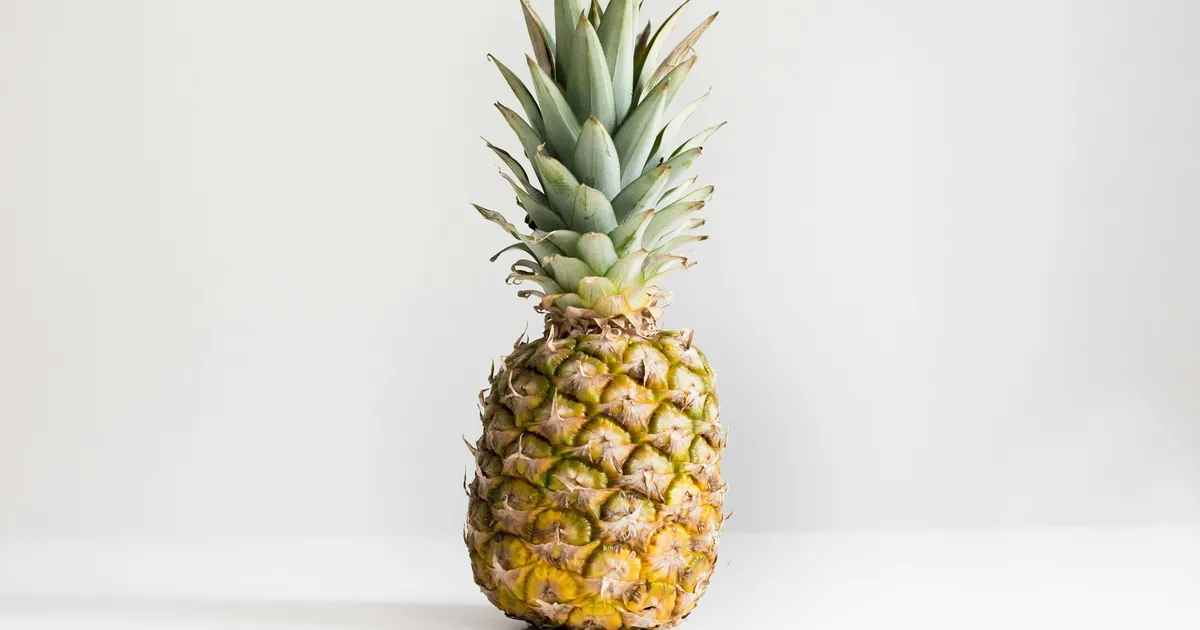
A pineapple is technically a bunch of berries (well, kind of). The fruit itself is classed as a berry.
Pineapples form a syncarp, or the fusion of many flowers into a single fruit.
After about a year to a year-and-a-half, the flowers on top of a pineapple plant grow berries. These fuse together over time, forming a single unit (the pineapple).
They change from green to yellow as the collection ripens.
The scales on the surface of a pineapple show this fusion, Utah State University explained. All the sections are made from different flowers, which Britannica explains start off purple.
Pineapples are seedless, NCSU added, because “they produce berries without pollination”.
What’s the core of a pineapple made from?
Advertisement
If a pineapple is a kind of berry, why is its centre so fibrous and hard to chew?
Well, the core of a pineapple is actually the central stem of the inflorescence (cluster or flowers) that go on to become its constituent berries.
Serious Eats explained that it “act[s] like a spine that holds all the berries together”.
To do this job properly, though, it needs to be built differently from the rest of the plant.
Advertisement
The pineapple core is drier, tougher, and denser than its surrounding berries, which is why it’s so much harder to eat.
Cooks recommend using it for tea, marinade (bromelain is great at breaking down protein, so it could make meat more tender), and even for cakes when very finely chopped.
Kids come out with all kinds of phrases that can baffle the older generations around them – from telling you to “call your Uber” to branding everything “mid”.
But there are some words they may use which could signal they’re being exposed to troubling content online.
Some boys are also now using the derogatory and dehumanising term “foids” (stemming from “female robot” or “android”) to refer to women and girls.
Advertisement
How are kids coming across these terms?
They’re typically originating from online incel (involuntary celibate) communities, before trickling down into mainstream culture.
Incel communities tend to be made up of men who forge a sense of identity around their perceived inability to form sexual or romantic relationships. They might say this is because of how they look or because they’re “low status”. Either way, much of their anger is directed at women.
Their views and terms have entered mainstream culture through popular manosphere influencers – who, as HuffPost’s Brittany Wong puts it, “mask their misogyny in self-help, fitness tips and ‘pickup artist’-style dating advice”.
Advertisement
These kinds of terms can easily become normalised online when kids are exposed to this kind of content, over and over.
What are Chads and Staceys?
According to Educate Against Hate, incels “define themselves by creating archetypes and caricatures of those they consider to be outside of, or adversaries of, their subculture”.
And these are typically based on pretty misogynistic stereotypes.
Advertisement
While using them isn’t a sign your child is part of an incel community (especially if other kids at school are using these terms and they’re simply trying to fit in), it’s still worth exploring what they think these terms mean.
Chads are the ultimate alpha male – extremely masculine, powerful, dominant and successful with women. Educate Against Hate defines them as “a typically attractive male who is idolised for his good looks including bone structure, genes, and height among other factors”.
Exploring the history of the term, Merriam-Webster dictionary noted that in the early 2000s, Chad was used as a “humorous generic term for a stereotypical frat boy or jock, and also as a slang insult with the meaning ‘loser, idiot, jerk’”.
But by the 2010s, the incel community had adopted it as a stereotype for an alpha male.
Advertisement
Around the same time, they started using Stacy/Stacey to refer to Chad’s female counterpart. According to Robert Lawson, an associate professor in sociolinguistics at Birmingham City University, Stacey is seen as a “hyper-attractive, sexually desirable, promiscuous but vapid woman”.
In a piece for The Conversation, Prof Lawson said Stacey “is ultimately unobtainable, especially to men who are not Chads”.
Educate Against Hate mentioned a third archetype – Becky – which it described as someone who is considered “average looking”. The site suggested “incels feel they’re ‘owed’ sex and relationships from Beckys as they’re seen as inferior to Staceys”.
Advertisement
Nowadays, Becky might be used to refer to a “clueless or entitled white woman”, according to Merriam-Webster.
Dictionary.com notes the name Becky “became widely used as a slang insult in the late 2010s”, adding that “Becky is stereotyped as a so-called basic bitch who is a privileged, sheltered, generic, and unlikeable white woman”.
Meanwhile Chad’s usage morphed into the mainstream as a form of praise for a guy seen as impressive (around the same time “sigma” – used to describe men as cool and successful, but on their own terms – started taking off).
Advertisement
Although some still use it disparagingly to refer to someone who’s “hypermasculine or heedlessly cocky”.
A peace deal to end the war in Iran is set to be signed as soon as today, Donald Trump has declared.
The US president said the agreement will lead to the economically-vital Strait of Hormuz waterway being “open to all”.
However, Iran poured cold water on hopes an agreement to end the conflict was imminent.
On Saturday, Esmaeil Baghaei, spokesman for the Iranian foreign ministry, said: “We will have to wait and see about the exact date of the signing of the memorandum of understanding, although it will not be tomorrow.”
Advertisement
But in a subsequent post on Truth Social, Trump said: “The Deal is scheduled to get signed tomorrow, and immediately after it is signed, the Hormuz Strait is OPEN TO ALL.”
The Strait carried around one-fifth of the world’s oil and natural gas before the war started with a wave of American and Israeli air strikes on February 28.
However, it has been effectively closed by Iran since then in a move which has sent oil price soaring and raised fears of global economic meltdown.
Trump insisted “no money will exchange hands” as part of the peace deal, and claimed America will destroy what remains of Iran’s nuclear capability “when all is calm”.
Advertisement
He added: “We look forward to working with Iran, and the entire Middle East, long into the future.
“Hopefully, this process will all work out quickly, easily, and smoothly. If it doesn’t, we have the ultimate alternative, hopefully never to be used again!”
Pakistani prime minister Shehbaz Sharif said that “we are closer to a peace deal than ever before”.
“With finalisation likely expected in the next 24 hours, Pakistan is preparing for the electronic signing of the peace deal immediately after, followed by technical level talks next week,” he said on X on Saturday.
Advertisement
Subscribe to Commons People, the podcast that makes politics easy. Every week, Kevin Schofield and Kate Nicholson unpack the week’s biggest stories to keep you informed. Join us for straightforward analysis of what’s going on at Westminster.
This article contains spoilers for the final episode of Half Man.
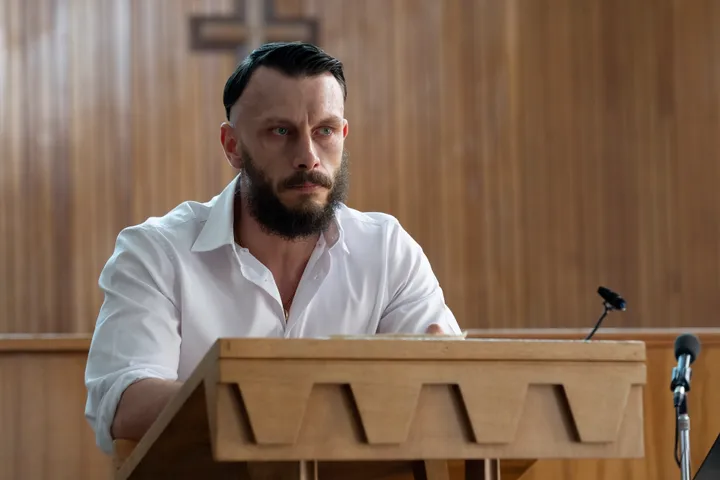
Throughout its six-episode run, Richard Gadd’s new drama Half Man has proven itself to be one of this year’s most daring series.
Focusing on the toxic relationship between Niall Kennedy and his pseudo-stepbrother Ruben Pallister, the series takes risks while examining shame and queerness in a way that many shows shy away from. Niall and Ruben are drawn to each other, despite Niall’s shrewdness and Ruben’s penchant for violence, igniting between them a spark that quickly festers and begins to ruin each of their lives.
Richard Gadd, the show’s creator and star, who won Emmys for his Netflix series Baby Reindeer, is fascinated by how toxic masculinity impacts relationships between men. Yet, the show has a glaring problem that many series focusing on white queer characters do: Half Man doesn’t reckon with the intersection of race and toxic masculinity and how it impacts characters of color.
Advertisement
When Niall leaves for university, he meets Alby Safadi (played by both Bilal Hasna and Charlie De Melo at different stages of the character’s life), a gay student of colour who is one of the few people he can open up to.
Their relationship slowly becomes romantic, with Alby allowing Niall space to finally admit to himself that he likes men. Time and time again, Alby is a shoulder for Niall to cry on, often casting his own interests, and safety, to the side. Just when it appears that Niall has finally found a confidant in his tumultuous life, Alby’s encouragement for Niall to come out ends with Ruben interpreting this revelation as a personal attack, resulting in him brutally assaulting Alby.
It’s here that Half Man begins to ask its audience to dispel any disbelief that Ruben’s targeting of Alby has nothing to do with his race and everything to do with his queerness. Yes, the series centres on the tumultuous relationship between Niall and Ruben, but by making Alby a man of colour, Richard Gadd fails to engage with how Half Man is stilted by its precarious representation of race. (The show also never mentions his nationality or ethnicity.)
The assault results in Alby being put into a coma and left permanently disfigured, and also results in the collapse of Niall and Ruben’s already fraught relationship.
Advertisement
Richard Gadd stars in “Half Man.”
Alby’s character is mostly thrown to the wayside, even throughout a trial in which Ruben claims the assault was the result of Alby groping him. The series is set from the late 1980s to the present day, so to say that Alby’s race is not a factor in how Ruben, his family and the justice system see him is laughable.
From here on, Alby’s presence in the show, despite being revealed to be Niall’s husband in present day, is one of a ghost. His existence has been irrevocably changed by the series narrative, yet it is never given the space or screen time to have any significant impact on the story.
Save for Heated Rivalry, Interview With The Vampire and a handful of other shows, the landscape of queer television has long focused on white characters or white ensembles, where queer characters of colour are often relegated to sidekick roles or the love interests of white protagonists, like Alby is.
The positioning of these characters as secondary to the plot isn’t necessarily the problem; it is instead the way in which they are treated within the narrative and by the writers who created them. Alby’s existence in Half Man is a pillar of the show’s conflict in the 1990s timeline, yet it is only Niall’s trauma from the assault that is allowed to be known.
Displayed to audiences through harsh breaths, moments of confusion and glances of horror toward Ruben, the impact of witnessing Alby’s assault consumes Niall. Alby’s reaction to his own assault is only ever clear through the physical scars we can see on his face, with no regard for how this attack impacted his schooling, his subsequent career and even his rekindled relationship with Niall.
Advertisement
Obviously, being attacked to the point that you end up in a coma is significant, but the trauma the sole character of colour in this series endures is never given the same amount of space as the other characters.
Charlie de Melo as Alby and Jamie Bell as Niall in Half Man.
If Alby were to only exist in the past timeline, there really wouldn’t be a need for this to be explored. But, he and Niall get married in the present day, in which Ruben’s presence at their wedding causes both men to panic. The mental and physical scars on Alby clearly exist, so the diminishing of each feels like an ignorant dismissal. It follows a worrying and growing trend within queer television.
The series finale, instead of giving us any inkling that Alby and Niall’s relationship is as damaged or fascinating as Niall and Ruben’s, displays Alby as passive and nearly docile once again. Then, when he and Niall reunite after Ruben is sent to prison in the late 2000s, he tells his partner he should attempt to reconcile with the man who has destroyed both of their lives. In doing so, Gadd proves that Alby is nothing more than a pseudo-therapist for Niall, who since their university days has become a despondent addict entrenched in shame and obsession.
Half Man is a story about how toxic masculinity shapes and warps men and their relationships, yet there are so many cracks in the narrative.
There’s no denying that the series is one of the best of the year, but with it, Gadd has proved himself as a writer who has no desire to tackle how toxic masculinity is directly linked to both Ruben and Niall’s whiteness.
Advertisement
Since Alby’s assault, villainisation and subsequent reappearance, Half Man has forced me to question why Alby was cast as a man of colour if its creator didn’t explore how their violence directly impacts the lives of the men of colour around them.
By using Alby as a therapist for the show’s white protagonist — and as a punching bag for its white antagonist — the otherwise bold and tightly written series is softened by its disregard for racial politics, pointing to a larger problem that continues to grow in queer television.
All six episodes of Half Man are streaming on BBC iPlayer.
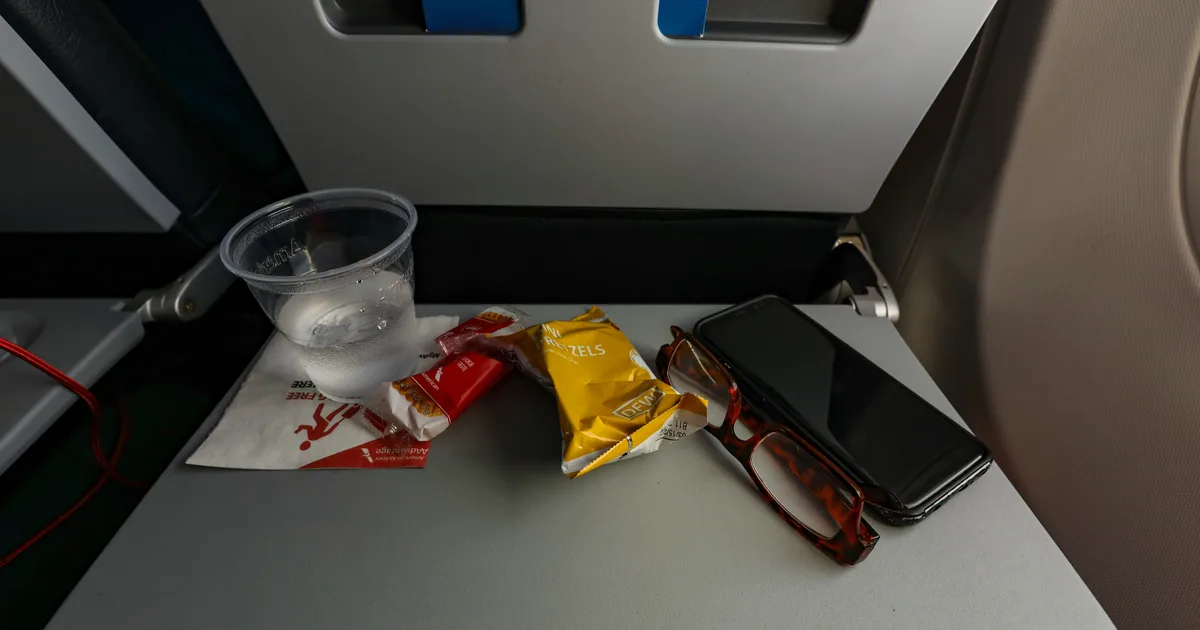
So, what about those tray tables – the ones that fold down from the seat in front of you, which you’re always told to keep up and secured at the start and end of a flight?
As you might expect, it’s all about safety.
Why do I have to keep my tray up during takeoff and landing?
Advertisement
Flying in a commercial plane is statistically the safest way to travel. But takeoff and landing are by far the riskiest parts of a flight, Business Insider explained.
For instance, even though takeoff and the plane’s initial climb only account for 2% of the overall flight, over 14% of reported accidents happen in these short stages.
This is part of the reason why the tray rule was introduced, Captain Steve Schreiber, a former pilot who posts on social media under the name Captain Steeeve, said in a YouTube Short.
“If you have to get off the plane in an emergency and in a hurry, if your tray table is down, you might not get out of that plane in 90 seconds,” which is the maximum length many regulatory bodies require evacuations to last, he said.
Advertisement
Additionally, you might block or slow down the people behind you, causing a pile-up or delay.
Speaking to Travel + Leisure, ex-flight attendant Kelly Kincaid said the same thing: tray tables have to “be up for takeoff and landing so that [they] won’t block you from evacuating in the event of an emergency”.
And, she stated, folding up your tray table also means you have to put the things you had resting on it (like your laptop or coffee) away, meaning there could be fewer potentially dangerous projectiles in the event of an emergency.
That’s also why you can’t recline your seat during takeoff and landing
Advertisement
Keeping channels to emergency exits clear is key for passenger safety, especially during the parts of a flight most vulnerable to accidents.
“The first is that the seat gives the occupant maximum impact protection when upright, and its structure locks into position accordingly… The second reason is that reclined seats reduce the space available in the row behind for occupants to escape quickly if an emergency evacuation is required.”


















































You must be logged in to post a comment Login