
Looks like this, apparently.





This is a graph of how many seats each party won in last week’s supposedly “proportional” Scottish Parliament election, compared to how many they would have won if the electoral system had been actually proportional.

The SNP and Greens are now over-represented by 37% and 50% respectively, while the Unionist parties are all under-represented compared to their vote share by (left to right) 26%, 19%, 20% and 23%.
“Pro-indy” parties have 73 seats (57%) rather than the 52 seats that their 40.8% vote share should have earned, while Unionist parties have 56 seats (or 43%) when they should have 69 for their 56% of the vote.
(The other 4% of the vote was scattered among 24 other parties or independents, with 1.8% going to identifiably pro-independence candidates, increasing the total “pro-indy” vote to 42.6%, fully 10 points short of current polling for independence itself.)
It is, therefore, a little bit of a stretch to present the refusal of the UK government to grant a second independence referendum on the basis of the results as an outrage against “democracy”. If an outrage against democracy has taken place, it happened last Thursday.
The over-representation of the indy side is a combination of the unbalanced First Past The Post system that elects more than half of MSPs, and of pro-indy voters splitting their votes, mostly between the SNP and Greens, despite the SNP urging its voters to cast both votes for the SNP.
The differences between each party’s constituency and list votes are instructive.
SNP LIST VOTE
29% lower than constituency vote
LABOUR LIST VOTE
16% lower
REFORM LIST VOTE
6% higher
CONSERVATIVE LIST VOTE
0.001% lower
LIB DEM LIST VOTE
17% lower
GREEN LIST VOTE
612% higher
That’s not a typo at the end – the Green list vote was more than six times their constituency vote, because they’re not really a proper party like the others and only ran in half-a-dozen constituency seats.
Had each party’s list vote share matched its constituency one, the results would have come out like this, according to the Devolved Elections seat projector.

The “pro-indy” parties would have fallen one short of a majority. The other way round (constituencies adjusted to the same as the list vote), the result would have been very different.
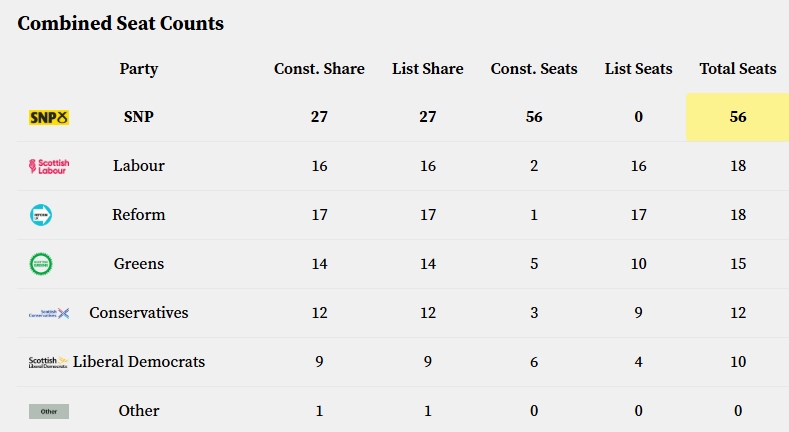
Tilting in favour of the list vote would have produced 81 seats for the “pro-indy” parties, an increase of 17. Which is a stark illustration of what was already blindingly obvious to everyone even within touching distance of sanity or arithmetical competence – “both votes SNP” is an absolutely cretinous strategy if what you want is a majority of pro-indy MSPs.
The reason such a majority was achieved this year was because of the 250,000 SNP voters who didn’t also vote SNP on the list, not the 625,000 who did.
Now, that’s a purely statistical argument, not a political one, because a “pro-indy” majority of MSPs will make absolutely no difference to anything in terms of securing independence. We know that for a fact because there’s been one for every single day since the indyref, but it has achieved nothing whatsoever.
But don’t worry! The same imbeciles who came up with that plainly demonstrable proven serial failure of a plan have another one for you!

Hooooooooo boy. Let’s just assess that one for a moment, shall we?
Firstly, as this site explained three and a half years ago, using a Westminster election rather than a Holyrood one as a plebiscite is monstrously stupid for a whole raft of reasons. The media coverage will treat Scotland as an afterthought because it’s only 8% of the country, and you’ll lose the heavily indy-favouring 16/17-year-olds and EU citizens who can vote in the latter but not the former.

(In fact, treating any single election as the plebiscite is dumb. It should simply be standing SNP policy that ANY time a majority of Scottish voters vote for parties whose manifesto says that a vote for them will be taken as a vote for independence, a clear and indisputable democratic mandate has been achieved. Of course it never will be, because the SNP is pathologically jealous of other indy parties’ votes.)

Using a UK election also prevents voters from separating the issues of the plebiscite and normal politics (because they only have one vote), whereas in a Holyrood vote you can say that the constituency vote is for independence and the list vote is for the actual election.
But secondly, you really do have to be an Olympic-class moron to imagine that the SNP are likely to be MORE popular in 2029 than they are now.
They’ve been in power for 19 years already, have record low approval ratings and have been haemorrhaging members and voters for the last half-decade. They won because the opposition was divided four ways, not because anybody likes them. Their vote share at this election dropped from 44% in 2021 to less than 33%. They’ve just elected loads of hopelessly inexperienced new MSPs. There’s a huge budget crisis thundering down the line towards them.

We’ve just had an election in which the SNP swore blind voting SNP would lead to a “100% guaranteed” referendum, and offered the electorate all manner of ludicrous bribes, yet over a third of independence supporters still refused to vote for the party.
In three years time the SNP can only conceivably be less popular than it is now, and the Greens are a pretend party who won’t be running candidates in the vast bulk of Scottish seats. The chances of achieving 50% of the Scottish vote in that election are less than zero. (They’d be doing miraculously well to get 35%.)
The infantile idea that the bogeyman of Nigel Farage as PM would be enough to boost that vote by half again is embarrassing. We were told the same about Boris Johnson, and about Liz Truss, and about Brexit, and about COVID and about Theresa May’s refusal to grant a Section 30 order, and etc etc etc. It never transpired. The dial never moved an inch.

The prospect of a Reform government in Westminster was baked into THIS election, Swinney never shut up about Reform, and it still only got the SNP constituency vote to 38%. There is NO chance, not a ghost of a crumb of an atom of a hope, that the SNP can secure 50% of the Scottish vote in the 2029 UK election. Even the indy movement’s very thickest dungwits know that in their hearts.
So why they’re urging us to rush headlong to what would be an utterly catastrophic defeat, well, you’d have to ask them, because we can’t unhinge our minds far enough to put ourselves in their shoes.
There is no pot of gold waiting for us in three years’ time, only the sort of pot you used to find under the bed, full of the stuff they’re talking.
Looks like this, apparently.
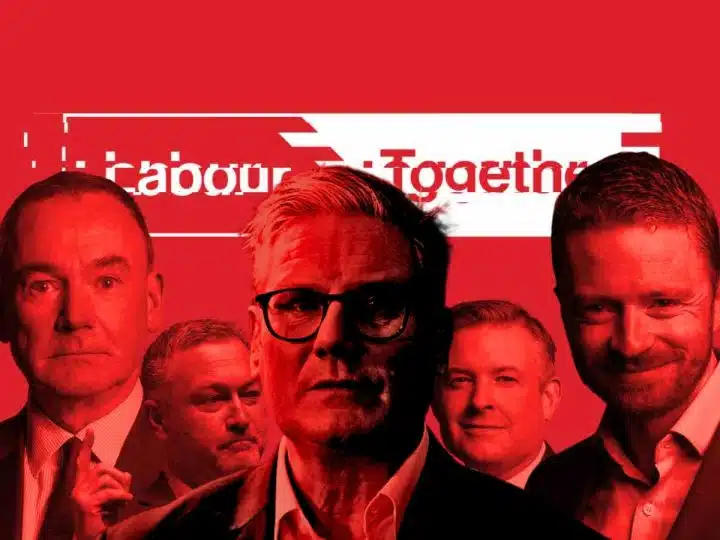

The ‘new’ right-wing Labour think-tank ‘Think Labour’ has launched with a claim that it’s not just a rebrand of Labour Together. Its CEO Alison Phillips told LabourList that:
ThinkLabour will be an open, collaborative organisation with no interest in factions.
Right.
Labour Together was – and, really, still is – the factional sabotage outfit that used the antisemitism scam and other manoeuvres to throw the 2019 general election and topple Jeremy Corbyn. To fund this, it used massive, undeclared donations from Israel lobbyists.
In an X post, the group claims that it is:
a unique political organisation dedicated to helping Labour govern confidently, win elections, and deliver lasting change.
But the same thread notes that it is “built out of” Labour Together:
ThinkLabour is built out of Labour Together – but this is much more than a new logo or a change of name. We have a new leadership team, a renewed mission, and a fundamentally different approach. We are open, collaborative, and entirely outward-facing.
— ThinkLabour (@ThinkLabour) May 14, 2026
So it’s not that unique. Nor is it built very far. In fact, it’s exactly the same entity as before. Its website’s ‘privacy’ section hasn’t even been amended and still calls it “Labour Together”. It also notes that its company number is 09630980:

A search for “Think Labour” on Companies House returns no results. A search for the company number does, however – and it returns a company that is still called… “Labour Together”:

The entity is unchanged – literally, at least so far. What about the people? Boss Alison Phillips, for example. Phillips told LabourList that she was:
delighted to have been made the first CEO of ThinkLabour.
But she was chief executive of Labour Together before the rebrand, and even planned it, so she simply remained CEO rather than being ‘made’ anything – particularly as Think Labour is still, in every legal sense, still Labour Together.
Unlike previous Labour Together directors, Phillips has a relatively low profile regarding Israel – a ‘clean skin’. She’s not quite so clean, however, concerning Labour Together’s scandal of spying on and trying to discredit journalists who were investigating it.
Phillips took over after that scandal and claimed to be “horrified” at it. However, in the same breath, she then amplified claims that the previous management didn’t realise the company it paid to spy on journalists was going to spy on journalists:
As a former journalist and editor, it should come as no surprise that I was horrified that investigators hired by Labour Together would look into the background and sources of reporters even if I am assured that this was not the intention.
But if the CEO is a relatively clean skin on Israel and the antisemitism scam so loved by Labour Together, the same can’t remotely be said for its chair.
Nick Forbes is a former Newcastle council leader resoundingly deselected in 2022 by party members frustrated at rarely seeing him in the ward. His supporters painted the deselection as a “Muslim plot“.
Forbes is an ardent opponent of pro-Palestine protests and called for the police to “throw the book at” anti-apartheid demonstrators. The protesters had dared to call on Newcastle city council not to adopt the grossly unfit, so-called ‘IHRA definition’ of antisemitism. The ‘definition’ doesn’t define anything and is designed to prevent criticism of Israel – which is why Israel supporters demand it everywhere. Including Forbes.
And Forbes didn’t stop there. He was also – alongside Tom Watson and other right-wing, friends-of-Israel horrors – behind a move to make it easier to expel Labour members accused in the ‘Labour antisemitism’ scam.
Forbes’ record is at odds with the re-skinned group’s “no interest in factions” claims, too. In 2018, when the party was led by Corbyn, unions planned to democratise the party and give Labour’s overwhelmingly pro-Corbyn membership the power to elect their Labour council leaders, instead of councillors selecting them. Forbes, then also on Labour’s NEC, was among leading opponents of the plan. He dismissed it as “unworkable”, “possibly illegal” and guaranteed to spark “endless infighting”.
Infighting for factional control has been Labour Together’s reason for existence. That does not seem set to change.
Another of the ‘new’ group’s directors is Ed Owen. Owens is a ‘senior fellow’ at NATO front-group, the Atlantic Council, which is also closely linked with US intelligence.
Owen has something in common with notorious Labour Together alumnus Morgan McSweeney – they both thought it was a great idea to make Epstein pal Peter Mandelson ambassador to the US. In January 2025, Owen wrote for the Atlantic Council that “big, serious” Mandelson “brings a wealth of experience and expertise”, and was a “bold statement of intent from a British government”. The ‘slug’ for the article states that Mandelson might:
be just what the US-UK relationship needs at this moment.
Serial child-rapist Jeffrey Epstein first became a convicted paedophile in 2008. Mandelson’s continued close friendship with Epstein had been a matter of public record for years. It received no mention in Owen’s analysis.
Other directors include a visiting fellow at the security-service aligned King’s College London; a former Bank of England monetary policy official who then moved to a capitalist consultancy; a former Big Finance and Big Pharma staffer who then worked for a right-wing Labour MP. Most worked at Labour Together before the rebrand.
None of this seems to align with the “fundamentally different” organisation to bring “radical” ideas that it’s supposed to be. Not in any good way, anyway. Alison Phillips claims that ‘Think Labour’ is not just a rebrand of Labour Together. Based on the evidence, it seems to be nothing but.
Featured image via the Canary
By Skwawkbox
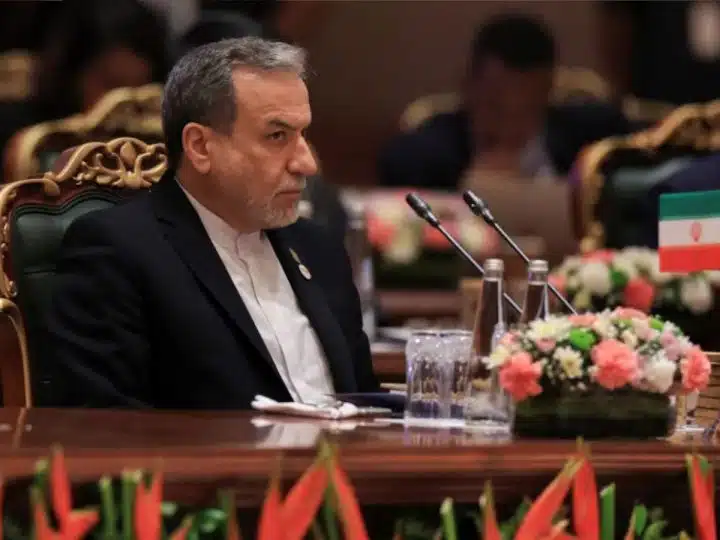

Iranian foreign minister Abbas Araghchi urged the BRICS countries to condemn the US-Israeli attack on his country.
The BRICS are a group of emerging ‘global south’ economies. In their own words:
The BRICS is a group formed by eleven countries: Brasil, Russia, India, China, South Africa, Saudi Arabia, Egypt, United Arab Emirates, Ethiopia, Indonesia, and Iran. It serves as a political and diplomatic coordination forum for countries from the Global South and for coordination in the most diverse areas.
Aragchi was speaking at a conference for the bloc in Delhi. Aragchi also called out the UAE for its own attack on Iran.
The 14 May meeting was marked by considerable tension. Al Jazeera said this was the first time Iran and US-Israeli ally UAE had shared a room since the war began.
Aragchi told attendees Iran was a:
victim of illegal expansionism and warmongering.
He said:
Iran therefore calls upon BRICS member states and all responsible members of the international community to explicitly condemn violations of international law by the United States and Israel.
He also took a direct swipe at UAE, telling the conference that the Gulf state was:
directly involved in the aggression against my country.
The Guardian reported on UAE’s secret attacks on Iran on 12 May:
The UAE assault on Iran, which was undertaken as retaliation for Iranian attacks on its facilities, included a strike on Iran’s Lazan Island just before the 7 April ceasefire was announced.
US-Israel attacked Iran first on 28 February without provocation. Iran was offering unprecedented concessions in negotiations at the time. The Pentagon has since stated there was no imminent threat from Iran. And the UN’s atomic watchdog, the IAEA, has said there is no evidence Iran was developing a nuclear weapon.
The US has achieved none of its original war aims. Iran predictably closed the Straits of Hormuz, a vital oil channel, once attacked – creating a global energy crisis. Far from being defeated, Iran has said the war will continue until:
the enemy’s inevitable and permanent humiliation, disgrace, regret, and surrender.
Trump came to power on an anti-war ‘America First’ ticket. He now faces worldwide humiliation.
Al Jazeera reported that an Indian minister condemned a recent attack on shipping:
India’s Ministry of External Affairs also condemned an attack on an Indian-flagged ship off Oman on Wednesday as “unacceptable” – with all sailors rescued safely by Muscat.
The minister said:
We deplore the fact that commercial shipping and civilian mariners continue to be targeted.
The minister did not name the country or forces which attacked the ship.
In a separate media interview another Iranian foreign minister, Kazem Gharibabadi, appeared to criticise India. India is a close ally of Israel and the US and sources around half of its oil through the straits of Hormuz.
We want India’s BRICS chairship to be successful. It is not a good approach to send a signal to the world that the BRICS is divided.
The official theme of the meting was sustainability, cooperation and innovation. In reality, it was always likely to centre on the war – especially given several of the participants have close ties to the either Iran or the Trump-Netanyahu axis of empire. And none of the participants can ignore the reality that the failed US-Israel attack has re-ordered global energy politics.
Featured image via Al Jazeera
By Joe Glenton
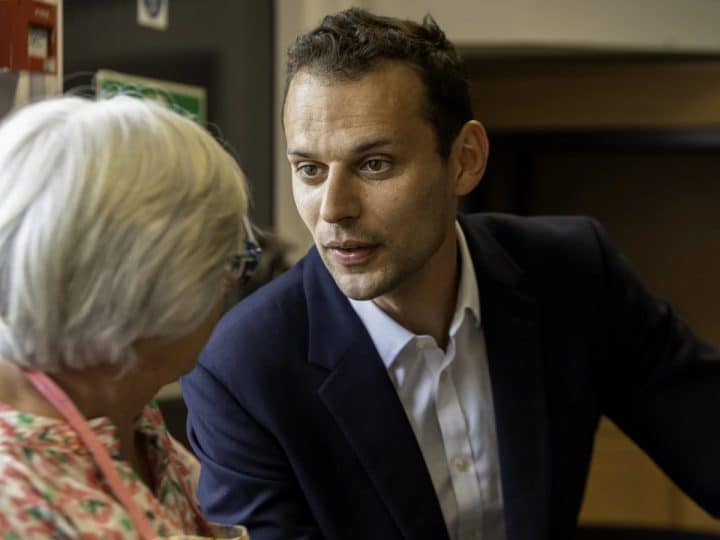
At the local elections this month, On Thursday afternoon, Labour MP Josh Simons announced that he would be “giving up” his Makerfield seat for Andy Burnham, the Labour Friends of Israel-veteran currently being paraded as the saviour of the party.
For decades, Westminster has overseen the managed decline of towns like mine. We have talked big, then acted small, stuck in a politics of incrementalism that cannot meet the moment. We have lost the trust of those our party was built to serve.
It is my unwavering belief that…
— Josh Simons MP (@joshsimonsmp) May 14, 2026
Simons was forced to resign from Keir Starmer’s cabinet after revelations that, whilst serving as a director of Labour Together, he ordered private investigators to go after journalists looking into Morgan McSweeney.
Before considering the democratic implications of an MP essentially attempting to donate their seat to the mayor of Greater Manchester, it is worth reminding ourselves of how Simons secured the Makerfield constituency in the first place.
At the time, Simons said that he was “honoured to be selected”, but no selection contest ever took place. Indeed, when local publication the Manchester Mill contacted Jenny Bullen, then the deputy mayor of Wigan council, her response was curt:
Makerfield constituents want a local candidate and have made that abundantly clear. Nothing else to say, bye bye.
Despite the desire for a quick coronation, Burnham will not face an easy ride in Makerfield.
At the 2024 general election, Reform UK increased their vote share by 18.7%.
Labour lost all 22 of the Wigan council seats they were defending at the local elections this month. Reform gained 24 seats.
At the last by-election in Greater Manchester, held in Gorton and Denton in February, Labour’s vote share dropped by 25.4%; they came third, behind the Green Party and Reform.
Like Burnham, Simons has his own links to the Israel lobby.
In February, it was revealed that he had failed to properly declare a donation from Trevor Chinn, the former Labour Together director and funder who, after being nominated by Labour Friends of Israel, received an Israeli Presidential Medal of Honor for “skills and work to the benefit of the State of Israel”.
In 2013, Chinn told an LFI meeting:
I’ve spent my entire life working for Israel, for a better image for Israel, for success for Israel.
At the 2024 conference of the Jewish Labour Movement, Simons spoke alongside former Israeli spy Assaf Kaplan at an event that promised to teach the audience “how to run a good campaign”.
Last June, Simons received £5000 from Mike Craven, a former press officer for Tony Blair. Craven, still listed as a director of Labour Together Limited on Companies House, has previously attacked Jeremy Corbyn “and the far left” for not recognising the Israeli state’s “right to exist”.
In October, Simons received £30,000 from Francesca Perrin, a Labour Together donor who also served as a director until her resignation three weeks ago.
Simons is a member of the All-Party Parliamentary Group on Israel, which states its purpose in the following terms:
To create a better understanding of Israel and to foster and promote links between the UK and Israel; to unite parliamentarians from across both Houses who are proud to be friends of Israel; and to make the case for Israel and for the UK’s bilateral relationship with the Jewish state.
The Israel APPG’s co-chair is Damian Egan, a vice-chair of the Labour Friends of Israel lobby group. Egan is married to Yossi Felberbaum, a former IOF soldier who used to recruit officers from the deadly Unit 8200.
Simons has previously mentioned having “friends and family in Israel” – a state with compulsory military service – and in a parliamentary debate with Conservative MP Kit Malthouse last June, he asserted his “right to claim citizenship in Israel”.
Two months later, Simons was part of a group of “Labour Friends of Israel-affiliated MPs” who confronted National Security Adviser Jonathan Powell in a “testy and emotionally charged conversation”, regarding the government’s decision to recognise a Palestinian state.
Some have posited that Simons may be giving up his seat for Burnham as a way of seeking “redemption” for his actions at Labour Together. Perhaps there is also a desire to avoid the fallout from recently released Subject Access Requests from Labour Together, which relaunched with the new name “Think Labour” (but the same company number) this week.
On Thursday, former Labour leader Jeremy Corbyn had his Subject Access Request, which came in at a whopping 583 pages, returned to him. We learn that in January 2024, whilst serving as a director of Labour Together, Josh Simons sent an e-mail to an unknown recipient:
I f***ing hate Jeremy Corbyn.
All in all, sounds like a lovely guy.
Featured image via Josh Simons


Zionists are losing their shit over a New York Times (NYT) article called “The Silence that Meets the Rape of Palestinians,” written by journalist Nicholas Kristof. As is commonplace with Zionists, a protest has broken out in New York where a group gathered outside the NYT’ Manhattan office not to condemn sexual violence against Palestinians, but to attack the newspaper that published an article detailing violence against Palestinians prisoners by Israeli settlers, soldiers, and prison guards.
A Times of Israel journalist posted a video of the protests outside the NYT’s office.
Several hundred demonstrators outside the New York Times to protest Kristof column pic.twitter.com/20K0KNzXTf
— Luke Tress (@luketress) May 14, 2026
The butcher of Gaza, Benjamin Netanyahu, also spoke up on the NYT article, saying he would take legal action over the article.
Netanyahu’s post said that he had instructed legal advisers to consider the “harshest legal action against The New York Times and Nicholas Kristof.” He blustered:
They defamed the soldiers of Israel and perpetuated a blood libel about rape, trying to create a false symmetry between the genocidal terrorists of Hamas and Israel’s valiant soldiers.
Under my leadership, Israel will not be silent. We will fight these lies in the court of public opinion and in the court of law. Truth will prevail.
Israel’s systematic rape of Palestinians is widely documented.
The ICC wanted-war criminal, who has previously threatened to sue the NYT wants truth to prevail. The NYT itself has its hands soaked in Palestinian blood. Just because it is now reporting on one of the Zionist entity’s vile crimes does not absolve it of the role it has played.
“As Israel now continues to carry out a uniquely horrific crime in Gaza with the firm backing of the global superpower (the US), Bret Stephens’s genocidal journalism [for the New York Times] is also uniquely horrific.”
— #AJOpinion by Belén Fernández
https://t.co/mFBr0tIVFn
— Al Jazeera English (@AJEnglish) July 25, 2025
The organisation called Writers Against the War on Gaza recently published a “dossier” which exposed the “material and ideological ties to occupation and apartheid held by many high-ranking editors, journalists, and executive officers at the Times.”
So, this tussle between Netanyahu and the NYT is no more than right-wing infighting.
In late July 2024 a similarly unbelievable protest broke out in Israel. The protest was to protect rapists. Hundreds of far-right Israeli demonstrators, including masked and armed soldiers from the IDF’s Force 100 unit, gathered outside the Beit Lid military base. They were demanding the release of ten of their colleagues who had been arrested on suspicion of raping a Palestinian detainee at the Sde Teiman military base.
According to Physicians for Human Rights the victim had been hospitalised with severe injuries to his rectum.
These two protests reflect the attitude of Zionists and their perceived impunity from crimes of sexual violence against Palestinian detainees or hostages in Israeli prisons.
The Canary has covered the extensive use of sexual violence against Palestinians in Israeli prisons:
More documented evidence of Israel’s use of sexual violence in Palestinian prisons
Palestinian testimonies reveal the use of sexual violence, including rape, as a means of torture inside Israeli prisons. @alaashamaly on @MiddleEastEye‘s investigation: https://t.co/a70HdbFOMO
— Canary (@TheCanaryUK) December 22, 2025
In testimonies published by Middle East Eye, two former Palestinian prisoners gave shocking accounts of sexual assault and physical and psychological torture inside Israeli detention centres.
They emphasised that what they experienced cannot be classified as isolated incidents, but rather part of a systematic policy practised against prisoners, especially during the initial phase of detention, known among detainees as the “welcome party.”
Euro-Med Monitor has also met with hundreds of Palestinians released from Israeli detention. The organisation recently said:
Their testimonies reveal at least 40 forms of torture and other cruel, inhuman, and degrading treatment.
Eleven of those are
Over the past two years, Euro-Med Monitor has met hundreds of Palestinians released from Israeli detention.
Their testimonies reveal at least 40 forms of torture and other cruel, inhuman, and degrading treatment.
In the thread, we highlight 11 of these practices
pic.twitter.com/kYXmZJST5S
— Euro-Med Monitor (@EuroMedHR) May 14, 2026
Israelis are carrying out a systematic policy of sexual violence on detainees with impunity, enabled by a government that rallies around accused rapists rather than holding them accountable.
A tale of two protests reflects the attitude of Zionists and their perceived impunity from crimes of sexual violence against Palestinian detainees.
Featured image via X
By The Canary
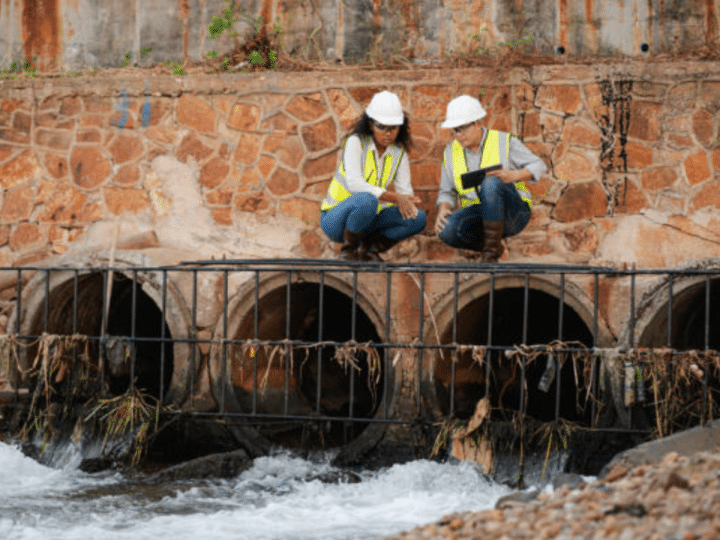

The Labour Government’s proposed reforms to the water industry – via its Clean Water Bill, announced in the King’s Speech – have been met with widespread criticism from environmentalists and campaigners.
In his speech to parliament, written by Keir Starmer’s government, King Charles said:
My Government will improve critical infrastructure with legislation to clean-up the water industry.
Alongside the speech, the government published much more detailed briefing notes explaining its plans for each area of planned legislation.
Challenges to Keir Starmer’s leadership, following Labour’s reckoning at the local elections earlier in May, mean that there is huge uncertainty over whether those plans will come to pass.
Regarding the Clean Water Bill, the notes said:
This once-in-a-generation Bill will shift the sector away from a system where water companies mark their own homework by putting in place stronger, active supervision and oversight through a powerful new regulator capable of integrated management of the water system.
They went on to say:
The Bill will strengthen confidence in the water sector – restoring the public’s trust, giving investors the stability to back long-term upgrades, and providing the clarity needed to support economic growth. It will ensure the sector plays its full part in delivering clean water and a healthy environment.
The briefing also said that the Bill would:
put consumers firmly first with a new Water Ombudsman to ensure complaints are taken seriously and resolved quickly.
And it would:
create a new, independent and integrated water regulator by bringing together the relevant functions of Ofwat, the Drinking Water Inspectorate, the Environment Agency and Natural England.
Somewhat surprisingly, the government’s own notes acknowledge the failings of the water sector, which it linked to privatisation.
The notes said:
The water industry in England and Wales was privatised in 1989, water supply and sewerage are delivered by 16 private companies. However, unlike most markets, water companies are regional monopolies with limited competition.
England and Wales are unusual in having a fully privatised water system, whereby companies own the assets, infrastructure, and operation of water services.
The water system, regulation and the regulators have failed customers and the environment. In the 37 years since privatisation the population has grown by 11M, climate change and aging infrastructure has created unprecedented demands on the water system and reform is now needed.
This has been compounded by a failure of regulation, with a system that relied too heavily on water companies marking their own homework.
It added that:
water companies are not delivering what is expected of them, both by regulators and the public.
And said:
transformative change is therefore needed to secure a system that will work for the long-term. This Bill delivers that change.
The Bill was heavily criticised by democratic ownership campaigners, environmental non-governmental organisations and anti-sewage pollution activists.
We Own It lead campaigner Sophie Conquest told the Canary:
This government’s proposed reforms for the water industry are a gift to shareholders.
The water white paper sets out plans for a ‘tailored approach’ for each water company, giving them even more scope to bend and break the rules for profit. Measures like ‘constrained discretion’ will give polluters more room to dodge fines.
Regulation of the water sector has been a decisive failure. Despite this government promising to be tough on polluters, the EA hasn’t completed a single prosecution for sewage dumping committed in the past 5 years.
The Labour Government has been in power since 2024, before which the Conservatives were in government from 2010.
While our pockets empty and our rivers fill with sewage, this government is busy handing over even more power to the polluters. The public have had enough.
This government’s decision to bring legislation to nationalise British Steel shows that they absolutely can nationalise key infrastructure. And they can do it quickly.
They must now do the same for water. Under public ownership, we can ensure that households’ money is being used to fix infrastructure and lower bills.
Thames Water is already in breach of its licence, and has buried itself in a mountain of debt. It has wrought havoc on our seas and rivers, all while charging households eyewatering bills for the privilege. It’s outrageous that the utility has not yet returned to public hands.
This government should be acting in the interests of the 82% of us who want to see water in public hands, starting with the collapsing Thames Water.
Windrush Against Sewage Pollution (WASP) founder Ash Smith told the Canary that the Clean Water Bill is based on a review whose independence he questioned, and said the Bill did nothing to address the evidence that privatisation of the water sector had “failed”.
Smith was portrayed by David Thewlis in Channel 4’s docudrama, Dirty Business.
The Canary previously reported that the public responded to Dirty Business – which exposed the damage done by the sewage scandal – with “widespread praise”, whereas discussions on social media about water companies, the regulator and public bodies was “overwhelmingly negative”, according to the government’s own analysis.
Smith said:
The water regulation changes proposed are based on the instantly accepted report from the Cunliffe Commission, which far from being the independent review it claimed to be, was designed, directed, administered, and reported on by Defra – the government department responsible for water industry regulation and its failure. Cleverly, in classic ‘Yes, Minister’ style, it investigated itself.
Its terms of reference directed Sir Jon Cunliffe to make regulation more attractive to shareholders and to dismiss taking water into public ownership, despite the compelling evidence that privatisation has failed.
We regard it as a massive retrograde step that, rather than addressing regulatory capture and corruption, makes compromise more likely with a single body. This vital aspect was ignored by the review, which was being steered by Defra into a forward-looking approach, thereby burying many serious issues that have arisen over the years, some of which were exposed in Dirty Business.
Smith added that the Bill proposes to make regulation of the sector “supervisory” which would mean that responsibility for “criminal pollution” by water companies will be for the regulators to resolve.
He added:
It is time people woke up before it is too late. Ironically and cynically, even contemptuously, one might say, the environmental champion, King Charles, has been made to usher it in, no doubt reassured by the major NGO’s usual weak challenges.
Surfers Against Sewage CEO Giles Bristow said:
The government’s self-proclaimed ‘once-in-a-generation’ reforms will do little more than prop up a broken industry built on pollution for profit. The Clean Water Bill is an insult to every community impacted by sewage pollution and and every bill-payer forced to fund rising water bills while shareholders continue to profit.
The reality of this Bill is that the Government is choosing to keep the profit motive and ignoring alternative ownership models for the water industry. Regulation alone cannot fix a system that rewards pollution and failure. Only a fundamental reset of the water industry will.
It’s clear from last week’s election results and the Prime Minister now fighting for his job that the same old tweaks around the edges of this broken system just don’t cut it.
This weekend, people across the country will take to beaches, rivers and lakes to demand better. The public mandate for bold action is undeniable.
River Action CEO James Wallace told the Canary:
River Action welcomed the new Government’s decision to review the failing water industry and the performance of environmental regulators. However, we are deeply concerned that the Independent Water Commission has failed to be truly independent and has avoided addressing the underlying structural problems around water company ownership, governance and investment.
While we remain hopeful that the forthcoming Water Reform Bill will deliver a far more ambitious and effective regulatory regime, the Government continues to ignore the fundamental damage caused by a wholly privatised water industry.
Until water companies are owned and operated for public benefit and environmental protection, rather than shareholder profit, no amount of regulatory tinkering will stop polluters from continuing to pollute for profit.
We are also concerned by the continued lack of meaningful action on agricultural pollution, which is one of the biggest sources of river pollution. Any serious attempt to restore our rivers must tackle not only sewage discharges, but also help farmers tackle the unchecked runoff of slurry, fertilisers and other agricultural waste into our waterways.
The chaos at the top of the Labour party makes it less likely that the government will be able to successfully pass all the bills it proposed in its King’s Speech, but public anger over the state of the country’s water companies is unlikely to subside any time soon.
Featured image via the Canary
By Tom Pashby
Helen Whately is the Shadow Secretary of State for Work and Pensions.
The resignations started. The ‘King in the North’ is on the march. The chatter in Westminster is no longer ‘will Keir Starmer survive?’ but ‘when will he go?’
How did it all go so wrong for Sir Keir? Less than two years ago Labour won a massive majority on a promise of “change”.
People are sick of broken promises from politicians – but in fact there has been change. The country has changed for the worse.
Taxes are up, as are borrowing, inflation, unemployment and government spending. People feel poorer, because they are.
Labour MPs point to the war in the Middle East. But in truth these figures were heading in the wrong direction well before Trump bombed Iran.
Governing is hard. Governing the UK right now is especially hard. We’ve had years of sluggish growth. Inflation surged after Covid and Russia’s invasion of Ukraine. The pandemic has left us with higher debt, along with an appetite for generous state support irrespective of people’s contributions.
None of this was a secret in the run up to the last election. But Labour did nothing to prepare for it. Except for Ed Miliband’s Net Zero mission and a bonanza of trade-union drafted red tape, they had no plan for Government – nor a mandate to make any of the tough choices that governing requires.
Most Labour MPs hold a principled belief that spending more of other people’s money is the answer to every problem. Even if Keir Starmer held a different view, he doesn’t have what it takes to win his MPs over.
So what now? In the days, weeks or months ahead, Labour MPs need to pick someone who can make a decent fist of being Prime Minister. The country hopes they succeed.
Because beyond Westminster, people are despairing. Family breadwinners are losing their jobs, homes are being sold to pay the bills, and young people are losing hope of getting on the career ladder. Millions have drifted out of work altogether; claiming benefits makes more sense. Businesses are struggling with rising costs and regulation, while inflation has quietly hollowed out living standards.
Threats are growing more serious too. Russian vessels are probing our critical infrastructure. Government borrowing costs are rising by the hour. And still the welfare bill goes on up.
More of the same is not the answer. Government spending must come down, along with taxes and borrowing. Swathes of red tape must go. Only then will we get the growth and jobs needed to start turning things around.
To me it seems obvious. But to the Labour MPs choosing their next leader? I doubt it.
The problem isn’t just Starmer; it’s also the MPs behind him. They clamoured for more welfare spending and the lifting of the two-child cap. They cheered taxes on farmers, family businesses and schools. And though some pay lip service to defence investment, the will to find the money simply isn’t there.
With his back against the wall, it’s no surprise that Keir Starmer’s King’s Speech contained no welfare savings, no succour for businesses drowning in red tape, no lightening of the tax burden and no serious plan for funding defence. What it did promise was the so-called ‘Regulation for Growth Bill’ – a contradiction in terms if ever there was one.
In anticipation, we set out our Alternative King’s Speech outlining 16 bills to deliver our plan for the country. It covers all those gaps: £23 billion of welfare savings, a list of business regulations we would repeal, cuts to business taxes, the end of stamp duty, investment in defence – along with tougher measures on crime, leaving the ECHR and drilling in the North Sea.
To govern, a plan is necessary – but it’s not sufficient. You also need principles, conviction and courage. In Kemi Badenoch, the Conservative Party has a leader with those qualities in spades.
The country is fed up. Fed up with politicians promising but not delivering. Fed up with seeing their taxes spent on things they don’t want – from far flung aid projects to hand-outs to migrants. Fed up with working all hours and having nothing left at the end of the month.
Kemi articulated this mood in her response to the King’s Speech in Parliament on Wednesday. A Labour Minister foolishly criticised her for being rude. Not so; she was telling the truth, but it’s a truth they don’t want to hear.
And this is the nub of it. They came to power on empty promises, having failed to understand the country’s problems. They were not even listening. So, they were totally unprepared.
As I said in Parliament as we debated the King’s Speech, being in power is not an end in itself: what matters is what you do with the power voters trust you with.
We have learnt from our mistakes, and we are also learning from theirs. Read our Alternative King’s Speech and you will see what I mean.

The post Sorry, Andy, there’s no such thing as a Labour safe seat appeared first on spiked.

After three delightful seasons on the small screen, The Mandalorian is about to hit cinemas for the first time.
Later this month, Pedro Pascal and his right-hand man Grogu will be starring in the hit Star Wars spin-off’s first feature-length adventure, which had its world premiere in Los Angeles on Thursday night.
And it probably goes without saying that all eyes were on one man in particular at The Mandalorian And Grogu’s debut.
Yes, we’re obviously talking about Grogu.
The adorable alien was pictured stealing the show on the event’s red carpet, with video footage also showing striking a pose for photographers.
Naturally, it was all too much for some fans to take…
And if you liked that, you’ll love these dancing droids busting a move on the red carpet, too…
Disney’s official synopsis for the new movie in the Star Wars franchise teases: “The evil Empire has fallen, and Imperial warlords remain scattered throughout the galaxy.
“As the fledgling New Republic works to protect everything the Rebellion fought for, they have enlisted the help of legendary Mandalorian bounty hunter Din Djarin and his young apprentice Grogu.”
In addition to Pedro reprising his role as Din Djarin from the original TV series, The Mandalorian And Grogu will feature appearances from several Star Wars regulars, plus Sigourney Weaver as a new character, Ward, a former Rebel Alliance pilot.
Meanwhile, Emmy winner Jeremy Allen White will also be lending his voice to Rotta the Hutt, son of Jabba, with Jon Favreau – who previously helmed Iron Man and Disney’s Jungle Book and Lion King remakes – on writing and directing duties.

Originally, a fourth season of The Mandalorian was planned, but these plans were put on ice in favour of making a film.
Speaking to SFX magazine, Jon Favreau explained that he had to “start from scratch” when putting together The Mandalorian And Grogu, rather than adapting his planned scripts for season four.
“[Season four] would have heavily linked to Ahsoka season two,” he explained. “You can’t just take those scripts and turn them into a movie. There were a lot of characters, it assumed you’d watched the whole show, and it was teeing up what was happening moving into [season two of] Ahsoka.
“It was about Grand Admiral Thrawn and following the larger storyline [of this era of the Star Wars timeline]. This is a completely different medium. So I had to start from scratch, essentially.”
It’s still unclear whether The Mandalorian could get a fourth season, after its creator gave a rather cryptic answer when asked about it on the red carpet.

This month’s dry, sunny weather might be good news to sunbathers, but it can be tough on gardeners – plants may be missing the much-needed rain.
But sometimes, even when you do everything right, your garden still looks a little… lacklustre.
That’s partly because, as the Royal Horticultural Society writes, watering during a hot spell (or at all) is a delicate thing.
Flowers, raised beds, potted plants, and grass all have different needs, for instance. Even within those, not all soils are created equal.
So it’s a good thing Montana State University has a solution involving a pan and some water.
Cheryl Moore-Gough, a horticulturalist at the university, says that those wanting to figure out exactly how much soil their specific garden is losing should try a “simple pan test.”
Using a straight-sided pan, she says you should fill it with water and mark the top of the liquid.
Then, you should watch it for “a week.”
“The amount that has evaporated is about the amount of evaporation that has occurred from the soil profile,” she explains.
“You’ll need to water that much to make up for evaporation plus the amount the plant has lost due to transpiration.”
This is especially useful in the sort of unpredictable and unseasonable warmth and dryness we’re seeing now, because it reveals how much moisture the weather has drawn out of your specific garden in your exact location.
Speaking to HuffPost UK previously, gardening expert Chris Cooper from Hayter, manufacturer of battery lawnmowers, said that you should water in the morning when it’s hot out to prevent evaporation.
“When the sun begins to rise, your grass and plants will begin to soak up the water for healthy growth – so make sure they start the day with a decent breakfast,” he added.
“This is especially important in a heatwave, as the weather will be much cooler in the morning than at midday when the temperature is at its peak.”







Weekend Open Thread: Marianne Dress


Coffee Break: Travel Steam Iron


What to Know Before Buying a Curling Wand or Curling Iron


What to expect when you’re expecting a budget


Auto Enthusiast Carves Functional Two-Stroke Engine from Solid Metal


Politics Home Article | Starmer Enters The Danger Zone

Ignore market noise, India’s long-term story intact, say D-Street bulls Ramesh Damani and Sunil Singhania


GM Agrees To Pay $12.75 Million To Settle California Lawsuit Over Misuse Of Customers’ Driving Data


PROS explodes 48% as Upbit and Bithumb listings ignite demand


CZ says US crypto rivals tried to block Trump pardon


GM agrees to $12.75M California settlement over sale of drivers’ data


YNW Melly Denied Bond Again Ahead Of Double Murder Retrial


Kraken Parent Seeks OCC Charter, Signaling Regulated Banking Access
The Hantavirus Danger: Can a Potential Outbreak Spark a New Meme Coin Frenzy?
Bitcoin Suisse expands with Digital Asset License and Investment Business Act Registration Approval in Bermuda


After Waka Waka, Shakira now drops first teaser for FIFA WC 2026 song | FIFA World Cup 2022


Solana UFO Meme Coins Surge After Pentagon Reveals Alien Files


Why Nathan Mackinnon Remains the Hart Trophy Favourite over Connor McDavid and Nikita Kucherov | NHL


Bethenny Frankel Says She Loves ‘Torturing’ Men


Pakistan to enter Chinese capital market as war inflation bites


You must be logged in to post a comment Login