
Politics
Women’s Health Statistics Show We Have A Long Way To Go


As we enter March, which marks endometriosis awareness month, it’s worth noting that not only is endometriosis woefully under-funded, most areas of women’s healthcare are still incredibly behind in research, diagnosis and treatment.
The thing is, once you realise the inequality and how many women are needlessly suffering, it’s hard to stop seeing it absolutely everywhere. It’s frustrating, to say the least.
For example, did you know that there’s more research on marathon running than there is on giving birth?
Writing for The Conversation, Anastasia Topalidou, an Associate Professor in Perinatal Biomechanics and Health Technologies at the University of Lancashire said: “Labour is one of the most physically demanding processes the human body experiences. It involves coordinated muscle activity, shifting pressure through the pelvis and spine, and joints adapting under intense physiological stress.
“Yet there are currently no studies directly measuring how labour positions, movement, hands-on techniques and physical forces affect the mother and baby in real time during active labour.
“As a result, many positioning strategies are based largely on tradition and accumulated clinical experience rather than direct measurement.”
This is sadly barely scratching the surface of women’s healthcare downfalls
According to the World Health Organization, 70% of people with Polycystic Ovary Syndrome (PCOS) do not know that they have the condition. PCOS causes heavy bleeding, fertility issues and thinning hair, just to name a few symptoms and it affects 10-13% of women worldwide.
If this isn’t maddening enough, even just looking into consumer menstrual health care, the first time human blood was ever used to test the absorbency of menstrual products was in… 2023.
As we explained at the time: “Until now, researchers have used saline water or even just water to test the efficacy of period products which means people may not have an entirely accurate idea of whether their periods are heavy or not.
“This is because menstrual blood contains not only blood cells but secretions and tissues from endometrial lining ― unlike water or its saline counterpart.”
People with menstrual health problems are no strangers to being dismissed so perhaps to them, these statistics aren’t as shocking as they ought to be but when you consider that women in Europe spend 25% more of their lives in pain than men, it’s fair to say this is something we should be keeping at the forefront of conversations about inequality.
It’s worse for women who aren’t white
In a government-commisioned review into maternity care services in England, it has been revealed that Black and Asian women face further discrimination during what is already an incredibly vulnerable time in their lives.
Speaking to BBC Breakfast, Baroness Amos who is leading the investigation said: “We have heard about stereotypes being used in maternity and neonatal services… This includes accounts of Asian women being stereotyped as ‘princesses’, with the implication that they are overly demanding or unable to cope with pain.
“Black women described experiences of being deemed as having “tough skin” and ‘able to tolerate pain’.”
The report also revealed that Muslim families described feeling discriminated against on the basis of their religion and feeling unable to raise concerns due to fear that discriminatory attitudes may result in poor treatment for their baby.
Outwith maternity care, The Royal College of Obstetricians and Gynaecologists reported in January that Black women are more likely to develop uterine fibroids, experience more severe symptoms, and face longer delays in diagnosis and treatment.
Left untreated, uterine fibroids can lead to symptoms such as bowel or bladder dysfunction, excessive fatigue and pain during sex, just to name a few symptoms.
If you are affected by any of the conditions mentioned, NHS surgeon Dr Karan Rajan has shared a guide to advocating for yourself in women’s healthcare.
Help and support:
- Mind, open Monday to Friday, 9am-6pm on 0300 123 3393.
- Samaritans offers a listening service which is open 24 hours a day, on 116 123 (UK and ROI – this number is FREE to call and will not appear on your phone bill).
- CALM (the Campaign Against Living Miserably) offer a helpline open 5pm-midnight, 365 days a year, on 0800 58 58 58, and a webchat service.
- The Mix is a free support service for people under 25. Call 0808 808 4994 or email help@themix.org.uk
- Rethink Mental Illness offers practical help through its advice line which can be reached on 0808 801 0525 (Monday to Friday 10am-4pm). More info can be found on rethink.org.

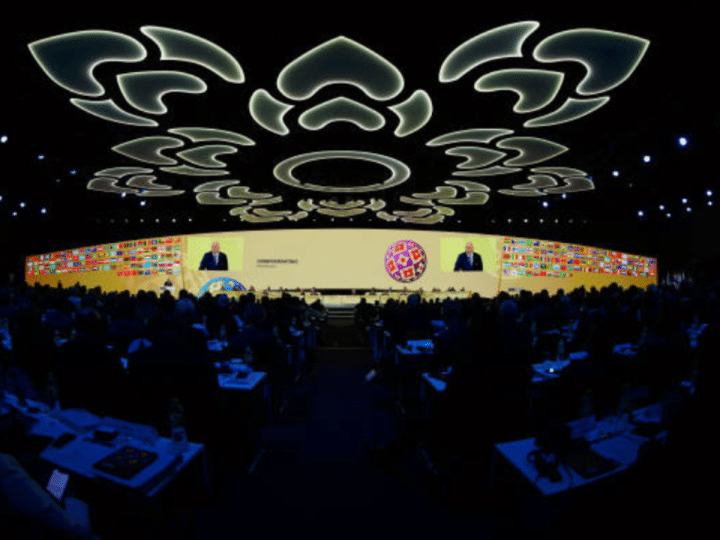

In a development that puts FIFA in a difficult position ahead of the 2026 World Cup, three senior officials from the Palestinian Football Association were barred from entering Canada after their visa applications to attend the FIFA Congress, scheduled to be held in Vancouver on April 30, were rejected.
The decision includes the president of the Palestinian Football Association, Jibril Rajoub, along with the secretary-general and the head of the legal department. This has prompted the association to request FIFA’s intervention with the Canadian authorities.
The FIFA Congress is not merely an administrative meeting; it represents the only official platform where national associations have the right to directly influence global football policies. Therefore, the absence of any association from it effectively constitutes exclusion from the decision-making process.
FIFA can’t keep ignoring Palestine
According to the Guardian, the Palestinian delegation was not only seeking to attend but also intended to raise a sensitive issue concerning the participation of Israeli clubs in competitions held in areas Palestinians consider occupied territory in the West Bank.
Last March, FIFA issued a report concluding that “no action should be taken,” justifying this by stating that the legal status of the West Bank is “complex and unresolved.” This decision sparked widespread criticism.
The Palestinian Football Association was expected to respond to this decision within the FIFA Congress, with the possibility of later escalating the issue to the Court of Arbitration for Sport.
Legitimate Questions
According to the source, Canadian authorities maintain that visa applications are reviewed individually according to immigration standards, without discrimination.
However, the timing of the decision, and the nature of the issue that was to be raised, open the door to broader questions regarding the world’s reaction to Israel’s genocide in Palestine.
The absence of the Palestinian delegation raises important questions about the deliberate attempt to reduce pressure on the issue of Israeli clubs and FIFA’s apparent indifference despite being aware of the repercussions of the absence of one of its members.
Did someone intervene?
In this context, a growing belief emerges in media and human rights circles that Israel may be the primary beneficiary of the absence of a Palestinian proposal, reinforcing suspicions about the possibility of indirect political pressure.
FIFA, for its part, may also benefit from avoiding the reopening of a thorny issue it had previously chosen to close.
Between benefit and decision, the scope of doubt and questions widens: was there covert intervention—direct or indirect—to ensure this issue never reached the discussion stage?
This question has yet to receive a definitive answer, but for those of us who have seen widespread suppression, censorship, and erasure of everything involving Palestine, the answer is obvious.
FIFA under scrutiny
This incident comes at a time when the challenges facing the 2026 World Cup are increasing. This tournament will be held for the first time in three countries with 48 participating teams. However, there remain serious questions over US president Donald Trump’s campaign of using a militia – ICE – to terrorise, detain, and deport people.
Despite FIFA President Gianni Infantino’s assurances that “everyone will be welcome,” reality reveals a gap between rhetoric and implementation.
Featured image via the Canary
By Alaa Shamali


In a functioning democracy, Keir Starmer’s position would today be untenable over his “weirdly rushed” appointments of disgraced friend-of-Epstein Peter Mandelson as UK ambassador to the US and as his top adviser. An investigation has uncovered the fact that Mandelson failed the vetting procedure for his short-lived ambassadorial role from which he was removed for his closeness to Israeli spy and serial child-rapist Jeffrey Epstein.
However, the Foreign Office overruled the security decision because Keir Starmer had already announced the appointment. Since then, the Starmer regime has engaged in a rolling cover-up to try to save Starmer’s job. Starmer’s Israel-linked chief of staff – and Mandelson protégé – Morgan McSweeney was also sacrificed in the attempt to protect his boss.
Mandelson was always clinging to power
Starmer’s decision to suspend national security rules to protect Mandelson was already exposed in March 2026. But the latest revelations show that the government knew full well that Mandelson had failed vetting and was unsuitable for the role – yet steamrolled the vetting to install Mandelson anyway, then lied repeatedly about it.
Mandelson had repeatedly leaked privileged and highly lucrative information to his paedophile pal.
Mandelson was denied clearance in late January 2025 after the completion of enhanced ‘developed vetting’ by security officials. Rather than wait until vetting was completed, Starmer had already announced his appointment as the UK’s ambassador to the US. To save Starmer’s blushes, the Foreign Office overrode the vetting outcome.
The government published a 147-page batch of files relating to Mandelson’s appointment. However, the release – controlled by a Starmer lackey – left out any mention of Mandelson failing vetting.
This was no doubt linked to the fact that in February 2026, Starmer said Mandelson had passed the vetting process, claiming the “intensive exercise gave him clearance”:
For God’s sake man, go!
As the Guardian noted, the scandal is nowhere near finished unfolding:
Further files linked to Mandelson are due to be released, but The Guardian reported that top UK officials have been considering withholding the documents which would show the Labour peer failed security vetting.
However, leading figures in other parties are already demanding his resignation for lying to Parliament and the public. Green MP Sian Berry said:
Keir Starmer has lied and lied again over his decision to appoint Peter Mandelson and he must resign. Starmer told Parliament ‘due process’ had been followed. This report makes clear that was untrue.
Tory and Lib Dem leaders Kemi Badenoch and Ed Davey were, typically, more wishy-washy. Both said that ‘if’ Starmer has lied he must resign. That he lied is now beyond even the most stubborn doubt. If he fails to step down, it can only be yet another sign of how fundamentally untrustworthy the man who never saw a promise he wouldn’t break really and obviously is.
Featured image via the Canary
By Skwawkbox


Fresh from praying for “overwhelming violence” on Iran, ‘Christian’ (I know, right) bloodthirsty US ‘secretary of war’ Pete Hegseth has quoted a ‘Bible verse’ to an audience of military personnel. Except it wasn’t a Bible verse – it was a fake one lifted almost word for word from the ultra-violent film Pulp Fiction.
And one enterprising soul even overlaid one on top of the other to demonstrate it:
Wow this is embarrassing!
Pete Hegseth quoted a fake Bible verse from Pulp Fiction at a Pentagon speech and prayer session yesterday.
The prayer was an adaptation of the monologue delivered by Samuel L. Jackson’s character. In the movie, the character falsely attributes it to… pic.twitter.com/G4OJc9BdQC
— Ed Krassenstein (@EdKrassen) April 16, 2026
Hegseth told his audience that a US air force pilot had given him the ‘biblical’ quotation, supposedly based on the book of Ezekiel.
Nah. He still thought it was an actual scripture. Try as he might, he just isn’t selling the disastrous US-Israel attack on Iran as a ‘holy war.’
Featured image via the Canary
By Skwawkbox

140 writers have stated they will not “be hostages in ideological war” as they quit the esteemed French publishing house Grasset. Their principled stand comes in protest at its super-rich owner, Vincent Bolloré, who regularly promotes reactionary and far-right propaganda through the billionaire’s media empire.
Similar to the Murdoch monopoly in the UK, Bolloré owns much of the media in France and regularly uses them to push far-right hateful rhetoric to the wider public. Having bought France’s biggest publishers Hachette Livre in 2023, his hateful reach is only becoming more entrenched in French society.
This latest acquisition, however, has given rise to widespread resistance, with the authors stating:
We refuse to be hostages in an ideological war that seeks to impose authoritarianism everywhere in culture and the media.
We don’t want our ideas, our work, to be his property.
More than 100 writers have quit the historic French publishing house, Grasset, in protest at its billionaire conservative owner, Vincent Bolloré, whose media empire has been accused of promoting reactionary and far-right ideas. https://t.co/0P9RPV4d2K #France
— Francisco Taveira (@jftaveira1993) April 16, 2026
Grasset face storm
The revolt exploded after Bolloré abruptly sacked long-time Grasset boss Olivier Nora, triggering an immediate backlash across France’s literary world. By Wednesday night, 140 authors had pledged to walk away from the prestigious publisher.
They declared in a blistering open letter:
We are Grasset authors. We have published with Grasset. We have books coming out with Grasset. But we will not sign our next books with Grasset – and we are 140.
For these writers, Nora wasn’t just an editor – he was the last line of defence. In their letter, they argue that his removal marks a direct attack on editorial independence and creative freedom.
Subsequently, their message is uncompromising: they refuse to become “hostages in an ideological war” or allow their work to be controlled by an owner they fundamentally oppose.
And in a rare show of unity across a deeply divided literary scene, they’ve made their demand clear: without Nora, they walk.
Nevertheless, this letter suggests this demand may just be the start. They intend on pursuing legal action to regain their rights to their work prior to the far-right takeover. This is likely to be expensive for Bolloré, as Grasset has been the home of a number of highly successful authors such as Vanessa Springora’s bestselling book “Consent”.
Some have even been more provocative in their protest, with journalist David Dufresne tearing up his contract with the publishing house on French TV.
Doing so, he declared:
Bolloré is trading in commerce and ideology, not literature or essays.
Le journaliste David Dufresne déchire en direct son contrat le liant à Grasset et Bolloréhttps://t.co/hLw8ifp9zj
— Le HuffPost (@LeHuffPost) April 16, 2026
The French ‘Murdoch’ empire
Bolloré strikes many similarities with the corrosive impact we see on our own society in the bile-spilling far-right Murdoch-owned press. Just like Murdoch, the French billionaire is widening is influence on their democracy, using his extensive reach through TV, radio and even a Sunday paper Le Journal Du Dimanche. In another deja vu, he is most often seen providing platforms for the far-right.
This isn’t even his first acquisition into the world of literature, in 2023 he took over France’s largest publishing and distribution conglomerate, Hachette Livre.
Looking to TV, he owns the most-watched news channel CNews, which has been criticised by the left as fueling the rise of the far-right. In fact, a legal investigation is currently open into racism on the channel, an allegation which the channel obviously denied.
Unsurprising really, we have seen the same political maneuvering from billionaires through the media in the UK. Whether it is GBNews or TalkTV, the far-right are drastically extending their sphere of influence across Western democracies.
Beautifully, this protest from these authors, in a great sacrifice to their own success, includes writers from the left and right.
Author Colombe Schneck defiantly commented:
We can’t let all the publishing houses of the Hachette group become far right.
That concern is likely to come back to bite us here in the UK, as Hachette also own the second biggest publishing outfit in the UK – Hodder & Stoughton. Similarly, they are the third biggest in the US. This ability for Bolloré to extend his views across continents is a danger we must all heed and a danger that these authors are bringing to the forefront of public debate. After all, his views have been deemed “very close to the most radical far right” by French former minister Pap Ndiaye.
This only works to help fascism defeat us at the ballot box and it is stacking the deck against ordinary people.
The far-right have their claws in and they mean business
The far right and their vast wealth are increasingly working to bring in hostile, fascist governments across the West. This example today, whilst across the channel in France, has every potential to meter its abusive influence on our own democracy in the UK. Therefore, this righteous protest yesterday is uniting people across the left and right and offers a warning we all must heed.
It also draws critical attention to the reach of this divisive and malign intentioned billionaire in the UK, and the potential that he has already been using his empirical influence in the UK to further the aims of the far right in our own communities.
Yet this teaches us a powerful lesson: together, we can make it very expensive for the super-rich when we take our business elsewhere.
Let’s hope British authors in Hodder & Stoughton soon follow suit!
Featured image via the Canary

TV veteran Eamonn Holmes has thanked his supporters for their well wishes after suffering a stroke.
Last week, it was reported that the former This Morning was recovering in hospital following a stroke.
A representative for GB News, where Eamonn is the host of the daily breakfast show, told HuffPost UK on Saturday: “Eamonn was taken ill last week and it was later confirmed he had suffered a stroke. He is currently responding well to treatment.
“Eamonn has asked for privacy as he focuses on getting better. His colleagues and everyone at GB News wish him a speedy recovery and look forward to welcoming him back to the People’s Channel when he is ready to return.”
On Sunday, Eamonn shared his first social media post since his stroke, posting a picture of his two granddaughters holding a sign with the message “get well soom” on Instagram.
“As my beautiful granddaughters put it so well – I will do my best to get well SOOM,” he joked. “Thank you for all of your many many good wishes, they give me strength.”

David Fisher/Shutterstock
His son Declan also said (as reported by The Independent): “What happened came as a real shock, but dad is doing okay given the circumstances and we’re taking it one step at a time.
“I just wanted to share a quick message to say we hugely appreciate all the messages, it means a lot to us as a family. For now, we’re focused on him and keeping things steady around him.
“We’d really value a bit of privacy as we navigate it, and what lies ahead, but thank-you again for the support as it means so much to dad and the rest of the family.”
Outside of This Morning and GB News, Eamonn is known for his work on the likes of ITV’s GMTV and Sky News’ Sunrise.
In recent history, he has spoken candidly about his health issues, undergoing a double hip replacement in 2016 and spinal surgery due to chronic pain in 2022.
BBC’s weekend TV favourite Strictly Come Dancing will be a noticeably different show when it returns to our screens in the autumn.
Over the last few months, a number of the show’s resident professional dancers have parted ways with Strictly under a variety of circumstances, while it’s also been suggested that companion show It Takes Two could be getting something of an overhaul, too.
Then, of course, there’s the search for a new presenting team in the wake of Tess Daly and Claudia Winkleman’s exits at the end of last year.
Before her departure, Tess had been with Strictly since its inception in 2004, with Claudia joining on a permanent basis a decade later, taking over presenting duties from the late Sir Bruce Forsyth.
When the duo began hosting together, they made history as the first female presenting team to front a primetime show, and there’s no denying that Strictly viewers are going to miss their unique dynamic on those wintery Saturday nights.
But, with Tess and Claudia having now left the ballroom for good, fans are now looking to the future, and speculating over exactly who could be brought in to fill their shoes.
Rumours began circulating late last year, with The Sun publishing a list of names supposedly doing “chemistry tests” with the aim of landing the coveted Strictly role.
Since then, there’ve been a fair few developments, including one report claiming that BBC bosses could be looking to boost Strictly’s presenting team from two to three to shake things up even more.
As we wait for further news, here’s a quick round-up of everyone who’s been rumoured for the gig so far…
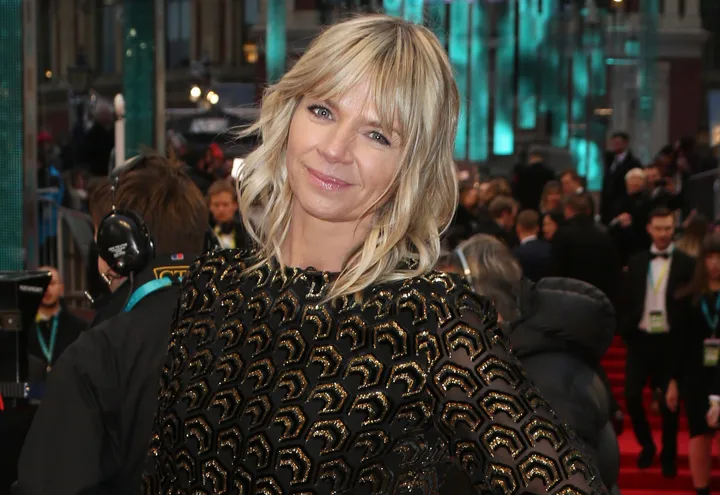
Zoe Ball

When we first heard that there were two vacant spots on the Strictly presenting line-up, our minds immediately went to Zoe Ball, who competed in the third series before going on to front companion show It Takes Two for 10 seasons.
She’s even guest hosted the main show, filling in for Claudia Winkleman back in 2014.
Zoe has also expressed interest in the job, with the rumour mill going into overdrive when she was included in The Sun’s supposed presenter shortlist, with the tabloid naming her the “frontrunner” for the gig as recently as February.
Emma Willis

The Sun’s piece naming Zoe Ball as a frontrunner claimed that the job search had become a “straight shoot-out” between her and another popular British presenter, Emma Willis.
Emma is best known for her work fronting a variety of reality shows over the years, including The Voice, The Circle and Big Brother.
More regularly, she’s also become a regular face on This Morning, and gained a more international audience when she began co-hosting the UK edition of Love Is Blind alongside her famous husband Matt Willis.
According to The Sun’s “source”, the BBC were hoping to pair either Zoe or Emma with a “more left-field person” with a “female stand-up comedian” being the preferred choice.
Mel Giedroyc

Ken McKay/ITV/Shutterstock
Just days after this, the Daily Mail published a piece saying that Mel Giedroyc was being “eyed” for a presenting role at the helm of Strictly.
It was claimed that Mel’s “gentle touch” and ability to “use humour to relieve [any] tension”, as displayed during her time in the Great British Bake Off tent, had made her a favourite for the job.
Mel can currently be seen in action in the latest season of Last One Laughing, and has recently competed on The Masked Singer and fronted the TV quiz show adaptation of Pictionary.
She also took part in the annual Strictly Christmas special back in 2021, where she was paired with Neil Jones.
Miranda Hart

Ken McKay/ITV/Shutterstock
Self-professed Strictly super-fan Miranda Hart was mentioned as a possible new host by The Sun in late March 2026.
According to the tabloid, Miranda was being considered for the role due to the fact that she and Claudia Winkleman share a similar sense of humour, with a source describing the rumoured signing as a “massive coup for the BBC”.
Angela Scanlon

Ken McKay/ITV/Shutterstock
Another former Strictly star rumoured to be on the BBC’s “golden ten” shortlist late last year, Angela Scanlon competed on the show in 2023, where she was paired up with now-reigning champion Carlos Gu.
The Irish presenter is best known for her work on shows like Robot Wars, Your Home Made Perfect and The One Show, and will next be seen trying her luck on The Celebrity Apprentice.
In March 2026, the Daily Mail said it was increasingly likely that Angela would bag one of the Strictly presenting jobs, following “meetings over the past few weeks with show bosses”.
Rylan Clark

A week after the Mail named Angela Scanlon as a top pick to take over as one of Strictly’s new hosts, the same publication claimed that she and Rylan Clark were a potential new duo.
They cited a “Strictly source” who suggested that bosses liked the idea of creating a new presenting pair rather than relying on an existing TV duo, and that Angela and Rylan would definitely fit the bill.
Meanwhile, The Sun claimed more recently that bosses were looking to add a male presenter into the mix, rather than trying to replicate Claudia and Tess’ dynamic, with Rylan one of three names mentioned as being in the frame.
Like Zoe Ball, Rylan previously fronted the spin-off show It Takes Two for four seasons between 2019 and 2022, and is a regular fixture on the BBC thanks to his Radio 2 show, his coverage of the Eurovision Song Contest and his travel series Rob And Rylan’s Grand Tour, which he co-presents with Rob Rinder (more on him in a sec).
Bradley Walsh

Even before he was included on The Sun’s list of the “golden ten” stars supposedly in consideration for the Strictly gig, Bradley Walsh was named in the press as a top pick to take over at the helm of the dance show.
Currently known for his work at the helm of The Chase, Gladiators and Blankety Blank, the tabloid reported in November that Bradley was being “lined up” by higher-ups at the BBC to take over from Tess and Claudia, as part of an apparent “revamp” for the show.
Last month, The Sun revived the speculation when they included him in their shortlist of three male stars reportedly in consideration to join Strictly’s new presenting team.
However, despite the persistent rumours, Bradley has repeatedly cast doubt on the suggestion that he’ll be taking over at the helm of Strictly.
Alex Jones

Ken McKay/ITV/Shutterstock
Last year, when Bradey’s name was mentioned in the press for the first time as a possible Strictly host, The One Show host Alex Jones was also suggested as a potential co-host.
Back in November 2025, The Sun cited “insiders” who claimed that Alex and Bradley were being “courted as the perfect partnership” to take over the show.
Later, Alex was also one of the 10 names listed to be on the rumoured shortlist, and while many other names have been mentioned in the months since, the tabloid insisted as recently as March that she was “still the favourite” in producers’ eyes.
Fleur East

Since competing on The X Factor in 2014, Fleur East has carved a new career for herself as a presenter, fronting Hits Radio’s breakfast show, as well as a recurring segment on Ant and Dec’s Saturday Night Takeaway.
Fleur has most notably fronted Strictly’s companion show It Takes Two since 2023, a year after competing on the main show, making it to the final alongside her professional partner Vito Coppola.
In March, The Sun mentioned that the Sax singer was still “in the mix”, indicating she could still land one of the coveted presenting slots.
Johannes Radebe

One of the most recent additions to the ever-growing list of rumoured hosts is Striclty pro Johannes Radebe.
Johannes has been a favourite of Strictly fans ever since he first joined as a professional dancer in 2018, and in March, The Sun named him as a wildcard third male star near the top of bosses’ wishlists, alongside Bradley Walsh and Rylan Clark.
If the South African performer did land the job, it wouldn’t be the first time a former Strictly pro moved to a different role within the show.
Current It Takes Two host Janette Manrara was previously a pro dancer on Strictly, as was resident judge Anton Du Beke.
Alan Carr

Tess and Claudia’s Strictly exits were announced in the middle of last year’s series of The Celebrity Traitors, meaning plenty of people’s minds immediately went to scene-stealer Alan Carr as a favourite for the hosting job.
Already a popular stand-up comic, Alan has plenty of TV experience to his name now, not just as host of his talk show Chatty Man, but also series like Picture Slam, Interior Design Masters and RuPaul’s Drag Race UK.
Unfortunately, he quickly poured water on the rumours, insisting the gig would be “too nerve-racking” for him.
That being said, he was still named in The Sun’s subsequent list of possible hosts, even if the man himself seems less keen on the suggestion.
Amanda Holden

David Fisher/Shutterstock
Also on that list was Amanda Holden, with whom Alan has now shared the screen on a number of occasions.
Like Alan, Amanda was mentioned on The Sun’s rumoured shortlist, but also dispelled the rumours, insisting that her commitments with Britain’s Got Talent would mean she wouldn’t be able to do Strictly.
“We are so flattered to be in that mix,” she told her Heart listeners. “[But] we both are not doing it.”
Holly Willoughby

Of course, it was always going to be inevitable that rumours about Holly Willoughby landing the gig would also start to circulate.
Former Dancing On Ice host Holly – who has been keeping something of a low profile since her This Morning exit in 2023 – was named as the bookies’ favourite for the hosting gig almost immediately, after which Daily Mail reporter Richard Eden wrote in his column that he’d heard from former BBC One controller Peter Fincham that a reliable source had told him that the job was Holly’s for the taking.
He alleged: “My hairdresser also cuts the hair of a well-known channel controller. What’s said in Harry’s the hairdresser stays in Harry’s. But he says with great confidence that Holly Willoughby will take over.”
Tabloid reports stretching as far back as 2023 even suggested that the BBC had been hoping to “lure” Holly over to them from ITV via a rumoured offer to present Strictly, two years before Tess and Claudia even announced they were departing.
More recently, Holly was included on the “golden ten” list published in The Sun.
Alison Hammond

Anthony Harvey/Shutterstock
Daytime legend Alison Hammond was also reported by The Sun to be one of the stars undergoing “chemistry tests” to try and land the co-presenting gig on Strictly Come Dancing.
Following this, she made an appearance on Loose Women where the Great British Bake Off presenter made no secret of her hopes to end up with the Strictly hosting job.
When she was still more of a beloved cult figure than a full-blown national treasure, Alison competed on Strictly back in 2014, where she was partnered with Aljaz Skorjanec.
Rob Rinder

David Fisher/Shutterstock
The Sun’s much-cited piece about the search for the new Strictly hosts mentioned that bosses were considering existing presenting teams, mentioning travelogue stars Rylan and Rob Rinder.
Rob – who first rose to fame as the host of Judge Rinder and now regularly co-presents ITV’s Good Morning Britain – was also reported to be taking “chemistry tests” with a variety of different potential co-hosts with the prospect of forming a new duo to front Strictly Come Dancing.
Oti Mabuse

Scott A Garfitt/Invision/AP
Oti Mabuse is undoubtedly one of the most popular Strictly pros in the show’s history, and since parting ways with the show, has become a regular fixture on screen, judging Dancing On Ice, fronting the dating show Romeo & Duet, briefly landing her own ITV daytime series and regular popping up on the Loose Women panel.
The same day Tess and Claudia’s departures were announced, Strictly staple Craig Revel Horwood (now the show’s longest-serving fixture) named Oti as his top pick to inherit the presenting job, alongside Alan Carr.
La Voix

We are going to continue manifesting this as long as we possibly can, alright? Give. Her. The. Job.
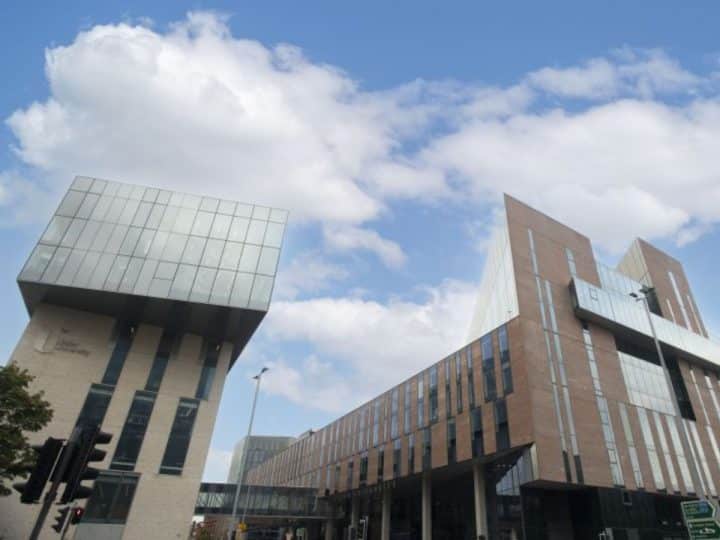

The University and College Union (UCU) has issued a damning verdict on Ulster University’s brutal decision to axe 450 jobs. The union represents over 120,000 staff across further education institutions in Britain and Ireland. In a statement, they said:
The shocking announcement to cut 450 jobs at Ulster University is unprecedented and represents a direct threat to the quality of education, respect for staff, desires and ambitions of students and the long-term future of our institution.
Staff already work under sustained pressure, with rising workloads and impossible demands. Imposing redundancies on this scale is deeply alarming and unsustainable. Removing hundreds of staff will fundamentally damage the student experience and weaken academic provision.
Our members deserve full transparency, genuine consultation, in line with legal obligations, as well as the opportunity to challenge the assumptions underpinning these decisions. Any process that falls short of this will be robustly contested and our members will not be afraid to take action to challenge these decisions.
Staff at Ulster University also strongly criticised the decision, with lecturer Aisling O’Beirn highlighting the “wider societal consequences”. She pointed out how the sackings will “pull income out of the economy” and:
…restrict people’s access to education, which is so important in a post-conflict society…
Ulster University’s dysfunctional higher education funding approach backfires again
Redundancies across the higher education sector have become unavoidable.
They went on to cite the “more than 100 institutions across the UK” that have reduced staffing levels. Ulster University went on to suggest that:
…a sustainable funding model is not going to be forthcoming, and regretfully, we must now act to reduce our costs.
Ulster University had been seeking permission to raise tuition fees by over £1,000 per year. This would have forced students to bear a cost of £5,831 every 12 months. Minister for the economy Caoimhe Archibald rejected the request in May 2025. In the Six Counties, universities also receive funding from Stormont via block grants. The squeezed education budget has left a shortfall in money going to universities.
Setting of students fees in the north of Ireland is devolved to Stormont, which has chosen to set them at a lower level than the 2025/26 cap of £9,535 Labour allow in England. Scotland and Germany seem to actually value higher education, where the state will largely cover payment of fees for most students.
Universities in the Six Counties rely heavily on the whopping fees they are entitled to charge international students, who are typically expected to pay around £17,000 per year. However, multiple changes by successive Westminster governments racing to the bottom on immigration have deterred such students from coming.
Changes made by the Tories in January 2024 ensured that:
…international students on a postgraduate taught course, such as a master’s degree, have not been permitted to bring their partner and minor children with them to the UK.
International students pushed out by immigration hysteria
Labour have gone ahead with plans that mean students need to prove they have £1,171 per month to support themselves with. In 2027, the post-study work visa duration will go from 24 months to 18.
A sensible model for funding higher education might look like the following: provide sufficient state funding to ensure that all residents of Britain and the north of Ireland who wish to can attend university, without becoming massively indebted. Have appealing rules for international students that attract the best minds to our universities.
This way, you get a well-educated home-grown population, and the brightest people from around the world, who then go on to build a world class economy.
Alternatively, you can wreck higher education by going out of your way to pander to the prejudices of a privately educated, ex-investment banker who wants to fool the public into thinking all societal malaise is the result of immigration. Then proceed to watch your dysfunctional nation slide further into the doldrums.
Of course, the north of Ireland can’t dictate its own immigration rules as these powers are not devolved. Thus we have a sclerotic arrangement that prevents potentially joined-up thinking on issues like this, when Britain maintains its course of self-sabotage.
The UCU condemned the Ulster University job cuts along similar lines, saying:
This announcement indicates a complete lack of a clear strategic vision for sustainable growth and development. At a time when universities should be expanding opportunity, investing in innovation, and strengthening their regional impact, large-scale redundancies signal regression, rather than progression.
They pledged to fight on, declaring that:
UCU will defend our members, challenge all unjustified job losses, and will robustly hold the university and government to account. We stand ready to engage, but we will not stand idly by and let our university flounder through government or university neglect.
Featured image via the Canary


Establishment figures want more money for war. Recent days have seen government ministers, ex-ministers and generals all demanding welfare is cut to fund massive hikes to ‘defence’ budgets. Turns out they’re all linked to Israel, oil, arms and private healthcare. Quelle surprise, hey?
War hawks gather
The Canary reported on 15 April that UK PM and Chief Silly-Bum of Britainshire-upon-Thames Keir Starmer was under pressure to hike military budgets. The authors of the 2025 Strategic Defence Review were among the most vocal critics. These include former Labour defence minister Lord Robertson and ex-British army general Richard Barrons.
Now, Thatcherite Labour health minister Wes Streeting chipped in as well. Turns out these figures have a links to various lobby groups across issues like pharmaceutical and the arms trade. Barrons said on 15 April that US defence chief Pete Hegseth was right that the Royal Navy was a shadow of itself.
Like many others I hung my head in sorrow. But I couldn’t argue with him because although the Royal Navy and the Royal Air Force and the army are, in their bones, outstanding institutions, they are simply too small and too undernourished to deal with the world that we we now live in. And the review says this.
Lord Robertson, in a major 15 April speech, said that Starmer is:
not willing to make the necessary investment.
Funnily enough that money, Robertson said, should be squeezed out of the less well-off:
We cannot defend Britain with an ever-expanding welfare budget.
Classic.
Corrosive complacency
Robertson announced:
There is a corrosive complacency today in Britain’s political leadership. Lip service is paid to the risks, the threats, the bright red signals of danger – but even a promised national conversation about defence can’t be started.
He also accused “non-military experts in the Treasury” of “vandalism”. Which sounds like a pitch for more military control of the economy.
The BBC reported:
Lord Robertson’s apparent suggestion that the government could find money by reducing the welfare bill may be one that is shared by the Chancellor Rachel Reeves.
Pressed on the matter in an LBC interview, working class cosplayer Streeting said:
Yes, we do need to put more money into defence, we will need more, that’s the reality of the challenge we face.
Pressed on where it would come from, he said:
We definitely want to reduce the welfare budget. It’s for the Chancellor to set out her budgets, I want to make sure I stay in my lane.
Pressured further he told the channel:
It’s got to come from somewhere.
So why not already vulnerable disabled people who are already struggling to live, eh Wes?
Talk about pulling the ladder up, Streeting…
Big Pharma and arms trade links
Now we come to it… the great grift of our times. Let’s start with Barrons, who is co-chair of Universal Defence and Security Solutions (UDSS).
Here’s what UDSS has to say about itself:
UDSS is a leader in not only the delivery of practical advice and service in all areas of defence and security but also in the thinking and execution of digital age Defence and Security Transformation, including applied cyber.
A man with a vested interest in defence spending, in short…
NATO chief and BP advisor
How about Lord Robertson who once headed NATO? Well, Lord Robertson is a ‘senior counselor‘ at the US-based Cohen Group. The Cohen Group assists:
aerospace and defense firms on policy, business development and transactions. We have helped firms from the US, Canada, UK, Europe, Turkey, Israel, GCC, India, Southeast Asia, and Japan to succeed in North America, Europe, the Middle East, India, Latin America, East Asia, and Southeast Asia.
They have:
assisted clients to compete for and win tens of billions of dollars in contracts, to enter new international markets, to build joint venture and other partnerships overseas, and to move up the supply chain.
Another man with an interest in defence spending increases them? Cohen Group also helps out energy firms. Which is lucky… because Robertson is an advisor to the CEO of British Petroleum. Delightful.
One-way Streeting
How about Streeting? Well, it’s no secret that as health secretary Streeting has been a strident advocate of privatising the NHS down to the last doorknob. That may have something to do with his profound links to private healthcare firms… but who can say?
These links are probably best demonstrated by this popular breakdown, in this case tweeted by Streeting’s nemesis Green Party leader Zack Polanski:
Wes Streeting having the chutzpah to tell the story about the NHS.
He doesn't tell the bit about how much he's accepted from private healthcare and the risk our NHS is at under this Labour Government. And most of all, lots of questions about his meetings with Palantir.#BBCQT pic.twitter.com/r51e5dojEd
— Zack Polanski (@ZackPolanski) March 19, 2026
Streeting has also received tens of thousands of pound from the Israel lobby, according to this report by our pals at Declassified UK. The report notes that:
Streeting became the first member of Keir Starmer’s shadow cabinet to visit Israel, in a move designed to signal a break with Jeremy Corbyn’s pro-Palestine position.
The trip was paid for by, you guessed it… our old chums at Labour Friends of Israel (LFI).
When a group of establishment drones want to cut welfare to fund militarism and war, the first question you must always ask is: whose pocket are you in? That is certainly worth asking of this gaggle of wrong ‘uns, as it turns out. A little scrutiny links them directly to some of the most obnoxious interests around: from private healthcare and the arms industry, through to Israel lobbyists and global energy giants.
They must think we’re bloody fools or something…
Featured image via the Canary
By Joe Glenton
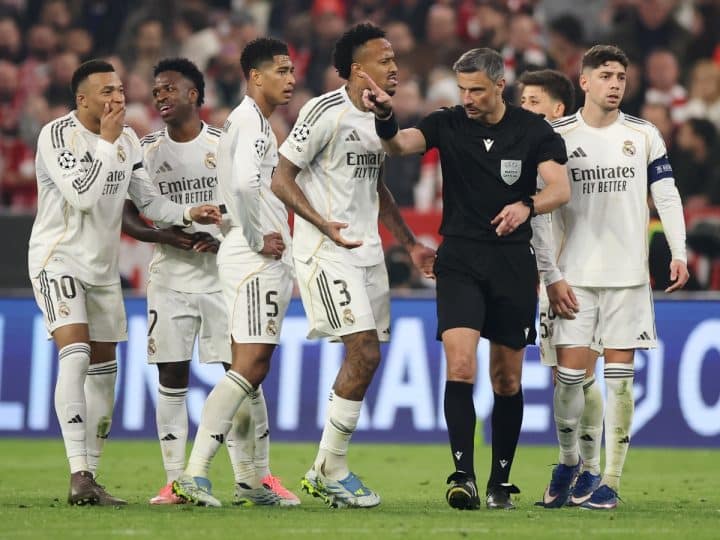

Real Madrid’s exit from the Champions League has become a hot topic in the Spanish and European press, which has treated the elimination as more than just an ordinary defeat, but rather a ‘resounding collapse’ for a team historically associated with continental dominance and decisive moments.
Real Madrid: game over?
In Spain, the newspaper Marca devoted extensive coverage to the event, arguing that Real Madrid had “lost its European identity” and was no longer a team capable of turning results around in difficult moments. It pointed to repeated defensive errors and a lack of the usual resilience, alongside a lack of leadership on the pitch and a failure to react after falling behind.
For its part, the newspaper ‘AS’ offered a harsher assessment, describing what happened as a “complete tactical collapse”, explaining that the team failed to grasp the rhythm of the match and impose its style at any stage. It also highlighted the lack of effectiveness in midfield, weak pressing and organisation, alongside an attacking impotence and a lack of solutions, in a match it described as revealing a clear loss of the battle of the details.
As for ‘Mundo Deportivo’, it focused on the psychological aspect within the team, noting that tension was evident among the players, that body language reflected frustration and a lack of confidence, and that the team spirit that had characterised the side in its previous historic comebacks was absent. In the same vein, ‘Sport’ argued that the elimination should not be seen merely as a result, but as evidence of a “deeper crisis”, amidst an unstable transitional phase and a decline in the effectiveness of tactical choices.
In the Madrid press, reports pointed to a tense atmosphere in the dressing room after the match, with some players blaming one another, amidst a general feeling that an avoidable opportunity had been squandered.
Across Europe, questions are being asked
At the European level, the French newspaper L’Équipe described what happened as “the downfall of a team that relied too heavily on its history”, arguing that overconfidence had become a weakness and that the opposition were better organised and deserved to progress. In England, The Guardian viewed the match as a “revelatory moment”, asserting that Real Madrid is no longer the team that commands respect across the continent, with the gap between them and their rivals narrowing. Meanwhile, the BBC focused on technical shortcomings, pointing to a lack of balance between the lines and a decline in the ability to cope with the pressure of big matches.
Conversely, several newspapers were unanimous in their praise for the opponents, who succeeded in dictating the tempo and capitalising on Real Madrid’s mistakes, setting an example of organisation and discipline against a team that had lost much of its usual character.
Amid these contrasting views, the headlines summed up the situation with striking bluntness: “Real Madrid without spirit”, “A team that has lost its identity”, and “A collapse at the decisive moment”, raising questions that now dominate the discourse: does Real Madrid’s European prestige still stand, or has a new era truly begun in the club’s history?
Featured image via the Canary
By Alaa Shamali


Argentine star Lionel Messi has become the new owner of Cornella (UE Cornella), following the completion of a 100% takeover of the Catalan football club.
According to the newspaper, the deal was finalised on Thursday 16 April 2026, meaning the club, which competes in the Spanish third division (Tercera Federación – Catalan Group), is now wholly owned by Messi.
Lionel Messi buys UE Cornella
Cornella is a club based in the Catalonia region. Founded in 1951, it is known for its role in developing young talent and training players in the youth ranks, as well as serving as a stepping stone for a number of players who went on to play at higher levels in Spanish football.
The newspaper reported that this move is part of a new sporting project led by Messi, aimed at developing the club’s technical infrastructure and relying on the academy to produce players, whilst working to gradually raise the team’s level in domestic Spanish competitions.
AS also noted that Cornella is one of the clubs that has focused on youth development in recent years, having produced or seen pass through its ranks a number of players, including goalkeeper David Raya, defender Jordi Alba, midfielder Javi Boado and Keita Balde.
The report suggests that Messi’s acquisition of the club reflects a growing trend among former football stars to enter the field of sports investment and club ownership, through long-term projects centred on sporting and academic development.
No further details have yet been released by the club or Lionel Messi’s representatives regarding the financial or administrative aspects of the deal, whilst initial coverage has simply described the transaction as a full takeover of the club.
Lionel Messi thus enters the world of club ownership through the Catalan club Cornella, marking a new chapter in his career off the pitch.
Featured image via the Canary
By Alaa Shamali

Cosmic Orange is out, Dark Cherry rumored to be new hot iPhone 18 Pro color

Pro-Palestine protesters gather outside Bolton Town Hall

A Cornerstone for Healthcare in the Asia-Pacific Region

Why Israel is blocking foreign journalists from entering

Bitcoin: We’re Entering The Most Dangerous Phase

Alan Cumming Brands Baftas Ceremony A ‘Triggering S**tshow’

Trump Declares Bitcoin US Strategic Reserve! Price Surges!

Why Old Computers Look Better Than New Ones #design #vintage #nostalgia

Why the Next 10 Years Will Decide Your Financial Future & What You Should Do | Vijai Mantri | FWS109
-
 NewsBeat5 days ago
Pep Guardiola and Gary Neville agree over Arsenal title problem that benefits Man City
-

 Crypto World4 days ago
The SEC Conditionalises DeFi Platforms to Be Avoided for Broker Registration
-

 Politics6 days ago
World Cup exit makes Italy enter crisis mode
-

 Crypto World4 days ago
SEC Signals Exemption for Crypto Interfaces From Broker Registration
-

 News Videos3 days ago
Secure crypto trading starts with an FIU-registered
-

 Sports19 hours ago
NWFL Suspends Two Players Over Post-Match Clash in Ado-Ekiti
-

 Crypto World4 days ago
SEC Proposes Certain Crypto Interfaces Don’t Need to Register as Brokers
-

 Business6 days ago
Ireland Fuel Protests Enter Day 5 as Blockades Spark Shortages and Government Prepares Support Package
-

 NewsBeat4 days ago
Trump and Pope Leo: Behind their disagreement over Iran war
-

 Fashion10 hours ago
Weekend Open Thread: Theodora Dress
-
 NewsBeat6 days ago
JD Vance announces ‘no agreement’ with Iran over nuclear weapons fear
-

 Crypto World6 hours ago
Russia Pushes Bill to Criminalize Unregistered Crypto Services
-
Sports6 days ago
Dexter Lawrence, Stefon Diggs, Trading for De’Von Achane
-

 Crypto World5 days ago
Trump whales load up ahead of Mar-a-Lago luncheon.
-
 Crypto World5 days ago
Sei Network Enters Quiet Reset Phase as On-Chain Metrics Signal a Slowdown in 2026
-
Business5 days ago
Kering slides after Morgan Stanley downgrade, Gucci woes loom
-
 Entertainment4 days ago
Karol G’s ‘Ultra Raunchy’ Coachella Set Gave ‘Satanic Vibes’
-
 Business1 day ago
Creo Medical agree sale of its manufacturing operation
-

 Sports5 days ago
NWFL opens Pathway for new Clubs ahead of 2026 Season
-
 Entertainment4 days ago
Brand New Day’ Footage Reveals the Devastating Impact of ‘Now Way Home’
You must be logged in to post a comment Login