The Asian Games 2026 is all set to commence on Saturday, September 19, with cricket being one of the most talked-about sports at the event, as all the participating countries are sending near full-strength squads. However, just days before the start of the multi-nation event, the tension has started to stir up.
Even before a ball has been bowled, the tournament has been caught up in a debate over hotel rooms, dressing rooms, toilets and the playing surface.
The concerns have become serious enough for full-member cricket boards to seek a firsthand assessment of the arrangements in Japan, while the Asian Cricket Council is also expected to inspect the venue.
According to a media report from news agency ANI, India could consider sending a second-string side if the facilities were deemed inadequate.
However, a media report from NDTV suggests that while the concerns regarding the facilities are genuine, there is no talk in the BCCI about sending a B squad.
Still, the episode has exposed a rather unusual problem for a tournament in which India are among the strongest medal contenders.
Why are the facilities a concern?
The biggest complaints centre on the conditions being provided to the cricket teams.
According to reports, the dressing rooms at the venue have been set up in tents, while the washrooms are around 500 metres away. The hotel accommodation has also become a talking point, with concerns that rooms allocated to two players are too small to comfortably accommodate cricketers along with their kitbags and luggage.
One source described the room situation as a genuine problem, pointing out that there would be little space left once a player opened a kitbag.
The issue is not limited to India. Concerns have been raised among other full-member boards as well, prompting calls for representatives to travel to Japan, inspect the arrangements and report back to their respective boards.
The aim is not simply to assess whether the facilities look adequate on paper, but whether they are practical for international cricketers competing in a major multi-sport event.
The venue itself has raised questions
The accommodation is only one part of the concern. The cricket tournament will be staged at Korogi Sports Park, a baseball facility that has been adapted for cricket. The ground has only recently had its cricket surface installed, and questions have been raised over how much competitive cricket has been played on it.
There are also reports that the venue does not have conventional permanent dressing rooms.
The pitch is therefore another aspect that the cricket authorities want to assess before the tournament begins. The Asian Cricket Council is expected to send representatives to inspect the venue, with the quality and readiness of the playing surface among the issues under discussion.
The venue did host an ICC Men’s T20 World Cup East Asia-Pacific Qualifier earlier this year, but the Asian Games will bring a very different level of attention, with several of Asia’s leading cricket nations involved.
Why did the B-team talk start?
The possibility of India changing its squad emerged after the concerns over the facilities were discussed.
According to the media report from ANI, the BCCI and ACC were unhappy with the arrangements and a BCCI observer would be sent to Japan. If the observer’s report found the facilities inadequate, the source said the board could consider sending a B-team instead.
That report created the possibility of a remarkable change to India’s Asian Games plans.
The BCCI had initially named a strong men’s squad, led by Shreyas Iyer, with established internationals such as Jasprit Bumrah, Arshdeep Singh, Axar Patel and Washington Sundar, alongside young players including Vaibhav Sooryavanshi, Abhishek Sharma and Tilak Varma.
But the B-team possibility was subsequently denied, as a media report from NDTV said that the concerns about the facilities were valid, but India would not send a second-string side.
So, as things stand, the debate is about improving or assessing the arrangements — not withdrawing India’s strongest squad.
What is India’s squad for Asain Games 2026?
India had named a formidable men’s squad for the Asian Games. Shreyas Iyer is the captain, with Tilak Varma as vice-captain. The squad also includes Sanju Samson, Ishan Kishan, Abhishek Sharma, Shivam Dube, Axar Patel, Washington Sundar, Nitish Kumar Reddy, Varun Chakravarthy, Ravi Bishnoi, Harshit Rana, Arshdeep Singh, Vaibhav Sooryavanshi and Jasprit Bumrah.
The selection therefore suggested that India were taking the competition seriously. There is plenty of experience in the group, but also an obvious attempt to blend established international players with some of India’s most exciting younger talents.
For Sooryavanshi in particular, an Asian Games appearance would provide another significant step in his rapid rise.
When will cricket be played in Asian Games 2026?
The women’s tournament begins September 17, two days before the official opening of the Asian Games, and runs until September 22. The men’s competition begins on September 24 and concludes with the final on October 3.
India’s men, Pakistan, Bangladesh and Sri Lanka have been given direct entry into the quarter-finals based on their ICC rankings. India will play their quarter-final on September 28.
The women’s tournament follows a similar structure, with India entering at the quarter-final stage and facing Japan on September 18.
India look to defend Asian Games golds
India will arrive for Asian Games 2026 as the reigning champions in both men’s and women’s cricket.
At the 2023 Hangzhou Asian Games, the men’s final between India and Afghanistan was washed out. India were awarded the gold medal because of their higher seeding.
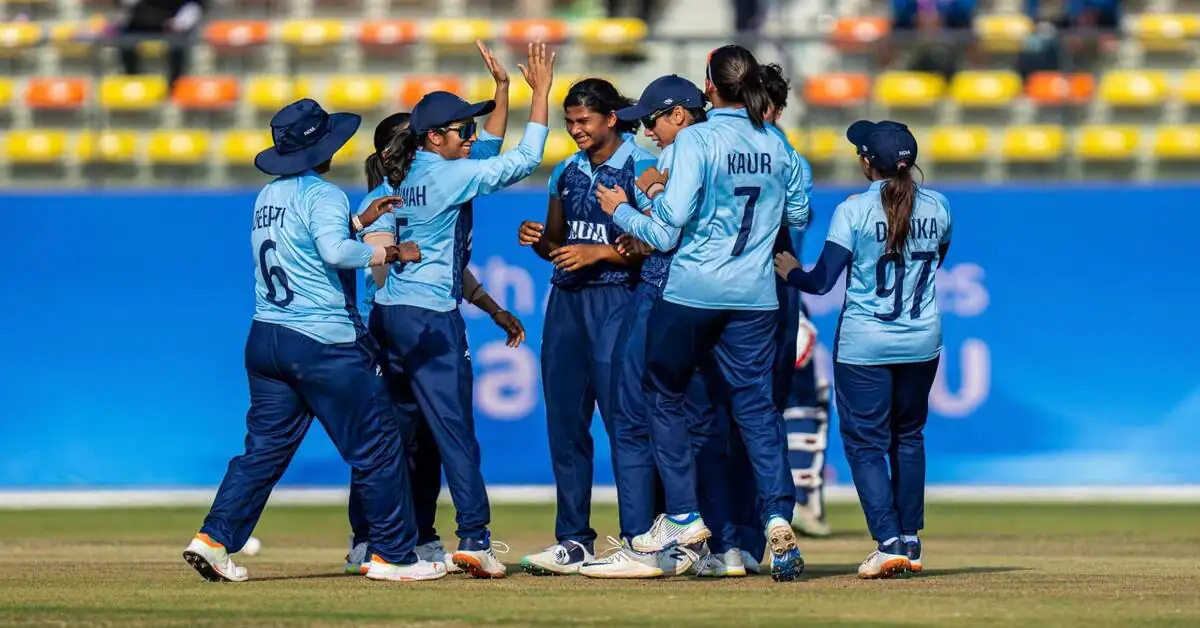
The women’s team also won gold in Hangzhou, making India the defending champions in both competitions.
A tournament with an unusual backdrop
The facility talk has become more prominent because of the broader accommodation challenges facing the Aichi-Nagoya Games.
Unlike the traditional model of a single athletes’ village, organisers are using a combination of hotels, temporary accommodation and a cruise ship to house participants. More than 17,000 athletes and officials have been registered, creating additional pressure on accommodation capacity. Organisers and the Olympic Council of Asia have said that arrangements have been secured despite the surge in entries.
For cricket teams, however, the question is more specific: are the arrangements suitable for international players? That is what the ACC and national boards now want to establish.





































































You must be logged in to post a comment Login