

Connect with us

Sports

Alex Eala, Venus Williams open Canadian Open doubles campaign

Published

on

Alex Eala Alexandra Eala Venus Williams Canadian Open Toronto 2026 National Bank Open doubles center court

FILE– Alex Eala and Venus Williams during their round of 16 match in the Bad Homburg Open doubles. PHOTO: BAD HOMBURG OPEN

MANILA, Philippines — Alex Eala is back on center court in Toronto, this time alongside a legend.

Eala and partner Venus Williams return as a doubles team at the 2026 Canadian Open on Friday, with their round-of-32 match scheduled no earlier than 8 a.m. (Manila time).

Article continues after this advertisement
Advertisement

READ: Alex Eala keeps celebration going with Filipino fans in Toronto

“I’m really, really excited to be playing doubles with her again. Every opportunity I get to share the court with her is super cherished,” Eala said. “She’s super good, and I think she’s got a great mentality and there’s so much I can learn from her.”

The Filipino-American duo takes on Liudmila Samsonova and Japan’s Miyu Kato.

It will be Eala’s second appearance on center court after opening her singles campaign with a three-set victory over Alycia Parks on Thursday.

Advertisement
Article continues after this advertisement

READ: Venus Williams calls Alex Eala her ‘best partner’ after team-up

The stands for her first match at the WTA 1000 event were packed to the brim with Filipino fans, and Eala expects another electric atmosphere when she takes the court with Williams.

“So really excited to be doing that, and in a different setting. I think it will be very fun. I think with the Filipino community and the amazing fans that she has, I think it will be a great atmosphere,” Eala said.

Advertisement
Article continues after this advertisement

Eala and Williams are teaming up for the second time since the Bad Homburg Open in Germany, where they reached the quarterfinals.

They were also slated to reunite at the Mubadala DC Open before Eala withdrew from the doubles draw to focus on singles, where she captured her first WTA Tour title.


Your subscription could not be saved. Please try again.
Advertisement


Your subscription has been successful.

Source link

Advertisement
Continue Reading
Click to comment

You must be logged in to post a comment Login

Leave a Reply

Sports

Gianni Infantino accused of ‘profound abuse of power’ by Fifpro over World Cup sell-off plan

Published

on

Fifa chief Gianni Infantino has been accused of a “profound abuse of presidential power” by the world players’ union, Fifpro.

The accusation stems from Mr Infantino’s plan to sell stakes in a World Cup company to private investors.

Fifpro, which represents more than 70 player unions globally, stated that footballers’ confidence in Fifa had been “fundamentally broken” by the conduct of the global governing body’s president.

In response, Fifa issued a statement acknowledging that “mistakes” had been made in the plans to create Fifa Forward Enterprise (FFE).

However, the organisation maintained that Mr Infantino had the “full support” of the members of its management board present at a meeting in Morocco on Wednesday.

Advertisement

Fifpro noted the tone of that statement with “deep concern” in a communication issued on Thursday, adding: “The withdrawal of FFE was inevitable. But withdrawing the proposal does not erase what it revealed.

“A plan capable of permanently altering the ownership and governance of the Fifa World Cup, and commercialising the competitions built by generations of players, was conceived in secrecy, negotiated behind closed doors and brought to the brink of agreement before the Fifa Council, the member associations, players and football’s recognised stakeholders even knew it existed.

Infantino abandoned Fifa’s FFE plans
Infantino abandoned Fifa’s FFE plans (AP)

“That is not merely a governance failure. It is a profound abuse of presidential power.

“The withdrawal of FFE prevented an irreversible decision. It did not restore the confidence that made such a proposal possible in the first place. That confidence has now been fundamentally broken.

“It cannot be rebuilt through carefully drafted statements, internal reviews or promises to improve processes. Nor can it be restored simply by announcing governance and structural reforms that should always have existed.

Advertisement

“These reforms are now indispensable. But they are the responsibility of the future, not an absolution of the past.

“The players did not create this crisis. They will insist that football emerges from it with stronger institutions, stronger safeguards and leadership worthy of the trust the game demands.”

Fifpro has also written to Fifa secretary general Mattias Grafstrom outlining its demands for governance reform.

Its letter, seen by the Press Association, stated: “The role of Fifa president exists to protect institutions, not to circumvent them. The World Cup is not the personal asset of any president. Nor is Fifa itself. They are held in trust for football.”

Advertisement

Fifpro’s letter said the FFE proposal’s handling was part of a “broader pattern” of decisions being taken without proper consultation – citing the introduction of hydration breaks as another example.

Fifpro said the breaks had been “presented under the banner of player health” but appeared in reality to be “closer to a proof-of-concept for future commercial exploitation by FFE-type investors than a genuine welfare measure”.

The players’ body signed a Memorandum of Understanding with Fifa the day before the World Cup kicked off, but wrote in its letter to Grafstrom: “The FFE episode demonstrated that commitments, however welcome, are of little value if they can be circumvented whenever one individual chooses to act outside the institutional framework.”

Source link

Advertisement
Continue Reading

Sports

Vortex Golf’s new rangefinder solves one annoying issue

Published

on

Source link

Advertisement
Continue Reading

Sports

Mark Martin tells Dale Earnhardt Jr. how Dale Sr. pushed NASCAR further down the downforce path

Published

on

Mark Martin revisited NASCAR’s long-running technical debate around the Next Gen car during his appearance on the latest Dale Jr. Download. While promoting his new book Never Lift, the conversation shifted to how he would fix the racing produced by the Gen-7 car, and the Hall of Famer pointed to downforce and why he believes the sport took the wrong direction more than three decades ago.

The discussion comes at a time when NASCAR continues to face criticism over the Next Gen car’s racing on short tracks and road courses. While the car has improved safety and reduced costs through standardized components, many drivers and fans believe the current aerodynamic package makes passing too difficult, particularly when cars run close together.

Looking back at the evolution of Cup Series aerodynamics, Martin argued that NASCAR’s current problems can be traced to the early 1990s, when teams increasingly chased downforce to improve cornering speed. That was also when drivers first began talking about cars becoming ‘aero-tight,’ with disturbed airflow making it harder for a trailing car to stay close through the corners.

Advertisement

“In 1990, when we went to Atlanta to race your dad for the championship at the end of the year, we had three cars that we wind-tunneled,” Mark Martin said (1:16:48 onwards). “We had two that, in race trim, that had lift in the front, and one that was zero… We all raced that way. Your dad (Dale Earnhardt Sr.) had the same. Everybody had it. Then we got into the mid-’90s. We started making some serious downforce by 1993… In my opinion, it went off the rails (when) we started making downforce, and then people started saying ‘aero-tight.”

“They come with the five-and-five rule. That didn’t suit your dad’s cars, and it probably suited Fords better. I don’t know what the story was. Everybody’s calling aero-tight, and I said we need less front downforce. Your dad said we needed more, and that’s a fact. And your dad had a lot of pull, and it just kept going,” Mark Martin added.

The Next Gen car today generates much of their grip through a sealed underbody and rear diffuser. That creates a large pocket of turbulent “dirty air” behind the leading car. When a trailing driver enters that disturbed airflow, the front splitter and nose lose clean air, reducing front grip and causing understeer in the corners.

With every car producing similar aerodynamic performance and mechanical grip, following drivers struggle to close the final few feet needed to complete a pass, especially at superspeedways. Mark Martin believes the solution is to remove that dependency on front aerodynamic grip almost entirely:

“I’d want virtually zero front downforce in the front, or lift. Start with 300 (pounds) in the back. Maybe you need more. You don’t need a ton, but you need the front to be virtually nothing. If it’s nothing, it shouldn’t lose anything when it gets behind another car.”

youtube-cover

His view is that reducing front downforce would make airflow far less influential, allowing drivers to race each other rather than fight aerodynamic turbulence.


Mark Martin explains why he never liked the Next Gen car’s design
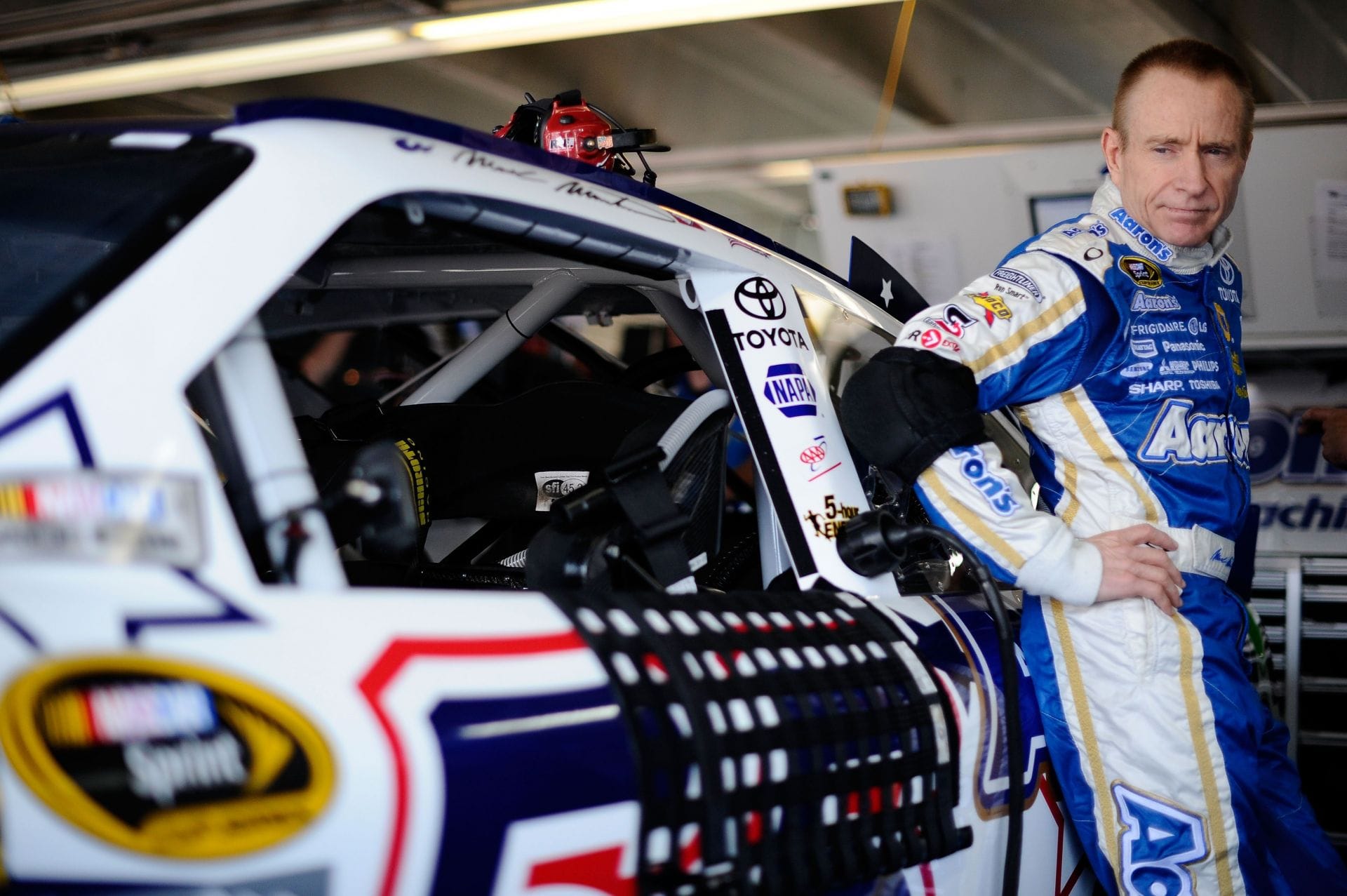
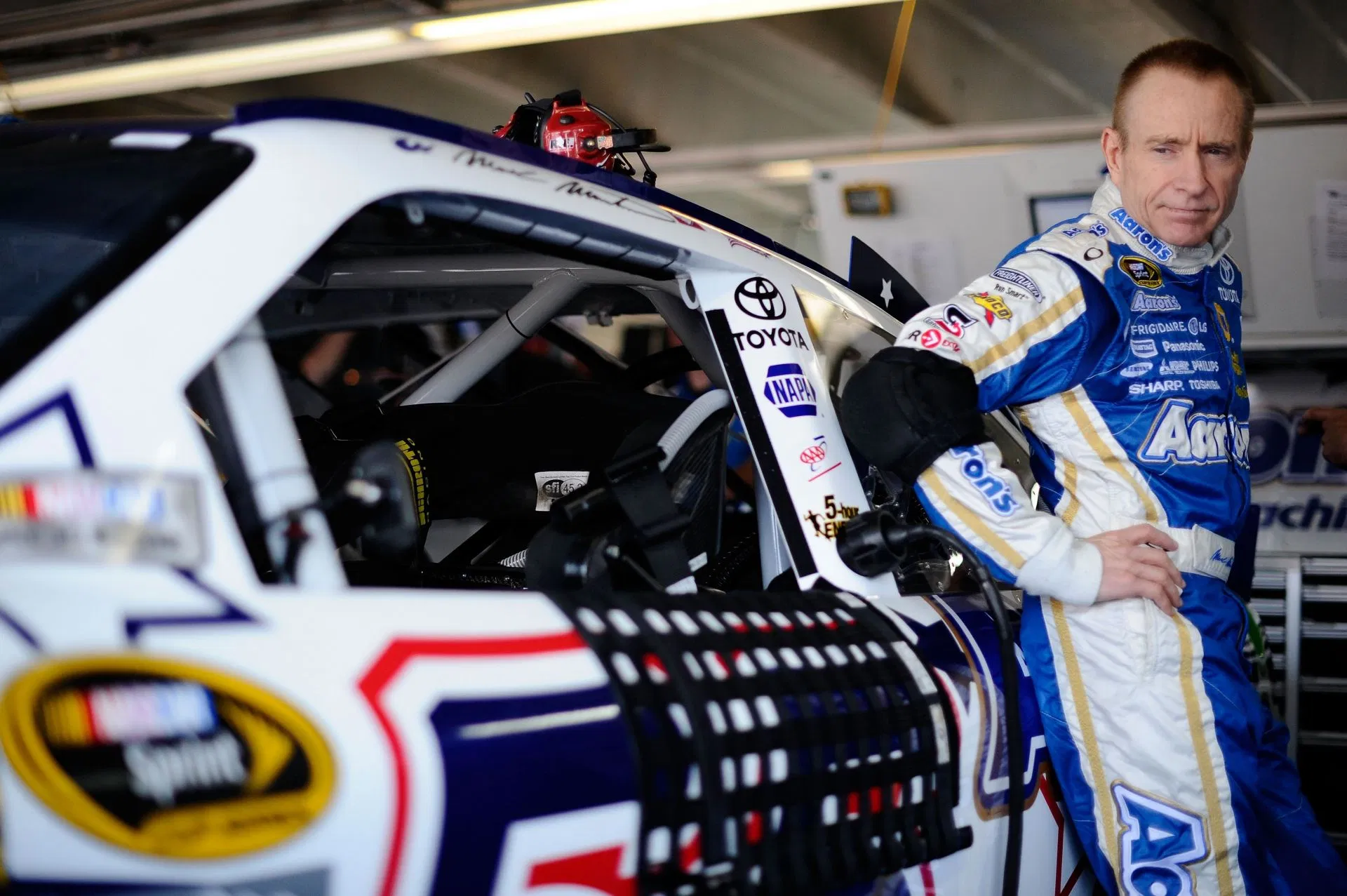
Mark Martin in front of the No. 55 Toyota at Charlotte Motor Speedway. Source: GettyMark Martin in front of the No. 55 Toyota at Charlotte Motor Speedway. Source: Getty
Mark Martin in front of the No. 55 Toyota at Charlotte Motor Speedway. Source: Getty

Later in the conversation, Mark Martin suggested that NASCAR should continue exploring ways to reduce the aerodynamic influence on the Next Gen car. NASCAR has already reduced overall downforce by roughly 30 percent from the earlier generation, and also increased the horsepower in 2026.

Martin then revealed that his concerns about the Next Gen car actually began before it ever turned a lap (1:13:47 onwards):

Advertisement

“The first thing I would’ve said when I saw the first drawing of the Gen 7 was, ‘What’s wrong with the quarter panels? What’d y’all do?’ It doesn’t have a trunk lid. It looks like a hatchback.”

“When I first saw it, I said, ‘Why didn’t they push the body back?’ Then I got to looking more, and it’s like the rear wheels are rubbing the back bumper. Why is that? It just looks so not like a race car. Well the OEMs wanted all that.”

Despite those styling concerns, Mark Martin stressed that his biggest priority remains fixing how the cars race. Rather than focusing on setup changes, he believes the aerodynamic philosophy itself needs to change:

“I’d work with the engineers from the teams to make the underbody not work at all.”

While Mark Martin acknowledged the need for underbody, he believes reducing its aerodynamic influence is the best path toward improving side-by-side racing and giving drivers more opportunities to pass on merit rather than clean air.