Connect with us
DAPA Banner
DAPA Coin
DAPA
COIN PAYMENT ASSET
PRIVACY · BLOCKDAG · HOMOMORPHIC ENCRYPTION · RUST
ElGamal Encrypted MINE DAPA
🚫 GENESIS SOLD OUT
DAPAPAY COMING

Sports

Alvarez thunderbolt keeps Messi’s dream alive in Argentina’s 3-1 win vs SUI | FIFA World Cup 2026

Published

on


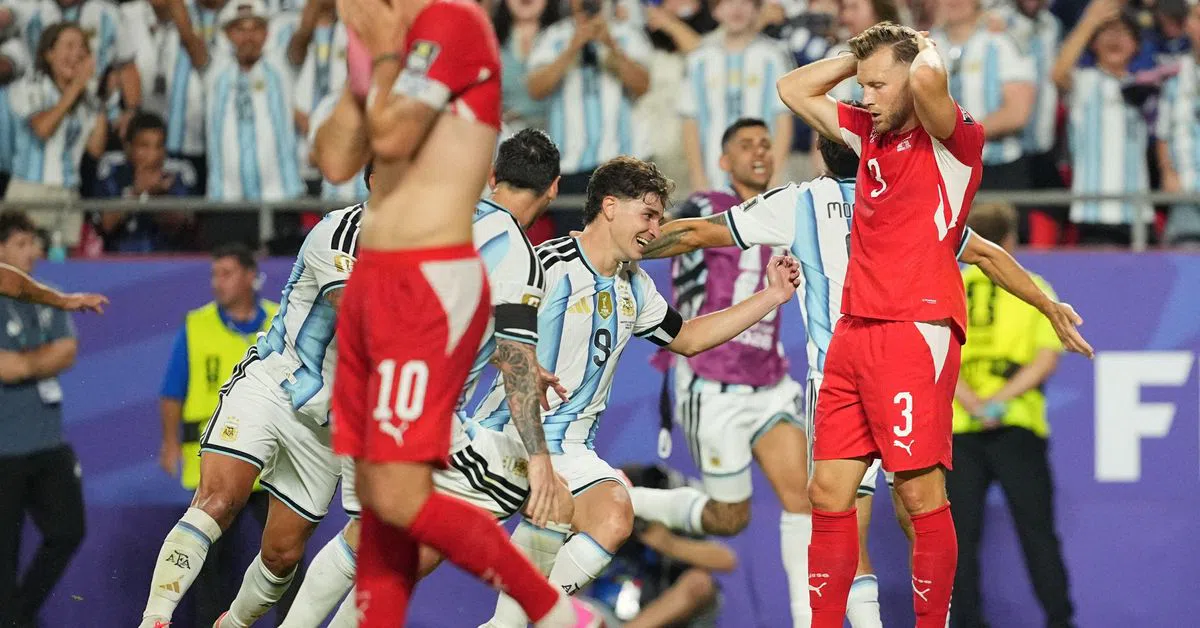
For almost two hours in Kansas City, Switzerland made the world champions look vulnerable, anxious and strangely ordinary.


Argentina had Lionel Messi. They had an early lead. They eventually had a one-player advantage. They also had an Arrowhead Stadium crowd that made Missouri sound more like Buenos Aires.


Advertisement


None of it guaranteed safety.


Switzerland equalised through Dan Ndoye, repeatedly broke through Argentina’s midfield and appeared capable of forcing another penalty shootout. Even after Breel Embolo was sent off in one of the tournament’s most unusual VAR interventions, the Swiss refused to surrender.


Advertisement


Then Julian Alvarez changed the night.


In the 112th minute, the Atletico Madrid forward curled a magnificent effort into the top corner from outside the penalty area. Lautaro Martinez added a third in extra-time stoppage time, completing a 3-1 victory that carried Argentina into a heavyweight semi-final against England in Atlanta on Thursday (India time).   


Advertisement


The result keeps alive Argentina’s attempt to become the first country since Brazil in 1962 to retain the World Cup. Yet the scoreline disguised how deeply Switzerland unsettled Lionel Scaloni’s side.


Messi did not score for the first time at this tournament. Argentina lost control for long periods. Their midfield was too easily bypassed. And the decisive shift came through a second yellow card that required VAR to correct what officials described as a case of “mistaken identity”.


Advertisement


Argentina are in the last four. They are also carrying another warning. 


Argentina vs Switzerland: Match at a glance

Event

Minute

Detail

Argentina goal

10’

Alexis Mac Allister heads in Messi’s corner

Switzerland goal

67’

Dan Ndoye finishes through Emiliano Martinez’s legs

Switzerland red card

72’

Breel Embolo receives second yellow for simulation after VAR review

Argentina goal

112’

Julian Alvarez curls into the top corner

Argentina goal

120+1’

Lautaro Martinez scores after Gregor Kobel saves Thiago Almada’s effort

Final score


Argentina 3-1 Switzerland after extra time

Next match


Argentina vs England in Atlanta


Advertisement


Messi delivers early, Mac Allister attacks the blind side


Argentina appeared to be heading towards a comfortable evening when they scored inside 10 minutes.


Advertisement


Messi sent an outswinging corner towards the near post. Mac Allister, despite standing only 5ft 9in, arrived ahead of the taller Embolo and redirected the ball into the far corner beyond Gregor Kobel.


The finish owed as much to movement as elevation.


Advertisement


Switzerland defended the corner zonally, with four players guarding the six-yard line and another stationed at the near post. That structure gave them numbers close to goal but also encouraged defenders to watch the ball rather than track runners.


Mac Allister emerged from Embolo’s blind side, built momentum and attacked the space before his marker could react. Messi’s delivery supplied the pace; Mac Allister merely needed to guide it. 
Advertisement


Argentina’s Alexis Mac Allister celebrates scoring their first goal with Lionel Messi and Enzo Fernandez. Photo: Reuters


It was Argentina’s fifth set-piece goal of the tournament, more than any other team, and Messi’s 10th World Cup assist.

Advertisement


Curiously, all 10 have been converted by different players.


Messi’s 10 World Cup assists, 10 different scorers

No

Goalscorer assisted by Messi

1

Hernan Crespo

2

Carlos Tevez

3

Angel Di Maria

4

Gabriel Mercado

5

Sergio Aguero

6

Enzo Fernandez

7

Nahuel Molina

8

Julian Alvarez

9

Cristian Romero

10

Alexis Mac Allister


Advertisement


The sequence stretches back to Messi’s World Cup debut against Serbia and Montenegro in 2006. Two decades later, at 39 and in his sixth tournament, he remains Argentina’s creative reference point.


But the early assist did not become the start of another Messi masterclass.


Advertisement


Switzerland refuse the expected ending


Mac Allister’s goal was the first time Switzerland had trailed at this World Cup. Their response showed why they had reached a quarter-final for the first time since 1954.


Advertisement


The first half remained largely uneventful, but the match changed after the interval. Switzerland began moving the ball through Argentina’s midfield with greater confidence and repeatedly found space behind the holders’ defensive line.


Before Embolo’s dismissal, Switzerland outshot Argentina 6-2 in the second half.


Advertisement


Their attacks carried a clear pattern. Once Messi and Alvarez were bypassed, quick passes into Embolo or towards Ndoye gave Switzerland a direct route into dangerous areas. Argentina became aggressive only after the first line had been broken, often arriving too late to prevent the Swiss from advancing.


Scaloni’s side also dropped into a more passive shape instead of pressing home their one-goal advantage. That invited Switzerland forward and exposed the lack of control in midfield.


Advertisement
The equaliser increasingly felt like a matter of time. 


Ndoye scores the equalizer for Switzerland. Photo: Reuters


Advertisement


Ndoye punishes Argentina’s passivity


Switzerland’s reward arrived in the 67th minute.


Advertisement


Ndoye received the ball in space on the left and exchanged passes with Ricardo Rodriguez. Argentina were slow to engage. Rodrigo De Paul was caught watching the ball and failed to track Rodriguez’s return run.


The one-two cut through the defensive shape, allowing Ndoye to enter the area and slide a right-footed finish through Emiliano Martinez’s legs.


Advertisement


The Switzerland winger turned towards the nearest television camera and roared. Their supporters erupted. For the first time, Argentina looked genuinely unsettled.


The champions had again allowed a knockout opponent to grow into the contest. Cape Verde had taken them into extra time. Egypt had led them by two goals. Now Switzerland had found the spaces that England will study closely.


Advertisement


Five minutes later, however, the entire match changed.


Embolo’s tears after VAR corrects ‘mistaken identity’


Advertisement


The incident began near the touchline and initially appeared straightforward.


Leandro Paredes approached Embolo at speed. The Switzerland forward fell. Portuguese referee Joao Pinheiro believed Paredes had fouled him and showed the Argentina midfielder a yellow card.


Advertisement


Then the VAR officials in Dallas intervened.


Replays showed no meaningful contact. Embolo had anticipated the challenge and gone to ground. Because he had already been booked in the first half — ironically, for a foul on Paredes — a yellow for simulation meant dismissal.   


The unusual element was how the review became possible.


VAR did not intervene simply to punish Embolo for diving. The review was triggered under the tournament’s expanded “mistaken identity” protocol because the referee had booked the wrong player for the incident.

Advertisement


The term usually suggests that an official has mistakenly cautioned one player instead of a teammate. Under the World Cup interpretation, however, the wrongly identified player can belong to either side.


Pinheiro withdrew Paredes’ yellow, showed the card to Embolo and then produced the red.

Advertisement


Embolo collapsed in tears and was consoled by teammates before leaving the field. 


Embolo pleads after getting second yellow card of the match, which means red card. Photo: Reuters

Advertisement


Why the VAR decision was technically correct


Advertisement


The call appeared bizarre, but it followed the revised protocol.


Under the World Cup rules, VAR can review an incident when a referee has clearly sanctioned the wrong player. In this case, Paredes had been punished for a foul that replays showed he did not commit. The actual offence was Embolo’s simulation.


Advertisement


The irony is that had Pinheiro simply allowed play to continue without showing Paredes a card, VAR may not have been able to review Embolo’s dive on its own.


It was the incorrect booking that opened the door to correction.


Advertisement


The review therefore produced the right disciplinary outcome through an unusual procedural route. Embolo had gone to ground without contact and, because he was already on a yellow, Switzerland were reduced to 10 men.


The decision was controversial in appearance, but difficult to challenge under the tournament’s guidance.   


Advertisement


Argentina dominate territory but not the game


The red card allowed Argentina to pin Switzerland back. The crowd sensed the shift, with chants of “Vamos, vamos!” echoing around Arrowhead Stadium.


Advertisement


Yet Argentina still struggled to produce fluency.


Messi became more involved, but his execution lacked its normal precision. An attempted lob was underhit. A fierce right-footed effort in stoppage time flashed narrowly wide. Switzerland stayed compact and forced Argentina to keep moving the ball around rather than through their defensive block.


Advertisement


Kobel remained alert. The Swiss defenders blocked spaces, cleared crosses and resisted one wave after another.


The match looked increasingly destined for penalties, a scenario that would not have frightened Switzerland after their shootout win over Colombia in the previous round.


Advertisement


Argentina had the extra player, the greater individual quality and the overwhelming support. They still required something exceptional.


Alvarez supplied it.


Advertisement


Alvarez steps out of Messi’s shadow


For the first time in this World Cup, Messi did not score. Alvarez ensured Argentina did not need him to.


Advertisement


In the 112th minute, the forward received the ball just outside the penalty area and created enough room to shape his body. His curling strike flew beyond Kobel’s full-stretch dive and into the top corner.


It was a goal worthy of deciding a quarter-final — clean, forceful and perfectly placed.


Advertisement


For much of the tournament, Argentina’s story had revolved around Messi’s ability to bend matches towards himself. Against Switzerland, the supporting cast finally produced the defining moment.


Alvarez’s strike was not merely the winner. It was proof that Argentina can still survive when Messi’s legs and imagination do not control the entire night. 
Advertisement


Alvarez celebrates after scoring second goal for Argentina. Photo: Reuters


At 39, Messi had played 120 minutes against Cape Verde eight days earlier, another 90 against Egypt and then 120 more in Kansas City. The accumulated demand appeared visible.

Advertisement


His World Cup dream survived because Alvarez assumed the burden.


Lautaro removes the final doubt

Advertisement


Switzerland continued to push despite the disadvantage, but the risk eventually opened more space.


In the first minute of extra-time stoppage time, Thiago Almada fired towards goal. Kobel made the initial save, but Lautaro Martinez collected the rebound and calmly finished.

Advertisement


The third goal triggered pandemonium among the sky-blue-and-white majority.


It also gave the result a margin that did not reflect the contest. Switzerland had taken Argentina deep into extra time, caused them sustained problems and stood nine minutes from a possible penalty shootout.

Advertisement


The match ended 3-1. It had never felt comfortable.   


Are Argentina too open to retain the World Cup?

Advertisement


Argentina’s resilience is no longer in question. Their control is.


Every knockout match has tested them in a different way. Cape Verde scored twice and forced extra time. Egypt went 2-0 ahead before collapsing late. Switzerland found repeated routes through midfield and deservedly equalised before Embolo’s dismissal.

Advertisement


Against the Swiss, Argentina became too passive after scoring. Their forwards did not lead an effective press, their midfield failed to control transitions, and the defence was repeatedly exposed once Switzerland moved the ball wide. 


Argentina’s Lionel Messi prepares to take a corner kick. Photo: Reuters

Advertisement


Even with 11 against 10, Argentina were far from convincing.


Their greatest strength remains the ability to find a way out of trouble. They have Messi, depth from the bench and a collective belief hardened by the 2022 title. But the semi-final will bring a side with the runners and physical power to attack those weaknesses.

Advertisement


England watched Switzerland reach the edges of Argentina’s penalty area with relative ease. Jude Bellingham, Anthony Gordon, Bukayo Saka and Harry Kane will believe similar openings can be created in Atlanta.


Switzerland leave with their fairytale intact

Advertisement


The red card altered the quarter-final, but it should not erase Switzerland’s achievement.


They had not reached this stage since 1954. They had endured repeated Round of 16 exits in 2006, 2014, 2018 and 2022 before finally breaking through against Colombia.

Advertisement


In Kansas City, they became the first team to make Argentina trail emotionally, if not numerically, for extended periods after the interval. Ndoye was dangerous, Rodriguez offered intelligence from deep, Kobel kept the contest alive and the midfield found gaps that should concern Scaloni.


Embolo’s dismissal will haunt them. So will the knowledge that they had reached parity and appeared to have Argentina under pressure before being reduced to 10.

Advertisement


But Switzerland did not arrive in the quarter-final by accident, and they did not leave it quietly.


Their fairytale ended one match short of a first World Cup semi-final. It still represented their finest run in 72 years.

Advertisement


Argentina vs England: Old rivalry, new Messi chapter


Argentina’s reward is one of the World Cup’s most compelling rivalries.

Advertisement


They have not faced England in 21 years. The last meeting came when Michael Owen led England’s attack alongside a teenage Wayne Rooney. Messi was absent, serving a suspension after being sent off on his Argentina debut months earlier.


The Atlanta semi-final will therefore be Messi’s first match against England.

Advertisement


World Cup history between the countries is loaded. Argentina won 2-1 in 1986, when Diego Maradona scored both the “Hand of God” goal and one of the greatest individual goals in tournament history. Argentina won on penalties in 1998 after David Beckham’s red card. England responded in 2002 through Beckham’s penalty.


Demand for the latest chapter is already immense, with the cheapest tickets reportedly priced at around $3,000.

Advertisement


England will bring momentum from their extra-time win over Norway. Argentina will bring the aura of the defending champions and a player still chasing another final.


Neither side reached the last four smoothly.

Advertisement


Messi remains, but Alvarez owns the night


Messi supplied the opening goal, narrowly missed a late winner and remains the gravitational centre of Argentina’s World Cup. Yet this quarter-final belonged to others.

Advertisement


Mac Allister attacked the set piece. Martinez kept Argentina alive through Switzerland’s pressure. Alvarez produced the goal no goalkeeper could stop. Lautaro finished the job.


That may be the most encouraging part of an otherwise uneasy night for Argentina.

Advertisement


They are still defensively vulnerable. They still lose control. They still appear capable of turning every knockout tie into a national emergency.


But when Messi did not score, someone else did.

Advertisement


Switzerland forced Argentina to the edge. VAR altered the balance. Alvarez finally broke the resistance.


The holders move on to England. Their bid to retain the World Cup remains alive — dramatic, imperfect and increasingly dependent on more than one man.

Advertisement


Source link

Continue Reading
Click to comment

You must be logged in to post a comment Login

Leave a Reply

Sports

Mohsin Naqvi Accused Of ‘Extortion’, Pakistan Players Set To Face Ban From This T20 League: Report

Published

on


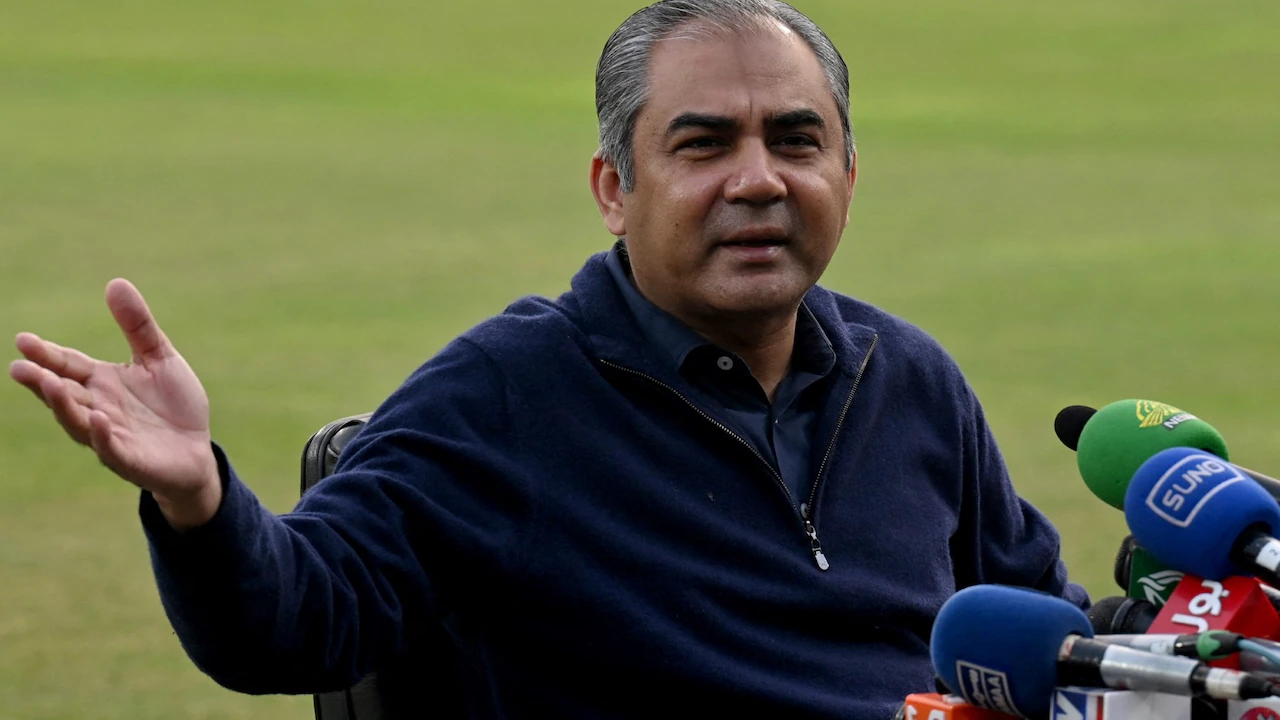
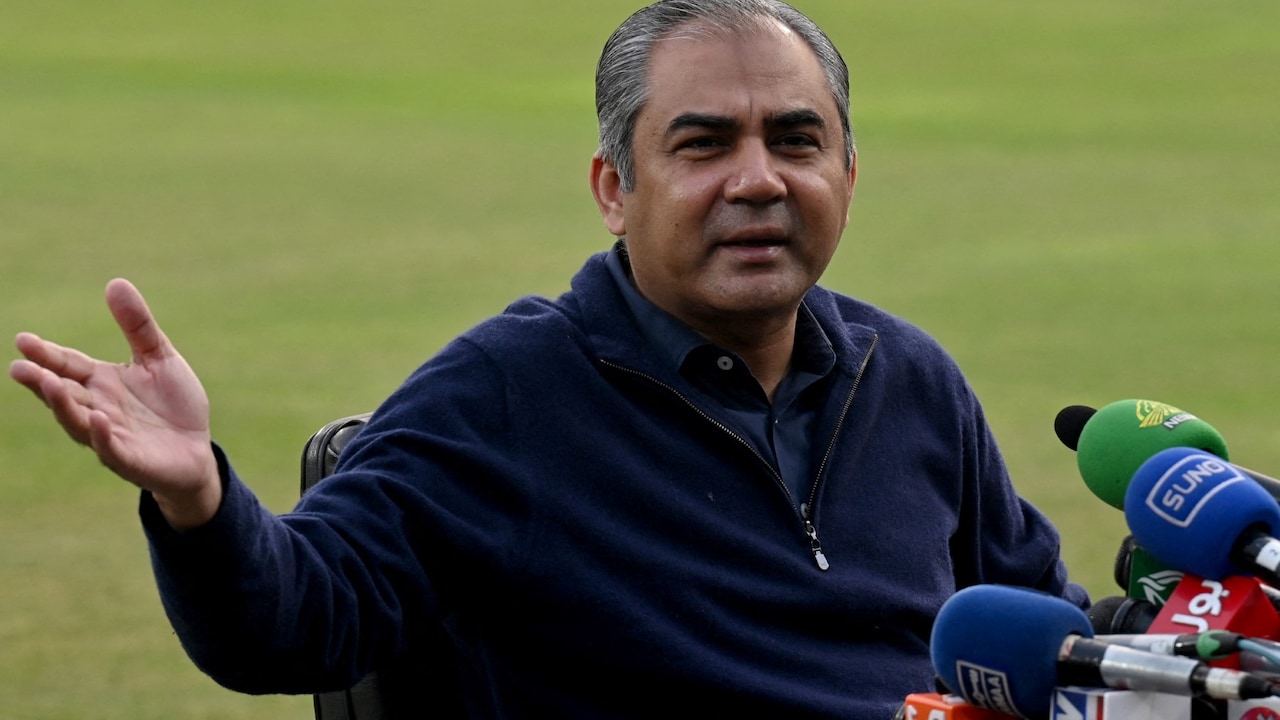
The Major League Cricket (MLC) owners are reportedly planning a shadow ban on signing Pakistan players for the league due to Pakistan Cricket Board (PCB) chairman Mohsin Naqvi’s latest demands. According to a report on pakpassion.com, the Naqvi-led PCB had demanded a last-minute, huge sum to issue a No Objection Certificate (NOC) to its players to participate in the league. A player cannot feature in franchise leagues unless their cricket board agrees to issue an NOC, which is an ICC-mandatory document. As per the report, the PCB has been accused of extortion for demanding a last-minute, unbudgeted $25,000 (approx. Rs. 24 lakh, approx. PKR 69 lakh) per player from the franchises for the NOC.

“It’s more the extortion the PCB does. Basically, through the year, they won’t say anything. And then right towards the start of the tournament, when they have to give their NOCs, they send an email saying that for the NOC, it will be $25,000 for each player,” the report said.

The report added that such conditions only apply when the franchises face a crisis of players.

Advertisement

“Around a week before the tournament starts when they know we can’t find other players, we’ve announced the players and cannot replace them, that’s when they’ll come back and say you have to pay $25,000 per player for an NOC. We’ll ask them why they did not tell us this before and they won’t respond,” it added.

The MLC raised the issue with Naqvi, but the PCB considers it ‘their right to ask for this money.’

“We’ve talked to Mohsin Naqvi as well and said to him that this is extortion. This is not the right way to do it. But we were told by the Board that this is their revenue and their right to ask for this money,” the report said.

The report also pointed out that the franchises receive no guarantee despite paying the fee, as the PCB can revoke the NOC at any time and demand another last-minute payment if additional clearance becomes necessary.

Advertisement

“One of the reasons teams at the MLC don’t sign Pakistani players is because we don’t like the uncertainty around all of this. Every season there is this uncertainty looming regarding paying this money. No other Board asks the MLC teams for these additional payments. The franchises run on budgets and suddenly they are expected to free up a chunk of their budget from somewhere to pay for this. That’s never good. The franchises need to plan for the season properly and not have this situation hanging over them.”

Pacer Haris Rauf is the only Pakistani player at the MLC this year, having been signed by the San Francisco Unicorns, who agreed to the PCB’s demands.


Featured Video Of The Day


FIFA World Cup 2026 | Argentina Fans Sing & Dance After Dramatic Comeback Against Egypt

Advertisement

Topics mentioned in this article

Source link

Advertisement
Continue Reading

Sports

World Cup semifinals start Tuesday, July 14. What you need to know

Published

on

The FIFA Men’s World Cup is down to four semifinalists, each nation grasping to reach the final that crowns soccer’s world champion on Sunday, July 19.

France and Spain battle it out on Tuesday, July 14, starting at 3 p.m. England and Argentina go at it beginning at 3 p.m., Wednesday, July 15.

Everything you need to know: FIFA Men’s World Cup 2026 coverage from USA TODAY

Advertisement

Advertisement

Where to watch FIFA World Cup semifinals

Both matches will air in the United States with options that include Fox and Telemundo, along with streaming on Fox One and Fox Sports apps.

France vs. Spain will be at Dallas Stadium (the Dallas Cowboys’ AT&T Stadium). England vs. Argentina will be at Atlanta Stadium (Mercedes Benz Stadium). The tournament, which began June 11 with 48 nations competing, encompassed stadiums in the U.S., Mexico and Canada.

Where is the final match?

The final will be played at New Jersey’s MetLife Stadium on Sunday, July 19. (The third-place match will be Saturday, July 18, in Miami).

Advertisement

Advertisement

What to know about the semifinals

Here’s what to know about the semifinalists and their top players.

It marks the first time in World Cup history that teams ranked in the top four by FIFA, world soccer’s governing body, made it to the semifinals.

Spain versus France

Ahead of the tournament, sportswriters tapped either France or Spain as favorites to win it all.

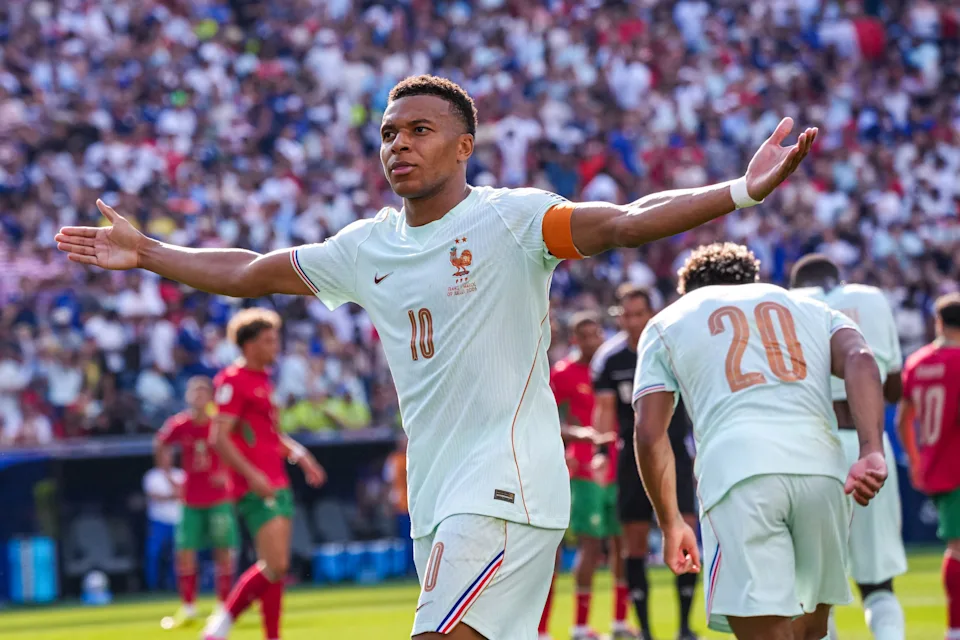
France's Kylian Mbappe celebrates scoring their first goal vs. Morocco at Gillette Stadium in Foxborough, Massachusetts on July 9, 2026.

France’s Kylian Mbappe celebrates scoring their first goal vs. Morocco at Gillette Stadium in Foxborough, Massachusetts on July 9, 2026.

France, which won the 1998 and 2018 cups, has powered through the 2026 edition. Star Kylian Mbappe is the tournament’s current joint lead scorer with Argentina’s Lionel Messi. France’s Ousmane Dembele has racked up goals, too, and playmaker Michael Olise has dazzled for Les Bleus, as the team is known.

Advertisement

Advertisement

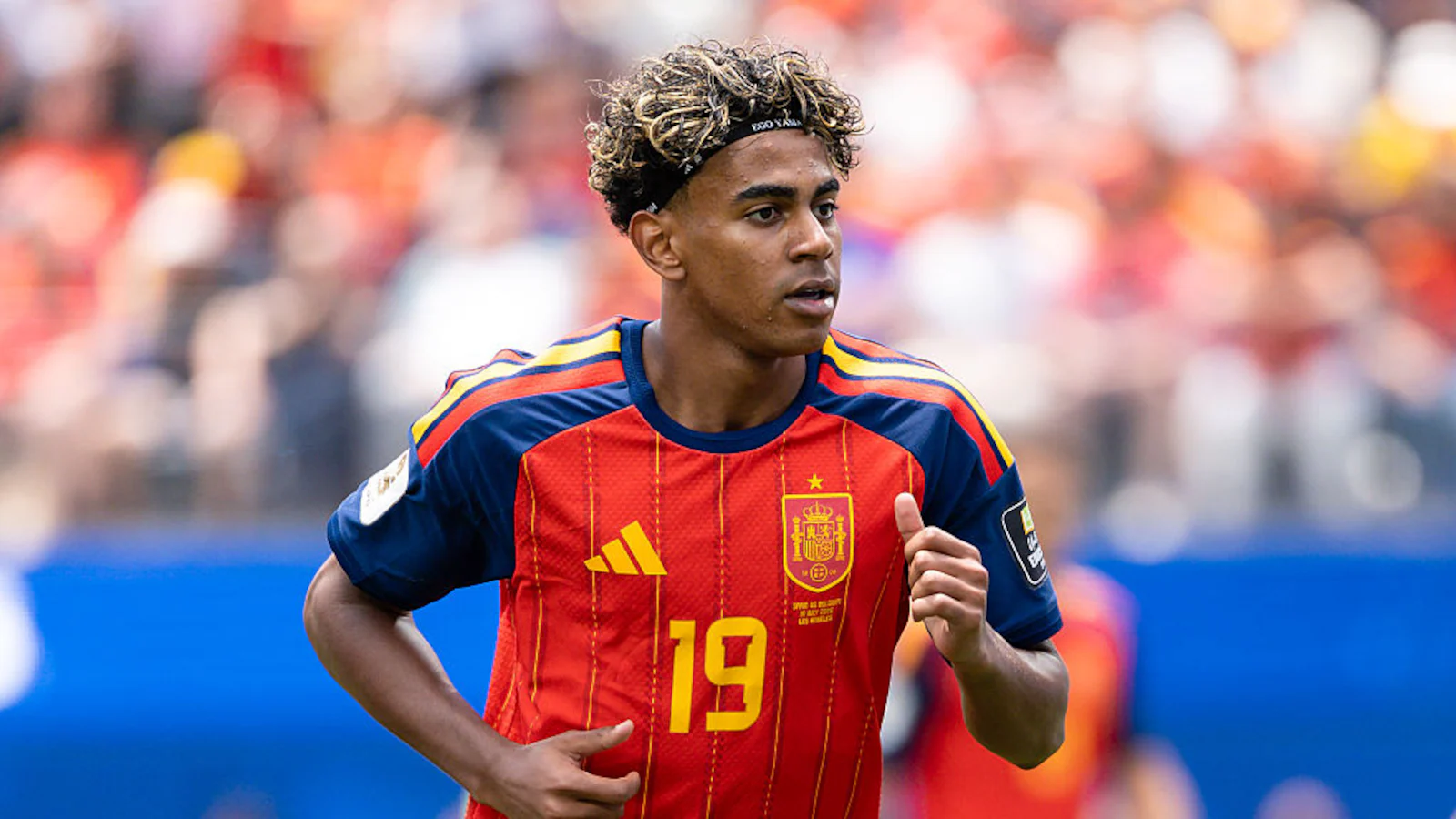
Spain’s possession power and eye-catching combination play have largely smothered teams. Only one goal has been scored against La Furia Roja. Mikel Oyarzabal has scored four Spain goals. Mikel Merino has provided recent scoring heroics when Spain needed it. Lamine Yamal, the 19-year-old phenom capable of wondrous dribbling, will also be one to keep an eye on.

Spain won its first World Cup in 2010.

Spain's Lamine Yamal celebrates after the match as Spain qualify for the semifinal stage of the World Cup.

Spain’s Lamine Yamal celebrates after the match as Spain qualify for the semifinal stage of the World Cup.

Argentina versus England

Argentina vs. England is awash in history and context.

Advertisement

At 1986’s World Cup, Argentina’s Diego Maradona scored two famous goals against England. The first, known as the hand of God goal, was highly controversial, while the next was deemed goal of the 20th century. In the latter, Maradona dribbled all the way through player after player to score. Argentina won the ’86 cup. It came a few years after the two nations fought a war over islands that England calls the Falklands and Argentina calls the Malvinas.

KANSAS CITY, MISSOURI - JULY 11: Lionel Messi #10 of Argentina looks on during the FIFA World Cup 2026 Quarter Final match between Argentina and Switzerland at Kansas City Stadium on July 11, 2026 in Kansas City, Missouri. (Photo by David Ramos/Getty Images)

KANSAS CITY, MISSOURI – JULY 11: Lionel Messi #10 of Argentina looks on during the FIFA World Cup 2026 Quarter Final match between Argentina and Switzerland at Kansas City Stadium on July 11, 2026 in Kansas City, Missouri. (Photo by David Ramos/Getty Images)

In 2026, Messi, who at 39 is co-topping the cup’s goal scoring while most other teams’ top scorers are in their 20s, leads Argentina. Julian Alvarez scored a stunner against Switzerland to get Argentina into the semifinal. But the Albiceleste (white and sky blue), as the team is known, has had to battle back after giving up goals in a number of matches to make it to the next stage. Lautaro Martinez is among other potential goal scorers to watch.

Advertisement

Argentina is attempting to win back-to-back World Cups. At 2022’s tournament held in Qatar, Argentina won one of the most enthralling finals ever over France. However, the last nation to win back-to-back men’s cups was Brazil — back in 1958 and 1962.

Advertisement
England's Jude Bellingham celebrates scoring their second goal.

England’s Jude Bellingham celebrates scoring their second goal.

England, led by top scorers Harry Kane and Jude Bellingham, narrowly defeated Norway and its star Erling Haaland, to reach the semifinal. Along the way, the Three Lions, as England is known, managed to overcome a terrific Mexican national team in one of the tournament’s best matches at Mexico City’s famed Estadio Azteca.

England won the cup in 1966.

Advertisement

Column: The United States hosted the World Cup in 1994. How soccer has grown

Advertisement

Top goal scorers have scored lots of goals

The 2026 tournament has uniformly put star power on display (which isn’t how it always works out). Most top goal scorers have hit their stride: Messi, Mbappe, Kane, Bellingham, and Dembele are all duking it out to be the top. Mbappe has 8 goals and 3 assists; Messi has 8 goals and 2 assists. Even teams that exited had stars on fire, Norway’s Haaland and Brazil’s Vinicius Jr. among them.

Soccer Football - FIFA World Cup 2026 - Scotland's Tartan Army march to LoanDepot Park - LoanDepot Park, Miami, Florida, U.S. - June 22, 2026 Scotland fans play bagpipes as Scotland's Tartan Army march to LoanDepot Park for the game between the Miami Marlins and the Texas Rangers REUTERS/Amanda Perobelli     TPX IMAGES OF THE DAY

Soccer Football – FIFA World Cup 2026 – Scotland’s Tartan Army march to LoanDepot Park – LoanDepot Park, Miami, Florida, U.S. – June 22, 2026 Scotland fans play bagpipes as Scotland’s Tartan Army march to LoanDepot Park for the game between the Miami Marlins and the Texas Rangers REUTERS/Amanda Perobelli TPX IMAGES OF THE DAY

Tartan Army bagpipers, the Vikings’ ‘ro!’ and more stories

It’s also been a World Cup rich with story.

Advertisement

There have been news reports and mentions about controversy over use of VAR — the video assistant referee system — that affected some goals and fouls being counted and for whom.

Advertisement

But there was also social media featuring fans from other nations getting tastes of Americana: stops at enormous Buc-ee’s, giant soda and ice refills, lobster rolls in New England, cheese steaks in Philly, mammoth steaks and barbecue in Texas, Kansas City-style barbecue, too, and a plethora of fast-food spots.

Scotland‘s fans, the Tartan Army, with its kilted fans and bagpipes, took over the Boston and Providence, Rhode Island, area and later, Miami, to support their underdog team. They have an earworm of a song and video to go with their chant, “No Scotland, No Party!”

A duck named Merlin, wearing a Mexico team shirt, went viral on social media as fans of El Tri, Mexico’s national team, turned out in support.

Advertisement

Advertisement

DR Congo’s fans included superfan Lumumba Vea, who is Michel Nkuka Mboladinga and is known for standing statue-like for a full match, wearing a suit and his arm raised, USA TODAY reported.

Vozinha, goalkeeper for first-time World Cup qualifier Cabo Verde, drew plaudits — and amassed an enormous Instagram following — for his gutsy performance against teams such as Spain and Argentina.

Norway striker Erling Braut Haaland gets off the plane after Norway's national football team landed at Oslo's Gardermoen Airport on July 13, 2026. Norway were knocked out in the quarter-final match against England.

Norway striker Erling Braut Haaland gets off the plane after Norway’s national football team landed at Oslo’s Gardermoen Airport on July 13, 2026. Norway were knocked out in the quarter-final match against England.

Norway’s fans rowed their team into the quarterfinals. They took seating positions in stadiums, in Times Square, and apparently even on a moving escalator: A drummer hit a beat, rows of fans made a rowing motion and belted out a low and loud “Ro!”

Advertisement

Advertisement

Haaland, the team’s star, on social media donned a cowboy hat and boots in Texas. When Norway’s players exited their plane after arriving home, photos showed Haaland carrying a taxidermy raccoon.

This article originally appeared on Rockland/Westchester Journal News: World Cup semifinals start Tuesday, July 14. What you need to know

Source link

Advertisement
Continue Reading

Sports

From Tuchel’s outcast to England’s kingpin, how Jude Bellingham silenced his critics at the World Cup

Published

on

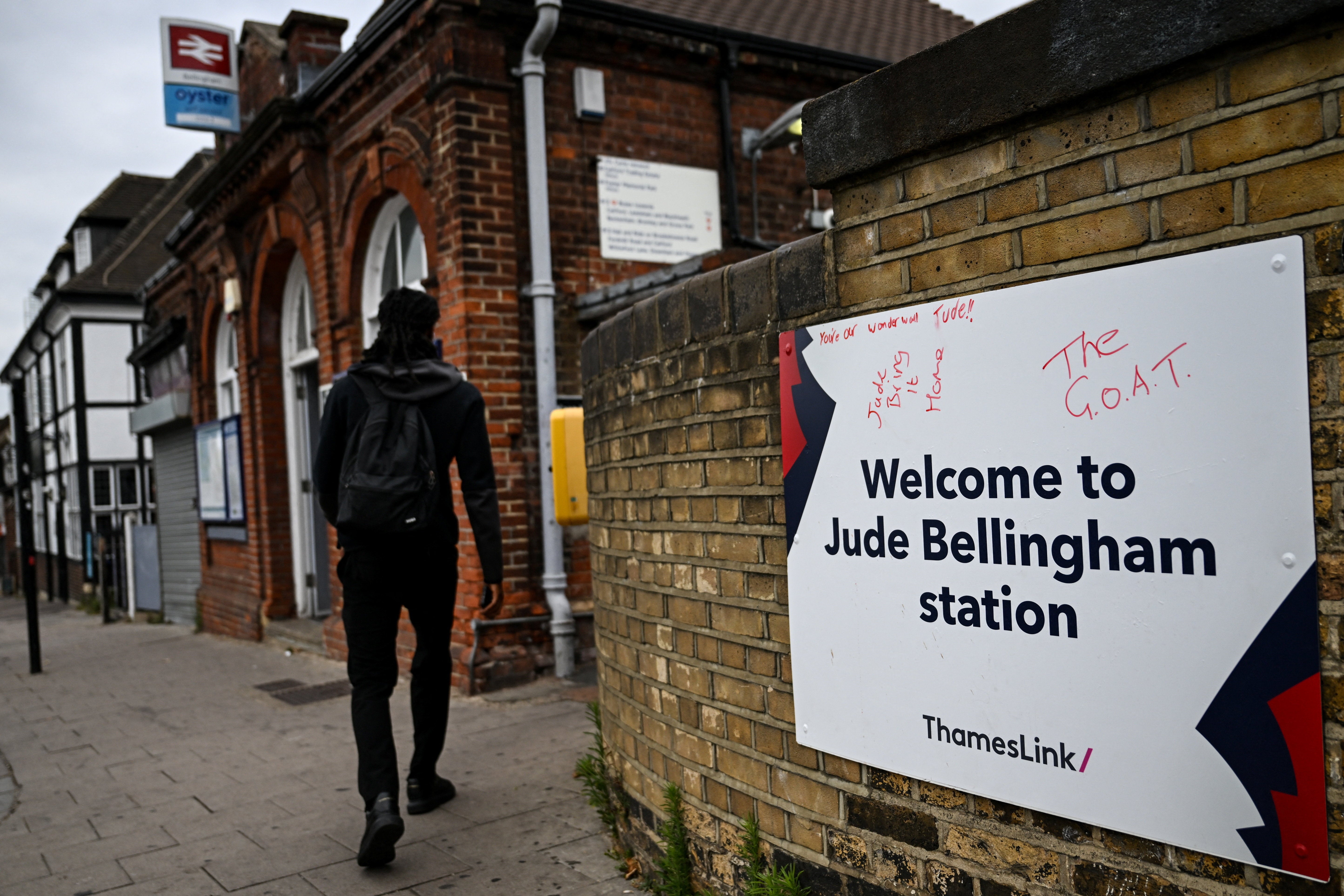
Jude-fever. Bellingham-mania. No one has come up with a catchy name for it yet, but it’s happening. A London train stop called Bellingham station has been renamed “Jude Bellingham”. West Midlands Railway is offering free train rides for anyone named Jude. “Hey Jude” is on the playlist after every England win with “Three Lions” and “Wonderwall”, the only player with his own ballad.

Only a couple of weeks ago, this World Cup felt like it would be Harry Kane’s tournament. It could yet be Kane’s pinnacle at the end of an extraordinary season of 72 goals and counting, a tally bettered only once, by Lionel Messi. If Messi is one of football’s deities, then Kane is the greatest mortal ever to do it. Win the World Cup on Sunday, and he will surely end the year on stage in Paris, wearing a shiny suit and holding a golden orb.

But increasingly, this tournament looks like the World Cup of Jude Bellingham. It was his goal against Croatia that sparked England’s best 45 minutes so far, his goal against Panama that broke the deadlock, his rapid double that briefly silenced the Azteca, a feat in itself. Bellingham’s first goal in the quarter-final against Norway was a moment of elite technical skill amid a shower of incompetence, his second a display of heightened instincts that earned England a victory they scarcely deserved.

A Thameslink station called Bellingham has been given a new forename
A Thameslink station called Bellingham has been given a new forename (Reuters)
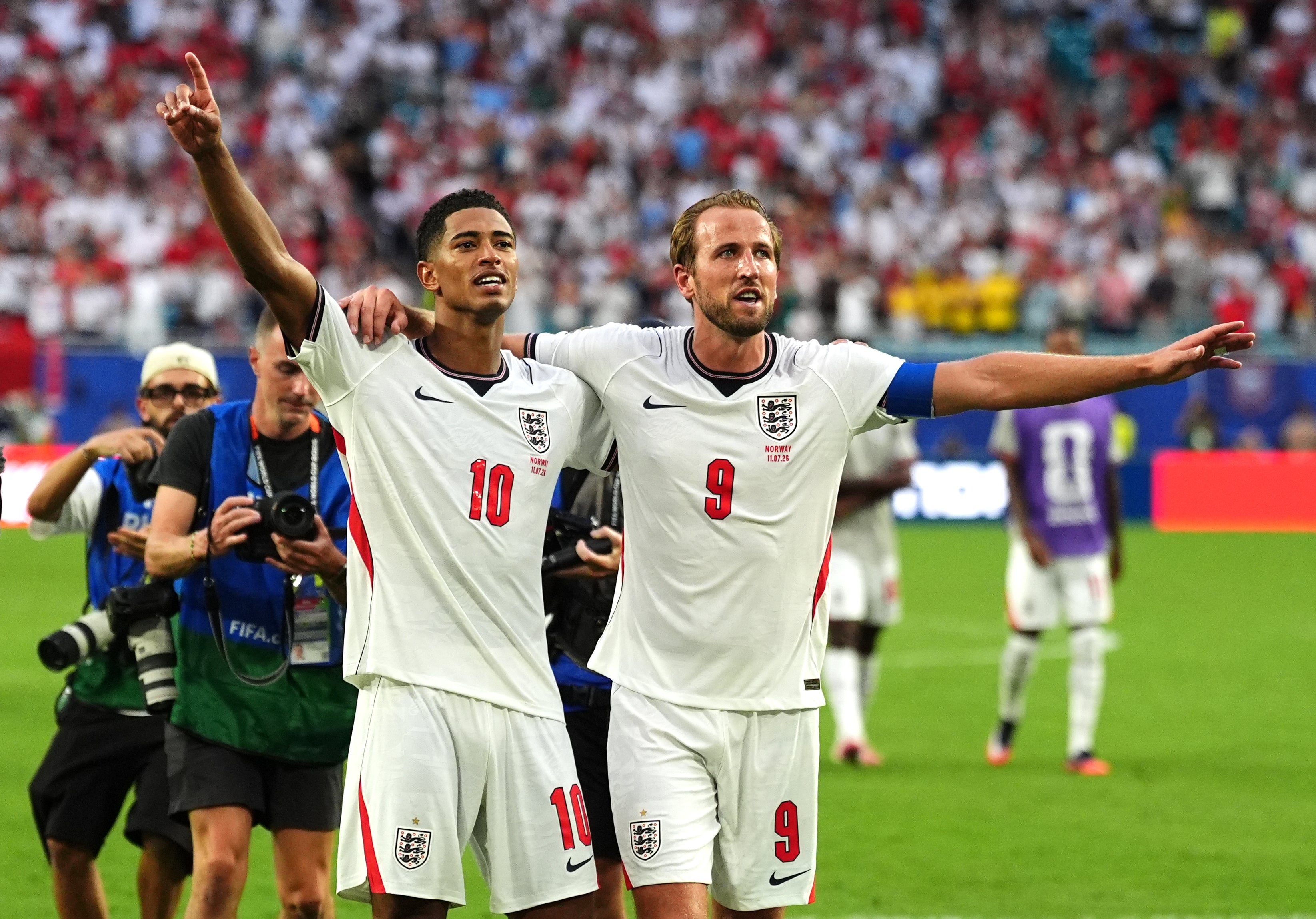
Jude Bellingham and Harry Kane salute the fans after reaching the semi-finals
Jude Bellingham and Harry Kane salute the fans after reaching the semi-finals (Martin Rickett/PA)

And perhaps this tournament means even more to Bellingham, a player who has been publicly questioned and privately doubted by his own manager, who has been subjected to outside scrutiny unlike his teammates. “Don’t bring Jude,” ran a headline in the Daily Mail earlier this season, suggesting England would be better off without the “divisive soloist” at the World Cup.

“It’s good to put some of the noise aside, and just show my country and my teammates how committed I am to helping us win football matches,” Bellingham said after scoring in the 4-2 win over Croatia in Dallas.

It seems bizarre now, but one of the decisions Thomas Tuchel stewed over before that opening match – and throughout his 18-month reign – was whether Bellingham or Morgan Rogers should be his No 10 at the World Cup. Bellingham missed last September’s qualifiers after undergoing shoulder surgery, and it was unfortunately timed. England played their best game under Tuchel, winning 5-0 in Serbia, and Rogers was excellent.

Advertisement

Tuchel omitted Bellingham from the following camp despite his return to fitness at Real Madrid. There was also the infamous line about Bellingham’s “repulsive” on-field behaviour, which Tuchel attributed to his mother and a slip of the tongue in his second language, and for which he later apologised.

Tuchel felt England created a “brotherhood” during those September and October camps. Could a powerful personality like Bellingham slip seamlessly into the fold?

Even when Bellingham made the World Cup squad, there was no guarantee he would start against Croatia. Tuchel was asked before kick-off: why Bellingham over Rogers? “It was really close,” the manager said. Was he picked because of his big-game appetite, that knack for scoring when it matters? “No,” said Tuchel. “A 50-50 call,” he called it, as if Bellingham had just beaten Rogers in a game of rock-paper-scissors in the dressing room.

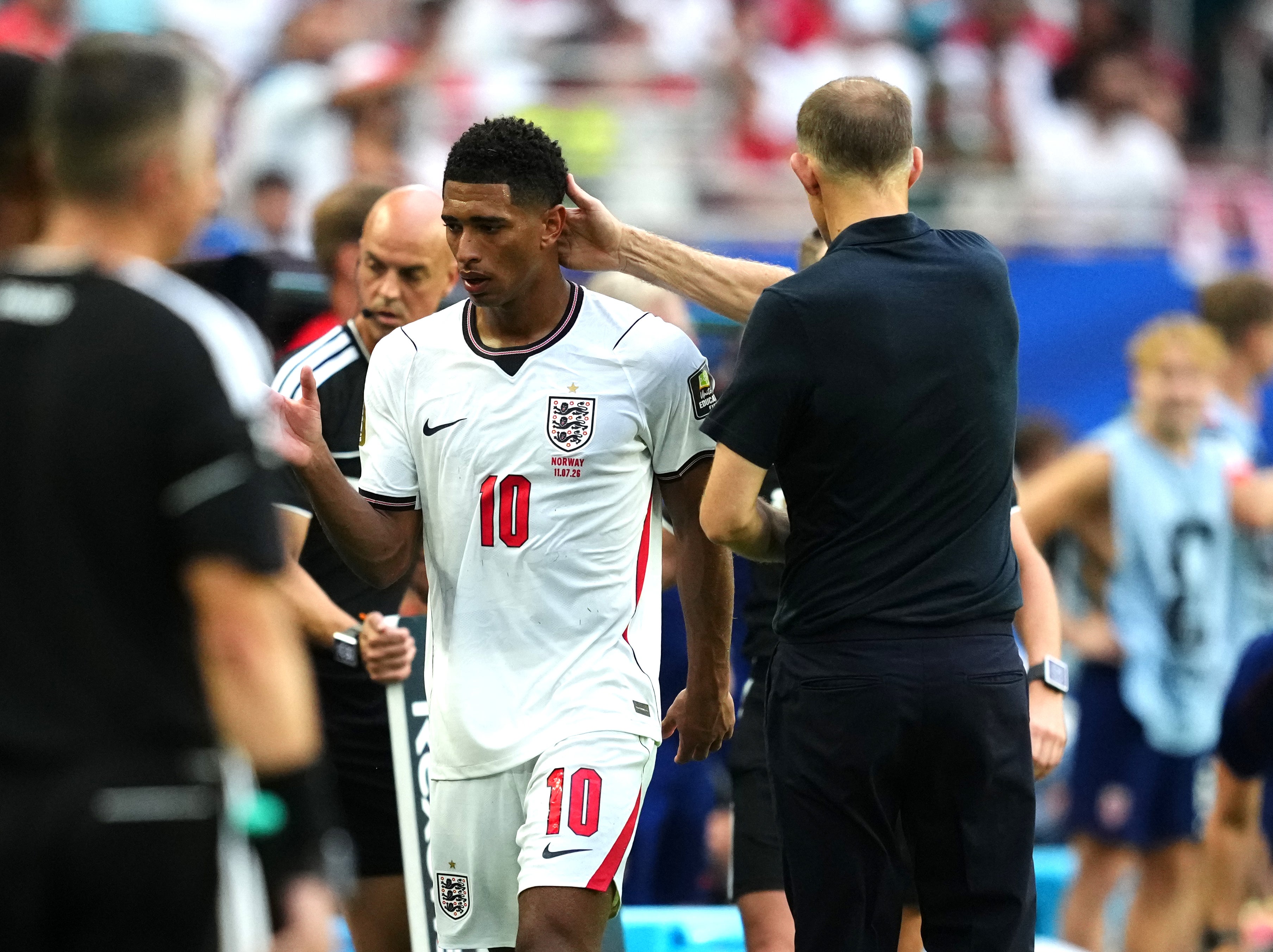
Bellingham is greeted by Tuchel after being substituted against Norway
Bellingham is greeted by Tuchel after being substituted against Norway (Martin Rickett/PA)

There were a raft of other No 10s Tuchel could have chosen. Eberechi Eze has played only cameos. Phil Foden and Cole Palmer are watching on TV. But then, really, what is the point of Bellingham’s unique set of powers if you don’t use them? England have a player who Real Madrid bought for €103m aged 19, who won the Champions League at 20, who is at his fourth major tournament aged 22. Steven Gerrard played his fourth at 30. Frank Lampard was 36.

And over the past few weeks, Bellingham has shown why he is not just another piece of England’s puzzle: he’s the piece, the keystone in the entire edifice of this World Cup campaign.

Advertisement

There are the goals, obviously, the assists, the way he bends rigid games to his will. But with Bellingham, it’s also the other bits, the intangibles, like his sheer presence in an England team and what that brings. Already at his age, Bellingham carries an aura that transmits confidence to his teammates, one that makes opponents feel a little smaller as they line up in the tunnel.

Perhaps part of that is the compelling aesthetics, the upright posture, the square shoulders, standing 6ft plenty. The cheekbones, the smile, the twinkle in his eyes. We are not supposed to objectify athletes in this job, but come on now. The Norwegian defence just went weak at the knees and now England are 2-1 up in a quarter-final.

‘Waiting for someone to perform with’: this Jude was made to go out and get it, and is making the whole country feel better, better, better, better...
‘Waiting for someone to perform with’: this Jude was made to go out and get it, and is making the whole country feel better, better, better, better… (Getty)

Then there are the tackles, three in the second half against Croatia alone. They are not just toes on the ball but full slides through his opponent, comprehensive clean-outs, taking the man with him as he goes. It is the type of tackle that lifts England fans off their feet, that elicits those low-octave hums of “Juuuuuude”, a tackle that gets his teammates facing forwards, that changes the direction of the wind.

If you delve into Fifa’s enormous suite of World Cup stats, you’ll find Bellingham on top in two categories. The first is sprints – no one left in the competition has made more than his 328, or 55 per game. That’s a sprint every 110 seconds, across six games, one of which was played not far off the altitude of Mount Olympus, another played in heat and humidity that even Amazon tribesmen would describe as stifling.

The second is what Fifa catchily calls “offers to receive in between”, which are those moments when Bellingham stands in a difficult place, where opponents lurk, where defenders are near, and demands to have the ball. If his sprints show endeavour under strain and stress, the latter shows courage and sheer belief in his own ability to take possession under pressure, time and again.

Advertisement

But perhaps just as telling is that on a whole raft of other measures, Bellingham ranks near the top. Distance covered, pressures, turnovers, goals, off-the-ball runs, chances created, headed efforts attempted. His work is best displayed in the box, but Bellingham is a complete midfielder impacting every aspect of each game, England’s omnipresent force. It is not that he’s a “soloist”. It’s just that sometimes it takes a virtuoso to elevate the piece.

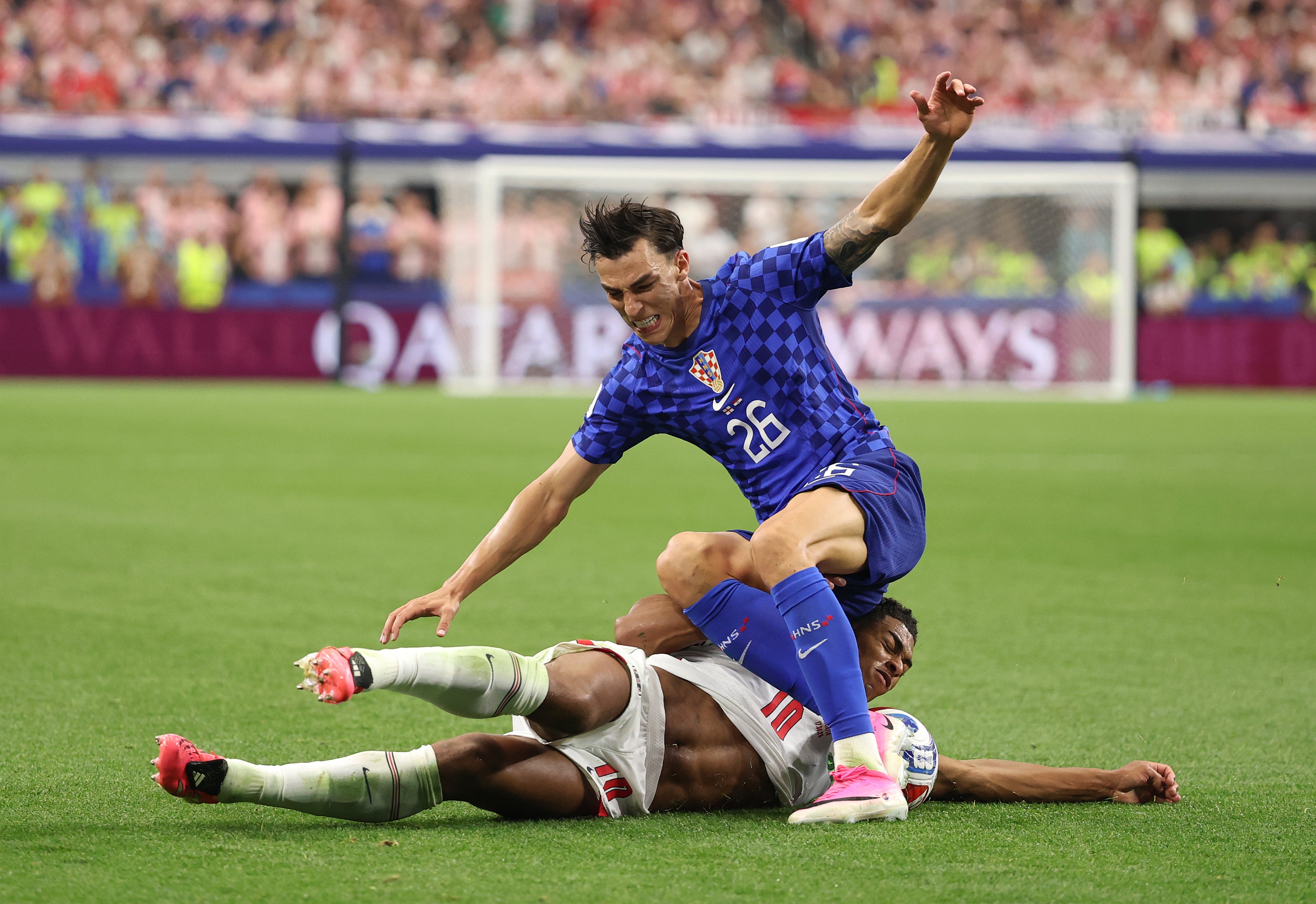
Bellingham slides through Croatia’s Petar Musa
Bellingham slides through Croatia’s Petar Musa (Getty)

It is why the comparisons with Steven Gerrard are justified, another player who could thrive in any position on the pitch. Yet Gerrard never produced this level for England, at least not consistently throughout a World Cup. Neither did Lampard, nor Wayne Rooney, nor David Beckham, nor Michael Owen. Bellingham’s individual performance has surpassed Paul Gascoigne at Italia ’90 and Gary Lineker at Mexico ’86. It is perhaps the best by an England player at a World Cup since 1966.

There are glimpses of his potentially combustible personality in those moments when he admonishes the referee or bellows at teammates for not reading his mind. His mum repeatedly reminded him not to get a yellow card in the days before Norway in order to avoid a suspension.

The snipes at Tuchel in post-match interviews perhaps revealed Bellingham’s frustrations at his battle for his place, using his position of undoubted power to get certain things off his chest. But that edge has been channelled into performances full of commitment and purpose, delivered with an energy that has set England’s tone. Tuchel might even take some credit for that, provoking a little motivation and inspiration.

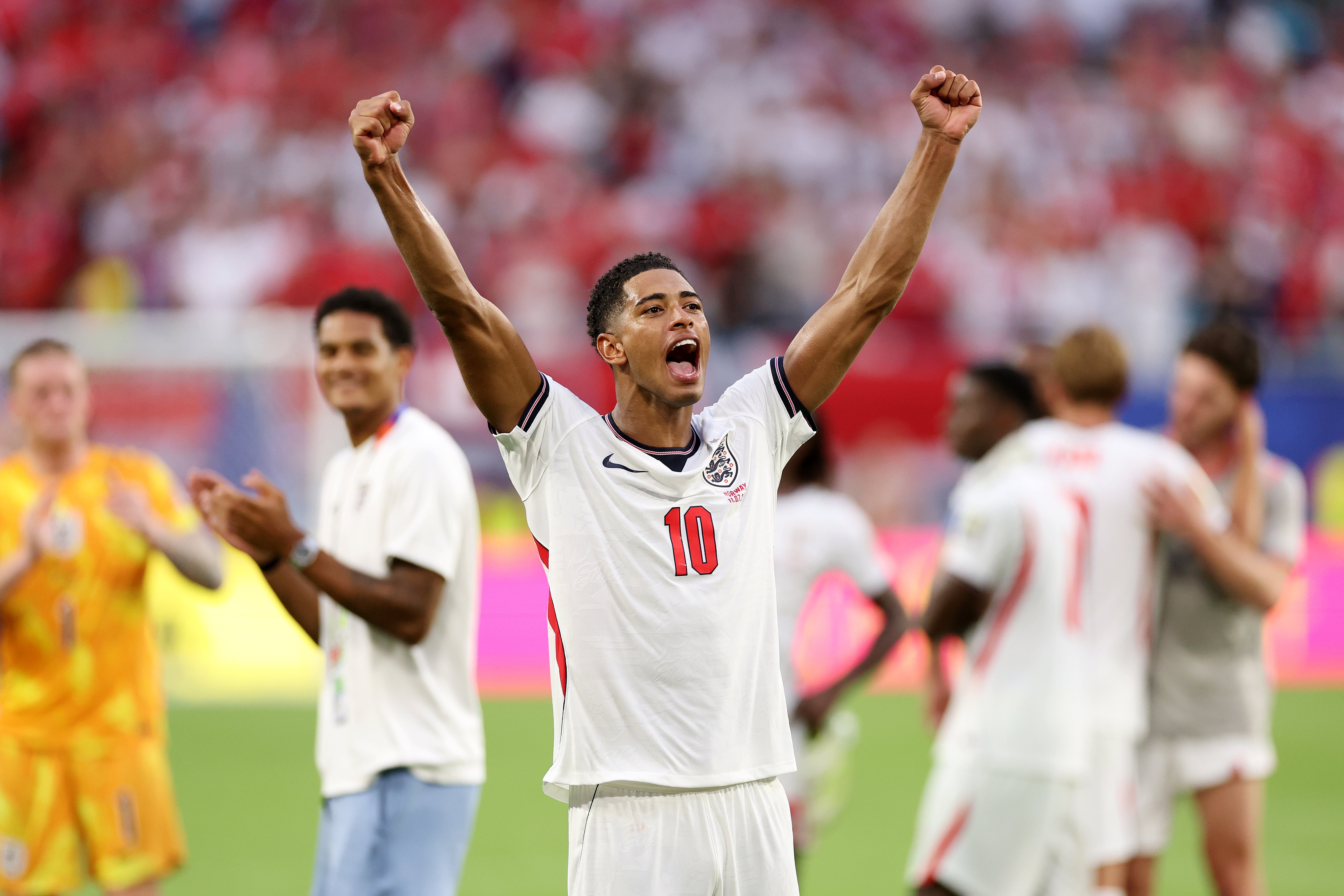
Bellingham celebrates in front of England’s fans after the quarter-final win in Miami
Bellingham celebrates in front of England’s fans after the quarter-final win in Miami (Getty)

Perhaps a career path outside the Premier League’s gaze has stymied Bellingham’s appreciation in England. Perhaps it doesn’t help that he is so hard to define, a No 10 who isn’t really a typical No 10 at all. His youth coach at Birmingham City famously marvelled at how he could play three midfield roles at once – numbers 4, 8, and 10 – so added them together and assigned him No 22.

But his talent cannot be ignored this summer. Belli-monium is in full swing. Some time after the end of the Norway game, thousands of English fans belted out “Hey Jude” with feeling as he stood on the grass below, alone, drenched in sweat, allowing the adulation to wash over him. What an extraordinary experience that must be. And for the first time at this World Cup, Bellingham looked like he didn’t know what to do with himself.

Advertisement

Source link

Continue Reading

Sports

Why Did Shubman Gill Leave The Field While Batting During 1st England ODI?

Published

on


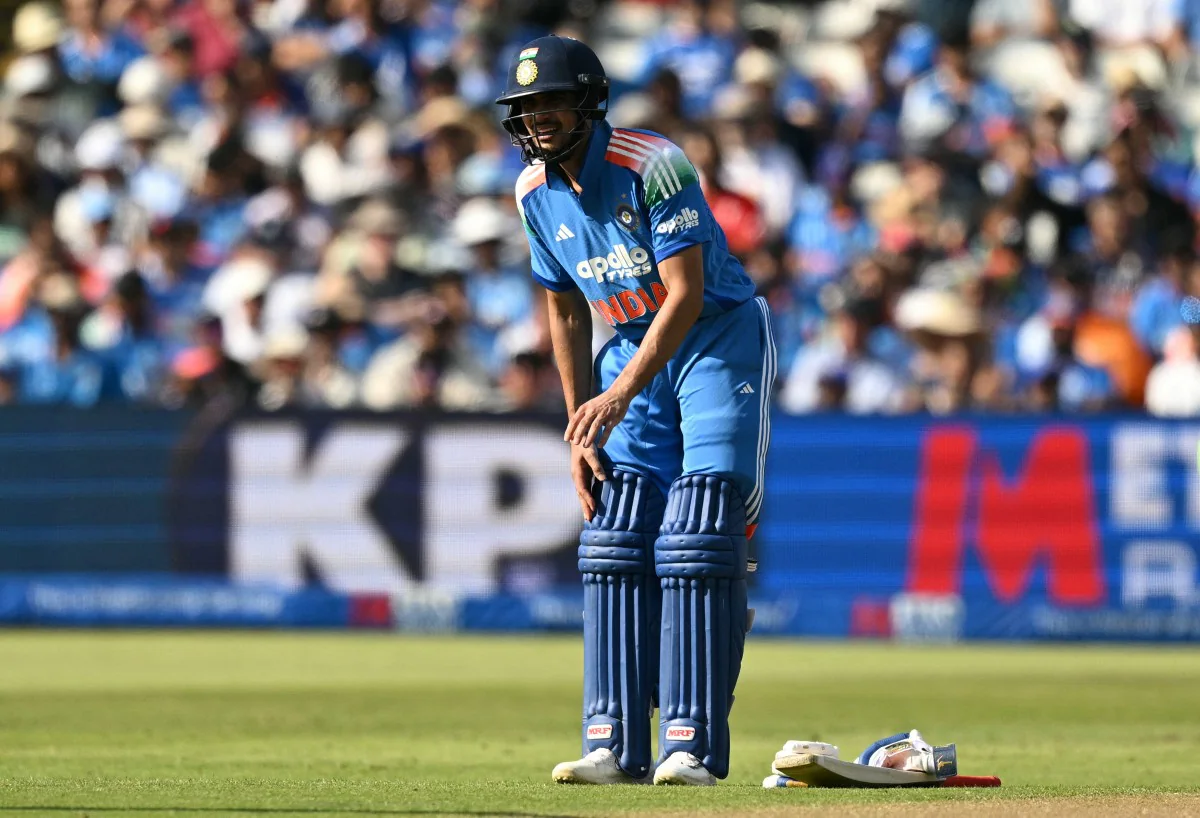
Indian cricket team skipper Shubman Gill was forced to leave the field retired hurt during the first ODI encounter against England on Tuesday. Gill looked in good touch as he scored 80 off 75 deliveries with the help of 11 fours and one six. However, during the 26th over of the Indian innings, he could not stand properly and had to lie down on the pitch while clutching the back of his right leg. The commentators were left wondering whether it was just a cramp or the star batter was suffering from something more serious. Ultimately, he was unable to continue and decided to leave the field. 

Coming to the match, a bowling masterclass from Axar Patel, along with disciplined pace and bounce by Prasidh Krishna and Gurnoor Brar, helped India restrict England to 258.

Patel was India’s standout bowler, taking four wickets, breaking England’s resistance with his accurate left-arm spin. Prasidh Krishna and Gurnoor Brar also chipped in with two scalps each. Jasprit Bumrah took a wicket to claim his 150th ODI wicket as India kept England under control throughout the innings.

Advertisement

England were bowled out for 258 runs in 47.5 overs after opting to bat first in the opening ODI against India. The hosts made a strong start but lost momentum in the middle overs, losing five wickets for just 19 runs before Root and Dawson combined to revive the innings.

Latest and Breaking News on NDTV

Joe Root top-scored for England with an unbeaten 76 runs, anchoring the innings and guiding the lower order. Liam Dawson provided valuable support with 68 runs, helping England recover from a difficult position.

Ben Duckett contributed 43 runs, while Will Jacks scored 20 and Jofra Archer added 12 towards the end. Apart from them, all the English batters struggled to put the bat on the ball.

For India, Patel became only the second Indian spinner to take four wickets between the 41st and 50th overs of an ODI innings, matching Ravindra Jadeja‘s feat against Sri Lanka in 2013.

England started positively with Duckett and his opening partner Jacob Bethell building a steady platform, but India’s bowlers struck back at regular intervals.

Advertisement

Root displayed composure under pressure, rotating the strike and building partnerships to prevent a complete collapse. Dawson matched his approach with an aggressive counter-attacking knock, helping England cross the 250-run mark after being in trouble.

India will now require 259 runs to win the opening ODI and take an early lead in the three-match series.

The last time a sub-300 target was successfully defended in a full 50-over ODI at Edgbaston was in the Champions Trophy 2013 when South Africa defended 236 against Pakistan.

(With ANI inputs)

Advertisement


Featured Video Of The Day


Haaland Memes | “It’s A Special & Funny Game”: Haaland Ahead Of Quarterfinals Against England

Topics mentioned in this article

Advertisement

Source link

Continue Reading

Sports

World Cup quiz: Name every team to have reached the semi-finals

Published

on

Spain face France and Argentina take on England in the World Cup semi-finals this week, and it’s inspired us to make this quiz.

Just like you did for our quarter-finalists quiz, it’s time to name every nation that has reached a World Cup semi-final.

After more quizzes? Go to our dedicated Football Quizzes and Sports Quizzes pages and sign up for notifications to get the latest quizzes sent straight to your device.

Source link

Advertisement
Continue Reading

Sports

“There’s No Anti-Lamine Yamal Plan”: France’s Adrien Rabiot Ahead Of FIFA World Cup Semi-Final

Published

on

Spain enters the contest on a 36-match unbeaten run and will be aiming to secure a place in the final.© Getty


Advertisement

France midfielder Adrien Rabiot stressed his side is not preparing a specific plan only for Spain’s Lamine Yamal, stressing that Les Blues would focus on La Roja’s overall attacking threat, including their possession, movement, creativity, and ability to find spaces. France will take on an in-form Spain side that advanced to the last four after defeating Belgium 2-1 in the quarterfinals. Spain enters the contest on a 36-match unbeaten run and will be aiming to secure a place in the FIFA World Cup 2026 final.

“There is no anti-Lamine Yamal plan. We are focusing on the Spanish national team, not just one player. We know they are dangerous across the board: him, the attacking players, their possession, their ability to find spaces near the box, and their combination play. We have to be alert to all of that. I don’t think we should focus solely on one individual,” Adrien Rabiot said as per Goal.com.

The winners of the semifinal will book their place in the title clash scheduled for July 19 (Local Time).

France have enjoyed the most convincing and controlled knockout-stage campaign among the four remaining teams. After finishing top of Group I, they opened the knockout rounds with a commanding 3-0 victory over Sweden in the Round of 32.

Advertisement

They then edged past Paraguay 1-0 in a closely contested Round of 16 before producing another disciplined display to defeat Morocco 2-0 in the quarter-finals and secure their place in the last four.

France have scored six goals in the knockout stages without conceding a single one, underlining their defensive discipline and control under pressure.

Even in tightly contested encounters, their structure has remained solid, while France captain Kylian Mbappe has continued to provide the cutting edge in attack when it matters most.

(Except for the headline, this story has not been edited by NDTV staff and is published from a syndicated feed.)

Advertisement


Featured Video Of The Day


Haaland Memes | “It’s A Special & Funny Game”: Haaland Ahead Of Quarterfinals Against England

Topics mentioned in this article

Advertisement

Source link

Advertisement
Continue Reading

Sports

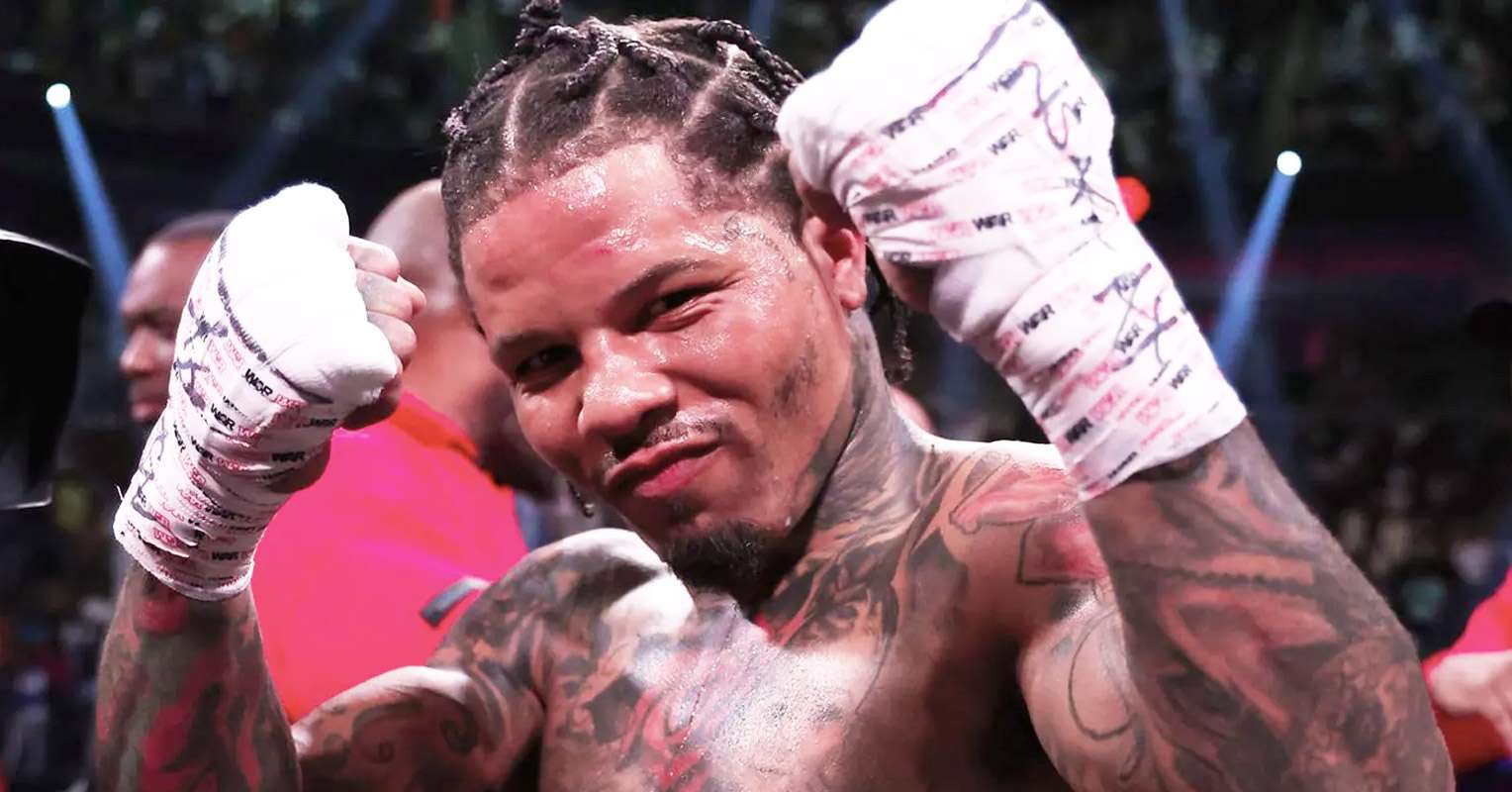
World champion says he is going to retire Gervonta Davis: “I’ll be his last fight in the sport”

Published

on

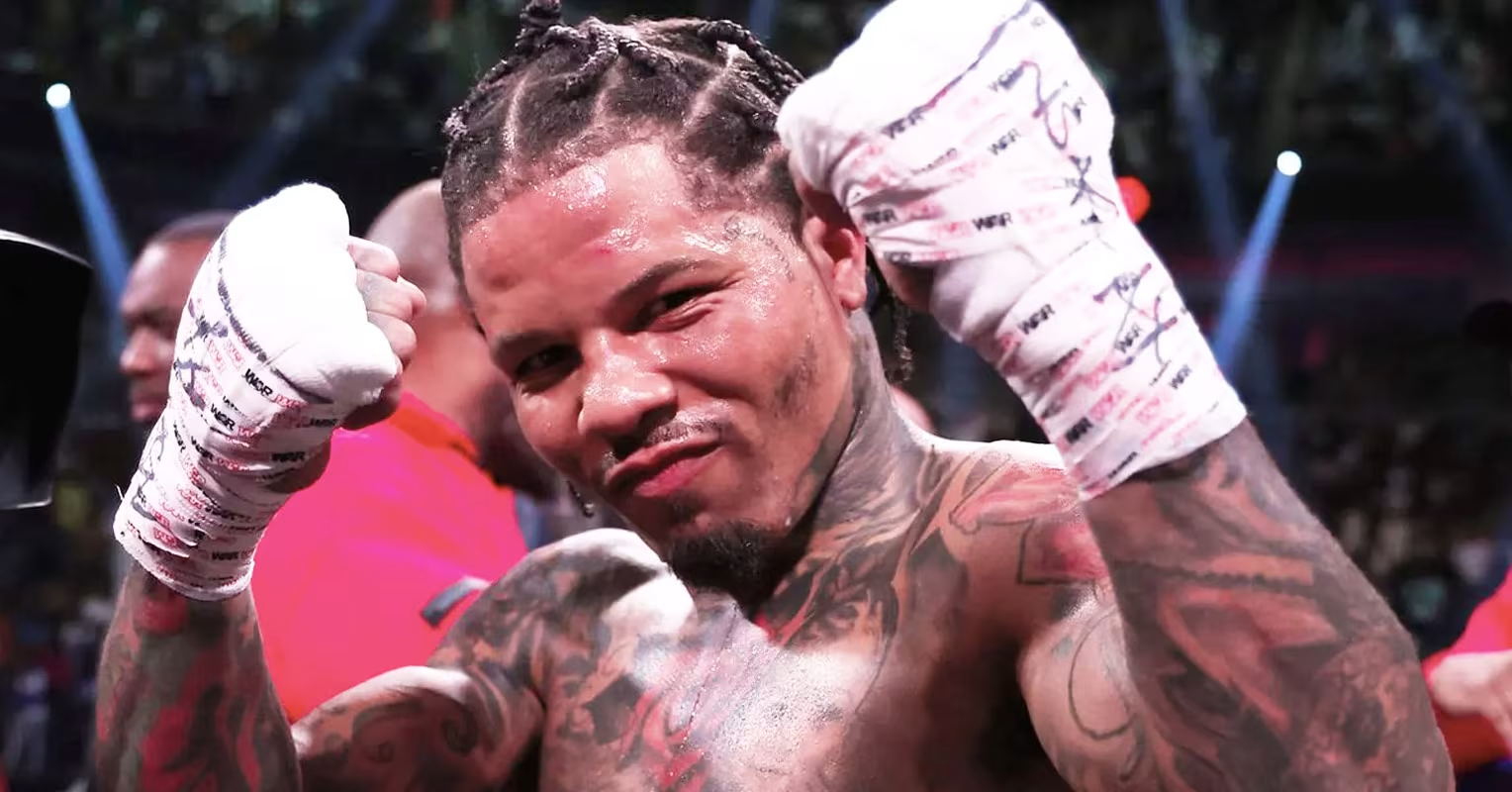
Gervonta Davis has been called out for a “best vs the best” encounter, which could end up being the final fight of his career.

Davis has not fought since his controversial draw with Lamont Roach, who was considered incredibly unfortunate not to emerge victorious in March 2025.

‘Tank’ then entertained talks for an immediate rematch and WBA title defence, only to instead schedule an exhibition match with Jake Paul later that year.

Advertisement

In the end, though, Davis was removed from the event – which was set for last November – on account of him facing allegations of domestic violence.

Since then, he has remained out of the ring but is now angling for a return, albeit after rejecting an opportunity to reclaim his WBA lightweight title against Floyd Schofield.

For Davis, however, it appears the world titles are neither here nor there, even if he has been made WBA ‘champion in recess’ at 135lbs.

And the same, it seems, could be said of Shakur Stevenson, who holds the WBO super-lightweight strap but is not overly bothered about becoming an undisputed king.

Advertisement

After announcing his signing with Dana White’s Zuffa Boxing, the 29-year-old told Chris Mannix that he sees his legacy being defined by the fights themselves, rather than whatever belts are on the line.

“If I go fight against Tank, no one cares whether it’s for undisputed or not. They just care that it’s the best vs the best.

“At first, [Davis] said he wouldn’t fight me. Now, I heard him say on Twitter that he will fight me, so it sounds like his tune is changing.

“He may not admit it, but I think he’s got a lot of respect for me as a fighter, which is why I think he plans on fighting me as his last fight on his way out the door.”

The two Americans have been on a collision course for quite some time, yet only now does Stevenson seem to believe there is a realistic chance of facing his rival.

Advertisement

Source link

Continue Reading

Sports

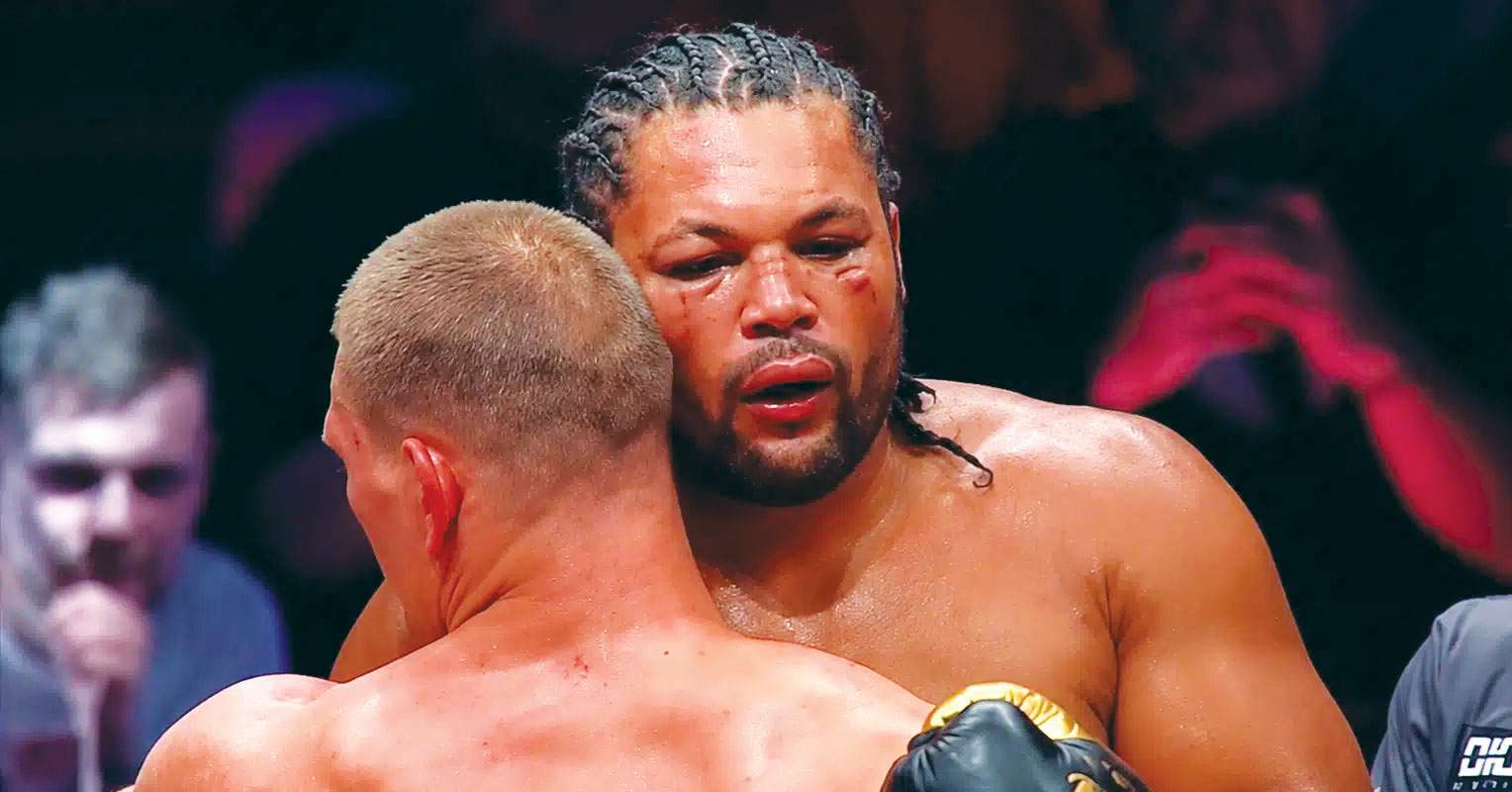
Derek Chisora sums up Joe Joyce’s performance in latest loss to Artem Suslenkov amid calls to retire

Published

on

Derek Chisora has weighed in on the Joe Joyce retirement debate after seeing his countryman “quit” in round 11 of his clash with Artem Suslenkov.

The two heavyweights squared off in Moscow, Russia, last weekend, featuring on the undercard of Murat Gassiev’s successful WBA title defence against Peter Kadiru.

Put simply, it was seen as something of a crossroads fight, between a grizzled veteran and an unbeaten, 30-year-old fringe contender.

Advertisement

But while Suslenkov had remained unproven at any significant level, Joyce was coming off back-to-back points defeats to Chisora and Filip Hrgovic.

Even before those two setbacks, many were calling for the ‘Juggernaut’ to retire, especially after his devastating stoppage losses to Zhilei Zhang in 2023.

Yet Joyce nonetheless decided to roll the dice against Suslenkov, who seemed the much fresher combatant without applying any real pressure on his opponent.

Sure enough, though, their contest reached a stage where the 40-year-old could simply not bring himself to take any more punches.

Advertisement

Waving his glove in a sort of ‘No Mas’ manner, Joyce’s signal was eventually identified by the referee, who drew a halt after one final flurry from Suslenkov.

Speaking to Seconds Out after the contest, Chisora gave his interpretation of what could lie ahead for his fellow veteran.

“He just quit – that was it. He thought he had it in him when he was training, and then he said he was not fit. I’m like, ‘You were training, though?’

“You know when the fire goes out – when boxing retires you? This is what we talk about. Suddenly, you don’t have enough to stop these younger men.

“Boxing retired [Joyce] today.”

Advertisement

Interestingly, Chisora was targeted as an opponent during the early stage of Joyce’s career, back when the Olympic silver medallist was more mobile and, in truth, less shop-worn.

Source link

Advertisement
Continue Reading

Sports

World Cup 2026: ‘Spain are favourites’, says French coach ahead of semi-final – World Cup Debrief

Published

on

One of your browser extensions seems to be blocking the video player from loading. To watch this content, you may need to disable it on this site.

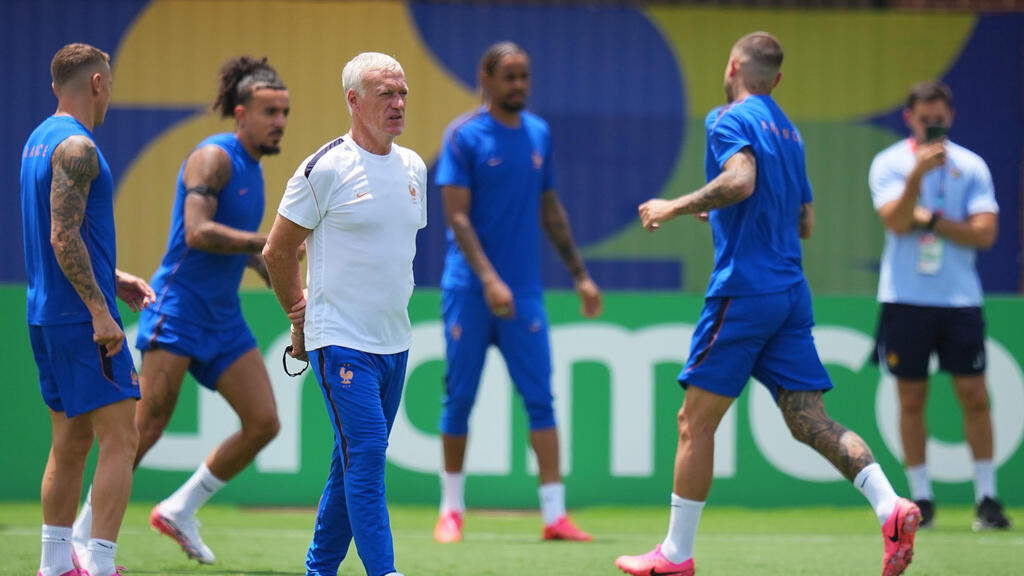
France head coach Didier Deschamps watches his team participate in a training session ahead of the team's semifinal soccer match against Spain, Monday, July 13, 2026, in Dallas.
Cover image: France head coach Didier Deschamps watches his team participate in a training session ahead of the team’s semifinal soccer match against Spain, Monday, July 13, 2026, in Dallas. © Julio Cortez, AP

From the show

Advertisement


World Cup Debrief


Reading time
1 min

Didier Deschamps has reiterated his view that La Roja remain the favourites to win the World Cup. Spain face France on Tuesday for the chance to add a second star to their shirt, having lifted the trophy only once before, in 2010. Meanwhile, Senegal’s Football Federation held its first press conference since the sacking of head coach Pape Thiaw, shedding new light on the tensions behind his departure.

Produced by James Vasina and Guillaume Gougeon

Advertisement

Source link

Advertisement
Continue Reading

Sports

Forgotten Man City star’s new role could be just what he needs

Published

on

Manchester City star Phil Foden was not taken with England to the World Cup and has not really been missed

Thomas Tuchel knew what he was doing when he took the big calls of leaving both Phil Foden and Cole Palmer out of his England squad for the World Cup. The coach is experienced enough to know that such decisions would be thrown back in his face the second his plans did not work out.

Aside from some stickiness around the Ghana and Panama matches though, there has been very little mention of either the Manchester City or Chelsea playmakers. England have forgotten about them as Jude Bellingham has risen to the fore to help lead the Three Lions into the last four of the World Cup.

Advertisement

This could of course be more disappointment on top of not being picked to go. Everybody wants to feel like they’re missed when they are not there, and Premier League footballers are constantly rated and compared with each other as part of the sport.

In the case of Foden though, having a summer where he is forgotten could well be perfect for him. The 26-year-old has already had nearly a decade of his life where expectation and hype have followed him everywhere he has gone, and living up to that is gruelling and virtually impossible.

City thought they had got the player back to his best last season as he dazzled in the first half of the campaign. However, when his form disappeared around January there was nothing that anyone was able to do to reverse that and it cost him a place in the City team and his England spot for the World Cup.

Advertisement

Even if he had been included by Tuchel, Foden would barely have played given his current form. After months of that experience at the Etihad without seeing enough improvement, a new environment and a full break from football looks the better option.

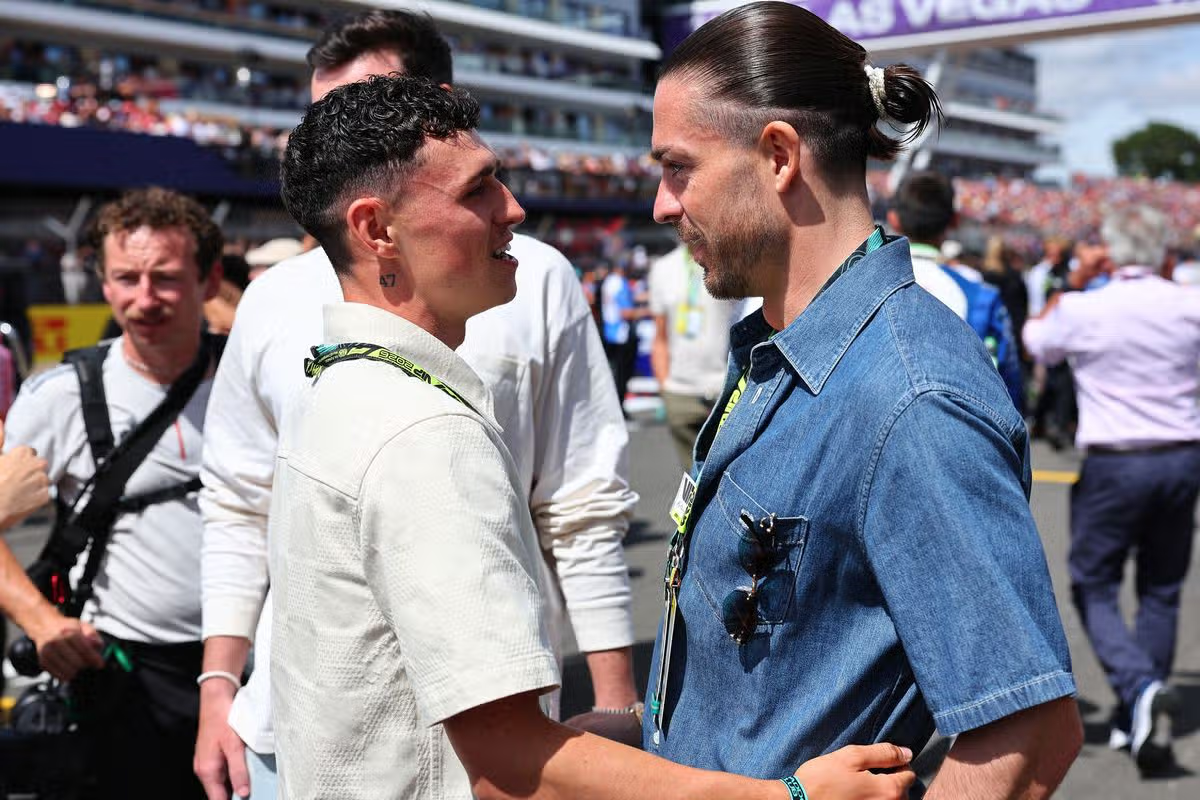
A rare summer off has been used by Foden to watch tennis at Wimbledon, F1 at Silverstone, and get plenty of fishing in – as well as a holiday with his family. Turning up at his local to watch England has been the closest he has come to the World Cup experience.

It remains unclear whether that can spark Foden back into form, but space and time away from the spotlight is something that he has barely known for the last decade. Being kept out of the conversations around England this summer can only have helped the playmaker to keep his mind clear.

The midfield man has of course kept his fitness up and will be one of the first through the doors of the City Football Academy next week to start training with Enzo Maresca. The world may then be talking about an historic win for England in the final, but Foden knows exactly the challenge he has to pass in this season.

Advertisement

Away from the attention, from next week Foden can start showing what his rest has done for him as he looks to return to being one of City’s most important players.

Source link

Continue Reading

Trending

Copyright © 2025