

Connect with us

Sports

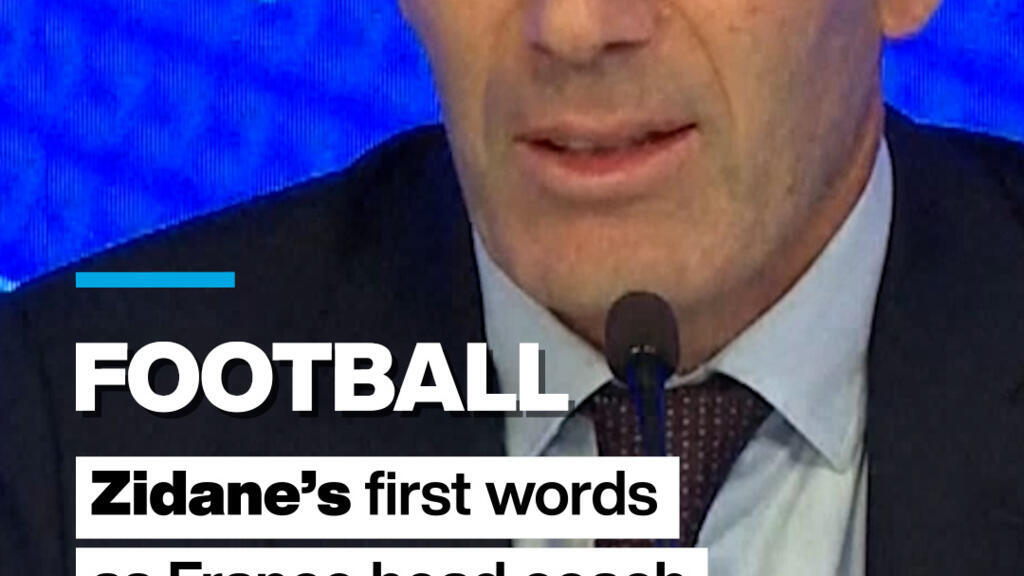
Football without borders: Why FIFA World Cup has never been more diverse | FIFA World Cup 2026

Published

on


The FIFA World Cup has always celebrated national identity. Players wear their country’s colours, sing the anthem and represent millions of supporters back home.


Yet in modern football, nationality is rarely a simple story. The 2026 FIFA World Cup has become perhaps the strongest example yet of how migration, family heritage and evolving FIFA eligibility rules have transformed international football into a truly global competition.


Advertisement


Nearly one in every four players at this tournament was born outside the nation they represent.


Far from weakening international football, that diversity has enriched it.


Advertisement


The expanded 48-team tournament has produced stories that would have been impossible a generation ago, players facing the country where they were born, nations discovering talent across continents, and football becoming more representative of the multicultural societies many countries have become.


A truly global World Cup


Advertisement


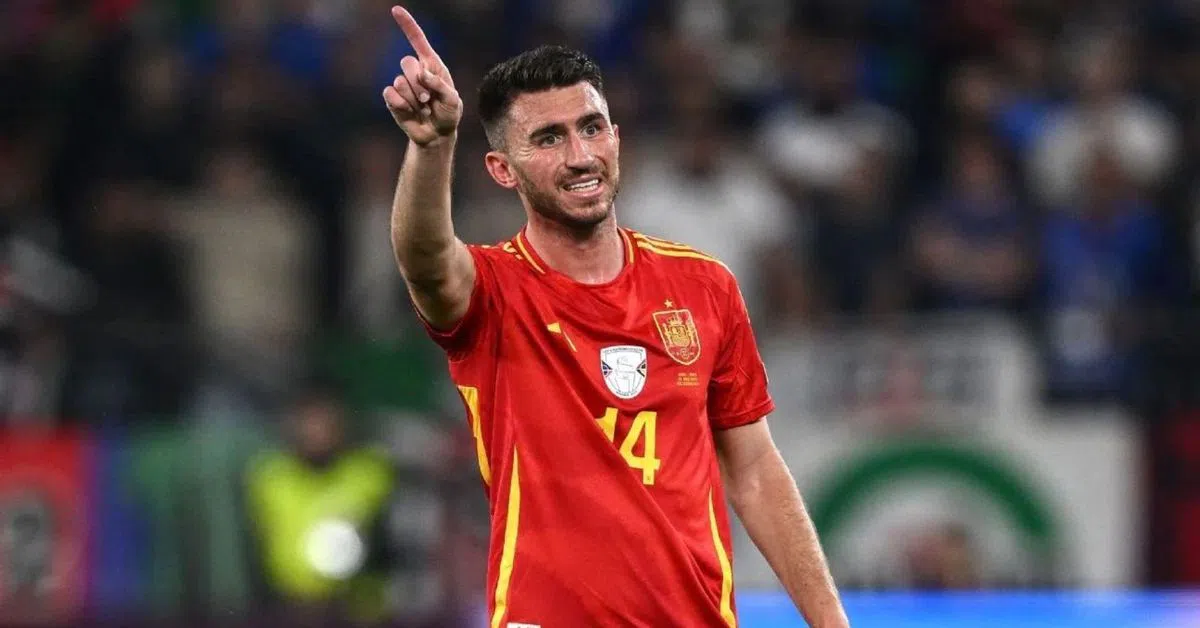
Out of the 1,248 footballers selected for the 2026 World Cup, almost 300 represent a country different from their place of birth. Only a handful of participating nations have squads made up entirely of home-born players.


For everyone else, international football has become a reflection of modern society, where migration, dual citizenship and multicultural families have created new footballing identities.


Advertisement


Some players were born abroad because their parents emigrated before they were born. Others moved countries as children. Some hold dual nationality through parents or grandparents, while others became eligible after years of residency.


The result is a World Cup that reflects the increasingly connected nature of today’s world.


Advertisement


France: Football’s biggest exporter of talent


No nation illustrates this better than France. France brought one of the strongest squads to the World Cup, yet it also exported more footballers to other national teams than any country in the tournament.


Advertisement


A remarkable 76 French-born players are representing countries other than France. Many of them will even face France during the competition.


Senegal alone included ten French-born footballers in its squad. Algeria selected thirteen. Haiti had twelve.


Advertisement


Ivory Coast and DR Congo also relied heavily on players developed inside the French football system. France’s incredible production line means it effectively contributes talent to almost every continent. It is no coincidence that French academies continue to produce some of world football’s finest players year after year. Paris has become football’s biggest talent factory


Much of that production comes from one extraordinary region. Greater Paris has quietly become the world’s greatest football talent hub. Despite accounting for less than one-fifth of France’s population, the Paris metropolitan area continues producing elite footballers at an astonishing rate.


Advertisement


Many of France’s biggest stars began their journeys there. Even more remarkably, countless players who eventually chose other national teams also developed within the same football ecosystem.


The region has become an international football production line, supplying World Cup squads across Africa, Europe, North America and the Caribbean. 


Eligibility rules have evolved with football

Advertisement


The modern World Cup would not look like this without FIFA’s evolving eligibility regulations. Earlier generations of players had very little flexibility.


Representing one country at youth level often ended any possibility of switching national allegiance later. Over the last two decades, however, FIFA has gradually modernised those rules to reflect changing realities.

Advertisement


Today, players can represent a nation if they qualify through birth, parents, grandparents or long-term residency. Several amendments have also allowed players to make one-time nationality switches under specific circumstances, particularly if they had not fully established themselves in senior international football.


Those changes have allowed footballers to choose the nation that best reflects both their identity and their career. Some of the tournament’s best stories exist because of these rules

Advertisement


The World Cup has produced countless examples of players balancing multiple identities. England-born striker Folarin Balogun now leads the line for the United States. Jamal Musiala represented England at youth level before choosing Germany.


Brian Gutierrez switched from the United States to Mexico. Crystal Palace goalkeeper Owen Goodman eventually became eligible for Canada after successfully proving his residency links.

Advertisement


Every tournament now features players representing countries connected through family history rather than simply birthplace. Instead of reducing national identity, these stories often strengthen it.


Many players speak emotionally about honouring their parents or grandparents by wearing their ancestral country’s shirt. Federations now scout family trees as carefully as footballers

Advertisement


Finding eligible players has become a specialised process. National associations now employ scouts whose job extends far beyond watching matches. They study family backgrounds, immigration records and youth academies across Europe.


Some federations maintain databases tracking dual-national prospects years before they reach senior football. Others rely on personal contacts, local communities and even video games such as Football Manager to identify potential internationals.

Advertisement


Once a player is identified, convincing them becomes another challenge entirely. Countries regularly organise meetings with players and their families, present long-term sporting projects and build personal relationships before a final decision is made.


International recruitment has become almost as competitive as club recruitment.

Advertisement


Smaller nations are benefiting more than ever


Perhaps the biggest winners are countries with smaller footballing populations. Curacao, making its World Cup debut, relied heavily on players born in the Netherlands.

Advertisement


Canada has expanded its player pool by recruiting footballers with Canadian family connections across Europe. Several African nations continue strengthening their squads through players developed in European academies while maintaining close family ties to their ancestral homeland.


Without these eligibility pathways, many emerging football nations would struggle to compete with traditional powers. Instead, they now arrive at World Cups with deeper squads and greater international experience.

Advertisement


Football’s biggest tournament now reflects the modern world Critics occasionally question whether foreign-born players dilute international football. The evidence from this World Cup suggests the opposite.


Every multicultural squad tells a story of migration, heritage and identity. Players proudly represent nations connected to their families, cultures and childhoods, even if those connections stretch across continents. Rather than reducing authenticity, these stories have added emotional depth to the tournament.

Advertisement


The modern World Cup is no longer simply about where someone was born. It is about where they belong.


And in making room for those identities, FIFA’s eligibility rules have helped create perhaps the most inclusive, representative and globally connected World Cup the sport has ever seen.

Advertisement

Source link

Continue Reading
Click to comment

You must be logged in to post a comment Login

Leave a Reply

Sports

Gulveer Singh scripts history, becomes first Indian to win Commonwealth Games 5000m medal | Commonwealth Games News

Published

on

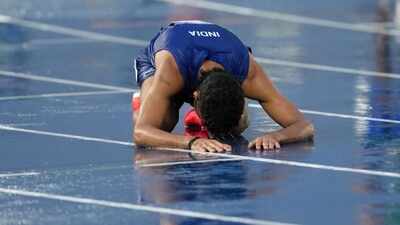
Gulveer Singh scripts history, becomes first Indian to win Commonwealth Games 5000m medal

Gulveer Singh created history on Saturday by becoming the first Indian to win a Commonwealth Games medal in the men’s 5000m and the first Indian track and field athlete to win two medals in a single edition of the Games.After winning silver in the 10,000m on July 28, the reigning Asian champion added a bronze in the 5000m, finishing in 13:24.95 on the final day of the athletics competition.Kenya’s Mathew Kipchumba Kipsang won the gold in 13:23.61, while Australia’s Ky Robinson, who had earlier taken the 10,000m gold, claimed silver in 13:24.70.The 28-year-old Indian, who holds the national records in both the 5000m and 10,000m, finished well outside his season’s best time of 13:03.93. His timing on Saturday was also slower than his national record of 12:59.77.Gulveer stayed with the leading group throughout the race before making his move in the final lap. He edged Kenya’s Cornelius Kemboi to the bronze medal by just 0.04 seconds.Kemboi, who had clocked 12:56.02 in June and is a sub-13-minute runner, finished just behind Gulveer in the race.The bronze added to Gulveer’s growing list of achievements, which also includes the 10,000m bronze medal he won at the 2023 Asian Games in Hangzhou.

Source link

Continue Reading

Sports

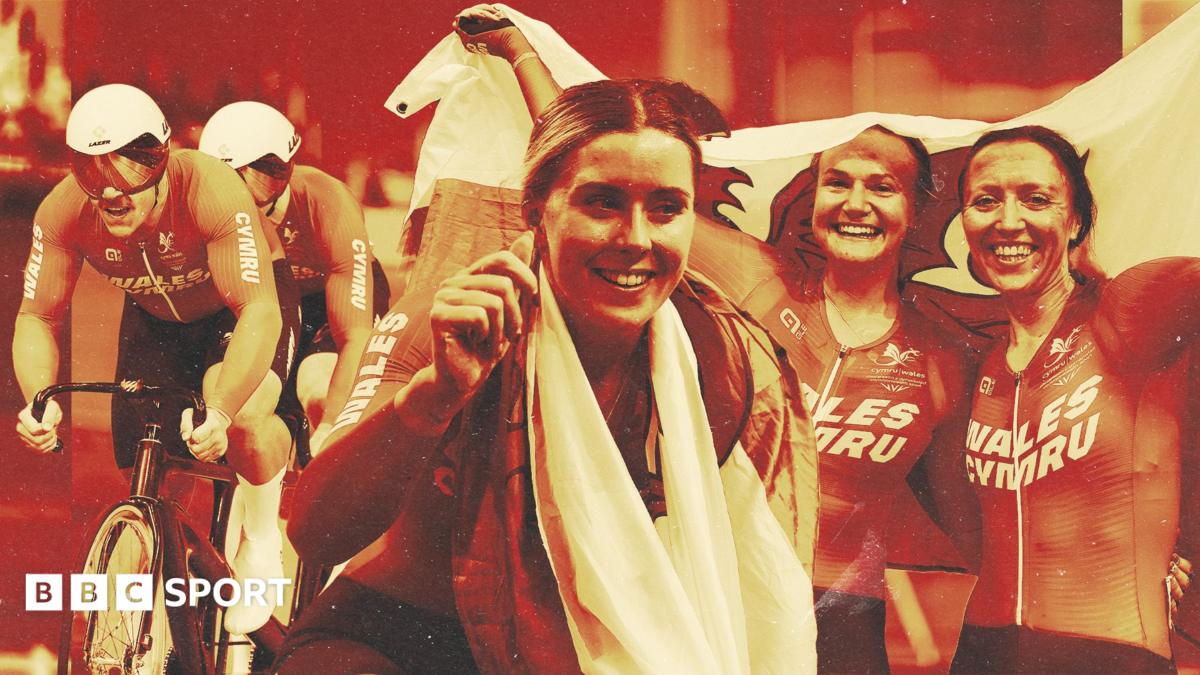
'I can't believe I'm living this life'- Finucane

Published

on

Emma Finucane is the first Welsh woman to collect three golds at a single Commonwealth Games.

Source link

Continue Reading

Sports

Shea Lacey is giving a senior Manchester United player a problem with his pre-season displays

Published

on

With his baggy shorts and his black boots, Amad looked like he had returned to Manchester United this pre-season from the 1950s rather than a few weeks away after the World Cup.

The 24-year-old reported to Carrington at the start of the week and was a surprise inclusion in the starting XI against Atletico Madrid on the back of limited training. Joshua Zirkzee made way as Bryan Mbeumo went through the middle.

It was an indication of how keen Amad was to keep the momentum that he had built over the summer going, and perhaps how keen Michael Carrick was to get him involved at the earliest possible opportunity.

He certainly looked bright in his 45 minutes on the pitch. He was confident from the first whistle, although one pirouette pass to Leny Yoro almost sold the makeshift right-back short. They dovetailed better as the half went on and combined well to break in down that flank just before the break.

United were behind early on in Stockholm to Arnau Ortiz’s cross, which beat Yoro and Harry Maguire and left Tom Heaton stranded, but Amad came closest to an equaliser. It was Mbeumo who won a free-kick on the edge of the box, but Amad was the only player taking it.

The ball had ended up on the left of the pitch after the striker had been fouled, and Amad wandered off to get his hands on it. He wasn’t going to let go. A lengthy debate with the excellent Mason Mount and Mbeumo followed, but Amad drilled a low effort which took a slight deflection. Jan Oblak saved with his feet and grabbed the ball on his goalline.

Amad enjoyed a productive summer with the Ivory Coast, scoring against France in a World Cup warm-up and then netting two excellent goals before his country were knocked out by Norway in the last-32. He looks sharp and pressed brilliantly to win possession high up, allowing Shea Lacey to cross for Mbeumo, who glanced a header wide.

Advertisement

It feels like a big season for Amad, who was disappointing last term and is set to face renewed competition for his place. In Amad, Lacey and Mbeumo, Carrick was starting three left-footed forwards who would probably all like to play on the right.

Every goal Mbeumo has scored under Carrick has come as a striker and with Benjamin Sesko still out, he could get minutes there. Lacey has started twice as a No.10 in pre-season, but will hand that shirt over to Bruno Fernandes soon enough.

All three could be in competition next season, which is why they all need to shine. Amad made his scheduled exit at the break and then watched Lacey continue to impress.

His quick feet and balance had been on show and he looked at home in elite company. A change of direction in the box earned a 53rd-minute penalty, which Mbeumo converted.

Advertisement

Lacey is now a regular in first-team training, and his brief exposure to the senior set-up in January under Darren Fletcher marked him out as a player to keep an eye on. He struggled for minutes under Carrick but has been to the fore this summer and the decision to start him as the attacking midfielder has been a show of faith.

The 19-year-old isn’t available for loan this summer and with a crowded schedule in the first half of the season at least, he will get opportunities to continue his development. This was a step up from thrashing Rosenborg in Trondheim and he took to it like a duck to water.

Carrick will be glad of the competition in a season that will test him in ways last term didn’t. He had days on end to prepare for games and was able to field a consistent starting line-up. That won’t be doable now United are back in the Champions League.

So Amad and Lacey will get games and if Mbeumo ends up playing as a striker more often, they could all feature regularly. Mbeumo was the matchwinner here, bundling in Jack Fletcher’s low cross to turn the game on its head.

Advertisement

There was even time for JJ Gabriel to make his first senior appearance, with the 15-year-old coming on for Mbeumo for the final 10 minutes and producing a couple of moments that marked out his dazzling talent.
Source link

Continue Reading

Sports

Exiled Trevor Bauer wishes he never signed with Dodgers

Published

on

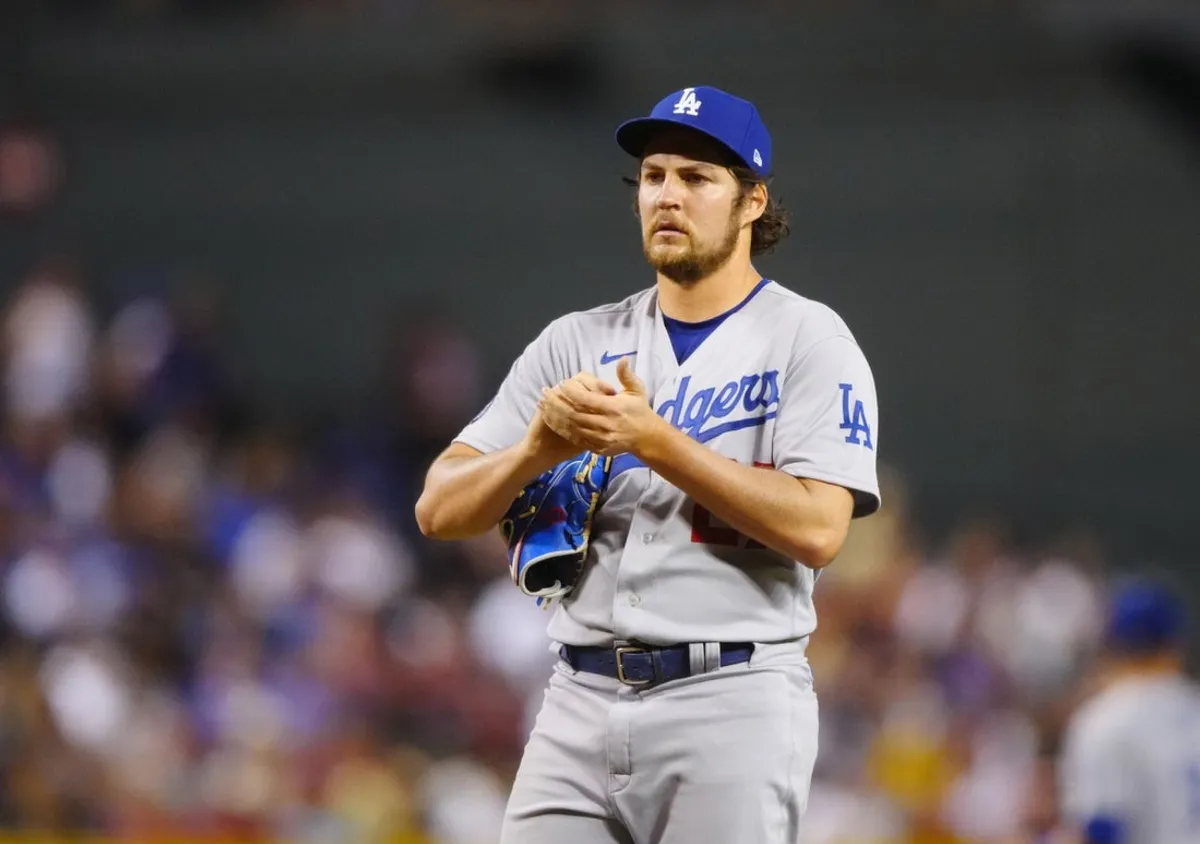
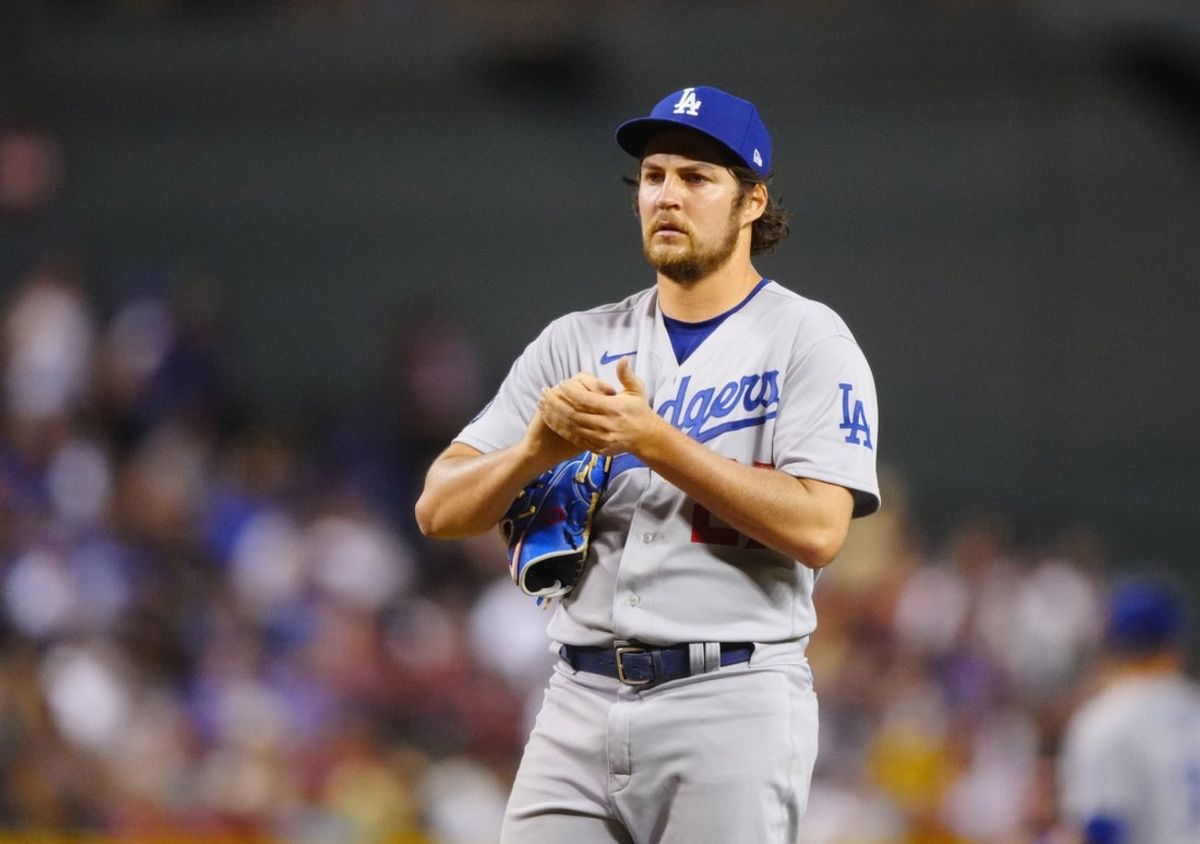
Jun 18, 2021; Phoenix, Arizona, USA; Los Angeles Dodgers pitcher Trevor Bauer reacts against the Arizona Diamondbacks at Chase Field. Mandatory Credit: Mark J. Rebilas-Imagn ImagesJun 18, 2021; Phoenix, Arizona, USA; Los Angeles Dodgers pitcher Trevor Bauer reacts against the Arizona Diamondbacks at Chase Field. Mandatory Credit: Mark J. Rebilas-Imagn Images

Five years after he last threw a pitch in the major leagues, former Los Angeles Dodgers pitcher and 10-year veteran Trevor Bauer continues to blame others for his inability to find a roster spot within an organization.

In an interview this week on the YouTube channel “La casa de los Dodgers,” Bauer expressed regret over signing a three-year, $102-million deal with his hometown club. The 35-year-old right-hander currently is pitching for the Diablos Rojos del Mexico in Mexico City.

“I wish I had never played for them,” Bauer said in the interview. “… The front-office people, I wish them nothing but the worst because they treated me like s–t and I just don’t appreciate it. I don’t think you should treat a human being like that.”

During his first season with the Dodgers in 2021, Bauer was accused of sexual assault from two separate encounters with the same woman. The Pasadena (Calif.) Police Department confirmed the allegations.

After an investigation, charges were never filed, with the Los Angeles County District Attorney’s Office saying there was a lack of evidence. The Dodgers still elected to part ways with the Los Angeles-area native after the process continued into April of 2022. The investigation uncovered disturbing details about the relationship between Bauer and his accuser.

Advertisement

The incident followed a pattern of Bauer being combative on social media, as well as political views and opinions on political figures.

The 2020 National League Cy Young Award winner, as a member of the Cincinnati Reds, Bauer said he had the support of Dodgers teammate Mookie Betts and that Dodgers manager Dave Roberts offered emotional support on one occasion. He offered criticism of Dodgers pitching coach Mark Prior.

Since his last pitch in the majors, Bauer has played in Japan and Mexico and had seven starts earlier this season with the independent Long Island Ducks. The Ducks transferred Bauer’s contract to the Diablos Rojos in June.

Advertisement

In the interview, Bauer said that signing with the Dodgers “was really cool for me,” after he grew up rooting for the club. But he said the Dodgers’ clubhouse atmosphere “wasn’t as good as some other places I’ve been.”

He insists that he still is good enough to compete at the game’s highest level.

“I’d love to be back in the big leagues at some point, but it is pretty obvious at this point that the league will never allow that to happen,” Bauer said. “I think what they are doing is illegal and I just don’t want to waste my time and energy and money and everything suing them because I don’t think that is good for baseball.”

Bauer went 83-69 with a 3.79 ERA in 222 games (212 starts) with four teams from 2012-21.

Advertisement

–Field Level Media

Source link

Continue Reading

Sports

3 NASCAR Cup Series drivers that can make the Chase who are currently outside the qualifying spots

Published

on

With four races remaining before the 2026 NASCAR Cup Series Chase begins, the battle around the cutline is one of the biggest storylines of the season. Denny Hamlin continues to lead the standings with 886 points and is closing in on the No. 1 seed, holding an 84-point advantage over Tyler Reddick. Behind them, however, the fight for the final Chase positions remains wide open.

Following the Brickyard 400 at Indianapolis Motor Speedway, Joey Logano climbed to 13th after another strong result, while Austin Cindric holds the final Chase spot in 16th with 518 points. Shane van Gisbergen sits 15th, 57 points above the cutline, and Ryan Preece occupies 17th with 480 points. Erik Jones remains in 18th with 474 points, just 44 behind the cutline.

With Iowa, Richmond, New Hampshire and the finale at Daytona still to come, every race now carries major Chase implications. Several drivers are close enough that one strong finish, combined with a difficult afternoon for those around them, could quickly reshape the standings. Here are three NASCAR Cup Series drivers who still have a realistic chance of climbing above the cutline.

Advertisement

3 NASCAR Cup Series drivers who could still fight their way into the Chase

#3 Michael McDowell – No. 71 Spire Motorsports

Michael McDowell - NASCAR Cup Series race at Atlanta. Source: GettyMichael McDowell - NASCAR Cup Series race at Atlanta. Source: Getty
Michael McDowell – NASCAR Cup Series race at Atlanta. Source: Getty

Michael McDowell enters the final four-race stretch 20th in the standings with 442 points, leaving him 76 points behind Austin Cindric. While that is a sizeable gap, Indianapolis showed far more promise than his 18th-place finish suggests.

McDowell qualified sixth and spent much of the afternoon running near the front. He collected stage finishes of third and eighth, ranked among the race’s best on restarts and consistently looked capable of delivering a top-10 finish before late strategy dropped him back. Iowa has not been one of his stronger tracks, with an average finish of 25, but Spire Motorsports has made significant gains in 2026.

With Carson Hocevar and Daniel Suarez already comfortably positioned for the Chase, the No. 71 team can focus entirely on helping McDowell maximize points. The veteran last reached the NASCAR Cup Series postseason in 2023 and has the experience to capitalize in the final month.


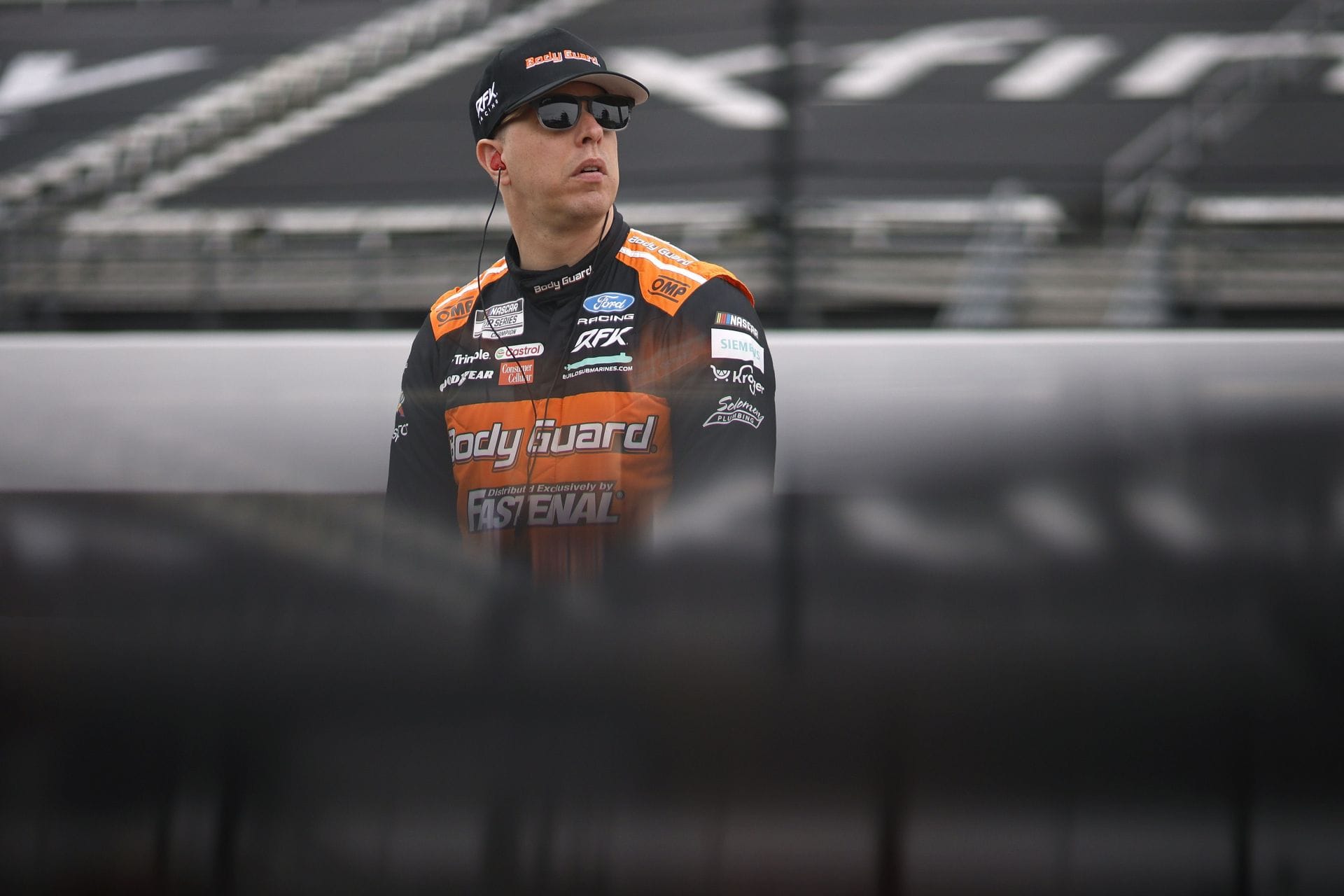
#2 Brad Keselowski – No. 6 RFK Racing

Brad Keselowski NASCAR Cup Series Brickyard 400. Source: GettyBrad Keselowski NASCAR Cup Series Brickyard 400. Source: Getty
Brad Keselowski NASCAR Cup Series Brickyard 400. Source: Getty

Brad Keselowski narrowly missed the playoffs last season and now faces another uphill battle. The 2012 Cup Series champion sits 19th with 468 points, 50 behind the Chase cutline, after a season that has produced only two top-five finishes.

However, the No. 6 RFK Racing team finally appears to be building momentum at exactly the right time. Keselowski followed a seventh-place finish at North Wilkesboro with sixth at Indianapolis, giving him consecutive top-10 finishes after an 11-race drought.

More importantly, the remaining schedule suits him well. Iowa has been one of his better tracks, where he finished 10th in the inaugural Cup race before leading 68 laps and finishing third last season. He is also a three-time NASCAR O’Reilly Auto Parts Series winner there. If Keselowski can continue stringing together top-10 finishes, the 50-point deficit could shrink much faster than it currently appears.

Advertisement

#1 Ryan Preece – No. 60 RFK Racing

Ryan Preece - NASCAR Cup Series FireKeepers Casino 400. Source: GettyRyan Preece - NASCAR Cup Series FireKeepers Casino 400. Source: Getty
Ryan Preece – NASCAR Cup Series FireKeepers Casino 400. Source: Getty

Among the drivers below the cutline, Ryan Preece has the clearest path into the NASCAR Cup Series Chase. He sits 17th with 480 points, only 38 behind Austin Cindric, and remains within striking distance with four races still to run.

Preece delivered one of the strongest recovery drives at Indianapolis, gaining valuable ground in the Chase battle. The upcoming schedule also works in his favor. Iowa Speedway produced one of Preece’s best runs last season, when he finished fifth, and he is already an O’Reilly Series winner at the short track. The margin remains narrow enough that one excellent race could completely change the Chase picture before the field heads to Richmond and New Hampshire.