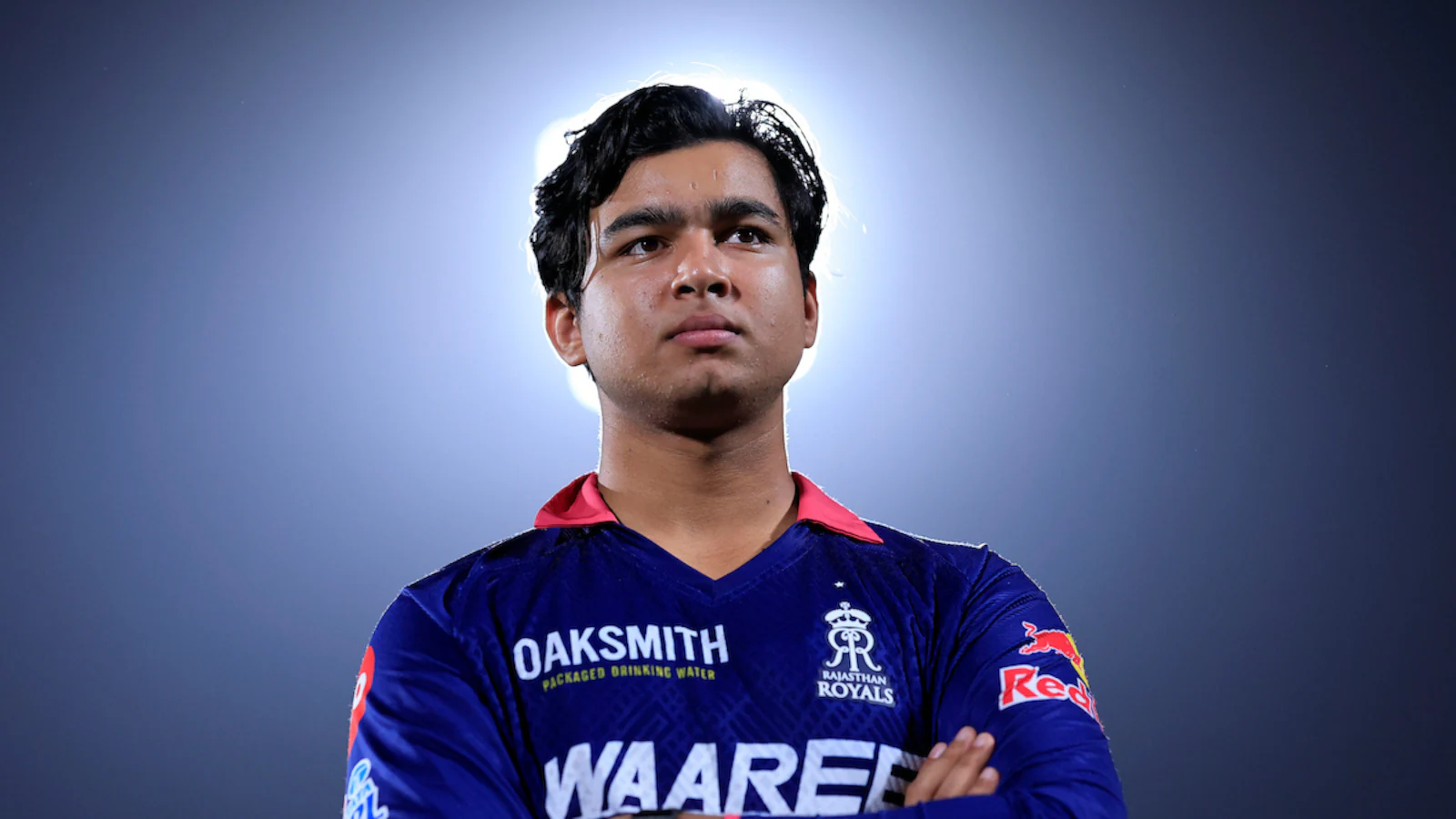
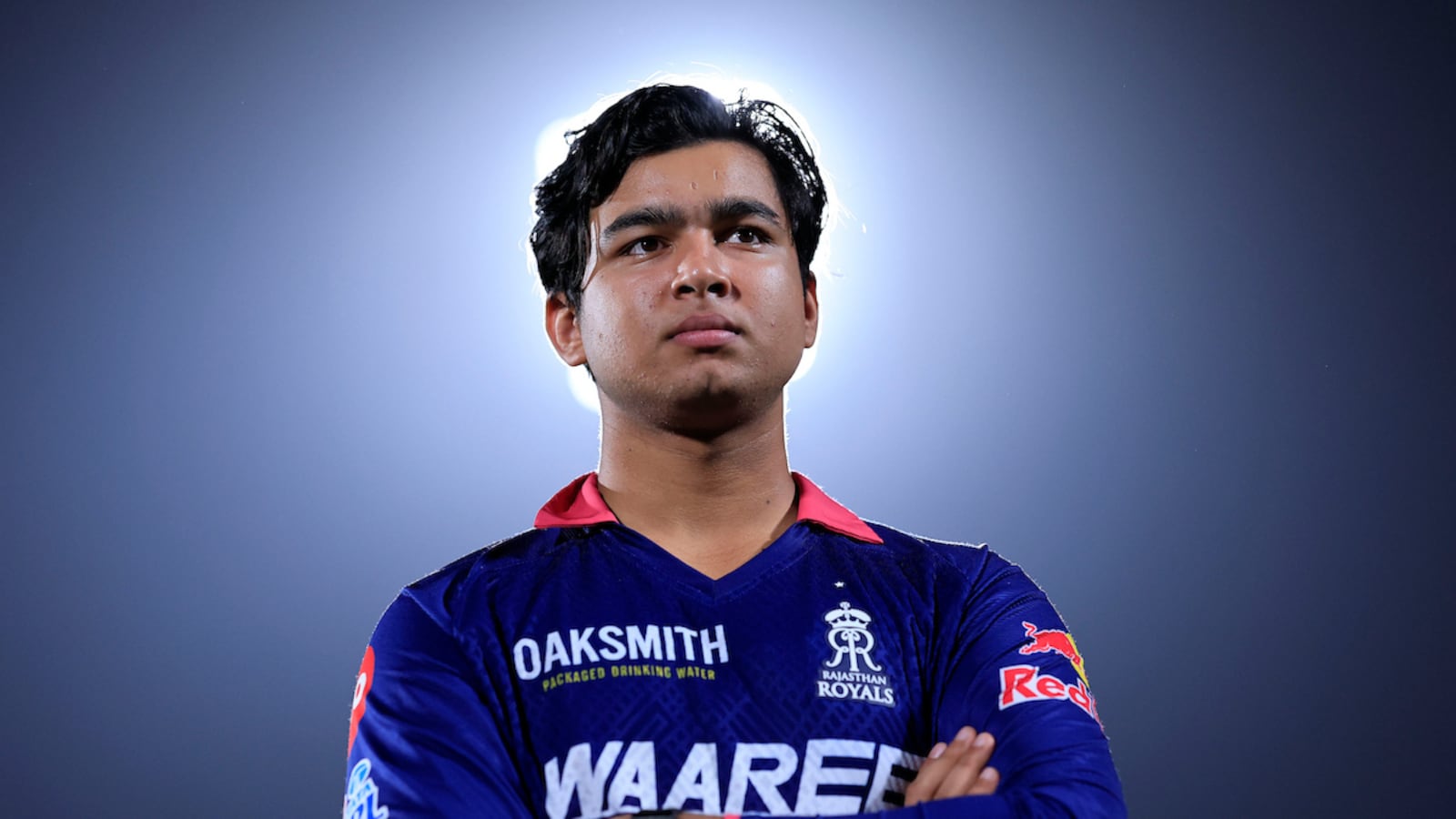
The clamour for Vaibhav Sooryavanshi‘s fast-tracked inclusion into the senior Indian men’s team is growing deafening. Barely a year since his IPL debut, the cricket world is already convinced the 15-year-old prodigy is ready for the highest level. Fans won’t have to wait long for a glimpse of his talent as the teenager is set to feature for India-A as early as next month, when the Tilak Varma-led squad heads to Sri Lanka for a tri-series. Sooryavanshi has scored nearly 600 runs (583) in the IPL this term.
IPL chairman Arun Dhumal hit the nail right on the head when asked about the way forward for the teenager, calling him a ‘special talent’ while insisting that the BCCI and RR’s continued guidance would make him even better.
“I feel the BCCI and the franchise would need to handhold him in terms of showing him the right way so that his temperament stays intact. Because sport is not only about physical skill, it is also about mental toughness,” Dhumal told The Times of India ahead of the IPL Eliminator between RR and SRH.
“And definitely, we will do our bit to make sure that the kind of skill set he has allows him to perform for India for many, many years to come.”
Advertisement
Like any other cricketer, Sooryavanshi might have his ups and downs, but his future will be determined by how he overcomes those challenges.
For now, Sooryavanshi has a big responsibility on his young shoulders – taking his team to the final of the IPL and earning the opportunity to dethrone Virat Kohli‘s RCB.
Before any talk of the final, Sooryavanshi and RR must first navigate past the explosive batting line-up of SRH in the Eliminator. Should they clear that hurdle, a virtual semi-final against Gujarat Titans awaits them in Qualifier 2.
No team has ever won the IPL from fourth place in the playoff era, and RR will need their teenage prodigy firing on all cylinders to rewrite history.
Advertisement
Featured Video Of The Day
IPL 2026 News | RCB Outplay CSK For 2nd Win On Trot, Ruturaj Gaikwad & Co Suffer 3rd Loss
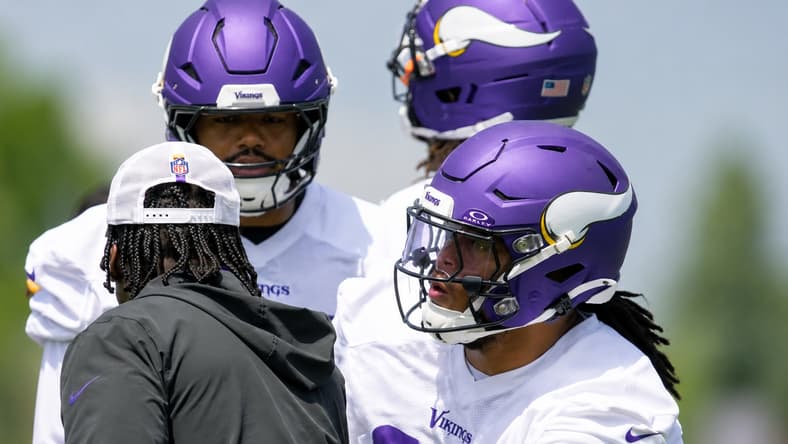
Minnesota Vikings defenders (Domonique Orange) participate in drills during the opening day of mandatory minicamp at the TCO Performance Center. The session offered an early look at Brian Flores’ defense as veterans and newcomers worked through assignments and technique development. Captured on June 9, 2026, the practice highlighted Minnesota’s preparation for the upcoming season. Mandatory Credit: YouTube.
The moment the Minnesota Vikings traded Jonathan Greenard to the Philadelphia Eagles for two 3rd-Round picks, they created a semi-urgent need at the outside linebacker position — if they don’t trust their in-house commodities.
The club has just over $13 million to spend in summer free agency, and all signs point to another EDGE defender if Bo Richter, Tyler Batty, or Chaz Chambliss don’t win the OLB3 job.
Vikings’ Pass Rush Depth Makes EDGE the Obvious Target
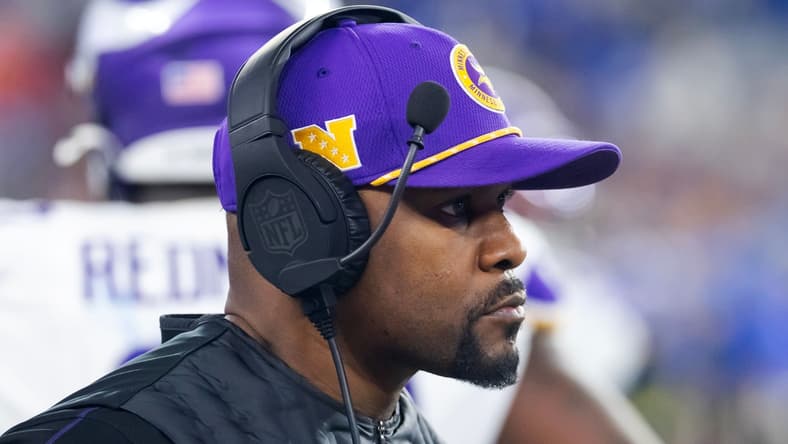
Minnesota Vikings defensive coordinator Brian Flores watches from the sideline during NFC Wild Card playoff action at State Farm Stadium. On Jan. 13, 2025, Flores managed defensive adjustments, personnel groupings, and situational strategy as Minnesota competed in a high-stakes postseason environment against one of the league’s top offensive teams. Mandatory Credit: Mark J. Rebilas-Imagn Images.
Vikings Could Use FA Cash at OLB
Minnesota may not sign an OLB this week, but it should be on the mind of new general manager Nolan Teasley, according to The Athletic‘s Alec Lewis.
Advertisement
He wrote Tuesday, “Trading Jonathan Greenard to the Philadelphia Eagles places major responsibility on third-year edge rusher Dallas Turner. It also emphasizes the depth behind Turner and Van Ginkel. The scheme can only go so far.”
“When one-on-one pass-rush opportunities present themselves, the Vikings need edge rushers who can win. Minnesota’s staff thinks highly of former undrafted edge rushers Chaz Chambliss, Bo Richter and Tyler Batty, though none of them have produced at the NFL level.”
Based on last year’s snap counts, Richter or Batty would likely get the OLB3 nod on the depth chart if Tealsey signs no newcomers.
Advertisement
Lewis continued, “The Vikings have around $13 million in cap space, according to Over The Cap, and some enticing free-agent edge rushers remain. The Vikings could wait until training camp to make a move.”
“But from a competitiveness standpoint, supplementing this position group seems paramount.”
The Options
If one assumes the Vikings don’t fire up a fancy trade for an EDGE defender — they probably won’t because they would’ve kept Greenard otherwise — free agency actually has a barrage of promising options. Assuming Minnesota doesn’t wait until the last minute, here’s the EDGE market right now:
The list is thick, and outside of Davenport — a former Viking who disappeared after a high ankle sprain in 2023 — fans would not be disappointedwith any man from this list.
Carolina Panthers linebacker Jadeveon Clowney participates in pregame warm-ups before an exhibition matchup against the New York Jets. On Aug. 17, 2024, the veteran pass rusher prepared for preseason action at Bank of America Stadium, continuing his role as one of the Panthers’ most experienced defensive contributors. Mandatory Credit: Jim Dedmon-USA TODAY Sports.
SKOR North‘s Judd Zulgad noted on Clowney in particular this week, “Clowney, who is 33, has 66.5 sacks in 153 games over 12 seasons with seven teams. Last season, he had 8.5 sacks in 13 games with Dallas. Teasley is familiar with Clowney, who spent the 2019 season in Seattle when Teasley was the Seahawks’ director of pro personnel.”
Rolling the Dice with a UDFA?
If it’s not a household name like Jordan, Clowney, Bosa, Floyd, or Miller, Minnesota would promote from within. Four in-house options are available after Van Ginkel and Turner, all the aforementioned undrafted free agents: Richter, Batty, Chambliss, and Cam’Ron Stewart.
As Lewis noted, there’s no way to know in June if those men have the juice for a full-time OLB3 role, but behind the scenes, defensive coordinator Brian Flores should know if any of the four is ready.
Advertisement
Meanwhile, the longer the Vikings wait without signing a free-agent EDGE, the closer they get to riding with Richter, Batty, Chambliss, and Stewart. There’s also a chance that Minnesota waits until the post-cutdown market, when approximately 1,200 NFLers hit free agency or bide their time for a practice squad assignment.
Other Positions of Need?
Finally, the other spots on the roster that could use some love from Teasley. This list is not that long, believe it or not.
Minnesota has plenty of safeties, and if Harrison Smith returns, no more are needed. If Smith doesn’t return for Year No. 15, a free-agent safety cannot be ruled out if rookie Jakobe Thomas isn’t ready for the regular season.
Advertisement
Minnesota Vikings owner Mark Wilf joins newly hired general manager Nolan Teasley during an introductory press conference at team headquarters. On June 3, 2026, Teasley outlined his vision for the franchise, discussing roster construction, organizational goals, and collaboration with ownership as he formally began his tenure in Minnesota. Mandatory Credit: YouTube.
With the safety caveat, the positions of need are down two spots in June, July, and August: cornerback and guard. Flores has Byron Murphy Jr., Isaiah Rodgers, James Pierre, rookie Charles Demmings, and Dwight McGlothern locked and loaded at CB. If the Vikings wanted to be ultra-deep, free agents like Trevon Diggs and Mike Hilton are looking for work.
At guard, the situation is similar to OLB. Should Joe Huber and Henry Byrd do the trick as depth, no more guards are required. The saving grace is that about 10 decent depth guards are on the free-agent wire.
Vikings training camp is about seven weeks away. A quality, big-name EDGE like Clowney or Bosa would likely cost around $10 million.
Dustin Baker is a novelist and political scientist. His second novel, The Invaders , is out now. So is … More about Dustin Baker
England head coach Thomas Tuchel said the delay to their World Cup warm-up game with Costa Rica gave them a “little taste of what can happen” – but will that prove to be an understatement?
The match was due to start at 21:00 BST in Orlando, Florida, but heavy rain and thunderstorms pushed it back an hour to 22:00 BST.
Weather delays have been a major talking point in the build-up to this year’s World Cup, with several matches in last year’s Fifa Club World Cup in the United States impacted by thunderstorms.
This was not the first tournament warm-up game to suffer delays caused by storms either – and many fans are concerned it could become a theme throughout the World Cup.
Advertisement
“We were aware of that before – now we experience it,” Tuchel told ITV before the game. “It’s no problem.
“It should not be an excuse to lose our mood or patience or to lose our hunger to play the game.
“No problem at all. We realised it when we were still at the hotel so it was easy. We just said half an hour later in the bus and let’s go.”
Fans who had already arrived at Inter&Co Stadium were told to evacuate from the stands and retreat to a safe position on the concourses to avoid lightning strikes.
Advertisement
Thunderstorms in the US are not uncommon, but when it comes to them impacting matches, Fifa has no power to make its own rules and must adhere to the advice of local authorities.
Recommendations of the National Oceanic and Atmospheric Administration (NOAA) are used and they say if any lightning strike is detected within eight miles of a stadium, the game has to be stopped.
A mandatory 30-minute countdown begins and each time there is a lightning strike inside the distance, the countdown clock resets to 30 minutes.
If a full 30 minutes has elapsed, the supporters can go back to their seats and players will have a short warm-up.
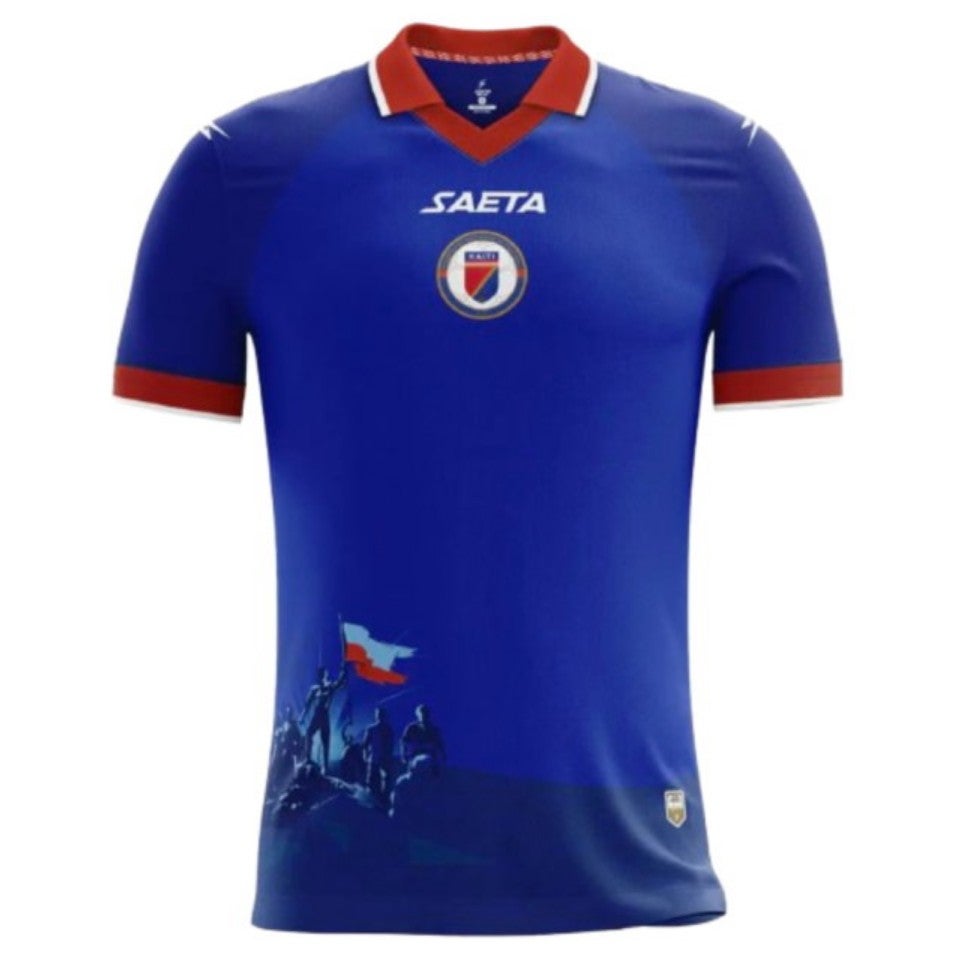
Haiti have been forced into a late change on their World Cup 2026 shirts after Fifa accused them of violating its regulations on political speech.
Haiti, preparing to kick off their World Cup in Group C against Scotland in Boston on Saturday, previously had a shirt that depicted a war scene from the country’s battle for independence.
But shirt manufacturer Saeta confirmed on Wednesday that a swift, late change had been made after collaborating with the Haitian Football Federation on the design.
It previously was said to be geared towards “celebrating the pride, resilience, and spirit” of the Haitian people, with the Colombian manufactuer emphasising that it did not intend it to be a political statement.
“During the review process, FIFA determined that certain visual elements could be interpreted differently under its equipment regulations and ultimately requested modifications to the design,” Saeta said in a statement.
Advertisement
Haiti’s home kit by Saeta (Saeta)
“While this interpretation differed from our intention, Saeta respected the process and implemented the final requirements communicated by FIFA.”
Soccer’s world governing body FIFA, the Haitian Football Federation and the team’s media officer did not immediately respond when asked by Reuters for comment.
2 min read Last Updated : Jun 10 2026 | 10:36 AM IST
Lionel Messi is ready for his sixth World Cup.
After recovering from a muscle injury, the captain of the reigning world champions played 20 minutes and scored a penalty in Argentina’s 3-0 victory over Iceland on Tuesday in its final tune-up match before the World Cup.
Messi, recovered from muscle fatigue and a slight strain in his left hamstring that he suffered in his last appearance with Inter Miami on May 24, started the game from the bench.
Advertisement
Just days before his 39th birthday and his sixth World Cup, Messi came on in the 70th minute and he scored a penalty kick after Lautaro Martinez was fouled inside the area.
Messi, the all-time top scorer for the Argentine national team with 117 goals, converted the penalty with a high left-footed shot in the 72nd minute.
Argentina, seeking its fourth World Cup title after those won in 1978, 1986, and 2022, will open its tournament against Algeria on June 16 in Kansas City in Group J, which also includes Austria and Jordan.
Advertisement
It was the second match between the two nations. The first one was at the 2018 World Cup, when the European side managed a 1-1 draw in which Messi missed a penalty.
(Only the headline and picture of this report may have been reworked by the Business Standard staff; the rest of the content is auto-generated from a syndicated feed.)
The FIFA World Cup has seen ‘Paul the Octopus’ – the famous eight-limbed soothsayer. In this age of AI and machine learning, predicting a World Cup winner has become more refined. Take, for example, Achim Zeileis, Professor of Statistics, University of Innsbruck. He has used “machine learning algorithm and subsequent simulations are fueled by data, expert knowledge and statistical models” to predict the likely winner of the FIFA World Cup 2026 – the biggest edition of the marquee event so far.
What Was the Process Followed to Predict the Winner?
Achim Zeileis says his algorithm proceeds in two steps. “In the first, sophisticated statistical models and expert insight from bookmakers and transfer markets are combined to determine the strengths of all teams and their players. In the second step, a machine learning algorithm decides how to best combine the strength estimates with other information about the teams,” he wrote in The Independent.
Advertisement
“We ran the simulation 100,000 times to determine the tournament’s most likely course. The results show that Spain is the favourite for the title with a winning probability of 14.5%, closely followed by England and France, each at 12.4%, and Germany at 11.2%.”
“Portugal and Argentina also have good chances of winning the title, at 8.9% and 8.2%, respectively.”
A Deep Dive
Zeileis says his algorithm took note of four variables.
“First, all national matches over the past eight years are the basis for a “retrospective” estimate of the teams’ strengths. Second, a “prospective” strength estimate is obtained from quoted odds of various international bookmakers, reflecting their expert opinions about the upcoming tournament,” he wrote further.
Advertisement
“Third, ratings of the individual players are produced based on their contributions to goals at the club and national levels. And finally, the current quality and future potential of the players are reflected in their expected market values. These are available from the Transfermarkt website, which uses a wisdom-of-the-crowd approach to estimate the unknown real market values.
Featured Video Of The Day
IPL 2026 News | RCB Outplay CSK For 2nd Win On Trot, Ruturaj Gaikwad & Co Suffer 3rd Loss
Nigeria’s Super Eagles produced a spirited performance but suffered a narrow 2-1 defeat to Portugal in an international friendly match played in Leiria on Wednesday night.
Before kick-off, Super Eagles midfielder Alex Iwobi was honoured for making his 100th appearance for Nigeria. The Chairman of the National Sports Commission, Shehu Dikko, alongside NFF Executive Committee member Sharif Rabiu Inuwa, presented him with a special framed shirt to mark the milestone.
Portugal, led by football legend Cristiano Ronaldo, started brightly but found a determined Nigerian side ready to compete.
Advertisement
Ronaldo had an early chance in the ninth minute but failed to beat goalkeeper Maduka Okoye. At the other end, striker Akor Adams also went close but dragged his effort wide.
Portugal took the lead in the 23rd minute when Pedro Neto fired past Okoye from close range after a pass from Diogo Dalot.
Okoye then produced a brilliant save to deny Bruno Fernandes in the 33rd minute before Ronaldo narrowly missed with a header moments later.
Advertisement
Nigeria continued to push forward and got their reward in the 37th minute. Adams won possession in midfield, made a run into the box and finished confidently after receiving a pass from Fisayo Dele-Bashiru to make it 1-1.
The Super Eagles remained competitive after the break, with Okoye making two important saves from João Félix. Ronaldo also continued searching for a goal but could not find the target.
On the hour mark, Super Eagles coach Éric Chelle introduced several substitutes, including Terem Moffi, Raphael Onyedika and Frank Onyeka. The changes gave Nigeria fresh energy as they continued to trouble the hosts.
However, Portugal found the winning goal with 15 minutes remaining. Francisco Conceição cut in from the right and fired home to restore his side’s lead.
Advertisement
Okoye made another impressive save late in the game to deny Félix, but Nigeria could not find an equaliser before the final whistle.
Despite the defeat, the Super Eagles earned praise for their fighting spirit and strong display against a Portugal side preparing for the 2026 FIFA World Cup.
The loss was only the second defeat in regular time for Chelle since taking charge of Nigeria 15 months ago.
Welcome to Fully Fit 2026, GOLF’s new platform for providing you with real-golfer insights into what 2026 gear might be best suited for your game. To this end, we assembled six GOLF content creators of varying abilities and ran them through the gauntlet of six full-bag fittings (driver to putter!) at six major club manufacturers in Phoenix and Carlsbad, Calif. Our hope: that you might see shades of your own game in one of our panelists’ and take some learnings and inspiration from their fitting experiences. In this installment (below), Jack Hirsh details his low-torque putter journey around Fully Fit 2026. You may browse each of our panelists’ full 2026 dream bags here:
The biggest surprise for me during our six-day club-fitting bonanza back in December was during a putter fitting at TaylorMade’s Kingdom.
Advertisement
No, I wasn’t knocked off my feet by how good the Spider Tour and Spider Tour X putters are — although they are tremendous putters.
Instead, my “Aha” moment came with the newer of TaylorMade’s Spider models, the Spider ZT, TaylorMade’s take on the low-torque, or “zero-torque,” putting phenomenon that has captivated the marketplace over the past two years.
Editor’s note: Given that even “zero-torque” putters still have torque to get them to balance toe-up, GOLF refers to these types of putters as “low-torque.”
During a putter fitting, I came with two “gamers.” A face-balanced blade and a low-torque mid-mallet that I had committed to using for several months to see what it would do to my putting stroke.
Advertisement
After a couple of strokes with a comparable TaylorMade blade, we jumped into the Spider ZT, where the result left me in a rare speechless moment.
On the first attempt, I recorded a face angle of 0.01 ° at impact on the GEARS system. That meant I returned the putter face nearly perfectly square. Good putters typically have up to a degree of face angle variance. A professional golfer typically records anywhere within a half degree. After a few more attempts, I kept getting within that half-degree threshold.
Am I the ideal candidate for low-torque putters? As I have found out, it’s not that simple.
My low-torque putting experiment
For some background, until I had this job as GOLF’s associate equipment editor, I had used either a Scotty Cameron Newport 2 or Newport 2.5+ with Teryllium inserts for 15 years. I never knew a mallet, and I liked a soft feel.
Advertisement
A putter fitting — realistically, my first ever — with Bettinardi last spring showed me that the short slant on my Newport 2.5+ had too much toe hang and I’d be better off using something more face-balanced. My stroke was more like a pendulum, with very little face rotation, rather than an arc like I thought it was.
I was using blades like that and seeing improvements, especially from short and mid-range, until Scotty Cameron released their Onset Center Fastback and Phantom 11R, the company’s first low-torque putters. Immediately, I was intrigued, especially by the Fastback OC, as it was a shape that I already knew I liked — a mid-mallet that was far off spaceship territory — had little shaft lean and had Scotty Cameron’s new and very soft Studio Carbon Steel insert.
Advertisement
Scotty Cameron Studio Style Fastback OC Putter
As an extension of the popular Studio Style Fastback design, the Studio Style Fastback OC is a low-torque model featuring the same ring-weighted, high-alignment, multi-material design of the other Fastback models, but with Scotty’s tour-validated OC technology package. Featuring onset center shaft placement behind the putter face’s leading edge, the straight shaft is precisely positioned in line with the putter head’s CG location and leans 1° forward. This allows for low-torque performance and face alignment that stays square to the path.
STUDIO CARBON STEEL (SCS) FACE INSERT
The Studio Style Fastback OC includes a chain-link milled Studio Carbon Steel (SCS) insert for soft sound and feel, treated with an electroless nickel plating for enhanced durability with aerospace-inspired vibration damping for tuned sound, feel and performance.
CUSTOM BLACK SHAFT
Advertisement
Custom made for the new OC putters, each model includes a special black KBS x Scotty Cameron shaft with optimal flex, unimpeded alignment and precise feel.
CUSTOM MATADOR GRIP
With a debossed chain-link texture built-in, each new OC putter includes a custom 11-inch mid-size Matador grip in black with racy red and cool gray accents.
In my first tests, I didn’t have a left miss, which to that point, I’d experienced with almost every low-torque putter I’d tried except the Spider ZT. I put some impact tape on the face just out of curiosity and saw my strike was dead center.
My first rolls with the Scotty Cameron Fastback OC.
Jack Hirsh/GOLF
That was when I came up with this experiment, and my experience at the Kingdom only further proved to me that I was on the right track.
Advertisement
For the next few months, I planned to putt exclusively with low-torque putters as a means of resetting my putting stroke.
Until my putter fitting with Bettinardi, I felt like my putting was holding me back. I struggled big time with pulls, especially from short range and couldn’t convert enough 10-20 foot mid-range putts. I started putting better after the putter changes, but I figured, why not try to reset everything and potentially start fresh in 2026?
After TaylorMade, I wondered if the experiment would ever end. But by April, it was, and I had learned a ton.
My results with low-torque putters
The primary putters I used for the experiment were the Scotty Cameron Fastback OC and the Spider ZT, both at 35″ and standard lie angles of 70 degrees. I also dabbled with a L.A.B. Golf OZ.1i and had some good initial success, but the milled steel insert was too firm for me, and I struggled with pace.
Advertisement
The blade putters I used in 2025 were slightly longer at 35.5″ and flatter at 67 degrees, but with both putters, my stroke was consistent and my eyes were in similar positions in the stock length and lie.
Both putters I gripped with the Golf Pride Reverse Taper Pistol Medium, slightly larger than the small version I’d been using on all my other putters. I did this because, to be most effective with a low-torque putter, I needed to remove my hands from the stroke, and a bigger grip helps that.
At first, the results were good. I trended toward the Cameron a little more because of its more compact shape and the softer insert, which I felt helped with distance control.
The Spider ZT had plenty of advantages, though, thanks to its larger, high-MOI shape. With that putter, I knew I could make a bad stroke and still have it go in.
Advertisement
TaylorMade Spider 5K-ZT Black Putter
LOW TORQUE DESIGN
The KBS putter shaft is bored directly toe-ward near the CG at a 1° shaft lean with 25mm onset behind the face allowing golfers to realize the benefits of a new stable, toe up design.
UNIQUE SOLE SHAPING
New and improved sole shaping to work specifically with this unique hosel configuration, engineers worked tirelessly to find new ways to improve accuracy from the moment the putter is placed behind the ball. The new sole curvature accommodates different player types and ball positions, giving golfers the ability to find a consistent and repeatable stroke.
SPIDER STABILITY
Combining high density stainless steel and low-density aerospace quality aluminum provides the perfect foundation for a design that is high MOI and allows for a shaft orientation that sits closer to the face.
MILLED TRUE PATH™ ALIGNMENT
Based on tour player feedback, we were tasked to find a new premium alignment system. Building on the classic TaylorMade True Path™ technology, milled lines the width of the golf ball were added helping golfers properly index to center face.
For the most part, my pulls on short putts, especially right-to-left breakers, were eliminated, but I didn’t realize at what cost for a few months.
Advertisement
Eventually, my left miss came back because I became fearful of a right miss. The thing with low-torque putters is that they resist the urge to twist either direction. I’ve putted for years with the feeling of the blade opening and then closing. Whether it matched my stroke or not, I needed to feel like the blade closes through the stroke.
This is when I got into a phase of battle golf on the green, either pushing the putt because I was actively trying to avoid feeling my natural release through the putt, or pulling it because I forced myself to close the blade, even though the putter was already square.
I had grown up on a feel and now that feel was dulled.
What I’m using now
Ironically, the putter I’m using now was presented to me during Fully Fit, and I passed because I didn’t understand what it was.
Advertisement
The Ping Scottsdale TEC Ally Blue Onset looks like a low-torque putter, but it’s actually something entirely different. For starters, the Ally Blue Onset has toe hang. It’s minimal, just five degrees, but the toe does not point up when balanced.
That’s because instead of aligning the Ally Blue Onset’s shaft through the center of gravity of the putter, Ping placed it in front of the CG, meaning the stroke pulls the CG, like a truck towing a trailer. The configuration does lower the putter’s torque profile, but it’s not far off from Ping’s Anser either.
The shaft is still back off the face, but it gives a completely unobstructed view of the face to aid alignment. The Scottsdale TEC EyeQ technology also has a number of alignment aids built in that GOLF’s Jake Morrow just dove deep into.
With that unique CG placement relative to shaft axis, what I got is a super stable putter that gave me just the right feeling of release through the ball. Finally, I had a putter that I could stroke freely and trust the ball would come off on my intended line.
The Scottsdale TEC insert is made of super-soft PEBAX material. It’s the first non-milled putter I’ve ever used, but the soft feel is very similar to what I’ve liked my whole life.
When at Ping’s PLD Putting Lab for my fitting last December, the fitter asked if I wanted to try the then-unreleased Ally Blue Onset. I thought it was another low-torque option and I wasn’t ready to commit to either a traditional-sized mallet or a putter without a milled insert. My tune changed after my Kingdom experience.
Advertisement
Would I like to go back to the PLD Lab and see if we could get this Ally Blue Onset further dialed in? It will probably happen at some point, but until then, I’m not worried that I’m leaving anything on the table.
What I learned
Let me be clear: If anyone asked to make an eight-foot, dead straight putt for a million dollars, I’d be comfortable using any one of these putters. In an indoor fitting environment where I know the target is a straight putt with no break, a low-torque putter is simply point-and-shoot.
But for a golfer like me, who has thousands upon thousands, maybe even millions(?) of reps of releasing the toe of a putter, breaking putts becomes challenging.
So I learned that an indoor putter fitting is great, but I need to validate that experience on the golf course and hit breaking putts.
Advertisement
The second thing is that using a low-torque putter did have a pretty significant impact on my stroke.
While I did fight the concept for a while, my stroke was refined through months of trying to reduce the manipulations of my hands. Now I can still feel the release of the putter while also keeping my hands quiet through the stroke.
The Ping is the best putter for me. But I find that whenever I pick up my old Scotty Cameron blades, I have a much easier time hitting the center than before.
“Going to the Jailbird, kind of that longer length, a lot heavier, helped kind of quiet and take the hands out of it a bit,” Fowler, who moved from a L.A.B. putter to a center-shafted Scotty Cameron GoLo this year, said. “And then from there went into messing with the L.A.B.s, still helping take the hands out of it a bit, but at a lighter, kind of shorter setup to help try and bring some feel back into it.”
Like Fowler, I also got over any aversion to center-shafted putters.
Not really a low-torque putter, but it still fits in the category if we define it by onset putters. This has been my gamer, somewhat surprisingly, in my first two competitive rounds of the year, and I’ve yet to have a competitive three-putt.
Advertisement
Despite the onset shaft, there’s no shaft lean, which makes this feel just like a traditional putter to me; I just place the ball a little more forward in my stance.
The insert also really surprised me for how responsive it is. The original Scottsdale line from 2025 had a similar PEBAX insert, which even I found was too soft. The Scottsdale TEC — probably because the rest of the putter is a milled aluminum and steel construction — feels much more like the soft milled putters I’ve used before.
Scotty Cameron Fastback OC
Advertisement
Scotty Cameron Studio Style Fastback OC Putter
As an extension of the popular Studio Style Fastback design, the Studio Style Fastback OC is a low-torque model featuring the same ring-weighted, high-alignment, multi-material design of the other Fastback models, but with Scotty’s tour-validated OC technology package. Featuring onset center shaft placement behind the putter face’s leading edge, the straight shaft is precisely positioned in line with the putter head’s CG location and leans 1° forward. This allows for low-torque performance and face alignment that stays square to the path.
STUDIO CARBON STEEL (SCS) FACE INSERT
The Studio Style Fastback OC includes a chain-link milled Studio Carbon Steel (SCS) insert for soft sound and feel, treated with an electroless nickel plating for enhanced durability with aerospace-inspired vibration damping for tuned sound, feel and performance.
CUSTOM BLACK SHAFT
Advertisement
Custom made for the new OC putters, each model includes a special black KBS x Scotty Cameron shaft with optimal flex, unimpeded alignment and precise feel.
CUSTOM MATADOR GRIP
With a debossed chain-link texture built-in, each new OC putter includes a custom 11-inch mid-size Matador grip in black with racy red and cool gray accents.
I like the feel and look of this low-torque putter the best.
Unlike most low-torque designs, this isn’t a high-MOI shape, so it’s easier for someone who has played a blade to transition to it.
What did me in here was the heavier-designed weight, which didn’t totally mesh with my quicker stroke tempo. I also found that I was launching this putter with backspin, again potentially having something to do with the heavier headweight. This could potentially be solved with the adjustable weights, but I haven’t tried that yet.
For someone with a more deliberate pace who likes the soft feel, this could work out really well.
Advertisement
TaylorMade Spider ZT Black
TaylorMade Spider 5K-ZT Black Putter
LOW TORQUE DESIGN
The KBS putter shaft is bored directly toe-ward near the CG at a 1° shaft lean with 25mm onset behind the face allowing golfers to realize the benefits of a new stable, toe up design.
UNIQUE SOLE SHAPING
New and improved sole shaping to work specifically with this unique hosel configuration, engineers worked tirelessly to find new ways to improve accuracy from the moment the putter is placed behind the ball. The new sole curvature accommodates different player types and ball positions, giving golfers the ability to find a consistent and repeatable stroke.
SPIDER STABILITY
Combining high density stainless steel and low-density aerospace quality aluminum provides the perfect foundation for a design that is high MOI and allows for a shaft orientation that sits closer to the face.
MILLED TRUE PATH™ ALIGNMENT
Based on tour player feedback, we were tasked to find a new premium alignment system. Building on the classic TaylorMade True Path™ technology, milled lines the width of the golf ball were added helping golfers properly index to center face.
This is one of the most popular low-torque putters on the market for good reason.
Due to the Pure Roll insert’s great forward roll, I tried to give this putter as much of a chance as possible after the fitting. But it just didn’t translate to the course, and I found myself trying to steer it.
Advertisement
If you’re someone who wants a point-and-shoot putter with tons of forgiveness, look no further.
L.A.B. Golf OZ.1i HS
Advertisement
L.A.B. Golf OZ.1i HS Custom Putter
It’s heel-shafted. It’s still L.A.B. Heel-shafted putters have been around forever. No reason they shouldn’t be balanced. OZ.1i HS is the first heel-shafted putter with Lie Angle Balance, giving golfers the traditional look so many love with the ease of use that defines L.A.B.
This isn’t just an OZ.1 i with a different neck. Lie Angle Balance demands precision, so we re-engineered the OZ.1 i chassis for a no-compromise heel-shafted design. Our proprietary aluminum riser connects the shaft to the head in a way that maintains Lie Angle Balance and delivers the same forgiveness as the OZ.1i.
Golfers who prefer a heel-shafted look no longer have to compromise on performance. And because it’s a L.A.B., you can count on every putter being individually built and balanced. With OZ.1i HS, it’s not where the shaft goes. It’s where the ball goes.
This is my favorite L.A.B. putter so far, but I just didn’t vibe with the super firm feel off the face, despite pairing it with the softer Accra shaft.
Advertisement
I also used a 0 ° shaft-lean option, which really helped me avoid a left start line.
Honorable mention: Spider Tour Torched Small Slant
Advertisement
TaylorMade 2026 Spider Tour Small Slant Custom Putter
TORCHED PVD FINISH
The durable PVD coating creates a beautiful high-quality finish.
THIN WALL UNDERCUT CONSTRUCTION
We’ve engineered a super stable structure by removing excess weight to create high MOI and legendary Spider performance.
CG LOCATION PROGRESSION
Each Spider Torched model features different CG locations for optimal putter fitting.
HYBRAR ECHO® DAMPENER
HYBRAR is behind the face to dampen unwanted vibrations, delivering premium sound and feel on every putt with the best possible sensation.
I just received the Spider Tour during the run-up to the release of the 2026 line, and I’ve never had the chance to try out the small slant necks on the Spider before.
Advertisement
Turns out they work really well with my stroke, and I look forward to more testing. However, I’m not looking to change anything with my gamer at the moment.
Honorable mention: Bettinardi BB28 2026 and Scotty Cameron Catalina
Advertisement
Scotty Cameron Studio Style Catalina Custom Putter
STUDIO CARBON STEEL (SCS) FACE INSERT
Designed to deliver the unmistakably soft sound and feel of carbon, the new precision milled Studio Carbon Steel (SCS) insert is treated with an electroless nickel plating for enhanced durability in a re-engineered concept that includes the line’s new chain-link face milling technology and aerospace-inspired vibration damping for tuned sound, feel and performance.
CHAIN-LINK FACE MILLING TECHNOLOGY
New chain-link face milling technology reduces the putter face insert’s touch points at impact with the ball using a texture that softens the sound and provides improved roll characteristics while preserving feel and feedback off the putter face.
FULL CONTACT SLIM GRIP
With a comfortable chain-link texture to match the new putter face milling pattern, the custom crafted Full Contact Slim paddle-style grip was designed to complement stroke and performance of blade and mid-mallet putters. Its uniquely contoured profile and flat top provide superior comfort and contact between the hands and the putter, and enhanced body alignment.
MID-BEND SHAFT
The Studio Style Catalina is designed with a stepless steel shaft engineered to minimize face rotation—or arc—in the putting stroke by incorporating a single “mid” bend aimed directly down the target line.
World governing body Fifa has struck a landmark deal with global players’ union Fifpro that means players will be represented when major decisions affecting the game are agreed.
Faced with a number of separate legal claims around player welfare, Fifa has agreed a memorandum of understanding with Fifpro, which it says “marks [a] paradigm shift in governance of professional football, with transfer system and player welfare standards”.
Advertisement
For the first time, Fifpro will have a veto over key areas of the game’s governance and also observer access, with speaking rights, at the powerful Fifa Council, the decision-making body of global football.
Advertisement
Fifa says it has struck the deal on the condition that all legal proceedings against it, initiated by Fifpro, are withdrawn.
In October 2024, Fifpro filed an “abuse of dominance” claim against Fifa around the overcrowded match calendar.
Earlier this week, former France midfielder Lassana Diarrareached a settlement in his damages claim, initially for 65 million euros (£56.1m), against Fifa and the Belgian Football Association after his contract was cancelled by Russian club Lokomotiv Moscow and he was subsequently denied a transfer to Charleroi in 2014.
Advertisement
Advertisement
One of the key elements of the agreement is that players will have greater protection from what are regarded as abusive practices, including forcing them to train on their own, withholding passports or abusing registration procedures.
In those circumstances, players will be able to cancel their contracts and still receive the payments they are due under those contracts, claim compensation for justifiable expenses and potentially demand an extra six months’ pay in damages.
Clubs that fail to respect their contractual obligations will face swifter and more effective sporting and financial consequences.
Fifpro president Sergio Marchi said: “This agreement represents an important step forward for football. Ensuring that players and their representatives have a meaningful voice in decisions affecting their careers is not only beneficial for footballers, but for the game as a whole.”
Advertisement
Advertisement
Speaking at the Azteca Stadium in Mexico City a day before the World Cup begins, Fifa president Gianno Infantino hailed the agreement.
“It’s about unity, about bringing everyone together,” he said.
“We’ve always been having dialogues. Now, sometimes you don’t agree, when you don’t agree, well, you can go and say it to everyone, or you can sit down and discuss and see what makes sense.
Advertisement
“So, we signed a memorandum of understanding with Fifpro, everything is agreed.”
Good news, but issues remain – analysis
This all looks very positive, but it is not quite perfect.
Advertisement
The major issue over the congested match calendar is still to be resolved, and it is understood the Professional Footballers’ Association is not yet in a position to back down from its own legal threat,
It remains to be seen if a resolution for the outstanding issues can be found and, if it cannot, whether Infantino will threaten to pull the plug on the whole agreement.
Advertisement
However, for now, the players’ voice is starting to be heard.
For too long, it has appeared the people most responsible for the enduring worldwide appeal of the game have no input into the major decisions around it. That is beginning to change.
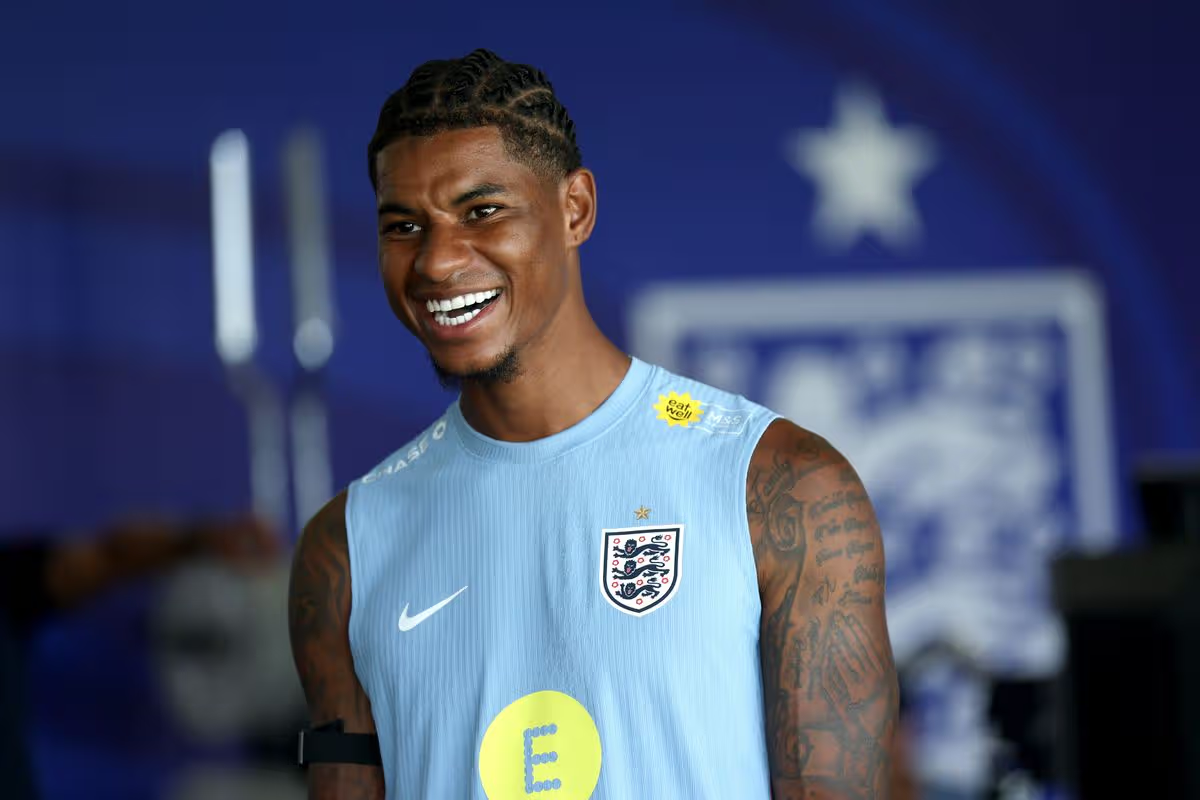
Marcus Rashford enjoyed an upturn in form on loan at Barcelona last season but the Manchester United forward still has no certainty over which club he will be playing for in 2026/27
Marcus Rashford’s future is in limbo. The Manchester United academy graduate impressed on loan at Barcelona last season, with many expecting him to stay after his debut campaign in Spain.
The forward contributed to Barca’s La Liga title and Supercopa victory in a brilliant 2025/26 season for Hansi Flick’s side. Rashford‘s form in Catalonia played a key role in England boss Thomas Tuchel calling him up for the Three Lions’ World Cup squad this summer.
Advertisement
But uncertainty surrounds his next destination. Barca have until June 15 to exercise their £26million purchase option to sign him on a permanent deal. Reports in Spanish publication Marca claim they won’t do this and have already moved on after signing Anthony Gordon for more than £69m from Newcastle United.
Get MEN Premium now for just £1 HERE – or get involved in our United WhatsApp group by clicking HERE. You can also join our United Facebook page by clicking HERE and don’t miss out on our brilliant selection of newsletters HERE.
The question is: where could Rashford go if the Spanish champions choose, as now looks likely, not to sign him? Premier League sides, including Arsenal, Tottenham Hotspur and Aston Villa, who had Rashford on loan for the second half of the previous season, have been linked.
United have no plans to reintegrate the 28-year-old back into their first team, but with no clear destination for him, should they re-consider that stance? Below are the thoughts of journalists at the Manchester Evening News…
Advertisement
Tyrone Marshall
Rashford’s ego must have been hurt when he found out that Barcelona were signing Antony Gordon. That really did come out of nowhere and given the season Rashford had at Barcelona, you can understand his frustration.
That return of 14 goals and 14 assists is a reminder that there is a good player there. In fact, there is a very good player and he won’t be short of suitors this summer.
A return to United should be a non-starter, though. The reasons why he was cast aside by Ruben Amorim have been well documented, and it was a decision backed by the club, not just taken unilaterally by Amorim.
Advertisement
Rashford would have to show a lot of contrition, and there is little evidence of that happening. The other issue is that he no longer fits within the wage structure redrawn by Ineos.
If Rashford was to be a squad player behind Matheus Cunha and Patrick Dorgu, but was taking home twice or even three times as much, it would risk creating friction. This squad is in a good place now and it doesn’t need those problems rearing their head again.
Content cannot be displayed without consent
Isaac Seelochan
This is a bruising situation for Rashford. He couldn’t have done much more at Barcelona last season, but their apparent reluctance to sign him speaks volumes.
Money cannot be used as an excuse after Barca shelled out almost £70m on Gordon. Yes, his wages are high, but I’m sure there could be a compromise if both parties wanted this deal to happen.
Advertisement
Ultimately, whatever happens with Barcelona, United need to move him on. No one can say with any confidence that Rashford will find the motivation and form to become an important player for Michael Carrick.
The Reds cannot afford to take any risks and have proven with their current attacking options that they don’t need him. Instead, focus should be on selling him – even to a Premier League rival – with his homegrown status as an academy graduate meaning any sale would be pure profit.
Jack Flintham
It has all gone a bit pear shaped for Rashford. For much of this season, it seemed as though the 28-year-old would make his move to Barcelona permanent. Barca were happy, Rashford was happy and United were happy to let him go and start a new chapter.
Advertisement
Now, that seems to be in ruins. Rashford’s future is up in the air and you cannot see a clear option for him at the moment. If he has a good World Cup, there will undoubtedly be clubs interested in him and I still feel the best route for Rashford and United is for him to leave this summer.
Having said that, United will be wanting a left-sided winger this summer and Rashford can do a job for the Reds on that flank. Ruben Amorim’s exit and Michael Carrick’s arrival also positions Rashford nicely to do an unexpected 180.
However, the main stumbling block will be with the fans. Unlike Alejandro Garnacho, Rashford did not go out of his way to intentionally rile up the United fanbase and he has been largely respectful to the club. But the manner in which things imploded under Amorim has not been forgotten and it will divide opinion if he is given another chance, not least due to his hefty salary.
It still remains in United’s best interests to sell Rashford and continue to usher in a new era at Old Trafford.
I don’t think Manchester United should allow Marcus Rashford to be part of the first-team group at Old Trafford next season. I believe that ship has sailed and he should move on again, preferably on a permanent basis.
Michael Carrick started to create something special in the second half of the season and he should continue with the same group of players while adding a couple that strengthen the squad both on and off the pitch.
I know Rashford has been a sensation, at times, for United over the years, but he made it clear last summer that he wanted to leave the Reds and I don’t think that mindset is needed in the camp right now.
Advertisement
Carrick should require commitment from every single player and that cannot be guaranteed with Rashford. United would be better off signing someone who is desperate to put on the shirt, such as Matheus Cunha and Bryan Mbeumo proved last season, rather than bringing back Rashford into the fold.
Although Barcelona is no longer an option for Rashford, I think Bayern Munich could be a suitable next destination for him. He would act as back-up to Luis Diaz in that side and play second-fiddle to Harry Kane up front. It could work as a perfect match if Rashford and Bayern are keen to make it happen.
While we may never truly know the inner workings of a tour player’s game, there are a few shots and strategy basics that pros — and even elite amateurs — know and follow. Recently, Cameron McCormick, a GOLF Top 100 Teacher and instructor to tour players like Jordan Spieth, shared three crucial shots pros rely on in tournaments to navigate tough playing conditions.
While the pros use these key shots, they’re also simple enough to incorporate into your own game — and they might just be what you’ve been missing.
Keep reading to learn what the three survival shots are and how to start using them during your rounds.
Low, fairway finder drive
While it’s fun to hit the long bomb, precision off the tee is often rewarded more than length — but you still don’t want to give up the advantage of hitting driver off the tee.
Advertisement
That’s why it’s important to have a stock drive that you know can find the short grass every time. McCormick explains that pros create more control by dialing back their swing and making an easy setup adjustment.
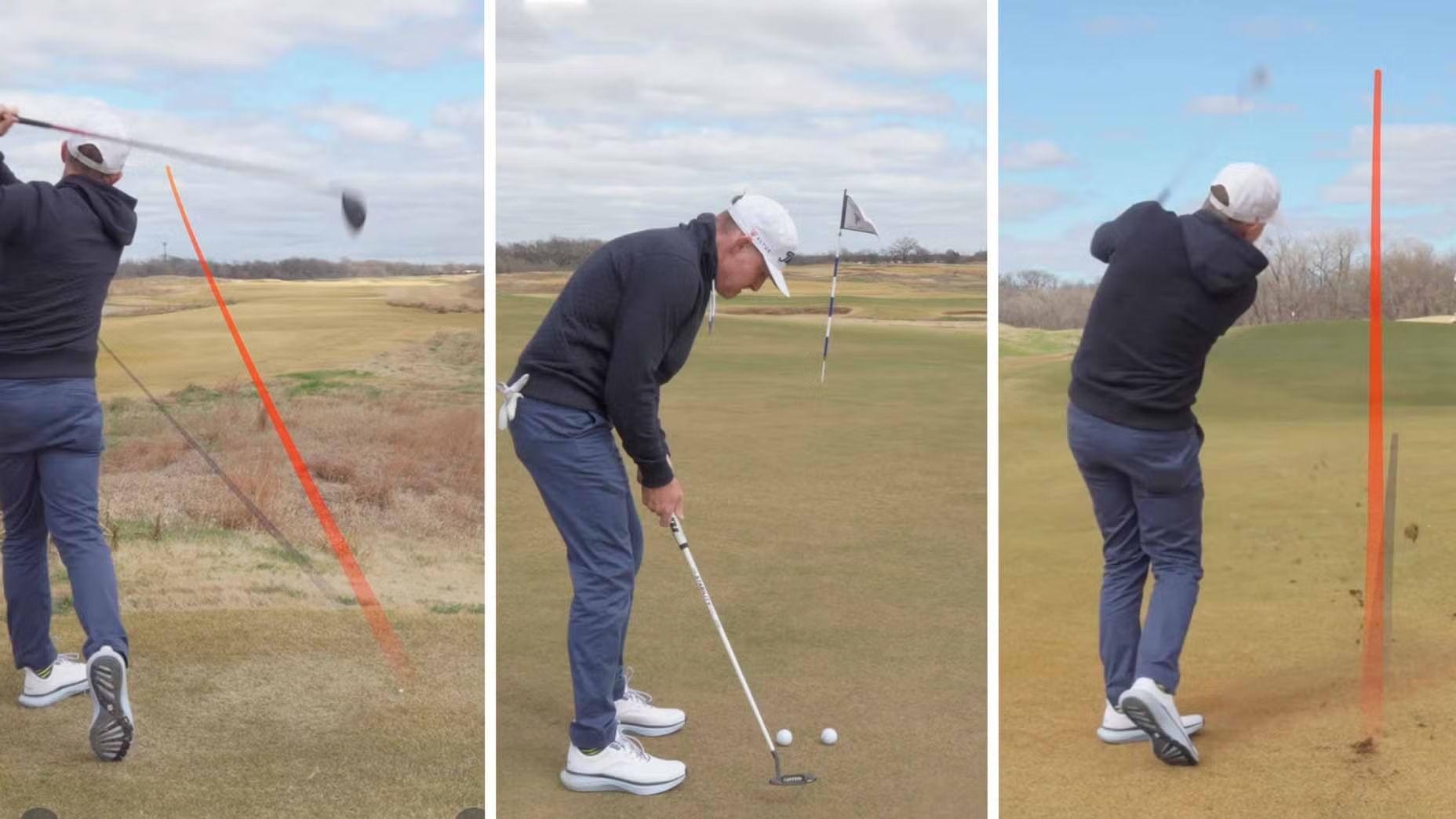
“Pros are going to dial speed down a little bit, they’ll drop the tee height, which will help them create a lower launch trajectory, keeping the ball out of the wind,” McCormick says.
To dial back your swing, focus on control rather than simply swinging slower. A useful drill is to practice at 80–90% effort and gradually increase your speed. As soon as your control or consistency starts to decline, you’ve found your limit. From there, scale back to the highest level of effort where you can still produce consistent results.
For tee height, experiment to find what best complements your swing. In the clip above, McCormick tees the ball so that the top of the ball is level with the top edge of the driver face. Use that as a starting point, then test slightly higher and lower tee positions to determine which setup helps you make the most consistent contact.
Advertisement
Flighted wedge shots
Like many amateur golfers, you may find that your wedge shots inside 100 yards constantly come up short. While there are a number of reasons this can happen, McCormick says a common mistake amateurs make is trying to hit the ball too high on these key scoring shots.
“In trying to hit it high, I introduce the chance of mis-executing my ball speed too short and therefore leaving it short,” he says.
Rather than launching their wedges high into the air, tour pros favor a low, flighted trajectory.
“Pros will almost always choose to flight their wedges lower because it gives them better control of their carry distance,” McCormick says.
Advertisement
To hit those penetrating, flighted wedge shots, use two keys from GOLF Top 100 Teacher Parker McLachlin, better known as Short Game Chef. First, set up with your weight forward. Then, play the ball slightly forward of center. This setup encourages a downward angle of attack without getting too steep, helping you produce the low, flighted wedge shots the pros have mastered.
Protect the low-side miss
When faced with a putt that’s long and winding, McCormick explains that tour pros always protect the low-side miss. They play the maximum possible break, so that it only gets closer to the hole as it crests the hill.
“It almost ensures that the next one is a guaranteed tap in,” McCormick says.
Not only does this improve your chances of making the putt, but as McCormick explains, it also demands less speed. Instead of choosing a line that requires an aggressive stroke and causes the ball to break away from the hole, you select a path that allows the putt to track closer and closer to the cup as it loses speed













;)







































You must be logged in to post a comment Login