
Connect with us

Sports

How France and Spain’s World Cup clash of contrasts could decide football’s tactical future

Published

on

As France have cruised through this World Cup, their stellar attackers so empowered to play with freedom, one concern has been niggling away at Didier Deschamps. It’s why he’s actually asked journalists to point out their few flaws. Now, this week, that concern has finally become an outright problem.

What do France do with their two-man midfield when they face the three of Spain? A team that has swarmed everyone else may suddenly find themselves outnumbered in the key area.

Spain and France will battle for a place in the World Cup final
Spain and France will battle for a place in the World Cup final (Getty)

A question that Deschamps’s staff have been asking themselves is whether to fully adapt for that, or continue to entrust the forwards to improve on a record of 16 goals in six games.

France have been in free-scoring form at this World Cup
France have been in free-scoring form at this World Cup (Getty)

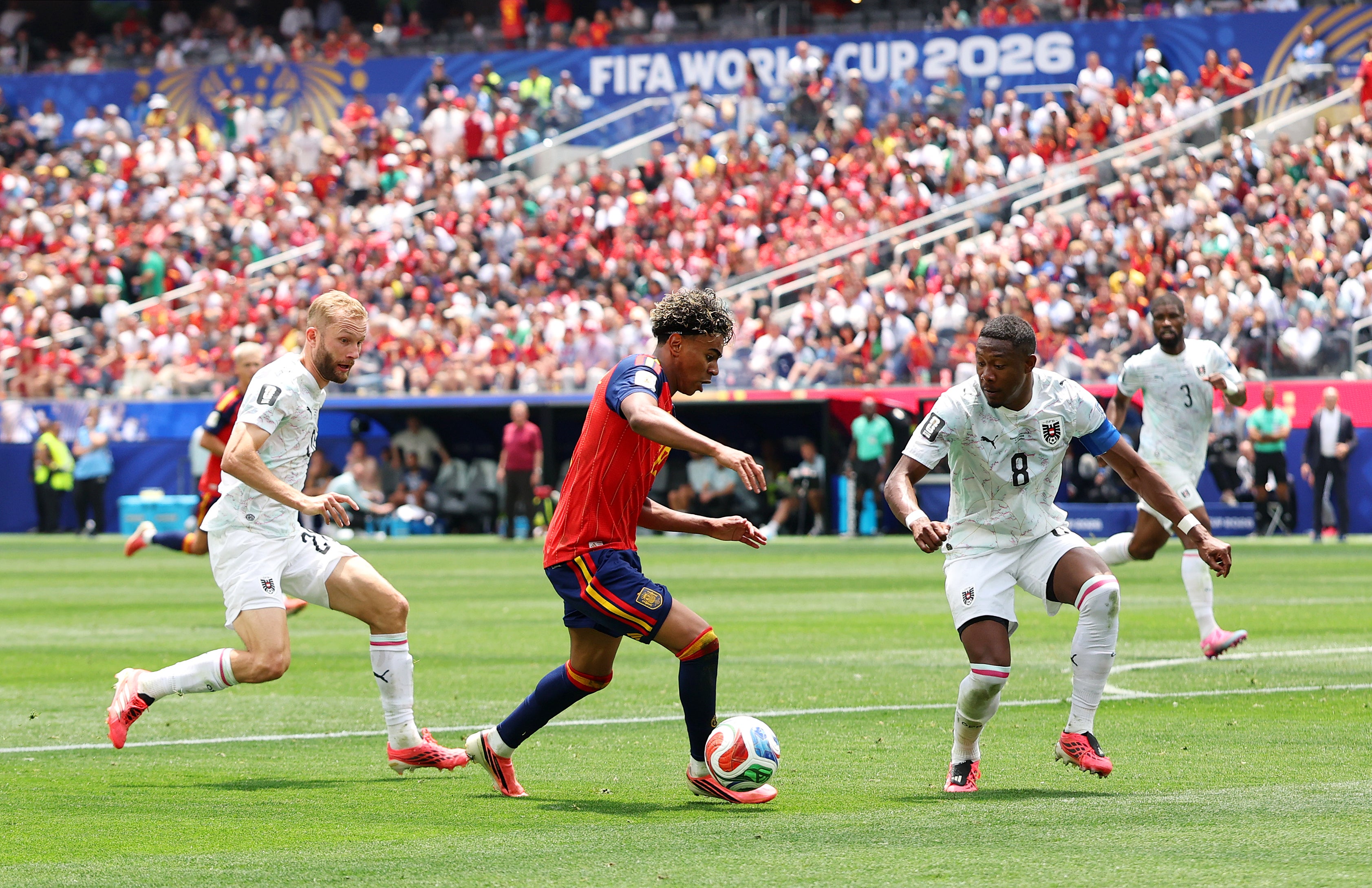
Spain, after all, are going to continue to do exactly what they do. They are the team with the most complete tactical idea at this World Cup, by an immense distance. An argument even pervades that this is one reason why Lamine Yamal hasn’t excelled in the manner of other stars, because he is in the one team closest to an elite club side. The deeper tactical integration means he has a more defined role, even if a lot of that ends up utterly exhausting his double markers. Most of them have had to go off early.

Given that, any Spanish adaptation is likely to be to move their possession shape back 20 metres so as not to expose their half to France’s searing pace.

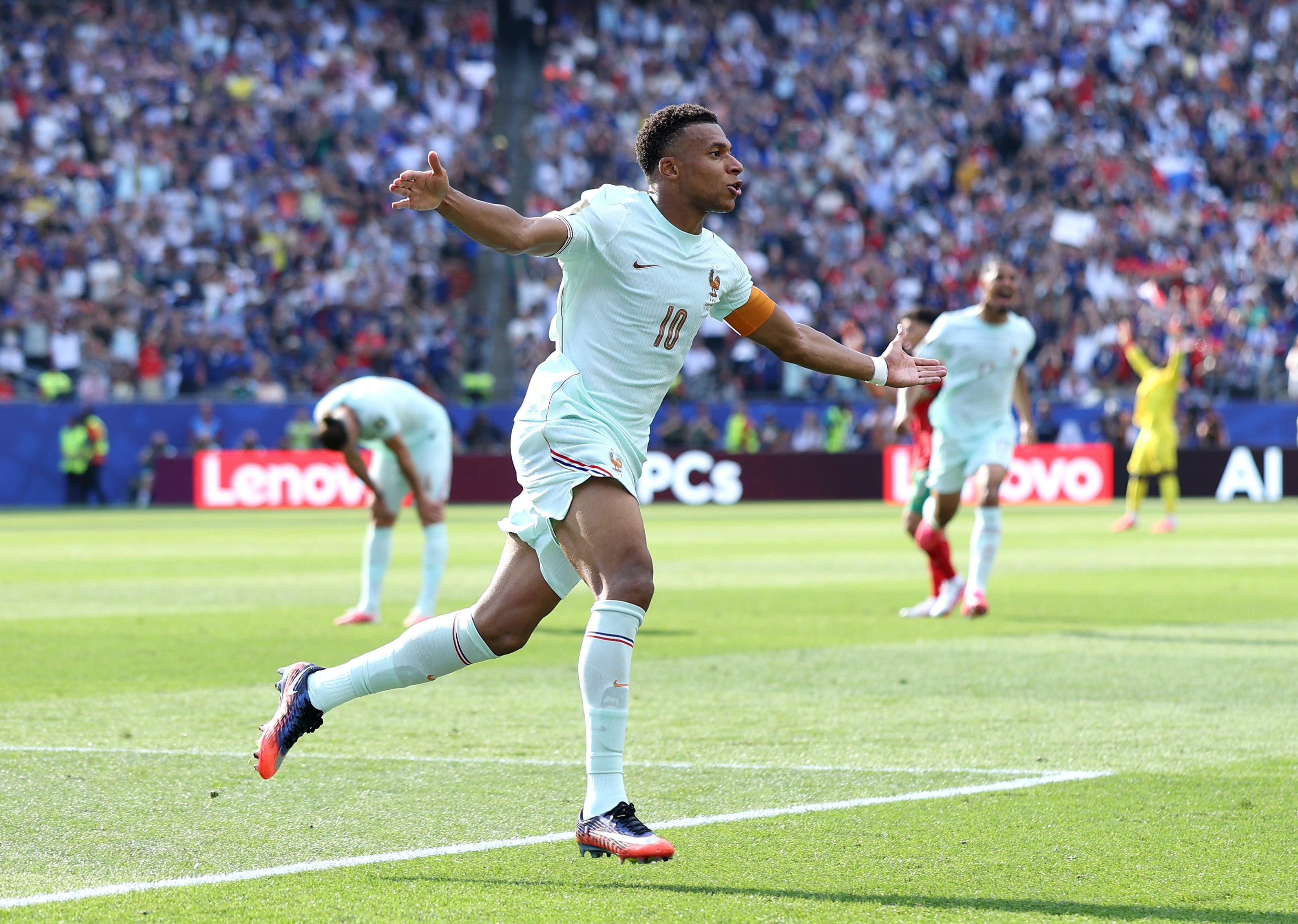
That is the actual way they have accumulated this immense defensive record, of only one goal conceded. It’s of course complemented by the relentlessness of the counter-press. Spain win the ball back 11.57 seconds after losing it, on average, the quickest of all the quarter-finalists. It can be seen in the way they’re immediately snapping at the heels of opposition players, with an energy that roofed stadiums aid. Ultimately, though, Spain do their defending in forward areas. Hence that vast expanse in their own half, that Kylian Mbappe and Ousmane Dembele will be looking at greedily.

France’s forward line have exploited space superbly
France’s forward line have exploited space superbly (Getty)

So, while this is obviously a match between the tournament’s best defence and best attack, the modern game means it is far from that simple; that it’s obviously not backline against forward line, in the way the description conjures. There’s so much more to it, and numerous tactical layers, illustrated by how Spain will have so more of their possession closer to the opposition goal. Deschamps is meanwhile more willing to release his attackers from much further back.

That is one of many dichotomies at play, that explain why this is best defensive record against best attacking record, without that necessarily being the defining contrast.

Advertisement
Lamine Yamal has served a crucial role in Spain’s system
Lamine Yamal has served a crucial role in Spain’s system (Getty)

Above all, of course, this is a derby between two neighbours with a long actual history and rich recent football history. Look at how Adrien Rabiot’s quotes about Yamal needing to “do more” from before the Euro 2024 semi-final have resurfaced.

That points to how the two have met a lot in the modern era, as both have become pioneers of talent production in very different ways.

In that last big meeting, the roles were almost reversed. Spain were viewed as the more freewheeling and fresh team, spearheaded by young talent. France looked worse than defensive, barely able to score, and it seemed a tournament too far for Deschamps already.

The two years since have shown how much can change between tournaments. Personnel have had a profound effect.

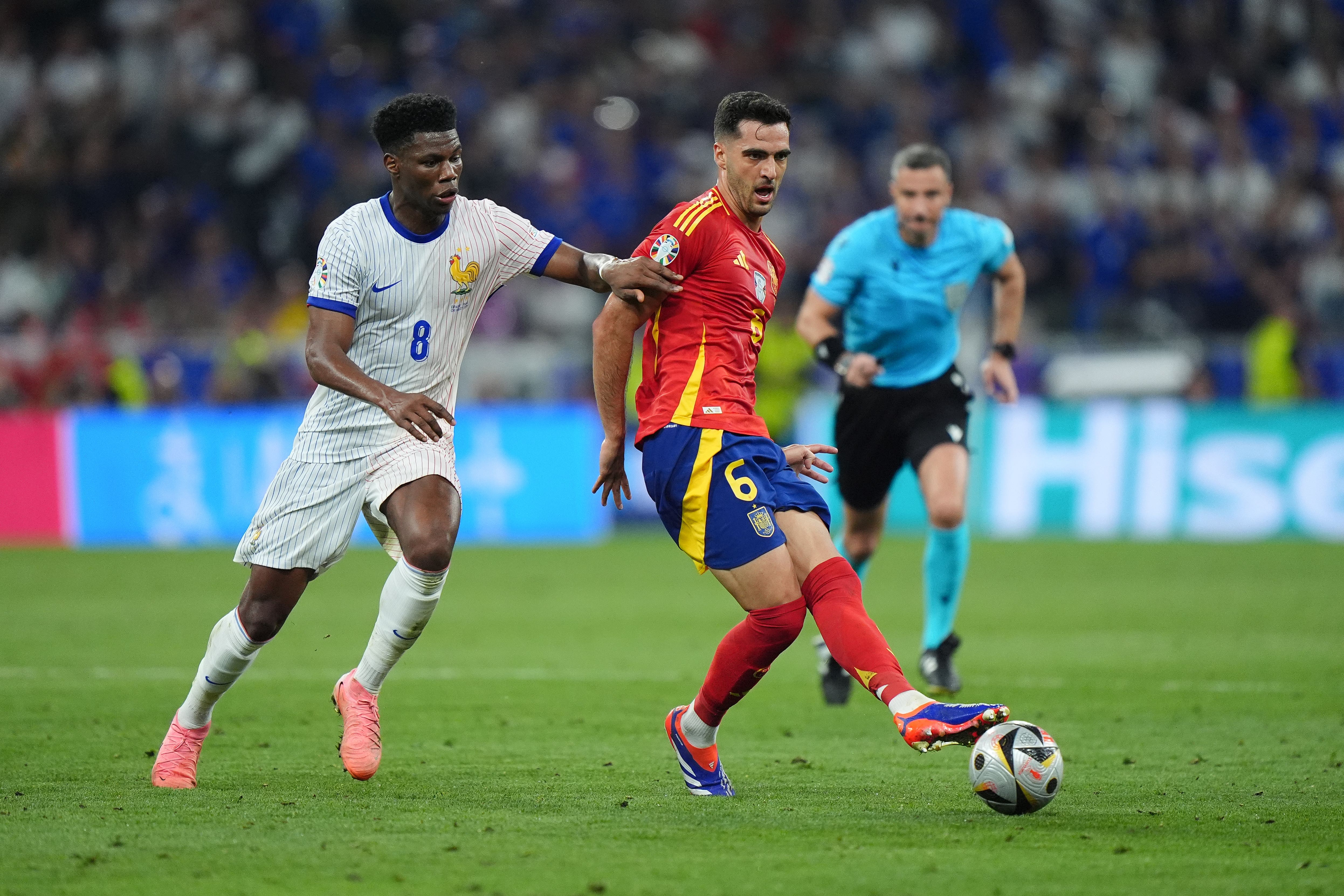
Spain and France clashed in the semi-finals of Euro 2025
Spain and France clashed in the semi-finals of Euro 2025 (PA Wire)

Virtually all of Spain’s most electric attackers have had fitness issues, with Nico Williams only coming back now. They can’t stretch games in the same way, which has required a more compact structure. Many watching on would say it’s far too compact, as the “boring” debate has resurfaced.

France have enjoyed the opposite. They’ve had a flood of young talent come into the side since Euro 2024, to become the great entertainers.

Advertisement

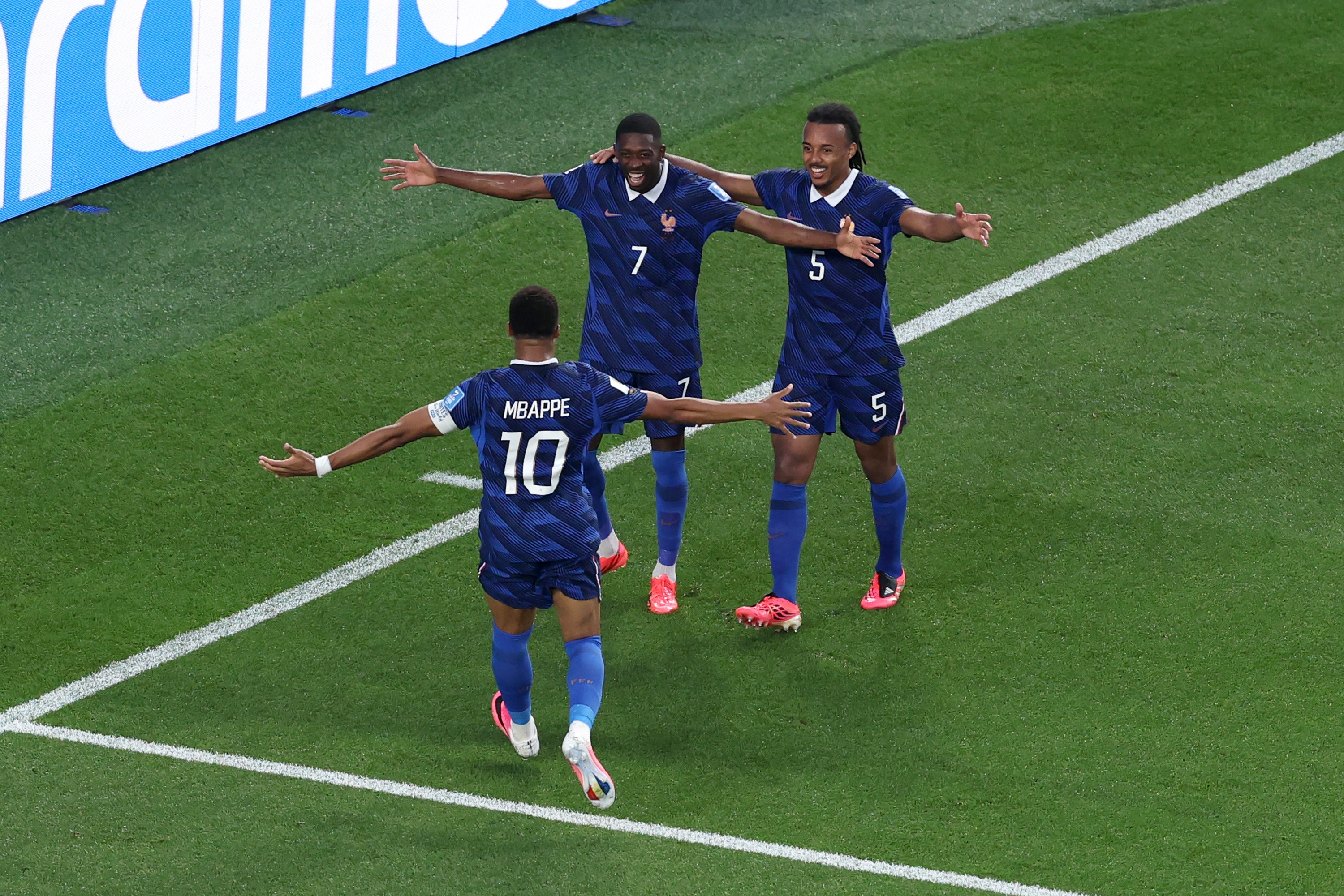
One of those talents has suddenly become one of the best five players in the world, in Michael Olise, while Desire Doue is among the best young stars in the world. Even some of those present in Germany are in completely different form. Bradley Barcola has gone from an impact sub to an effervescent attacker, Dembele is now a Ballon D’Or winner, while Mbappe looks liberated.

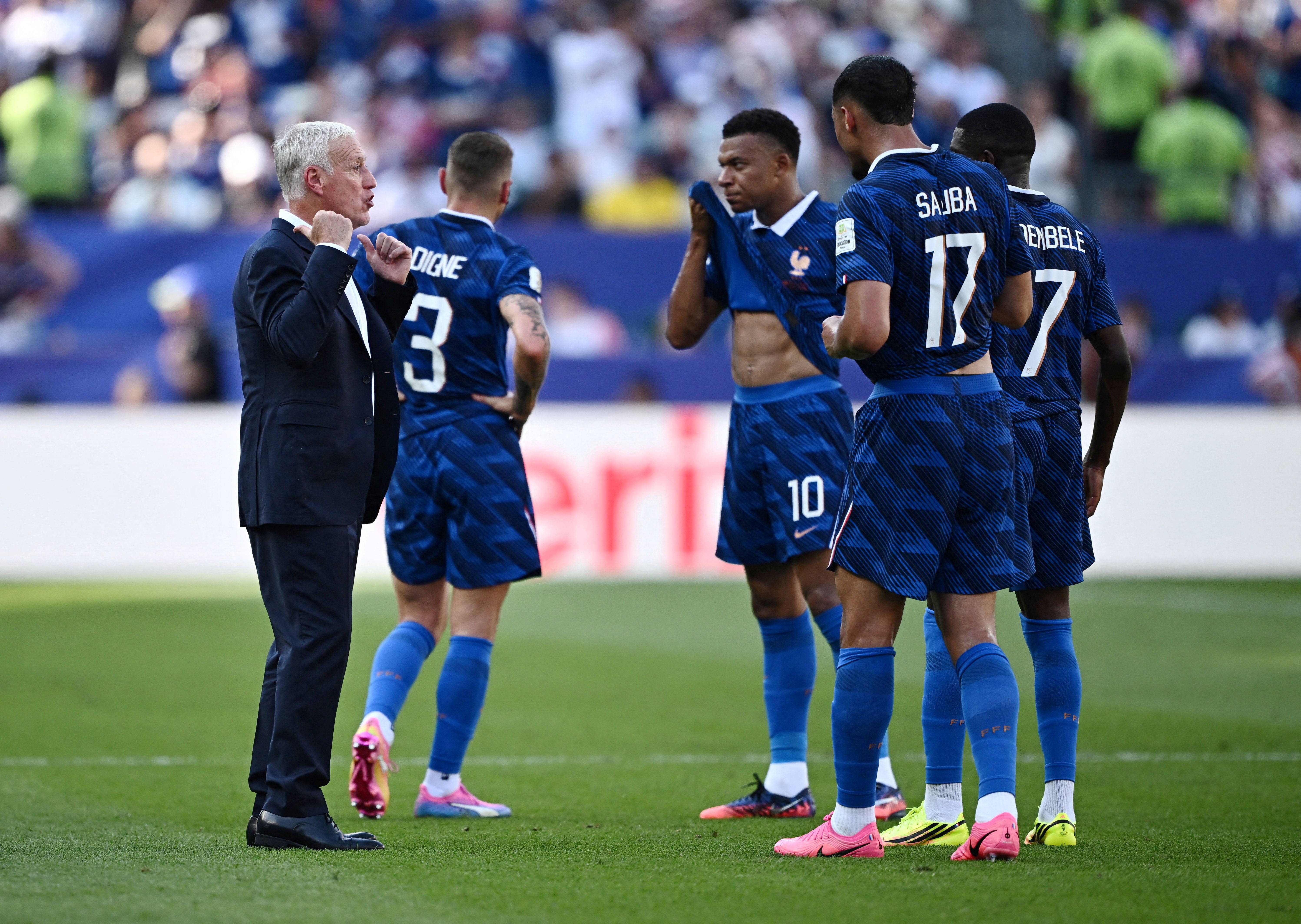
France have a strong array of talent but it is well utilised by Didier Deschamps
France have a strong array of talent but it is well utilised by Didier Deschamps (Reuters)

And, ever the pragmatist, Deschamps has just played to his strengths. He’s created the most anti-Deschamps team possible, at least going by his coaching history with the French team.

That is what has fostered the real dichotomy of the game, and a genuine philosophical duel.

It is the “positional game” – essentially, the Pep Guardiola game, which has long taken hold in Spain – against the evolving competing idea of “relationism”.

Whereas almost everything Spain do with the ball is dictated by the team structure’s position on the pitch in relation to the ball – outside more licence to Yamal and Dani Olmo – Deschamps has afforded his attackers infinitely more individual interpretation.

Advertisement
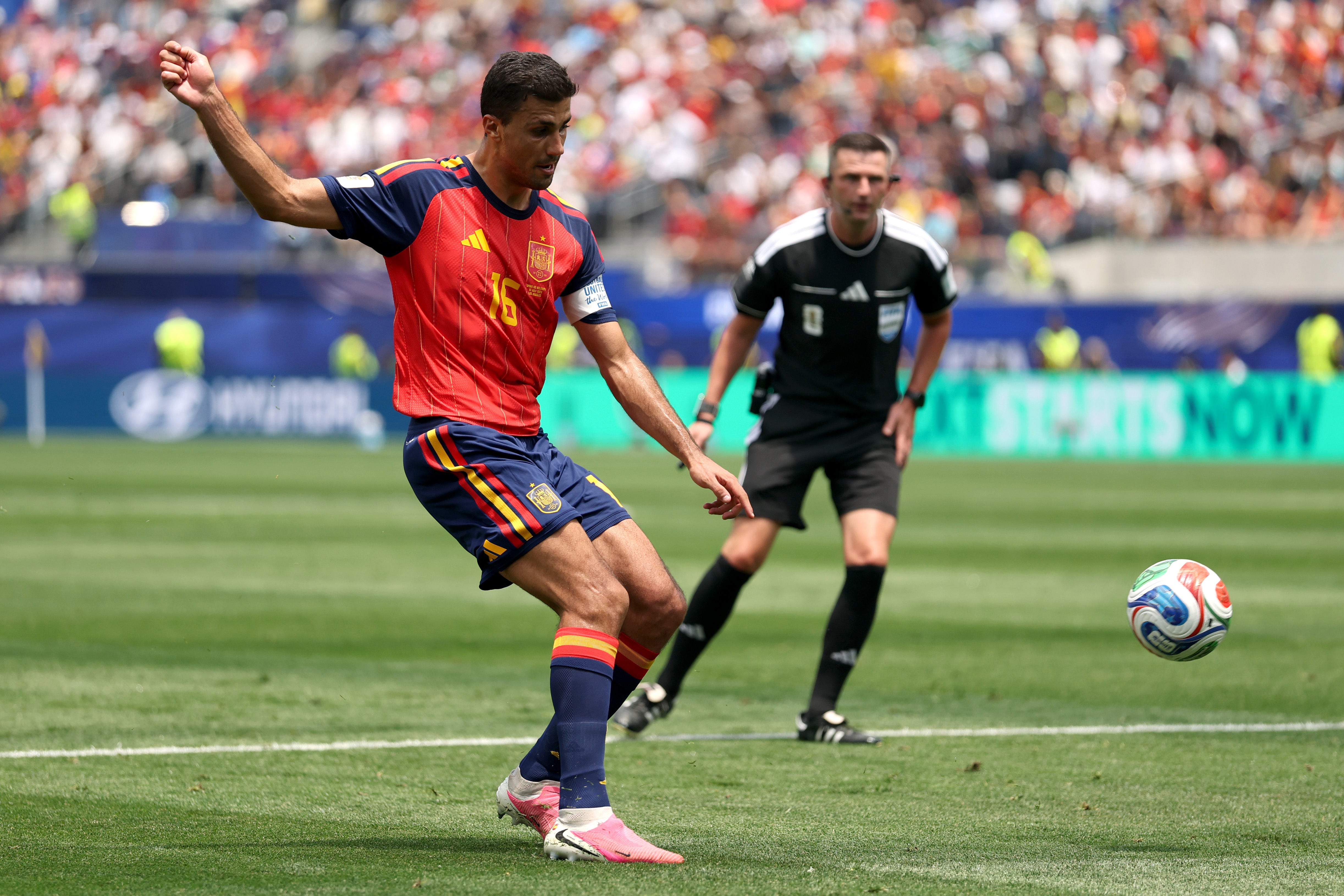
Rodri is the sort of player few other nations produce or possess
Rodri is the sort of player few other nations produce or possess (Getty)

The idea of an orchestra coming up against free jazz has rarely been as applicable.

That will naturally provoke a lot of debate about future influence on how the game is played and who should win. That, also, is far from so simple.

A bit like with Guardiola, no one can come close to playing Spain’s positional game like Spain.

France’s approach can’t be anywhere near as devastating, or even that effective, without attackers of this astounding quality.

It is nevertheless natural that it’s the French who are the first to pose this specific ideological challenge in such a high-stakes game. Their model of talent production never adapted that Spanish-Dutch approach in the way that the Germans did, arguably giving them more variety of player – if also missing one archetype: the Rodri.

Advertisement

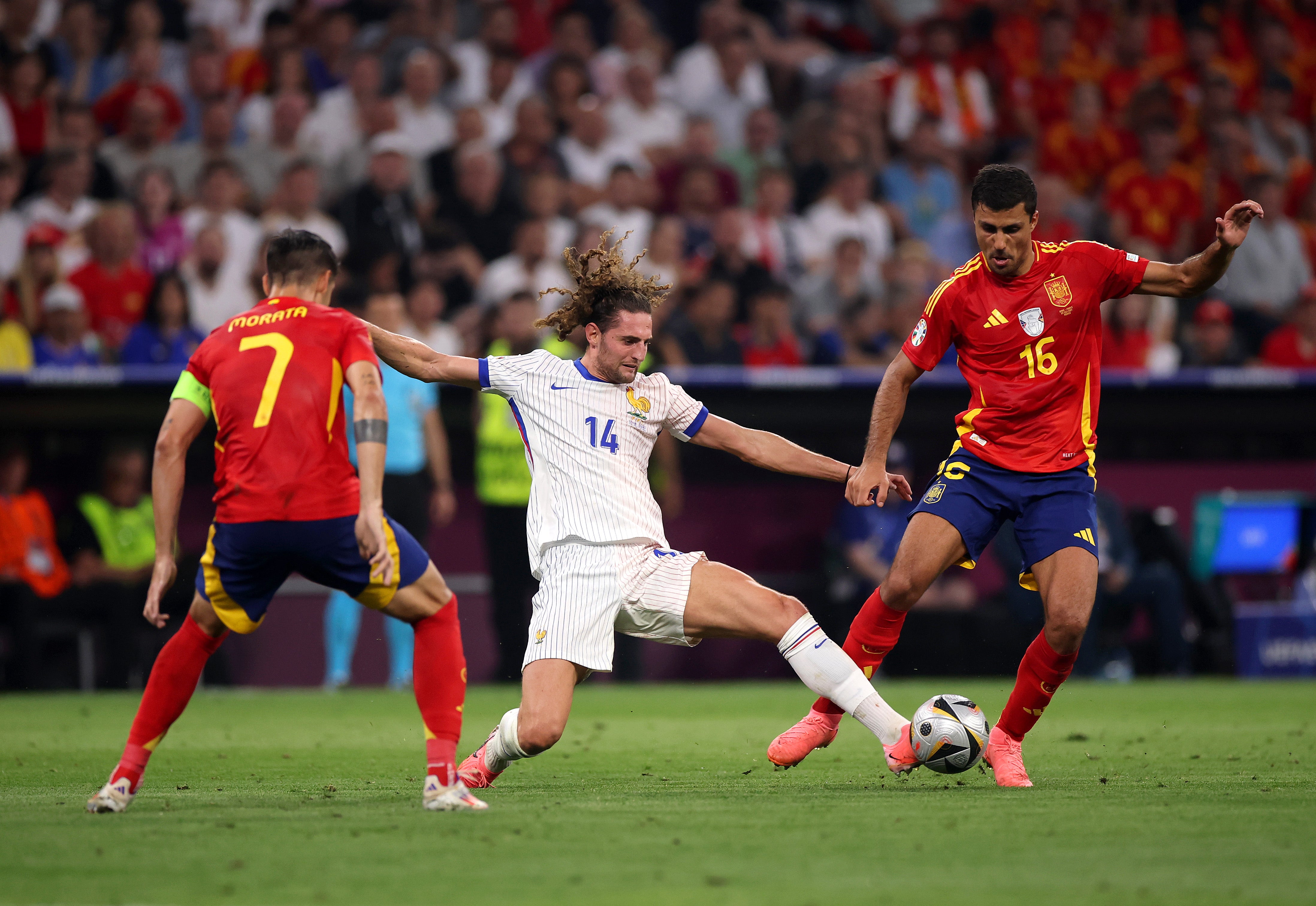
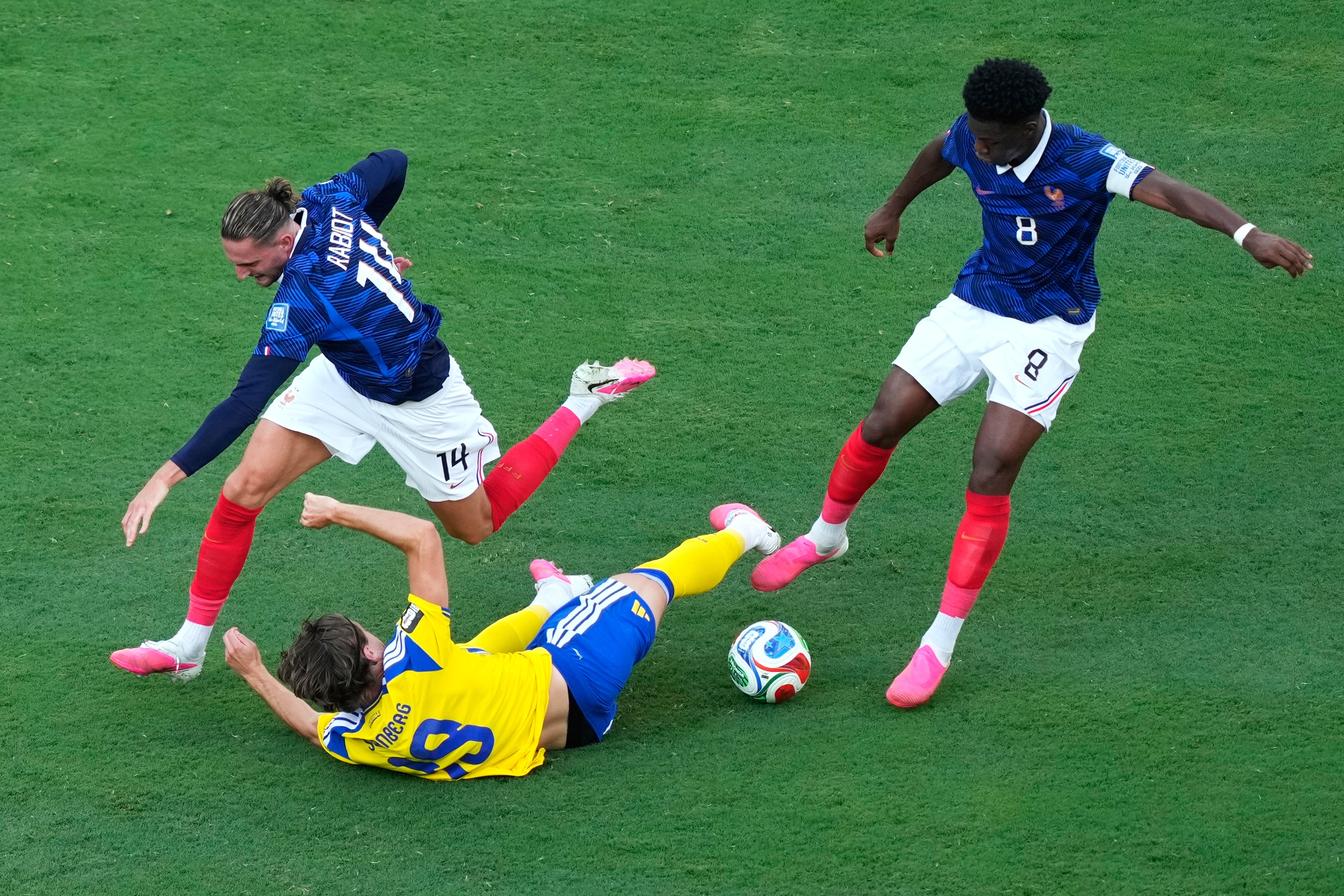
Deschamps has had to adapt to a more industrious two-man midfield of Rabiot and Aurelien Tchouameni because he does not have that classic number-six. Spain instead have two on the bench.

Adrien Rabiot and Aurelien Tchouameni are an industrious midfield pairing
Adrien Rabiot and Aurelien Tchouameni are an industrious midfield pairing (AP)

And that is why the onus is on France to do more, despite doing so much more damage throughout this World Cup in attacking play.

You can already see the way the game will go. Spain are going to take control of possession, gradually moving up the pitch, as France seek to pounce on any break in play.

And, almost reflecting how this defensive record isn’t actually about defence, there is a sense that the Spanish backline hasn’t been properly pressured yet.

Football figures present for the quarter-final in Los Angeles were struck by how Belgium got at them. There’s a vulnerability.

Advertisement

Deschamps just has to figure out how to put more even more stress on it, to get the midfield to funnel more of the play towards the attack despite Spain outnumbering them.

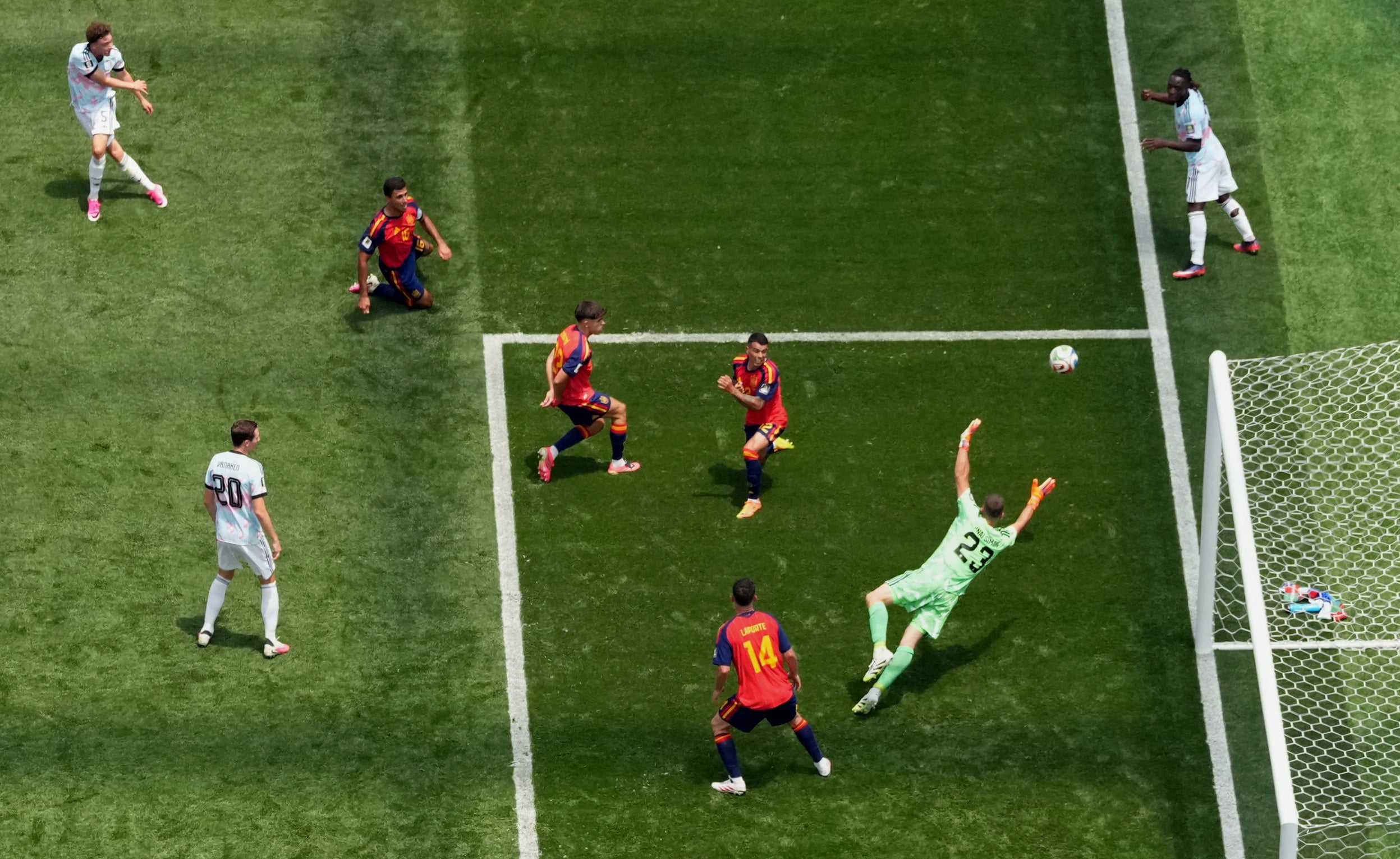
At the same time, Spain didn’t buckle when Charles De Ketelaere finally ended Unai Simon’s clean-sheet record. That can happen when a long record is finally broken, and there’s suddenly doubt again.

Unai Simon and Spain finally conceded against Belgium
Unai Simon and Spain finally conceded against Belgium (Reuters)

They instead kept playing.

They’re going to have to do even more of it against France, if only to limit how much those attacking stars have the ball.

For all the billing, this is much more than attack against defence.

Advertisement

And, in a purely tactical sense, it may end up meaning more than any modern World Cup game.

There is so much to consider.

Source link

Advertisement
Continue Reading
Click to comment

You must be logged in to post a comment Login

Leave a Reply

Sports

Pochettino agrees new USA deal until 2030

Published

on

Mauricio Pochettino has agreed a new deal to remain as manager of the United States men’s national team until 2030.

The former Tottenham Hotspur and Chelsea boss has been in charge since September 2024 and led the USA to the last 16 of the 2026 World Cup on home soil.

The co-hosts topped their group after wins over Paraguay and Australia before beating Bosnia-Herzegovina 2-0 in the last 32.

Advertisement

Their World Cup run ended with a heavy 4-1 defeat by Belgium.

Under the new agreement, Pochettino and his coaching staff will have a bigger role within US Soccer. They will also advise and support the organisation on areas including youth development, coaching education, professional league partnerships and the wider national team pathway.

“Working together with US Soccer over the past two years, it has become clear to us that there is tremendous potential to make the men’s national team programme even stronger,” Pochettino said.

Advertisement

“We are excited by the opportunity to bring all our experience and knowledge to even more areas of US Soccer while helping strengthen the pathways for players, coaches and teams across the federation.

“We want to try to have a lasting impact on the sport in the country that has welcomed us so warmly and for that impact to extend beyond results on the field.”

US Soccer president Cindy Parlow Cone praised the work done by Pochettino and his staff.

“Mauricio has built a culture where players trust the group, trust the process and trust each other,” she said.

Advertisement

“We saw the impact of that belief in the way the team grew, competed and performed on the world’s biggest stage.

“That culture, and the staff who helped build it, are exactly what we want to continue investing in for the men’s national team now and for the future.”

Source link

Advertisement
Continue Reading

Sports

5 players who are switching states ahead of India’s 2026-27 domestic season ft. Shashank Singh

Published

on

The annual pre-season transfer window in Indian domestic cricket allows players to switch state associations as outstation or guest recruits under the Board of Control for Cricket in India (BCCI) regulations.

State teams are permitted up to three guest players to strengthen their squads ahead of the Ranji Trophy, Vijay Hazare Trophy, and Syed Mushtaq Ali Trophy campaigns. These transfers are driven by players seeking more game time, specialized roles, or leadership opportunities, while developing state teams aim to recruit veteran talents to bolster their squad depth.

The upcoming 2026-27 season features several notable moves, with prominent domestic regulars and IPL players shifting allegiances. Let’s take a look at five such moves.

#1 Shashank Singh

The Punjab Kings (PBKS) all-rounder Shashank Singh will turn up for Puducherry in the 2026-27 season after shifting base from Chhattisgarh. The Chhattisgarh State Cricket Sangh (CSCS) has already issued an NOC to the player.

Singh alleged that the state association didn’t support him while he was recovering from an injury that he suffered last season. He further claimed that the association questioned his commitment, saying that the batter only wanted to play in the Indian Premier League (IPL).

The 27-year-old added that CSCS officials didn’t give him any clarity over why he was left out of the Chhattisgarh Premier League and the team’s pre-season camp.

Advertisement

Singh has played 21 first-class games for Chhattisgarh over the last seven years. He has also represented the state in 31 List A and 42 T20s.


#2 Yash Dayal

Royal Challengers Bengaluru fast bowler Yash Dayal will represent Chhattisgarh in the upcoming domestic season. He has already joined the team’s pre-season camp in Alur.

Dayal has not played any competitive cricket since the IPL 2025 final, after which he faced charges relating to sexual assault. The left-arm pacer was retained by Gorakhpur Lions for the upcoming UP T20 League. However, he didn’t feature in the 18-member squad the franchise announced following the auction.

The 28-year-old has represented Uttar Pradesh in 27 first-class, 23 List A, and 71 T20s, picking up 186 wickets across formats, including two five-wicket hauls.

Advertisement

Dayal will look to start fresh for Chhattisgarh in the upcoming season and make his way back to the scheme of things.


#3 Dharmendrasinh Jadeja

Chhattisgarh is looking to build a strong squad for the upcoming domestic season. As a result, they have roped in Saurashtra‘s veteran left-arm spinner Dharmendrasinh Jadeja.

The 35-year-old spinner has been a stalwart in the domestic circuit, picking up 423 wickets in 100 first-class matches, including seven 10-wicket hauls and 26 five-fors. Jadeja also has 121 List A and 65 T20 wickets under his belt.

Jadeja is also a very handy batter in the lower order, accumulating almost 2900 runs across formats. He also has 10 fifties under his belt.

Advertisement

Jadeja’s addition will certainly boost Chhattisgarh’s squad depth as they look to put in a spirited performance next season.


#4 Prasad Pawar

Mumbai wicketkeeper-batter Prasad Pawar has signed with Puducherry to play alongside Shashank Singh as a guest player in the upcoming domestic season.

Prasad has struggled for game time in the Mumbai squad, with Hardik Tamore playing as the first-choice wicketkeeper-batter. As a result, Prasad has decided to shift base to Puducherry in search of more playing time.

Prasad made his List A debut in 2021, while his first-class and T20 debuts came in 2023. Overall, he has represented Mumbai in 27 matches, scoring 591 runs, including one hundred and fifty each.

Advertisement

#5 Jayant Yadav

An offspinner from Haryana, Jayant Yadav, has decided to join Chhattisgarh for the 2026-27 domestic season. He brings truckloads of experience along with him, having represented India in six Tests and two ODIs while picking up 17 wickets in total.

Yadav has 96 first-class, 74 List A, and 95 T20s under his belt, picking up 272, 68, and 61 wickets, respectively, including two 10-wicket hauls and 15 five-fors. He is also very handy with the bat in the lower order, scoring 4781 runs, including three hundreds and 22 fifties. The 36-year-old cricketer also has one Test hundred and fifty each to his name.

Chhattisgarh will rely heavily on the spin duo of Yadav and Jadeja to bring laurels for the team in the upcoming season.