The New York Mets are coming out of the first few weeks of the 2026 MLB season with a terrible 7-12 record, which has them at the bottom of the NL East.
Advertisement
It’s been a rough season already, and while the Juan Soto injury is playing a big role in the struggles so far, their multiple failing experiments to begin the season certainly haven’t helped.
Advertisement
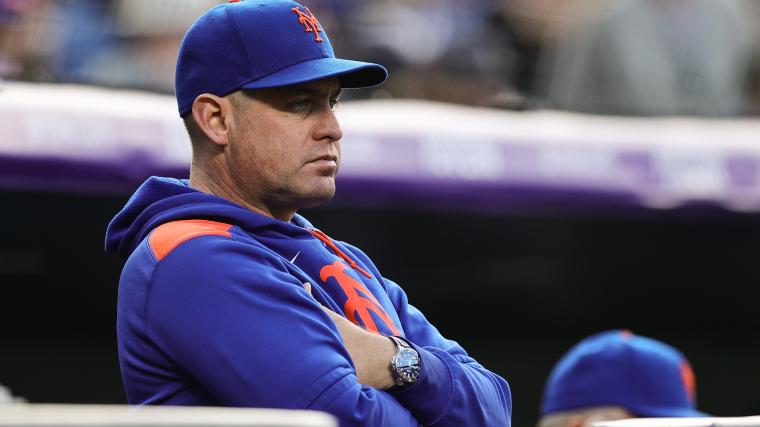
Kerry Miller of Bleacher Report gave the Mets a brutal, but also appropriate “F” grade for the season so far, thanks in large part to the poor offense and the failing experiment with top prospect Carson Benge.
Mets given ‘F’ grade for brutal 7-12 start to 2026 season
“New York Mets (7-12): F,” Miller writes. “… Unfortunately, they are bottom five in runs scored, with seven of the nine team leaders in plate appearances posting a sub-.600 OPS. (Most notably, the ‘Carson Benge or Bust’ experiment has very much gone in the latter direction thus far).”
Advertisement
While the Mets could turn things around still, this grade is based on the first 20 or so games of the 2026 MLB season. And for the Mets, the first portion of the season has been a disaster.
They own the worst recovery in the National League, have very little offensive production despite the lineup overhaul, with all but Luis Robert Jr being major disappointments among the new additions to the lineup.
The pitching additions haven’t been great either. Devin Williams has a 6.75 ERA, while Luke Weaver has an 8.10 ERA. Freddy Peralta has been fine with a 3.86 ERA, but overall additions haven’t panned out.
Advertisement
Advertisement
What other grade could the Mets receive for this start to the year than an “F” grade? It’s gone about as bad as it could, and with Jorge Polanco down with an injury alongside Soto, there is plenty to be concerned about for the Mets this season.
Vikings head coach Kevin O’Connell looks toward the scoreboard during second-half action at Soldier Field, Oct 15, 2023, in Chicago. The sideline moment captured O’Connell assessing game flow as Minnesota navigated in-game adjustments against the Bears, with late decisions shaping the tempo and outcome during a tense divisional road matchup. Mandatory Credit: Jamie Sabau-USA TODAY Sports
Quarterback is the most important position in the sport. It’s also one of the most important positions in collective sports. We’re also tired of hearing that. Every person who watches football for more than 3 games will hear that at least 100 times. And this is also a position that the Vikings just can’t get right. Which, well, we also know.
The Vikings are still searching for the true heir to Fran Tarkenton. Countless head coaches and general managers have tried, and in multiple avenues. Trade for one, sign one in free agency, draft one early, take a flyer on one later in the Draft. Safe to say neither has panned out.
Some have produced great seasons, like Randall Cunningham, Brett Favre, and Sam Darnold. Others brought stability to the position for some time, like Daunte Culpepper and Kirk Cousins. But none were able to take us to the promised land.
Advertisement
History Shows the Cost of Waiting on Quarterback Calls
Since the 2011 CBA between the NFL and NFLPA, having a good quarterback in a rookie contract has been the meta. QBs have always dominated early draft picks, but that dominance has skyrocketed in the last 15 years. In this period, the Vikings have used three first-round picks on quarterbacks.
Christian Ponder was almost an instant bust. Teddy Bridgewater started well, but a nasty knee injury derailed his career. And J.J. McCarthy lives somewhere in between.
Minnesota Vikings quarterback Teddy Bridgewater (5) is pictured during a Dec 10, 2015 road game versus the Arizona Cardinals at University of Phoenix Stadium in Glendale. The primetime matchup was tightly contested before Arizona secured a narrow 23-20 victory late, handing Minnesota a difficult defeat. Mandatory Credit: Mark J. Rebilas-Imagn Images.
Like 99% of young quarterbacks, he is inconsistent. His lows were very low, but he also had some darn great moments. The bigger problem is that we don’t know enough. Injuries are a part of this, as they should be, but he does not have an injury problem.
And I know it’s weird to say that about a player with just 10 starts in two years. However, injuries are also very random, and neither one of his is connected in any form. His torn meniscus had nothing to do with someone falling on his ankle and spraining it. And neither caused him to hit his hand on someone’s helmet during a throw.
Advertisement
The plan in 2024 was clear. They signed Sam Darnold, whom they saw as a capable starter, while developing McCarthy behind the scenes. A torn meniscus meant McCarthy couldn’t take advantage of that “redshirt” season.
Darnold reviving his career added a lot of fuel to the discussion. For 2025, they wanted someone to compete with McCarthy, but missed on the two QBs they wanted. Sam Darnold chose the stability of a longer contract with the Seattle Seahawks, while Daniel Jones saw in Indianapolis a QB battle he would have a better chance at.
With a very underwhelming season by McCarthy (and most of the team, to be fair), the Vikings once again looked to add competition. But this time, the former Michigan won’t be the presumed starter.
Kyler Murray didn’t have the career the Cardinals hoped for when they selected him 1st overall in 2019, but he’s a talented QB who is only 28 years old. He wouldn’t sign if he weren’t going to be the starter. This means the Vikings will have to decide on McCarthy with little evidence.
Advertisement
Dec 22, 2019; Seattle, Washington, USA; Arizona Cardinals quarterback Kyler Murray (1) passes the ball against the Seattle Seahawks during the first half at CenturyLink Field. Arizona defeated Seattle 27-13. Mandatory Credit: Steven Bisig-USA TODAY Sports
To me, there are three ways this season can go. Starting with the two extremes, Murray can have a phenomenal season. I’m talking MVP candidate, deep playoff run, phenomenal. In this instance, giving him a long-term contract becomes a no-brainer, and McCarthy is on the trade block. Or he can struggle mightily, opening up the doors for McCarthy to start again.
Although I’d obviously prefer the first scenario, both at least tell you something. Either you have Murray long-term, or McCarthy becomes the starter, and you have more games to watch his growth (or lack thereof).
The worst possible scenario is Murray starting and having an “okay” season. He won’t be good enough to lead the team somewhere or justify a new contract, and also won’t be bad enough for O’Connell to consider a mid-season change.
The new GM would have to decide on McCarthy’s fifth-year option without even seeing him play. The only evidence would be him practicing with backups during the season and KOC’s opinion on his mechanics and development.
And that’s how you delay a decision. A very important one, by the way. I’m not saying the Vikings shouldn’t have signed Murray. Quite the opposite, actually. For the league minimum, not signing him would almost be malpractice. But it doesn’t change the fact that, unless we see an extreme scenario, the 2027 offseason will have the same discussion.
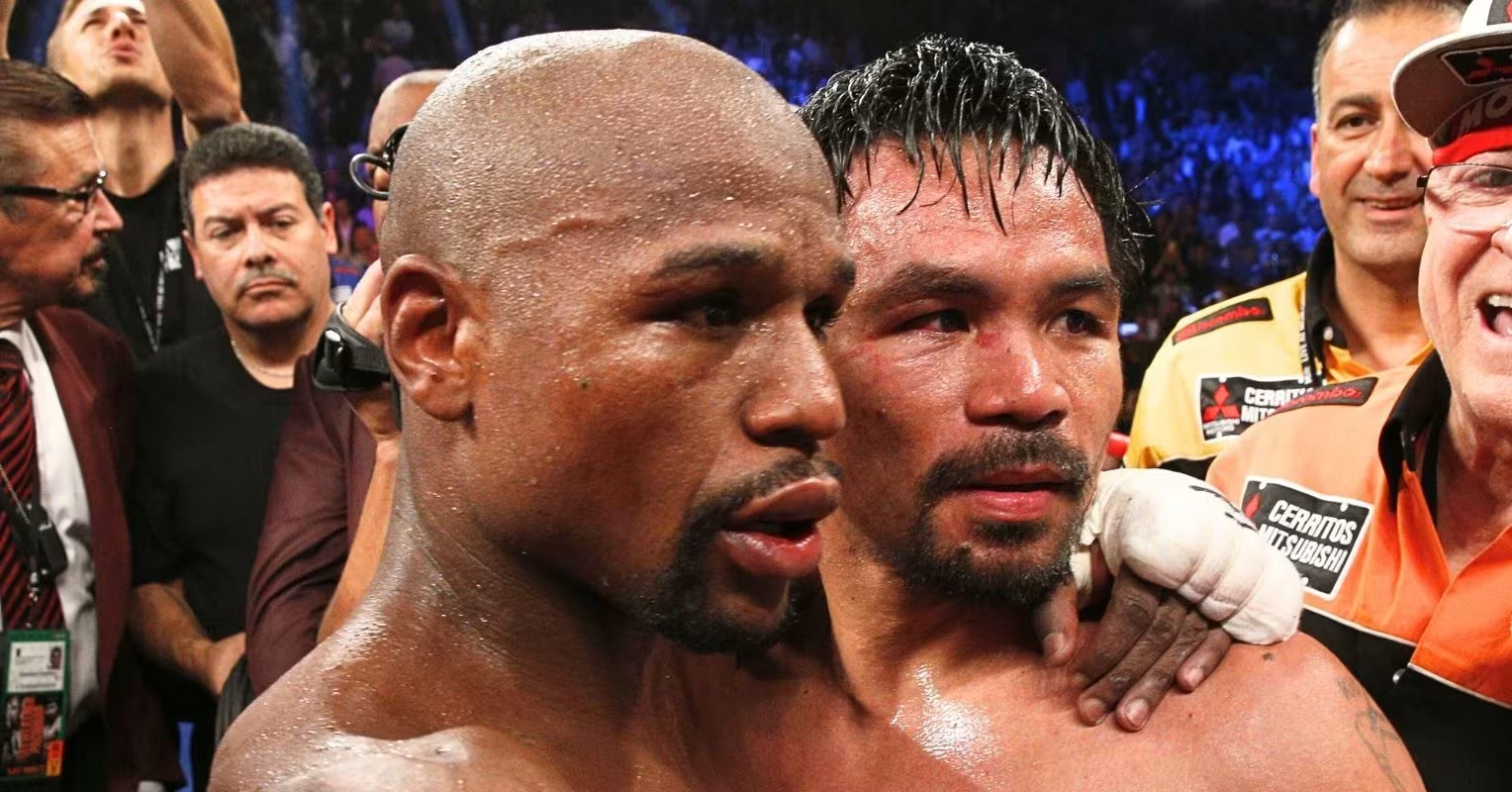
Manny Pacquiao claims to have received a definitive response from Floyd Mayweather, who recently claimed their upcoming rematch is an exhibition.
Their second encounter is set to take place at The Sphere, Las Vegas, on September 19, with the original announcement stating it would be a professional bout.
As such, fans were all under the impression that Mayweather would be putting his 50-0 record on the line, only for the American to swiftly lower everybody’s expectations.
As it happens, Mayweather already had two non-competitive affairs scheduled with Mike Tyson and Greek kickboxer Mike Zambidis, though an official announcement regarding these exhibitions is yet to emerge.
In any case, Pacquiao fully expects to face his old rival later this year, reportedly telling journalist Lance Pugmire that “the fight is on”.
Speaking with ProBox TV, Pugmire recalled his conversation with the Filipino and reported his understanding that Mayweather has agreed to a professional contest.
Advertisement
“Pacquiao reached out to me [on Tuesday] – we talked on WhatsApp, actually – and he said: ‘The fight is on. Floyd has come to the table; everything’s fine. We’re good to go’.
“We know that Floyd always wants things on his terms, so he’s going to ‘formally’ announce it whenever he’s ready to.
“But, according to Pacquiao, they are happy with where they’re at right now with this deal, and having the confirmation from Floyd that the fight is going to be a real fight.”
More recently, ‘Money’ has been involved in a series of exhibitions while Pacquiao ended a near four-year layoff last July, holding then-WBC world welterweight champion Mario Barrios to a controversial draw.
Olympic logos are far more than just branding elements — they act as visual representations of a host city’s identity, culture, and aspirations on the global stage. Each emblem is carefully designed to capture not only the spirit of the Games but also the uniqueness of the nation hosting them.
From traditional motifs rooted in history to modern, experimental designs aimed at global appeal, Olympic logos have evolved significantly over the years. They often combine sport, art, and storytelling, reflecting values such as unity, diversity, and excellence.
Advertisement
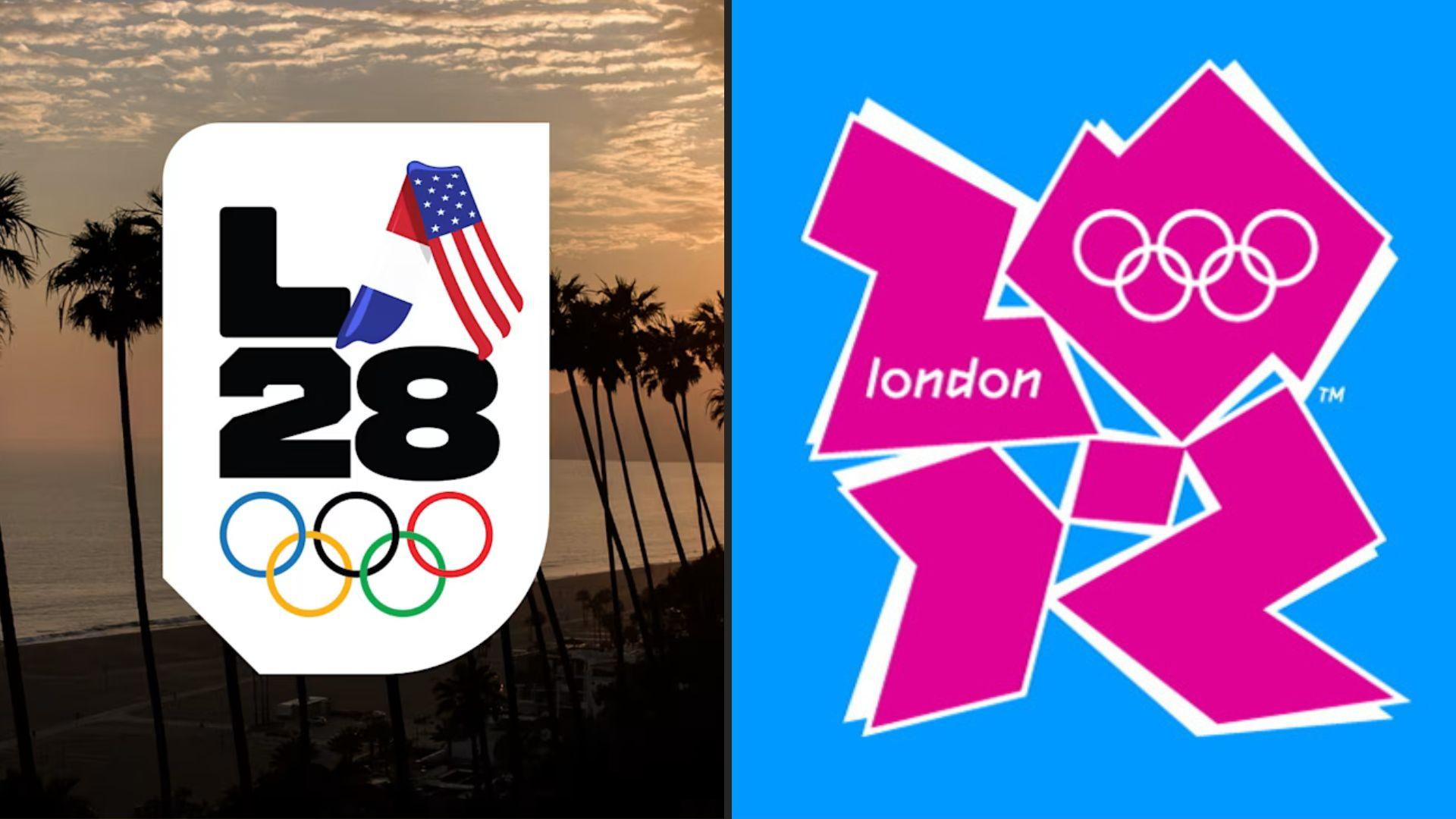
Even when the logo for the 2028 Los Angeles Olympics was unveiled, it featured multiple variations of the letter ‘A’ to emphasise its host city. With all this in mind, let’s take a look at the logos of the last five Olympics and the reasoning behind them.
2028 Olympics (Los Angeles)
The Los Angeles 2028 Olympic logo stands out as one of the most innovative in recent years due to its flexible and evolving design. Instead of sticking to a single static emblem, organisers introduced multiple variations of the letter ‘A’, each created by different artists and personalities. This approach reflects the diversity, creativity, and individuality that define Los Angeles as a city.
Advertisement
The concept of a “superbloom” — a natural phenomenon where wildflowers bloom across California — forms the core inspiration behind the design. Much like a superbloom, the logo symbolises growth, energy, and transformation. The use of vibrant colours and street-style fonts further highlights the city’s modern, youthful, and culturally rich identity. It also aligns with Los Angeles’ global image as a hub of entertainment, art, and innovation.
Paris 2024 opted for a minimalist yet meaningful design that combines three iconic symbols into a single image — the gold medal, the Olympic flame, and Marianne, the personification of the French Republic. This clever integration reflects both sporting excellence and national pride, while also maintaining a clean and elegant aesthetic.
Advertisement
The choice of gold as the primary colour represents achievement and victory but also serves as a tribute to the Art Deco style of 1924, the last time Paris hosted the Olympics. The logo’s simplicity mirrors the city’s timeless elegance, while its deeper symbolism connects sport with French history, identity, and values. It successfully balances modern branding with strong cultural roots.
Advertisement
Tokyo 2020’s logo draws heavily from traditional Japanese design, featuring a chequered pattern known as ichimatsu moyo. Comprising multiple indigo-blue rectangles of varying sizes, the design symbolises different countries, cultures, and perspectives coming together during the Games.
The theme “Unity in Diversity” is central to the logo, reflecting the Olympics’ global nature and Japan’s cultural philosophy of harmony. The use of indigo blue, a colour deeply associated with Japanese tradition, adds a sense of elegance and authenticity. The logo effectively blends historical influence with modern structure, showcasing Japan’s ability to respect tradition while embracing innovation.
Advertisement
The Rio 2016 Olympic logo is fluid, colourful, and deeply connected to Brazil’s natural and cultural identity. It features three human figures holding hands in a continuous loop, symbolising unity, friendship, and the collective spirit of the Games. The design is inspired by the country’s iconic landscapes, particularly the curves of the Sugarloaf Mountain.
The use of bright colours reflects Brazil’s vibrant culture and festive energy, which played a key role in shaping the identity of the Games. The interconnected shapes also represent movement and togetherness, reinforcing the idea of global unity through sport. Overall, the logo captures the warmth and dynamism of Brazilian society.
Advertisement
2012 Olympics (London)
London 2012 took a bold and unconventional approach with its logo, breaking away from traditional Olympic design norms. The emblem was designed to resemble the numbers “2012” in a fragmented, angular style, creating a modern and edgy visual identity.
Advertisement
The use of bright, neon-like colours and graffiti-inspired design elements aimed to appeal to younger audiences and reflect London’s urban culture. While the logo initially received mixed reactions, it succeeded in standing out and generating conversation. It represented a shift towards more experimental and contemporary branding in the Olympics, highlighting creativity over convention.
The Mets got their teeth kicked in Friday afternoon in Wrigley Field. It was a 12-4Cubs win, but the story here comes via the losing dugout. That was the ninth straight Mets’ loss. To make matters worse, they aren’t just losing. They are getting crushed. During the course of this losing streak, the Mets have been outscored 56-16. That’s just brutal. They’re being outscored by an average of 4.44 runs per game. Friday was another laugher.
This is now the longest Mets losing streak since 2004, when they lost 11 straight from Aug. 28-Sept. 8. The longest streak in franchise history is still a ways away at 17 (in 1962, obviously). Still, on Saturday, the Mets will look to avoid the 14th 10-game losing streak in Mets history.
One might recall that the Mets collapsed down the stretch last season. On June 12, they had the best record in baseball at 45-24, but they went 38-55 the rest of the way. They were 28-37 after the All-Star break, 11-17 in August and 10-15 in September. They still had a great shot at making the playoffs, but an eight-game losing streak in September had a hand in keeping them out.
As a reminder, the Mets have the highest payroll in baseball for the fourth straight season.
Advertisement
Do the math here, right? If this losing continues, at some point, owner Steve Cohen is going to ask president of baseball operations David Stearns what’s going on and why he’s wasting so much money on a terrible product. Before the ax falls on Stearns, the fall guy generally would become the manager.
Is Carlos Mendoza’s job in jeopardy? Not yet. It’s too early and the sample is too small for that. It’s only 20 games. Then again, the Mets (7-13) were already five games out in the NL East before Friday’s loss and 20 games is more than 12% of the season. Circle back to the collapse last season and there would be justification to call for a big change like firing the manager.
Advertisement
Friday, though, Stearns had his manager’s back.
“I think Mendy’s [Mendoza] doing a really good job,” Stearns said (via ESPN). “I think he’s putting our players in a position to succeed. He’s enormously consistent.”
The Mets have not been consistent. They haven’t hit, they’ve given up far too many runs at times and have kicked the ball around on occasion, such as we saw in the fourth inning Friday when a two-out error by first baseman Brett Baty led to a run.
The Mets do have some key injuries, most notably to Juan Soto, one of the most important players in baseball. Still, this simply isn’t good enough. Every team deals with injuries and most do so better than this.
Advertisement
For now, it appears Stearns isn’t looking to scapegoat Mendoza. If this level of play continues through next month, though, all bets are off.
Until just a few years ago, the quiet community of Peyia on the western coast of Cyprus was known mainly for its banana plantations.
Over the past decade, however, the area has undergone a rapid transformation, driven largely by developments involving foreign investors, many of whom are Russian.
The most emblematic project of the development of this coastal community is the Cap St Georges complex, a luxury resort that includes a hotel and hundreds of beachfront villas.
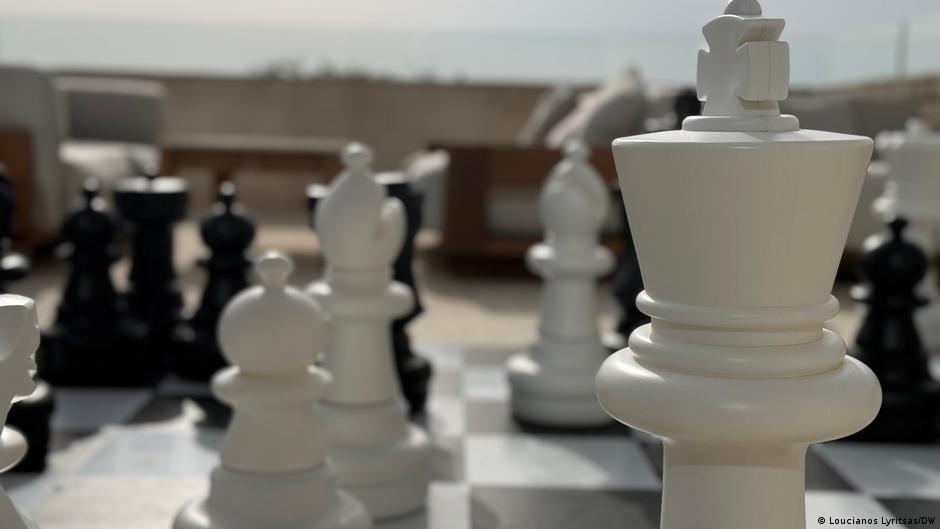
Between March 28 and April 16, this high-end resort hosted some of the world’s greatest chess players, who gathered there to compete in the 2026 FIDE Candidates Tournament and the FIDE Women’s Candidates Tournament.
Advertisement
Grandmasters descended on Cyprus
These elite players were vying for the right to challenge the reigning world champions.
The 2026 FIDE Candidates Tournament and the FIDE Women’s Candidates Tournament were held at the luxury Cap St Georges Hotel and Resort in PeyiaImage: Loucianos Lyritsas/DW
Among them were elite grandmasters such as Fabiano Caruana, Hikaru Nakamura, Anish Giri, Matthias Blübaum and 20-year-old Javokhir Sindarov of Uzbekistan, who emerged as the tournament’s standout performer and eventual winner.
His victory earned him the right to challenge reigning World Champion Gukesh Dommaraju for the world title.
Winner of the Women’s Candidates Tournament was 24-year-old Vaishali Rameshbabu of India, who will challenge the reigning Women’s World Champion, Ju Wenjun.
Candidate’s withdrawal
The tournament took place within a broader international context that cannot be overlooked.
Advertisement
Ongoing tension and instability in the Middle East had a direct and tangible effect on the event itself. India’s Koneru Humpy withdrew from the Women’s Candidates Tournament, citing serious safety concerns connected to the evolving regional situation.
In a statement posted on X, she emphasized that “no tournament, no matter how important it may be, can take precedence over personal safety and well being.” She pointed to regional instability and disruptions to international travel as the main reasons behind her decision to step away from the competition.
Following her withdrawal, Humpy was replaced by Ukrainian Grandmaster Anna Muzychuk, who stepped into the lineup in her place.
20-year-old Javokhir Sindarov of Uzbekistan (left) was the tournament’s standout performer and eventual winner. He is pictured here with Canadian-American chess player and content creator Zachary SaineImage: Loucianos Lyritsas/DW
The war has led to sweeping sanctions against Russia across international sport — and chess has been no exception.
Following decisions by the International Chess Federation (FIDE), Russian players have been required to compete under a neutral flag in official competitions, without national symbols, anthems or federation representation.
As a result, Russian players Andrey Esipenko and Aleksandra Goryachkina took part in the tournament under the FIDE flag.
‘Little Russia’ in Limassol
Despite the absence of Russian national symbols, the Russian presence in the tournament environment was still strong, especially in the audience.
Advertisement
As Vlad, a chess enthusiast, explained to DW, chess has always been very important in Russia. “My parents learned it at school,” he said, showing how deeply rooted the game is in Russian culture and education.
When asked whether he had come from Russia to watch the tournament, he replied with a smile: “From Little Russia: Limassol.”
Vlad was referring to the most cosmopolitan city in Cyprus, situated on the island’s southern coast, where the Russian presence is especially strong and highly visible.
The 16 elite players at the tournaments were vying for the right to challenge the reigning world champions. Pictured here: information panels featuring the images of five-time World Chess Champions Magnus Carlsen and Viswanathan AnandImage: Loucianos Lyritsas/DW
It is estimated that around 40,000 Russian-speakers live on the island overall. The wider figure is even higher when dual nationals and long-term residents are taken into account.
Limassol has become the main center of the Russian-speaking community in Cyprus: More than 30,000 are believed to be based there alone.
Advertisement
Why Cyprus?
Cyprus’s Russian community began to grow after the collapse of the Soviet Union and continued in the decades that followed, driven by investment opportunities, real estate development and Cyprus’s attractive tax and residency framework.
Today, the Russian-speaking community forms an important part of life in the city, with a visible presence in business, education and everyday social activity.
The strong presence of the Russian-speaking community on the island may also explain FIDE’s decision to host the tournament in Cyprus — even though chess does not traditionally attract particularly strong interest among locals.
Although FIDE is an international governing body with members from over 190 national federations, Russia has historically held considerable influence within the chess world due to its deep-rooted connection to the game.
Advertisement
Sofia was one of several Russian volunteers working at the tournamentImage: Loucianos Lyritsas/DW
Sofia, who is currently studying maths at the Cyprus University of Technology in Limassol as part of an exchange program, was one of several Russian volunteers working at the tournament.
She too told DW that chess is deeply embedded in both Russian education and culture, with many people learning the game from a very young age.
This strong cultural connection is one of the reasons she chose to volunteer for the Candidates Tournament and, she said, why there are many Russian employees and contributors within FIDE.
The choice of Cyprus as a location certainly seems to have appealed to winner Javokhir Sindarov.
Advertisement
When asked at the press conference following his victory where he would like the World Championship match to take place, he replied that, if it were up to him, he would choose a warm country like Cyprus, adding that he would not like to play such an important match in cold conditions.
Another day, another on-field gender reveal in Major League Baseball.
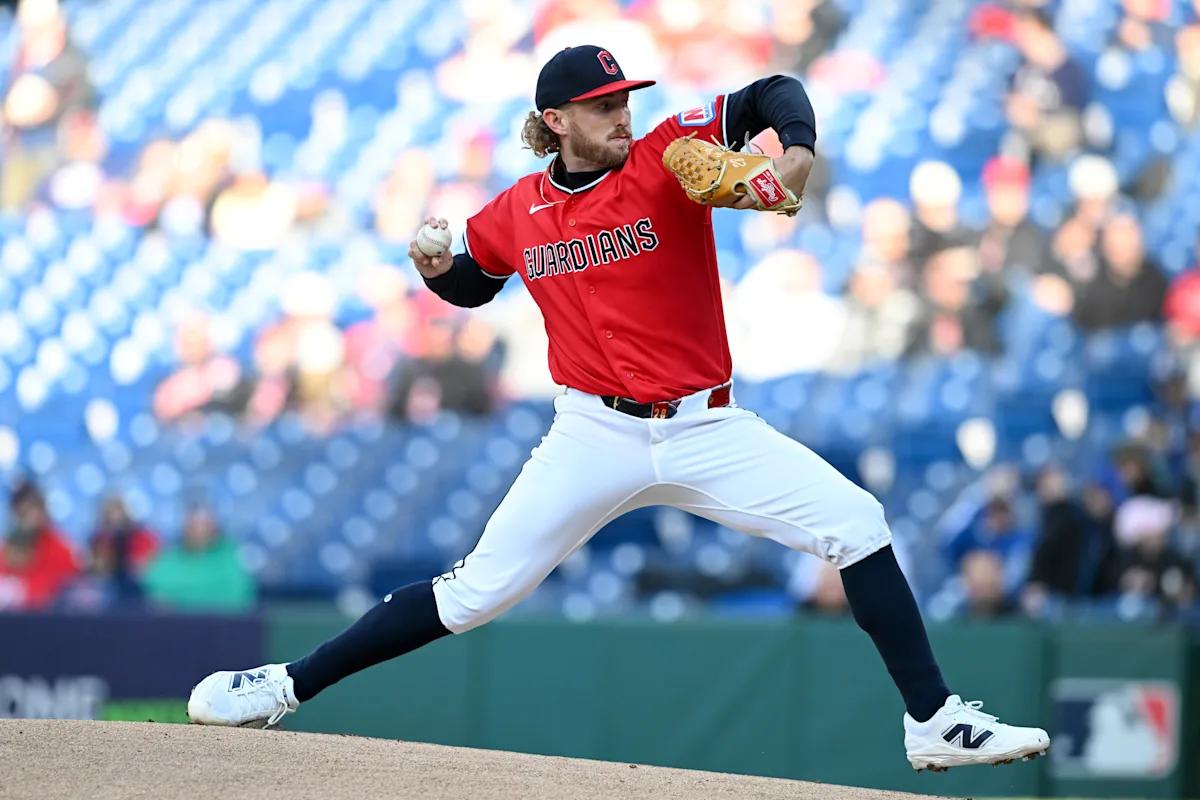
Continuing what has become a trend in the early weeks of the 2026 season, Cleveland Guardians pitcher Tanner Bibee took the field for Friday’s matchup with the Baltimore Orioles sporting pink shoelaces to reveal that his brother and sister-in-law are expecting a baby girl.
Earlier this week, Bart donned a pink armband on behalf of teammate Braxton Ashcraft to reveal to family and friends that the pitcher and his wife are going to have a baby girl.
Did each player channel the vibes of sharing their good news with family, friends and fans into a successful performance?
Pfaadt allowed three runs on five hits and three walks over six innings, taking the loss in a 4-3 defeat to the Phillies. Ashcraft earned a no-decision while giving up two runs and five hits with seven strikeouts in an 8-7, 10-inning loss to the Nationals. Bart batted 1-for-5 and whiffed twice in the game.
Advertisement
Advertisement
Bibee began his start Friday by throwing four scoreless innings versus the Orioles.
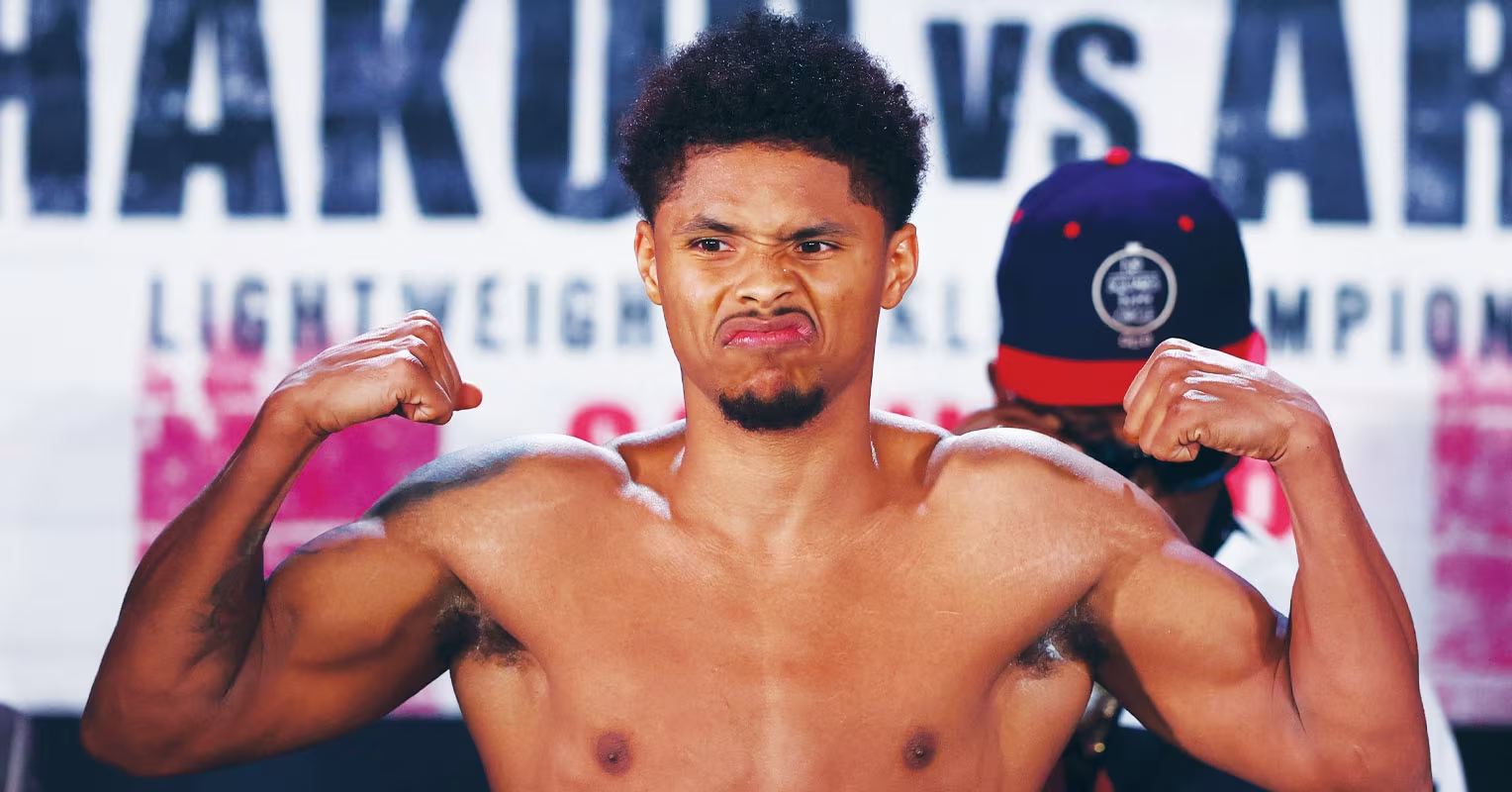
Undefeated southpaw Shakur Stevenson delivered one of the performances of the year when he became super-lightweight world champion in January, but there is one up-and-coming 140lb contender who believes he knows how to beat the Newark phenomenon.
Instead, despite rumours of a move up to welterweight for potential showdowns with Ryan Garcia and Conor Benn, it appears as those two will instead face one another, and that Stevenson will remain at super-lightweight for the foreseeable future.
Advertisement
In his new division, there are a host of hot prospects that are desperate to dethrone him, none more popular than Nevada-based Emiliano Vargas, son of two-time super-lightweight world champion, Fernando Vargas.
Speaking to Ring Magazine, Emiliano Vargas explained the weakness in Stevenson’s game which he believes he spotted during his clash with Lopez.
“I think that every fighter has a different approach that you have to take towards them. Shakur looked amazing in his last fight, he honestly surprised me and a lot of other people so I give my kudos to him.
“But, at the end of the day, I understand that, the right time, God already has it picked. So, if we were to fight with Shakur down the line, we would have to obviously solve that puzzle.
“Honestly, Teofimo was doing a great job when he was going to the body and really, after that, he had his moments to the body and then Shakur would keep him on the outside.
Advertisement
“Shakur even said it himself, that he got hit with a body shot one time and he wanted to throw up. I have been hit to the body before and it doesn’t feel good. So, I think that no fighters like body shots.”
With the WBO, where Stevenson reigns as champion, 21-year-old Vargas is rated as the #5 contender and subsequently could be given the chance to exploit that weakness and replicate his father’s achievements in the near future.
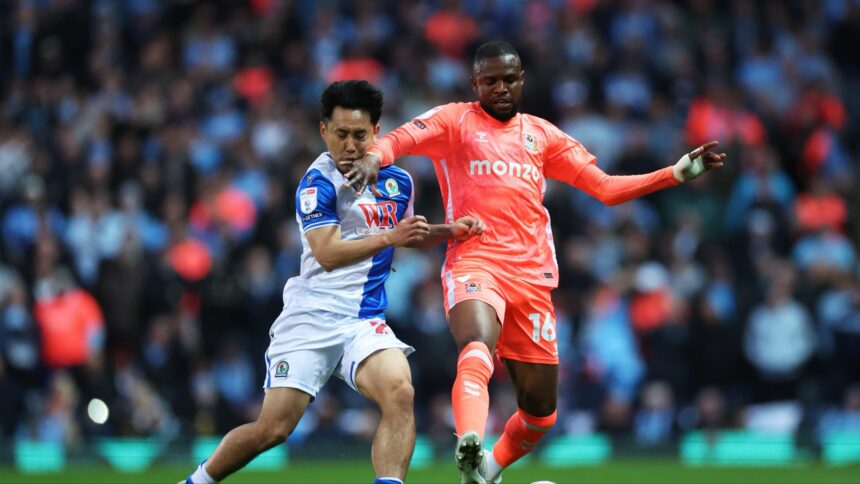
Frank Onyeka was in action as Coventry City secured promotion to the Premier League following a 1-1 draw against Blackburn Rovers on Friday night.
The Super Eagles midfielder played for 62 minutes as Coventry earned the crucial point that confirmed their return to the top flight, with three matches still remaining in the Championship season.
After a goalless first half, Blackburn took the lead in the 54th minute through Ryoya Morishita. Coventry responded by making tactical changes, with manager Frank Lampard introducing fresh legs in search of an equaliser.
Advertisement
The decision paid off late in the game when substitute Victor Torp delivered a fine cross that was headed in by defender Bobby Thomas in the 86th minute to level the score.
Blackburn pushed for a late winner, but Coventry held firm to secure the draw that sealed their long-awaited promotion, marking their return to the Premier League for the first time in 25 years.
Onyeka, who joined Coventry on loan from Brentford in January, is now set to feature in the Premier League next season.




































You must be logged in to post a comment Login