Drew Stoltz, the co-host of GOLF’s popular Subpar podcast, is back with a second season of Emergency 9, presented by Cobra. Readers of this space may remember that last year, Stoltz’s Emergency 9 series covered a number of topics, from gear explainers to tips on how to get an edge on your buddies in your next match.
For this season of Emergency 9, Stoltz is kicking things off with a review of Cobra’s OPTM family of drivers.
There are four OPTM driver models to choose from: LS, X, Max-K and Max-D. As a fast player who wants to minimize spin, Stoltz was fit into the OPTM LS.
Last year, Stoltz was impressed Cobra’s FutureFit33 technology, which was introduced in Cobra’s DS-APAPT products. FutureFit33, which allows you to adjust the loft and lie of your metals by plus or minus 2 degrees in every direction — enabling 33 total setting options — is also available in the OPTM line. But there’s more! With the OPTM family, Cobra prioritized POI — Product Of Inertia — modeling to re-engineer mass placement and weight positions on the driver heads to reduce the 3D twisting on off-center hits, resulting in tighter dispersion and better accuracy.
“I loved the last line honestly and wasn’t sure I was going to put this in the bag just because I had no complaints about the last one,” Stoltz said. “But I think I get everything I had out of that last driver plus some with this, a little more face stability.”
The OPTM’s game-changing Hot Face technology enabled Stoltz to hit bomb after bomb.
“The forged face insert creates space flex when you hit it, which basically means you get the most pop out of your drive, the most speed that you can possibly get,” Stoltz explained. “Next up, we’ve got an advanced weighting system here. There’s three different places where you can place weight.
“The one on the toe is where I put my heaviest weight,” he continued. “I like everything to go left to right to encourage a fade, so I put the most weight up in the toe. This also helps me get the shot shape that I like.
“No matter what kind of golfer you are, what kind of shot shape you like to hit, there’s a fitting here on the FutureFit33 that will help your game.”
Advertisement
Stoltz worked with Cobra’s Ben Schomin to dial in his specs.
“We went through a number of different settings, a number of different lies, lofts, all the things, till we finally came up with this combination here,” Stoltz said. “The 10.5-degree head moved down almost 1.5 to around 9, and then we’ve also flattened it 1 degree too. So I have a little left-to-right missile-hitter right here.
“I do have to issue a warning before you hit the OPTM driver,” he said. “This does come with highly addictive accuracy and dangerous levels of stability.”
WEST CALDWELL, N.J. — Michelle Wie West is busy this week. On top of the duties that go along with her role as tournament host of the Mizuho Americas Open, the 36-year-old is also playing in this week’s event.
Wednesday at Mountain Ridge Country Club was evidence of the hectic schedule Wie West has to juggle in this (temporary) return to competitive golf. Her morning started with a press conference with the assembled media. Next, she entertained sponsors with a short-game clinic alongside Rose Zhang. A quick lunch followed, and then she trudged into the New Jersey drizzle to warm-up for her pro-am, her routine repeatedly paused to talk with fans or take calls with tournament stakeholders.
In typical Wie West fashion, she’s taking the chaotic week in stride.
“I can use this experience to hopefully become a better tournament host,” she said. “It’s almost like I’m an undercover employee so to speak this week, so I’m really enjoying it.”
Advertisement
Pulling double duty as a player and host is always a challenging proposition (see: Tiger Woods at the Genesis), but Wie West has another factor working against her: she hasn’t played a competitive tournament round in almost three years. With her 10-year exemption for winning the 2014 U.S. Women’s Open expiring after this summer, she announced earlier this spring she would tee it up at Riviera in June. As a part of preparations for her final farewell, she opted to use a sponsor exemption on herself this week to get some competitive reps in.
Nearly three years since her last competitive round, Wie West has been working diligently on her game to ready herself. Ahead of her return to competition, GOLF.com caught up with the five-time LPGA Tour winner for a breakdown of how she’s prepping for the week.
“>
Advertisement
How Michelle Wie West got her game back in shape
1. Relearning how to practice
Getting ready to compete among the game’s best doesn’t happen just by going through the motions. It’s about practicing with purpose and being efficient with her time on the range. For Wie West, that meant relearning how to practice. For help with that, she reached out to her peers and gathered new ideas, piecing together a routine that worked for her again.
“At first, it was really awkward,” Wie West said. “I’d get there and realize I had no idea what I was doing. It’s amazing how you kind of forget how to practice.”
2. Using SportsBox AI
Advertisement
After Wie West got her feel back for how to practice, she needed to figure out what to practice. That’s where the swing analysis app SportsBox AI came in.
“It’s been really amazing,” she said. “I really wish I had it back in the day because it would have shortened my practice time.”
Wie West explained that when she isn’t hitting the ball well, she notices that she sways too much throughout the swing. With SportsBox AI, she can easily zero in on her chest and pelvis sway measurements to make sure she stays within a tolerable range.
3. Gym work
Advertisement
Dialing in her swing didn’t happen just through hitting buckets of balls — it was also the result of plenty of time in the gym. Especially considering the swing faults that creep up in her swing.
“Sway really comes from your body being a little bit lazy,” she said. “Not loading and unloading the right way.”
Wie West’s workouts emphasize glute activation, rotational strength and movement patterns that translate directly to her swing. By addressing the physical foundation of her swing, she’s creating more reliable mechanics and a move that will hold up even during long weeks on — and off — the course.
Yuzvendra Chahal’s reaction to dropped catches (Screengrabs)
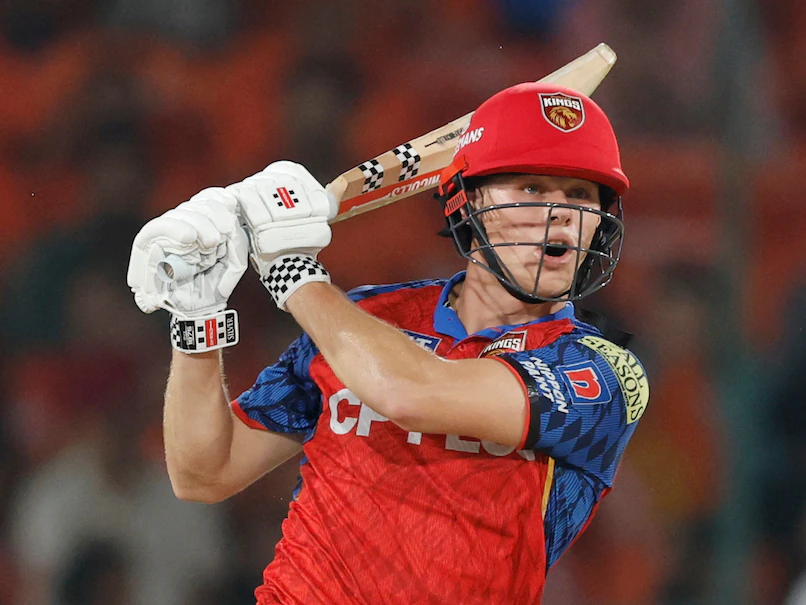
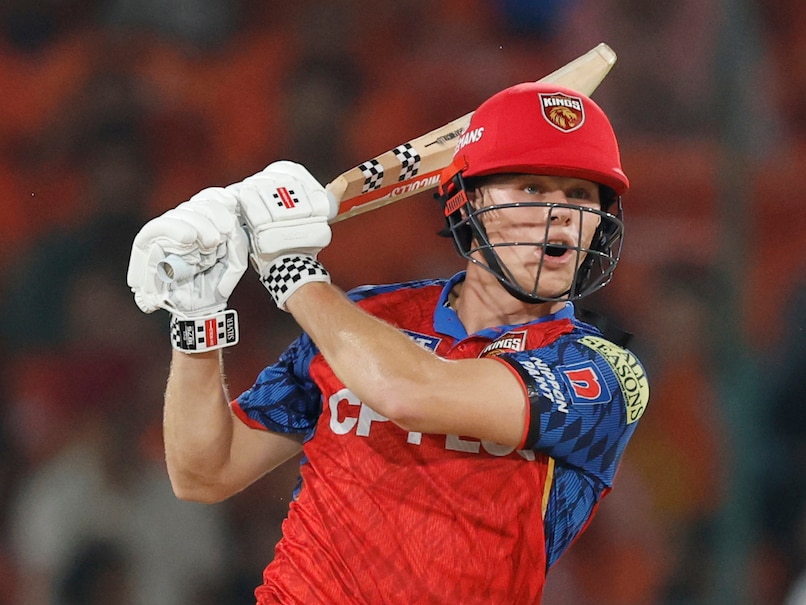
NEW DELHI: Punjab Kings spinner Yuzvendra Chahal had a frustrating outing against Sunrisers Hyderabad after his teammates repeatedly dropped catches off his bowling. SRH batters made full use of those missed chances and piled up a huge total of 235 on a batting-friendly Hyderabad pitch.The dropped catches became a major talking point, especially because Chahal had created several wicket-taking opportunities. However, Punjab’s poor fielding let the match slip away.
Watch
Vaibhav Sooryavanshi India debut: The calls are getting louder
Statistics showed that six catches have now been dropped off Chahal’s bowling this IPL season — the highest for any bowler in IPL 2026.Shashank Singh was at the centre of the fielding troubles, accounting for four dropped catches this season, the second-most by any fielder in the tournament. During the SRH match, he dropped a straightforward chance offered by Heinrich Klaasen at deep backward square leg. Instead of a wicket, the ball slipped away for four runs, adding to Punjab’s misery.The dropped catch left Chahal in disbelief, with his reaction going viral across social media platforms.Watch:Klaasen and Ishan Kishan both survived after chances were missed off Chahal’s bowling and went on to punish Punjab heavily. Their innings helped SRH post a massive score that proved too difficult to chase.On a surface where bowlers had very little help, fielding mistakes became even more costly. Chahal, one of Punjab’s main wicket-taking bowlers this season, was visibly frustrated as crucial chances went begging.The sloppy fielding ultimately played a big role in SRH’s dominant performance and added another disappointing chapter to Punjab’s disappointing run of three defeats.
The 2026 WNBA regular season begins May 8 — and the league’s 15 teams are starting to trim their rosters in time for tip-off on Friday.
Advertisement
Players will make their way through waivers in the coming days, as teams try to whittle down their roster sizes to the maximum 12 players allowed under the WNBA’s collective bargaining agreement. Teams will have up to 48 hours to make a waiver claim if they believe there is a fit; if not, the player will reach unrestricted free agency and can sign with any organization.
As of Wednesday morning, the Indiana Fever have cut down their roster to 13 players, following the decision to waive three guards and move 2026 draft pick Justine Pissott to a developmental pool spot.
As Indiana tries to find the optimal balance behind All-Stars Aliyah Boston, Caitlin Clark and Kelsey Mitchell, The Sporting News will track which players the Fever are letting go before the new season.
Advertisement
Advertisement
Fever roster cut updates
Meghan McConnell
The Fever waived a trio of guards on Wednesday, starting with McConnell — the sister of Indiana Pacers point guard TJ McConnell.
Megan McConnell played one game for the Phoenix Mercury in 2025, accruing 13 minutes before she suffered a season-ending tibial plateau fracture. In the offseason, she played in Australia before Indiana signed her to a training camp contract.
Though McConnell did not score a single point in the preseason, the former Duquesne star could latch on with another WNBA organization given her potential — she averaged 11.2 points, 6.2 rebounds and 3.9 points per game while playing for the Bendigo Spirit.
Advertisement
Advertisement
Jessica Timmons
Timmons was just drafted by the Fever, as Indiana used the 40th overall selection in last month’s rookie draft to take the high-scoring guard out of Alabama.
Timmons, a former five-star recruit, was a strong 3-point shooter in the NCAA who averaged 16.3 points per game in her final collegiate season. She is a bit undersized at 5’8”, but given her scoring ability (16 points in three preseason games), Timmons could find her way back to the Fever via a developmental spot if no other team claims her on waivers.
Kayana Traylor
Traylor, the 23rd overall pick in the 2023 WNBA Draft, played eight games for the Minnesota Lynx in 2023 before heading overseas for a couple years. She played professionally in France and Israel before she signed a non-guaranteed training camp deal with the Fever.
Advertisement
Advertisement
Traylor scored 22 points with two assists and one rebound across three preseason games.
While most of the discourse ahead of the highly anticipated UFC 328 main event has revolved around the animosity between Khamzat Chimaev and Sean Strickland, it ultimately shouldn’t be much of a factor once the cage door locks on Saturday night in New Jersey’s Prudential Center.
Unless Chimaev completely abandons his typical wrestling-first game plan, the undefeated middleweight champion’s path to success against Strickland is a clear one.
Chimaev, who’s also currently the No. 3-ranked pound-for-pound talent on the UFC roster, is regarded as the most dominant grappler in mixed martial arts. His first title defence may simply come down to whether he can put Strickland in unfamiliar territory.
Strickland, the former champion and brash 35-year-old from California, is usually able to prevent his opponents from deciding where the fight will take place.
Advertisement
His above-average 76 per cent takedown defence has been tested against many of the division’s best fighters, but Chimaev is an entirely different beast when it comes to the grappling aspects of the sport.
Get the skills to pay the bills
Skilled Trades College is where hands-on training meets real-world opportunity, helping students build in-demand skills and take the next step toward lasting careers in the trades.
Chimaev landed his first of 12 total takedowns on Dricus Du Plessis within 10 seconds of the first round starting last summer at UFC 319 en route to winning the UFC middleweight title. He controlled Du Plessis for 21:40 out of 25 total minutes and landed more than 500 total strikes — albeit nearly all were pitter-patter shots and only 37 were registered as significant strikes.
Strickland has not shied away from being critical of Chimaev’s character and controversial political connections, so perhaps Chimaev will put more force behind any potential ground-and-pound strikes he throws at Strickland.
In the past 10 years, only two fighters have been able to land more than one takedown on Strickland. One was former welterweight champion Kamaru Usman when he won a three-round decision over Strickland in 2017, and the other was when Strickland lost the title to Du Plessis at UFC 297 in early 2024.
Advertisement
Strickland was taken to the mat six times by Du Plessis in that fight, but was only controlled on the ground for 2:08 out of 25 minutes. He was consistently able to get back to his feet but those takedowns were ultimately the difference in a close split decision and he lost the title.
The consensus opinion is that it’s inevitable Chimaev will take Strickland down and it’s just a matter of if he can find a submission, finish with ground strikes, or do to Strickland what he did to Du Plessis.
If Strickland can manage to work back up from underneath Chimaev, it’ll be a massive accomplishment and his primary key to victory.
Watch UFC 328 on Sportsnet+
Khamzat Chimaev puts his middleweight title on the line against former champion Sean Strickland. Watch UFC 328 on Saturday, May 9 with prelim coverage beginning 7 p.m. ET / 4 p.m. PT, and pay-per-view main card starting at 9 p.m. ET / 6 p.m. PT.
Strickland told reporters earlier this week during a media scrum that he brought out former Bellator MMA middleweight champion Johnny Eblen to help him prepare for Chimaev’s wrestling-based style.
Advertisement
“My growth as a fighter comes from a love of the sport,” Strickland said of his improvements over the years.
If he can stay on his feet long enough to find a home for his accurate and bothersome jab, maybe then he’ll be able to generate some momentum. Strickland’s cardio is proven, which could be an advantage, since Chimaev has slowed down in a couple of his fights that made it out of the first round.
Chimaev is 15-0 in MMA and 9-0 in the UFC coming off consecutive wins over past champions Usman, Du Plessis and a jaw-crushing submission of Robert Whittaker.
The 32-year-old was born and raised in Chechnya, Russia, began his MMA career while living in Sweden, and now competes under the flag of the United Arab Emirates. He has fans from all around the world, including in the New Jersey area, so even though Strickland is an American fighting in the United States, the fans in attendance might be somewhat split come fight night.
Advertisement
Strickland is coming off a terrific performance against Anthony “Fluffy” Hernandez less than 80 days ago. Hernandez is also a relentless wrestler and Strickland was able to pass that test. In fairness, though, Hernandez does not have the same level of physical strength as Chimaev and Hernandez only attempted one takedown against Strickland before abandoning that game plan.
Strickland would be wise to assume Chimaev will be far more aggressive pursuing takedowns and submissions than Hernandez.
The high-volume, defensively sound striker has landed more than 100 significant strikes in 10 of his 14 appearances since 2020.
Chimaev, on the other hand, is notoriously difficult to hit, though, since most of his fights consist of him controlling and dominating his opponents. Chimaev has only absorbed 1.04 significant strikes per 15 minutes during middleweight competition in the UFC, which is the lowest average of all active 185-pounders. He also ranks first in the division in both control time percentage and top position percentage.
Advertisement
Oddsmakers have Chimaev listed as roughly a six-to-one betting favourite over Strickland ahead of UFC 328. Strickland hasn’t been this wide an underdog since he upset Israel Adesanya to initially win the title in 2023.
UFC 328 also features a men’s flyweight title fight in the co-main event when Joshua Van attempts to defend his title against Tatsuro Taira.
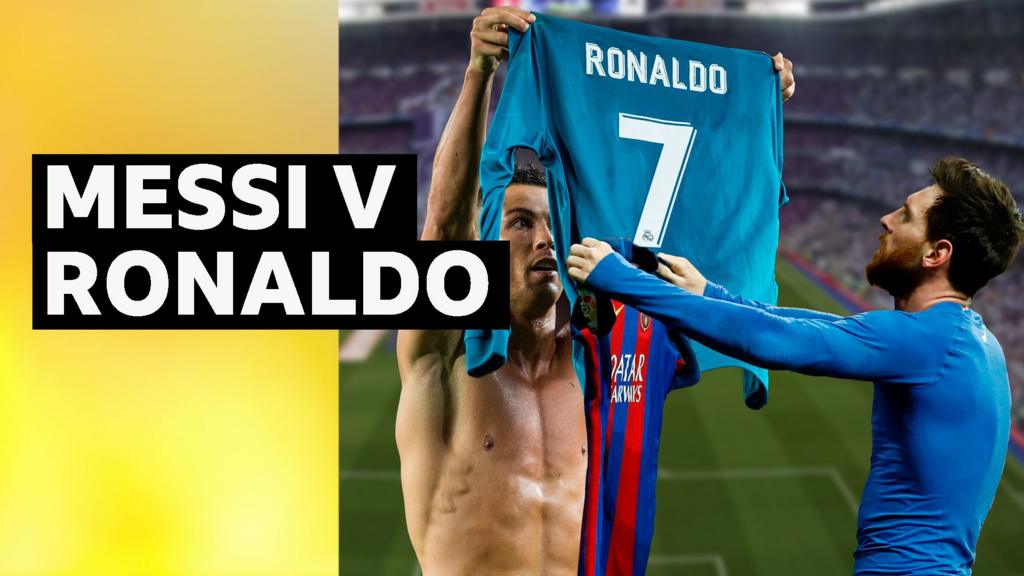
Former Barcelona president Josep Maria Bartomeuhas claimed that the Catalan giants nearly lost Lionel Messi after the club were reportedly set to receive a record breaking €400 million offer to sign him.
Speaking in an interview with Cadena SER, Bartomeu opened up on his heavily criticized stint at Barcelona. The ex-president made a shocking revelation about a potential blockbuster offer to sign a prime Lionel Messi.
Thanks for the submission!
Advertisement
Following Neymar Jr‘s shock departure to Paris Saint-Germain in 2017, he claimed that the club were made aware of a reportedly massive offer to snatch away Messi from the club. He explained that the club became aware of a €400m operation attempting to sign the Argentine superstar. He said(via GOAL):
Advertisement
“A few weeks after Neymar’s departure, rumours began to circulate that a club was preparing €400 million (£346m/$470m) for Messi – the amount of his release clause. Funds from an Arab country were transferred to accounts in Europe”
“It doesn’t matter now… that’s old news; it was years ago. There are very few clubs in England, or state-owned clubs, that can afford such sums. There was a team willing to pay €400 million. I don’t want to name names, but it wasn’t City”
Bartomeu didn’t disclose the name of the club trying to sign Messi but ruled out Manchester City. The ex-president claimed that the threat of losing the eight-time Ballon d’Or winner forced the club to draft a contract that was one of the most lucrative in sporting history. He said:
“What we did was talk to Lionel Messi and his father and discuss the matter: we had to raise the release clause,” Bartomeu explained. “At the time, the clause was 400, so we raised it to 700, which is a very high figure. If you raise the release clause, you also have to raise the player’s salary and compensation.”
The new contract effectively ended the pursuit but played a major role in Lionel Messi’s exit from the club in 2021.
Secret Barcelona contract offered to Lionel Messi before Miami switch revealed
According to SPORT(via beIN Sports), Messi reportedly received a contract offer from Barcelona before sealing his move to Inter Miami. The deal would have seen Messi return to the club, designed to give him the farewell he didn’t get in 2021. Former manager Xavi acted as a bridge between the club and Messi’s team to make the deal possible. Unfortunately, Barcelona’s massive salary limit prevented LaLiga from approving the deal. The dream ended after Xavi was informed by Lionel Messi’s father that any potential deal was impossible.
As LIV Golf prepares for its first tournament since the news that it will no longer be funded by the Saudi PIF following this season, questions continue to swirl about what will happen to the league and its players.
LIV Golf CEO Scott O’Neil spoke at length on Tuesday at Trump National D.C. about a business plan, momentum and strategic changes going forward. Although, as Jon Rahm noted, O’Neil and other LIV executives “have a lot of hard work to do” to secure funding for the future.
Rahm said Tuesday he has several years left on his contract. But as for LIV’s most prized possession, Bryson DeChambeau? He’s only signed through the end of 2026. What he does next is one major storyline, not only for the long-term health of LIV but the future of the pro golf landscape.
He already has ideas if he doesn’t return to LIV or if the pathway back to the PGA Tour doesn’t pan out.
Advertisement
“I think, from my perspective, I’d love to grow my YouTube channel three times, maybe even more,” DeChambeau told a few outlets, including ESPN and SI, on Tuesday. His YouTube channel has 2.7 million subscribers. “I would love to. I’d love to do a bunch of dubbing in different languages, giving the world more reason to watch YouTube. And then I’d love to play tournaments that want me.”
DeChambeau told them he had conversations with the PGA Tour but did not discuss what a return could look like.
Brooks Koepka went from LIV to the PGA Tour earlier this year via the Returning Member Program but paid a hefty price to do so. DeChambeau — along with Rahm and Cameron Smith — also had a chance to return under those same circumstances but declined. A potential path back to the PGA Tour will likely be different now, especially since DeChambeau, unlike Koepka, was once involved in a lawsuit against the Tour.
Although despite LIV’s uncertain future, DeChambeau said the PGA Tour “isn’t doing great either.”
Advertisement
“Let’s be honest about the situation,” he told reporters. “They’ve got the media. They’ve got everybody on the side that helps pump it up. But they’re reducing field sizes, cutting employees and restructuring their business too.”
O’Neil was asked Tuesday how DeChambeau’s contract situation (whether he has one or not) affects funding efforts for next year.
“Well, that’s an interesting question,” he said. “I’m not sure. We’ll sort through and work through. I appreciate the question. It’s just Bryson’s special. He’s different and special. You want to talk about a business partner, we’re literally talking about the future of LIV Golf, I’m talking with him about how does he see, not just the golf, but the business. He’s smart, he’s driven, he’s committed, and he’s a heck of a partner.”
DeChambeau told GOLF.com he sees the current LIV uncertainty as an opportunity.
Advertisement
“Any time a door closes, another one opens,” he said. “I don’t think if a door closes, you’re just locked in forever. For us, this is the opportunity that we have in this country and also internationally, the freedom and the opportunity to build businesses. If it’s restructured in the right way, and people see the value of team golf, and want to be a part of something special, I think there’s opportunity out there.”
Sports sponsorship long followed a predictable playbook. Brands spent heavily on star male athletes, buying visibility and cultural relevance in a single move. The approach delivered reach, optimized for exposure rather than connection. In the process, it left women’s sports underfunded, undervalued and often overlooked altogether.
That model has shifted. As investment pours into women’s sports, a new class of brands is entering earlier, thinking longer term, and even scaling alongside the leagues themselves rather than waiting for them to mature.
Advertisement
Last year, McKinsey & Company estimated a $2.5 billion opportunity in women’s sports. Sponsorship dollars are already accelerating behind it. The WNBA entered the 2025 season with a record 45 sponsors, including 14 added across 2024 and 2025 alone. Meanwhile, increased sponsorship traction across the WNBA and NWSL added more than $250 million to the women’s sports market in 2024. As of September 2025, the NWSL had 16 active league-level sponsors, the highest in league history.
Advertisement
For brands, increasingly, the question is not who you sponsor, but where you embed. The new model is less about reaching an audience once and more about embedding into an ecosystem over time.
A Different Kind Of Bet
The structure of sports sponsorship in women’s leagues differs significantly from the legacy model. Instead of defaulting to high-cost, single-athlete endorsement deals, brands are experimenting with a broader mix of partnerships: league-level integrations, community investments, co-branded product drops and in-venue experiences designed to build deeper engagement over time.
Advertisement
Female-founded companies like Dagne Dover have made that intentional shift. Their partnership with League One Volleyball reflects a belief in how the future of women’s sports will be built.
Advertisement
LOVB itself was designed differently from the start. Rather than launching as a top-down professional league, it was built “club up,” connecting a national network of youth volleyball programs to a professional pathway. The result is an integrated network that spans middle school athletes, elite development and the pro level, creating both a talent pipeline and a deeply engaged fan base rooted in community.
On the court: Dagne Dover Founders (Jessy Dover, Deepa Gahndi and Melissa Mash) with Danielle Scott (Head of Pro Talent Acquisition at LOVB and 5x Olympian) and Michelle Chatmansmith (Pro Recruiting Coordinator at LOVB)
Courtesy of Dagne Dover
When Dagne signed on, it marked the company’s first formal sports league deal in its 13-year history. The brand is integrating across that full pipeline, from youth development programs to professional athletes to the families and communities that fuel the sport’s growth.
Advertisement
“Elevating women’s sports has been important to us because they don’t get as much funding, they don’t get as much visibility,” said Melissa Mash, cofounder of Dagne Dover, during a video call. “We are builders, just like how [LOVB] is building something, new, new leagues, new teams. We wanted to support something that we felt was from the ground up.”
Advertisement
This is what distinguishes many of today’s women’s sports deals. They are not purely media buys or endorsement contracts; they are strategic plays, often combining:
Product integration with athletes
Retail and co-branded merchandise
In-arena activations and fan experiences
Community and youth-level engagement
LOVB’s model makes that possible. Its reach extends beyond game-day audiences into year-round participation, giving brands repeated, meaningful touchpoints with athletes and consumers at different stages of their journey.
Why Early Investment Matters
Before formally entering league sponsorships, Dagne had already seen growing interest from female athletes across professional sports. Players from teams including the U.S. women’s national soccer team were already carrying Dagne products while traveling for competition, often without paid partnerships.
Advertisement
Advertisement
That organic adoption helped the founders recognize an overlap they had not initially designed for.
“When the women’s U.S. soccer team started to come to us and say, ‘We love your bags,’ something clicked,” said Jessy Dover, cofounder of Dagne Dover. “I realized at that moment how the athlete’s lifestyle is actually very similar to ours. They’re just not going to the office, they’re going to practice or training.”
That realization reshaped how the company thought about both product design and sports partnerships. Athletes were not simply influencers or endorsement vehicles; they were existing customers whose daily routines mirrored the needs of Dagne’s broader consumer base: organization and transitioning between multiple roles throughout the day.
That insight is now shaping future collections, from functionality to color palettes, as the brand leans further into sports and travel.
Advertisement
Advertisement
At the same time, the founders viewed LOVB as an opportunity to invest early in a league still establishing its identity and infrastructure.
“When you build with them, they remember that you were there at the beginning,” said Deepa Gandhi, cofounder of Dagne Dover. “To be able to stand behind something that is in their second season, going into their third season, that’s truly building a community and world and ecosystem around them, that felt very compelling to all of us.”
The Rise Of Values-Based Sponsorships
But Dagne is not alone in rethinking what sports sponsorship can look like.
Advertisement
Another example is Bobbie, the organic infant formula brand that became the official infant feeding partner of the National Women’s Soccer League. Rather than focusing exclusively on elite athletic performance, Bobbie built its partnership around the realities of parenthood and the growing number of professional female athletes openly navigating motherhood alongside their careers.
Advertisement
“We see our NWSL partnership as a bit of our brand intervention,” said Kim Chappell, chief brand officer at Bobbie. “Parents, who represent a massive portion of that fan base, have largely been ignored by traditional sports sponsors. Our parents are in the stands, our parents are on the field, our parents are on the sidelines, and so our logo should be a part of that and our brand dollars should be a part of that ecosystem.”
That framing highlights how brands are increasingly aligning with values and life stages, not just audience demographics.
Advertisement
Sponsoring The Athlete And The Mother
For Bobbie, whose customer base largely consists of new mothers, the partnership aligned naturally with the NWSL’s advocacy around paid leave, equal pay and support for players returning to the field after childbirth.
Advertisement
“The NWSL has done such a beautiful job of championing women and equality in women’s sports and fair pay and paid leave,” Chappell expresses. “That fight for support in their journey into motherhood, in their career, is exactly what we stand for at Bobbie.”
Last year, the company launched its “There’s No Scoreboard In Motherhood” campaign alongside soccer icon Alex Morgan as she transitioned into becoming a mother of two and prepared for retirement from professional soccer.
Advertisement
Alex Morgan partnered with Bobbie in their “There’s No Scoreboard in Motherhood” campaign after the birth of her second baby.
grace rivera for bobbie
“It’s not only about supporting the women on the field, but also saying we support you when you need to take a pause, or you’re transitioning to the next moment of your career,” Chappell said.
Advertisement
Like Dagne, Bobbie is approaching sponsorship less as a transaction and more as a long-term cultural investment. The brand’s NWSL activations have included community baby showers.
From Transactions To Cultural Investments
Instead of reaching a fan once, brands are embedding themselves into a lifecycle. Perhaps the most defining element of this strategy is timing.
Advertisement
Instead of waiting for leagues to prove scale, brands like Dagne and Bobbie are entering early, when cultural and commercial value is still being defined. That early positioning can translate into long-term brand equity, particularly in emerging categories where loyalty is still forming.
Advertisement
“People who are passionate about women’s sports really appreciate and pay attention to the brands that are supporting them,” Mash noted.
That attention eventually becomes something more valuable: affinity.
Advertisement
As women’s sports continue to scale, the brands that win may not be those that spend the most, but those that invest earliest and most intentionally. In women’s sports, the smartest sponsorships are no longer chasing the spotlight. They are helping build the stage.
NEW DELHI: The Wrestling Federation of India (WFI) has announced the rules and schedule for the 2026 Asian Games wrestling selection trials, and one major outcome is that Vinesh Phogat will not be eligible to compete in them. The federation said only medal winners from the 2025 Senior National Wrestling Championship, the 2026 Senior Federation Cup, and the Under-20 National Wrestling Championship can take part. WFI also made it clear that past performance will not be considered.
Watch
Vaibhav Sooryavanshi India debut: The calls are getting louder
Vinesh, who is preparing for a comeback after nearly 18 months, is set to compete in the National Open Ranking Tournament in the 57kg category. However, under the newly announced criteria, her previous achievements will not help her qualify for the Asian Games trials.The women’s wrestling trials will be held on May 30 at Indira Gandhi Stadium in New Delhi, while freestyle and Greco-Roman trials are scheduled for May 31 at the SAI Regional Centre in Lucknow. The competition will cover 18 Olympic weight categories across the three wrestling formats.At the same time, Vinesh has also received a warning from the International Testing Agency (ITA) after missing an out-of-competition doping test in December 2025 in Bengaluru. Athletes in the testing pool must stay available during a fixed one-hour slot for surprise testing. Vinesh explained that she was travelling for Haryana Assembly duties and dealing with personal responsibilities after the birth of her child, but the ITA rejected her explanation.“The obligation is to be both available and accessible without prior notice at the location indicated,” the ITA said in its notice. The agency added that this would count as her first “whereabouts failure” in the last 12 months. However, it is not considered a doping violation and will not stop her from competing in the upcoming Gonda tournament.
After a breathless first leg full of goals, Bayern Munich and Paris Saint-Germain meet again for the second leg of their Champions League semifinal on Wednesday.
PSG edged a dramatic encounter at the Parc des Princes last week, winning 5–4 in what has already been described as one of the competition’s classic ties. The reigning European champions now carry a slim advantage into the return leg at the Allianz Arena, where they aim to protect their lead and continue their title defence.
Advertisement
The nine-goal thriller in Paris has set the stage for another high-intensity contest, with both sides showing enough attacking quality to believe they can reach the final. With key players rested during weekend league matches, both teams arrive in Bavaria fresh for a decisive showdown.
Bayern will need at least a two-goal win to book their place in the final, while PSG only need to avoid defeat to progress. If the aggregate score is level after full time, extra time and penalties will be required to separate the sides.
Advertisement
With expectations soaring, the second leg promises another captivating European night.
Bayern vs PSG UCL broadcast details
Country/Region
TV Broadcast
Live Streaming
USA
CBS
Paramount+, Fubo, YouTube TV, Hulu + Live TV
UK
TNT Sports 1
HBO Max (TNT Sports add-on)
India
Sony Sports Network
SonyLIV
Canada
—
DAZN
Australia
—
Stan Sport
Ireland
RTÉ 2
RTÉ Player (free)
Belgium
RTL Play
RTL Play (free)
Turkey
TRT 1
Tabii
Other Regions
Local UCL broadcasters
UEFA official partners / VPN access where applicable
Bayern Munich vs PSG UEFA Champions League semi final 2nd leg live telecast and streaming details
Advertisement
When will the UCL 2026 semifinal between Bayern Munich and PSG be played?
The 2nd leg of the UCL 2026 semifinal between Bayern Munich and PSG will be played on May 7.
What time will the UCL 2026 semifinal between Bayern Munich and PSG begin on May 7?
Advertisement
The UCL 2026 semifinal between Bayern Munich and PSG will start at 12:30 am IST (May 7).
What will be the venue for the UCL 2026 semifinal match between Bayern Munich and PSG?
The Allianz Arena in Munich will host the UCL 2026 semifinal match between Bayern Munich and PSG.
Advertisement
Where will the live telecast of the UCL 2026 semifinal between Bayern Munich and PSG be available in India?
The live telecast of the UCL 2026 semifinal between Bayern Munich and PSG will be available on the Sony Sports Network.
Advertisement
Where will the live streaming of the UCL 2026 semifinal between Bayern Munich and PSG be available in India?
The live streaming of the UCL 2026 semifinal between Bayern Munich and PSG will be available on the SonyLIV app and website.
You must be logged in to post a comment Login