Philipp Lahm has said German football’s biggest problem is a lack of an identity. Toni Kroos believes Germany don’t have world-class talent. Mats Hummels has spoken of issues in the system. There are plenty of opinions and arguments to choose from when it comes to why Germany endured a third straight World Cup disappointment.
Frank Wormuth, a former player, German Football Association (DFB) coach-educator, first-division coach in the Netherlands, and currently a mental coach, believes the context of the team matters.
German football identity: Frank Wormuth
“It’s not about the playing philosophy. It’s about the quality of the players within that playing philosophy,” Wormuth said.
Advertisement
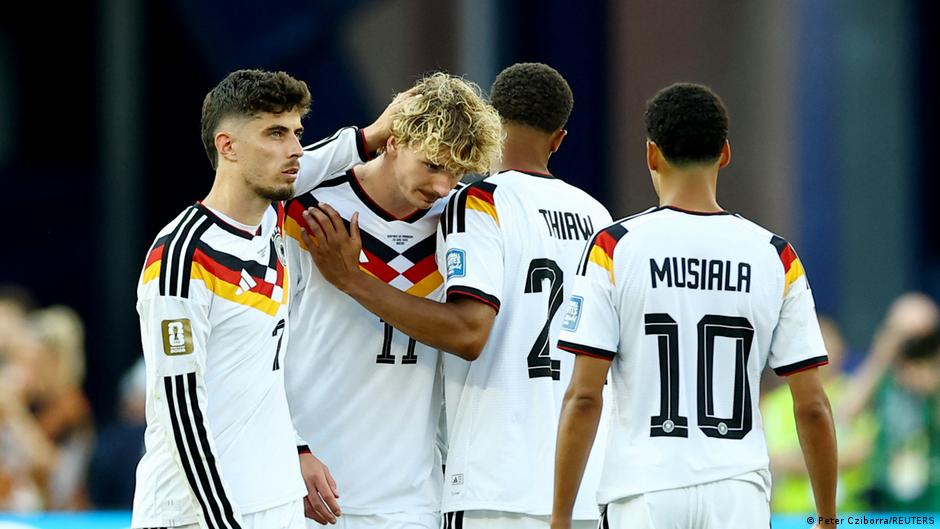
“You have to look at it separately—our top talents are still talents. (Florian) Wirtz had a less-than-ideal season in Liverpool. (Jamal) Musiala was out with an injury for a long time. (Leroy) Sane seems to remain the eternal prospect. What do you expect now?
“So, right off the bat, you have three very important players on the field responsible for creativity who weren’t at peak form. And that has nothing to do with (head coach Julian) Nagelsmann. It’s a matter of individual form. (Kai) Havertz is just the way he is. He scores goals every now and then, but he thrives on passes. Then Havertz, the one penalty taker you are sure of, misses a penalty. These are all little things, and I’d say that at this level, little things make all the difference. And that’s why it didn’t work out so well for us in attack, even though that was actually our strength.”
Wormuth also cities the example of Nico Schlotterbeck, whose injury early in the tournament was seen as a crucial blow to Germany’s chances.
“He gets injured and suddenly everything falls apart because we’re missing a left-footed player who can open up the play with his build-up. That’s a one-dimensional way of looking at it,” Wormuth said.
Advertisement
“The question is, are we really that good defensively? Just look at the other teams and how they use their bodies to challenge opponents. We don’t do that anymore. I can clearly see that we have problems defensively in one-on-one situations.”
Frank Wormuth (left) has coached first team football in the Netherlands and Germany, as well as Germany’s youth teamsImage: Pro Shots/IMAGO
Germany team impacted by system structure and societal change
With relatively recent changes made to Germany’s youth system, it feels misplaced to suggest youth football requires a complete overhaul. After all, the impact of the recent changes won’t be felt for years to come. However, with character being another area questioned by those analyzing Germany’s latest World Cup exit, there are case studies from abroad that might spark consideration in terms of the development of young players in Germany.
Mark O’Sullivan, an associate professor of football at the Norwegian School of Sport Sciences in Oslo, highlights Bodo/Glimt’s approach. Writing in his blog, O’Sullivan explains how the way the football club shaped their environment positively impacted their performance on the field. In the season just finished, the club based in the small city north of the Arctic Circle reached the round of 16 in the Champions League.
“One of the key reasons for this success is the club’s strong emphasis on shared values, culture, and player development,” O’Sullivan wrote.
Advertisement
“The club promotes principles such as trust, humility, collective responsibility, and continuous improvement. Under the leadership of head coach Kjetil Knutsen, Bodo/Glimt has developed a distinctive playing style characterized by a strong teamwork ethic. Knutsen has emphasized a learning-oriented environment in which players are encouraged to take responsibility, support one another, and constantly seek improvement.”
Bodo/Glimt are a great example of how to achieve a lot with not very muchImage: Piero Cruciatti/AFP
Has Germany gone soft?
“Ultimately, the reason Germany isn’t successful comes down to culture, training, and youth development,” Wormuth said.
“The most important thing of all is mindset, and that has changed. Now you might ask, ‘How?’ Well, I’ll tell you: Society. School. Upbringing. Parents. Culture. Things have changed. And when Ecuador really goes after Germany, albeit still fairly, and we can’t hold our own, then it’s a cultural thing. They have a completely different culture of survival than we do. And that’s why I say that’s what we’re missing. And it’s not a matter of coach development or even academy training. No, it’s society. And you can’t change that overnight,” he explained.
“We develop everyone like Spanish players, but without having their mentality. “It’s a cultural issue. Society is always reflected a little bit in football, or vice versa. We’ve become soft in many social situations over the last few years.”
Such assessments are hard to quantify, but if softness is seen as a person, policy or object that has lost its original edge, firmness or discipline, then it would be fair to say German football currently looks like an example of this.
Advertisement
Perhaps Germany can take inspiration from a country close by. O’Sullivan believes the importance of meaningfulness in the provision of facilities has played a key role in Norway’s success in elite sport.
“A football pitch, sports hall, park, or ski trail does not generate participation simply because it exists and proximity to facilities does not necessarily translate into participation. This is what might be called the spatial fallacy. Unfortunately, this is often a typical assumption in planning, public health and sport policy.”
This year, the German government has pledged to invest €333 million ($380 million) in the renovation of 314 sports facilities throughout the country, modernizing them and making them more sustainable. Herein lies the crux of O’Sullivan’s point. The upgrading of these facilities cannot be seen as the only step towards creating a meaningful connection to sport for Germany’s youth. It must only be the beginning.
The same is true for Jürgen Klopp’s expected appointment as Germany’s new men’s head coach. German football has reached a watershed moment. What it decides to do next will be remembered for years to come.
The common take these days is that golf’s major season flies by too fast. Here we are, just barely in the grand month of August, one toe in the water, and the season’s long done — that’s how this argument goes. You know: Augusta in April, the PGA in May, Open I in June, Open II in July, majors out.
Well, we’re here to tell you that’s not true — that summation, that whole four-and-done thing, is way too narrow. For starters, there’s one major left, and it’s boffo: the U.S. Amateur (for men), this year at Merion. Come nightfall on Aug. 16, when it wraps and all the shouting is over, maybe the Amateur will get the coveted GOLF.com prize, “Best Major of the Year.” Could happen, but it’s going to have to beat out this amazing threesome of majors to do it, presented here in order of their amazingness. That is, not the fame of the event or its winner or the venue, but the tingly excellence of the event itself.
Our ranking of the three best majors of the year to date:
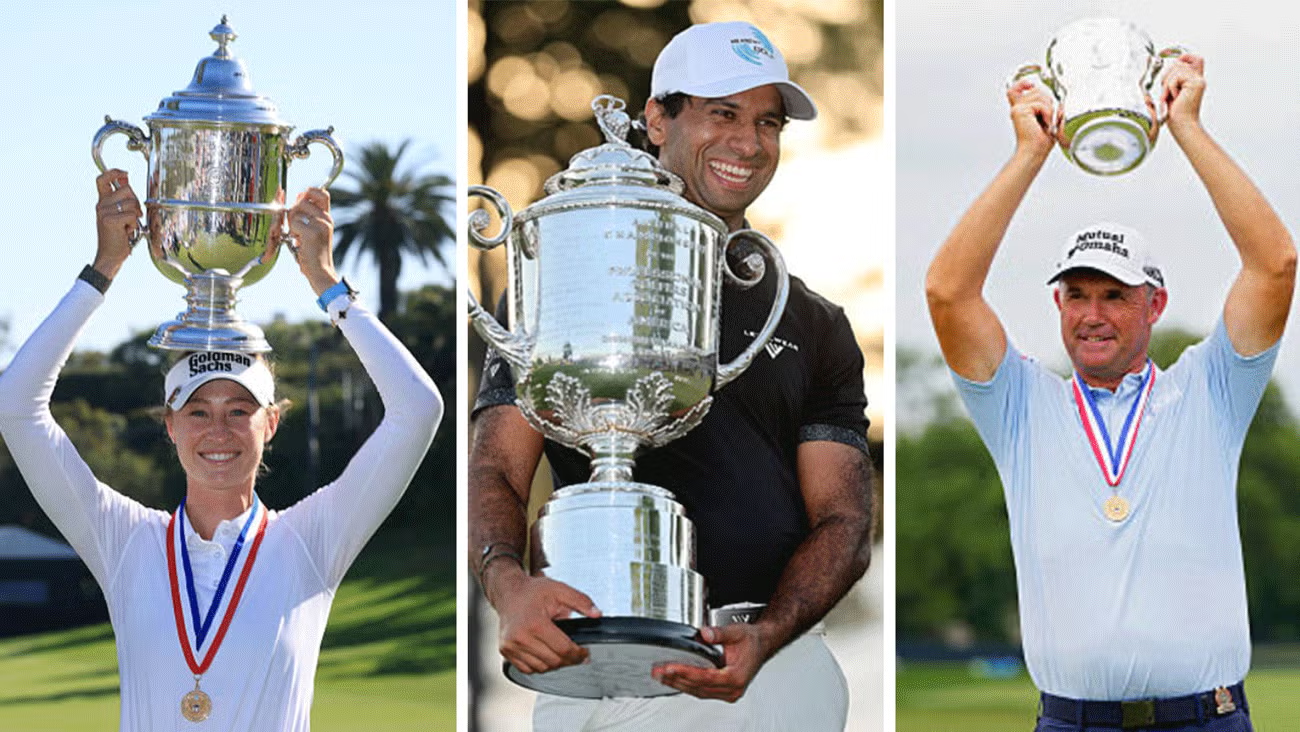
No. 1. U.S. Women’s Open at Riviera, won by Nelly Korda on June 7.
Advertisement
Survey says: The course, its history; the winner, her history.
No. 2. PGA Championship at Aronimink, won by Aaron Rai at Aronimink on May 17.
Survey says: The broad Rory-Scheffler-Cam vibe is cool but this win by golf’s most humble man was a welcome correction.
No. 3. AIG Women’s Open at Royal Lytham, won by Shiho Kuwaki on Aug. 2.
Advertisement
Survey says: Shiho was last lady standing after an unlikely two-hole playoff featuring two totally dissimilar golfers in the English dusk of an insane Sunday that proved how hard it is to close in golf.
So that’s three, of 13.
Yes, 13 majors — this year.
This year, and any year that ends in an even number, there are 13 major golf events: the four cited above (the U.S. Women’s Open and AIG Women’s Open; the PGA Championship; and the U.S. Amateur), plus these tried-and-true standbys: the Masters; the U.S. Open and Open Championship; the Senior PGA Championship and the U.S. and Senior British Opens; the KPMG Women’s PGA Championship and the Chevron Championship; and the Augusta National Women’s Amateur. Next year, with the Ryder Cup in Ireland, there will be 14.
Advertisement
Is this list subjective? Of course. Is there a reason why the Tradition, a so-called senior major, is not included? Yes. Our take is that winners of majors get bragging rights that don’t expire until the golfer does; in victory, the winner is overwhelmed with emotion, and so are the fans. If you like golf, you’re watching that ANWA finale. It’s one of the best days of the golfing year. Have you ever watched the Tradition? Relatives of Steve Stricker (a three-time winner), please do not answer that question.
So without further ado, and holding a place for the U.S. Am, our first GOLF.com Majors of the Year ranking, starting with a quick recap.
No. 1. Queen Korda at the U.S. Women’s Open at Riv.
No. 2. PGA won by modest Mr. Rai at a spruced-up Donald Ross course, Aronimink.
Advertisement
No. 3. Shiho’s colorful and expressive playoff win over Esther Henseleit, a stoical and lanky German golfer, at the Women’s Open at Royal Lytham.
And here are the rest…
No. 4. The Masters, won by Rory McIlroy on April 12, one year after he won his first green jacket at Augusta National. So, back-to-back wins after so many years of golfing torture. How weird is that?
Survey says: Did this really happen — and did Scottie finish a shot out of a playoff? Will Rory ever make anything look easy?
Advertisement
No. 5. U.S. Senior Open at Scioto Country Club in Columbus, Ohio, won by Padraig Harrington.
Survey says: Paddy in full. Paddy in full! At the course that made Jack. Or, Jackieboy, as Nicklaus’s lifelong instructor, Jack Grout, always called his prized pupil.
No. 6. Nelly Korda winning the Chevron, née Dinah, on April 26 at Memorial Park, a public course in Houston, and reclaiming her place as the most dominant golfer in any division of the game, male or female, pro or amateur.
Survey says: Korda was only 27 when she won the Chevron, her third career major — and then added her fourth at Riviera. When she’s done, will she be on the Mount Rushmore of women’s golf with Mickey (Wright), Kathy (Whitworth) and Annika? Let’s see what the next decade and change brings!
Advertisement
No. 7. Open Championship, golf’s oldest and grandest event, at Royal Birkdale, won by Ryan Fox on July 19.
Survey says: The course is as great as Muirfield, the Kiwi winner has a hugely fun spirit, and his get-on-with-it pace of play is a lesson for us all.
No. 8. Augusta National Women’s Amateur at Augusta National, won by Maria Jose Marin of Colombia on April 4 by way of a final-round 68 with pixie dust all over it, including a tee shot on 12 that stayed on the bank, “a miracle,” as she said when it was over, her English as good as her golf.
Survey says: Maria Jose Marin as the first Latin American golfer to make the 36-hole ANWA cut and then win? A win that likely lit a million dreams across South America and beyond.
Advertisement
No. 9. U.S. Open at Shinnecock Hills, won by Wyndham Clark on June 21. He captured his second Open in the same unlikely way he won his first: by shooting four rounds of golf, each higher than the preceding one.
Survey says: All U.S. Opens are majestic. Any day of golf at Shinnecock Hills has a majesty to it. For some reason, the week did not completely click. The course has become too hit-it-anywhere open and some of the Sunday spectators were classless boors. Clark did not inspire a lovefest. Still, it was a U.S. Open at Shinnecock Hills, and that’s a lot.
No. 10. KPMG Women’s PGA Championship at Hazeltine, in Chaska, Minn., won on June 28 by Haeran Ryu, the Korean sensation who was the LPGA’s rookie of the year in 2023.
Survey says: You’d be hard-pressed to say which American state has the deepest passion for golf, so close are both Minnesota and Wisconsin to claiming this title. Minnesota’s hearty golf fans, with their short season and few chances to see in-state major championships, embraced Ryu as if she were the second coming of Kevin Garnett, or something like that.
Advertisement
No. 11. Senior British Open at Gleneagles in Scotland, won by 59-year-old Jerry Kelly of Wisconsin on July 26.
Survey says: Along with everything else, the win gives Kelly a place in next year’s Open Championship on the Old Course in St. Andrews, Scotland, and he becomes part of Gleneagles lore.
No. 12. Senior PGA Championship, won by six shots by Stewart Cink at the Concession Golf Club in Bradenton, Fla., on April 19.
Survey says: Big trophy, big winner by a big margin.
Advertisement
The 36-hole stroke-play qualifier for the U.S. Amateur will be held Aug. 10 and 11 at Merion and Philadelphia Country Club: 312 players for 64 spots, then 64 to 32 to 16 to eight to four to two to one. A lot of golf to go. One more major.
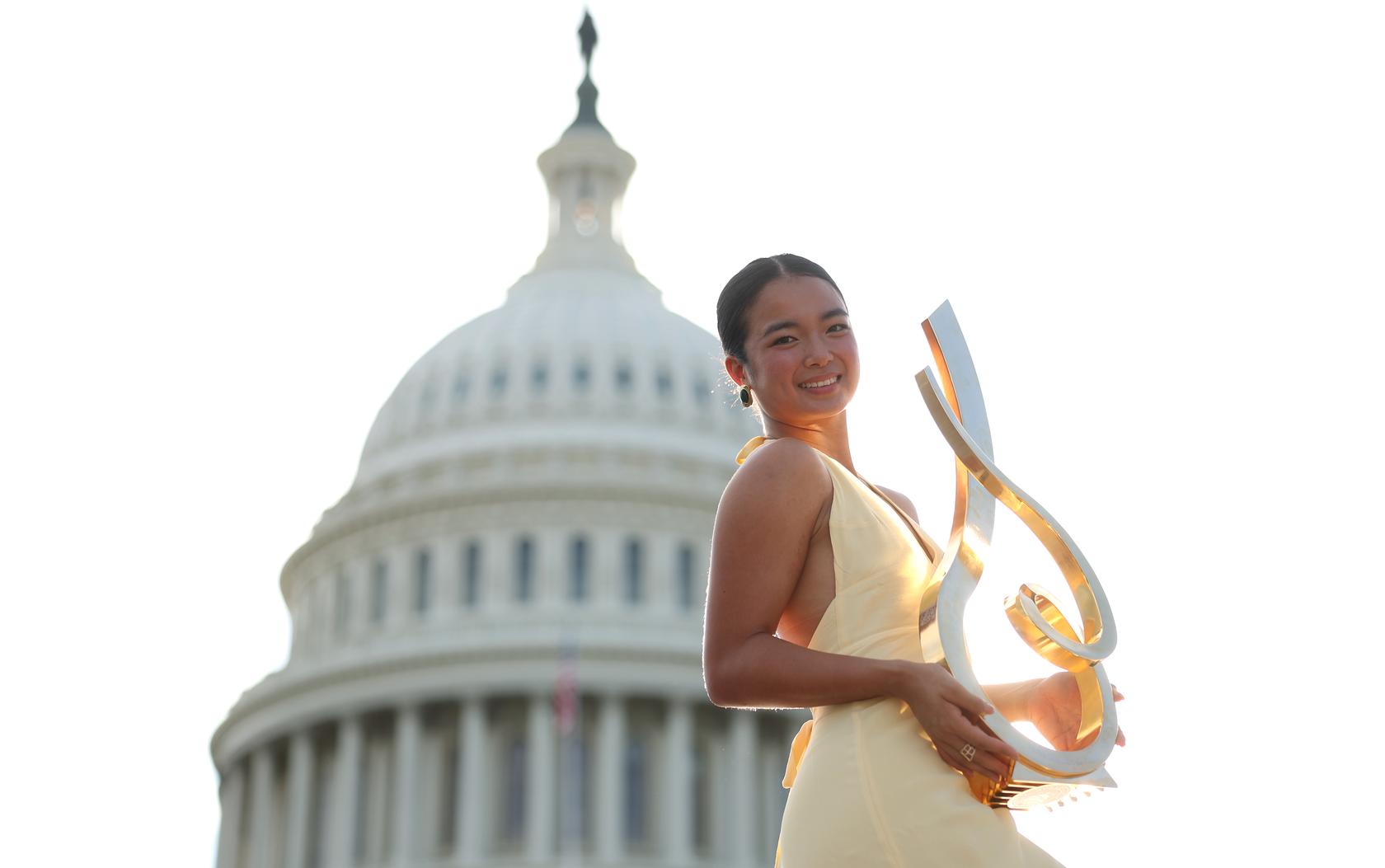
2026 Mubadala DC Open women’s champion Alex Eala poses in front of the US Capitol Building in Washington, D.C.
MANILA, Philippines — Clad in a pale yellow dress with the championship trophy in hand, Alex Eala exuded the glow of a champion during her post-title photoshoot in front of the US Capitol in Washington, D.C.
Hours after capturing her first WTA Tour title at the 2026 Mubadala DC Open, Eala traded her green match kit for a classy look to cap off a historic week in the United States’ capital.
Article continues after this advertisement
Advertisement
“Serving first ✨🏆,” the WTA tournament account wrote on social media alongside photos of Eala posing with the trophy.
Eala rallied past American top seed Jessica Pegula, 4-6, 6-4, 6-0, in the rain-delayed final, which was postponed to Monday (early Tuesday, Philippine time).
Advertisement
While not yet a long-standing tradition at the DC Open, 2025 champion Leylah Fernandez also posed for a post-title photoshoot on the steps of the Capitol after her victory last year.
Article continues after this advertisement
Eala dethroned Fernandez in the round of 16 en route to the title.
Eala also posted a series of photos celebrating the title, including moments with the championship trophy and thousands of Filipino fans who packed the stands for the final.
Advertisement
“Me and my first🥹,” Eala wrote in the caption.
Eala, who is currently the world No. 20, next competes at the 2026 Canadian Open in Toronto, where she is seeded 25th and received a first-round bye.
Your subscription could not be saved. Please try again.
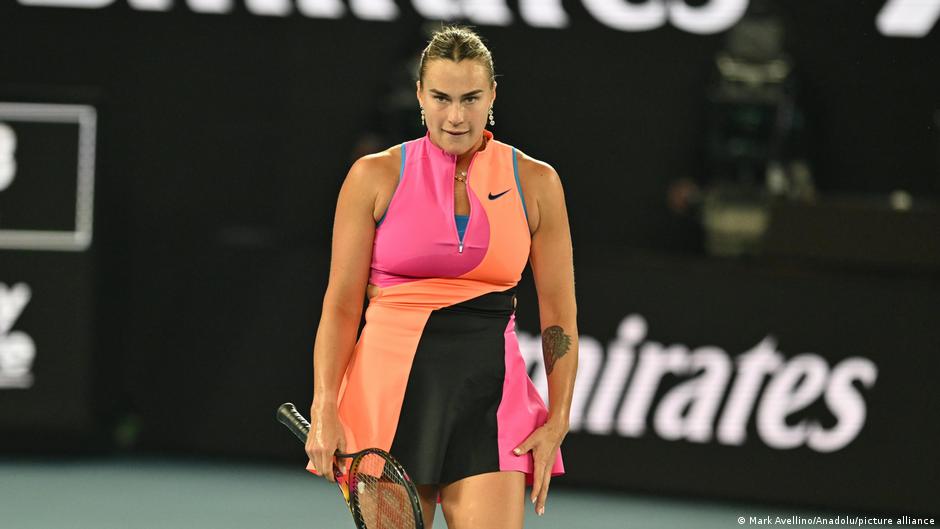
“I think it’s really important to keep the fairness in our tour,” said Sabalenka on Monday. “Obviously, biologically, men are way stronger than women, so I feel like it would be not really fair for a woman to compete against a biological man.
“I believe it took them a little while to make this decision and I support it,” the Belarussian continued. “If they want to test us all, I’m happy to do that; it’s pretty fair, and let’s keep it that way.”
Fact check: Trans athlete ban — fair or not?
WTA introduces genetic testing
In July 2026, the WTA (Women’s Tennis Association) introduced a one-time, mandatory genetic test for all players. As part of the protocol, players will be tested for the SRY gene, a segment of DNA typically found on the Y chromosome. The test can be conducted by a cheek swab or a blood test.
Advertisement
The new policy also includes a document players must sign highlighting disciplinary action is possible if testing is refused.
The previous WTA policy allowed transgender women to compete if their testosterone levels had been lowered to below 2.5 nmol/L continuously for the previous two years. There are no known transgender women currently playing on the WTA Tour.
Sabalenka is currently the best female tennis player in the world, and has been ranked number 1 for 92 consecutive weeks, so her endorsement carries a lot of weight.
On top of that, she competed in the modern edition of Battle of the Sexes in Dubai in 2025 — a match she lost to Nick Kyrgios, a male Australian player. While billed as a way to generate interest in tennis, some were critical of the match-up.
Advertisement
Imane Khelif was the subject of great debate after her gold medal in ParisImage: Jiang Wenyao/Xinhua/picture alliance
World Boxing introduced it in May 2025, after a lengthy and controversial debate around gold medal winner Imane Khelif at the 2024 Paris Olympics.
Former swimmer Riley Gaines has become a conservative political activist who is known for campaigning against the participation of trans women in women’s sports. Recently, Gaines was seen supporting WNBA star Sophie Cunningham, who had said in an ESPN feature that “biological men” should not compete in female sports in order to protect young girls.
Advertisement
Maria Jose Martinez-Patino, whose personal experience with gender verification dramatically impacted sporting policy on the matter in the 1980s, believes new genetic testing for women at elite level is “a setback of several decades”.
“It takes me back to the 1950s and 1960s, when women practically had to go through a series of controls, had to undress in front of a panel of doctors,” Martinez-Patino told DW in an interview in 2025. “I get the impression that we haven’t advanced from a scientific point of view. We’ve made practically no progress if it’s now categorically said that women with X and Y chromosomes are not women.”
World Athletics argues that the SRY gene — present in people with a Y chromosome, usually men — “is a reliable indicator for determining biological sex.” Martinez-Patino believes though, that determining someone’s sex is not as simple as that.
“It’s not black or white. There are more than 60 genetic mutations which I think are not all that complicated to study. Something that I’ve always said is that it should be done case by case,” the Spanish former hurdler said.
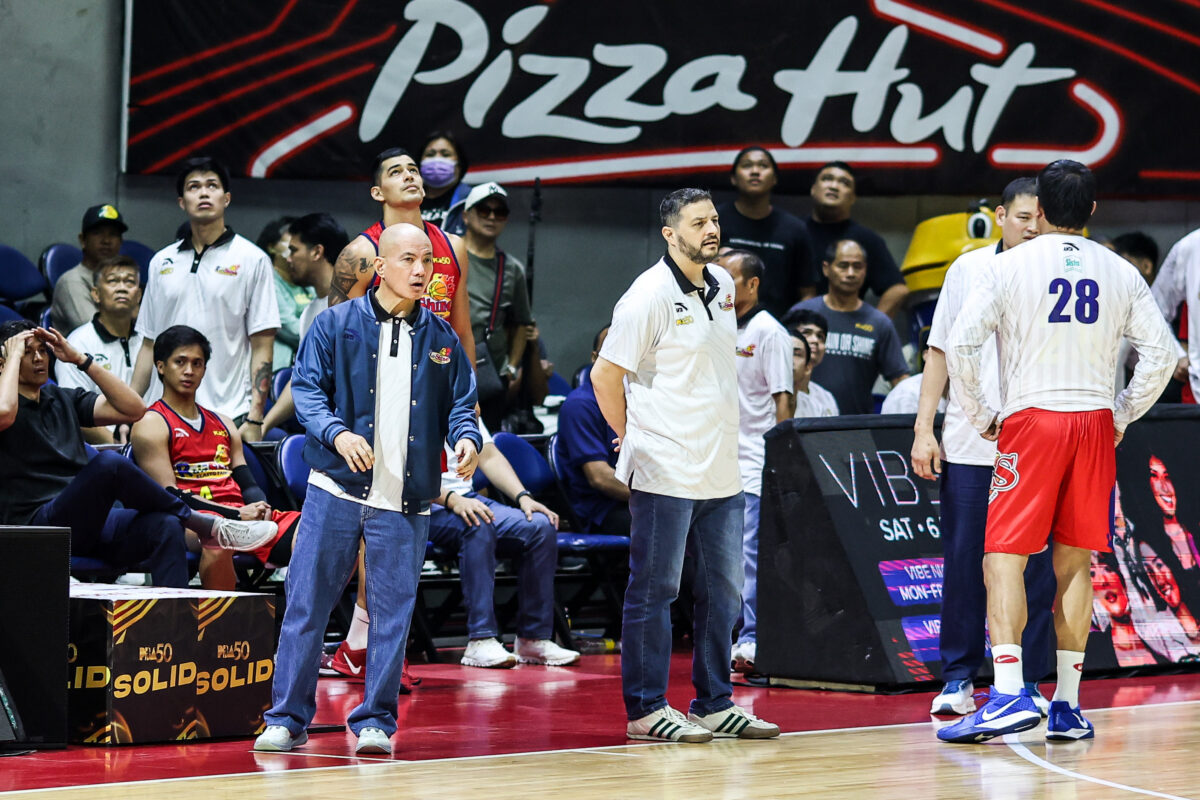
Rain or Shine coach Yeng Guiao looks on during a game against Meralco in the PBA Governors’ Cup.–MARLO CUETO/INQUIRER.net
MANILA, Philippines—The Meralco Bolts came to the defense of Cliff Hodge and slammed Rain or Shine coach Yeng Guiao for his remarks against the veteran forward.
Following Rain or Shine’s thrilling 85-83 win over Meralco, Guiao labeled Hodge as “the dirtiest player in the league” after a third-quarter incident saw Hodge colliding with Elasto Painters guard Adrian Nocum in the third quarter. The two players stayed down for a few minutes, but appeared OK after returning late in the game.
Article continues after this advertisement
Advertisement
“Coach Yeng’s malicious imputations against Cliff are uncalled for and have no place in a professional league such as the PBA,” the team said in a statement.
“We hold all our coaches, players, and staff to always observe the highest level of professionalism, decorum, and conduct in all the games we play here and abroad.”
Guiao didn’t mince words against Hodge, whom he also described as a “danger to his fellow players.”
“Sinaksak niya yung paa niya (he stuck out his foot). There have been similar incidents that I think cause danger to the players. It’s always been a lot of situations or incidents that Hodge is involved,” the multi-titled mentor said during the post-game presser.
Advertisement
Article continues after this advertisement
The 38-year-old Hodge said he was trying to draw an offensive foul on Nocum, who was driving down the lane.
“I saw him (Nocum) coming full speed, I went for a charge and at the moment, he sidesteps right into my knees and dished it so we both fell on the ground,” he recalled.
Hodge didn’t seem affected by Guiao’s latest comments against him that came more than a decade since the veteran tactician referred to him in a derogatory term.
Advertisement
Article continues after this advertisement
“Coach Yeng is coach Yeng. You guys know, everyone knows and the world knows how he is. He likes to say that, I’ll let him say that. That’s his personality. No hard feelings from me,” said Hodge.
Your subscription could not be saved. Please try again.
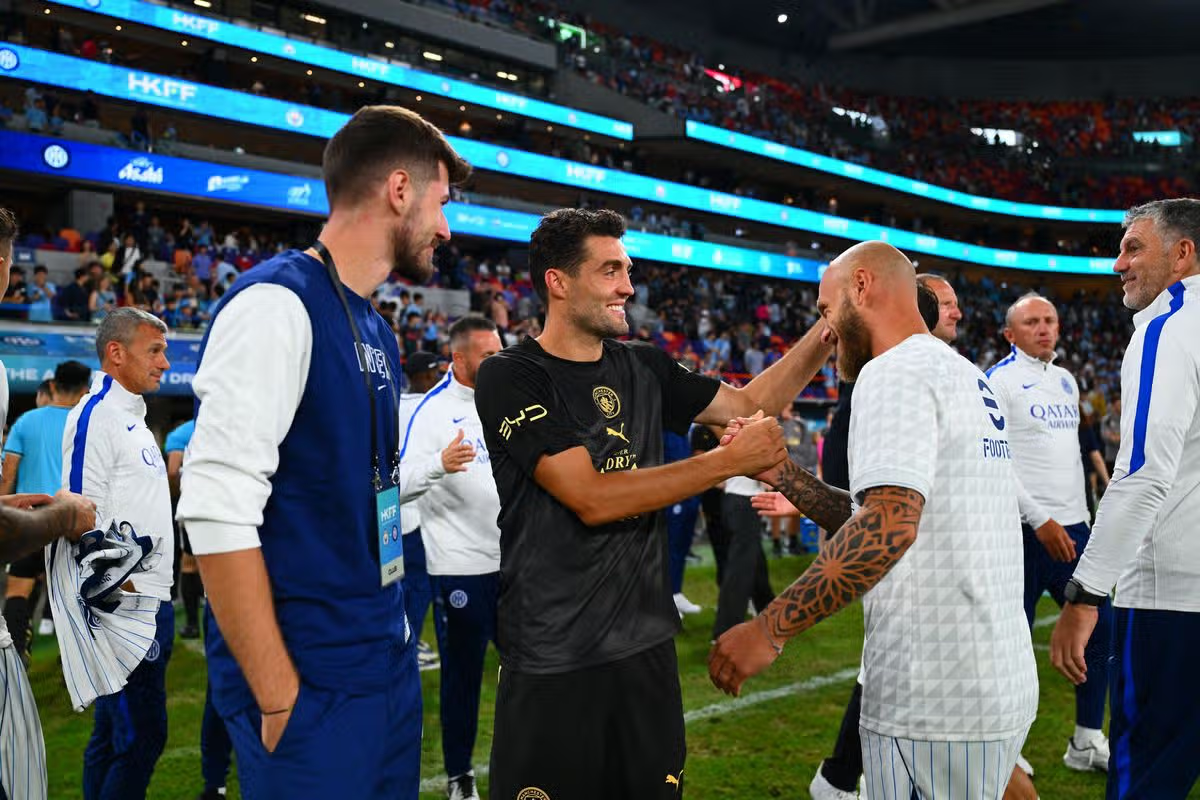
Kovacic is set to stay at City this season after talks with the club hierarchy. The Croatian only has one year remaining on his contract and had been linked with a return to Inter but has been backed to be part of Enzo Maresca’s squad at the Etihad.
Kovacic told reporters in Hong Kong that he never felt any doubts from the club over his future and is happy to remain in Manchester for another year. Having missed most of last season with injury after needing two separate surgeries on an Achilles problem, the Croatian is looking to make up for lost time and prove his importance to Maresca.
“I didn’t feel the question marks from them. I spoke with them, it was that they count on me, which was important for me to hear that from them,” he said. “And now, like I said, for the players it’s always on you to show your best version, because if you’re playing good, the manager will put you first.”
The BGMI Masters Series (BGMS) Season 5 will begin on August 10, 2026, with 24 teams. Nodwin Gaming has not yet revealed the names of all the participants. The tournament will take place in three stages, including League, Playoffs, and Grand Finals, and will be hosted offline in Delhi NCR.
The BGMS is a major third-party Battlegrounds Mobile India (BGMI) event. Every year, Nodwin Gaming organizes this contest with a huge prize pool. The previous four seasons of the tournament have attracted massive viewership and were among the most successful BGMI events.
The inaugural edition of the BGMS featured a huge prize pool of ₹1.52 crore. The second and third editions boasted ₹2.1 crore and $1 crore, respectively. The fourth iteration was held with a total prize pool of ₹1.43 crore.
Advertisement
Dates for BGMS Season 5
The League Stage of the event will be held over three weeks, from August 10 to 30; the Playoffs will be hosted over three days, from August 31 to October 2; and the Grand Finals will be held from September 4 to 6, where the top 16 teams from the previous two stages will fight for the trophy.
Here are the dates for each stage of the event:
1) League Stage
Advertisement
League Week 1 – August 10 to 13
Bounty Weekend – August 14 to 16
League Week 2 – August 17 to 20
Super Weekend 1 – August 21 to 23
League Week 3 – August 24 to 27
Super Weekend 2 – August 28 to 30
2) Playoffs – August 31 to September 2
3) Grand Finals – September 4 to 6
Of the 24 participants, 20 will be invited directly to the BGMS Season 5. Four teams from the TVS Raider Wicked Battles have qualified for the contest.
Santa Esports emerged victorious in the TVS Wicked Battles 2026. White Walkers, Hexnova, and Aura X Esports were second, third, and fourth, respectively. These four underdogs have secured their spots in the BGMS Season 5.
K9 Esports was the winner of the previous edition of the tournament. The omega-led roster put in a top-notch performance to win its first major title. However, the organisation bid farewell to the lineup on April 18, 2026; they will be seen playing under Team Outrage’s banner in the upcoming BGMS Season 5.
Advertisement
In the coming days, Nodwin Gaming will reveal all the event details, such as format, schedule, prize pool, and more. All matches of the tournament will be livestreamed on Nodwin Gaming’s YouTube channel.
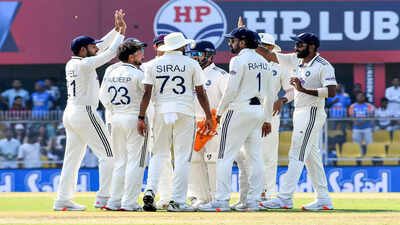
Former India opener Aakash Chopra believes India’s chances of reaching the ICC World Test Championship (WTC) 2025-27 final hang heavily on the upcoming two-Test series against Sri Lanka, warning that the visitors are in a “tough position” in the race for the summit clash. India will begin their Sri Lanka tour with the opening Test on August 15. After nine matches in the current WTC cycle, India occupy fifth place in the standings with four wins and four defeats, giving them a points percentage (PCT) of 48.15. Sri Lanka, meanwhile, sit just below them in sixth place. They have registered one win, one loss and two draws so far, with a PCT of 41.67. Speaking on his YouTube channel, Chopra highlighted how significantly the standings could change depending on the outcome of the two-match series. He pointed out that a 2-0 defeat for India would dent their qualification hopes while boosting Sri Lanka’s prospects. “If we lose 2-0, we will remain at only 39 percentage points, and Sri Lanka will jump to 61 percentage points, and they will be No. 4. Sri Lanka will be in the run if they beat India 2-0. Then they have a realistic chance of going forward, or else it’s a so-near-yet-so-far story for them,” Chopra said. He added that a clean sweep would improve India’s position, although not dramatically, while a drawn series would do little for either side. “If we win this series 2-0, we will reach 57.58 percentage points. If we do a clean sweep, we will gain a little. If we draw the series 1-1, we won’t gain anything because we will be at 48.48 and Sri Lanka will be at 44.44, and the positions will remain as is,” he added. Chopra also underlined the difficulty of India’s remaining WTC schedule. After the Sri Lanka series, India are set to travel to New Zealand for a two-Test series before hosting Australia in a five-Test contest early next year. According to Chopra, the shorter away assignments leave little room for error. “Going forward, we have a two-match series in New Zealand, where it is difficult to win. Even if you lose one match, you lose 50 percentage points. It’s going to be a tough one, and after that, there are five matches against Australia in India. India is in a tough position,” Chopra added. India’s upcoming assignments present a stern challenge. They have not won a Test series in New Zealand since the 2008-09 tour under MS Dhoni and have managed just two series victories there overall. The home series against Australia is also expected to test India after recent setbacks against SENA opposition. India were whitewashed by New Zealand and South Africa in successive home series, with the defeat to South Africa marking their first home Test series loss to the Proteas since 1999-2000. Under Temba Bavuma, South Africa also completed the rare feat of winning the ICC World Test Championship title and a Test series in India in the same year. India could also face a stiff examination in Sri Lanka, particularly against spin, an area that troubled them during their recent home series defeats to New Zealand and South Africa.
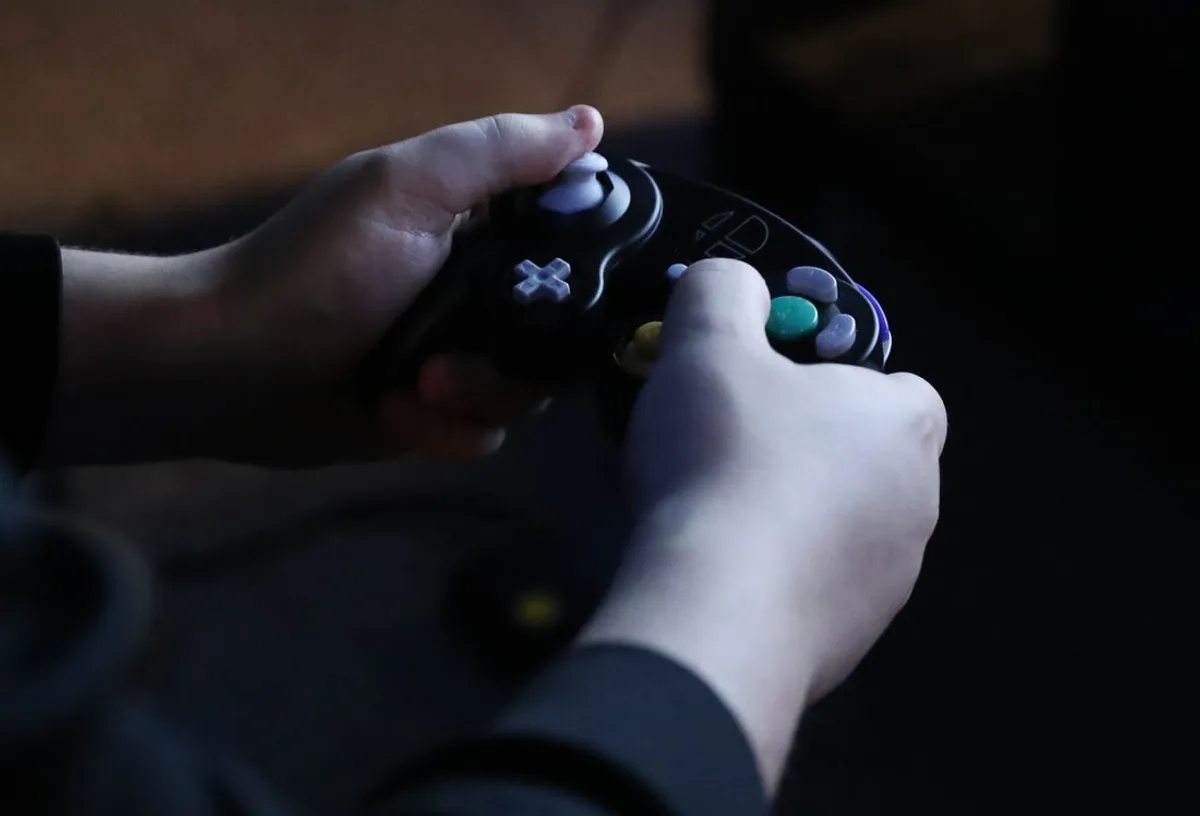
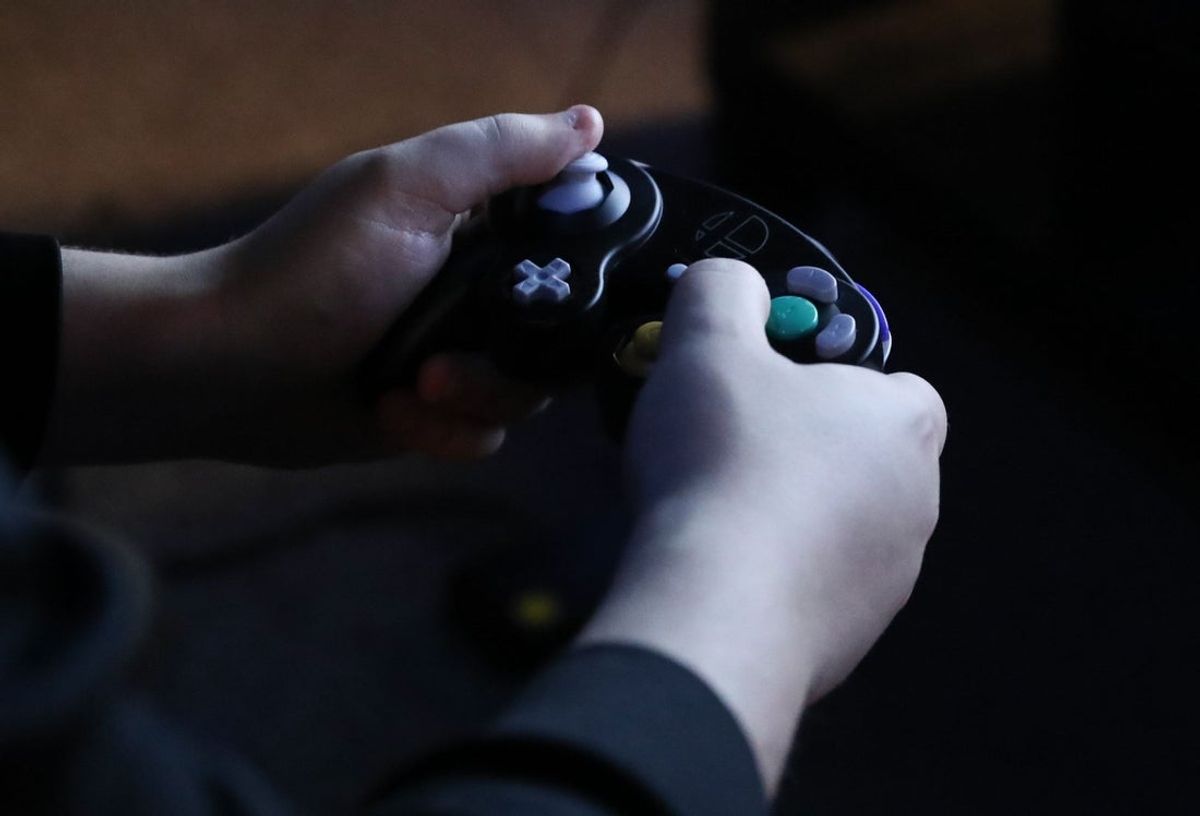
The hands of an esport gamer clutching the controler at Encore Esports Gaming Lounge in New Rochelle on Thursday, December 20, 2018.
E Sports
Three teams pulled off come-from-behind wins on Tuesday in the tightly contested quarterfinals of the Games of the Future Dota 2 tournament at Astana, Kazakhstan.
Team Resilience, Yakult Brothers and Rune Eaters rallied for 2-1 wins over Xtreme Gaming, Vici Gaming and LGD Gaming, respectively.
The day’s other match also ended in a 2-1 result, with PlayTime outlasting GLYPH.
The $1 million tournament began with 16 teams divided into four groups for the opening double-elimination stage. All group-stage matches were best-of-three.
Advertisement
The second- and third-place sides from each group faced off in the preliminary playoff round, and the fourth-place squads were eliminated.
The single-elimination playoffs will feature best-of-three matches until the grand final on Wednesday, which will be best-of-five. The winning team will earn $350,000.
On Monday, Xtreme Gaming opened with a 31-minute win on red before Team Resilience claimed the next two maps on red, in 47 minutes and 43 minutes. Yang “Erika” Shaohan paced all-Chinese Team Resilience with a 17-7-24 kill-death-assist ratio.
After Vici Gaming logged 32-minute victory on green, Yakult Brothers won twice on green, in 34 minutes and 47 minutes. Zhou “Emo” Yi led all-Chinese Yakult Brothers with a 27-2-26 K-D-A ratio.
Advertisement
Rune Eaters recovered from a 34-minute defeat playing on green against LGD Gaming to level the match in 55 minutes on red. On the decisive third map, Rune Eaters triumphed in 40 minutes on green. Nikita “Nicky’Cool” Ostakhov produced a 22-19-44 K-D-A ratio for all-Kazakhstani Rune Eaters.
PlayTime sandwiched a 32-minute win on green and a 33-minute victory on red around GLYPH’s 61-minute win on green. Peru’s Maximo “Wits” Orozco Alza amassed a 27-6-47 K-D-A ratio for PlayTime.
In the semifinals on Tuesday, PlayTime will oppose Team Resilience, and Yakult Brothers will square off with Rune Eaters.
Advertisement
Games of the Future prize pool
1. $350,000
2. $160,000
3. $120,000
Advertisement
4. $70,000
5-8. $35,000 — GLYPH, Xtreme Gaming, Vici Gaming, LGD Gaming
9-12. $25,000 — Execration, Yellow Submarine, REKONIX, Zero Tenacity
13-16. $15,000 — Amaru Gaming, Midas Club, Enjoy, L1GA TEAM
The anticipated farewell for champion jumper Stern Idol did not go according to script, as the horse finished outside the top three in its final race.
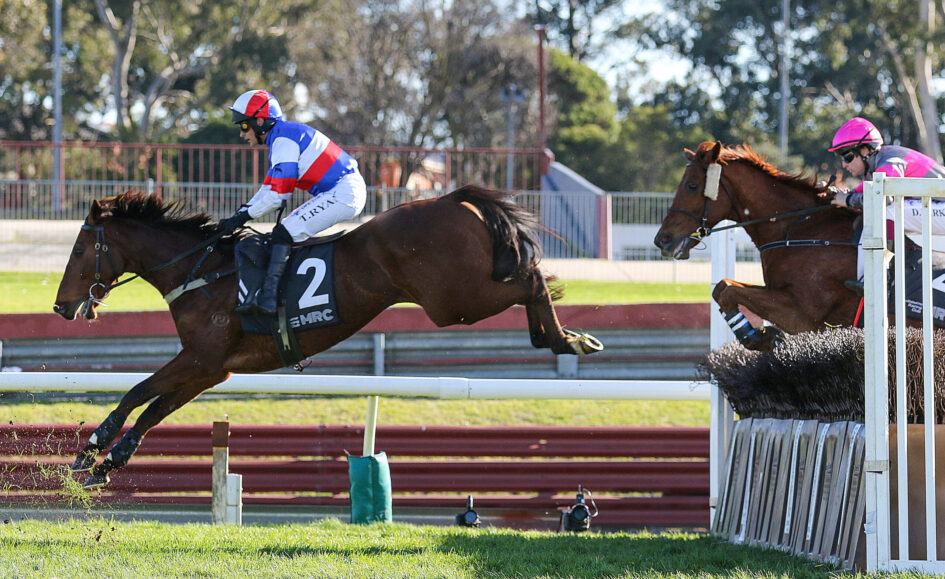
Stern Idol, the commanding $1.90 favourite, finished fourth under jockey Will Gordon, trailing the winner by 12 lengths in the Crisp Steeplechase (4200m) at Sandown on Sunday.
Attempting to secure a fourth consecutive win in the race named after a prominent Australian steeplechaser, Stern Idol was not at its previous best on Sunday and made several jumping errors.
Jack Turnbull, the National Assistant Trainer for Ciaron Maher Racing, described it as a disappointing end to a remarkable career but stressed that Stern Idol completed the race safely.
Advertisement
“Will said he didn’t feel like he was at his best and clearly, he wasn’t,” Turnbull said.
“He didn’t travel as strong and as bold as he normally does and made a few errors down the back.
“There were a few nervous moments late, but thankfully he came back to the yard standing and he pulled up pretty well.
“It’s sad to see him go, but he made it around safe, which is what counts.”
Advertisement
Racegoers present gave Stern Idol a round of applause as the field passed the finishing line for the first time, with another cheer when the horse returned to the mounting yard.
“There were 20 Ballarat staff that came down, there was Cranbourne staff, Fingal staff, they have all made the effort to come out here which is great,” Turnbull remarked.
“It’s more than the sport, it’s more about the horse.
“It’s hard to draw comparisons with a flat horse, but he is the best jumper, so to see him finish, and know he’s finishing up, that’s the strangest part.”
Advertisement
The Patrick Payne-trained Sing For Peace ($3.20) took out the race, winning by a nose from Mr Lincoln ($18), with Hit The Road Jack ($5) finishing third, two lengths adrift.
Neil Greaves, representing the Payne stable, suggested that jumps racing itself was the ultimate winner.
“It’s a perfect time to salute the great Stern Idol,” Greaves commented.
“He didn’t win today, but he’s been a great jumper over the last four years.
Advertisement
“The scene is changing and we’re lucky enough to have some of the better ones at the moment.”
The Payne stable also had success earlier in the day, winning the opening race with Split.
However, jockey Tom Ryan was the star of the day across the three jumps races at Sandown, clinching a feature race double after winning the Grand National Hurdle on Andy Win.
Ryan guided Sing For Peace to victory in the Australian Steeplechase and admitted he thought the gelding had thrown the race away with a poor jump around 1200 metres from the finish.
Advertisement
“He made a really bad mistake, and I don’t know how he stood up, to be honest,” Ryan said.
“But he made a really good jump at the last and it was do or die and he battled on all the way to the line.
“I didn’t think I had held on, but luckily, we did.”
Keen to get involved in the action? Check out the latest racing odds for upcoming events.
















































You must be logged in to post a comment Login