If you buy through our links, we may get a commission. Read our ethics policy.
Early Prime Big Deal Days offers continue to roll in, with Beats Studio Pro over-ear headphones now half off at Amazon. Six color choices are eligible for the special $149.95 price, but you will want to lock in the discount soon as Amazon states the deal is selling fast.
Samsung’s Galaxy S26 Ultra, priced at $979.99 for Prime Day (was $1,400), still carries the flat sides and a tucked-away S Pen, now inside a body that measures 163.6 by 78.1 by 7.9 millimeters and weighs 214 grams. Outdoor glare has less room to win on the 6.9-inch Dynamic AMOLED panel, which shifts between 1Hz and 120Hz, resolves 3120 by 1440, and is rated to a peak of 2600 nits, with an anti-reflective coat and a privacy setting that narrows the viewing angle so a neighbor on the train sees less of the screen. Four cameras sit in the rear island: a 200-megapixel main sensor opened to f/1.4, a 50-megapixel ultrawide, a 10-megapixel lens at 3x, and a 50-megapixel periscope at 5x opened to f/2.9, covering stills out to a claimed 100x digital reach and 8K video from the main sensor, with a 12-megapixel camera up front. Qualcomm’s Snapdragon 8 Elite Gen 5 for Galaxy, built on a 3-nanometer process, pairs with 12GB of memory. A 5,000mAh cell refills at 60 watts on a cable and 25 watts on a Qi2 wireless pad, and the phone carries an IP68 rating for dust and a short dip in water.
Meta’s Quest 3S 128GB Gorilla Tag Bundle ships a standalone headset, a pair of Touch Plus controllers, and an Amazon-only set of Gorilla Tag extras, including exclusive in-game items and 1,000 shiny rocks. Play runs on the headset itself, driven by a Snapdragon XR2 Gen 2 chip and 8GB of memory, with 128GB of storage for installs and a path to a desktop library over Wi-Fi or a USB-C cable. Each eye looks through Fresnel lenses at an LCD panel of 1832 by 1920, refreshing at up to 120Hz, with a field of view near 96 degrees and three fixed lens positions for different face widths. Color cameras on the front show the room in full color, so a virtual table can sit on a real one, and tracking follows both the controllers and bare hands. A session usually lasts about two to two and a half hours before the included adapter has to refill the battery. Built-in speakers and a microphone cover room sound and voice chat, and the headset weighs about 514 grams with the strap on. This bundle also opens a stretch of Meta Horizon+ with a rotating shelf of more than 40 games from the first setup. Product page.
Apple’s Watch SE 3 in the 44mm GPS size sits in an aluminum case that measures 44 by 38 by 10.7 millimeters and weighs 32.9 grams, finished in Midnight or Starlight. An always-on Retina OLED panel fills 368 by 448 pixels at 326 pixels per inch, brightening to 1000 nits outside and dimming to 2 nits at night, behind Ion-X glass. An S10 chip with a dual-core processor, a 4-core Neural Engine, and 64GB of storage runs watchOS 26, with a Digital Crown, a side button, and gestures for a double tap or a wrist flick. Heart rate, high and low alerts, irregular rhythm notices, sleep stages, a sleep score, and sleep apnea notifications come from a second-generation optical sensor, joined by a temperature sensor, compass, and always-on altimeter. Built-in GPS, GLONASS, Galileo, and QZSS handle outdoor routes without a cellular radio, so the watch stays tied to a nearby iPhone for calls and messages. A full day of ordinary use is rated at about 18 hours, stretching to 32 hours in Low Power Mode, and a fast charge reaches about 80 percent in 45 minutes. Water resistance is rated to 50 meters, with a speaker and microphone for timers, music, and voice replies. Product page.
Bambu Lab’s A1 Mini is an open-frame 3D printer with a steel and aluminum chassis, a build area of 180 by 180 by 180 millimeters, and a body that measures 347 by 315 by 365 millimeters at 5.5 kilograms. An all-metal hot end with a 0.4 millimeter stainless nozzle reaches 300 degrees Celsius, and the PEI plate tops out at 80 degrees, a pairing suited to PLA, PETG, TPU, and PVA. The toolhead is rated for 500 millimeters per second and 10,000 millimeters per second squared of acceleration, with automatic bed leveling, vibration compensation, and a built-in filament cutter so a first print can start after a short setup. A run-out sensor, a tangle sensor, power-loss recovery, and a camera for time-lapse sit on the machine, while a 2.4-inch touchscreen handles local jobs alongside Wi-Fi, the Bambu Handy app, and Bambu Studio on a computer. One AMS lite can feed up to four colors when that unit is attached, while power draw is rated at 150 watts on a standard wall outlet. Product page.
Ninja’s CREAMi 7-in-1 takes a frozen pint and turns it into ice cream, gelato, sorbet, a milkshake, a smoothie bowl, or a lighter ice cream, with a seventh program for folding in mix-ins. A base goes into a 16-ounce pint, spends the night in the freezer, then meets a Creamerizer paddle that works through the solid block in a couple of minutes. Re-spin is there when the first pass comes out too firm, and chocolate, nuts, candy, or fruit can go in on the mix-in setting. The NC301 setup includes the motor base, an outer bowl with a lid, the paddle, and two pints with storage lids, so one flavor can freeze while another is already finished. An 800-watt motor drives the process, and the pints, lids, and paddle can go on the top rack of a dishwasher. The unit stands about 16 inches tall, 12 inches wide, and 6.5 inches deep. Product page.
Apple’s 13-inch MacBook Air with M5 packs a 10-core CPU, an 8-core GPU that can be ordered with 10 cores, a 16-core Neural Engine, and 153GB/s of memory bandwidth into an aluminum body that measures 0.44 inch thick and weighs 2.7 pounds. This configuration features 24GB of unified memory, a 1TB SSD, and a 13.6-inch Liquid Retina panel that runs at 2560 by 1664 and 224 pixels per inch, peaks at 500 nits, and covers the P3 range with True Tone. Two Thunderbolt 4 ports, a MagSafe 3 charger, and a headphone jack handle power and peripherals, and the machine can drive two external displays at once. A 12-megapixel Center Stage camera, a four-speaker system, Touch ID, and a backlit keyboard sit in the same chassis. A 53.8-watt-hour battery is rated for up to 18 hours of video streaming and 15 hours of wireless web, with Wi-Fi 7 and Bluetooth 6 for the connection. Product page.
Argentina vs Benin is as unlikely a fixture as any to go down in football folklore. The international friendly, and first ever meeting, between two sides separated by the Atlantic Ocean and 87 places in the FIFA rankings will serve as the final footnote of Lionel Messi’s international career.
At the age of 39, and with the next World Cup just under four years away, that familiar scurrying figure has decided his work is done. The Atomic Flea will leave the stage with a record 208 Albiceleste caps and 125 goals – plus however many he’s able to conjure against the west African side.
Benin, who have only qualified for five editions of AFCON and have never competed at a World Cup, are in decent form. They’ve lost one of their last six games and scored in each of them, while Rodolfo Aloko’s double secured their first victory of the new AFCON qualifying campaign, over Mauritania.
Advertisement
The Cheetahs’ first encounter with Leo’s pride, however, will be something else. And Lionel Scaloni’s men warmed up for Messi’s curtain call by putting four past Bolivia and seven past Burkina Faso. Lautaro Martinez and Julian Alvarez were each on target, but one of them will, for the last time, likely have to make way for the main man at Estadio Monumental.
Read on as we explain how to watch Argentina vs Benin for free.
Can you watch Argentina vs Benin for free?
Yes. Free Argentina vs Benin coverage is available in Argentina, via miTelefe, and in Benin, courtesy of Benin TV.
Advertisement
Traveling abroad right now? You can use a VPN to watch Argentina vs Benin for free as if you were right at home.
Use a VPN to watch Argentina vs Benin live streams
A VPN is handy piece of software that can make your device appear as if it’s back in your home country, so you can unlock your usual service. The best VPN right now? We recommend NordVPN – it does everything and comes with up to 75% off.
Advertisement
How to watch Argentina vs Benin live streams in the USA
In the US, Argentina vs Benin is available to watch on Spanish-language streaming service ViX. You’ll need the $6.99/month Premium with Ads package to tune in.
Outside of the US? Use a VPN whilst you’re traveling away from home to unlock your stream.
How to watch Argentina vs Benin live stream in the UK
(Image credit: Future)
The Argentina vs Benin game is available to watch on Premier Sports in the UK.
Advertisement
Premier Sports costs £18.99 on a rolling monthly basis, or £150/year if you pay upfront. Alternatively, you can add it to an existing Sky TV, Virgin Media or Prime Video plan.
If you’re out of the UK but still want to tune in, explore the VPN route set out above, which will help you access your accounts from anywhere.
Can I watch Argentina vs Benin in Canada?
Argentina vs Benin appears to have slipped through the cracks in Canada.
Advertisement
Visiting Canada from Argentina or Benin? Use NordVPN to watch the game for free.
How to watch Argentina vs Benin live streams in Australia
(Image credit: free)
beIN Sports 3 is showing the Argentina vs Benin game in Australia, with live streaming available via beIN Sports Connect.
A subscription costs AU$16.99/month or AU$169.99/year after a 7-day FREE trial, and the service includes live and on-demand streaming of European football and tennis.
Advertisement
Missing the game because you’re outside Australia? Use a VPN to access your beIN Sports account.
What is the Argentina vs Benin start time?
The scheduled Argentina vs Benin kick-off time on Tuesday, October 6 is 8pm ART local time in Buenos Aires, which is 4pm PT / 7pm ET.
That’s 12am BST / 10am AEDT on Wednesday, October 7 in the UK and Australia.
What is the Argentina vs Benin head-to-head?
Argentina and Benin have never met before.
Advertisement
We test and review VPN services in the context of legal recreational uses. For example: 1. Accessing a service from another country (subject to the terms and conditions of that service). 2. Protecting your online security and strengthening your online privacy when abroad. We do not support or condone the illegal or malicious use of VPN services. Consuming pirated content that is paid-for is neither endorsed nor approved by Future Publishing.
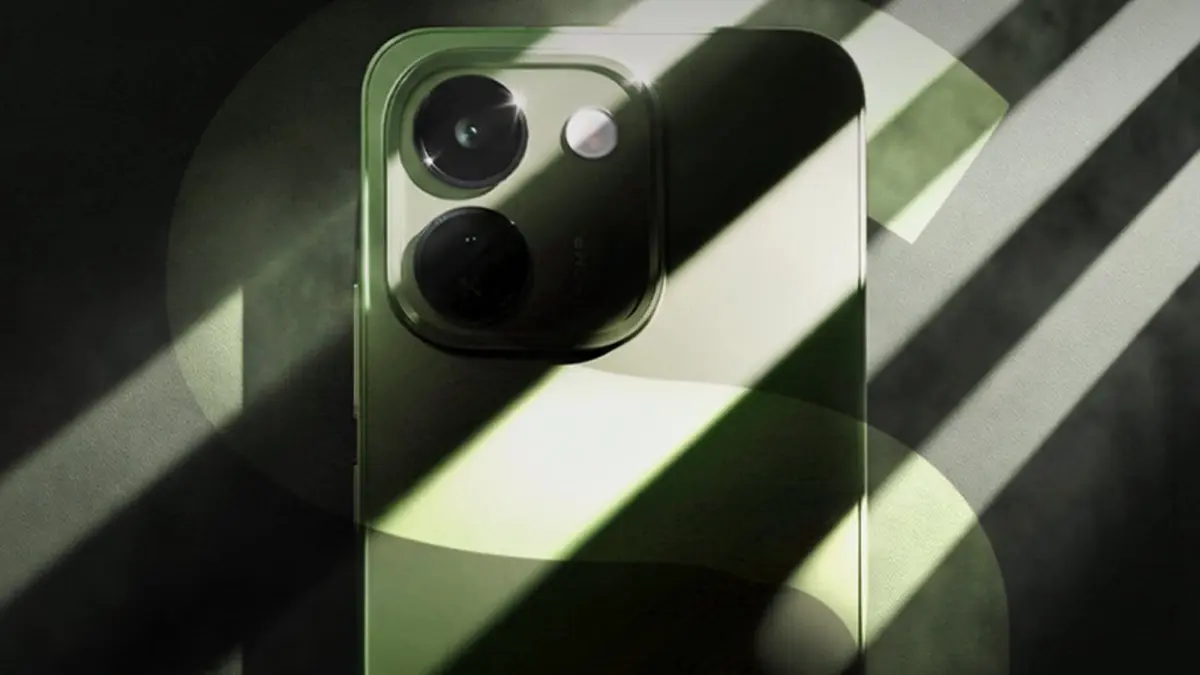
After introducing the S2 a couple of months back, vivo is introducing the new S2 FE in the Indian market on October 6. This will come alongside another smartphone, the Vivo V80, and will serve as the Fan Edition of the recently released Vivo S2. The company teased the smartphone before its official release, sharing details about its sleek design, large battery, and immersive display. However, the company has not revealed the smartphone’s specs. Leaks suggest the device could have a 10,000mAh battery, along with other hardware details, and a price of around Rs 40,000.
The Vivo S2 FE is expected to feature a 6.7-inch display and the MediaTek Dimensity 7300E chipset. It may also feature a reportedly 3,800 square mm VC cooling mechanism. The smartphone’s battery is set to be one of its most important components. According to one leak, the battery capacity will be 10,000mAh, while another leak suggests it will exceed 7,000mAh. If the 10,000mAh battery turns out to be true, then the Vivo S2 FE will have the largest battery ever on a Vivo smartphone. This would also put the S2 FE close to the Realme P4, which packs a 10,001mAh battery.
For cameras, the Vivo S2 FE could feature a 50MP primary rear camera with a 2MP secondary sensor. The phone is also tipped to get a 32MP front camera for selfies and video calls. On the software side, it could run OriginOS 6 out of the box. The smartphone may also carry IP68 and IP69 ratings for dust and water protection. The company is also teasing the S2 FE with a sleek, youth-focused design, distinctive aesthetics, and an immersive display.
Vivo S2 FE Price and Availability in India
Vivo S2 FE smartphone is believed to have a cost range of Rs 30,000 – Rs 40,000 in India. Another leak claims a box price of Rs 39,999, while the selling price could be lower. It will also be cheaper than the Vivo S2, which starts at Rs 42,999. The FE model will be available on Flipkart, Vivo India’s online portal, and through their offline retail stores. However, the company has not yet officially confirmed any of these leaks. The company is expected to reveal the remaining details at the October 6 launch.
Amazon Prime Day is here, and as WIRED’s resident headphone expert, I’ve hunted down the best Prime Day headphone deals for your consideration. Prime Day is a great time to find discounts on all sorts of tech, and while the best deals are often only for Prime Members, it can be hard to tell whether something is truly on sale or just a markdown off an inflated price.
I’ve been covering headphones for over four years, including guides to wireless earbuds, noise-canceling earbuds, open earbuds, and more. I know which headphones are worth your time and which deals aren’t all that good. Below, I’ve curated truly good products on sale that are worth a look.
Apple AirPods Pro 3 are the best wireless earbuds for iPhone users. This latest model has some of the best noise-canceling and transparency you can find in an earbud, with clear, detailed audio no matter what you are doing. They also come with many unique features like a built-in heart rate sensor and live translation. Plus, they get up to eight hours of battery on a single charge.
IEEE Day is an annual event that celebrates the first time in history when engineers worldwide gathered to share their technical ideas in 1884.
One of the IEEE Day’s objectives is to show the ways IEEE members, in local communities, join together to collaborate on ideas that leverage technology for a better tomorrow.
IEEE Day 2026 – October 6, 2026. Stay tuned as we continue this journey of innovation, connection, and global celebration.IEEE
Advertisement
Celebrate IEEE Day with colleagues from IEEE Sections, Student Branches, Affinity groups, and Society Chapters. Events happen both virtually and in person all around the world.
IEEE Day 2026 Events
Explore IEEE Day 2026 events taking place around the world from 4 – 17 October 2026. The event listing is dynamically updated as new events are registered.
Have some fun and compete in the photo and video contests. Get your phone and camera ready when you attend one of the events. This year we will have both Photo and Video Contests. You can submit your entries in technovation, raise your flag, and social categories.
The national conversation about AI in the US is full of fear: fear about AI’s potential to end humanity, fear of data centers moving in, fear that government officials will do absolutely nothing even as the industry pleads for regulation, you name it.
But the AI conversation looks remarkably different across the Pacific.
In China, driven by public enthusiasm and a state-backed push for AI dominance, the country is in the midst of a large-scale AI integration into all facets of its society, driven by Chinese leader Xi Jinping’s support for the technology.
“He’s super AI-pilled,“ said Kyle Chan, an expert on China’s technology development and industrial policy at the Brookings Institution. “When you look at his speeches, when you look at Chinese policy documents, everything is about rolling AI out to as many domains as possible: manufacturing, services, education, healthcare, pharmaceuticals, and of course the military. Everything is about trying to integrate AI.”
Advertisement
Beneath this push for a high-speed AI adoption across Chinese society lies a regulatory framework designed to safeguard political stability and keep boundaries on the kind of information AI models are able to share.
Chan joined Vox’s Today, Explained podcast to speak with co-host Sean Rameswaram about the different AI anxieties in the US and China, and whether joint regulations on AI safety are possible while the two countries are engaged in an AI arms race.
Below is an excerpt of their conversation, edited for length and clarity. There’s much more in the full podcast, so listen to Today, Explained wherever you get podcasts, including Apple Podcasts, Pandora, and Spotify.
One thing that really struck me about the way the Chinese government is approaching AI is that China has this explicit goal, right?
Advertisement
China has some concrete plans to boost AI adoption through the country, including its recent AI-plus initiative. And their goal is to try to boost the penetration of AI in so-called terminal devices, everything from computers to smartphones, to 90 percent or more by 2030.
It’s going really fast and it is, in part, a state mobilization effort. There are state-owned companies, there are government agencies that are trying to integrate AI, but also there’s just an enthusiasm from the general population.
If you look at surveys like the latest Gallup poll, people in China are much more enthusiastic and positive about how AI might help them and help the country. It’s quite a striking contrast with what you see in the US in terms of attitudes towards AI.
Because people here are worried about AI as an existential threat. People here are worried about AI taking their jobs, people here are worried about AI data centers in their backyards. Is that not the vibe in China?
Advertisement
Not so much. There is some concern about AI and jobs. But in general, China’s not worried about AI wiping out humanity. You really don’t hear that from the Chinese policymakers. There’s no talk about a P(doom), the probability that AI will wipe out humanity. So this is just a different approach to AI risk in general.
And why not the existential risk?
You know, one factor, I think, is sci-fi and the culture.
Huh. We’ve watched too many movies?
Advertisement
It seems like every major sci-fi book or film involves machines trying to kill us all, and I think that that idea has become very prevalent.
When you imagine a future with AI, that is one of the primary futures that people imagine, versus in China, I think a lot of the attitude towards technology in general, not just AI, is about using this edge to keep up and to become more competitive.
For a lot of people in China, technology was something that they saw transform their lives in real time. And Chinese leaders think it’s the key to China’s future modernization and transformation to a global superpower.
Let’s talk about what concerns there are.
Advertisement
One of the biggest concerns that Chinese political leaders have when it comes to AI is political and social instability. They don’t want AI-generated content to act the way that social media or the internet broadly could, which is to disseminate information, maybe deepfakes, maybe viral news that could threaten the [Chinese Communist Party’s] hold on power.
For AI-generated content, it was about making sure that the models didn’t say the wrong things about sensitive topics. A lot of this is about social and political risk rather than about existential technological risk per se.
From pretty early on, China has been developing a model registration system where basically AI services have to be vetted in advance and go through a battery of tests where they’re asked sensitive political questions and they’re supposed to either not answer them or say the “right thing” before they are officially registered. And once they’re registered, then they can be released to the public. So it’s a pretty tight regulatory framework for controlling things like political content.
We know that there’s a high unemployment rate in China, especially among young people, which is also a great concern of the government. Are people worried that this bullish approach to AI could affect employment numbers?
Advertisement
Yes and no. On the one hand, China is actually facing this demographic problem with a shrinking labor force. Fewer people want to go into, say, factory jobs, but China still wants to make everything the world wants to buy.
They see AI as a partial solution to that, a way to automate things like manufacturing. On the other hand, though, there are growing concerns in China about job loss. And you see also some recent court cases in China where they basically are telling employers, you cannot use AI as a reason to fire workers.
But I think overall, what they’re trying to do is they’re trying to find this balance between the diffusion of the technology and trying to prevent any kind of large-scale protest movement that might arise from sudden mass unemployment of, say, factory workers or food delivery drivers.
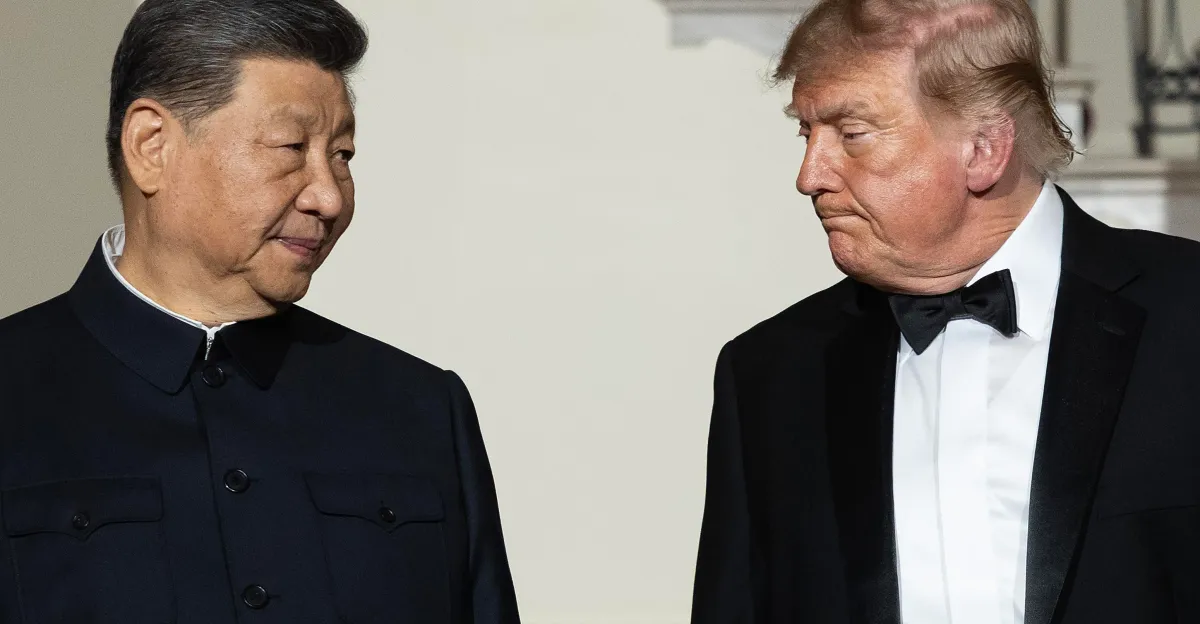
And President Xi was of course here in Washington last week. From the limited photos we have of the state dinner or of President Trump and President Xi on the tarmac, everything looks so chummy, even though we are so clearly in a cold war with China over AI. The president’s always talking about how he wants to win.
Advertisement
Was there tension in his visit to Washington last week? Did you notice any?
The weird thing is that just between these two men, there seems to be this kind of romance where Trump really fawns over Xi Jinping.
I think he has tremendous respect, even admiration, for Xi Jinping’s grip on power and control over the government apparatus in general.
What is happening under the surface, though, is continuing tensions and a deep competitive structural relationship. That involves especially competition in AI. AI has emerged as a new fault line of competition between the US and China, one that could come to define the relationship going forward.
Advertisement
I think that on the one hand, they’re talking about cooperation on things like AI safety and AI risk. On the other hand, there’s a whole bunch of issues where the US wants to lead. China wants to also get ahead. And when it comes to things like distillation or cyber capabilities, it’s as zero-sum as it’s ever been.
It depends on what you’re looking at and how you define winning. If you’re talking about the best models, for sure the US. And virtually everyone in China would agree, right? In fact, Anthropic’s Claude is very popular in China, even though technically Anthropic bans its use in China.
But aren’t their open-source models kind of popular here?
Yes, exactly. Chinese open-source models are getting more popular in the US, especially at a time when some of the capabilities are so incredible that most normal people don’t really need them, and they also don’t want to pay for the most advanced and most expensive models. Ultimately it’s this weird sort of cooperation and competition at the same time.
Advertisement
American models are popular in China. Chinese models are popular in America. We’re at each other’s throats, but quietly, politely.
Does the cold war make it all but certain that safety isn’t going to really be a chief priority for either country until something terrible happens?
The fierce level of competition and the very, very deep distrust between the two countries makes any kind of cooperation on AI safety very, very difficult. Even just talking to each other, having the US and China establish an official AI dialogue, which apparently they’ve agreed to, is seen as a huge first step, even though they’re just talking.
There’s a long, long road to go before we can even think about something like an arms control treaty or a broader international agreement about AI and AI safety. But I think that’s what some people, especially in Silicon Valley, are trying to jump to.
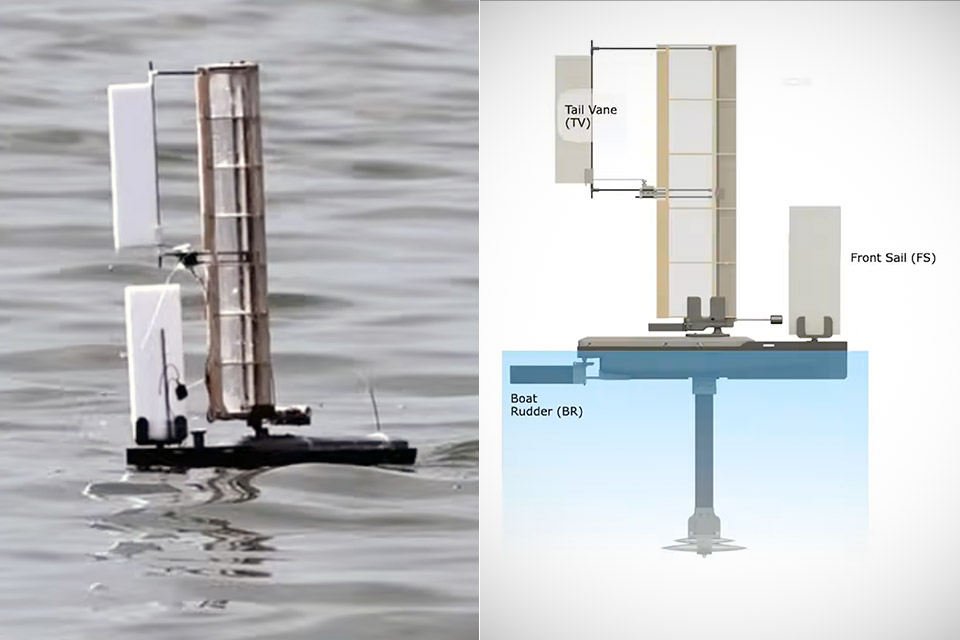
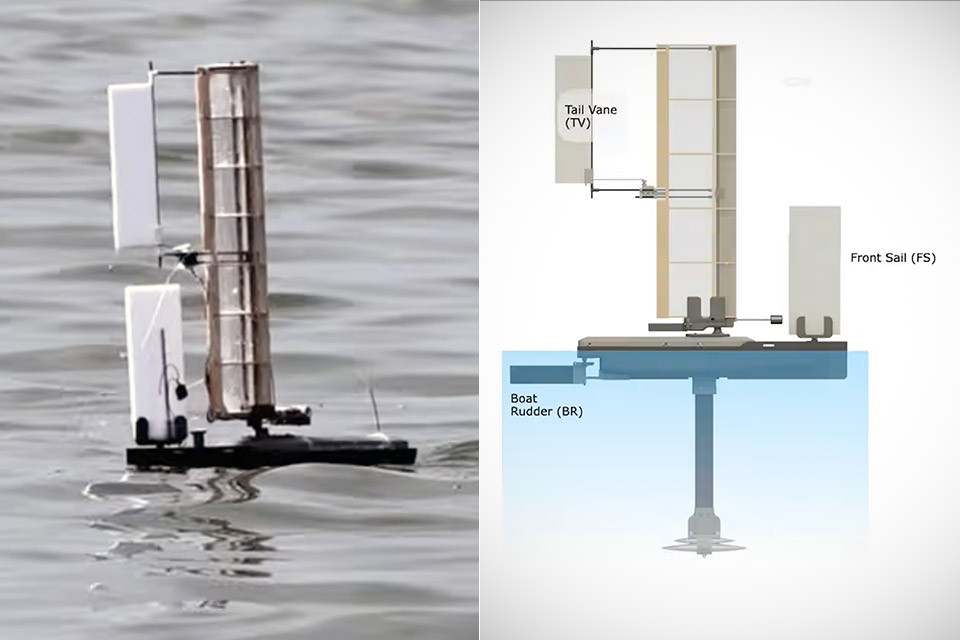
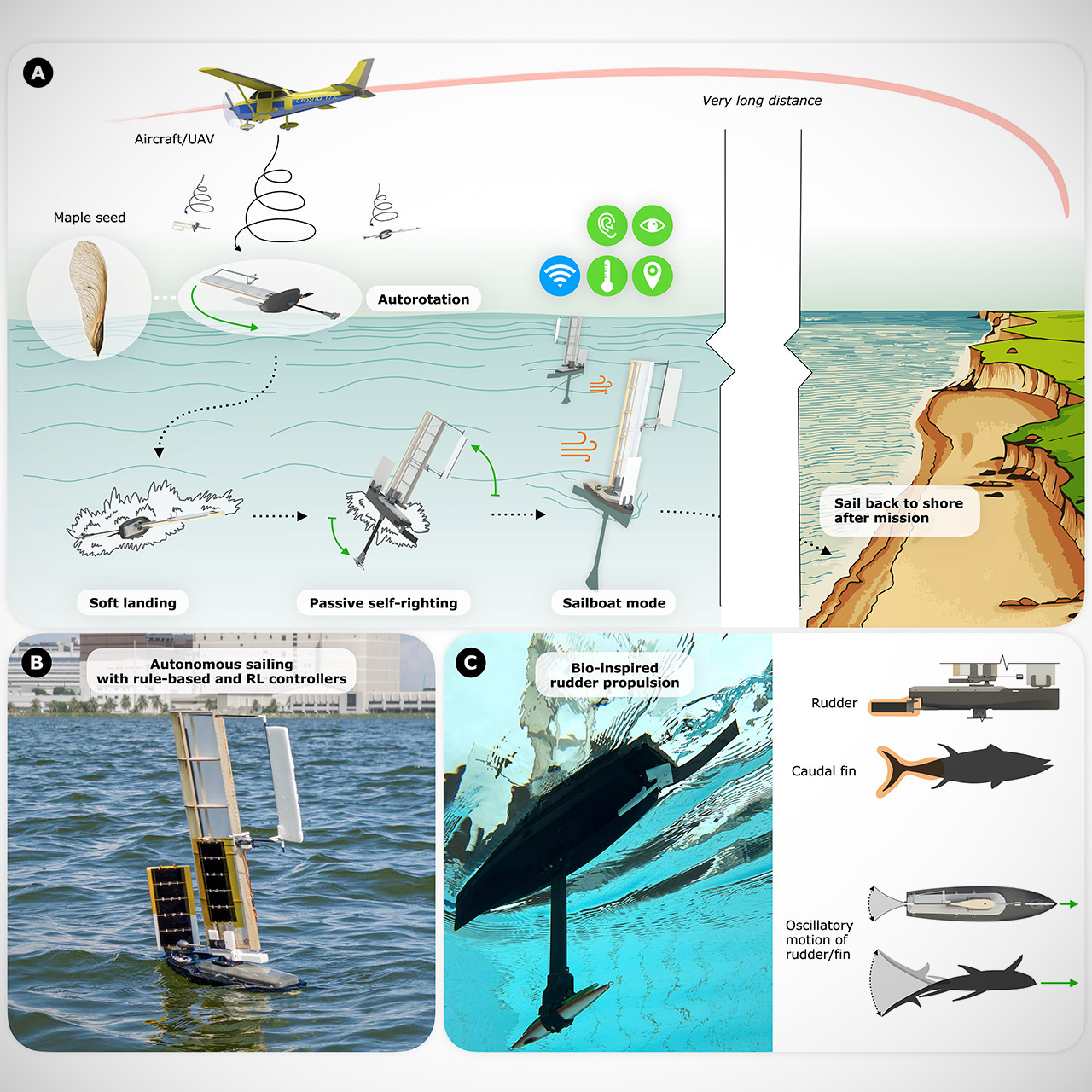
Researchers at the Singapore University of Technology and Design built a small robot that leaves a drone, spins on the way down, and keeps moving once it meets the water. They named it ALBATROSS, short for Airborne Lander with Buoyant AuToROtating Sailing Sensor. Lead author Shane Kyi Hla Win, working with professor Foong Shaohui, describes the machine in Science Robotics as a way to put sensors on a lake or a sheltered stretch of sea without sending a boat out to meet them.
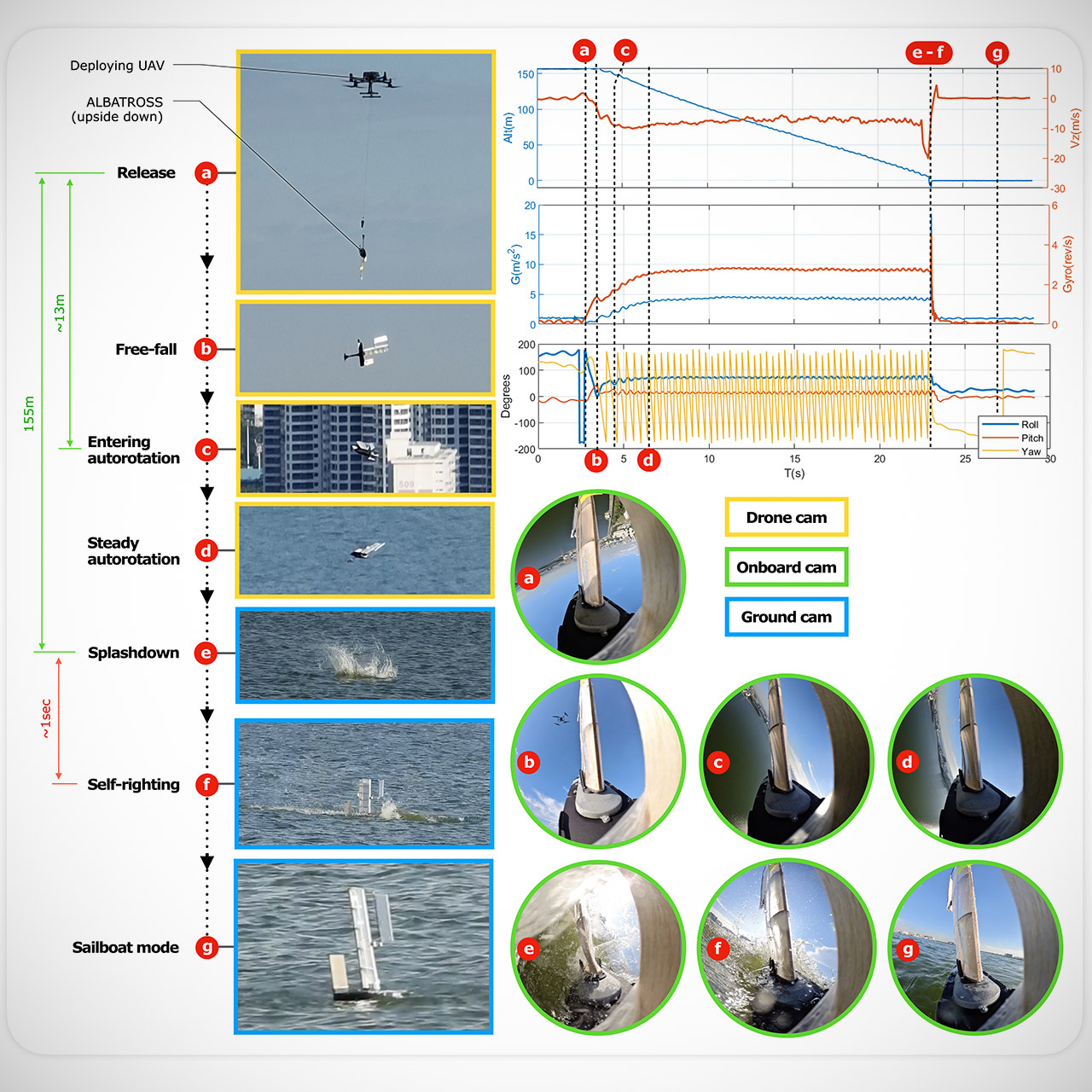
A drone raises the one-kilogram prototype about 150 meters and then releases it. The inflexible wingsails attached to one side of the hull grab some air and begin spinning within a few seconds, much like a maple seed does on its journey to the earth. During tests on a reservoir, the craft settled into a very constant glide of around 7.4 meters per second, or roughly 26 kilometers per hour. According to Foong’s team, an identical hull without the spin would smack into the sea with nearly 18 and a half times the force, so the wings effectively negate the need for a parachute.
MODEL KIT FOR ADULTS – Relive 80s science fiction glory with the LEGO Icons Transformers: Soundwave (10358) building set for adults 18 years old and…
AUTHENTIC TRANSFORMING ACTION – Build Soundwave with his rocket pod, laser blaster, and dart accessories, then transform him from robot and cassette…
INTERACTIVE SOUND EFFECTS – Press Soundwave’s play button to activate specially recorded voice and sound effects that capture the character’s iconic…
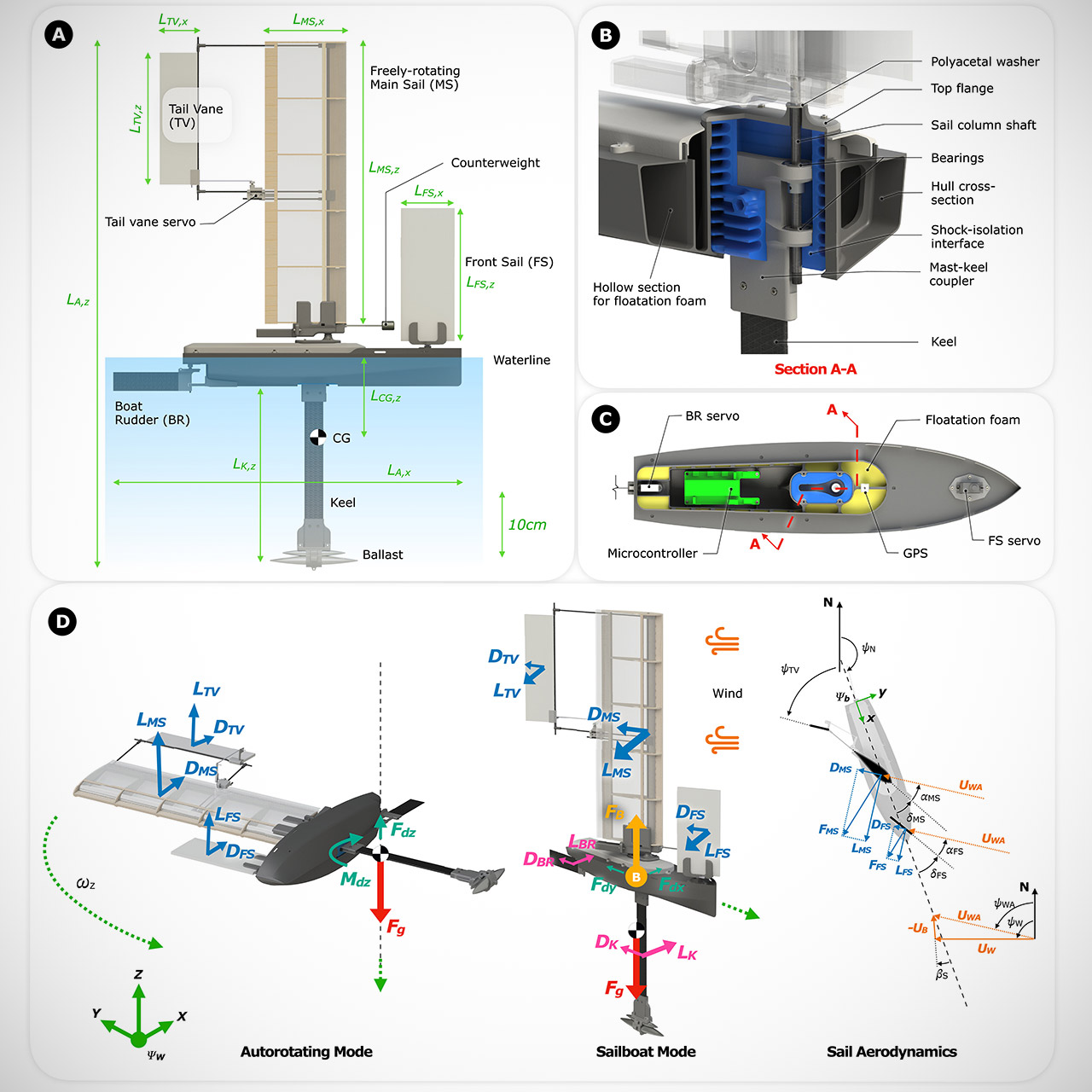
The weight is responsible for landing the thing. A good heavy keel and ballast will turn the boat upright in approximately a second after it enters the water, and no power is required to flip it over. Once it floats, those same wings transform into sails. The main sail just turns freely with the help of a tail rudder, whilst a smaller front sail can alter angle to maintain the spin stable and catch any wind on the sea. To complete the task, only three actuators and three navigation sensors are required, which is quite small when compared to some air-and-water machines that require six to eight actuators.
Once it reaches that threshold, the wind takes over. Trials on Singapore’s Bedok and Pandan lakes revealed that a larger test version could reach a top speed of roughly a kilometer per hour and maintain that speed for nearly three hours while recording humidity, heat, and wind direction. Not bad given it only consumed almost half of its main battery. When the air lowers, a rudder shaped like a fish tail starts rotating and can provide the ship a moderate push forward at up to 0.4 meters per second, allowing it to make some headway when operating upwind.
Currently, the limit is relatively calm water. The design is primarily intended for still reservoirs and peaceful areas of coastline, and the team believes it would not last long in severe swell. Future versions are expected to be able to stay out for weeks, monitoring things like algal blooms, oil spills, trash, and the flow of heat between the sea and the air, and having a rapid release mechanism will come in useful if they need to conduct a search or inspect a remote beach. For now, though, it’s all about the sequence: one set of wings, one drop, one smooth landing, and a miniature boat that sails away on its own.
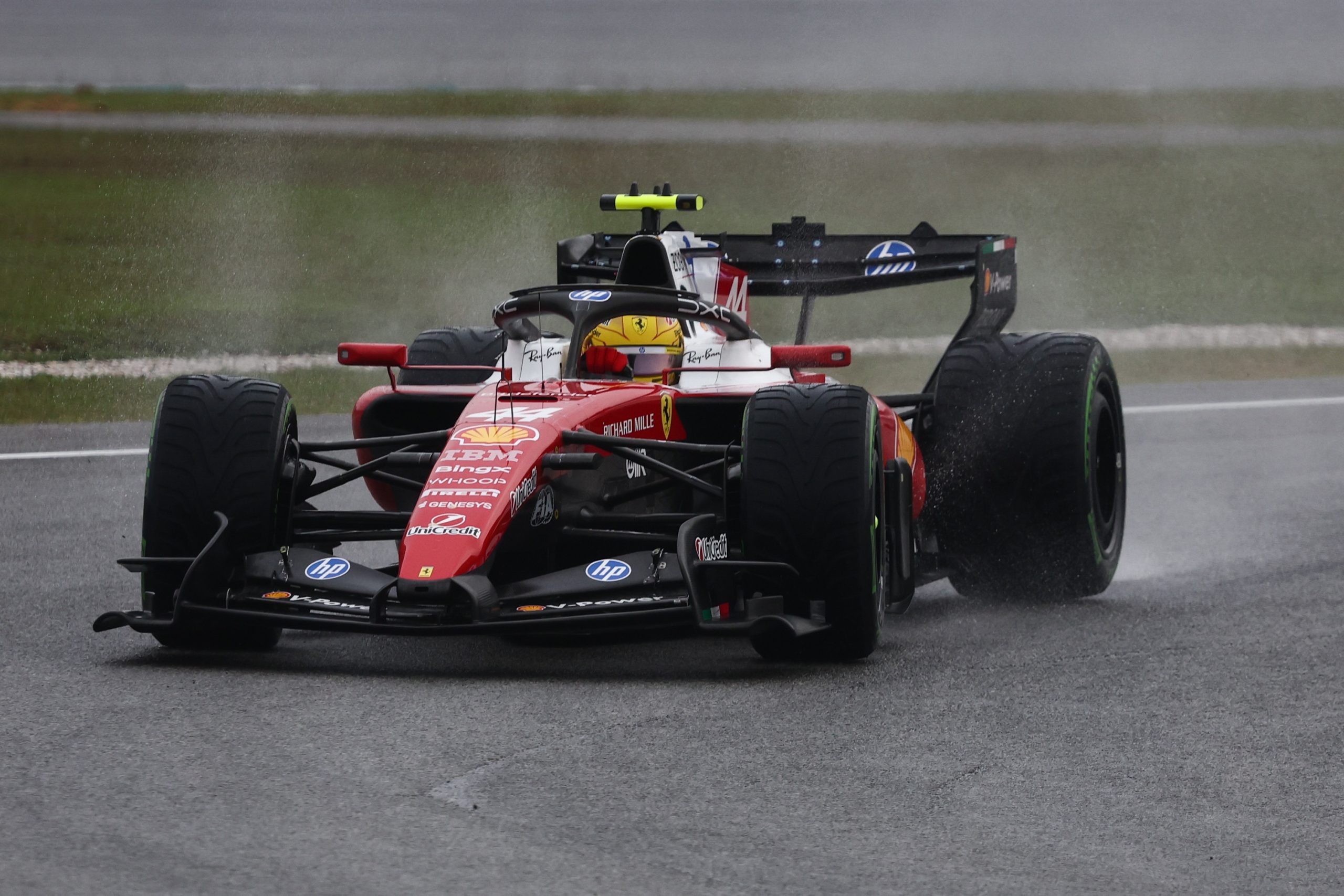
A software bug brought a Formula 1 grand prix to a standstill this weekend, stranding more than half the field on a sodden racetrack and forcing officials to abort the race start entirely while engineers scrambled to patch every car on the grid in real time.
The chaos unfolded at the Sepang International Circuit in Malaysia, which stepped in to host the “Bahrain Grand Prix” after the ongoing war with Iran made racing in the Gulf kingdom impossible. If the relocation itself was unusual, what happened next was unprecedented even by motorsport’s eccentric standards: a piece of shared racing software, developed jointly by the FIA, the ten teams, and their engine manufacturers, misread a slow, rain-soaked formation lap as an attempt to cheat — and shut the cars’ hybrid power systems down for 60 seconds apiece.
How a software bug turned a formation lap into chaos
Heavy rain had already delayed the start by half an hour. Race organizers opted for two formation laps behind the safety car, reasoning that a slower pace would let drivers assess the standing water while their intermediate tires helped clear it from the track. It was a sensible plan on paper, but it collided with a hard-coded anti-cheating rule buried in the cars’ control software.
That rule is designed to prevent teams from gaining an unfair advantage by manipulating hybrid power deployment at low speeds. But with power deliberately reduced in sections of the track for safety in the wet, and cars crawling even slower than usual behind the safety car, several vehicles’ systems concluded the rule was being broken. The result was an automatic 60-second shutdown of their electric motors — triggered not by any driver error, but by the software itself misinterpreting conditions nobody had planned for.
Advertisement
What followed looked less like a grand prix and more like a pileup in slow motion. Cars that had just rebooted crawled back up to speed only to find the car ahead stalling out next, producing a rolling wave of confusion up and down the field. Red Bull’s Max Verstappen described finding himself “five-wide on the straight because we couldn’t understand what was going on,” before coming across a cluster of cars still crawling a lap later. Race control had no real choice but to call the whole start off.
A rushed fix and a second attempt
FIA single-seater boss Nikolas Tombazis later explained that the software bug had simply never surfaced before because this year’s season had produced almost no wet-weather running to test it against. “It wasn’t maybe adequately checked,” he said, noting that the wet-weather power settings were common code used across every team’s car — meaning a flaw in one place could, and did, affect nearly the entire grid at once.
Once the problem was identified, the FIA says it took roughly 20 minutes to write and distribute an updated version of the software to every team, plus additional time for engineers to install it and confirm the fix had taken on each car. Verstappen couldn’t resist a dig at the process, joking that his team’s update landed faster thanks to Red Bull’s data partnership with Oracle.
By the time the field lined up for a second attempt roughly an hour after the first aborted start, conditions on track had shifted dramatically. The rain had eased, standing water had drained away, and the brief but costly delay caused by the software bug left drivers facing a tricky strategic gamble: stick with intermediate tires built for a wet track, or risk a slick tire on a surface that was drying faster than anyone had anticipated. Just nine drivers, including pole-sitter Verstappen and championship leader Kimi Antonelli, opted to stay on intermediates. Others, including Lewis Hamilton, chose slicks — a decision that the restarted formation lap quickly exposed as premature, since the track was still wetter than the dry tires could handle.
Advertisement
What the episode reveals about racing’s reliance on software
The incident is a pointed reminder of how deeply modern Formula 1 depends on software that most fans never think about — code that governs not just engine mapping and tire sensors but split-second judgments about legality and safety. A single untested edge case, triggered only by an unusual combination of extreme weather and unusually slow driving, was enough to disable half the field simultaneously and delay a world championship race by roughly an hour.
It’s also a case study in how quickly such problems can, in principle, be fixed once identified. Pushing a software update to ten different teams’ cars and verifying it across an entire grid in around 20 minutes is no small logistical feat, even if the underlying software bug should never have made it into a race weekend in the first place. Tombazis’s explanation — that this year’s unusually dry season left the wet-weather code effectively unvalidated — points to a broader challenge facing any complex, rarely-used system: the conditions that matter most are often the ones tested least.
For a sport that prides itself on split-second precision, the sight of cars idling behind a safety car because of a coding oversight was a rare and faintly absurd failure. But it also underscored a reality increasingly familiar across industries far beyond racing: as more critical decisions get delegated to automated systems, a single unanticipated scenario is sometimes all it takes to bring everything to a halt.
Felix at Billet Labs set out to park a real gaming PC in a living room and leave the fans off. A Ryzen 9 9800X3D and an RTX 5080 share a Gigabyte AORUS Pro B850 board, fed by a 600 watt Flex ATX supply, and the pair can pull well past 500 watts once a demanding game settles in. Air coolers handle that load by moving a lot of air. Moving a lot of air makes noise. An earlier attempt had hung the same idea on a cast iron radiator and ended near 100 kilograms, so this version started over on a hand-worked aluminum block that brings the finished machine down to about 15.7 kilograms once the loop holds roughly two liters of water.
The enormous black block on the floor is the case’s base, and 6 mm of thermal paste rests underneath the motherboard, while a big ol’ glob of paste is put under the power supply, allowing heat to be poured directly into the metal. Three radiators sit on top of the motherboard on brackets he built himself, with the paint stripped and the metal polished nicely: a large 200 x 400 mm unit at the bottom, followed by two smaller 140 and 120 class radiators laid flat so warm air can rise naturally through the fins. He closed the loop by soldering old copper piping from the home to brass fittings. A separate length of pipe capped at one end serves as a reservoir and feeds the pump. The pressure and temperature gauges are right up front. Motherboard fans are actually disabled in the bios, therefore they do not turn on. The thermal paste on the supply base is only there to keep the fan from spinning up (which it probably shouldn’t anyhow).
Thin & Light 17.3” Gaming Powerhouse: Experience big-screen immersion in a surprisingly portable design—just 0.83 in thin and 5.5 lbs—making it…
Powered by Intel Core 7-240H for Smooth, Responsive Play: The latest Intel Core 7-240H delivers fast hybrid-architecture performance so games load…
RTX 5060 Graphics for Next-Gen Gameplay & AI-Boosted Performance: Unlock advanced gaming with NVIDIA GeForce RTX 5060, featuring real-time ray…
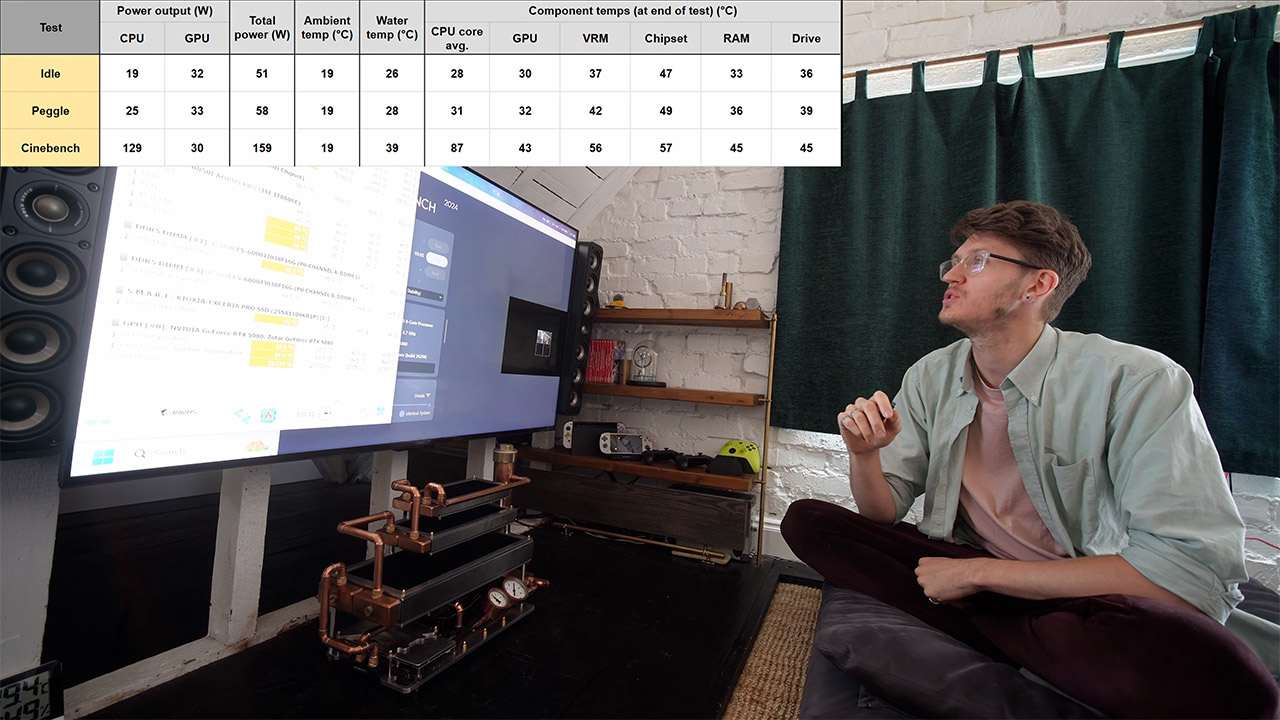
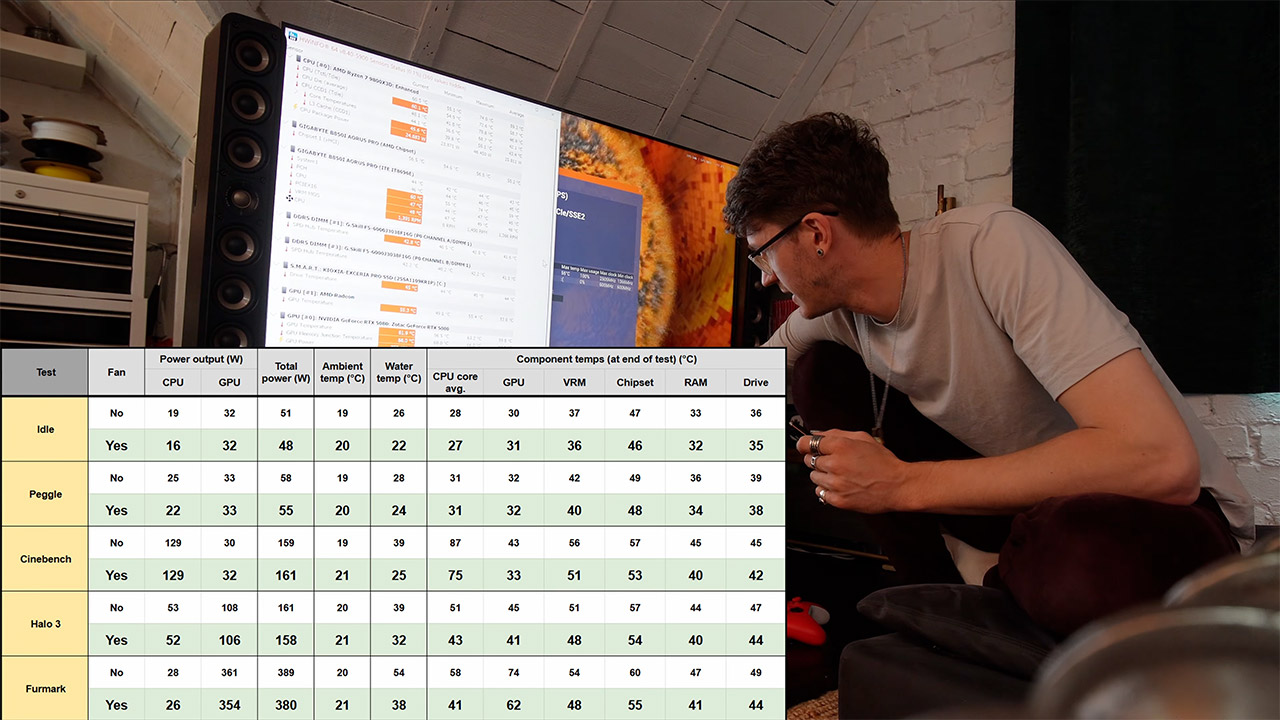
The first few runs were relatively smooth, but then things became a little wacky. Even when idle, the water in the loop was exactly 28 degrees Celsius. A simple game barely put a dent in it. Cinebench, on the other hand, raised the temperature of the water to around 39.5 degrees Celsius, with processor cores reaching the low 90s. Halo remained playable, however. Cyberpunk 2077, on the other hand, raised the water temperature to 55.5 degrees, and by the end, the processor was approaching 95 degrees as the power draw dropped from 110 to 100 watts. A combined stress test eventually drove the water up to 56 to 60 degrees, just shy of the pump’s capacity.
Advertisement
As the water heated up further, he began to notice some cavitation. The small radiators were having problems allowing air to rise beyond the dense fins, so heat was simply creeping past them rather than through. The flow order was also contributing to the problem, because the warmest water was not being directed to the top radiator first. The pressure gage was loud enough to be heard across the room, and he had nearly punctured a radiator with a screw while assembling the entire thing. That is a very good technique to melt copper pipe, though; simply pass a long, hot torch over it, and the copper absorbs all of the heat.
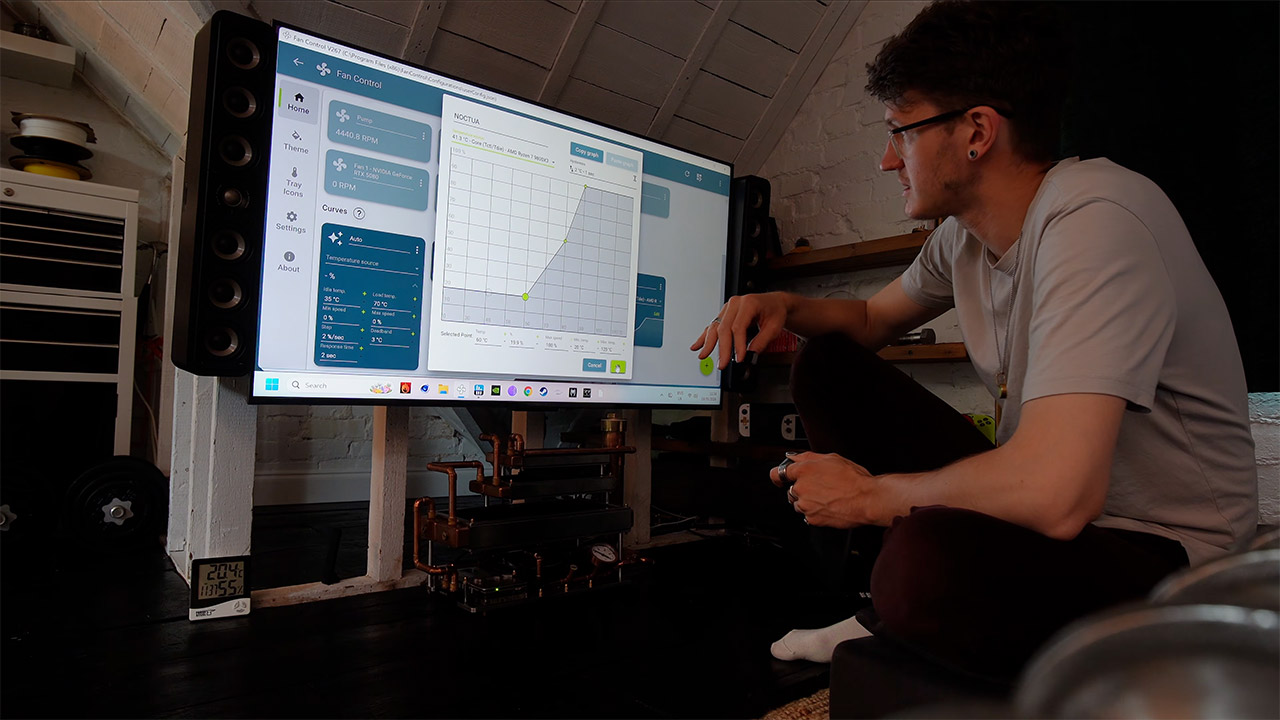
One 120mm Noctua fan, a small black one that blends well with the metal background, sits neatly between the two smaller radiators and draws air through the fins to provide airflow that would ordinarily be insufficient to clear them. The gage is removed, and with it, the ticking sounds. The idle water temperature drops to 22 degrees. When you run cinebench, the coolant temperature maintains at 25 degrees, the cores are in the upper 70s with a brief peak of 82, and the processor is still only drawing 129 watts without needing to be cooled.
A full stress test that had been approaching 60 degrees finally settles at around 40, a full 20 degrees cooler, while the graphics card max out at 61. In ordinary games, the fan runs at a low speed and is almost inaudible, since it is quieter than the old gage even when it spins up slightly. The aluminum block already effectively cools the board and card, so all that was required was a single fan between the smaller radiators to complete the loop.
You can get by with a completely silent loop that can idle and handle some light gaming, but if you try to run a 9800X3D and a 5080 through a long gaming session, the water temperature will start to rise into the 50s and the processor will begin to fail. One quiet fan, directed at the radiators that were seriously impeding airflow, transformed the entire copper and aluminum configuration into a living room PC that looks good on a shelf and can even finish a session without crashing. [Source]
Amazon Prime Big Deal Days 2026 is live now, with two days of discounts running October 6th and 7th on headphones, loudspeakers, smart speakers, TVs, streaming gear, and other consumer electronics. Often referred to as Amazon’s “October Prime Day,” the sale is limited to Prime members and includes some of the lowest prices we’ve seen this fall on products we actually recommend.
We’re tracking the best Amazon Prime Big Deal Days 2026 audio and tech deals as they appear, with a focus on products that offer genuine value rather than inflated “discounts” that look better on the screen than they do at checkout. Some of the strongest deals may disappear before the sale ends — and with Black Friday still weeks away, waiting could mean paying more or finding the product sold out.
Revel M146
The Revel M146 bookshelf speaker redefines spatial audio. Engineered with a 6.5-inch Deep Ceramic Composite woofer and 7th-Gen Acoustic Lens Waveguide, its pure sound warps time—suspending reality as tracks pull you effortlessly into the exact moment they were recorded. Pure acoustics, absolute immersion, right on your desktop or stand.
Unleash true cinematic power with the ARCAM AVA15. Delivering pristine audiophile clarity, immersive Dolby Atmos, and effortless room calibration, it turns any living room into a high-end private theater. Elite Dirac-tuned engineering rarely comes at this price—grab the ultimate audio upgrade before stock runs out!
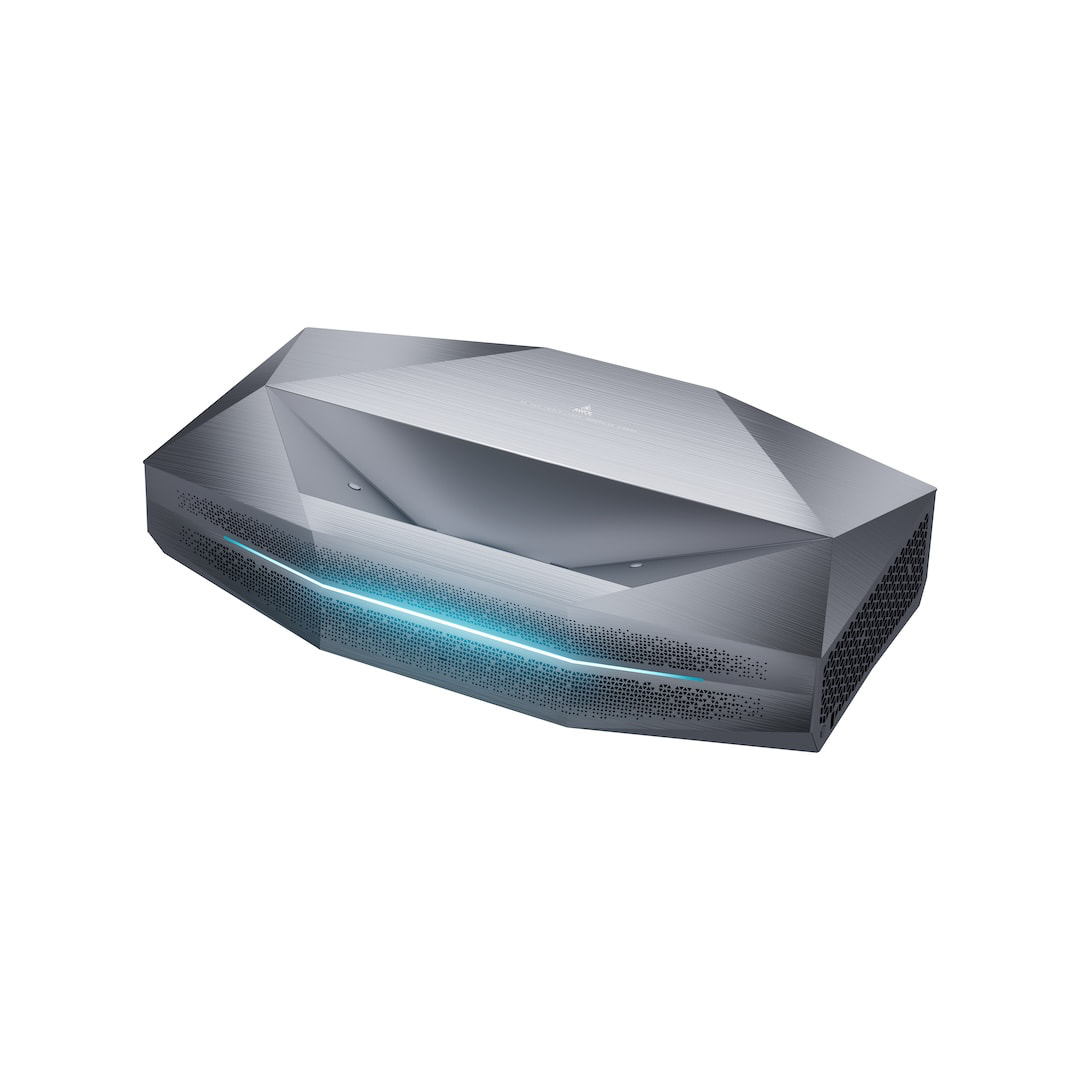
A flagship 4K RGB Triple Laser UST projector designed for bright living rooms, larger screens and shared entertainment. It delivers 3,300 ISO lumens, 6,000:1 native contrast and 110% Rec.2020, with PixelLock™ Technology for sharp 4K images up to 200″. It also features Anti-RBE Technology, Dolby Vision, IMAX Enhanced, VRR, ALLM and 1ms ultra-low latency for movies, sports and gaming.
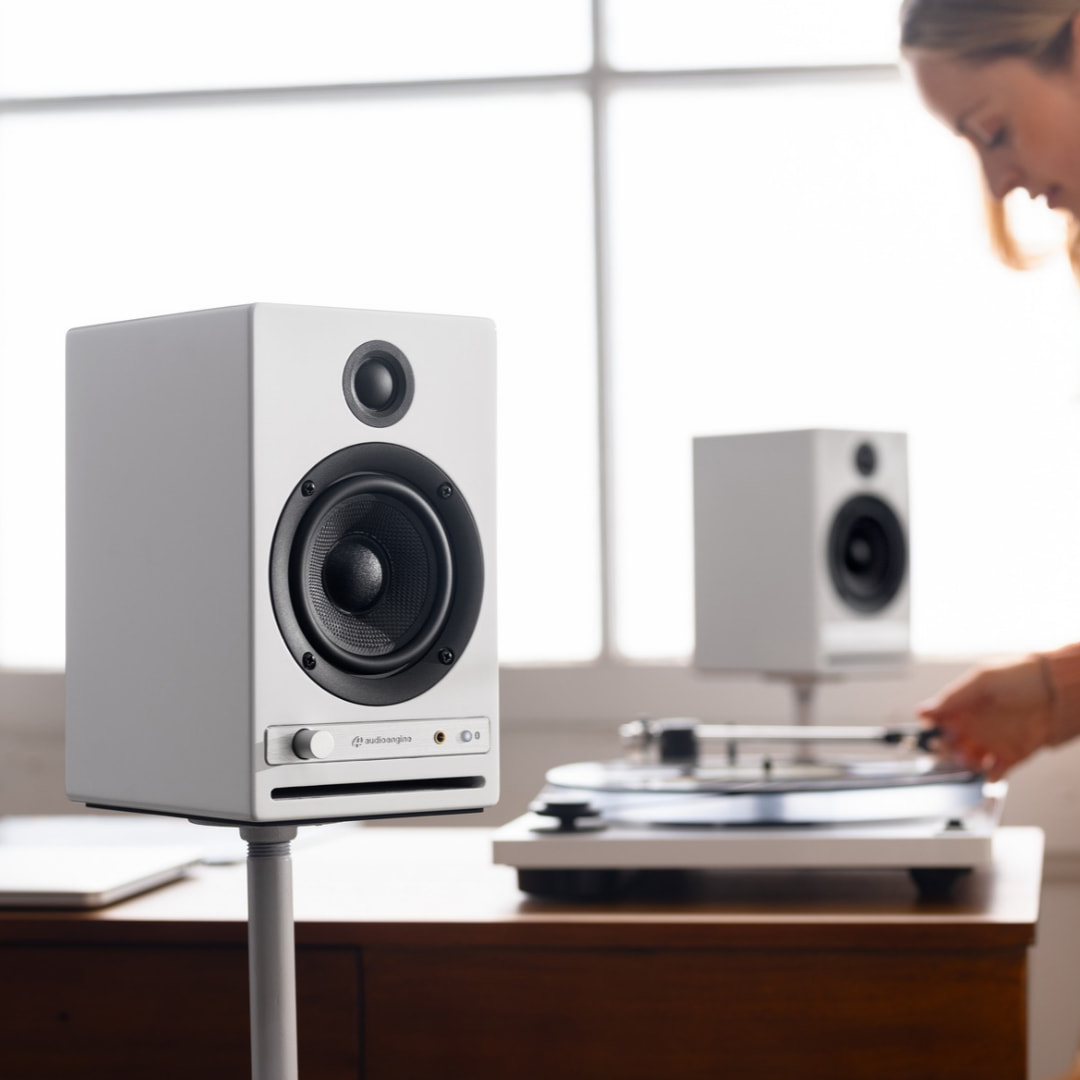
Give the music lover on your list something they’ll use every day. The Audioengine HD4 Home Music System in Hi-Gloss Piano White is 20% off for Prime Day. Big sound, easy setup, and a gift that makes every playlist, album, and favorite song sound better.
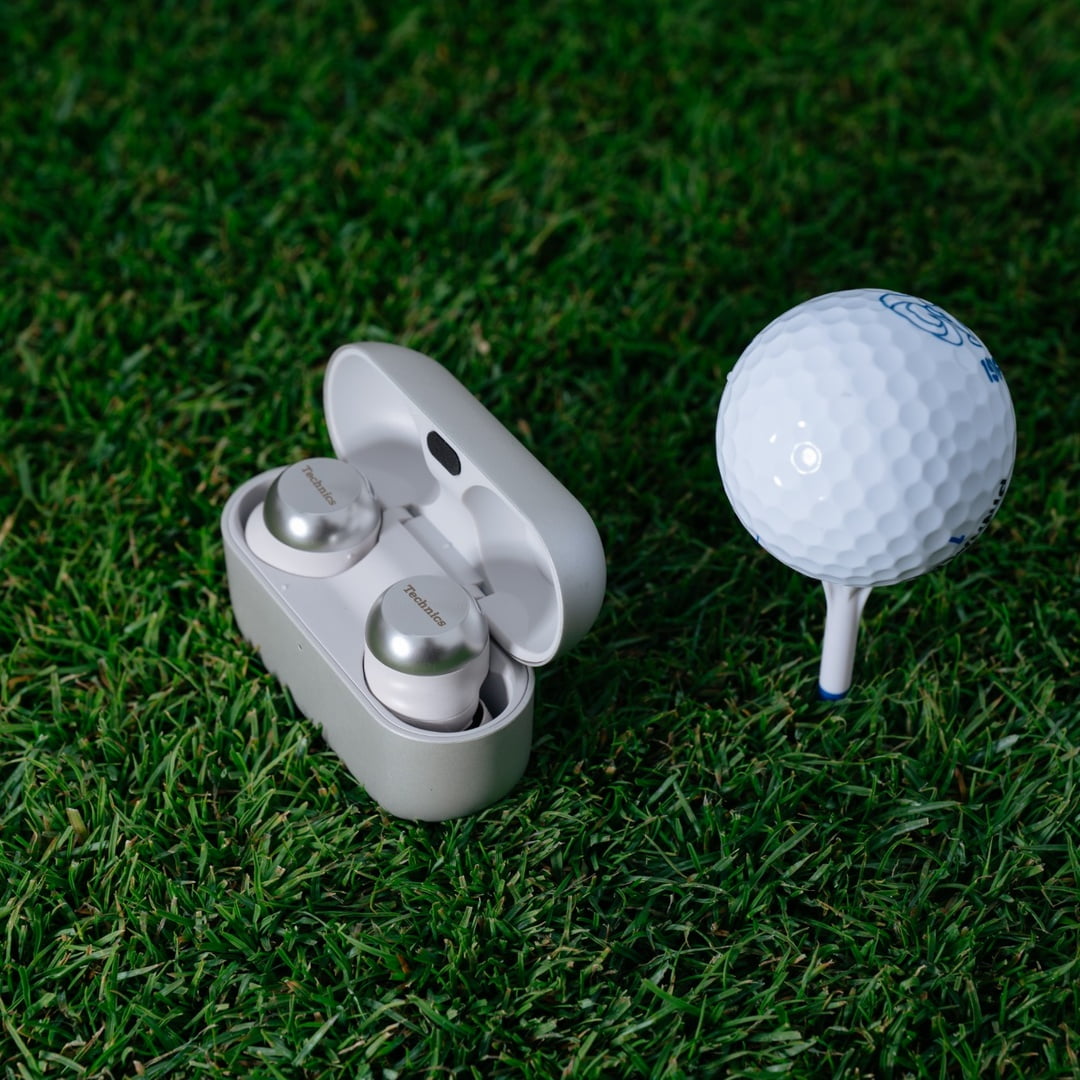
The Technics EAH-AZ100 True Wireless Earbuds deliver premium sound with Magnetic Fluid Drivers for rich bass and crystal-clear detail. Adaptive Noise Cancelling and Dolby Atmos® with head tracking create an immersive listening experience, making them an exceptional gift for music lovers. During Prime Big Deal Days, save $65.
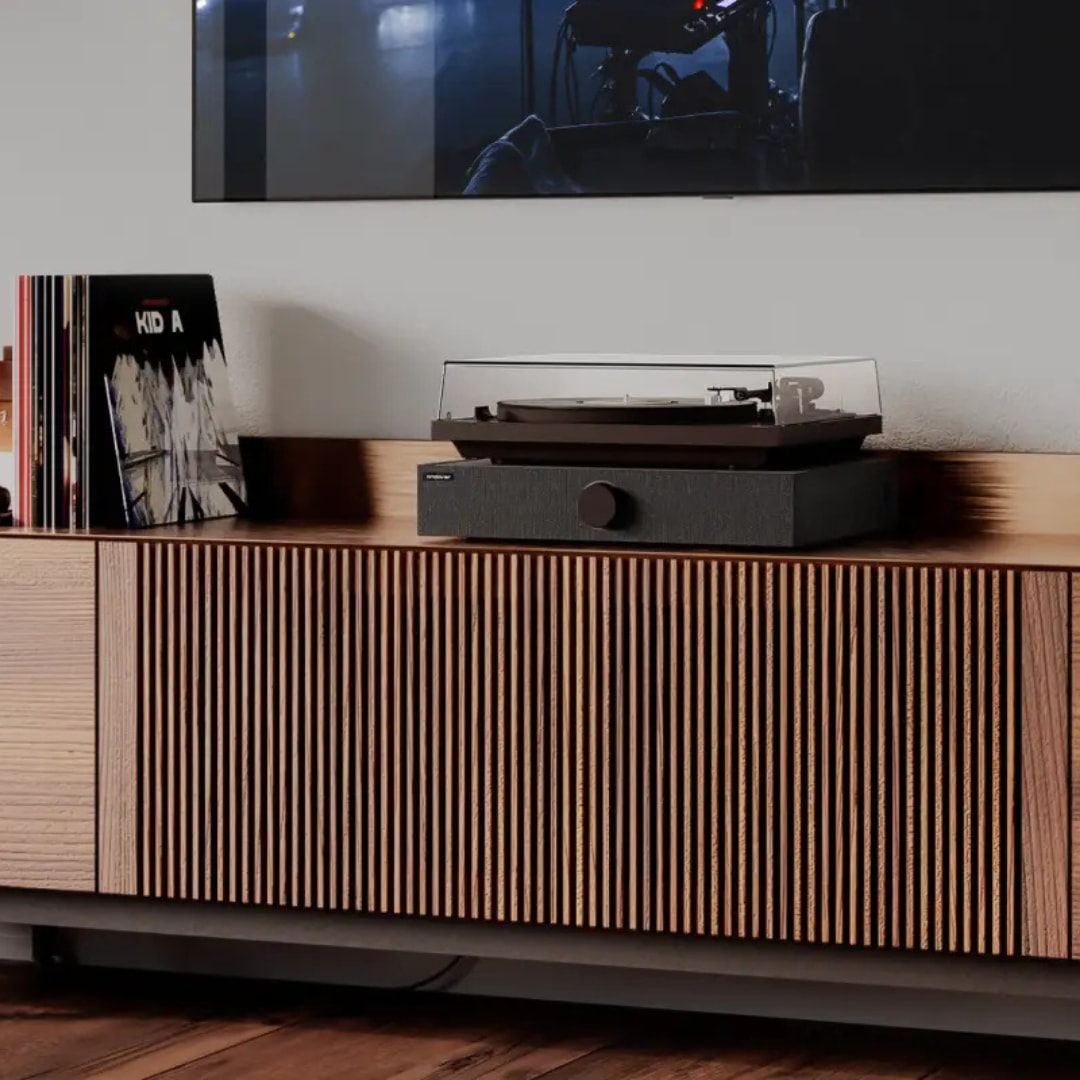
SpinBase 2 delivers powerful, full-range 270° sound in a sleek, space-saving design. Featuring Andover’s patented IsoGroove® Technology for noise-free performance and a built-in phono preamp, it sits seamlessly under your turntable. Get SpinBase 2 for as low as $289 this Prime Day! Click HERE for all Andover Prime Day deals – offers end 10/8/26.
Can’t hear voices on TV? The AccuVoice AV855 Soundbar delivers unparalleled dialogue clarity with 20 levels of voice enhancement. The AV855 features dual built-in woofers for rich bass and HDMI-ARC compatibility for easy connection with your TV’s remote. Just $299 this Prime Day! Click HERE for all ZVOX Prime Day deals – offers end 10/8/26.
Although a generation behind, Sony’s award-winning WH-1000XM5 wireless headphones deliver the best bang-for-your-buck in noise-cancellation this Prime Day. Available in smoky pink, midnight blue, black, or silver.
The 75-inch 2026 TCL QM8L offers the best value for performance among the TVs we’ve tested this year. It’s now half-off for Prime Days in other sizes too!
Note: Some of these deals are only available to Amazon Prime Members during October 6-7, 2026. Check Amazon for the latest Prime Day Deals.
Need more gift giving ideas?
Disclosure: The products listed above are approved by our Editors, but may be requested by our sponsors. When links to buy are provided, we’ll direct you to the lowest price at time of publication. In doing so, eCoustics may earn a small commission from the associated retailer if purchased.






























































You must be logged in to post a comment Login