Among the many promises that RFK Jr. offered in his confirmation hearings, promises that he has gone about breaking in spectacular fashion, one was a promise of “radical transparency”. His approach, in his own words, was laid out directly to Congress.
My approach to administration HHS will be transparency. If members of this committee or other members of Congress want information, the doors are open. I’ve spent many years litigating against HHS and its sub-agencies, NIH, CDC, FDA on FOIA issues trying to get information that we the taxpayers paid for and oftentimes getting back redacted copies after a year or two years of litigation. That should not be the case and if Congress asked me for information, you will get it immediately.
In the most recent news involving Kennedy-style fuckery, the CDC was mysteriously prohibiting the procurement of seasonal COVID vaccines through the Vaccine for Children program, designed so that states can get these shots at no cost for children who lack insurance, who are on Medicaid, and for Indigenous children. Why? Nobody seemed to be able to answer that question.
The CDC made some vague claims that the months-long delay was due to the need to finalize the procurement process (bullshit), or perhaps the need to have an outside expert consult on the final procurement process (bullshit). How do I know those statements were bullshit? Well, this is a statement from HHS to Ars Technica made on Wednesday, September 23rd, after media outlets began reporting on the shots being delayed:
The Department of Health and Human Services (HHS) told Ars on Wednesday that “CDC has not yet finalized procurement decisions” for the shots. The department’s statement further suggested Trump officials were questioning whether children should receive them. “HHS and CDC are committed to responsible stewardship of taxpayer resources and to ensuring that vaccines purchased through federally funded programs are appropriate for the populations those programs serve,” the department said.
Then, on that very same day, mere hours later, the Washington Post reported that procurement of the shots was now open and states could order the shots.
Advertisement
However, The Washington Post reported late Wednesday that ordering was opening. An unnamed source told the Post that part of the reason the vaccine ordering was held up was a delay in finalizing the CDC’s clinical guidance, which is written for health care professionals and public health officials. The guidance reportedly needed to be reviewed by an external expert.
According to further reporting, this explanation was also bullshit.
The Post also reported that CDC career officials had previously finished preparations for making the vaccines available. All Trump officials needed to do was essentially push a button to open ordering, sources said. Further, a spokesperson for the Minnesota Department of Health suggested to the Post that CDC leadership was behind the hold, saying the state had been told “that CDC leadership approval is needed before distribution of the vaccine can begin.”
In a response to Ars on Thursday, HHS again did not respond to questions about what caused the delay or how it was resolved. The department did, however, confirm that ordering for COVID-19 vaccines is now open.
So let’s call this what it is: Kennedy got caught with his hand in the cookie jar and reversed course once he’d been found out. And let’s also note that if any of this is supposed to be “radical transparency”, then I must be working off of a different dictionary than Kennedy and HHS.
None of this is transparent. There is no actual explanation on offer here for why the shots were delayed. And I have no doubt that if it had somehow gone unnoticed, the COVID shots never would have been made available at all. Kennedy, after all, has claimed that the COVID vaccine has killed lots and lots of people, and maimed others.
Advertisement
So we have another promise made to Congress broken. That same Congress should be demanding answers, at a minimum.
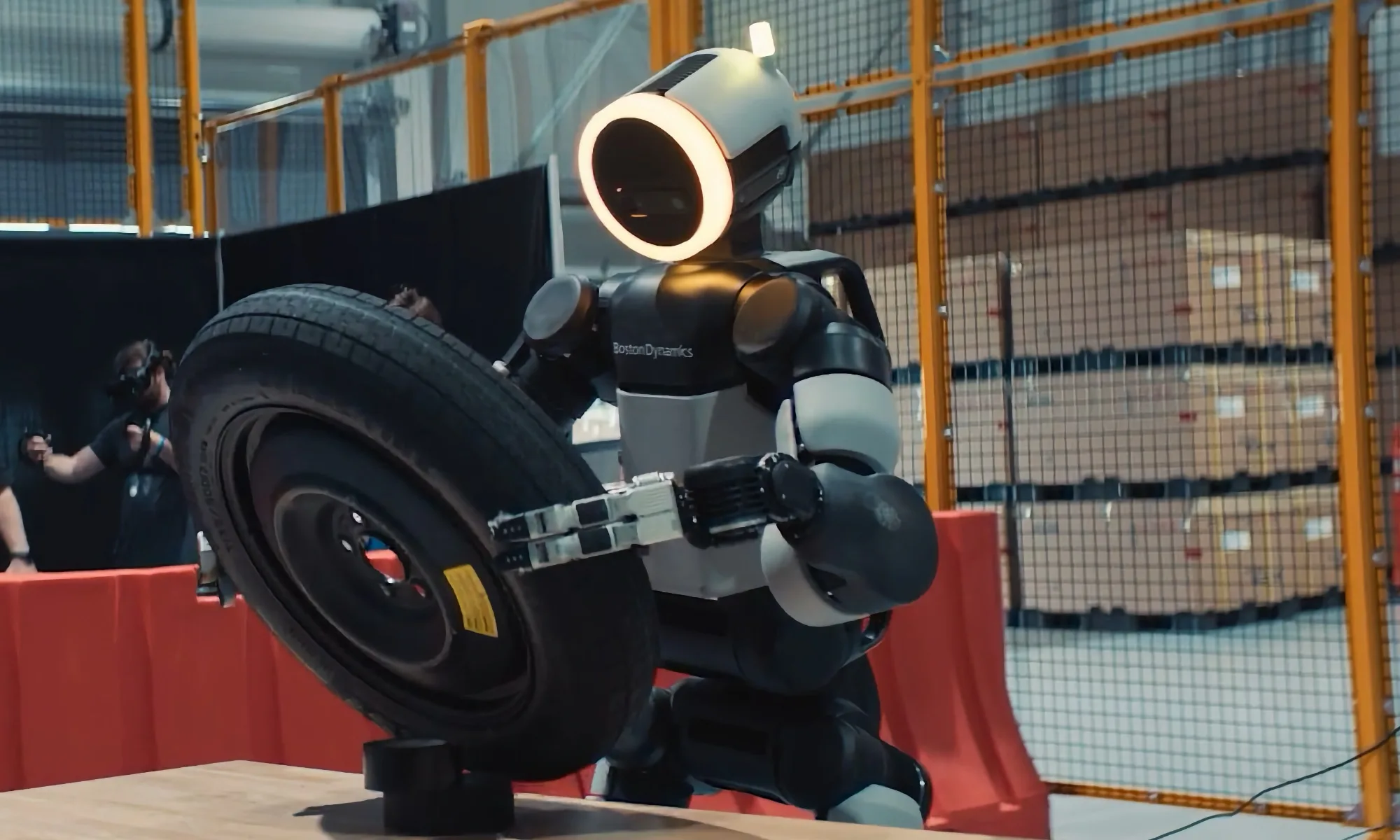
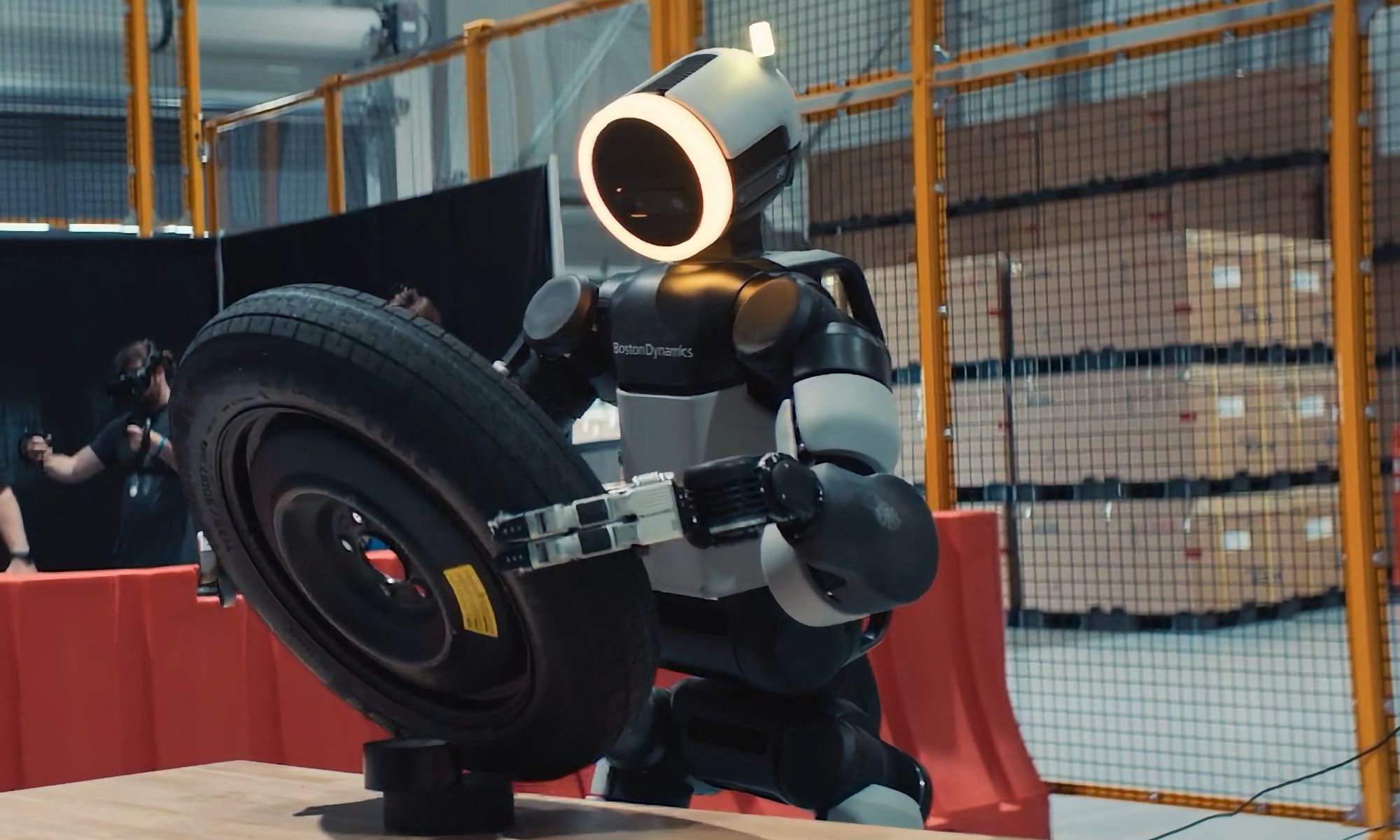
Boston Dynamics’ Atlas has been the internet’s favorite robot for years, pulling off backflips at CES and entertaining fans at the FIFA World Cup. But party tricks don’t pay the bills. Now, Boston Dynamics and Hyundai Motor Group want Atlas to trade the stage for the factory floor.
How did Atlas go from show-off to coworker?
AI has changed how Atlas picks up new skills. Rather than coding every movement, Boston Dynamics now trains the robot much like a new hire. Atlas runs on two separate systems. One keeps it steady on its feet and lets it reach for objects, while the other helps it understand the world and carry out multi-step instructions.
Like AI chatbots, Atlas improves with more data, but that data hasn’t been collected yet. Right now, it is practicing automotive tasks at the Robotics MetaPlant Application Center before heading into actual factories. Car plants have tough safety and reliability rules, making them a solid proving ground.
Advertisement
Where will we see Atlas working?
This version of Atlas is designed for heavy-duty industrial work. It can haul seriously heavy loads and handle scorching, unforgiving workplaces, which makes it a good fit for manufacturing, food and beverage, and semiconductor plants. So, don’t expect it to fold your laundry just yet.
Boston Dynamics
Hyundai’s backing is what makes the numbers work. Hyundai Motor Group is building a new US factory with the capacity to churn out 30,000 robots every year, and it plans to put 25,000 Atlas units to work. According to Boston Dynamics, the partnership has already brought costs down by 60 to 80 percent between the prototype and the first production run.
Are robot coworkers finally becoming a reality?
For years, humanoid robots felt like something out of a sci-fi movie. Now, with a dedicated factory, thousands of units planned, and a market projected to reach $200 billion by 2035, they suddenly feel very real.
Boston Dynamics isn’t new to this game either. Its Spot robot already works for more than 500 customers in 46 countries. If Atlas can follow in its footsteps, the robot we once watched doing backflips might soon be lifting boxes next to factory workers.
Japan’s biggest power generator is teaming up with Dell to build AI data centres across the country. The push could cost as much as $140bn, the Financial Times reported.
JERA, Dell and UK developer RHAELM signed a non-binding agreement on Thursday, JERA said. Private equity firm Apollo will help fund the work as RHAELM’s financing partner.
The first project sits next to JERA’s gas-fired power station in Chiba, east of Tokyo. It will draw about 400 megawatts and cost more than $15bn, or ¥2.3tn, across all phases.
Operations are due to start around 2028. The FT said the site would be among Asia’s largest outside China.
Advertisement
Skipping the grid queue
The plan’s selling point is speed. The data centre will take power straight from JERA’s plant, rather than wait years for a grid connection.
“We can deliver a 400MW facility years ahead of a conventional grid-connected timeline,” said Bradd Lewis, RHAELM’s chief executive.
Each firm has a set role. JERA brings the land and power, Dell supplies ready-built racks of servers, and RHAELM runs the build.
JERA says it generates about a third of Japan’s electricity.
“JERA is uniquely positioned to power Japan’s AI ambitions,” said Yukio Kani, its global chief executive.
The partners want to copy the model at other JERA sites. The aim is several gigawatts of AI capacity across Japan in the 2030s.
Advertisement
A crowded field
JERA has not put its own figure on that wider rollout. The $140bn estimate comes from the FT’s reporting.
Others are piling in too. In June, Blackstone said it planned $30bn for Japan AI data centres over the next few years.
Japan’s digital minister has warned the country could become an “AI colony” if it falls behind.
It’s been a while since we saw Catherine Zeta-Jones strutting her stuff in an action setting, but she’s back in this hard-hitting thriler series. Adapted from the Nick Harkaway novel, The Price You Pay, this adaptation, titled Kill Jackie, sees Zeta-Jones playing a wealthy art dealer with a hidden past that will come back to bite her.
As the squad of hitmen known as The Seven Demons close in, the titular Jackie uses her dark web connections and surprising brutality to tun the tables and hunt the killers for herself.
She’s joined by the likes of Daniel Ings, Julian Barratt, and Hollywood heavyweight Ron Perlman across the eight episodes as the story goes to more and more explosive levels.
Advertisement
Read on as this guide explains how to watch Kill Jackie online exclusively on Prime Video – and potentially for FREE.
How to watch Kill Jackie in the US, UK and the rest of the world
How to watch Kill Jackie from anywhere
Out of the country but eager to stream Kill Jackie online? You’ll likely be restricted from accessing your usual Prime Video library and other usual domestic streams due to geo-blocking.
Advertisement
Luckily, there’s an easy solution. Downloading a VPN will allow you to watch no matter where you are. It’s a simple bit of software that changes your IP address, meaning that you can access on-demand content or live TV as if you were back at home.
Use a VPN to watch Kill Jackiefrom abroad:
What you need to know about Kill Jackie
When is the Kill Jackie release date?
Kill Jackie lands on October 2, with all eight episodes available at launch
Advertisement
Kill Jackie cast
Catherine Zeta-Jones as Jackie Price
Daniel Ings as Sam
Darci Shaw
Raff Law
Sidse Babett Knudsen
Óscar Jaenada
Hattie Hook
Enzo Cilenti
Christine Adams
Julian Rhind-Tutt
Kārlis Arnolds Avots
Set Sjöstrand
Tadashi Ito
Sebastian Armesto
Julian Barratt
Gavin Spokes
Jonathan Cake
Bamshad Abedi-Amin
Bill Paterson
Ron Perlman
Can I watch Kill Jackie for free?
Yes! If you’ve not subscribed to Prime Video before, you can watch Kill Jackie free with its 30-day free trial promo. The streaming service is available in over 200 countries around the world, including the US, UK, Canada and Australia.
VPN services are evaluated and tested by us in view of legal recreational use. For example: a) Access to services from other countries, (subject to the terms and conditions of that service). b) Safeguarding your online security and making your online privacy more robust when abroad. Future plc does not support nor condone the illegal or malicious use of VPN services. We do not endorse nor approve of consuming pirated content that is paid-for.
Here’s a fun history lesson for you. Don’t worry, we’ll make it quick! In 1966, nearly 51,000 people died on US highways. The overwhelming evidence suggested that many lives could have been saved with modern seat belts, which by then had been around for several years. The automotive industry responded by rallying together, and, in a triumph of self-regulation, voluntarily put the safety feature in every new vehicle that rolled off the line.
Kidding! Of course they didn’t do that. In the fall of 1966, Congress established the Department of Transportation and then passed the National Traffic and Motor Vehicle Safety Act as well as the Highway Safety Act, giving the federal government sweeping new authority to set safety standards. By 1968, seat belts were required in every new car. Despite a massive increase in highway traffic in the last 60 years, far fewer fatalities happen on the road today.
I was thinking about this while watching various AI CEOs huddle around US president Donald Trump on Tuesday, congratulating themselves and each other on having signed an AI safety accord. My colleague Maddy Varner wrote about the specific stipulations here, but the short version is that it’s largely up to the AI labs to keep themselves in check.
Or, as Trump put it even more succinctly in the Oval Office on Wednesday: “They’re gonna police, and they’re gonna police each other, and they’re gonna self-police, they’re gonna police themselves. It’s going to work out very well.”
Advertisement
So this is the current state of AI safety regulation. On one side are the AI executives, employees, and tech luminaries, who are all saying that there need to be clear, thoughtful, tactical rules introduced to avoid potential disaster. (Bill Gates, for instance, has been on a media blitz playing Cassandra about an AI apocalypse.) On the other side is Trump’s magical thinking that if you say something enough times, it must be true.
That’s not to say any of this is simple or easy. The question of how to properly “pace the frontier,” as some of those same executives like to say, remains open. Even if all of the major AI labs were to agree to a slowdown, there’s no good way to keep them to their word, and China would likely continue on its own path regardless. The US economy is increasingly propped up on the AI industry, which itself has become an ouroboros of financing deals and circular investments; any meaningful crackdown risks major instability that reaches well beyond Silicon Valley.
The automotive industry is also admittedly an imperfect analogy for all kinds of reasons. There’s no seat belt equivalent for AI, no straightforward solution that can demonstrably reduce risk overnight. (It also took decades for the majority of states to pass laws mandating that people actually wear them.) The potential harms are less certain and less quantifiable. AI doomers will tell you the technology could result in human extinction in a decade; skeptics argue that’s sci-fi marketing malarkey.
A YouTuber has accidentally revealed at least some of what is coming in the Final Cut Pro 13 update, including improved Pixelmator Pro round-tripping and a new Natural Motion Blur tool.
Final Cut Pro 12.4 was released on September 29 with the ability to add Cinematic mode effects captured with iPhone 18 Pro. Apple’s next update could arrive sometime in October, given a recent accidental YouTube posting.
Reddit user Sweaty_Succotash_375 pointed out that YouTuber The Final Cut Bro accidentally posted then made a video private that touted “Final Cut 13 is here!” User umChiled shared a chapter list, which shows what features can be expected in the new update.
Here are the features called out in the chapter markers:
Advertisement
More language support for transcriptions
Pixelmator image roundtrip editing
Natural Motion Blur
Pinch to zoom and viewer controls
Disconnect clips
Keyframe easing
Several of these features appear to be long-awaited updates for Final Cut Pro. It’s a big update going to version 13, so Apple included several big changes.
It is already possible to send a frame to Pixelmator Pro, but only as a still image for editing. The new roundtrip improvement isn’t an export, but a frame editing tool that reinserts what you’ve edited.
Natural Motion Blur and Keyframe Easing both appear to be big features. Several animation tools have been added, which could mean vastly improved controls over objects in scenes.
Apple hasn’t announced Final Cut Pro 13, but new Macs, like a touchscreen MacBook Pro with OLED, are expected before the end of 2026. Expect the new Final Cut Pro update to be revealed at the same time.
Edtech vendors are swiftly integrating AI features into new and existing instructional materials, often claiming that the features are educationally effective. EdReports, an independent nonprofit that reviews K-12 curriculum, recently went looking for the evidence behind those claims. What it found raises hard questions for any district leader weighing an edtech purchase this fall.
What Happens When the Teacher Doesn’t Have a Say?
Some AI tools let a teacher review content before students see it, while others put that content directly in front of students in real time. Courtney Allison, the chief academic officer of EdReports, spent 15 years with the New York City Department of Education, including time as a middle school math teacher. She explains why the old line between core and supplemental materials is starting to disappear, and weighs in on AI tutors giving every student a different lesson. She also tackles whether it is fair to ask vendors for proof when generative AI has only been widely available for a few years.
A Former Chancellor in the Buyer’s Seat
Someone has to decide which AI products deserve a place in classrooms, and that responsibility often falls on districts. Dr. Lewis Ferebee joined EdReports as CEO this summer after becoming the longest serving chancellor in the history of DC Public Schools. He brings a district leader’s perspective to the question of who should be checking these products and who should pay for that work. He also shares the questions he would ask a vendor sitting across the table.
SpaceX’s Falcon 9 rocket rises from its California launch pad, sending 130 payloads into orbit. (Credit: SpaceX via X)
Starfish Space’s first full-scale Otter satellite servicing vehicle went into orbit today, marking a major milestone for the Tukwila, Wash.-based startup.
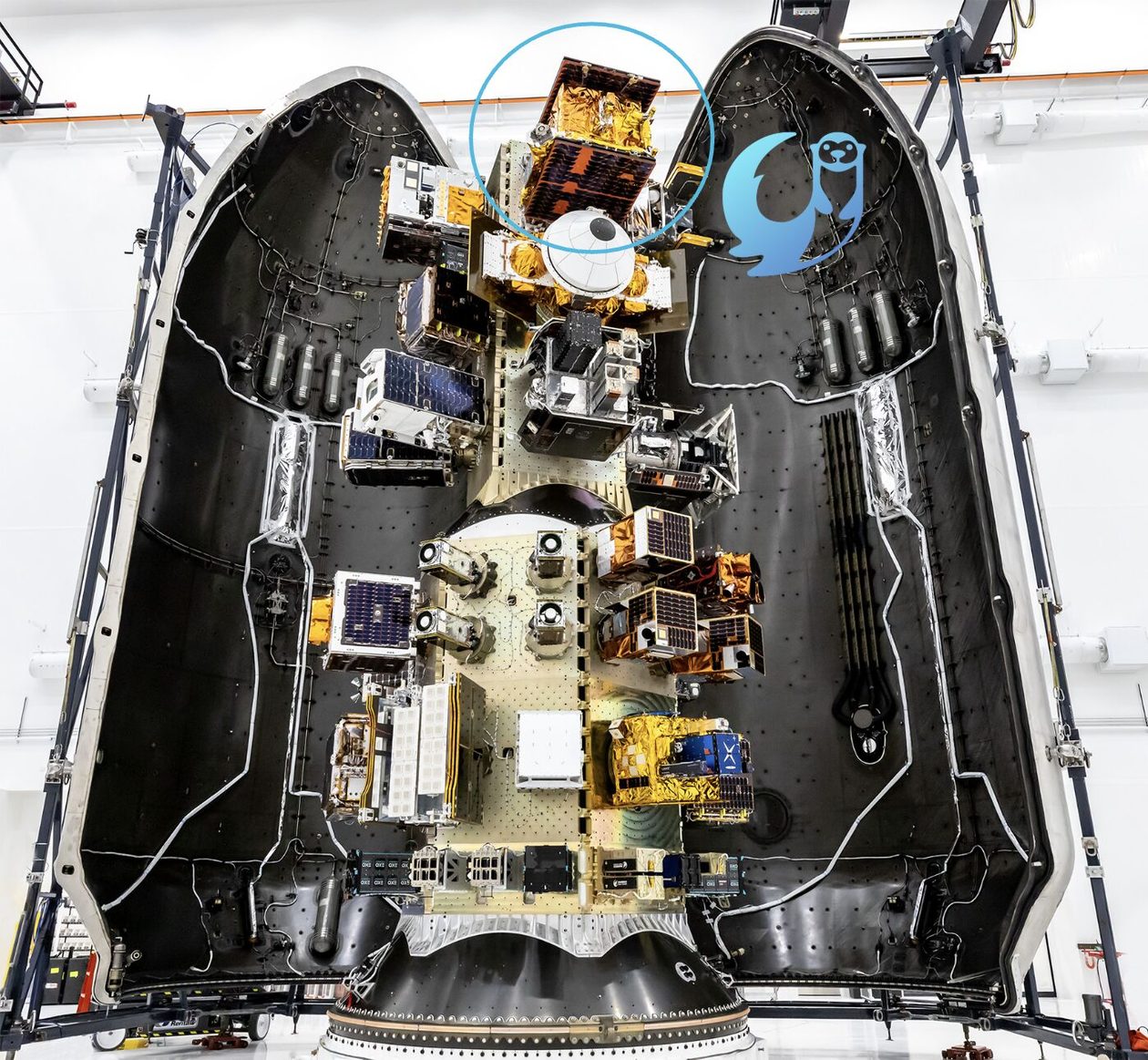
The Otter spacecraft was among 130 payloads launched from Vandenberg Space Force Base in California aboard a SpaceX Falcon 9 rocket. Otter is roughly the size of a kitchen oven, with solar arrays that were folded up for launch.
Other payloads on the satellite rideshare mission, known as Transporter-18, included Cowboy Space’s first power-beaming satellite, a prototype for Google’s AI data-center constellation, and a NASA-funded probe that will track the energy released by galaxies and supernovas.
Today’s liftoff through surface-level fog — and the return of the Falcon 9’s first-stage booster to a nearby landing pad — proceeded like clockwork. A little more than an hour after launch, Otter separated from the rocket’s upper stage and powered up for orbital operations.
Once Otter is fully commissioned, it will rendezvous with and inspect a series of inoperable satellites for a $15 million NASA mission known as Small Spacecraft Propulsion and Inspection Capability, or SSPICY for short. The capabilities demonstrated by SSPICY could be used during future missions to check the health of active satellites, or dispose of defunct satellites.
Advertisement
SSPICY may not be the only mission that Otter takes on during its operating lifetime.
“Success in the mission is to actually go and provide this commercial inspection service on a number of these different spacecraft, and that will be a huge win in and of itself,” Starfish co-founder Trevor Bennett told GeekWire last week. “But we’re also bringing Otter along to provide servicing well beyond that, so we could go and inspect more spacecraft, or potentially do some additional docking past the initial mission.”
This inaugural Otter mission follows up on two orbital flight tests involving smaller-scale Otter Pup prototypes. The first test fell short of linking up with its target satellite but was able to demonstrate Starfish’s satellite-tracking system. The second Otter Pup went into orbit last year and is currently closing in on its target.
The blue circle highlights the placement of Starfish Space’s Otter spacecraft inside the Falcon 9 rocket’s upper stage prior to launch. (Credit: Starfish Space / SpaceX)
Google’s Project Suncatcher M1 prototype, built by Planet Labs, will test the tensor processing units that Google plans to use for its orbital AI data-center constellation. The prototype is “designed to gather in-orbit data on how our TPUs handle the physical stress of spaceflight and the radiation and thermal extremes of space,” Google said in a blog post.
Star Catcher’s Protostar satellite will be involved in an experiment to beam power from the main spacecraft to a smaller deployable satellite equipped with off-the-shelf solar panels. The Protostar mission is meant to blaze a trail for the orbital power grid that Star Catcher hopes to create.
The SPRITE CubeSat is part of a $4 million mission funded by NASA and led by the University of Colorado that will study how stars and galaxies shaped the evolution of the early universe. The satellite is equipped with a far-ultraviolet imaging spectrograph. SPRITE stands for Supernova Remnants and Proxies for Reionization Testbed Experiment.
The U.S. 4K Blu-ray player market has become fairly easy to understand. Panasonic still sells excellent conventional players, Magnetar will happily sell you something substantially more ambitious, and almost everyone else has either left the building or is standing suspiciously close to the exit.
Japan apparently did not get that memo.
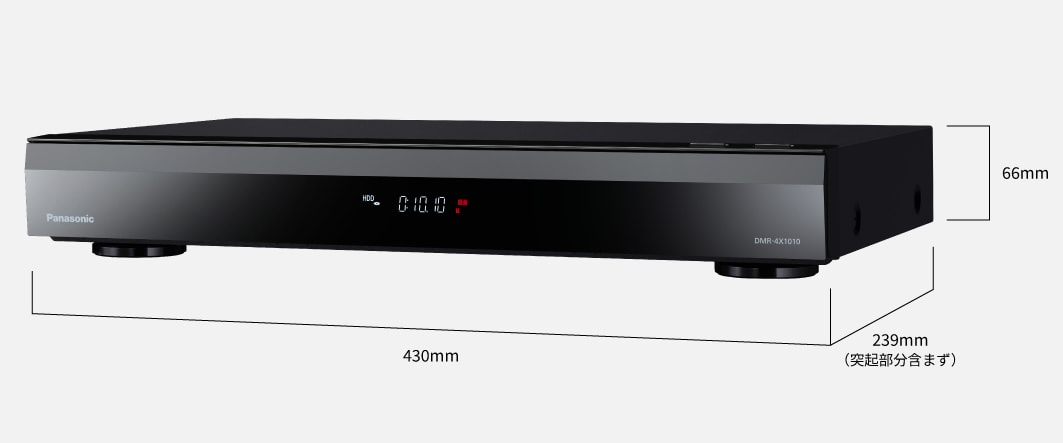
Panasonic’s new DMR-4X10¹⁰ is not merely an Ultra HD Blu-ray player. It combines a 10TB internal hard drive, 11 television tuners, automatic multi-channel recording, Ultra HD Blu-ray playback and recording, cloud storage support, remote viewing and extensive program management inside one component.
In other words, Japan gets a 10TB home video command center, while America gets another notification asking whether we are still watching.
Advertisement
Related Reading:
Panasonic DMR-4X10¹⁰ 10TB 4K Blu-ray Player
This Is Not Just a 4K Blu-ray Player
Calling the DMR-4X10¹⁰ a disc player misses most of the point.
Panasonic has equipped its flagship new DIGA recorder with 10TB of internal storage and 11 tuners covering Japan’s terrestrial digital, BS/CS satellite and BS/110-degree CS 4K broadcasts. Eight tuners are dedicated to automatic recording, two can switch between automatic and conventional recording duties, and one is reserved for conventional recording.
With the appropriate recording settings, Panasonic says the DMR-4X10¹⁰ can automatically retain as many as eight HD channels for approximately 28 days, while an additional allocation can capture either one 4K channel for approximately 13 days or two additional HD channels for roughly the same period.
Older recordings can then be automatically deleted as space is required.
10TB Is Only the Beginning
The internal hard drive can store approximately 390 hours of native 4K broadcast material at 33Mbps, according to Panasonic. Longer-duration compression modes stretch that dramatically further, although image quality naturally becomes part of the trade-off.
Advertisement
Users can also archive compatible recordings to recordable Blu-ray media. The DMR-4X10¹⁰ supports BD-RE discs up to 100GB and BD-R media up to 128GB, along with recordable DVD formats.
That combination of enormous local storage and removable physical media already distinguishes the DIGA from virtually anything available to U.S. home theater buyers.
Advertisement. Scroll to continue reading.
Panasonic then added the cloud.
Advertisement
Cloud Recording Without Surrendering Everything to Streaming
Panasonic describes one of the DMR-4X10¹⁰’s major new features as Cloud Recording, although the terminology requires some explanation.
The machine records television programming locally first. Selected recordings can then be copied to Microsoft OneDrive or Google Drive, allowing users to free space on the internal hard drive, protect important recordings from a hardware failure and access stored programs remotely.
Panasonic says as much as 10TB of recorded programming can be stored in the cloud, subject, obviously, to whatever storage plan the user has purchased from Microsoft or Google.
Cloud-based recordings can also be viewed from a smartphone through Panasonic’s DIGA Anywhere app. Panasonic specifically cautions that cloud services can change, suffer outages or disappear entirely, so the feature should not be confused with guaranteed permanent archival storage.
Advertisement
Physical media just quietly cleared its throat.
The DMR-4X10¹⁰ also introduces playlist editing, allowing users to assemble favorite portions of recordings without deleting the original program, along with custom program tags for sorting material by performers, music or other criteria.
That sounds almost quaint until you remember how often a show disappears from a streaming service because somebody in a conference room changed a licensing agreement.
And Yes, It Still Plays 4K Blu-ray Discs
For all of the recording technology packed inside, the DMR-4X10¹⁰ remains a serious disc machine.
Advertisement
It supports Ultra HD Blu-ray, Blu-ray, Blu-ray 3D, DVD-Video and CD playback, along with BD-R/RE and multiple recordable DVD formats. Panasonic also includes its 4K Real Chroma Processor, HDR brightness adjustment and 4K direct chroma upconversion.
High-resolution audio file playback includes WAV up to 32-bit/384kHz, AIFF up to 32-bit/384kHz, FLAC up to 24-bit/192kHz, ALAC up to 32-bit/192kHz and DSD up to 11.2MHz.
Connectivity includes two HDMI outputs, three USB ports, Ethernet and built-in Wi-Fi. There are no analog, optical or coaxial audio outputs, which tells you fairly clearly how Panasonic expects the DMR-4X10¹⁰ to be used.
Advertisement. Scroll to continue reading.
Advertisement
Panasonic DMR-4X10¹⁰ Specifications
Product Type: 4K Blu-ray recorder/DVR
Internal Storage: 10TB HDD
Tuners: 11 total
Automatic Recording: Up to 8 HD channels for approximately 28 days
Additional Automatic Recording: Up to 1 4K channel or 2 HD channels for approximately 13 days
4K Native Recording Capacity: Approximately 390 hours at 33Mbps
Cloud Services: Microsoft OneDrive, Google Drive
Maximum Supported Cloud Recording Storage: 10TB
Disc Playback: Ultra HD Blu-ray, Blu-ray, Blu-ray 3D, DVD-Video, CD
Recordable Blu-ray: BD-RE up to 100GB; BD-R up to 128GB
Video Processing: 4K Real Chroma Processor, HDR brightness adjustment, 4K direct chroma upconversion
Hi-Res Audio: WAV, FLAC, AIFF, ALAC, DSD
HDMI Outputs: 2
USB: 3; 1x USB 2.0, 2x USB 3.0
Networking: Ethernet, built-in Wi-Fi
Power Consumption: Approximately 54 watts
Dimensions: 430 x 66 x 239 mm (16.9 x 2.6 x 9.4 inches)
Weight: Approximately 4 kg (8.8 pounds)
Power: AC 100V, 50/60Hz
Japan Price: ¥434,500 including tax through Panasonic’s online channel
Availability: Japan, late October 2026
U.S. Availability: Not announced
The Bottom Line
The Panasonic DMR-4X10¹⁰ is unique because it combines an 11-tuner DVR, 10TB of local storage, recordable Blu-ray support, Ultra HD Blu-ray playback, cloud archiving, and remote viewing in one component. Very few manufacturers are still treating physical media, broadcast television, and local storage as parts of the same home entertainment system.
What is it missing? For North American buyers, the obvious answer is compatibility. The DMR-4X10¹⁰ is built around Japanese broadcast standards, uses B-CAS, runs on 100V power, and has no U.S. version announced.
That makes this a product Japanese home theater and physical media enthusiasts get to enjoy while the rest of us admire it from afar. Panasonic has built exactly the kind of all-in-one video machine many enthusiasts still want.
Price & Availability
Panasonic announced the DMR-4X10¹⁰ in Japan on September 14, 2026, with availability scheduled for late October 2026 at ¥434,500.
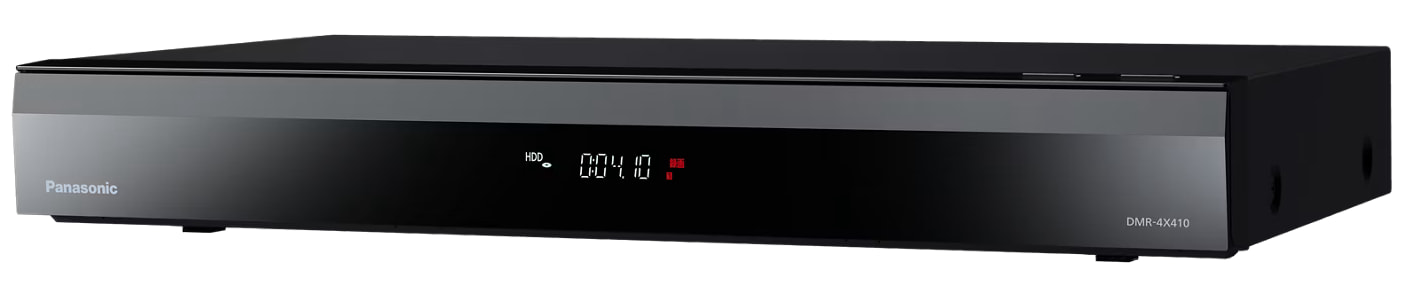
A less expensive DMR-4X410 version (¥209,000) reduces internal storage to 4TB while retaining 4K tuner capability and many of the same new cloud and organizational features.
Advertisement
There has been no announcement regarding U.S. or European availability.
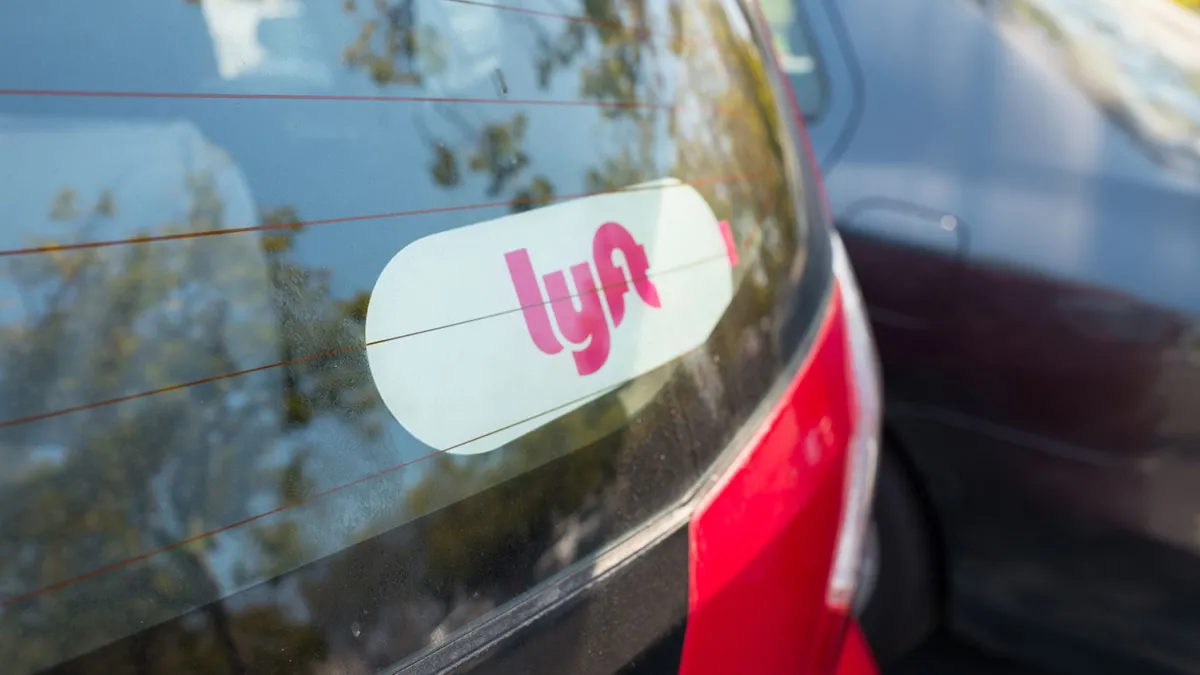
Lyft has agreed to pay $272.5 million to settle a lawsuit accusing the ride-hailing company of violating California law by misclassifying drivers as independent contractors, instead of employees.
The company said in a regulatory filing that it believes the settlement will allow it to avoid the “costs and distraction of protracted litigation and enable management to maintain its focus on executing its business objectives.”
Lyft could not be reached for comment.
The settlement stems from a lawsuit filed by the California Labor Commissioner’s Office in August 2020 that accused Lyft of treating drivers as independent contractors rather than as employees, as required under state law at the time.
Advertisement
The lawsuit alleged that drivers were denied minimum wage and overtime as well as other benefits and protections provided to employees, including paid sick leave and timely wage payments.
“This settlement is about the workers who came forward and spoke up. Their voices made this outcome possible,” California Labor Commissioner Lilia García-Brower said in a statement, adding that the LCO will forgo its share of the settlement and direct those funds to drivers who filed wage claims.
The settlement, which still must be approved by a judge, covers alleged violations from April 6, 2016 to December 15, 2020 — a period California was grappling with whether workers in the booming gig economy were independent contractors or an employees.
Today, drivers for app-based transportation services like Lyft and Uber are classified as contractors after voters passed ballot measure Proposition 22 in 2020. The ballot measure provided a carve-out from Assembly Bill 5, a state law passed in 2019 that required companies like DoorDash, Lyft, and Uber to classify gig workers as employees, entitling them to minimum wage, workers’ compensation, and other benefits.
Advertisement
Even after AB 5 took effect, Lyft, Uber, and other companies that relied on gig workers continued to classify their drivers as contractors. That eventually led to legal action from the LCO, California Attorney General and the City Attorneys of Los Angeles, San Diego and San Francisco, as well as private actions filed under California’s Private Attorneys General Act. The cases were coordinated in San Francisco Superior Court in September 2021.
The settlement closes this legal chapter, at least for Lyft. Uber still faces an LCO lawsuit that makes similar allegations.
When you purchase through links in our articles, we may earn a small commission. This doesn’t affect our editorial independence.
Ryan Roslansky is leaving Microsoft and LinkedIn after nearly 18 years, triggering another leadership shuffle across Office and Teams. “Roslansky, who until recently was the CEO of LinkedIn, was promoted to the head of Office last year and then took control of Microsoft Teams earlier this year,” notes The Verge. From the report: “Ryan leaves the organization in a strong position,” says Microsoft CEO Satya Nadella in an internal memo. “Over the past year, Ryan’s team has done critical work bringing together the product, engineering, and design foundations that have made this next phase possible.”
Roslansky is leaving a week after Microsoft announced its new Copilot, which the company is positioning as “the OS for work.” He’s also leaving around a month after calling fully AI-generated documents “a doom loop” for workers. “If we’re not careful, we’ll end up with a very expensive way to avoid writing and reading in an ocean of sameness, genericness,” said Roslansky in his LinkedIn post.
Microsoft is now moving the teams behind Office and Microsoft Teams over to Charles Lamanna, as part of the Copilot, Agents, and Platform (CAP) organization. […] Microsoft’s chief design officer, Jon Friedman, is also moving to report to Copilot chief Jacob Andreou. Microsoft appointed Dan Shapero as its LinkedIn CEO earlier this year, and he will continue in this role and report directly to Nadella.













































You must be logged in to post a comment Login