Google has released Chrome 155 with support for decoding JPEG XL images, a format that offers 30-50% better compression than JPEG along with lossless compression, JPEG transcoding, HDR, animation, and progressive decoding. From a blog post: We expect that JPEG XL is most helpful for high-fidelity or lossless compression, especially of photographic images or in cases in which fine-grained progressive decoding is preferred. In this post, we share why we brought JPEG XL to Chrome, how we used Rust to ensure memory safety first, the extensive performance work that makes it fast, and what the journey tells us about developer feedback and the web standards ecosystem.
[…] With JPEG XL officially landing in Chrome, the web becomes faster, richer, and safer. We encourage developers, content creators, and platform owners to start using .jxl images and animations in their pipelines. Try it out, file bugs, and help us continue building a faster and safer web for everyone.
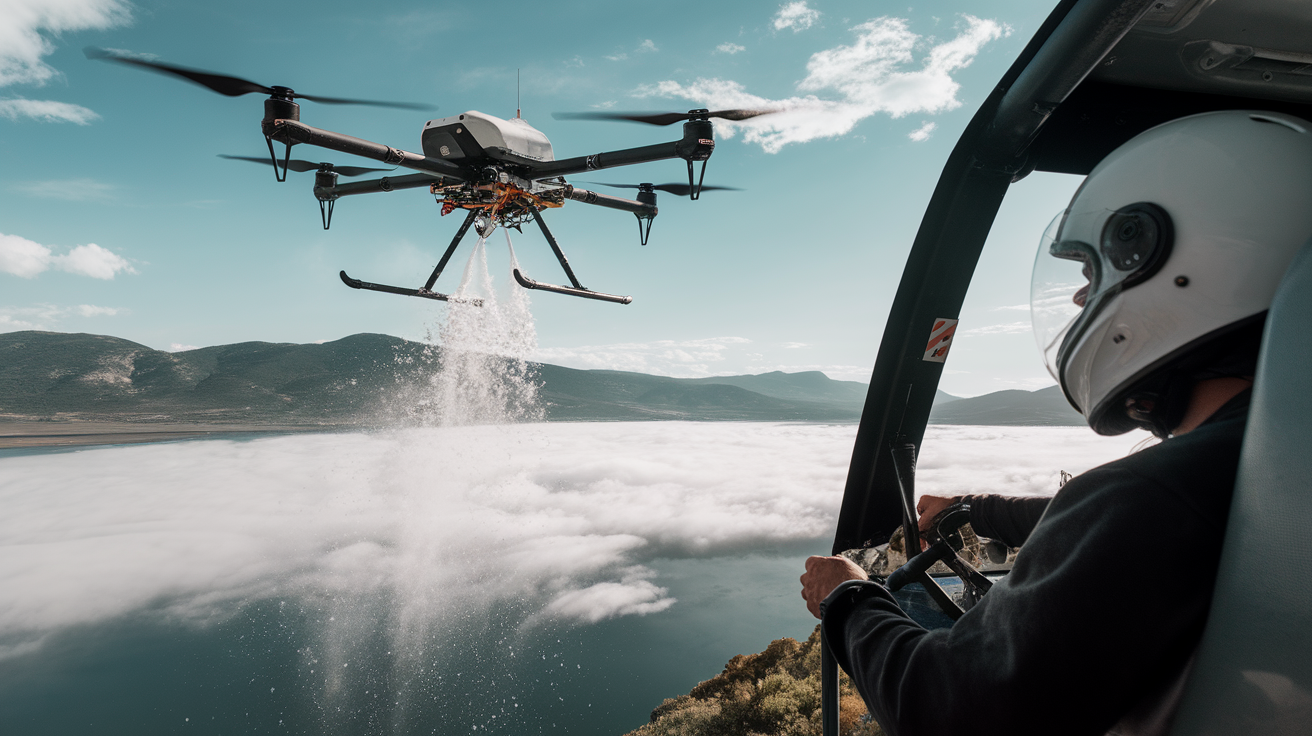
Thousands of residents in Homer, Alaska had no idea the clouds above their homes were being seeded this past August. A San Francisco start-up called Rainmaker had quietly sent cloud seeding drones into the sky, dispersing a silver compound meant to trigger precipitation, and claims the three-hour operation produced 19 million US gallons of water. Most locals only found out after the fact.
The episode has become a flashpoint in a debate that is unfolding across more than 50 countries now experimenting with weather modification: can technology meaningfully ease water shortages, and should companies be allowed to alter the sky over people’s homes without clearly telling them first?
How Cloud Seeding Drones Work
Cloud seeding itself is not new. The technique dates back to 1946, when scientists at General Electric’s research laboratory first used dry ice to coax rain from clouds. Silver iodide followed a year later and proved far more effective, since dry ice evaporates into gas too quickly to be useful. The chemistry speeds up a natural process: compounds dispersed into a cloud form ice crystals, which grow heavy enough to fall as rain or snow once gravity takes hold.
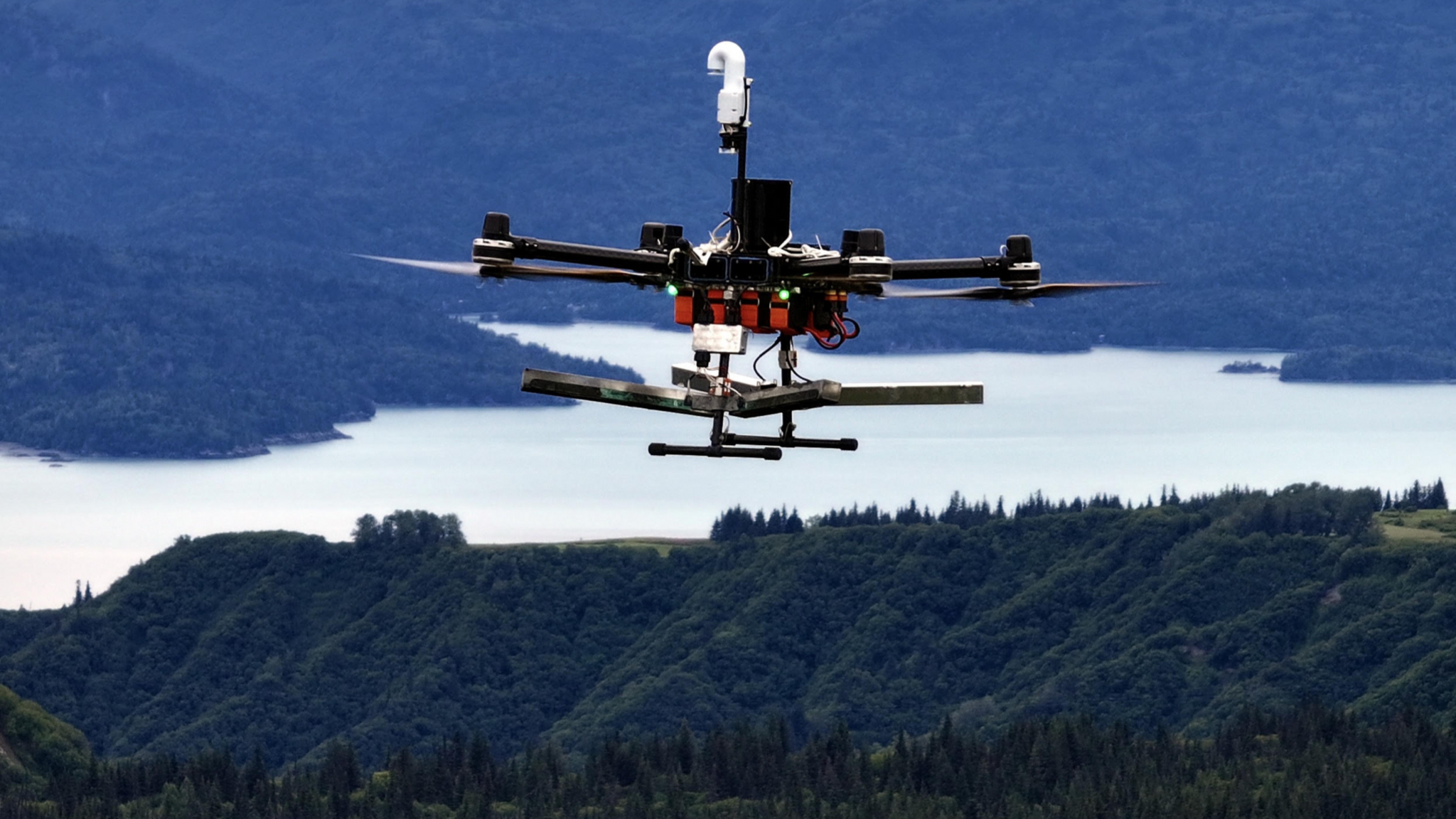
What has changed is the delivery method. Instead of relying solely on piloted aircraft, companies like Rainmaker now use autonomous cloud seeding drones to fly directly into storm systems, releasing silver iodide flares that burn and atomize water particles so they stay suspended in freezing air long enough to form crystals. Rainmaker founder and CEO Augustus Doricko says each flight releases just 20 grams of silver, spread across thousands of square kilometres, resulting in ground concentrations he describes as “parts per quadrillion” — far below thresholds set by the US Food and Drug Administration.
Advertisement
The drones give operators a more surgical approach than older methods. “They offer a more targeted nature to these clouds we hope will be responsive,” says Jon Meyer, an assistant state climatologist at the Utah Climate Center, who has watched the technology evolve from a niche academic curiosity into a growing commercial sector. Rainmaker already operates across Idaho, Utah, Colorado and parts of the Middle East, including Jordan, where Doricko says chronic water scarcity leaves residents with utility water only a few hours a week.
Modest Gains, Bigger Questions
Even enthusiasts concede that cloud seeding drones are no silver bullet. Meyer notes that under ideal conditions, seeding might squeeze out an extra 5 to 10 percent of precipitation — a meaningful boost in drought-stricken regions, but nowhere near enough to manufacture a downpour from clear skies. Rainmaker’s own Alaska results illustrate the limits: 19 million gallons sounds dramatic, but spread across 100 square miles it amounts to roughly 0.01 inch of rain.
A 2017 study using radar and precipitation gauges offered some of the first solid evidence that silver iodide seeding behaves as scientists predicted, lending credibility to a field that had long struggled to prove its effectiveness. That research, combined with advances in drone technology, has helped fuel a wave of new start-ups chasing contracts from governments and utilities desperate for more reliable water supplies.
But not everyone is convinced the benefits outweigh the risks. Cooper Freeman, Alaska director of the Center for Biological Diversity, says he’s troubled that Homer residents were not clearly warned before the Rainmaker operation, and he questions whether anyone tracked what happened to the silver iodide after it fell. “It doesn’t appear that there was any downstream monitoring to verify that this silver iodide didn’t impact the environment,” he says. He also worries that pouring money into cloud seeding drones distracts from the harder, less glamorous work of conserving water in the first place. “Having a company come in to do this seeding isn’t going to solve our water woes,” Freeman argues.
Advertisement
A Thirsty Planet, A Growing Industry
The stakes behind this debate are considerable. United Nations Secretary-General António Guterres warned in July that the world is using freshwater faster than it can be replenished, and separate research has found the past five years to be the driest stretch for global rivers in more than three decades. Against that backdrop, it’s little surprise that governments from the American West to the Middle East are willing to experiment with any technology that might coax a bit more rain from the sky.
Some companies are even rethinking the chemistry involved. Recast Systems, another San Francisco venture, is testing a protein-based alternative to silver iodide, hoping to sidestep environmental concerns altogether while still triggering ice formation inside clouds.
Whether cloud seeding drones ultimately become a serious tool against water scarcity or remain a marginal, controversial experiment likely depends on two things: whether the modest rainfall gains prove worth the cost and regulatory headache, and whether companies can convince both scientists and the public that what they’re spraying into the sky is genuinely safe. For now, residents like those in Homer are left asking a more basic question — not whether the technology works, but whether anyone plans to tell them before it’s used over their heads again.
For decades, Bose has been viewed by much of the audiophile world as a consumer electronics company operating outside the traditional high-end audio establishment. That description is becoming increasingly outdated. Its acquisition of McIntosh Group, along with continued expansion into automotive, immersive, and software-driven audio, suggests Bose is building a much broader audio technology business.
The latest move is the acquisition of Firelight Technologies, the Melbourne-based company behind FMOD. Financial terms were not disclosed, but Bose confirmed that Firelight will become part of its Audio Technology business while FMOD remains available to its existing customers and development community.
FMOD operates well below the level where most consumers encounter audio. Developers, sound designers, and composers use it to create sound that responds dynamically to events inside games and other interactive environments.
Unlike recorded music, which largely unfolds as mastered, interactive audio must react instantly as a player moves through a space, accelerates a car, fires a weapon, or triggers any number of events. FMOD integrates with Unity, Unreal Engine, custom game engines, consoles, computers, mobile devices, and web applications.
Bose is therefore not simply buying another audio technology company. It is acquiring software that helps determine how sound behaves inside virtual spaces. Gaming is the immediate opportunity, but Bose has also pointed to potential applications in VR/AR, automotive, and other real-time environments.
Advertisement
Related Reading:
The StreamUnlimited Deal Makes More Sense Now
Three months before buying Firelight, Bose acquired StreamUnlimited Engineering, a Vienna-based company that develops network-audio software, hardware modules, streaming technologies, certification tools, and other infrastructure used by consumer-electronics manufacturers.
That deal received far less attention outside the industry, but strategically it may be just as important.
Bose said StreamUnlimited would continue serving existing customers while helping the company expand its access to streaming technologies, services, and capabilities. Its solutions would also remain interoperable with third-party products and ecosystems rather than being locked inside Bose hardware.
Put the two acquisitions beside one another and an interesting picture starts to emerge.
StreamUnlimited provides connected-audio infrastructure. FMOD provides interactive-audio infrastructure. Bose already has decades of DSP and acoustic research, a substantial consumer-audio business, automotive relationships, and ownership of McIntosh and Sonus faber.
Advertisement
The company no longer needs every Bose technology to arrive inside a product carrying a Bose badge.
Advertisement. Scroll to continue reading.
That may ultimately be the most consequential shift.
McIntosh & Sonus faber Changed the Conversation
Bose’s November 2024 acquisition of McIntosh Group, parent company of McIntosh Laboratory and Sonus faber, was the deal that forced the traditional high-end industry to pay attention.
Advertisement
McIntosh and Sonus faber occupy territory that Bose historically did not. McIntosh sells massive amplifiers, preamplifiers, source components, and systems whose blue meters have become symbols of American high-end audio. Sonus faber builds Italian loudspeakers that can involve wood, leather, carbon fiber, and enough artisanal craftsmanship to make assembling a Bluetooth speaker feel rather pedestrian.
Bose acquired both without attempting to turn either into Bose.
At the time, Bose said McIntosh and Sonus faber would continue concentrating on their established high-end categories while the companies explored opportunities together in the home, on the go, and in the car. Bose also specifically highlighted automotive as an area where its four decades of experience could complement the luxury brands.
That was important. Bose did not need to persuade traditional audiophiles that a $30,000 loudspeaker with its own logo was suddenly desirable. It bought two brands whose credibility in that market had already been established over generations.
Some audiophiles reacted as if Taco Bell had purchased Le Bernardin.
Advertisement
Nearly two years later, there is little evidence that Bose has hampered either company’s ability to innovate. If anything, both brands have continued behaving very much like themselves.
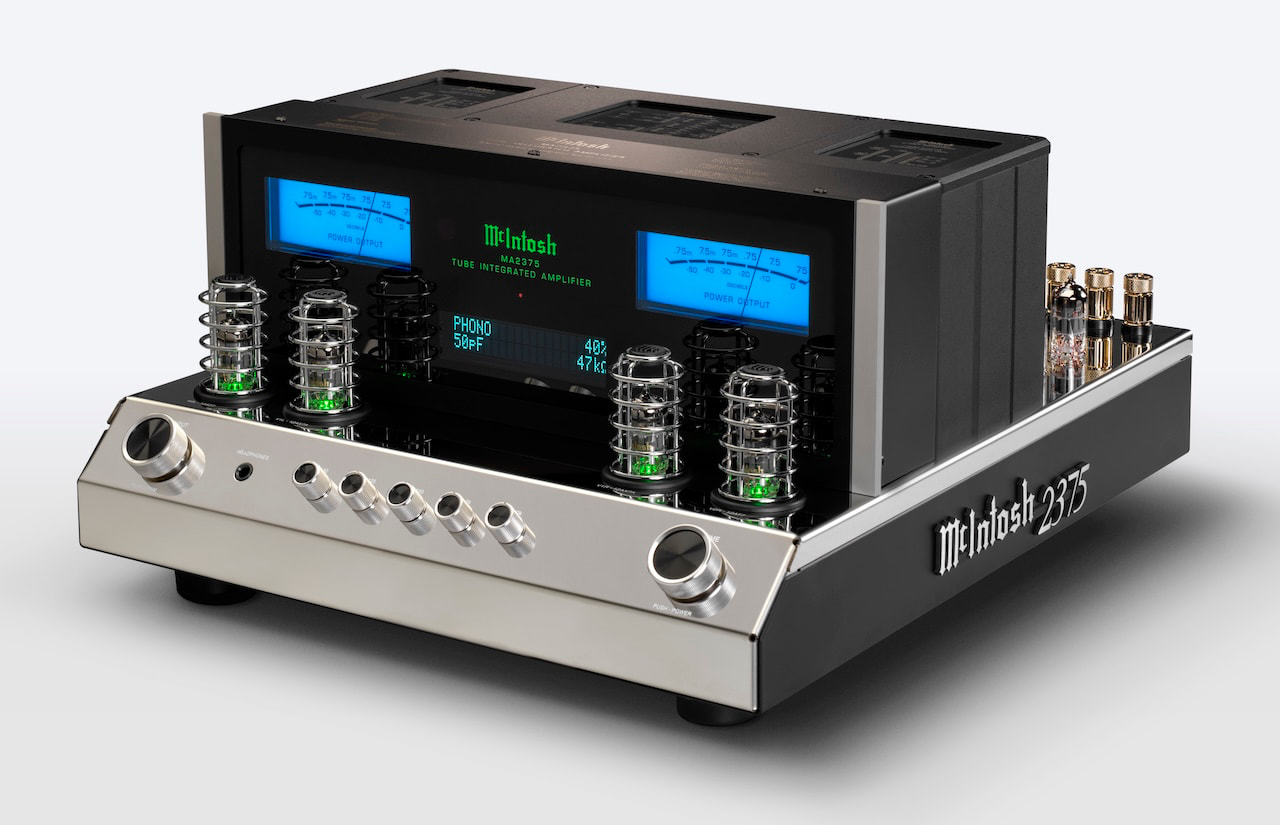
McIntosh MA2375 Tube Integrated Amplifier
In 2026, McIntosh introduced the $15,000 MA2375, an unapologetically old-school, all-analog vacuum tube integrated amplifier with KT88 output tubes, Unity Coupled Circuit output transformers, MM/MC phono stages, and the blue meters that have been glowing in Binghamton for generations.
A few months later, it introduce the $12,500 CS7500 Streaming Preamplifier, combining McIntosh preamplification with Qobuz, Spotify, TIDAL, AirPlay, Google Cast, Roon, HDMI ARC, and high-resolution digital playback.
Sonus faber has hardly been sitting around waiting for instructions from Massachusetts either. Its new Olympica G3 Collection incorporates technology derived from the $750,000 Suprema, including the Camelia midrange driver, cork-damped internal chambers, redesigned woofers, and revised crossover networks, while retaining the wood, leather, asymmetrical cabinets, and Italian craftsmanship that define the brand.
Advertisement
The five-model range stretches from stereo listening into dedicated home theater applications without turning Sonus faber into something unrecognizable.
Advertisement. Scroll to continue reading.
Whatever concerns surrounded the Bose acquisition in 2024, the evidence so far suggests that Bose understood the value of leaving both companies enough room to remain themselves.
The Car May Be Where Many of These Pieces Meet
Bose has worked in automotive audio since the early 1980s, and its current automotive business extends far beyond installing a branded amplifier and some door speakers.
Advertisement
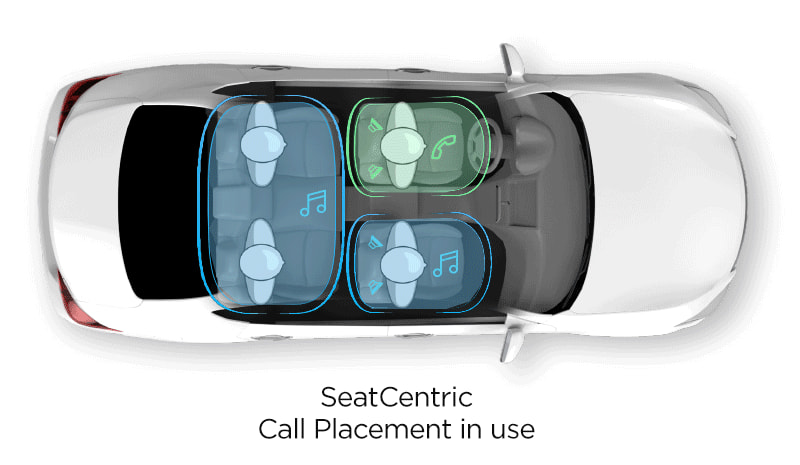
The company has been developing SeatCentric technologies that can create different listening experiences for individual passengers, position navigation and safety alerts spatially, isolate telephone calls, manipulate perceived sound locations, and actively reduce unwanted audio in specific areas of a vehicle.
Its CES demonstrations have included Dolby Atmos, Perceptual Sound Rendering, individualized listening zones, UltraNearfield speakers, and 3D audio without conventional overhead speaker arrays. Bose has also integrated its audio processing directly into Qualcomm’s Snapdragon Digital Chassis, allowing automakers to run Bose tuning on the vehicle’s central computing platform rather than requiring a dedicated Bose DSP.
That last development deserves more attention.
The automobile is rapidly becoming a software-defined environment. Music, navigation, phone calls, safety alerts, voice assistants, entertainment, engine-sound synthesis, active noise cancellation, gaming, and potentially augmented reality increasingly share the same computing infrastructure.
Advertisement
FMOD specializes in audio that reacts to events in real time.
You can probably see why Bose might find that interesting.
There is no announced Bose-FMOD automotive product, and connecting those dots should not be confused with reporting one. But Bose already talks about interactive cabin experiences where sound changes according to passenger location, vehicle information, and surrounding conditions. FMOD comes from a world where responsive audio is the entire point.
The overlap is difficult to ignore.
Advertisement
QuietComfort Is Still Extremely Important
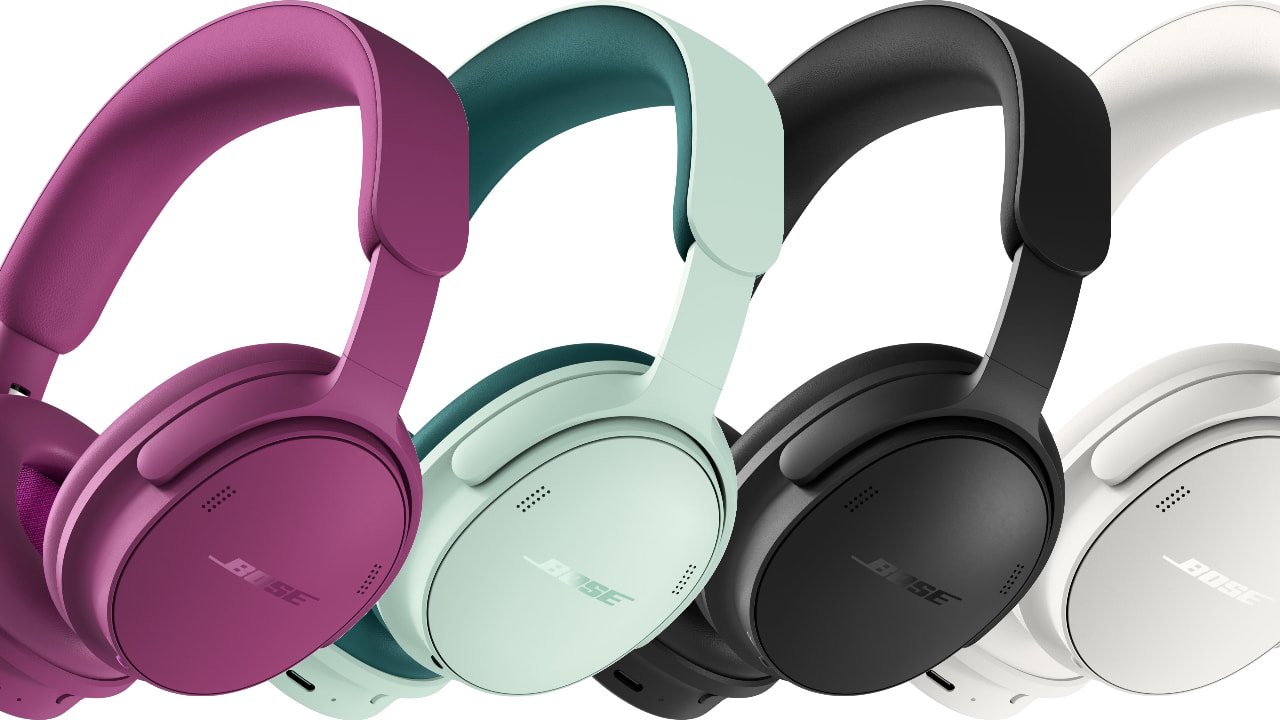
2026 Bose QuietComfort Headphones 2nd Gen
All of this could make it sound as though Bose has lost interest in selling headphones.
It has not.
Advertisement. Scroll to continue reading.
The QuietComfort franchise remains one of Bose’s most powerful consumer businesses, and the company continues investing in adaptive ANC, immersive audio, personalization, voice pickup, and spatial processing. Its QuietComfort Ultra Earbuds (2nd Gen), for example, retained the company’s CustomTune system while adding improved adaptive noise cancellation, voice pickup, and wireless charging.
Bose’s expertise in noise cancellation may actually be more strategically valuable today than when the technology was primarily used to make an airplane cabin tolerable.
Advertisement
Noise control, individualized audio, spatial rendering, and perceptual processing increasingly apply across headphones, vehicles, AR/VR environments, gaming, and smart spaces. A company capable of moving those technologies between categories does not need to win every market with the same physical product.
The QuietComfort headphones are the consumer-facing part most people know.
The intellectual property underneath them is where things get interesting.
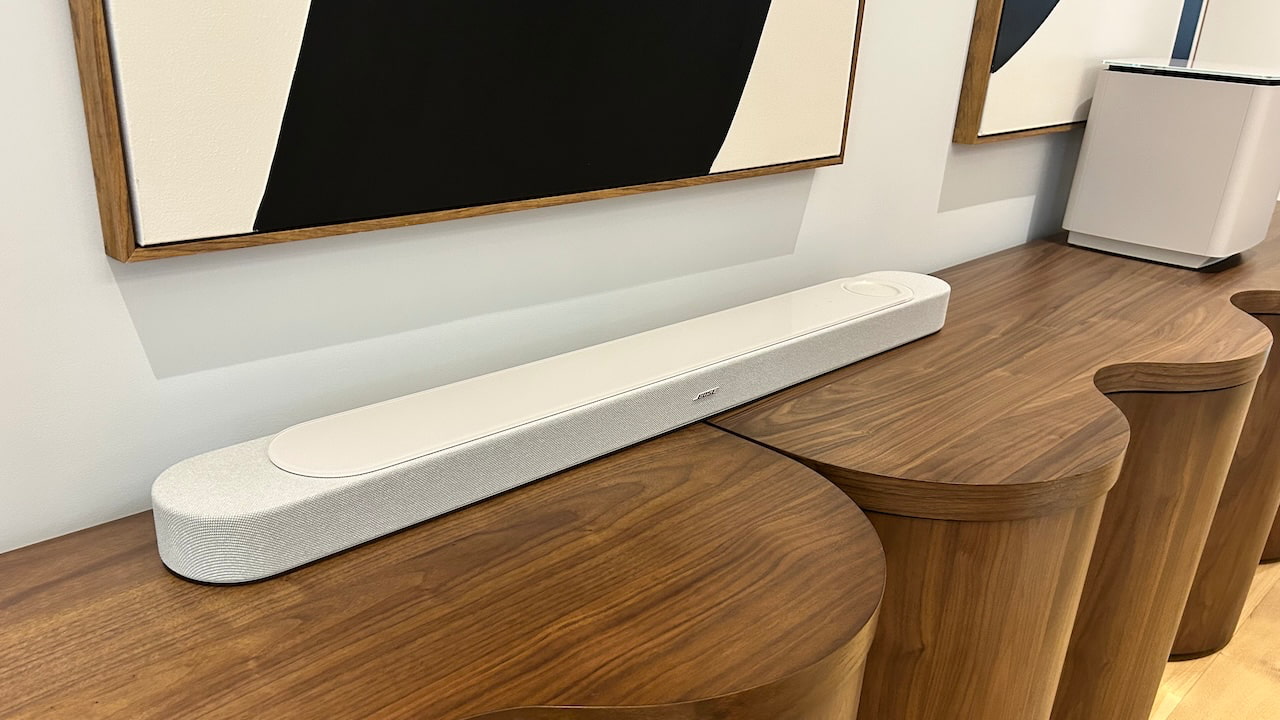
Bose also remains a major participant in soundbars and home entertainment, another category increasingly defined by software rather than the number of drivers somebody managed to cram into an enclosure.
Dolby Atmos, virtualized height information, room adaptation, dialogue enhancement, psychoacoustic processing, and sound-field manipulation all require expertise in making listeners perceive sound in places where a physical loudspeaker may not exist.
Advertisement
Gaming and VR present variations of the same fundamental problem. So does automotive.
That does not mean Bose will merge its soundbar, automotive, and FMOD engineering teams into some giant spatial-audio Voltron next Tuesday. It means the company has accumulated expertise in several businesses where software determines what the listener perceives as much as the transducer does.
The walls between those businesses are getting thinner.
Bose Is Building More Than Products
The more interesting conclusion is that Bose increasingly operates across multiple layers of the audio business rather than simply manufacturing products. Its recent acquisitions give it deeper involvement in connected audio, interactive sound, luxury hi-fi, and automotive, but the company has also started moving upstream into music itself.
Advertisement
In 2026, Bose launched Bose Studios and Bose Records, with plans to work with emerging and underrecognized artists while developing original music, video, podcasts, live events, and other content. Bose has said it does not intend to own artists’ masters or take a share of their streaming and record sales, making the initiative less of a conventional record-label play than another way for the company to participate in the music ecosystem.
Advertisement. Scroll to continue reading.
Automotive extends that reach further. Bose already works directly with major vehicle manufacturers, while its integration with Qualcomm’s Snapdragon Digital Chassis allows Bose audio processing to run directly on the vehicle’s Snapdragon Cockpit Platform rather than requiring a dedicated Bose DSP inside an amplifier.
Taken together, Bose now has potential involvement in how audio is created, distributed, processed, personalized, and ultimately reproduced — even when Bose did not manufacture the headphones or loudspeakers through which someone hears it.
Advertisement
That is a very different business from selling Wave Radios.
Perhaps Audiophiles Need to Update Their Opinion of Bose
Bose has spent decades occupying an awkward place in audiophile culture.
Its products became enormously popular, which in certain corners of high-end audio is apparently grounds for suspicion. The company’s willingness to use DSP, psychoacoustics, compact enclosures, and unconventional engineering also did not always endear it to a community that can become emotionally attached to technologies whose greatest innovation occurred before the first moon landing.
You do not have to love every Bose product to recognize how outdated that dismissal has become.
Advertisement
This is a company that owns McIntosh and Sonus faber, controls one of gaming’s important interactive-audio platforms, owns a major connected-audio engineering operation, remains deeply embedded in automotive, and continues to compete near the top of the global ANC headphone market.
Other audio companies may have stronger credibility in individual categories.
Very few now cover this many categories at once. And fewer still possess technologies capable of moving between them.
What Could Bose Be Planning?
The temptation is to imagine one enormous Bose ecosystem connecting McIntosh amplifiers, Sonus faber loudspeakers, QuietComfort headphones, FMOD gaming audio, automotive systems, and StreamUnlimited software.
There is currently no evidence Bose intends to build that, and it may not need to.
Advertisement
The more plausible strategy is also potentially more powerful: own important audio technologies across multiple markets and allow them to reinforce one another without forcing everything into a single consumer platform. FMOD can continue serving game developers. StreamUnlimited can continue working with outside manufacturers. McIntosh can remain McIntosh, while Sonus faber can keep building loudspeakers in Italy that look considerably nicer than most people’s furniture.
Advertisement. Scroll to continue reading.
What Bose gains is optionality. Interactive audio developed for games could influence immersive automotive experiences. Automotive personalization could inform future headphones or AR products. Streaming infrastructure can support connected products across multiple brands, while Bose’s DSP, ANC, and psychoacoustic expertise can migrate almost anywhere that microphones and speakers coexist.
Not every piece needs to connect directly for the collection to become valuable. Bose increasingly has a position in how sound is created, processed, distributed, personalized, and reproduced across the home, the car, headphones, games, and other interactive environments. That is a considerably larger ambition than selling more speakers with a Bose logo on the front.
Advertisement
The Firelight acquisition pushes Bose even further beyond the traditional definition of an audio manufacturer. The company appears to be positioning itself for a future in which the most influential audio businesses will not merely build excellent speakers or headphones; they will control important pieces of the software, signal processing, connectivity, content, personalization, and hardware required to deliver sound wherever people happen to be listening.
Audiophiles are free to keep making jokes about the 901.
Godzilla does not generally stop walking because the villagers are laughing.
Choose the career you want before choosing a programming language. A language is useful when it matches the work, platforms, and employer requirements you are likely to face, not simply because it appears near the top of a popularity chart.
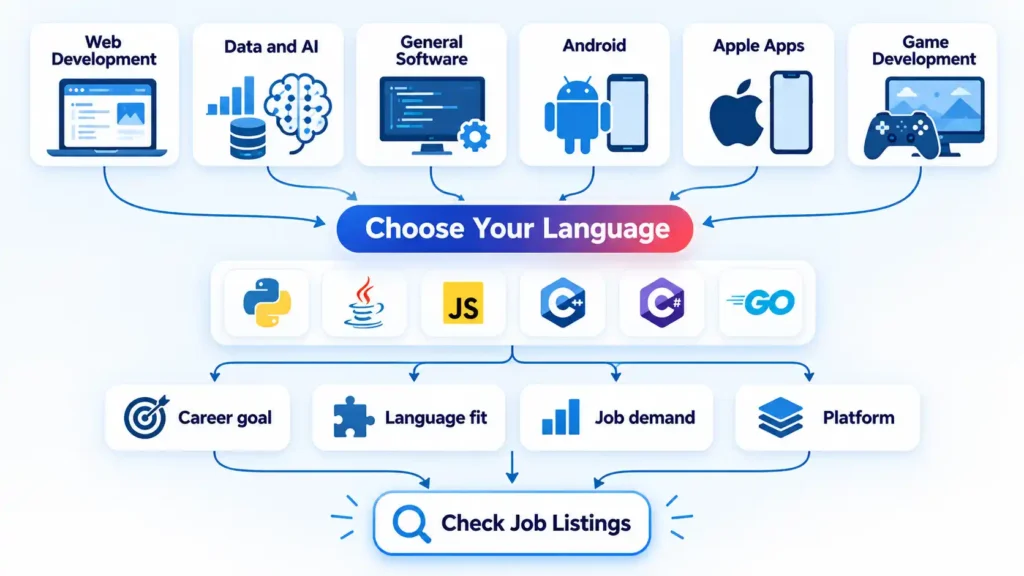
A practical way to decide is to identify a target role, see which languages repeatedly appear in that kind of work, check the jobs you could realistically apply for, and then learn one language deeply enough to build a relevant project.
Start With the Job You Want, Not the Language
“I want to become a programmer” is usually too broad to tell you what to learn. A web developer, data scientist, Android developer, game developer, and general software developer may all write code, but they work with different tools and solve different problems.
The occupation itself matters. In the United States, employment for software developers is projected to grow 10% from 2025 to 2035, while employment for the narrower occupation called computer programmer is projected to decline 7% over the same period. Those are different occupations with different duties and outlooks, so “programming” alone is not a precise career target.
Advertisement
If you have not decided whether you want software development, data work, web development, cybersecurity, or another technical path, it makes sense to compare different IT career fields before treating a programming language as the first decision.
Start by asking what you would like to build or work on. For example:
Do you want to create websites people use in a browser?
Do you want to analyze data or work toward machine-learning roles?
Do you want to build Android or Apple apps?
Do you want to work on business software, back-end services, or internal applications?
Do you want to develop games?
Your answer does not have to describe your entire career. It only needs to be specific enough to narrow the tools you should investigate first.
Match Career Goals to the Languages Employers Use
Once you have a target, compare it with the languages and tools that appear in that type of work. Current U.S. job-posting data illustrate why one universal language recommendation is not very useful.
For example, JavaScript appeared in 47% of the 2025 U.S. web-developer postings mapped by O*NET, while Python appeared in 21%. For data-scientist postings, Python appeared in 66%, SQL in 51%, and R in 34%. Software-development postings were more mixed, with Python at 29%, Java at 25%, SQL at 24%, JavaScript at 20%, C# at 12%, and C++ at 10%. These percentages describe skills mentioned in mapped U.S. postings, not the percentage of professionals using each language and not your probability of getting hired. Current web-development posting data, data-science posting data, and software-development posting data show the difference.
Advertisement
Career goals and practical first programming-language candidates
Career goal
Good first-language candidate
Current evidence
Key qualifier
Front-end and web development
JavaScript
JavaScript appeared in 47% of the 2025 U.S. web-developer postings mapped by O*NET.
HTML and CSS are also fundamental web technologies, even though they are not programming languages.
Data science and AI-oriented analysis
Python
Python appeared in 66% of mapped data-scientist postings, compared with 51% for SQL and 34% for R.
Learning Python alone is not enough. SQL, statistics, data handling, and domain knowledge often matter as well.
General software development
Python, Java, JavaScript, or C#, depending on the jobs you target
Software-developer postings contain a broad mix, including Python, Java, SQL, JavaScript, C#, and C++.
The employer’s existing technology stack can matter more than a general popularity ranking.
Android development
Kotlin
Google recommends Kotlin for developers starting new Android apps and describes Android development as Kotlin-first.
Java still exists in Android codebases, so you may encounter it after learning Kotlin.
Apple-platform development
Swift
Apple describes Swift as a programming language for all Apple platforms and provides Swift-focused app-development resources.
Building Apple apps also requires learning the relevant Apple frameworks and development tools.
Game development
C# for Unity or C++ for Unreal-focused programming
Unity supports scripting in C#, while Unreal Engine provides a C++ programming framework.
Choose the engine and type of game-development work before deciding between C# and C++.
Once you know your likely career direction, you can compare beginner-friendly programming languages by learning difficulty, ecosystem, and typical uses without treating the broader list as a career ranking.
If your choice has narrowed to two common general-purpose options, Python vs JavaScript for career changers often comes down to whether your target work leans toward data, automation and general software tasks or toward browser-based application development.
Advertisement
Check What Employers Actually Ask For
National data gives you a useful starting point, but the jobs available to you may look different. Location, industry, company size, seniority, and an employer’s existing systems can all change which languages matter most.
Instead of searching only for “Python jobs” or “JavaScript jobs,” search for the role you want. If you want junior front-end work, look at junior front-end developer vacancies. If you want data analysis, examine data analyst and entry-level data-science listings. If you want Android work, look specifically at Android developer roles.
Collect several suitable listings rather than basing the decision on one vacancy. For each one, note:
the main programming languages requested;
frameworks and other tools that appear repeatedly;
whether a skill is listed as required or preferred;
the experience level requested;
any platform or industry requirement that changes the technical stack.
Patterns matter more than unusual one-off requirements. If the same language appears across many suitable vacancies while another appears only once, that gives you a stronger reason to investigate the repeated language. Do not turn a small personal sample into a precise market statistic, though. Its purpose is to check whether broader guidance resembles the jobs you can actually target.
Reading programming job listings before choosing what to learn also helps you separate the core language from surrounding technologies. A posting may mention JavaScript, React, Git, Amazon Web Services, and SQL together, but those names do not all describe the same type of skill.
Advertisement
Specialized environments can change the answer further. In statistical and data work, for example, the software your target employer actually uses may matter more than a general popularity ranking. A workplace built around SAS creates a different learning priority from one built around R or Python.
Be careful with job-posting percentages. O*NET’s current software-skill tables use Lightcast postings from the United States between January 1 and December 31, 2025. The percentage is the share of unique postings linked to that occupation that mention the skill. It does not show how many professionals know the language, how difficult it will be for you to get hired, or what employers in another country or region will request.
If you find too few suitable vacancies to see any pattern, broaden the search carefully. Try closely related job titles or a wider location while keeping the same career level and type of work. Do not respond to a thin sample by assuming every technology mentioned anywhere in the field belongs on your learning list.
If the vacancies you find appear to demand several unrelated languages from every beginner, entry-level developer jobs that ask for too many technologies should be read carefully before you assume you must master every item in the description.
Advertisement
How to Choose Your First Programming Language
The goal of this process is not to predict your entire career. It is to choose one sensible first language, confirm that you can use it for a relevant beginner project, and know what evidence would justify changing course later.
Name one target role or type of work. Write down something more specific than “programmer.” Examples include front-end developer, Android developer, data analyst, data scientist, back-end developer, software developer, or Unity game developer. If you cannot name a direction yet, resolve the career question before trying to optimize the language choice.
Check which languages are associated with that work. Use authoritative platform information where the platform determines the language, such as Kotlin for new Android development, and occupational or job-posting evidence for broader roles. Record two or three realistic candidates rather than copying a long popularity list.
Inspect jobs you could realistically target. Review several entry-level, junior, internship, trainee, or other suitable vacancies in the location or remote market you expect to use. Note which candidate language appears repeatedly and which surrounding technologies tend to come with it. If you cannot find enough relevant vacancies to see a pattern, try closely related role titles or a wider location before treating the evidence as decisive. If your accessible market conflicts strongly with a national dataset, give more weight to the market you actually intend to enter.
Check platform and equipment constraints. Some choices are tied closely to an ecosystem. Android points strongly toward Kotlin. Apple-platform work points toward Swift and Apple’s development tools. Unity scripting points toward C#, while Unreal programming provides a C++ path. Make sure you can realistically access the tools needed for the projects you plan to build.
Choose one language and define a role-relevant starter project. A front-end learner might build an interactive browser page with JavaScript. A data learner might clean and summarize a small dataset with Python. An Android learner might build a simple Kotlin app. The project should be small enough to finish but close enough to your target work to reveal whether you enjoy the problems involved.
Learn the fundamentals before reassessing. Get comfortable with values, variables, conditions, loops, functions, basic data structures, errors, and debugging in your chosen language. Do not switch merely because another language appears in a new ranking or social-media post. Reassess when your projects, target vacancies, or platform requirements give you a concrete reason to do so.
You have finished the decision process when you can name one target role, explain why your chosen language fits that role, identify at least one relevant project you can build with it, and confirm that no major platform requirement blocks you from starting.
If two languages still appear equally suitable after checking real vacancies, choose the one that lets you build the more relevant project with the resources and equipment you already have. Your first language is not a permanent career contract.
When a Second Programming Language Becomes Worth Learning
A second language becomes useful when it solves a problem your first one does not solve well enough for the work you now want to do. Adding languages simply to make a skills list longer is a weak reason to switch.
Consider learning another language when target vacancies repeatedly ask for it, a platform or engine requires it, your projects have moved into a different technical area, or you need to work with an existing codebase written in that language.
Advertisement
For example, someone who began with Python for data work may later add SQL because querying databases becomes part of the job. A JavaScript learner moving deeper into typed front-end development may encounter TypeScript. A developer who begins with C# in Unity may later decide to learn C++ because the roles or Unreal projects they want require it.
By this point, many core programming ideas should transfer. Variables, conditions, loops, functions, data structures, debugging, and breaking a problem into smaller steps remain relevant even when syntax and platform tools change. That makes a second language easier to approach once you already know how to solve basic programming problems in the first one.
Your career goal should remain the filter. Learn another language when your work gives you a reason, not because a ranking tells you that every developer should know the same collection of technologies.
Seventy-four pounds back on a set of this scale can cover a smaller Lego build alongside it, or simply make a 6,167-piece centrepiece easier to justify as a Christmas present for the Lord of the Rings fan in your life.
Advertisement
Centrepiece is the right word, because the finished model stretches 75cm wide, 50cm deep and over 39cm high, with the House of Elrond wrapped in autumnal foliage that makes it feel like you are looking deep into the Rivendell forest.
Look past the trees and the interiors reward closer inspection. Frodo’s bedroom, Elrond’s cluttered study, an elven forge and the Shards of Narsil all sit inside, alongside paintings and statues drawn from the history of Middle-earth.
Advertisement
Fifteen minifigures bring those rooms to life, including Frodo, Sam, Bilbo, Gandalf the Grey, Aragorn, Legolas, Gimli, Boromir and Elrond, and you can seat the Fellowship around the stone holding the One Ring to recreate the Council of Elrond.
Advertisement
Merry and Pippin join the hobbit contingent as well, with Arwen wearing her Evenstar pendant, Gimli carrying his axes and Boromir armed with sword and shield, so the line-up carries the details fans will recognise from the films.
Other film moments come together too, from the elven gazebo to the brick-built bridge and flowing river where the Fellowship sets out, and the Lego Rivendell set splits into three sections so you can rearrange the scene on your shelf.
Lord of the Rings fans get a long, absorbing build that ends in a display piece worthy of any living room, and £74 off the Lego Rivendell set makes Prime Day the right time to bring the House of Elrond home.
TITLE: Jaguar’s $130,000 Electric Reinvention Lands, But Design Fury Still Overshadows 1,015 HP and 400-Mile Range
KEYWORD: electric Jaguar
DESCRIPTION: Jaguar’s new Type 01 packs 1,015 hp, 400-mile range and 22-minute fast charging, but online outrage over its looks is drowning out the tech.
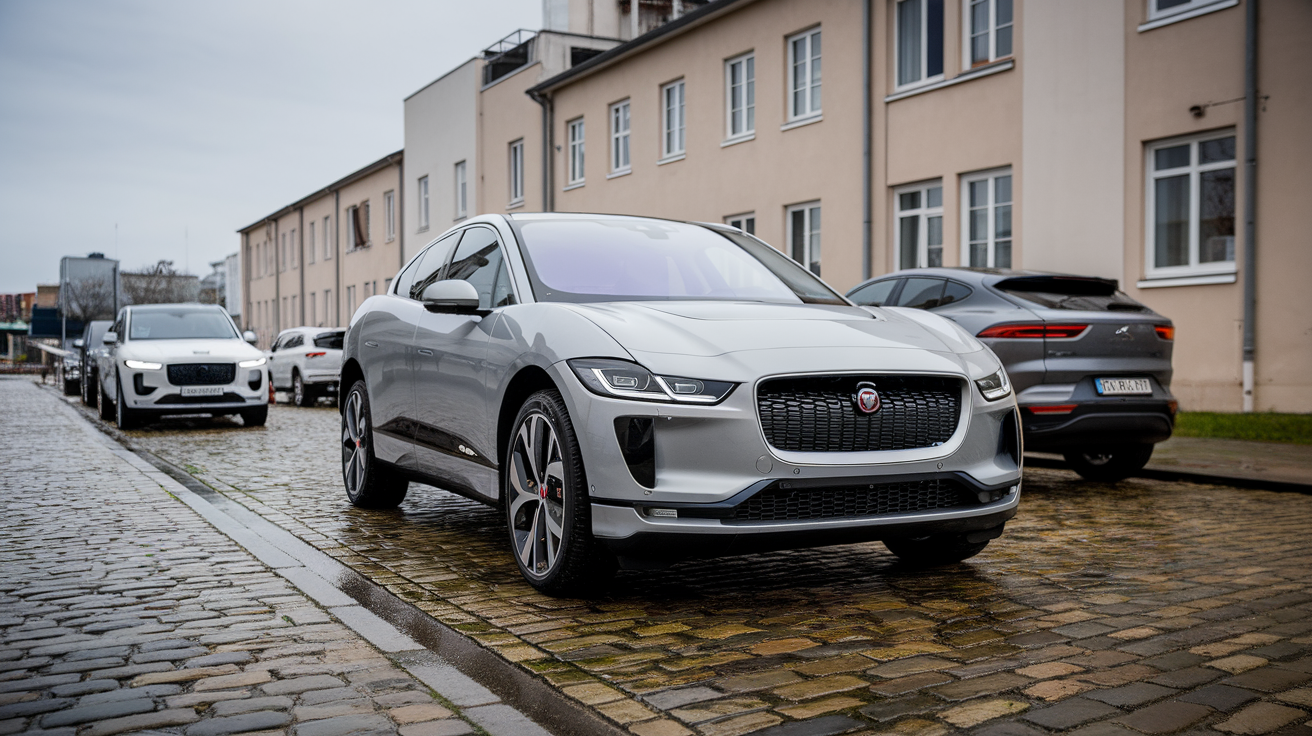
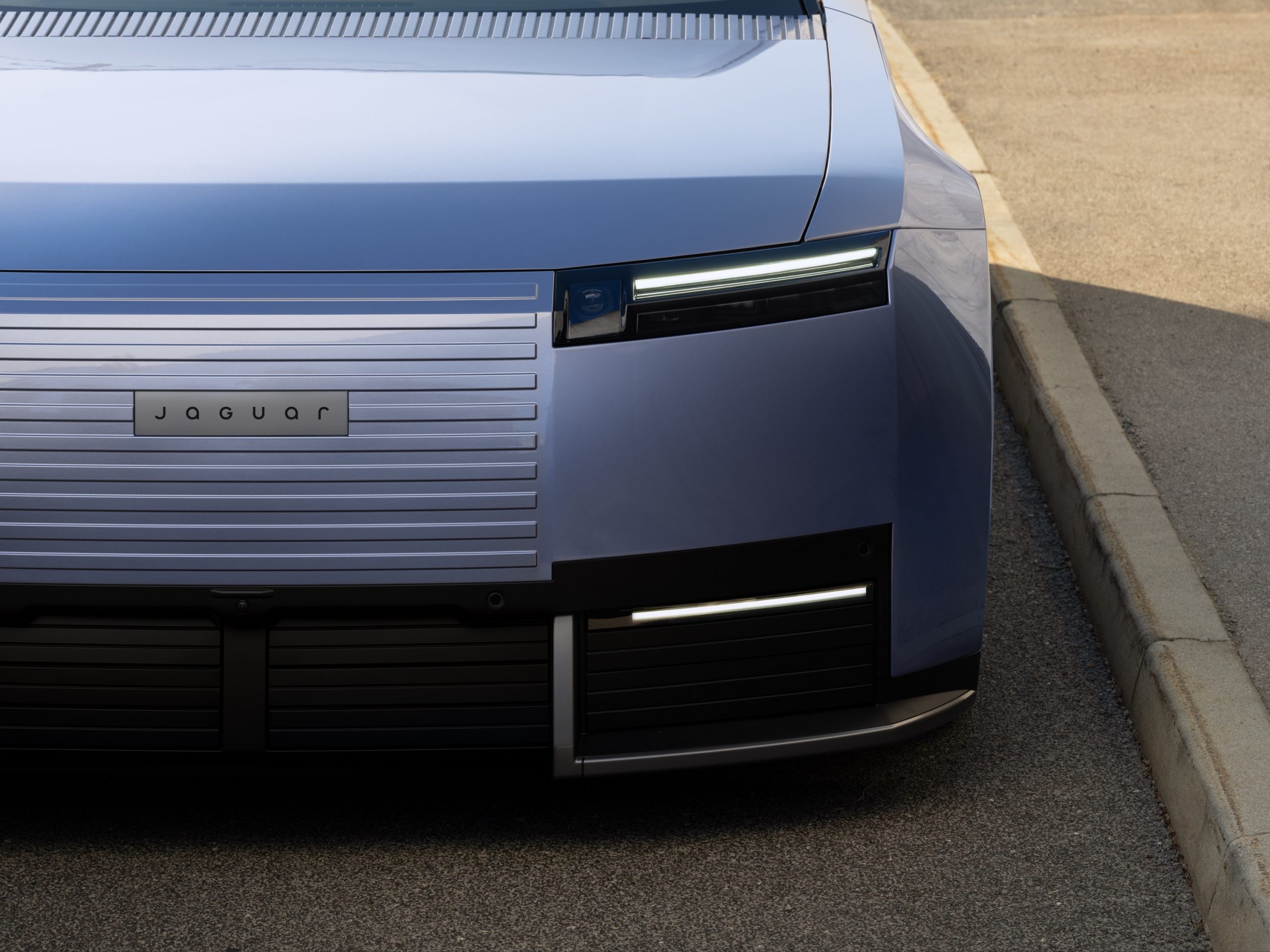
Jaguar has finally unveiled the car meant to relaunch the storied British brand as an all-electric outfit, and the internet has responded the way it responds to most things these days: with fury. The Type 01, a four-door electric grand tourer, is the production evolution of the polarizing Type 00 concept that leaked online last year and set off a wave of mockery. Now that the real thing is here, complete with four doors, legally mandated reflectors, and a rear-view camera in place of a mirror, the reaction hasn’t softened much. Few seem to be talking about what’s actually underneath the controversial sheet metal.
That’s a shame, because the electric Jaguar represents a genuine technical leap for a company that has spent years without a single new model to sell. After quietly canceling a planned electric sedan just a year before it was due in showrooms, Jaguar went back to the drawing board and built an entirely new EV architecture called JEA. The Type 01 is the first vehicle to ride on it, and the numbers are striking: a 118 kWh usable battery good for roughly 400 miles of range, an 850-volt electrical architecture, and the ability to charge from 10 to 80 percent in just 22 minutes using a 350 kW DC fast charger. Official EPA range figures won’t arrive until closer to the car’s mid-2027 US launch, but Jaguar’s internal estimates put it among the longest-range EVs on the market.
Power, Pricing, and the Case for the Electric Jaguar
Performance is equally aggressive. The Type 01 pairs all-wheel drive and all-wheel steering with 1,015 horsepower and 1,007 lb-ft of torque, backed by a 50:50 weight distribution. Much of that engineering pedigree traces back to Jaguar’s Formula E program, which recently claimed its third team championship in four years. Silicon carbide inverters and traction-control software developed for the racetrack have made their way directly into the road car, according to Jaguar, giving the Type 01 a drivetrain efficiency and responsiveness that belies its bulky, slab-sided shape. Despite its blunt angles, the car achieves a drag coefficient of just 0.23.
Advertisement
None of that comes cheap. Jaguar is expected to price the Type 01 between $120,000 and $130,000, roughly double what the brand’s previous entry-level models cost before the lineup was discontinued. That positioning reflects chief executive Rawdon Glover’s stated ambition to move Jaguar upmarket entirely, shedding its old mainstream customer base in favor of a smaller, wealthier clientele willing to pay a premium for what the company calls an “elevated ownership experience.”
A Familiar Story of Design Backlash
Whether that premium audience will embrace the styling remains the open question hanging over the whole relaunch. Critics inside and outside the automotive press have been blunt, with one reviewer’s colleague dismissing the design as appealing only to “zero personality executives” and another comparing it unfavorably, and then favorably, to Tesla’s Cybertruck. The car lacks a traditional rear window entirely, relying instead on a camera-based system that has become increasingly common and dependable across the EV industry, appearing in vehicles like the Polestar 4.
History suggests this kind of visceral backlash isn’t necessarily fatal. The Ford Edsel endured decades of ridicule over its grille, and Triumph’s TR7 drew gasps for its scalloped flanks, yet both remain footnotes rather than death knells in automotive history. Jaguar is betting that once buyers get behind the wheel of its reborn electric Jaguar and experience the instant torque, sharp handling, and genuine engineering pedigree, the arguments about its looks will fade. For now, though, the loudest conversation about Jaguar’s boldest reinvention in decades is still about how it looks rather than how it drives.
“We are seeing a fundamental shift in how technology evolves,” says IEEE Fellow Dejan Milojicic, chair of the IEEE Future Directions Committee’s Industry Advisory Board, the group responsible for the report. “Artificial intelligence is no longer operating in a vacuum; it is now deeply connected to our energy, infrastructure, and physical systems.” Milojicic, a Hewlett Packard Enterprise Fellow, is a vice president at HPE Labs in Milpitas, Calif.
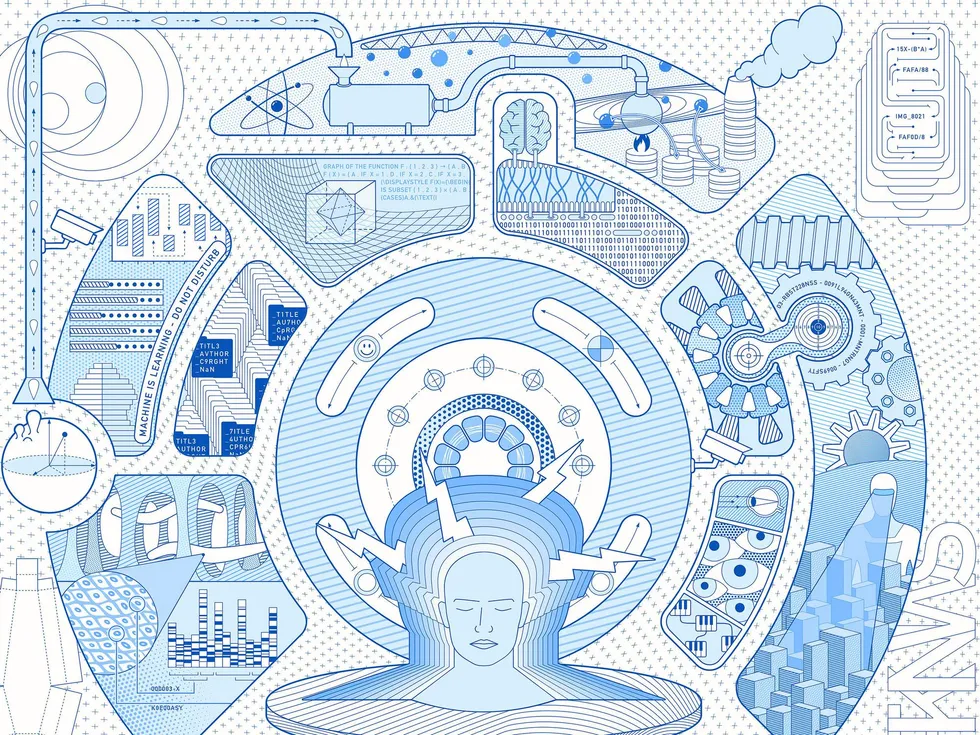
AI underpins many of the report’s 30 technologies and five “megatrends,” which are technology shifts with the potential to reshape industries and everyday life for decades. A megatrend isn’t a single breakthrough but a collection of related technologies.
For the 2030 report, 166 experts—from 38 countries across six continents—drawn from industry, academia, and government identified 30 breakthrough technologies across the five megatrends: AI, energy, health, space, and physical AI. The experts graded the trends against five criteria: likelihood of success, impact to humanity, maturity, market adoption, and horizon to adoption.
Advertisement
AI as a common thread
Interconnected systems drive the megatrends, and the connection among them is AI.
The report notes that AI technology is advancing faster than any previous revolution, including industrial, electrical, and digital. The pace has turned the technology into general-purpose infrastructure, Milojicic says.
That evolution carries risks, though, the experts say. The report cites the lack of computing infrastructure and energy sources as constraints on the ability to scale up AI, and it says the technology’s growth will require reshaping the workforce.
Workers have always needed to adapt to stay competitive, Milojicic says, adding that AI adoption isn’t an all-or-nothing approach. Businesses should decide when and how to apply it, he says.
Advertisement
The experts say long-term success will require both technical capabilities and attention to the human-AI relationship. Conditions including trust, security, explainability, and policymaking will determine which AI-supported technologies are most likely to scale, they say.
“This report shifts the conversation to something far more important: how these advances will intersect with one another to shape human lives,” Mary Ellen Randall, 2026 IEEE president and CEO, said in a news release about the report. “The data makes clear that trust, safety, and human connection must guide every major breakthrough in the decade ahead.”
Health care is a high-impact bet
The experts scored personalized medicine as the study’s highest-impact technology, at 4.93 out of 5, for its potential to improve human life.
The report credits AI-driven breakthroughs in personalized diagnostics and therapeutic treatments, driven by innovative biotech startups. Within two years, the experts predict, genetic engineering and gene therapy will be used in therapeutic areas.
Advertisement
Within five years, earlier disease diagnoses will move out of the lab and into day-to-day medical practice, the report predicts. Meanwhile, it says, researchers likely will be able to manufacture simple synthetic proteins—molecules engineered from scratch, rather than found in nature—to perform a specific job in the body, such as targeting a tumor or supplying a missing enzyme.
Energy wakes up for AI
Increased power demand by AI is outpacing the energy sector’s ability to keep up. Tech infrastructure—data centers, networks, and computing hardware—already uses an estimated 10 percent of electricity globally, according to the news release.
The experts predict that within two to three years, energy storage will double in developed countries.
The energy industry has been relatively dormant for years, Milojicic says, with little breakthrough innovation since the times of Thomas Edison and Nikola Tesla.
Advertisement
“Data centers can ramp up within milliseconds, yet it takes months for the power and energy sector to ramp up,” he says. “The governments of various countries will have to rethink their approach to power generation to stay ahead of demand.”
The experts cite the Jevons paradox—the idea that efficiency gains tend to increase overall consumption. As AI chip efficiency improves, organizations will run more hardware to build ever-larger frontier models—those advanced AI systems currently in development—the experts say. Data centers will draw as much power as grids can supply, leaving no surplus, the experts predict.
Physical AI moves the fastest
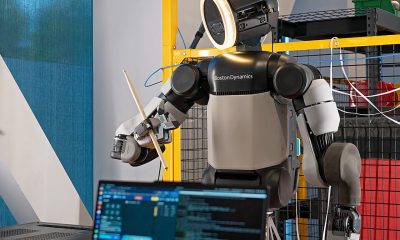
Physical AI refers to systems embedded within machines that sense and act in the world, including robots and autonomous vehicles. In the report, the category originally was called “hyper-automation and robotics,” a broad, software-driven process automation paired with physical machines. The Industry Advisory Board later folded it into the single physical AI megatrend.
The experts found that human-AI interaction has the shortest adoption horizon of any of the 30 scored technologies, at two to three years. They also say physical AI has the biggest chance of technical advancement of any megatrend during the next four years.
Advertisement
“The data makes clear that trust, safety, and human connection must guide every major breakthrough in the decade ahead.” —Mary Ellen Randall, 2026 IEEE president and CEO
Communications between humans and AI—whether in an android or another device—will shift from text-based commands to predominantly audio and video instructions within two to three years, the experts predict.
Androids used in factories will use tactile and haptic feedback within two to five years, letting them sense what they’re touching and adjust their grip or force in response, the experts say. Bio-inspired skin, tissues, and sensors will advance in the same timeframe, the experts predict, giving robots perception that better mirrors human touch.
Advertisement
Space is just getting started
Space technology, as the report defines it, covers more than exploration. It spans satellite communications, in-space manufacturing, launch technology, and other infrastructure. It is one of the lower-profile megatrends in the report, not for lack of promise but because of where the sector presently sits.
“It’s not lagging,” Milojicic says. “It’s the current state of maturity. People are talking about satellite communication right now because it’s very cool and practical. But it’s a small segment compared to the attention AI gets.”
He says he believes the space sector will be more prominent in the coming years: “This is an area of technology that will become increasingly important, especially as terrestrial communication and transportation push the boundaries for space as well.”
The report highlights two technologies on the near horizon: semiconductor manufacturing that uses parts built in space and more affordable reusable rockets. It also sees clean energy generation in space and the commercialization of orbital garbage collection as potential technologies to watch for in the next decade.
Advertisement
What’s next?
The report recommends that academia, industry, governments, and professional associations work together.
To build a well-trained workforce, the report says, industry should partner with professional organizations on training programs and revive apprenticeships in chemistry, physics, and other physical sciences. It also calls on businesses to treat AI infrastructure—computing, data, and energy—as a long-term strategic asset.
Other recommendations include expanding access to affordable, quality education in STEM coursework and AI competence.
Governments should lead on policy and implement reintegration programs for workers displaced by AI, the report says.
Advertisement
The experts say professional organizations including IEEE should develop new products and services using AI, strengthen safety and data governance standards, and serve as a collaboration platform for industry, academia, and policymakers.
The report also offers recommendations for end users, content creators, investors, and company leadership on strategies for succeeding in an AI-focused future.
The same thread runs through all the report’s recommendations: Don’t lose sight of the human-AI relationship.
“As a public charity dedicated to advancing technology for the benefit of humanity, IEEE believes progress must be measured by more than technology development and implementation speed,” Sophia A. Muirhead, IEEE executive director and chief operating officer, said in the news release. “Whether retraining the global workforce or integrating AI responsibly into daily life, the success of these megatrends depends on ensuring innovation strengthens human well-being and public trust.”
Sitting comfortably under £140 also makes a stereo pair far more realistic, since two speakers now come to £267.90 instead of £338, a combined saving of just over £70 for wider sound in a single room.
Advertisement
Even one speaker covers plenty of ground on its own. Dual angled tweeters with custom waveguides spread clear highs left and right for stereo separation, while a powerful midwoofer delivers the deep bass that gives music real weight.
Hearing that sound takes very little setup, since you simply plug the speaker in, connect your phone or tablet to Wi-Fi and open the Sonos app, going from unboxing to playing music within a few minutes.
Advertisement
Fine-tuning it for your room is just as easy, because Trueplay uses the microphones in your iPhone or iPad to tune the Sonos Era 100 SL to the acoustics of wherever you place it, from a bookshelf to a kitchen counter.
Advertisement
Feeding it music is flexible too, with Wi-Fi streaming from your favourite services, Apple AirPlay 2, Bluetooth pairing for friends and family, and line-in for a turntable or computer through Sonos’s Line-In Adapter, plus touch controls for play, pause and volume.
Growing the system later is where the Sonos Era 100 SL earns its keep, as a pair can work as rear speakers alongside a compatible Sonos soundbar for surround sound, or you can add more around the house for music in every room.
Sonos fans building their first setup or expanding an existing one get rich, room-tuned sound for just over £35 less than usual, and a record-low Prime Day price makes now the moment to add the Era 100 SL.
Unlike the Magic Mouse, Apple’s Magic Keyboard is a beloved Mac accessory. Mechanical switch enthusiasts won’t appreciate the shallow travel, but the tick-tack typing of the keyboard makes it a fast and comfortable keyboard to type on. And importantly, it gives you the macOS layout right out of the box. The non-Touch ID model is on sale for Prime Day, which makes it $70 cheaper than the version with a fingerprint reader.
Best MagSafe and Accessory Deals
Plugable
USB-C 9-in-1 Hub (USBC-9IN1E)
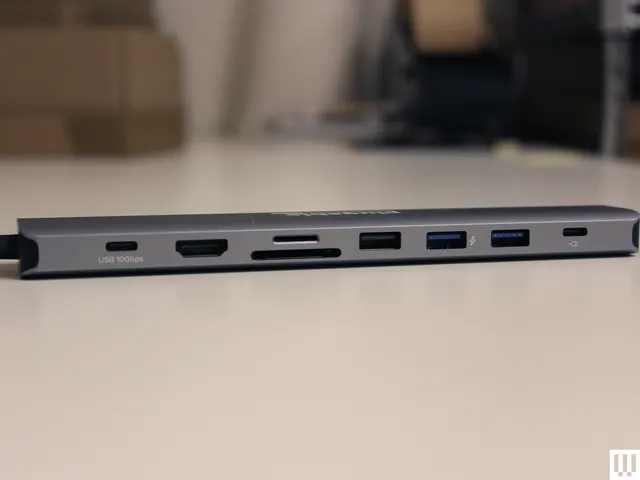
As Apple purges the ports on its MacBooks, you might want to plug in a handy USB hub. This Plugable device is our favorite because it offers 140 watts of power delivery, every port you need, including 10-Gbps USB-C, and can support a secondary screen, up to 4K resolution at 60 Hz. It also boasts a robust metal chassis with clearly labeled ports.
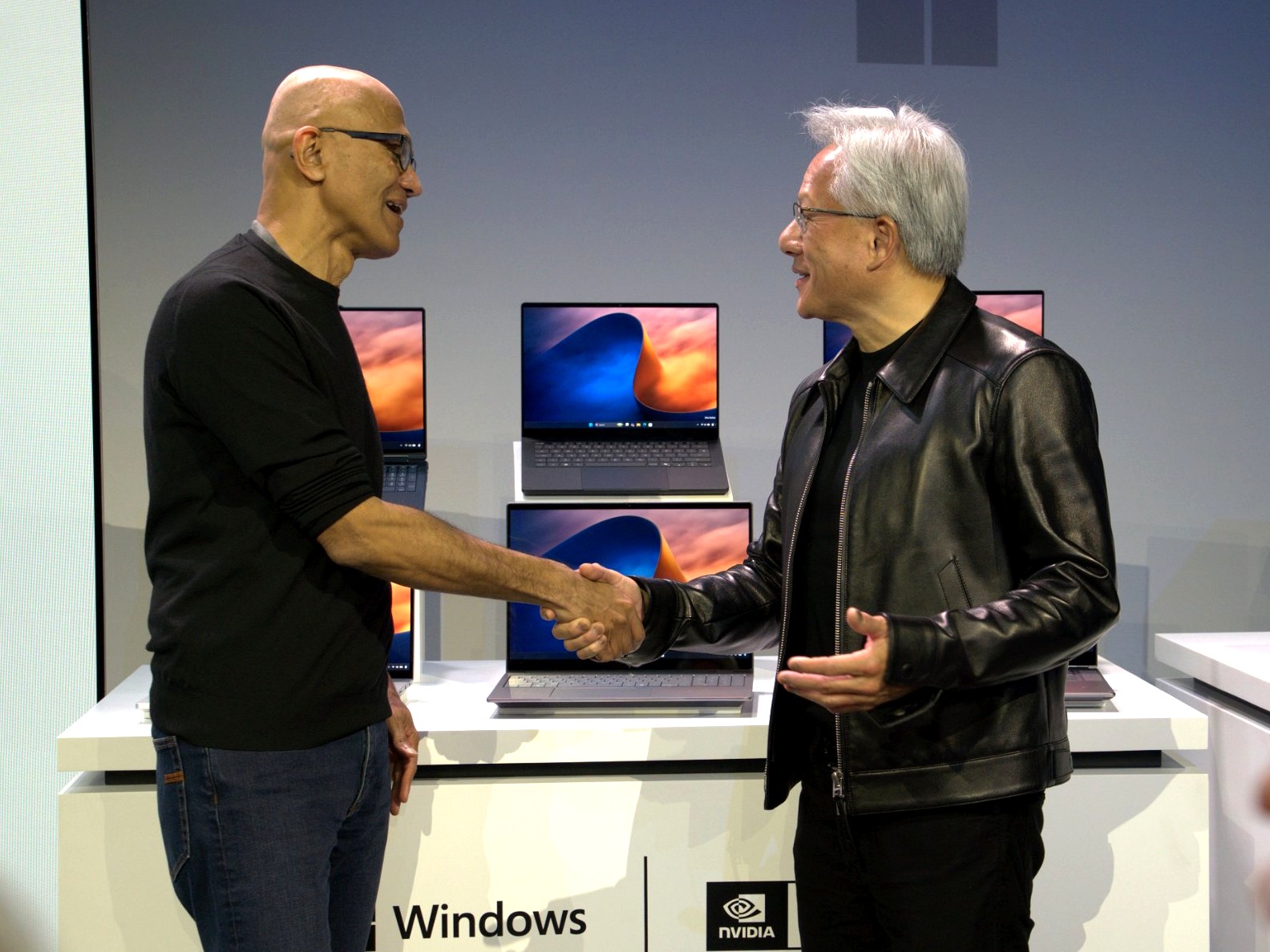
Microsoft CEO Satya Nadella, left, and Nvidia CEO Jensen Huang shake hands in front of new RTX Spark laptops at Microsoft’s Windows and Surface event in San Francisco on Wednesday. (Photo by Ken Yeung for GeekWire)
Microsoft is turning to an old friend and a familiar advantage in search of a new edge in AI.
The company and its longtime partner Nvidia on Wednesday started taking orders for a new line of high-end Windows PCs built to run large AI models independent of the cloud.
Microsoft also announced what it calls “Windows Hybrid Intelligence,” a set of features that will let its Copilot assistant read the files on a PC, take actions on the machine and opt to run AI models locally instead of in the cloud when it makes sense.
It’s not a new concept to users of such programs as Anthropic’s Claude, Perplexity and OpenClaw, which already work with the files on a user’s computer. But only Microsoft can build the features into Windows itself, along with security controls that limit what an AI agent can reach on the machine and will keep a separate record of what the agent does.
“I think agents are going to be the largest users of the file system,” Microsoft CEO Satya Nadella said during an on-stage conversation with Nvidia CEO Jensen Huang at an event in San Francisco.
Advertisement
Microsoft got an early jump in AI with its 2019 investment in OpenAI and the 2021 debut of GitHub Copilot, its AI coding assistant. But its Copilot products for consumers and businesses have since been overshadowed by OpenAI’s ChatGPT and Anthropic’s Claude.
Both rivals also moved quickly on AI agents that write code and carry out other tasks on a user’s computer, the kind of software Microsoft is now building into Windows. Microsoft’s own Copilot Cowork, which it introduced in March, integrates Anthropic’s Claude.
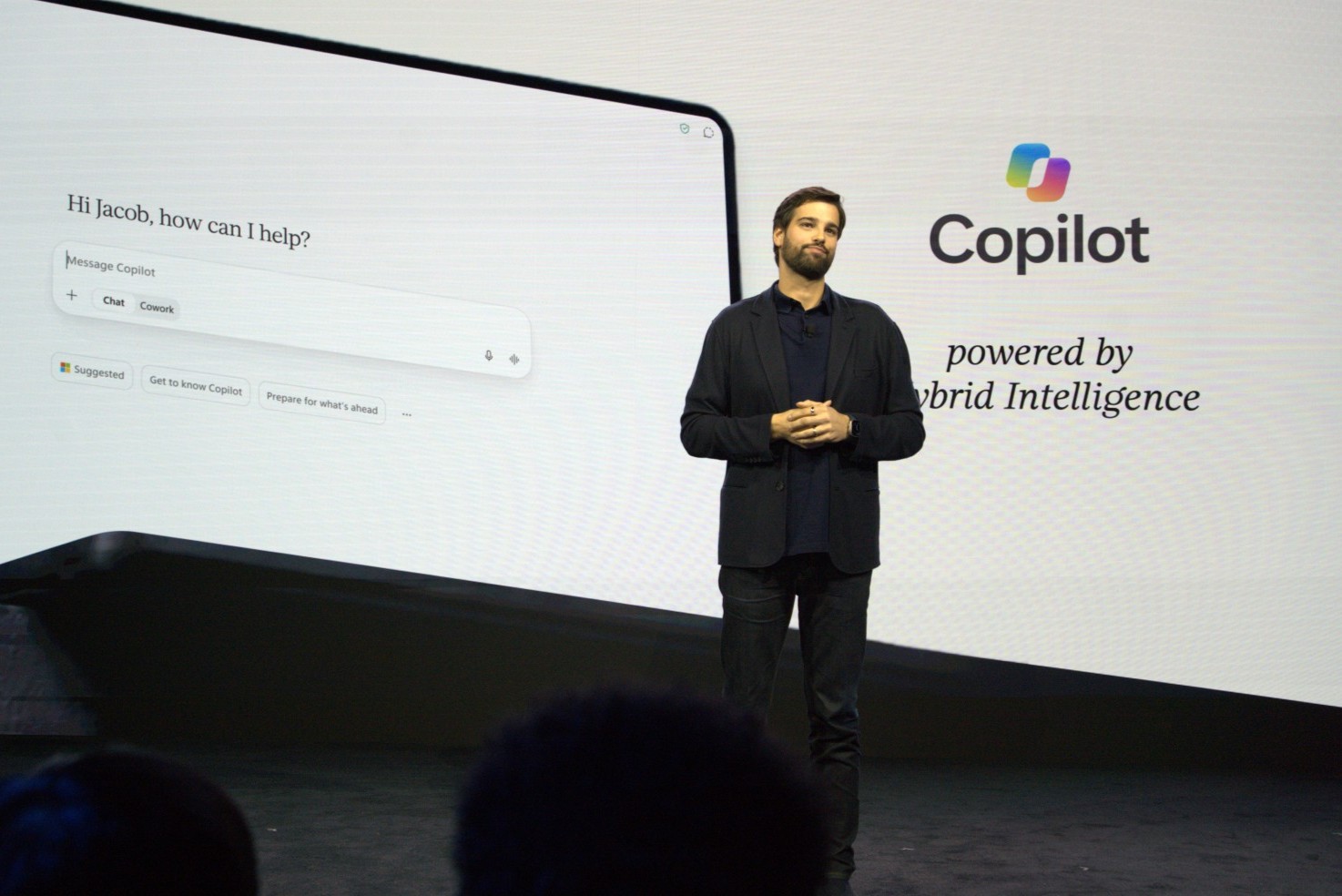
The tech giant has been reworking Copilot to catch up. Earlier this year, it put its Copilot teams for consumers and businesses under Jacob Andreou, now its executive vice president of Copilot. Last month, it released a new version of the app with tools for coding and long-running tasks.
Where Copilot is headed: Windows Hybrid Intelligence gives Copilot three new capabilities, as Andreou described them on stage. The assistant can draw on all the files on a PC, take actions such as moving files and changing settings, and hand tasks to AI models running on the machine “when cost or privacy matter more.”
Advertisement
Copilot will still use the cloud for the hardest tasks, Andreou said, and will act on the PC only with the user’s permission.
Microsoft said the features are expected to begin rolling out in the coming months on Copilot+ PCs, the AI-focused Windows machines it introduced in 2024.
Jacob Andreou, Microsoft’s executive vice president of Copilot, describes the assistant’s new capabilities on Windows PCs at the company’s event in San Francisco on Wednesday. (Photo by Ken Yeung for GeekWire)
Developers will get a version first. An experimental release coming later this month will let GitHub Copilot automatically send simpler coding tasks to an AI model on the PC and harder ones to the cloud.
In one example depicted on stage, Copilot’s Autopilot agent found an email from Andreou’s accountant, gathered tax documents scattered across his PC, renamed and sorted them into folders, bundled them into a zip file and drafted a reply with it attached, pausing for his approval before sending. The sorting was handled by AI models on the laptop, he said, so the tax details weren’t sent to the cloud.
Running AI models on the PC reduces the usage charges that come with AI in the cloud. Nadella wrote on X that Microsoft is bringing “unmetered intelligence to every desk and every home,” echoing the company’s original mission of “a computer on every desk and in every home.” A slide in the presentation said local models would run tasks on the PC “at no extra cost.”
Advertisement
Microsoft is also adding thousands of quick actions to the search box on the Windows 11 taskbar, such as switching to dark mode, arranging windows or sending a text message. Those start rolling out Wednesday to people in the Windows Insider testing program.
An option to get Copilot answers in the search box will be opt-in and will arrive in select markets later this year, according to the company.
The Recall precedent: Microsoft has run into trouble before with AI that looks at what’s on a PC. Recall, a feature that takes periodic screenshots of a user’s activity to make it searchable, drew objections from security researchers when it was announced in 2024. Microsoft delayed it and made it opt-in before releasing it widely in 2025.
Recall didn’t come up at Wednesday’s event. Microsoft’s blog post says Copilot’s access to local content, which it describes as “files and recent activity,” will require the user’s permission.
Advertisement
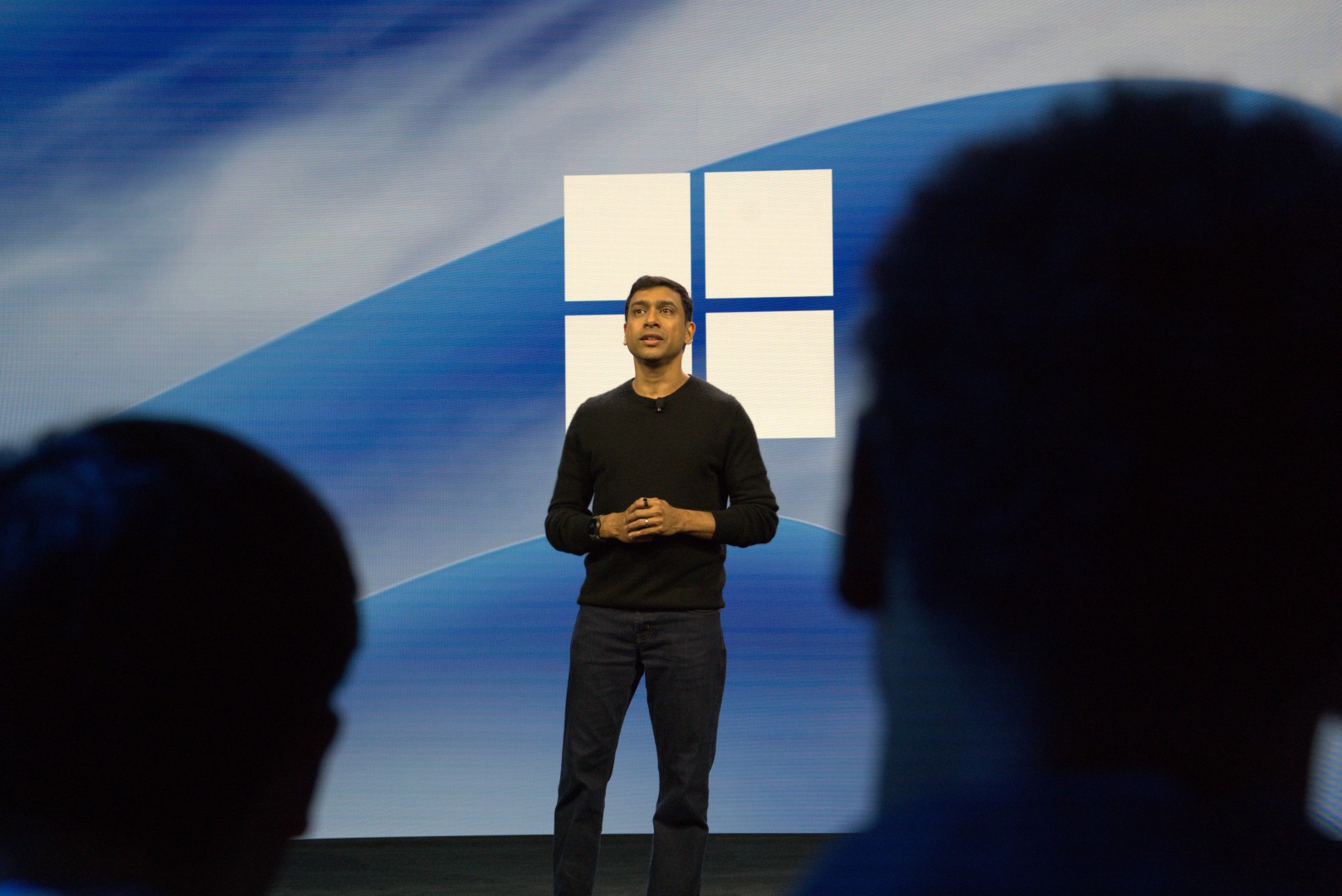
Pavan Davuluri, Microsoft’s executive vice president of Windows and Devices, speaks at the company’s Windows and Surface event in San Francisco on Wednesday. (Photo by Ken Yeung for GeekWire)
Limits on AI agents: Pavan Davuluri, Microsoft’s executive vice president of Windows and Devices, said the AI agents that run on PCs today are “fundamentally insecure because they have broad system access.”
Microsoft’s answer is a technology called Microsoft Execution Containers, now generally available in Windows 11, which lets an organization set which files and networks an AI agent can reach. Microsoft said OpenAI’s Codex and OpenClaw already support it, and that Anthropic’s Claude Code and Perplexity plan to.
Meta’s Muse agent is coming to Windows as an app that uses the technology, as well.
The new PCs: The machines are built around Nvidia’s RTX Spark chip and aimed at developers and creative professionals who want to run large AI models on their own computers.
Microsoft’s Surface Laptop Ultra, a 15-inch laptop with up to 128GB of memory, starts at $2,599 and will be available Oct. 16, the same day similar laptops from Asus, Dell, HP, Lenovo and MSI begin shipping.
Advertisement
A desktop version for developers, the Surface RTX Spark Dev Box, costs $5,999 and ships in the U.S. in November.
Microsoft is pitching the laptops against Apple. It says machines with the Nvidia chip start producing AI responses up to 2.1 times faster than a 16-inch MacBook Pro with Apple’s M5 Pro chip and generate AI images up to 4.3 times faster, citing tests it commissioned or that Nvidia ran on preproduction machines.
The company is also offering up to $1,000 back to buyers who trade in a MacBook Pro.
Huang said the chip took more than 4,000 engineering years and started with a conversation he had with Nadella four years ago.
Advertisement
Nvidia’s Windows roots: Sriram Krishnan, the venture capitalist and former White House AI advisor who moderated the conversation, asked Huang for a favorite memory of working with Microsoft. Huang said Nvidia owes its existence to Windows.
He recalled a moment in late 1992, when Windows 3.1 was new and he and his co-founders, who had worked mostly on workstations, started imagining a PC with 3D graphics that could run games and design software. They started the company the next year.
“If not for Windows, Nvidia wouldn’t have been founded,” Huang said.
He traced a line from there to the AI boom. Windows brought graphics chips to the PC, he said, which led to Nvidia’s GeForce chips and its CUDA software, which gave AI researchers the computers they needed for deep learning.
Advertisement
Nadella joked that Huang was “now going to do a little transfer of market cap back to me.” Nvidia is the world’s most valuable company, at about $5.8 trillion. Microsoft is worth about $3.9 trillion.
“Windows has been with me for 34 years,” Huang said at the end of the conversation. “Looks like it’s going to be with me for 34 more.”
“There you go,” Nadella added before they walked off the stage.
The CyboPal ONE puts a 27-inch 4K, 160Hz display on a six-axis robotic arm that repositions itself to your posture
It can be bought for as low as $1,599 on Kickstarter, against a planned $2,499 retail price in the future
CyboPal assigns its binocular 3D sensor to obstacle avoidance and path planning, and says face tracking repositions the screen in under four seconds
Monitor arms have spent decades doing one job: holding still; CyboPal’s answer challenges that premise in an intriguing way.
The Kickstarter-funded CyboPal ONE bolts a 27-inch 4K display to a six-axis robotic arm that clamps to your desk, keeps an eye on where you are, and moves the screen to match, whether you are hunched over a keyboard, standing, or leaning back to read.
The $1,599 price is the Super Early Bird price, converted from HK$ 12,536 on the same site, and it seems to stay the same even if you order up to 5, though only the first 300 single-unit orders benefit from the current markdown.
Latest Videos FromTechRadar
Advertisement
A pricey arm with a built-in PC to run the robot, not your work
The pricing hasn’t stopped backers, who have piled in by the bucket; Kickstarter showed the campaign, which closes on November 21 2026, at just over 11,000% of its HK$80,000 goal, roughly HK$8.8 million (about $1.1 million).
This includes about 255 visible backers, even though BackerClub’s tracker counts more than 450 backers, which may include those who paid a $30 deposit to get an $1,499 lock-in.
The ONE also carries its own computer: CNX software lists an eight-core Rockchip RK3588 with a 6 TOPS NPU, 8GB of RAM, and 128GB of storage, housed in what CyboPal calls a Linux AI Compute Base that handles face tracking, gesture recognition, and 3D spatial sensing on the device.
The campaign pitches the ONE as a companion to the computer you already own, tying voice control, robotic motion, and the full feature set to a USB-C link with that machine, which the same port can also charge at up to 65W.
Sign up to the TechRadar Pro newsletter to get all the top news, opinion, features and guidance your business needs to succeed!
The Pauli voice agent runs in a CyboPal desktop client for Windows, macOS, and Linux, and an HDMI 2.1 input lets compatible phones, tablets, and other sources use the panel as an external display. The onboard RK3588 essentially is the robot’s brain, but you still need a laptop or desktop to do the necessary compute.
Advertisement
CyboPal’s founder and CEO Frederic Peng said in the company’s launch announcement that AI “should also change what a computer is.” One could argue this is more akin to having a more persistently present assistant than a modern stationary computer.
CyboPal says face tracking brings the screen into position in under four seconds, within a 747mm reach, and presents tracking as one mode among several: you can also recall saved positions or tell the screen to come closer, back off, rotate, or switch to portrait mode.
Gestures allow users to move the screen and scroll content, and a firm tap on the desk stops the arm in place. CNX’s spec list, which includes a separate HDR camera, assigns it to spatial awareness, path planning, and obstacle avoidance, and the campaign describes 3D sensing as how the arm spots desk clutter and stays within preset boundaries.
Advertisement
CyboPal’s Kickstarter page bills the ONE as the world’s first desktop robotic terminal, a category label the company introduced with this product, and claims mass production is already underway.
The ONE has multiple use cases, chief among them being catering to people who change positions all day, and possibly users with limited mobility; Gizmodo Japan has suggested it could prove handy as a medical tool.
Whether that enthusiasm pans out into a tangible product that delivers on its promises remains to be seen. At $1,599 now and $2,499 later, backers are paying for a monitor, an arm, and a bet on software that hasn’t been independently tested, making it a rather expensive, albeit intriguing, gamble.
Disclaimer: We do not recommend or endorse any crowdfunding project. All crowdfunding campaigns carry inherent risks, including the possibility of delays, changes, or non-delivery of products. Potential backers should carefully evaluate the details and proceed at their own discretion.


















































You must be logged in to post a comment Login