


Connect with us

Business & Hustles

Apple’s Tim Cook Sold $63.8 Million in Stock Under a May Plan, One Day After Restricted Shares Vested

Published

on

Tim Cook

KEY POINTS

Apple’s Tim Cook Sold $63.8 Million in Stock Under a May Plan, One Day After Restricted Shares Vested

Tim Cook sold about $63.8 million of Apple stock on Oct. 2, the day after a performance award vested, under a trading plan he adopted in May, a filing with the Securities and Exchange Commission shows.

The sale was 191,753 shares at prices from $330.66 to $334.50. It ran under a Rule 10b5-1 plan Cook put in place on May 28, which schedules trades in advance and is the device executives use so a sale is not read as a bet on news they have that day. On Oct. 1, 374,541 restricted stock units vested. Apple withheld 199,038 shares, worth about $65.7 million at $330.32, to cover the tax. Cook also gave away 26,325 shares. The filing does not name the recipient. After the transactions his trust held 3,237,843 shares.

The units were granted Oct. 1, 2023, and paid out on Apple’s total shareholder return against the rest of the S&P 500 over fiscal 2024 through fiscal 2026. That return was 90.67 percent, which one reading of the award put in the 76th percentile of the index. The payout was set by a formula written three years ago. The sale the next day was set by a plan written in May.

Advertisement

Cook left the chief executive job on Sept. 1, when John Ternus took over, and became executive chair. Ternus sold 25,412 shares the same day, about $8.5 million, at $331.38 to $334.05, under a 10b5-1 plan adopted May 21. Apple withheld 49,054 of Ternus’s shares for tax when 99,878 units vested. Senior vice president Deirdre O’Brien sold 46,389 shares, about $15.5 million. Three filings on one vest date are a pay calendar, not a coordinated exit.

Cook has not commented. The Form 4 is the statement. A chair who keeps 3.2 million shares after selling 191,753 has reduced a position by about 6 percent of what the trust still holds, before counting the gift and the shares taken for tax. The tax withholding was larger than the cash sale. The $65.7 million in withheld stock is compensation turned over to the government. The $63.8 million is compensation turned into cash.

Apple was trading near $334 when the reports ran. The sale prices sit inside that range. Nothing in the filing ties the trade to a product, a forecast or the handover to Ternus. The plan predates the chairmanship by three months. The award predates it by almost three years. The number that changed on Oct. 2 is the cash, not the job.

Tim Cook sold about $63.8 million of Apple stock on Oct. 2, the day after a performance award vested, under a trading plan he adopted in May, a filing with the Securities and Exchange Commission shows.

Advertisement

The sale was 191,753 shares at prices from $330.66 to $334.50. It ran under a Rule 10b5-1 plan Cook put in place on May 28, which schedules trades in advance and is the device executives use so a sale is not read as a bet on news they have that day. On Oct. 1, 374,541 restricted stock units vested. Apple withheld 199,038 shares, worth about $65.7 million at $330.32, to cover the tax. Cook also gave away 26,325 shares. The filing does not name the recipient. After the transactions his trust held 3,237,843 shares.

The units were granted Oct. 1, 2023, and paid out on Apple’s total shareholder return against the rest of the S&P 500 over fiscal 2024 through fiscal 2026. That return was 90.67 percent, which one reading of the award put in the 76th percentile of the index. The payout was set by a formula written three years ago. The sale the next day was set by a plan written in May.

Cook left the chief executive job on Sept. 1, when John Ternus took over, and became executive chair. Ternus sold 25,412 shares the same day, about $8.5 million, at $331.38 to $334.05, under a 10b5-1 plan adopted May 21. Apple withheld 49,054 of Ternus’s shares for tax when 99,878 units vested. Senior vice president Deirdre O’Brien sold 46,389 shares, about $15.5 million. Three filings on one vest date are a pay calendar, not a coordinated exit.

Cook has not commented. The Form 4 is the statement. A chair who keeps 3.2 million shares after selling 191,753 has reduced a position by about 6 percent of what the trust still holds, before counting the gift and the shares taken for tax. The tax withholding was larger than the cash sale. The $65.7 million in withheld stock is compensation turned over to the government. The $63.8 million is compensation turned into cash.

Advertisement

Apple was trading near $334 when the reports ran. The sale prices sit inside that range. Nothing in the filing ties the trade to a product, a forecast or the handover to Ternus. The plan predates the chairmanship by three months. The award predates it by almost three years. The number that changed on Oct. 2 is the cash, not the job.

Continue Reading
Click to comment

You must be logged in to post a comment Login

Leave a Reply

Business & Hustles

British Airways Unveils World’s Largest Business Class: 106 Seats, as Economy Shrinks by a Third

Avatar photo

Published

on

business class

British Airways says it is building the world’s largest airline business class, a sprawling 106-seat cabin on its Airbus A380 jumbo jets, as carriers worldwide race to capture the growing share of travelers willing to pay a premium for comfort.

The overhaul, announced this week, will expand the A380’s business-class section from its current 97 seats to 106, while first class shrinks slightly to 12 suites from 14. Premium economy will nearly double, growing from 55 seats to 84. The biggest casualty is standard economy, which will be slashed from 303 seats to just 215 — a cut of nearly a third.

The changes apply across British Airways’ fleet of 12 A380s, the world’s largest passenger aircraft, and come alongside a broader investment in ground services, including revamped lounges at its London Heathrow hub.

Why airlines are betting big on business class

British Airways’ move is the most dramatic example yet of an industry-wide shift away from packing planes with as many economy seats as possible and toward courting high-spending travelers. Airlines have poured hundreds of millions of dollars into reconfiguring cabins, wagering that today’s flyers want roomier seats, more privacy and genuine luxury — and are prepared to pay steeply for it.

Advertisement

That bet is paying off handsomely at the till. Extra legroom on transatlantic flights can cost more than $200 a leg, premium economy surcharges can top $1,000 after a ticket is purchased, and top-tier business and first-class fares routinely run $5,000 to well over $10,000 on longer routes. Securing those seats at the time of booking, rather than as a later upgrade, often costs even more.

The demand has been so intense that it is reshaping aircraft production schedules. Some new planes have faced delivery delays because the premium seats manufacturers are designing are so elaborate they require specialized parts and additional federal certification before they can be installed.

A crowded race for premium cabins

British Airways is far from alone in chasing this market. Its transatlantic joint-venture partner, American Airlines, last month introduced a 70-seat business class on its largest Boeing jets. Alaska Airlines has unveiled a sweeping premium-cabin overhaul of its own, and United Airlines has been stripping out economy seats to make room for larger, reworked premium sections. Even airlines built on bare-bones pricing are shifting strategy — Frontier’s Bill Franke, long associated with no-frills budget flying, has recently warmed to offering first-class seats and paid upgrades.

The push toward business class and other premium tiers reflects a broader recalibration of how airlines make money. Where economy once filled the cabin and premium seats were an afterthought, carriers now treat high-end cabins as the primary profit engine, with economy increasingly seen as supporting volume rather than driving revenue.

Advertisement

Betting on the jumbo jet itself

The redesign is also a wager on the A380 as an aircraft type, at a moment when most carriers have been moving away from it. Airbus delivered its final A380 to Emirates, the jet’s biggest operator, back in late 2021, and many airlines have retired the superjumbo in favor of smaller, more fuel-efficient planes. By investing heavily in new cabins for its existing A380 fleet rather than phasing the jets out, British Airways is signaling confidence that the aircraft’s sheer size — and the space it affords for an expansive business-class cabin — still has a profitable future.

With premium economy expanding, first class refreshed and business class reaching a record seat count, British Airways is effectively betting that the economics of modern long-haul flying now favor fewer passengers paying much more, rather than filling every row at the lowest possible fare.

Related reading:
Sources:
Advertisement
Continue Reading

Business & Hustles

Ex-Whitbread bosses buy back 57 Beefeater restaurants after chain closures

Published

on

Business Live

Common Table Group has agreed deal after Whitbread announced closure of its Beefeater and Brewers Fayre chains

Whitbread closed its Beefeater restaurants last month

Whitbread closed its Beefeater restaurants last month(Image: Getty)

Former senior executives at Whitbread have completed a deal to acquire nearly 60 restaurants from the company, following its closure of the Beefeater and Brewers Fayre chains last month.

Advertisement

Common Table Group, a British hospitality operator, has secured 57 restaurant locations and one Premier Inn hotel from the FTSE 100 hospitality giant.

The purchasers received backing from Rove360, a hospitality advisory firm of former Whitbread senior executives.

The transaction will create 700 new jobs and was completed for an undisclosed figure. The restaurants – including former Beefeater, Brewers Fayre and Cookhouse locations – will restart operations from next month.

Common Table Group, which was established by coffee entrepreneur Thomas Anderson, confirmed it will commit resources to renovating these establishments and creating “exciting” new menus, as reported by City AM.

Advertisement

Anderson said: “Our priority is to get the sites back open and trading as soon as possible. We’re building an entrepreneurial business with a local feel, where our teams are empowered to make decisions and shape each venue around the people and communities it serves. “.

“We’re excited about what we can create together and look forward to bringing new energy and ideas to our guests.”

The former Whitbread establishments will offer barista coffee supplied by its sister company, Rodeo, which runs 15 locations in London and Manchester.

Rove360 previously collaborated with Whitbread on a cost-reduction initiative, assisting the business in achieving £150m in labour cost reductions. Whitbread faces investor pushback.

Advertisement

In April, the Premier Inn parent company unveiled sweeping plans to reduce costs by £2bn through the closure of all its non-hotel restaurants and the elimination of nearly 4,000 roles.

Whitbread stated that its restructuring strategy, which resulted in the shuttering of the Beefeater and Brewers Fayre restaurant chains, was essential to address the “unexpected” impact of Labour’s business rates increases.

“In light of significant cost increases in the form of business rates and National Insurance, as well as the implied market discount to our inherent value, we’ve looked hard at the options open to us,” said chief executive Dominic Paul.

Whitbread has encountered significant resistance from one of its largest shareholders in recent months. Corvex Asset Management, which holds more than six per cent of the company, initially demanded that the group place itself on the market, criticising its “chronic misallocation of capital”.

Advertisement

Since last month, Corvex has been pressing for representation on Whitbread’s board, calling for a “rigorous, fact-based review” of the business.


Continue Reading

Business & Hustles

UK Accepts All 44 AI Health Rule Reforms, Betting on ‘Competitive Edge’ for British Tech Firms

Avatar photo

Published

on

ai health rules

The UK government has thrown its full weight behind a sweeping overhaul of AI health rules, accepting all 44 recommendations from the National Commission into the Regulation of AI in Healthcare in a move ministers and industry figures say could hand British tech firms a genuine head start over international rivals.

Announced on Tuesday, the shake-up will change how AI-powered medical devices are approved and monitored by the Medicines and Healthcare products Regulatory Agency (MHRA), shifting away from a single pre-market assessment and towards continuous, lifecycle-based oversight that tracks a product’s performance throughout its use in the NHS.

The decision follows mounting pressure from within the healthcare sector itself. According to the Commission, around two-thirds of respondents said the current regulatory framework was holding back innovation, while a striking 77 per cent of healthcare professionals who took part called for either significant reform or a complete rebuild of the system.

inline 28

Why new AI health rules could reshape the market

Industry voices argue the revised AI health rules could turn the UK into one of the world’s most attractive testing grounds for health technology. Martin Turner, director of policy and external affairs at the Bioindustry Association, told City AM that the MHRA’s approach “absolutely makes the UK a leading testbed for innovation,” allowing companies to develop products alongside regulators and prove their worth inside a large, established healthcare system before competitors abroad get the chance.

Advertisement

That early-mover advantage, he said, could prove decisive. Firms that gain real-world validation in the NHS may find it easier to demonstrate value to investors, potentially speeding up funding rounds and acquisitions. “With the UK’s noted strengths in both life sciences and AI, we’re seeing huge interest in our ecosystem of startups and scaleups,” Turner said, adding that the MHRA’s new stance “should enable faster demonstration of concept and value, which we expect will lead to greater investment and acquisitions in the months and years ahead.”

Steve Lee, executive director of regulation at the Association of British Healthtech Industries, echoed that optimism, calling the plans a “positive direction of travel for Healthtech companies and investors.” He said a proportionate, lifecycle-based model could let safe, innovative technologies reach patients sooner while giving firms clearer regulatory certainty as they invest in development.

A catch: regulation alone won’t guarantee growth

Despite the enthusiasm, both Turner and Lee were careful to flag that looser rules on paper mean little without a functioning path to market. Lee warned that “continuous oversight should not mean continuous regulatory burden,” and stressed that “regulation is also only part of the picture, companies still need a viable route into NHS adoption and procurement if innovation is to translate into commercial growth.”

Turner made a similar point, noting that the promised benefits of eased AI health rules hinge on whether the NHS follows through on improving adoption and reimbursement for the companies developing these tools. A faster regulatory pathway is of limited value, industry figures suggest, if hospitals and trusts remain slow or reluctant to actually purchase the resulting technology.

Advertisement

There is also a longer-term risk around global alignment. Turner cautioned that the government and MHRA must keep the UK’s regime broadly consistent with regulatory standards in major overseas markets, so that companies gaining an early advantage at home are not then blocked or burdened by incompatible rules when they try to expand internationally.

Testing the technology in real time

Alongside the policy shift, the MHRA has opened applications for the third phase of its “AI airlock,” a regulatory sandbox in which companies trial AI medical devices in close collaboration with regulators before wider rollout. This latest phase will focus specifically on monitoring AI tools after they have been deployed, with the first participating firms expected to be chosen next month.

Further detail is due before the end of the year: draft guidance on how companies should manage AI medical devices that continue to learn and change after launch is expected by December, while a formal consultation on how to classify such evolving products is planned for next year.

Health innovation minister James Frith framed the reforms as a balancing act between speed and safety, saying the government wants patients to benefit from AI more quickly but that “innovation must never come at the expense of patient safety.”

Advertisement

For now, the message from both government and industry is one of cautious confidence. The revamped AI health rules give Britain a plausible claim to being a world-leading test bed for medical AI, but whether that translates into lasting economic advantage will depend less on the regulations themselves and more on whether the NHS is ready, willing and funded to buy what British innovators ultimately build.

Related reading:
Sources:
Continue Reading

Business & Hustles

Mold Remediation and Prevention Strategies for Property Management Owners

Published

on

Mold Remediation and Prevention Strategies for Property Management Owners

Mold shows up in rental properties more often than many owners expect. Damp basements, leaky roofs, poor ventilation in bathrooms, and slow responses to tenant complaints all create the right conditions. For most property management owners, handling mold is not just about fixing one unit. It affects tenant health, lease renewals, insurance claims, and long-term building value.

Understanding the basics helps keep problems small. Mold needs moisture, organic material, and the right temperature. Once those line up, growth can start within 24 to 48 hours. Common spots include bathrooms after showers, kitchens with inadequate exhaust, crawl spaces, attics with roof leaks, and areas around windows where condensation builds.

Recognizing the early warning signs

Look out and smell for musty odors first. Tenants often report them before visible growth appears. Check for discoloration on walls, ceilings, or flooring. Black, green, or white patches are typical. Peeling paint or warped wood can also signal hidden moisture. In multi-unit buildings, pay attention to units above or below problem areas because water travels.

Make sure to document everything. Photos, moisture readings if you have a meter, and written notes from inspections protect you later if disputes arise. Encourage tenants to report issues quickly through clear lease language and easy communication channels.

Advertisement

Steps for mold remediation

Small areas under ten square feet can often be handled in-house if the source of moisture is fixed first. Wear proper protection: gloves, N95 mask or better, and eye covering. Scrub hard surfaces with detergent and water. Avoid mixing chemicals carelessly. Porous materials like drywall, carpet, or ceiling tiles that are heavily affected usually need removal and replacement.

Larger infestations or mold in HVAC systems, behind walls, or involving black mold varieties call for trained professionals. They contain the area, use negative air pressure, and dispose of materials according to local rules. Trying to handle big jobs without the right equipment risks spreading spores to other units.

Always address the water source before cleaning. Fix leaks, improve drainage around the foundation, and dry the space thoroughly. Fans, dehumidifiers, and open windows help when weather allows. Moisture meters confirm the area is dry enough before rebuilding.

Mold prevention strategies that work over time

Prevention costs less than the need for repeated mold remediation services. Start with regular property inspections. Schedule them quarterly and after heavy rain or tenant turnover. Check roofs, gutters, downspouts, and foundation grading. Make sure water flows away from the building.

Advertisement

Improve ventilation where moisture builds. Bathrooms and kitchens need working exhaust fans that vent outside, not into attics. Encourage tenants to use them. In humid climates, whole-building or unit-level dehumidifiers keep relative humidity under 60 percent. Aim for 30 to 50 percent when possible.

Seal gaps around pipes, windows, and doors. Insulation helps reduce condensation on cold surfaces. In older buildings, consider vapor barriers in crawl spaces or basements. Keep landscaping trimmed so plants do not trap moisture against exterior walls.

Educate all of your tenants without sounding too heavy-handed. Provide simple tips in move-in packets: wipe down shower walls, report drips immediately, avoid blocking vents with furniture. Some managers include basic humidity monitors in units as a low-cost early warning tool.

Maintenance contracts for HVAC systems matter. Dirty filters and clogged condensate drains create perfect mold conditions. Schedule filter changes and system checks at least twice a year.

Advertisement

Record keeping and response protocols

Create a written protocol for mold complaints. Respond within a set time frame, ideally 24 to 48 hours. Document every step from initial report through final clearance. This protects against liability claims and shows insurance carriers you take the issue seriously.

Know your local regulations. Some areas require specific disclosure or professional certification for remediation work. Stay current on building codes related to ventilation and moisture control.

Budget for these issues. Set aside funds for unexpected water events. Properties in flood-prone or high-humidity regions need higher reserves.

Mold problems will rarely ever stay isolated. One neglected unit can affect neighboring ones through shared walls or HVAC systems. Consistent attention to moisture control and quick response when issues appear keeps portfolios healthier and tenants more likely to renew. Property management owners who treat mold as an ongoing maintenance priority rather than a one-time crisis tend to face far fewer disruptions over the years. 

Advertisement
Continue Reading

Business & Hustles

Mortgage Rates Hit 6% High as 1,500 Cheap Deals Vanish in a Month

Avatar photo

Published

on

mortgage rates

Mortgage rates in the UK have climbed to their highest level in three years, with the average five-year fixed deal now standing at 6% for the first time since September 2023, according to new figures that paint a grim picture for homeowners and prospective buyers alike.

Financial information provider Moneyfacts reports that two-year fixed deals are not far behind, averaging 5.98% — their highest point since December 2023. The speed of the increase has stunned industry watchers: since the start of September, roughly 1,500 fixed-rate mortgage deals priced below 5% have disappeared from the market. Today, just nine such deals remain, a collapse of 99% in little more than a month.

Rachel Springall, a finance expert at Moneyfacts, did not mince words about the impact. “Average fixed mortgage rates rising back to three-year highs will be disastrous news for borrowers,” she said. “Borrowers who were hoping mortgage rates would stabilise will be disappointed.” She added that rising rates were “inevitable” given the pressure lenders are facing from higher wholesale funding costs.

inline 33

Why mortgage rates are climbing so fast

The surge is not being driven by a change in the Bank of England’s base rate, which has remained untouched since December last year. Instead, turmoil in global bond markets is pushing up gilt yields — the cost of government borrowing — which in turn affects the swap rates lenders use to price fixed mortgage deals.

Advertisement

Much of this volatility has been linked to the ongoing war in Iran, which has rattled international markets and fuelled broader economic uncertainty. Major High Street lenders including Barclays, HSBC, Lloyds Bank, Nationwide, NatWest, Santander and TSB have all repeatedly hiked their fixed rates in recent weeks, with Barclays alone making four separate rounds of increases in September.

For borrowers, the mechanics matter: once a fixed mortgage rate is locked in, it typically stays the same for two or five years, regardless of what happens in the wider market. But when that term ends, homeowners must shop for a new deal — and many are about to find the market has shifted dramatically beneath them.

Who stands to be hit hardest

According to Bank of England forecasts, just over five million homeowners are expected to see their monthly mortgage repayments rise by the end of 2028 as their current fixed deals expire and they’re forced to refinance at today’s higher mortgage rates.

The financial toll is significant. Figures from the HomeOwners Alliance show that a £250,000 loan fixed at 6% for five years now costs £158 more per month than the same loan would have cost at the 4.94% average rate recorded back in February. For families already stretched by other rising costs, that gap could prove decisive.

Advertisement

Springall advised borrowers nearing the end of a fixed term to act early. “It would be wise to seek advice and compare deals carefully,” she said, noting that some lenders allow customers to lock in a new rate as much as six months before their existing deal expires — a window that could help homeowners dodge further increases if rates continue climbing.

Not everyone is locking in, however. Springall noted that while the number of sub-5% fixed deals has collapsed, variable-rate mortgages priced below 5% have remained comparatively stable, prompting some borrowers to consider tracker mortgages tied to the Bank of England’s base rate instead of fixed terms.

Ripple effects across the housing market

The consequences are already visible beyond individual household budgets. Nationwide building society recently reported that annual house price growth had halved in September, a sign that buyers are growing increasingly cautious as borrowing costs climb.

Ian Harris, president of the estate agents’ body NAEA Propertymark, said members were seeing the squeeze firsthand. “For some buyers, even a relatively small increase in monthly repayments can mean they have to reduce their budget or step back from a purchase altogether,” he said. “Equally, homeowners coming off fixed-rate deals may face significantly higher repayments, which could affect their decision to move.”

Advertisement

The pressure on mortgage rates comes against a backdrop of wider cost-of-living strain. Diesel prices passed £2 a litre in the UK for the first time on Friday, domestic energy prices rose 4% at the start of October, and regulator Ofgem is expected to announce a further 16% increase to the energy price cap in January.

With household budgets being squeezed from multiple directions, the government is facing mounting pressure to offer targeted support in this month’s Budget. For now, though, the message from the mortgage market is unambiguous: after a year in which many borrowers hoped for relief, rates are heading firmly in the wrong direction.

Related reading:
Sources:
Advertisement
Continue Reading

Business & Hustles

Cheapest, most expensive U.S. flights in November

Published

on

Cheapest, most expensive U.S. flights in November

An American and Alaska Airlines planes land on the runway in near-perfect synchronization at San Francisco International Airport in San Francisco, California on March 23, 2026.

Tayfun Coskun | Anadolu | Getty Images

How much is domestic airfare this fall? It depends where you’re flying and when.

Thanksgiving fares are up more than 30% this year over last, while holiday fares overall are up more than 23%, as airlines pass more of this year’s surge in jet fuel prices along to customers, according to a tally of “good deal” fares from flight-tracking site Hopper. But there are some bargains outside of that period for certain routes, while others are sky-high.

Advertisement

The cheapest flights in November include routes between Atlanta, the world’s busiest airport, and various Midwest and Southeastern cities. Others are short trips, like intra-island Hawaii flying or within Florida.

But the length of the flight alone doesn’t dictate the price. Routes from Nantucket and Martha’s Vineyard off the coast of Cape Cod, Massachusetts, to New York and Washington, D.C., are among the priciest.

Trips originating in remote Alaska bound for the East Coast take the cake for most expensive flights. While it’s an oil-producing state, it imports a significant amount of jet fuel and other refined products.

Here’s how the cheapest and most expensive routes ranked:

Advertisement

Hawaiian Airlines airplanes sit idle on the runway at the Daniel K. Inouye International Airport due to the business downturn caused by the coronavirus disease (COVID-19) in Honolulu, Hawaii, U.S. April 28, 2020. Picture taken April 28, 2020. 

Marco Garcia | Reuters

Read more CNBC airline news

Continue Reading

Business & Hustles

246,000 Left in a Year: Tories Beg Young Britons to Stay Amid Brain Drain Row

Avatar photo

Published

on

brain drain

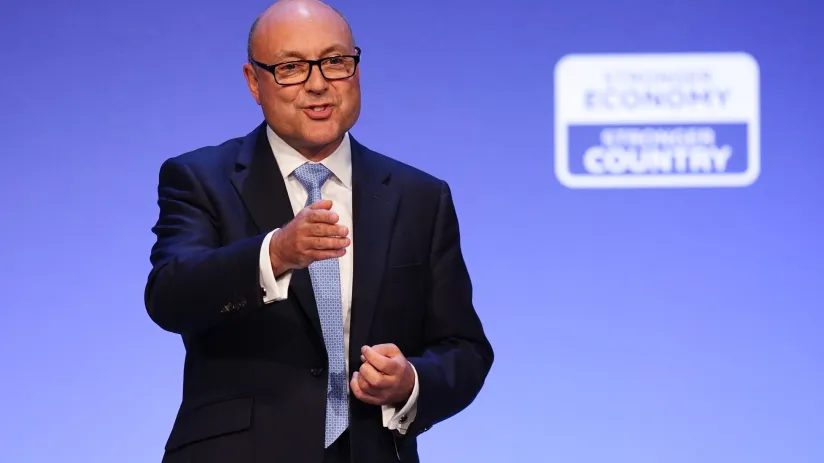
Britain’s brain drain has become the latest battleground in Westminster politics, after shadow chancellor Andrew Griffith used a conference speech to beg young people not to abandon the country, promising tax cuts and housing reforms to keep them here.

Speaking to Conservative Party members on Monday, Griffith made an emotional appeal that doubled as a political pitch, arguing that his party, not Labour, offers young Britons the clearest path to a stable, prosperous life at home. The newly appointed shadow chancellor said reversing the exodus of young workers was now central to Tory economic strategy, framing it as a crisis every bit as urgent as the debates around asylum and migration that have dominated headlines in recent months.

“Many Labour MPs spend their time talking about safe and legal routes for asylum seekers to come here,” Griffith told the room. “Well, what about safe and legal routes for our own young people to get a job, buy a home, have a good life? Does that not count?”

inline 24

The scale of Britain’s brain drain

The numbers behind Griffith’s appeal are striking. According to the Office for National Statistics, roughly 246,000 British nationals left the country in 2025, with nearly half of those departures made up of people aged between 16 and 34. That figure has given fresh ammunition to critics who argue the UK is failing to retain the young talent it needs to drive future growth, and it has turned the brain drain into a politically charged phrase that both major parties are now scrambling to address.

Advertisement

Griffith’s message was blunt and personal. “So, if you are thinking of leaving, whether you are young or old, don’t,” he said. “Many of the things we hold dear are threatened as never before, but none have yet been lost. Stay, stay and help us win.” The line was as much a rallying cry to party loyalists as it was a direct message to disillusioned young voters weighing up a move abroad.

Tax cuts and housing pledges as the fix

To back up the rhetoric, Griffith pointed to a string of policies the Conservatives have rolled out over the past year that he says are designed to ease the financial pressure driving the brain drain. Chief among them is a pledge to scrap stamp duty on primary residences, a move the party claims could save homebuyers tens of thousands of pounds and make getting on the property ladder realistic for younger buyers locked out of the market.

The party has also proposed reforming student loans to stop debt “spiralling,” and Griffith used his speech to confirm the Tories would scrap Labour’s so-called mansion tax, a levy on properties worth more than £2 million. Taken together, the measures are meant to paint a picture of a party actively fighting to keep young people’s economic prospects alive in Britain rather than abroad.

Griffith went further, setting out a personal ambition that he said would guide his approach if he becomes chancellor. “Like Nigel Lawson, it is my ambition to scrap at least one tax every budget,” he said, invoking the late Thatcher-era chancellor as a model for aggressive tax reform. He described tax cuts as his “North Star,” a signal that reducing the overall tax burden will remain the centrepiece of Tory economic messaging heading into the next election.

Advertisement

Pensions row overshadows the pitch

The appeal to younger voters comes as the Conservatives face scrutiny over their commitment to the state pension triple lock, which guarantees the pension rises each year by whichever is highest of wage growth, inflation, or 2.5%. Labour’s Andy Burnham said last week his party would campaign on reforming the uprating mechanism, a move Griffith seized on, telling the BBC on Monday morning that young people themselves oppose scrapping the triple lock because it protects their own parents and grandparents.

Not everyone agrees the issue is resonating as loudly as the headlines suggest. One senior government source said the intense media scrutiny of the Tories’ pensions stance was not necessarily shared by the wider public, suggesting the triple lock row may be more of an inside-Westminster story than a doorstep issue. Still, the timing is notable: by tying the pensions debate to his brain drain message, Griffith is attempting to position the Conservatives as the party for both ends of the age spectrum, pensioners and young workers alike.

Whether the strategy can actually reverse the brain drain remains to be seen. Tax pledges and housing reforms take time to bear fruit, and Griffith’s speech offered promises rather than enacted policy. But with net departures running into the hundreds of thousands and young people disproportionately represented among those leaving, the political pressure to show tangible progress on the brain drain is unlikely to ease any time soon.

Related reading:
Advertisement
Sources:
Continue Reading

Business & Hustles

Euro hits 17-month low as French debt fears, US inflation lift dollar

Published

on

Euro hits 17-month low as French debt fears, US inflation lift dollar
The euro fell to a 17-month low against the dollar on Monday as concerns over France’s ability to contain its budget deficit fuelled fears of a potential euro-zone debt crisis. Persistent US inflation pressures further supported the greenback, Reuters reported.

French government bonds have come under pressure as expectations of higher interest rates and growing political uncertainty ahead of the country’s 2027 election raise doubts about whether the euro zone’s second-largest economy can stabilise its public finances.

Eurozone bond yields diverged again, although the moves were less pronounced than late last week. Investors favoured traditional safe-haven assets such as German government debt over bonds issued by more indebted countries amid mounting fiscal and inflation concerns.

The yield spread between French bonds and benchmark German Bunds—a measure of the extra return investors demand to hold French debt—widened to nearly 160 basis points on Friday, its highest since the euro-zone sovereign debt crisis in 2011. The gap later narrowed by about four basis points to 137.

Advertisement

“It just seems to me like the market is rejecting this 2027 budget. There’s an election coming up … who’s going to vote for fiscal austerity with elections coming up?” said Erik Bregar, director of FX and precious metals risk management at Silver Gold Bull in Toronto.


“That French story probably is the biggest FX story of the week. On Friday, they were 160 French over Bunds; now it’s 135. That probably explains the euro’s bounce in the morning off the lows.”
According to Reuters report, the euro was last down 0.37% at $1.1211 after falling as much as 0.8% to $1.116, its weakest level since May 2025. The currency is coming off a fourth consecutive weekly decline against the dollar, its longest losing streak since May 2025, after dropping 3.1% over the period.Dollar gains on inflation concerns

Although expectations of a Federal Reserve rate increase this month have fallen sharply, concerns about euro-zone debt and US data pointing to persistent inflation have supported the dollar.

The Institute for Supply Management said its non-manufacturing purchasing managers’ index slipped to 54.9 in September from 55.4 in August. The reading was slightly below the 55.2 forecast in a Reuters poll but remained above the 50 mark separating expansion from contraction.

The survey’s measure of prices paid by businesses for inputs increased to 74.0 from 72.6 in August, reinforcing concerns about lingering inflation.

Advertisement

Markets now see a 23.8% probability of the Fed raising rates by at least 25 basis points at its October meeting, according to the CME FedWatch Tool, down from 70.9% a week earlier. Expectations of a December increase remain high, with traders pricing in an 86.8% probability.

The dollar index, which tracks the US currency against a basket of peers, rose 0.26% to 102.16 after touching 102.53, its highest since April 10, 2025.

Japan pledges bond control

The dollar strengthened 0.09% against the yen to 157.97. Verbal warnings from Japanese authorities about the yen’s depreciation, along with the currency’s traditional safe-haven status, have done little to arrest its recent weakness.

Advertisement

Japanese Prime Minister Sanae Takaichi pledged to “control” bond issuance and respond swiftly to market turbulence as the government sought to reassure investors concerned about the country’s deteriorating public finances and rising bond yields.

Separately, a business survey showed that Japan’s services sector expanded at a slower pace in September as growth in activity and new orders weakened and earthquake-related disruptions weighed on demand.

Sterling slipped 0.14% to $1.3223 but gained about 0.2% against the euro.

(Disclaimer: This article is based on inputs from agencies. These do not represent the views of The Economic Times)

Advertisement
Continue Reading

Business & Hustles

GM says hybrid vehicles are coming: ‘We’re not tone deaf’

Published

on

GM says hybrid vehicles are coming: 'We're not tone deaf'

2024 Chevrolet Corvette E-Ray hybrid sports car

GM

DETROIT — General Motors plans to introduce hybrid models into its U.S. lineup as sales of the vehicles continue to grow amid inflated gas prices and a pullback in all-electric cars.

Mike Anderson, GM’s vice president of propulsion engineering, reconfirmed the automaker’s hybrid plans, but declined to discuss timing for such vehicles, which had previously been expected as soon as next year.

Advertisement

“It’s fair to say that [hybrids are] part of the plan,” Anderson, a 35-year GM veteran, told CNBC during an interview. “We’re not tone deaf to our customers. We know what they want and we want to give that to them as quickly as we can.”

GM has largely been absent from the hybrid market this decade, instead using its resources to go “all-in” on all-electric vehicles. But amid lackluster EV demand, industry deregulation and increased hybrid popularity, Anderson said the company needs to meet customer demand wherever it may be.

“Our long-term vision is an all-electric future. That’s our goal,” Anderson said. “That’s the end state, but it’s going to be a journey that involves technology diversity.”

GM CEO Mary Barra in January said the automaker was still studying plug-in hybrid electric vehicles, or PHEVs, for its U.S. lineup as well as traditional hybrids but remained critical of the technologies. She also told Bloomberg later that month that a “handful” of such models were coming but did not give a timeline.

Advertisement

In mid-2024, GM announced plans to introduce PHEVs by 2027. At that time, GM was under pressure to meet stricter federal tailpipe emissions standards that have since been lowered or eliminated by the Trump administration.

Why three automakers dominate the surging hybrid segment

AutoForecast Solutions, an automotive data and consulting firm, expects GM to begin offering PHEVs in late 2027 to early 2028 with a 70-mile EV range “throughout its portfolio,” according to Casey Selecman, director of powertrain forecasts for the company.

“GM has several PHEVs planned throughout the portfolio from the Equinox to the Silverado but has been very cautious in rolling them out due to fears of customer technology preference changes that have burned them in the past,” he said.

Anderson declined to discuss potential products or timing for GM’s first new hybrid model.

“You can see, without me saying what our future plans are, where the customers are clamoring for these things and really, really going for them,” he said. “We want to meet them where they want things.”

Advertisement

Sales of hybrid models in the U.S. have jumped amid dimming EV demand, inflated gas prices and more offerings in the market, which GM has been missing out on.

Cox Automotive reports hybrid vehicle sales from the second quarter of this year increased 23% from a year earlier to represent a record 16.3% of U.S. sales from April through June. That compares with roughly 5.8% of sales for EVs, Cox said.

EV/Hybrid vehicle types

The automotive industry has more powertrain and “propulsion” options than ever before. Here’s a breakdown:

  • Internal combustion engine (ICE): A “traditional” vehicle with an engine that’s fueled with gasoline or diesel.
  • Mild-hybrid electric vehicle (MHEV): An ICE vehicle that functions largely like a nonhybrid vehicle but may include minimal electrified features such as a small battery, regenerative braking or electric motor.
  • Hybrid electric vehicle (HEV): Think of the Toyota Prius, a vehicle that has a hybrid powertrain system combined with an engine.
  • Plug-in hybrid electric vehicle (PHEV): These vehicles feature an internal combustion engine combined with a hybrid system, including a larger battery than traditional hybrid vehicles as well as a plug to recharge the vehicle’s battery. They typically allow drivers to travel a certain number of miles using the battery before the engine is needed to power the car or truck.
  • Battery-electric vehicle (BEV): These all-electric vehicles do not feature an internal combustion engine. Instead, they contain an electric motor that’s powered by a large battery. They need to be recharged using an electrical outlet and charging port or charging station.
  • Fuel cell electric vehicle (FCEV): Hydrogen fuel cell electric vehicles and equipment operate much like BEVs but are powered by electricity generated from hydrogen and oxygen instead of pure batteries, which commonly include lithium. They’re filled up with a nozzle, similar to traditional gas and diesel vehicles.
  • Extended-range electric vehicles (EREV): These are an emerging technology that largely function as a PHEV, however after the battery runs out of energy to power the vehicle, an engine works as a generator to exclusively power electric motors. The vehicle still drives like an EV instead of having the engine directly power the vehicle’s motion.

There are a growing number of hybrid variants being introduced by automakers but, in general, those vehicles combine a traditional gas-powered engine with electric motors and a battery to offer better fuel economy and, in many cases, better performance.

The fastest-growing segments for hybrids in the U.S. are compact crossover/SUV and mid-size vehicles, according to Cox.

Advertisement

“Hybrid vehicles continue to be the clearest growth story in the electrified market,” Stephanie Valdez Streaty, Cox director of industry insights, said during a presentation last week.

There are currently a few types of hybrids available in the U.S. Traditional hybrids, like a Toyota Prius, feature many electrified engine technologies, while PHEVs have a designated all-electric range before using an engine to power the vehicle.

Then there are extended-range electric vehicles, or “series hybrids,” that drive like an EV but have an engine that essentially operates like a generator to power electric motors to propel a vehicle.

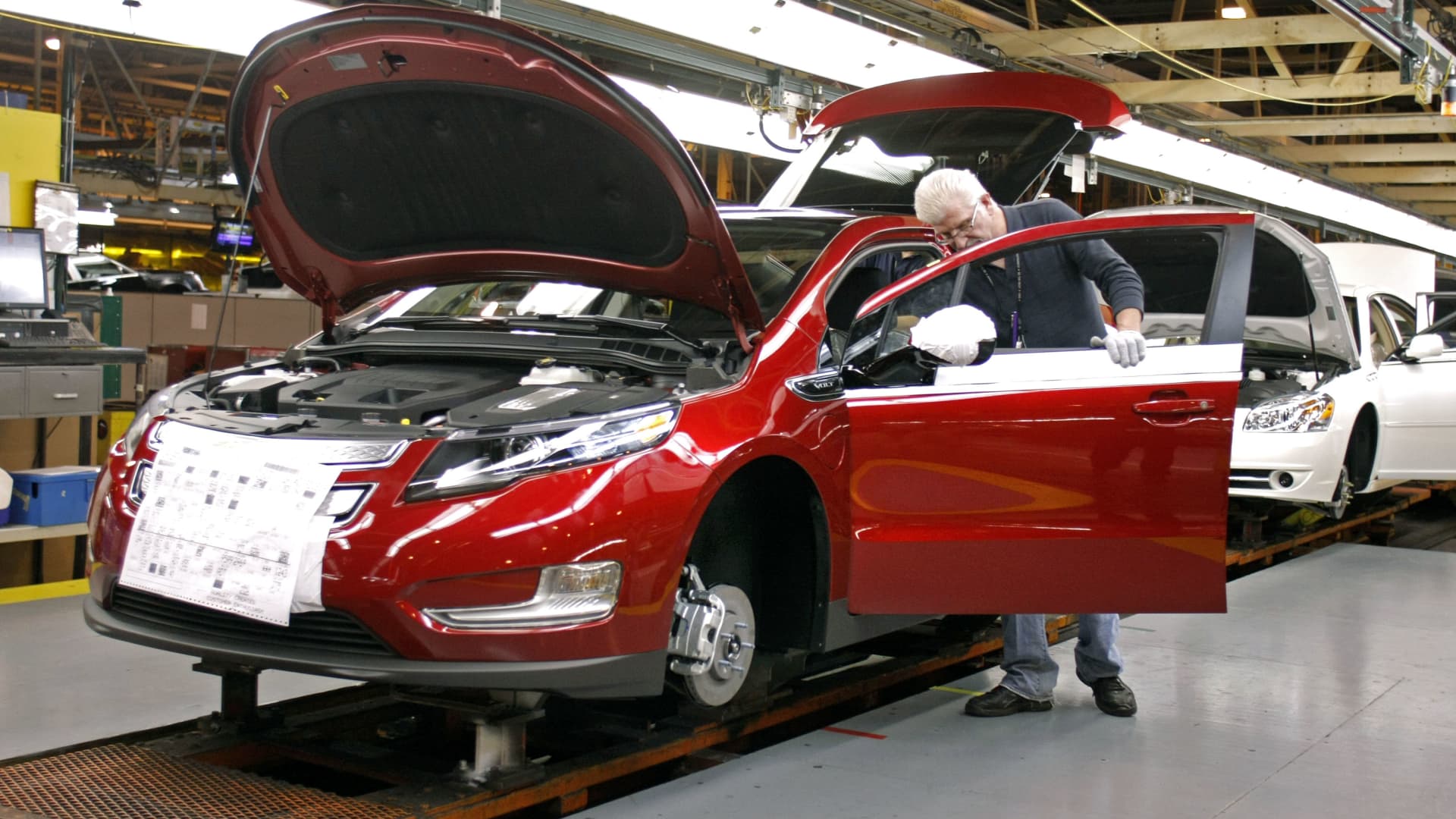
Data shows more gas-electric hybrid drivers are less likely to trade in for another one. GM has temporarily halted production of its Chevrolet Volt plug-in car.

Advertisement

Getty Images

The combination of two powertrains adds additional complexity and costs, which has been an argument GM has made against hybrids, but it’s something many consumers appear willing to pay for as hybrid sales continue to rise.

GM currently offers only one hybrid, a model of its Chevrolet Corvette. The Detroit automaker’s last true push into hybrids was the Chevrolet Volt plug-in, which was discontinued in 2019.

GM’s crosstown rivals, Ford Motor and Chrysler parent Stellantis, have leaned on suppliers to get hybrid vehicles to market more quickly.

Advertisement

Anderson said GM’s strategy “will be a mix” of internal and external technologies based on cost, segment and product.

“We’re deliberate because, usually for strategic reasons, we need to control our own destiny. We need to control our own timing,” he said. “Or, if it’s commodity, go get it. Go get the best price you can.”

Continue Reading

Business & Hustles

Chick-fil-A Hits $10.3 Billion in Revenue While Staying a Family Business, CEO Says

Avatar photo

Published

on

family business

Chick-fil-A is proving that a family business can still outgrow nearly every rival in the restaurant industry without ever ringing a bell on Wall Street. The Atlanta-based chicken chain pulled in $10.3 billion in revenue last year, a 14% jump, and net income of $1.05 billion, according to franchise disclosures reviewed by CNBC. That performance, paired with $23.92 billion in systemwide sales across roughly 3,000 locations, makes it the third-largest restaurant chain in the country by sales, trailing only McDonald’s and Starbucks.

Yet CEO Andrew Cathy, who took over from his father Dan nearly five years ago, insists the company has no interest in chasing the kind of windfall an initial public offering could bring. “We’re able to plan for the quarter century, and we don’t have to plan for the quarter,” Cathy told CNBC, describing the company’s growth strategy as “calculated” and “conservative” even as it pushes into new international markets.

Why staying a family business still works

Chick-fil-A was founded by Cathy’s grandfather, S. Truett Cathy, and has remained privately held and family-controlled ever since. That structure means the company doesn’t report quarterly earnings to shareholders or face pressure to hit short-term growth targets — a freedom Cathy says lets leadership focus on decades-long plans rather than fiscal quarters.

The timing of that philosophy looks especially shrewd given how public restaurant stocks have performed this year. Shares of Jersey Mike’s have dropped nearly 28% since its July IPO, and Dunkin’ parent Inspire Brands is reportedly holding off on going public until the sector’s fortunes improve. For a family business like Chick-fil-A, staying out of public markets has become less a sentimental choice and more a practical advantage.

Advertisement

It also hasn’t slowed expansion. The chain opened 179 new restaurants last year and has launched operations in Canada, the United Kingdom and Singapore in recent years, part of a $1 billion international growth plan. Its venture arm has also rolled out Daybright, a beverage-focused concept aimed at capturing a different kind of customer than the flagship chicken sandwich shops.

Navigating industry headwinds

The broader restaurant industry has had a rough stretch. Elevated costs and increasingly selective consumers have hurt traffic at McDonald’s, Popeyes, KFC and other major chains. Cathy acknowledged the pressure but said Chick-fil-A’s locations haven’t seen the same slump. “This has been a good year,” he said. “Our operators have done such a good job executing on the fundamentals and adding the hospitality to it.”

That focus on hospitality is central to how Cathy frames the balance between legacy and growth. He compared running the business to driving a race car: “There’s a reason that the windshield’s bigger than the rearview mirror. It’s important for the rear view to be grounded on where you are, and there are things that we think about our purpose, our mission, that won’t change, but everything else we have to be able to evolve and change.”

Some traditions are untouchable — Chick-fil-A’s restaurants will continue closing on Sundays, a policy in place since the company’s founding. Others, like the specifics of in-store hospitality, are expected to shift as customer habits evolve, particularly around how people order and receive food. Cathy said the chain is taking a “human plus” approach to new technology, exploring tools like artificial intelligence and even drone delivery without abandoning the personal service that has defined its brand.

Advertisement

As competitors chase public listings or restructure under private equity ownership, Chick-fil-A’s choice to remain a family business stands out as increasingly rare among chains of its size. For Cathy, that rarity is the point — a bet that long-term thinking, not quarterly results, is what keeps the chain growing while so many rivals stumble.

Related reading:
Sources:
Continue Reading

Trending

Copyright © 2025