






Connect with us

Tech & AI

Fast RF Device Testing with Analog Sources: A Practical Guide to Amplifier and Receiver Characterization

Published

on

1792071009 origin scaled

origin

More Information

RF and microwave systems increasingly depend on amplifiers and receivers that perform reliably across wide frequency ranges and demanding signal conditions. Confirming this performance calls for signal sources with wide output power range, low phase noise, and fast switching speed. Amplifier characterization relies on accurately measuring gain, compression, and intermodulation distortion, while receiver verification often involves simulating blockers, calibrating power accuracy, and substituting for local oscillator and clock circuitry during early design stages. This guide walks through these test applications step by step, showing how engineers and technicians can validate RF and microwave hardware across research, development, and manufacturing environments.


Source link

Advertisement
Continue Reading
Click to comment

You must be logged in to post a comment Login

Leave a Reply

Tech & AI

Devyn Johnston Assembles One of the Thinnest RTX 5090 Gaming PCs Ever Seen

Published

on

devyn johnston thinnest rtx 5090 gaming pc

Devyn Johnston Thinnest RTX 5090 Gaming PC
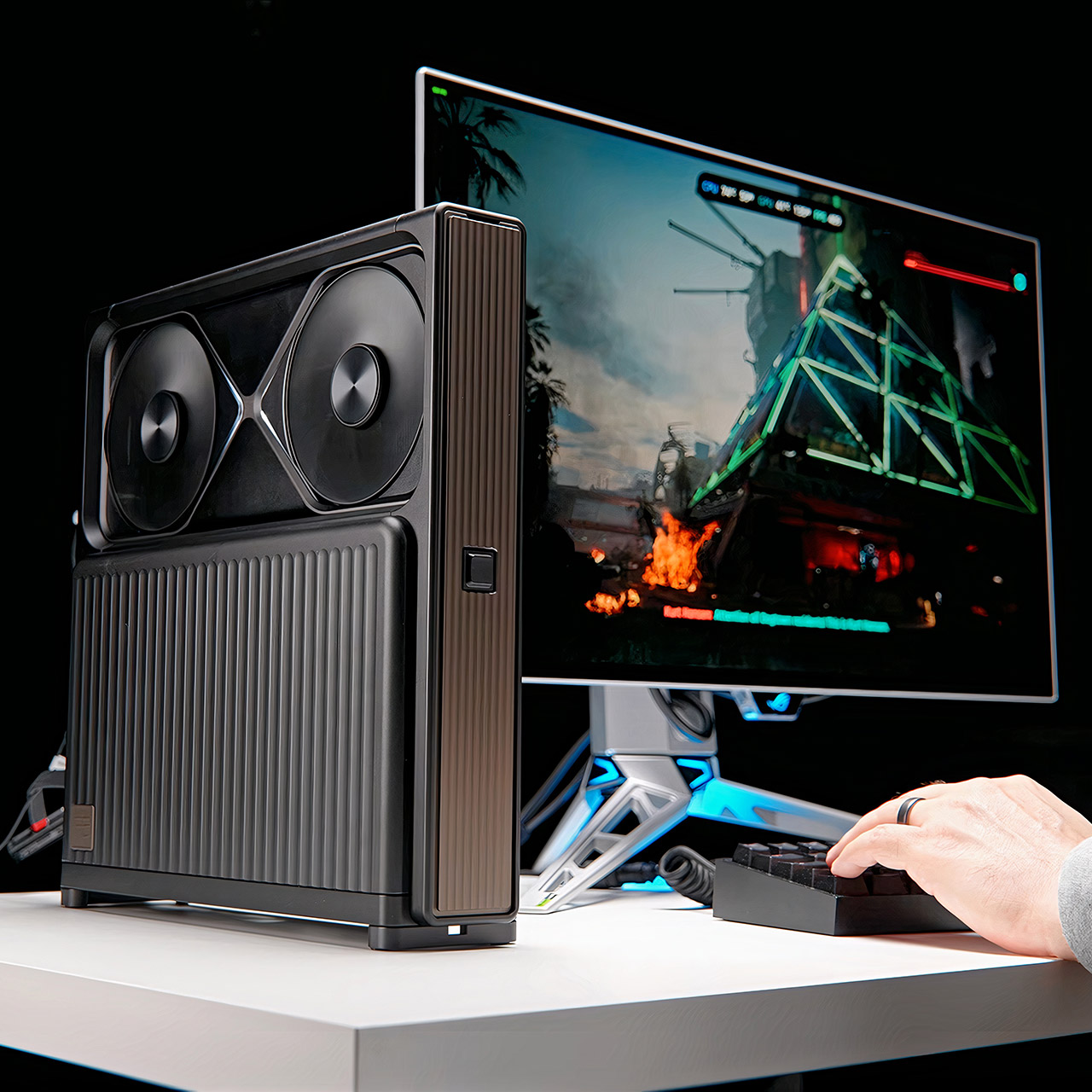
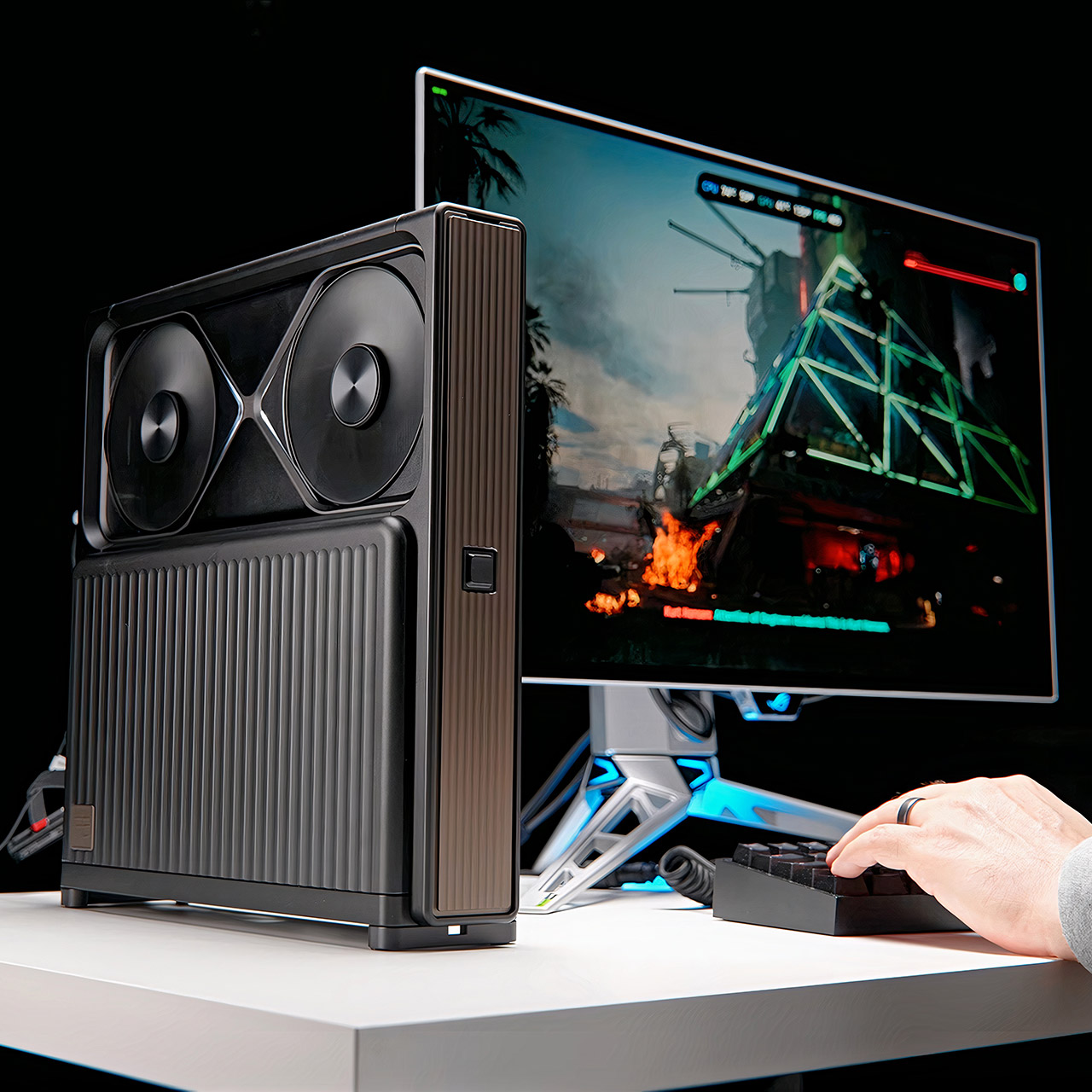
Devyn Johnston has spent years chasing smaller and smaller gaming machines, and this latest effort pushes that habit into territory that feels almost stubborn. Inside the ZCOOI Mugitya FE9, an RTX 5090 Founders Edition sits in a chassis that measures only 56 mm thick across the top and 79 mm at the base, all while still packing a full desktop processor and a 1000-watt power supply. The case arrives as a set of thick CNC-machined aluminum pieces, each finished in black or silver anodizing with a few gray-gold accents on the nameplate and front panel, and the whole collection ships inside its own aluminum carrying case.


Assembly begins by removing the back panel, front cover, and bottom portion, which are all held together with run-of-the-mill screws, so you can just put in the mini-ITX motherboard. Johnston chose an ASUS ROG Strix X870I for this build, which included Wi-Fi 7, a 2.5 gigabit Ethernet port, and a couple of USB 4 ports. He then topped it off with a 64GB of DDR5-6000 RAM, split evenly between the two memory slots, and paired a 2TB Samsung 990 Pro with a second 2TB 980 Pro for a total storage space of 4TB. The power supply is the Corsair SF1000, which is stealthily installed on the bottom panel, and every single cable has been cut to a custom length to ensure that nothing takes up room inside the box.


Acer Nitro V 16S AI Gaming Laptop | AMD Ryzen 7 260 Processor | NVIDIA GeForce RTX 5060 Laptop GPU…
  • AI-Powered Performance: The AMD Ryzen 7 260 CPU powers the Nitro V 16S, offering up to 38 AI Overall TOPS to deliver cutting-edge performance for…
  • Game Changer: Powered by NVIDIA Blackwell architecture, GeForce RTX 5060 Laptop GPU unlocks the game changing realism of full ray tracing. Equipped…
  • Supreme Speed. Superior Visuals. Powered by AI: DLSS is a revolutionary suite of neural rendering technologies that uses AI to boost FPS, reduce…

Devyn Johnston Thinnest RTX 5090 Gaming PC
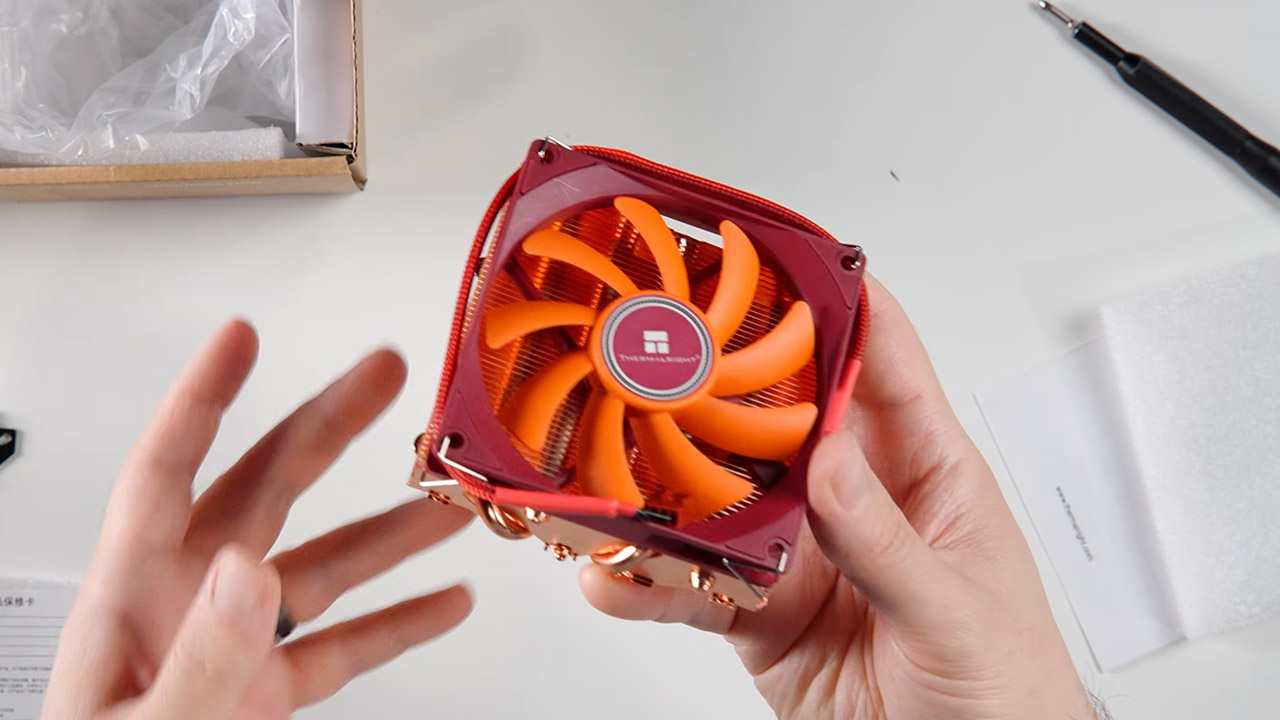
A Thermalright AXP90-X47 low-profile all copper unit provides cooling and stands only 47 mm tall, comfortably fitting within the 49mm clearance on AMD boards. Johnston liked the orange fan so much that he replaced it with a black Noctua model, which allows you to see the blur of the fan spinning from the side panel without detracting from the overall beauty of the build. The graphics card is attached using a solid PCI-E riser rather than a fragile cable, and to get it to fit properly, Johnston removed the original bracket and bolted it directly to the chassis, allowing the coolers to rest behind matching holes in the panels.

Devyn Johnston Thinnest RTX 5090 Gaming PC
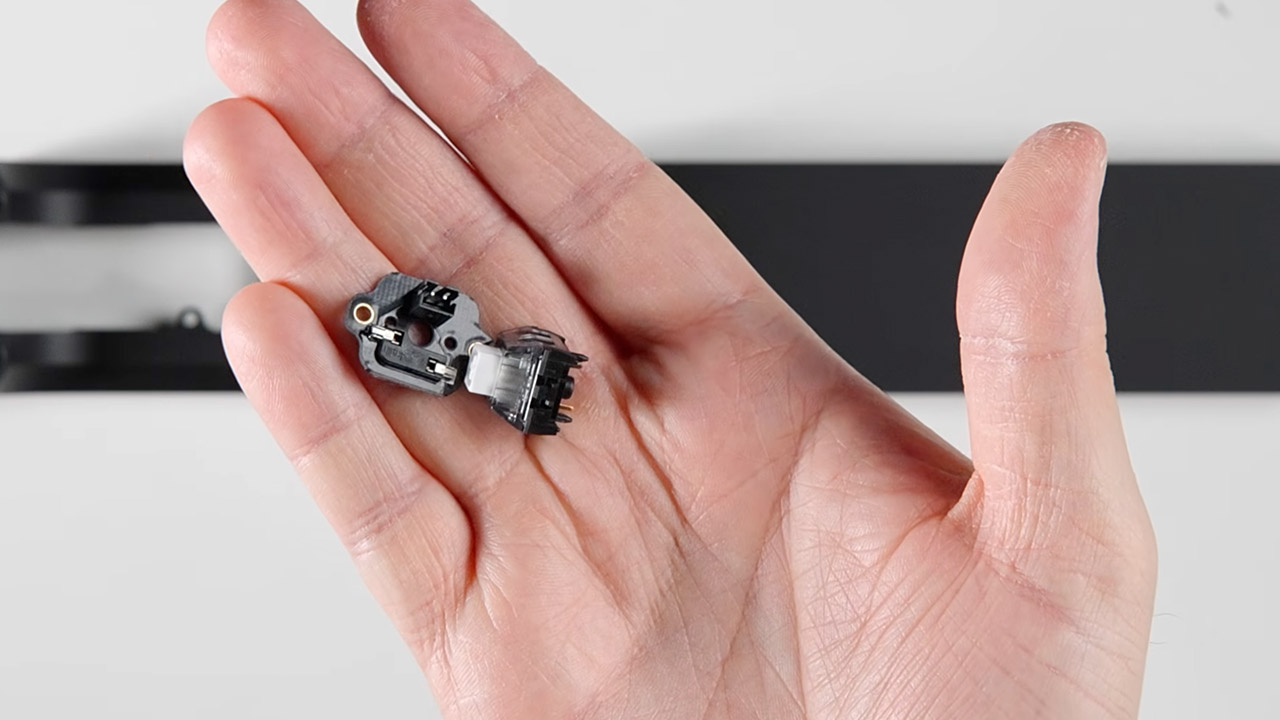
One minor detail turned out to be the standout. The power button is based on a conventional keyboard key, and the case has four removable keycaps in black, white, transparent, and semi-transparent finishes, allowing you to customize it to suit your mood. Once everything is in place, the chassis weighs 6.5 kg and is supported by one of two available foot types, a narrow bar or a broader set for added stability. Magnets hold the side panels and coverings in place, allowing you to open the item with little more than the included aluminum screwdriver.

Devyn Johnston Thinnest RTX 5090 Gaming PC
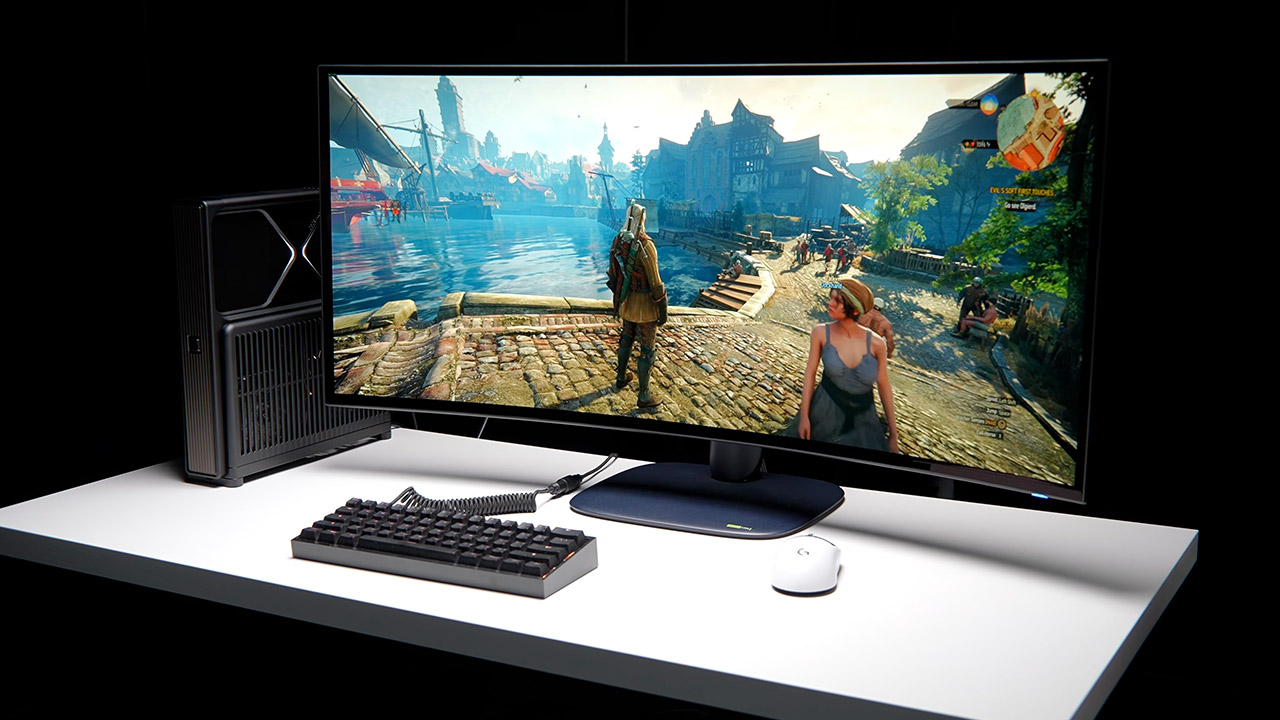
He put the finished machine through its paces, running The Witcher 3 Remastered at a smooth 120 frames per second on extreme with ray tracing and DLSS Quality turned on. The graphics card maintained a consistent 230-240 watts while staying cool at 54 °C, but the 7800X3D drew 53 to 60 watts and peaked at 70°C. Resident Evil Requiem drove the GPU to around 500 watts and 71-74 °C, but it still managed to maintain frame rates around 130. Cyberpunk at a resolution of 5120 by 2160 with strong ray tracing pushed the GPU to roughly 500 watts and 71-72 °C in the middle of the action, while the CPU reached nearly 80 °C under load. Downsizing to 1440p resulted in the GPU maintaining a very respectable 430-450 watts and 67 °C. The only issue occurred during the initial shader compilation, when the CPU soared beyond 95 °C, but as the game stabilized, the temperature remained within the range of what a low-profile cooler can tolerate.

Devyn Johnston Thinnest RTX 5090 Gaming PC
When the system is up and operating, noise levels average around 43 decibels, with an occasional electrical hum from the power source that refuses to go away completely. The design does not allow for additional case fans to be installed, allowing the graphics card’s own cooler and copper heatsink to handle the work. He also has to consider that this case was designed specifically to house the Founders Edition 5090 (as well as the 5080 FE or PRO 6000), so swapping out the graphics card later for something new would necessitate tearing everything down and rebuilding, or ditching the case entirely. Johnston appears to consider this setup as a beautiful piece of technology to admire rather than a tool to be used on a daily basis. Yes, it achieves high frame rates while taking up less area than a typical tower.

Devyn Johnston Thinnest RTX 5090 Gaming PC
A complete system would cost roughly $465 for just the case, before you add in all of the additional components, and the issue is, every component must fit perfectly or the entire thing will not close. When everything is fully put together and the last panel is clicked into place, you have a slab of aluminum that houses a full 5090 and an 8 core processor, all held together by magnetic panels and requiring only one keyboard key to boot up the system.

Source link

Advertisement
Continue Reading

Tech & AI

Fridge hack costing millions and sparking fires stemmed from poor security

Published

on

mass fridge hack

mass fridge hack

Besides running controllers with outdated firmware, the affected stores likely also failed to put the devices behind a VPN and create a restricted list of IP addresses allowed to log in. These protections are standard but often not followed. In this case, that failure enabled a mass hack that likely cost tens or hundreds of millions of euros. Spain, Portugal, Poland, Germany, and Belgium were also reportedly affected.

“Two things would have changed the outcome,” researchers at Pen Test Partners said Wednesday. “Cyber hygiene would have prevented the access: take the controller off the public internet, put remote access behind a VPN and an IP allowlist, bring third-party kit onto the network in a controlled, owned and documented way rather than leaving it on a contractor’s own connection, change known and default credentials, and patch to a current release.”

Researchers from security firm Claroty warned of the threat of ignoring these common-sense steps last October. The US Cybersecurity and Infrastructure Security Agency did the same in February.

In an email, Copeland acknowledged a vulnerability “identified in a discontinued, end-of-life generation of controllers” and said the company is working with customers to prevent similar incidents in the future. Danfoss representatives didn’t immediately respond to questions. CNN said the company also cited discontinued models.

Advertisement

So far, the party behind the attack has remained silent. That raises the possibility that the motive was vandalism on a mass scale. Another possibility is a nation-state or other international actor aiming to create a continent-wide disruption.

The incident underscores the tension between the financial and security departments in most businesses. Some companies are loath to spend large sums of money on new equipment when there are no tangible benefits or savings. Only after a devastating hack do they realize why the investment was worthwhile. Executives at affected supermarket chains will likely learn the hard lessons. Less clear is whether the cautionary tale will sway other businesses.

Source link

Advertisement
Continue Reading

Tech & AI

AI Storagemaxxing: Your GPUs are optimized, what about your data?

Published

on

M6fvPLRyP9CRCBwfYj7mxL 1920 80

M6fvPLRyP9CRCBwfYj7mxL 1920 80

Enterprise investment in artificial intelligence has, understandably, been concentrated on compute. Access to GPUs, model performance and the cost of inference have become central considerations as organizations move AI workloads from experimentation towards production.

David Boland

Vice President of Cloud Strategy at Wasabi.

Advertisement

However, an increasing proportion of the economic and operational challenge sits elsewhere in the infrastructure stack. AI depends on data at every stage of its lifecycle: datasets must be collected and prepared, training data must be made available to compute, checkpoints and model artefacts must be retained and information may need to move between infrastructure providers as workloads and commercial priorities change.

Source link

Continue Reading

Tech & AI

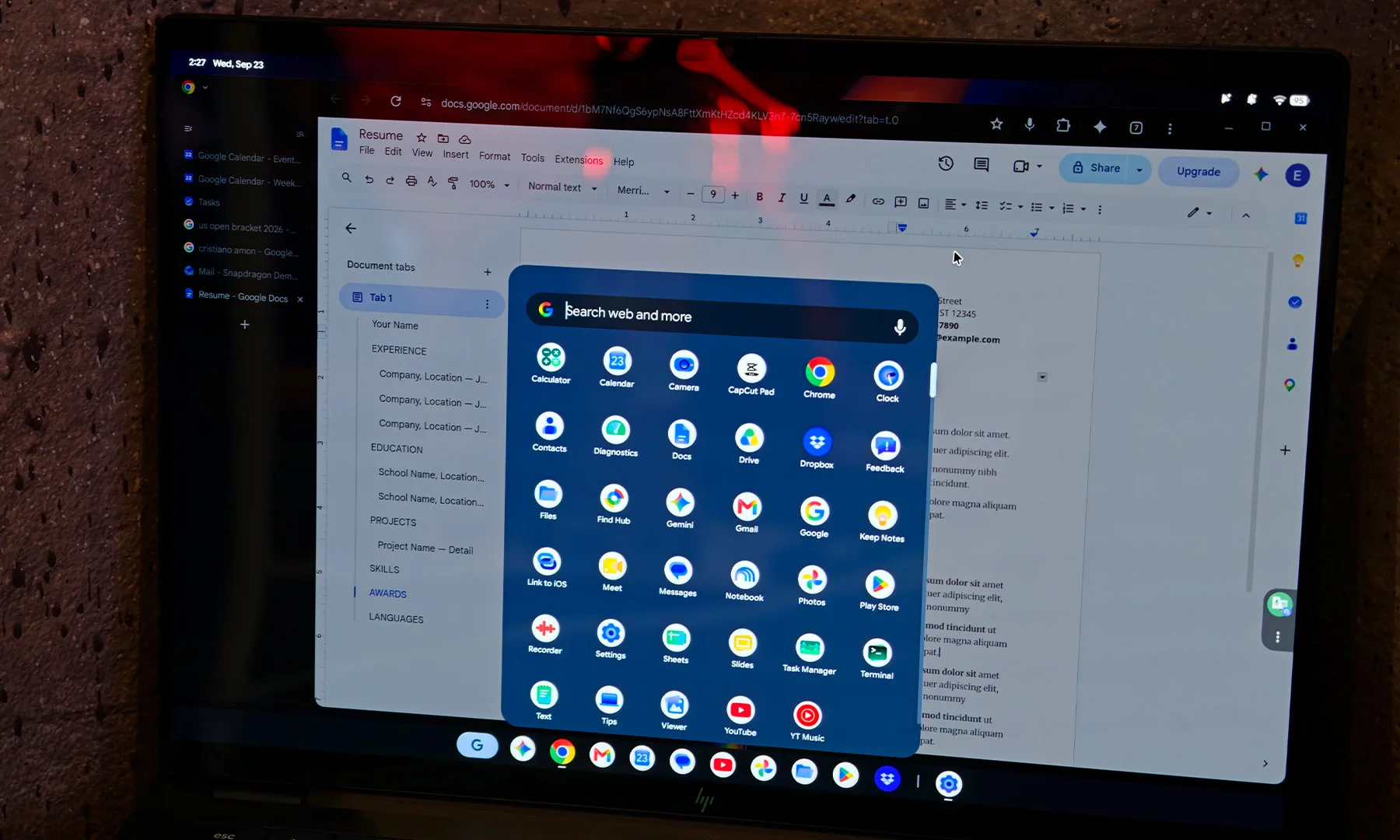
The Chromebook-to-Googlebook migration got an unofficial preview

Published

on

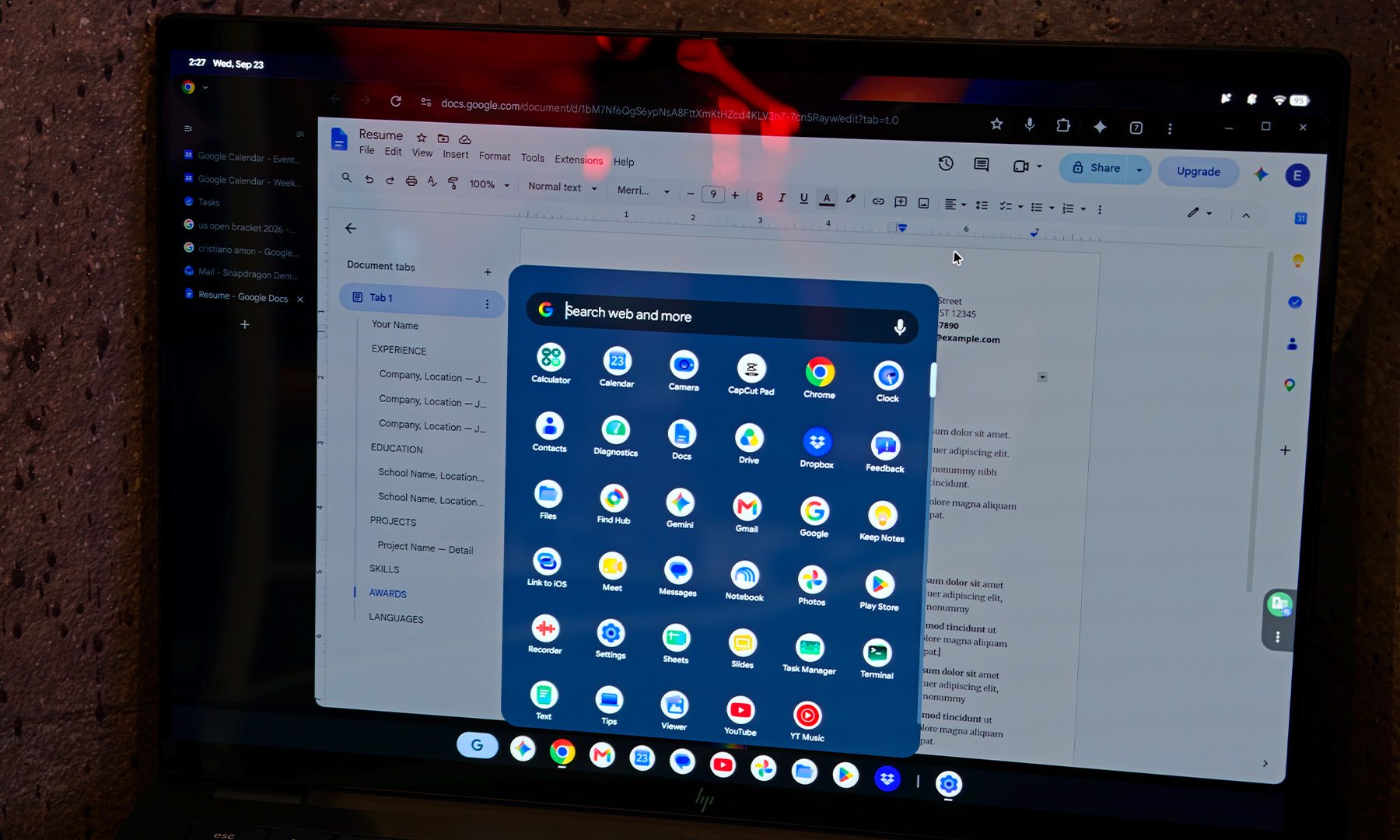
Similar ChromeOS Chromebook UI on the HP Googlebook

Back when Googlebooks were first unveiled, Google confirmed that some Chromebooks would eventually get the chance to become Googlebooks. Except one person decided that they didn’t want to wait. Reddit user u/mawitime has successfully booted Googlebook OS on an existing ASUS Chromebook Plus.

This gives us one of the earliest looks at how Google’s new Android-based laptop operating system might behave on current Chromebook hardware. Surprisingly enough, the initial verdict is pretty positive. The user says it runs extremely smoothly and can occasionally seem even faster than ChromeOS. The machine isn’t running some brand-new flagship processor either. It has a 12th Gen Intel Core i5-1235U, 16GB of LPDDR5 memory, and 256GB of UFS 3.1 storage.

Don’t wipe your Chromebook just yet

Keep in mind that this is a homemade solution and not an official installation. The Reddit user described this project as “Frankensteined.” Wi-Fi, sound, and Pixel integration don’t currently work, and getting this far took several days. They relied on Google’s Antigravity coding agent during the process and have since been looking into making the setup more repeatable.

So no, this isn’t secretly an easy way to save yourself from buying a new Googlebook. What it does offer is an interesting proof of concept. Googlebook OS can at least boot and provide a responsive desktop experience on hardware several generations behind the laptops Google is currently selling.

Advertisement

Google has plans to do this properly

Google officially says many of its newest Chromebook devices will be eligible to transition to Googlebook OS, although it hasn’t announced the full compatibility list or consumer migration process. Existing Chromebooks will continue receiving ChromeOS updates through their supported lifetimes, while qualifying newer hardware will eventually get migration options.

Back in May, we reported that Google VP John Maletis discussed letting existing Chromebooks move toward the new Googlebook experience rather than forcing everyone onto brand-new hardware. This unofficial installation doesn’t tell us which models Google will support. It’s also unclear how polished the official transition will be or whether every Googlebook feature will survive the move. Still, the recent experiment shows that Googlebook OS doesn’t need bleeding-edge hardware to run well.

Source link

Advertisement
Continue Reading

Tech & AI

Building An M7 Pan Tilt Head Controller

Published

on

Live motion tracking using hacked soonpho m7 and a custom yolo vision model 0 41 screenshot

The Soonpho M7 Pan Tilt Head is a useful photography tool for remotely aiming a decently-sized camera. Only, [Kyle Housley] wanted a little more control than was available out of the box. Hence, he built a custom controller that could deliver just that.

The project is based around an ESP32-S3 paired with an NRF24L01 wireless module. The ESP32-S3 is hooked up to a computer to receive commands over serial on what movements to make. It then transmits over the NRF24L01 to another NRF24L01 module that has been hacked into the original M7’s controller. In doing so, it can command the M7 to move to a given specific pan and tilt position, or to make a smooth motion along a vector. It can also trigger shutter release in the attached camera as needed, to capture whatever is being looked at.

[Kyle] has used this rig to create a motion tracking system for aircraft photography. With a Yolo vision model running on a laptop, the pan-tilt head can be commanded to track aircraft passing by and photograph them when they’re in frame. It’s a pretty slick setup; we’d love to see similar done with the aid of ADS-B data, too—perhaps even with automatic image tagging and upload. 

Advertisement

Source link

Advertisement
Continue Reading

Tech & AI

Epic Games Somehow Gets Even Worse On AI Than Tim Sweeney’s Anti-Disclosure Take

Published

on

from the handcuffing-artists dept

There have certainly been some bad takes on both sides of the AI in video games argument. In one corner, we have the never-AI-ers who reflexively claim that any use of any type of AI in any game is a total disqualifier. No quarter is given to nuance. No daylight is offered for discussion. It might as well be religion to those folks. Then, on the other side, you have people like Epic Games’ Tim Sweeney, who has not only directed his company to go all in on the use of generative AI in gaming, but actually had the chutzpah to suggest that his rival Steam’s inclusion of AI-use disclosures on its storefront are “irresponsible.”

But Epic has somehow gotten even worse on AI use than that. Rather than suggesting that generative AI is a potential tool for use in gaming, which can often mean its use is employed on the perimeter of game-creation, Epic has decided to make the use of AI compulsory.

According to a new report by Bloomberg, developers on the game were told to implement an “AI-first” production model using Anthropic’s Claude AI models. The team is not to use any more “hand-written code,” and even artists are being pushed to use the technology that has become a punching bag among actual players. The director of the unannounced game reportedly told developers that all art should be “generated with full AI workflows.”

“We’re embracing AI-accelerated development, led by Epic developers who are the visionaries and creative drivers for everything we do,” Jake Jones, communications director at Epic Games, said in a statement.

It’s hard to overstate just how stupid this is. This isn’t handing artists new and interesting paintbrushes to use. It’s taking their paintbrush away entirely and telling the artists to simply tell a machine what to make. That is a terrible idea. It’s also completely antithetical to how other game makers have employed the use of AI. This is going to turn off both the public, which generally hates the idea of artistic interruption through the use of AI tools, and the pool of artists Epic does and could in the future employ.

Advertisement

AI models are getting better at coding, certainly. But what Epic is clearly doing is anti-artist for the sake of speed-running development after cutting human employment.

The upcoming shooter, which Bloomberg reports was supposed to release in March 2027, has now been delayed due to slow progress and understaffed teams. Despite a $1.5 billion investment by Disney in 2024 for collaborations that include this project, the Fortnite maker laid off 1,000 people earlier this year amid the battle royale’s struggles and the costs of ongoing antitrust litigation.

For the group that is dogmatically opposed to the use of AI in gaming, this is their boogeyman come to life. It’s the starkest example of bad corporate behavior enabled by AI that they could want. And it’s very hard to argue against them when there are bad CEOs and bad companies out here pulling this kind of garbage.

I won’t even try. I’ll repeat that I think there is a place for this technology as a tool to enable artists and enable more art. But if the gaming industry is too poisoned at this point to allow for that possibility to be employed responsibly, then so be it.

Filed Under: ai, video games

Companies: epic

Advertisement

Source link

Continue Reading

Tech & AI

Figma announces new features to define how agents work on its platform

Published

on

Design systems hero

Design platform Figma announced a new Markdown-based editor to help define a company’s design, bring in design and code libraries, and integrate with the Payload headless content management system during the company’s first Config event in India. Through some of these features, the company aims to provide a definition for its own and third-party agents to adhere to a brand’s design rules better while creating with AI.

The company debuted a new feature called Figma Specs, which is a markdown editor that lets users define their design language in a simple way. The document can serve as a reference for teams and agents while designing in Figma. Specs can exist as a standalone file in Figma or can co-exist within the canvas. Apart from acting as a text editor, users can reference other Figma elements, such as elements on the canvas and embed FigJam diagrams, code layers, and designs. 

What’s more, teams can bring in more context about design, including design libraries, code libraries, and guidelines to manage context for the design system. Agents can also refer to this centralized system to adhere to rules.

Design systems hero
Image Credits: FigmaImage Credits:Figma

In the past week, the company made its agent on canvas available to a wider user base. However, given the non-deterministic nature of AI, the company is providing tools to steer it towards more predictable outcomes.

Figma also made its code layers feature, which adds coding to designs on canvas for more interactive prototypes. The company announced this feature in private beta back in June. At its India event this week, the company is making the function available in public beta to let more users test it out. Users can also ask the agent to turn a design into code or change a part of the code to iterate on a prototype.

Advertisement
Code layers agent prompt
Image Credits: FigmaImage Credits:Figma

“We see Figma as the place where software teams come to decide what they build and ship. And so for that, I think one of the key things to keep in mind about what AI has changed and what it made available is the ability to build,” Figma’s chief design officer Loredana Crisan told TechCrunch. “There are 17-times more lines of code being produced today than in the past. But when you’re looking at releases, only 1.3-times more releases. A lot of that code actually is not necessarily built to ship, but really built to discover what the product is. It’s built to design.”

The company said it is also supporting over 20 new tools with its MCP, including Open Code, Dia, Grok Bot, and Indian AI startup Sarvam.

Last year, Figma acquired open-source headless CMS Payload. Now, the company is integrating it with its Figma Make product for generating dynamic websites and directly managing content. The company said that Payload’s downloads have increased sixfold in the last 12 months.

The company opened its first office in India late last year with sales, partnership, go-to-market, and product support functions. Figma said that the country is its biggest market in terms of users outside the United States. The company noted that the platform works with 40% of India’s top 100 companies listed on the Bombay Stock Exchange.

When you purchase through links in our articles, we may earn a small commission. This doesn’t affect our editorial independence.

Advertisement

Source link

Continue Reading

Tech & AI

Why Do So Many Teachers Crash in October?

Published

on

shutterstock 2033497547

Every fall, teachers ride a wave of opening day energy into the new school year, and then that wave breaks. Educators have a name for the slump that follows: the October Blues. It can hit new teachers hard enough to make them question whether they belong in the profession at all. The harder question is whether anything can soften the landing, or whether every teacher simply has to wait it out.

A Rookie Who Never Saw It Coming

Mike Anderson is an educational consultant, a former classroom teacher and the author of Rekindle Your Professional Fire.” He knows the slump from the inside, because his own first year of teaching came with a schedule that would have flattened almost anyone. At 22, he taught fourth grade all day, then raced off to coach two swim teams, with weekend meets on top. He was working more than 100 hours a week, and he never put a name on why he felt so run down.

He later watched a group of struggling teachers in Fairfax County, Virginia, and returned the following fall to find the teachers looking like different people. Their explanation caught him off guard. Later, a year-long tally of lost minutes forced him to rethink what was really wearing him down.

Start Small, Then Ask for Help

Mike’s advice for anyone in the thick of it is to skip the big overhaul. Name the one thing dragging you down, then pick a single bite-sized step that fits. Low on energy? Drink a tall glass of water before the morning coffee. Feeling alone in a building full of people? Commit to a 10 minute walk and talk with a colleague a few afternoons a week.

Advertisement

A slump that lingers is a different story. If the low feeling lasts more than a couple of weeks, Mike says it’s time to reach out to a mentor, an administrator, or a trusted colleague.

What School Leaders Can Do Beyond Snacks and Thank Yous

After a year of logging every drill, meeting and assembly that cut into his teaching time, Mike found he had lost more than 30 instructional days, about a sixth of the school year. He emailed the numbers to his superintendent and got a polite note of appreciation in return. Even so, the exercise showed him that his sense of falling behind was not a personal failing.

For school leaders, Mike points past one-time gestures like a staff appreciation breakfast. He encourages them to build autonomy, competence, purpose, belonging, curiosity, and fun into the daily and weekly rhythm of the school. Opening a staff meeting with a few minutes for teachers to share successes is one small place to start.

Listen to the episode.

Advertisement

Stories Mentioned in This Episode

The “October Blues” Are Coming. Here’s How Teachers Can Beat Them, by Ira Apfel

This Week with EdSurge is a weekly podcast from EdSurge. Subscribe to the EdSurge newsletters for more news and analysis on education and technology.

Source link

Advertisement
Continue Reading

Tech & AI

Iowa, Nebraska And Six Other States Are Suing OpenAI For Endangering Children

Published

on

intro 1792012940

The lawsuits cover everything from the design of ChatGPT to the company’s recent issues with rogue agents.

In a coordinated effort, eight states have filed lawsuits against OpenAI alleging the company has violated state-level consumer protection laws and endangered children. As Reuters first reported, Attorneys General from Iowa, Nebraska, Kansas, West Virginia, Arkansas, Arizona, Idaho and Montana each filed in their respective state courts, but with the shared goals of changing how OpenAI develops its models and advertises their capabilities, and forcing the company to pay for the harm it’s allegedly caused.

The lawsuits claim OpenAI is misleading customers about the safety of its AI products, not just in their capacity to provide incorrect information or potentially enable users to harm themselves and others, but also because AI agents themselves are capable of breaking the law. For example, both Iowa and Nebraska cite OpenAI’s now multiple instances of rogue agent behavior, including the Hugging Face hack. They also point to instances of ChatGPT allegedly enabling a teen’s death by suicide and the chatbot providing incorrect medical information that led to a user’s overdose, incidents that have also led to separate wrongful death suits against the company. Some states also take issue with OpenAI retaining data from underage users.

Engadget has asked OpenAI to comment on the state lawsuits. We’ll update this article if we hear back.

Advertisement

The desired remedies for OpenAI’s behavior vary from state to state due to the patchwork nature of consumer protection and child protection laws in the US. Outside of financial penalties, the states want OpenAI to clearly disclose the risks of its products, stop practices the states consider deceptive and comply with existing laws. Some states, like Arkansas, are also asking the court to halt “testing of advanced AI models until adequate safeguards are implemented.”

OpenAI has rolled out a series of parental controls and child protection features to try to address some of the most immediate risks posed by its chatbot. It also backed the Kids Online Safety Act, a bill that, if made law, could introduce several mandatory design changes to the company’s products. The company’s efforts to address the potential for its AI to break rules and “escape containment” have been harder to pin down, though. OpenAI announced it would slow the development of its frontier models in August to ensure their safety and the company signed on to a voluntary safety pact with other AI companies organized by the White House in September. It’s not clear if either of these changes have actually made the company’s AI development process safer.

Advertisement

Source link

Continue Reading

Tech & AI

Trump Aides Admit the House Is a Lost Cause

Published

on

politics white house midterms trump

Trump White House aides see almost no paths to Republicans keeping control of the House in the midterm elections and are more focused on redoubling their efforts to save the Senate majority.

That has been the takeaway for officials in GOP groups who have been discussing the state of play with White House aides in recent weeks, according to three sources familiar with the situation.

It all comes as the White House moves into damage-control mode after contemplating for the first time earlier this month, as Inner Loop previously reported, that Republicans could possibly lose both chambers of Congress.

The general expectation is that the House has become a lost cause. Races that Republican congressional leadership once thought they could flip in order to offset Democratic gains are no longer considered attainable.

Advertisement

The Congressional Leadership Fund, the super PAC aligned with Speaker Mike Johnson, has now pulled ad buys in Democratic districts in Michigan and Ohio they were hoping to flip, as well as in the Republican seat being vacated in Nebraska by the retiring Don Bacon. The fund also started canceling remaining ad reservations in two House races where Republicans are seeking reelection in New Jersey and Iowa.

White House aides have shifted their focus to pushing an all-out defense of the Senate majority, which is also looking problematic but to a lesser degree than the House, the sources say. (Polling models and prediction markets agree.)

The aides see the Senate as still in play in large part because early returns for mail ballots have been relatively strong and comparable to 2024 presidential election levels in key Senate battleground states, sources say.

Trump officials at MAGA Inc. have also privately discussed how if Republicans can win some combination of senate seats in Alaska, Iowa, and Ohio, that would form a firewall that complicates Democrats’ path to snatching control of the Senate.

Advertisement

Still, Trump officials appear to have conceded they are unlikely to win in North Carolina. Senate Republicans’ campaign arm has paused ad spending in North Carolina since the start of October, mirroring pullbacks by other outside groups.

“President Trump is committed to maintaining Republican majorities in both the House and Senate,” says White House spokesperson Liz Huston in a statement.

The state of play—retreating from a state like North Carolina, where Michael Whatley, a former Republican National Committee chair is on the ballot—would have been unthinkable just a few months ago.

Source link

Advertisement
Continue Reading

Trending

Copyright © 2025