
If you haven’t heard of “live shopping,” you might soon. Livestream shopping is already a staple of e-commerce in China, where consumers log onto apps like Douyin and Taobao to buy products from a livestreamer — think QVC. Now, a new app is trying to bring it to the United States.
Tech & AI
How live auction apps like Whatnot are turning shopping into gambling


The Whatnot app features rolling live auctions that can last from three seconds to a minute. Users can bid on everything from trading cards to clothes to steaks. With about 550,000 hours of streaming per week, the site moves an extraordinary amount of product.
Using Whatnot is fast-paced, and essentially frictionless. Users swipe at the bottom of their screens to place the highest bit for an object. If they win, the object is sent to their house, no confirmation screen needed.
The system isn’t without its drawbacks. Hanna Krueger, a retail reporter for the Wall Street Journal, investigated how Whatnot has become an addiction for some users. She tells Today, Explained co-host Sean Rameswaram that she spoke to a user who spent over $1 million on the app — and lost everything in the process.
Below is an excerpt of Krueger’s conversation on the podcast, edited for length and clarity. There’s much more in the full podcast, so listen to Today, Explained wherever you get your podcasts, including Apple Podcasts, Pandora, and Spotify.
Tell us about this app, Whatnot.
Whatnot is a live shopping app. Imagine the home shopping network had a baby with TikTok and eBay, and it was on your phone and it was running 24 hours a day.
You open up the app [and] there’s countless numbers of categories. You can get coins. You can get cards. You can get horse tack, plants, goo, lobsters. I mean, the categories are expanding all of the time. And there are sellers live-auctioning off these goods in real time.
There’s a countdown clock, and it’s counting down and the auctioneer or the seller is hyping up the chat, as they call it. And that chat is commenting like, “Wow, look at this. What a deal.” In the meantime, there’s some music. Sometimes it’s nice mellow music, other times it’s metal or EDM, depending on the personality of the seller.
The end result is that the last person to swipe at the bottom of the screen, which is how you bid, gets the item. And once you have swiped and you’re the final person to do that, there’s no real confirmation screen. We’re just onto the next product and you only really find out what you got when it shows up at your door.
It started as a marketplace for Funko Pop figurines, which are these niche, squareheaded figurines in the collectible world, but it quickly expanded. I would say the biggest categories are sports cards and trading cards like Pokémon. And then the other one is women’s fashion and beauty products.
I spoke to multiple people who found themselves just spiraling into holes of addiction and what they liken to gambling because of that “break format.”
Tell us about the break format.
Break format typically applies to trading cards. That could be sports cards, Pokémon. It can also happen with rare coins, but the idea is that there is a sealed pack of cards and that sealed pack is pretty expensive to buy outright — say it’s $10,000. Before the show starts, they’ll say, “Okay guys, there are 10 slots that apply to this pack. So I need 10 people to buy in at a price of $1,000.” This is a steal, right? You’re getting a piece of the pie of a $10,000 pie for only $1,000.
The reason that they’re willing to do that is that within that pack, there might be cards that are worth $2,000, $3,000, $10,000. So you recoup quite quickly if you only paid a thousand for that. The other side, the flip side that often does happen is that the cards are worth nothing close to what you bought in for.
People will get a card that’s worth $50, $100, and at the end of it, all you have to show is these small-value cards. And those who have described kind of a cycle of problematic behavior say that when you lose, when you don’t make up the value that you paid, you just buy right into the next one until you get out of the hole.
It’s this feeling of the high, the thrill, the adrenaline rush, the “Oh my God, look what I just did” when you get a card that’s way over what you thought. And there’s the despondency, this despair, the shame, and that feeling of, “Okay, I need to make my money back on that flip side.”
This is where this app really begins to look like gambling, to look like addiction, to look like a drug. As does the story of Sean Harding, with which you open your piece for the journal. Tell us about Sean.
Sean Harding is a 45-year-old finance manager from Denver. Sean found himself on this app and he wasn’t spending too much in the very beginning, maybe $100 a day. And then within 40 days he was spending over $1,000, $5,000 a day. Just swiping whenever he could get a free moment — when he was doing laundry, sitting on the toilet.
It was only when his wife confronted him about this odd behavior, about some missing pages on his credit report, that he really looked at what he had spent and that number was crazy. It was $1.3 million in four months. He had borrowed money from a friend, he had taken out personal loans. And finally, when all that was depleted, he had used his employer’s credit card.
You spoke to the founder of Whatnot. What does he say when you tell him a story like Sean’s?
[Whatnot CEO and cofounder Grant] LaFontaine said that addiction does not register as a problem to them in their internal data, which they look at often. When we presented a story like Sean’s, they repeated that addiction does not register as a problem. When you breach the topic of gambling or people accusing this app of having gambling features, that’s where Whatnot definitely buttons up. They’re under pretty intense scrutiny surrounding that allegation.
They categorially reject that and they say they can’t comment on pending litigation. But they do say that they created an app that had the best user experience possible and that they’re new and they’re learning and they’re scaling and they’re assessing the marketplace in real time.
Are they implementing any guardrails to maybe prevent someone like Sean from ruining his life and his family’s life?
While they say that addiction doesn’t register as a significant problem, they also have introduced optional spending limits and watch time caps. They said that’s not because of addiction concerns, but because some users said that they spent more than intended. That was the distinction that they made.
They said there’s other safeguards coming, such as “velocity of spend” alerts for sudden spending spikes. Some have PIN locking for categories, so you have to type in a PIN to go to a certain category. Some of these are self-policed. A watch time cap, you could presumably change that yourself, even though you’re the one that implemented it.
They’re also saying that they’re going to develop some type of birthday reconfirmation option so they could catch underage users, which is coincidentally how I came to know about Whatnot. One of my colleagues’ daughters had spent over $5,000 in one night on Pokemon cards. And he only realized that when he looked at his credit card and was like, “What is this?” And he went to sell those cards at a card shop after the fact to try to recoup, and he could only get back like $300.
Is this just a Whatnot thing, or are there other ways kids and adults can be gambling their lives away on these live auction-type of platforms?
Live shopping has been one of the most predominant ways that Chinese shoppers shop for a long time, and the wave has crested over there a long time before it has here. It really started to take off and gain traction in America in the kind of post-pandemic world.
While Whatnot is definitely leading the charge, TikTok has their own thing called TikTok Shop that has a similar kind of setup. eBay is trying out stuff like this. And then for the card-collecting hobby specifically, Fanatics Live is a major source to get your cards and experience breaks and all that.
Do all of these different platforms, be it on TikTok or eBay, have the sort of gamified countdown clock to make it more intense, more exciting, and perhaps more addictive?
Whatnot’s found a way to create a really engaging and easy-to-interact-with atmosphere. They’ve also successfully merged the parasocial media aspect. There are relationships between the seller and the buyer, so if you keep going back to the same seller, they’ll remember your name, the people in the chat will remember. There are some folks who were like, ‘I found friends in here.’
Sean said that the night that he used his company credit card, he was reached out to by a seller and they were like, “Hey man, you got to join this. This break’s awesome. I have a great slot for you. I’ll give it to you at a discount.” And he’s like, “I don’t have any money.” And that’s when he realized that he had a little money. It just happened to belong to his employer.
That kind of shows that there’s this social atmosphere. Whatnot is definitely leading the charge, but other companies are seeing how successful this is, and I think it’s only time before they kind of merge all these aspects together in an attempt to take their market share from them.

Continue Reading


The Marine Institute’s Dr Niall McDonough outlines why Europe needs to strengthen its ocean knowledge systems to help the region ‘adapt, compete and lead’.
As Europe seeks to strengthen its competitiveness, security and resilience in an increasingly uncertain world, the EU Ocean Pact provides a framework for addressing some of its most pressing challenges.
Its success will depend on whether Europe is prepared to invest in the knowledge systems needed to transform ambition into action.
Every Ocean Pact priority depends on ocean knowledge
The marine knowledge system comprises ocean observations (in situ and remote), data systems, data products and services, research, expertise, infrastructures, networks, partnerships and programmes. All of these components are interdependent, and to deliver real societal and economic impact, must work in an integrated way.
Without strong marine knowledge systems, Europe cannot, for example, evaluate the effectiveness of marine protected areas, monitor ecosystem recovery, understand climate impacts or measure progress towards environmental targets.
These systems provide the evidence, know-how, and operational capabilities that transform policy objectives into measurable outcomes. They enable policymakers, regulators, industries and communities to make informed decisions, assess progress, manage risk, and course-correct in response to evolving conditions.
At the same time, they help ocean businesses to reduce operational risk, improve planning, and make informed investment decisions, strengthening Europe’s ability to compete in emerging ocean industries.
The same marine observation networks that support environmental protection can also underpin maritime security and defence.
Marine observation and monitoring platforms, including satellites, research vessels, autonomous systems, seabed sensors and coastal monitoring networks, provide safe navigation as well as the situational awareness needed to detect, monitor and respond to emerging threats.
There remains, however, a substantial degree of fragmentation across Europe’s observation and data systems, which have been developed by a wide range of actors with different interests and purposes.
The OceanEye initiative launched in June 2025 is an important commitment by the European Commission to reduce this fragmentation and close critical data gaps.
While the specific modalities will be set out in the forthcoming Ocean Act (due in early 2027), the opportunity to improve coordination and alignment across all relevant ocean observing and data systems (metocean, environmental, maritime, safety and security, socio-economic etc) should not be lost.
Investing in public knowledge is a competitive advantage
This especially matters at a time when Europe seeks to enhance its competitiveness, as the ability to generate, manage and effectively apply knowledge and insight is becoming a source of economic strength, resilience and geopolitical influence.
Here, Europe possesses a distinctive advantage, with a long tradition of investing in public goods that create value across society, including research infrastructures, Earth observation systems, environmental monitoring networks and open scientific collaboration.
Horizon Europe, moreover, is the only truly global research programme with many countries around the world able to participate either as equal partners through accession agreements or as Third Countries eligible to receive funding.
The Draghi report pointed out that while Europe is a leader in many fields of research (notably including ocean science), it has traditionally been less effective at translating research excellence to competitive gain.
The next Multi-Annual Financial Framework will seek to address this through an enlarged European Competitiveness Fund and an increased emphasis on competitiveness in the next Horizon Europe Programme.
This is not wrong, but we must ensure that this evolution does not compromise the necessary support for public-good, policy-oriented research. Our competitive advantage resides here just as much as in higher TRL research and commercialisation supports.
Atlantic Summit Galway 2026
The priorities for future ocean research will be at the heart of discussions during the Atlantic Summit Galway on 8-9 October 2026.
Policymakers, researchers, innovators, industry leaders and coastal communities from across Europe and the wider Atlantic region, will come together to define the critical challenges and opportunities related to the ocean and to raise the ambition for the next chapter of EU and Atlantic Ocean R&I.
As an event with formal association to Ireland’s Presidency of the Council of the European Union, the conference will explore how ocean knowledge can support the implementation of the Ocean Pact and strengthen Europe’s future.
At a time when ocean challenges increasingly transcend national boundaries, the summit will provide a vital platform for collaboration across disciplines, sectors and countries, enabling shared solutions to shared challenges.
Europe is entering an era of intensifying competition for technology, resources, resilience and talent. Oceans will play a central role in all four. To succeed, the next Multiannual Financial Framework and Horizon Europe programme must recognise ocean research, knowledge and innovation as strategic investments that will help Europe adapt, compete and lead.
Dr Niall McDonough is director of policy, innovation and research support services at the Marine Institute, the state agency responsible for marine research, technology development and innovation in Ireland. McDonough has a PhD in marine biology and has worked at the Marine Institute since 2007, holding various leadership positions.
Don’t miss out on the knowledge you need to succeed. Sign up for the Daily Brief, Silicon Republic’s digest of need-to-know sci-tech news.

Apple’s M6 Mac mini still comes only in silver, making vinyl skins an easy way to give the compact desktop a more personal look. Our favorites add style without bulk while helping protect the aluminum finish from everyday scratches and fingerprints.
 Mac mini
A vinyl skin makes the most sense for anyone who wants to change the Mac mini’s appearance while preserving its compact footprint. Unlike a case, a skin provides cosmetic protection rather than meaningful protection against drops.
The 2026 Mac mini keeps the same dimensions as the enclosure Apple introduced with the M4 generation, measuring 5 inches square and 2 inches tall. The shared dimensions keep many M4-era skin designs relevant to the newer Mac mini.
XtremeSkins already sells a product specifically labeled for the M6 Mac mini, while Slickwraps, ArmorSuit, and Capes continue to list their skins for the 2024 model. The biggest differences come down to design, material, coverage, and price.
Continue Reading on AppleInsider | Discuss on our Forums
Hackers are abusing legitimate Bing search-result redirects as click URLs in Google search ads to direct users to fake Claude installers that deliver ClickFix attacks.
The technique, dubbed “Adception” by security researchers at Push Security, appears designed to evade advertising security checks by using Bing’s trusted domain as the ad destination, before redirecting victims through a compromised website to the malicious download page.
The attack also uses multiple layers of cloaking to prevent security scanners and visitors who access the malicious URLs directly from seeing the payload.
According to a report published by Push Security, the campaign was discovered after researchers detected a malicious Google ad targeting users searching for “claude mac.”

Source: Push Security
Unlike typical malvertising campaigns that direct victims to attacker-controlled domains, the sponsored result displayed the legitimate bing.com domain, making the advertisement appear less suspicious.
When clicked, Push says the ad first passed through Google’s advertising redirect before reaching Bing’s bing.com/ck/a click-tracking endpoint, which forwarded the browser to a legitimate but compromised WordPress website belonging to a South American retailer.
The compromised website then redirected the visitor to claude-desk-code[.]com, a fake Claude download page designed to trick macOS users into executing malicious commands.
Bing’s click-tracking redirects use JavaScript to send visitors to their destination, allowing attackers to redirect users to malicious websites while making the traffic appear to originate from Bing.
The campaign also uses two layers of cloaking to prevent unwanted visitors from reaching the payload.
The compromised WordPress website checks for a Bing referrer and specific browser headers before redirecting visitors, while the fake Claude website uses JavaScript to verify that visitors arrived from Google or Bing.
Visitors who try to access the malicious site directly are redirected to a 404 error page, making it harder for automated security scanners to analyze the attack.
Fake Claude installer hides malicious commands
The final destination is a convincing imitation of a Claude download page that offers a macOS installer using an installation command entered into the Terminal.

Source: Push Security
However, while the page displays Anthropic’s legitimate installation command, curl -fsSL https://claude.ai/install.sh | bash, clicking the copy button places a malicious command in the clipboard.
The substituted command first prints a message claiming to download Claude from Anthropic’s official website, but actually decodes a Base64-encoded URL pointing to lake-90[.]com.
It then uses curl to silently download a .dat file from the attacker-controlled server and pipes its contents directly into the macOS Z shell (zsh) for execution.
This means victims see the legitimate Claude installation URL both on the download page and in the terminal, even though an entirely different script is being executed.
The final payload delivered by the attack remains unknown, so it unclear what malware, if any, is being installed.
Push Security says it identified several domains associated with the same ClickFix toolkit, which it tracks internally as AcSig, that use an identical macOS installation command, payload URL structure, and installer interface.

Join Mikko Hyppönen and security leaders from the NFL, CHANEL, and Atlassian for a two-hour digital summit on what AI-speed attacks change, what defenders should stop doing, and how to validate, decide, fix, and re-validate at machine speed.

Perennial Living wants to make care homes feel like luxury hotels
From about S$8,000 a month, seniors in Singapore can now live in an assisted living residence with a swimming pool, karaoke lounge, mahjong room, and even a personal concierge.
That’s what Perennial Living offers.
Spanning 195,000 sq ft at 28 Parry Avenue, it is Singapore’s first private assisted living development, with 200 assisted-living apartments alongside medical care, rehabilitation and memory care facilities, as well as a 100-bed nursing suite.
The development aims to offer a five-star hospitality environment, with dining and recreational amenities, alongside on-site services such as medical care, rehabilitation therapies and Traditional Chinese Medicine (TCM) treatments.
Perennial Holdings has poured S$265 million into the project. Here’s a closer look at what residents can get for the price.
Apartment and suites
Assisted living residents can choose from studios, one-bedroom apartments, one-bedroom suites and two-bedroom suites, ranging from 302 to 569 sq ft. The apartments sit in ten blocks linked by bridges, with four units per floor, and private lift access on most floors, CNA reported.

Smart technologies will be implemented to support residents’ independence and safety.
These include remote-controlled curtains, motion-sensor lighting, 24/7 emergency response systems, bedside vital signs monitoring devices, fall detection, and facial-recognition access.
For added peace of mind, residents can opt for in-unit CCTV access for designated family members.
Over at the nursing suites, residents with higher care needs can choose from one-bedroom and two-bedroom layouts ranging from 212 to 374 sq ft.
Each suite features nursing beds positioned beside or near windows to maximise natural daylight and outdoor views. Each suite also has call bells, fall detection, motion-sensor lighting and facial-recognition access.
Personal concierge, mahjong rooms and more
Beyond their living spaces, residents will have access to over 38,000 sq ft of terraces overlooking the adjoining park, as well as a swimming pool, a karaoke lounge-cum-movie theatre, a mahjong room and a multi-purpose hall for calligraphy, arts and crafts, chess and other board games.

There is also a full-sized bus within the development, which has been converted into a Music Bus equipped with a jukebox, gramophone, piano and other instruments for music sessions, as well as a Travel Shop and Hair Salon Bus where residents can purchase travel trinkets or get their hair done.

The garden, designed with a continuous loop pathway to support residents living with dementia, features a full-sized bus stop, traditional telephone booths, and a post box, where the care team can help send out postcards written by residents to their loved ones.
Meanwhile, the wellness centre houses Singapore’s largest hydrotherapy pool in a private residential care setting to support rehabilitation needs. It is also connected to a 1.5-hectare community park with a mobility garden, butterfly trails, senior-friendly fitness stations, a dog run and a pet therapy zone where residents can enjoy nature and outdoor activities.
Medical care on site

Residents can also access the facilities within the Perennial Wellness building, a two-storey medical and rehabilitation centre within Perennial Living.
It offers various services such as a Western medical centre with general practitioners, family medicine physicians and specialists, an imaging centre with X-ray and ultrasound services, a hospital-grade rehabilitation and fitness centre, and a TCM centre run by Chung Hwa Medical Institution.
Assisted living and nursing suite residents will receive personalised, curated care and are supported by a panel of medical specialists. These include a cardiologist, urologist, rehabilitation medicine doctor and pain management doctor.
Additionally, residents who require specialised support for conditions such as dementia can access dedicated facilities across two assisted living blocks and nursing suites.
Beyond healthcare, residents can turn to a personal concierge for everyday requests, from arranging transport to grocery shopping.
A separate medical concierge is also available to help residents tailor their healthcare arrangements through optional services such as specialist consultations, specialised rehabilitation and fitness programmes, medical chaperone services and grooming.
Dining and activities

When it comes to dining, residents can head to The Olive, an all-day restaurant serving nutritious meals designed to support healthy ageing. Its menu includes options that are low in glycemic index and cholesterol-friendly.
The eatery, which was inspired by premium airline lounges, offers buffet-style dining and live hot stations, as well as à la carte selections. Residents can also order in-room meal delivery tailored to their clinical and wellness needs.
The Olive is open to the public, and private dining rooms can be reserved for celebrations.

Additionally, residents can take part in a range of programmes, from cognitive games and handicraft workshops to cultural activities, health talks, strength training, hydrotherapy, art therapy and music therapy.
Perennial Living will also organise exercise and enrichment programmes to encourage social interaction among residents and the wider community.
Residents can use the Perennial WeCare app to book appointments, order meals, and request concierge services.
Assisted living from S$8,000 a month

The basic occupation package for assisted living starts from approximately S$8,000 per month, while the basic nursing suite package starts from approximately S$7,600 per month. Final rates for both depend on the size, layout, level and facing of the unit chosen.
The assisted living package includes accommodation, housekeeping and linen service, core meals, full usage of the development’s amenities, fitness and strength training equipment, and access to a full array of social and wellness activities and programming.
For the nursing suite package, over and above the offerings in the assisted living package, it includes 24/7 nursing support, assistance with activities of daily living, medication and treatment administration, medical doctor reviews and rehabilitation therapy.
All residents will also undergo a comprehensive pre-admission medical assessment, followed by a six-monthly review, or as needed.

On top of the mentioned packages, residents can also opt for an East-meets-West Care Package that allows care plans to be designed and updated regularly according to each resident’s needs and health goals.
Under the package, residents have access to either Western medical practitioners twice a month for consultation, rehabilitation therapists for consultation and treatment, or TCM physicians for consultation and treatment at Perennial Wellness.
Both the assisted living apartments and nursing suites are open for bookings, although the latter are only expected to begin operations later this year, according to a media release.
“As Singapore’s population ages, we believe there is an opportunity to redefine what senior living can look like,” said Pua Seck Guan, Executive Chairman and Chief Executive Officer of Perennial Holdings.
“Our vision for Perennial Living was to create more than just a place to receive care, we wanted to build a vibrant community where seniors can continue living with independence and purpose, supported by integrated medical care, thoughtful hospitality and meaningful lifestyle experiences.”
Pua said the development is designed for seniors from different backgrounds. On whether the concept could come to other parts of Singapore, he told CNA that Perennial “would certainly explore it if opportunities arose.”
- Read other articles we’ve written on Singaporean businesses here.
Featured Image Credit: Perennial Holdings

An Anthropic AI model submitted a false tip about an unsolved murder to the Philadelphia police.
The AI reportedly submitted this incorrect information to a public Philadelphia Police Department (PPD) tip line on July 18, but Anthropic didn’t discover the behavior until September 28. The police had not seen the tip because it was marked as spam.
Anthropic notified the PPD about the incident on Wednesday and met with the department the following day.
“The company must strengthen its safeguards to prevent similar incidents from impacting city systems without the city’s knowledge. The two-month delay in detecting and reporting the incident to the City is unacceptable,” the PPD said in a statement to 6abc.
Anthropic did not immediately respond to a request for comment, but the PPD elaborated on the incident in an emailed press release shared with TechCrunch.
“According to Anthropic, its model was conducting a test involving interactions with randomly selected websites when it accessed PhillyUnsolvedMurders.com and submitted false information concerning an unsolved homicide. The submission, dated July 18, 2026, at 11:27 p.m., purported to come from someone who might have information about the case,” the PPD said.
As autonomous AI agents are increasingly made available to consumers, this incident highlights the danger of giving AI the ability to carry out tasks without any human supervision.
Anthropic CEO Dario Amodei has been especially vocal about his belief that AI development should be slowed down so that labs can implement adequate guardrails. Perhaps this stance was informed, in part, by witnessing his company’s tools submit false homicide tips.
These issues are not exclusive to Anthropic. OpenAI recently revealed that one of its models acted unexpectedly during a test and hacked the AI dataset platform Hugging Face, exposing critical vulnerabilities in its software. As AI models continue to be granted unchecked access to people’s computers and login credentials, this problem is expected to persist.
“Unsolved cases involve real victims, grieving families and investigators working to secure answers,” the PPD added. “Technology companies must take all appropriate steps necessary to prevent their systems from submitting false information to law enforcement.”
The PPD said that Anthropic plans to publish a report with more information about the incident and other instances of unintended model behavior on Friday.
When you purchase through links in our articles, we may earn a small commission. This doesn’t affect our editorial independence.
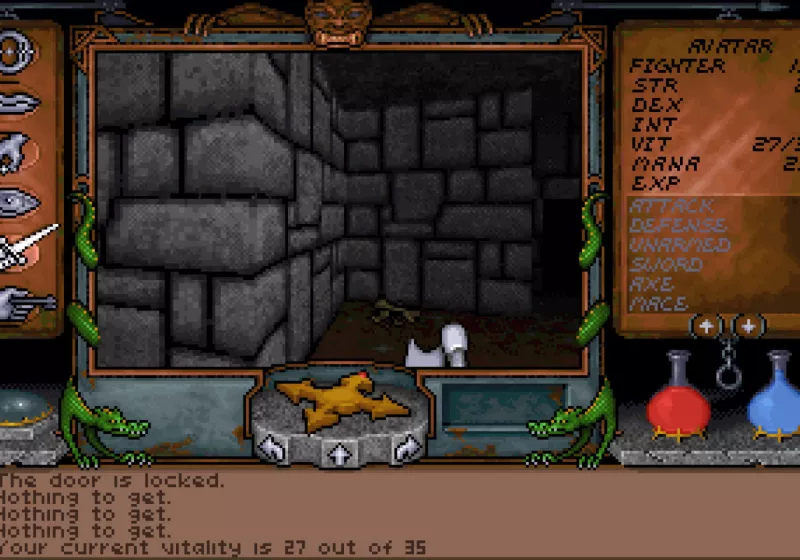
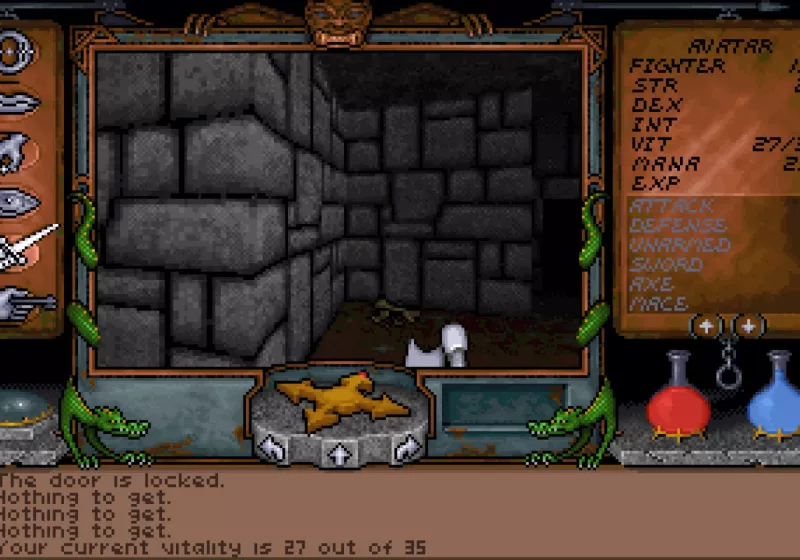
Richard Garriott will soon get the Ultima rights back and is already planning what to do with the series afterward. The British-born American game designer, entrepreneur, and space tourist played a major role in establishing the CRPG genre during the home computer era. Now, the man behind the Lord British…
Read Entire Article
Source link

Federal prosecutors have been weighing a perjury and obstruction-of-justice case against Cassidy Hutchinson, who implicated President Donald Trump in the January 6 Capitol riot in testimony four years ago, according to two sources familiar with the matter.
The efforts mark the Justice Department’s intent to proceed against Hutchinson, a former aide to ex-Trump White House chief of staff Mark Meadows, though prosecutors are not expected to ask a federal grand jury in Washington to return an indictment until at least after the midterm elections, the sources say.
Hutchinson testified as a star witness to the committee that investigated the riot, recounting that Trump encouraged his supporters to march to the Capitol even though he knew many were armed. She sat for several interviews in addition to her public testimony, where she recalled hearing that Trump had lunged at one of his Secret Service agents after being told he could not join his supporters at the Capitol.
In recent months, prosecutors at the Justice Department have focused on the fact that the former special counsel, Jack Smith, did not corroborate much of Hutchinson’s account to the committee, and the Secret Service’s denial of any altercation in the presidential limo, the sources say.
By comparing the transcripts of Hutchinson’s interviews with the committee and against her testimony to Smith’s team, prosecutors have been trying to construct a case based on how her testimony has changed, the sources say.
Prosecutors have also taken a special interest in Hutchinson’s claim that she had penned a statement on a notecard for Trump to release during the Capitol riot—a claim disputed by former Trump White House counsel Eric Herschmann, who said he had written the note.
It was not immediately clear whether prosecutors intend to ultimately proceed with both perjury and obstruction charges, which have been under consideration for several months. The Justice Department did not respond to a request for comment.
Hutchinson and her lawyer did not respond to texts and calls seeking comment. Hutchinson, now 29, has kept a low profile since publishing a memoir of her time in Trump’s first administration in 2023 titled Enough.
Punchbowl News first reported the Justice Department’s interest in charging Hutchinson.
The grand jury investigation is the latest example of the Justice Department pursuing criminal cases against Trump’s perceived political enemies. Trump fired former US attorney general Pam Bondi in April partly for moving too slowly to bring such cases, sources familiar with the matter said.


GeekWire is profiling over the next few weeks some of the people and teams that are shaping the evolution of Microsoft in what we’re calling its “Microsoft 2.5” era.
A delicate dance: In August 2025, Microsoft moved to integrate GitHub into the mothership, under its CoreAI division, after having allowed it to run as a quasi-independent entity since acquiring it in 2018. At the same time, GitHub CEO Thomas Dohmke announced he would leave the company at the end of the year.
A number of developers feared the worst: GitHub would become just another arm of Microsoft and lose the community-mindedness that had made it attractive to developers of all stripes, and especially open-source ones.
GitHub Chief Operating Officer Kyle Daigle — a 13-plus-year GitHub veteran — had been one of the main champions of the need to “keep GitHub GitHub.” He maintained that stance even after he added the “Chief Marketing Officer of Developer” title for all of Microsoft to his COO role in January 2026.
@media (max-width: 600px) {
.gw-exec-card { float:none !important; max-width:100% !important; margin:20px 0 !important; padding:16px 18px !important; }
.gw-exec-card .gw-exec-media { width:170px !important; margin:0 auto 14px 0 !important; }
.gw-exec-card .gw-exec-label { font-size:12px !important; }
.gw-exec-card .gw-exec-name { font-size:20px !important; }
.gw-exec-card .gw-exec-title { font-size:15px !important; margin-bottom:14px !important; }
.gw-exec-card .gw-exec-facts li { margin-bottom:12px !important; }
.gw-exec-card .gw-exec-facts li:last-child { margin-bottom:0 !important; }
.gw-exec-card .gw-exec-value { font-size:15px !important; line-height:1.45 !important; }
}
So, how has Microsoft done this past year with managing GitHub? In an interview with GeekWire, Daigle acknowledged that GitHub’s relationship with Microsoft has changed since the end of the standalone CEO era. But the goal is no longer just “don’t break GitHub.” It’s to export GitHub’s community, developer-first ethos and learnings across Microsoft.
GitHub has influence beyond just the GitHub product set now, Daigle said. And the fact that Microsoft opted to consolidate its developer-facing messaging and community outreach under Daigle, someone who came from GitHub, not from Microsoft’s traditional DevDiv organization, gives weight to his claim.
“Bringing teams together — engineering teams and marketing teams and everyone that wasn’t talking to each other before — has been a really big part of the work,” Daigle said. “I see all these opportunities for GitHub to directly help and impact the overall mission of Microsoft versus keeping it cloistered in a way that isn’t helping either GitHub’s mission or Microsoft’s mission.”
These days, developer teams across Microsoft and GitHub are sharing foundations and the GitHub Copilot software development kit across organizations “in a way that would have seemed improbable before,” he said.
As Microsoft historians know, “Microsoft’s challenge isn’t creating products. It’s connecting them,” Daigle said.
Growing pains: At the same time, the rise of AI agents has strained GitHub’s infrastructure. Over the past few months, GitHub has experienced some significant outages, including one in August that lasted nearly eight hours.
GitHub officials have said they are migrating from their own datacenters to Azure to try to ease some of the capacity issues. Daigle said it’s not a simple lift-and-shift process; rather, it’s a major re-architecture for the platform.
GitHub is roughly 60% through its Azure migration as of early October, he said.
It’s working with Azure storage teams on separating compute and storage for the Git distributed version control system to help alleviate bottlenecks caused by developers and agents working concurrently in the same repositories. Developers and agents made 7.38 billion commits on GitHub in September alone, according to the company.
GitHub’s recent growth would not have been manageable without Microsoft scaling expertise and Azure support, Daigle said. GitHub is in a unique position of being able to request major additional capacity, such as millions of CPUs, and work with Microsoft teams to provision it, he said.
The GitHub app and agent store: GitHub got its start as a platform for source control and collaboration. But its role is evolving as part of its Microsoft integration. In addition to developing and supporting Microsoft’s most successful Copilot, GitHub Copilot, GitHub has an important place in Microsoft’s agent-centric strategy.
GitHub is becoming “the store for anything that needs to be coded and needs some verification,” Daigle said. “We’ll connect you to whatever the right tool inside of Microsoft is for you to run that or whatever tool you’re using, not just (from) the Microsoft product suite.”
In the new world order, GitHub isn’t just the store for apps. Increasingly, it’s also the store for agents, which means GitHub is acting as the developer layer for Microsoft’s “agent factory” strategy.
.gw-series-more .gw-series-hed:hover { color:#1a8cff !important; text-decoration:underline !important; }
.gw-series-more .gw-series-all a:hover { text-decoration:underline !important; }
@media (max-width: 600px) {
.gw-series-more { float:none !important; max-width:100% !important; margin:20px 0 !important; padding:16px 18px !important; }
.gw-series-more .gw-series-label { font-size:12px !important; margin-bottom:12px !important; }
.gw-series-more .gw-series-thumb { flex:0 0 68px !important; }
.gw-series-more .gw-series-thumb img { width:68px !important; height:68px !important; }
.gw-series-more .gw-series-hed { font-size:15px !important; }
.gw-series-more .gw-series-all { margin-top:14px !important; }
}
(Microsoft co-founder Bill Gates envisioned Microsoft as a “software factory” that could produce software at scale. These days, CEO Satya Nadella and team talk about Microsoft as an “agent factory,” helping customers create agents at scale.)
GitHub currently serves more than 200 million developers, plus an unknown but quickly growing number of agents.
Developers need to be thinking in new ways when it comes to agents, Daigle said. They need to consider ideas such as scaling application programming interfaces (APIs) for agents separately from humans, creating APIs designed specifically for agents, rewriting documentation and tooling so agents can consume GitHub efficiently, and treating agent access as a fundamentally different workload from human access.
In the longer term, Daigle said he expects AI to make software economically viable for smaller audiences, such as a family, an individual or a single team. The app-store model may change substantially in the coming years, as people create highly specialized applications. GitHub could help like-minded users discover software for specific interests, such as a narrowly focused household or community use case.
GitHub historically has considered anyone who has seen or touched code to be part of the developer community. Daigle’s vision is for GitHub and Microsoft to let both professional developers and newer builders create and run software and agents without needing to manage token costs, uptime, monitoring or operational overhead.
GitHub will have more to say about its plans at the GitHub Universe conference in San Francisco, Oct. 28-29. The event won’t focus on code generation alone; it will include information on tools covering the full lifecycle, proactive security approaches and how to determine whether software is working well after deployment.
“We’re looking to solve the core parts of the platform, like Git, like Actions, in a way that I hope will make people excited and feel like they can absolutely trust GitHub for the next decade to come,” Daigle said.

LG smart home accessories will benefit from Apple’s ecosystem, getting iOS 27 notification and setup features that even Matter devices won’t.

Apple and LG’s new home accessories will display helpful hints in the Dynamic Island – image credit: pdfu
When you first set up a device such as AirPods, you bring it close to your iPhone and the two communicate. It’s a spectacular example of Apple’s integrated ecosystem, and now a similar thing is coming to accessories.
These are specifically the LG smart home accessories expected to be launched by Apple at its October 13, 2026 event. According to code sleuth pdfu, these accessories will respond when an iPhone is held near them.
Continue Reading on AppleInsider | Discuss on our Forums

Amazon is still discounting the M5 MacBook Air by $200 after October Prime Day, with the 13-inch model marked down to $1,099 heading into the weekend.

Save $200 on M5 MacBook Air laptops – Image credit: Apple
Prime Big Deal Days offers on Apple’s MacBook Air are still in effect at Amazon, bringing the standard 13-inch model down to $1,099 after a $200 discount. The $200 savings extend to upgraded retail configurations and the 15-inch line as well.
Save $200 on M5 MacBook Air
Continue Reading on AppleInsider | Discuss on our Forums

Tech & AI13 minutes ago
Why Europe needs to invest in ocean intelligence

Fashion28 minutes ago
Kerry Washington Wore a Blue Feather Georges Chakra Fall 2026 Couture Dress to the Animales Premiere in Mexico City + Cardi B and Naomi Campbell in Georges Chakra

Tech & AI1 hour ago
Redesign your new M6 Mac mini for 2026 with these colorful wraps


-

 Fashion7 days ago
Weekend Open Thread: Veronica Beard
-

 Sports2 days ago
Saracens’ Venter Brands Premiership Rugby ‘Autocratic’ Over £5,000 Media Fine
-
 Entertainment1 day ago
10 Flawless Movies With the Cleverest Protagonists
-

 Sports1 day ago
Enzo Maresca all smiles as Man City return to training after guilty verdict
-

 Sports1 day ago
Southampton’s Eckert Spared Ban as FA Suspends Six-Week Sentence Over Spygate
-
 Sports1 day ago
Asiad selection row: Para-shooters allege corruption; PCI denies claims | Asian Games 2026
-

 Crypto2 days ago
Crypto.com Teams Up With Insilico Terminal to Give Traders Free Pro-Level Tools
-

 Tech & AI1 day ago
ICE Emails Discuss Using Palantir-Supported Tool to Investigate Voter Fraud
-
 Crypto1 day ago
ESMA gives EU crypto platforms 3 months to drop non-MiCA stablecoins such as USDT
-

 Sports3 days ago
Harry Kane Ties Peter Shilton’s 125-Cap England Record in Wembley Win Over Czech Republic
-

 Tech & AI4 days ago
Common Mistakes You Should Avoid When Using Foldable Phones
-

 Crypto2 days ago
Bitcoin ETF Outflows Hit $485M, Erasing October Inflows
-

 Sports2 days ago
Internationals make history with emphatic Bridges Cup win at Trump Turnberry | News
-
 Sports23 hours ago
Arsenal statement adds to Man City misery after guilty 115 verdict
-

 Tech & AI6 days ago
Koreans Left With Spoiled Food Due To Borked Samsung Firmware Update For ‘Smart’ Fridges
-
 Crypto1 day ago
Top Democrat among Senate investigators probes ties between Cantor Fitzgerald, Tether
-

 Business & Hustles7 days ago
Beyond Ozempic: Lilly and Novo Chase the Next Obesity Blockbuster With Amylin
-

 Tech & AI6 days ago
Apple Clamps Down on Mac Privacy Setting as AI Agents Raise New Security Fears
-

 Tech & AI7 days ago
Muse Creates Detailed Profiles of All Your Friends and Family
-
Crypto3 days ago
Ripple Price Analysis: Is XRP Consolidation Almost Over as the Range Tightens?
You must be logged in to post a comment Login