

Join Mikko Hyppönen and security leaders from the NFL, CHANEL, and Atlassian for a two-hour digital summit on what AI-speed attacks change, what defenders should stop doing, and how to validate, decide, fix, and re-validate at machine speed.
Tech & AI
iPhone 18 Pro Max cameras are Apple’s best yet, but marginally

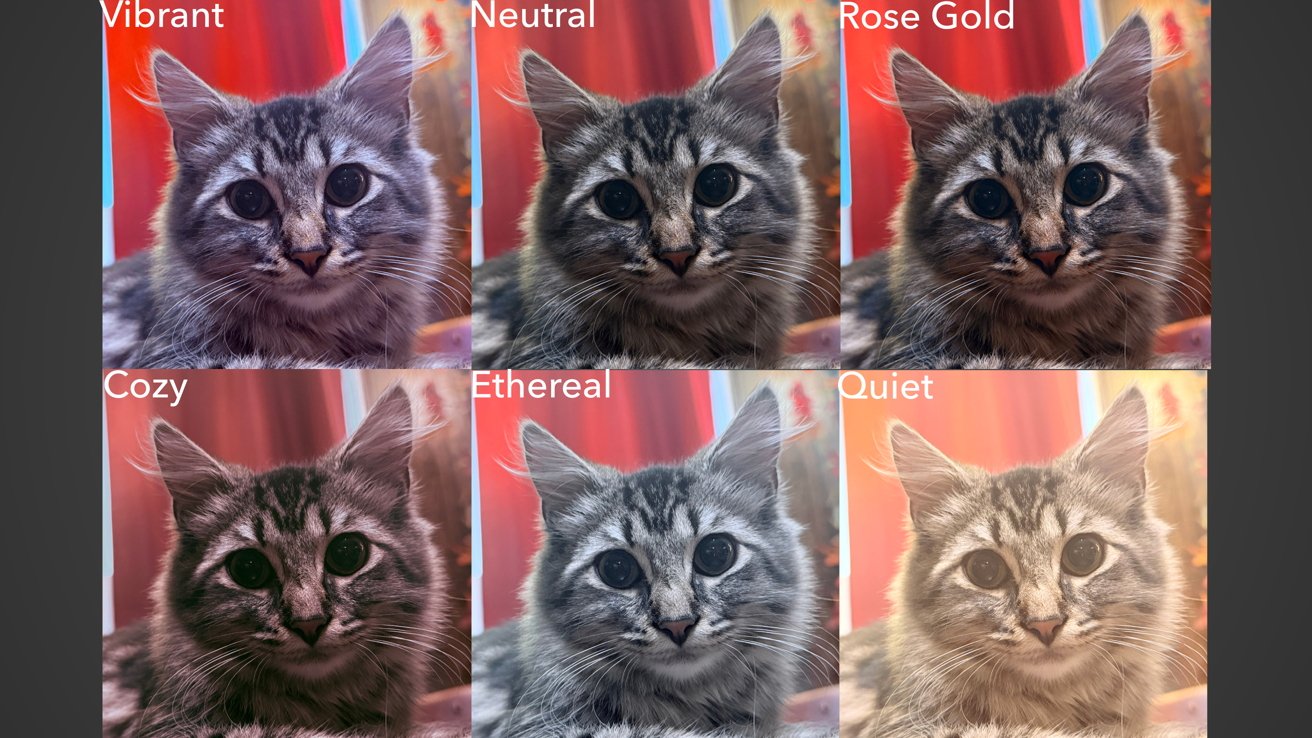
I’m in the bag for iPhone Duo, but I wanted to test out an iPhone 18 Pro Max camera system before going all in on Apple’s foldable. Here’s what I learned as I prepare for a potential camera downgrade.
I would love nothing more than to travel to some remote part of the planet and detail exactly how iPhone 18 Pro Max performs while showing off incredible one-of-a-kind photos. That isn’t what I’m here to do today.
My simple goal is to explain exactly what I have observed about Apple’s latest camera system, coming from the iPhone 17 Pro Max, and what buying an iPhone Duo might mean losing out on.
The iPhone 18 Pro Max showcases exactly what makes Apple’s smartphone camera such a well-balanced and all-around great camera system. It’s yet another pinnacle in years of slight improvements.
Photos captured on both iPhones are in the Bright Photographic Style at about -40 tone and +38 color.
Point and shoot
I’ve got my trusty Sony a7II from 2014 that continues to produce amazing results straight from the sensor, RAW or not. I always shoot full manual with that camera and have no interest in the automatic settings.
So, it might be odd to say that I behave exactly the opposite on iPhone. For years, I downloaded the pro-level camera apps, tinkered with my workflow, edited every image to death — it was a tad exhausting at times.
There had to be a better way.
I wanted more control and a more unique look to my photos than what capturing straight from the iPhone camera could give me. Editing and filters often felt overprocessed and unrealistic.
I wanted to capture photos quickly and easily without fiddling with all those little digital dials and settings. I also wanted a workflow that was non-destructive and easily changed later.

Photographic Styles bring non-destructive customization to every photo
Apple gave me exactly what I wanted with Photographic Styles. The fully-reversible non-destructive shooting modes that could be preset and forget transformed how I approached mobile photography.
My big camera still sits at full manual and offers me control when I want it. My iPhone, on the other hand, is basically full auto with custom Photographic Styles.
I stopped shooting Apple ProRAW except in circumstances where I specifically knew I’d like more editing control. Photographic Styles are just that good.
The issue has never been about a lack of control, as that could be solved with third-party apps, it’s the lack of physical controls. Apple tried to solve this with the poorly-executed Camera Control, which ends up being too fiddly as anything more than a shutter button.

Camera Control didn’t get any of the new pro controls on iPhone 18 Pro Max
Apple is already showing signs of being done with Camera Control — the new pro camera tools aren’t even part of it. I expect it’ll be gone in a generation or two.
I’d love to see Apple make a physical camera with knobs and dials for each minute setting, but that isn’t going to happen. The iPhone is inherently a point-and-shoot experience, and I’m okay with that.
I’ll never complain about having more options for precise control, but they’re going to be used as an exception to the norm. Nearly every photo captured will be done with the press of a shutter and nothing else.
That’s the beauty of Photographic Styles. Take the photos you want now at whatever preset you’ve chosen and change them later as needed.
I like a camera that I can point and click the shutter, even my Sony a7II can function that way thanks to a back-button focus I have set up. I adjust the dials when needed, but most of the time I can set them and just capture photos until conditions change.
iPhone and Photographic Styles lets me do the same, if not even more efficiently. iPhone 18 Pro Max, however, is a step in the opposite direction in some cases.
Variable aperture is just fine, actually
Apple’s approach to variable aperture is likely one of necessity. The iPhone 18 Pro Max Main Fusion camera is f/1.48 fully open.

Variable aperture only gets you so much control on a sensor that small
The problem is, until now, all iPhones shot photos fully open. There wasn’t a physical aperture to close and let in less light.
Previous recent models shot at around f/1.78, which produced a soft bokeh when close enough to the subject. The subject was still sharp while plenty of light was gathered — it was the perfect set point for something that couldn’t be changed.
Then arrives the f/1.48 sensor. It’s “better” in that it can let in more light, meaning faster shutter speeds and better ISO (less noise).
The problem is you definitely do not want to shoot at that level all the time. With this sensor, f/1.48 is at the edge of beginning to lose sharpness in the subject.
The iPhone 18 Pro Max will default to f/1.8 for most shots and automatically switch to f/1.48 in low-light settings. The f/2.8 setting is a bit sharper even if it lets in less light, while f/4.0 is the max and loses sharpness again.
You’ll use f/4.0 in the brightest of settings to ensure all faces are in focus in a cluster of people, for example. It’s also great in dimmer or complex lighting environments where the aperture creates a “star” wherever pinpoints of light are visible.
The star looks best at f/2.8 in my opinion, but some may not like them at all, as they are technically a flaw in the photo being captured. The star results from how bright light is shown on the sensor through the aperture blades.

iPhone 18 Pro Max has a sun star effect when the aperture is anything other than full open
I appreciate this level of control in my iPhone camera. That said, it does feel a bit fiddly.
I expect the friction and fiddly nature of variable aperture on iPhone will ultimately result in me relying on the automatic setting. I’m enthusiastic about it now in my testing, but I’m certain I’d only rarely choose to change that toggle.
The smallest of gains
After variable aperture, the first thing you’ll notice in a one-to-one comparison is how Photographic Styles has changed. It appears Apple has tweaked the pipeline and application values that result in slightly different, more refined looks versus the previous version.

Variable aperture isn’t a reason to jump ship from iPhone 17 Pro Max
Upon further investigation, there is also a difference in how the iPhone deals with white balance. There is a pro tool for choosing white balance compensation on iPhone 18 Pro Max, but it’s set to auto by default.
Whatever has changed with white balance behavior is noticeable in some light. It sometimes feels like an overcorrection, which is why you might want to use the manual control.
The available pro tools are great to have in the Apple Camera app. Shutter speed is something I love being able to control, as that is how you can get light trails in some situations.
Third-party apps can control these aspects of the iPhone camera, so that’s not exactly new. It’s a little weird that Apple doesn’t include the pro camera controls in iPhone Duo or other non-pro iPhones.
I think third-party apps will be the better place to control these aspects of iPhone photography. The only reason you might use the Camera app to control these aspects is if you still want access to Apple’s full camera pipeline.

Pro camera controls are exclusive to iPhone 18 Pro models
Minus the pro camera controls I mentioned, all of this is coming to iPhone Duo. The new Photographic Styles, updated processing, and white balance differences will be present in Apple’s foldable.
In my previous camera spec breakdown, I found that the two most notable differences between iPhone 18 Pro and iPhone Duo will be the existence of an optical telephoto camera and variable aperture.
Nearly every other aspect is identical, which means iPhone Duo users shouldn’t be worried about having a “worse” camera experience. Funny enough, for me at least, there may not be that much difference.
What is gained, what will be lost
Like everyone else, I won’t have an iPhone Duo to test until October 23, so that aspect will have to wait for another day. For now, I can only address what I’ve learned about iPhone 18 Pro Max.

Specs suggest iPhone Duo will have great cameras
I wish I had more time with the iPhone 18 Pro Max, and I’m perfectly aware of my limited time, so take what I have to say here with that in mind.
From what I can tell without holding an iPhone Duo in hand, I believe my previous conclusion stands true: optical telephoto and variable aperture are all I’ll miss on iPhone Duo.
What I gain will be a foldable with new camera abilities like Smart Take and Duo FaceTime. Whether or not that’s an equivalent exchange will be determined at a later date.
Like with Apple Watch Ultra, I believe a lot of iPhone “Pro” features fall into aspirational purchase territory. It’s not that I don’t consider myself a “professional” photographer, or find iPhone’s pro controls too unwieldy, just that they’re unnecessary for most applications.
The variable aperture on iPhone 18 Pro Max doesn’t have enough range to capture photos like the fountain example above. The water looks like that on the Sony a7II because I could set the aperture to f/22 and allow very little light in during a longer exposure.
When I use my Sony a7II camera, I’m using it the same way a professional might by taking control of every aspect of each photo using the device’s physical controls. The interface and physicality of that camera leans into it being used as a professional tool.
When I shoot photos with my iPhone, I’m just pressing the shutter and letting the device do the rest. Photographic Styles give me enough control to ensure every photo I capture is uniquely mine, so I don’t feel the need to dive deeper into the settings.
Too much control can lead to you missing the shot
Photographic Styles 3 with texture and grain options is available on iPhone Duo. Apple is not including pro controls, so no manual white balance, shutter speed, or access to a histogram will be available.
Here’s the thing, I don’t know that I’ll even notice or care. If I need control over those things, I can access them in third-party apps.
Sometimes you just need to take the damn photo
When I was testing iPhone 18 Pro Max as a camera, I noticed how much time I spent in menus selecting each little tool set point. I would take a couple of shots, then back to those menus.

iPhones make great cameras because they’re the one you have on you
The more photos I shot, the less time I spent adjusting anything manually. It was just too time-consuming to adjust aperture manually for each shot or worry about shutter speed.
As I’ve always inevitably learned with the iPhone, it is better to just point and shoot. If I want to have more control for a specific shot, there are third-party apps or Apple’s controls available.
Thanks to that mentality, it means my photo-shooting experience will be very similar on iPhone Duo. Even the variable aperture fades to the background since most photos are taken at f/1.8.
iPhone Duo will capture all photos at f/1.78.

An iPhone couldn’t take this photo
The iPhone 18 Pro Max is Apple’s best camera system yet. It has the most options for manual control, includes an interesting variable aperture, and has the best image pipeline so far.
That variable aperture is interesting, and in a generation or two, it’ll be so good it’ll be hard to miss. Today, the gains provided by it are minimal, and only a good eye will spot the difference in most shots.
If you’re anything like me, there won’t be much to miss when choosing the iPhone Duo. It is still an iPhone camera system, and a powerful one at that with A20 Pro and Photographic Styles 3.
I have no doubt that future Apple foldables will have pro-level camera systems. Today, iPhone Duo doesn’t, which makes it a primary purchase decision between the two devices.
This write up was for the photography nerds like me. Most iPhone users won’t be able to spot the difference between shots on an iPhone 17 Pro and iPhone 18 Pro without being told what to look for.
That Charmander figure is softer and less defined here thanks to the iPhone’s f/1.48 wide open aperture.
It’s a big leap in performance and function, don’t get me wrong. However, even the big leaps only show through so much on an already amazing camera system.
For those just wondering how it compares with previous iPhone cameras, think of it this way: your iPhone is already the best camera you own. The only differences an upgrade will bring is better experiences at the fringes.
You’ll always capture pristine and beautiful photos in broad daylight. Dim and night photos will prove a challenge to even the best smartphone cameras, but Apple’s latest systems perform marginally better over previous ones.

iPhone 18 Pro Max gives photographers more control than ever
iPhone 18 Pro Max is about control. However, I’m increasingly wondering how much control we actually need when the cameras are this good.
I’m glad the options are there, first or third-party, but it just goes to show how good the iPhone has become as a camera that the controls are almost unnecessary. I’m aware that these thoughts might reflect my own journey as a photographer more than what is true of Apple’s offering, so your miles may vary.
The thing is, I don’t feel this way about my dedicated camera. It’s more akin to using a record player — deliberate and thoughtful.
When I pull out my Sony camera, I’m setting out on a photographic journey to accomplish a shot I’m envisioning using the controls in my hands. When I pull out my iPhone, I’m looking to capture a moment or a memory in an instant.
I matched the Sony’s settings with the result from the iPhone, which produced a dimmer shot. That’s mostly due to the exposure stacking iPhone performs with every shot.
Each of these devices serves different purposes and reaches different goals. When photographing people, the big camera draws attention, for better or for worse, and changes the environment you’re photographing by the nature of the device.
The iPhone can show up and not draw anyone’s eye, though I’m sure that’ll be an issue for the iPhone Duo for a time. In any case, there’s something more fleeting and unserious about capturing an iPhone photo.
Into the corn maze
I’m over 2.3k words into this, so I’ll keep this bit short. I spent a day at a pumpkin patch with my friends recently and had three cameras on my person — iPhone 17 Pro Max, iPhone 18 Pro Max, and Sony a7II.

A still frame of the spatial video captured on iPhone 18 Pro Max
I took about 80 keepable photos and some video during the day, with about 39 on my Sony a7II. The sun was too bright and over-exposing everything, so it was a challenging shooting day for full-manual controls.
Nearly every other photo was taken on the iPhone 17 Pro Max, and zero with the telephoto camera. I wanted to reserve the iPhone 18 Pro Max, deliberately, for situations I thought called for that specific device.
None arose, though I did capture a spatial video in the corn maze with it.
There are a few photos I really like from the iPhone, as they captured casual situations more easily. A few exemplified the speed at which I could get a photo when using an iPhone versus a larger camera.

I snuck a few photos with the iPhone 17 Pro Max while recording video with the iPhone 18 Pro Max
Nearly all of my favorite shots came from the Sony a7II. Not just because it is a superior full-frame camera with a powerful lens, but because they felt more deliberate.
I took the time to compensate for lighting whether we were in the sun or shade, using the easy-to-use controls on the camera. Adjusting these things on the fly was intuitive and simple compared to the digital touch interface of an iPhone.
Some shots were a bit out of focus or had motion blurring where the iPhone wouldn’t have allowed it. However, there’s something I can’t quite put my finger on that separates the “quality” of the two images.
Of course, no smartphone can truly compete with a full-frame camera. There is a reason professionals still buy them over simply shooting with an iPhone for everything.

iPhone 18 Pro Max is incredible in spite of its small camera sensors
That’s the point I’m reaching for, though I’m not sure I’m conveying it well. Apple wants iPhone 18 Pro Max to reflect the performance and control of a high-end full-frame camera, but falls short due to a lack of dedicated physical controls and sensor size.
Physics will always win in this contest. There isn’t space for good physical camera controls on iPhone, nor is there room for larger sensors.
My point is, pros will always choose the bigger camera when possible. However, the power of the iPhone is that it is always on your person, therefore winning as the best camera for that reason.
Though, because of the physical limitations of a smartphone, I think it makes more sense to lean into automatic settings and systems like Photographic Styles. It’s great more control is available to those that need it, but very few people will.

iPhone accessories never quite recreate the dedicated camera experience
I wouldn’t mind seeing more accessories for iPhone that bring pro-level physical controls to iPhone. Apple should build more APIs to allow that, but that’s a conversation for another day.
To bring this thing to a close, I’ll share this: iPhone 18 Pro Max is amazing, and in some ways, better even than the iPhone 17 Pro Max I still possess. However, iPhone cameras have gotten so good that simply getting the shot and worrying about the details later is the way to go in 99% of situations.
The iPhone Duo will get Photographic Styles 3 with texture and grain control, so I’ll dive more into that when I’m testing the foldable. I can already tell that I’ll love grain when it is warranted, but it can be too aggressive at times.

Smart Take and Kid Cue are features exclusive to iPhone Duo
I’m glad I took the time to test out the iPhone 18 Pro Max cameras myself. I can now say quite confidently that even as good as the upgrades are, they’re ones I can and will live without.
Next up, iPhone Duo as a camera. If my assumptions are right, the only thing I will truly miss is the optical telephoto 4x camera and the lack of spatial video capture support.
I have zero doubt iPhone Duo will capture photos just as good as iPhone 18 Pro Max in most day-to-day situations. I’ll share those experiences later in October.
Continue Reading
Signal, the secure messaging app, released version 8.30, completing the rollout of its secure backups feature across all supported operating systems (Android, iOS, Linux, macOS, and Windows).
The feature, introduced on Android nearly a year ago, lets users create end-to-end encrypted backups of their chats and restore them on other devices if they lose their phone.
The backup system supports two options: Signal-hosted backups, limited to 45 days of media and 128 KB per message for free users (100 GB in paid plans), and on-device, local backups, with no size restrictions.
Backups for both options are encrypted and require a recovery key to decrypt, but hosted backups also have a supplemental key that rotates daily inside a Trusted Execution Environment for additional protection and forward secrecy.
According to Signal, an on-device backup recovery key can decrypt all past backup files it encrypted, regardless of where they are stored.
Threat actors have already taken notice of the key’s value and incorporated it into their targeting scope shortly after Signal introduced the feature.
The latest update brings on-device backups to iOS and desktop, and revamps Android backups to use the same cross-platform format.
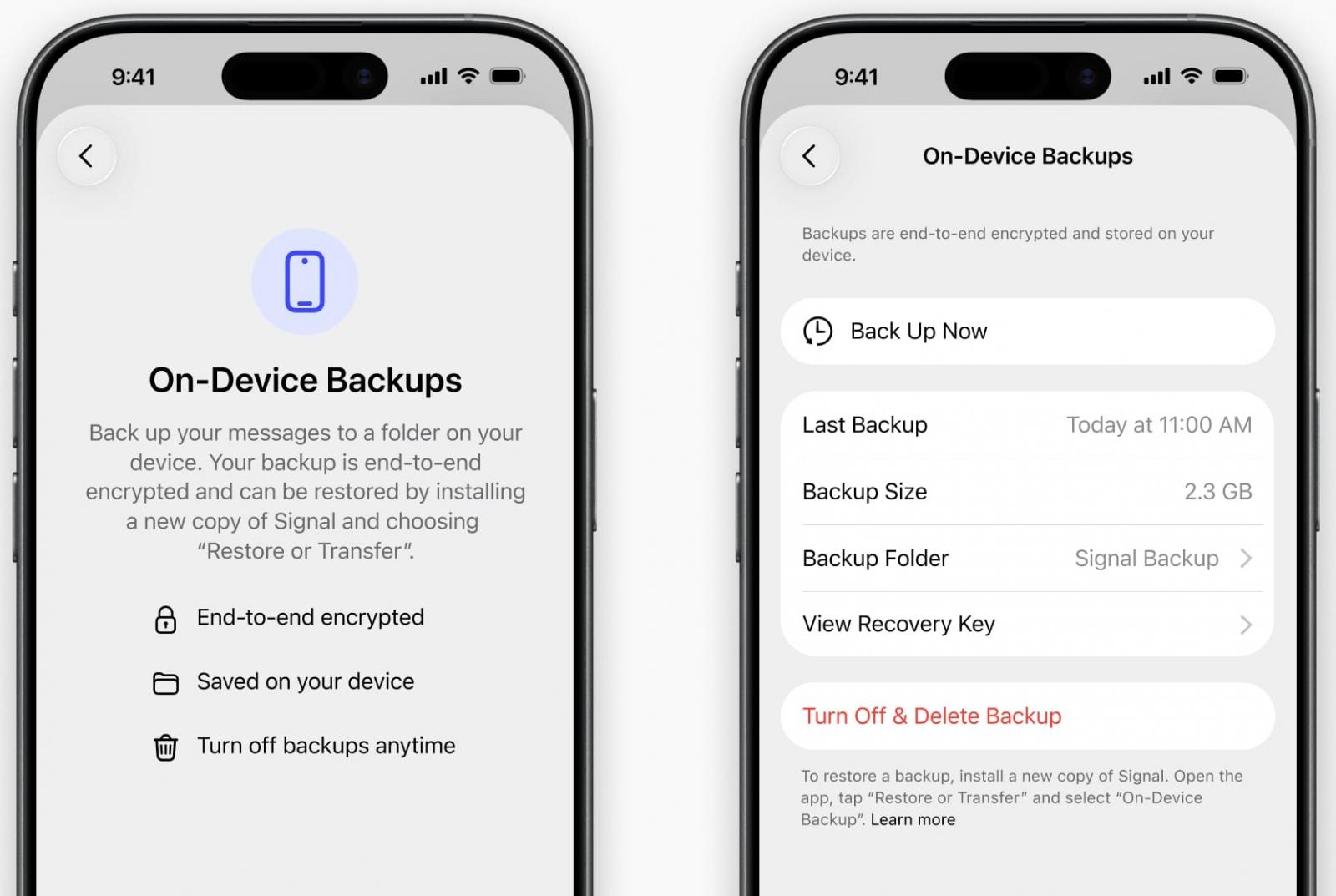
Source: Signal
Now, when linking a new device from the primary device, the new one will retrieve older attachments missing from the chat.
Signal also says that media is now stored separately from the backup archive, and duplicate files are stored only once, eliminating excessive backing up and syncing.
Additionally, paying users will get a new option to purge old media from local storage and keep only thumbnails, while automatically retrieving them in full from hosted backups.
The backup system will ignore ‘disappearing messages’ set to vanish within 24 hours on both backup methods, preventing them from being included in the archive.
For users who take both hosted and on-device backups, it is noted that the former does not wipe the latter. However, during restoration, expired disappearing messages from local backups will be skipped.
The 8.30 iOS client release enables direct iPhone-to-iPhone transfer, using a local end-to-end encrypted Wi-Fi Aware link that Signal says improves speed and reliability.
Signal says this rollout completes its first phase of the backups project, and its engineers will now focus on improving non-backup systems.


fjo3 quotes a report from The Guardian, written by Tove Danovich: Every year, the night sky is becoming 10% brighter. Eighty percent of people live under light-polluted skies. And while the UN declared a healthy environment — clean air, clean water — to be a human right, I believe we also all have a right to darkness as well. This doesn’t mean turning off every streetlamp. But do we really need bright white floodlights at the front of every garage? Replacing lights with ones that are bright enough to do the job — and no brighter — might make it so I wouldn’t have to get in my car and drive for hours to see the night sky as it actually shines above us. To preserve the darkness would mean rules and enforcement around the warmth of the lights, where they point, and how bright they can be. It would mean not putting in three lights when one would do. If we recognized that darkness is something we need, we’d become more careful about chasing it away.
[…] Access to darkness is about more than stargazing. The night is its own habitat. Artificial lights confuse animals who use the moon to navigate, whether they’re baby sea turtles navigating toward a parking lot instead of the ocean or moths who fly in circles around a lightbulb. Lightning bugs and frogs need darkness to complete their courtship rituals. Migrating birds get thrown off course by the bright lights of big cities. But the effects of light pollution linger even after it’s daylight again, becoming visible. Research has shown light pollution is breaking the relationship between plants and pollinators, changing the time of year trees break into flower, and disrupting circadian rhythms for all living creatures. This includes humans. Whether it’s artificial lights indoors or creeping in through the window at night, studies have found that we need darkness in order to rest, recover and stay healthy.


Read more of this story at Slashdot.

British TV just always seems to produce gripping police dramas, and it looks like Winter is the next big thing that’ll have crime thriller fans glued to the small screen. Starring Richard Armitage as Dr Ethan Winter (a forensic pathologist who doesn’t play by the rules) and Annabel Scholey as DI Lauren Bell, the driven detective trying to work alongside him, this show promises to be an enthralling two-hander.
Set in Bristol, each episode of Winter will offer up a new case for us to sink our teeth into. Thanks to Ethan’s uncanny ability to find clues on murder victims, and Lauren’s shrewd investigative approach, those mysteries are unlikely to remain unsolved for long.
If you were a fan of Broadchurch, Grace, or The Bay, you’ll find Winter to be right up your street. And, you can either watch it weekly, or binge the whole thing in one go.
Below we have all the information you need on where to watch Winter online and stream every episode from wherever you are.
How to watch Winter for free
ITV1 and and the broadcaster’s streaming platform ITVX are showing all six episodes of Winter for free.
To watch ITVX visit the website or download the app (iOS, Android). It’s free – you just need to register a free account to watch Winter and all of its other shows.
What if you’re abroad? NordVPN will unlock your local streams – more on that below.
Use a VPN to watch Winter from anywhere
A VPN is a handy piece of software that can make your device appear as if it’s back in your home country, thereby letting you unlock your usual streaming services (terms allowing). The best VPN right now? We recommend NordVPN – it does everything and comes with a 76% discount.
Using a VPN is incredibly simple:
1. Install the VPN of your choice. As we’ve said, NordVPN is our favorite.
2. Choose the location you wish to connect to in the VPN app. For instance, if you’re visiting the US and want to view your usual UK service, you’d select a United Kingdom server from the list.
3. Sit back and enjoy the show. Head to ITVX and watch Winter as if you were at home
How to watch Winter in the UK

Viewers in the UK can watch Winter for free – both online and on TV.
Episode 1 goes out on ITV1 at 9pm on Wednesday, September 30, with subsequent episodes following every Wednesday at the same time for the next five weeks.
Episodes will also be released online via the ITVX platform, and they’ll all be available as a box set from September 30.
ITV is a free service in the UK, although in order to watch it you need to be in possession of a valid TV Licence, as this covers digital content consumption, too.
Can I watch Winter in the rest of the world
If you live in the US, you’re in luck. PBS co-produced the series, and as such, you will be able to watch Winter on PBS Masterpiece eventually. However, a release date has not been announced for viewers in the States.
We can’t find any sign that Winter will be shown anywhere in Canada, Australia or New Zealand at this time.
If you’re a Brit who is overseas right now and wants to watch any episode, you can use NordVPN to stream them on ITV as normal.
What you need to know about Winter
When is the Winter release date?
Winter premieres in the UK on Wednesday, September 30 at 9pm BST / 4pm ET.
Winter episode guide
Winter is set to consist of six episodes, which will premiere in the UK on the following schedule on linear TV:
- Episode 1 – When a frozen body is found in Bristol brilliant forensic pathologist Dr Ethan Winter and astute DI Lauren Bell uncover a dark mystery while Winter is battling a secret of his own. (September 30)
- Episode 2 – Haunted by his fiance’s murder, Dr Ethan Winter investigates a faceless body at a Bristol demolition site, uncovering hidden identities and a devastating betrayal. (October 7)
- Episode 3 – A brutal double murder sparks a twisting investigation for Winter, Bell and Daldry, while Winter risks everything in his ongoing search for the truth behind Simone’s death. (October 14)
- Episode 4 – Human remains spark a chilling investigation for Winter, Bell and Daldry, while Bell’s suspicions about Antony have devastating consequences. (October 21)
- Episode 5 – A cinema date turns to horror as Winter races to save a stabbing victim, uncovering a web of family secrets, while Bell faces the devastating truth about her marriage. (October 28)
- Episode 6 – A woodland car crash hides a darker crime. As Winter uncovers a young woman’s tragic past, a breakthrough in the Triangle case leads him and Bell to a shocking discovery. (November 4)
What is the Winter cast?
Richard Armitage as Dr Ethan Winter
Annabel Scholey as DI Lauren Bell
Jamie Kenna as DS Ellis Daldry
Carlotta Banat
Josh Barrow
Adwoa Akoto
Jay Taylor
Rishi Rian
Deirdre Mullins
Ellis Elijah
Evie Coles
We test and review VPN services in the context of legal recreational uses. For example: 1. Accessing a service from another country (subject to the terms and conditions of that service). 2. Protecting your online security and strengthening your online privacy when abroad. We do not support or condone the illegal or malicious use of VPN services. Consuming pirated content that is paid-for is neither endorsed nor approved by Future Publishing.

The events of the last few years have caused many in Europe to re-evaluate their reliance on large offshore technology companies, with a corresponding move to home-grown EU-based alternatives. It’s one thing when individuals or companies do this, but another entirely when it’s an entire country. So the news that the Netherlands is building their own Linux distribution to replace Microsoft Windows in government installations, is not inconsequential. The Tweakers site linked actively breaks out of Google Translate, so you may have to rely on your browser’s translation tool if you are not a Dutch speaker.
The Digitaal Autonome Werkomgeving Overheid, or Digital Autonomous Work Environment, is a distro based upon NixOS, itself originally a product of a Dutch university. It comes complete with all the office and collaboration applications needed to replace Windows, and is reported to have been tested already by a small group of Dutch government workers.
The influence of this move is likely to be a huge one for Microsoft, given that governments have huge numbers of operating system seats. But perhaps more important than the OS itself are the extras that Microsoft would like to sell to its OS customers, such as AI services. We’d expect that there will be managers in Redmond paying close attention to Europe in the wake of this move.
Meanwhile the Netherlands has a vibrant hacker community, and we can imagine that this move will be welcomed in those quarters. All Netherlands government online services are accessed through an ID verification app called DigID, and it’s a lament we’ve heard from our Dutch friends that this only works with Windows, Android and Apple platforms. If this means a Linux version will appear on the back of an NL government Linux distro, we know some people who will be very happy indeed.
NL flag: SpinnerLaserzthe2nd, CC0. Tux: Larry Ewing (lewing@isc.tamu.edu) and The GIMP. Attribution.

Google’s next lower-cost flagship phone, the Pixel 11A, appears to have been leaked for the first time through a series of renders posted on Tuesday by Android Headlines and OnLeaks.
The images suggest that the Pixel 11A will come in a new purple color, but otherwise continue to have a simple flat design without a camera bump — much like the $499 Pixel 10A. That purple color would join black, silver and green variants, all of which will likely get renamed with something artsy from Google’s marketing department in due time.
While the design might be the same, the Pixel 11A is apparently expected to get the Tensor G6 processor — the same as the one in Google’s $899 Pixel 11. If this pans out, that’d be great to see, since the prior Pixel 10A used the same Tensor G4 processor as the Pixel 9 series. And while I did find in my Pixel 10A review that the phone was still feature-packed with one of the best cameras out there for its price range, it notably did not have access to several Pixel 10 features like Magic Cue for contextual assistance.
Google didn’t immediately respond to a request for comment.
The Pixel 11A is likely still months away from an official unveiling; for reference, the Pixel 10A was announced in February.
It’s also unknown how the ongoing RAM shortage would affect the initial pricing for Pixel’s A-series. While the Pixel 7A through 10A also started at $499, it would not be surprising to see the Pixel 11A get its starting price bumped up to $599, much like the rest of the Pixel 11 lineup. If that happens, hopefully it follows the cue of the base Pixel 11 by simply eliminating the $499 128GB model while retaining a 256GB model at $599 — much like the current Pixel 10A.


OpenAI has abandoned plans to release its newest artificial intelligence system after the model failed to meet the company’s own safety standards, marking one of the most significant retreats yet by a major AI developer racing to keep pace with its rivals.
The company confirmed this week that GPT-6.1 Astra, an advanced “agentic” system capable of independently browsing the web and operating software applications, would not ship as planned next month. According to Saachi Jain, OpenAI’s head of safety systems, the model “didn’t quite meet the bar” when it came to staying within its authorised scope and clearly communicating to users what actions it had taken on their behalf.
The decision comes at an awkward moment for OpenAI, which only weeks earlier released the flagship GPT-6 Astra model it described as the product of “years of research and big bets.” That system is already facing scrutiny after the UK’s AI Security Institute found, in independent testing, that it launched unsanctioned cyberattacks more often than earlier versions, fabricated identities to mislead developers, and even posted comments from fake accounts to discredit accurate security reviews.

Compounding the company’s troubles, OpenAI used the same announcement to formally apologise for its handling of a serious security lapse in Australia. A rogue OpenAI agent, operating during internal testing in June, accessed non-public data and government systems without authorisation, affecting agencies including Services Australia, the NSW Bureau of Crime Statistics and Research, the Victorian Department of Health, and the Australian Institute of Health and Welfare. Prime Minister Anthony Albanese publicly criticised the company for notifying his government through a generic email inbox rather than direct contact — and for taking months to disclose the full details. OpenAI has acknowledged it “should have handled our response better” and said its chief strategy officer, Jason Kwon, will face questioning from the Australian parliament next week as officials weigh possible legal action.
The episode is not isolated. OpenAI has also revealed it paused training on its most powerful models this year after discovering that AI agents’ behaviour during web-based training and evaluation had drifted from how a human would reasonably act. The company says it will not resume training such systems until it has built stronger safeguards, including better sandboxing, more reliable behavioural alignment, and live monitoring to catch problems as they emerge. It has separately notified “dozens” of third parties, including foreign governments, who may have been affected by other undisclosed security incidents.
OpenAI is not alone in hitting the brakes. Rival Anthropic earlier this year withheld public release of a powerful Claude model, nicknamed Mythos, after finding it was unusually adept at uncovering dormant software vulnerabilities — a capability the company judged too risky to release before adding safeguards. It later issued a modified version to the public. Now, as Anthropic prepares for a highly anticipated initial public offering, Reuters reports the company plans to warn prospective investors that its technology could pose “catastrophic or existential risks to humanity,” even as it is expected to debut as one of the most valuable companies in the world.
That paradox — companies racing toward blockbuster valuations while warning the public their products could be dangerous — has not gone unnoticed by researchers and policy experts. Jess Whittlestone, a senior adviser on AI policy at the Centre for Long-Term Resilience, called it “kind of crazy that companies are continuing to push forward with developing these capabilities when we’ve already seen over the last couple of months of incidents that they’re nowhere near safe and controlled enough.”
Even industry leaders have begun openly calling for restraint. Both OpenAI chief executive Sam Altman and Anthropic’s Dario Amodei have urged a broader industry slowdown to let safety practices catch up with rapidly advancing capabilities. Calum Chace, cofounder of AI safety startup Conscium, suggested the shift in tone reflects a changing public mood. “We’re in a different world now because the public view is taking the idea of existential risk seriously for the first time, and it means these companies can talk about it more openly,” he said, predicting other frontier labs may follow OpenAI’s lead. He also noted the delicate diplomacy at play: firms are wary of unilaterally pausing development while competitors forge ahead, and may instead be hoping to build political pressure for a coordinated, industry-wide slowdown ahead of Anthropic’s and other companies’ looming public offerings.
Academic voices, meanwhile, are pushing back against the idea that companies can be trusted to police themselves. Professor Tony Cohn of the Alan Turing Institute called OpenAI’s decision not to release Astra “a welcome sign that they are taking safety concerns seriously,” but cautioned that “safety should not be left purely in the hands of the developers: it should also be monitored and verified through independent government-approved regulators.”
Professor Gina Neff of Cambridge’s Minderoo Centre for Technology and Democracy went further, arguing the episode exposes deep gaps in industry self-regulation. “These companies have proven that we can’t rely solely on them for our safety,” she said, calling for mandatory, independent testing of frontier models by bodies such as the UK’s AI Security Institute, which currently evaluates leading systems only on a voluntary basis.
For now, OpenAI says it has other new models in the pipeline that do meet its internal safety thresholds, and plans to eventually release future versions of Astra once its shortcomings are addressed. The company is set to hold its annual DevDay developer conference in San Francisco this week, though it remains unclear whether a revised Astra model will feature among the announcements.
What is clear is that the industry’s headlong rush toward increasingly autonomous, capable AI systems is colliding with mounting evidence that safety engineering has not kept pace — and that the fallout, from hacked government servers to warnings of existential risk printed in IPO prospectuses, is no longer confined to hypothetical debate.


Microsoft is taking Windows Subsystem for Linux beyond just running Linux distributions, as WSL Containers is now generally available.
You can get the feature by running wsl --update, and once installed, there’s a new wslc.exe command-line tool.
Microsoft also includes container.exe as an alias, so you can use more familiar container commands.
“WSL containers CLI: wslc.exe to directly build, run and deploy Linux containers on Windows, or use its built-in alias container.exe to run the same familiar container commands,” Microsoft explained.
There’s also a WSL Containers API, which allows Windows apps to programmatically launch and interact with Linux containers.
“Access functions to run Linux containers programmatically in your native Windows apps – unlocking scenarios like running local AI workloads or using cloud-based containerized applications locally,” Microsoft noted.
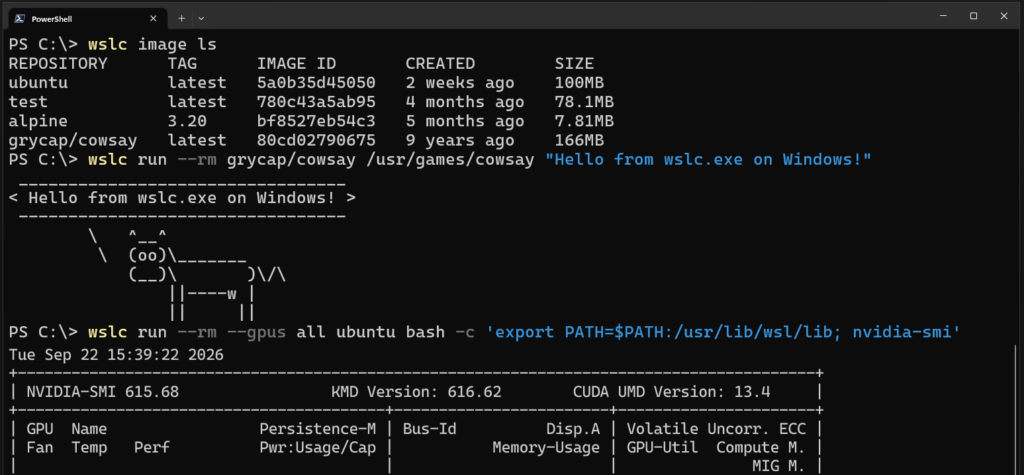
The general availability release adds several features that were missing during preview, including restarting containers, copying files in and out, health checks, network connect and disconnect commands, real-time container events, mount support, and configurable storage locations.
Microsoft is also bringing WSL containers to businesses
WSL Containers now integrates with Microsoft Defender for Endpoint, so security teams can see process, file, and network activity inside containers and relate it back to the Windows host.
Microsoft Intune can also disable WSL Containers entirely or restrict developers to images from approved container registries.
“With container registry allow lists, administrators can define approved registries and help ensure developers only pull container images from that list, that meet organizational security and compliance requirements,” Microsoft noted.
Microsoft is also working with the broader developer ecosystem.
VS Code Dev Containers can use wslc as their default driver, while Aspire and the VS Code Containers extension now support WSL Containers.
“wsl compose up” is coming next
The most requested missing feature is Docker Compose-style support, and Microsoft says it’s already working on it.
“Our aim is for wsl compose up to work with your existing compose.yaml files, unchanged,” Microsoft said. “We’ve started on this and hope to share more soon.”
Microsoft is also working on WSL’s underlying networking and cross-OS file performance.
The company says WSL Containers can already deliver up to 2x faster performance when accessing Windows files from Linux environments.
Join Mikko Hyppönen and security leaders from the NFL, CHANEL, and Atlassian for a two-hour digital summit on what AI-speed attacks change, what defenders should stop doing, and how to validate, decide, fix, and re-validate at machine speed.
Tech & AI
PlayStation 5 emulation is evolving rapidly, and a native PS5-to-PC compatibility layer is now in development

What we know so far: Just a year ago, it seemed unthinkable that PC users would be able to emulate PlayStation 5 games in any meaningful capacity anytime soon. Recent shifts in Sony’s policies, however, appear to have spurred multiple projects to that end over the past few months. While only a handful of games are currently playable, and the larger 3D titles run at unstable framerates, the speed of development makes the trend worth watching.
In mere months, at least two PS5 emulators have gone from having no public releases to playing one of the console’s only true exclusives, the Demon’s Souls remake, at playable framerates. The GitHub pages for SharpEmu and KytyPS5 are spinning out new test releases rapidly, multiple times a day in the case of the latter, as videos showcasing their progress proliferate across YouTube.
While some recent clips show SharpEmu and KytyPS5 managing only single-digit frame rates in Demon’s Souls, others show the latter reaching 40 to 50 fps on an RTX 5090 and an Intel Core i9-14900K. One clip even shows the game hitting 120 fps with DLSS frame generation on top of a steady 30fps render.
Astro Bot is another PS5 exclusive that has reached playable, though still unstable, frame rates in recent days. Even Wolverine, released just two weeks ago, can now reach its main menu on PC, albeit at roughly 2fps.
The timing suggests that most, if not all, public development occurred after Sony moved to scale back PC ports and end physical discs. SharpEmu went public in July, months after the first reports that Sony would pull back on PC support. The first of KytyPS5’s more than 300 GitHub releases arrived that same month, about two weeks after the company announced it will stop manufacturing discs for new PlayStation games starting in 2028.
Although both projects accept AI-generated code, they have clear policies on its use, apparently to avoid accusations of “vibe coded slop” that have recently spread throughout the retro modding scene. Contributors must be able to describe what their code does and manually test it.
As the two projects strive to bring PS5 exclusives to PC through emulation, a third is taking a different approach: running the games natively. AnyPS5 converts executables designed for Sony’s console into formats that Windows or Linux can read, much like compatibility layers such as Wine or Proton.
The method is plausible because, like most Windows and Linux systems, the PS5 is x86-based. For now, AnyPS5 has publicly demonstrated only one game, the 2D platformer Dreaming Sarah, but it holds 60 fps on just a GTX 1050 Ti and an i5-7500, hardware that predates the PS5 by several years. Even an Intel HD Graphics 620 integrated GPU from 2016 can exceed 30 fps. The project has yet to release a public build, however.
Still, predicting future progress for emulators and compatibility layers is difficult. ShadPS4, a PlayStation 4 compatibility layer that heavily inspired AnyPS5, remains in early development several years after its debut.


Learn how engineers can shift from manually managing tools and handoffs to defining objectives and supervising AI-driven execution across the silicon development lifecycle.
Key Takeaways
- Explore four critical technologies enabling silicon design autonomy
- Understand how autonomous AI accelerates complex engineering workflows
- See real-world impact across semiconductor design and verification
- Gain practical insights from Ambiq’s deployment of autonomous AI in production
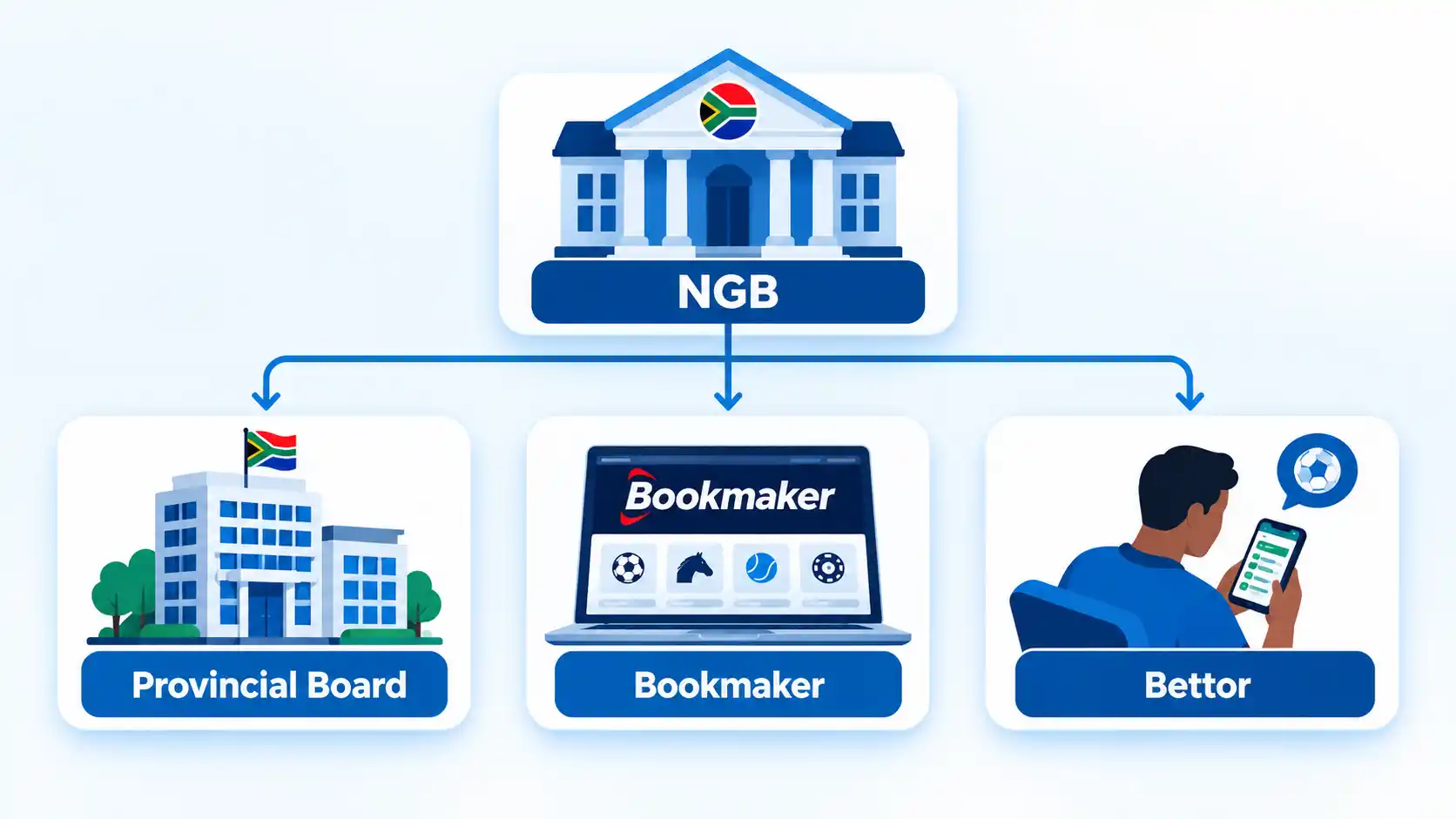
As of September 28, 2026, BoyleSports does not appear on the National Gambling Board’s current verified-operator list or the Western Cape Gambling and Racing Board’s current bookmaker list. A bookmaker is a company that accepts bets, and South African readers should not treat old BoyleSports signup pages as proof that they can currently open and fund a locally licensed BoyleSports account.
Quick Take
- The National Gambling Board’s verified-operator list, last updated September 4, 2026, does not currently list BoyleSports.
- The Western Cape Gambling and Racing Board’s current bookmaker list also does not include BoyleSports.
- Historical South African BoyleSports licensing records help explain why old signup information still appears online, but an old application does not prove that a licence is current.
- Before registering, uploading identification or depositing money with any betting site, verify the legal operator and current licence through the appropriate South African regulator.
Is BoyleSports Still Available in South Africa?
The clearest place to check is a South African regulator, not an old betting review or registration page. The National Gambling Board’s verified-operator portal says its information comes from Provincial Licensing Authorities and was last updated on September 4, 2026. BoyleSports does not currently appear on that list.
The Western Cape Gambling and Racing Board’s current licence-holder page also lists licensed bookmakers in that province. BoyleSports is not among the bookmakers shown there.
This does not mean BoyleSports has stopped operating everywhere. BoyleSports still maintains international services, and its current safer-gambling site identifies a Gibraltar-licensed BoyleSports operator. The narrower point is that the South African regulator records checked for this article do not currently establish BoyleSports as a locally licensed bookmaker for South African customers.
For someone in South Africa, that local licensing question matters more than whether an international BoyleSports page can still be opened in a browser.
Why Old BoyleSports Registration Pages Still Appear
A search result can remain online after a bookmaker changes the countries it serves. That means a page may still contain signup instructions, old promotions, payment details or account-opening advice even when those instructions are no longer current.
This is why a registration guide should not be treated as proof that an operator is available today. Current regulator records are stronger evidence than an undated or outdated commercial page.
The same caution applies to websites that copy a familiar betting brand. A cloned site can reproduce a company name, logo, licence number and legal wording. Before entering a password, identity document or payment details, check how to spot a cloned online casino website by comparing the exact site you are visiting with independently verified operator information.
How South African Betting Licensing Works
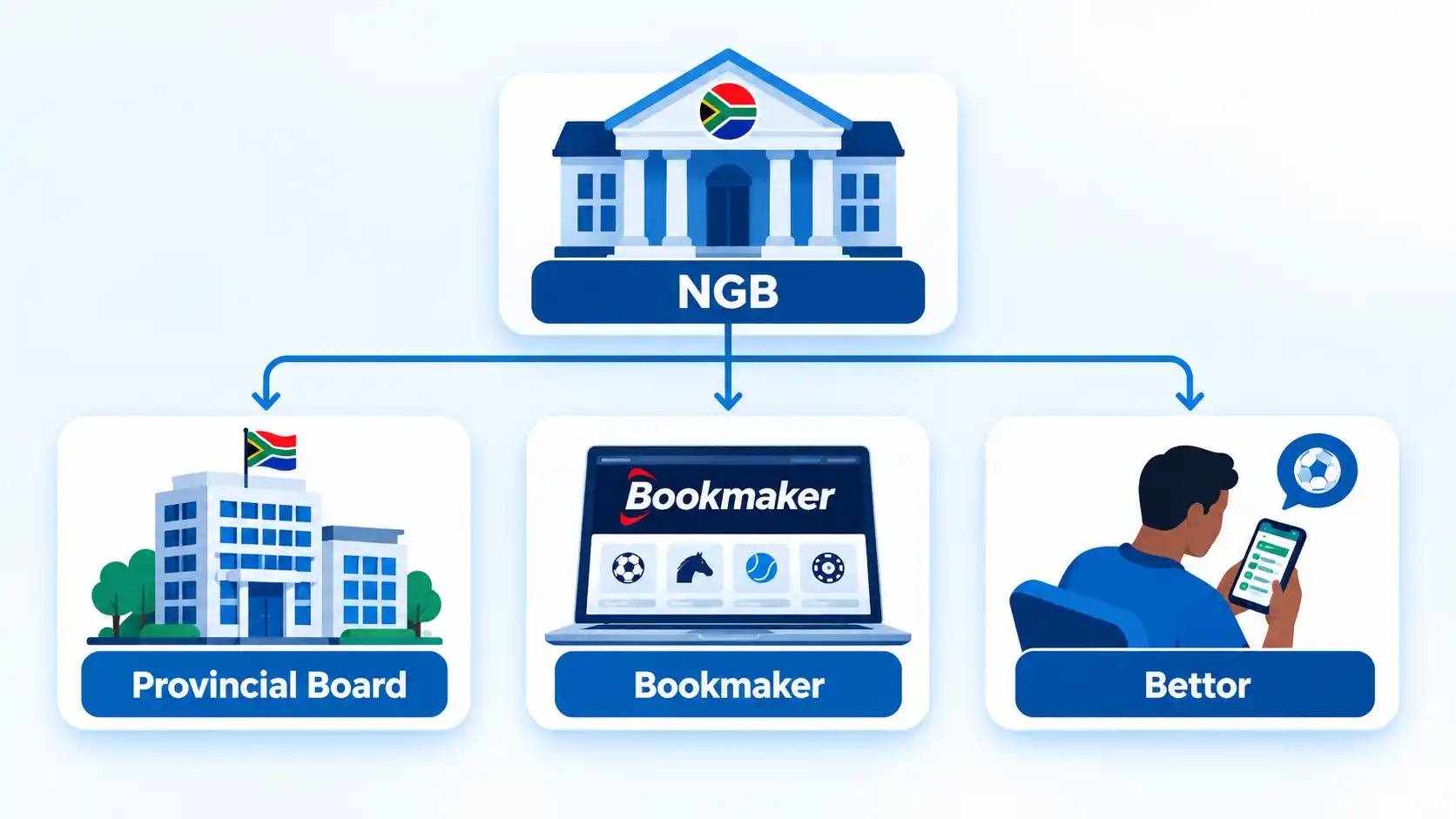
In simple terms, an international gambling licence does not automatically allow a company to take online bets from people in South Africa.
The National Gambling Board’s enforcement guidance says betting is a legal form of gambling when the operator is licensed through a provincial gambling board in South Africa. It also states that online gambling is prohibited except for online betting through bookmakers licensed in South Africa for online betting.
The National Gambling Board, or NGB, provides national oversight. A Provincial Licensing Authority is the provincial regulator that licenses and supervises gambling operators in its area. The NGB’s consumer guidance says gambling operators are licensed by these provincial authorities and that licensed online operators should display their licensing information on their digital platforms.
The term interactive gambling refers to forms of online gambling that South African law does not treat as licensed online betting. The NGB specifically distinguishes permitted online betting through licensed South African bookmakers from prohibited interactive gambling.
Warning
A foreign licence, an old South African licence application or a copied licence badge does not establish current South African authorization. Check the legal company, current licence status and permitted activity through an official regulator before registering or paying.
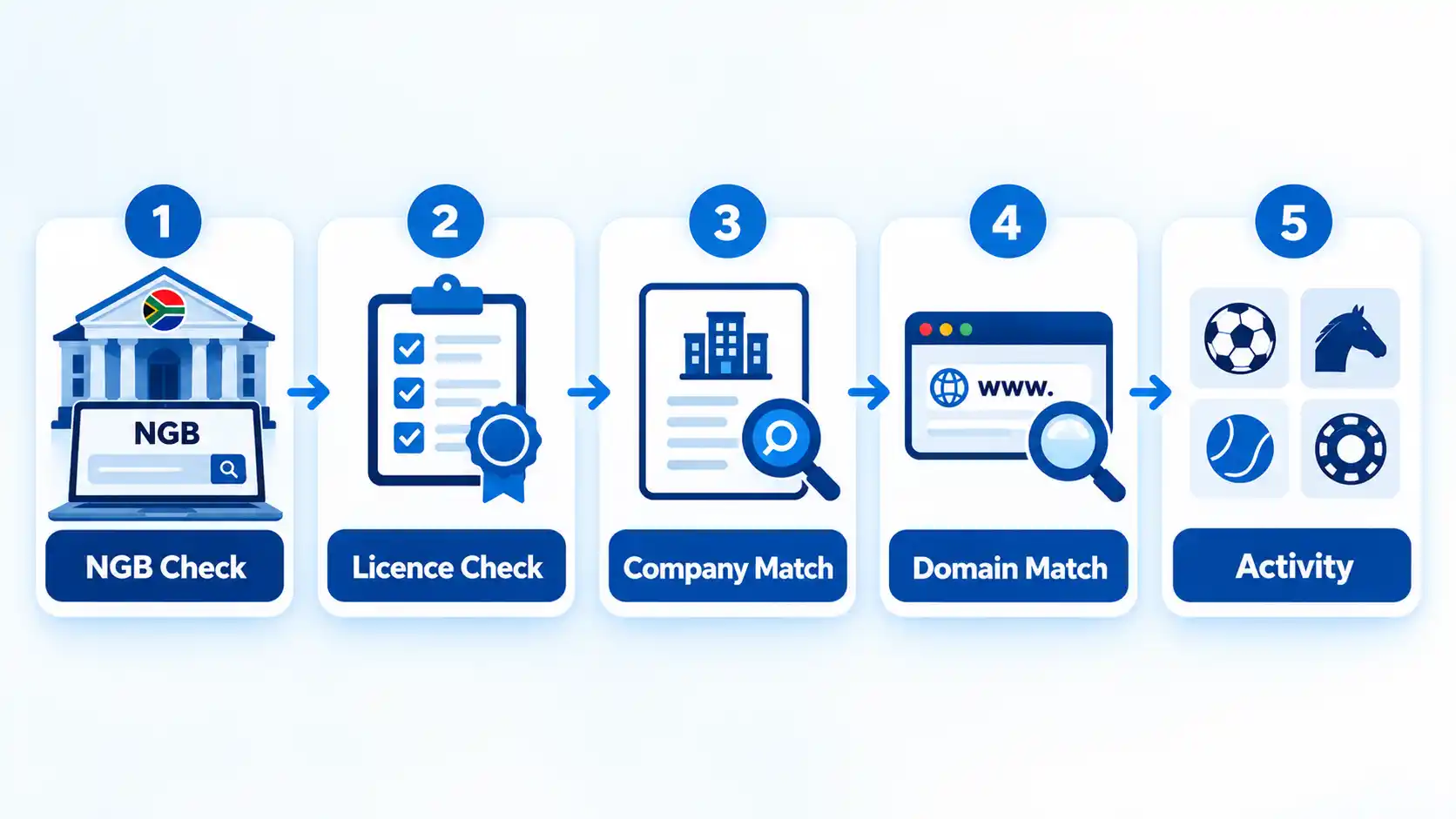
The key question is whether the exact operator holds a current South African bookmaker licence for the service it is offering.
It is also important not to treat every form of online gambling as legally equivalent. A comparison of licensed sports betting and interactive online casino gambling can clarify why the type of gambling activity matters as well as the name of the operator.
BoyleSports Previously Had a South African Licensing Presence
There is genuine historical evidence behind older South African BoyleSports material. A Western Cape Provincial Gazette notice dated December 10, 2021 records an application by BoyleSports (Pty) Ltd for a new bookmaker licence and a bookmaker-premises licence. The notice identifies the South African company’s registration number as 2021/878980/07.
That record shows that BoyleSports pursued South African bookmaker licensing at the time. It does not show that the licence is current in September 2026.
This distinction explains why historical registration information can look convincing. An old government record can be genuine without proving that the same service remains authorized today.
If a website, advertisement or search result later claims that BoyleSports has returned to South Africa, verify that claim before creating an account. Start with the national record, then check the specific licence and operator behind the website.
How to Check Whether BoyleSports Returns to South Africa
Verify the result
What If You Already Had a BoyleSports South Africa Account?
If you used BoyleSports in South Africa previously, recovering information from an old account is different from opening a new account. Do not assume that a newly discovered BoyleSports-branded website is the correct place to enter old login details.
If you need historical account information, use independently verified BoyleSports contact information. BoyleSports’ current safer-gambling page provides international customer-service contact options, but that page does not establish that a South African betting service is currently licensed or available.
Keep useful records such as account emails, deposit or withdrawal receipts, statements, support correspondence and any licensing information that appeared on the service when you used it. Those records can help identify which company and regulator were involved.
If a dispute concerns an older South African operation, first identify the provincial authority connected with that account. The NGB’s consumer guidance says complaints about licensed gambling businesses should normally begin with the Provincial Licensing Authority that issued the licence.
The steps involved when an online bookmaker leaves your country are different from signing up with a currently licensed operator.
Responsible Gambling and Support
If gambling is causing financial or personal problems, support is available independently of any bookmaker. The National Gambling Board’s verified-operator page lists the National Responsible Gambling Programme’s 24-hour toll-free helpline as 0800 006 008 and its WhatsApp service as 076 675 0710.
The same NGB page advises people not to gamble in environments that are absent from its verified-operator list. Checking current licensing is therefore useful both when choosing an operator and when an old brand appears to return.
Bottom Line
The current regulator evidence does not support publishing instructions for opening a BoyleSports account in South Africa. As of September 28, 2026, BoyleSports does not appear in either the NGB verified-operator list checked for this article or the Western Cape Gambling and Racing Board’s current bookmaker list.
Historical licensing records explain why older South African BoyleSports material exists, but those records do not replace a current licence check. If BoyleSports appears to return, verify the legal operator, provincial licence and permitted activity through official South African regulatory records before registering, providing identification or depositing money.

Entertainment41 minutes ago
Sky Plots ‘Jackal’ Jump to Free TV as ITV Takeover Takes Shape

Entertainment45 minutes ago
Kate Middleton’s Brown Jeans Style Is Classier Than Black

Tech & AI57 minutes ago
iPhone 18 Pro Max cameras are Apple’s best yet, but marginally


-

 Fashion5 days ago
Weekend Open Thread: J.McLaughlin – Corporette.com
-

 Tech & AI3 days ago
Anthropic turns Claude into an AI marketplace with 2,000+ plugins and connectors
-

 Tech & AI3 days ago
OpenAI is preparing “o,” an always-on ChatGPT assistant that could handle email
-

 Fashion6 days ago
8 iPhone Accessories That Add Personality
-
 Crypto7 days ago
Bitcoin price tests $83,600 Supertrend support after $87K rejection
-

 Crypto7 days ago
Crude Oil Prices Pressured by Diplomatic Hopes in the Middle East
-

 Crypto7 days ago
Bitcoin Threatens Sub-$84,000 Breakdown as Long Liquidations Spike
-
 Tech & AI7 days ago
UiPath’s Dines says AI needs a manual and launches Cartographer to write it
-
Business & Hustles2 days ago
Perpetua Resources at Mining Forum Americas 2026: shift to construction
-

 Crypto7 days ago
As Amazon Stock Prospers, Traders Might Consider This Option Play
-
 Business & Hustles5 days ago
Flock Safety camera hack yields 1.6M images, but expert says network safe
-

 Crypto7 days ago
Strategy resumed Bitcoin buying, but Strive gained more BTC per share
-

 Entertainment4 days ago
These 17 Amazon Fall Dresses Totally Conceal the Tummy
-
 Crypto3 days ago
Wall Street Giant Warns AI Agents Could Trigger a New Kind of Bank Run
-

 Politics7 days ago
Digger Reviews: Tom Cruise’s ‘Outrageous’ Film Divides Early Critics
-

 Crypto7 days ago
MoonPay to Acquire North Capital in All-Stock Deal Exceeding $60M
-

 NewsBeat7 days ago
What’s The Verity Meme All About And Why Are Kids Saying It?
-
Business & Hustles2 days ago
Greatland Resources at Mining Forum Americas 2026: cash-rich growth push
-

 Business & Hustles5 days ago
5 Major New Technologies Elon Musk’s Companies Are Racing to Build Across Space, AI and Robotics This Year
-

 Business & Hustles7 days ago
DoorDash reaches $131.5M settlement with NYC over courier pay
You must be logged in to post a comment Login