Michael Pick wanted a small electric pickup without paying forty thousand dollars or waiting for something like the Slate to reach the market. High gas prices made his old V6 Ranger feel expensive to run, so he bought a high-mileage 2017 BMW i3 REx sight unseen from an online auction for fifty-eight hundred dollars and set out to convert it himself.
Before any cutting could begin, the i3 required a new 12V battery and a thorough cleaning. With the interior stripped and the hatch removed, Pick carefully planned where he would cut into the carbon fiber cabin, then disassembled it and hacked off the back half. Before he could begin working on the rest, he designed a custom rear cab structure to provide much-needed extra support, added a back window as a bonus, and then spent some time sealing the entire thing up so that water couldn’t get in and the remaining space remained dry and functional.
BMW MODEL CAR KIT – Racing enthusiasts can fuel their imaginations with the LEGO Technic BMW M4 GT3 EVO Race Car (42226) building set for boys and…
AUTHENTIC DETAILS – This race car playset features iconic BMW detailing and is equipped with a working steering function, a detailed 6-cylinder…
BUILD, PLAY & DISPLAY – Kids can enjoy assembling their model car and racing it down an imaginary track, then display it on a shelf or table to…
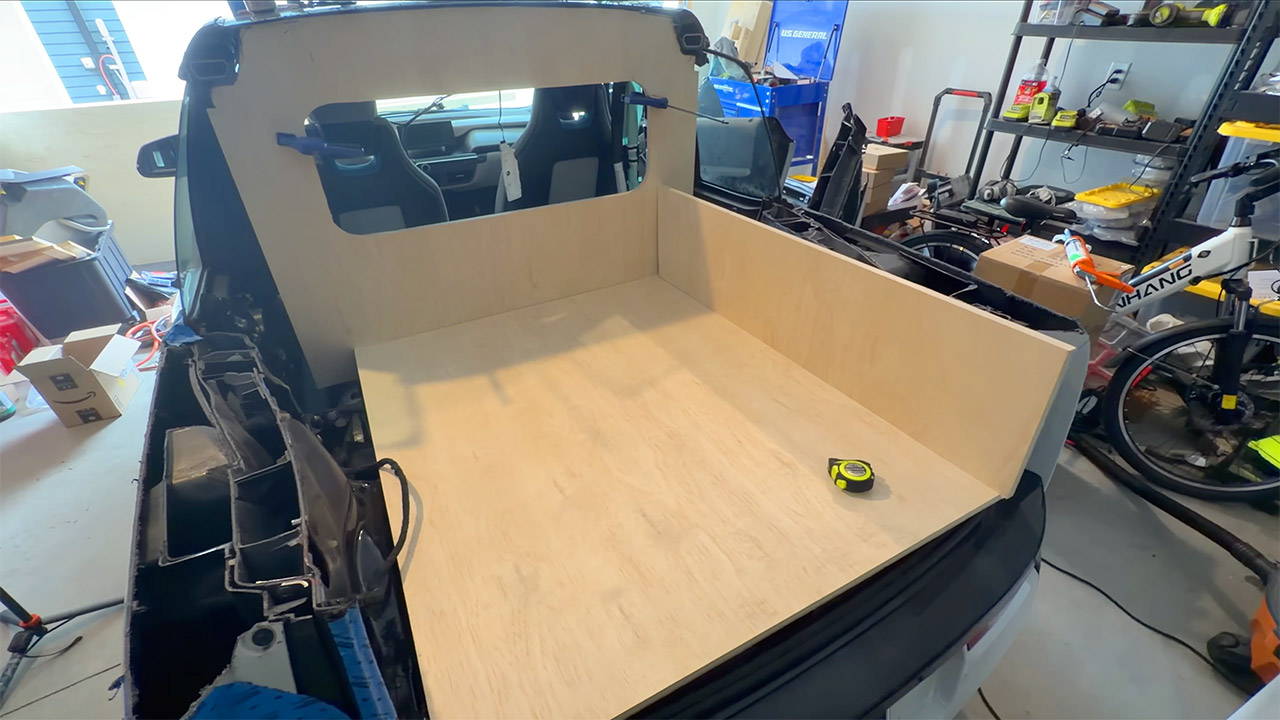
The cargo bed was next on his to-do list. It’s made of plywood that’s been coated with heavy-duty penetrating epoxy and covered with a bedliner, so it rests on top of the compartment that houses the car’s core electronics. Pick was diligent in ensuring that the junction between the cabin and the bed was tightly sealed to prevent water from seeping in. The old taillight lenses were too large for the new opening, so he had to relocate the electronics. To cap it off, he added some aluminum tie-down rails and a detachable tailgate net to complete the bed. The good news is that it can be completely removed when the engine is serviced.
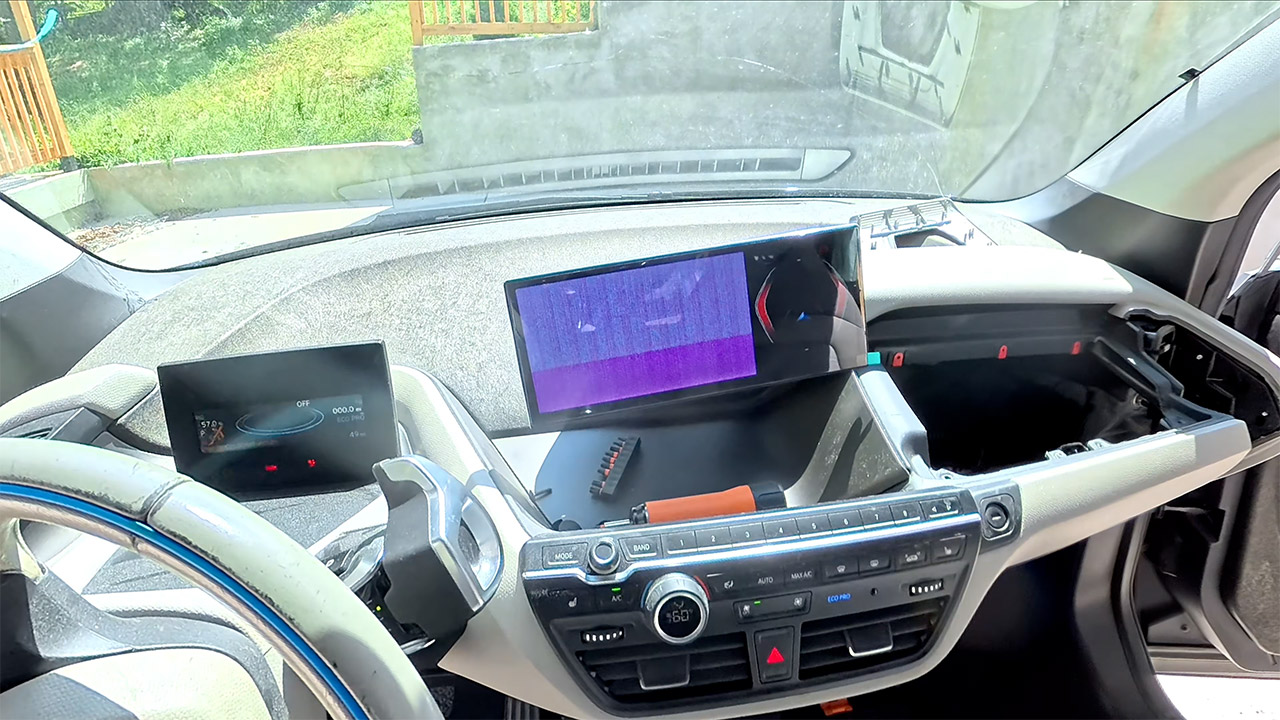
Pick decided to stick with the original systems rather than fiddling with the car’s software because it was simply easier that way. He did, however, change the factory screen to a larger 12.3 inch one with Apple CarPlay and tweaked the range-extender controls to make them function more seamlessly. As a result, the final truck can travel approximately 100 miles on batteries alone and more than 340 miles when the small gasoline engine comes in.
The total cost was just under $8,000, which the donor vehicle, a new shattered windshield, and all of the modifications he made. What you end up with is a two-seater ute that looks outrageously fantastic, runs on electricity most of the time, and has a lovely useful open bed for carrying light things. It won’t compete with a full-size truck in terms of carrying capacity, but it does definitively address the one question Pick began with: an affordable electric pickup is possible if you’re ready to hack an existing car to pieces. [Source]
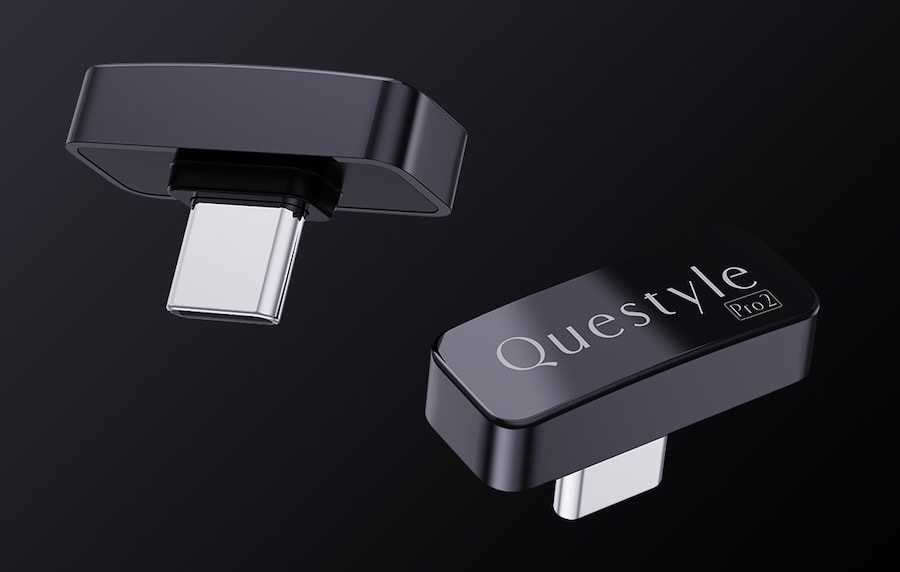
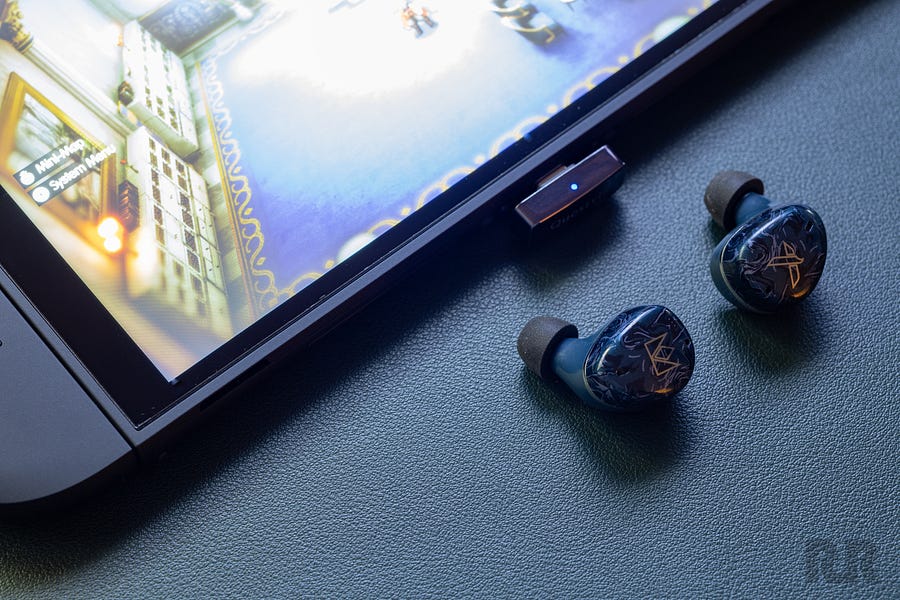
Questyle’s QCC Dongle Pro2 is the company’s latest flagship Bluetooth transmitter, designed to bring higher-quality wireless audio to smartphones, tablets, computers, and other compatible devices. Best known for its portable DACs, headphone amplifiers, and other audiophile source components, Questyle recognizes that even serious listeners are increasingly embracing wireless headphones. The problem is that not every source device supports the advanced Bluetooth codecs those headphones are capable of using. Apple users, in particular, have been stuck with AAC and SBC for native Bluetooth audio transmission, regardless of how expensive their wireless headphones might be. Questyle thinks it’s time to change that.
Building on the original QCC Dongle Pro, the new QCC Dongle Pro2 introduces Bluetooth 6.1 connectivity, LDAC support, and an expanded selection of high-quality wireless audio codecs in a compact USB-C transmitter. It also carries official Apple MFi certification, providing additional assurance of compatibility with supported iPhones, iPads, and other Apple devices. The goal is straightforward: give listeners access to better wireless audio capabilities without forcing them to replace perfectly good source devices. Whether the Pro2 can deliver a meaningful improvement in everyday listening is another question, but Questyle is making a strong case that the weakest link in your wireless audio system might not be your headphones.
Related Reading:
Better Bluetooth Codecs and Lower Gaming Latency
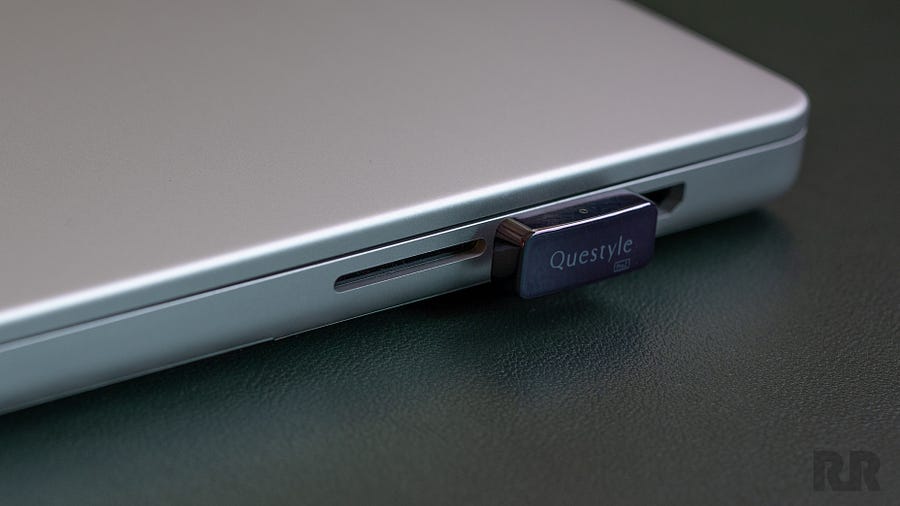
The QCC Dongle Pro2 is designed to bridge the gap between premium wireless headphones and source devices that cannot take full advantage of their capabilities. Consider the Noble Audio FoKus Artem is, which supports LDAC, aptX Adaptive, and aptX Lossless, but requires a compatible transmitter to access those codecs. Rather than relying on a computer’s built-in Bluetooth hardware and codec support, Questyle handles wireless audio transmission through its USB-C adapter. It’s a similar approach to the FiiO BT11 and Sennheiser BTD 700, although Questyle adds support for LHDC, LE Audio, and Auracast to broaden its capabilities.
For gamers, the more interesting development involves wireless audio latency, particularly when using Bluetooth headphones with PCs, PlayStation 5, and Nintendo Switch consoles. Questyle claims the Pro2 can achieve latency as low as 48 milliseconds using aptX Adaptive and just 20 milliseconds using LE Audio’s low-latency mode. Those figures refer to the wireless transmission stage rather than total system latency, and achieving them requires compatible receiving hardware. The aptX Adaptive figure specifically depends on headphones using Qualcomm’s newer Gen 2 Sound Platforms, while LE Audio’s lowest-latency mode requires compatible receivers. Standard Bluetooth headphones won’t magically deliver those results simply because the transmitter supports them.
Questyle also faces competition from the Creative BT-W6, which we previously reviewed and found to be a capable solution for Windows users and gamers, with support for aptX Adaptive, LC3, and dedicated gaming modes. Our testing of the original Questyle QCC and QCC Pro revealed Windows compatibility issues, making the Pro2’s promised plug-and-play performance particularly important to verify. The codec support looks promising, but actual compatibility, connection stability, and latency will determine whether this is a meaningful upgrade or just another impressive collection of Bluetooth acronyms.
Advertisement
Setup, Connectivity, and Everyday Performance
I had expected the Dongle Pro2 to function as a replacement for the built-in Bluetooth systems of the devices it connects to. On reflection, that was an unrealistic assumption. After all, that would be hugely complex to support and might not even be possible on Apple and Android devices. The QCC Dongle Pro2 actually functions like a wireless USB-C cable, but one you’ll need to configure using Questyle’s companion app. That’s a lot less “seamless” than I had imagined, but such is the reality of today’s complex software systems.
To begin using the Dongle Pro2, you must first download its companion app from the Google Play Store or Apple App Store. Thankfully, it doesn’t require an account, but the app is oddly large, coming in at 166MB on Android.
The app itself is minimalist, with an austere user interface. It worked well for me, and I was able to set up the Dongle Pro2 and update its firmware quickly. Pairing devices was equally straightforward, and I had LDAC playback running on my Noble Audio Artemis without any issues. Once paired with a device, the Dongle Pro2 remembers the connection, even after being unplugged. This is also how you use it with laptops and PCs: establish the connection using a smartphone or tablet, then move the transmitter to your computer. While this approach does allow you to switch Bluetooth headphones between source devices without re-pairing, it also means you cannot connect a different pair of Bluetooth headphones or adjust the connection settings without returning to the Questyle app.
Low-Latency and Gaming
To use the QCC Dongle Pro2 with a gaming console, you must first enable “Game Mode” in the app. This mode disables certain Bluetooth features in exchange for significantly lower latency. You sacrifice a bit of sound quality, but I was able to reduce latency from approximately 240ms to 45ms on Windows 10. Is that good enough for competitive gaming? Not really, but it’s more than adequate for single-player experiences or casual online gaming.
I tested the Dongle Pro 2 with both my Switch OLED and Switch 2, and it worked well on both consoles. Sound quality was slightly better using the consoles’ native Bluetooth connections, but that came at the expense of significantly higher latency. The trade-off is worthwhile for fast-paced titles like Splatoon 3 and Kirby Air Riders, although some players may be able to tolerate the additional delay when playing more cinematic games like Pokémon Pokopia.
Advertisement
The downside of using the Dongle Pro2 with the Switch family of consoles is that it occupies the USB-C port used for charging. Wireless headphones are convenient, but losing the ability to charge your handheld console while playing certainly isn’t. The Dongle Pro 2 lacks USB-C pass-through capability, and its absence is particularly frustrating in situations like this. Other wireless audio adapters, such as the Noble Audio Sceptre, offer USB-C pass-through, making Questyle’s omission a notable inconvenience.
Advertisement. Scroll to continue reading.
The Bottom Line
The QCC Dongle Pro2 is a solid HiFi-capable Bluetooth dongle. It is platform independent, and offers seamless connection to (previously-paired) devices at very high transmission qualities. With Bluetooth 6.1, LDAC, and LE support baked in, the Dongle Pro2 is one of the most complete BT dongles on the market, representing both broad compatibility and future-proof advanced capabilities. While the Dongle Pro2 lacks USB-C pass-through and is on the pricier side, it is still a great choice for audiophiles that demand bleeding-edge wireless audio capabilities.
Pros:
Extensive codec support, including LDAC, aptX Lossless, aptX Adaptive, LHDC, and LE Audio.
Bluetooth 6.1 connectivity with Auracast support.
Apple MFi certification and broad compatibility with USB-C source devices.
Excellent LDAC playback with compatible wireless headphones.
Significant reduction in gaming latency with Game Mode enabled.
Remembers paired headphones when switching between source devices.
Compact, portable design.
Straightforward initial setup and firmware updates.
Cons:
Relatively expensive compared with simpler Bluetooth transmitters.
No USB-C charging pass-through, particularly inconvenient for handheld gaming consoles.
Requires a smartphone app for initial pairing, configuration, and switching headphones.
No dedicated desktop configuration app.
Game Mode sacrifices some sound quality to reduce latency.
Low-latency performance still falls short of competitive gaming requirements.
Anthropic filed itshotly anticipated IPO prospectus on Monday, spelling out parts of the company’s business, strategy, and risk profile ahead of its public debut. Though the filing, known as an S-1, is several hundred pages long, it has some notable omissions—namely, certain financial figures.
“Claude has experienced the fastest enterprise adoption of any technology in history, as demonstrated by revenue growing from $0 at commercial launch in the first quarter of 2023 to $_____ for the three months ended September 30, 2026,” reads the first of dozens of such examples.
It’s relatively common for companies to redact certain information in their S-1 filings, and Securities and Exchange Commission rules allow for a certain degree of leniency around the practice, particularly when it comes to information considered “confidential.”
Still, it’s helpful to know what, exactly, these companies decide to leave out. In Anthropic’s case, the missing details largely revolve around financials for its most recent quarter, which concluded at the end of September, and lease agreements tied to its compute investments. While experts expect many details to be disclosed before Anthropic goes public, their current absence may hint at the uncertainties of investing in artificial intelligence, as companies work to secure sufficient compute.
Advertisement
Anthropic did not respond to a request for comment.
Michael Dambra, an accounting and law professor at the University at Buffalo School of Management, tells WIRED that there are “practical reasons” for Anthropic’s third-quarter numbers to be absent: September 30 was only a few weeks ago, and “closing the books for a company of this size takes time.”
Companies can also be liable for misstatements in their registration statements, “so there is a strong incentive not to publish numbers before they have been fully vetted,” Dambra says. SEC rules require that “Anthropic would need to update the filing with third-quarter financials” if the company goes public any later than about mid-November, he says.
As for data center lease agreements, Erica Neuman, an accounting professor at Youngstown State University, says it’s “not unusual” for companies to redact confidential details from “contract exhibits,” which could include lease terms.
Advertisement
However, Neuman adds that it’s worth scrutinizing whether Anthropic’s redactions would prevent, or make it more difficult, for investors to analyze Anthropic’s financial obligations and whether they may impact the company’s cash flow.
Many of Anthropic’s financial obligations relate to compute, which is the “most significant operating cost in our business,” according to the S-1. It’s also a business risk for the company, and it’s laid out both in terms of undersupply and overinvestment. (Parts of the AI industry have been warning that chip constraints could slow the progress of AI.)
You don’t hear the defenders of so-called Western civilization talk much about The Odyssey these days.
Maybe that’s because their rabid denunciations of Christopher Nolan’s film adaptation of Homer’s epic were buried in an avalanche of money. The July blockbuster has grossed nearly $1.8 billion worldwide, silencing the right-wingers who predicted a massive flop due to diverse casting and deviations from the source material.
Perhaps the loudest of these preemptive critics was Elon Musk. The world’s richest man spared no vitriol for what he considered a desecration of the ancient Greek narrative; four days after its release, he vowed to produce a superior version. “Before this year ends,” Musk wrote on X, “Grok Imagine will make a full-length movie of The Odyssey that is historically accurate and true to the art of Homer.”
A little more than three months later—long after the discourse moved on—the public finally has a first glimpse of what we might call the Grodyssey, an Odyssey rendered through prompts fed into xAI’s video and image generation model. Rather than a “full-length movie,” it’s a seven-minute “episode” of an apparently ongoing series, depicting how Odysseus, king of Ithaca, resists a call to war against Troy but is ultimately compelled by an oath of loyalty to sail there with his army.
Advertisement
“Odyssey with Grok Imagine,” Musk announced Friday on X when sharing the clip, produced by AI entertainment company Wonder Studios X. The subdued post received just 18,000 likes, notably less engagement than other recent posts in which Musk cast doubt on the results of Brazil’s elections, complained about pronouns, and disparaged “legacy news.”
Grok’s introductory episode bears many hallmarks of AI slop. The movements of faces don’t match the dialog, which is further undercut by stilted and unnatural delivery. Besides Odysseus, none of the principal characters are introduced by name, and the pacing issues are laughable: The Ithacans arrive on the shores of Troy immediately after leaving their homeland, for example. Even the blue checks on X were harsh in their assessment. “Someone actually watched this and still decided to post it?” wrote one user. “Fire that person.”
But Musk’s stated goal wasn’t to deliver a better-looking or more narratively cohesive version of The Odyssey. He and his culture war comrades dubiously claimed that they were against Nolan’s casting of Black and trans actors, the Americanized English spoken by the characters they played, and various designs of ships and armor in the film because they were “historically inaccurate.” Hence Musk’s guarantee of a “historically accurate” corrective.
So, did Grok Imagine succeed on that front? Asking Grok for a self-evaluation yields an interesting answer. “No,” the chatbot says when queried about whether this Odyssey snippet is historically accurate. “Grok Imagine’s Episode 1 (and the broader promised series) is an adaptation of Homer’s Odyssey, not a historically accurate reconstruction of real events.”
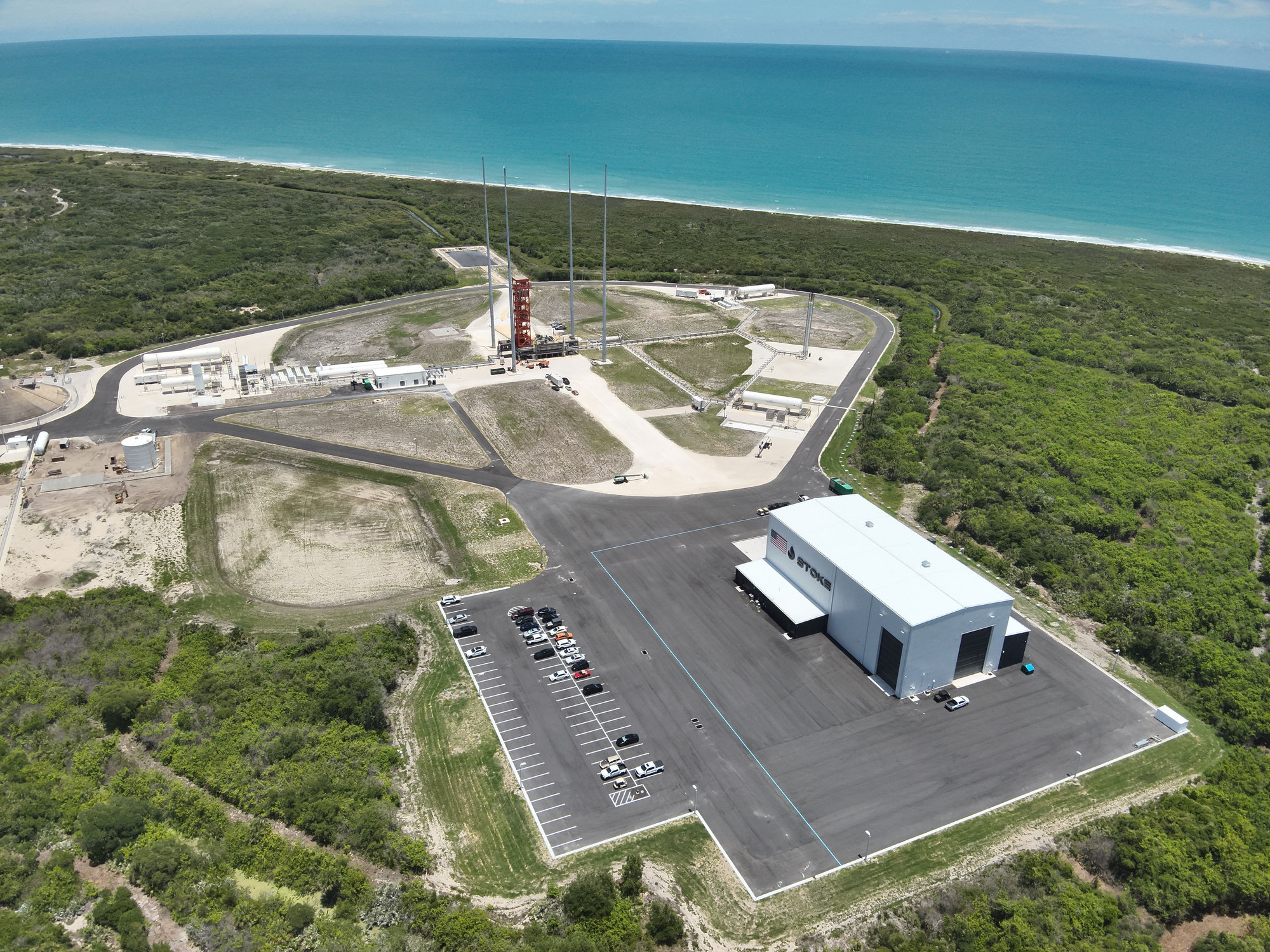
Stoke Space’s existing Cape Canaveral launch site in Florida. (Stoke Space Photo)
Kent, Wash.-based Stoke Space has secured a conditional commitment for a $150 million loan from the Department of War’s Office of Strategic Capital to build a second launch pad at Cape Canaveral for a larger version of its fully reusable rocket.
The loan isn’t final until Stoke meets a list of financial, legal, technical and due-diligence requirements. The announcement Monday comes less than two months after Stoke raised roughly $1 billion in a Series E round, bringing its total funding to about $2.3 billion.
The new pad would serve Stoke’s Nova Block 2 rocket, which is designed to carry up to 15 metric tons to low Earth orbit. That’s five times the capacity of Nova Pathfinder, which Stoke plans to launch for the first time from its existing pad in early 2027. Block 2 is slated to debut in 2029.
The loan would be paired with private capital to pay for the pad, according to the Department of War. Jordan Sebold, senior managing director for investments at the Office of Strategic Capital, said in a statement that adding launch infrastructure would “enhance the overall capacity and resilience of the commercial space industrial base.”
The Office of Strategic Capital was set up in 2022 to draw private investment into technologies seen as critical to national security. The following year, Congress gave it the power to make loans and loan guarantees to companies in those fields. Space launch is one of the technology categories it targets.
“By expanding domestic launch facility capacity, this investment enables launch service providers to ensure our commercial and defense partners have reliable, high-cadence access to space,” David Lorch, the office’s director, said in the news release.
Stoke is already lined up for military launch work. In 2025, the Space Force added the company to a pool of providers that can compete for national security missions under Lane 1 of the program’s third phase. Lane 1 is the tier meant for newer launch companies and less demanding payloads. Stoke can’t bid on those missions until it completes a successful orbital flight.
The company has other federal ties as well. The Defense Innovation Unit awarded Stoke a $4.5 million contract in 2024 to study rapid delivery of cargo to orbit, and possibly back to Earth. In June, Stoke was one of 37 companies NASA chose for unfunded partnerships. Stoke’s project focuses on returning Nova’s upper stage safely through the atmosphere.
Advertisement
Nova is designed so both of its stages can return and fly again. The booster flies itself back for recovery. The upper stage uses a metal heat shield cooled by liquid hydrogen that circulates through channels inside it, to survive the heat of reentry. Only SpaceX, with its much larger Starship, is pursuing the same goal, and it hasn’t fully achieved it yet. Stoke has yet to launch a rocket to orbit.
Advertisement
Stoke was founded in 2019 by two Blue Origin veterans: Andy Lapsa, the CEO, and Tom Feldman, the chief technology officer. The company has about 400 employees. Most work at its 168,000-square-foot factory and headquarters in Kent, and about 50 are at its test site in Moses Lake, which is expanding from 75 to 550 acres. About 50 more work at Cape Canaveral.
GeekWire reached out to Stoke Space for comment and we’ll update this story when we hear back.
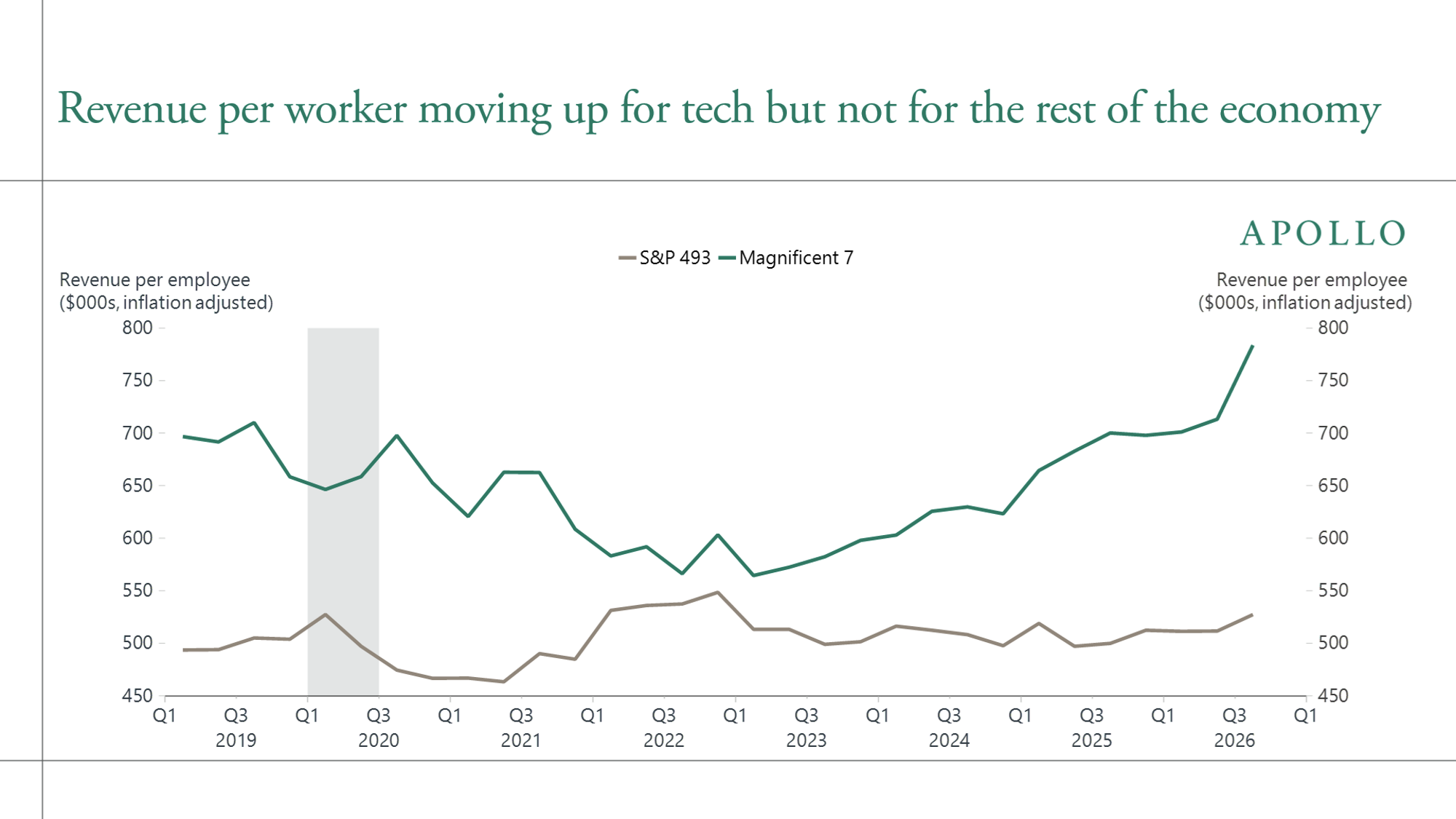
Def. Not A Bubble: Torsten Slok, chief economist at Apollo Global Management, recently shared a scathing note on the true extent of the so-called “AI revolution.” The data suggest AI’s macroeconomic impact remains very limited, which could mean we are heading toward some truly interesting times in terms of financial trends and global economic outcomes.
According to Slok’s Daily Spark note, AI has so far delivered zero financial payoff to corporate America outside of tech, despite the massive amount of money and hype surrounding the latest advancements in large language model research.
A few tech-related corporations are seeing noticeable returns, but the overwhelming majority of companies in the S&P 500 are seeing little to show for their generative AI or LLM efforts.
Slok said inflation-adjusted revenue per worker is rising only for the Magnificent 7, the Big Tech-heavy slice of the S&P 500 that includes Nvidia, Tesla, Amazon, Microsoft, Google/Alphabet, Apple, and Meta. Profit margins are rising for that group too. Meanwhile, the “S&P 493,” as he calls the rest of the index, is flat on both revenue per worker and profit margins.
Advertisement
Furthermore, Apollo’s economist does not see any sign that AI is boosting productivity growth. To put it simply, GenAI and LLMs are having no impact on the bottom line outside of tech. With nothing to show for it, mainstream S&P 500 companies are already pulling back on the massive sums AI requires, treating token spending as a cost that weighs on margins rather than a potential source of future growth.
Venture-backed companies keep spending more and more on AI tokens, while mainstream organizations don’t need the latest models, and aren’t willing to pay for them. Slok said that if AI stays confined to a small portion of the overall economy, its macroeconomic effects will be very limited.
AI models might become more and more commoditized, and tokens might eventually get “cheap” enough for revenue to grow and margins to expand. However, Slok thinks that lofty goal could be harder to achieve than it sounds. He describes AI as a powerful “calculator,” but argues that businesses run on good judgment, not number crunching.
“AI does not understand accountability, trust, culture, unwritten rules, ethical trade-offs or fairness, all of which shape reputational risk and ultimately drive revenue growth and profit margins,” Slok said in his post.
Advertisement
In his view, the AI story will ultimately be decided by the S&P 493 rather than by the Magnificent 7’s financial fireworks.
Slok’s firm, Apollo manages roughly $1 trillion in assets, so his read on the economy carries weight. His outlook also echoes other cautionary reports, with Gartner recently estimating that more than $3.5 trillion in AI infrastructure investment could face write-downs by the end of 2030. But not everyone shares that pessimism. Goldman Sachs economist Jan Hatzius argues that AI investment will ultimately pay off in higher productivity and economy-wide profits.
The American brand reportedly had 17 Singapore outlets in 2025.
American fast food chain Long John Silver’s will permanently close its Woodlands outlet on Oct 31, adding to a string of recent closures in Singapore, reported The Straits Times (ST).
A notice at the Woods Square outlet, seen by ST, said its last day of operations would be Oct 30. When ST visited on Oct 23, the outlet was packed with customers during the lunch hour.
Staff told ST they were unsure whether they would be redeployed to other outlets after the closure. It is the latest of several closures in 2026 for the chain, which is known for its fried seafood dishes.
At least four Long John Silver’s outlets closed earlier in 2026, based on social media posts and media reports: Suntec City, Admiralty, Commonwealth and Tampines. The Jurong Point outlet followed on Oct 19. The chain also used to have a store at Westgate in Jurong East, though it is unclear when that outlet ceased operations.
Advertisement
Long John Silver’s website currently lists 11 outlets, down from the 17 Channel NewsAsia reported in Jul 2025.
The brand hails from Kentucky, USA, and traces its Singapore roots to the 1980s, part of the wave of US fast-food chains that entered the local market. Today, all its outlets here are run by Zensho Food Singapore, a subsidiary of Japanese conglomerate Zensho Holdings Group, which is listed on the Tokyo Stock Exchange.
The parent group manages a global portfolio of food and beverage brands, including Japan’s leading beef bowl chain Sukiya and Ichikokudo Hokkaido Ramen, both of which have a presence in Singapore.
Corporate registry checks show Zensho Food Singapore was registered in 2012 and has a paid-up capital of S$29.3 million.
The critical PHP2Shell vulnerabilities (CVE-2026-109618 and CVE-2026-109619) have now been successfully exploited in the wild, just days after patches were released and initial exploitation attempts failed. BleepingComputer reports: The malicious activity was caught by Adel Karimi, detection and response lead at Perplexity, whose honeypots recorded evidence of confirmed remote code execution against an Apache mod_php installation running PHP 8.4.26. “This is now confirmed RCE with usable memory disclosure, not just a crash followed by a suspicious process. The response delivered an 800 KiB decoded cookie dump, and a function address derived from that dump using the public exploit’s offsets appears in the subsequent execution payload,” Karimi shared.
“The evidence demonstrates this chain on the intentionally favorable single-worker mod_php profile; it is not a measurement of exploit reliability on other worker counts, PHP builds, or applications,” he added. Karimi’s findings were also confirmed by Expel threat researcher Marcus Hutchins, who has been tracking a stream of alleged successful PHP2Shell exploitation reports.
“This is by far the highest quality confirmation of in-the-wild php2shell exploitation I’ve seen so far. Deep technical breakdown of a successful exploitation attempt against an Apache mod_php installation running PHP 8.4.26,” Hutchins said.
Entire CEO Thomas Dohmke, speaking last month at Madrona’s IA40 Summit in Seattle, says AI agents have made code review a much bigger bottleneck for developers. (GeekWire Photo / Todd Bishop)
A startup led by former GitHub CEO Thomas Dohmke is introducing its own platform for storing, reviewing and shipping code written by AI agents, competing with the company he used to run.
The startup, Entire, on Monday unveiled what it calls a Git forge — a service for hosting code, reviewing changes and running builds, the core of what GitHub does — designed for teams whose AI agents write code faster than people can review it. The company is pitching it as an alternative to GitHub.
The news comes two days before GitHub’s annual Universe conference in San Francisco. Microsoft acquired GitHub for $7.5 billion in 2018 and has since folded it into its CoreAI division.
The biggest change is Trails, Entire’s replacement for the pull request, the standard way developers propose and review code changes. The pull request “has become an audit log that only the agent reads,” Dohmke wrote in a blog post Monday. Instead of reading through every changed line, developers see a dashboard of scores from AI agents evaluating the code on each update.
According to Entire, multiple AI agents check the quality of each change, so developers can merge code without reading every line. Teams can also require a person’s sign-off, or passing automated tests, before any code goes in, the company said.
Advertisement
The launch comes as GitHub strains under the load from AI agents. The platform has had several significant outages in recent months, including one in August that lasted nearly eight hours. GitHub is moving from its own data centers to Microsoft’s Azure cloud to add capacity. GitHub said developers and agents made 7.38 billion commits, or saved code changes, on the platform in September alone.
Dohmke, who is based in Bellevue, Wash., left GitHub last year after nearly four years as CEO. Entire says it now has 50 employees. The company is fully remote.
Entire isn’t alone in rethinking code hosting for AI agents. AI coding company Cursor launched its own code-hosting service, Origin, in August. And Anthropic recently described building its own source control system as the number of code changes it merged each day grew from about 2,500 in May to more than 30,000 in September.
With the latest updates, Entire now lets developers host private code repositories directly on its service in the U.S., Europe, India and Australia, and says its service can handle up to 89 times as many code pushes per second as GitHub, based on its own benchmarks. It’s partnering with Buildkite and Depot on build and test pipelines, giving developers a way to move off GitHub Actions. Public repositories and self-hosting are on the roadmap.
Advertisement
Entire is also adding what it calls Continuous Memory, which lets AI agents search past coding sessions for the context behind earlier changes. The company says one part of it, a map of the codebase, cut token use by up to 71% in its testing.
That goes beyond the startup’s July launch, which mirrored existing GitHub repositories on a faster network rather than replacing them. Developers can still mirror from GitHub, or now move their code to Entire instead.
Microsoft’s venture arm M12 was among the backers of Entire’s $60 million seed round in February. Felicis led the round, with participation from Seattle-based Madrona and Basis Set Ventures, along with individual investors such as Yahoo co-founder Jerry Yang and Y Combinator CEO Garry Tan.
“Code review was always a bottleneck,” Dohmke said at a Madrona event last month. “I’ve never worked in a software company where I didn’t wait for somebody else to review my pull request, and you have to ping people in Slack three times. And there was this one guy that had to review everything because he knew what to look for. And now that bottleneck is 10 times bigger.”
South Korean police identified seven suspects linked to a cybercrime operation that breached more than 90 organizations in the country, with ARTEX AI pentesting framework used in most of the attacks.
According to local media citing the Seoul Metropolitan Police, the gang leader has a background in penetration testing and worked at a cybersecurity company between 2019 and 2022.
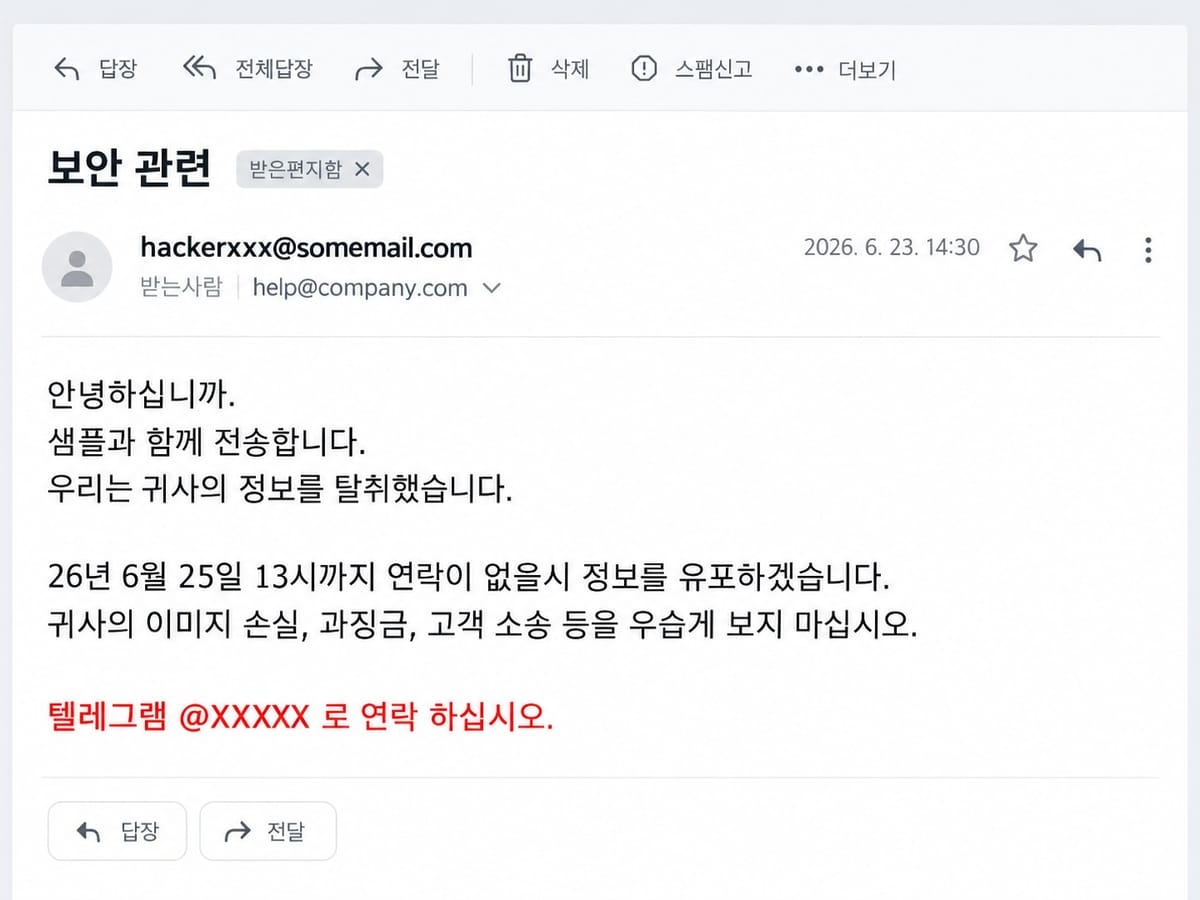
In 38 of the incidents, the threat actor demanded ransom payments of 360 million won ($270,000), promising in exchange not to leak stolen data.
Authorities believe the threat actor stole 8.2 million records from compromised organizations, including educational institutes, hospitals, large corporations, and even golf courses.
Advertisement
Extortion message sent to a victim
Source: Yonhap
Yonhap News says that the gang leader is a self-taught 32 year-old hacker and started attacking organizations in September 2025.
The Seoul Metropolitan police told the publication that the hacker used the ARTEX AI penetration testing suite, the same autonomous framework used in the attacks against multiple South Korean banks attributed to a Chinese-speaking threat actor.
Initially, the hacker used conventional tools but adopted AI utilities in late August 2026 to expand the attacks.
Authorities arrested all seven suspects, but only the group’s leader remains in custody. Arrested on October 15, he was formally detained two days later and referred to prosecutors on October 23. The other six suspects remain under investigation without being detained.
Advertisement
Police opened a case after a victim filed a complaint in June, and investigators traced the suspects through server logs from the breached entities.
Law enforcement authorities reportedly used an in-house AI tool to analyze the recovered evidence.
The police told local media that AI has lowered the barrier to entry for aspiring cybercriminals, resulting in large-scale, high-impact incidents that were previously only possible for skillful, knowledgeable actors.
“This is the first case of arrest of a suspect in Korea related to a large-scale hacking and personal information theft crime that exploited generative AI,” the police told Yonhap.
Advertisement
“Even individuals who are not professional hacker organizations can now hack on a large scale with the help of AI.”
The police continue the investigation, now focusing on whether any of the stolen data has been leaked on the dark web.
Overall prevention scores can hide what happens after initial access. Once attackers are using valid credentials, prevention drops sharply.
The Blue Report 2026 measures defenses technique by technique across 338 million simulations run in customer production environments.
Enterprise-sized businesses spend, on average, 28 percent of their software budgets on unwanted upgrades, migrations, and licensing changes. Often, those firms’ IT heads think those changes are detrimental.
Those results are according to a survey of 2,018 chief information officers and senior IT decision-makers at companies with at least 10,000 employees that Origina commissioned for its report, “The Software Tax.” About half of the respondents (1,011) are from the US, and the rest are from the United Kingdom. All respondents worked at companies with at least $1 billion in annual revenue.
Keep in mind that Origina provides maintenance for various enterprise software. Its report points to independent software maintenance as a way for IT leaders to regain control over software budgets, illustrating its potential bias. A third-party research consultancy, Censuswide, conducted the survey.
Among the report’s most concerning findings, enterprises often make software purchases that IT heads believe could hurt the organization. Ninety-five percent of respondents said “their organization has paid for a vendor-driven upgrade, migration, or licensing change in the past three years that it believed at the time would reduce performance, reliability, or business value,” the report says. Fifty-three percent of respondents “have done so more than once,” the report notes.
Advertisement
“Some 76 percent say their organization has very little real leverage in negotiations, and 80 percent say moving away from major vendors would cause significant disruption,” the report says, referring to the share of respondents who selected “strongly agree” or “somewhat agree” to those statements.
“When the alternative to an unwanted upgrade is losing support on systems the business runs on, saying yes is often a rational response,” Tomás O’Leary, one of the report’s authors and Origina’s CEO and founder, said in a statement. “That’s exactly the problem. The market has left some of the most experienced technology leaders in the world with little room to refuse, and that cost shows up in budgets, in engineering time, and in innovation that never gets funded.”















































You must be logged in to post a comment Login