


Connect with us
DAPA Banner

Tech

3 underrated Apple TV shows you should watch this weekend (April 17-19)

Published

on

Apple TV+ has quietly built one of the more interesting libraries among the popular streaming platforms. Somewhere between the buzzy dramas and the shows that everyone seems to be talking about, there are a handful of genuinely great series just sitting there, unwatched.

So let’s fix that this weekend. Whether you are in the mood for a thriller that messes with your grip on reality or something that will haunt you using nothing but sound, there is something here for you. Here are three underrated Apple TV+ shows worth your time.

We also have guides to the best new movies to stream, the best movies on Netflix, the best movies on Hulu, the best free movies, and the best movies on Amazon Prime Video.

Counterpart (2017)

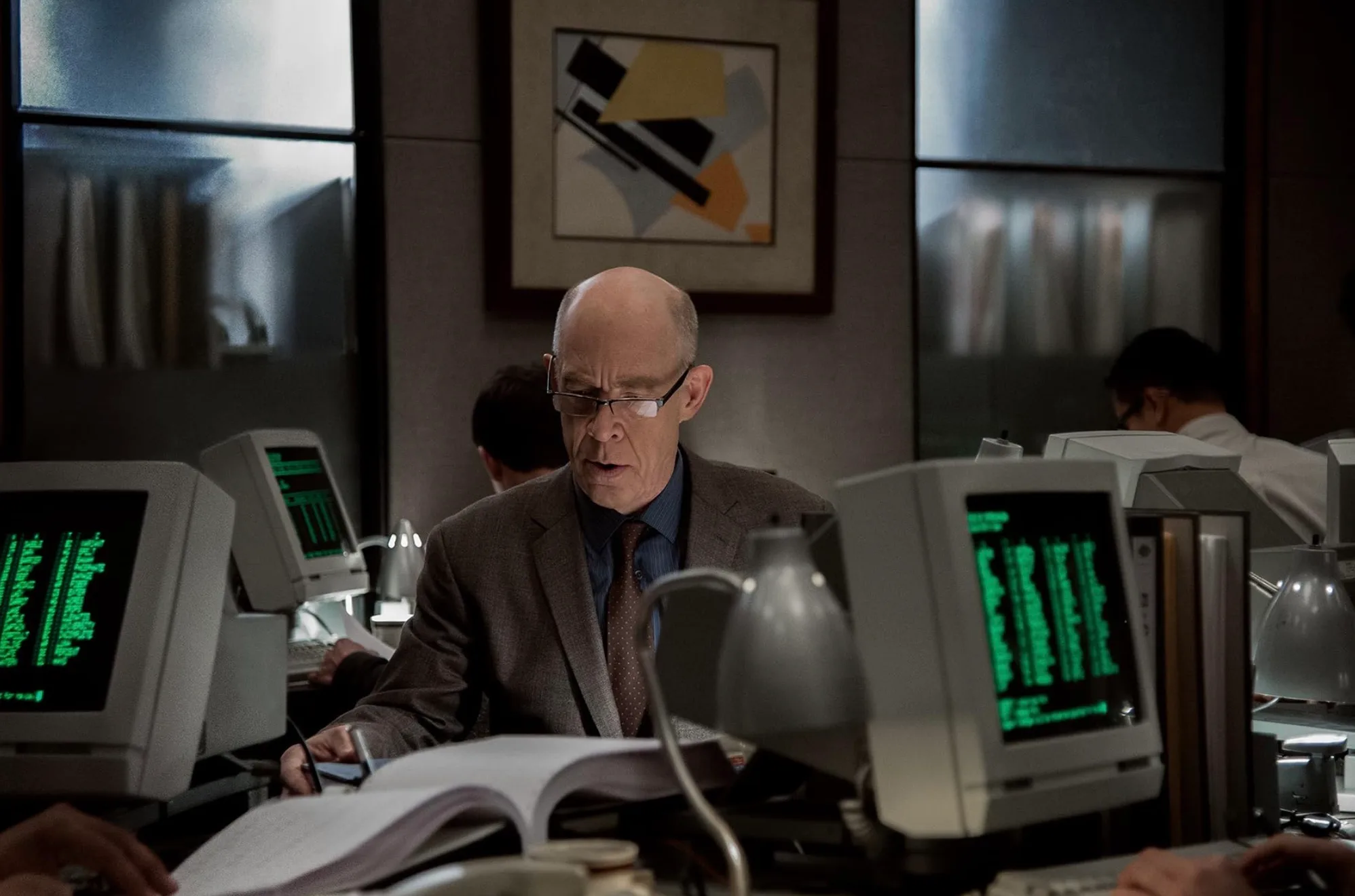
Howard Silk has spent 30 years doing a quiet, unremarkable job at a Berlin-based UN agency, shuffling papers and exchanging coded messages he does not understand. One day, he is told the truth: there is a crossing beneath the building to a parallel Earth, one that split from ours in 1987 and has since gone in a very different direction. To make things worse, his counterpart from that other world, also called Howard Silk, is nothing like him. Same face, same history, but entirely different man.

J.K. Simmons plays both versions with such complete distinction that you never lose track of which Howard you are watching. It is one of the best dual performances I have seen in recent TV shows. The show wraps its parallel world concept in the thick atmosphere of Cold War espionage: Berlin backstreets, dead drops, sleeper agents, and the paranoia of never knowing whose side anyone is really on.

Advertisement

You can watch Counterpart on Apple TV.

Calls (2021)

There are no visuals here in this underrated Apple TV show. What you get instead is a series of phone calls between strangers, laid over abstract, shifting patterns of light and sound, as something catastrophic and inexplicable begins to unravel the world around them. Each of the nine short episodes drops you into a different conversation, most of them terrifying in the quietest possible way.

The cast is stacked: Pedro Pascal, Aubrey Plaza, Lily Collins, Rosario Dawson, and others, none of whom you ever see. You just hear them, and that turns out to be the point. Directed by Fede Álvarez, the filmmaker behind Don’t Breathe, the show understands that what your imagination fills in is always scarier than what any screen can show you.

You can watch Calls on Apple TV.

Shining Girls (2022)

Kirby Mazrachi is a newspaper archivist at the Chicago Sun-Times trying to hold her life together after surviving a brutal assault. The problem is that her reality keeps changing around her. She comes home and suddenly owns a dog instead of a cat. She discovers she is married to a man she only remembers as a colleague. Her desk at work keeps moving. No one else notices except for Kirby.

Elisabeth Moss carries the whole thing on her back, and she is extraordinary, calibrating Kirby’s confidence and anxiety differently across each shifting version of reality. Jamie Bell is quietly terrifying as the villain. The show uses time travel not as a gimmick but as a way of showing how one person’s violence can create ripples, trapping its victims in a reality they cannot fully trust. It is slow to start and deliberately disorienting, which is entirely the point.

Advertisement

You can watch Shining Girls on Apple TV.

Source link

Advertisement
Continue Reading
Click to comment

You must be logged in to post a comment Login

Leave a Reply

Tech

Today’s NYT Mini Crossword Answers for April 18

Published

on

Looking for the most recent Mini Crossword answer? Click here for today’s Mini Crossword hints, as well as our daily answers and hints for The New York Times Wordle, Strands, Connections and Connections: Sports Edition puzzles.


Need some help with today’s Mini Crossword? It’s the super-long one as always on Saturdays, and a few of the clues are tricky. But if you play all the other New York Times games, 13-Across will be easy. Read on for all the answers. And if you could use some hints and guidance for daily solving, check out our Mini Crossword tips.

If you’re looking for today’s Wordle, Connections, Connections: Sports Edition and Strands answers, you can visit CNET’s NYT puzzle hints page.

Advertisement

Read more: Tips and Tricks for Solving The New York Times Mini Crossword

Let’s get to those Mini Crossword clues and answers.

completed-nyt-mini-crossword-puzzle-for-april-18-2026.png

The completed NYT Mini Crossword puzzle for April 18, 2026.

Advertisement

NYT/Screenshot by CNET

Mini across clues and answers

1A clue: What people pay Extra for?
Answer: GUM

4A clue: Pre-meal prayer
Answer: GRACE

6A clue: Physicist Bohr
Answer: NIELS

Advertisement

7A clue: Line up a shot
Answer: AIM

8A clue: Photo ___ (P.R. events)
Answer: OPS

10A clue: “Zootopia,” but not “Zoolander”
Answer: PGMOVIE

12A clue: TV show with the initials “TV”
Answer: THEVIEW

Advertisement

13A clue: New York Times game with weaving, interconnected answers
Answer: STRANDS

Mini down clues and answers

1D clue: More bleak
Answer: GRIMMER

2D clue: Dubai’s country, for short
Answer: UAE

3D clue: Nickname of Seth and Evan’s friend in “Superbad”
Answer: MCLOVIN

Advertisement

4D clue: “See you in the mornin’!”
Answer: GNIGHT

5D clue: Fancy term for “noticed”
Answer: ESPIED

7D clue: Many N.Y.C. addresses: Abbr.
Answer: APTS

9D clue: Uses a needle and thread
Answer: SEWS

Advertisement

11D clue: Egg cells
Answer: OVA

Source link

Advertisement
Continue Reading

Tech

Tech Moves: Hootsuite founder returns as interim CEO; Scowtt adds CFO; new role for former Edifecs CEO

Published

on

Ryan Holmes and Irina Novoselsky. (LinkedIn Photos)

Ryan Holmes is again leading Hootsuite, a Vancouver, B.C.-based social media management platform. Hootsuite’s focus will be “going even deeper with the businesses we serve, expanding what we can do with data and insights, and investing in AI to help both our customers and ourselves move faster and work smarter,” Holmes said on LinkedIn.

Holmes founded Hootsuite in 2009 and was CEO until 2020, when he transitioned to a board position. He is now interim CEO, taking over from Irina Novoselsky.

Novoselsky became CEO three years ago. In a LinkedIn post, she thanked her team and highlighted their accomplishments, including restoring the company to profitability, building a new enterprise sales engine, and acquiring Talkwalker.

Madhu Jagannathan. (LinkedIn Photo)

Scowtt, a Seattle-based startup that wants to reshape how advertisers optimize their returns on ad campaigns, named Madhu Jagannathan as chief financial officer. The startup announced a $12 million Series A funding round in December.

Jagannathan has served as CFO for multiple startups, including WorkWhile, Lob, Inrix, ChefSteps and others. He was a group finance manager for Microsoft earlier in his career, working with the worldwide services division and other divisions.

“I have been incredibly impressed with Madhu’s ability to scale organizations and manage enterprise-grade finance teams,” said Eduardo Indacochea, Scowtt’s CEO, adding that his vision will be “critical” to the company’s next phase of growth.

Advertisement
Venkat Kavarthapu. (LinkedIn Photo)

Venkat Kavarthapu is CEO of symplr, a Houston company using AI to optimize hospital and health plan operations. Kavarthapu joined from Cotiviti, where he served as executive VP. He was previously CEO of Bellevue, Wash.-based Edifecs, a healthcare payments company that Cotiviti acquired last year.

“After 25+ years in healthcare technology, I’ve seen a lot of change, but one thing hasn’t kept pace: healthcare operations are still too complex, and caregivers are still carrying too much of that burden,” Kavarthapu said on LinkedIn. Symplr, he added, is using AI to address these challenges.

Kevin O’Donnell. (LinkedIn Photo)

— Seattle-based Liminary named Kevin O’Donnell to the startup’s founding team as its fractional head of growth. He and Liminary founder and CEO Sarah Andrabi overlapped at Dropbox, where O’Donnell served as VP of international growth.

O’Donnell founded Global10x, which provides go-to-market and digital strategy consulting to SaaS companies. His other past roles include more than 15 years at Microsoft and VP of product at Nitro.

Liminary is building AI-native storage and memory technology that automatically recalls material from various sources when needed. “I joined Liminary because Sarah and I share a conviction that the next generation of AI must be both technically rigorous and deliver accurate, verifiable insights while preserving human perspective,” O’Donnell said in a statement.

Seattle Orcas, a Major League Cricket team, named Sean Cary as CEO, effective April 20. Cary has 25 years of sports leadership experience including roles in cricket, tennis, Australian Rules Football and the sporting goods industry. Early in his career, Cary played cricket for Western Australia.

Advertisement

Seattle Orcas began playing in 2023. Its owners include Microsoft CEO Satya Nadella as as well as current and former Microsoft executives and technology entrepreneurs Soma Somasegar, Sanjay Parthasarathy, Samir Bodas and Ashok Krishnamurthi.

Ryan Roland. (LinkedIn Photo)

UserTesting, a Bellevue, Wash.-based company that connects businesses with a global network of testers for user experience research, named Ryan Roland as its chief financial officer. He joins UserTesting from the health tech company Overjet and has held CFO and CEO roles at multiple San Francisco Bay Area companies.

“There’s a real opportunity to help organizations make better decisions by bringing customer context into how they build and operate,” Roland said in a statement.

UserTesting also named Neal Gottsacker as CTO earlier this month.

Patrick Knorr. (LinkedIn Photo)

— Longtime telecommunications leader Patrick Knorr has retired, departing his most recent role as an executive at Astound Business Solutions. Prior to Astound, Knorr was EVP of business solutions for Wave Broadband, a Kirkland, Wash., company acquired by Astound in 2018.

In a LinkedIn post recounting his career, Knorr noted that during his time at Wave the company made more than a dozen acquisitions and with Astound the team became “a truly national commercial brand serving major markets coast to coast.”

Advertisement

General Fusion, a Vancouver, B.C.-based fusion company, named Wendy Kei to its board of directors. Kei is board chair of Ontario Power Generation, among other board positions.

Source link

Continue Reading

Tech

Netflix shares fall on Q2 forecast as co-founder Hastings steps aside

Published

on

Hastings will not stand for re-election to the company board at its June AGM and will instead ‘focus on his philanthropy and other pursuits’.

Netflix co-founder Reed Hastings is to step aside as chair of the company’s board in June, the streaming giant announced in a first-quarter earnings letter to shareholders yesterday (16 April) that caused stocks to fall with its lower-than-expected forecasts for Q2.

For Q1, the company declared revenue of $12.25bn, year-on-year growth of 16.2pc, operating income of $3.96bn at a margin of 32.3pc and net income of $5.28bn, while diluted earnings per share (EPS) was reported at $1.23. Each of these metrics was higher than the forecast given in the company’s Q4 earning report.

However, the letter’s forecasts for the April, May and June quarter – in terms of, for example, revenue ($12.57bn), year-on-year growth (13.5pc) and diluted EPS ($0.78) – are pessimistic in comparison to stock market predictions, according to Bloomberg, which noted that Netflix shares fell by around 9pc as a result of the Q2 estimates.

Advertisement

In delivering its results and forecasts, the quarterly letter also outlined three “areas of focus” for achieving the company’s “goals”: delivering “more entertainment value” to customers, leveraging technology to improve its service and “improving monetisation”.

Netflix is co-led by dual CEOs Ted Sarandos, who earned $53.9m in 2025, and Greg Peters, who made $53.19m last year; departing chair and co-founder Reed Hasting was the CEO for 25 years after Netflix was created in 1997.

The letter referenced the abandoned deal for Netflix to buy Warner Bros, suggesting the price wasn’t “right” – rival Paramount agreed to buy Warner for $110bn in February in a deal awaiting shareholder and regulatory approval.

Sarandos and Peters paid tribute to the departing Hastings in the letter, calling him “a true history-maker”, the entertainment platform’s “biggest champion” and “part of our DNA”.

Advertisement

Hastings co-founded Netflix in 1997 with Marc Randolph and brought it from an online DVD rental delivery service that went public in 2002 into the realm of streaming. He is a board member of Bloomberg, Anthropic and various educational nonprofit organisations.

The shareholders’ letter said he would not stand for re-election to the company board at its June AGM and would instead “focus on his philanthropy and other pursuits”.

Don’t miss out on the knowledge you need to succeed. Sign up for the Daily Brief, Silicon Republic’s digest of need-to-know sci-tech news.

Advertisement

Source link

Continue Reading

Tech

AI Could Create A Massive Problem For Valve’s Steam

Published

on

from the flood-the-zone-with-shit dept

Two trends that I’m very interested in are about to collide and it’s going to be a mess.

By now, some of you will be tired of my calling for a more nuanced discussion about the use of AI and machine learning tools in the video game industry. I get it, but I’m also not going to pretend like I don’t still hold that very same view. AI tools are just that: tools. If the tools are good and used at the behest of the artists in the industry to make better games, that’s a good thing. If they upend artistic intent or simply suck, that’s a bad thing. And on the matter of jobs within the industry, if there is a net reduction in jobs, that’s bad! If AI lowers the barriers of entry for otherwise creative people and the result is even more jobs within the industry spread over more studios and, importantly, more cultural output in the form of games, that’s good!

Except when it’s not. And even if the AI evangelists are right, or those of us who see the possibility that AI use will ultimately result in more people in the industry and more games released to the public are right, that can still present very real problems within the industry. And I think there could be a serious one looming for storefronts like Steam.

This concern calcified in my head somewhat when I came across indie publisher Mike Rose, known for producing Yes, Your Grace, talking about just what all of this output could mean on Steam specifically.

Advertisement

“From a publisher perspective specifically, it’s mega annoying,” Rose tells GamesRadar+ in an interview, echoing other publishers like Hooded Horse. “If we thought the number of games being launched on Steam was crazy before, now it’s just impossible. During the last Next Fest, it seemed like around 1/3 of the demos had either AI generated key art, and/or AI-generated content. So now we have that to compete with too. Hurray!” Publishing lead John Buckley of Palworld developer Pocketpair called out the same AI trend in the latest Steam Next Fest.

Steam, as a focal point for the more open PC gaming market, is the clearest barometer for the rising quantity of games, with over 20,000 releases fighting for space every year. Even with Valve sticking to AI content disclosures for games listed on Steam, the rise of AI tools will only contribute to the torrent of content flooding the platform as games – or at least AI-made things game-shaped enough to be sold – become easier to produce.

Claims that there are too many games being released on Steam certainly isn’t new, nor has it historically been tied to anything to do with artificial intelligence. There have been complaints about this, as well as Valve’s apparent lack of interest in playing any real curation role, going back to 2023. Wait, make that 2020. Oh, wait, it actually goes back to 2015.

But while Steam hasn’t yet collapsed under the weight of its own volume of releases on the platform to date, the through line to all of that criticism has been Valve’s stoic apathy towards keeping up with the volume when it comes to helping its customers navigate the flood.

And that could be a very real problem for the platform. Steam’s value to the consumer, besides being the most recognizable outlet for PC gaming, is in its curation capabilities. To date, other than providing some search filters and a few tools to personalize the recommendations it makes for new titles to you, Steam has mostly left curation up to the customer themselves, or third-party list-makers. Meanwhile, the process for listing a game on Steam has not changed appreciably in the past several years. It’s still the same $100 entry fee to get your title listed. You still have to jump through all the registration steps with Steamworks, generate an app ID, build the store page, upload your assets. Then you wait for Valve to do its own review before you can publish your game, but that mostly amounts to ensuring that you’re compliant with Steam policies, that the game can launch successfully, and that’s about it.

Advertisement

With a potential flood of PC games coming, that sure doesn’t feel like enough to keep the platform from becoming an unnavigable wasteland where you can’t tell the gems from the slop. And, barring any new rules limiting to what degree AI can be used in game creation, that tidal wave is coming.

On this point, Rose focuses on “the elephant in the room” here: “It’s probably never going away again.”

“People can now make stuff by telling a bot to make it for them, and you know, the thing is that humans are mega lazy,” he reasons. “I don’t even mean that as an insult! We just are. So for a lot of people, if there’s a choice between ‘spend a bunch of time and money making a cool thing,’ vs ‘type some prompts into a program and the thing is made for me very quickly’ – the average person is going to pick the latter.

And that’s the thing really: Our feelings on it don’t matter. It doesn’t matter that a bunch of us don’t like genAI. It’s gonna get used now, and it’ll get used more and more. As the kids say: Video games are cooked.”

I don’t think that video games are cooked, but his point that AI will be in use in the industry is the one I’ve been making for months now. We have to be talking about how it will be used, not if. That ship has sailed.

Advertisement

And if Steam is still going to be of any value at all to the consumer, Valve better be thinking right damned now how it’s going to get more involved in the curation of what shows up on its platform.

Filed Under: ai, curation, filtering, steam, video games

Companies: valve

Source link

Advertisement
Continue Reading

Tech

iPhone's 20% Chinese sales boost beat out Huawei and others

Published

on

Apple experienced a massive 20% increase in Chinese iPhone sales during the first quarter of 2026, marking the strongest performance of all vendors in the country.

Hand holding a bright orange smartphone with a triple camera cluster and flash, shown from the back, in front of large green tropical leaves
Apple’s iPhone 17 series has proven popular in China

The quarter, ending March 2026, saw Apple’s iPhone sales increase by the biggest percentage since the final quarter of 2020. With a 20% increase in iPhone sales when compared to the previous year, there are thought to be multiple reasons for Apple’s strong performance.
At the very top of the list, per Counterpoint Research’s report, is strong sales of the newly released iPhone 17 series of devices. Apple made the iPhone 17, iPhone 17 Pro, iPhone 17 Pro Max, and iPhone Air available in September 2025.
Continue Reading on AppleInsider | Discuss on our Forums

Source link

Continue Reading

Tech

The fusion pivot: Helion CEO David Kirtley’s journey from starships to sustainable star power

Published

on

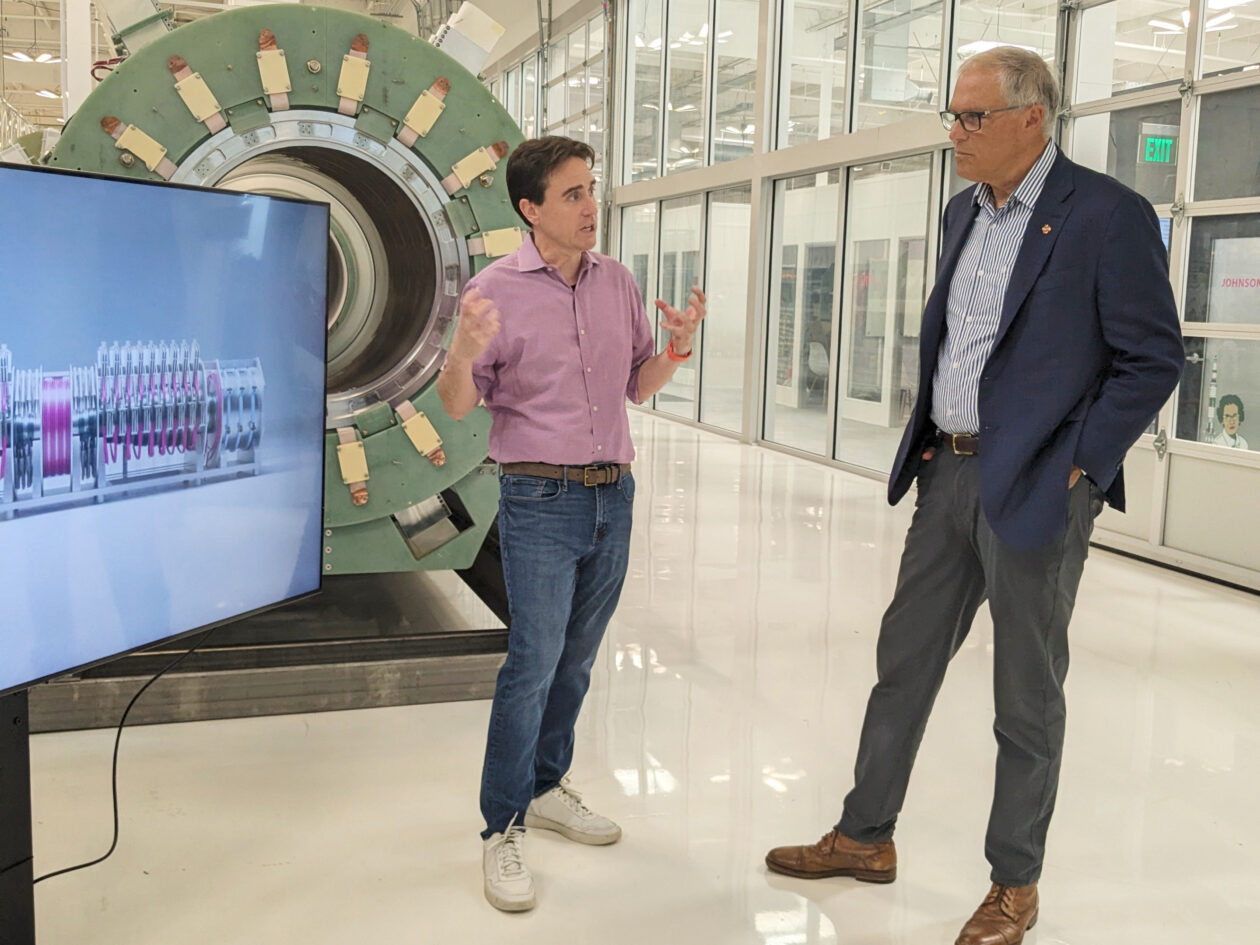
Helion CEO David Kirtley, left, with then Washington Gov. Jay Inslee at Helion’s Everett facility in July 2024. (GeekWire Photo / Lisa Stiffler)

David Kirtley always wanted to harness the power of the sun. But first he had to fuel some rockets.

As a University of Michigan engineering student, Kirtley was captivated by fusion power — the atom-smashing reactions that fuel the sun and stars and generate most of the energy in the universe. Trouble was, the academia-related fusion technologies he studied in the early-to-mid 2000s were decades from commercial applications. His fusion dreams went on hold.

“I actually pivoted away from fusion towards space propulsion,” Kirtley said. He began working on rockets, thrusters and spacecraft — and, eventually, began producing plasma, the extremely hot, electrically charged gas that fusion requires.

That space-focused research, conducted at a Seattle-area company called MSNW, pointed toward a potentially viable commercial path to fusion using innovative new strategies. In 2013, Kirtley and three MSNW colleagues took the leap, and founded Helion Energy.

Now the Everett, Wash., company is racing to build what could become the first fusion plant to deliver electricity to the grid, with a target date of 2028. Helion’s approach uses powerful magnets to contain and compress two rings of plasma that are slammed together to produce bursts of energy captured as electricity.

Advertisement

“We literally took the circuits and the topologies and the technologies for space, applied it to fusion, bringing it decades into the future,” Kirtley said.

Helion has raised more than $1 billion from investors and assembled a team of more than 500 to develop its fusion system. The company is simultaneously operating Polaris, its seventh prototype device, while building the commercial facility — a 50 megawatt plant dubbed Orion.

Despite the optimism and big ambitions, significant technological challenges remain. Skeptics doubt Helion will deliver on its promise to generate electricity as planned and some worry that could undermine nascent confidence in the sector.

Keep reading to learn more about Kirtley’s journey to harness fusion energy. His quotes have been edited for clarity and length.

Advertisement
Kirtley at the Malaga, Wash., site where Helion broke ground in 2025 on its planned commercial fusion plant. (LinkedIn Photo)

On how to lead in the face of skepticism: I get hands on, running Polaris, running our fusion machines, helping build. When we have test bays and test facilities that are struggling, I’ll get in there with the operators and start actually testing with them — understand the systems, know where the problems are, help solve those problems actively and be a really hands-on, in-the-weeds leader….

You’re going to have to keep building, and so building a team that is excited to solve problems, excited to solve the unknown, and wants to get in there together with each other, is what’s fun. That’s the passion. That has been, at Helion, the recipe for success.

Envisioning a future with fusion: You do have to keep a vision of where you’re going to end up. If we’re the first fusion company to get to 100 million degrees, and that’s all we do, it’ll be a great achievement, but it won’t be enough. If we’re the first to build the world’s first fusion power plant, and that’s all we do, the company will have failed in my mind. Our goal is deploying fusion at global scale — all over — and solving the real problem: solving climate change, solving the energy crisis.

How that influences decision making: When you’re deciding what material to use, you ask the question “What does the supply chain of that material look like in the world, and can it rise to meet the challenge?” If it’s some unique material that can never scale to a global scale, well, let’s not use that. Let’s go figure out a different material. Let’s figure out a different kind of semiconductor. Let’s figure out a different type of circuit that can actually meet that global deployment — even if it’s a little harder.

On whether fusion is an energy “silver bullet” that replaces the need for more solar, wind and other renewables: We’re still on track to burn not only the most coal we ever have, but also the most natural gas we ever have. And so the need for all-of-the-above solutions — not zero-sum thinking, but can we do more — is really the key. And that’s what I think about a lot. Those stats are pretty powerful.

Advertisement

On the impact of data centers supercharging energy demand and investment: It’s not just us saying, “Hey, we’ve got to solve climate change. Here’s a technology to do it.” But the market is saying, “Man, we need every source of electricity that can come online and be low cost and reliable, and fusion should be a part of that, too. Let’s go invest in that.”

It’s enabled us to ramp up our timelines, go faster than we had originally planned, invest in manufacturing so that we’re not just going to build Orion. We’re investing in the manufacturing for the power plants that come after Orion, too.

Source link

Advertisement
Continue Reading

Tech

Fixing A GameCube’s Dodgy Optical Drive With Fresh Capacitors

Published

on

Generally when a game console with an optical drive stops reading discs the first thing that people do is crank on the potentiometer that controls the power to the laser diode to ramp up its output. While this can be a necessary solution to eke out a bit more life out of a clearly dying laser diode, this can actually massively shorten the lifespan of a good diode that’s just held back by bad capacitors. This is demonstrated by [Skawo] with a fix on a GameCube that stopped reading discs.


While it’s absolutely true that laser diodes have a limited lifespan, so do the capacitors and other components in the system. Thus, after tearing down this Japanese GameCube, [Skawo] accesses the optical PCB for some delicate plier-based capacitor surgery. One can absolutely question such violence, as well as the replacement mix of MLCC ceramics and a stray THT electrolytic capacitor, but the results after reassembly are obvious.

Without having to adjust the laser diode’s potentiometer, the game console now happily reads the game disc while the laser diode breathes a sigh of relief. Although all GameCube consoles will face the inevitable demise of their optical drives – barring a replacement optical pickup solution appearing – with this capacitor replacement solution it’s at least possible to stave off that undesirable time for a bit longer.

Advertisement

Source link

Advertisement
Continue Reading

Tech

SNK revives NeoGeo AES with modern upgrades and HDMI support

Published

on


Set to launch on November 12, the NeoGeo AES+ will be available in Standard and 35th Anniversary editions priced at $249.99 / £179.99 / €199.99, with an Ultimate Edition bundle already listed through Plaion’s storefront. The exterior closely mirrors the 1990 model, but the internal changes are aimed at aligning…
Read Entire Article
Source link

Continue Reading

Tech

NYT Strands hints and answers for Saturday, April 18 (game #776)

Published

on

Looking for a different day?

A new NYT Strands puzzle appears at midnight each day for your time zone – which means that some people are always playing ‘today’s game’ while others are playing ‘yesterday’s’. If you’re looking for Friday’s puzzle instead then click here: NYT Strands hints and answers for Friday, April 17 (game #775).

Strands is the NYT’s latest word game after the likes of Wordle, Spelling Bee and Connections – and it’s great fun. It can be difficult, though, so read on for my Strands hints.

Advertisement

Source link

Advertisement
Continue Reading

Tech

Online Personalities and Comedians Overtake TV and Newspapers as Primary News Sources

Published

on

A new Ipsos poll finds Americans are increasingly getting news from online personalities and comedians instead of traditional TV or newspapers. The survey says nearly 70% get news online in a given week, versus 55% from TV and 25% from newspapers, with figures like Joe Rogan, Greg Gutfeld, Sean Hannity, and late-night hosts ranking prominently depending on political leanings. From the Hollywood Reporter: The poll, which was conducted in March, actually found the conservative politicians and cabinet members, including President Trump, were the top news influencers. When politicos were excluded, Joe Rogan led the list, followed by Fox News personalities Greg Gutfeld and Sean Hannity, and then TuckerCarlson and Ben Shapiro. The only three influencers to crack 10 percent were Trump, Rogan, and JD Vance. Among people who voted for Kamala Harris, the top news personalities were late night hosts, led by ABC’s Jimmy Kimmel, followed by CBS Late Show host Stephen Colbert, and Daily Show host Jon Stewart.

Just under 70 percent of respondents said they get their news online in a given week, compared to 55 percent for TV, and 25 percent for newspapers. […] Of traditional media outlets, TV dominated, with Fox News, the broadcast networks, and CNN topping the list of sources. Facebook, YouTube and Instagram were the most popular online news sources. “On these platforms opinionated personalities and comedians appear to drown out anyone who would fit in the traditional journalist category,” said assistant professor of practice and Jordan Center Executive Director Steven L Herman. “Even in the late 19th century and early 20th centuries, sensationalist and polarizing voices in print and later on air were among the most influential in the political landscape — such as political satirist Mark Twain and populist Father Charles Coughlin.”

Source link

Continue Reading

Trending

Copyright © 2025