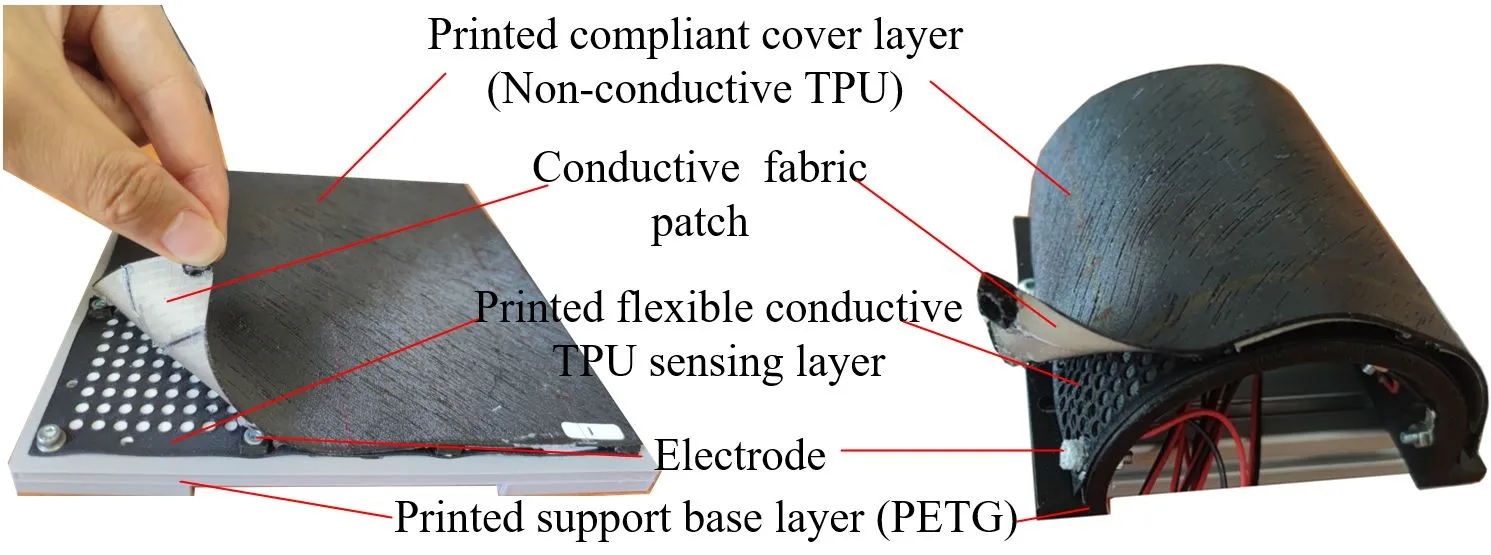
Schematic diagram of the touch-sensitive skin. (Credit: Haofeng Chen et al., ArXiv, 2026)
Hypoesthesia, more commonly referred to as numbness, is one of the more distressing ailments that can affect us humans, primarily because it reminds us of just how much we rely on our sensation of touch in daily life. From experiencing the world around us, handling objects, noticing when you just bumped into that side table again and the comforting hug of a fellow human being, touch is perhaps the most important of our senses.
In that regard the recently published research by [Haofeng Chen] et al. on giving robots a skin that can experience touch seems rather important as it would give especially humanoid robots a more natural way to interact with their environment, using feedback from touch.
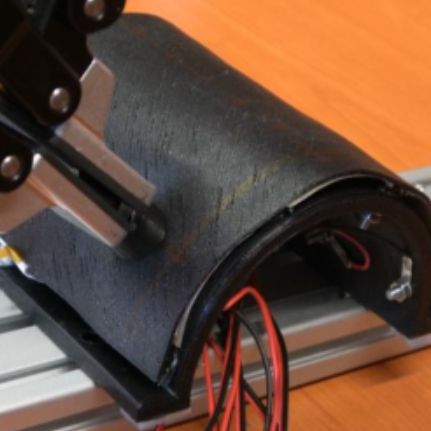
Poking the artificial skin. (Credit: Chen et al., arXiv, 2026)
One of the essential parts of biological skin is that it is teeming with sensors, at a density level that provides excellent resolution as required, down to sensing e.g. small surface imperfections with one’s finger tips. Replicating this with an artificial skin for robotics has always been a problem, due to the wiring and/or reliability nightmare this poses with typical approaches. Instead of focusing on many individual sensors, [Chen] et al. focused on effectively creating the equivalent of a resistive touch screen in skin format.
The basic principle underlying the demonstrated artificial skin is electrical impedance tomography (EIT), which uses surface electrodes to form a tomographic image based on measures electrical resistivity. Core here is the flexible TPU layer with electrodes and the conductive fabric patches attached to the top TPU cover layer. The electrodes continuously measure the resistivity, with disturbances from those patches due to touch events on the cover layer altering these values. From this EIT can be used to reconstruct the location and strength of the touch event.
The results from the created prototypes were promising, with only 16 electrodes sufficing to create a fairly accurate pressure map. Hardware-wise this makes it thus quite uncomplicated, with the characterization of the TPU porosity and such along with the EIT algorithm (provided in the paper) probably being the biggest hurdles for hobbyist recreations.
Apple’s top-tier Mac, the Mac Studio, has been given a big AI bump with the M5 Ultra. Here’s how it compares against the M3 Ultra model it replaces.
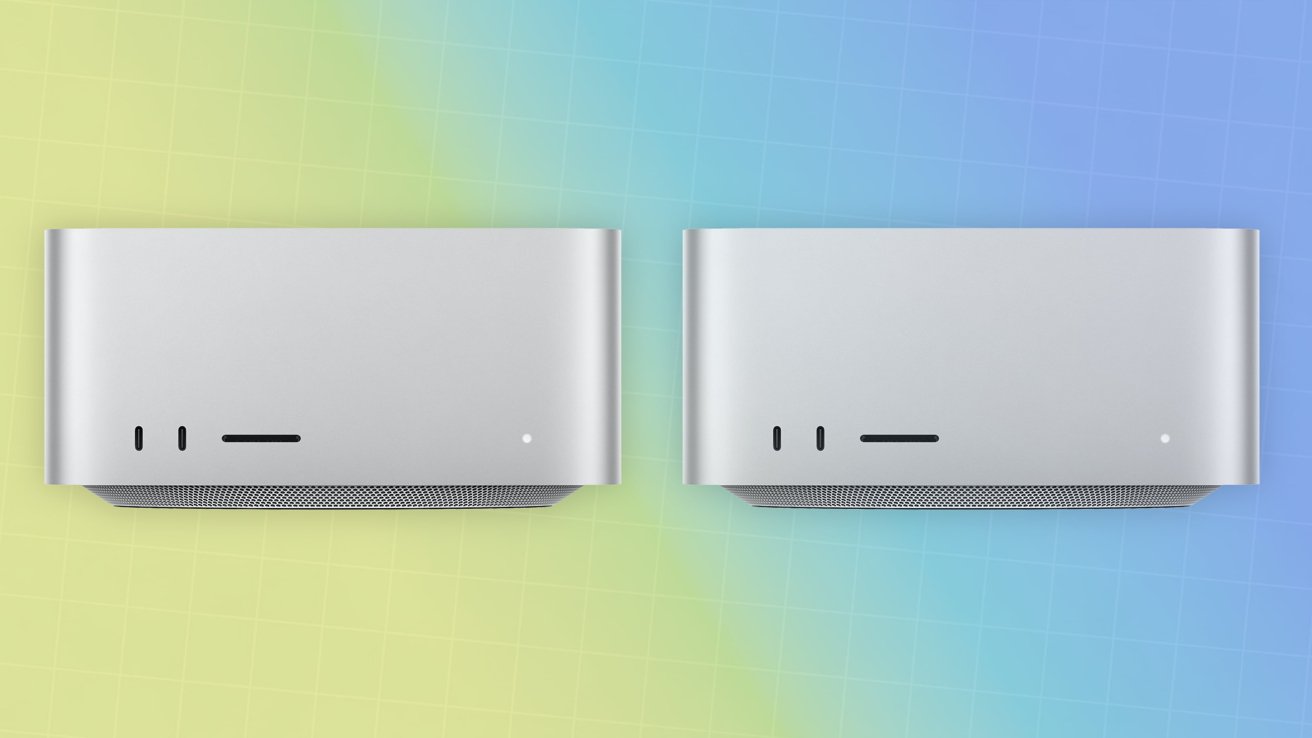
The Mac Studio now has M5 Ultra, an upgrade from the M3 Ultra.
The new Mac Studio arrived on Tuesday, with the all-new M5 Ultra now the top-of-the-range chip for tough productivity workloads. Apple is positioning it squarely as a desktop for doing a lot of AI-related processing, including running models locally. The design stays faithful to the outgoing model, so the story lives inside the chip. This time, the headline is artificial intelligence rather than raw core counts. Continue Reading on AppleInsider | Discuss on our Forums
SpaceX plans to spend up to $100 billion building a new Starship launch facility in Vermilion Parish, Louisiana, which the state says could eventually “support thousands of launches annually.” CNBC reports: Once built, Starbase, LA will serve as the main launch facility for Starship, SpaceX’s in-development rocket that’s the largest ever built and designed to be fully reusable. Musk has aspirations to massively expand SpaceX’s Starlink satellite network, to launch orbital data centers and to someday colonize Mars. Those ambitions, and justification for SpaceX’s nearly $2 trillion market cap, hinge on the success of Starship.
SpaceX said, in a video posted to its website on Tuesday, that the search for a site to build launch pads and have access to ample fuel for its operations took about seven years. Musk said in the video that the company would bring “probably 10,000 really exciting jobs” to Louisiana with the spaceport. A fact sheet posted online by the state of Louisiana said SpaceX is expected to generate an estimated “3,000 direct new jobs over the next 10 years” in the state, and “8,100 indirect new jobs.” SpaceX said it would work on a “historic coastal restoration” in Louisiana, in partnership with the state to “bring the marsh back” and ensure the wetlands around its new facility will have “storm protection.”
I’ve been hooked on smoothies in an almost superstitious way ever since college: A fruit smoothie is like a good luck charm, promising the health you feel you deserve despite all your other bad decisions. But in my more recent adult life, a good blender is the passport to taqueria salsas, Oaxacan-style mole, and all the delicate emulsions I once had to buy at restaurants and in jars.
Well, Vitamix crushes the blender game, but usually comes with a price tag to match. Luckily Vitamix promo codes crop up at various points during the year, and we’re here to help you stay up to date on those discounts.
Vitamix New Ascent X5 With Stainless Steel Container
Vitmix’s top-of-the-line blender model, Ascent X5, is now constructed with a stainless steel container. The 48-ounce stainless steel container is not only huge and hygienic, the machine itself combines an intuitive touch interface with a refined, timeless design. The non-reactive stainless steel material resists stains, odors, and corrosion, and expertly handles hot, cold, and acidic ingredients. This futuristic gadget also has an automatic self-cleaning program and ten blending programs for popular items like smoothies, soups, frozen cocktails and more for a precise blend, every time.
Get a $50 Vitamix Promo Code Plus Free Shipping
Vitamix has tons of ways to save on these handy kitchen gear items, including $50 off when you register your email. All you have to do is input your email on Vitamix’s website, and you’ll get a discount of up to $50 sent straight to your inbox. Plus, you’ll get free shipping on orders of $100 or more.
Advertisement
IMAGE COURTESY OF VITAMIX
Does Vitamix Offer Free Shipping?
Glad you asked. Vitamix is offering free standard shipping for orders above $99. This pretty much means that ground shipping is free for blenders at the current discounts. Priority shipping is not free, however.
The WIRED Gear Team’s Favorite Vitamix Blenders
WIRED has long been singing the praises of the classic Vitamix 5200. The model made a blender convert out of contributing reviewer Joe Ray after he realized that the “model of preference for blender aficionados around the world” was also his key to home mole and Oaxacan-style cookery.
A similar road-to-Damascus moment beset WIRED contributing reviewer Heather Arndt Anderson when she tested the Vitamix Ascent X2, also currently on a $50 promo discount. “The more I thought about it,” she wrote, “the more I realized that maybe I’ve never been a blender person because I never had a good blender.” Anderson also made a big batch of mole and avoided passing out from chile fumes, then moved on to homemade masa and a Georgian walnut spread. She regretted only that the blender wasn’t easier to clean.
After testing through a number of brands’ blenders, WIRED contributing reviewer Emily Peck marveled that even the basic Vitamix Explorian E310 churned almonds frictionlessly into butter without even need of a presoak.
Apple just announced the Mac mini with M5 Pro and you’ll need one with 64GB of RAM to run the Junie Local model, a free 27B parameter coding agent that compares to Sonnet 4.5 or GPT-5.
JetBrains developed Junie as a coding agent that runs on your Mac and calls out to models the user chose. That always required some configuration and sending data off to some other AI product, so JetBrains has built Junie Local.
According to a blog post by JetBrains, Junie Local installs with a single command, takes about 20GB of space, and requires at least an M5 Mac with 64GB of RAM. Apple’s recently announced Mac mini costs $2,699 to meet that spec with an M5 Pro processor.
It runs using Qwen3.6-27B at 4-bit and is entirely local. There is no need for tokens or sending data to someone else’s server.
Advertisement
JetBrains targeted the M5 processor as the base spec due to the Neural Accelerator having 8-bit arithmetic instructions, which enables around 40% more prefill throughput. Qwen has a newer version, 3.8, but 3.6 was chosen since it’s faster without the “reasoning” required for 3.8.
The blog post suggests that JetBrains testing placed the 27B parameter coding agent on par with Sonnet 4.5 at a 10,000-token reasoning limit. GPT-5 at medium effort scored slightly higher.
Here’s what JetBrains had to say about the minimum spec requirements:
We know that an M5 Mac with 64 GB of RAM is a big ask. We are not going to pretend otherwise, and we know it puts Junie Local out of reach for many people reading the post.
That is simply what it costs to run a 27B model well today, and it is the number we are working hardest to bring down. The aim is a lower memory floor, wider hardware, and more of the stack optimized. If the lofty requirements are the reason you cannot try Junie Local, rest assured that we are working to bring them down.
Advertisement
JetBrains says that the Mac is a starting point, not the whole plan. It has started work for DGX Spark and RTX 5090, and they’ve looked at supporting 24GB cards.
Junie Local is free to install. Type /local into Junie and it installs. Switch back to cloud models using /model
AI authorship is increasingly employed for web pages, Pew Research Center report claims
Over 33% of pages published since the launch of ChatGPT reportedly show signs of AI generation
Of the 10,000-page sample used in the study, 10% of pages had signs of AI authorship
An incredible 35% of web pages published since the launch of ChatGPT show signs of AI authorship, new research has claimed.
A study from the Pew Research Center, which used automated tools to assess a sample of 10,000 web pages, also found that in the entire sample – based on data from the Common Crawl project – almost 10% of all pages had signs of AI creation.
The “How Much of the Internet Is Written With AI?” report also found that certain types of websites are more likely to feature some AI generation, while detecting some of the key fingerprints of AI-generated text, which goes beyond em dashes.
Latest Videos FromTechRadar
Advertisement
AI is writing more and more web pages
The report – which was compiled using a machine learning model tasked with looking for signs of AI authorship – found that 9.6% of all pages in the sample of 10,000 appeared to have been written by AI. While that may seem a small amount, the sample from Common Crawl dates back to the beginning of the World Wide Web, over 30 years ago.
In keeping with other research (such as AI on the Internet), the data indicates that “large shares of recently published pages on the internet were likely written or substantially edited by AI.”
Reassuringly, the data highlights the interesting point that the majority of the suspected AI-generated web pages published in 2026 are .com domains and, as such typically commercial. In contrast, just 1% are .edu (US-based educational facilities) and 0.8% are .gov.
Is it written by AI?
Using its evaluation of 490,000 English-language web pages, the Pew Research Center also established some more useful indicators (“common features”) of AI text generation.
Sign up to the TechRadar Pro newsletter to get all the top news, opinion, features and guidance your business needs to succeed!
Advertisement
The em dash is regularly held up as an example of AI writing, as is the use of the Oxford comma. The em dash appears “twice as frequently” in pages published since 2023, while Oxford commas have a 63% increase. The report authors note that these aren’t solitary indicators (“Humans use these in their writing too!”)
Other “tells” offer a more reliable giveaway of AI-generated writing, as demonstrated by the report. Certain words and trends are listed by the research, including “delve,” “interplay,” and “testament,” which have apparently “more than doubled in usage.” The report lists numerous examples of “AI-typical vocabulary.”
Meanwhile, the negative parallelism, which you might have seen as “it’s not just X, it’s Y,” has almost trebled in use.
It might be increasingly difficult to identify an AI-generated web page these days, but if it comes from a .edu or .gov domain, it is overall more likely to have been written by a human.
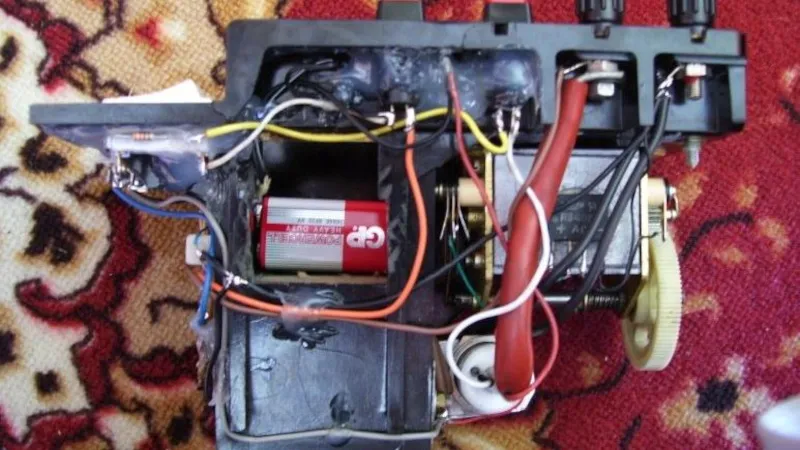
A pyrotechnic charge is set off by passing a high voltage through a filament within it, melting the filament and igniting the charge. We could think of a variety of circuits that could do this, but perhaps we wouldn’t have come up with [Michał Słomkowski]’s solution. He’s used the ringer crank generator from an old military field telephone. It’s an old project he’s shared with us due to its recent republishing on his website.
The basic principle is simple enough, winding the generator charges a capacitor bank through a bridge rectifier. Then a thyristor is used as the trigger device, dumping the contents of the capacitor into the filament. But the full circuit has a couple of refinements. There’s a charge indicator circuit using a couple of Zener diodes and an LED, and a filament tester which passes a non-triggering current through the filament from a 9 volt battery. We like the use of an over-the-top high-current thyristor, no doubt what he had in his junk box.
Perhaps it’s a symbol of how far technology has moved, that today it’s surprisingly rare to find a bridge rectifier or a thyristor, and building this device today would involve a microcontroller and probably an AliExpress inverter module as a matter of course.
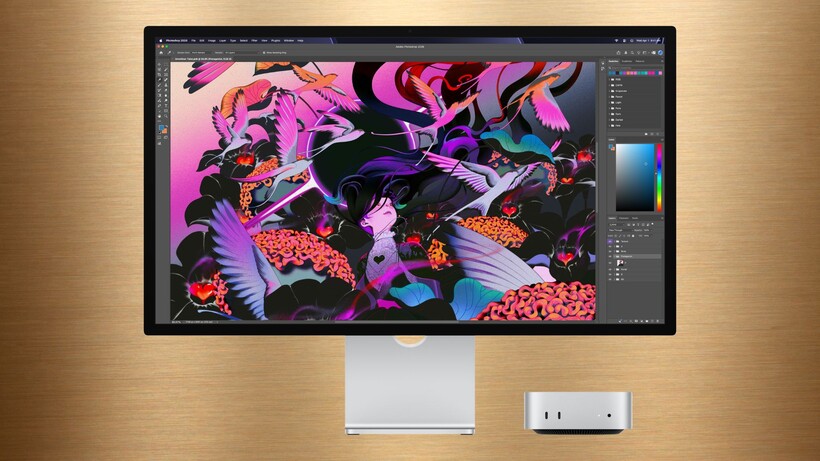
Apple has unveiled its new desktop processors with the M6 and the M5 Ultra.
We’ve compared the processors below, noting the differences between the two and which chip you should go for, depending on your needs.
Read on to learn more about M6 and M5 Ultra, where you can find both chips and which ones will best suit your needs. For more from Apple’s launch, visit our Mac Mini M6 vs Mac Mini M4 guide, while our best laptops round-up includes our favourite computers from the past year.
Specs Comparison Table
M6
M5 Ultra
CPU
12-core
Up to 36-core
GPU
12-core
Up to 80-core
Neural Engine
Dual 16-core
32-core
RAM
Up to 36GB
Up to 512GB
Memory Bandwidth
170GB/s
1.2TB/s
Availability
At the time of writing, the M6 chip is currently only found within the latest Mac Mini which has a starting RRP of £899/$899. It’s currently available for pre-order and will launch globally from September 22nd.
Advertisement
Advertisement
The M5 Ultra is also only available in one device: the Mac Studio and is considerably more expensive than the Mac Mini M6, with a starting RRP of a whopping £5499/$5499. At the time of writing, it is also available for pre-order and will launch from September 22nd.
M6 is Apple’s first 2nm chip
Apple explains that its M6 chip is built using cutting-edge 2nm process technology, and is the brand’s first state-of-the-art 2nm processor. This, according to Apple, promises to pack greater transistor density into a smaller die for a “major leap in performance and power efficiency”.
With this in mind, Apple promises the chip advances “every compute block” and delivers gains across every dimension of performance too.
Advertisement
Mac Mini M6 running Photoshop
M5 Ultra is Apple’s most powerful chip yet
As its name and hefty price tag suggests, the M5 Ultra is hailed as being Apple’s most powerful chip to date. The M5 Ultra also sees a first for Apple silicon, as it uses M5 Ultra next-generation UltraFusion technology to connect two dual-die M5 Max chips to form its quad-die architecture. This, according to Apple, increases bandwidth to over 4.4TB/s and connection density by over 6x, to allow the four dies to behave as one unified processor.
Mac Studio M5 Ultra running Adobe Premiere
Advertisement
M5 Ultra itself includes up to a 36-core CPU that’s made up of 12 super cores and 24 performance cores, and a GPU with up to 80-cores that each incorporate a Neural Accelerator too. In addition, the M5 Ultra’s GPU includes Apple’s latest shader core with second-generation Dynamic Caching, hardware-accelerated mesh shading and third-gen ray tracing too. This, Apple promises, delivers up to 40% faster graphics performance than the M3 Ultra.
Apple says that M5 Ultra is best suited for 3D rendering, colour grading, complex graphics, data science, LLMs, training and perfecting AI models, scientific analysis, 8K video editing and intensive gaming too.
Mac Studio M5 Ultra running LM Studio and MATLAB
M5 Ultra supports up to a whopping 512GB of memory – compared to M6 which supports up to 36GB
Following on from the above point, a chip built for such intensive tasks needs plenty of memory to ensure it runs smoothly and quickly.
Fortunately, the Mac Studio M5 Ultra comes with 96GB of memory as standard, although this can currently be upgraded up to 256GB. If you need a bit more, then you’ll have to wait until late October, as a 512GB option is set to launch then – though we don’t currently know how much this will set you back. Considering upgrading to the 256GB Mac Studio M5 Ultra adds an additional £/$4000, we’d recommend bracing yourself for the 512GB iteration.
On the other hand, the Mac Mini M6 comes with a more conservative 16GB of memory as standard, though you can upgrade to either 24 or 32GB should you see fit.
Advertisement
Advertisement
M5 Ultra includes a 32-core Neural Engine
Both M6 and M5 Ultra promise to offer AI-prowess, with Apple stating that developers can run and fine-tune large AI models locally on their Mac, thanks to Apple’s developer frameworks and tools that automatically optimise performance.
While the M6 chip introduces a Dual 16-core Neural Engine that promises to provide up to two times the peak compute over previous generations for faster on-device AI, the M5 Ultra doubles this with a 32-core Neural Engine instead. This should drive complex AI tasks, plus Apple Intelligence features, securely and with “industry-leading” energy efficiency too.
Early Verdict
Choosing between the M6 and M5 Ultra chip will depend entirely on your needs. If you’re looking for a device that can support everything from intensive gaming to 3D rendering and training AI models, then the M5 Ultra Mac Studio is undoubtedly the device that’ll suit you best. However, you’ll need to factor in the very high price tag.
Advertisement
On the other hand, if you need more of any everyday yet still powerful device, then the Mac Mini M6 should give you all the power you realistically need.
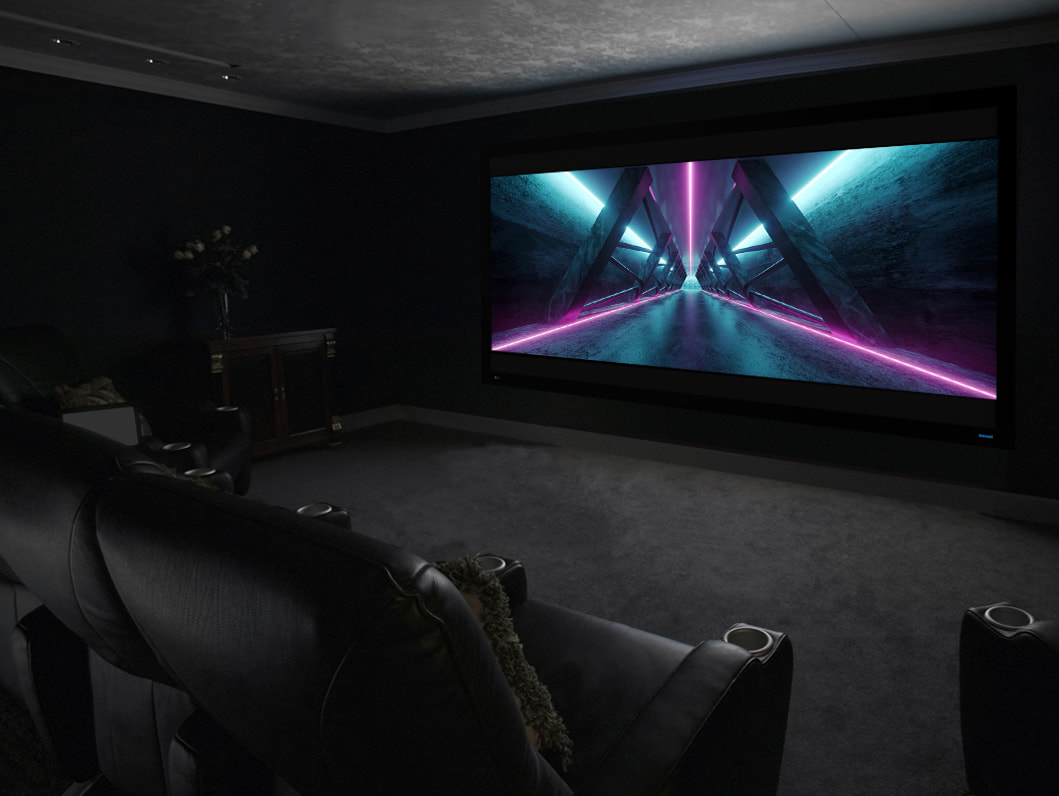
Despite the continued growth of increasingly large flat-panel TVs and premium direct-view displays, the projector is not going away. For dedicated home theaters and larger multipurpose spaces, projection can still deliver screen sizes that conventional televisions simply cannot match without moving into far more expensive territory.
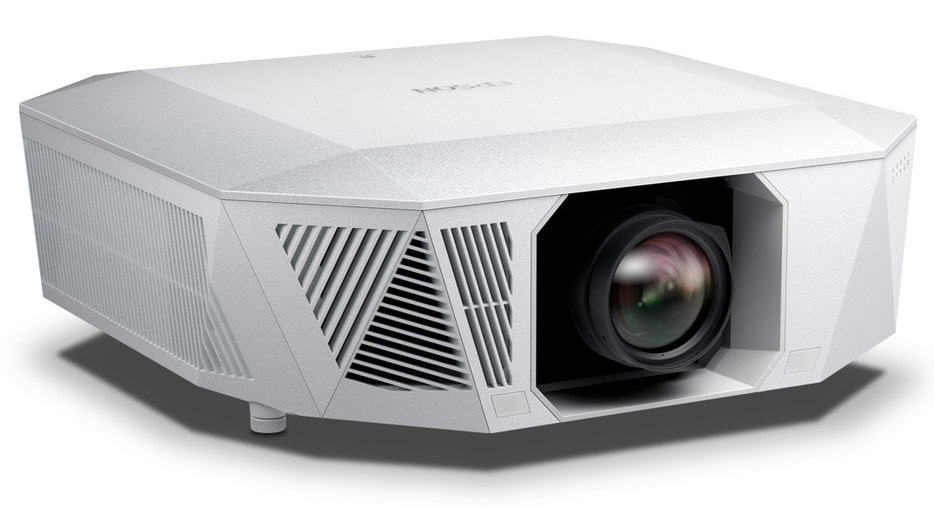
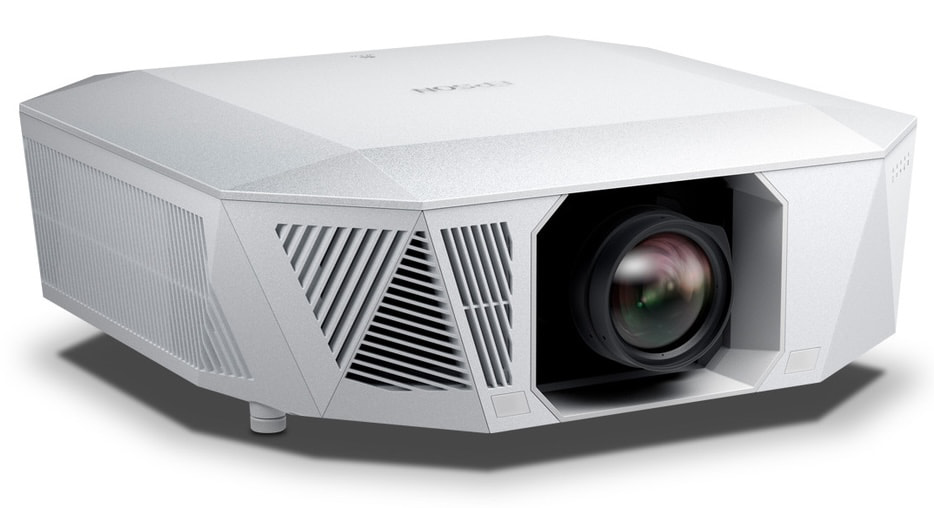
Advances in laser light sources, HDR processing, brightness, and installation flexibility have also made modern projectors more capable outside of completely darkened theater rooms. Epson’s flagship QL7000 ($32,999), for example, delivers up to 10,000 lumens of color and white brightness, supports HDR10, and can produce images up to 300 inches with a choice of interchangeable lenses.
At CEDIA Expo 2026, Epson will showcase its latest home projection solutions across several screen configurations, demonstrating why projection remains a serious option for custom integrators and consumers who want a genuinely cinematic image at home. Bigger televisions may continue to grab headlines, but when the goal is a 150-inch, 200-inch, or even larger image, projectors still have a rather persuasive argument to make.
Epson QL7000
Epson QL7000 Goes Big with Stewart Filmscreen
For its CEDIA demonstrations, Epson will be employing its top of the line 10,000-lumen QL7000 4K 3LCD Laser Projector.
Advertisement
Demo One: The QL7000 will be paired with Stewart Filmscreen’s new slimmer profile Director’s Choice Generation 2 four way masking screen — an impressive 215-inch, 2.0:1 cinematic display optimized for today’s growing library of 2.0:1 streaming content. The setup will showcase the impact of high brightness projection and HDR performance on a truly cinematic scale.
Demo Two: The QL7000 will also be demonstrated with Stewart Filmscreen’s StudioTek 130 G4 acoustically transparent screen. The screen allows speakers to be positioned behind the image, helping preserve precise LCR localization and a cohesive soundstage while still delivering a premium visual experience.
Demo Three: This demonstration combines the QL7000 with Stewart Filmscreen’s 160-inch Balón Edge Phantom HALR+ ambient light rejecting, acoustically transparent screen to showcase high brightness projection in environments with controlled ambient light.
As with the StudioTek demonstration, the Balón Edge Phantom HALR+ is acoustically transparent, allowing speakers to be installed behind the screen. However, the Phantom HALR+ material is also designed to maintain image contrast in rooms with higher levels of ambient light.
The installation demonstrates how projection can serve as an integrated alternative to direct view displays and video walls while minimizing its visual impact on the room.
To round out Epson’s CEDIA 2026 exhibit, a live projector comparison will demonstrate key Q-Series performance differences in brightness, HDR, and color, showing how each model; the QL7000, QL3000, and QB1000 — is suited to different home installation requirements.
Compatible with Epson Precision Short/Long-Throw Lens
Compatible with Epson Precision Short/Long-Throw Lens
15-Element Epson VRX Cinema Lens Included
Double Micro-Lens Array
Yes
Yes
No
Lens Shift
3-Axis Motorized Lens Shift with Memory Presets (dependent on the installed lens)
3-Axis Motorized Lens Shift with Memory Presets (dependent on the installed lens)
3-Axis Motorized Lens Shift with Memory Presets
Lens Shift Range
Vertical: -64 % to +64 % Horizontal: -16 % to +16 %
Vertical: -64 % to +64 % Horizontal: -16 % to +16 %
Vertical: -96.3% to +96.3% Horizontal: -47.1% to +47.1%
Keystone Correction
Vertical/Horizontal: ± 30 degrees
Vertical/Horizontal: ± 30 degrees
Vertical/Horizontal: ± 30 degrees
Screen Size
60″ to 300″, based on attached Epson High Precision Lens
60″ to 300″, based on attached Epson High Precision Lens
50 to 300″ (at 58 to 62’4″ screen distance)
Connectivity
Dual 40 Gbps HDMI® 2.1 ports (supports up to 120 Hz at 4:2:2 in 8-, 10- and 12-bit color modes)
Dual 40 Gbps HDMI® 2.1 ports (supports up to 120 Hz at 4:2:2 in 8-, 10- and 12-bit color modes)
Dual 40 Gbps HDMI® 2.1 ports with ARC & eARC (supports up to 120 Hz at 4:2:2 in 8-, 10-, and 12-bit color modes)
ISF® Certified
Yes
Yes
Yes
Smart Home Control Compatible
Control4®, Crestron®, PJ Link, and others
Control4®, Crestron®, PJ Link, and others
Control4®, Crestron®, PJ Link, and others
Model Color
Black or White
Black or White
Black or White
Dimensions (WDH)
22.8 x 7.5 x 22.4″
22.8 x 7.5 x 22.4″
20.5 x 17.6 x 7.6″
“Advancements in projection technology are giving integrators more options for delivering compelling large-screen entertainment in spaces that may have traditionally been challenging for projection,” said Melvin Diaz, senior product manager, home entertainment, Epson America, Inc. “At CEDIA Expo, we’re excited to demonstrate how the Q-Series platform combines high brightness, exceptional image performance and a compact, thoughtfully designed form factor to bring immersive cinema experiences to more rooms. From dedicated home theaters designed for large cinematic experiences to beautiful living spaces with more ambient light, the Q-Series gives integrators the flexibility to create an extraordinary viewing experience while allowing the technology to elegantly disappear into the space.”
The Bottom Line
The annual CEDIA Expo remains the place where custom integrators can see how the latest home theater, control, lighting, and smart home technologies actually work together, and the large scale theater demonstrations are always part of the attraction.
For CEDIA 2026, Epson is taking a more useful approach with the QL7000. Rather than simply putting its 10,000 lumens of color and white brightness on the biggest screen it can find, Epson is demonstrating how the same projector performs with several screen materials, sizes, and installation approaches. That includes a 215-inch masking screen, an acoustically transparent screen, an ambient light rejecting option, and a retractable installation designed to disappear when it is not being used. The QL7000 itself can produce images up to 300 inches and accepts interchangeable lenses, which makes this kind of demonstration particularly relevant for integrators.
Advertisement
That is what makes Epson’s CEDIA presentation interesting. Choosing the projector is only half of the equation; the screen material, room lighting, speaker placement, viewing distance, and installation all have a major impact on the finished system. Visitors to Epson’s booth will be able to see those differences rather than merely stare at another specification sheet.
With enormous OLED, Mini LED, and direct view LED displays continuing to improve, projection has plenty of competition. But when a client wants a 135-inch, 160-inch, or 215-inch image that can be integrated into the architecture of the room, projectors still offer something most televisions cannot. Epson appears determined to make sure integrators remember that.
Price & Availability
Epson Q-Series Projectors are available at the following prices:
Screens: The screens featured in this report are available through Stewart Filmscreen and Authorized Dealers – prices vary depending on size and configuration options – professional installation strongly suggested.
Instagram boss Adam Mosseri took the stand in Meta’s latest trial over social media addiction and children’s privacy Tuesday. During his testimony, Mosseri said that it was “news to me” that Instagram employees were told by a company lawyer to “limit” certain types of data they presented to the executive as part of their work on teen safety.
Mosseri appeared as part of a high-profile trial between Meta and attorneys general from dozens of states. Lawyers for the states have said that Meta intentionally tried to “hook” kids onto its platform despite internal research that showed its apps were harming young users.
One bit of internal research that surfaced during the trial Tuesday was from a 2023 slide deck prepared by Instagram designers and others about teen safety on the app. The deck indicated that content related to suicide, self injury and eating disorders had a “disproportionately large teen audience” that was two and half times bigger for teens than adults. It also indicated that content deemed “non-recommendable” to teens was being viewed by teens at a rate that was 1.5 times higher than adults.
A lawyer for the company later told Instagram employees working on the presentation to remove those stats in order to “limit” Mosseri’s “exposure to this information,” according to messages shared during the trial. On the stand Tuesday, Mosseri said that he has never participated in a conversation about moderating his own access to information. “I’m not a legal expert, so I’m not sure what the reasons might be for removing information from presentations before they get to me, but [I’m] not trying to encourage my team to hide anything,” he said. “I think that my understanding is if there are legal implications of certain work, that lawyers review the material.” He described the lawyers’ role as ensuring the accuracy of documents and that “they make sense, particularly when it’s about whether or not something we’re doing complies with the law.”
Advertisement
Mosseri’s comments came after Instagram’s Director of Product Design, Francesco Fogu, testified about the July 2023 presentation and the conversations around what statistics to include in it. Fogu said he was “surprised” because he had never before been told to “hide data from leadership.” He was ultimately permitted to communicate the data to Instagram’s leaders “vocally,” he said. He added that the data was still available to executives because it was detailed in reports that were linked within the presentation. Later, during cross-examination from Meta’s lawyer, he said the presentation was successful because it was the “catalyst” for the creation of Instagram’s teen accounts.
One feature that repeatedly came up during Mosseri and Fogu’s testimony was Instagram’s “take a break” tool that can remind users to stop scrolling. Only 1.8 percent of Instagram users initially opted into the feature after it was introduced in 2021, according to data from Meta. Fogu, who still works at Meta, repeatedly said he was unsure about the accuracy of that statistic.
At one point, Judge Yvonne Gonzalez Rogers asked Fogu whether he knew what the highest adoption rate for the feature had ever been. Fogu said he didn’t. “You’re the head of this and you don’t know what the highest it’s ever been,” she asked. “I do not create the dashboards for collecting data. I do not read data. That’s not my job. I just trust my team,” he said. “And yet, even though you have to trust them, even though you have to design things, you have no idea what those numbers are as you sit here today,” Rogers said.
Fogu wasn’t the first witness to testify about “take a break.” The jury also heard from a former data scientist at Meta, George Volichenko, who said the feature had a “very low and disappointing” adoption rate among teens after it was introduced in 2022. Volichenko said that early findings showed only .165 percent of teens opted to take a 10-minute break from Instagram, though adoption later increased to .2 percent. He described the feature as “easy to dismiss.”
Advertisement
Mosseri was also pressed about “take a break” and its adoption rate. The Instagram chief seemed to be frustrated with the focus on the feature. “This is one feature with a disappointingly low usage rate, which has been significantly improved,” he said. Instagram’s teen accounts, which are now mandatory for teens under 16, have time limits enabled by default, Mosseri pointed out. “There are many features that are effective, there are many features that are ineffective,” he said. “One in 50 people today will post a photo or a video to Instagram. That’s a 2% participation rate.”
Mosseri is the first high-profile Meta executive to testify in the trial, which could have a lasting impact on Meta. Lawyers for the states are seeking penalties as high as $1.4 trillion and hoping to force the company to change aspects of how its apps are designed. CEO Mark Zuckerberg is also expected to appear, along with other current and former employees. Mosseri’s testimony will continue Wednesday.
Decibel+ is built around a fairly simple idea: high-fidelity audio should not require a five-figure budget, and the components in a system should actually make sense together. Founder Gabe Toro grew up around high-end audio through his father’s company, Supreme Acoustic Systems, where he was exposed to some exceptional equipment, along with the reality that much of it was priced beyond the reach of most music listeners.
When Toro launched Decibel+, he carried over one of the more important lessons from that experience: systems integration matters. Rather than simply assembling a catalog of affordable components, Decibel+ focuses on finding amplifiers, loudspeakers, sources, and accessories that work well together and deliver strong performance without pushing buyers into the upper reaches of high-end audio pricing. That combination of system-building experience and a more budget-conscious approach is what makes Decibel+ interesting in an increasingly crowded affordable hi-fi market.
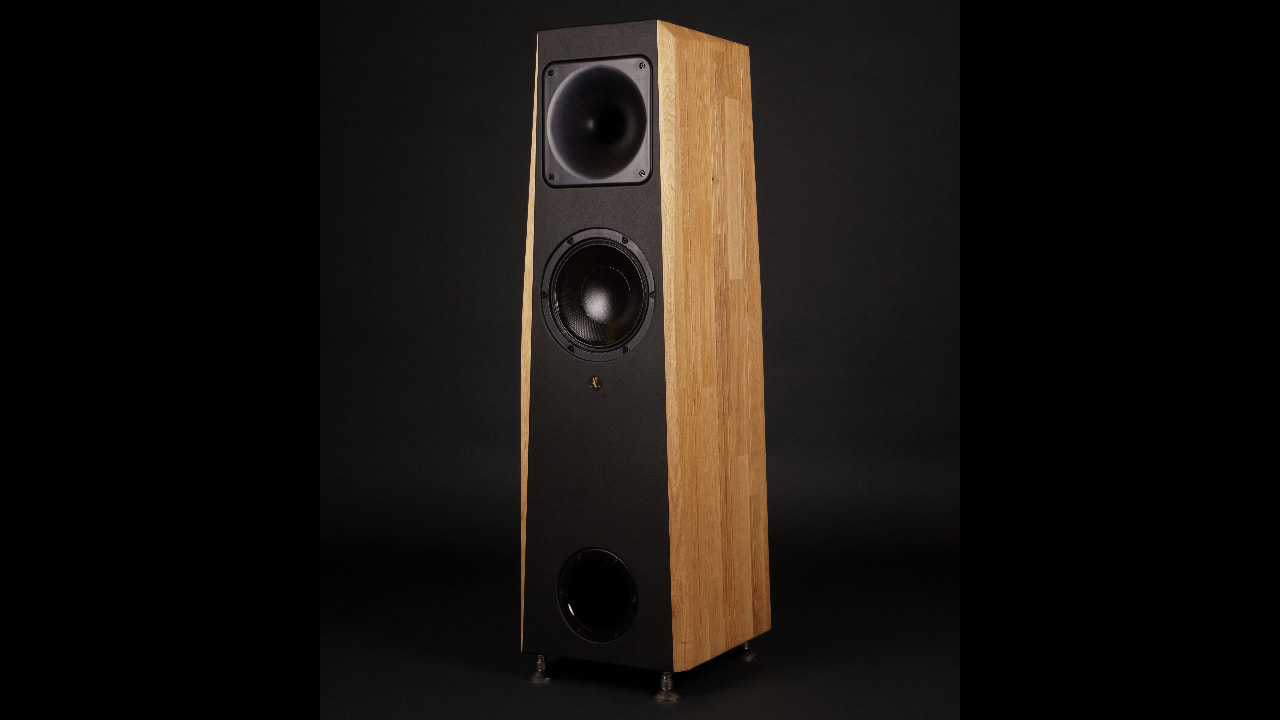
Atlantis Lab AT-23 Pro loudspeaker
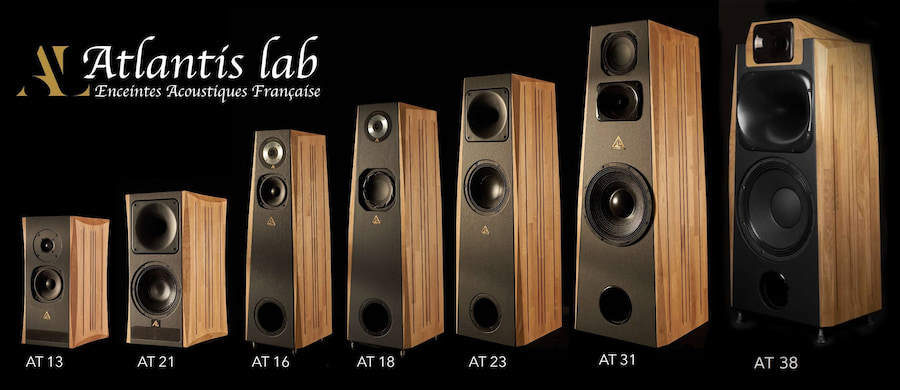
The system I reviewed paired the Atlantis Lab AT-23 Pro loudspeakers with the Neoson Evolution tube amplifier. It is a pairing that makes sense on paper and, more importantly, in the listening room. The AT-23 Pro is an extremely efficient loudspeaker, making it particularly well suited to tube amplification, while the Evolution combines a strong feature set with the kind of sonic performance that makes this French combination far more interesting than its relatively understated appearance might suggest.
There is also some visual harmony here. Both products are made in France and share similar blond wood finishes, so the system looks as carefully matched as it is technically. That might sound secondary, but when you are building a two-channel system that will probably occupy a prominent place in the room, it certainly does not hurt.
Advertisement
Related Reviews:
Neoson: French Tube Amplification With a Different Priority
Neoson is considerably less familiar to American audiophiles than many of the established tube-amplifier brands, in large part because its U.S. distribution has been limited. Decibel+ is looking to change that. Founded by designer Walter Blondel, Neoson is a relatively new French audio brand whose products are designed and hand-built in Normandy, with the company based in Argences, Calvados, near Caen. Blondel, however, brings more than two decades of development work to the project, so this is not quite a case of somebody waking up one morning and deciding that the world needed another KT88 amplifier.
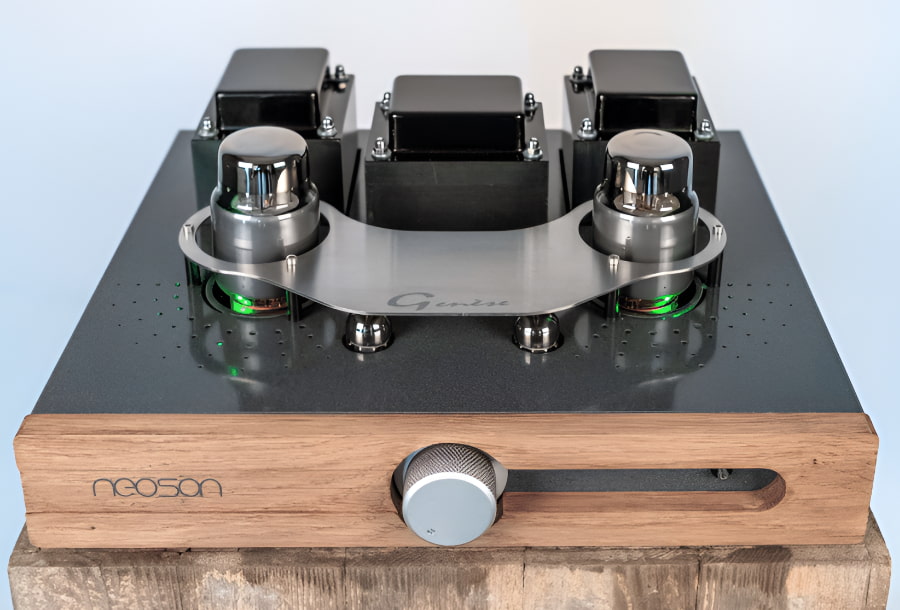
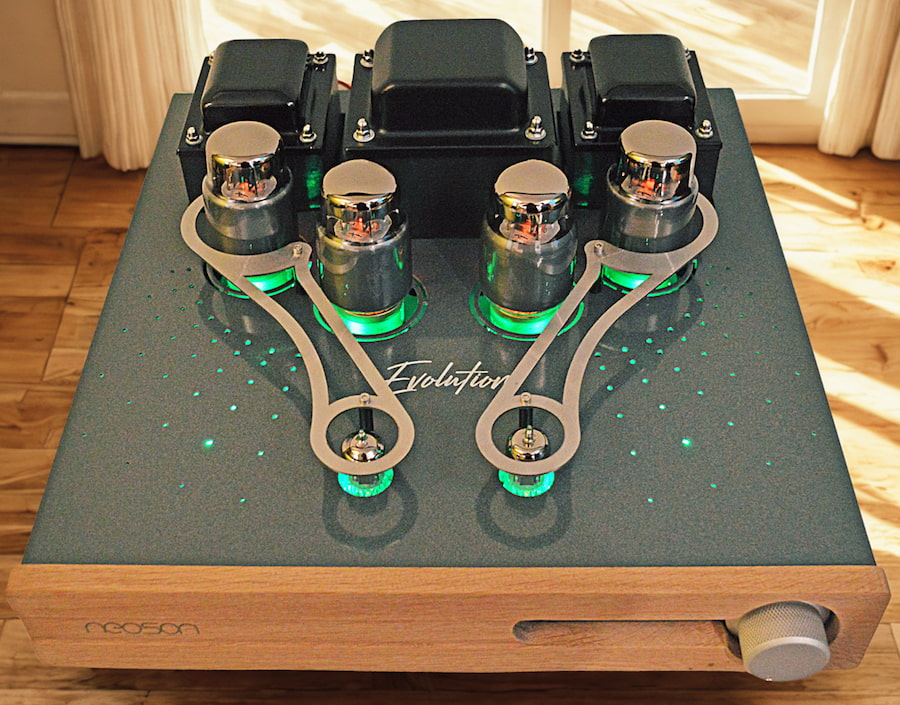
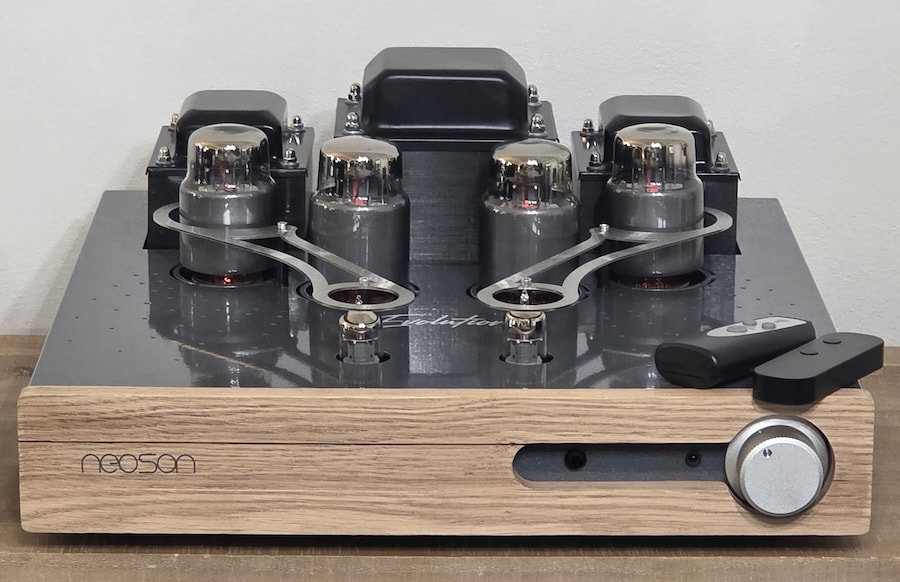
Neoson GenèseNeoson Evolution
The current lineup consists of two integrated tube amplifiers, the Genèse and Evolution, and neither was designed around winning a horsepower competition. Neoson’s stated philosophy is that output power alone does not determine musical expressiveness, which explains its focus on single-ended tube circuits, pure Class A operation, and carefully selected components.
The Genèse is rated at 10 watts per channel into 8 ohms and uses two PSVANE KT88 TII Art output tubes configured as pseudo-mono triodes, along with two PSVANE 12AX7-S Art tubes in the preamplifier stage. The larger Evolution doubles the output to 20 watts per channel into 8 ohms through a double single-ended topology using four KT88 TII Art output tubes, while retaining the same pair of 12AX7-S Art tubes in the input stage. Both operate in pure Class A and are supplied with PSVANE tubes.
Twenty watts may not sound especially impressive in a world where increasingly affordable solid-state amplifiers routinely offer 100 watts per channel or more, but that somewhat misses the point of what Neoson is trying to accomplish. These amplifiers were designed around musicality, efficiency, and appropriate loudspeaker matching rather than brute force, which also helps explain why the Evolution and highly efficient Atlantis Lab AT-23 Pro looked like such an interesting combination for this review.
Advertisement
Built Like a Tube Amplifier Should Be
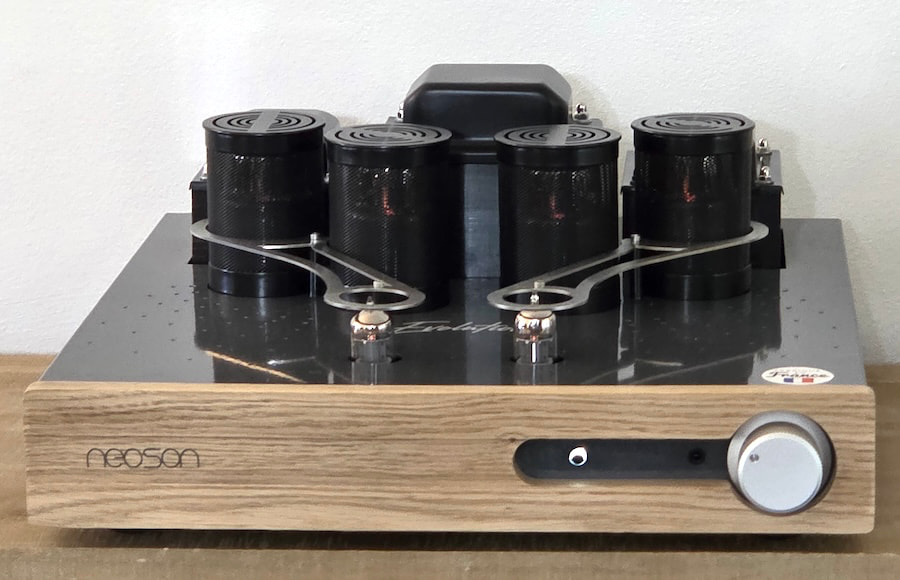
Tube amplifiers are rarely lightweight, and the Neoson Evolution is no exception at 53 pounds (24 kg). Its footprint is roughly 16 inches wide and deep, with the main chassis standing about four inches tall before the tubes and protective cages roughly double the overall height. One important clarification: despite its four KT88 output tubes, the Evolution is not a conventional push-pull design. Neoson describes it as a double single-ended topology operating in pure Class A.
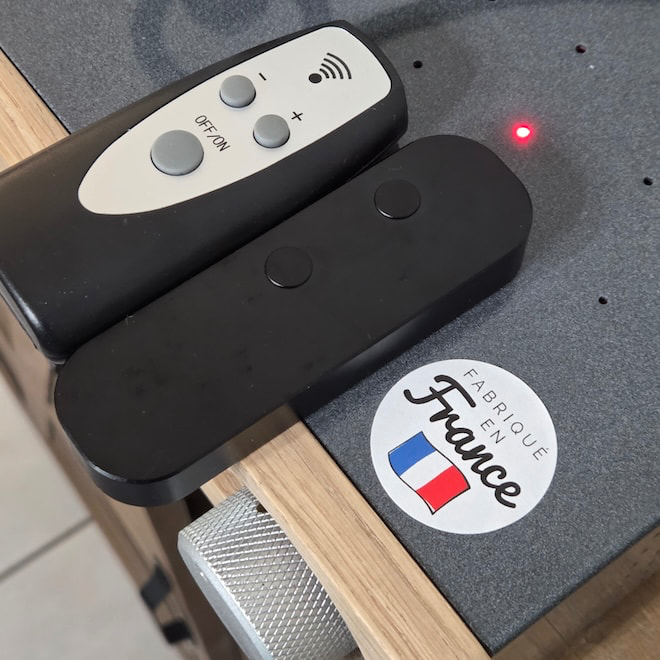
The front panel combines a blond wood fascia with a recessed control section on the right side. Controls are deliberately simple, consisting of a multifunction button, IR receiver, and a large volume control at the far right. Behind the wooden faceplate sits a steel chassis finished in a mottled blue-gray coating. Ventilation is extensive, and when the amplifier is powered on, green illumination can be seen through the series of vents surrounding the KT88 output tubes.
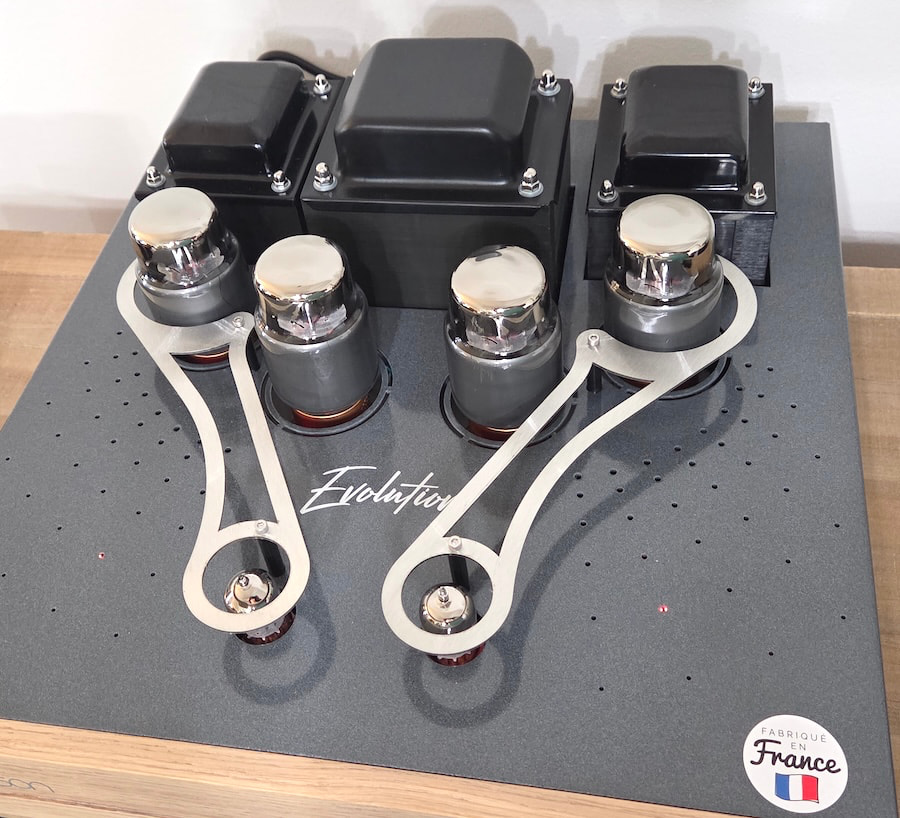
Neoson also provides substantial protection for the exposed tubes without enclosing them completely. A pair of distinctive guards, which I can best describe as wrench-shaped, protect the smaller 12AX7 tubes and the outer sections of the output stage. Each KT88 also receives its own black wire cage, providing some protection against accidental contact while still leaving enough airflow for the amplifier to be operated safely with the cages installed.
Advertisement. Scroll to continue reading.
Advertisement
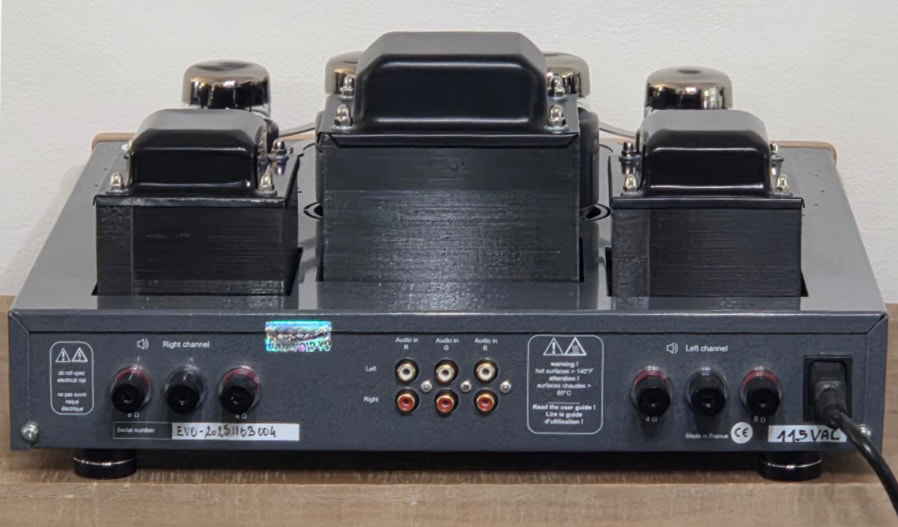
The rear panel is equally straightforward. The IEC power inlet is positioned at the far right, with separate 4-ohm and 8-ohm loudspeaker outputs arranged toward either side and three pairs of RCA line-level inputs located in the center. The Evolution is available for either 115V or 230V AC operation, depending on market configuration, and Neoson specifies power consumption at 260 watts.
There are no digital inputs, network connections, Bluetooth, or other attempts to turn the Evolution into an all-in-one system. Neoson has instead concentrated on the analog fundamentals. Three RCA inputs provide enough flexibility for something like a phono preamplifier, streamer or DAC, and another analog source such as a reel-to-reel deck. For the kind of system this amplifier is designed to anchor, that should be more than adequate.
A Different Way to Use Four KT88 Tubes
The Evolution combines some traditional tube-amplifier thinking with a more contemporary approach to component selection and mechanical isolation. Neoson uses Mundorf MCap Supreme Evo Silver Gold coupling capacitors between the amplification stages, a motorized ALPS volume potentiometer, and vibration absorbers for the preamplifier stage, transformers, and output tubes. Those choices are intended to reduce mechanical vibration and potential sources of noise in a circuit where tubes can be susceptible to microphonics.
The more interesting part of the Evolution is its output stage. Looking at four KT88s, I initially expected a conventional push-pull amplifier. That would hardly have been unusual. A pair of KT88s operating in push-pull can produce considerably more power than the Evolution’s 20 watts per channel, with the actual output depending on operating voltage, bias, transformer design, and whether the tubes are being run in triode, ultralinear, or tetrode operation.
Neoson has gone in a very different direction. The company describes the Evolution as a double single-ended integrated amplifier operating in pure Class A, with four PSVANE KT88 TII Art tubes configured as “pseudo mono triodes.” The smaller Genèse uses two KT88s to produce 10 watts per channel, while the Evolution uses four and doubles output to 20 watts RMS per channel into 8 ohms. The additional output tubes therefore provide more power without abandoning the single-ended architecture that defines both amplifiers.
Advertisement
That distinction helps explain why four KT88s produce only 20 watts per channel. This is not an attempt to extract the maximum possible output from the tubes. Operating a KT88 in a triode-type configuration substantially reduces its available power compared with conventional tetrode or ultralinear operation, but it can also produce different transfer characteristics and distortion behavior. Combined with Class A operation and a single-ended circuit, Neoson is deliberately trading efficiency and maximum output for the characteristics it wants from the amplifier.
There is also some terminology worth clearing up. The KT88 is not technically a pentode. It is a beam power tetrode, and the “KT” designation derives from “kinkless tetrode.” Beam tetrodes and power pentodes frequently perform the same job in audio amplifiers and are sometimes discussed interchangeably, but their internal construction is different. Neoson’s description of its KT88s as “pseudo mono triodes” is the company’s terminology; without a complete circuit schematic, I would not go further and speculate about precisely how every electrode is connected.
The preamplifier stage uses two PSVANE 12AX7-S Art tubes. The 12AX7 is a high-gain dual triode commonly used in the voltage-gain stages of tube amplifiers, so there is nothing unusual about its presence here. What I would not do is assume Neoson selected it specifically because it provides a better impedance match for the KT88 than something such as a 12AT7 or 6922. That depends on the surrounding circuit, and Neoson does not make that claim. My problem with the 12AX7 was considerably more mundane: my stash of good examples is not as deep as it is for some other tube types.
The internal construction also suggests that Neoson has kept the audio path relatively direct, which is consistent with the simplicity of the overall design. Fewer unnecessary stages and connections can reduce opportunities for added noise, although implementation matters considerably more than simply counting components.
Advertisement
The published specifications are encouraging for this type of amplifier. Neoson rates the Evolution at 20 watts RMS per channel into 8 ohms, with a frequency response of 15 Hz to 20 kHz within ±1 dB and an input sensitivity of 0.9 Vrms. If the supplied test data showing channel balance within 0.2 dB and an unweighted signal-to-noise ratio of 84 dB are included with the review documentation, those figures are also worth noting.
An 84 dB unweighted SNR is not remotely competitive with the headline measurements of many modern solid-state amplifiers, but that comparison only tells part of the story. SNR is a ratio between the amplifier’s reference signal level and its residual noise; it should not be compared directly with an 80 dB SPL listening level. With a 20-watt tube amplifier intended to drive very efficient loudspeakers, the practical concern is whether hum or hiss becomes audible through those speakers at the listening position. That is the test that ultimately matters with the Evolution.
Component Selection
The Evolution’s 0.9 Vrms input sensitivity makes it compatible with a broad range of source components, although that does not mean every source will produce the same perceived volume at a given setting on the amplifier. Output levels can vary considerably between a phono preamplifier, DAC, streamer, or other line-level source. In my system, an adjustable phono stage proved useful because it allowed me to keep the turntable’s output closer to that of the digital sources and avoid large changes in volume when switching inputs.
Advertisement. Scroll to continue reading.
Loudspeaker matching is considerably more important. With only 20 watts per channel available, the Evolution is best partnered with efficient loudspeakers that do not present an unnecessarily difficult load. That helps explain why Decibel+ pairs it with Atlantis Lab loudspeakers such as the AT-23 Pro. Their high sensitivity makes much better use of the Evolution’s available output than a conventional low-sensitivity loudspeaker that might require considerably more current and power to reach the same listening levels.
Advertisement
Heat management also needs to be considered. The Evolution is a pure Class A tube amplifier with a specified power consumption of 260 watts, and a substantial portion of that energy is ultimately released as heat. Unlike many Class AB amplifiers, a Class A design continues to dissipate significant power even when music levels are low, so the chassis and tubes remain quite warm during normal operation.
That makes placement important. The Evolution should be given plenty of open space above and around the chassis, with unrestricted airflow through its ventilation openings. Putting it inside a tightly enclosed cabinet is not a good idea. Proper ventilation will help keep internal temperatures under control and should also benefit long-term component and tube life.
Listening
To my ear, the KT88 is one of the hardest tubes to categorize, but so much depends on what is put around it and the overall amplifier design. A quick search will turn up push-pull KT88 amplifiers ranging from 80 watts per channel on down, with some manufacturers even using language such as “conservatively rated at 45 watts.” Every amplifier design involves trade-offs: power for distortion, cleanliness for heat, and cost for noise. It is simply not possible to maximize output, clarity, and musicality at the same time.
With the Evolution, Neoson has clearly chosen to sacrifice power and accept the additional heat generated by Class A operation in pursuit of clarity and musicality. When paired with a high-efficiency loudspeaker like the Atlantis Lab AT-23 Pro, the result is a warm, rich sound with good weight throughout the audible range. There is no thinning of the bass or harshness at the top end, just consistently even behavior across the spectrum with fantastic midrange tonality.
Advertisement
Sub-bass performance is quite good for a design using smaller drivers, while the mid-bass is well controlled with plenty of weight and detail. Unless you are using this combination as part of a home theater system, I see little reason to add a subwoofer.
The midrange is the heart of any system, and this is where the Neoson and Atlantis Lab pairing really shines. The tonal quality of piano and strings is as good as I have heard from some substantially more expensive systems over the years. No matter how busy the track or complex the passage, I heard no congestion or thickening of the sound.
As expected, the horn tweeter does an excellent job of presenting a detailed treble, although it may be a touch hot for some listeners. The Evolution takes just enough of that edge away, making the top end sound slightly warmer without sacrificing detail in the process.
Overall, the combination of the Atlantis Lab AT-23 Pro and Neoson Evolution shows that Decibel+ did its homework when putting this system together. This was clearly not a case of, “They both have blond wood, so let’s go with that.”
Advertisement
The other side of the equation becomes obvious when the Evolution is paired with the wrong loudspeaker. Connecting it to my Magnepan 3.7s was a mistake. Their lower sensitivity and more demanding load are simply not a good match for a 20-watt amplifier like the Evolution. The gorgeous, energetic presentation I heard from the AT-23 Pros quickly became somewhat lethargic and lifeless.
Switching to a smaller bookshelf speaker like the Klipsch RP-600M brought the musicality back, and the Evolution once again sounded right at home. I also had an opportunity to try it with a friend’s Wharfedale Linton Heritage loudspeakers, and the pairing acquitted itself quite well there, too.
Tube Rolling
Some listeners buy tube amplifiers for that wonderful glow, others for their warmer tonal character, and some of us simply cannot resist tube rolling in search of the combination that best suits our system and preferences. The PSVANE tubes supplied with the Evolution are quite good, so anyone interested in using the amplifier with minimal fuss should be perfectly happy with what Decibel+ provides.
Advertisement. Scroll to continue reading.
Advertisement
For those of us who cannot leave well enough alone, however, there are plenty of options. My first piece of advice is to be very careful when buying vintage 12AX7s unless you know and trust the seller. The 12AX7 was used extensively in both guitar and hi-fi amplifiers during the tube era, which means there are enormous numbers of used examples floating around. Condition varies considerably, and tubes advertised as NOS are not always what the seller claims them to be.
I generally start with the preamplifier tubes because, in my experience, changing them often has a greater impact on the amplifier’s tonal character than replacing the output tubes. I did not try 5751s because Neoson’s documentation does not recommend them, and without discussing the substitution with the manufacturer first, I was not comfortable experimenting.
My 12AX7 options included early-1970s Philips 12AX7WA JAN tubes, RCA clear tops, Telefunken ECC803S, early Ei 12AX7s, Tungsram 12AX7s, and a pair of Mullards from 1968. The Ei pair was eliminated almost immediately because one channel developed a severe howl. The other tube sounded quite good when I shifted the balance entirely to that channel, but one member of the pair was clearly unhappy in the Evolution.
The Philips tubes were solid performers but offered little, if any, improvement over the stock PSVANEs, making their additional cost difficult to justify. The RCAs were similar overall, although I heard slightly greater treble clarity. Listeners looking for a little more openness at the top might find them worthwhile.
Advertisement
The larger changes came from the Tungsram, Mullard, and Telefunken tubes. The Tungsrams and Mullards pushed the Evolution in a warmer, more saturated direction, with slightly darker treble and a more prominent midrange. Those looking for strong bass, richer mids, and less top-end energy may prefer either of these to the stock tubes.
The Telefunken ECC803S went in the opposite direction. It delivered the cleanest and most analytical presentation of the group, with excellent detail retrieval, greater top-end sparkle, and somewhat less warmth and fluidity through the bass and midrange. Listeners who generally find tube amplifiers a little too soft or overly lush may find the Telefunken the most appealing option.
None of this means the stock PSVANEs need replacing. In fact, their balanced presentation makes them a very sensible starting point. Tube rolling simply allows the Evolution’s character to be pushed in either direction: warmer and richer with the Mullards or Tungsrams, or cleaner and more incisive with the Telefünkens.
Rolling the Output Tubes
I don’t know too many people who regularly roll KT88 output tubes because the cost can get out of hand rather quickly. A good matched quad of current-production tubes can run several hundred dollars, while matched quads of desirable vintage NOS examples can easily climb into the thousands.
Advertisement
I started with a set of vintage GE 6550A gray plates, which are among the more commonly encountered American 6550-family tubes. They performed well in the Evolution, but I did not find the improvement over the stock PSVANEs significant enough to justify buying a matched quad specifically for this amplifier. If the Evolution eventually needed a new set of output tubes anyway, that calculation might be different.
The more exotic options in my collection were a set of British-made M-OV/GEC KT88s from 1966 and a set of vintage 1960s Tung-Sol 6550s. The GECs are the classic British KT88s, and examples from this period with their brown base wafers and triple-getter construction have become highly sought after. Finding a genuine, properly matched quad today can be painfully expensive. Fortunately, mine have been in my collection for more than 20 years, so I avoided paying current market prices.
The same applies to the vintage Tung-Sols. Original American Tung-Sol 6550s have become increasingly scarce and expensive, particularly when you need four closely matched examples. Mine were also purchased long before prices headed into the stratosphere.
Both vintage sets improved the Evolution to my ear, although the differences were not transformational. They sounded slightly cleaner as volume increased and delivered a little more impact in the bass at lower listening levels than the stock PSVANEs. There was an improvement, but whether it is worth spending four figures on a set of vintage output tubes is an entirely different question.
Advertisement
Advertisement. Scroll to continue reading.
For most owners, I don’t think it is. The supplied PSVANEs are already very good and suit the Evolution well, so there is no reason to feel that you are hearing a compromised version of the amplifier by leaving the factory tubes in place. Vintage output tubes are an expensive final bit of tuning for those who already own them or have very deep pockets, not something I would consider necessary.
If I were keeping the review sample, my preferred combination would be the Telefunken ECC803S input tubes with the GEC KT88s. That combination offered the balance of clarity, tonal weight, detail, and treble energy that best suited my own listening preferences. The fact that getting there with vintage tubes could now cost a small fortune is also a very good argument for enjoying the PSVANEs and spending the difference on music.
The Bottom Line
Tube amplifiers are rarely inexpensive, and every design involves trade-offs. At $11,828, the Neoson Evolution certainly does not change that equation. What matters is where Neoson has chosen to make those compromises. Rather than chasing maximum output from its four KT88s, the Evolution uses a pure Class A, double single-ended topology to deliver 20 watts per channel, with the emphasis firmly on musicality, tonal richness, and clarity.
Advertisement
That approach works exceptionally well when the amplifier is paired with the right loudspeakers. The Atlantis Lab AT-23 Pro gives the Evolution the efficiency it needs to perform at its best, and the resulting combination delivers excellent tonal weight, a rich and expressive midrange, and enough detail without pushing the treble too far forward. The additional heat is something owners will have to accommodate with proper ventilation, but the limited power output becomes far less important when the loudspeaker has been selected accordingly.
The Evolution will make the most sense for listeners who already own efficient loudspeakers or want to build a system around them. Those with more modest spaces and similarly efficient speakers should also consider the 10-watt-per-channel Neoson Genèse, which follows much of the same design philosophy at $7,885.
The Evolution is not the amplifier for difficult loads, inefficient planar speakers, or anyone who judges an amplifier primarily by the size of the number next to “watts.” With the right loudspeaker, however, its 20 watts proved more than sufficient, and the quality of those watts is ultimately why this French tube amplifier deserves attention.
Pros:
Rich, warm presentation with excellent midrange tonality
Very good clarity and detail without sounding overly bright
Excellent match for high-efficiency loudspeakers
High-quality internal components and thoughtful vibration control
Stock PSVANE tubes are good enough that tube rolling is optional
Cons:
20 watts per channel severely limits loudspeaker compatibility
Runs hot and requires plenty of ventilation
Analog-only connectivity with just three RCA inputs
At $11,828, proper system matching becomes even more important
Rolling vintage KT88/6550 tubes can become extremely expensive
Our Ratings
★★★★★★★★★★ Performance*
★★★★★★★★★★ Usability
Advertisement
★★★★★★★★★★ Build Quality
★★★★★★★★★★ Value
* Performance is highly dependent what speakers are connected. However, when connected to high efficiency loudspeakers such as the Atlantis Labs AT-23 Pro, performance was excellent.





























































You must be logged in to post a comment Login