Connect with us
DAPA Banner
DAPA Coin
DAPA
COIN PAYMENT ASSET
PRIVACY · BLOCKDAG · HOMOMORPHIC ENCRYPTION · RUST
ElGamal Encrypted MINE DAPA
🚫 GENESIS SOLD OUT
DAPAPAY COMING

Tech

4 Of The Best Portable Air Conditioners In 2026

Published

on


We may receive a commission on purchases made from links.

Air conditioners are a great way to stay cool in the summer. Many have central air in their homes to beat the heat, while some opt for plug-in, stationary window units to cool things down. Aside from those, there are also portable air conditioners. These stand on their own, have an exhaust hose, and can roll around on wheels or be picked up and moved as necessary.

Advertisement

There are plenty of benefits to a freestanding air conditioner. For one, if you’re trying to cool down a room but the windows are too small for a window unit, a portable air conditioner and its much smaller exhaust hose could be a prime solution. Window units are also heavy and awkward to carry on your own. A portable unit rolls around easily, so you can move it around and store it by yourself. Some of these portable units rank among the best budget-friendly air conditioners on the market today, too.

With that said, if you’re looking for reliable, effective cooling in a portable air conditioning format, no matter the price, there are plenty of strong options to consider. These are some of the best currently available in 2026, according to online sentiment.

Advertisement

LG LP1419IVSM

In addition to its more well-known products, like refrigerators and washing machines, LG has also delved into portable air conditioners over the years. Among the brand’s best models is the LG LP1419IVSM, a $699.99 10,000 BTU SACC unit. LG markets it as a unit for rooms between 301 and 500 square feet, features an automated swinging vent that moves the cool air around, and has LG’s Auto Evaporation System to minimize water drainage and simplify maintenance. It is also compatible with the LG ThinQ app to monitor the unit and manage certain functions.

This LG unit is quite highly praised. The New York Times included it among its recommendations for best portable air conditioners in 2026, specifically praising the easy setup and teardown. New York Magazine’s praise echoed those strengths, while also highlighting how well the LG cools a room, its low-volume operation, and a premium construction that matched the higher cost. Similarly, Business Insider had a lot of good to say about this unit in its review, noting that its comparatively low energy consumption doesn’t hinder its ability to bring a room’s temperature down in short order.

Advertisement

Midea Duo MAP14S1TBL

Midea is another brand with a huge catalog of appliances, including a selection of air conditioners. One of the most well-regarded of its portable offerings is the Midea Duo MAP14S1TBL, which retails through the official Midea website for $659.99. This 12,000 BTU SACC unit cools, dehumidifies, and ventilates, utilizing two hoses to remove warm air from your space while pumping in the cool stuff. IT also has Wi-Fi support for remote control. It’s advertised as cooling up to 550 square feet, and according to reviews, it does so quite well.

Many regard the Midea Duo MAP14S1TBL as one of the best portable air conditioners available for sale. It topped Forbes’ list of the best portable air conditioners for 2026, receiving praise for its fast and effective cooling, as well as its low 42 to 49 dB noise level. Business Insider praised it for similar reasons, in addition to applauding its easy setup and the usefulness of its app connectivity. YouTuber Silver Cymbal gave this Midea unit high marks, too, recommending it as a worthwhile model that can cool down a sizeable room impressively well, despite the somewhat lacking connection points on the dual hoses.

Advertisement

Whynter ARC-1230WN

Whynter specializes in cooling appliances, from small refrigerators to ice machines, and is also considered one of the most reliable air conditioner brands out there. The Whynter ARC-1230WN, one of its many air conditioners, is often regarded as one of the strongest available today. Typically found around the $600 mark, depending on where you buy it, this 12,000 BTU SACC unit is cools and circulates air through spaces up to 600 square feet. It also has Wi-Fi connectivity and compatibility with Amazon Alexa, Google Home, or the NetHome Plus app. Whynter also claims that this unit offers 40% to 50% energy savings compared to similar models.

Advertisement

Opinions of this Whynter unit are very positive. Forbes‘ 2023 review considered it the best portable air conditioner money could buy. The outlet felt that the dual-hose system made for quick setup and great cooling, while the wheels made it easy to move, despite its 75-pound weight. TechGearLab gave this unit high marks, too, noting that its impressive cooling — the unit dropped the outlet’s test room by around 12 degrees in roughly an hour — made up for its weight. Rtings considers the ARC-1230WN the best portable air conditioner it’s tested as of 2026, with cooling performance, ease setup, and low noise among its strengths.

Advertisement

Dreo AC515S

If there’s one thing Dreo knows, it’s cooling. The Dreo AC515S — not to be confused with the similar Dreo AC516S air conditioner — is one of the best portable air-conditioning units available for those with tighter budgets and smaller rooms to cool. This is a less powerful unit than others on this list; it has 8,000 BTU SACC of cooling, with a recommended room size of around 350 feet. It is more affordable than other units, though, costing $539.99.

While it’s a bit weaker, this Dreo air conditioner has received very positive reviews since its introduction. For example, Reviewed ranked it among the top five best portable air conditioners of 2026. The publication described it as a quiet unit that cools effectively and blows straight across 16 feet with ease. Popular Mechanics appreciated its cooling capabilities, too, praising the Dreo app’s connectivity, physical remote, and the air conditioner’s price point. Bob Vila thought quite highly of the unit, too, thanks to its good cooling, impressive humidity control, and low noise output.

Advertisement

How we selected these air conditioners

Selecting these portable air conditioners was a multi-step process. We dug into brands both large and small, getting a feel for the current portable air conditioner landscape. We combed through their products, looking for a balance of functionality, portability, and price, to ensure the units considered could deliver on multiple fronts. Of course, marketing speak on brand websites and online storefronts was not enough.

There also had to be multiple sources online to help justify these units’ place on this list. We relied on written reviews, video tests, and other assessments to develop an understanding of what these air conditioning units have to offer. We omitted air conditioners with a lot of negative opinions, persistent problems, or other issues, focusing on highly praised units with great features and compelling value for this list.

Advertisement


Source link

Continue Reading
Click to comment

You must be logged in to post a comment Login

Leave a Reply

Tech

Ebike Display Uses Reflective LCD

Published

on

Although LCD displays have been used in almost every type of consumer electronics display over the last two decades, many of these screens have a few downsides that limit their usefulness in certain situations. As any owner of an early digital watch, an early laptop, or an early digital camera will testify, these displays often completely fail in direct sunlight. And, a currently new technology often using inexpensive displays in full sunlight conditions is ebikes, so [Volos Projects] decided to use a unique LCD display to solve this issue.

The display is called a reflective LCD (RLCD) and is actually a fairly old but overlooked piece of technology. Displays like these have a reflective layer that bounces ambient light back to the user, increasing contrast and readability in high light, especially when compared to more common transmissive displays. This build is based on a board from Waveshare, which includes the screen and its driver components, and [Volos Projects] integrated this into a test stand that mimics an ebike’s speed sensor and other hardware like turn signals. The display shows the bike’s speed and a few other indicators, and thanks to the screen, this information can be easily seen in full sun.

Although he doesn’t have it on an actual e-bike yet, he hopes it will be useful for those who want to try out something like this with their substandard e-bike displays. The code he’s used is available on a GitHub page for anyone interested. We’d imagine that a low-cost display like this would pair well with an open-source ebike like this one.

Advertisement

Source link

Advertisement
Continue Reading

Tech

Photoshop is being eaten by the prompt box

Published

on

Coming back from a recent trip, I found myself sorting through a pile of photos that needed a little cleanup. Nothing dramatic. A distracting object here, an awkward background detail there. My first thought was Photoshop, but the full version requires a subscription, and I’m neither skilled enough to justify paying for it nor in need of everything it offers.

Mobile editing apps weren’t much more appealing. I have fat fingers, and there’s a special kind of frustration that comes from trying to make a precise adjustment on a phone screen only to tap the wrong thing three times in a row.

So I figured I’d try the obvious alternative. AI image tools have been improving at a remarkable pace, and every company in tech seems convinced that the prompt box is the future. Why not see if I could simply describe the edits I wanted and let the machine handle the rest?

And, to be fair, it worked. Sometimes. Other times it felt like I was trapped in a polite argument with software that kept misunderstanding perfectly reasonable instructions. The experience was enough to make me realize that image editing is changing rapidly, but not necessarily becoming simpler.

Advertisement

Why every editor wants to become a chat box

That exchange is quickly becoming the new shape of image editing. Adobe is building Firefly deeper into Photoshop and experimenting with conversational creative assistants. Canva has turned design tasks into a buffet of “Magic” buttons. Google’s Gemini image tools, ChatGPT image generation, Midjourney, Ideogram, Runway, and every other ambitious visual AI platform are circling the same idea: editing should feel less like operating software and more like asking for help.

The reason isn’t mysterious. Most people never wanted to become Photoshop monks. They didn’t want to memorize selection tools, blend modes, adjustment layers, healing brushes, and the sacred difference between “Save” and “Export as.” They wanted to erase a person from the background, fix a crooked photo, extend a scene, make a product shot less ugly, or generate something good enough for a presentation without opening a tutorial that begins with “first, understand non-destructive workflows.”

The prompt box is seductive because it skips the ceremony. It doesn’t ask whether you know what a layer mask is. It asks for a result.

The appeal is obvious, and sometimes it really does feel like liberation. A casual user can now do in 20 seconds what once required patience, software knowledge, or a friend who owned Photoshop and owed them a favor. The old barrier was technical. The new barrier is fuzzier: you still need to know what looks right, what looks fake, and where the machine has quietly decided to improvise.

When editing becomes negotiation

The problem is that asking for help isn’t the same as getting help. Anyone who’s used AI image tools for more than five minutes knows the little emotional dip that happens when the result is almost right, which somehow makes it more annoying. The person is gone, but the background now has the texture of melted wallpaper. The lighting is better, but the whole photo looks like it was shot for a luxury dentist. The object moved where you wanted it, but the AI quietly redesigned the table, changed the shadows, and added a mysterious extra finger because apparently hands are optional.

This is where editing becomes negotiation. You’re not only editing the image anymore. You’re editing the request. Make it warmer, but don’t make it fake. Remove that object, but keep the background natural. Make the sky moodier, but don’t turn it into a fantasy poster. Keep the face the same, which shouldn’t need saying, but very much does.

Old editing tools were annoying because they made you learn their rules. Prompt-based editing is annoying because it pretends language is enough, which is generous nonsense. Language is mushy, visual judgment is slippery, and AI models have a bad habit of being confident in the way a mediocre intern is confident: fast, eager, and occasionally convinced that the brief included a second moon.

Advertisement

“Zoom and enhance!”

The marketing version promises instant designers. The reality is smaller and less flattering: more people can now make design-shaped things without understanding the machinery underneath. That’s still a meaningful shift. It just deserves more suspicion than any product demo where every prompt works on the first try.

The first result is often the best sales pitch. It can look shockingly good at a glance, especially when the edit is simple. Then you ask for corrections. Fix the lighting. Restore that detail. Make the face less waxy. After a few rounds, the image can start drifting away from itself. Details soften, people turn into blobs, and the clean little edit becomes less impressive the harder you try to fix it.

For professionals, that can be useful without being relaxing. The boring work gets faster, but the supervision gets heavier. Someone still has to catch the flattened image, broken composition, softened detail, and impressive-for-three-seconds output before anyone else sees it. Some of the job moves from doing to directing, which sounds cleaner until the intern keeps giving everyone porcelain skin and suspiciously perfect lighting.

For casual users, the interface gets friendlier and the power gets closer. The frustration just gets harder to name. When a traditional editor annoyed you, at least the villain had buttons. When an AI editor gets a reasonable request wrong, the problem starts to feel like a conversation going badly.

Photoshop will survive. Powerful tools usually do. But its old logic is being absorbed into a simpler, stranger interface. The future of editing may not be learning where the tools are. It may be learning how to talk to a machine that keeps pretending it understood you.

Advertisement

Source link

Continue Reading

Tech

Wi-Fi Router vs. Mesh System: Which Is Best for You?

Published

on

After testing more than 60 mesh systems and routers in my last home, a modern two-story, 1,600-square-foot house, I found that single routers generally outperformed mesh systems, providing a faster and more stable connection, transferring files from one device to another on the network more quickly, and working efficiently without smart home connectivity issues. But many of those routers struggled to provide a fast connection in my backyard.

Mesh systems extend your coverage, and nodes can target dead spots. I used a node to extend Wi-Fi into my backyard and to plug in a TV in the back room via Ethernet for a more stable and reliable connection. But it wasn’t until I moved to an old Victorian house that I felt the full benefit of a mesh system. It’s slightly larger than my last home, but extremely thick stone walls can seriously dampen a Wi-Fi signal, especially on the fastest 6-GHz band.

After testing several systems in this home, it is crystal clear: I need a mesh for this house. A single router struggled to provide a signal for the front upstairs room and the garden, and I had to run an Ethernet cable to get the EV charger connected.

With a mesh, I can decide where I need the coverage, ensuring my big TV and office computer have a fast connection. Depending on where the internet comes into your home, it can be difficult to find a suitable spot for a single router. While there are exceptions to this, the single routers are often ugly devices, sometimes bristling with antennas, which are great for performance but aren’t pretty. Mesh manufacturers have taken the lead on routers that blend into the home better.

Advertisement

What About Wi-Fi Extenders?

Based on my testing, even the best Wi-Fi extenders aren’t worth considering. Cheap Wi-Fi extenders perform very poorly, and the good ones are expensive enough that you’d be better off upgrading your main router or opting for a mesh, both of which will perform far better. A mesh system should give you near-seamless handoff and limit interference; a Wi-Fi extender won’t do either.

What About Ethernet?

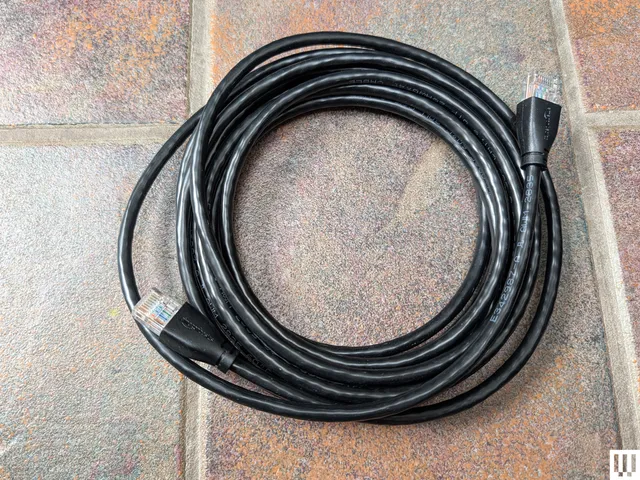
Amazon Basics

RJ45 Cat6 Ethernet Patch Cable

Advertisement

If you want a speedy, stable, and reliable connection, you can’t beat Ethernet cables. To run Ethernet cables around your home takes some effort, but it can be a great alternative or complement to Wi-Fi. Even if you can run cables between your main router and mesh nodes for wired backhaul, you will get a far stronger Wi-Fi signal throughout your home.

What About Powerline Adapters?

Plug these into a power outlet to pass an internet signal through your electrical wiring. You connect an Ethernet cable to your router at one end and another Ethernet cable to your device or switch at the other. These can work well for problem spots, but much depends on your wiring, and in my experience, their performance is far from consistent.

Powerline adapters advertise high speeds, but what you actually get depends on the quality of your wiring, electrical interference, and distance. In the real world, you are unlikely to get much more than 300 Mbps, and 50 to 100 Mbps is often more realistic. That’s enough if you just want to stream Netflix in the back bedroom, but the connection can also be impacted with latency spikes when you turn on power-hungry appliances, so it may not be suitable for gaming.

Advertisement

What About MoCA (Multimedia Over Coax Alliance) Adapters?

If you have coaxial cables—commonly used to send video signals for TVs—installed in your home, you can use them to pass an internet signal. When Ethernet was first developed, it ran over coaxial cables. Just like Powerline adapters, you need an adapter at either end to switch from Ethernet to coaxial and back. The latest MoCa 2.5 Adapters support speeds of up to 2.5 Gbps.

Create Your Own Mesh

The problem with recommending single routers over mesh systems or vice versa is that every home is different. The size, construction, local interference, devices within the home, and other factors will impact how efficient any router is, and the only way you can be sure what will work best is to test. But if you’re on the fence, I recommend opting for something that can be expanded into a mesh later if it turns out you need more coverage. You can also always buy a single mesh router or start with a two-pack and add more if required.

Advertisement

Depending on what kind of router you have, you may be able to create your own mesh by adding another router. There’s a little more configuration required than with a dedicated mesh system, but it’s not that complicated, it’s usually cheaper, and it potentially enables you to keep using your old router.

Source link

Continue Reading

Tech

Apple’s Next Wearable Bet Rumored to be Smart Glasses That Look Like Regular Frames

Published

on

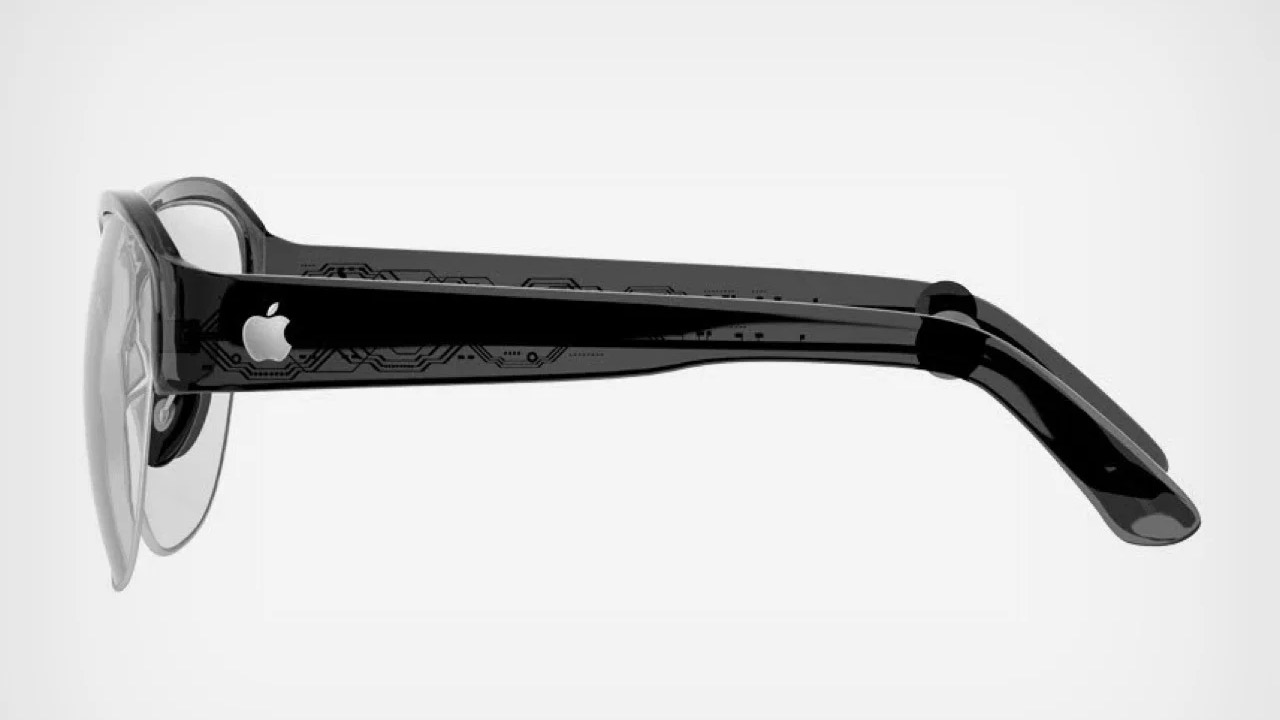
Apple Smart Glasses Render
Photo credit: Oleh Koval via Yanko
Bloomberg’s Mark Gurman laid out Apple’s revised plans in late May. The company has pulled resources away from any quick sequel to the Vision Pro headset. Those efforts now feed a different project, one that aims for store shelves sometime in 2027. The device carries the internal name N50. It will not project images into the lenses. It will not offer the full mixed-reality experience of a headset. Instead, the glasses will serve as a direct companion to an iPhone, much the way AirPods or an Apple Watch extend what the phone already does.


Current testing has been conducted on four different frame shapes. One has a broad rectangular profile reminiscent of traditional wayfarer styles. Another opts for a smaller rectangular shape, similar to Tim Cook’s signature design. Then there are two additional options: oval and circular, with one larger and the other smaller. Apple plans to offer many of these shapes at launch, each in a different color. Colors currently being considered include black, ocean blue, and light brown.


Ray-Ban Meta (Gen 1), Wayfarer, Shiny Black | Smart AI Glasses for Men, Women — 12 MP Ultra-Wide…
  • #1 SELLING AI GLASSES – Move effortlessly through life with Ray-Ban Meta glasses. Capture photos and videos, listen to music, make hands-free calls or…
  • CAPTURE WHAT YOU SEE AND HEAR HANDS-FREE – Capture exactly what you see and hear with an ultra-wide 12 MP camera and a five-mic system. Livestream it…
  • LISTEN WITH OPEN-EAR AUDIO — Listen to music and more with discreet open-ear speakers that deliver rich, quality audio without blocking…

These frames are said to be composed of high-quality acetate rather than plastic. That choice gives them a strong, high-end feel while keeping them remarkably light. Engineers are aiming for a weight of less than 50 grams to keep the glasses comfortable while not calling attention to the technology inside. Different sizes are being looked at also, to ensure a decent fit on pretty much every facial shape

Apple Smart Glasses Render
Two cameras are mounted in the front of the frames, one for taking high-resolution photos and videos and the other for computer-vision work, which involves taking a closer look at the scene in front of the wearer to enable things like object recognition, text translation, and basic spatial awareness. When the cameras are turned on, indicator lights appear. The typical suspects of microphones and open-ear speakers are added for calls, music playback, and speech interactions.

Apple Smart Glasses Render
The lower-level duties on the glasses are handled by a proprietary chip, internally referred to as N401, which is derived from the same silicon used in Apple watches. Anything more demanding is transferred to the associated iPhone over Bluetooth or an ultra-wideband link. This way, the glasses don’t require much power while yet allowing them to access Apple Intelligence functions operating directly on the phone. This also preserves personal information on the user’s devices rather than transmitting it elsewhere.

Apple Smart Glasses Render
Siri is also set to receive a slight upgrade around the same time these glasses appear. The enhanced assistant will be able to draw on deeper information from the cameras and phone, allowing it to have more natural conversations and handle on-the-spot requests. Visual intelligence tools allow someone to point the glasses at a landmark, a plant, or a menu and receive useful information without having to enter or tap anything.

Apple Smart Glasses Render
Prescription lenses will be supported, allowing the glasses to replace a user’s current eyewear. Early estimates put the beginning price between $299 to $499, with additional charges for prescription work. Analyst Ming-Chi Kuo expects first-year shipments of 3-5 million units if the launch goes as planned. Production is expected to pick up in the second quarter of 2027, with a spring or summer release at the latest. An official announcement might occur as early as late 2026, possibly at a fall event or even WWDC.
[Source}

Advertisement

Source link

Continue Reading

Tech

City Lawmaker Responds To Flock Camera Ban By Demanding A Cell Phone Ban

Published

on

from the u-mad-bro? dept

Flock Safety has made its bed. It has courted homeowners associations and gated communities since it first arrived on the market, apparently hoping to convert inherent racism into perpetual revenue streams.

Then it went to where the real bias has always existed: US law enforcement agencies. It promised to tie their systems in with those deployed by private citizens. It attempted to talk Ring (another company with too-close ties to cops) into bed, before shitting the shared bed in front of hundreds of millions of TV viewers during the most recent Super Bowl.

Flock’s reputation had already been in steep decline prior to the Super Bowl debacle, but that aborted arranged marriage saw its shady doings exposed to millions who previously weren’t aware there was a surveillance camera company even less concerned about rights and privacy than Ring.

Flock was doing things even Ring wouldn’t do. It was telling citizens one thing and giving cops something else entirely: a nationwide surveillance network with built-in ALPR (automatic license plate reader) capability with zero oversight. Flock said it would prevent federal abuse of local law enforcement camera networks and then did absolutely nothing to prevent this. Meanwhile, cop shops were using Flock’s cameras to track people across the country — you know, dangerous criminals like the woman (at the request of her abusive ex) who left Texas to seek an abortion in another state.

Advertisement

All of these concerns have resulted in Flock losing plenty of public market share. Sure, it may still be doing brisk business in the private market, but government contracts are where the real money is. Flock can’t seem to stop the bleeding. Multiple local governments have terminated contracts with Flock and plenty more are considering doing the same, especially now that it’s shady dealings have been called out by federal lawmakers like Senator Ron Wyden.

Still, the company has its supporters. And they’re exactly the sort of people you’d expect them to be. A public meltdown by a public servant is the subject of this excellent reporting by Joseph Cox of 404 Media. Here’s a bit of background, which also contains some super-useful background on Flock’s PR team.

Like in many other communities around the country, the use of Flock’s AI cameras has become a major topic of discussion in Bandera (Texas). In February, Bandera held a town hall meeting exclusively about Flock that Flowers moderated. Kerry McCormack, a former Cleveland city council member who is now on the public affairs team for Flock, came to that meeting to discuss the technology, demonstrating that the company is sending representatives even to tiny towns in order to promote its use. 

Dial in on a couple of things. First, there’s the fact that former public servants are now running flack for Flock. Second, there’s the mention of Bandera, Texas city council member Jeff Flowers, who’s apparently so smitten of Flock that he’s willing to go full batshit when confronted by public criticism. Bandera’s city council voted 3-2 to end its contract with Flock in response to public resistance, which included repeated vandalizing of the town’s eight cameras.

Flowers apparently couldn’t handle this vote or the resistance that generated it. He went right off the rails, almost immediately:

Advertisement

After the vote, Councilmember Jeff Flowers, a staunch Flock supporter, said that if people in the town wanted privacy then the city council should basically ban all technology, essentially calling people who did not want government surveillance hypocrites.

Nice. This deep disconnection from reality wasn’t limited to comments made during the vote. He also posted an op-ed (subtitled “Bandera Declaration of Independence”) in the local newspaper, in which he ignorantly continued to claim that rejection of government surveillance was a hypocritical stance taken by people who voluntarily own smartphones and access the internet.

Flowers said that at the next city council meeting he will propose “a total ban on all cellular and GPS-capable devices for all operations within city limits. If we are to be truly ‘private,’ we must leave our smartphones at the city line.” He will also propose “a total ban on outward facing cameras,” and “a total termination of all internet services and electronic record-keeping. We are going back to 1880, paper ledgers and cash only.”

Flowers is the kind of idiot that’s almost smart enough to be dangerous. But he’s not quite there yet. It’s one thing to “share” information with service providers, apps, and online services. It’s quite another to be forced to share information with the government. While the government may actually demand less information in exchange for services than most internet service providers, people are far more willing to sacrifice privacy for convenience when the recipient is another private party.

Pretending these two things are equivalent is lazy at best, and totalitarian at worst. They’re not the same thing. And even if the collection of data by third parties might result in warrantless access of this data by the government, very few citizens are going to affirmatively choose to surrender data to the government, even if it’s nothing more than an always-on collection of their movements via automatic license plate readers.

To be sure, there are people working for Flock who think Flowers is worthy of a high five or two, if not a permanent position in the PR department. They’re no smarter than Flowers is. This is not a win for Flock. This is another unforced error by surveillance state enthusiasts who are voluntarily creating more negative press for Flock. Flock loses. Flowers rants. Flock loses again. If either party was truly smart, they’d be distancing themselves from each other.

Advertisement

Filed Under: alpr, bandera, jeff flowers, surveillance state, texas, traffic cams

Companies: flock safety

Source link

Advertisement
Continue Reading

Tech

Man arrrested for $31,000 iPhone theft

Published

on

London iPhone theft victims have reported threats, AirTag catches a burglar in Pittsburgh, and California prisoners did not receive iPads, all in this week’s Apple Crime Blotter.

The latest in an occasional AppleInsider series, looking at the world of Apple-related crime.

Chicago man arrested in $31,000 iPhone theft

A 34-year-old temporary employee at a logistics facility in Illinois has been charged with stealing $31,000 worth of iPhones from the building.

According to Fox 32 Chicago, the man was caught on security footage entering a trailer, and later concealing the approximately 40 stolen iPhones in a sweater.

Advertisement

The man, who lives in Chicago, was charged with a felony count of theft.

London iPhone theft victims report threats

The city of London has, in recent years, suffered a massive wave of iPhone thefts, with 81,000 reported stolen in 2024 and 71,000 in 2025.

The New York Times reported on May 23 that many of those victimized by such thefts have subsequently received threatening phone calls and text messages from the thieves.

“I know who you are and where you live,” was the message received by a Chicago resident whose iPhone was stolen in London. “I’ve killed or far less than a phone before.”

Advertisement

The threats, the newspaper said, have often been tied to the thieves’ desire to have the victims unlink their IDs from the stolen devices.

AirTag helps catch man accused of multiple crimes in Pittsburgh

A man accused of both sexual assault and burglary has been caught after he stole an AirTag from the victim’s home.

According to CBS News Pittsburgh, the AirTag and $2 in cash were both taken from the victim’s home. Police followed the ping to a nearby location where the man was arrested, while fingerprints left at the scene also pointed to that particular suspect.

He confessed to the assault, but not to the theft of the AirTag. He has been charged with burglary, aggravated indecent assault, and indecent assault.

Advertisement

No, California prisoners were not given free iPads

A report by City Journal in mid-May alleged that state prisoners in California, including some on death row, were given tablet computers. The report states that these tablets have been used by prisoners to watch pornography and for other controversial purposes.

However, multiple aggregations of that report by other media outlets, including one by Fox LA, have erroneously referred to the tablets in question as “iPads.”

They are not, as the original contract for the tablets was with Viapath/Global Tel Link. A recent bidding process led to a change in vendor to Securus Technologies.

Advertisement

Securus provides Android tablets under the EVOTAB brand. The tablets are not iPads, and there are no reports that Apple has ever been involved in the program.

In addition, the chairman of the House Oversight Committee, Rep. James Comer (R-SC) called the tablets “iPads” in announcing plans for Congress to investigate the program.

Gov. Gavin Newsom may not have authorized iPads, but he did, earlier in May, preside over the release of California’s American Innovation Coin honoring Steve Jobs.

Information about “city-managed Apple accounts” was part of a report on Minneapolis Police Chief’s ouster

Brian O’Hara, the Minneapolis Police Chief and a prominent figure during the recent ICE siege in that city, resigned on May 26.

According to The New York Times, O’Hara stepped down following “a personnel investigation into his conduct,” and that “O’Hara had likely deleted a contact from his phone last year while facing a previous internal investigation into allegations that he had sexual relationships with city workers.” However, the report found no evidence that such relationships occurred.

Advertisement

KSTP published the report itself, which found that among the evidence in the “Original Investigation” was “Information from the City’s IT department about a transfer to City-managed Apple accounts on March 20, 2025.”

Man arrested in Florida iPhone theft, fraudulent charges

A man in Florida was arrested on May 17 and charged with stealing an iPhone and perpetrating a subsequent “wave of fraudulent credit card charges.”

CBS 12 reports a victim had approached the Stuart Police Department in December 2025 and reported that his iCloud account was compromised. Over the course of a month, the report said, the fraudulent purchases continued, which included gift cards and other items.

The man was arrested on five counts of fraudulent use of identification, petit theft, and theft of a credit card.

Advertisement

Customer service scam costs Californians $15,000

A resident of Folsom, Calif., told police that they were contacted by phone by a bogus Apple customer service representative.

According to The Folsom Times, the fake rep told the victim about false transactions, and later met the victim and “collected $15,000 in cash.”

Police are looking for a “porch pirate” who took an Apple Watch

Police in Rye, N.Y., put out a call in April to see if anyone recognized a “porch pirate” who was caught on camera stealing a “freshly delivered Apple Watch off the front porch of a residence in a neighborhood in close proximity to the Playland Parkway.”

The suspect, the police department said, “arrived on a motorized scooter 45 minutes after the package was delivered by UPS.”

Advertisement

Bangladeshi actress’ iPhone is stolen

An iPhone belonging to Bangladeshi actress Tanha Tasnia Islam was stolen in mid-May, reportedly by a man falsely posing as the driver for a different actor, Joy Chowdhury.

According to Daily New Nation, “discussions have begun,” in relation to the theft at Bangladesh Film Development Corporation (BFDC), as it took place while the actress was dubbing dialogue.

iPhone “snatched” from candidate for Miss International Queen Philippines

A woman competing in the Miss International Queen Philippines pageant had her silver iPhone 17 Pro Max stolen in mid-May.

The Daily Tribune wrote that the iPhone belonging to Mikay Bautista was “stolen by riding-in-tandem suspects” when she was in Quezon City.

Advertisement

Bautista was first runner-up in the competition, which took place two days after the theft.

Source link

Advertisement
Continue Reading

Tech

M-Audio M Track Duo HD Producer Pack Review: Hot Takes, Cold Opens

Published

on

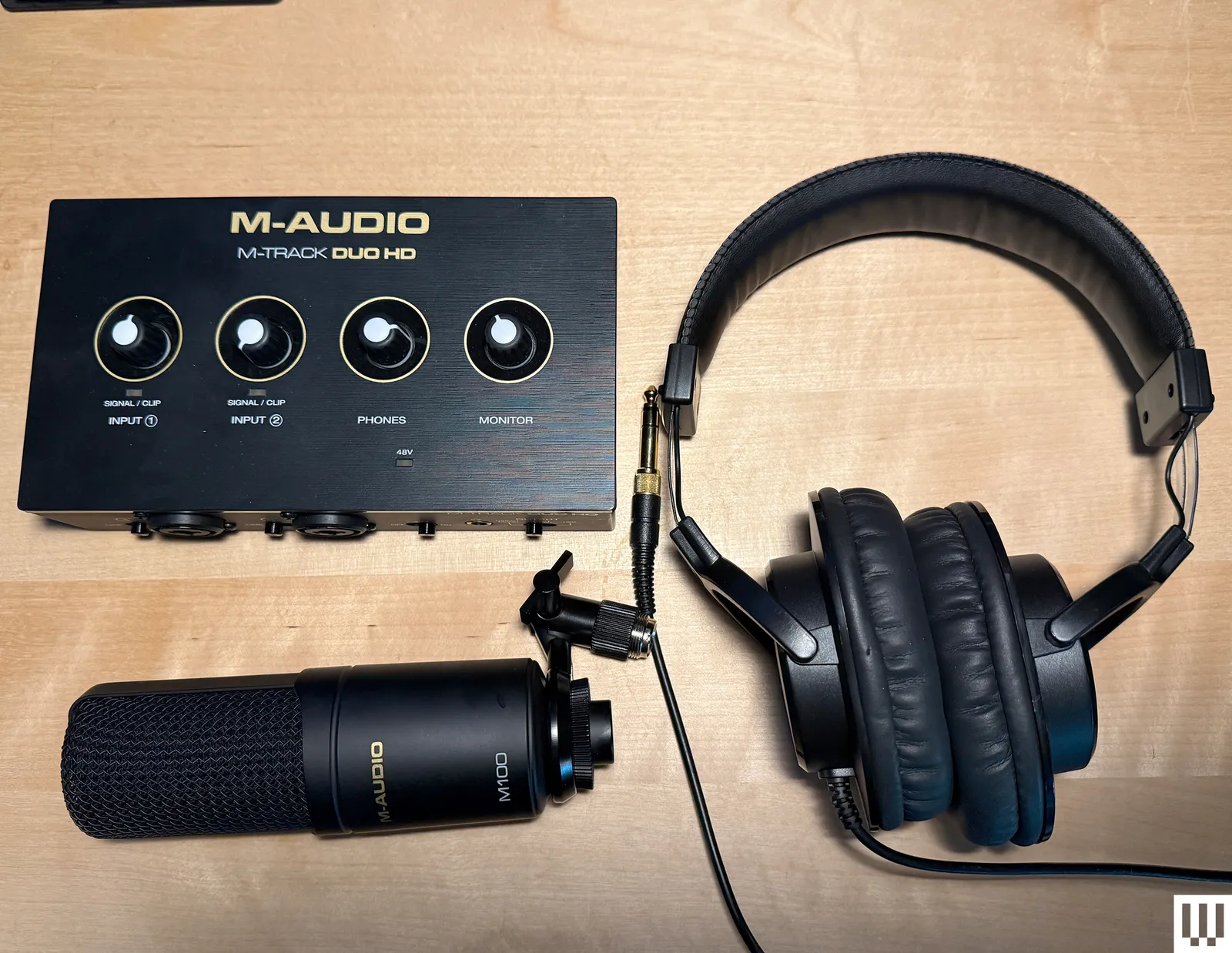
Headphones microphone and audio device on hardwood surface

Photograph: Pete Cottell

M-Audio has packaged everything this person would need in a tidy little box with its M Track Duo HD producer pack. It includes a two-channel class-compliant audio interface, an M100 condenser mic, a pair of HD41 headphones, a mic clip, a USB-C cable to connect the interface to your computer or mobile device, and an XLR cable to connect the mic to the interface—all for the low price of $200. Aside from a mic stand (we love this desk clamp boom arm stand from Innogear) and the unearned confidence necessary to speak into a mic for hours about a wide variety of esoteric topics, you need nothing else than what’s in this box to get started. Plug a few things in, fire up OBS or your favorite DAW, adjust the gain on the mic preamp, and get to work.

The interface is a lightweight box of plastic that’s about the size of a VHS tape or a self-help book you’d buy at an airport bookstore. The front panel has two combo XLR quarter-inch input jacks, both of which have separate line and instrument level impedance selectors. A 48-volt switch enables phantom power for both inputs at once, which is essential to power the included condenser mic or a Cloudlifter if you decide to go full-on PodBro and upgrade to a dynamic mic. There’s also a single quarter-inch TRS headphone jack and a three-way selector that dictates whether a direct mono, direct stereo, or USB signal feeds the dual-mono quarter-inch tip-sleeve output jacks on the back of the box.

Each channel has its own gain knob on the top of the unit, with an indicator light below that flashes white when a signal is present and red when the signal is clipping. Each preamp has 55 dB of gain on tap, which is more than enough to turn even the meekest of Teams meeting NPCs into audible, active participants. The motion of the knob is smooth and jitter-free until you hit the last 10 percent of its sweep, at which point some ambient digital noise seemingly clicks on and off as if it were triggered with a switch. This is way too much gain for any practical application due to the amount of clipping it’s likely to cause, so this is not a major concern for anyone who’s spent 30 minutes or so dialing in their levels and getting a feel for the thing.

Advertisement

A Mic for the Masses

The included condenser mic pairs well with the preamp in the interface. It’s a unipolar large-diaphragm condenser mic, which in normie language means the metal grate that covers the front of the mic is where you’ll want to point your voice, instead of the back. Condenser mics are much more sensitive to ambient noise than a dynamic mic, which is both an upside and a downside. A condenser mic works well a bit farther from your face than a dynamic mic, but you’ll need to boost the gain to pick up your voice at a greater distance. This picks up more background noise as well, which can lead to some embarrassing moments on Zoom calls when, say, the small flock of fowl your neighbor is illegally housing in their garage starts clucking nervously when a garbage truck rattles down the block. Luckily, Zoom has decent built-in noise suppression tools, so this was easy to address without any extra plugins or hardware.

The mic handles a standard male speaking voice quite well. I’m not fully trained on pensive NPR-speak just yet, but my standard tech-guy patter broadcast as clear as a bell with the mic 6 inches from my face, and the gain knob turned up to around 3 o’clock. The mic does not have a high-pass filter switch to roll off low-end rumble from accidental bumps into the stand or the mic itself, so you’ll need to take care to avoid fumbles that cause loud thumping noises if you prefer higher gain and a bit more distance from your mouth to the mic.

Source link

Advertisement
Continue Reading

Tech

5 Fitness Trackers That Don’t Lock Core Features Behind A Monthly Subscription

Published

on

The Fitbit Air has entered the chat.

Fitness tracker pricing can be, well, a bit misleading. For example, say the $399 Oura Ring 5 seems to be within your budget at first glance. But to make it remotely useful, you’ll need to pay an extra $6 per month or $70 per year. Your total cost jumps up to around $550 after only two years. (And if you hang onto it for five years, you’re looking at at least $750.) 

Oura isn’t even the most egregious subscription-based offender in this space. Whoop, the popular screenless fitness tracking band, requires a membership starting at $199 per year. Granted, that includes the device itself, unlike others. But you don’t need to be a math whiz to realize how quickly its cost can add up over the long term, too.

That’s why Google’s recently released Fitbit Air is so interesting. It’s basically a Whoop, with a one-time cost of $100. You can use most of its features without an additional subscription. What a concept! Let’s take a closer look at the landscape following the Fitbit Air’s entry, to see where you can cut through the paywall noise. 

Advertisement

Fitbit Air

The Fitbit Air, starting at only $100, is the company’s direct rival to Whoop. Crucially, Google’s screenless band gives you all of its core features without a monthly fee. Only the Gemini-powered Al Coach and other perks (like workout videos) require a Google Health Premium subscription. If you do opt for that, you’ll pay $10 per month or $100 per year. But again, it’s more of an add-on than a necessity.

The device’s battery life is about seven days, half the Whoop’s 14-day uptime. But the Fitbit Air does charge quickly, so it shouldn’t be a huge deal. For example, our review unit went from 36 percent to 58 percent in just five minutes.

The Fitbit Air works with both Android and iOS phones. However, it requires the Google Health app and won’t sync natively with Apple Health.

Advertisement

Garmin vívosmart 5

Unlike the Fitbit Air and Whoop, the vívosmart 5 has a narrow, monochrome OLED display. That, combined with its slim profile, makes it a solid way to split the difference between a full-on fitness watch and a screenless tracking band.

The device logs your heart rhythm, sleep, steps and workouts. And Garmin’s Body Battery score estimates how long to wait before your next intense workout. Like the Fitbit Air and Whoop, the vívosmart 5 lacks built-in GPS and instead uses connected GPS via your paired phone.

Best of all, there’s no monthly fee whatsoever, so your $150 upfront investment unlocks everything the device can do.

Advertisement

The Garmin vívosmart 5 is compatible with Android and iOS. Its companion Garmin Connect app can sync with Apple Health and Google Health.

Samsung Galaxy Ring

Although it has its limitations, the $400 Samsung Galaxy Ring also functions 100 percent without a monthly fee. It tracks sleep (duration, stages, and skin temperature) and activity. It can automatically detect walking and running and provide detailed metrics for both. It can last at least six days on a charge.

Unfortunately, the Galaxy Ring doesn’t work with iPhones. And while it works just fine with Android phones from other manufacturers, a Samsung device is required for Galaxy AI features and its double-pinch gesture controls.

Advertisement

Apple Watch Series 11

Okay, maybe we’re cheating a bit here by including a full-fledged smartwatch. But the Apple Watch Series 11 has loads of health-tracking features without a monthly fee.

This latest model has longer battery life than the previous generation: up to 24 hours with regular use. On the health front, this model adds hypertension alerts. The watch can monitor your heart rate and blood oxygen levels, track your sleep (including a sleep score), and log a long list of workouts.

On the downside, the Apple Watch Series 11 starts at a hefty $400. It’s also iOS-only, so folks with Android phones are left out.

Advertisement

Xiaomi Smart Band 10

On the opposite end of the pricing spectrum is the Xiaomi Smart Band 10. The budget fitness tracker costs around $50 and has no subscription fees. Hard to beat that.

The device has a bigger, brighter and sharper display than its predecessor, with an improved screen-to-body ratio. It covers the basics, including heart rate monitoring and sleep tracking. It can last up to 21 days on a single charge. As a quirky bonus, you can even wear it as a necklace or attach it to your shoe.

What’s compromised at this ridiculously low price? First, the Xiaomi Smart Band 10 lacks built-in GPS. Its suite of sensors is also limited: It can’t sense ECG, blood pressure, skin temperature, barometer, altimeter, or HRV. Its sleep tracking also gets mixed feedback. This isn’t the device to get if you want premium health monitoring; it’s more about keeping the cost down.

Advertisement

The Xiaomi Smart Band 10 pairs with the Mi Fitness app, which is available on iOS and Android.

Source link

Advertisement
Continue Reading

Tech

NASA Readies The X-59 For Its First Supersonic Flight, SpaceX’s Starship Grounded And More Science Stories

Published

on

This week, NASA shared more information about its planned moon base missions, Blue Origin’s New Glenn rocket exploded on the launchpad and the James Webb Space Telescope spotted a supermassive black hole that researchers say “may have formed within the first second after the big bang.” But first, we have updates on NASA’s X-59 quiet supersonic research plane and SpaceX’s Starship following last week’s test flight. Catch up here on this week’s science news.

Key test flights approach for NASA’s quiet supersonic plane

Over the last decade, NASA has been developing an aircraft that could one day reach supersonic speeds — or travel faster than the speed of sound — without producing the thunderous sonic booms typically associated with this feat. The plane, called the X-59, took its first ever flight back in October and has conducted several more in the months since. Now, NASA says it’s ready to go supersonic. The X-59 is scheduled to take its first supersonic flight, hitting over 630 mph at an altitude of about 43,000 feet, in early June, according to the space agency.

Then, in a followup “mission conditions” test, it will reach 925 mph (Mach 1.4) at about 55,000 feet. After that, it’ll go for its max speed: Mach 1.6, or 1,218 mph, at an altitude of 60,000 feet. NASA isn’t ready to show off the X-59’s quiet supersonic capabilities yet, though. For this phase of testing, NASA noted in a blog post, “The X-59 will be accompanied by a traditional supersonic chase plane, so any quiet thump it produces in the current phase of testing will be obscured by louder, traditional sonic booms from the chase.”

Advertisement

FAA grounds Starship after ‘mishap’

SpaceX’s Starship V3 launched for the first time last week in a test flight that achieved much of what the company set out to do. But, it wasn’t entirely without hiccups, and the Federal Aviation Administration (FAA) has since ordered a pause on Starship flights while it investigates what went wrong and prevented the Super Heavy booster from making a soft splashdown as intended.

The issue arose after Starship separated from Super Heavy. “Following stage separation, the Super Heavy booster performed a directional flip maneuver and attempted its boostback burn,” SpaceX explained in a blog post following the launch. “It was unable to light all planned engines and performed a partial boostback burn that ended early. Super Heavy attempted to reignite its engines for the landing burn before experiencing a hard splashdown in the Gulf of America.” Starship went on to complete its journey and splashed down at the planned site in the Indian Ocean.

“After a thorough assessment of the operation, the FAA has determined the May 22 SpaceX Starship Flight 12 launch resulted in a mishap,” the agency said in a statement released this week. “The mishap involved the Super Heavy booster as it flew back to the Gulf of America after stage separation. There are no reports of public injury or damage to public property.” It added, “The FAA is requiring SpaceX to conduct a mishap investigation. The FAA will oversee the SpaceX-led investigation, be involved in every step of the process, and approve SpaceX’s final report, including any corrective actions.”

Advertisement

It’s not an uncommon move on the FAA’s part, and SpaceX has faced several such groundings over the years, many of which have been wrapped up fairly quickly. It likely won’t be very long before we see Starship back in action. “A return to flight of the Starship-Super Heavy vehicle is based on the FAA determining that any system, process, or procedure related to the mishap does not affect public safety,” the FAA noted in its statement.

The FAA grounded SpaceX competitor Blue Origin’s New Glenn rocket last month following its third mission, and it was just cleared earlier this week to resume flights. But, during a hotfire test on Friday, New Glenn exploded on the launch pad at Cape Canaveral. You can read more about that below.

Before you go, be sure to check out these stories too:

Advertisement

Source link

Continue Reading

Tech

20 Snap alumni launched an angel fund for the next generation of social media. They think “social” and “media” have split.

Published

on

TL;DR

20 Snap alumni launched Ghost Angels to back AI startups building beyond the ad-driven social media model. Five deals done, 15 more planned.

Twenty Snap alumni have launched Ghost Angels, an angel fund backing the next generation of social media and consumer AI startups. The fund has invested in at least five companies and plans to deploy remaining capital into at least 15 more within the next year. It declined to disclose total fund size.

Max Rivera, who led global partnerships at Snap, started the fund in 2025 to formalise an already growing alumni angel community. He currently works at Microsoft’s AI division. The roughly 20 founder members include Alexandra Levitt, who ran Snap’s corporate accelerator, and Will Wu, a founding member of Snap’s product and design team.

We were intentional about the mix,” Rivera told TechCrunch. “That diversity of thought and experience is core to how we evaluate deals and support founders.” The membership includes former senior executives alongside people earlier in their careers, plus a small number who still work at Snap.

Advertisement

Ghost Angels invests at pre-seed to seed stage in AI startups building in social media and consumer. Rivera said the biggest trend he has noticed is that “social” and “media” have actually split into two distinct categories.

The 💜 of EU tech

The latest rumblings from the EU tech scene, a story from our wise ol’ founder Boris, and some questionable AI art. It’s free, every week, in your inbox. Sign up now!

What consumers know as social media today is a platform that relies on ads, with algorithms driving content and recommendations. “A lot of people are disillusioned with that relative to the original promise of connecting people in your life,” Rivera said. The next generation is moving away from generalised platforms and toward niche communities.

Advertisement

Ghost Angels is backing both sides of the split. On the social side, founders are applying AI to deliver on the original promise of human connection. On the media side, AI-native formats and generative creative tools are lowering the barrier to creation and distribution across music, gaming, sports, and fashion.

Rivera has noticed that today’s founders operate differently from when he joined Snap nearly a decade ago. Teams are leaner. Founders launch fast and iterate in public. Monetisation is diversifying beyond ads into subscriptions, token-based models, usage-based pricing, and outcome-based revenue.

Meta’s launch of Forum this week underscores how the incumbents are also sensing the split. Forum, a standalone app built from Facebook Groups, is designed to capture the community discussion use case that Reddit currently dominates. The fact that Meta is unbundling Groups into a separate app validates Ghost Angels’ thesis that niche community tools are the next category.

Molly DeWolf Swenson, co-founder and CEO of portfolio company Mozi, said the “Snap alumni network is full of brilliant, influential people who inherently understand the problem space I’m playing in.” The fund’s value proposition to founders is not just capital but domain expertise from people who helped build one of the defining social platforms of the last decade.

Advertisement

The broader startup landscape is rewarding AI-native approaches that build for new categories rather than optimising existing ones. Peec AI hit $10 million ARR in six months by building for generative engine optimisation, a category that barely existed before ChatGPT changed how people search. Ghost Angels is betting that the same dynamic applies to social: the platforms that win will be built for AI-native interaction, not retrofitted with AI features.

The Snap alumni network is one of the most active in consumer tech. Snapchat’s culture of experimentation, its bet on ephemeral content, its early investment in AR, and its willingness to build products that looked strange before they looked obvious produced a generation of product thinkers who now see the next cycle forming. Ghost Angels is the vehicle for putting that conviction to work.

Source link

Advertisement
Continue Reading

Trending

Copyright © 2025