Connect with us
DAPA Banner
DAPA Coin
DAPA
COIN PAYMENT ASSET
PRIVACY · BLOCKDAG · HOMOMORPHIC ENCRYPTION · RUST
ElGamal Encrypted MINE DAPA
🚫 GENESIS SOLD OUT
DAPAPAY COMING

Tech

NASA Readies The X-59 For Its First Supersonic Flight, SpaceX’s Starship Grounded And More Science Stories

Published

on

This week, NASA shared more information about its planned moon base missions, Blue Origin’s New Glenn rocket exploded on the launchpad and the James Webb Space Telescope spotted a supermassive black hole that researchers say “may have formed within the first second after the big bang.” But first, we have updates on NASA’s X-59 quiet supersonic research plane and SpaceX’s Starship following last week’s test flight. Catch up here on this week’s science news.

Key test flights approach for NASA’s quiet supersonic plane

Over the last decade, NASA has been developing an aircraft that could one day reach supersonic speeds — or travel faster than the speed of sound — without producing the thunderous sonic booms typically associated with this feat. The plane, called the X-59, took its first ever flight back in October and has conducted several more in the months since. Now, NASA says it’s ready to go supersonic. The X-59 is scheduled to take its first supersonic flight, hitting over 630 mph at an altitude of about 43,000 feet, in early June, according to the space agency.

Then, in a followup “mission conditions” test, it will reach 925 mph (Mach 1.4) at about 55,000 feet. After that, it’ll go for its max speed: Mach 1.6, or 1,218 mph, at an altitude of 60,000 feet. NASA isn’t ready to show off the X-59’s quiet supersonic capabilities yet, though. For this phase of testing, NASA noted in a blog post, “The X-59 will be accompanied by a traditional supersonic chase plane, so any quiet thump it produces in the current phase of testing will be obscured by louder, traditional sonic booms from the chase.”

Advertisement

FAA grounds Starship after ‘mishap’

SpaceX’s Starship V3 launched for the first time last week in a test flight that achieved much of what the company set out to do. But, it wasn’t entirely without hiccups, and the Federal Aviation Administration (FAA) has since ordered a pause on Starship flights while it investigates what went wrong and prevented the Super Heavy booster from making a soft splashdown as intended.

The issue arose after Starship separated from Super Heavy. “Following stage separation, the Super Heavy booster performed a directional flip maneuver and attempted its boostback burn,” SpaceX explained in a blog post following the launch. “It was unable to light all planned engines and performed a partial boostback burn that ended early. Super Heavy attempted to reignite its engines for the landing burn before experiencing a hard splashdown in the Gulf of America.” Starship went on to complete its journey and splashed down at the planned site in the Indian Ocean.

“After a thorough assessment of the operation, the FAA has determined the May 22 SpaceX Starship Flight 12 launch resulted in a mishap,” the agency said in a statement released this week. “The mishap involved the Super Heavy booster as it flew back to the Gulf of America after stage separation. There are no reports of public injury or damage to public property.” It added, “The FAA is requiring SpaceX to conduct a mishap investigation. The FAA will oversee the SpaceX-led investigation, be involved in every step of the process, and approve SpaceX’s final report, including any corrective actions.”

Advertisement

It’s not an uncommon move on the FAA’s part, and SpaceX has faced several such groundings over the years, many of which have been wrapped up fairly quickly. It likely won’t be very long before we see Starship back in action. “A return to flight of the Starship-Super Heavy vehicle is based on the FAA determining that any system, process, or procedure related to the mishap does not affect public safety,” the FAA noted in its statement.

The FAA grounded SpaceX competitor Blue Origin’s New Glenn rocket last month following its third mission, and it was just cleared earlier this week to resume flights. But, during a hotfire test on Friday, New Glenn exploded on the launch pad at Cape Canaveral. You can read more about that below.

Before you go, be sure to check out these stories too:

Advertisement

Source link

Continue Reading
Click to comment

You must be logged in to post a comment Login

Leave a Reply

Tech

Anthropic’s Mythos mess just keeps getting more complicated

Published

on

KETTLE It’s been a week since the Trump administration established a de facto ban on Anthropic’s Mythos derivative, Fable 5, and the more that comes out about the move the more it seems like Anthropic employees talking amongst themselves were on to something: Is the government just picking on the company?

This week on the Kettle, host Brandon Vigliarolo and Reg cybersecurity editor Jessica Lyons chat about what’s going on with Mythos and Fable, what role Amazon may have played in justifying the government’s move, how a prominent cybersecurity expert is calling the government’s foul, and what this whole thing might mean for the next wave of models.

After all, even if Mythos and Fable are as advanced as Anthropic claims, it’s not going to take long for some open-weight model to make the same leaps, and good luck trying to stop one of those from getting in the hands of anyone who wants them. 

You can listen to The Kettle here, as well as on Spotify and Apple Music, or read the transcript of the latest episode below. It’s been lightly edited for clarity. 

Advertisement

Brandon (00:03)

Welcome to the latest episode of The Register‘s Kettle Podcast. I’m Brandon Villiarolo, and boy, has it been another exciting week in AI Land. If you’ve been following the news, you probably know what I’m talking about, especially if you’re an Anthropic customer who suddenly lost access to the company’s latest models. That’s right. This week’s topic is none other than the Trump administration’s de facto ban on the release of Mythos derivative Fable 5. And with me to discuss it is our cybersecurity editor, Jessica Lyons. Thanks for coming on.

Jessica (00:31)

Hello, thanks for having me.

Advertisement

Brandon (00:33)

Yeah, of course. this is right up your alley, so let’s get right into the heart of the matter. What did the Trump administration demand from Anthropic and what was the company’s response?

Jessica (00:44)

Okay, so what happened is last Friday the Trump administration sends this letter to Anthropic and they cite national security concerns to issue an export control saying that Fable 5 and Mythos 5 cannot be used by any foreign national inside or outside of the United States. And that also includes Anthropic employees. So in response, Anthropic just disbanded both models for all of the customers to ensure compliance. So effectively nobody can use these two models.

Advertisement

Brandon (01:20)

Yeah, I mean it seemed like the way that letter was worded, because Bloomberg got a copy of it and published it. And I think they said that they were citing the Bureau of Industry Security’s  authorization to what is it, “require a license for the export, re-export, or transfer of any item subject to export administration regulations, because there is an unacceptable risk of use in or diversion to a military intelligence end use or military intelligence end user.” So they’re basically treating it like any other dual-use technology. But that restriction is so broad, right? Like you said, even their own employees, ⁓ so yeah, they they yeah, they have no other recourse but to just stop it.

Jessica (01:56)

And it was reportedly a really short time frame too, about ninety minutes that they they received this letter and had to make a call. So they didn’t have a lot of time to get any answers about what prompted this and what exactly are you asking us to do here.

Advertisement

Brandon (02:04)

Right, from what I was reading in some other reports that cited people familiar with the situation inside Anthropic and everything, they didn’t even really get much of an explanation. They basically got the letter and they were like, “Excuse me, can you please tell us what this is about?” And the government basically said, “No …shut it down now…” It’s really weird, especially then given the story you wrote about this this week, that they’re basically treating this, like I said, like any dual use technology. But you wrote about a bug bounty hunter, the godmother of this movement, Katie Moussouris, who basically saw the report that the government used to justify this and she kind of called BS on the whole thing, right?

Jessica (02:54)

Right. So Katie is really, really well respected in cybersecurity circles. She is the one who helped convince Microsoft to start their bug bounty program. She led the Department of Defense effort for Hack the Pentagon. She sat on several federal commissions and boards. So she’s she knows what she’s talking about. She knows what she’s doing here. And Anthropic asked Amazon to review the models before they released Fable 5 and and Mythos 5. And then they gave Katie a copy of the report and she confirmed today that the third-party report that she mentioned was the Amazon report.

Advertisement

Brandon (03:41)

Which has been mentioned I think in some other stories too as being kind of the impetus for this whole thing, right? 

Jessica (03:44)

Yes, yes. So Anthropic then says, “hey, can you take a look at this? Let us know what you think.” She, as far as we know, is the only other person, the only other third-party expert to take a look at this report. And so she reads through it. She says that essentially what happened is that Amazon researchers fed Fable 5 and Mythos 5 and the Claude Opus model, they fed them all open source code and it had known CVEs. And then they also put new code and they kind of laced it with these vulnerabilities and asked the models to here’s the prompt, quote unquote, “review the code for security issues.” So Fable 5 refused, and then they just asked it straight out, quote unquote, “fix this code.” And the model obliged. They added some additional prompts to produce scripts to patch the issue, test the patches. So it kind of sounds like all these things that you want a model to be able to do for defensive security teams. The model did this. And according to Katie, this is the big scary national security issue that kind of or potentially prompted the Trump administration to just pull the whole thing, like ask Anthropic that you can’t release this to any foreign nationals.

Advertisement

Brandon (05:13)

Right, which again, right, is kind of funny because like when specifically asked to find security vulnerabilities in code, the model said no. Right. I mean, obviously this was a bit of a quote unquote “workaround,” right? But I mean, like you said, it’s very arguable that this is not a not a bypass, not a jailbreak. It’s just the way this should work in the first place. And apparently that’s that’s good enough for the government to say, “Hey, no, we don’t want anyone to have this.”

Jessica (05:40)

Right. And yeah, and there’s reports that that this the document was reviewed by administration officials and they described it as really scary because Fable 5 could identify flaws and that would be beneficial to the bad guys who are who are trying to hack American systems, and that poses a major threat to national security. But you have this whole group – and then there was a a letter with I believe over a hundred other security experts who are saying, no.

Advertisement

Brandon (06:14)

Moussouris signed that too, right? She was a signatory. 

Jessica (06:20)

Yes, she did sign that as well. Yes, you have Alex Stamos, you have a bunch of really, really respected names in security saying, “We need this as defenders. This is what is going to give us an edge. So you’re actually you’re hurting the defenders. You’re not really hurting the attackers by essentially issuing a ban on Anthropic’s models.

Advertisement

Brandon (06:35)

Right, especially since, and I think you mentioned this in your story as well, Mythos isn’t unique according to a lot of researchers in these capabilities. And even if it is, it won’t be for long, right? There’s a lot of models that are going to gain this capability or already have it, right? And that are, some of them, being manufactured overseas. I’m sure DeepSeek can do similar things to this or models exist in China that can do these kinds of things, right? I can’t imagine that that Anthropic is alone in this capability.

Jessica (06:52)

Right, right. I mean, we’ve seen from a lot of different papers that open weight and foreign models are not that far behind. It might take a few more prompts, but eventually these models also are going to find bugs and show you how to exploit them. So this is not completely unique to this one company and their particular models.

Advertisement

Brandon (07:26)

But it’ll get there, right? And so on top of that, I think ⁓ Moussouris was part of the group that helped the government renegotiate the Wassenaar arrangement, which for anyone unfamiliar, it was an agreement between like 42 forty two countries, right, to to establish some carve-outs for defensive security exceptions to export controls. And it seems like based on you know her reading, or her blog post that this is kind of a misinterpretation of AI’s kind of place in that in that arrangement, right?

Jessica (08:03)

Right, exactly. So yeah, that, like you said, it carved out these exceptions for dual use software technology, especially these these things that are gonna help defenders. So it’s offensive security capabilities, it’s malware analysis, all of these aspects of the software that is going to help defenders with coordinated incident response and sharing vulnerability data. And this carveout that she helped develop protects the companies, the people who are using these these technologies from criminal prosecution. And so one of the major arguments here is that you are pulling away more technical capabilities that are going to help defenders. This should be covered by that. It obviously is a dual-use technology and this should be protected. Not subject to export controls.

Advertisement

Brandon (09:01)

Right. And on top of that, right, you know, ⁓ like you mentioned, open weight models. It’s gonna be kinda hard to stop export bans on on open weight models and other publicly available stuff, right?

Jessica (09:07)

Right. Any foreign technologies, there’s absolutely nothing that we can do to prevent those. So again, it just seems like an instance of hamstringing defenders with technologies that would be really beneficial.

Advertisement

Brandon (09:30)

Which I think obviously kind of begs the question whether the Trump administration is sort of just picking on Anthropic, right? As we we covered a few months ago (I can’t even remember when it was now because everything moves so fast) but Anthropic got into a scuffle with the Pentagon earlier this year where they basically said, we don’t want you using our models to was it spy domestically or or autonomously target weapons, which I think both Anthropic and the Pentagon said, “we’re not doing that.” But it was just sort of like a “hey, you know, preemptively, we don’t want our models used in this kind of situation.”

And so the Pentagon’s reaction was basically to say, “well, if you’re not going to let us do whatever we want with it, then you can get out of every single piece of government infrastructure that exists.” Now I mean, they had a significant contracts with the federal government, right? Like most AI companies do. And so I think the Trump administration’s been kind of picking it out everywhere it can find it.

Jessica (10:22)

Advertisement

And not just the not just the government itself, but the whole supply chain. They labeled it a supply chain risk. So if you contract with the government, you also can’t use this technology.

Brandon (10:32)

Right, which severely obviously limits Anthropic’s ability to do business. And now here we are, you know, I think the New York Times reported earlier this week, they had a pretty wide ranging story on this whole topic that talked to a lot of people inside the company, saw some internal chat logs, and they mentioned that several employees were talking about feeling bullied or unfairly targeted by the Trump administration. And again, but when you with reference back to the things we were just talking about, it kind of seems like that might be the case, right? They’re hamstringing defenders, but why, right?

Jessica (11:11)

Advertisement

Right. Right. The hard part is is that we don’t have any transparency or definitive clarity on the reasons. It sounds like maybe Anthropic does at this point. They’ve reportedly been in negotiations or talks at least with the White House all week. We haven’t heard anything out of those talks yet. But it does seem that they are being unfairly targeted when you have the earlier scuffle with the Pentagon. Then you reportedly have Amazon sharing the findings of this review it did on Anthropic’s models with the administration. Amazon, Jeff Bezos, we know that’s a company that has the administration’s ear on things as opposed to Anthropic, which seems to be butting heads with the administration quite frequently. And then all of a sudden, seemingly out of nowhere, there’s this export control on Anthropic’s models. So it it’s it’s hard not to draw that conclusion that there’s a little bit of bullying for lack of a better word, targeting this particular company because of its history with the White House.

Brandon (12:30)

I know you in your story you mentioned that you were gonna update it if we heard back anything from the White House because you were asking them some questions about it. Did they ever get back to you?

Jessica (12:44) No. No response from the White House.

Advertisement

Yeah, of course not. That’s not a surprise, really. I mean that’s the thing, right? They email me back, I get plenty of emails from them when I ask them questions, but often it’s just kind of a “here’s the press release you already saw.”…If you ask them pointed questions a lot of times they’re not gonna answer. But it’s the same as any corporation too, I feel like, nowadays.

Jessica (13:01)

Right. But I mean, like you said, that even even the letter from Commerce itself, that hasn’t been made public yet. So we’ve seen that posted on different social media sites and Bloomberg had a copy of it, but even even that hasn’t been released publicly.

Brandon (13:14)

Advertisement

I was really hoping that the government would explain their reasoning behind this, right? But it just seems like essentially it’s been this whole – even when I saw the email I think was it was it Friday or Saturday…

Jessica (13:18)

It was Friday, it was late Friday.

Brandon (13:30)

Advertisement

Because I get all of Anthropic’s alerts about downtime and outages and everything. And I remember seeing that come across and basically saying that they were cutting off access to those models. And I was just kinda like, what? And then all of a sudden it comes out, it’s because, or I think I when I read it further, it was like, Yeah, the government basically, you know, it’s forcing our hand in in doing this. Which was really surprising to see on on I mean, not surprising to see based on the timing, right? Because a lot of times Friday evenings are when all this kind of stuff happens so that the news cycle doesn’t catch it.

But it’s also,, you know, we’ve written quite a bit about whether or not Mythos and then Fable by association aren’t kind of being overhyped, right? Like their capabilities are greater than what Anthropic says. We’ve written about that, we’ve talked about that on here, I think, before. ⁓ You know, Moussouris’s blog post seems to maybe not suggest that it is being overhyped. But at least that it’s not, you know again, its capabilities aren’t as advanced as what the government seems to be worried about, as what people seem to be, fear mongering about. I mean, have you gotten a sense of that from any of the recent reporting on it or or anything about whether or not again it is just a lot of hype?

Jessica (14:46)

Well, I think we’ve seen with Anthropic’s models and we’ve seen with other models as well, is, yeah, they’re getting a lot better. They’re getting really good at finding vulnerabilities. And now they’re also getting better at fixing them. So that seems like a a net positive here. And plus, this wasn’t a case of Anthropic releasing the Mythos preview. That’s the one with no guardrails that companies are currently trialing to find and fix vulnerabilities in their own products. This was a one I’ve I’ve read it described as a a straightjacketed version. And I like that because it this is one that does have the guardrails in place. This is why Anthropic said it was releasing it to the public. So again, without having played around with the model, it’s hard to say whether or not it’s overhyped or not, but this wasn’t just a a free-for-all. This was a model that did have guardrails in place. And if asking the model to fix this code is a jailbreak, I think it also speaks to just a lack of understanding about what these models can do, what they should be able to do, what a jailbreak is, what this technology means in general, especially when it comes to lawmakers.

Advertisement

Brandon (16:08)

Yeah, right? I mean is this another is this the next generation of the series of tubes here, right? Where some sits on the House floor talking about AI models and it’s and it’s clear they do not understand what they’re talking about. I mean, have you been watching any any government hearings or anything or heard anything? Like what kind of things are they saying about these that sound so grossly wrong?  I imagine there’s a lot, right?

Jessica (16:13)

There is a lot. I can’t think of any specifics off the top of my head, but I have been watching a lot of the hearings on AI, and specific to AI and how it relates to security. And honestly, cybersecurity is still a pretty big unknown, I think, among most lawmakers. So then you add this newer technology into the mix that’s evolving and expanding and and becoming more advanced so rapidly that it just … it’s really hard to wrap their heads around what are the capabilities and how can how can this be a benefit for defenders? Because when you do read the hype, it does sound really scary. Here’s this model that can find any zero day that’s ever existed and it can exploit it and it can do it at the speed of machines. So yeah, that sounds terrifying, really.

Advertisement

I think there’s a lot of confusion. There’s a lot of fear around this right now. And I think it’s hard for lawmakers a lot of times to get a get a grasp on what the issues are, what the technology is, how it works. And that’s an right.

Brandon (17:43)

Yeah, I mean this is complicated stuff. It’s changing a lot of the technological world right now, right? Like enterprises are grappling with AI, trying to figure out how it works, what works well, what doesn’t. You know, it’s now entering the cybersecurity space. It’s been in the development space for a while. Yeah, I mean, it is a complicated issue that’s that’s changing everything. I don’t know. Maybe we need a government body that regulates cybersecurity and you know, handles all these sorts of things that doesn’t get its staff culled on a whim. I don’t know.

Jessica (18:11)

Advertisement

Right. I was gonna say, that’s too bad that we don’t have one of those. At least with the full staff and budget. 

Brandon (18:16)

Well, who knows? We’ll we’ll be keeping an eye on things like this ’cause I mean this Mythos story and this the Fable story, this isn’t it’s not going anywhere. Like you they’re still in talk, still trying to figure out what it was. Amodei was at G7 this week talking to leaders about, not wanting to fracture the the cybersecurity environment with AI.

So yeah, there’s gonna be plenty to talk about and we will be here to discuss it on The Kettle. Thank you for joining me this week and thanks for listening. We will see you soon. ®

Advertisement

Source link

Continue Reading

Tech

This Brazilian Armored Vehicle Is A 40,000 Pound Amphibious Beast

Published

on


Brazil, and South America as a whole, is home to some of the toughest terrain on earth. There are large swathes of rainforest, swamp, mountains, and whatever else you might think of. As a result, traversing that terrain with anything other than a huge military vehicle might be a tough ask. 

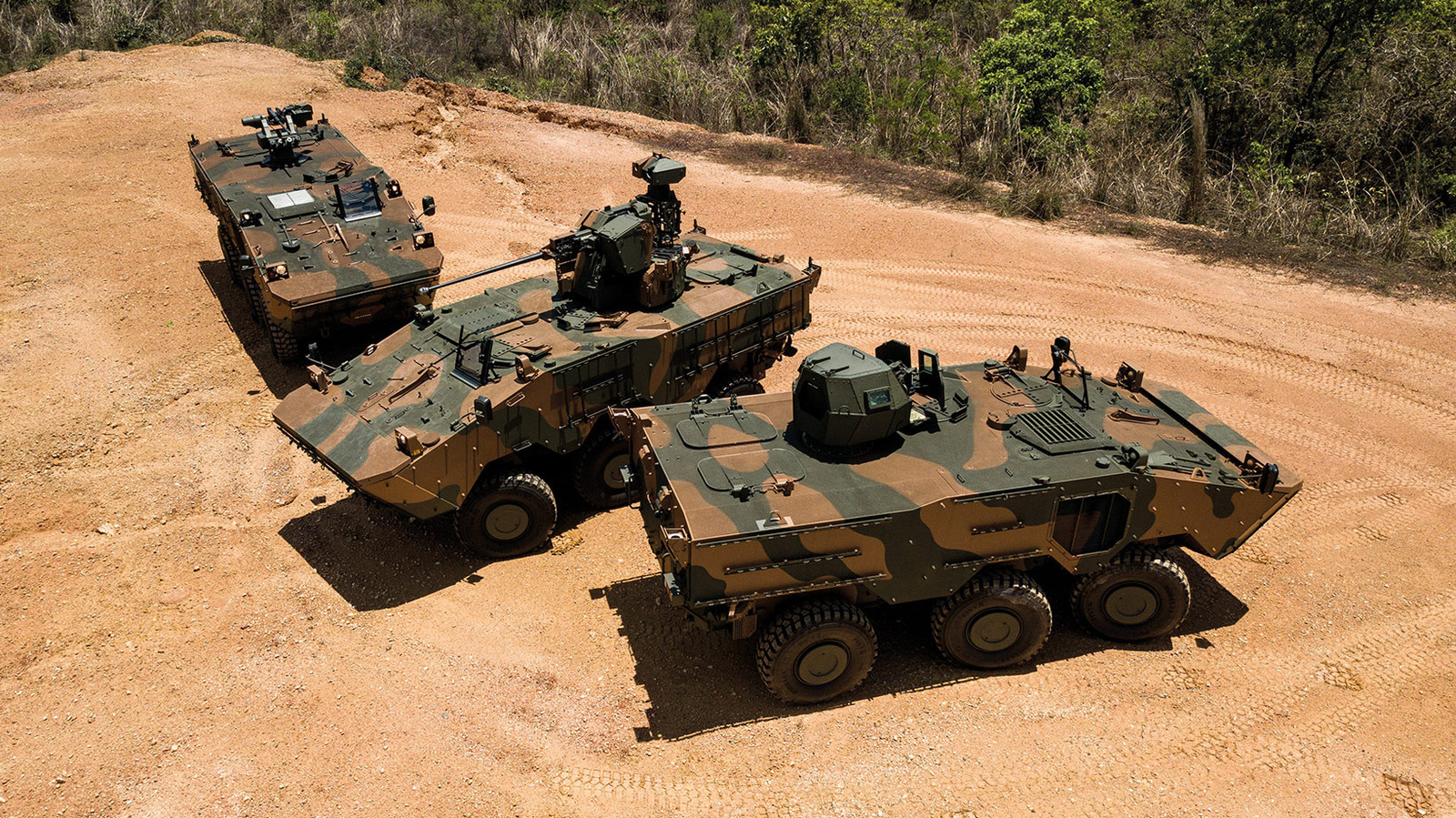
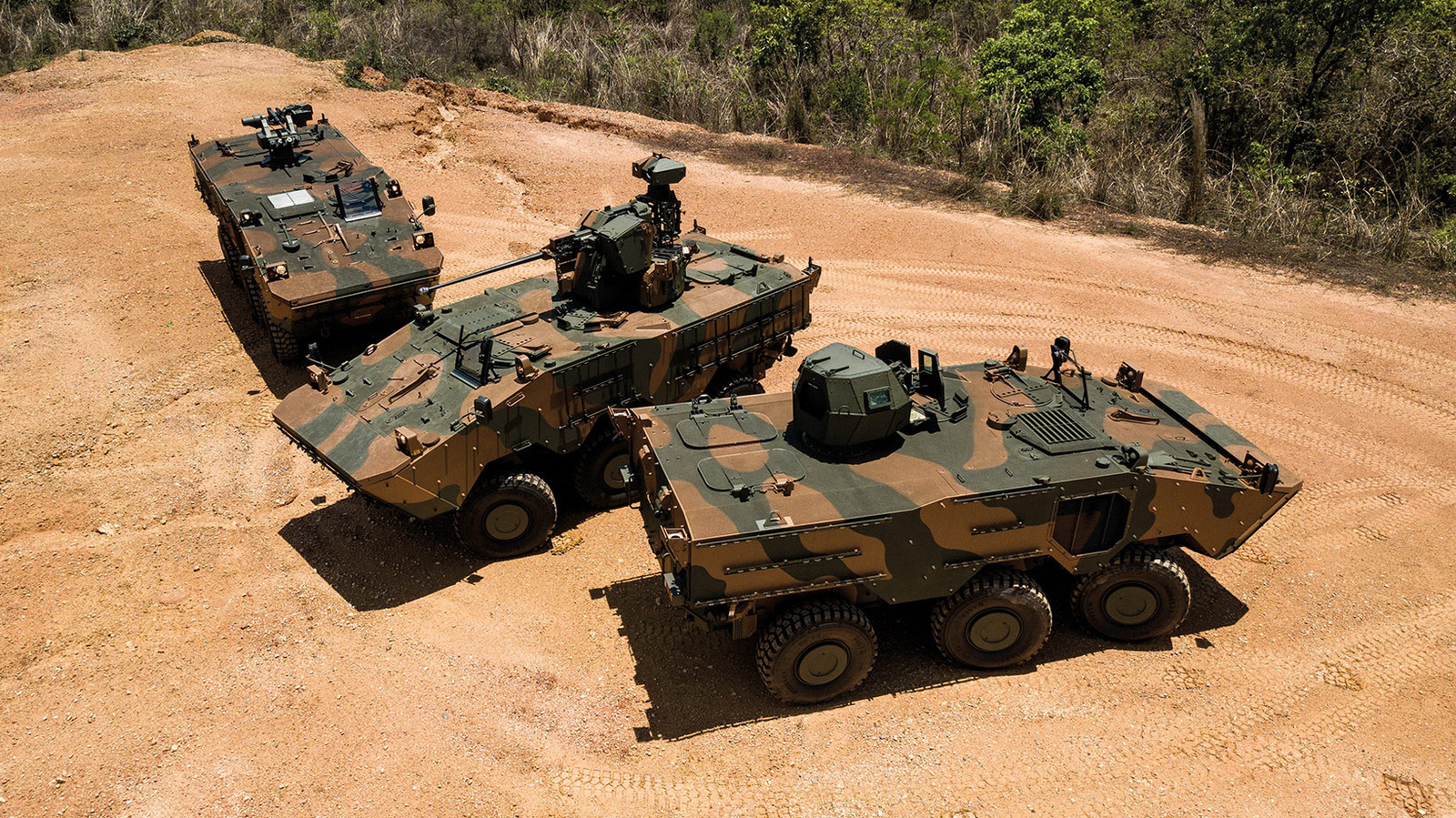
Enter the Guarani, a six-wheel drive amphibious armored vehicle made with the help of Italian company Iveco and the Brazilian Army. Like other amphibious military vehicles, the Guarani is huge. Empty, it weighs 33,069 pounds. When it’s loaded and set up for amphibious operations, it can weigh up to 42,990 pounds. It is also over 22-and-a-half feet long.

Advertisement

It’s primarily used as an armored personnel carrier and in that configuration, it can carry a crew of three alongside eight additional soldiers. However, Brazil and Iveco designed the Guarani so it can be modular. That not only means different weapons can be mounted, but it can also be used for search and rescue and a mobile command center. 

Advertisement

The Guarani is designed to go anywhere and do anything

Under the hood is an 8.7-liter turbo diesel inline-six that generates 375 horsepower. On land, that gives it a top speed of 56 miles per hour. In the water, through its pair of propellers, that speed drops a bit to just over 4 miles per hour. 

As far as armament. It can carry whatever is mounted to the roof turret. That includes a .50-caliber machine gun, a 7.62-millimeter machine gun, a 30-millimeter cannon, a 40-millimeter grenade launcher, or even an anti-aircraft weapons system made by Saab.

On the armor end, it’s made of steel and hardened to withstand mines of improvised explosive devices. Additionally, all that heft gives it strength to tow “vehicle of same class”-worth of weight, according to Iveco. Meaning, that if another Guarani gets in a jam, you can tow one out. Iveco also notes that it can be transported within the cargo bay of a C-130 Hercules cargo plane, or the Brazilian-made Embraer KC-390 Millennium.

Advertisement


Source link

Advertisement
Continue Reading

Tech

Brewing Espresso With Ultrasonic Assistance

Published

on

There are as almost as many kinds of coffee as there are of coffee drinkers, with each method for preparing the beverage appealing to a different kind of palate: moka pots, filter coffee, pour-over coffee, French presses, cold brews, espresso, and more produce their own unique flavours by extracting different compounds from the grounds to different degrees. Now, a new method has joined the throng: ultrasonic-assisted extraction, which can produce even an espresso at room temperature.

Espresso is normally made by forcing hot water through tightly-packed, finely-ground coffee beans, quickly producing a concentrated extraction. Its one of the hardest kinds of coffee to consistently make well, since the outcome is influenced by everything from grind size and packing density to temperature, pressure, and more. Ultrasonic agitation helps here by creating cavitation bubbles, which form shock waves as they collapse, breaking open the bean structure and producing small, strong jets of water. The experimental apparatus was built into a modified espresso machine. An ultrasonic transducer delivers vibrations to the basket containing the room-temperature slurry of coffee grounds for two or three minutes.

To quantify the results, the researchers analysed total dissolved solids, extraction yield, pH, colour, volatile components, and caffeine and chlorogenic acid contents. By varying ultrasonic power and grind size, the extraction yield and dissolved solids could be adjusted to closely match traditional espresso or cold-brew coffee. The other metrics had no significant differences, and a survey of 100 coffee drinkers found no preference between this and traditional espresso. When the drinkers tried the cold-brew coffees, they preferred the version made with ultrasonic assistance. The experiment succeeded in its goal of reducing energy consumption: the ultrasonic-assisted coffee took about a quarter as much power to make.

If you still prefer a more traditional approach, we’ve covered some beautiful espresso machines before, including one made out of motorcycle engine parts.

Advertisement

Source link

Continue Reading

Tech

Today’s NYT Mini Crossword Answers for June 22

Published

on

Looking for the most recent Mini Crossword answer? Click here for today’s Mini Crossword hints, as well as our daily answers and hints for The New York Times Wordle, Strands, Connections and Connections: Sports Edition puzzles.


Need some help with today’s Mini Crossword? Only one clue really threw me off, and that was 8-Across, but filling in the others solved that one, too. Read on for all the answers. And if you could use some hints and guidance for daily solving, check out our Mini Crossword tips.

If you’re looking for today’s Wordle, Connections, Connections: Sports Edition and Strands answers, you can visit CNET’s NYT puzzle hints page.

Advertisement

Read more: Tips and Tricks for Solving The New York Times Mini Crossword

Let’s get to those Mini Crossword clues and answers.

completed-nyt-mini-crossword-puzzle-for-june-22-2026.png

The completed NYT Mini Crossword puzzle for June 22, 2026.

Advertisement

NYT/Screenshot by CNET

Mini across clues and answers

1A clue: Like jerky and dried fruit
Answer: CHEWY

6A clue: Technology that Marconi introduced to the Vatican in 1931, in order to broadcast the pope’s blessings worldwide
Answer: RADIO

7A clue: Bring together as one
Answer: UNIFY

Advertisement

8A clue: Prefix with -path or -political
Answer: SOCIO

9A clue: Successful song
Answer: HIT

Mini down clues and answers

1D clue: Clobber
Answer: CRUSH

2D clue: Capital of Vietnam
Answer: HANOI

Advertisement

3D clue: Monarch’s official decree
Answer: EDICT

4D clue: In-flight “perk” that’s notoriously unstable
Answer: WIFI

5D clue: Toy on a string
Answer: YOYO

Advertisement

Source link

Continue Reading

Tech

Etzioni on AI: What the World Cup tells us about the best roles for humans and machines

Published

on

Pregame ceremonies in Seattle on June 19, 2026, before the U.S.-Australia World Cup Group D match. (GeekWire Photo / John Cook)

In soccer, a single blown offside call can decide who advances and who goes home. But what can you do? Referees are only human.

Well, the 2026 World Cup has put computer vision and AI on the officiating crew: video review, a sensor inside the ball, semi-automated offside calls, cameras bolted into every rafter. And the tech has already decided a goal.

On June 15 in Monterrey, Sweden were busy thrashing Tunisia when Mattias Svanberg came off the bench and scored with his first touch. The linesman’s flag shot up. Offside. The goal was gone, until it wasn’t. Video review handed it back, because the ball itself had registered a touch the human eye missed: a faint flick off Alexander Isak that reset the play and left Svanberg onside. Yet the cameras missed the flick. The sensor inside the ball caught it.

How does a ball overrule a linesman? Start with what FIFA has actually wired into the tournament. Sony’s Hawk-Eye underpins the video review, the goal-line decisions, the semi-automated offside system, and a “last touch” feature that settles who knocked the ball out for a corner.

Chenliang Xu, a computer-vision researcher at the University of Rochester, told the university’s news service it’s “a very sophisticated system that glues together multiple computer vision techniques.” Underneath, that means calibrated cameras, models trained to spot the ball and the players and their poses, and a thin layer of logic that decides when a human should take a look. 

Advertisement

Player and ball tracking run on neural networks trained on millions of labeled images, the same lineage of models behind face unlock and the perception stack in a self-driving car.

Xu compares the training to “teaching a child how to recognize things”: feed a model enough examples and it learns what matters. Sixteen cameras ring each stadium, because a single angle can be blocked or fooled, and many angles can be triangulated into a three-dimensional picture of the play. It works the way your eyes do.

“If you block one of your eyes,” Xu says, “it’s very hard to perceive depth.” Two eyes recover what one eye cannot. So do 16 cameras. The reconstruction lands in seconds, and a person signs off.

How is it so fast? The system is narrow. According to FIFA, the cameras throw off more than 150 million tracking points per match, more data than any all-purpose model could process in real time. The networks are tuned for one job, recognizing players and a ball, and stripped of everything else, which is precisely what makes them quick.

Advertisement

The narrowness is also a confession. The system measures the one thing a camera and a sensor can measure cleanly, a body’s position at the instant the ball is struck, and it stays out of the call that starts most arguments: whether an offside player was actually interfering with play. The machine gets the measurement. The referee keeps the judgment. A good reminder that currently AI is Assistive Intelligence, not more.

@media (max-width: 600px) {
aside.callout { float:none !important; max-width:100% !important; margin-left:0 !important; margin-right:0 !important; }
aside.callout .callout-img { display:none !important; }
}

But the quietest AI at this World Cup isn’t on the broadcast.

A torn hamstring can end a player’s World Cup, and a contender’s with it. Long before kickoff, clubs pour the data from GPS vests and motion sensors, the gear sold by firms like Catapult and Zone7, into models that flag when a player’s accumulated workload is bending toward injury, sometimes before the athlete feels a thing. It produces no spike on a graphic and no slow-motion replay. It produces a number that tells a coach to rest a hamstring for a day.

The cameras get the highlight, but the hamstring monitor keeps the players from being, well, hamstrung.

Advertisement

Source link

Continue Reading

Tech

Today’s NYT Connections: Sports Edition Hints, Answers for June 22 #637

Published

on

Looking for the most recent regular Connections answers? Click here for today’s Connections hints, as well as our daily answers and hints for The New York Times Mini Crossword, Wordle and Strands puzzles.


Are you watching the World Cup? Today’s Connections: Sports Edition includes one related category. If you’re struggling with the puzzle but still want to solve it, read on for hints and the answers.

Connections: Sports Edition is published by The Athletic, the subscription-based sports journalism site owned by The Times. It doesn’t appear in the NYT Games app, but it does in The Athletic’s own app. Or you can play it for free online.

Advertisement

Read more: NYT Connections: Sports Edition Puzzle Comes Out of Beta

Hints for today’s Connections: Sports Edition groups

Here are four hints for the groupings in today’s Connections: Sports Edition puzzle, ranked from the easiest yellow group to the tough (and sometimes bizarre) purple group.

Yellow group hint: Cape is another one.

Advertisement

Green group hint: Play ball!

Blue group hint: I’m taking my talents to South Beach.

Purple group hint: Neat on your feet.

Answers for today’s Connections: Sports Edition groups

Yellow group: First words of World Cup countries, in English.

Advertisement

Green group: MLB stadiums.

Blue group: LeBron-era Heat stars.

Purple group: Adidas shoes.

Read more: Wordle Cheat Sheet: Here Are the Most Popular Letters Used in English Words

Advertisement

What are today’s Connections: Sports Edition answers?

completed NYT Connections: Sports Edition puzzle for June 22, 2026

The completed NYT Connections: Sports Edition puzzle for June 22, 2026.

NYT/Screenshot by CNET

The yellow words in today’s Connections

The theme is first words of World Cup countries, in English.  The four answers are Bosnia, Ivory, South and United.

The green words in today’s Connections

The theme is MLB stadiums. The four answers are Comerica, Kauffman, Nationals and Wrigley.

Advertisement

The blue words in today’s Connections

The theme is  LeBron-era Heat stars. The four answers are  Allen, Bosh, James and Wade.

The purple words in today’s Connections

The theme is Adidas shoes. The four answers are Samba, Stan Smith, Superstar and Ultraboost.

Source link

Advertisement
Continue Reading

Tech

Someone Forked systemd Over Its New Birth Date Field

Published

on

The blog Linuxiac reports:
A new systemd fork has appeared with a specific purpose: removing systemd’s recently added support for storing a user’s birth date in JSON user records.

The fork, called Liberated systemd, published its first tagged release as v261 shortly after the official systemd 261 release. In other words, the fork follows upstream systemd while reverting the change that added the new optional birthDate field.

Importantly, this is not a new init system, a wider redesign of systemd, or a general-purpose alternative to the upstream project. Its stated purpose is to remain close to upstream systemd while removing what the author describes as “surveillance enablement”… The author recommends testing the fork in a virtual machine before using it on real hardware and warns nightly builds are more likely to be unstable than named releases.

Source link

Advertisement
Continue Reading

Tech

Toy Story 5 Is A Surprisingly Thoughtful Critique Of Technology

Published

on

After five films, digital technology has finally arrived in the cloth-and-plastic world of Toy Story. But the film, directed by franchise veteran Andrew Stanton and McKenna Grace, mostly avoids the easy trope of making technology inherently bad. Instead, it’s a disruptive force that can be either helpful or harmful, depending on how it’s used. The film makes the case that parents need to take a hands-on approach to help kids manage their gadgets, especially when it comes to managing screen time or dealing with bullying.

Slight spoilers ahead for Toy Story 5.

Toy Story 5 centers on Bonnie, a young girl struggling to make friends who was gifted Woody, Buzz and Andy’s other toys from the first three films. She’s the only kid in her neighborhood not using a Lilypad tablet — instead, she prefers to play the old fashioned way, by crafting scenarios purely out of her imagination. Her parents reluctantly decide to get her a Lilypad (played by Greta Lee) as a way to connect with other kids.

Like a McKinsey consultant storming into a quaint local business, Lilypad decides she knows the best way for Bonnie to make friends. The tablet sends friend requests to several girls Bonnie knows, and she miraculously gets an invite to a sleepover. But instead of playing together, all of the girls just zone out endlessly on their Lilypads, barely saying a word to each other. Those same girls later start bullying Bonnie for playing with older toys, which leads to Bonnie’s parents wisely disabling the Lilypad’s social network access.

Advertisement

It might seem crazy that parents even have to worry about social networking for 8-year-olds, but platforms like Zigazoo and JusTalk Kids already exist. They market themselves as safe spaces where kids can chat with close friends and family members, but there’s still room for awful social dynamics. Kids will be kids, and many of them are little jerks.

While Lilypad stumbles to help Bonnie connect, older toys like Cowgirl Jessie (Joan Cusack) also realize they’re out of touch with the way kids play today. When Jessie tries to sneak her way into Bonnie’s sleepover, she immediately becomes a source of shame.

Research shows a relationship between managing anxiety and imaginative play in kids, and Toy Story’s main cast make convenient messengers for that information. But the film surprised me by finding ways to make room for Lilypad and other new devices. A messageboard app on Lilypad helps Bonnie connect with Blaze, another young girl who still plays with toys the old fashioned way. Without Lilypad, they probably never would have met.

It’s hokey, but it works in the context of the film. And it’s also the reality parents have to live with today. Despite their potential harms, it’s helpful for kids to sometimes watch TV on the go. There are tons of educational games on iPadOS and Android, and both platforms also have a bevy of video chatting apps for staying in touch with friends and relatives. The key is moderation and parental supervision.

Toy Story 5 would be even more of an insightful critique if it made room for new types of play. Lilypad just has a few basic games for kids. But these days, any iPad can play Minecraft, a game that is appealing precisely because it so closely mirrors imaginative play. It’s also complex enough to grow with kids into adulthood, more so than the likes of Woodie and Buzz Lightyear.

Advertisement

Now that tablets have entered the world of Toy Story, it’s unclear where the franchise can go next. Pixar has already wrung the series’ core concept dry. We’ve explored the inner lives of toys, we’ve seen them wrestle with the meaning of their existence and they’ve even confronted death directly. (Toy Story 3 must have traumatized an entire generation.) Toy Story 5 isn’t nearly as essential as the original trilogy, but at least it’s a reminder to parents that they can’t just sit back and relax when it comes to tech.

Source link

Advertisement
Continue Reading

Tech

When A Favicon Becomes The Entire Website

Published

on

Putting hidden data in places where few expect it can be a fun hobby or even a professional career. In the case of [Tim Wehrle] it’s just the former. His most recent project in this area uses a favicon image for storing a HTML-based website and rendering its contents within the browser after the favicon has been downloaded.

To pull this off, a very basic HTML page was turned into a series of UTF-8 encoded bytes that were then declared to be a standard PNG image. The original 208 byte payload plus 4-byte PNG header only used part of a 9×9 pixel favicon. With a larger favicon image as typically used you could thus easily store more data, whether as visual noise like here or a bit more hidden.

Of course there’s a catch, and in this case it’s the Typescript code to unpack the bytes from the “image” and render them; you have to load that separately. But still, in these days of all-singing, all-dancing websites that take forever to render, it’s refreshing to see what you can do with so few bytes that they fit in a favicon.

As for the purpose of such an approach, that’s left as an exercise for the reader, but you’re more than welcome to take a poke at the GitHub project and the demonstration site..

Advertisement


Source link

Advertisement
Continue Reading

Tech

Apple’s new home product releases will stretch into 2028

Published

on

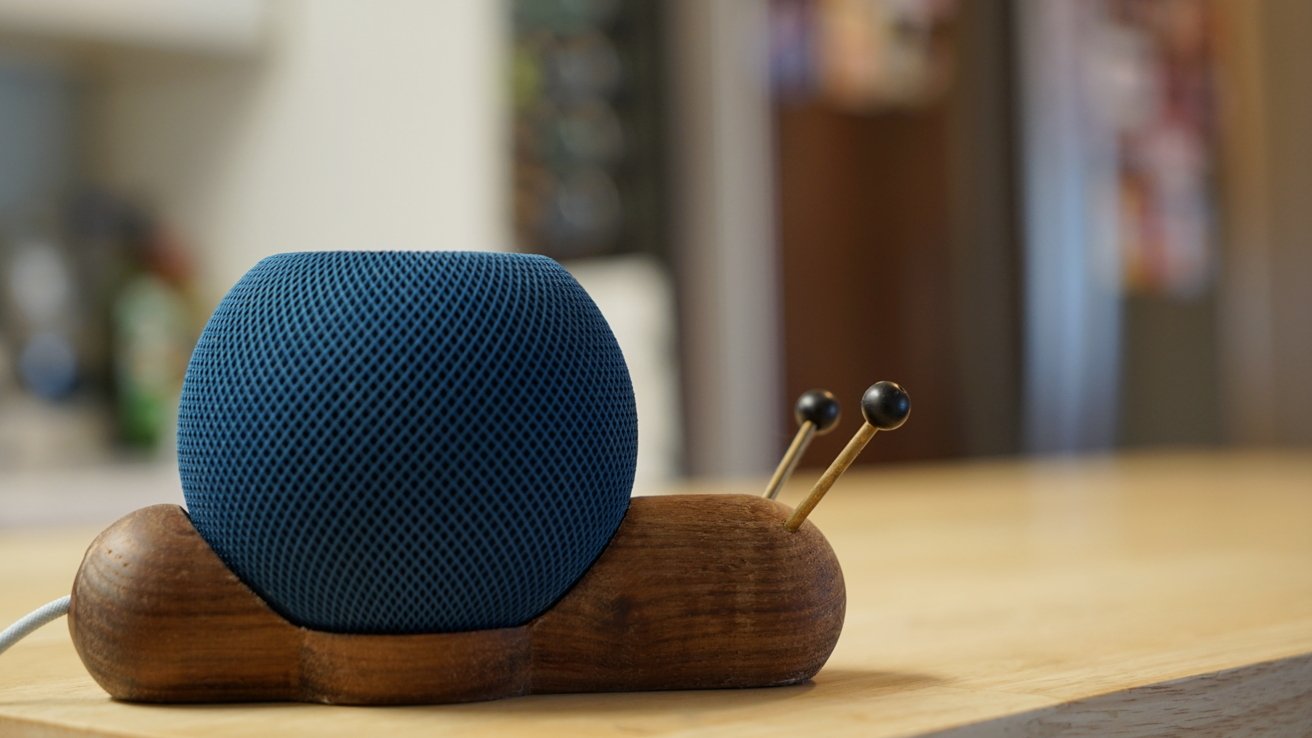
Apple’s home automation updates and new product roadmap powered by Siri AI will kick off in 2026 with HomePod and Apple TV updates, but if you’re excited for the robotic arm for a Home Hub, you’re going to be waiting a while.

It’s no secret that Apple’s new AI push will include several new products like the long-rumored Home Hub. However, the timing of some of those products’ releases remains in question.

According to the “Power On” newsletter from Bloomberg, the new Apple TV and HomePod mini could arrive at any time in 2026, while the robotic arm attachment for HomeHub won’t be ready for some time yet.

The Home Hub itself is expected in 2026 as well, which means an Apple Home-focused release cycle or event could occur in the fall. That device should launch as a standalone display that can be paired with various mounts like speakers, wall mounts, and articulating arms.

Advertisement

The new Apple TV is expected to support Apple Intelligence in some specific capacity and may have a new Siri Remote. The HomePod mini would also gain access to Siri AI, but that’s likely the only major feature of the product.

The robotic arm accessory for the Home Hub, which may include an upgraded AI-focused version of the tablet device, isn’t expected until 2027 or 2028. That device has always been more of a moonshot, with the Pixar Lamp-like device with a personality still in early testing.

It’s sure to be a busy hardware season for Apple given the three new iPhones, two new Apple Watches, and a slew of Macs expected by the end of the calendar year.

It’s not really a question of if these products are coming, but when. With everything else releasing, Apple will need to find time to reveal its new Home Hub product category and sell people on why the new Apple TV and HomePod mini are necessary.

Advertisement

The September keynote will already be packed as it is, and I don’t think these products will fit the “just drop a press release” model. My expectation is that there will be a lengthy Apple Home segment during a primarily Mac-focused keynote in October.

Source link

Advertisement
Continue Reading

Trending

Copyright © 2025