Connect with us
DAPA Banner
DAPA Coin
DAPA
COIN PAYMENT ASSET
PRIVACY · BLOCKDAG · HOMOMORPHIC ENCRYPTION · RUST
ElGamal Encrypted MINE DAPA
🚫 GENESIS SOLD OUT
DAPAPAY COMING

Tech

A Camera Viewfinder Makes A Great TV

Published

on

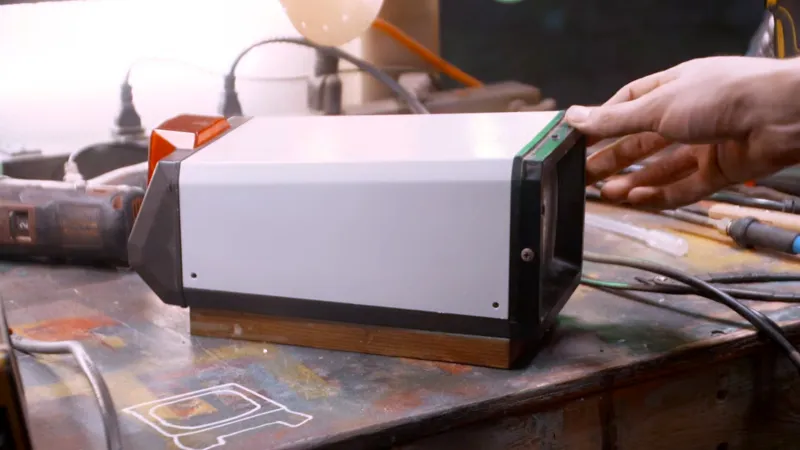
When we think of CRT camera viewfinders, most of us probably imagine the tiny CRTs you’d find in a 1980s camcorder. They’re super cute and a load of fun to play with, but they’re very much a consumer device. Professional cameras of the type you’d find in a studio had their own viewfinders, which were a lot closer to a small TV. They’re about as high quality as it gets for a monochrome CRT, and [Evan Monsma] has done the conversion to a general-purpose monitor.

On one side, this is a very straightforward hack, simply a case of tracing wires to identify the power and video pins. Given a tool battery, the monitor fires up and gives a super-sharp picture. What we like about this is the wooden base he’s made for the thing, at the same time rough-and-ready, and professional-looking from the outside. It has a routed space for the cables, and once mounted flush with the monitor base and given a bit of wood stain, it looks almost as though it was manufactured that way.

It’s likely most of us won’t find a broadcast viewfinder in the trash, instead settling at best for a little Chinese portable TV. But it’s still interesting to see these unusual devices. Perhaps it might make a good cyberdeck.

Advertisement

Thanks [Luis] for the tip!

Advertisement

Source link

Continue Reading
Click to comment

You must be logged in to post a comment Login

Leave a Reply

Tech

4-bit Relay Logic Counter Begs To Have Its Buttons Pushed

Published

on

What’s one to do with some nice little relays of questionable pinout, and prototyping board? How about a quietly clicky 4-bit counter using relay logic with tons of buttons?

The register with LEDs and buttons is on the top board, the incrementer on the bottom board.

[Agatha Mallett] made the counter after finding herself in possession of a quantity of relays burdened by terrible documentation (the datasheet shockingly lacks a pinout, and doesn’t even mention the coil being unidirectional). But since the relays are also small and of decent quality, they were a good candidate for a small relay logic-based project.

The key to the build is implementing D-type flip-flops using relays. This is done by holding the coil voltage of each relay between its set and release voltage levels. A small voltage bump will energize the coil, closing the relay and leaving it closed. Conversely, a small negative spike releases the coil, leaving it open. This forms the basis of the counter, and [Agatha] has a separate write-up all about the details of using relays in this way.

Implementing this was rather less straightforward than it may sound because it relies on balancing the coils of many relays on a figurative knife-edge of voltage, but not every component is perfectly identical. A tweaked resistor or capacitor here and there was needed before things settled into reliability.

Advertisement

The end product has indicator LEDs, buttons to increment or clear the current count, and it even has buttons to set or clear individual bits. This is a project that begs to be interacted with, and there’s a short video on the project page so you can watch it go through its paces.

Thanks to [Jess] for the tip!

Advertisement

Source link

Continue Reading

Tech

AMD’s Radeon RX 9070 GRE Graphics Card Is Now Available To Purchase

Published

on

AMD just released the Radeon RX 9070 GRE graphics card globally after it came out in China last year. The GRE stands for “Golden Rabbit Edition,” though sometimes it’s referred to as the “Great Radeon Edition.” This mid-range GPU costs $549.

The RX 9070 is designed to offer PC players a budget-friendly entry point into 1440p gaming. It features 12GB of video memory and full support for the company’s Fidelity FX Super Resolution 4.1 (FSR 4.1) upscaling technology. It was built on AMD’s RDNA 4 architecture, which features enhanced AI compute acceleration and next-gen ray tracing capabilities.

That leaves an opening in the market for AMD, as PC gamers still very much exist. The AMD Radeon RX 9070 GRE is an iterative refresh of the pre-existing Radeon 9070, which we called one of the “best midrange GPUs from AMD in years.”

It looks like a decent bit of kit for the money, and it’s always nice seeing graphics cards being sold to assist with gaming and not to exclusively train AI. NVIDIA isn’t quite as active in the gaming space since it started seeing all of that AI money. To that end, more than 90 percent of that company’s revenue comes from its data center segment.

Advertisement

Source link

Continue Reading

Tech

Apple’s spectacle plan aims to take over the glasses industry

Published

on

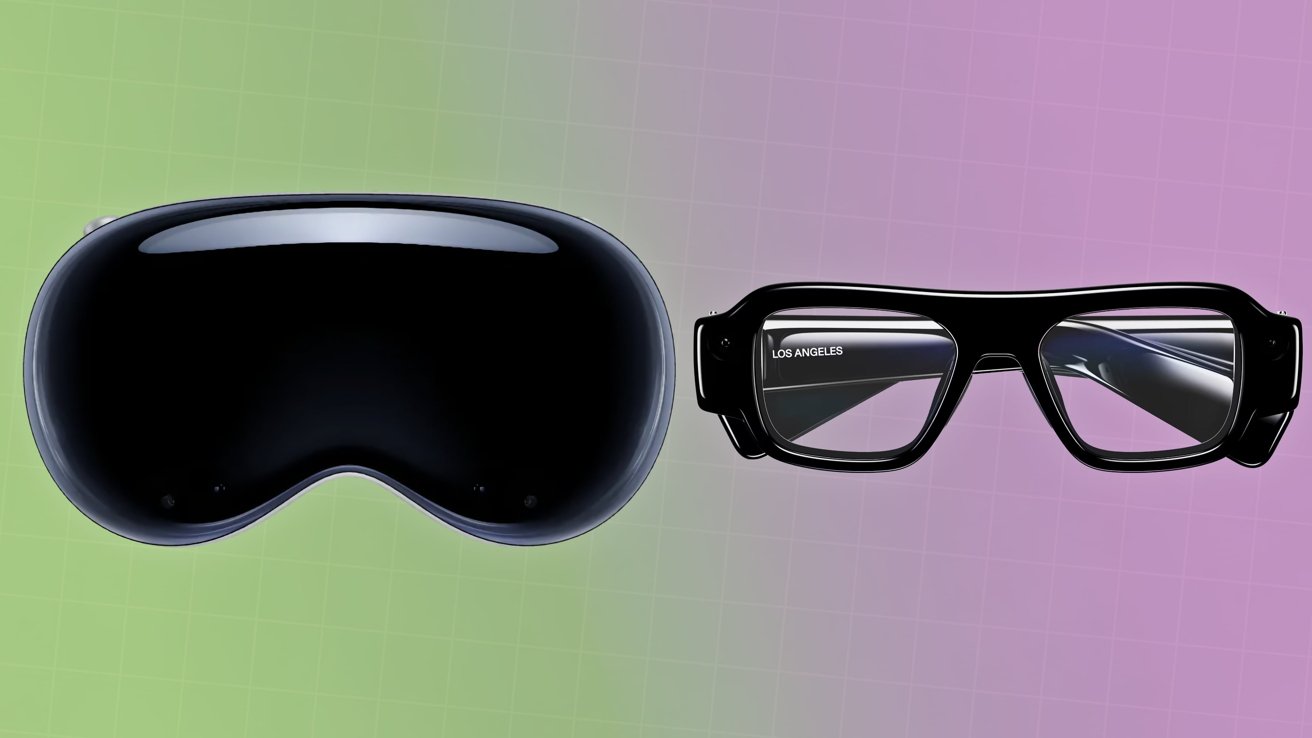
Apple’s initial plan for smart glasses is to take on just about every eyewear manufacturer, smart and not, with design and just a little bit of iPhone integration.

The whole Apple Glass endeavor has focused mainly on the still-far-off augmented reality smart glasses. However, with a second version without AR expected to arrive in 2026 or 2027, Apple is trying to break into the wider glasses market.

According to Mark Gurman in Sunday’s “Power On” newsletter for Bloomberg, Apple isn’t going to try and attract just those who want smart glasses. It’s instead attempting to take on the overall glasses market.

This involves competing against glasses made by EssilorLuxottica SA, which produces Ray-Ban, Oakley, Persol, and other fashion glasses. There’s also Safilo Group who make Tommy Holfiger and Hugo Boss glasses, and Warby Parker.

Advertisement
Smartphone screen showing connection and 100% battery for Wes's Apple Glass sunglasses, next to a larger illustration of the same black sunglasses on a blue background

Apple’s smart glasses should connect to iPhones

The field in Apple’s sights is the $200 to $500 segment, making it a mainstream play. However, there’s no guarantee that Apple will stick to that price range.

It’s a lucrative market to enter, too, with the eyewear market valued at around $200 billion per year, with hundreds of millions of spectacles sold annually.

To compete, Gurman was told that Apple will sell based on its strong brand, as well as its design pedigree. An integration with the iPhone will also be a big feature, which the company feels will drive sales from people replacing their glasses.

Advertisement

Echoes of Apple Watch

The approach may be familiar to those who watched the initial launch of the Apple Watch. Like glasses, the Apple Watch was entering a brand new field, and was aiming to take a chunk out of the market.

Just like the spectacles approach, Apple aimed to do so beyond providing just a smart watch. Apple counted on its own brand as well as the massive popularity of the iPhone to drive the Apple Watch forward.

It was also an approach that relied on Apple’s design teams to come up with an approachable timepiece. It also created a smart watch that went after the more mainstream end of the market, costing consumers a few hundred dollars to acquire.

However, Apple may have learned one lesson from the Apple Watch that it won’t be applying to the glasses.

Advertisement

The original Apple Watch also included a gold version, a high-priced model aimed at being high fashion. It was later replaced by a ceramic model, which later got axed.

While Apple will be using Apple Intelligence features from the connection to the iPhone, as well as its smart design, it won’t be going after the high-fashion glasses brands this time around.

Source link

Advertisement
Continue Reading

Tech

AMD Unveils The $329 Ryzen 7 7700X3D, Brings Back The 5800X3D For $349

Published

on

The latter could be a nice upgrade path for folks on AM4 builds.

Fortunately, not every gaming processor launch is a $900 flagship powerhouse. (In this economy?!) As the RAM shortage shifts PC building from an expensive hobby into an impossible luxury, this pair of new AMD processors will be a refreshing sight for many. At Computex 2026, the company announced two gamer-focused chips with 3D V-Cache — each with a sub-$350 price point.

First up, the Ryzen 7 7700X3D is a 3D V-Cache chip for the AM5 platform. (The company has pledged to support AM5 through 2029.) The 120W TDP, 8C/16T processor has 104 MB of total cache and a maximum boost speed of 4.5GHz. It should be a solid way to get X3D gaming performance without breaking the bank.

The new Ryzen 7 7700X3D arrives on July 16, priced at $329.

Advertisement

AMD also has a welcome surprise for those still on AM4 builds: the Ryzen 7 5800X3D (initially discontinued in 2024) is back, baby. The company is framing the re-launch as a 10th-anniversary edition to commemorate the AM4 platform’s decade-long run.

The 5800X3D was AMD’s first consumer processor with 3D V-Cache. The 8C/16T chip has 100 MB of total cache, a 4.5GHz boost clock, and a 105W TDP. If you’re still on an AM4 system, its return could be an opportunity to upgrade your rig without having to invest in a new motherboard and crazy-expensive DDR5 RAM. If we’re lucky, it might even be enough to get you through the shortage.

The Ryzen 7 5800X3D 10th Anniversary Edition will be available on June 25 for $349.

Advertisement

Source link

Continue Reading

Tech

New Apple TV and HomePod mini are apparently ready for a fall launch

Published

on

Apple’s smart home hardware lineup may finally be getting refreshed after years of relative silence. According to a new report from Mark Gurman, Apple is preparing updated versions of both the Apple TV set-top box and the HomePod mini, with launches currently planned for later this fall.

The timing is notable because Apple’s home-focused products have largely remained unchanged while rivals like Amazon and Google aggressively expanded their smart home ecosystems with AI-powered assistants and connected devices. Apple now appears ready to reposition its home products around the company’s next-generation Siri and Apple Intelligence strategy.

Apple’s smart home push is finally moving again

According to Bloomberg’s report, the new Apple TV hardware is essentially complete and nearly ready for release. Gurman says Apple had initially planned to launch the refreshed device earlier, but delays surrounding Siri and Apple Intelligence pushed the launch timeline further into 2026.

The updated Apple TV reportedly will not receive dramatic hardware changes externally, but internal upgrades are expected to be much more significant. Apple is said to be focusing heavily on AI readiness, including support for newer Siri capabilities and Apple Intelligence features that current Apple TV hardware cannot fully support.

Advertisement

One of the major expected upgrades is a newer chip replacing the aging A15 processor currently powering the Apple TV 4K. Gurman notes the existing model has started feeling slower compared to newer Apple hardware, making a refresh increasingly necessary.

The HomePod mini is also reportedly receiving an update, though Apple appears to be taking a more conservative approach with the smaller smart speaker. Bloomberg says the key change will involve support for Apple’s upgraded Siri and AI features through a newer wireless chip.

Apple’s broader smart home plans appear much larger than just these two devices. Gurman reports the company is still developing a delayed smart home hub featuring a display and facial recognition capabilities, alongside deeper AI integration across Apple’s ecosystem.

The company is also reportedly preparing AI-powered smart glasses and future Siri upgrades designed to function more like modern conversational AI assistants rather than traditional voice command systems.

Why this matters

Apple’s smart home ecosystem has increasingly felt stagnant compared to competitors. While Amazon Alexa and Google Assistant evolved into broader AI-powered ecosystems, Apple’s Siri and HomePod products struggled to keep pace.

Advertisement

The new Apple TV and HomePod mini appear to represent Apple’s attempt to rebuild its smart home strategy around AI rather than simply releasing incremental hardware updates. For users already invested in Apple’s ecosystem, the upgrades could also matter because many future Siri and Apple Intelligence features may rely on newer chips and updated hardware.

What happens next

Apple is expected to reveal more about its AI roadmap during WWDC and later software announcements tied to iOS 27 and iOS 28. If Bloomberg’s report proves accurate, the updated Apple TV and HomePod mini could launch sometime this fall alongside Apple’s broader AI-focused software rollout.

The bigger challenge for Apple, however, may not simply be releasing new hardware. It will need to convince users that Siri and Apple Intelligence are finally capable of competing in a smart home market that has already moved far ahead during Apple’s years of delay.

Source link

Advertisement
Continue Reading

Tech

Making sense of the debate over AI psychosis

Published

on

Box founder Aaron Levie got us talking this week with a social media post suggesting that tech CEOs are “uniquely prone to AI psychosis.”

On the latest episode of TechCrunch’s Equity podcast, Kirsten Korosec, Sean O’Kane, and I did our best to unpack Levie’s comment. For one thing, we noted that he isn’t disavowing AI tools, merely insisting that CEOs need to actually use those tools to understand them.

That’s a relatively gentle note of skepticism compared to other signs of a broader backlash, whether you look at graduating college students booing any mention of AI, the bad vibes around tech industry layoffs, or the apparent surge of installs at search engine DuckDuckGo after Google’s announcement that it’s bringing more AI to the search experience.

Kirsten suggested that Google faces a dilemma where it’s “chasing that thing it feels like it has to do to keep up, but it’s messing with the thing that people attach to the brand the most, and it’s not improving it.” More broadly, she wondered “if this anti-AI moment is an opportunity for startups or other areas of business.”

Advertisement

Keep reading for a preview of our conversations, edited for length and clarity.

Anthony Ha: AI is incredibly polarizing. And that’s part of what’s challenging to talk about, you can feel a little crazy because [simultaneously,] everybody’s using it and everybody loves it, but also no one’s using it and everybody hates it at the same time. There are large contingents for whom both of those things are true. 

On the user side, one thing that was very striking, we [already] talked about Google’s announcements about search and how AI is becoming a bigger part of search — although it’s been interesting to see how Google has tried to walk that back a little bit, or at least add some nuance in terms of, if you want that 10 blue links experience, there are still ways you can get it. It’s not going away entirely.

But I think a lot of people are not excited about the direction Google is going in. And so you see, for example, that DuckDuckGo said installs are up 30%, which is a huge leap. Now, of course, DuckDuckGo is a much, much smaller product than Google. I don’t think Google is in any immediate trouble, but I think that’s a sign that there is a very significant audience that does not like the current AI direction.

Advertisement

Sean O’Kane: I will say one thing that I keep looking for when I look at all of these leading AI labs or tech companies that are really pushing AI features and products — to me, there seems to just be this collapsing towards Anthropic’s approach, this idea of really trying to understand what it is you want to offer people and sticking to that.

And Google is one of the ones that I would say is actually still pushing the other direction. They’re trying to do a lot of different things, but they don’t do themselves any favors by being so vague about it.

What I mean by that is, when Google goes on stage at IO and talks about the way that it thinks it’s going to change search, so much of what they’re talking about, they’re talking about shopping or stuff that ends in a commercial transaction. And I think so much of what we think of Google as collectively, especially people who have been using it for two or three decades, is as an information retrieval system. 

Google can struggle with that a lot, where they get reactive fears of how they may be damaging the information retrieval side of things, and their response is, “Yeah, but that’ll still be there. Let’s focus on how it’s going to help you book a flight or something like that.” 

Advertisement

And then they also go off and sort of shoot themselves in the foot by releasing —  it must be very challenging to stress test these systems, but they go out and they release this stuff and they’re running into the same problems they’ve run into for years.

Kirsten Korosec: We had a great article that just published about how Google doesn’t know how to spell its own name. If you ask it, “How many P’s are in Google?” it says two. 

It’s this tension between: Google is chasing that thing it feels like it has to do to keep up, but it’s messing with the thing that people attach to the brand the most, and it’s not improving it.

What I’m wondering is, we’ve already seen some early evidence of people’s fingers doing the voting or walking for them, by literally going to another service. But I wonder if there are opportunities for other startups out there or culturally speaking, if this anti-AI moment is an opportunity for startups or other areas of business that we haven’t really thought about.

Advertisement

Anthony: Absolutely. Again, it’s probably a challenge because there is such a range of opinions. And if you build something that’s tailored for a group that’s skeptical [of] AI, then you’re probably going to alienate other users who are much more evangelistic or gung-ho about it. But I think that’s just the moment we’re living in.

And you can see in how DuckDuckGo is promoting itself, that they’re very much emphasizing this idea of being anti-AI, which I find very striking because I’ve mentioned before, [I’ve been] moving away from Google myself, trying out other search engines. And I would say that a year ago, when I started that exploration, even these alternative search engines were still trying to experiment with AI features, emphasizing AI to some degree because they also thought they had to do it.

And now I think they’re seeing that there is actually a lane to be like, “No, we just were not interested in that stuff at all. Or inasmuch as we’re doing it, we’re very much putting it in a separate sandbox that’s not going to affect your core search experience.”

Kirsten: I think we unfairly sometimes categorize all the tech CEOs as force-feeding people AI. And there’s at least one tech CEO who has come out and said, “I think that there’s a little bit of psychosis among other tech CEOs around AI.” 

Advertisement

I’m talking about Box founder Aaron Levie, who has come to Disrupt many times and is a friend of TechCrunch for sure. He made these comments about how CEOs are uniquely prone to AI psychosis because they’re sufficiently, and I’m reading this, “distant from the last mile of work that still has to happen to generate most value with AI.” 

I thought that was really interesting. And I’m wondering if there are other CEOs out there who agree with it. I also wonder, as part of that shift of thinking about what has to happen to generate the most value, if they’re also thinking about how their workforce is changing, which is our other topic today — [not] just about the AI divide, it’s also how AI is changing work. And we’ve seen, certainly, some of the bad news side of that, and that is a lot of layoffs.

But I think also, we’re seeing big changes in how people work. I’m wondering in the areas that you two cover, if you’re seeing evidence of that, because I don’t think it’s just in the quote unquote “AI startup sector” or the big tech companies.

Sean: As far as the companies that I cover, a lot of them tend to be working on, if not physical transportation, then stuff adjacent to it. And it’s seemed much slower there than it is, unsurprisingly, on the software side of things. 

Advertisement

We’re starting to see some of that changing. We’ve talked on the show a little bit about Mind Robotics, which is the spin out from Rivian CEO RJ Scaringe. And, you know, there’s certainly more AI being applied to physical infrastructure and manufacturing and robotics and self-driving.

I think the software side is where it’s really changing things, where you have people whose job is just directly tied to producing code.

Anthony: Part of the question, I think, [involves] both AI adoption in companies and then AI-driven layoffs — to what extent are they top down or bottom up? 

Because I think a lot of other transformations in the workforce in the last couple of decades have at least been, to some extent, bottom up: These are tools that people actually like to use, they bring them in, and then at a certain point, executives and IT managers accept that.

Advertisement

There is some sense that a lot of the [belief that there are going to be these] AI productivity gains seems to be embraced by the executives — or, if you’re at a startup, probably by the VCs who are funding you — who love this dream that you can have just a tiny team and be as effective as a company with a much larger team.

And I don’t think that that is necessarily impossible, but I think that Aaron’s point is essentially that if you’re not really touching any of the end work, how would you know? He’s also not somebody who’s saying we should just throw out all the AI tools, but he’s saying that you actually have to use these tools and understand what they’re doing. You can’t just look at a slide and be like, “Yes, incredible efficiency, let’s go.”

Kirsten: Well, I think there’s a lot of real evidence out there that these companies are using these tools, and it is directly affecting workers in the form of layoffs, and also the way that they work. The two truths are accurate here.

When you purchase through links in our articles, we may earn a small commission. This doesn’t affect our editorial independence.

Advertisement

Source link

Continue Reading

Tech

Something Made Earth’s Molten Core Reverse Direction In 2010

Published

on

ScienceAlert reports:
In the molten ocean of iron churning in Earth’s outer core, a section deep beneath the Pacific Ocean suddenly reversed direction and started moving eastward against the planet’s usual westward flow. This happened in 2010, according to satellite measurements of Earth’s magnetic field, and scientists are still trying to figure out what caused it… [I]t seemed to have a large, wave-like structure — as though a chunk of molten core material suddenly thought better of where it wanted to go, surging in the other direction… This finding suggests that there are processes that can influence it strongly enough to alter its behavior in bulk — and that our planet’s interior may be more dynamic and variable than we thought.
A new analysis captures what we know so far — and

“It’s from the roiling, molten, conducting metal at Earth’s heart that the planetary magnetic field is generated… vital to our continued existence. It helps keep the atmosphere we breathe in and harmful cosmic radiation out.”

Source link

Advertisement
Continue Reading

Tech

Off-Grid OCR Server Powered By IPhone

Published

on

Running an optical character recognition (OCR) server might sound like it would need some powerful hardware, like a rack-mounted, water-cooled machine, or at least a nice desktop or laptop. But if you have the time, anything could be used. [Hemant] has a long-running personal project that processes a lot of image data over a long time, and set up the OCR server on an iPhone 8 running entirely with solar power, rather than turn to more typical hardware.

Part of what makes this task feasible for low-powered hardware is Apple’s Vision framework, which uses machine learning to aid in things like character recognition (among other tasks). It will run on an iPhone just as easily as a Mac. The phone’s built-in battery already provides the first step of an off-grid setup. This build relies on a separate power bank to integrate the phone with the solar panel more easily. On the software side, [Hemant] reports that the true challenge wasn’t setting up the server as much as it was keeping the iPhone from sleeping or stopping his program from running full-time.

A system like this running off-grid, especially considering the costs of the solar panel and power bank, might seem counterproductive. But when comparing electricity costs for running the same software on his server, he estimates he saves about $10 per month with this setup, which has a payback of somewhere around 2-3 years. Not too bad for a phone that would have otherwise ended up in a landfill. Old phones can be surprisingly good choices for servers, too. It helps if they can run Linux, but plenty of phones will support server applications, even when running their native OS.

Advertisement

Source link

Advertisement
Continue Reading

Tech

Regular vs. Smart Thermostats: Everything You Wanted to Know

Published

on

At CNET, we’ve been testing smart thermostats for years, so it’s always a little surprising to hear, “What’s a smart thermostat?” But only a fraction of American households, around 17%, actually use smart thermostats. That’s too bad, because they’re one of my favorite smart home innovations, and offer handy advantages for almost everyone

So, what’s the difference, aside from flashy new touchscreen designs? I’ll take you through what’s new with these thermostats and how your heating and cooling will never be the same (neither will your energy bills).

Scheduled heating and cooling

Advertisement
A woman reaches to an Ecobee Essential thermostat on a white wall.

Thermostats like Ecobee’s allow for easier scheduling from a distance.

Ecobee

Both smart and traditional thermostats have programmable settings, letting you set temperature thresholds for specific hours and specific days of the week, and changing them as seasons change. The biggest difference is that smart thermostats make this much easier.

With old programmable thermostats, you’re mostly stuck doing programming with the thermostats’ manual controls. Smart thermostats allow you to set schedules from the app, no matter where you are, and you can usually save and switch between schedules on the fly, making the process significantly smoother.

Read more: Don’t Put Your Thermostat In These Places

Advertisement

Costs 

You can find a standard programmable thermostat without any bells and whistles for under $20 from brands like Honeywell Home (although those with fancy touchscreens will cost more), so they’re an easy way to save money if you need a replacement. Smart thermostats, with all their added features, cost significantly more. Amazon has one of the cheapest for under $100, but for something like Nest’s 4th-gen Learning Thermostat, you’ll have to pay close to $300.

Honeywell Home thermostat on a white wall in front of a kitchen.

If you’re worried about initial costs, regular thermostats cost a whole lot less than smart thermostats.

Honeywell Home

Energy savings

Programmable thermostats will save you money, as long as you stay within strict temperature settings at certain times of day and night. Smart thermostats don’t necessarily save more, but they make saving money so much easier that houses tend to save more as a result, since very few users have time to constantly adjust a standard thermostat for maximum savings.

Advertisement

With settings like eco modes and monthly reports on energy savings, smart thermostats tend to save the average household significant amounts of money. Google Nest studies have estimated the average user saves around 15% on energy bills annually, while Ecobee says users can save up to 26% at the high end. That’s easily enough to cover the initial costs of a smart thermostat in a year or two.

Some smart thermostats are very pretty, but its their control options that matter.

Google Nest

Remote operation

A regular thermostat doesn’t have app connections and will, at most, have a remote control you can use from across the house. Smart thermostats, meanwhile, have Wi-Fi connections and apps. That means that as long as you have your phone and a connection, you can make thermostat changes.

Advertisement

For some people, this is an important feature — they can adjust the temperature while on vacation or if they forget while away from home. Others are fine making changes only when they’re at home.

Automatic learning and adjusting

A regular thermostat will heat or cool your home exactly when and how you tell it to. So will a smart thermostat — unless you enable its smarter features. Smart thermostats include learning algorithms and sensors that study activity in the house, like when people get up in the morning and start moving around.

With basic data like this, smart thermostats can start making adjustments about when to raise the heat or start cooling off, and when to hold back because there’s no one at home. Essentially, they can schedule themselves and respond to significant changes in habits.

Also, many new smart thermostats come with satellite sensors that you can place in specific rooms that traditional thermostats may not be able to “read” very well, increasing their temp-sensing accuracy. 

Advertisement
Ecobee's thermostat and sensor side by side.

Ecobee’s thermostat with its sensor.

Ecobee

Energy savings

Programmable thermostats will save you money, as long as you stay within strict temperature settings at certain times of day and night. Smart thermostats don’t necessarily save more, but they make saving money so much easier that houses tend to save more as a result, since very few users have time to constantly adjust a standard thermostat for maximum savings.

With settings like eco modes and monthly reports on energy savings, smart thermostats tend to save the average household significant amounts of money. Google Nest studies have estimated the average user saves around 15% on energy bills annually, while Ecobee says users can save up to 26% at the high end. That’s easily enough to cover the initial costs of a smart thermostat in a year or two.

Advertisement

Installation

Both smart and standard thermostats are installed the same way — by connecting various wires to the thermostat’s base plate. Both offer professional installation services as well, so there’s not much difference here.

The biggest difference is that smart thermostats won’t work as well with every home system. For example, smart thermostats won’t make a huge difference if you use radiant floor heating as your primary heat source (it’s slower to respond and doesn’t affect thermostat sensors the same way), so you may as well save money with a simpler thermostat.

A Nest thermostat sensor sitting on a white table with a temperature illustration above it.

Thermostat sensors can go anywhere to monitor specific temperatures.

Advertisement

Google Nest

Connections to other devices

Smart thermostats can often connect to other smart home technology, including security hubs and customized triggers, through platforms like IFTTT or Controller for HomeKit. Since smart thermostats tend to have extra sensors for humidity or air quality, they can trigger things like air purifiers, fans, dehumidifiers and more. Some smart thermostats even come with built-in voice assistants, while most at least support voice assistant control through Alexa, Google’s voice assistant and more.

Regular thermostats don’t have any of these connections, so you can’t usually connect them to home routines or set temperature triggers for other devices.

ecobee-siri-oct-12

Many smart thermostats can work with voice assistants too.

Advertisement

Ecobee

Bottom line

Smart thermostats make saving money much easier than regular thermostats and come with plenty of extra bells and whistles, including opportunities to connect them to voice assistants and other smart home devices. They’re also sleek, smart devices that display personalized info about your home and weather, while learning your habits and automatically adjusting heating or cooling — no micromanagement needed. Plus, unlike regular thermostats, you can control them from anywhere.

In return, the big drawback of smart thermostats is that they cost a whole lot more than a regular thermostat replacement would, although they do tend to pay for themselves within a year or two. However, not everyone is comfortable using an app for scheduling or letting a smart thermostat make changes itself, so some users may find themselves uncomfortable with the change.

Ready to learn even more? See our guide on the best settings to use on your smart thermostat for the season, the easiest steps to save on heating and cooling bills, and the best smart home devices overall. 

Advertisement

Source link

Continue Reading

Tech

Etzioni on AI: Wall Street is quietly betting on AI to beat inflation

Published

on

(BigStock Illustration)

How can the U.S. bond market, where the world’s smartest money lives, reconcile $36 trillion in national debt with less than 2.5% expected annual inflation over the next decade? The answer may consist of two letters: A and I.

Four forces are pushing inflation up:

  • The debt keeps growing as a fraction of GDP and neither political party has a credible plan to contain it.
  • The AI buildout is consuming gigawatts, transformers, and copper faster than the grid can supply them.
  • The Iran war has sent oil prices to a four-year high and pushed April inflation to 3.8%.
  • And we have a president who announces tariffs at breakfast and rescinds them by lunch.

Any one of these should put inflation back on the front burner. Taken together they are alarming.

Look at the chart. The red line is the national debt. It tripled. From 35% of the size of the economy to 100% in 20 years. The green line is what the bond market expects inflation to be. It went from 2.4% to 2.45%. Not a typo. A mere 20 basis points over 20 years.

The bond market has been telling the same inflation story since George W. Bush’s second term. Through three presidents, two financial crises, a pandemic, and the highest inflation in 40 years.

For most of those 20 years, four forces did the anti-inflationary work. The Federal Reserve earned its credibility crushing inflation in the 1980s and defended it every time since. Globalization sent cheap goods from China and cheap labor from everywhere, and that quietly held down prices. The country was aging, which dampens demand. And foreign central banks bought our debt no matter what, putting a floor under the bond market.

Advertisement

Here’s the problem: every one of those four forces is weaker now than it was a decade ago.

The Fed is under more political pressure than at any point since Nixon leaned on Arthur Burns in the early 1970s. Kevin Warsh was recently sworn in as Fed chair after the most divisive Senate vote in the institution’s history.

Globalization is going the other way. Tariffs are up, companies are bringing production home, and the U.S. and China are pulling apart economically. The old direction held prices down. The new direction pushes them up.

Aging is happening more slowly here than abroad, and restricted immigration is tightening the labor market further. Meanwhile, foreign demand for our debt is fading as China and the Gulf states quietly diversify away from dollars.

Advertisement

Four pillars, all cracking at the same time. Enough that you’d expect bond traders to notice. Enough that they should be demanding more inflation compensation than they used to.

Yet they aren’t. The green line hasn’t moved. The bond market is still pricing in about 2.45% inflation over the next 10 years. Roughly the average of the last 30 years. The professionals are barely flinching. Is the market missing something? Or, perhaps, the market is betting on AI.

Not on Sam Altman, not on Nvidia’s next earnings report, not on whether ChatGPT can write your kid’s college essay, but on productivity. On the idea that AI will deliver more output from the same labor, lower costs across the economy. A shift big enough to absorb the fiscal mess and keep prices anchored. That’s the bet baked into the green line. Whether you’ve thought about it that way or not, you’re either riding it or fading it.

Is the AI bet a good one?

Advertisement

The case for the market being right is straightforward. AI substitutes compute for labor in exactly the white-collar service sectors that have been driving inflation: customer support, basic coding, radiology, drug discovery, the entire knowledge-worker middle. Each of those becomes cheaper and faster.

Do the arithmetic: one extra point of annual productivity growth over a decade gives you an economy that’s roughly 10% larger. The debt stabilizes as a share of GDP without austerity. And here’s the kicker: this is the only story big enough to plausibly replace all four of those pillars all at once. If AI works, the anchor holds. If it doesn’t, nothing else is big enough.

The case for the bet going wrong is also strong. The productivity payoff is the back half of the trade. The front half, what we’re living through right now, as I wrote recently in the column about AI capital spending, is inflationary as hell. Data centers eating gigawatts, three-year waits for transformers, electricians making six figures, power prices climbing in every region hosting compute. The bill comes first. The payoff comes later. Maybe.

Productivity gains take longer than anyone expects. The personal computer was on every desk by 1990. The productivity gains didn’t show up in the data until 1995. In 1987, the economist Robert Solow joked that you could see computers everywhere except in the productivity statistics. The same is true of AI today. It’s in every newsroom, every earnings call, and almost nowhere in the productivity data. So far.

Advertisement

Stanford economist Erik Brynjolfsson argued in the Financial Times in February that the fog may finally be lifting. The 2025 jobs numbers were revised down by 403,000 while Q4 GDP grew 3.7%: output up, labor flat, which is the definition of productivity gain. His estimate: 2.7% in 2025, nearly double the prior decade’s 1.4% trend. If he’s right, the harvest phase has started.

AI doesn’t settle the inflation question. It widens the range of plausible outcomes. If AI works, the productivity gains absorb the debt and inflation stays anchored. If it doesn’t, the other pressures take over. A weakening Fed. Reversing trade. Bigger deficits. All pushing prices up simultaneously.

The bond market has made its choice. It isn’t betting on the Fed. It’s betting on the GPUs. The professionals are betting that AI will save us from the debt.

So what should an investor do?

Advertisement

If you believe AI will deliver the productivity miracle the bond market is pricing in, regular Treasury bonds are fine. You’ll out-earn inflation-protected Treasuries (TIPS) by half a percent to a percent per year and pocket the difference. If you don’t fully believe it, TIPS at a real yield of about 2% above inflation are cheap insurance. You give up a little expected return, and you sleep better at night. 

If you can’t decide, and honestly who can, own some of each. A 50/50 split hedges your bet and protects you from being completely wrong in either direction.

And isn’t hedging what bond investing is all about?

Source link

Advertisement
Continue Reading

Trending

Copyright © 2025