Connect with us
DAPA Banner
DAPA Coin
DAPA
COIN PAYMENT ASSET
PRIVACY · BLOCKDAG · HOMOMORPHIC ENCRYPTION · RUST
ElGamal Encrypted MINE DAPA
🚫 GENESIS SOLD OUT
DAPAPAY COMING

Tech

A Court Has Ruled That Google Is Liable for False Statements Generated by AI Overviews

Published

on

A local court in Germany has issued a ruling that could reshape the operation of search engines and artificial-intelligence-based chatbots worldwide. The Munich Regional Court preliminarily ruled that Google is liable for a series of false statements generated by its AI Overviews feature, requiring the company to prevent the dissemination of erroneous or inaccurate claims through its search engine.

The ruling stems from a case first reported by the Decoder, in which two publishers discovered that Google’s AI-generated summaries linked them, in certain searches, to questionable business practices, scams, and subscription-related frauds, without any basis for doing so.

Earlier this year, the affected companies sent the tech giant a cease-and-desist letter, according to the report. Google denied liability, arguing that its automatic summary feature warns users that the information may contain errors and should be independently verified.

The court’s analysis concluded that Google’s AI combined information corresponding to other companies that had been flagged for possible illicit practices with data from the plaintiffs, generating associations that did not appear in any of the sources linked by the search engine.

Advertisement

The authorities found that, unlike traditional search engines, which merely display lists of links with statements made by third parties, Google’s tool produced “independent, new, and substantial statements” based on a misinterpretation of information available on the internet.

According to the court, correcting misinformation is not the responsibility of third parties. Google is the only entity with the ability to modify the technology underpinning its AI-generated summaries and, therefore, “must be held accountable.” Furthermore, the court found that Google’s line of defense lacked merit, since the challenged summary “contains statements that do not appear at all in the search results.

A New (and Forceful) Interpretation of AI on the Web

The court’s interpretation of AI’s role in presenting search results could make this case a historic precedent. It finds a large tech company responsible for the influence of its most advanced developments on widely used platforms.

Until now, in most legal systems, search engines have been considered tools that merely facilitate access to content created by third parties and available on the web. This status has afforded them a certain level of protection when the published information is false, inaccurate, misleading, or even defamatory.

Advertisement

However, the German court held that this safeguard no longer applies when search engines incorporate generative AI systems. According to its reasoning, this technology is capable of producing nonexistent claims based on multiple sources and, consequently, the companies responsible for operating it must assume liability for the resulting content.

The judges also concluded that while Google encourages users to verify information due to the potential for hallucinations inherent in AI models, this warning does not absolve the content distributor of liability. Otherwise, they argued, victims of false statements would be virtually defenseless, since the original sources never made those statements and, therefore, could not be subject to legal action.

Likewise, the court held that results generated by an AI system cannot be protected under the principles of free speech, as they are the product of an algorithm designed, trained, and managed by a company, and not the expression of an individual opinion.

As a precautionary measure to prevent possible recurrence, the ruling required Google to remove a large portion of the statements deemed defamatory in this case, and to cover 80 percent of the legal costs arising from the proceedings.

Advertisement

A company spokesperson, quoted by Ars Technica, suggested that the decision could be appealed. “We invest deeply in the quality of AI Overviews to ensure that the overwhelming majority of responses provide accurate information, and they are designed to reflect the information that exists on the web,” the statement says. “We’re carefully reviewing this decision, which is not yet final.”

Source link

Continue Reading
Click to comment

You must be logged in to post a comment Login

Leave a Reply

Tech

I Tell My Students Writing Is Hard. I Still Ask Them to Do It Any

Published

on

My life has changed so much since my time as a Voices of Change fellow during the 2023 school year. As I wrote in my final essay of the fellowship, the beautiful, imperfect school I loved and helped build had closed. With the support of my fellowship editor, Cobretti Williams, I applied and was admitted to the Creative Writing Workshop at the University of New Orleans, where I am taking graduate classes and teaching a freshman English composition course.

In deciding what to write as a reflection on my time since the fellowship, I started three different essays and hated all of them. I did a lot of cursing, went on a couple of brooding walks and wondered why I agreed to write this in the first place. During the similarly maddening process of designing the syllabus for the first college course I taught, I took a break to write my students a letter. Here is an excerpt:

Before we start this course together, it’s important for me to name something foundational to how I approach teaching it: Writing is hard for everyone. I love writing and I believe that, if I keep practicing, I can become great at it… and I still hate doing it a lot of the time. This is why writing is so important. Almost everything we want is on the other side of making ourselves do things we don’t want to do. When we sit down to write, whether we want to or not, and we keep writing when we hit that initial point where we want to stop, and continue when those moments arise again and again like waves, we are getting vital practice. This skill, ignoring the complacent you, the you that would rather do the thing tomorrow, or tomorrow’s tomorrow, and doing the thing now instead is an act of becoming the you that has the things you want. Like anything else, this becomes easier the more you do it.

This excerpt reminds me that writing is much more difficult than most of the things we do in a world that commodifies ease and comfort, upholds them as desirable and makes us feel we are entitled to them while simultaneously less and less able to tolerate their lack.

There is a common misconception that my students come to me with that manifests most often in the statement “I don’t know what to write.” They think this means they are not ready to begin, because they believe that writing is putting what you already know onto paper. I understand why this misconception exists. So often in life, we only see finished products. The published novel, the final cut, the social media post depicting the outcome and not the process and the struggle. It’s easy to think that everyone else has things figured out, that what you see is how something was from the beginning. This can trick us into believing that if something isn’t good right away, we should abandon it. Drafting insists that we try before we feel sure, finish something even if it is not yet “good.” Revision insists that what we have can be something different, something better, and teaches us to hold multiple things in our heads at the same time. Throughout this process, we gain clarity.

Advertisement

Each time we give or receive feedback and assess whether it moves us closer to or further from our vision, we get better at articulating what we want and closer to achieving it. When teachers and students do this work together and commit to improvement, even when we both have moments of uncertainty about what to do next, we are practicing true collaboration. We both grow. What a way to become more skillful at building the world we want.

It is a strange time to be devoting so much of my life to writing, to be telling students that they should care about writing too. Just this week, an article came out detailing pervasive, undisclosed AI use to grade and give feedback to student writing in some New Orleans schools. A study conducted in May of 2025 showed that 84 percent of high school students used generative AI to complete their school work. I understand intimately the overwhelm of educators and students, and the temporary relief that cognitive offloading with AI can provide.

However, what we lose in the long term by not engaging deeply in the writing process, the practice of giving and receiving feedback, of watching revision unfold, is so much greater than the gains we feel in accepting AI’s “help” in our moments of overwhelm. What world are we building when we delegate the human work of communication through writing to machines? We would do better to engage in a process of re-evaluating our priorities, taking on fewer assignments for longer and working collaboratively as educators and administrators to redesign curricula and systems so that teachers have the capacity to get to know their students through repeated contact with their written work.

Sometimes, it feels like we are already living in a completely different world from the one in which I grew up and was educated. Luckily, these times, despite how often folks like to say they are not, are precedented. In these times, I have been turning to Black women writers like Toni Morrison, Toni Cade Bambara, Audre Lorde and June Jordan for guidance, and they all insist writing only becomes more urgent the more dire the times. In facing what Toni Morrison described in 2004 as “a burgeoning ménage a trois of political interests, corporate interests and military interests” working to “literally annihilate an inhabitable, humane future,” I have been especially steeled by Audre Lorde’s words, “In this way alone we can survive, by taking part in a process of life that is creative and continuing, that is growth.”

Advertisement

In the face of a world that would automate us right out of existence, I intend for us to survive, and so I insist we write.

This story is part of an EdSurge series chronicling diverse educator experiences. These stories are made publicly available with support from the Chan Zuckerberg Initiative. EdSurge maintains editorial control over all content. (Read our ethics statement here.) This work is licensed under a CC BY-NC-ND 4.0.

katie wills evans is a poet, writer, educator, and graduate student at the University of New Orleans.

Source link

Advertisement
Continue Reading

Tech

Microsoft may consider Xbox spin-off or joint venture as console business struggles

Published

on

Looking ahead: Since taking over Xbox earlier this year, Asha Sharma and Matt Booty have hinted at radical changes in the coming weeks to turn Microsoft’s struggling game console business around. New reports indicate that little is off the table, including steps that could lead to a sale of the division.

People familiar with the matter told The Information that Microsoft executives have not ruled out restructuring Xbox as a wholly owned subsidiary or even a joint venture. Although no such plans are currently in place, they remain a possibility.

If doing so would turn Xbox’s fortunes around, Microsoft could reorganize the division into something resembling its other subsidiaries, such as LinkedIn and GitHub. The tech giant could also find a partner to run Xbox as a joint venture or spin the division out. As the news spread, former PlayStation CEO Shuhei Yoshida rather pessimistically predicted that Xbox would “dissolve” into Windows, possibly referencing Microsoft’s plans for the next Xbox console, codenamed Helix, to support PC games.

Asha Sharma has promised a dramatic change of course since becoming the new Xbox CEO in February. So far, that has included included turning away from multiplatform game releases and lowering the cost of Microsoft’s Game Pass subscription service.

Advertisement

In a recent memo, Sharma hinted at more big changes on the horizon, which could include significant layoffs to help control costs. Chief Strategy Officer Matthew Ball also recently floated the idea of using in-game ads to help offset costs. Spending tens of billions of dollars on game studios and content over the past several years has not lifted Xbox console sales, the division’s profitability is falling, and the gaming industry at large currently faces skyrocketing memory costs.

Despite the challenges, Microsoft CEO Satya Nadella and CFO Amy Hood have given Sharma the green light to increase spending to expedite the development of major franchises such as Halo, Fallout, and The Elder Scrolls. While another Xbox titan, Gears of War, is receiving a prequel later this year, Halo, Fallout, and The Elder Scrolls have not seen significant new releases in several years.

Microsoft is set to release a remake of the first Halo title next month, but the status of the next installment’s development remains unclear. After Halo Infinite’s disappointing 2021 launch bruised the Xbox Series X/S rollout, developer 343 Industries was reorganized into Halo Studios, and the next entry shifted from an in-house engine to Unreal Engine 5.

Meanwhile, Bethesda’s The Elder Scrolls VI is nowhere to be seen eight years after its initial announcement. Since shipping Starfield, which also failed to revive Xbox sales, the studio has shifted to The Elder Scrolls VI, but CEO Todd Howard recently confirmed that it remains years away. The last installment, 2011’s The Elder Scrolls V: Skyrim, is one of the best-selling games of all time.

Advertisement

Fallout seems even further out – Bethesda does not plan to start production until after finishing The Elder Scrolls VI. However, a remaster of Fallout 3 is rumored to be coming soon. In the meantime, fans have hoped that Microsoft might hand Fallout to Obsidian, which currently employs Fallout creator Tim Cain and others involved with the first two installments. InXile, another Microsoft subsidiary, also has links to the franchise.

Source link

Advertisement
Continue Reading

Tech

Microsoft’s shader stutter fix is now available for all AMD Radeon GPUs, Nvidia users have to wait

Published

on

Something to look forward to: Microsoft has gradually rolled out its solution to shader compilation stutter since last year. The latest update for the feature, called Advanced Shader Delivery, just took a major step toward general availability. However, Nvidia GPU owners, who represent more than 90% of the desktop PC gaming market, must wait a few more months.

All Windows users with AMD Radeon graphics cards released in the past several years can now use a new feature from Microsoft that virtually eliminates shader compilation in PC games. However, the functionality currently only supports games played through the company’s Xbox app.

Advanced Shader Delivery (ASD) reorganizes how games’ shaders are compiled so they can be stored in the cloud and downloaded when installing a title or updating GPU drivers. This eliminates the long loading times that occur when games must compile shaders locally, helping avoid unstable performance during the first launch or after a driver change. Microsoft claims that ASD cuts Forza Horizon 6’s initial load time by up to 95%.

ASD debuted on Asus ROG Xbox Ally devices last year, where it supports Avowed, Call of Duty: Black Ops 6, Control, Farming Simulator 25, Forza Horizon 5, Grand Theft Auto V Enhanced, Microsoft Flight Simulator 2024, Silent Hill f, and many other titles. In May, Microsoft extended the feature to Xbox Insiders with AMD RDNA 3, RDNA 3.5, and RDNA 4 graphics hardware.

Advertisement

As ASD exits beta, support now extends to RDNA 2 and RDNA 1, covering every Radeon GPU since the RX 5000 series from 2019. Users must update to AMD Adrenalin version 26.6.1 or newer.

Also read: Shader Compilation and Why It Causes Stuttering, Explained

Support for Nvidia RTX hardware arrives later this year, and Intel has also pledged to implement the feature. In the meantime, the beta version of the Nvidia app currently supports a similar function called Auto Shader Compilation. While it does not save users from needing to compile shaders in-game upon initial boot, it can retain those shaders even after driver updates.

However, it remains unclear when or if ASD will support other game launchers, such as Steam, which serves the majority of PC gamers. ASD was likely inspired by the Steam Deck’s ability to download precompiled shaders, owing to its locked hardware configuration.

Advertisement

Source link

Continue Reading

Tech

Lunar Outpost’s Pegasus is the Rover Built to Give Artemis Astronauts Real Range on the Moon

Published

on

Lunar Outpost Pegasus Rover Moon NASA
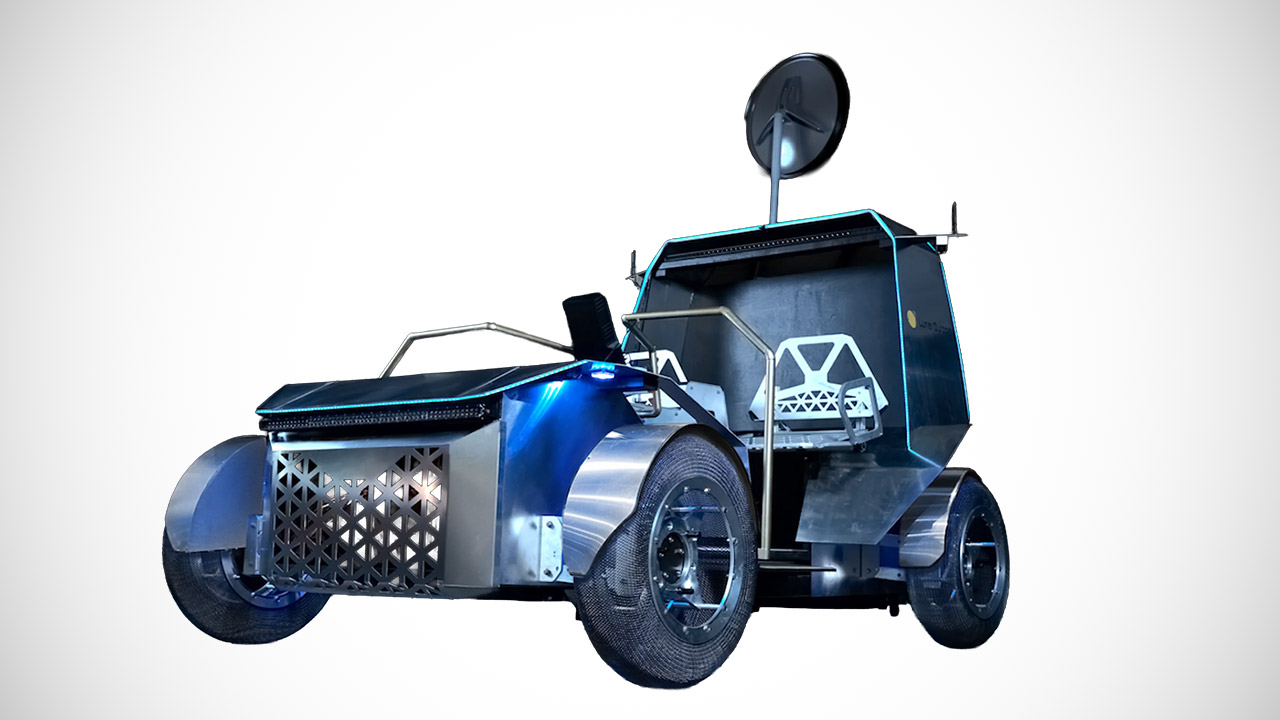
NASA picked Lunar Outpost to deliver a new crewed rover called Pegasus for the Artemis program. Astronauts will drive it across the lunar south pole starting around 2028. The vehicle brings a clear step up in what crews can accomplish during surface operations. It offers the range, endurance, and flexibility needed to support longer stays and the groundwork for a permanent outpost.


Lunar Outpost won the contract for NASA’s Lunar Terrain Vehicle Services and got a great deal in the process. They will receive $220 million to develop a flight-ready rover that meets the stringent requirements of a mission aimed at pushing the frontiers. They are not the only ones that received the contract; another company will work with Lunar Outpost to help astronauts make the most of their time at the moon’s south pole. Where the cold is severe, the shadows never end, and the terrain is a true impediment, it will be tough to achieve anything.

Sale


LEGO Technic NASA Apollo Lunar Roving Vehicle LRV Building Set – Craft Kits for Adults, Ages…
  • Build a realistic LEGO Technic lunar rover model – This LRV building kit for adults is packed with authentic details including seats, steering…
  • NASA model for adults – Enjoy a mindful project assembling all the details of the rover and equipment including the battery pack, heating and…
  • A build for NASA fans – Remember the Apollo 17 mission with a display that features the lunar roving vehicle alongside 3 detailed equipment…

The designers at Lunar Outpost were inspired by a prior concept called Eagle and produced a smaller, lighter version of it. The Pegasus is the end result, and it represents a huge breakthrough. It has a compact design that keeps it under NASA’s weight limit while yet packing all of the punch they need, and two astronauts sit side by side in a low-slung cabin with an unimpeded view of what lies ahead. To top it all off, it’s really easy to get into and out of, even on rough terrain. The design bears homage to the iconic Apollo roving vehicle, but it has been updated with cutting-edge technology and greatly enlarged capabilities.

Advertisement


One of the key things the designers wanted to get right with Pegasus was its range and endurance, and to be honest, the stats are quite impressive. We’re talking up to 900 kilometers on a single set of batteries, with a year of operation following delivery to the surface. Top speed isn’t exactly rocket science (15 kilometers per hour), but traveling any faster on the moon would be disastrous. The surface is loose, with craters and slopes everywhere, and the Pegasus has been engineered to manage it all, thanks to some excellent engineering input from General Motors.


The power comes from exceptionally powerful battery packs based on General Motors’ production electric vehicle technology. They can provide the long-term dependability and fault tolerance required for months of operation in a vacuum, as well as in conditions that would be harsh even on Earth. While GM isn’t the only partner who has contributed; Goodyear donated specialty tires designed for the moon’s unique conditions, and Leidos added some muscle with their systems engineering expertise.

So, how does all of this translate into practice? It indicates that the Pegasus can be driven directly from the seat by an astronaut or navigate autonomously across known terrain utilizing onboard technologies. If it isn’t enough, Earth-based teams can take over the rover in real time if needed. This is the type of versatility that will make all the difference whether doing science or construction on the moon.

Lunar Outpost Pegasus Rover Moon NASA
Thermal regulation is critical when working at the South Pole. Plus, a system that automatically regulates temperature levels throughout the rover at all times, protecting batteries, electronics, and mechanical components wherever temperatures range from a scorching 250 degrees Fahrenheit on the surface to icy lows of -410 degrees Fahrenheit in those shadowed craters. It does all of this independently of whether the rover is carrying a crew or is merely winging it, allowing astronauts to concentrate on other tasks rather than worrying about it.

It was all developed very systematically, building on past successes. Remember the Mobile Autonomous Prospecting Platform and Explorer-class rovers that Lunar Outpost once employed? They used their abilities to create a number of full-scale models of the Eagle design, conduct several test simulations, and even subject the crew to human-in-the-loop testing. After that, they scaled back the design to meet the Pegasus project’s mass and volume limits while retaining all performance goals, and the next step is to provide a flight-ready version to NASA by November 2027.

Advertisement

Lunar Outpost Pegasus Rover Moon NASA
When the Eagle rover lands on the Moon, it will already have a lot on its plate; the crew will be able to use it to look for water ice in permanently shadowed areas, prepare some locations for future base elements, conduct science experiments, transfer equipment, and so on. Pegasus is more than a one-trick pony; it can perform crewed driving, teleoperation, and autonomy all at once, which is highly beneficial when mission needs change on a dime. With livestreaming capability from the lunar surface, anyone can now join in on the fun and get a front-row seat to the action.
[Source]

Source link

Continue Reading

Tech

Digital Trends Computex 2026 Publisher Awards

Published

on

Computex is always chaotic, and Computex 2026 kept the same pace. This year’s show had the usual parade of powerful laptops, overbuilt gaming rigs, and the fun, if not strange, prototypes. AI was everywhere, handheld gaming got a serious power boost, and even monitor makers came ready with displays that sound like they were pulled from a wishlist.

That’s why we’ve put together our Computex 2026 Publisher Awards, spotlighting the products that pushed the show forward.

NVIDIA RTX Spark

The most important announcement at Computex 2026 was NVIDIA RTX Spark. Yes, the AI PC label is starting to sound like a broken record, but this is one of the few examples where the hardware underneath shows impressive potential. NVIDIA is calling this a new superchip for Windows PCs, built around a 20-core Grace CPU, a Blackwell RTX GPU with 6,144 CUDA cores, up to 128GB of unified memory, and up to 1 petaflop of AI performance.

The company has designed the Spark for local AI agents, improved creative workflows, and AAA gaming in slim laptops and compact desktops. We’ve seen plenty of powerful chip announcements, but what makes the RTX Spark a bit different is the scale of its impact. It is Nvidia making a proper play for the future of Windows PCs, bringing CUDA, RTX, DLSS, Reflex, G-Sync, and local AI acceleration into a single platform. With systems expected from brands including Dell, HP, Microsoft Surface, and more, RTX Spark could shape the next wave of premium PCs.

Microsoft Surface Laptop Ultra

Windows is one of the biggest operating systems in the world, so one would naturally expect Microsoft’s own Surface laptops to be the best way to experience it. Microsoft’s Surface Laptop Ultra feels like the answer many people have wanted: a powerful and premium Windows laptop built around genuinely cutting-edge hardware.

Advertisement

Leveraging NVIDIA’s new silicon to deliver up to a petaflop of AI compute, along with 128GB of unified memory, this notebook was built for larger local models and datasets. It also looks like Microsoft is finally taking ports seriously. The Surface Laptop Ultra includes USB-C, USB-A, HDMI, a headphone jack, and a full-size SD card reader, which makes it feel far more creator-friendly than the average thin flagship. Add in a new thermal system rated for up to 2.5 times the thermal capacity of the Surface Laptop 15-inch, and this easily becomes what a true Windows flagship should’ve been all along.

MSI Claw 8 EX AI+

The MSI Claw 8 EX AI+ is the handheld that really showcased Intel’s portable gaming handheld push. MSI says it is the world’s first gaming handheld powered by Intel Arc G3 Extreme processors, which also makes it one of the most powerful of its kind. Coupled with an 8-inch 120Hz VRR display, upgraded ergonomic grips, Hall-effect triggers and sticks, and a refined D-pad, you have a powerful and well-built handheld gaming PC.

In recent years, the handheld PC space has become crowded, but the Claw 8 EX AI+ is carving its spot by chasing a higher-end AAA gaming experience in a portable form factor, with XeSS 3 Multi-Frame Generation, and Xbox Mode support helping round out the software side.

Thermaltake CAPO X

Thermaltake’s CAPO X is exactly what you’d expect to see at an exhibition like Computex, where you typically find absolutely unhinged PC hardware. CAPO X is a dual-system Micro-ATX chassis that supports up to two M-ATX motherboards in one case. That is basically two computers in one tower.

You also get two independent I/O panels for the upper and lower systems. Thermaltake built it for AI agent workspaces and streaming, where one system can run the game while the other handles broadcast duties. It is niche, sure, but it is also clever and useful.

Dell Alienware AW3926QW

After a quick glance at Alienware AW3926QW’s spec sheet, I had to do a double-take. Dell’s latest curved gaming monitor is the world’s first 39-inch 5K OLED gaming monitor with RGB stripe technology, using RGB stripe tandem OLED to hit up to 1,300 nits of peak brightness while improving text clarity.

OLED monitors have always been incredible for contrast and motion, so adding a 1500R curved screen, VESA DisplayHDR True Black 500, Dolby Vision, and a dual-mode setup that can run at 5K 165Hz or 1080p 330Hz just makes the gaming experience even more immersive and smooth. After getting a short first-hand experience with this gaming monitor, I am definitely looking forward to this one.

Dell XPS 13

Despite seeing some wacky and cool things during Computex 2026, the Dell XPS 13 was a surprising favorite of ours. It brings the premium XPS lineup back to a far more accessible place. It starts at $699 in the US, with a $599 price for eligible buyers, while still offering features such as a 2.5K touch display, a lightweight all-aluminum body, a backlit keyboard, and quad speakers.

Advertisement

Powered by Intel’s Wildcat processors, the Dell XPS 13 is expected to hit the market on June 16, 2026. For many, this laptop is a whole package: premium enough to feel special, but priced low enough to make sense. The ongoing memory crunch has hit the PC segment hard, so having more premium yet affordable laptops is always a win for consumers.

Source link

Continue Reading

Tech

The FBI built its own replica small town to simulate real-world cyberattacks

Published

on

The Federal Bureau of Investigation is pulling back the curtain on a 22,000 square-foot replica town on its Huntsville, Alabama campus that it built to train law enforcement in simulating and investigating real-world cyberattacks.

The aim is to teach investigators in a secure environment beyond the classroom by getting hands-on with some of the latest consumer and enterprise technologies, many of which are frequently targeted by malicious hackers. The numbers put the training into context. The FBI’s 2025 Internet Crime Report, drawing on more than one million complaints, logged a record $20.9 billion in U.S. cybercrime losses, a 26% jump over the prior year, with ransomware ranked the top ongoing threat to critical infrastructure.

Dubbed the Kinetic Cyber Range, the FBI’s small purpose-built town opened in February 2025 and features fully furnished houses, a hotel, a gas station and grocery mart, a courthouse, a hospital, and a power company — complete with roads and traffic lights — designed to mimic a real U.S. community. Since opening, says the agency, the facility has trained more than 1,400 students, including FBI personnel and partners from other federal and local agencies.

Each part of the town is wired with functioning devices and systems that behave as they would in a real community or business, while preventing any simulated attacks from spilling out of the facility.

Advertisement

The range also includes a data center with more than 200 physical servers — some running Windows, some Linux — reflecting the corporate environments investigators are likely to encounter when responding to a breach or executing a search warrant. “They’re cold, they’re cramped, they’re noisy, they’re dark, they’re miserable,” Dave Beachboard, the range’s program manager, explains in the FBI’s write-up about the training environment.

The replica town also allows the FBI to simulate ransomware attacks and their real-world consequences, including the high-pressure decisions that investigators must make when responding to incidents that could cause harm to people, such as hospital systems going dark.

The Kinetic Cyber Range also helps to train U.S. investigators in digital forensics, which police use to crack the cybersecurity defenses of encrypted modern devices to extract data from devices, often for the purposes of building a criminal investigation. The tools used for this are controversial as they work by exploiting vulnerabilities that are never disclosed to the device maker, such as Apple or Google, to defeat the protections those companies build in for their users.

When you purchase through links in our articles, we may earn a small commission. This doesn’t affect our editorial independence.

Advertisement

Source link

Continue Reading

Tech

The Pacemaker Patch | Hackaday

Published

on

A pacemaker is implanted to send signals that regulate a patient’s heartbeat, and to do that, you need power. That means they require battery changes, and when the device in question happens to be inside your chest, that means surgery. Sometimes as often as every five years. [Alex Music] writing in Spectrum notes that researchers have a new paper discussing a possible alternative: a tiny patch stuck to the outside of the chest that uses ultrasound to pace the heart rhythm.

Rats, pigs, and human heart cell samples have all responded to the system. You might wonder how ultrasound could make your heart beat, but the new pacemaker relies on gene therapy to sensitize your heart cells to the high-frequency waves. The therapy is delivered by a simple injection.

In addition to the chest patch, the patient would need a data and power module that they could keep in their pocket. The gene therapy doesn’t alter your DNA but introduces RNA to make heart cells produce a sound-sensitive protein in the cell’s ion channels. When stimulated, the ion channels admit calcium, which causes the heart to beat.

Advertisement

Pacemakers are nothing less than a modern technological marvel. Maybe if this catches on, cheap junked pacemakers will show up on the surplus market. They could be useful.

Source link

Advertisement
Continue Reading

Tech

EU sovereignty push gives tech buyers a new alphabet soup to swallow

Published

on

Gartner has warned that the EU’s plans to triple datacenter capacity in Europe over the next five to seven years will add complexity for public sector tech buyers.

The sweeping plans, which encompass sovereign cloud, AI, microprocessors, and open source, will have ramifications for EU tech supply chains and beyond if they get through the legislative process.

In the European Technological Sovereignty Package launched last week, the European Commission sought to strengthen its digital autonomy.

Commission President Ursula von der Leyen said: “We cannot afford to depend on others for the technologies that keep our hospitals running, our energy grids stable, and our services secure. This is about protecting our citizens, defending our interests, and making our own choices.”

Advertisement

The backdrop to the EU’s action is widespread concern about European providers only offering around 15 percent of cloud infrastructure in the region, with the dominant American providers subject to US jurisdiction.

The risks were spelled out when US sanctions on International Criminal Court (ICC) prosecutor Karim Khan led to his Microsoft services being suspended. Microsoft denied responsibility, saying it was the ICC’s decision. The Dutch press later reported that the decision was made under duress after Microsoft pointed out that its obligations under the sanctions meant it would have to cut off service to the entire organization unless the ICC removed Khan’s access.

European concerns over reliance on hyperscalers also stem from the US CLOUD Act of 2018, which allows American authorities to compel US-based tech companies to provide requested data, regardless of where that data is stored globally. In June 2025, Microsoft admitted under oath in a French court that it couldn’t guarantee digital sovereignty if American authorities demanded access to data held on Microsoft servers on foreign soil.

The EU’s plan – a set of laws and policies – “creates a transparent, non-discriminatory blueprint for digital autonomy that allows the EU to build resilient, sovereign tech infrastructures at home while providing a trusted, legally sound model for international partnerships and multilateral governance abroad.”

Advertisement

However, public sector CIOs across Europe are likely to find the Technological Sovereignty Package a challenge to implement.

The EU proposes bringing the nebulous concept of “digital sovereignty” to life with an auditable, four-level control system. Union Assurance Levels (UALs), as the political and economic bloc calls it, will be based on where the user organization sits across cumulative measures of control, jurisdiction, data processing, supply chain, and security.

“The introduction of UALs will likely cause confusion for providers and buyers, as it adds to an already crowded landscape of existing cloud sovereignty criteria,” according to Gartner.

UALs are set to become legally enforceable under the Cloud and AI Development Act (CADA), and for public sector tech leaders they will add to an alphabet soup of existing rules and recommendations.

Advertisement

These include the European Cybersecurity Certification Framework’s Sovereignty Effectiveness Assurance Levels (SEAL), a non-binding framework for scoring and selection; the German Federal Office for Information Security’s (BSI) Cloud Computing Autonomy (C3A) policy, also currently non-binding; and France’s SecNumCloud, an ANSSI binding certification scheme for government procurement.

The new rules mean government CIOs should think about their cloud-based data workloads, digital infrastructure, and core applications not in terms of physical territories, but as defined by legal jurisdiction, Gartner recommends.

EU boost for open source

Another big chunk of the EU’s escape plan is based on promoting open source software. The new Open Source Strategy aims to scale up open source alternatives in cloud, AI, internet technologies, cybersecurity, and semiconductors. The EU plans to invest in skills, support open source startups, and improve the long-term maintenance and security of Europe’s open source digital infrastructure.

The strategy also introduces procurement guidelines and best practices to support greater use of open source alternatives to proprietary software in the public sector stack.

Advertisement

In a separate paper, Gartner says the EU’s approach to open source IT services is a fundamental shift. No longer is open source only about cost and innovation. For the EU, it becomes “a mechanism to ensure transparency, auditability, and independence from external control, increasingly supported by EU-led efforts to fund and sustain critical open source components, including their long-term maintenance and security.”

As a result, the market needs to respond. “Rather than being selectively adopted, open source components will increasingly underpin core platform layers, particularly in sovereign environments,” Gartner said. “This requires a move toward industrialized open source capabilities, including governance, security, long-term support, and integration into enterprise-grade delivery models, in line with emerging EU initiatives to ensure their sustained funding and resilience.”

The last lever the EU wants to pull to rid itself of US-dominated tech comes in the form of a revamped Chips Act, first created to strengthen Europe’s research and innovation capacity in semiconductors. It is not to be confused with the US CHIPS and Science Act, which in 2022 allocated a $52.7 billion federal package to boost the American semiconductor industry and reduce reliance on East Asian vendors.

The Chips Act 2.0 includes measures to end Europe’s reliance on the rest of the world for advanced chips – below 10 nanometers – by prioritizing facilities in the EU. It promises to cut red tape and simplify state aid applications for building chip factories, thereby accelerating development. The EU also plans to join up support between R&D and manufacturing.

Advertisement

Taken together, the Technological Sovereignty Package is the EU’s first concrete attempt to implement outwardly focused regulations governing public sector technology procurement, Gartner said.

“By leveraging common definitions of digital sovereignty, future public sector procurement will shift from purely open competition toward a ‘European preference’ model for highly secure workloads.

“The legislation’s focus on chips, datacenters, cloud, AI, and open source establishes a comprehensive ‘stacks’ view of digital sovereignty as formal EU policy. This shift will trigger a second wave of governments to heavily prioritize European digital sovereignty, following early leaders like France, Germany, and the Netherlands.”

Before they are adopted and come into force, the proposals will have to be negotiated by the European Parliament and the Council of the European Union. In the process, they are bound to provoke the US tech industry, and likely the Trump administration.

Advertisement

However, the EU has mostly stood by plans for various legislation under the Digital Services Act and Digital Markets Act, meting out rulings and fines. Provided it does the same with the new sovereignty package, suppliers will have to respond to a complete reshaping of tech buying across Europe’s public sector.

How this stimulates the supply market might change the calculus for all tech buyers throughout Europe and beyond. ®

Source link

Advertisement
Continue Reading

Tech

Today’s NYT Wordle Hints, Answer and Help for June 14 #1821

Published

on

Looking for the most recent Wordle answer? Click here for today’s Wordle hints, as well as our daily answers and hints for The New York Times Mini Crossword, Connections, Connections: Sports Edition and Strands puzzles.


Today’s Wordle puzzle is a fun but unusual word, with plenty of vowels. If you need a new starter word, check out our list of which letters show up the most in English words. If you need hints and the answer, read on.

Read more: New Study Reveals Wordle’s Top 10 Toughest Words of 2025

Advertisement

Today’s Wordle hints

Before we show you today’s Wordle answer, we’ll give you some hints. If you don’t want a spoiler, look away now.

Wordle hint No. 1: Repeats

Today’s Wordle answer has no repeated letters.

Wordle hint No. 2: Vowels

Today’s Wordle answer has three vowels.

Wordle hint No. 3: First letter

Today’s Wordle answer begins with S.

Advertisement

Wordle hint No. 4: Last letter

Today’s Wordle answer ends with A.

Wordle hint No. 5: Meaning

Today’s Wordle answer can refer to a deep, warm, reddish-brown color.

TODAY’S WORDLE ANSWER

Today’s Wordle answer is SEPIA.

Advertisement

Yesterday’s Wordle answer

Yesterday’s Wordle answer, June 13, No. 1820, was QUELL.

Recent Wordle answers

June 9, No. 1816: WHARF

June 10, No. 1817: ALIGN

June 11, No. 1818: TESTY

Advertisement

June 12, No. 1819: BREAK

What’s the best Wordle starting word?

Don’t be afraid to use our tip sheet ranking all the letters in the alphabet by frequency of uses. In short, you want starter words that lean heavy on E, A and R, and don’t contain Z, J and Q. 

Some solid starter words to try:

ADIEU

Advertisement

TRAIN

CLOSE

STARE

NOISE

Advertisement

Source link

Continue Reading

Tech

This Crazy $55,000 RC F-14 Tomcat Flies With Real Swing Wings, Turbine Power, and Fighter Jet Presence

Published

on

Remote-Controlled F-14 Tomcat Jet
Remote control aviation often centers on small drones that anyone can pick up and fly in a park. Levi Wagner of Team Sky Aces RC took a completely different path. He built a machine that sits in another category entirely. His remote-controlled F-14 Tomcat fighter jet measures 3.7 meters (12 feet) long. Empty it weighs 48 kilograms (106 pounds), but load it with 12 liters of jet fuel plus smoke oil and the weight rises sharply.


The airframe began as a single massive composite shell built by a specialized manufacturer. Wagner spent several years, approximately two years, completing all of the small details that make a massive model into something that genuinely looks the part. Then he painted in layers, hoping to get a precise effect with the Compass Ghost Grey colors. He brought it to life with rivets, panel lines, oil stains, and even some grime. The weathering mimicked the appearance of a real-life F-14 Tomcat that flew demo missions before retiring in 2004. Moving pilot figures sit in the cockpit, scale landing gear neatly retracts into the wells, and a smoke system generates vapor when necessary.

Sale


DJI Neo, Mini Drone with 4K UHD Camera for Adults, 135g Self Flying Drone that Follows You, Palm Takeoff…
  • Due to platform compatibility issue, the DJI Fly app has been removed from Google Play. DJI Neo must be activated in the DJI Fly App, to ensure a…
  • Lightweight and Regulation Friendly – At just 135g, this drone with camera for adults 4K may be even lighter than your phone and does not require FAA…
  • Palm Takeoff & Landing, Go Controller-Free [1] – Neo takes off from your hand with just a push of a button. The safe and easy operation of this drone…

This F-14’s standout feature is its variable-sweep wing configuration, which is roughly identical to that of its real-life counterpart. The big difference is what this means for low-speed handling and high-speed performance. Wagner’s model has wings that slide back when flying fast and forward when slowing down or landing. Far from being just cosmetic, pilots describe the jet’s experience as having two completely different planes depending on where the wings are placed. The flaps function perfectly while the wings are in the forward position, however they cannot be used when the wings are in the back position because the airflow would damage them.

Advertisement

Remote-Controlled F-14 Tomcat Jet
Real jet turbines generate power by burning jet fuel. This simply means that throttle response has the same lag as full-size turbine engines. It’ll do around 350 km/h, thanks in part to those big intakes, though they can add a bit of drag depending on how the jet is flown. Landings are on the fast side for RC, and the aircraft’s weight means it carries a lot of energy right through the approach.

Remote-Controlled F-14 Tomcat Jet
Wagner flew the aircraft on full display at the Warbirds Over Scone airshow in Australia. The routine included a long takeoff roll, mid-air wing sweeps, high-speed runs, and a precision landing. The entire thing was uncannily similar to real-life footage of actual Tomcats, from the sound to the overall mass, the way the wings moved, and the way the aircraft simply settled in on final.

Source link

Continue Reading

Trending

Copyright © 2025