

AI was supposed to make our lives better. Instead, it’s made many of us scared and angry. Communities are protesting against the building of new data centers — the warehouses of IT equipment powering the AI buildout — across the country, and increasingly they’re winning. And polling shows most Americans think AI is moving too fast.
Tech
A journalist examines populist protests against AI and data centers


So how did public opinion on AI curdle so quickly? Jasmine Sun, who reports on the industry from San Francisco, argues that the backlash treats AI less as a technology and more as a political project. “The debate was not about like, is ChatGPT useful to me?” Sun told me during a taping of Vox’s The Gray Area. “The debate was actually something more like, there are these big corporations and unaccountable billionaires…coming into my city, coming into my life and changing it without having any sort of democratic input?”
Filling in for Sean Illing, I talked to Sun about the rise of “AI populism,” the parallels with the Industrial Revolution, and how the backlash could crash into the 2028 presidential election.
As always, there’s much more in the full podcast, which drops every Monday, so listen to and follow us on Apple Podcasts, Spotify, Pandora, or wherever you find podcasts.
You’ve been writing about a phenomenon you call AI populism. How would you define that? What is AI populism?
I define AI populism as a worldview where AI is not seen as an ordinary technology, but specifically as an elite political project to be resisted. I came to the term while thinking about the AI backlash and the reasons people are increasingly anti-AI — whether that’s LLM slop, whether that’s Waymos in their city, whether that’s a new data center project. One thing that occurred to me was that a lot of times the debate wasn’t about whether ChatGPT is useful to me, or whether Waymos are safer than a human driver. The debate was actually something more like: There are these big corporations and unaccountable billionaires who are coming into my city, coming into my life, and changing it without any democratic input.
When I talk to people who are opposing AI in various ways, they seem more concerned with this concentration-of-power, anti-elite dimension — which is where I take the word “populism” — rather than classic AI safety concerns, which are more about the technical characteristics that might introduce risk.
You wrote a piece that touched on some of this but went to a darker place — “AI populism’s warning shots” — and you wrote about actual shots. Sam Altman, the CEO of OpenAI, was targeted by a Molotov cocktail and a shooting within the span of a couple of days. There was an Indiana councilman who voted for a data center and woke up to gunshots at his home and a note reading “no data centers.” Why do you think of those incidents of violence as warning shots of something to come?
It was pretty scary. I’m no Sam Altman fanboy, but it’s terrifying that assassination attempts are showing up in response to people’s worries about AI. One factor is that we’ve been seeing a rising wave of political violence and support for political violence in the US, especially among young people, over the past few years — the UnitedHealthcare CEO shooting, the Charlie Kirk shooting. Increasingly, a lot of disaffected, maybe nihilistic young people are turning toward political violence as a way to express political beliefs they don’t feel they have other channels for. Or maybe that person is just unwell. But I do expect to see more of it, because my theory of political discontent is that if people feel they have institutional channels to bargain for their rights — if they feel the democratic process is working, or they’re part of a union and believe their union leader will go bargain about how automation shows up in the workplace — they’ll most likely go through those channels.
When it feels like the official channels aren’t working, opposition becomes much more diffuse and volatile. That’s part of why, in creative communities, you’ll see people witch-hunting each other over AI use. I think we’ll see more political violence against people seen as AI leaders, or as supporting AI leaders.
Yeah, I’m quite worried about it. But again, my sense is that it comes from a feeling of — what else is there to be done, when you have this level of concentration of wealth and power, and there’s no democratic input right now into how AI is regulated or built?
It’s like a jump straight from complaining at your community meeting about the data center to an act of violence.
I was talking to some friends about this. During the 20th century in the US, there was a wave of factory mechanization and automation, but unions were really strong — often when a company said, “We’re going to bring in these machines,” they’d sit down with the factory union leader and say, “Okay, you can bring in the machines, but we’re going to couple that with a wage increase,” or a 35-hour workweek, or earlier retirement. There was a channel to make a deal about how automation would show up in your workplace. That meant people were more likely to accept it as something lifting all boats. I don’t think that’s happening now — most of the industries affected by AI aren’t organized in labor unions, and the democratic channels are questionable at best.
It’s like when people have agency to be part of the transition, the process goes a lot smoother. Is there a historical analogy for a technological change that didn’t allow for input from the people involved? I’m thinking of the Luddites.
The Luddites are a good example. When the automated looms were introduced, there was a lot of violence against the looms. The book I’d really recommend here is Carl Benedikt Frey’s The Technology Trap. He’s an Oxford economist who studied a ton of historical examples — in Europe, in China, all over the world — including the Luddites and 20th-century automation. His central question was: In what contexts do workers successfully stop automation, and in what contexts do they allow it to be introduced? How does the political environment, or the balance of power between people and their leaders, change the outcome? He found that when automation was introduced alongside social welfare policies — a higher minimum wage, some form of redistribution — people were much more willing to accept it, which is fairly rational.
I want to talk about Silicon Valley’s understanding of this backlash more generally. You’re painting a pretty dark picture, and you’re right in the belly of the beast in San Francisco — I’m sure you talk to people involved with AI every day. Is there a moment when it clicked for them that this backlash is real and something they have to take seriously? Or has that happened yet?
I’ve definitely noticed a huge difference, over the past six months, in how seriously people in Silicon Valley take the AI backlash.
People just talk about it more. I’d bring up AI populism to people last year, and they’d normally say, “It doesn’t matter — technology always introduces some discontent, people get annoyed but they get used to it, like the internet.” That was the standard reaction last year. Not anymore. I think part of the reason OpenAI and Anthropic have felt pressure to introduce economic policy proposals around job automation is that they’re seeing how worried people are. The data center moratoriums and the broader data center backlash have been surprising and meaningful in getting AI leaders to recognize they have both a messaging problem and an actual problem with the product and the technology they’re introducing.
A lot of the increasing opposition to AI in Washington has caused people to see this too. At first, Trump — as you mentioned — was very pro-AI. He and David Sacks were accelerationists; they wanted AI to go faster and to block attempts at regulation.
“The moratoriums, the regulation fights, even the booing at graduations, the literal assassination attempts — people in Silicon Valley have become much more worried.”
He was the AI czar — he’s no longer the AI czar. But it turned out a lot of other constituencies, both on the left and the right, were pretty opposed. For example, Trump and David Sacks tried to introduce a big federal bill that would preempt all state-level AI regulation — no state could regulate AI for 10 years. They tried to sneak it into a big omnibus bill so no one would notice. But members of Congress realized it was happening, and — whether for kid-safety reasons or frontier-safety reasons — people said, Wait a second, the idea of preventing any state from regulating AI for ten years is crazy. A lot of people organized in Washington to successfully stop that preemption. I think that showed the scale and bipartisanship of a coalition that was very keen to make sure it stayed possible to regulate AI was underestimated. As a result of all this — the moratoriums, the regulation fights, even the booing at graduations, the literal assassination attempts — people in Silicon Valley have become much more worried.
China is our big competitor in the AI race, and it certainly has all the conditions for a populist pushback to AI — youth unemployment is really high, and AI technology is in some ways more advanced at taking over real-world jobs. I was watching a video about fully automated factories and a robot pharmacist. You’re one of the rare American tech reporters who gets to spend time in China, and you wrote a piece that surprised me — you found there wasn’t really a populist backlash to AI there. Why not?
I was really interested in this question, and I was finishing my New York Times piece while in China for a few weeks, talking to both AI people and non-AI people. The main reason there’s not a big populist backlash in China is that there isn’t a lot of social unrest or populist backlash against anything — the entire MO of the Chinese government, the No. 1 priority, is domestic social stability. Any whisper of protest gets shut down; that’s why they have such strong speech controls. So one factor is that China doesn’t have much of a culture of resistance in general, whether in workplaces or politically. I’m not saying no one dissents — but it has a cultural effect too, because people don’t see it as useful or as an option. When I ask family members of mine in China about AI, sometimes they’re annoyed about specific things, but fundamentally, the idea of opposing AI is seen as almost unimaginable.
The other thing about China is that if you’re middle-aged there, you’ve lived through so many political, economic, and technological revolutions in your lifetime. When I was a little kid visiting Shanghai in the mid-2000s, there were no high-speed trains — now China has some of the best high-speed rail systems in the world. Technology has always gone hand in hand with dramatic economic advancement, with being lifted out of poverty. The modernization process has been aggressive and disruptive, but it’s not something the party has offered opportunities to resist, and it’s something most Chinese people still see as an inevitability that was mostly good for most people — because incomes did increase by dramatic amounts alongside the technological change. So I think people have a similar attitude toward AI: It’s much less about “Can I stop the AI wave?” and more “How can I take advantage of the AI wave to get ahead economically?”
We were just talking about this deep pessimism about what technology can bring us here in the US. I think a lot of people look around and think: We don’t have a cure for cancer yet, but we’ve sure seen our lives get worse in a lot of ways because of technology, social media, whatever. That pessimism probably fuels the backlash to AI, the skepticism about whether it can ever deliver on its promises. And that experience just isn’t the same in China, or probably much of the rest of the world, where technological progress has been faster and more concrete in people’s lives.
My 90-year-old grandfather said he’d love an elder-care robot to help him do tasks around the house so he doesn’t have to rely on his kids — he wants more freedom and mobility. It’s seen more as a tool to help individual goals. Even with the robot factories or pharmacies — one thing that struck me visiting a robot pharmacy was that the PR people happily said, “Yep, we’re doing these robots because human workers take too many smoke breaks and bathroom breaks and take too long.”
You’d never say that in the US, but they’re probably thinking the same thing — they just don’t say it. The other thing they mentioned is that this lets the pharmacy operate 24/7, because a lot of people need medications in the middle of the night and want to order via the DoorDash equivalent. There was actually a labor shortage before — Chinese workers weren’t willing to work night shifts — so these pharmacies are offering real consumer surplus. A significant percentage of orders come in overnight, when no other pharmacy is open. And with the factories, part of the issue is that Chinese workers, especially young people, don’t want to do factory work anymore.
“I think the 2028 presidential primary and election is really where I expect AI to become a centerpiece of the conversation.”
That anecdote gets at the promise and peril of AI, and the role of the backlash movement — which I’m still wrestling with how I feel about. On the one hand, I want to live in a world where cancer gets cured, where we live in an era of abundance, where things are cheap and easy to make because factories can run all the time with machine workers who don’t require anything — I want the future we were promised, of flying cars and everything working well.
But I also don’t want to lose my job, or see humanity wiped out by an angry machine god. Because we don’t really know what’s going to happen yet, it’s hard to work out my own feelings about the pushback here in the States — what’s appropriate, and what’s holding us back from real advances in our lives.
Totally, I agree. I like Waymos — I think they’re safer, and I’d prefer a safer robot car driv[ing] me around instead of me driving. I’m not a good driver; no one should let me drive. So I wrestle with some of the same things.
To close out the conversation — let’s come back to the United States. AI populism is brewing as a political force. We’ve seen it show up in a couple of races so far, but it’s early. We’ve got the midterms, then the presidential election. How do you think it’s going to affect American politics this November, and in 2028?
My sense is that this November, it’s going to be more about state and local races where AI really shows up. I’m going to spend some time in Michigan and Wisconsin this summer touring some of the data center sites facing the most opposition — those states also have contested governor and Senate races where AI and data centers have become a core issue, so I’m interested to learn more there. I think the 2028 presidential primary and election is really where I expect AI to become a centerpiece of the conversation — especially if we start to see some of the employment impacts people are expecting. As soon as we see something like a 2 percent rise in unemployment, if that happens, I think people will be very upset, and we should expect a ton of focus on the issue.
The other thing I’ll note is political opportunism — you’re already seeing a bit of this, where politicians are likely to raise the salience of AI above where people might ordinarily care about it, because it’s become a convenient boogeyman. It polls so poorly, people are so anti-AI and anti-data-center, AI billionaires are so unsympathetic, that no matter what your policy program is, AI is a great reason to push it. I think a lot of politicians who are being clever about this are going to move AI to the center of the conversation, raising its salience to manufacture urgency for proposals they’re already excited about. That’s definitely something I’m watching for 2028.

Continue Reading

If rumours are true, then Samsung could be widening the gap between its flagship Galaxy S models next year.
According to information shared by Naver leaker Lanzuk, the Galaxy S27 Pro is set to receive a new 16MP front-facing camera. Meanwhile, the standard Galaxy S27 and Galaxy S27 Plus are expected to stick with the same 12MP sensor Samsung has used across its flagship range since the Galaxy S23 series.
If accurate, it would mark another way Samsung is reserving its biggest hardware improvements for the premium end of the Galaxy S27 lineup.
The earlier report didn’t clarify whether every model would benefit from the selfie camera upgrade. However, this latest leak suggests that won’t be the case.
It’s not yet clear whether Samsung plans to improve other aspects of the 12MP camera, such as image processing or autofocus. However, the sensor itself is reportedly unchanged.
The rumour also fits with earlier reports that Samsung is looking to further differentiate its flagship lineup. Previous leaks have suggested the standard Galaxy S27 could use lower-cost OLED panels sourced from China, which would reportedly save Samsung around $5 per display.
That doesn’t necessarily mean the base models will miss out on every upgrade. Recent reports have also pointed to the entire Galaxy S27 lineup adopting faster UFS 5.0 storage which will bring quicker app loading times. In addition, there will be improved file transfer performance across all models.
For now, the Galaxy S27 Pro is shaping up to be one of the more interesting devices in the range. Alongside the reported 16MP selfie camera, several features previously reserved for Samsung’s Ultra handsets are expected to trickle down to the Pro, making this the sweet spot in the lineup.
The Galaxy S27 Ultra will almost certainly remain Samsung’s showcase device. However, if these leaks prove accurate, buyers considering the standard Galaxy S27 or Galaxy S27 Plus may once again find themselves missing out on some of the most meaningful hardware upgrades.
As always with early leaks, nothing is official until Samsung makes an announcement. With the Galaxy S27 series still months away, there’s plenty of time for the company’s plans to change.
Tech
Were younger workers right all along? New study claims Gen Z workers say they are far more productive at home

- Over half of Gen Z workers feel more productive working from home
- 34% of Gen Z workers believe their workplace does not allow them to focus effectively
- The findings are the result of a survey conducted by Diamond Interiors and YouGov
A new survey has claimed Gen Z employees feel they’re at their most productive working from home, rather than in the workplace, flying in the face of those attempting to get people back into the office.
The Diamond Interiors report notes focusing on work is widely recognized as improving productivity, which might explain the challenge for Gen Z. Home can be quiet, distractions managed, and with the right setup, focused productivity can deliver early completion and potentially the option to finish work early. With a commute to a busy office, this may seem tougher to achieve.
With 53% claiming they feel more productive working from home rather than in the noisy office, the challenge here might not be so much getting people into the office, but what the office really represents.
Latest Videos From

20-somethings don’t like the office
Over the years, office-based environments have evolved, from closed rooms to open-plan operations, sometimes occupying an entire floor without walls. The noise – for instance in call centers – can be considerable, and the opportunities for distraction soon add up. Throw in the period of enforced remote working from 2020 to 2023, which may also have included a period of university study for Gen Z, and you have a generation that isn’t geared to handle distractions.
The report highlights that 53% of those surveyed in the Gen Z cohort believe that working from home makes them more productive, with 34% blaming the design of the workplace.
“These findings highlight an important challenge facing employers,” noted Rebecca Waller, Head Of Design at Diamond Interiors. “While offices remain incredibly valuable for collaboration, many employees are telling us they do not always feel they have the right environment to focus on individual tasks.”
“In many cases, it is not necessarily because employees prefer being at home, but because home environments often offer greater control over noise, interruptions, and comfort.”
Is this the end of the office?
The big question isn’t “how do we successfully move on from the office” – at least, not yet. Rather, it seems to be that offices don’t offer the level of comfort and focus that Gen Z employees need. As Waller says “It is not necessarily because employees prefer being at home, but because home environments often offer greater control over noise, interruptions, and comfort.”
She highlights that workspaces need to support methods of working that suit everyone, with open-plan layouts balanced with quieter areas, environments that can avoid distractions. If employers expect Gen Z team members to produce their best work, it’s going to be a choice between home working and finding a workplace design that fosters productivity, not distractions.

Follow TechRadar on Google News and add us as a preferred source to get our expert news, reviews, and opinion in your feeds.
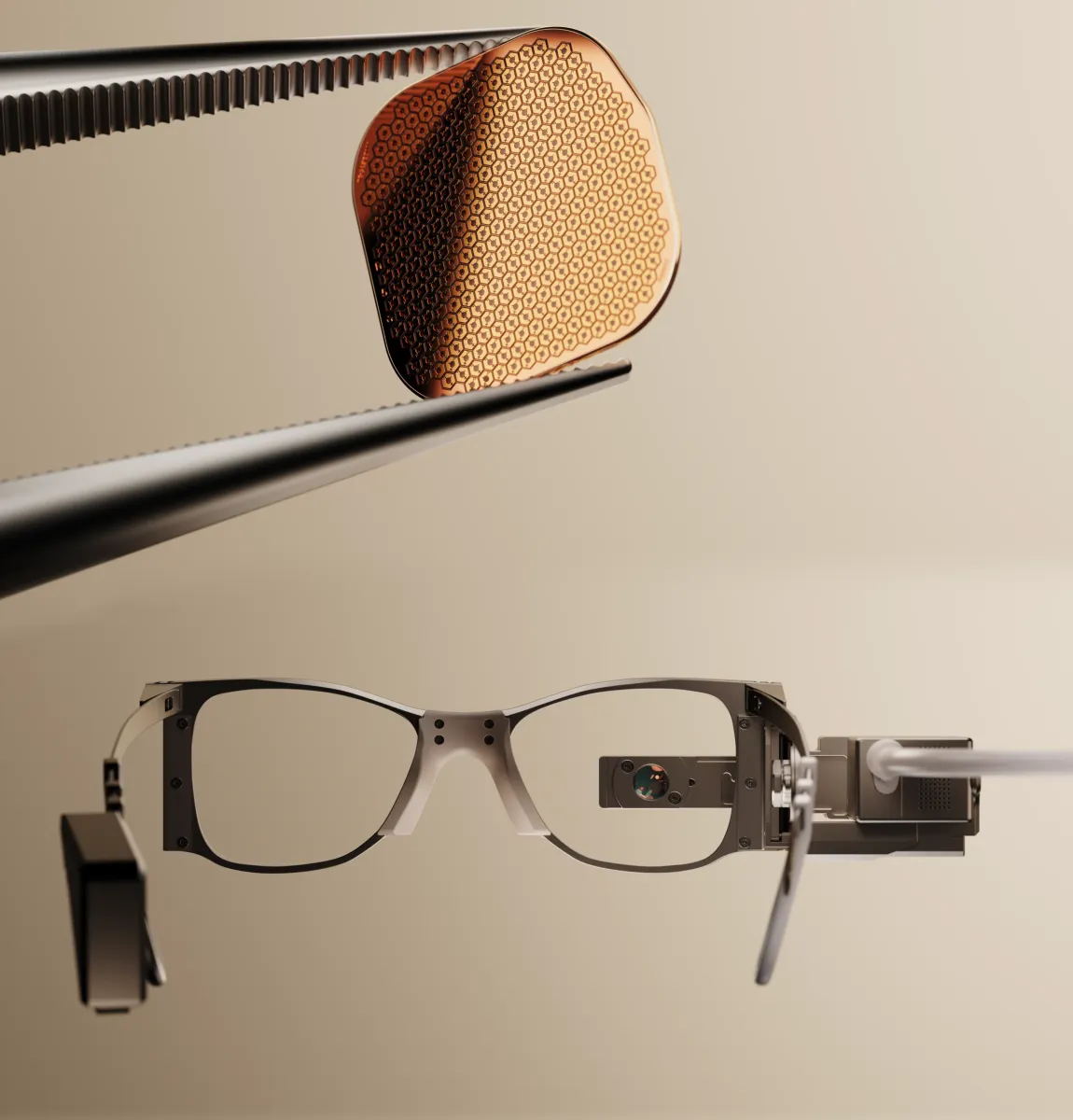
Science Corporation, a start-up developing novel brain-computer interfaces (BCI), won approval from Europe’s medical device regulator to begin selling a device that restores vision lost from age-related macular degeneration.
The company said the device, called PRIMA, also received a designation from the US Food and Drug Administration that is the first step toward an expedited regulatory review, which could see the device used to treat two rare kinds of blindness.
Millions of people around the world suffer from age-related macular degeneration, which destroys the light-sensitive cells at the back of the eyes, making it difficult to read and recognize faces.
To use the device, patients suffering from this loss of vision undergo an hour-long outpatient procedure that plants a small chip in back of their eye. Then, they wear camera-equipped glasses that transmit a view of the world to the chip. Max Hodak, Science Corporation’s founder and CEO, says the product gives functional vision to people who have lost it.
“One of our patients in France finished a 300-page novel a little while ago, and sent us the book,” Hodak told TechCrunch. “We have a sketch on the wall [that] one of our patients drew of the Sydney Opera House. There are videos of patients playing crossword puzzles and filling in Sudoku.”
Hodak is known as the co-founder and former president of Neuralink, Elon Musk’s BCI start-up. He left in 2021 to start Science, with plans to develop a novel BCI based on a hybrid of silicon chips and living cells. But first, the company had to prove out its processes and develop a sustainable business.
“The thing that the space needs is a company making $100 million a year of revenue,” Hodak said. “There’s this risk that the whole thing enters a winter, and so we think it’s important to build a sustainable business as we develop these longer-term technologies.”
Hodak and his colleagues believe that sustainable business will be restoring vision to the blind, specifically patients whose conditions stem from problems with the light-detecting cells at the back of the eye. After exploring multiple approaches, they determined that Pixium, a French company that developed the PRIMA technology, had the right path forward, and acquired the firm in 2024. Science used its internal platform to build out the documentation and evolve the product to prepare it for regulatory approval and commercialization.
Each PRIMA device is expected to cost in the hundreds of thousands of dollars; Science and its medical partners in Europe are currently in discussion with healthcare providers over reimbursement. The company is laying the groundwork to begin offering PRIMA in Germany, where its clinical trials were held, and could see the first procedure in September.
Science expects to continue improving the vision capabilities of PRIMA with a new chip, and the form factor of its glasses, which currently require a battery-pack to operate. The goal is to offer something like Meta’s AR glasses, but the power and compute requirements for PRIMA are more significant.
Science is also working with Dr. Murat Günel, chair of Yale Medical School’s Department of Neurosurgery, to develop procedures for human trials of a directly implanted bio-hybrid brain sensor.
Hodak says bringing PRIMA to market is “the most important thing for the company, because we don’t get to do the bio hybrid stuff long term if you don’t have a great vision business. That’s what’s really financing the rest of it — that’s the thing that investors know how to build spreadsheets around.”
When you purchase through links in our articles, we may earn a small commission. This doesn’t affect our editorial independence.

Need some help with today’s Mini Crossword? It helps if you know your past Saturday Night Live stars. Read on for all the answers.
Mini across clues and answers
1A clue: Mother chicken
Answer: HEN
4A clue: Word after “leading” and “first”
Answer: LADY
5A clue: Just peachy … or a hint to the two letters that appear most often in this grid
Answer: DANDY
6A clue: Bryant of “S.N.L.” fame
Answer: AIDY
7A clue: Like overcooked chicken
Answer: DRY
 NYT/Screenshot by CNET
Mini down clues and answers
1D clue: Helpful
Answer: HANDY
2D clue: Swirl of water
Answer: EDDY
3D clue: The Yankees, on scoreboards
Answer: NYY
4D clue: Supervillain’s hideout
Answer: LAIR
5D clue: ___ joke
Answer: DAD

Get CNET’s top-rated VPN for privacy and usability


AMD said it will also invest up to $5bn into Anthropic, marking its first equity investment into the AI giant.
Anthropic is teaming up with AMD for 2GW of its latest-generation chips in a bid to boost AI capacity and meet growing demands. The Wall Street Journal reported that the deal between the companies is worth “tens of billions of dollars”.
The partnership comes as Anthropic competes for enterprise market dominance for its AI tools and preps for a blockbuster initial public offering expected to value the company at more than $1trn.
As per the agreement, Anthropic will deploy up to 2GW of AMD Instinct MI450 Series GPUs in Helios rack-scale solutions. The first gigawatt is expected to be deployed in the first half of 2027.
The deal builds on Anthropic’s existing use of AMD chips and comes as demand for its Claude services sees no signs of stopping, with the company’s tech permeating across industries. For AMD, the deal represents a “major expansion” at the “centre of the global AI infrastructure buildout”, it said.
In addition, the two companies are launching a multi-year engineering collaboration to use Claude for software development at AMD. The chipmaker also announced an equity investment of up to $5bn in Anthropic – its first investment into the AI giant.
“Access to compute is central to keeping Claude at the frontier and meeting demand from our customers,” said Tom Brown, Anthropic’s chief compute officer and one of the company’s co-founders.
“By partnering with AMD across the stack, we are securing the capacity we need and optimising it for training and serving Claude. Running across a diversified range of hardware lets us map the right workloads to the right hardware.”
The company met with a positive reaction earlier this year following a major disagreement with the US government over the usage of its AI systems, which was followed by a temporary restriction on the export of some of its latest models.
“We are thrilled to deepen our partnership with Anthropic and deploy AMD Helios at gigawatt scale,” said Dr Lisa Su, the chair and CEO of AMD.
“This collaboration brings together Anthropic’s leadership in frontier AI with the full strength of AMD high-performance computing. Together, we will accelerate AI adoption at scale and establish Helios as a major platform for the next generation of AI infrastructure.”
Earlier this week, Anthropic’s $1.5bn settlement offer to quash a major AI copyright case against the company was approved. The company is set to pay around $3,000 to each of the creators behind some 500,000 individual pieces of work.
Don’t miss out on the knowledge you need to succeed. Sign up for the Daily Brief, Silicon Republic’s digest of need-to-know sci-tech news.


SCIENCE
Object orbits a brown dwarf, which circles another star, confusing the cosmic taxonomy
Scientists may have found the first moon outside our Solar System – depending on what astronomers ultimately decide counts as one.
Either way, the groundbreaking research, published in Nature this week, promises a path to clearer sightings of so-called exomoons.
Kevin Hoy, a PhD student affiliated with Universidad Diego Portales and the European Southern Observatory in Chile, has found an object orbiting a brown dwarf, which in turn orbits a host star, which sits about 73 light-years from the Sun in the southern celestial hemisphere.
Brown dwarfs present a problem for astronomers. They fill the gap between gas giant planets – like Jupiter or Saturn – and the smallest stars. They are not massive enough to sustain the hydrogen fusion that powers the Sun and other main-sequence stars, although they can fuse deuterium, a heavier isotope of hydrogen. That leaves the object found by Hoy and his collaborators in a definitional gray area.
“This is the first time, to our knowledge, this technique has produced evidence of satellites around a companion brown dwarf,” the paper said.
The first confirmed exoplanets were discovered orbiting a pulsar in 1992, but exomoons have so far proved elusive, despite there being hundreds in our own Solar System.
The researchers found that the new object, which for now they are calling an exosatellite, is decidedly unmoon-like, being at least as massive as Jupiter. The brown dwarf it orbits is around 30 times the mass of Jupiter.
“This system is somewhat hard to define using Solar-System-based words like ‘planet’ and ‘moon,’” Hoy said in a statement. “The exosatellite is clearly massive enough to be a planet, but it does not orbit a star, though it orbits an object that orbits a star. Being the third wheel in this system makes us want to call it a moon, even if it is nothing like the small, rocky moons we have in our system.”
The research team employed the radial velocity method used by Michel Mayor and Didier Queloz to discover 51 Pegasi b in 1995, the first exoplanet found orbiting a Sun-like star. The technique detects the gravitational “wobble” induced in a host object – usually a star, but in this case a brown dwarf – by something orbiting it. Modeling of the data indicates that there is at least one orbiting satellite. Models for two satellites are possible but highly unstable. Whether a moon or not, the object has a minimum mass about nine-tenths that of Jupiter and completes an orbit every 170 days.
“Although it is uncertain whether this exosatellite will fulfil the presently undefined criteria for qualifying as an exomoon, it is a marked step towards that first uncontroversial detection, as advancing technology will allow the same method to be applied to less massive targets,” the paper says.
At roughly Jupiter’s mass, this is no forest moon of Endor. Finding something more like the moons in our own neighborhood will have to wait for sharper instruments. ®

Camille Hanson woke one night in March to a notification: Meta had flagged her Facebook and Instagram accounts for deletion. She and her husband ran an English-teaching business there with nearly a million followers. Meta said she had breached its rules on fraud and deception, the New York Times reported.
She appealed. A week later Meta denied it. “All your information will be permanently deleted,” the reply read. “You cannot request another review of this decision.” The Hansons run the business from Portugal, so it was, as her husband put it, like someone shutting your storefront overnight.
Humans out of the loop
In March, Meta said it would hand more power to AI to judge which accounts break its rules and to handle the appeals. Months later, it laid off thousands of staff, including people who did exactly that work.
More than 60,000 users have since signed a petition asking Meta to explain its bans and to let a human review appeals. Reddit forums have filled with the same complaint: an automated system deletes an account, and no person answers.
Meta’s defence
Meta rejects the idea that AI is worse than people. Spokesman Daniel Roberts said its new moderation tools make 13% fewer mistakes than human staff and catch 10% more violations. The five accounts the Times flagged, he noted, were all banned by Meta’s older tools.

The 💜 of EU tech
The latest rumblings from the EU tech scene, a story from our wise ol’ founder Boris, and some questionable AI art. It’s free, every week, in your inbox. Sign up now!
“We’re committed to making fewer enforcement mistakes and helping individuals protect their accounts, and AI is delivering on both,” he said.
The company has had a rough run with automation, though. In May, hackers turned its AI customer-service chatbot against 34,000 Instagram accounts. Staff also revolted over a program that tracked their keystrokes to train AI. It has faced chaos on its AI ad tools too.
A Kafkaesque pattern
The wrongful bans often carry the worst possible label. Athenia Rodney, who has run the group JuneteenthNY for 17 years, had her accounts deleted over alleged child exploitation material. Her content, she said, is family friendly. Hackers had in fact seized her accounts.
To recover them she sent identity documents, complained to the FTC, and messaged Meta staff on LinkedIn. Nothing worked until the Times intervened. Meta restored one influencer, then banned him again days later for copyright, then reinstated him once more.
The European angle
The stakes are higher in Europe, where the same automated bans reach WhatsApp. The tech writer M.G. Siegler, banned three times, described his sudden WhatsApp lockout, with no warning or explanation. Much of the continent runs daily life through the app, from work to childcare.
Meta insists big decisions stay human. After 26 former staff sued, claiming an algorithm picked them for layoffs, Meta said such calls are “made by people, not AI.” Yet for millions of users, only a bot stands between them and deletion. The appeal is a bot too. The backlash is unlikely to fade while regulators sharpen their focus on platform accountability.


security
Sunday-to-Monday onslaught fuels speculation over AI-assisted bug reports
If you’re responsible for Linux security, someone just dumped a pile of work onto your desk: 432 Linux kernel CVEs were published across Sunday and Monday this week. Linux watchers at nixCraft pointed out the volume on Monday morning, and it didn’t take long for seasoned sysadmins to start expressing concerns.
Jan Schaumann, chief information security architect at Akamai Technologies, took to the OSS-SEC mailing list Tuesday to express concerns over the sheer volume of Linux kernel CVEs published in recent days. Aside from noting that the CVE system isn’t the best way to track security changes, Schaumann also wondered in his post whether there was any good way to deal with so many kernel security issues.
“This onslaught really shows it’s not feasible to attempt to prioritize individual kernel changes,” Schaumann said.
“You might attempt to process this large set of changes by pointing an LLM at the intake and asking it to prioritize them,” he suggested, “but if it spits out a dozen today and another 25 the next, you haven’t won much.”
Schaumann also suggested waiting to see which ones emerge as serious issues and focusing on those in the weeks to come, or updating one’s entire fleet of Linux machines on a weekly basis.
“I sure would like to be able to do [that], but reality keeps getting in my way,” Schaumann said. “I’m not sure what to do here going forward.”
In an email to The Register, Schaumann said that individually reviewing vulnerabilities for patching was already difficult enough before things rose to this level, and that automation may be the only option – but it’s not a great one.
“Automated, regular, and frequent updates that pull in all changes within a given time window of tolerance seem to me the only reasonable approach, but that is very difficult for many large organizations,” Schaumann explained. Those orgs often rely on lengthy QA processes, slow and staged development cycles, and may even have contractual requirements for long-term support that make an automated approach an impossible one.
The nixCraft team speculated on social media that AI bug reports are a likely reason for all those kernel CVEs, which wouldn’t be without precedent – Linus Torvalds himself said in May that the Linux kernel security mailing list had become “almost entirely unmanageable” due to AI-assisted bug hunting. Nonetheless, Torvalds has described AI as a useful tool for Linux development while still noting it can be a drag for maintainers, both from a workload standpoint and the fact “it keeps finding embarrassing bugs.”
On that note, it’s worth understanding what a Linux kernel CVE actually means – many of the vulnerabilities included in the Sunday-to-Monday batch are small in scope, but they’re vulnerabilities nonetheless.
As senior Linux maintainer Greg Kroah-Hartman noted in a February blog post, the Linux kernel CVE team follows the CVE Program’s definition of a vulnerability: a weakness in a product that can negatively affect a system’s confidentiality, integrity, or availability.
“At the level that the Linux kernel runs, almost any type of bug that can affect a running system can be classified as a vulnerability,” Kroah-Hartman noted. The kernel team looks at every bugfix that is added to stable kernel releases, he added, and if it fixes an issue that meets that CVE criteria, a CVE is assigned.
AI-assisted bug hunting has increased the volume of reports reaching Linux kernel maintainers. We reached out to the Linux kernel team, but didn’t hear back. Kroah-Hartman did tell The Register earlier this year that AI bug reports had become worthwhile in recent months, and he predicted they’re likely to keep adding to his workload.
Unfortunately for Linux sysadmins, the position in which they find themselves in this current mess isn’t one that’s readily solved. CVEs might be a messy way to track and prioritize security updates, especially when hundreds of them are published over a short period, but without something better, it falls to IT and security teams to determine which vulnerabilities affect their systems and which kernel updates they need to deploy.
Hope you’ve got the coffee machine filled up: The onslaught is unlikely to ease if other recent patch cycles are any indication. ®


Months after telling manufacturers traditional diesel exhaust fluid (DEF) sensors are no longer mandatory for new trucks, tractors, buses, and other diesel equipment, the Environmental Protection Agency has turned its attention to engine deratement. If put into effect, engine deratement would become a thing of the past.
If you don’t know: Under current requirements, certain diesel engines derate when their emissions control system detects certain DEF-related problems. When that happens, the vehicle automatically limits its speed or engine power, just to be safe. But according to the EPA’s math, the cost of that safety is costing the trucking industry about $12 billion a year to comply.
Under their new proposal, the EPA would eliminate engine deratement entirely, scale back certain portions of emissions warranty requirements, delay implementation of some provisions from a 2023 heavy-duty emissions rule, and provide manufacturers with more flexibility as they work toward future nitrogen oxide (NOx) standards.
Costs would go down a little, but pollution would go up a lot

The way things are now, modern diesel engines rely on DEF to reduce harmful NOx emissions. (DEF comes in the form of a fluid injected into the exhaust stream.) Current regulations require onboard systems to monitor the DEF system and trigger increasingly severe warnings if it detects a malfunction. If the issue doesn’t get fixed, the truck will eventually enter a “derated” mode to encourage the driver to fix their emissions equipment.
But under the newly proposed rule, the EPA would get rid of deratement for newly manufactured highway diesel engines. If put into place, drivers would still get visible or audible warnings if a DEF system failure is detected… just without the speed or power decrease. (The agency is also looking for public feedback on whether the same should be done for existing diesel vehicles and equipment already in service, but that’d come later.)
The EPA estimates that doing away with deratement would save the trucking industry anywhere from $4,000 to $6,000 per diesel engine. But that would also drastically increase the amount of nitrogen oxide pollution in the air by 4.2% by 2030 and by 11.6% by 2055. The proposal is now subject to a 45-day public comment period and a public hearing before any changes could take effect. For now, existing DEF-system requirements and deratement rules remain in effect until the EPA completes the rulemaking process and adopts the changes.
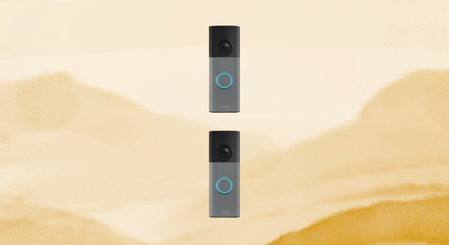
Ring’s If you’re looking to up your security, a two-pack of Ring’s battery doorbell has just dropped well below half price in the US.
The Ring Battery Doorbell (2nd Gen) two-pack has dropped from its $199.98 list price down to $89.99, a straight $109.99 saving that works out to $45 per doorbell.
This Ring battery doorbell twin pack has dropped in cost by 55%
At $89.99 for the pair, the Ring Battery Doorbell two-pack is a straightforward way to bring video security to two entrances at once.

That two-for-one pricing lines up with the doorbell’s own pitch, since Ring markets this bundle specifically for covering a front door and a second entrance, such as a side gate or garage, with matching security rather than mismatched cameras.
Each doorbell records in Retinal 2K with up to 6x Enhanced Zoom, which is sharp enough to make out a face at the gate or read the label on a parcel left on the step without ever needing to walk outside and check in person. When we tested it, we gave the doorbell four-stars, praising its video quality and field of view.
Live View and Two-Way Talk turn that footage into a real conversation, letting you see, hear and speak to whoever is standing at either entrance straight from your phone, no matter where you happen to be.
Motion triggers a real-time alert to your phone the moment someone approaches either door, and when the battery does eventually run low, the included removal tool lets you pop the doorbell off the wall and top it up over USB-C.

Installation stays simple as well, since Ring estimates an average setup time of around ten minutes per doorbell with no wiring required, so both entrances can realistically be covered in under half an hour total.
Both doorbells also work with Alexa, so an Echo Dot can announce visitors out loud and an Echo Show can display live video, which is useful when the pack is covering two separate entrances at once.
At $89.99 for the pair instead of $199.98 bought separately, the Ring Battery Doorbell two-pack is a straightforward way to bring matching video security to two entrances at once, all backed by a one-year limited warranty on each unit.
SQUIRREL_PLAYLIST_10148964

Crypto World25 seconds ago
Robinhood Chain Overtakes Base on Daily Active Users Three Weeks After Launch
Entertainment1 minute ago
Luke Wilson admits he forgot he played Emmett in “Legally Blonde” during fan interaction: ‘No, I’m not Emmett’

NewsBeat4 minutes ago
Is Joel dead in EastEnders? Fans ‘rumble’ his attacker – and its not Avani

Entertainment1 month ago
Renter of Home in Anne Heche Crash Denies Settlement With Son

Business1 month ago
No Jackpot Winner as $257 Million Prize Rolls Over to $269 Million Monday Draw

Fashion4 weeks ago
Weekend Open Thread: Staud – Corporette.com

News Videos10 minutes ago
NOBODY CARES IF XRP HOLDERS GET RICH! – IS CRYPTO STILL COOL? – SILVER COMES TO THE XRPL!

News Videos16 minutes ago
“People Like Dave Ramsey Can’t Give Me Financial Advice…” Gen Z Say Older Generations Don’t Get It

News Videos23 minutes ago
Crime gangs target Perth students as money mules | 7NEWS
-
 NewsBeat6 days ago
London Mayor Sadiq Khan handed a peerage by Keir Starmer alongside 15 other Labour figures… just days before the PM leaves No10
-

 Fashion5 days ago
Weekend Open Thread – Corporette.com
-

 Politics4 days ago
The House | The City of London can help the new chancellor deliver growth in every postcode
-
 Crypto World5 days ago
Two July Windows Left: The CLARITY Act’s Senate Fight and What Failure Means
-

 Crypto World7 days ago
CFTC blocks Kalshi from unwinding Michigan trades after court order
-

 Crypto World4 days ago
Ripple Payments Joins MiCA With 14 Firms, Does It Mean Anything For XRP?
-

 Business7 days ago
Nvidia Stock Slips After Big Tuesday Rally as Huang Confirms Vera Rubin Chip Is Now in Production Today
-

 Politics3 days ago
Democrats look to World Cup watch parties to register thousands of voters
-

 Crypto World5 days ago
Ripple wins EU-wide access as ESMA adds it to MiCA register
-

 Crypto World1 day ago
Grayscale Files For Worldcoin ETF, WLD Registers Sharp Rise
-

 NewsBeat2 days ago
Unregistered fitter used Gas Safe logo on business flyers
-

 Crypto World6 days ago
Injective Submits SEC Transfer-Agent Registration to Onchain Ownership Records
-

 Tech2 days ago
Sail Virtually Aboard The “Itanic” With IA-64 Emulator
-

 Business7 days ago
Palantir Shares Rise After Expanded Nvidia Partnership and Fresh Analyst Upgrades Ahead of Earnings Day
-
Tech2 days ago
Turtle Beach Command Series KB7 review: a nifty screen-equipped gaming keyboard
-

 NewsBeat5 days ago
Registration is now open for March for Men with Kev 2026
-
 Sports7 days ago
New Cornerback Enters Vikings Trade Rumor Mill
-
 Business15 hours ago
New Jersey voter registration controversy explained: How 6,600 noncitizens got on the rolls, and what happens next
-

 News Videos6 days ago
Money | Class 12 Economics | CBSE Board Exam 2026-27
-
 Crypto World6 days ago
Claude Fable 5 Slips to Second in AI Coding Leaderboard
You must be logged in to post a comment Login