The Acer TravelMate P6 14 AI is a capable Windows business laptop with solid internal grunt from its Lunar Lake processor that comes alongside a competent port selection, lightweight chassis and excellent battery life. For the price, it’s a solid option, although I do bemoan the lack of an OLED screen in any guise.
Lightweight and sturdy chassis
Solid power inside
Excellent battery life
An OLED screen would have been nice
Key Features
Advertisement
Sub 1kg weight:
The TravelMate P6 14 AI tips the scales at less than a kilo, making it one of the lighter laptops of its kind.
Advertisement
Intel Core Ultra 7 258V processor inside:
It also features a potent eight-core processor that provides a solid amount of power for productivity tasks.
Advertisement
65Whr battery inside:
This Acer laptop also has a capacious battery inside that allows it to power through a working day or two away from the mains.
Introduction
The Acer TravelMate P6 14 AI offers a clever blend of lightness and durability for a humble business laptop.
Advertisement
It’s unique in that it tips the scales at just under a kilo, just like the new Asus Zenbook A14 (2026), but comes with more business-class sensibilities with its ports, solid IPS screen, good software selection and a competent Lunar Lake processor inside.
For the £1599.99 price tag, this feels quite reasonable in the current market, not least with price rises across the board from other manufacturers that leave key rivals to the likes of the Dell XPS 14 (2026).
Advertisement
Other business-class options, such as the Lenovo ThinkPad T14s 2-in-1 Gen 1 and Dell Pro 14 Premium, are some way up the road in price, giving this Acer choice a potentially clear run as one of the best laptops we’ve tested. I’ve been putting it through its paces to find out.
Advertisement
Design and Keyboard
Lightweight and sturdy chassis
Solid port selection
Tactile keyboard and trackpad
It seems that Acer has attempted to replicate the excellent Swift Edge 14 AI with the TravelMate P6 14 AI in some respects, with this laptop coming with cleverly engineered materials to make it sleek and light, not least for a business machine.
It’s got a blend of a carbon fibre lid (as proudly displayed with a little logo) and magnesium-aluminium alloy elsewhere to allow this laptop to tip the scales at 990g without it feeling like it’s much cheaper than the retail price suggests. This is a lightweight laptop without any real flex or bend at the corners or in the keyboard tray, which is excellent.
Image Credit (Trusted Reviews)
Advertisement
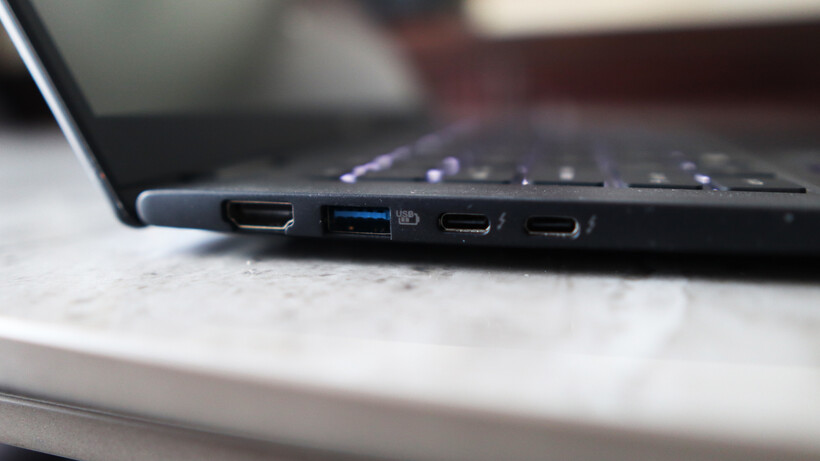
The ports on the TravelMate P6 14 AI are strong, too, with a pair of Thunderbolt 4-capable USB-C ports on the left alongside a USB-A and an HDMI port. The right side has another USB-A, a headphone jack, and security slot. For most use cases, this is more than adequate, although pros may wish for an SD card reader to supplement.
The keyboard here is also a reminder of other Acer laptops I’ve tested, with a snappy and short tactile travel in a smaller form factor layout that’s comfortable for extended periods. It’s also backlit with a bright, white light that’s sure to help for after-dark working.
Image Credit (Trusted Reviews)
As for the trackpad, it’s more about the width than depth, but nonetheless gives your fingers excellent real estate to work with. It doesn’t feel like a haptic trackpad, instead choosing to actuate with a defined mechanical click under finger.
Display and Sound
High-res IPS screen is decent
Okay contrast and black levels
Reasonable speakers
Acer bundles an IPS panel with the TravelMate P6 14 AI, opting against an OLED for some reason. Nonetheless, it’s a solid 14-inch 3K (or 2880×1800) resolution panel with upwards of a 120Hz refresh rate for detailed and smooth action.
Advertisement
Advertisement
In a general sense, this panel performs as you’d expect a decent IPS option to, with reasonably deep blacks (0.10 at 50%, rising to 0.38 at peak brightness) and okay contrast (1260:1 contrast ratio), plus a near-perfect 6600K colour temperature. I also measured 471.2 nits of peak SDR brightness here, making this a punchy panel in that sense.
Image Credit (Trusted Reviews)
Colour accuracy here is perfectly cromulent for mainstream workloads, with 97% coverage of the mainstream sRGB gamut, alongside 79% DCI-P3 and Adobe RGB results. This means this panel is okay for general productivity tasks, although it isn’t the best for more creative, colour-sensitive tasks.
The TravelMate P6 14 AI’s speakers are okay, but nothing really to write home about. There’s decent mids and some bass, but you’ll want to be using the headphone jack or Bluetooth 5.4 connectivity for much better audio.
Performance
Tried-and-tested Intel Lunar Lake processor
Beefy iGPU against Snapdragon alternatives
Capacious SSD, but a little on the slow side
Inside, this TravelMate P6 14 AI is technically using a last-gen Intel chip, although for the non-X-prefixed Panther Lake chips found in base model ultrabooks for the 2026 model year, such as the Dell XPS 14 (2026), the needle hasn’t moved much beyond Lunar Lake.
Advertisement
If you need a quick refresher, the Core Ultra 7 258V processor inside this laptop is an eight-core and eight-thread chip with a boost clock of up to 4.8GHz. It’s designed to provide a solid amount of grunt without sacrificing too much on endurance and longevity, making it a good choice for laptops such as this one.
Advertisement
Image Credit (Trusted Reviews)
The scores this Acer laptop achieved in both the Geekbench 6 and Cinebench R23 tests are in the ballpark for the processor inside, matching well against key rivals. That means strong single-core performance and decent, if a little disappointing, multi-threaded scores, owing to the lack of hyperthreading against AMD’s crop of modern laptop chips.
Both the PCMark 10 and 3DMark Time Spy scores were excellent, too, proving the suitability of the TravelMate P6 14 AI for productivity tasks and how powerful the Arc 140V integrated graphics are. The score it garnered here is several times that of the Adreno iGPU inside the first-gen Snapdragon X-powered laptops, and still remains ahead of the new Snapdragon X2 Elite SoC’s integrated graphics found in the likes of the Asus Zenbook A14 (2026).
Image Credit (Trusted Reviews)
Acer has also been quite generous with the TravelMate P6 14 AI’s RAM and storage configuration, given what’s going on at the moment. 32GB of RAM provides ample headroom for multi-tasking and more intensive loads, while a 1TB ASSD gives you good room for storin’ stuff. With this in mind, a slight chink in this laptop’s armour is that it isn’t the fastest SSD I’ve come across, with tested read and write speeds of 4794.88MB/s and 3911.05MB/s, respectively.
Advertisement
Software
Full-fat Windows 11 installed
Some Acer-specific apps present
Copilot+ PC functionality is here
The TravelMate P6 14 AI comes running proper Windows 11, although it comes with some unnecessary apps or shortcuts, such as a taskbar one for Booking.com, oddly.
There are more enterprise-centric apps, as you’d expect on a business laptop, such as Acer’s catch-all TravelMateSense app. This provides access to elements such as a file shredder, USB device filter, built-in file encryption and even AI-generated wallpaper in a separate tab.
Image Credit (Trusted Reviews)
Elsewhere, this is also a Copilot+ PC and has enough AI power to warrant the inclusion of Microsoft’s tools. Chief among these is the addition of the Copilot assistant, which you can ask questions and to undertake tasks, if you so wish.
In addition, there is also generative AI functionality baked into the Photos and Paint apps, if you want it. The most useful set of AI tools is the Windows Studio effects for the webcam, which provides a convenient means of auto framing, background blur and even for making sure you maintain eye contact.
Advertisement
Advertisement
Battery Life
Lasted for 17 hours 59 minutes in the battery test
Capable of lasting for two working days
Acer bundles a solid 65Whr battery inside the TravelMate P6 14 AI, which is quite a large one considering the size and lightness of this laptop. There are no specific claims made about its endurance, although with a decent capacity cell and a Lunar Lake chip in tow, I had quite high hopes.
In dialling the brightness down to the requisite 150 nits, and running the PCMark 10 Modern Office battery benchmark test, this Acer laptop was able to run for 17 hours and 59 minutes, making it a dead cert for two working days away from the mains. With some hypermiling, you may be able to eke out a third. That’s a strong result, and puts this well among its Lunar Lake-powered contemporaries, even if the Dell Pro 14 Premium still remains king with closer to 24 hours runtime.
The TravelMate P6 14 AI comes with a 100W power brick that isn’t as fast as rivals to put go-juice back into the laptop. The 38 minutes to get it back to 50% is good, although the 94 minutes for a full charge is a little more middle of the road.
Should you buy it?
Advertisement
You want a lightweight business laptop
The TravelMate P6 14 AI offers the benefits of a lightweight business laptop without the same hefty cost as some of the dearer alternatives with similar spec sheets.
Advertisement
On consumer and pro-grade laptops, it is more common to get OLED screens with better definition and fidelity than an equivalent IPS.
Advertisement
Advertisement
Final Thoughts
The Acer TravelMate P6 14 AI is a capable Windows business laptop with solid internal grunt from its Lunar Lake processor, a competent port selection, a lightweight chassis, and excellent battery life. For the price, it’s a solid option, although I do bemoan the lack of an OLED screen in any guise.
The Asus Zenbook A14 (2026) is closest in price and offers similar performance and endurance thanks to its Qualcomm Snapdragon X2 Elite processor, while also netting a sub-1kg weight with clever materials and coming with an OLED screen. It is more of a consumer-grade laptop, and enterprise users have different requirements that Acer’s choice is more likely to fulfil.
Dell’s new XPS 14 (2026) in the base model configuration I’ve tested also equals the TravelMate P6 14 AI in price, although it sacrifices portability and ports against either of the above to make it a serious contender. For more choices, check out our list of the best laptops we’ve tested.
How We Test
This Acer laptop has been put through a series of uniform checks designed to gauge key factors, including build quality, performance, screen quality and battery life. These include formal synthetic benchmarks and scripted tests, plus a series of real-world checks, such as how well it runs popular apps.
Advertisement
FAQs
How much does the Acer TravelMate P6 14 AI weigh?
The Acer TravelMate P6 14 AI weighs under 1kg at 990g, making it especially lightweight in any guise.
I’ve noted repeatedly how the Trump administration is going out of its way to not only destroy all oversight of the country’s shitty and predatory telecom monopolies, but to eliminate any and all systems that try to ensure that U.S. broadband access is actually affordable. This stuff often runs in parallel to the administration’s brutal attacks on free speech.
Trump cronyism, corruption, censorship, and ideological extremism just keep intermingling in new and creative ways.
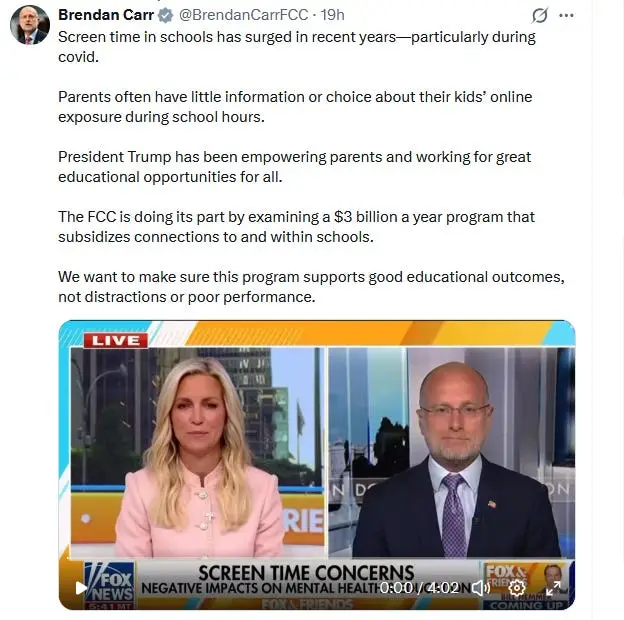
Last week Carr announced he’s now taking aim at the broader FCC E-Rate program with an eye on “reforms.” E-Rate is another historically bipartisan and uncontroversial program that helps bring affordable broadband to rural libraries, schools, and communities. Carr’s announcement proclaims he’s “taking a look” at the program because he’s worried about kids having too much “screen time”:
Advertisement
“Over the last several years—and especially during COVID—many schools dramatically increased screen time for kids, with many students now swiping for hours every day. Research has now been pouring in that America’s experiment with heightened screen time in schools may be related to the negative educational outcomes we are now seeing in classrooms across the country—from declining academic performance to diminished reading comprehension skills.”
Obviously, having the guy who illegally censors comedians and journalists at the behest of Donald Trump determining what kids should or shouldn’t be seeing is problematic, though it probably won’t get as much press attention as it should. It’s worth noting that lot of the “harm” science Carr is referencing — and even the term “screen time” — is based on a lot of misleading bullshit.
Other Republicans, like Ted Cruz and Marsha Blackburn, have also been focusing a lot on sudden concerns about “screen time,” but they’re using the term as a trojan horse to mask other goals — like forcing tech companies or schools to coddle far right wing ideologies. Unfortunately, the corporate U.S. press is too broken to inform people that nothing these folks do is in good faith.
They’re all so pickled in their own propaganda, most Trumpies genuinely believe that existing systems are currently filling kids’ heads with trans rights activism and “wokeness.” But they’re not interested in educational programming or internet access filters that necessarily work and are broadly fair, they’re interested in systems that give right wing ideology an advantage.
The E-Rate program spends about $3 billion a year driving affordable broadband into parts of the country left high-and-dry by the regional telecom monopolies Carr refuses to regulate. While there is sometimes fraud in programs like this, the vast majority of the time it’s caused by private companies Carr, again, refuses to competently regulate and is afraid to stand up to.
Advertisement
So if you were to seriously reform these programs, you’d start doing audits of major companies like AT&T, who have a long history of defrauding these and other initiatives. Instead, Carr’s trying to shift the focus to the idea that taxpayers are funding internet access that’s delivering “harmful content” to kids, which, if you’ve tracked Brendan Carr’s censorial extremism, should be a huge red flag for anybody:
I suspect there’s several motivations here. One being big telecoms like AT&T that want E-rate revamped in a way that financially benefits them. The other being Carr and the right wing extremist mission to extend their censorship and ideological dominance into every aspect of American life, starting with the classroom, where they’re compelled to root out any and all criticism of right wing ideology.
This is how he framed his new plan for E-Rate reforms on a recent appearance on Fox News:
“There are school districts that have read our law as only requiring them to put Internet safety procedures in place on the devices that the school owns. If you bring your own device to a network supported by this program, you don’t necessarily have any filters on where you can go. Kids are ultimately finding pornography, and that’s a problem.”
To be clear schools already employ filtering systems. Some work, some don’t. The nature of these systems is such that they not only tend to over-filter content, but they’re generally easy to bypass.
Still, it’s not the FCC’s job to determine what content is acceptable, or even to manage kid “screen time” on personally-owned devices. That’s not only an unworkable game of whack-a-mole that would waste a lot of taxpayer money, that’s the precise sort of weird overreach Carr (and Republicans, and “free market” Libertarians) have whined about for as long as I’ve been alive.
Advertisement
When Carr demolished the program that brought free Wi-Fi to school kids, he and Cruz simply made up a whole bunch of bullshit about how the free Wi-Fi systems (and firewall systems) being implemented were “censoring Conservative viewpoints.” Feeling emboldened from that weird performance, it’s clear he’s looking to expand his “reform” more broadly to other FCC programs.
If it’s not clear yet, nothing Carr does is in good faith, his government “efficiency reforms” always mask harmful, unpopular ideological extremism or cronyism (sometimes both), and like Trump often does, he’ll exploit our shitty press to drive a news cycle about “screen time” that will downplay or ignore all of Carr’s actual goals.
SpaceX will debut under Nasdaq and Nasdaq Texas today under the symbol ‘SPCX’.
Elon Musk’s SpaceX has raised a record-breaking $75bn in its IPO debut, setting the scene for rivalling AI giants Anthropic and OpenAI as they gear up to go public.
The X and xAI-parent company has confirmed some 555.6m shares at a price of $135 a share. It will debut under Nasdaq and Nasdaq Texas today (12 June) under the symbol ‘SPCX’.
At this price, SpaceX draws a market value of $1.7trn, or a fully diluted valuation of $.18trn if employee stock options and restricted share units are accounted for.
Advertisement
Underwriters have been given the option to purchase an additional 83.4m shares at the same price, which would increase the raise to about $86bn if fully exercised.
Following the raise, Musk, the company’s chairperson, CEO and chief technical officer, is expected to hold more than 82pc of the voting power.
Alongside Musk, a small number of firms are set to earn tens of billions of dollars in returns from SpaceX’s IPO. The Peter Thiel-led venture capital firm Founders Fund owns around 3pc of SpaceX’s stake after investing $600m in the company in its lifetime.
A source told Bloomberg that the Thiel-run VC’s stake in the company is worth more than $50bn. Andreessen Horowitz’s stake, meanwhile, is worth more than $10bn and Sequoia Capital owns about 15pc of SpaceX at a value of more than $20bn.
Advertisement
Musk’s large fan base in the retail trading community placed more than $100bn in orders for SpaceX stock, sources told the publication yesterday (11 June) – far exceeding the 20pc of the shares (or around $15bn) allocated for them. Overall, the IPO reportedly drew demand for more than four-times the available shares.
However, only retail investors in select countries can take part in this round. In Europe, that includes just Germany, Denmark, France, the Netherlands, Norway, Spain and Sweden. While in Japan – the only Asian country eligible for the round – the company raised $2.2bn in the biggest first-time share sale in Japan, overtaking JX Advanced Metals’ IPO last year.
The historic raises comes despite SpaceX posting a net loss of $4.28bn on a revenue of $4.69bn for Q1, compared with a net loss of $528m on revenue of $4bn a year ago.
The space-tech company was last valued at a reported $1.2trn following the February acquisition of xAI, Musk’s other company, which is behind the AI chatbot Grok. This came less than a year after xAI acquired the social media platform X, another of Musk’s businesses.
Advertisement
SpaceX is the first in a series of blockbuster IPOs expected this summer. OpenAI, the maker behind ChatGPT, recently announced its intention to go public, with estimates expecting the company to hit a valuation of around $1trn. Meanwhile, Anthropic is expected to cross the $1trn mark when it goes public.
Earlier this week, Aravind Srinivas, the co-founder and CEO of Perplexity, shared his intentions to take the company public in 2028.
Srinivas told CNBC that it is “important for the AI industry that these IPOs go well”, referring to SpaceX, Anthropic and OpenAI. “I certainly think there will be ripple effects if they don’t go well … The SpaceX IPO this week will definitely be like a leading indicator to how Anthropic or OpenAI will go out,” he said.
Don’t miss out on the knowledge you need to succeed. Sign up for the Daily Brief, Silicon Republic’s digest of need-to-know sci-tech news.
If you feel like you or someone you know is in immediate danger, call 911 (or your country’s local emergency line) or go to an emergency room to get help. Explain that it is a psychiatric emergency and ask for someone who is trained for these kinds of situations. If you’re struggling with negative thoughts or suicidal feelings, resources are available to help. In the US, call the National Suicide Prevention Lifeline at 988.
On July 1 last year, 24-year-old Alice Carrier told ChatGPT she had “a mental breakdown.” According to court documents reviewed by CNET, she told the chatbot: “[I don’t even know] if I’m safe to be alone tonight.”
ChatGPT responded in part: “Stay and keep talking to me. Or just stay and cry while I sit here with you.” At one point, the chatbot recommended that Alice call a crisis line. The following day, she died by suicide.
Advertisement
Now her mother, Kristie Carrier, is suing ChatGPT maker, OpenAI, claiming that the company’s “deliberate design decisions” led to her daughter’s death, according to a complaint filed in San Francisco County Superior Court.
The filing includes screenshots of Alice’s interactions with ChatGPT. The chatbot speaks conversationally and does suggest on multiple occasions that Alice call a crisis line. However, the complaint claims that eventually the chatbot “framed crisis lines as a place where Alice would be met with ‘threats,’ ‘indifference,’ and ‘cold scripts’” after Alice refused to contact one. ChatGPT at one point told Alice, “But I can’t help you die. I won’t help you die.”
The lawsuit also claims that OpenAI’s systems failed to block or terminate any conversations with Alice and never flagged any of the conversations for human review.
Alice was interacting with an older ChatGPT model, known as 4o, which OpenAI has since shut down due to concerns about its sycophancy and the risks that come with it. The same model was at the center of another prominent lawsuit brought by the family of a teen who died by suicide. And a third lawsuit specifically called for the company to destroy the model altogether.
Advertisement
OpenAI said Thursday that it is working with mental health experts to improve how ChatGPT responds in “sensitive and acute situations.”
“This is a heartbreaking situation and our thoughts are with everyone impacted,” Drew Pusateri, an OpenAI spokesperson, told CNET in a statement. “Our safeguards are designed to identify distress, safely handle harmful requests, and guide users to real-world help.”
The company is reviewing Carrier’s filing.
(Disclosure: Ziff Davis, CNET’s parent company, in 2025 filed a lawsuit against OpenAI, alleging it infringed Ziff Davis copyrights in training and operating its AI systems.)
Advertisement
Troubling incidents aren’t limited to GPT-4o or ChatGPT. Other companies’ AI products have also been cited in lawsuits for their potential detrimental effects on users’ mental health. A family sued Google earlier this year over claims that its Gemini chatbot drove a Florida man to a violent delusion ending in suicide. Google and Character.AI settled cases in January over chatbots’ harms to children.
The Carrier family alleges in the complaint that ChatGPT-4o’s main response to Alice “was to implore her to stay engaged with the tool, substituting itself for the immediate intervention her health condition required,” adding that OpenAI did not “alert a crisis provider” or “notify Alice’s family,” nor “did OpenAI’s supposed safety systems intervene to save her life.”
Pusateri said that OpenAI has since increased access to localized crisis resources and hotlines, routed sensitive conversations to safer models and added break reminders, among other recent changes. In October, it created an Expert Council on Well-Being and AI.
It appears Bill Cassidy is going to make every effort to ignore his own culpability for RFK Jr. on his way out the door. In case you need to be reminded, Cassidy was a key, if not deciding vote to confirm RFK Jr. to his current role as Secretary of HHS. Cassidy’s background is as an MD and many of his GOP colleagues reportedly looked to his vote as to whether to support Kennedy’s nomination, despite Kennedy being perhaps the loudest evangelist for anti-vaxxer conspiracy theories on the planet. He voted to confirm Kennedy, leading several others to follow suit. It’s probably not inaccurate to say that Kennedy has his position because Cassidy voted for him.
Despite his attempts to lick Trump’s boots so clean that he could perform surgery with them, Cassidy lost his primary because his love for Trump went unrequited. In the immediate aftermath of that loss, Cassidy rediscovered his own backbone and flipped his vote from no to yes on the war powers resolution that went before the Senate. While that was bad enough for Cassidy to get a big ol’ middle finger from me, listening to him now try to poke a finger in Kennedy’s eye is a bridge too far.
Sen. Bill Cassidy (R-La.) directly blamed Health and Human Services (HHS) Secretary Robert F. Kennedy Jr. for a resurgence in vaccine-preventable illnesses Thursday.
On the social media platform X, Cassidy shared a New York Times article reporting on hospitals seeing a resurgence in vaccine-preventable illnesses, with doctors telling the outlet they’re frequently seeing illnesses they used to rarely encounter.
“A terrible outcome from RFK and others promoting vaccine skepticism,” wrote Cassidy.
Advertisement
This has to be one of the most tone-deaf things a sitting senator has ever uttered. And for several reasons. Chief among them is that Cassidy is the one who helped promote vaccine skepticism by literally promoting a brain-addled anti-vaxxer into a cabinet position in charge of Americans’ health. To crow about the consequences of the very HHS administration Cassidy helped to put in place is befuddling in the extreme. Cassidy has ownership of this, whether he wants to admit it or not.
And, again, Cassidy had every opportunity to try to do something to correct his own mistake before he fumbled his incumbency so badly. There were impeachment efforts around Kennedy that he could have helped bolster. He could have crafted legislation to try to mitigate Kennedy’s worst actions in his role. He could have done literally anything other than complain publicly that Kennedy lied to him during his confirmation hearings and then just leaving it at that.
Cassidy has a few months left in office and then he will disappear into the vapor. If he wants to do something, then he should do something. This very much isn’t that and the fact that it’s coming in the wake of his no longer having any stakes in electoral politics is pathetic.
But they didn’t miss the chance to argue over who’s censoring who.
Consolidated News Photos/Shutterstock
Senators Ted Cruz (R-Texas) and Ron Wyden (D-Ore.) have introduced a bipartisan bill that they said will “hold the government accountable for censorship and violations of the First Amendment.” They’re calling it the Justice Against Weaponized Bureaucratic Overreach to Networked Expression (JAWBONE) Act. They named it after jawboning, an act wherein the government attempts to persuade or pressure private companies into changing their moderation policies or to censor speech.
“Americans face significant hurdles in proving these violations,” the senators said in their announcement. The JAWBONE Act, if it becomes a law, would “create a cause of action against any government agency or employee,” even if it’s just an unsuccessful attempt at censorship, and would allow plaintiffs to seek monetary damages. Under current laws, plaintiffs can only ask for injunction to prevent future violations. Government agencies would also be required to hand over certain communications with companies involved in complaints “ensure greater accountability and transparency within the federal government.”
While the bill is bipartisan, the senators didn’t miss the chance to argue over who’s actually censoring who. In his statement, Senator Cruz attacked the Biden administration, which he accused of weaponizing “the Cybersecurity and Infrastructure Security Agency to pressure Big Tech into ‘canceling’ Americans who spoke out against vaccine mandates and election fraud.”
Advertisement
Senator Wyden, however, said the most blatant example of jawboning is “Trump threatening cable companies because he doesn’t like their late-night shows.” A spokesperson for Wyden told Ars Technica that the bill would also apply to the Trump administration putting pressure on app stores to take down certain applications, like what it did with ICEBlock. The creator of the app, which allows users to pin ICE agents’ location on a map, is suing the government over “unlawful threats” that led to the app’s removal from stores.
Wyden added that the act of jawboning isn’t partisan and promised that the bill would provide Americans with the ability to file lawsuits if the government “illegally coerces censorship.” Likewise, Senator Cruz said the bill would ensure “the First Amendment is protected, not undermined.”
India’s AI model output has been slow compared to the U.S., Europe, and China. Only a few startups are releasing models, and most of them are large language models or voice models. To encourage more development, the government launched the India AI Mission, a roughly $1.2 billion initiative that — among other things — gives selected startups access to subsidized GPU compute in exchange for releasing their models publicly. One of the 12 startups selected for the program, Avataar AI, has launched a new video model called Varya that is built to understand local context — such as identifying different festivals, food, and clothing.
The Peak XV-backed startup, which focuses on creating video tools for e-commerce, didn’t build Varya from scratch. It started with Wan 2.2, a publicly available video generation model released by Alibaba, and used a technique called distillation — essentially compressing the model’s capabilities into a leaner, faster version optimized for Avataar’s specific use cases. The result is a model that runs in four steps rather than Wan 2.2’s 50, producing video 10 times faster and at a fraction of the cost.
To put that in concrete terms: using an NVIDIA H200 GPU, Varya can generate a 5-second 720p clip in 45 seconds, compared to 1,230 seconds for Wan 2.2.
Advertisement
The most striking aspect of Varya may be its price. The company plans to charge ₹0.48 ($0.005) per second of video on its hosted service — far cheaper than models like Veo, Kling, Luma, and Runway, which typically charge $0.10 or more per second. That’s a roughly 20x price difference.
“India is a video-first market. We see this across every large consumer internet product in India: video wins over text. Current AI video models are too expensive for population-scale use in India. If video AI is going to reach students, teachers, MSMEs, creators, enterprises, and public services, costs have to come down dramatically. Cost is the biggest unlock for AI adoption in India,” Peak XV’s managing director Rajan Anandan told TechCrunch.
Image and video generation models often miss cultural nuances and produce stereotyped or generic outputs — a problem TechCrunch has reported on before. Avataar AI says it has used curated data to train Varya to recognize cultural nuances including food, clothing, architecture, and festivals.
Varya will be released as an open-weight model on India’s AI Kosh portal — the Indian government’s centralized repository for publicly available AI models and datasets — along with its training data, meaning developers can self-host or modify it for their own needs. Avataar also plans to make the model available to its enterprise customers and says it is open to partnerships with video tools including Higgsfield and Adobe Firefly. Anyone can try it now on its website using text prompts or reference images.
Advertisement
Varya’s launch reflects a fundamental tradeoff in India’s AI ambitions. Industry veterans have noted that India can make its mark in AI by creating applications and a robust developer ecosystem rather than competing on foundation models. And there’s a reason for that pragmatism: model development has been slower in India than in global rivals due to a lack of compute and limited quality data availability.
The India AI Mission is also part of a broader government push to close that gap. Last year, it selected 12 startups — Avataar AI among them — to develop AI models and provided them with cost-efficient compute. Earlier this year, IT minister Ashwini Vaishnaw said India aims to attract $200 billion in AI investment by 2028 and more than double its GPU capacity within six months.
When you purchase through links in our articles, we may earn a small commission. This doesn’t affect our editorial independence.
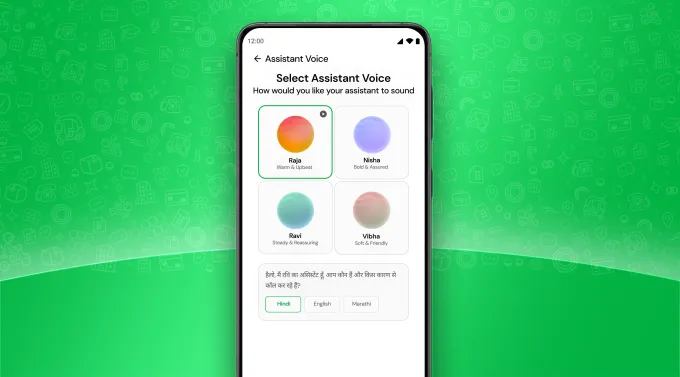
In India, consumers receive a lot of calls every day, ranging from spam and scams to delivery people and financial service companies trying to contact them. There are apps like Truecaller and the government’s Calling Name Presentation (CNAP) system to identify who is calling, but knowing the name of the caller is often not enough. That is why Equal AI is creating an assistant that can receive calls on your behalf, gather information, and tell you why someone is calling.
The app is currently available on Android, and since its launch last year, it has grown to more than a million monthly active users and over 300,000 daily active users, it says. The app screens the call and displays the reason someone is calling you.
The dialer shows quick reply options like “Leave the delivery near the door” or “Give it to the neighbor,” and the AI reads them back to the caller. You can also type a custom message for the AI to read out. The app records the call, and users can see the recording and transcription history with a summary in the app.
Image Credits: Equal AIImage Credits:Equal AI
Equal AI said today it has raised $30 million in Series B funding led by Prosus Ventures and Tomales Bay Capital with participation from Think Investments and Valiant Fund. Individual investors include Indian fintech PhonePe’s founder Sameer Nigam, Zubin Bharti Mittal from Airtel Family Office, Skyflow AI co-founder Anshu Sharma, Meta India and Southeast Asia’s VP Sandhya Devanathan, and CtrlS Datacenters’ Chairman Sridhar Pinnapureddy. With the new funding, the company has raised over $42 million to date.
The round is structured in three tranches, with the startup carrying a different valuation at each stage depending on whether it hits predetermined targets — a growing but still uncommon approach in which startups sell equity at different prices within the same round. The structure has an unusual quirk: it lets a startup advertise the highest valuation achieved, even if the bulk of the equity was sold at a lower one. Equal AI declined to provide its specific valuations.
Advertisement
The startup was founded by Keshav Reddy in 2022. Reddy comes from the family behind Indian conglomerate GVK, which has holdings across infrastructure, energy, and healthcare. Equal started as a data-sharing company for financial services and still offers data for financial analysis and know your customer (KYC) verification services for employers.
“We always wanted to be a customer-facing company, and with Equal AI, the first use case we launched was a call assistant because we realized users get a ton of calls for financial services or job openings. If you are buying car insurance, you might get 20 calls over a week, and that is hard to tackle for a human,” founder Reddy told TechCrunch about why the company started there.
The app currently only screens unknown calls, but the company is planning to introduce the ability to screen calls from known numbers too. The company also wants the AI assistant to take proactive action on a user’s behalf — such as texting a delivery person your address (with consent) or making outbound calls to book appointments. The startup said it is also working on an iOS version of the app and a paid subscription tier with more features.
Equal AI is using a mix of speech recognition, automatic speech recognition (ASR), and speech generation models with its own orchestration layer. English support matters, but consumers in India often speak in their native language or blend multiple languages in a single sentence — a phenomenon called code-mixing. Equal AI says it has built support for over 10 languages with this in mind.
Advertisement
The startup has stiff competition. Google and Apple both have call screening products. Truecaller, already a household name in India, has been building out its own AI assistant features. In the U.S., a16z-backed privacy startup Cloaked also launched call screening last year. Thiago Viana, global co-head at Prosus Ventures, said that Equal’s understanding of local context gives it an edge.
“Equal AI promises to screen calls for you and provide context on why someone is calling. We think that if an app does well in a few use cases, it can quickly become popular in its niche and create user stickiness to expand in different areas later on,” Reddy told TechCrunch by phone.
Prosus has been investing in AI assistant startups that focus on local markets. Its portfolio includes Spain-based Luzia and Latin America-based Zapia. Both were caught up in Meta’s ban on third-party AI bots on WhatsApp, which serves as a cautionary tale for platform dependency. Equal AI said that it didn’t want to create that kind of dependency — which is why it built around calls and its own app rather than piggybacking on a messaging platform.
When you purchase through links in our articles, we may earn a small commission. This doesn’t affect our editorial independence.
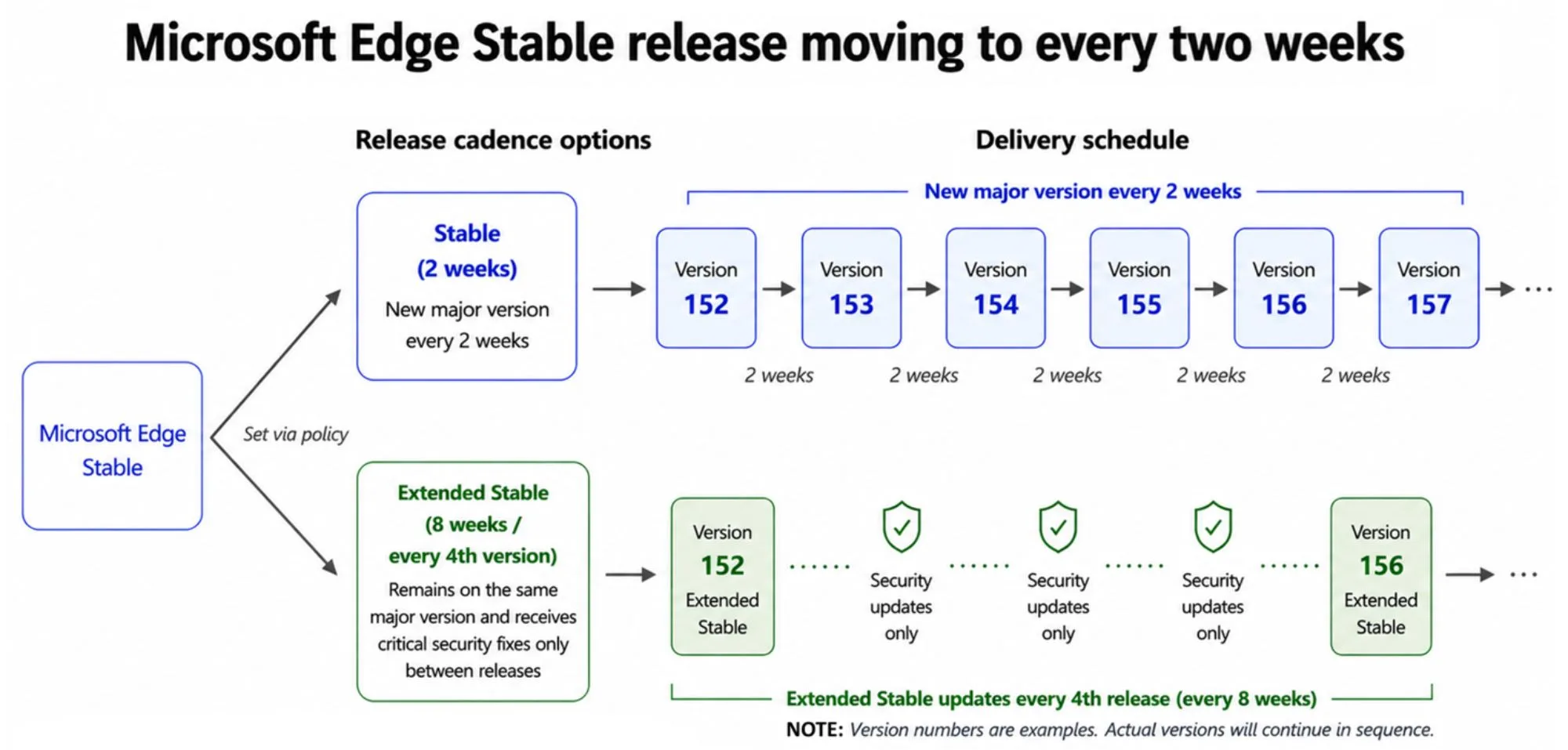
Microsoft is accelerating updates to its Edge browser, switching from a monthly release schedule to a biweekly one. The change takes effect with Edge 152, due on August 27, and puts the browser on the same cadence as Google Chrome.
More updates, not more features
The shift does not mean users will get twice as many new features. As Microsoft explained in a recent blog post, each release under the new schedule will carry roughly half the content of the current monthly drops, keeping the overall volume of changes roughly constant. The practical effect for most users is a steadier, smaller stream of updates rather than a sudden jump in new functionality.
Microsoft
Microsoft framed the change as a benefit for both consumers and enterprise customers, noting that security and platform fixes will reach users faster, and that smaller change sets are easier for IT teams to validate before deployment.
Who it affects and when
The new cadence applies to users on the standard Stable channel. Those on the Stable Extended channel, a longer-term option aimed at organizations that prefer less frequent updates, will stay on the current every-two-months schedule.
Google Chrome moved to a two-week release cycle in March, and Edge’s realignment closes the gap between the two Chromium-based browsers. The biweekly releases kick in with Edge 152 on August 27, giving users and IT admins a couple of months to prepare before the new schedule takes hold. For everyday users, the transition should be largely invisible. Automatic updates will simply arrive more often, each with a smaller footprint than before.
Casual IT team learns that building bespoke PCs can be a false economy
ON CALL 你好 Nǐ hǎo, dear reader, and welcome to another installment of On Call, The Register’s Friday column that shares your stories of translating technical trauma while delivering transcendent tech support.
This week, meet a reader we’ll Regomize as “Jackson” who
told us about his time providing tech support in a university’s biology
department.
Advertisement
“It was sometime in the mid-2000s and our IT group at the
time consisted of myself, my boss, and a part-timer,” he told On Call. “We were
a very casual IT group; nothing in the way of any formal policies or standards
for anything at all. If someone needed a new PC, we just ordered parts and
assembled them ourselves.”
The department’s PC fleet therefore had a diverse gene pool,
with no two machines possessing the same bill of materials.
“This was fine by me – I enjoyed building them and it never
really caused any issues that I couldn’t handle,” Jackson told On Call. “Until
one day we got a panicked support call from one of the secretaries who claimed
that her PC just rebooted and then started talking to her.”
Jackson and his colleagues didn’t believe a word of it until
the secretary stopped talking and placed her phone next to the talking PC.
Advertisement
“I could clearly hear a muffled voice repeating a message of
some sort,” Jackson told On Call.
There was nothing for it but to visit the PC, which he found
hung in the middle of a Power-On Self-Test, flashing an alphanumeric error code
and unmistakably playing a voice through its internal speaker.
In Chinese!
Jackson rebooted the machine and it ended up in the same
state, reciting the same message. Chinese isn’t a language in which Jackson is
fluent, so he had no idea what the PC was trying to tell him.
Advertisement
“After poking around in the BIOS, I found the culprit,”
Jackson revealed. “This particular model of motherboard had a ‘talking error
BIOS’ whereby certain POST codes triggered the playback of a friendly, spoken
error message, with Chinese set as the default language.”
Jackson found the relevant BIOS settings, changed the
default language to English, and the next time he rebooted the machine it
helpfully let him know: “Your floppy drive may not be connected
properly.”
In his mail to On Call, Jackson hypothesized that the PC’s
CMOS battery died, so the BIOS was unable to access its stored settings and
reverted to factory settings that assumed the presence of a nonexistent second
floppy drive.
“It triggered a feature I didn’t even know the motherboard
had!” Jackson told On Call.
Advertisement
Have you found yourself flummoxed by a feature you didn’t
know about? If so, click here to send On Call an email – we’ll assume that’s a feature you know well – so we
can tell your story on a future Friday. ®
If you’re looking for home and office furniture that will be part of your life for the long haul, Herman Miller is a go-to for well-designed, long-lasting furniture. Whether it’s upgrading your work-from-home setup with a better office chair or amping up your curb appeal with stylish new house numbers, Herman Miller can help. There are several pieces from Herman Miller that we love here at WIRED: the Herman Miller Embody is our “buy it for life” office chair, while Herman Miller’s Spout Sit-to-Stand standing desk is where I’m currently writing from. The brand is known for its thoughtful, high-quality pieces, but that quality level comes with a price tag to match. Luckily for you, you can pick up your own Herman Miller pieces for a little cheaper thanks to a Herman Miller promo code or a discounted Herman Miller bundle.
Herman Miller Promo: Save 15% on the Better Home Office Bundle
Refreshing your office? Say no more. Herman Miller has a bundle, aptly named the Better Home Office Bundle, that lets you bundle your choice of office chair, desk, and third item (a storage option, table lamp, or office accessory) to get 15% off the entire purchase. Use the Herman Miller promo code BUNDLE15 once you’ve put all three items in your cart.
Claim Free Delivery on Herman Miller Orders Over $2,000
Need it delivered? Get free delivery with the Herman Miller promo code FORYOU for any purchase over $2,000. You might worry you’ll need to purchase multiple items to hit that threshold, but many high-quality office furnishings (like our favorite office chairs from Herman Miller) will easily hit the minimum for you.
Unlock a First-Order Discount as a New Herman Miller Buyer
First-time shoppers at Herman Miller also get a special discount. You’ll need to sign up for Herman Miller’s newsletter, but a quick newsletter signup is well worth a Herman Miller discount code.
Advertisement
Multiply Your Savings by Stacking Herman Miller Sale Offers
If you wish, you can get multiple discount coupons going at the same time on Herman Miller’s site. You can stack Herman Miller’s coupon codes—like the one you’ll get for signing up for the newsletter, or bundling three items together—with seasonal sales to get multiple discounts at the same time. Memorial Day is right around the corner, after all, and Herman Miller’s site already has sales going.
Herman Miller Discounts: Save More with Refurbished Chairs
We named the Herman Miller Aeron office chair the “Best Office Chair for Long Hours,” because it’s durable, supportive, and airy’ plus, it’s also an iconic office chair that graces workspaces all over the world. A Herman Miller chair is an investment, which means it can get very pricey. That’s where Herman Miller refurbished chairs come in. They use genuine Herman Miller parts, including casters, tilt mechanisms, and Pellicle suspension material, which have been restored or replaced to original specifications. Each chair is backed by a five-year warranty, covering defects in materials and workmanship, with parts and labor included. And you can sit assured knowing that each Aeronchair has been rigorously tested to meet the original specifications for performance and ergonomic support.
























































You must be logged in to post a comment Login