
TL;DR
A top Communist Party journal told China’s platforms to stop price wars and invest in AI. The signal suggests regulatory stabilisation after years of crackdowns.



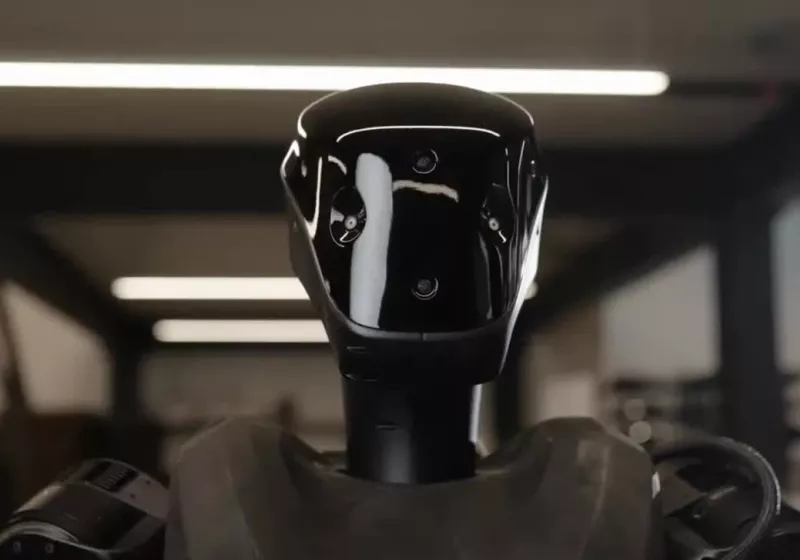
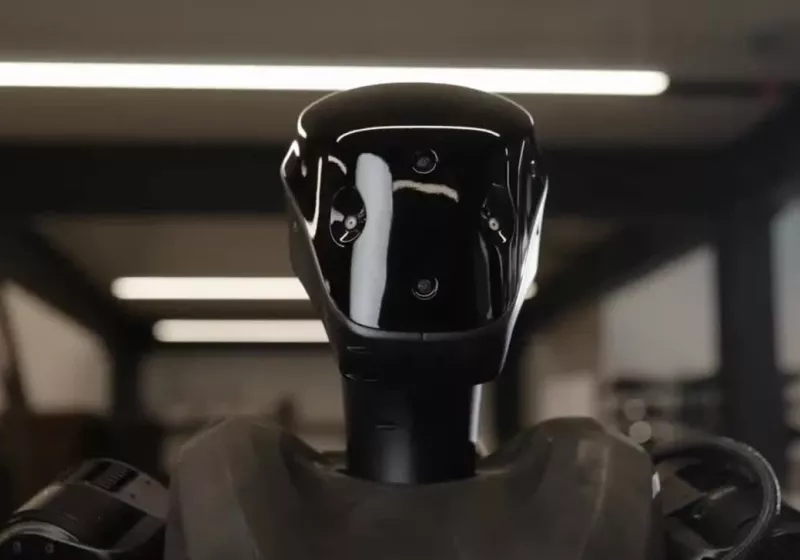
Foundation Future Industries, a startup founded in 2024 in San Francisco, has a goal shared by many similar robotics firms: to create machines that can take on those challenging, dangerous roles performed by humans.
Read Entire Article
Source link
Whether you’re choosing your first motorcycle with the intention of carrying a passenger or just looking to upgrade to a more capable bike for two-up riding, it’s important to consider several factors. First, you’ll need to make an honest assessment of your riding skill level and your partner’s needs.
For example, you may be tempted by the thrills promised by some of the fastest touring motorcycles in the world. After all, they have the word “touring” in their classification, passenger accommodations, and, in most cases, attached luggage, so they must be suitable for long-range two-up rides. Right?
Personal experience proves that’s not always the case. Having bought an early 2000s Honda VFR800Fi complete with a cushy aftermarket seat and hard side bags, I was excited to take my wife on our first two-up ride into the nearby countryside. She hated it immediately. The passenger position on the VFR, admittedly a motorcycle that’s more sport than touring, was not comfortable. So, when choosing the best motorcycle for two-up riding, it’s best to consider its passenger accommodations before you buy.
On the other hand, sport touring bikes are a great option for many riders and their partners. Full-on touring motorcycles offer the most highway comfort, but can be cumbersome to move around when parking. Cruisers are a great choice for many two-up couples, and those looking to get off the beaten path can find adventure bikes suitable for two-up riding.
Many enthusiasts consider the standard Honda Africa Twin adventure bike one of the best motorcycles for solo riding, but find it falls short of greatness for two-up riding. One key element holding it back from a passenger perspective is its off-road-inspired forward-sloping passenger seat design.
The Honda Africa Twin Adventure Sports ES features an upgraded seat with improved foam and a more neutral riding posture for greater comfort on longer trips. Honda Powersports lists the 2026 model’s base MSRP at $17,799, plus a $775 “Destination Charge.” There are two other two-up-capable adventure bikes priced higher and lower than the Honda that come to mind: the Triumph Tiger 1200 Rally Pro on the upper end of the scale and the less expensive Husqvarna Norden 901 Expedition. However, the Africa Twin Adventure Sports ES provides plenty of usable power, a well-rounded suite of features, and comfortable ergonomics from both seats. For many riding pairs, this blend of traits at its mid-range price makes it just right, as Goldilocks might say.
A 1,084cc liquid-cooled parallel-twin four-stroke engine powers the Africa Twin Adventure Sports ES with around 100 horsepower and 82 pound-feet of torque. The electronically adjustable suspension system includes inverted 45mm Showa front forks with 8.3 inches of travel and a Pro-Link Showa rear shock with 7.9 inches of travel.
There’s little doubt that the Honda adventure bike is more road-biased. It makes sense since most adventures will involve more pavement than dirt two-track riding. When on the highway, riders will enjoy the Africa Twin’s cruise control, Apple CarPlay and Android Auto, cornering ABS, rally-inspired fairing, and TFT touchscreen display. Other features, like the aforementioned ES seat, selectable torque control, electronically-adjustable suspension preload, and the bike’s low center of gravity, will be appreciated on or off-road.
It’s no secret that Harley-Davidson has produced some of the most iconic motorcycles for two riders. While even the brand’s intro-level models like the Nightster offer functional two-up riding performance, the sky is the limit with models like the 2025 Harley-Davidson CVO Road Glide RR.
The best Harley-Davidson for two-up touring falls between those extremes. For the price of the CVO Road Glide RR, one could buy a 2026 Road Glide Limited with a starting MSRP of $32,999 (plus undisclosed destination charges), complete with fairing, hard side luggage, and trunk, ride it to Sturgis on a two-week road trip, and still afford a nice down payment on a house.
The 2026 Harley-Davidson Road Glide Limited is loaded with features designed for comfortable long-distance two-up (or solo) touring. The Milwaukee-Eight 117 cubic-inch V-Twin provides predictable performance with variable-valve timing and electronic sequential port fuel injection, producing 131 pound-feet of torque and 106 horsepower.
Safety is a significant factor for a motorcycle destined to carry two people on long rides. The HD Road Glide Limited includes several safety features designed for that task. Harley-Davidson’s Cornering Rider Safety Enhancements provide extra traction when it matters most, adding another layer of safety to features like its anti-lock brake systems, electronic linked braking, traction control systems, and drag-torque slip control.
The standard passenger seat provides accommodations akin to sitting in a recliner. However, there are upgrades available through Harley-Davidson. For the ultimate backseat ride, consider a set of extended passenger armrests, and the heated rear seat option is practically a must-have for cooler temperatures.
The 2025 BMW R 18 Transcontinental, with an MSRP of $24,395 (plus $895 destination and handling), is one of those timeless motorcycle designs that blend old-school style with modern performance. Of course, there are a number of other motorcycle brands that offer serviceable cruisers for two-up riding, and each one is someone’s favorite.
One design feature that sets the BMW R 18 apart is its boxer engine, which differs from the standard V-Twin found on most capable cruisers today. The R 18’s twin-cylinder boxer engine displaces 1,802 cubic centimeters, delivering 91 horsepower and up to 120 lb-ft of torque, with at least 110 lb-ft throughout the 2000 to 4000 rpm range.
Power is routed through a constant-mesh six-speed gearbox engaged via a single-disc dry clutch and delivered to a shaft final drive. The BMW Motorrad Integral ABS handles braking duties, enhanced by Automatic Stability Control, Dynamic Brake Control, and Dynamic Engine Brake Control.
With the range of sport-touring motorcycles on the market today, it’s difficult to choose one as the best for every type of riding duo. More adventurous types might prefer something from the Kawasaki Ninja series, like the Ninja H2 SX or SE. Others are well-suited by more subdued, but still sporty models like the Yamaha Tracer 9 GT+, Kawasaki Versys, or Honda NT1100.
While those are all fine sport-touring models, especially for solo touring, it’s hard to argue against the more refined Yamaha FJR1300 as the best sport-touring motorcycle for two-up riding. The downside is that Yamaha’s website doesn’t list a current-year model for the FJR. Instead, it still shows the 2024 FJR1300ES with an MSRP starting at $18,299, plus a $575 Destination Charge.
According to Cycle World, Yamaha last updated the FJR in 2016. So while it may not have the latest technological advancements, it’s still a good example of not messing with near-perfection for the sake of padding the sales brochure. Despite its aging platform, the 2024 FJR1300ES offers features designed for long-range two-up touring.
Passenger and rider comfort is enhanced by its adjustable ergonomics, push-button windscreen adjustments, plush passenger and rider seating, heated grips, cruise control, and integrated hard luggage. Adjustable ergonomics include 0.8 inches of toolless seat adjustment, three handlebar positions, and over 5.1 inches of windscreen adjustment at the push of a button. The electronically adjustable suspension allows settings that provide the most comfort for long stretches and best performance to tackle the twisties.
When you close your eyes and imagine a motorcycle capable of delivering comfortable accommodations for two-up riding mile after mile, it’s very likely that you’ll picture the Honda Gold Wing. In fact, the Gold Wing is often considered one of the most comfortable motorcycles around, even by those who have never ridden one.
The first Honda GL1000 Gold Wing that hit the streets in 1975 was quite different from what we see in the current generation, although it was designed as Honda’s flagship high-speed touring bike even then. However, its horizontally-opposed 1,000cc four-cylinder engine set the stage for what the Gold Wing would become.
Second-generation Gold Wings, introduced in 1980, began offering touring-enhanced models such as the GL1100 Interstate that featured full fairings, tall windscreens, and hard-sided luggage to carry enough clothes for a few days. The fourth-generation GL1500 introduced the Gold Wing’s first flat-six engine design in 1988.
The current-generation Honda Gold Wing, the GL1800, has an MSRP starting at $25,500 (plus $775 Destination Charges). The Gold Wing Tour, which adds a rear trunk (doubling as a passenger backrest), heated seats, and upgraded suspension, starts at $29,500 (plus the destination charge). At the GL1800’s heart is a smooth-running 1,833 cc flat-six, delivering 90 horsepower and 102.5 lb-ft of torque, according to Cycle World.
A top Communist Party journal told China’s platforms to stop price wars and invest in AI. The signal suggests regulatory stabilisation after years of crackdowns.
A top-level Communist Party publication has signaled a shift in how Beijing intends to govern its largest internet platforms. A draft commentary set to appear in the Qiushi journal on Monday says the focus will be on balancing support for growth with enhanced regulatory oversight. The message is directed at companies including Alibaba, Meituan, and PDD Holdings.
The guidance reiterates Beijing’s stance on curbing “involution-style” competition, a reference to the price wars and aggressive subsidies that have defined Chinese e-commerce in recent years. Platforms are told to compete on value, not on who can lose money the fastest. The commentary also calls for stronger oversight of algorithms, data use, and consumer protection.
The more significant signal is what the commentary encourages. Platform companies are told to increase investment in strategic technologies, specifically artificial intelligence and cloud computing. Beijing is pointing its tech giants toward higher-value growth areas and away from the subsidy-fuelled margin destruction that has characterised the sector.
“The healthy development of the sector depends on a sound governance system and effective regulatory measures,” the commentary says. “The irregularities seen in China’s platform economy are partly linked to the fact that regulatory and governance frameworks have yet to fully adapt to its characteristics.”
The policy follows years of sustained scrutiny. Alibaba was fined $2.8 billion in 2021. Didi was forced to delist from the New York Stock Exchange. Meituan faced antitrust investigations. PDD’s Temu has been under pressure over merchant fees and pricing practices. The regulatory crackdown wiped hundreds of billions of dollars from Chinese tech market capitalisations between 2021 and 2023.
The Qiushi commentary suggests Beijing is moving from crackdown to calibration. The regulatory backdrop is stabilising, but compliance costs are rising and operational constraints are tightening. Platforms get permission to grow again, with conditions.
Chinese AI companies are already competing aggressively on price. DeepSeek permanently cut its V4 Pro model pricing by 75% this week, undercutting every Western frontier model. The Qiushi commentary’s call for AI investment aligns with a broader national strategy to dominate the AI stack from models to chips to applications.
China’s technology exports are expanding simultaneously across multiple fronts. BYD, Chery, and Geely are entering Canada. Xiaomi shipped 600,000 EVs in under two years. CXMT’s DRAM is appearing inside Corsair kits. The platform regulation signal is one piece of a broader industrial policy that encourages Chinese companies to invest in strategic technologies at home while competing globally.
For investors, the message is cautiously positive. The crackdown era appears to be over. Alibaba’s stock has recovered significantly from its 2022 lows. But the new framework means higher compliance costs, tighter algorithm transparency requirements, and an end to the subsidy-driven growth models that built Pinduoduo and Temu. The companies that redirect spending from price wars to AI will be rewarded. Those that do not will face regulatory pressure.
The Qiushi journal is the Communist Party’s premier theoretical publication. Commentary published in it reflects official policy direction rather than speculative opinion. When it tells China’s platforms to stop fighting on price and start investing in AI, the platforms listen. The question is whether the investment produces innovation or compliance theatre. Beijing is betting on the former.


At the Grainger College of Engineering, materials science and engineering professor Qing Cao and his team have built working silicon circuits by stacking active layers directly on top of each other. Instead of adding more devices side by side, they are moving into the third dimension and building stacked layers…
Read Entire Article
Source link
Get caught up on the latest technology and startup news from the past week. Here are the most popular stories on GeekWire for the week of May 24, 2026.
Sign up to receive these updates every Sunday in your inbox by subscribing to our GeekWire Weekly email newsletter.
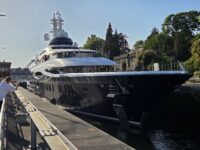
The Meta CEO’s 387-foot Launchpad passed through the Ballard Locks toward Lake Union on Tuesday, the same day the company disclosed nearly 1,400 layoffs in Washington state. … Read More
The $100 million Wingman is visible from the Magnolia Bridge and the Elliott Bay Trail that runs along the waterfront, but it blends in more easily at a terminal used for cruise ships. … Read More
A new state filing shows Meta is eliminating nearly 1,400 positions across its Seattle, Bellevue and Redmond offices, about 20% of its local workforce, as part of a companywide restructuring impacting 8,000 jobs. … Read More
No one knew why the $300 million, 387-foot Launchpad was in Seattle. … Read More
Five weeks after previous New Glenn launch failed, two companies founded by Jeff Bezos announce a mission that would add to Amazon’s satellite broadband constellation. … Read More
Oregon startup Canopii is tackling the food supply system by launching automated, tennis court-sized greenhouse franchises that use robots to grow 40,000 pounds of greens a year. … Read More
Blast deals a heavy blow to Florida launch pad — and to Blue Origin’s plans to send up Amazon Leo satellites and a lunar lander. … Read More
As data center backlash builds nationwide, Microsoft is pointing to Quincy, Wash., as Exhibit A in making the case that it’s a company communities can trust. … Read More
On this week’s GeekWire Podcast: Mark Zuckerberg’s superyacht arrives in Seattle the same day Meta discloses nearly 1,400 local layoffs, robot pizza startup Picnic shuts down and sells its assets to a mystery buyer, and companies grapple with the rising cost of corporate AI. … Read More
Livingston, N.J.-based CoreWeave, which rents infrastructure to companies training and running large-scale artificial intelligence models, is expanding its engineering hub with dozens of open roles in the region. … Read More


In 2024, researchers from the University of Illinois found that GPT-4, when provided with a common vulnerabilities and exposures (CVE) description, could autonomously exploit 87% of a curated 15-vulnerability one-day dataset. Without the description, it could only exploit 7%. This provided a “margin of safety” for the industry because while AI could exploit known vulnerabilities, it could not discover them.
However, on April 7, Anthropic announced that Claude Mythos Preview had closed that margin, with the model autonomously discovering thousands of zero-day vulnerabilities across major operating systems and browsers. Separately, Mythos scored 83.1% on the CyberGym vulnerability reproduction benchmark. In one campaign targeting OpenBSD across 1,000 scaffold runs, the total compute cost was less than $20,000.
Exploitation timelines are collapsing. Langflow’s CVE-2026-33017 (CVSS 9.8) was exploited 20 hours after disclosure with no public proof-of-concept. Marimo’s CVE-2026-39987 (CVSS 9.3) was hit in 9 hours and 41 minutes.
The defensive infrastructure most organizations rely on wasn’t designed for this. Rapid7’s 2026 threat landscape report states that the median time from CVE publication to CISA’s known exploited vulnerabilities (KEV) listing is five days. Google’s M-Trends 2026 report found that exploitation is happening before a patch is even released. When the Langflow advisory was published, the first exploit arrived in 20 hours. When the Marimo advisory was published, it took under 10 hours.
The assumption that your patch window is safe because exploitation takes time is no longer true. Here are your building blocks.
Most vulnerability management programs still prioritize by CVSS score alone. CVSS quantifies a vulnerability’s “theoretical” severity without considering whether a vulnerability is being exploited in the wild or how quickly someone could weaponize it. A CVSS 8.8 vulnerability with a history of active exploitation (like Docker’s CVE-2026-34040) gets lower priority than a CVSS 9.8 vulnerability that may never be exploited in the wild.
A recent study validated against 28,377 real-world vulnerabilities offers a concrete replacement: A three-layer decision tree incorporating CISA KEV status, Exploit Prediction Scoring System (EPSS) scores, and CVSS, thus forming a singular prioritization filter.
|
Layer |
Data source |
Threshold |
Action |
SLA |
|
1. Active exploitation |
CISA KEV catalog |
Listed |
Immediate patching |
Hours |
|
2. Predicted exploitation |
EPSS via FIRST.org |
Score ≥ 0.088 |
Escalate to Tier 0 pipeline |
24 hours |
|
3. Severity baseline |
CVSS via NVD |
Score ≥ 7.0 |
Typical remediation |
Per policy |
Validated result: 18x efficiency gain, 85.6% coverage of exploited vulnerabilities, ~95% reduction in urgent remediation workload. All three data sources are open and free.
The described integration is entirely automatable. It’s possible to build a script to query the CISA KEV API, the EPSS API from FIRST.org, and the NVD, and have that script run against your asset inventory for every published CVE. The human in this process should remain in the loop as an approver, but not as the trigger.
Creating exploits quickly not only changes how patches are prioritized, but how controls are configured for all the agent-driven systems that now possess privileged credentials. Your authorization policies have not been assessed against the behavior of AI agents, and that is now a measurable risk. CVE-2026-34040 showed that Docker’s authorization plugin architecture silently bypasses every plugin when the request body exceeds 1MB. Common AuthZ plugins (OPA, Casbin, Prisma Cloud) are unaware of this type of bypass, which occurs in Docker’s middleware before the request reaches the plugin.
When Cyera demonstrated this vulnerability, they showed that an AI agent debugging infrastructure could infer the bypass path while completing a legitimate task, without any instruction to exploit anything.
The Internet Engineering Task Force (IETF) is working on authorization models for agents. The document draft-klrc-aiagent-auth-01, published in March by participants from AWS, Zscaler, Ping Identity, and OpenAI, proposes the use of the current Secure Production Identity Framework for Everyone (SPIFFE) and OAuth 2.0 for AI agents to obtain dynamically provisioned and short-lived credentials.
Separately, the IETF Agent Identity Protocol draft (draft-prakash-aip-00) reports that out of about 2,000 surveyed model context protocol (MCP) servers, none had authentication.
But these standards are months to years away from implementation. For now, security teams must proactively incorporate agent-level test scenarios for all authorization boundaries, such as oversized requests, burst frequency, and multi-step escalation of privileged requests.
In a survey conducted by CSA/Zenity and published on April 16, 53% of organizations said they had already seen cases where AI agents exceeded their intended permissions, and 47% experienced a security incident involving an agent.
When AI builder tools such as Flowise (CVE-2025-59528, CVSS 10.0), Langflow, or n8n become compromised, the blast radius extends far beyond the host. These tools contain API keys to frontier models, database credentials, vector store tokens, and OAuth tokens to business systems. A compromised AI builder host is not just a single-system breach. It is a credential harvest that unlocks authenticated access to every connected service.
Without credential dependency maps for each AI tool host, incident response for agent compromise is guesswork. For every instance, document each credential, the extent of its access, and the relevant credential rotation process. Also begin migrating static API keys to short-lived tokens where downstream services allow.
1. Deploy the three-layer KEV-EPSS-CVSS filter
Substitute CVSS-only prioritization according to the table above. Automate the collection of data from all three APIs as part of a scheduled script against your asset inventory. Desired outcome: 18 times more efficient, 85.6% coverage of exploited vulnerabilities, 95% reduction in urgent remediation workload.
2. Implement event-driven patching for Tier 0 services.
Determine which services fall under the critical exposure tier: Services exposed directly to internet users, AI builder hosts, and container orchestration control plane. Trigger event-driven patching on a CVE publication instead of waiting for the next maintenance window for this tier.
Goal: deploy patch to canary within four hours of a CVE being declared critical. Use the CISA KEV and EPSS feeds to trigger event-driven patching. In situations where it is impossible to meet the goal of four-hour patching because of legacy dependencies, change-freeze windows, or rollback risk, immediately apply compensating controls such as removing internet exposure to the vulnerable service, rotating credentials for the vulnerable service, disabling affected functionality of the service (if applicable), and identifying an exception owner for the exposure until a patch can be deployed.
It is not acceptable to allow unbounded exposures for extended periods while awaiting a maintenance window.
3. Test authorization boundaries at agent scale.
Create test cases for every API that AI agents may communicate with via AuthZ policies. Specifically, include test cases for requests exceeding 1MB, 5MB, and 10MB body sizes. This includes test cases for burst rate > 100 requests per second and test cases for unusual parameter combinations (privileged flags, host mounts, capability additions). Additionally, patch to Docker Engine 29.3.1 to fix CVE-2026-34040.
4. Credential blast radius mapping for all AI builder hosts.
Document each credential for each Langflow, Flowise, n8n, and custom AI pipeline instance. Classify each credential by its lifespan (static key vs. short-lived token). Identify what each credential can access. Set up alerts for anomalous IP or identity for any credential access.
5. Shadow AI discovery scan for this week.
According to CSA data, there is a greater than 50% chance that your agents have exceeded their expected boundaries. Check your Security Information and Event Management (SIEM) and network monitoring tools for communications to the default ports of the AI builder: Langflow 7860, Flowise 3000, and n8n 5678. Any unauthorized instances are an unmonitored attack surface.
AI agents are emerging, and the standards bodies are responding. The IETF has multiple drafts related to agent authentication and authorization. The Coalition for Secure AI has published its MCP Security taxonomy and Secure-by-Design principles.
But these standards move at standards-body speed, and the exploit window is now measured in hours. Organizations that implement the three-layer filter and event-driven patching this quarter will have a measurable reduction in exposure. Those who wait will be running calendar-based patch cycles against an adversary that operates in less than 20 hours.
Nik Kale is a principal engineer specializing in enterprise AI platforms and security
Welcome to the VentureBeat community!
Our guest posting program is where technical experts share insights and provide neutral, non-vested deep dives on AI, data infrastructure, cybersecurity and other cutting-edge technologies shaping the future of enterprise.
Read more from our guest post program — and check out our guidelines if you’re interested in contributing an article of your own!

The Apple smart glasses with cameras and no heads-up display have been rumored for the end of 2026, but could now come at the end of 2027 instead. Though that’s not the whole story.
Rumors about Apple’s smart glasses effort have been increasing in frequency since 2024, but primarily from a single source. One other highly accurate source that has been in play since 2023 has offered a differing timeline, until now.
According to the Bloomberg newsletter “Power On,” Apple is pushing back its smart glasses release to late 2027 after hitting some development snags. While Mark Gurman didn’t offer his usual derogatory pile-on of Apple’s internal struggles, the timeline shift comes as a bit of a surprise.
His initial reports in 2024 around the latest codenamed N50 glasses suggested a 2027 launch window. He later suggested in January 2025 that Apple smart glasses development had hit “massive hurdles” that could take years to get past.
In May 2025, Gurman shared that Apple was aiming for a late 2026 launch window that has been repeated frequently by him since.
He’s also been clear that Apple smart glasses don’t have an AR display, and those would arrive much later. Now, Gurman has been repeating “by the end of the decade,” which, given it is 2026, isn’t exactly that far away.
As recently as February and April 2026, Gurman has repeated that late 2026 release timeline. What is unusual is that there was never any hint of a potential delay or struggle to get the glasses to mass production.

iPhone Fold rumors continue to push for a fall release in spite of repeated production issues
Then comes today’s report shifting the release back an entire year. Also in this report is information about the potential design aspects of the smart glasses.
It seems Apple will try to stand out with unique design elements like “oval-shaped cameras, unique colors, and multiple frame styles.” Apple allegedly also believes future iterations could be seen as a health device that could include AR features that help people see.
Meanwhile, Apple has seemingly run into repeated problems getting iPhone Fold to mass production, which hasn’t started, yet it still reportedly isn’t being pushed back.
So, it seems odd that Apple’s timeline would suddenly shift around 8 months out from announcing the product. But then there’s the other leaker’s timeline.
The other leaker I mentioned earlier is Ming-Chi Kuo, and he has been much more reserved in his leaking frequency on Apple smart glasses. While his history is hit and miss, the details he gets right are enough to have earned him quite the respect in the field.
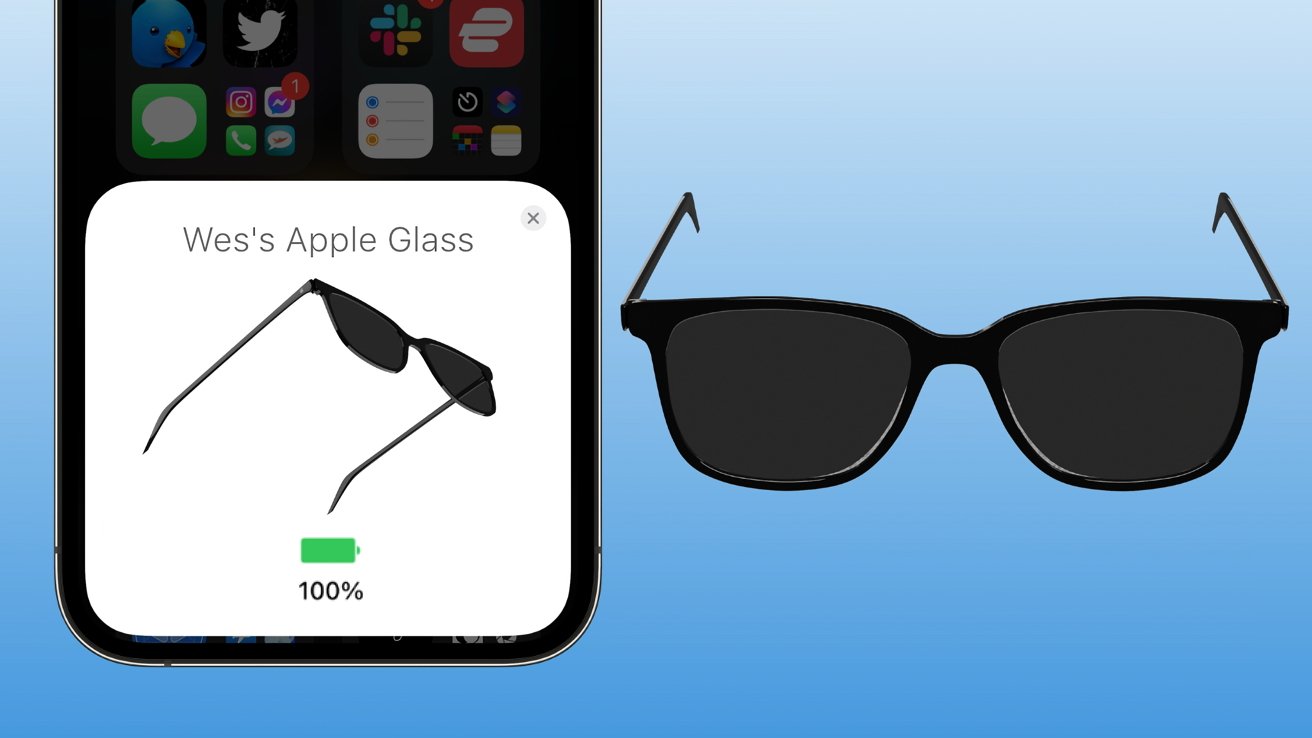
Apple’s rumored AR glasses have been discussed for years
However, I will note that his accuracy and resources seemed to have dropped since he shifted to his social-media-based leaking patterns of today.
Apple’s AR and VR efforts have been seeing consistent leaks since as early as 2015, but the most recent iteration was discussed by Kuo in 2021. Then, his report was much more forward-looking and thus, wholly inaccurate.
I mean, the man called for Apple Vision Pro in 2022, full-AR Apple Glass in 2025, and AR contact lenses by 2030. It is a wild report in retrospect.
Jump forward to something a little less speculative, and his reporting has been consistent with the Apple smart glasses release window. In June 2025, Kuo reported that Apple was aiming to ship three to five million Meta Ray-Ban-like smart glasses in the second quarter of 2027.
Given Kuo’s strong suit is the supply chain and the fact that he had shipping estimates, it is easy to argue that he’s had the correct timeline all along. So, it is curious that Gurman has been saying late 2026 or early 2027 until today.
Of course, all of these rumors are nebulous and will always shift and move as new information is obtained. Accuracy isn’t always easy to determine too since the age of a leak once it is released is rarely known.
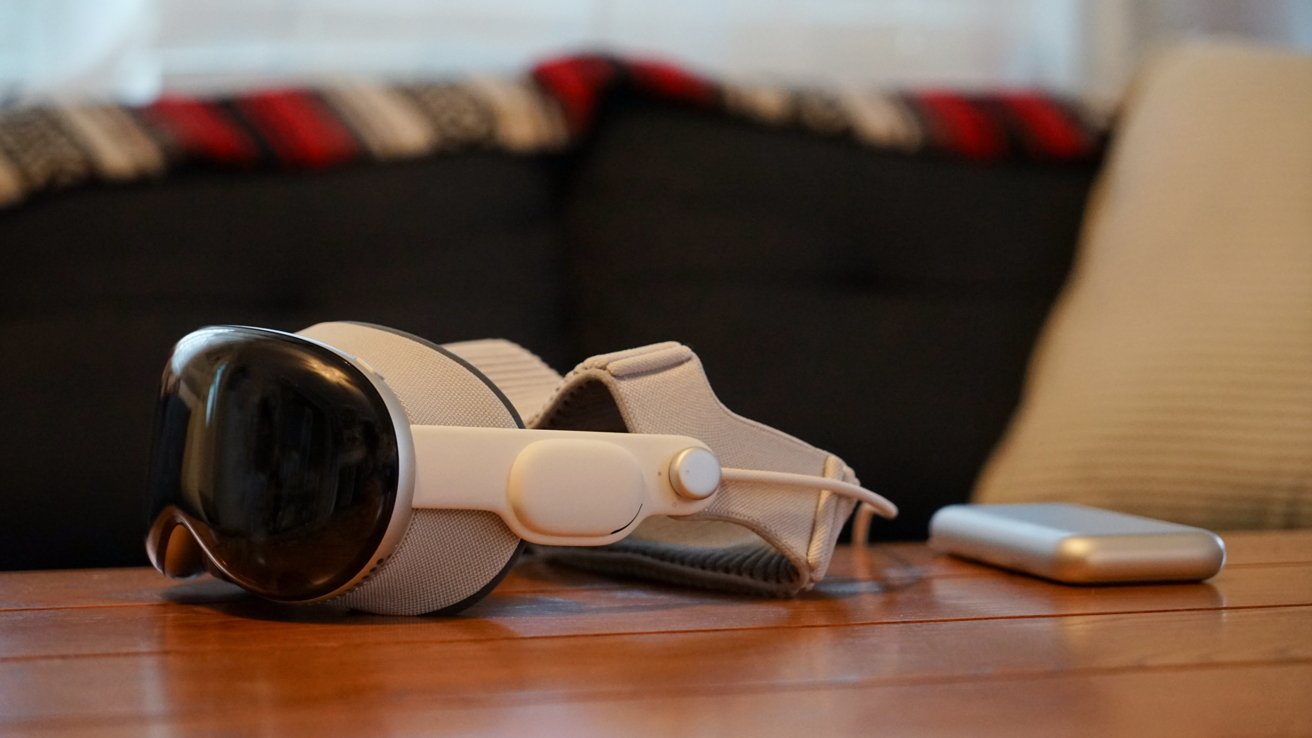
Apple Vision Pro is the start of Apple’s work in the wearable AR/VR field
For example, Kuo might have heard from the supply chain that Apple’s supply-side management aimed for an initial order in 2027. Gurman might have heard from his internal source, likely on or near the Vision Product Group, that the internal team’s goals were the end of 2026.
Then, as deadlines were missed and supply chains shifted, the internal team finally realized that their stretch goal wasn’t possible. Which means shifting back to the supply-chain suggested goal of 2027, thus making them meet Kuo’s previously reported timeline.
In essence, both leakers could have accurately reported what they had heard, and both be correct in this instance. Then there’s also the chance they’re both wrong and Apple announces smart glasses at a completely different time.
However, Gurman has proven somewhat unreliable when it comes to reporting around the Vision Product Group. As Daring Fireball pointed out, Gurman completely missed the Apple Vision Pro update to M5 when he reported in January 2025 that “I don’t believe there will be a new headset from Apple this year.”
Then, later in April 2025, Gurman said a lighter Apple Vision product could ship by the end of 2025 or early 2026 and even suggested that the M5 refresh had been abandoned. The unchanged M5 model shipped in October 2025 instead.
There is no doubt that Gurman has some insider connections that give him unprecedented access into Apple’s inner workings. However, it is important to note that he is no foolproof and does make mistakes — often when trying to create a narrative around an otherwise innocuous leak.
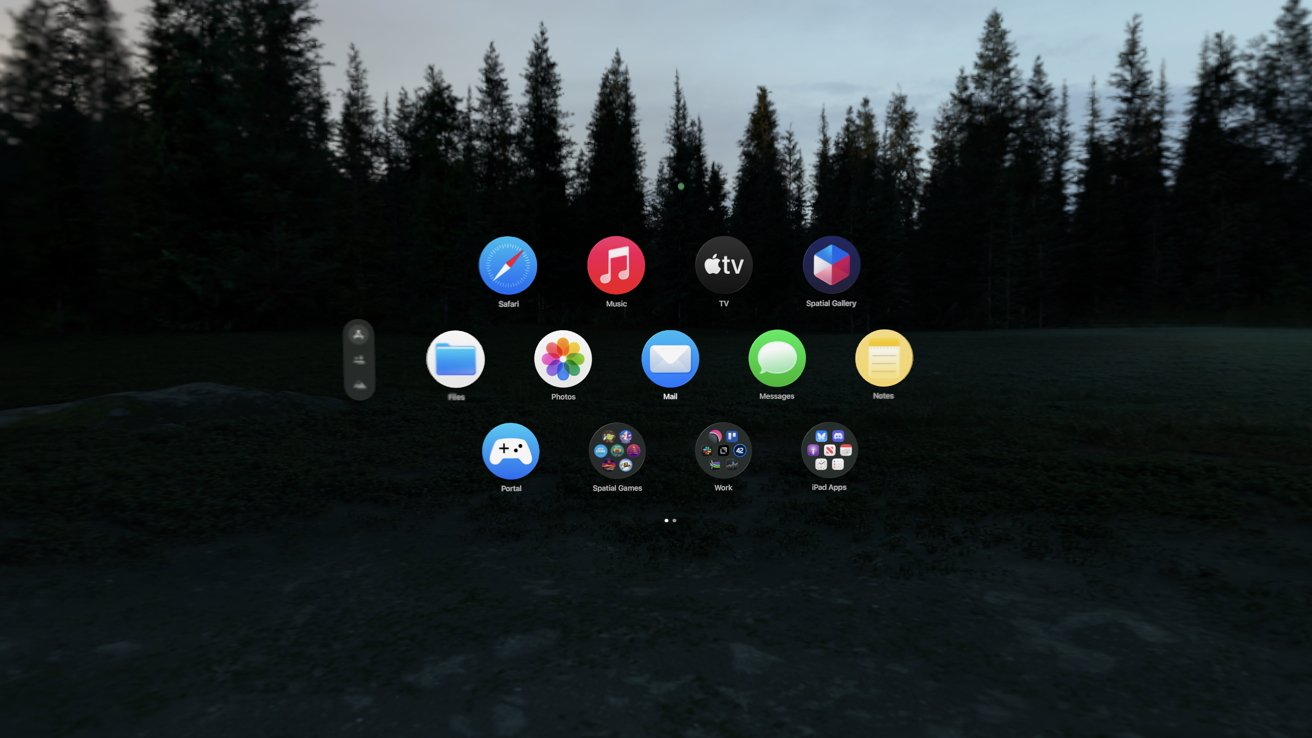
visionOS 27 could hint at Apple’s future AR plans
WWDC is on June 8 and could provide a hint of what the rest of Apple’s year might look like. However, since the initial set of Apple Smart Glasses won’t have a display, there is unlikely to be any sign of them in visionOS 27.
Then there’s the fact that Apple has several glasses-related products in development beyond the N50. Several of which, we have no idea what they are or when they could release.
There’s always the chance that one set is coming at the end of 2026 and another in 2027. Apple’s supply chain is immense and these leakers may be describing different parts of different elephants.
Time will tell if the smart glasses will arrive in the next twelve months. In this case, I’d bet on Kuo’s initial report of a late 2027 launch until he says otherwise.

Watch USA vs Senegal live streams to see if the 2026 World Cup co-hosts can get back to winning ways after two straight defeats. However, it won’t be easy against The Lions of Teranga, who have a point to prove after being controversially stripped of the African Cup of Nations title.
USA manager Mauricio Pochettino made it clear he wanted to test his side against the top teams in the world. So far, it hasn’t gone to plan as they were thrashed 5-2 by Belgium and then lost 2-0 to Portugal. Having been defeated by two European powerhouses, he’ll hope his side can build some confidence by overcoming one of the strongest nations in Africa.
To do so, he’ll need big performances from marquee players such as AC Milan’s Christian Pulisic, Monaco striker Folarin Balogun and Marseille forward Tim Weah. They’ll be tasked with breaking down a Senegal defence that conceded just three goals in 10 matches in qualifying for the World Cup.
Not only are Pape Thiaw’s side tight at the back, but they carry plenty of threat in attack thanks to the combination of all-time leading goalscorer Sadio Mané, Chelsea’s Nicolas Jackson and Everton’s Iliman Ndiaye. They can also call on Ismaïla Sarr, who helped Crystal Palace win their first-ever European title, although his involvement may be limited having played on Wednesday.
Read on for our guide on where to watch USA vs Senegal live streams online, on TV and from wherever you are.
Yes, L’Equipe Live Foot are broadcasting the USA vs Senegal game for free in France.
Abroad? NordVPN can unlock your free stream from anywhere in the world.Can I watch USA vs Senegal for free?
A VPN is handy piece of software that can make your device appear as if it’s back in your home country, so you can unlock your usual service. The best VPN right now? We recommend NordVPN – it does everything and comes with a 77% discount, an extra four months for free and an Amazon Gift Card thrown in on some plans.

In the US, USA vs Senegal is being shown via the Peacock streaming service.
A subscription to the streaming platform starts from $10.99 a month. You can also get 12 Months for the price of 10 by signing up for the year, which costs $109.99.
You will also be able to watch TBS and HBO Max.
Away from the US during the match? Use NordVPN to watch your home coverage of the game.

Fans in the UK can watch USA vs Senegal on Premier Sports 1 or via its streaming platform.
Premier Sports costs from as little as £12.99 per month. Amazon Prime subscribers can also add it to their package for the same price.
Outside the UK right now? Use NordVPN to access your home coverage of the game.

It doesn’t appear USA vs Senegal has a broadcaster in Canada at present.
Visiting Canada from the US? NordVPN is our recommended provider, and you can find out why with our in-depth NordVPN review.
We test and review VPN services in the context of legal recreational uses. For example: 1. Accessing a service from another country (subject to the terms and conditions of that service). 2. Protecting your online security and strengthening your online privacy when abroad. We do not support or condone the illegal or malicious use of VPN services. Consuming pirated content that is paid-for is neither endorsed nor approved by Future Publishing.
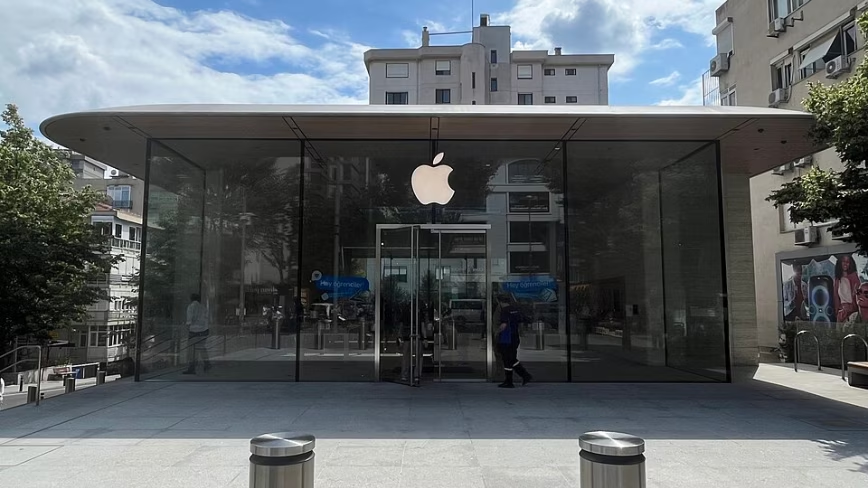
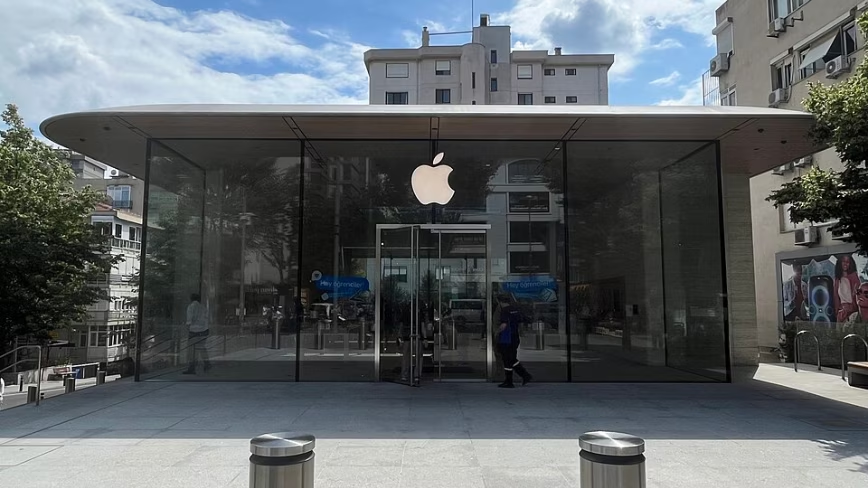
Apple plans to disrupt the $200B eyewear market the way it disrupted watches. Swatch fell 28%, Fossil 70%. Smart glasses are targeting late 2027.
When Apple launched the Apple Watch in 2015, the mid-tier wristwatch market had a handful of dominant companies. Swatch Group sold watches under Tissot, Hamilton, and Longines. Fossil Group sold under Michael Kors, Armani, and Kate Spade. Movado sold under Coach, Hugo Boss, and Tommy Hilfiger.
Ten years later, the damage is quantifiable. Swatch’s revenue is 28% lower in 2025 than it was in 2014. Fossil’s sales dropped roughly 70%. Apple became the world’s largest watchmaker by unit volume within a few years and last year overtook Rolex as the number one watch brand by revenue. The Apple Watch now generates an estimated $17 billion annually.
Bloomberg’s Mark Gurman reports that Apple is planning the same playbook for glasses. The company sees the $200 billion global eyewear market as a bigger opportunity than watches and intends to compete directly with products sold between $200 and $500, a segment dominated by EssilorLuxottica (Ray-Ban, Oakley, Persol, Oliver Peoples), Safilo Group (Tommy Hilfiger, Hugo Boss), and Warby Parker.
The addressable market is staggering. The WHO estimates 2.2 billion people globally have some form of vision impairment. Hundreds of millions of pairs of glasses are sold each year. Apple believes its brand, industrial design, iPhone integration, and AI features will lead people seeking new regular glasses to buy an Apple pair instead.
The first Apple glasses, codenamed N50, were initially planned for late 2026 with shipping by early 2027. Delays have pushed the timeline to a launch at the end of 2027, Gurman reports. The product will use oval-shaped cameras, unique colours, and multiple frame styles. Over time, Apple believes the glasses could become a health device and eventually incorporate augmented reality.
Meta has a substantial head start. It sold more than seven million Ray-Ban smart glasses in 2025 and commands roughly 82% of the smart glasses market. It has retail partnerships with LensCrafters and is steadily rolling out new models, with more coming in June. Meta also leads on AI features and has the advantage of working with Android, which remains larger than iOS globally.
Apple’s historical refusal to support Android gives Meta an opportunity to own that side of the market permanently. Ironically, Apple’s entry could benefit Meta by generating broader consumer excitement about smart glasses, with Android users then steered toward Meta’s models.
Meta is also expanding its wearables strategy beyond glasses. A leaked internal memo this week confirmed the company is developing an AI pendant and a “Wearables for Work” enterprise subscription. The competitive landscape is widening before Apple’s product even ships.
The risk for Apple is timing. Every month of delay gives Meta more users, more retail presence, and more data on what consumers want from smart glasses. The product depends on a revamped Siri that has already been delayed for two years. The new Siri app in iOS 27 may still launch as a beta.
Tim Cook has described the glasses as his top priority. Incoming CEO John Ternus is the driving force behind the project. The Vision Products Group developing the glasses has operated under his leadership for the past two years. The support from Apple’s highest levels is not in question. The execution timeline is.
Not all eyewear companies need to worry. High-fashion brands selling glasses for thousands of dollars, names like Cartier, Lindberg, Jacques Marie Mage, and Maison Bonnet, will likely continue to thrive. Apple never had a meaningful impact on the luxury watch market despite its attempt at $10,000 gold Apple Watches. Rolex generated an estimated $14 billion in revenue last year, more than double its sales from a decade earlier.
The target is the mass market, not the luxury segment. Apple is going after EssilorLuxottica, Safilo, and Warby Parker the way it went after Swatch, Fossil, and Movado. The pattern is clear: enter an established consumer product market, offer something that integrates with the iPhone, and wait for the incumbents’ revenue to decline.
Apple’s Watch business is itself facing new competitive pressure from screenless wearables like Whoop, Oura, and Google’s Fitbit Air. The company needs a new hardware growth category. Glasses, if executed well, could be it. The addressable market is not millions of users. It is billions.
Gurman also reported that iOS 27’s Siri app will sync conversations across devices via iCloud. Early work on iOS 28 (codenamed Bell) and macOS 28 (codenamed Poppy) has begun, with next year’s releases expected to be “far more significant” than the iOS 27 updates. A new Apple TV set-top box and HomePod mini are nearly ready, having been delayed for months to launch alongside the new Siri.

Welcome back to TechCrunch Mobility, your hub for the future of transportation and now, more than ever, how AI is playing a part. To get this in your inbox, sign up here for free — just click TechCrunch Mobility!
If you’re into EVs or sports cars, then you surely saw the kerfuffle over Ferrari’s first all-electric car, the Luce. The reaction was swift and biting for the five-seater EV designed by Apple veteran Jony Ive and priced at close to $650,000.
Ferrari fans expressed horror, critics compared it to the far cheaper Nissan Leaf, memes were made, and even one car designer (Lucid’s Derek Jenkins) threw some shade.
Senior reporter Sean O’Kane asked a different question as the great Ferrari Luce debate blew up the internet: Who is the Luce for?
You’ll have to read the full story to get his complete breakdown. But in my view, the most important question is whether the Luce is for existing Ferrari owners. After all, Ferrari owners often possess more than one. More than 80% of the 14,000 people who bought a Ferrari last year already own one of its vehicles, O’Kane notes.
According to Ferrari, there is demand for the EV. Ferrari CEO Benedetto Vigna claims the Luce is already getting orders from old and new customers. Assuming that demand outstrips the number of Luce EVs that the automaker plans to make, the next question is, who will Ferrari pick? (IYKYK)
Ferrari could be vindicated. Remember the Ferrari Purosangue, which was widely panned when it launched several years ago? That SUV is now considered a success. Sometimes it doesn’t matter if a product is hated. Ferrari doesn’t need universal approval; it just needs enough buyers.
Let’s jump from EVs to AVs.
A new Texas law allows its Department of Motor Vehicles agency to exert more control over autonomous vehicle testing and deployment in the state. Companies must now license AVs in the state, and the data is public. Here’s what I found after spending a little time with the AV tracker tool.
Waymo is far and away the leader with 577 registered AVs, followed by Avride with 317, Nuro with 47, and Tesla with 42. Self-driving truck companies Aurora, Gatik AI, Kodiak AI, and Waabi can also be found. (For all the details, you can read my story.)
Fleet size is just one measure — and it certainly doesn’t always translate into whoever has the most wins. After all, many of these companies have not launched commercial services in the state.
I’m far more interested in the complaints feature on this new tool, which is also public record. As of today, complaints have not been filed against the companies listed above.

A new single asset fund managed by Equip Capital has taken a majority stake in European e-scooter operator Ryde Technology. Goldman Sachs Alternatives is the lead investor.
Harley-Davidson’s electric motorbike spinoff LiveWire acquired electric off-road startup Dust Moto. Terms of the deal were not disclosed.
Matternet, an autonomous drone delivery company, raised $33 million in a private placement offering and completed a reverse merger with Los Altos Ventures Corp.
Revel, the EV charging company that shuttered its ride-hailing business last August, is merging with Voltera. Terms of the deal were not disclosed, but the combined business will operate under the Voltera brand and will be led by Revel CEO Frank Reig, Bloomberg reported.
Stark, a German drone maker, is in talks to raise at least €300 million ($350 million), a round that could double its valuation to €2.5 billion, the Financial Times reported.
Volara Motorsports Group, a motorsports and performance-focused holding company, acquired Lynx Motor Works, an Austin, Texas-based company that makes limited-production, reimagined classic vehicles.
WeRoad, the Milan-based group adventure travel startup, raised $58 million in a Series C round led by Airbnb. The funding brings the company’s total capital raised to roughly $100 million and will finance WeRoad’s push into the U.S., beginning with Austin.

American Airlines will install Starlink on more than 500 narrow-body Airbus aircraft beginning early next year, the latest carrier to pick the SpaceX unit for in-flight Wi-Fi service. The deal provides a financial lift for Starlink, the satellite communications network and the only SpaceX business unit that generates meaningful revenue.
Rivian said it will begin deliveries of its new R2 SUV on June 9. Meanwhile, Rivian is being investigated by the National Highway Traffic Safety Administration over how the EV maker services its vehicles’ rear suspension components.
Slate Auto is expected to announce pricing and start taking nonrefundable preorders for its low-cost electric vehicle on June 24. Deliveries are supposed to happen later this year.
Volvo Cars received a specification authorization by the Commerce Department that allows the Swedish automaker, which is majority owned by China’s Geely Holding, to continue to import and sell its vehicles in the United States. A law, finalized in January 2025, effectively bans virtually all Chinese vehicles from the U.S. market as part of a crackdown on connected car technology with ties to China.
Waymo has started giving select riders in Los Angeles, Phoenix, and San Francisco access to its newest robotaxi: an all-electric, minivan-like vehicle that is designed to lower costs and handle the use and abuse of hundreds of thousands of riders. I had a chance to ride in the vehicle, a modified Zeekr-made minivan called the Ojai (pronounced oh-hi). Stay tuned for my full review, which will run this weekend. Here’s a teaser: Robotaxis have long suffered from a magic problem. This Ojai robotaxi starts to solve it.
It’s poll time! Maybe you secretly like the Ferrari Luce and just don’t want to get trolled. Maybe you hate it. We asked our newsletter readers to share their opinion.
Sign up for the Mobility newsletter to participate in our polls!
And now one more thing, for real this time. Last week, I asked our newsletter readers, “Will SpaceX and Tesla merge?” Here’s how they answered. More than 51% selected “Yes, within two years”; 34% picked “never”; and 14.5% chose “Yes, this year.” That means more than 65% believe a merger is inevitable.
When you purchase through links in our articles, we may earn a small commission. This doesn’t affect our editorial independence.

“In the future, AI agents will be able to find one another using the Domain Name System (DNS), instead of crawling about and probing ports or checking configured resources,” writes The Register.
InfoWorld writes that “numerous proprietary agent registries are on the market, but the Linux Foundation suggests we simply extend the distributed, open Domain Name System (DNS) infrastructure we already have.”
The foundation is now inviting contributions to the DNS-AID project, a standard way for AI agents to discover, verify, and communicate with one another over DNS that requires no new infrastructure. It enables agents and Model Context Protocol (MCP) servers to use DNS as a global, vendor-neutral directory.
While many details remain to be worked out, the proposal suggests domain owners create a new well-known address that can provide a starting point for agents looking for one another: _index._agents.{domain}. This approach ensures that agent discovery remains scalable, secure, and compatible with the protocols that underly the internet, the Linux Foundation said.
The Linux Foundation descrbes DNS-AID as enabling a standard way for AI agents to discover and communicate with one another. “By leveraging the internet’s existing Domain Name System (DNS) infrastructure, DNS-AID provides a robust, decentralized alternative to the centralized registries and hardcoded URLs currently limiting AI interoperability.”
The standard was originally developed by Infoblox, their announcement notes, but “Because the protocol is implementation-agnostic, it functions across any DNS provider, ensuring that organizations maintain control over their agent infrastructure without relying on proprietary, centralized services.”





Israel says it has killed new Hamas military leader in Gaza City airstrikes


NASA taps Blue Origin to deliver lunar rovers for Moon Base initiative


Bridgerton Season 5: Cast, Release Date And Everything We Know So Far

Brian Armstrong Outlines Crypto Vision for the Future Financial System


XRP *JUST* SUCCEEDED!!!! CLARITY ACT EXPOSED!!! (SHE EXPOSED IT)

2026 NBA Finals schedule, odds: Knicks await Thunder or Spurs after winning East
Micron Crosses $1 Trillion Market Cap as AI Demand Reshapes Memory Sector


Selena Gomez Reportedly Upset Over Benny Blanco’s Comments on Her ‘Terrible’ Diet


This is BROKEN! INSANE 5x MONEY CAR WASH WEEK! The NEW GTA Online UPDATE Today! (GTA5 New Update)


BTS Sells Out Four Las Vegas Shows at Allegiant Stadium for ARIRANG World Tour

China assigns ID codes to 28,000+ humanoid robots

Hottest May day ever as London hits 34.8C in 2C leap from previous records


Microsoft’s quiet Claude Code retreat and the real cost of enterprise AI


Waymo dominates autonomous vehicle registrations as Tesla trails behind


Nikkei 225 Surges Past 65,000 for First Time as Iran Peace Hopes Fuel Record Rally
The Samsung pay deal is the moment Korean unions changed register


Crowds find riverside shade in York as temperatures soar


Westone Audio and Etymotic Acquired by Fidelity Collective in Major IEM Market Move

‘Breaking Bad’ Star’s Easy-to-Binge 6-Part Crime Series Spin-Off Is Finally Heading to Free Streaming


Millions of AI agents imperiled by critical vulnerability in open source package


You must be logged in to post a comment Login