Connect with us

Tech

AI Can Help One of K-12’s Biggest Challenges: Middle School Reading

Published

on

For years, the United States has treated its reading crisis as an early grades problem. This narrow focus misses the bigger challenge: the “comprehension wall” that many students hit in middle school. 

As students move into middle school, they no longer focus on learning to read. They must understand what they are reading. Right now, they struggle to do so: Only 30% of eighth graders were proficient in reading in 2024, the lowest level in 30 years.

I witnessed this problem firsthand as a principal and school network leader. We invested significant time in the early grades teaching and reinforcing phonics, phonemic awareness and fluency. The work paid off, as students made strong gains through fourth grade. Then, in fifth grade, performance dropped as texts became more complex and writing demands increased.

That is when many students hit the “comprehension wall.” They can decode the words on the page, but meaning breaks down when a passage uses complex sentences, sophisticated vocabulary, old-fashioned language, hidden meaning or unfamiliar subject matter.

Advertisement

The consequences are hard to miss. Students who cannot deeply engage with text can fall behind not only in English language arts, but science, social studies, math and every subject that depends on reading to learn. Their confidence can erode, with many choosing to hide their confusion rather than ask for help.

The diverse needs that exist in almost every middle school classroom make the challenge harder. Some students struggle to decode, some can read the words but lack the vocabulary or background knowledge to understand the meaning, and some read far above grade level and need to be challenged. 

The problem is not a lack of educator commitment. It is a lack of scalable support.

Opportunities and Challenges

I am generally skeptical of the artificial intelligence (AI) hype in education, especially of suggestions that technology can replace teachers, strong curriculum or the critical relationships that often power learning. But middle school reading is one area where carefully designed AI-supported tools can help if they are built to strengthen instruction rather than shortcut it.

Advertisement

The opportunity lies in custom-built literacy tools, based on the science of reading, that use AI to diagnose student needs precisely, provide timely feedback and help teachers differentiate support without lowering expectations.

The opportunity is not to hand students a generic chatbot and hope comprehension improves. The Brookings Institution found that AI can either enrich or diminish student learning depending on how it is used, and recommended schools use tools that “teach, not tell.” 

Schools can use AI to create better support for the reading work educators already know students need: a higher volume of reading, more precise diagnosis, timely feedback, opportunities to revise their thinking and ways to access grade-level texts when the work is difficult.

One of the biggest challenges for teachers is reading assessment. In middle school, assessment often focuses on whether students have mastered a standard. But reading comprehension is not a simple sequence of discrete skills. A student may understand the main idea in one unit and struggle with that same standard in the next because the texts are more complex, the vocabulary is less familiar or the background knowledge demands are higher.

Advertisement

Educators need a more nuanced picture of what students need. Instead of relying only on stand-alone assessments, well-designed AI tools can analyze students’ everyday work, identify text-specific and longitudinal patterns and give teachers clearer visibility into where comprehension is breaking down.

AI can also help with differentiation. For example, students could read a complex nonfiction article in class and work in pairs to unpack its meaning; but if they struggle, AI asks a just-right follow-up question. They are redirected to a specific sentence or paragraph to reread. They can access a vocabulary definition or brief background knowledge. They have a chance to revise after feedback that pushes them back into the text rather than away from it.

One teacher often cannot provide this level of individual support in real time to 26 students with different needs. There can be a greater impact on struggling readers, who are too often removed from rigorous learning and complex texts altogether, and are given watered-down materials instead of better access points. Over time, the achievement gap becomes not just a reading gap, but also a knowledge gap.

Early results are promising. In one large urban district in Texas and another very diverse district in Tennessee, middle schools using an AI-supported literacy model saw significantly stronger year-over-year growth on state reading assessments than comparable schools that did not use the model.

Advertisement

These examples suggest AI-supported literacy intervention can help educators provide more responsive support at-scale when aligned with strong instruction, grade-level content, teacher support and consistent implementation.

If AI becomes a shortcut, novelty, or substitute for high-quality instruction, it will fail students. If it is used mainly to help students complete assignments faster, it will weaken the habits students need to build: reading closely, asking questions, explaining their thinking and revising their ideas.

Ask Before You Act

The best way to improve student reading achievement is still to read a lot, and we should look for tools that support a higher volume of reading with increasingly complex texts.

In the last decade, schools have taken a crucial step and replaced incoherent, homegrown materials with vetted curricula that systematically build knowledge and vocabulary, expose students to complex grade-level texts and spiral essential reading habits.

Advertisement

Before adopting AI-supported reading tools, educators and district leaders should ask hard questions, such as:

  • Does the tool reinforce or detract from high-quality curricular materials? Does the tool keep students engaged with grade-level text or does it lower the bar? 

  • Does it require students to return to the text, explain their thinking and revise their responses? 

  • Does it give teachers visibility into where students are struggling? 

  • Does it support discussion, writing and teacher-led instruction or does it isolate students on screens? Does the tool lead to more students doing more reading, writing and thinking? 

  • Does it help students build reading stamina and a love of reading?  

These questions matter because the goal is not to make reading easier by removing the cognitive work. The goal is to make rigorous reading more accessible so more students can participate in that work.

We cannot continue treating middle school reading challenges as an inevitable byproduct of earlier gaps. Nor can we assume that students who reached adolescence without strong literacy foundations are beyond meaningful intervention.

For middle school students who have spent too long being told that reading is something they should have already mastered, that support could make all the difference.

Advertisement

Source link

Continue Reading
Click to comment

You must be logged in to post a comment Login

Leave a Reply

Tech

Republicans Stumble In Bid To Flood Midterm Airwaves With Discounted Ads

Published

on

from the too-bad,-so-sad dept

Back in June, the Supreme Court ruled 6–3 in National Republican Senatorial Committee v. Federal Election Commission that federal limits on coordinated expenditures by political parties violate the First Amendment. Which is every bit as stupid and corrupt as it sounds.

Previously, under the Federal Election Campaign Act (FECA), political parties were subjected to strict statutory caps on how much money they could spend in direct coordination with their candidates’ campaigns. The Supreme Court’s June ruling eliminated candidate contribution caps, made it much easier for rich people to flood Joint Fundraising Committees (JFCs) with cash, and basically gave a giant green light for more quid-pro quo corruption to be exploited by dark money groups.

Given the broad disparity in how much money the two U.S. parties have ($125 million for the GOP versus a bunch of debt for the mismanaged DNC) Republicans were keen to use the Supreme Court ruling to their advantage in the coming midterms, hoping to flood the airwaves with more dark money-funded agitprop than ever before in a bid to try and offset Donald Trump’s nose-diving popularity.

Hoping to embolden their plan and provide discounts, the Brendan Carr FCC’s media bureau quietly issued an announcement late last March saying they were making some changes to the FCC’s lowest unit charge (LUC) requirements governing broadcast TV political ads. The changes expanded which political entities qualified for discounted broadcast advertising rates.

Advertisement

Historically, a subset of political candidates were given a discounted rate on ads starting 60 days before the midterms (generally the lowest rate any advertiser has to pay during that block of time). The Supreme Court and FCC collaborated to extend that discount to effectively all dark money political groups and JFCs, giving the GOP a massive advantage in midterm messaging and spending.

But things have since gotten slightly more complicated for Republicans.

Anna Gomez, the FCC’s lone Democratic Commissioner (because Republicans refuse to fill the other empty Democrat seat), issued a statement this week belatedly blasting the Carr FCC for expediting America’s steady decline at the hand of billionaire donors and political corruption:

“In the final stretch of a national election, this FCC is unleashing a flood of coordinated
campaign money into broadcast advertising, just as the Supreme Court has cleared the way
for unlimited coordinated spending between parties and candidates. This unprecedented,
last-minute decision gives the biggest political spenders an even bigger advantage over
everyone else by expanding the candidate-only discount established by law to joint
fundraising and party committees, an advantage that will make it hard for anyone else to
catch up before Election Day.

According to Gomez, Carr’s FCC also made the changes with all the transparency you might expect:

Advertisement

This decision was made behind closed doors by agency staff, not by the full Commission, and it contradicts what this administration itself told the Supreme Court less than a year ago about who qualifies for this discount. In direct conflict with the administration’s position, the FCC relies on alleged staff-level guidance that was never provided in writing and that nobody could find, and adopted it with no opportunity for the public to weigh in. The American people should not have sweeping election-year rule changes forced on them in the dark, on the eve of an election, without a single opportunity for public input.

But there’s some new bad news for Brendan Carr and the Republican midterm agitprop machine: Sen. Jon Ossoff, Rep. Kristen McDonald Rivet and Senate candidates Roy Cooper and Sherrod Brown filed a lawsuit last June attempting to stop the FCC. And this week, The Richmond, Virginia-based 4th Circuit Court of Appeals sided 2-1 with the four Democrats, temporarily suspending the FCC effort:

“The [lowest unit charge] requirement and campaign finance statutes are clear that neither political parties nor joint fundraising committees with non-candidate members can be entitled to the LUC.”

The court found that the Carr FCC also basically ignored numerous complaints by broadcasters and politicians about the unfairness of the discounted ad rate plan:

“Despite the time-sensitive nature of these proceedings, the Commission intentionally took no action and offered no response to the Application for more than three months. The Commission did not, for example, seek responses from impacted parties, or engage in fact finding, or secure supplemental briefing, or solicit public comment, or schedule or conduct an oral argument.”

Funny, that.

Republicans will inevitably appeal. Though the Republican effort to get highly discounted rates for their midterm agitprop campaigns has stalled out at an inopportune time (for them). But overall, the general direction of U.S. lobbying and corruption safeguards generally has only been headed one direction, with fairly ugly and obvious results everywhere you look.

Advertisement

Filed Under: advertising, airtime, anna gomez, brendan carr, broadcasters, corruption, dark money, fcc, jon ossoff, kristen mcdonald rivet, lowest unit charge, midterms, political advertising, politics, proaganda, roy cooper, sherrod brown, tv

Source link

Advertisement
Continue Reading

Tech

Apple TV Now Costs More. Here’s What to Know

Published

on

This has been another year in which we’ve seen a significant number of streaming price hikes, and Apple has become the latest company to bump up costs for subscribers in the US. On Friday, the tech giant announced it’s raising the price of Apple TV’s monthly and annual subscriptions, as well as the Apple One Individual plan.

As of today, Apple TV will increase by $2 to $15 per month, and the annual price will increase by $20 to $119. The change goes into effect for new and current subscribers today, but existing customers will receive notification roughly one month before the new price hits their bill.

The streaming service, which also raised its subscription price in August last year, is home to popular titles such as Ted Lasso, Severance, Widow’s Bay and Dark Matter.

If you have the Apple One Individual plan, the new rate is $22 a month, up from $20. This plan bundles access to Apple TV, iCloud Plus, Apple Music and Apple Arcade. For now, pricing for the Family and Premier tiers remains the same.

Advertisement

It’s not the only streamer to hike prices, as Netflix, Spotify, Peacock, Prime Video and others have also implemented price jumps in 2026. This announcement comes ahead of Apple’s big iPhone event on Sept. 9, when it’s rumored to launch a foldable phone among its new lineup.

Source link

Continue Reading

Tech

Keepers of Noble Numbats to be offered a Resolute Racoon: Ubuntu 26.04.1 is coming

Published

on

OS PLATFORMS

GRUB’s up for furry new update

It looks like the Racoon has bedded in and settled down, as Canonical releases the first point release of this year’s Ubuntu LTS version, offering an upgrade to users on Ubuntu 24.04 LTS (Noble Numbat).

Advertisement

Ubuntu 26.04.1 is the first point release of April’s long-term support version, which will be supported until 2031. Assuming that it follows the pattern of previous Ubuntu LTS releases, 26.04.1 will be followed by four further point releases – usually, the final release comes a little while after the following LTS release. That means Ubuntu 26.04.5 should arrive some time after Ubuntu 28.04 – meaning in or around September 2028.

It’s accompanied by most of the remixes releasing matching point releases: Kubuntu, Ubuntu Budgie, Lubuntu, Ubuntu Kylin, Ubuntu Studio, Xubuntu, Edubuntu, and Ubuntu Cinnamon. Notably, two flavors are missing from this list. There are 10 official flavors but only eight point releases lists.

There was no official 26.04 release of Ubuntu MATE. Maintainer Martin Wimpress has stepped down – he has a new project called Nøughty Linux he’s working on instead. There’s not much to see on the website yet, but if you’re curious, his talk at the 2025 Ubuntu Summit will give you a taste.

Ubuntu Unity isn’t in that list, either. That remix missed the 25.10 release cycle because lead developer Rudra Saraswat – whom we first talked to in 2022, when he was 12 – is at university. The good news is that some developers did step up to help and there is an Ubuntu Unity 26.04 release. It replaces a bunch of subcomponents of the previous version, though, and that means it’s officially not an LTS release. Ubuntu Unity users should be aiming for the 26.10 release instead.

Advertisement

This first point release has a few consequences we can expect.

One is that for LTS users, it’s upgrade time, if you are planning on trying to stay current. Canonical does not start offering new version upgrades to LTS users until the first point release. Now that Raring-point-one is here, people running Ubuntu 24.04 “Noble Numbat” will start to see offers to upgrade to the new version.

This applies to those running their Ubuntu servers as pets, rather than herding them like cattle. One of the things that really crumples the cardigans of hardcore Debianisti is that Canonical inserts messages into the output of the apt command. So the upgrade offers won’t be limited to graphical desktop users.

Another consequence, albeit less concerned with any of the official flavors, is that System 76’s Pop!_OS 26.04 is expected soon. The company said on LinkedIn that they were aiming for an end-June release date. That didn’t happen.

Advertisement

The team is certainly hard at work. Its in-house COSMIC desktop hit version 1.0 in December last year, and earlier this week, it released COSMIC version 1.7.0. That means that the next Pop!_OS will now use Ubuntu 26.04.1.

The Reg FOSS desk is becoming quite fond of COSMIC and Pop!_OS, after a fairly shaky start. It feels quite a bit faster than Ubuntu itself, and on our newer testbed laptop – a 2018 Dell XPS13 – it’s not only very fast to start, but its ability to change the screen DPI on the fly is very handy. On older kit, it can make effective use of NVIDIA GPUs that the official binary driver can no longer use on modern kernels, although we have seen it freeze up quite a few times on those 10-15 year old machines. 

COSMIC is new and it’s developing faster than any other desktop in the Linux world. The team has ambitious plans for “Epoch 2” and beyond. At the rate they’re moving, perhaps Pop!_OS 26.04 will come with COSMIC 2. ®

Source link

Advertisement
Continue Reading

Tech

Price Increases Suddenly Hit Apple TV And Apple One

Published

on

You might have to pay a bit more to catch the end of the latest Ted Lasso season.

By the time the next season of Severance rolls around (hopefully sometime next year), you’ll likely be paying a bit more to watch it. That’s because Apple has increased the price of an Apple TV subscription in the US.

A monthly plan is now $15 per month, up from $13. An annual subscription costs $20 more at $120. An individual subscription to the Apple One bundle, which includes Apple TV, is going up as well. That will now run you $22 per month — also a $2 increase. Other Apple One plans are unaffected for now.

The changes take effect immediately for new subscribers, per The Hollywood Reporter. Current subscribers will be notified a month before the increases kick in for them. Engadget has reached out to Apple to clarify whether there are price increases in other territories.

Advertisement

This is the fourth price increase for Apple TV in as many years. In the US, the cost of a monthly subscription has tripled since the streaming service’s debut in 2019. Other streaming services have increased prices this year too, including Netflix, Prime Video and YouTube Premium. ESPN plans are going up next month as well.

Apple typically includes three months of Apple TV access with the purchase of certain devices. You might have already been planning to pick up a new iPhone when the next models arrive in the very near future. However, that probably won’t offset the cost of the increased Apple TV price very much, especially since we’re expecting this year’s iPhones to be more expensive after Apple jacked up the prices of other devices. Reports suggest Apple will only focus on the Pro models at its September event and hold back the base iPhone 18 until the spring.

Advertisement

Source link

Continue Reading

Tech

Trump Declares National Emergency to Ban Some Foreign Grid Equipment

Published

on

Longtime Slashdot reader dhartshorn writes: Foreign-produced “bulk power” equipment is now effectively banned, and the list of what constitutes such equipment is essentially everything used to make up the grid… much of which we are heavily dependent on foreign sources to supply. In a Wednesday executive order, President Trump said foreign supply of electric equipment “constitutes an unusual and extraordinary threat” to national security. The Hill reports: Under the order, it will be up to Energy Secretary Chris Wright, in coordination with other officials, to determine whether a piece of equipment poses an issue. The order could impact a wide range of equipment, including substations, transformers, batteries used for energy storage, generators, turbines, software and more. It does not lay out specific threats or single out any country by name.

[…] Under the last Trump administration, the president put a similar order in place. The new order comes amid several reported cyberattacks on U.S. water systems, which officials suspect have links to Iran, according to The New York Times.

Read more of this story at Slashdot.

Advertisement

Source link

Continue Reading

Tech

Gemini Notebook Now Lets You Reference Books, Turn Them Into Different Formats

Published

on

Google is adding an “Expert Intelligence” feature to Gemini Notebook (formerly known as NotebookLM) that lets users cite and work directly from more than 100,000 books they own through Google Play Books. Those books can be used as sources for things like quizzes, infographics, and Audio Overviews. Digital Trends reports: For now, Google is offering one free book to users in the US as part of the launch campaign, with a caveat — “while supplies last.” At the moment, Expert Intelligence is only available in the Gemini Notebook app and its web dashboard, but down the road, Google says that it will also appear within the core Gemini app and AI mode in Search.

The broad idea behind expert intelligence is to combine what you can already do with Gemini, and expertise sourced from your favorite books. So, if you’re asking Gemini to create a meal plan that is based entirely on chicken and spinach, you can ask the AI assistant to look for relevant recipes in one of Martha Stewart’s cookbooks that you own. You can use these books as a source and turn them into Infographics, Audio Overviews, and Quizzes, among other formats. Google has partnered with select authors on Featured Notebooks that provide extra insights and context beyond their books. It’s also worth noting that access is still tied to book ownership, so anyone using a shared Gemini notebook must own or purchase the book to fully use the feature.

Read more of this story at Slashdot.

Advertisement

Source link

Continue Reading

Tech

GTA 6 will be a massive game and Rockstar’s longest yet, as the studio confirms it can take up to 80 hours to beat

Published

on


  • Grand Theft Auto 6 can take up to 80 hours to beat
  • Rob Nelson, the head of development, says it took him 80 hours, including the main story and some “optional goals with narrative ramifications,” to complete the game
  • This makes GTA 6 Rockstar’s longest game yet

I hope Grand Theft Auto 6 fans have booked enough time off work, because the game will take up to 80 hours to beat, and that’s just the main story.

In a new interview with The New York Times, Rob Nelson, the head of development and co-studio head at Rockstar North, revealed that his playthrough took 80 hours to finish, including the main story and some “optional goals with narrative ramifications.”

Source link

Advertisement
Continue Reading

Tech

X says China used hundreds of bot accounts to amplify fears about AI data centers that many Americans already share

Published

on

A hot potato: X says that it has just identified a bot farm of approximately 200,000 accounts created by Chinese operators. What’s getting a lot of attention is that 200 of these accounts were apparently dedicated to posting anti-AI data center content designed to influence public perception. The country has tried this before with little success – most people already hate the facilities, anyway.

X’s Global Government Affairs writes that the 200 accounts were posting “in a manner that could manipulate a legitimate debate about American AI and energy policy.”

The posts contained “claims” that AI data centers are driving up household electricity prices and straining the grid. Other posts featured AI-generated cartoons that depicted data-center operators enriching themselves at the public’s expense.

At least two of the example images appeared in a similar OpenAI report from June. It claimed that China-based ChatGPT users asked the chatbot for ways to influence Americans’ opinions of data centers in the US. The resulting posts also claimed that AI data center buildouts for AI were increasing electricity prices for average families.

Advertisement

When discussing rising electricity prices, the OpenAI report said the accounts “claimed” this was the case. But it really is happening, as noted by Bloomberg, which found that prices have risen by up to 267% in areas near data centers.

Goldman Sachs came to a similar conclusion. It wrote that electricity prices have already increased by 6.9% year-over-year as of February 2026, and they’ll continue to increase as more AI data centers are built.

X didn’t say what the remaining 198,800 accounts were posting. OpenAI’s June report said the other main content criticized US tariffs and technology policies, so one could assume the same thing was happening here.

The pushback against data centers in the US has been growing in both size and intensity. It’s led to claims that the opposition hurts the economy and national security. Fox News compared it to protesting against tank and plane factories during World War II. Even President Donald Trump said those opposing the construction of new data centers are “making a mistake.”

Advertisement

Ultimately, it feels like China is wasting its time trying to convince people of something they already believe. The facilities consume enormous amounts of electricity and can strain power grids that were never designed for such concentrated demand. One planned Michigan campus is expected to draw 1.4 gigawatts – roughly the output of a nuclear power plant – while residents have also raised concerns about traffic and the loss of agricultural land.

Water use is another major concern. Virginia data centers consumed at least 1.85 billion gallons in 2023, up from 1.13 billion gallons in 2019. In Georgia, one development used 29 million gallons of water before receiving a bill while nearby residents complained about low water pressure.

The expansion can also bring constant noise and more pollution, especially as operators turn to diesel generators and gas turbines when the grid cannot keep up. China may be exploiting the controversy, but it certainly didn’t invent it.

Advertisement

Source link

Continue Reading

Tech

The Pros And Cons Of Flash Memory

Published

on

Flash memory is fast, compact and everywhere, but its biggest drawbacks have never completely disappeared.

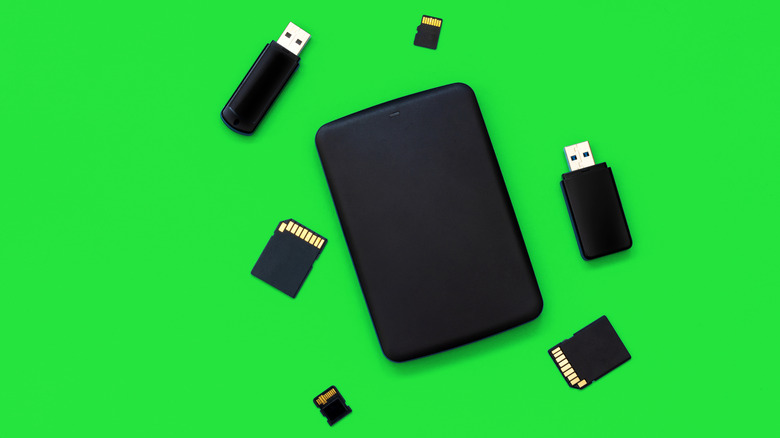
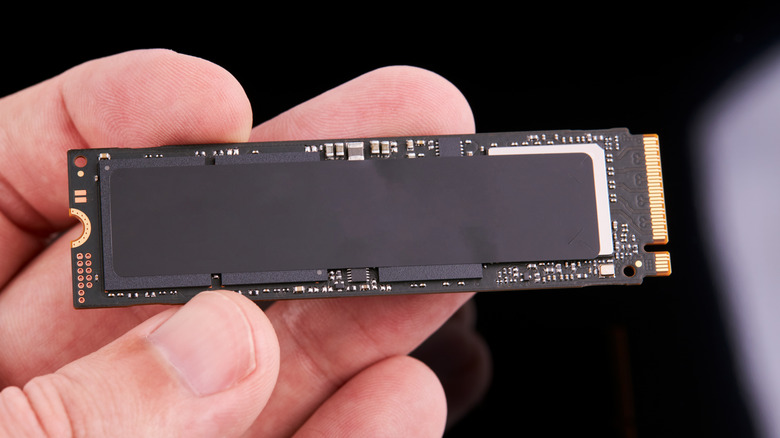
Though “flash memory” still brings to mind a USB stick swinging from a keychain, it’s had quite a promotional push since. NAND flash is used to store data in SSDs, smartphones, memory cards and many other gadgets because it retains data without power while packing a lot of storage into a small package.

It does have some baggage, though. Flash costs more per gigabyte than a hard drive, wears down as data is repeatedly written and erased and is nowhere near as fast as system RAM. Most of us don’t notice it too much, as modern storage does a lot of work behind the scenes to clean up after the technology that it’s built on.

Advertisement

Why flash memory became so popular

Most high-capacity flash storage is NAND, in which memory cells store electrical charge in an insulated storage layer, and the various voltage states are interpreted as data.

Modern NAND squeezes considerably more out of that basic idea. 3D NAND stacks cells vertically rather than arranging them only across a flat plane, and TLC and QLC designs store three or four bits per cell. Both pack more storage into roughly the same space and reduce the cost per gigabyte.

Those gains made flash particularly well suited to portable electronics. Unlike a hard drive, an SSD doesn’t have a spinning platter or mechanical read head, so it offers lower access latency, handles bumps better and fits ever-thinner devices. If you’ve upgraded an old PC to an SSD, you may remember the first boot afterward. All of a sudden, the computer doesn’t require a motivational speech before opening Chrome.

That still doesn’t make flash a replacement for RAM. System RAM is much faster and handles temporary working data, while NAND provides persistent storage. The term flash ROM is also misleading, as flash can be erased and rewritten.

Advertisement

The greatest drawback is that flash wears out

Each NAND cell supports a limited number of program-and-erase cycles. Storing more bits per cell increases density and lowers cost, but it also narrows the electrical margin between data states. That’s one reason QLC NAND typically offers lower endurance and performance than simpler designs.

Modern SSDs get around much of this with some clever housekeeping. Controllers distribute writes across available cells by wear leveling, correct errors, retire unreliable blocks and maintain spare capacity. TRIM and garbage collection also manage another NAND oddity: Data can be written in relatively small pages, but much larger blocks must be erased before they can be reused. This is a lot of housekeeping for “solid-state” storage.

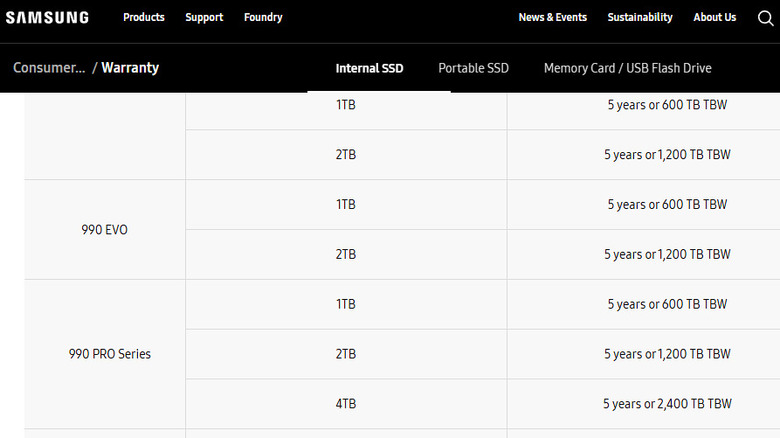
All that work pushes the endurance problem largely into the background for most consumers. Samsung warrants its 1TB 990 Pro for five years or 600TB of writes. That doesn’t mean the drive stops working at 600TB, and Samsung doesn’t say when a particular SSD will die, but important files still need backups.

Advertisement

And while endurance can be managed, price is less cooperative. Hard drives still offer cheaper bulk storage for backups, large media libraries and other tasks where speed matters less. TrendForce forecast NAND contract prices to rise 70 to 75 percent quarter over quarter in Q2 2026 and expects another 10 to 15 percent increase in Q3, citing tight supply and AI and data-center demand.

What could replace flash memory?

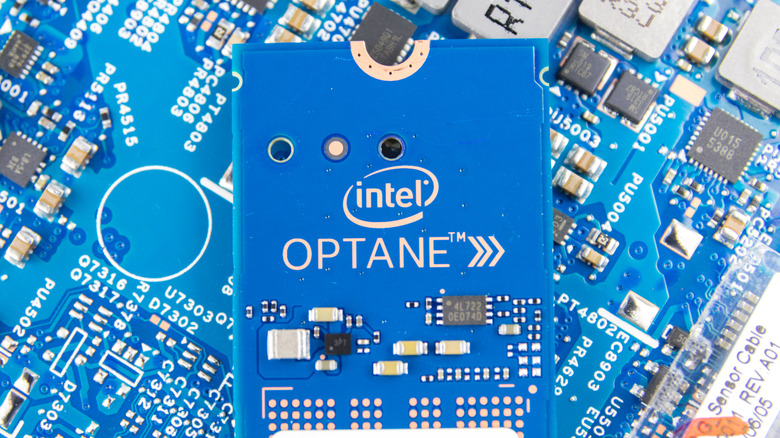
Flash’s shortcomings have naturally inspired plenty of would-be replacements. Phase-change memory was being touted as a possible flash replacement as far back as 2006, while Intel later positioned Optane between DRAM and NAND as faster and more durable than flash. Intel began winding down Optane in 2022.

Research continues into MRAM, ferroelectric memory and other alternatives, but no clear candidate has emerged to oust NAND from mainstream storage. NAND itself is still getting denser through taller 3D structures and more complex cell designs.

Advertisement

With commercial 3D NAND already exceeding 300 layers, the technology clearly isn’t done evolving.

Source link

Advertisement
Continue Reading

Tech

A Finger-Thick Silk Rope Could Hold an Elephant, But a Man’s Palm Still Lost

Published

on

Veritasium Spider Web Silk Strength Test
Henry van Dyck of Veritasium wanted a number, not a slogan. Classroom posters and superhero movies have spent years saying silk spider webbing beats steel. In a video he co-wrote and co-hosted with Derek Muller, he took that claim into Professor Todd Blackledge’s spider lab at the University of Akron and put live threads on a tensile tester, without harming the animals that made them.


Garden variety dragline silk, the cable a spider uses to keep from falling, and the framework of a web are all very impressive. When you put a 600 megapascal number on a rope, you get a sense of how strong it actually is. A silk thread with a cross section the size of a little finger can support around 60,000 newtons, which is comparable to the weight of an adult African elephant. Van Dyck was able to replicate that in the lab, but emphasized that this was simply an average occurrence.


Insta360 X6 Essentials Bundle – 8K 360 Camera with 1/1.1” Sensors
  • DUAL 1/1.1″ SENSORS & TRIPLE AI CHIP SYSTEM: Custom-built dual 1/1.1″ square sensors deliver unprecedented 360 image quality. Combined with a triple…
  • FLAGSHIP 8K50FPS 360 VIDEO: Hit record on our 360 action camera and capture your world in stunning native 8K50fps video. Every view, every highlight…
  • IN-HOUSE AI MODEL FOR EFFORTLESS 360 EDITING: Insta360’s own AI model, built specifically for 360 editing. New AI Director edits your footage…

Vertiasium Spider Web Silk Strength Test
Darwin’s bark spiders in the wild, deep in Madagascar, weave some magnificent webs across rivers up to 25 meters wide to snare unsuspecting insects flying over the water. Their dragline silk has been measured at an incredible 1,600 megapascals, more than twice the strength of the average Akron sample, making it the toughest biological fiber we’ve ever measured, even beating out the strongest experimental ultra-high-strength steels that come in at around 3,000 megapascals, but as soon as two wires of equal thickness are matched, those steels break, whereas the spider’s silk holds up just fine.

Vertiasium Spider Web Silk Strength Test
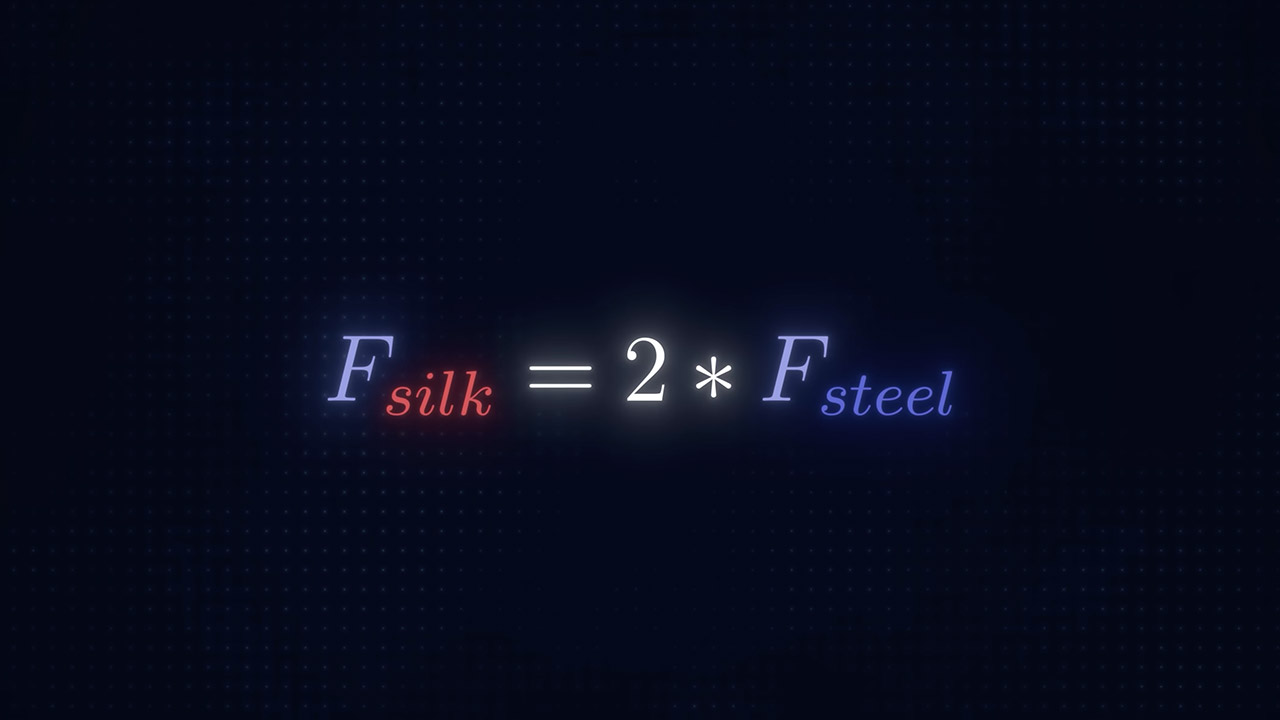
The density of the materials tells a quite different story, as steel is around six times heavier than silk for the same volume. When the weights of two materials with the same mass and length are compared, the cross section of silk rope is six times bigger than that of steel. Six times the area, at nearly a third of the breaking tension, explains why silk can bear approximately twice the force before collapsing. Engineers refer to this as specific strength, and ordinary spider silk is already competing with fancy steel on this front.

Vertiasium Spider Web Silk Strength Test
Toughness is a whole other thing, and silk wins hands down. The area under a stress-strain curve indicates a fiber’s toughness, or how much energy it can withstand before breaking. Kevlar is reasonably effective at stopping bullets, with a maximum energy density of around 50 megajoules per cubic meter. The experimental ultra-high-strength steel weighs in at 170. Van Dyck’s garden silk measured around 205 megajoules, whereas Darwin’s bark spider silk measured up to 520 megajoules, which is roughly ten times more than Kevlar and three times more than experimental steel. Which is fantastic since silk is all about stretching. Kevlar, on the other hand, is stiff like a board. A stiff fiber will rise up the graph quickly and break early, whereas a flexible fiber will simply continue to take the strain as it lengthens, which is where all the extra energy comes from.

Vertiasium Spider Web Silk Strength Test
Spiders produce this extraordinarily strong fiber from a liquid protein sludge held in silk glands. As the liquid flows out of the spinnerets, long molecules known as spidroins begin to fold themselves into hard crystalline patches for strength and looser, flexible regions for… well, give. There are no explosives or high-pressure mills, only room temperature, a bug diet, and a healthy dose of natural chemistry. Each visible strand actually a bundle of even smaller strands, literally nanostrands, running in parallel, which is why a thread thinner than a hair may still function as a cable.

Vertiasium Spider Web Silk Strength Test
Farming animals to make spider silk isn’t a feasible solution. Spiders cannot simply be cultivated like cattle. They require plenty of space, and if kept in a tight environment, they will eat each other. Each spider produces only a few hundred feet of useful thread. Those high-end showpieces, such as 18th-century stockings or the iconic cape constructed from a million spiders in Madagascar, were always one-of-a-kind and never mass-produced. Pure natural silk costs millions of dollars per kilogram.

Vertiasium Spider Web Silk Strength Test
Kraig Biocraft Laboratories, on the other hand, decided to eliminate the spiders entirely in favor of genetically engineering silkworms to generate spider silk. They take silkworms, a super common moth that humans have farmed for thousands of years, and just add a tiny portion of spider DNA to the mix. Van Dyck spent the day at their lab, watching transgenic cocoons come off the line. Last year, they produced almost half a ton of hybrid silk. The good news is that mechanical testing have showed it performs at roughly 60% the level of real spider silk, which is excellent enough to pique the interest of those who manufacture super-tough ballistic panels and medical mesh.

Vertiasium Spider Web Silk Strength Test
Then Van Dyck decided to pull off a publicity stunt of sorts. He took a bundle of synthetic silk, including ten threads all lined up, to the local climbing gym and requested Muller to try it. He asked Muller to hang from it and swing for a moment. The line held up nicely, although the skin was damaged. The fiber is so thin that the contact patch on a hand becomes a cutting edge. Muller’s palm paid for the demonstration. In materials language, the silk was no longer the weak link, the person holding it was.
[Source]

Source link

Advertisement
Continue Reading

Trending

Copyright © 2025