Connect with us
DAPA Banner
DAPA Coin
DAPA
COIN PAYMENT ASSET
PRIVACY · BLOCKDAG · HOMOMORPHIC ENCRYPTION · RUST
ElGamal Encrypted MINE DAPA
🚫 GENESIS SOLD OUT
DAPAPAY COMING

Tech

AIB, Bank of Ireland join group pushing for euro stablecoin

Published

on

Qivalis plans for a market launch in the second half of 2026.

Bank of Ireland and AIB have joined a consortium of European banks working towards issuing a euro-denominated stablecoin.

The two Irish banks joined the Qivalis consortium alongside 23 other banks – including Cecabank, Erste Group, Groupe BPCE and the National Bank of Greece – taking the group’s total strength to 37 banks from across 15 countries in the region.

The group wants to introduce euro-denominated stablecoins to expand Europe’s financial infrastructure and compete with US-backed versions, which make up the overwhelming majority of stablecoins in circulation. Big names such as Danske Bank, ING and KBC joined the consortium last September.

Advertisement

Stablecoins are a digital asset generally linked 1:1 to a chosen fiat currency. These digital assets allow for round-the-clock liquidity and near instant settlements.

The combined market capitalisation of all stablecoins exceeds $300bn, with around 90pc of it held by Tether and Circle; euro-denominated stablecoins only total around €395m, according to EU figures from November – or around 0.2pc of the total in circulation, according to Qivalis.

“The euro is Europe’s currency, and on-chain financial infrastructure should carry it – built by European institutions and governed by European rules,” said Jan-Oliver Sell, the CEO of Qivalis.

Formed in 2025, Qivalis is currently in pursuit of European regulatory approval to become an authorised electronic money institution. The consortium is targeting a market launch in the second half of 2026.

Advertisement

“We are investing in this consortium because we believe Europe needs trusted, regulated innovation in payments and settlement,” said Geraldine Casey, the managing director of retail banking at AIB.

“Qivalis will provide access to a euro-denominated stablecoin that is being developed to operate within the EU regulatory framework.”

As part of the consortium, AIB has said that it will collaborate with other European banks to innovate payments systems.

“This is a practical step for AIB to learn, innovate, test and collaborate with other leading European banks, and to help shape how new forms of digital money can be used safely, responsibly and within the regulated banking system,” Casey added.

Advertisement

The European Central Bank, meanwhile, has moved to the next phase of the digital euro project, with plans for a pilot digital euro project in mid-2027 and issuance in 2029.

Howard Davies, Qivalis’s chairperson, added: “This infrastructure is essential if Europe is to compete in the global digital economy whilst preserving its strategic autonomy.

“The euro’s role in the eurozone’s monetary system will increasingly depend on whether it is present – as the primary settlement currency – on the rails where global value moves.”

Don’t miss out on the knowledge you need to succeed. Sign up for the Daily Brief, Silicon Republic’s digest of need-to-know sci-tech news.

Advertisement

Source link

Continue Reading
Click to comment

You must be logged in to post a comment Login

Leave a Reply

Tech

Samsung Galaxy Watch 8 Gives Android Wearers Fresh Tools to Track What Matters Most

Published

on

Samsung Galaxy Watch 8 40mm
Samsung refreshed its smartwatch lineup with careful attention to daily comfort and practical health details that many people actually use. The Galaxy Watch 8, priced at $290 (was $350), arrives in two sizes and focuses on longer battery stretches, a brighter screen, and several new measurements that go beyond basic step counts or heart rate. For anyone eyeing an Apple Watch alternative while carrying an Android phone, this model presents a clear case worth examining closely.


The case now has a thinner cushion contour that sits very flat against your wrist. Its 8.6mm thickness makes it feel significantly lighter over long periods of use, and the aluminum body is available in both graphite and silver finishes, which look great and are really versatile. The bands now have an enhanced lug system that keeps the sensors close to your skin without pinching or leaving gaps. This causes many people to forget they are wearing the watch, even overnight, which is a huge step forward in terms of making it usable throughout the day.

Sale


Samsung Galaxy Watch 8 (2025) 40mm Bluetooth Smartwatch, Cushion Design, Fitness Tracker, Sleep Coaching…
  • WHY GALAXY WATCH8: Advanced health and sleep tracking features.* A lighter, more snug design for all day comfort.* Improved user interface.* Personal…
  • SLEEP SMARTER. LIVE BETTER: Energize your days with a great night’s rest using Advanced Sleep Coaching¹ – improved with even more ways to keep your…
  • YOUR RUN, YOUR COACH: Step up your running routine with a Running Coach³ that analyzes your performance and gives you real-time feedback. Training…

The 40mm model features a 1.34-inch Super AMOLED screen with 438 × 438 resolution. It has a maximum brightness of 3000 nits, allowing you to use it in direct sunlight while the competition fades out. Because to efficiency improvements elsewhere in the hardware, the always-on option now functions without depleting your battery’s life. The battery capacity has been increased to 325 mAh for the 40mm model and 435 mAh for the 44mm. Samsung claims up to 30 hours of use with the always-on display turned on, but real-world tests show ranging from 24-36 hours depending on how frequently you use features like workout tracking, notifications, and the built-in Gemini AI.

Advertisement


People who purchase these watches primarily for health tracking will discover some surprising capabilities built in. The BioActive sensor suite uses bioelectrical impedance to determine your heart rate, blood oxygen, ECG, and body composition, which is a fairly standard set of capabilities at this level. New features include an antioxidant index that shows how your skin is performing in terms of carotenoid levels; simply press your thumb on the sensor to find out where you are. The vascular load feature then analyzes your data overnight to assess how much strain your circulatory system has been under and suggests improvements to your sleep or exercise regimen. They also detect sleep apnea, which checks for dips in oxygen levels, and in countries where it is FDA approved, it works completely. In addition, you will obtain an energy score that offers a snapshot of your daily sleep and movement habits.

Samsung Galaxy Watch 8 40mm
Fitness features have also been improved. Following a brief test run, the running coach develops a personalized plan for you and delivers real-time pace recommendations and progress reports as you exercise. The dual frequency GPS (L1 and L5) is very handy because it allows you to correctly locate your location even in challenging conditions, and the heart rate zones adjust to your specific data and track more advanced metrics if you enjoy cycling or swimming. These utilities can be used without a Samsung phone, although a recent Galaxy handset offers some additional features.

Samsung Galaxy Watch 8 40mm
Wear OS 6 is the operating system, with Samsung’s One UI Watch 8 built on top; the interface helps to arrange all current information into tiles that may be modified to match your specific needs. Google Gemini sits on your wrist and can remind you of things, answer questions, and execute follow-up tasks all without requiring you to take out your phone.

Source link

Advertisement
Continue Reading

Tech

Anthropic rolls out Claude Fable 5, but it’s available for a limited time

Published

on

Claude

Anthropic has begun rolling out a new model called “Fable,” which is based on the same underlying model as Mythos, its most powerful AI model class.

Anthropic previously said that it developed a model called “Mythos,” which is a state-of-the-art model that poses security risks to companies around the world.

At that time, Anthropic noted that Mythos was powerful enough to potentially help bad actors attack public and private software.

image

“The advantage will belong to the side that can get the most out of these tools,” Anthropic warned in April when it announced the Mythos model.

“In the short term, this could be attackers, if frontier labs aren’t careful about how they release these models. In the long term, we expect it will be defenders who will more efficiently direct resources and use these models to fix bugs before new code ever ships.”

Advertisement

In other words, it could have been abused to find and exploit vulnerabilities in apps like Firefox.

Because of those risks, Anthropic decided to limit access to models like Mythos and offer them only to cybersecurity experts and trusted companies.

Now, Anthropic says it has developed strong guardrails for the same model class, which means these powerful AI models can no longer be easily exploited by bad actors.

As a result, it’s launching a safer version called “Fable 5.”

Advertisement
Fable 5
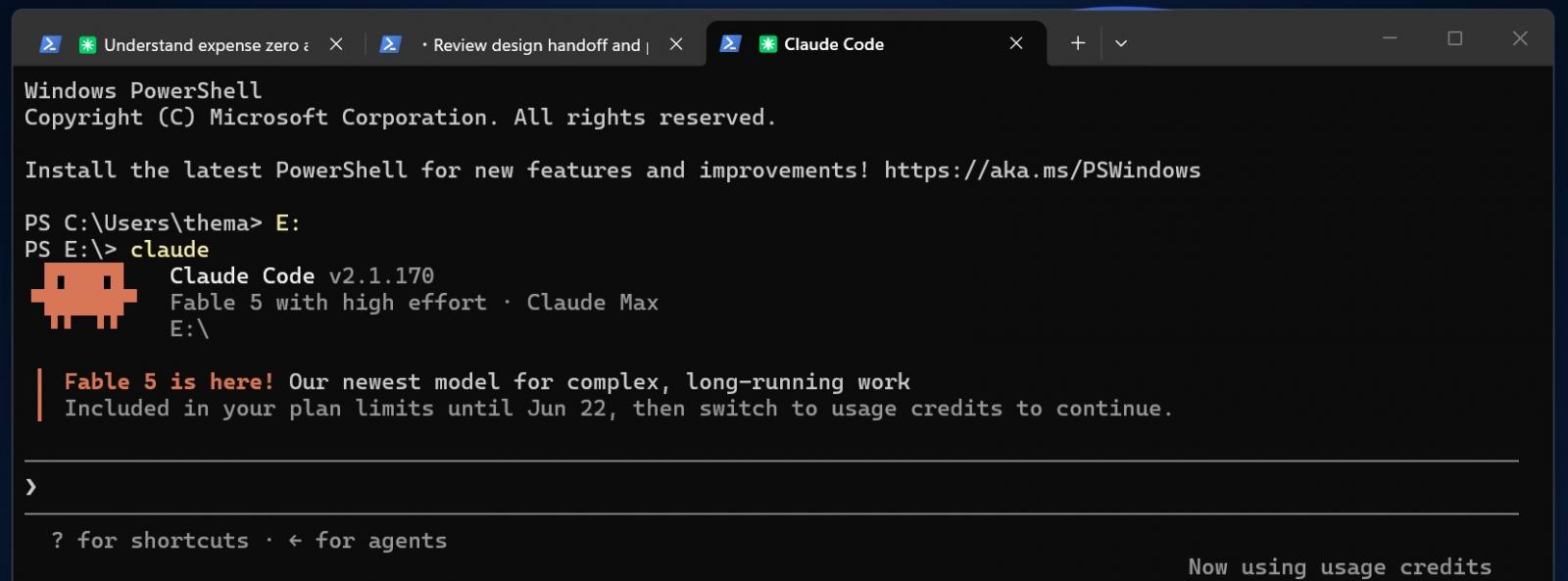
Claude Code now shows Fable 5 model

Source: BleepingComputer

According to Anthropic, this model has strict safeguards in place that will block or divert sensitive queries, like those involving offensive cybersecurity, biology, or chemistry, to its previous model, Opus 4.8.

Claude Mythos 5 is the unrestricted version of that same model, with those safeguards lifted.

Because of the risks involved, it is only available to a highly vetted group of trusted partners, such as government cyberdefenders and specific life sciences researchers.

Fable 5 is free for a limited time, and it consumes tokens faster than any other model.

Anthropic says Fable 5 is an expensive model because it requires a lot of compute, which means the company cannot afford to make it available as easily as Opus 4.8 or its previous models.

However, until June 22, Anthropic says Fable 5 will be offered to all Pro, Max, and Enterprise customers, but after the window expires, it’ll switch to usage-based pricing.

Advertisement

In our tests, BleepingComputer observed that Fable 5 uses a massive amount of tokens in a span of minutes.

Fable uses approx 1 million tokens in 8 minutes
Fable used approx 1 million tokens in 8 minutes

Source: BleepingComputer

I particularly noticed this behaviour when I used Workflow, a new execution system that allows Claude to break complex prompts into smaller tasks and spin up parallel subagents to implement them.

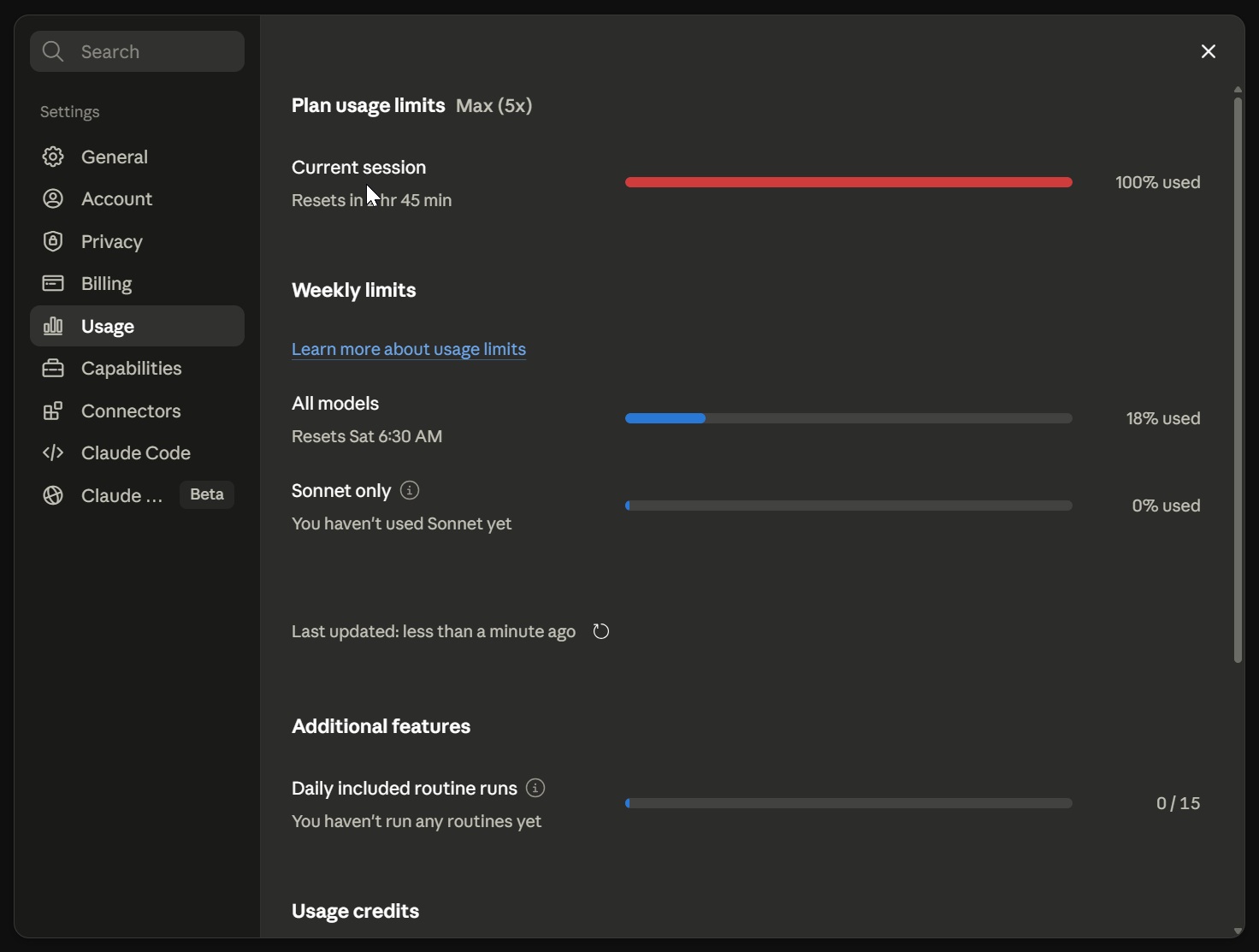
Claude Fable 5 exhausted my $100 Max subscription’s daily usage, which was at zero when I started using it, in just 9 minutes

Fable usage
Claude Fable 5 exhausted usage in minutes

Source: BleepingComputer

This doesn’t happen when you casually interact with Claude Fable 5, but if you switch to Workflow mode and change model thinking to high, you’re going to consume all your tokens in minutes.

However, even if you don’t use Fable 5 with workflow in xhigh effort, you’re still going to consume it 2 times faster than Opus model.

This explains why Anthropic is hesitating to unlock Fable 5 in the same capacity as Opus and other models, but that could change in the coming weeks, as the company is known for nerfing its models and increasing the capacity later.

Advertisement

article image

Security teams log 54% of successful attacks and alert on just 14%. The rest move through your environment unseen.

The Picus whitepaper shows how breach and attack simulation tests your SIEM and EDR rules so threats stop slipping by detection.

Get the whitepaper

Source link

Continue Reading

Tech

France and Germany agree to disagree, ditch joint next-gen Euro fighter

Published

on

bootnotes

Aircraft at core of the Future Combat Air System canned as parties could not decide who leads on the work

One of Europe’s two major next-gen fighter aircraft programs has been hit hard by differences between France and Germany, the two main participants, leaving the UK-Italy-Japan’s Tempest as the main contender.

Reports say that the Future Combat Air System (FCAS, or Système de Combat Aérien du Futur – SCAF – in French) has been shelved by German Chancellor Merz and French President Macron.

Advertisement

The program dates back to at least 2017, and was expected to produce a test flight of a technology demonstration airframe by 2026 or 2027, with the aircraft coming in to operational service by 2040.

Full-scale NGF combat aircraft mock-up on display outside with Dassault Aviation branding.

A full-scale mock-up of the Future Combat Air System (FCAS) next-generation fighter is displayed outdoors at the Paris Air Show in June last year

According to German publication Der Spiegel, the French firm ⁠Dassault ⁠and the European Airbus group could not agree on how to divide up the work on the project, nor on the patent rights for new developments.

However, it is also understood there were differences in the requirements, with France needing a replacement for the Rafale jet that must be capable of operating from an aircraft carrier, while the Germans were beginning to question the need for any crewed fighter aircraft in light of drone developments.

French publication Le Monde says Merz and Macron “reached the shared assessment that the companies will not be able to come together on building a joint combat aircraft.” It goes on to say that other parts of the wide-ranging project will continue.

Advertisement

This refers to FCAS being more than just about a single aircraft; the program also envisioned drone aircraft to accompany the crewed fighter, and a communications system “combat cloud” to link them together, described as a “nervous system that networks aircraft, drones and other components into an integrated whole.”

Advertisement

The program also drew participation from other European nations, such as Spain and Belgium, and it isn’t clear what these nations will choose to do next. It is likely that France will pursue its own next-gen aircraft that meets its own requirements, as happened with Rafale, while the Financial Times reports that Airbus is keen to lead a consortium to develop a new pan-European fighter jet to replace FCAS.

We asked both Dassault and Airbus to comment for this article.

There is another next-gen combat aircraft project already underway: the Global Combat Air Program (GCAP), which is a tri-partite effort between the UK, Italy and Japan. This aims to replace the Eurofighter Typhoon in service with the British and Italian air forces, and the Mitsubishi F-2 operated by Japan.  The British version of the jet is currently known as Tempest.

GCAP was proceeding well, but the current UK prevarication over defense spending is proving to be a roadblock to ongoing development, as a long-term multinational contract for the project cannot be signed until the Starmer government pulls its finger out and publishes its delayed defense investment plan.

Advertisement

If all goes well, GCAP/Tempest is expected to enter service by 2035, but the planned 2027 date for a demonstrator aircraft to fly is already looking unlikely.

Elsewhere, the US is developing its own sixth-generation fighter under the Next-Generation Air Dominance (NGAD) program, to be built by Boeing as the F-47 and expected to enter service possibly as soon as the early 2030s.

Questions have been raised over whether this will be chosen by European air forces, however, President Trump previously warned that the capabilities of any exported aircraft would be deliberately downgraded.

This follows issues with the in-service F-35, which has seen long delays in key software upgrades, preventing the RAF and Royal Navy from using European-made weapons with their aircraft. ®

Advertisement

Source link

Continue Reading

Tech

This Chinese Company Is Making Brand-New Bodies For A Whole List Of Classic Cars

Published

on


There is a company in China that is reproducing the bodies for a variety of well-loved classic cars. This company is called the Jiangsu Juncheng Vehicle Industry Co., and it is located in Baoying, about a three-hour train ride to the north of Shanghai. Hagerty recently sent Larry Chen to Baoying, where he made a video about this factory and how they make the parts for these bodies. Keep in mind that these Chinese-made bodies are replicas of actual classics, as opposed to vehicles like the 500HP Lamborghini Miura that’s actually a Pontiac Fiero in disguise.

The current list of bodies that are available from the Jiangsu Juncheng Vehicle Industry Co. include the Toyota FJ40 Land Cruiser, the first-generation Ford Bronco, the Datsun 240Z, the Toyota AE86, and the Volkswagen Type 1 Bus. According to the Hagerty video, pricing starts at about $9,500 for either the Datsun 240Z or the Toyota AE86 bodies. The company’s latest addition to its lineup is the 1967 Ford Mustang, which goes for $16,000. These prices are only possible because the company does 95% of the work required to make these bodies within the walls of their own factory. From the sand castings to the production of the dies to a staggering amount of hand work on these parts, nearly everything is done in-house.

Advertisement

Upcoming bodies from the company include the Porsche 911 964 and potentially even the Mercedes-Benz 300SL Gullwing. Those two will cost around $18,000 each, thanks to the more complex nature of making these high-end German bodies.

Advertisement

How did this company get started on making brand-new bodies for classic cars?

The Jiangsu Juncheng Vehicle Industry Co., which had been making new car parts, got started in classic-related parts when Land Rover Defender owners were searching for various replacement body parts. After producing a wide variety of different Defender body parts, the company realized that it could make complete bodies and sell them, too. Their off-road lineup added the popular early Bronco body, with more than 600 made. The sportier Toyota AE86 was added, which became very popular in China after 2005’s “Initial D” movie, made in Hong Kong, was viewed by Chinese audiences. These bodies are perfect for making a restomod project car.

The process of producing these bodies starts with the company acquiring two examples of the vehicle being reproduced, which must be unmodified and as close to original specs as possible. One of the samples is completely taken apart, while the other is used to verify that the quality of the reproduced parts matches the originals. This is particularly difficult because none of their currently-made vehicles were ever sold as new cars in China. Each individual part of the car is 3D-scanned before a stamping die is made from it. A large number of CNC machines are combined with stations where the parts are finished by hand. Additional production processes include stamping, welding of subassemblies, and assembly of the complete body. Painting by the factory is also available. 

These Chinese-made bodies are a great starting point for one of the coolest restomods ever built. Just add the mechanicals, glass, wiring and electricals, and an interior, and you’re good to go.

Advertisement


Source link

Advertisement
Continue Reading

Tech

Strategic Job Hopping Without Stalling Growth

Published

on

This article is crossposted from IEEE Spectrum’s careers newsletter. Sign up now to get insider tips, expert advice, and practical strategies, written in partnership with tech career development company Parsity and delivered to your inbox for free!

I’ve changed jobs more times than I ever imagined I would. In the past 12 years, I’ve worked at seven different organizations. Some of those moves were forced by layoffs. Others were deliberate bets on my own trajectory.

Job hopping, done strategically, is one of the fastest ways to accelerate your compensation and reinvent your professional identity. Engineers who understand when to move and when to stay tend to out-earn and out-rank their peers who simply wait for internal recognition.

Unfortunately, most engineers either job hop too much or not enough, and both mistakes are expensive. Here are the pros and cons of job hopping as an engineer, and when to make a leap.

Advertisement

Pro: It’s the fastest way to grow your salary

Internal raises and external offers operate on completely different logic, and most engineers don’t fully appreciate this until they make their first move.

Within a company, compensation is anchored to your existing salary and capped by organizational pay bands. A strong performance review might get you 5 to 8 percent.

An external offer is a clean slate. The company is bidding for your market value, not adjusting from your current baseline.

Advertisement

My first deliberate job hop doubled my salary in a single year. A later move, at the same job title, pushed my compensation floor to a level that I never would have reached by staying put. Neither outcome was available internally. The math simply does not work in your favor when you stay.

Pro: It lets you reinvent yourself

Every new company is a chance to walk in as a slightly updated version of yourself: the version that learned something from the last place. The version that does not carry the baggage of whatever decision you made two years ago that all your coworkers still remember.

Especially when you’re early in your career, this matters. You get to reframe your experience, take on a different scope, and establish a new reputation from scratch. That kind of reset is difficult to manufacture inside the same organization.

Advertisement

Con: You don’t see the long-term outcome of your work

This is the part nobody talks about, and it took me years to fully appreciate it.

When I joined one company, I built a component library for a website from scratch. Starting projects from scratch is exciting, and the initial implementation held up well for the early use cases. But as the organization scaled, the limitations of my original design became apparent.

I stayed long enough to address them rather than handing that problem to someone else. That experience taught me more about software architecture than any new project ever had.

Advertisement

Engineers who move every 18 months only ever experience the exciting part of building something. They never experience the part where their original decisions stop working. They just repeat the exciting part on a loop, never realizing the debt they are leaving behind.

Con: You cannot job hop your way to a promotion

Above a certain level, things can change significantly.

A new employer can evaluate your past performance through interviews, portfolios, and references. What they cannot do is evaluate your future potential the way a manager who has watched you grow over two or three years can. If you arrive as a senior engineer, you will almost certainly be hired as one.

Advertisement

The promotions that actually changed my career trajectory—from senior to staff engineer, then engineering manager—all happened at one organization over four years. Those transitions required someone to observe my growth over time and make a bet on where I was headed next. That kind of credibility cannot be transferred on a resume.

So when should you actually leave?

The threshold I use is straightforward. If I have produced at least one measurable, clearly definable outcome at an organization, I have a reasonable basis for leaving. Impact, not tenure, is my unit of measure.

I personally think that moving deliberately while early in your career will build a strong compensation baseline.

Advertisement

Then become selective.

Find an environment where real growth is available and stay long enough to build the credibility that job hopping cannot manufacture. Neither constant movement nor blind loyalty is the answer. The question worth asking at every stage is simple: Have I produced something meaningful here yet? If the answer is no, stay. If yes, it might be time to decide what’s next.

—Brian

What if robots didn’t just help us with physical tasks? USC Professor Maja Matarić helped define the era of socially assistive robotics, designed to provide personalized therapy and care through social interactions. Despite her influence in the field now, the award-winning roboticist didn’t see herself as an engineer at first.

Advertisement

Read more here.

Steve Jobs is best known as the co-founder and CEO of Apple. But the 12 years he spent away from the company taught him the lessons necessary for his success. A new book tells the forgotten story of Jobs’ “wilderness” years and what he learned while at NeXT Computer. IEEE Spectrum spoke to the book’s author about Apple’s most iconic CEO and the company’s future as it prepares for new leadership under John Ternus.

Read more here.

Cybersecurity consultants have never been more in demand, with data breaches and attacks costing organizations more than US $10 trillion annually to repair. To help you find the skills you need to stand out in the cybersecurity job market, the IEEE Computer Society offers a “What Makes a Great Cybersecurity Consultant” guide. It includes advice from experts, a list of certifications to pursue, and information on key cybersecurity conferences.

Advertisement

Read more here.

From Your Site Articles

Related Articles Around the Web

Source link

Advertisement
Continue Reading

Tech

Max severity Sentry flaw allows code execution as root

Published

on

Ivanti

Security software company Ivanti has released patches to address two critical vulnerabilities in its Sentry secure mobile gateway solution, including a maximum-severity flaw that enables remote attackers to execute code with root privileges.

Formerly known as MobileIron Sentry, Ivanti Sentry is a security gateway appliance that secures traffic between back-end corporate systems and remote mobile devices.

Tracked as CVE-2026-10520, the maximum-severity vulnerability stems from an OS command injection weakness. The second Sentry security flaw patched on Tuesday (tracked as CVE-2026-10523) is a critical authentication bypass that can be exploited remotely by unauthenticated attackers to create rogue administrative accounts and gain full administrative access.

image

Ivanti patched both security issues on Tuesday with the release of Sentry versions R10.5.2, R10.6.2, and R10.7.1.

Luckily, the company said it has no evidence that the two vulnerabilities are being exploited in the wild and advised admins to upgrade their systems to protect against potential attacks.

Advertisement

“We are not aware of any customers being exploited by these vulnerabilities at the time of disclosure,” Ivanti said. “Currently, there is no known public exploitation of this vulnerability that could be used to provide a list of indicators of compromise.”

In recent years, Ivanti vulnerabilities have often been targeted in attacks because they provide an easy way for cybercriminals to breach targets’ enterprise networks and steal sensitive corporate and customer data.

For instance, most recently, the Cybersecurity and Infrastructure Security Agency (CISA) ordered U.S. federal agencies in May to patch their Ivanti devices after the company warned customers to immediately patch a high-severity remote code execution vulnerability in Endpoint Manager Mobile (EPMM) that was exploited in zero-day attacks.

Multiple other Ivanti zero-days have been exploited in recent years to breach a wide range of targets, including government agencies worldwide, including two other critical EPMM vulnerabilities addressed by Ivanti in January after being exploited as zero-days in attacks against a “very limited number of customers.”

Advertisement

In total, CISA has tagged 34 vulnerabilities across various SolarWinds products as actively exploited in attacks over the past several years, with 12 of them also used in ransomware attacks.

Ivanti’s IT asset management solutions are used by over 40,000 clients worldwide and are supported by a network of over 7,000 partners and over 3,000 employees.


article image

Security teams log 54% of successful attacks and alert on just 14%. The rest move through your environment unseen.

The Picus whitepaper shows how breach and attack simulation tests your SIEM and EDR rules so threats stop slipping by detection.

Get the whitepaper

Source link

Advertisement
Continue Reading

Tech

Final Fantasy Resonance Rebuilds a Mobile Classic into the Franchise’s First HD-2D Console Game

Published

on

Final Fantasy Resonance Reveal
Square Enix surprised players during the June 9 Nintendo Direct with the reveal of Final Fantasy Resonance, the first entry in the long-running series to use the HD-2D art style. The game launches worldwide on October 22, 2026, for PlayStation 5, Xbox Series X and S, Nintendo Switch, Nintendo Switch 2, and PC through Steam and the Microsoft Store.


The normal version is priced at $49.99. If you’re ready to pay a little more, you can get the Digital Deluxe Edition for $59.99, which includes a bunch of useful in-game goodies. If you want to go all-in, the Collector’s Edition ($209.99) includes the base game, digital goodies, a physical artbook, the soundtrack, and a unique Final Fantasy Trading Card Game card.The plot revolves around Rain, a Grandshelt knight, his adoptive brother Lasswell, and the mysterious Fina as they work to defend the world’s crystals from Veritas of the Dark. Their adventure takes them all over the Lapis world, via villages, optional dungeons, and shrines that unlock additional Visions and some extremely cool memory cutscenes, all set in a big open overworld region that you may explore for free.


Nintendo Switch 2: Choose Your Game Bundle
  • Kick off the fun with a Nintendo Switch 2 system, your choice of a select digital game, and a savings* of up to $29.99!
  • Includes choice of either the Mario Kart World, Donkey Kong Bananza, or Pokémon Pokopia digital game download
  • One system, three play modes: TV, Tabletop, and Handheld


The story is based on the first major arc of the mobile game Final Fantasy Brave Exvius. Lancarse and Synthese have essentially recreated the entire thing from the ground up, rather than simply throwing it on a console and calling it good. The end result is a full-fledged console RPG that fits well into the series. When you need to travel, you can do so on foot, chocobo, or airship, and there are numerous destinations to visit across multiple continents.

Final Fantasy Resonance Screenshot
You’ll solve dungeon puzzles and complete side missions to help fill out the world. The transition from the mobile version’s node-based map to full-fledged open world movement gives the game a nice big Final Fantasy vibe without losing sight of the fundamental crystal conflict plot.

Final Fantasy Resonance Screenshot
Combat centers on a group of four, with a helpful timeline indicating when each character’s next move will happen. Do something big or make the right move, and you can move one of your characters’ turns a bit later down the line, so timing is essential. Each character has a Vision to use, which is a form of ghost fighter with strength from several Final Fantasy games, and these things level up on their own. The verified Visions include Warrior of Light, Terra, Cloud, Zidane, Shantotto, and Y’shtola, among others.

Final Fantasy Resonance Screenshot
Enemies have a stagger meter that fills up faster when you strike them where it counts. A fully staggered foe takes more damage and gives the party extra turns. When every enemy on the field staggers at once, the equipped Visions trigger a coordinated Resonance Attack shown in a short CG sequence. Fina can also call Espers for powerful summon moves, while Limit Bursts deliver big individual damage once the meter fills.

Final Fantasy Resonance Screenshot
The game also looks amazing, with realistic pixel sprites set against rich, layered backdrops that create a beautiful blend of old and new. Places feel deep and real, with proper lighting and shadow placement, and the overall experience makes you feel as if you’re actually there. The music has several familiar tracks from Brave Exvius as well as 33 brand new compositions created particularly for this game.
[Source]

Advertisement

Source link

Continue Reading

Tech

I‘ve had some awesome mobile mice in my time, but I can’t wait to travel with the Logitech Mobi Fold

Published

on


  • Logitech unveils a brand new folding mouse
  • The Mobil Fold is small and durable
  • It promises more than a month of battery life

I’ve had all manner of computer mice over the years, but by far my favorite is a travel mouse. They come in so many different shapes, sizes, and configurations. I fondly remember a promotional USB travel mouse, perhaps no bigger than my thumb, that featured a spring-loaded retractable cable. When that died after multiple road trips, I switched to a Microsoft Surface Arc Bluetooth travel mouse. It was darn near perfect. In travel mode, it was flat, and when you wanted to use it, you bent it to a perfect, palm-hugging curve. That one died after years of business travel.

So you can imagine my excitement when Logitech showed me its new Mobi Fold ($79.99 / $119.99CAD/€79.99 / £69.99). As the name suggests, it is a truly foldable Bluetooth travel mouse.

Source link

Advertisement
Continue Reading

Tech

The Patriot 4K UHD SteelBook Review: Mel Gibson’s Revolutionary War Epic Still Has Teeth

Published

on

After Independence Day, director Roland Emmerich and producer Dean Devlin could have easily kept feeding the multiplex more flag-waving alien carnage. Instead, with Robert Rodat’s Saving Private Ryan pedigree tempering the “U-S-A!” machinery, The Patriot became something more grounded, darker, and far better researched than anyone had reason to expect. It is still historical fiction with Hollywood fingerprints all over it, but compared to the glorious cheese fountain of ID4, this is a far more serious and satisfying story about American grit, personal loss, and the ugly cost of revolution.

Mel Gibson’s Benjamin Martin is not based on one specific individual but a composite of militia who fought so bravely to win our freedom from Great Britain some two-and-a-half centuries ago. As a veteran of the French and Indian War, specifically “the wilderness campaign,” he’s not only witnessed but perpetrated unspeakable horrors and is reluctant to see his people thrust into another bloody conflict. But when the war comes for him and his family, this expert in guerilla warfare answers the call and helps turn the tide. Beyond the relatively minor indignities such as the Tea Act Monopoly, the Stamp Act and the Writs of Assistance, we’re shown the atrocities visited upon the colonists by the British forces, a brutality born of arrogance, and it’s hard not to be invested in the struggle by the climactic battle.

5-the-patriot-movie-versions
My collection of The Patriot discs on DVD and Blu-ray.

A quick glance over my left shoulder at the shelf marked M through Z tells me that, damn, I must really like this movie. I’ve owned The Patriot on five different five-inch discs (see photo), and that was before Sony dropped its new and improved SteelBook 4K edition, once again serving up both the R-rated theatrical cut and the longer unrated version. On the 2018 UHD disc release, just the theatrical cut was in Atmos and 4K, but only in HDR10, with the unrated version in 1080p/5.1. This SteelBook set now offers both cuts each on its own BD-100 platter, in 4K, Dolby Vision and Dolby Atmos, with breathtaking cover artwork by Paul Shipper.

Say what you like about ol’ Mad Max here, but he is one intense thespian, and his closeups convey his grief, his conviction, and the inner demons that fuel Martin’s resolve. Not every shot is razor-sharp, but nonetheless it looks like we’re watching the Revolutionary War, the roll-up and the aftermath through an immaculate window. A light, consistent layer of film grain accentuates the 2.39:1 image, and the high dynamic range delivers consummate detail in the many period-authentic low-light scenes, illuminated by candles, fireplaces or campfires. Even the glisten of a brocaded epaulet is preserved. Whether through the use of filters, magic hour scheduling or post-production wizardry, Caleb Deschanel’s Oscar-nominated cinematography has an enticing golden glow, and the colors are significantly upgraded from the 2018 4K, with only the slightest perceptible drop in picture and sound quality at the inserts within the unrated cut.

Subtle LFE for hoofbeats and fireworks early in the story lull us into false resignation, until the realities of warfare are fully unleashed. Showoff scenes don’t come much better than Gabriel’s rescue–this is the one I routinely use to test speakers, in particular my surrounds and sub–conveniently located at the start of Chapter 5 on the theatrical version, 36:42 into the film. Our vantage point shifts frequently amid the chaos but the hard placement of off-camera voices keeps us in the middle of the action, with frequent booming gunshots all around. (I plan to watch it again after this review publishes, just because.) The whiz and impact of cannonballs are also outstanding. The active overhead channels bring a wonderful sense of spaciousness throughout, and dialogue scenes that proved challenging on past editions are now crystal-clear. The Patriot boasts a John Wiliams score, lesser-known despite its Oscar nomination, and it amplifies the excitement exponentially.

The extras are all ported from past editions, some dating back almost 26 years, spread across the two platters. The theatrical version carries an enjoyable Emmerich/Devlin audio commentary in addition to brisk featurettes about the production and the historical fact. Interestingly, the comprehensive deleted scenes section–13 minutes total with optional commentary–is located on the unrated disc, even though most of that footage has been integrated back into the movie to create the longer cut. Also on this disc are vignettes devoted to the visual effects and concept art.

Advertisement
patriot-4k-uhd-steelbook-case

The timing of the new The Patriot 4K SteelBook is curious, too late for Memorial Day and too early for The Fourth, but take it from me: This one would make a terrific Father’s Day gift. (Father’s Day feature incoming, but this one deserved its own review.) With top scores for the movie, audio and video, this one gets our highest recommendation.

Movie Details

  • STUDIO: Sony Pictures Home Entertainment
  • FORMAT: Ultra HD 4K Blu-ray (June 9, 2026)
  • THEATRICAL RELEASE YEAR: 2000
  • ASPECT RATIO: 2.39:1
  • HDR FORMATS: Dolby Vision, HDR10
  • AUDIO FORMAT: Dolby Atmos with TrueHD 7.1 core
  • LENGTH: 165/175 mins.
  • MPAA RATING: R/Unrated
  • DIRECTOR: Roland Emmerich
  • STARRING: Mel Gibson, Heath Ledger, Jason Isaacs, Chris Cooper, Tchéky Karyo, Joely Richardson

Our Ratings

★★★★★★★★★★ Movie

★★★★★★★★★★ Picture

★★★★★★★★★★ Sound

★★★★★★★★★★ Extras

Where to buy:

Advertisement. Scroll to continue reading.
Advertisement

Source link

Continue Reading

Tech

Report warns ‘potentially lethal’ knock-off phone chargers sold on Amazon Haul, B&Q and eBay can electrocute and even explode

Published

on


  • Which? discovers ‘potentially lethal’ phone chargers are being sold by major retailers
  • Cheap chargers pose serious risks of fire, electric shock and more
  • Consumer group demands stricter government regulation

British consumer watchdog Which? has revealed many of the third-party phone chargers available to consumers could present “potentially lethal” risks – and they’re often hidden in plain sight.

Nine of the 15 chargers tested by Which? posed serious electric shock risks, while eight also presented potential fire or explosion hazards, but more worryingly, many were available from popular and trustworthy high-street and online retailers like Amazon, B&Q and Debenhams.

Source link

Continue Reading

Trending

Copyright © 2025