The organisation plans to use the investment as a means of accelerating the application of its AI model, at scale.
AI-powered drug design and development company Isomorphic Labs has announced the raising of $2.1bn in Series B funding. The round was led by Thrive Capital and includes participation from existing backers Alphabet and GV alongside new investors MGX, Temasek, CapitalG and the UK Sovereign AI Fund.
Founded in 2021 and led by CEO Demis Hassabis and its president Max Jaderberg, Isomorphic Labs is headquartered in London and has additional premises in Cambridge, Massachusetts and Lausanne, Switzerland. The company, which is a spin-off from Google DeepMind, an AI research lab acquired by Alphabet in 2014, aims to address the challenges of drug discovery using AI technology.
Isomorphic labs intends to put the recently raised funds towards the continued development and deployment of its AI drug design engine (IsoDDE) and the acceleration and expansion of its pipeline of therapeutic programmes. Additionally, the funding will support current hiring targets.
Advertisement
Commenting on the announcement Ruth Porat, the president and chief investment officer at Alphabet and Google said, “The application of AI in healthcare offers a profound opportunity.
“Isomorphic Labs has already made extraordinary progress in harnessing AI to accelerate drug discovery, and we are excited by this momentum and the early promise of the technology platform.This trajectory is encouraging, and this funding will be used to accelerate the work and bring important interventions to market with greater speed.”
Jaderberg added, “This milestone is built on the strength of our AI drug design engine, which has already proven its worth across our internal programmes by hitting key milestones and identifying viable candidates with unprecedented speed.
“Our drug design engine works, and it’s giving us a repeatable way to design new medicines for a wide range of diseases, building a future of medicine that was previously out of reach.”
Advertisement
Reportedly, Isomorphic expects to run its first clinical trials by the end of 2026, a delay from the CEO’s earlier target of having AI-designed drugs in trials by the end of 2025.
In late April, Alphabet was among some of the large scale organisations posting positive quarterly reports. Alphabet beat revenue expectations for the past quarter, led by its growing cloud business, which rose 63pc to hit $20bn. Consolidated revenue grew 22pc to nearly $110bn.
Don’t miss out on the knowledge you need to succeed. Sign up for the Daily Brief, Silicon Republic’s digest of need-to-know sci-tech news.
Meta temporarily reverses course after EU says new rules are ‘equivalent to the previous access ban’.
Meta will allow rival AI chatbots free access to WhatsApp for a month as it navigates a way out of EU antitrust concerns.
The decision comes after the European Commission said last month that it would have to order Meta to reinstate third-party AI assistants access to WhatsApp under preexisting conditions.
Following this, in December, the EU opened its probe into Meta’s policies and informed the company by January that it was breaching the bloc’s antitrust rules.
Later in March, the company reversed course to reinstate access to WhatsApp for third-party AI assistants – but for a fee. However, in April, the Commission told Meta that its new rules were “equivalent to the previous access ban”.
A Meta spokesperson told news publications that the general-purpose AI chatbots operating in the European Economic Area (EEA) will be given “free access to the WhatsApp business API for one month” as part of ongoing discussions with the EU.
“This will provide the Commission and Meta with time to achieve a quick and fair outcome to the investigation,” they added. SiliconRepublic.com has reached out to Meta for further comments.
Advertisement
The Commission’s investigation covers all of the EEA, but Italy, to avoid an overlap with the Italian competition authority’s ongoing investigations into the company over the same issue.
The EU welcomed Meta’s move to open up access to WhatsApp, telling the press that it believes this creates the “adequate conditions needed to discuss commitments” with the company.
“The window for this discussion is short, and the process is conditional on Meta’s genuine intention to address the Commission’s concerns,” it added.
Meta is on the hook for up to 10pc of its annual global turnover if the EU ultimately finds that it broke antitrust laws under the Treaty on the Functioning of the European Union and the EEA Agreement.
Advertisement
The company has faced an onslaught of legal issues in the past few months, with Ireland’s Coimisiún na Meán launching two investigations into Meta earlier this month over the company’s recommender systems and compliance with the Digital Services Act (DSA).
Meanwhile, in April, the EU – in a separate investigation – preliminarily found that Instagram and Facebook breached the DSA for failing to “diligently” identify and mitigate risks that children under 13 face when using these platforms.
The Facebook-parent also launched a legal battle against UK’s media regulator Ofcom earlier this month over alleged “disproportionate” penalties introduced in the Online Safety Act.
Advertisement
Don’t miss out on the knowledge you need to succeed. Sign up for the Daily Brief, Silicon Republic’s digest of need-to-know sci-tech news.
Any development environment that installed or imported one of the 172 compromised npm or PyPI packages published since May 11 should be treated as potentially compromised. On affected developer workstations, the worm harvests credentials from over 100 file paths: AWS keys, SSH private keys, npm tokens, GitHub PATs, HashiCorp Vault tokens, Kubernetes service accounts, Docker configs, shell history, and cryptocurrency wallets. For the first time in a TeamPCP campaign, it targets password managers including 1Password and Bitwarden, according to SecurityWeek.
It steals Claude and Kiro AI agent configurations, including MCP server auth tokens for every external service an agent connects to. And it does not leave when the package is removed.
The worm installs persistence in Claude Code (.claude/settings.json) and VS Code (.vscode/tasks.json with runOn: folderOpen) that re-execute every project open, plus a system daemon (macOS LaunchAgent / Linux systemd) that survives reboots. These live in the project tree, not in node_modules. Uninstalling the package does not remove them. On CI runners, the worm reads runner process memory directly via /proc/pid/mem to extract secrets, including masked ones, on Linux-based runners. If you revoke tokens before isolating the machine, Wiz’s analysis found a destructive daemon wipes your home directory.
Between 19:20 and 19:26 UTC on May 11, the Mini Shai-Hulud worm published 84 malicious versions across 42 @tanstack/* npm packages. Within 48 hours the campaign expanded to 172 packages across 403 malicious versions spanning npm and PyPI, according to Mend’s tracking. @tanstack/react-router alone receives 12.7 million weekly downloads. CVE-2026-45321, CVSS 9.6. OX Security reported 518 million cumulative downloads affected. Every malicious version carried a valid SLSA Build Level 3 provenance attestation. The provenance was real. The packages were poisoned.
Advertisement
“TanStack had the right setup on paper: OIDC trusted publishing, signed provenance, 2FA on every maintainer account. The attack worked anyway,” Peyton Kennedy, senior security researcher at Endor Labs, told VentureBeat in an exclusive interview. “What the orphaned commit technique shows is that OIDC scope is the actual control that matters here, not provenance, not 2FA. If your publish pipeline trusts the entire repository rather than a specific workflow on a specific branch, a commit with no parent history and no branch association is enough to get a valid publish token. That’s a one-line configuration fix.”
Three vulnerabilities chained into one provenance-attested worm
TanStack’s postmortem lays out the kill chain. On May 10, the attacker forked TanStack/router under the name zblgg/configuration, chosen to avoid fork-list searches per Snyk’s analysis. A pull request triggered a pull_request_target workflow that checked out fork code and ran a build, giving the attacker code execution on TanStack’s runner. The attacker poisoned the GitHub Actions cache. When a legitimate maintainer merged to main, the release workflow restored the poisoned cache. Attacker binaries read /proc/pid/mem, extracted the OIDC token, and POSTed directly to registry.npmjs.org. Tests failed. Publish was skipped. 84 signed packages still reached the registry.
“Each vulnerability bridges the trust boundary the others assumed,” the postmortem states. Published tradecraft from the March 2025 tj-actions/changed-files compromise, recombined in a new context.
The worm crossed from npm into PyPI within hours
Microsoft Threat Intelligence confirmed the mistralai PyPI package v2.4.6 executes on import (not on install), downloading a payload disguised as Hugging Face Transformers. npm mitigations (lockfile enforcement, –ignore-scripts) do not cover Python import-time execution.
Advertisement
Mistral AI published a security advisory confirming the impact. Compromised npm packages were available between May 11 at 22:45 UTC and May 12 at 01:53 UTC (roughly three hours). The PyPI release mistralai==2.4.6 is quarantined. Mistral stated an affected developer device was involved but no Mistral infrastructure was compromised. SafeDep confirmed Mistral never released v2.4.6; no commits landed May 11 and no tag exists.
Wiz documented the full blast radius: 65 UiPath packages, Mistral AI SDKs, OpenSearch, Guardrails AI, 20 Squawk packages. StepSecurity attributes the campaign to TeamPCP, based on toolchain overlap with prior Shai-Hulud waves and the Bitwarden CLI/Trivy compromises. The worm runs under Bun rather than Node.js to evade Node.js security monitoring.
The attacker treated AI coding agents as part of the trusted execution environment
Socket’s technical analysis of the 2.3 MB router_init.js payload identifies ten credential-collection classes running in parallel. The worm writes persistence into .claude/ and .vscode/ directories, hooking Claude Code’s SessionStart config and VS Code’s folder-open task runner. StepSecurity’s deobfuscation confirmed the worm also harvests Claude and Kiro MCP server configurations (~/.claude.json, ~/.claude/mcp.json, ~/.kiro/settings/mcp.json), which store API keys and auth tokens for external services. This is an early but confirmed instance of supply-chain malware treating AI agent configurations as high-value credential targets. The npm token description the worm sets reads: “IfYouRevokeThisTokenItWillWipeTheComputerOfTheOwner.” It is not a bluff.
“What stood out to me about this payload is where it planted itself after running,” Kennedy told VentureBeat. “It wrote persistence hooks into Claude Code’s SessionStart config and VS Code’s folder-open task runner so it would re-execute every time a developer opened a project, even after the npm package was removed. The attacker treated the AI coding agent as part of the trusted execution environment, which it is. These tools read your repo, run shell commands, and have access to the same secrets a developer does. Securing a development environment now means thinking about the agents, not just the packages.”
Advertisement
CI/CD Trust-Chain Audit Grid
Six gaps Mini Shai-Hulud exploited. What your CI/CD does today. The control that closes each one.
Audit question
What your CI/CD does today
The gap
Advertisement
1. Pin OIDC trusted publishing to a specific workflow file on a specific protected branch. Constrain id-token: write to only the publish job. Ensure that job runs from a clean workspace with no restored untrusted cache
Most orgs grant OIDC trust at the repository level. Any workflow run in the repo can request a publish token. id-token: write is often set at the workflow level, not scoped to the publish job.
The worm achieved code execution inside the legitimate release workflow via cache poisoning, then extracted the OIDC token from runner process memory. Branch/workflow pinning alone would not have stopped this attack because the malicious code was already running inside the pinned workflow. The complete fix requires pinning PLUS constraining id-token: write to only the publish job PLUS ensuring that job uses a clean, unshared cache.
2. Treat SLSA provenance as necessary but not sufficient. Add behavioral analysis at install time
Advertisement
Teams treat a valid Sigstore provenance badge as proof a package is safe. npm audit signatures passes. The badge is green. Procurement and compliance workflows accept provenance as a gate.
All 84 malicious TanStack versions carry valid SLSA Build Level 3 provenance attestations. First widely reported npm worm with validly-attested packages. Provenance attests where a package was built, not whether the build was authorized. Socket’s AI scanner flagged all 84 artifacts within six minutes of publication. Provenance flagged zero.
3. Isolate GitHub Actions cache per trust boundary. Invalidate caches after suspicious PRs. Never check out and execute fork code in pull_request_target workflows
Fork-triggered workflows and release workflows share the same cache namespace. Closing or reverting a malicious PR is treated as restoring clean state. pull_request_target is widely used for benchmarking and bundle-size analysis with fork PR checkout.
Advertisement
Attacker poisoned pnpm store via fork-triggered pull_request_target that checked out and executed fork code on the base runner. Cache survived PR closure. The next legitimate release workflow restored the poisoned cache on merge. actions/cache@v5 uses a runner-internal token for cache saves, not the workflow’s GITHUB_TOKEN, so permissions: contents: read does not prevent mutation. Kennedy: ‘Branch protection rules don’t apply to commits that aren’t on any branch, so that whole layer of hardening didn’t help.’
4. Audit optionalDependencies in lockfiles and dependency graphs. Block github: refs pointing to non-release commits
Static analysis and lockfile enforcement focus on dependencies and devDependencies. optionalDependencies with github: commit refs are not flagged by most tools.
The worm injected optionalDependencies pointing to a github: orphan commit in the attacker’s fork. When npm resolves a github: dependency, it clones the referenced commit and runs lifecycle hooks (including prepare) automatically. The payload executed before the main package’s own install step completed. SafeDep confirmed Mistral never released v2.4.6; no commits landed and no tag exists.
Advertisement
5. Audit Python dependency imports separately from npm controls. Cover AI/ML pipelines consuming guardrails-ai, mistralai, or any compromised PyPI package
npm mitigations (lockfile enforcement, –ignore-scripts) are applied to the JavaScript stack. Python packages are assumed safe if pip install completes. AI/ML CI pipelines are treated as internal testing infrastructure, not as supply-chain attack targets.
Microsoft Threat Intelligence confirmed mistralai PyPI v2.4.6 executes on import, not install. Injected code in __init__.py downloads a payload disguised as Hugging Face Transformers. –ignore-scripts is irrelevant for Python import-time execution. guardrails-ai@0.10.1 also executes on import. Any agentic repo with GitHub Actions id-token: write is exposed to the same OIDC extraction technique. LLM API keys, vector DB credentials, and external service tokens all in the blast radius.
6. Isolate and image affected machines before revoking stolen tokens. Do not revoke npm tokens until the host is forensically preserved
Advertisement
Standard incident response: revoke compromised tokens first, then investigate. npm token list and immediate revocation is the instinctive first step.
The worm installs a persistent daemon (macOS LaunchAgent / Linux systemd) that polls GitHub every 60 seconds. On detecting token revocation (40X error), it triggers rm -rf ~/, wiping the home directory. The npm token description reads: ‘IfYouRevokeThisTokenItWillWipeTheComputerOfTheOwner.’ Microsoft reported geofenced destructive behavior: a 1-in-6 chance of rm -rf / on systems appearing to be in Israel or Iran. Kennedy: ‘Even after the package is gone, the payload may still be sitting in .claude/ with a SessionStart hook pointing at it. rm -rf node_modules doesn’t remove it.’
Sources: TanStack postmortem, StepSecurity, Socket, Snyk, Wiz, Microsoft Threat Intelligence, Mend, Endor Labs. May 12, 2026.
Security director action plan
Today: “The fastest check is find . -name ‘router_init.js’ -size +1M and grep -r ’79ac49eedf774dd4b0cfa308722bc463cfe5885c’ package-lock.json,” Kennedy said. If either returns a hit, isolate and image the machine immediately. Do not revoke tokens until the host is forensically preserved. The worm’s destructive daemon triggers on revocation. Once the machine is isolated, rotate credentials in this order: npm tokens first, then GitHub PATs, then cloud keys. Hunt for .claude/settings.json and .vscode/tasks.json persistence artifacts across every project that was open on the affected machine.
This week: Rotate every credential accessible from affected hosts: npm tokens, GitHub PATs, AWS keys, Vault tokens, K8s service accounts, SSH keys. Check your packages for unexpected versions after May 11 with commits by claude@users.noreply.github.com. Block filev2.getsession[.]org and git-tanstack[.]com.
This month: Audit every GitHub Actions workflow against the six gaps above. Pin OIDC publishing to specific workflows on protected branches. Isolate cache keys per trust boundary. Set npm config set min-release-age=7d. For AI/ML teams: check guardrails-ai and mistralai against compromised versions, audit CI pipelines for id-token: write exposure, and rotate every LLM API key and vector DB credential accessible from CI.
This quarter (board-level): Fund behavioral analysis at the package registry layer. Provenance verification alone is no longer a sufficient procurement criterion for supply-chain security tooling. Require CI/CD security audits as part of vendor risk assessments for any tool with publish access to your registries. Establish a policy that no workflow with id-token: write runs from a shared cache. Treat AI coding agent configurations (.claude/, .kiro/, .vscode/) as credential stores subject to the same access controls as cloud key vaults.
The worm is iterating. Defenders must, as well
This is the fifth Shai-Hulud wave in eight months. Four SAP packages became 84 TanStack packages in two weeks. intercom-client@7.0.4 fell 29 hours later, confirming active propagation through stolen CI/CD infrastructure. Late on May 12, malware research collective vx-underground reported that the fully weaponized Shai-Hulud worm code has been open-sourced. If confirmed, this means the attack is no longer limited to TeamPCP. Any threat actor can now deploy the same cache-poisoning, OIDC-extraction, and provenance-attested publishing chain against any npm or PyPI package with a misconfigured CI/CD pipeline.
Advertisement
“We’ve been tracking this campaign family since September 2025,” Kennedy said. “Each wave has picked a higher-download target and introduced a more technically interesting access vector. The orphaned commit technique here is genuinely novel. Branch protection rules don’t apply to commits that aren’t on any branch. The supply chain security space has spent a lot of energy on provenance and trusted publishing over the last two years. This attack walked straight through both of those controls because the gap wasn’t in the signing. It was in the scope.”
Provenance tells you where a package was built. It does not tell you whether the build was authorized. That is the gap this audit is designed to close.
The Cambridge Audio MSX Series s a capable mix of satellite speakers and a subwoofer that provides an immersive sound with tight bass, a surprisingly wide soundstage and rich mids for such a compact set of units that can be placed virtually anywhere. The treble can feel a little smooth, though, and once you add a streamer and amp, it can get a little dearer than some active units.
Versatile and stylish looks
Surprisingly weighty bass
Immersive for such small units
Treble could do with more bite
Can be quite expensive once you add a streamer and amp
Key Features
Advertisement
Versatile placement
The smaller size of the main units and sub mean they can be placed in areas that other, more conventional, speakers may not be able to.
Advertisement
2.1 system
This Cambridge system includes both a set of stereo speakers and its own subwoofer to provide a more rounded feel.
Introduction
The Cambridge Audio MSX20 and MSX Sub 200 combo represents an intriguing proposition in the brand’s rather hefty hi-fi catalogue.
Advertisement
These products are essentially rehashes of the older Minx series of compact speakers and subwoofers, designed to be versatile and affordable without compromising on audio quality, so they can be placed in more challenging environments where otherwise ‘normal’ speakers couldn’t.
In that regard, it’s quite a unique option, not least for the price – the MSX20 speakers cost £99 each, with the MSX Sub 200 an additional £299.
Advertisement
That isn’t accounting for an amp to power them, or a streamer for a complete system, although it’s still an interesting alternative to powered choices such as the Klipsch ProMedia Lumina 2.1, the dinky Kanto Uki, or even the Cambridge Audio L/R S, if you’re tight on space, or have a unique setup you want to add audio to.
Advertisement
I’ve been putting this combo through its paces for the last couple of weeks to see how well it performs on my sideboard.
Design
Surprisingly compact
Redesign provides a more modern look
Discrete colour choices
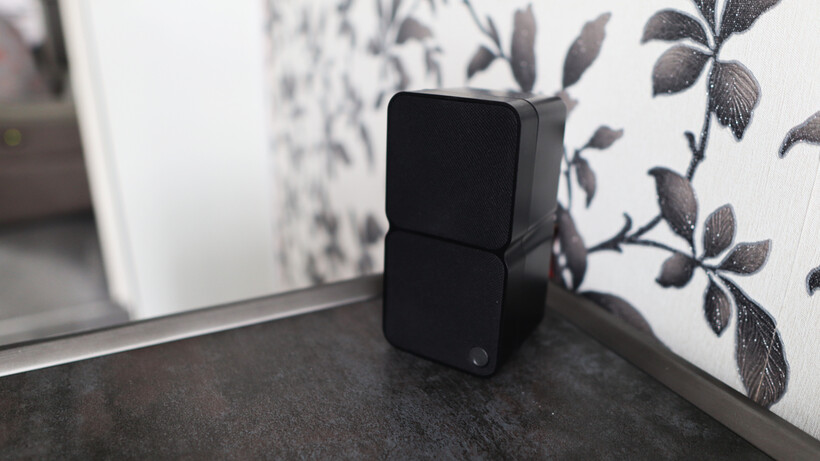
What immediately surprised me about this system was how tiny everything is – the MSX20 speakers are just 155mm high, 79mm wide and 97mm deep, meaning they can be placed virtually anywhere and take up little space on my sideboard against larger speakers.
The MSX Sub 200 is the smaller of the two Cambridge offers (there is the larger and beefier MSX Sub 300 available), but I was still quite surprised at how small it is compared to other subwoofers I’ve seen in sets with active speakers.
Advertisement
Image Credit (Trusted Reviews)
The satellite speakers can work either on a table on their own, as I had them, or raised up on their own desk stands – there is also wall mounting available with hardware included in the box to help you out. Cambridge even says you can stack them on top of each other, if you want to, although having them separate will be better for stereo immersion.
The MSX20 is available in either black or white, as is the MSX Sub 200, meaning they can carry a discrete look to blend into your space. I don’t mind this, although it is a shame they don’t also come in a matching silver finish for Cambridge’s other hardware for a more unified look – I appreciate that’s a little nitpicky, though.
Advertisement
Image Credit (Trusted Reviews)
On the whole, I appreciate the little redesign these new models have undergone against the older Minx variants, with a new Cambridge logo and a redesigned grille on the front of both the satellite speakers and the sub, bringing them closer to Cambridge’s current portfolio.
Connectivity
Passive speakers connect by banana plugs
Subwoofer has RCA line-in and line-out
Best paired with a streamer and amp
Advertisement
The MSX20 is a passive speaker, and can connect to any amp or AV receiver using either the terminals on the rear, or these can unscrew to reveal slots for 4mm banana plugs, which I chose to use.
The sub houses more connectivity on its rear panel, admittedly, with RCA input and output options, plus a power cable. The input handles a streamer, for instance, while the output goes to the amplifier in this case.
Image Credit (Trusted Reviews)
For my testing, these were both Cambridge products, with the affordable MXN10 streamer (in pre-amp mode) and the MXW70 power amplifier, which is where the MSX20 speakers were plugged into.
With the MXN10 in tow, it means this system can work with the likes of Tidal Connect, Spotify Connect, Deezer, Qobuz, internet radio and a DLNA server over Cambridge’s Streammagic app, plus it can handle Bluetooth 5.0,Google Cast and AirPlay 2. It’s also Roon Ready, which is where I spent most of my time with this system.
Physical connections include the RCA line output, plus a coaxial out, optical out, USB-A port and wired Ethernet.
Advertisement
Advertisement
Image Credit (Trusted Reviews)
The MXW70 provides 70 watts of power into 8 ohms with the MSX20, with Hypex NCore Class D amplification that’s tuned by Cambridge’s engineers. Connectivity here includes unbalanced RCA, a pair of XLR ports, a 12V trigger in, loudspeaker connections that accept 4mm banana plugs and a power cable.
If you’re about space-saving, I think this half-width combo works well with the MSX20 and MSX Sub 200, although with the streamer at £349 and the MXW70 at £499, it can increase the cost of the overall system.
A more affordable streaming app, such as the WiiM Amp Pro, WiiM Amp Ultra or Eversolo Play can cut costs and the amount of boxes you need down, depending on the physical constraints of your space.
Sound Quality
Strong bass from subwoofer
Forward mids and excellent width
Treble can sometimes feel a little lost
As much as the outside of this unit has changed, the core of the MSX20 isn’t too different to the Minx satellites that preceded it. This means they benefit from Cambridge’s fourth-gen Balanced Mode Radiator, or BMR, tech, which is designed to provide balanced and engaging results from wherever you are in a room.
Advertisement
Advertisement
On their own, these speakers only cover the mids and treble, as they only go down to 120Hz, with the MSX Sub 200 dialled in to handle anything below that. With the subwoofer in tow, I was pleasantly surprised by the amount of bass on offer from such a small set of units.
Of course, it works best when you use the dials on the rear to set crossover, the desired phase and volume of the pounding bass, but once I’d set that up, it was set-and-forget as far as I was concerned.
Image Credit (Trusted Reviews)
A good example of this was Off The Wall from Michael Jackson, with its pounding groove from the subwoofer demonstrating a good extension and tight feel, while the satellite speakers handled vocals and the rest of the frequency range. Both here and with Earth, Wind & Fire’s Let’s Groove, the MSX Sub 200 felt more unified with the overall frequency response of the overall system, rather than feeling like a thud in the corner that doesn’t contribute too much.
Steven Wilson’s Luminol features some relentless bass grooves in the opening few minutes alongside a vicious drum groove and hints of guitar work that can be quite difficult for some systems to deal with. The MSX20 and MSX Sub 200 combo impressed me here with the power and strength of the bass, although it didn’t overpower the punch of the drums and guitar work.
Image Credit (Trusted Reviews)
Advertisement
The entire system provides a sound with good width and depth, as demonstrated with Luminol and Peter Gabriel’s That Voice Again in my testing. This particular cut from So features a pounding bass, rich vocal and a lot of detailed cymbal work that can be lost with systems sometimes, which isn’t the case here.
Advertisement
I felt the mid-range that the MSX20 provided was rich, as demonstrated with James Taylor’s October Road; his vocals and a warm acoustic guitar sit right up front in the mix, with the ensemble built around it, which was demonstrated wonderfully. In Gloria Estefan’s Get On Your Feet, her vocals sit back in the mix against percussion and electric guitar work, although each was given space and room to breathe.
Image Credit (Trusted Reviews)
The one area I was a bit disappointed by was that the top end was quite smoothed over, lacking bite and detail, and sometimes felt a little lost against the low-end and the mid-range. For instance, in Lock All The Doors from Noel Gallagher’s High Flying Birds, the cymbal and percussion hits lacked a bit of presence, feeling a little lost against his vocals, while the competing percussion intro in Steely Dan’s Do It Again had good separation but lacked a bit of punch against other systems.
Should you buy it?
A compact and versatile system
The MSX20 and MSX Sub 200 combo works well if you’re after speakers and a sub that can be placed virtually anywhere in a room, although you will need to budget for a streamer and amp for a complete system.
Advertisement
This system feels a little lacking in the top-end, though, as it lacks a certain bite and sharpness against other systems.
Advertisement
Advertisement
Final Thoughts
The Cambridge Audio MSX20 & MSX Sub 200 is a capable mix of satellite speakers and a subwoofer that provides an immersive sound with tight bass, a surprisingly wide soundstage and rich mids for such a compact set of units that can be placed virtually anywhere. The treble can feel a little smooth, though, and once you add a streamer and amp, it can get a little dearer than some active units.
The main package here is comparable in price to the active Klipsch ProMedia Lumina 2.1, which offers better compatibility with desktop systems with USB-C and the like, and requires less effort to set up.
Advertisement
With this in mind, I think the MSX20 and MSX Sub 200 offer a better overall sound, with better handling of the low-end alongside an immersive sound. For a more affordable and easy-to-use passive system, this combo works rather well, although sometimes you can’t beat the simplicity and versatility afforded by the Cambridge Audio L/R S for a similar price.
How We Test
We test every speaker setup we review thoroughly over an extended period of time. We use industry-standard tests to compare features properly. We’ll always tell you what we find. We never, ever, accept money to review a product.
Tested over several weeks
Tested with real world use
FAQs
Does the Cambridge Audio MSX20 and MSX Sub 200 system have a subwoofer?
Yes, the Cambridge Audio MSX20 and MSX Sub 200 have a subwoofer with the MSX Sub 200.
Advertisement
Does the Cambridge Audio MSX20 and MSX Sub 200 system have a control app?
On its own, no, as the Cambridge Audio MSX20 and MSX Sub 200 system is purely built of passive speakers and a subwoofer that need wiring to other components. If you use a streamer, such as Cambridge’s own MXN10, that will offer the brand’s Streammagic app, for instance, to send audio to the speakers and sub.
Advertisement
Full Specs
Cambridge Audio MSX Series Review
UK RRP
£497
USA RRP
$657
Manufacturer
Cambridge Audio
Size (Dimensions)
210 x 232 x 220 MM
Weight
6.5 KG
Release Date
2026
First Reviewed Date
10/05/2026
Driver (s)
Two BMR drivers (main units), 6.5-inch active woofer and 2x passive radiators (subwoofer)
Ports
Banana plugs/terminals (main units), RCA input and output (subwoofer)
The JP4x4 is a new take on two of the original Renault 4s: the Plein Air version, built in 1969 for open-air fun, and the JP4 from 1981, which seemed to channel carefree days by the sea. The name JP4 is derived from Journée à la Plage, which translates to “a day at the beach.” The new name JP4x4 incorporates the four-wheel drive feature, which is self-explanatory.
On May 18, visitors to the 2026 Roland-Garros French Open will get their first look at the vehicle, which joins three previous concepts built on the same electric Renault 4 E-Tech platform, each of which explored new ways to use the compact hatchback. The most recent version focuses squarely on leisure and light adventure. The vehicle joins three previous prototypes based on the same electric Renault 4 E-Tech chassis, each exploring new ways to use the compact hatchback. This most recent edition focuses solely on leisure and minor adventure. Emerald green paint covers the bodywork in a somewhat iridescent tint that resembles the colors offered on the classic 4L in the 1970s. Bright orange fills the interior, creating a sharp, cheerful contrast that draws the eye from all sides. Half-doors replace the traditional five-door layout, stopping just short of the B-pillar enabling simple entry and departure. There are no side windows or a canvas roof, so the hut is always open to the breeze.
The openwork roof is made up of a cross-shaped structure that provides enough stiffness while allowing plenty of sky to be visible. The same frame supports a surfboard strapped securely on top. At the back, the tailgate folds flat like the side of a pickup truck, transforming the cargo area into a simple loading platform. Skateboards fit nicely into the free area behind the seats, ready for whatever happens next.
The dashboard and digital screens are carried over from the production car, but Renault added a passenger grab handle for rougher terrain and a floating center console to keep the space airy. Inside, the seats replicate the distinctive bucket style of 1970s Renault models, complete with integrated headrests that resemble wrapped Egyptian mummies. The seats are covered in mixed fabrics, combining a crepe base with diagonal mesh sections for a sporty yet comfortable feel. Orange accents appear. They are covered in a mix of fabrics, including a crepe base and diagonal mesh parts for a sporty yet comfortable feel. The dashboard and digital panels are carried over from the production car, but Renault has added a passenger grasp hold for rougher terrain and a floating center console to keep the area open. Orange accents emerge on the door panels and surrounding the console, bringing everything together.
The JP4x4 is mechanically similar to last year’s Savane 4×4 concept, with a second electric motor driving the rear wheels, giving the vehicle permanent all-wheel drive instead of the front-wheel-drive setup found on the standard Renault 4 E-Tech. The ground clearance rises by 15 millimeters, and each track widens by 10 millimeters for better stability. The 18-inch wheels wear a fresh design inspired by the original JP4, wrapped in Goodyear UltraGrip Performan A second electric motor powers the back wheels, providing the vehicle permanent all-wheel drive rather than the front-wheel-drive system seen on the ordinary Renault 4 E-Tech. The ground clearance increases by 15 millimeters, and each track expands by 10 millimeters to improve stability. The 18-inch wheels feature a new design inspired by the original JP4, as well as Goodyear UltraGrip Performance+ tires in the 225/55 size. The wheelbase remains at 2,624 millimeters, as it was on the production vehicle.
Renault built the entire package for sandy beaches, stony pathways, and unpaved treks where extra traction is critical. The combination of raised height, wider stance, and all-wheel drive gives the car a capable feel without making it a serious off-road vehicle. Nobody expects this particular vehicle to hit showrooms. Instead, it serves as a showcase for the electric Renault 4 platform’s versatility.
A recent Figure AI tech showcase depicts two F.03 humanoid robots walking into a clean but lived-in environment. One robot goes straight to a coat thrown on a bed and hangs it neatly on a wall hook. At the same time, the second robot closes a laptop on the desk and places a pair of headphones back onto their stand. They keep progressing without pausing, each catching up on what the other has previously accomplished. When they approach the unmade bed, they naturally split off, one on each side, and begin manipulating the sheets and comforter together until everything is level and smooth.
People have seen robots doing laundry and stacking boxes before, but this time, not one, but TWO machines went through a whole sequence of everyday jobs in the same room at the same time, not bad for a minute and a half of work. The list of tasks included opening doors, pushing a chair under the desk, closing a book, emptying a small trash can, and generally tidying up the joint so it looked ready for the next day. But this time, not one, but TWO computers performed a whole sequence of daily tasks in the same room at the same time, which is not bad for a minute and a half of effort. The list of activities included opening doors, moving a chair beneath the desk, closing a book, emptying a little trash can, and generally cleaning up the space so it looked ready for the next day.
Sleek & Durable Design: Standing at 132cm tall and weighing only approx. 35kg, the G1 is constructed with aerospace-grade aluminum alloy and carbon…
High Flexibility & Safe Movement: Boasting 23 joint degrees of freedom (6 per leg, 5 per arm), it offers an extensive range of motion. For safety, it…
Smart Interaction & Connectivity: Powered by an 8-core high-performance CPU and equipped with a depth camera and 3D LiDAR. It supports Wi-Fi 6 and…
Each F.03 stands about five feet eight inches tall, walks around on two legs with arms that have hands made up of five individual fingers, and their heads have stereo cameras that feed live video straight into their central brain, with no need for any external sensors or additional computers to help them out. The trick is in a special bit of software called Helix-02, which Figure built in as a single rule that takes images from the cameras and then The trick is in a special piece of software called Helix-02, which Figure included as a single rule that takes images from the cameras and a simple aim and translates them into an infinite succession of joint movements, with no further planners or coding required.
Engineers basically gave the system thousands of hours of practice time through simulated runs, then threw in some real-world examples from their earlier tests of the robots doing grocery shopping and kitchen cleaning, and then they simply added some new data showing the robots working together in a room, and the model just learned the new pattern, no need for new code.
When the comforter becomes all bunched up and begins to slide out from under the robots, the one on the left will tilt its head slightly, and the one on the right will notice and adjust its grip just in time to catch it; because they don’t send any messages to each other, everything happens on the fly, with each watching the other’s body language and adjusting their own plan as it goes.
Engineers will tell you that the problem is that objects that can change shape, such as a blanket, provide a significant challenge. The policy predicts when the shape will change and adjusts accordingly, all in a fraction of a second! It also makes the robots steady when they reach, stride, and turn, as it was interesting to see one of them stand on one leg to press the pedal while the other just kept walking. [Source]
MUFG, Mizuho, and SMFG would be the first Japanese institutions added to Anthropic’s restricted Project Glasswing rollout, a source familiar with the matter told Reuters
Japan’s three megabanks are set to gain access to Claude Mythos, Anthropic’s vulnerability-hunting AI model, within roughly two weeks, a source familiar with the matter told Reuters on Tuesday.
It would be the first time a Japanese company has been granted entry to the restricted preview, which has so far been confined to Anthropic’s American and a handful of European partners.
Mitsubishi UFJ Financial Group, Mizuho Financial Group, and Sumitomo Mitsui Financial Group were informed of the move during meetings in Tokyo this week with US Treasury Secretary Scott Bessent. The three lenders are expected to be onboarded by the end of May.
Advertisement
The 💜 of EU tech
The latest rumblings from the EU tech scene, a story from our wise ol’ founder Boris, and some questionable AI art. It’s free, every week, in your inbox. Sign up now!
Mythos has been treated by regulators and chief executives as a category-shifting event since Anthropic disclosed its existence earlier this month.
The model has discovered thousands of previously unknown zero-day vulnerabilities across every major operating system and every major web browser, and in internal testing it wrote working exploits, including chains that escape both renderer and operating-system sandboxes in a browser.
Advertisement
Mozilla last week shipped Firefox 150 with fixes for 271 vulnerabilities found by Mythos in a single evaluation pass.
Anthropic has not released the model publicly. Instead, it has run a controlled rollout under what it calls Project Glasswing, with 12 named launch partners, including AWS, Apple, Cisco, Google, JPMorganChase, Microsoft, Nvidia, and Palo Alto Networks, and around 40 further institutions granted access on a case-by-case basis.
Tokyo is moving in parallel. Finance Minister Satsuki Katayama announced the formation of a 36-entity public-private working group on Mythos-class risks, comprising the country’s major banks, the Bank of Japan, and the Japanese units of Anthropic and OpenAI.
Advertisement
The group is chaired by Mizuho’s chief information security officer and is charged with identifying exposures, implementing defensive measures, and drafting contingency plans for what would amount to a co-ordinated patching push across the Japanese financial system.
For the three banks involved, the immediate question is operational. Mythos under Glasswing terms is delivered with restrictions on output disclosure, with the model used to find vulnerabilities in a partner’s own systems and to draft remediation, not to publish exploits.
The Mozilla case offers a template: 271 vulnerabilities patched in a single Firefox release after a Mythos sweep, with the model’s findings handed back to Mozilla engineers under non-disclosure rather than published.
The geopolitical layer is unusually visible. Bessent’s role in conveying the access decision in Tokyo aligns Mythos rollout with US Treasury statecraft rather than with Anthropic’s commercial channel, an arrangement that has drawn complaints from European capitals.
Advertisement
Eurozone finance ministers raised the issue at an Ecofin meeting last week, where no EU government had access to the model while the White House was reported to be blocking further expansion of the partner list.
Industry views on Mythos remain split. Some cybersecurity researchers have argued that the vulnerabilities Mythos surfaced are reachable through clever orchestration of public models, and that the bigger story is the rate of improvement of frontier AI in offensive cyber, not Mythos itself.
Others, including Anthropic chief executive Dario Amodei, have described the moment as a “cyber moment of danger” that justifies the access controls.
Anthropic and the three Japanese banks did not immediately respond to requests for comment, according to the Reuters source’s account.
Lady Gaga’s “Mayhem Requiem” filmed live performance will stream on Thursday, May 14, via Apple Music Live and at select AMC theaters across the United States.
At 11:00 p.m. Eastern / 8:00 p.m. Pacific, Lady Gaga fans can head to the Apple Music app on their iPhone, iPad, Mac, Apple TV, or in-browser at music.apple.com to tune into an exclusive stream of the Mayhem Requiem filmed live performance. In addition to streaming on the app, 15 select AMC theaters across the U.S. will show the performance at the same time.
The premiere is free for anyone to watch; no Apple Music subscription is required. However, Apple Music subscribers will be able to watch the performance on demand after the event is over.
Apple Music describes the event:
Advertisement
“The opera house from Lady Gaga’s MAYHEM Ball has been reduced to rubble— and now it’s time for MAYHEM Requiem, a celebration and musical reimagining of her sixth album.”
It’s worth noting that the filmed live performance isn’t actually live, either. It was recorded on January 14 at Los Angeles’ Walter Theater.
A live album of all songs mastered in spatial audio will be available on Apple Music. Fans can unlock bonus content, like wallpapers and Apple Watch faces, through the Shazam app by identifying any Lady Gaga song.
A week ahead of the Google I/O event, during the Android Show stream, there were some iPhone-friendly Android features teased. We already knew about them.
An Android smartphone and an iPhone
Google I/O 2026 is taking place on May 19 and 20, and the search giant is warming up for its biggest presentation of the year. To prepare its users for that event, it held a smaller presentation on Tuesday about Android. The Android Show I/O Edition 2026 was a 40-minute prerecorded stream, introducing a number of changes to Google’s ecosystem. There was obviously a lot of Google, Chromebook, and Android-specific content, but also some that was Apple-related in nature. Continue Reading on AppleInsider | Discuss on our Forums
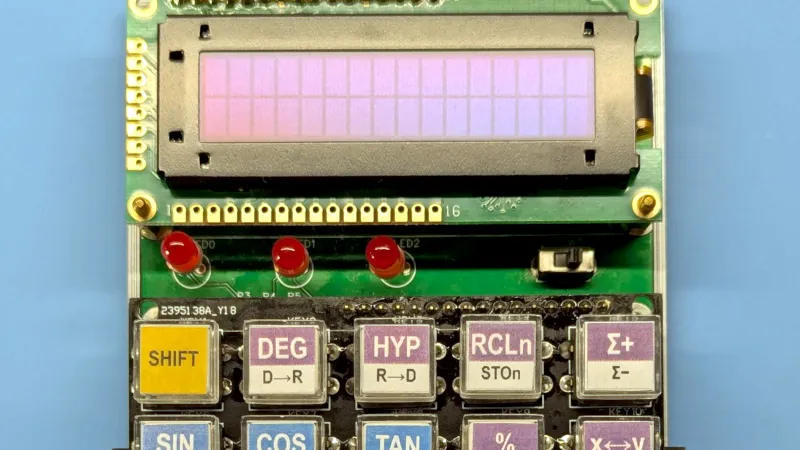
It’s possible that among Hackaday readers are the largest community of people who have designed their own CPU in the world. We have featured many here, but it’s possible that not so many of them have gone on to power an everyday project. Step forward [Baltazar Studios] then, with a scientific calculator sporting a self-designed CPU on an FPGA.
The calculator itself is nice enough, with a smart 3D printed case, an OLED display which almost evokes a VFD, and very well made buttons. But it’s the CPU which is of most interest, because while it follows a conventional Harvard architecture with a 12-bit instruction set, it works with 4-bit nibbles. This choice follows one used by HP in their calculator designs, seemingly because it can be optimised for the binary coded decimal which the calculator uses.
With calculators being yet another app on our spartphones or comnputers, there seems to be less use of calculators outside of education in 2026. But if you are a calculator user there’s nothing like a calculator you made yourself, and with a CPU of your own design it has few equals. We like this project almost as much as we like the Flapulator!










































































You must be logged in to post a comment Login