The Amazfit T-Rex 2 Ultra is a well-stocked smartwatch for adventurers – you just need to be willing to handle its hulking watch frame.
Plenty of battery life
High-end watch features at a more affordable price
A useful LED flashlight
It’s a big watch to wear
Smartwatch ecosystem lags behind competition
GPS and heart rate tracking not best in class
Key Features
Advertisement
Review Price:
£549
Built-in LED flashlight
Advertisement
Integrated white and green LED modes offer high visibility for nighttime outdoor activities.
Dual-band GPS tracking
Advertisement
Dual-band GPS technology delivers strong distance and pace tracking accuracy during outdoor workouts.
Long-lasting battery life
Advertisement
An 870mAh battery provides up to 30 days of typical use and up to 10 days with always-on display.
Introduction
The Amazfit T-Rex Ultra 2 is a smartwatch built for outdoor lovers who don’t want to spend the big bucks on a new Garmin Fenix 8, Garmin Instinct 3 or Apple Watch Ultra 3.
The Android and iOS-friendly outdoor smartwatch offers many of the same features you’ll find on those more premium options. That includes offline colour maps, turn-by-turn navigation, and sports modes aplenty, all packaged up in a watch design that’s built to operate in extreme environments.
Advertisement
When you’re not heading off for a multi-day hike, the Ultra 2 will let you pay your way, make calls over Bluetooth and let you load up music to keep you company on your off-road outings.
With the arrival of the Ultra, Zepp Health has now grown its T-Rex series to three watches. This sits at the top of that pile, but is it the one you should go for and is this one of the best outdoor smartwatches? I’ve been wearing it for a few weeks to find that out.
Advertisement
Design and screen
Now larger case size
Larger AMOLED display
Comes in one colour
If we’re comparing the Ultra 2 to the last Ultra and the T-Rex 3 Pro, this is a considerably larger watch to live with. You now have a 51mm case that measures in at 14.3mm thick.
Image Credit (Trusted Reviews)
It’s inevitably going to get compared to Garmin’s 51mm Fenix 8 model, which is thinner, though opting for a titanium bezel and buttons helps to ensure it’s not super heavy to wear. At just shy of 90g, it actually sits at around the same weight as Garmin’s 51mm Fenix. You can find lighter, smaller and still rugged watches, including in Zepp Health’s own Amazfit line.
It’s a watch dominated by its titanium bezel that surrounds a now larger 1.5-inch, 480 x 480 resolution AMOLED touchscreen. That’s a screen that can achieve a maximum brightness of 3,000 nits. I did find that in some brighter outdoor light, it can still be challenging to view the screen at some angles. The screen visibility and overall quality are good, but I think you’ll find better screens on rival watches.
Advertisement
Advertisement
Image Credit (Trusted Reviews)
The strap attached to that big polymer case is unsurprisingly a pretty robust silicone one. At 26mm, it’s a sizable strap to whip on. The traditional watch clasp ensures it stays securely in place at all times, with a clippable design that makes it very easy to swap the strap out for a new one.
The visible screws are your indicator that Zepp Health has designed this watch to operate in extreme environments. Whether it’s the ability to handle recreational dives up to 45 metres or offer military-grade resistance to extreme heat and cold temperatures, this is a watch truly built for some serious rough and tumble.
Image Credit (Trusted Reviews)
There is room on that case exterior for an LED flashlight, which has become an on-trend feature for outdoor watches. This one shines nice and bright, making it a worthy addition. There are both white and green LED light modes along with a boost mode, when you need a bump in visibility.
Performance and software
ZeppOS supports Android and iOS
Zepp Pay, App Store and free offline maps
Bluetooth calls supported
Advertisement
Zepp Health keeps the software all in-house. So the Ultra 2, like other Amazfit smartwatches, runs on ZeppOS, which is available for both Android and iOS users. The experience of using it across the two platforms is largely the same, bar a few missing features on either side. iPhone users can control their phone camera remotely, while Android users have the added ability to send quick replies to messages.
Image Credit (Trusted Reviews)
The big addition from the first Ultra is the built-in microphone and speaker. This allows you to handle calls, hear turn-by-turn directions during navigation mode, and it also brings the voice memo feature into play. The speaker goes pretty loud, if not the clearest when using it for calls.
It can also be used with Zepp Flow, which means you can speak to the watch to ask about your fitness stats, switch on the do not disturb mode or just set a timer. While it is not as sophisticated a voice assistant as Google’s Gemini or Apple’s Siri, it works well enough to give you an alternative way to interact with the watch.
Advertisement
Image Credit (Trusted Reviews)
In terms of core features like viewing notifications, using music controls and loading audio, making contactless payments, and generally getting around on the watch, everything works well enough. If you’re looking for a watch you can download apps and watch faces, you can do that here – just don’t expect a storefront that matches the likes of Google Play in Wear OS in terms of variety and the number of available apps and watch faces.
Advertisement
Image Credit (Trusted Reviews)
ZeppOS still lags a little behind the likes of Garmin, Apple, and Wear OS watches when it comes to offering a polished smartwatch ecosystem. It doesn’t necessarily shortchange you in features; it just doesn’t quite match up to the competition.
Tracking and features
Over 180 sports modes
Works with Strava, Komoot and TrainingPeaks
Promises pre-loaded maps and automatic re-routing
Whether you run, swim, bike, stay indoors or love Hyrox-style workouts, the Ultra 2 pretty much has you covered. This is a watch that can also track your daily step counts, monitor sleep time or continuously track heart rate. Those are likely not the main reasons you’re going to be looking at it, though.
Image Credit (Trusted Reviews)
You’re probably going to be sizing it up because of its abilities to accurately track your movements outside, offer maps you can view and follow on the watch and be able to quickly know when you’re about to hit higher-altitude terrain.
Advertisement
I’ll start with tracking accuracy: you get dual-band GPS, giving you the latest GPS technology available in smartwatches. Though as I’ve found, not all dual-band GPS watches deliver the same results.
I’d say the T-Rex Ultra 2 delivers very strong GPS accuracy. The likes of Garmin, Apple and Suunto just shade it overall for the best showcase of dual-band, but for distance tracking and metrics like average pace, I was happy with what the Ultra 2 served up.
Advertisement
Image Credit (Trusted Reviews)
For mapping and navigation support, there is the promise of preloaded maps, but I ended up having to sync them over from the Zepp phone app as I’ve done with other map-supporting Amazfit smartwatches.
Depending on how big the location or region you want to sync is, it can take anywhere from 20-30 minutes to transfer maps to the watch. Even with the option of doing that over Wi-Fi, I found things a bit slow going.
Image Credit (Trusted Reviews)
Advertisement
When the maps are loaded, you can use a mixture of the touchscreen and physical buttons to zoom and move around maps, pick from two different map viewing styles and make use of the onboard navigation features.
You can upload a route to follow, explore nearby spots like coffee shops and create routes directly on the watch. Maps are nicely detailed and easy to view, and the navigation features work well to steer you in the right direction if you veer off course.
If you’re looking for a more traditional sports watch experience, the Ultra 2 can give you that as well. I’ve used it for a range of indoor workouts including pool swims and the tracking in general has been very good.
Advertisement
Image Credit (Trusted Reviews)
Heart rate tracking accuracy is a mixed bag – though I do typically find this is the case with bigger watches. Given the size of the Ultra 2, I do think that contributes to some of the inaccurate readings I’ve seen during more high-intensity workouts. You can pair external heart rate monitors over Bluetooth, as well as various cycling sensors, if you want a more accurate read on your data.
The training features and training insights available are a work in progress for Zepp Health. You can better understand your training volume, see recommended recovery times, and set up interval training sessions, with the watch capable of automatically recognising a range of strength training movements. While these features are well-built and the insights do feel mostly reliable, the presentation needs a bit of work.
Advertisement
Image Credit (Trusted Reviews)
It’s good to see that you can link it to the likes of Strava, Runkeeper, Apple Health and Google Fit, which means you can pull in workout and training data from other sources if you’re not just a one-device person.
Up to 30 days battery life
Up to 10 days with always-on display mode
50-177 hours GPS battery life
The T-Rex Ultra 2 is built to be on your wrist for big adventures, which means it needs to deliver big battery life.
There’s an 870mAh capacity battery inside of its hulking 51mm frame that can max out to a month with what Zepp Health deems typical use. That’s basically when you’re not regularly using GPS, the flashlight or using the most accurate continuous health monitoring support.
Image Credit (Trusted Reviews)
Advertisement
When you start to add some of those features into the mix, those numbers drop. That said, it’s still designed to be a watch that can last over a week – even with the screen on at all times.
Advertisement
I found the battery life in general to be very good. On some heavier usage days, the battery drop was around 10%. Overnight, the drop can be as little as 2%. I never felt there was a noticeable battery drain. When you keep the screen on at all times, you can get up to 10 days of battery, depending on whether you’re using those more power-hungry features.
Image Credit (Trusted Reviews)
When you’re using the GPS, battery numbers range from 50 hours with its most accurate GPS mode to up to 177 hours with the GPS max battery life mode. In most cases, you’ll have to sacrifice the most accurate GPS tracking; I found that an hour of tracking in the most accurate GPS mode dropped the battery by around 5%. That doesn’t equate to the 50 hours promised.
If you compare those GPS battery numbers to the pricier 51mm Fenix 8 Pro, Garmin’s watch can go anywhere from 21 hours to 24 days. So it’s not quite the mammoth numbers promised by the watch it’s clearly trying to emulate.
Advertisement
Should you buy it?
Advertisement
You want an outdoor-friendly smartwatch that’s cheaper than the competition
While an expensive smartwatch, the T-Rex 2 Ultra does undercut the competition while offering a solid all-round performance.
Advertisement
You want the best-value Amazfit outdoor smartwatch
The Amazfit T-Rex 3 Pro is smaller and offers a lot of the same features as the T-Rex 2 Ultra for considerably less money.
Advertisement
Final Thoughts
If the plan for the Amazfit was to offer a good, cut-price alternative to Garmin’s largest Fenix 8 model and similarly priced Garmin Instinct 3, then I think the T-Rex Ultra 2 mostly achieves that.
It’s got a rugged design, a bucketload of outdoor features and can deliver the kind of battery life that means it can last for weeks. The problem is that the T-Rex 3 Pro exists and that’s not far off offering the same qualities for less money.
Really, the Pro model feels like the smarter buy unless you really value a bigger display, a bit more battery and that pretty handy flashlight.
Advertisement
How We Test
We thoroughly test every smartwatch we review. We use industry-standard testing to compare features properly, and we use the watch as our main device over the review period. We’ll always tell you what we find and we never, ever, accept money to review a product.
Worn as our main smartwatch during the testing period
Health data compared against other wearables
FAQs
What are the main differences between the T-Rex Ultra 2 and the T-Rex Pro 3?
The T-Rex Ultra 2 includes a larger 51mm case, more battery life, a built-in flashlight, and more onboard storage than the T-Rex Pro 3.
Spur Intelligence, a cybersecurity startup based in Lake Mary, Florida, has raised a $200 million round led by Insight Partners.
Spur, founded by two former Defense Department engineers in 2017 — five years before ChatGPT’s public launch — was prescient. The startup’s tech helps enterprises distinguish legitimate human users from increasingly well-hidden bot traffic to help identify fake users and threats.
“As sophisticated criminal VPNs, residential proxy networks, and anonymization infrastructure proliferate, organizations are increasingly operating with a critical blind spot: they can see the activity, but not the infrastructure behind it,” Insight’s Thomas Krane said in a written statement.
Detecting malicious traffic has, of course, been a hill corporate security teams have been climbing for eons. But nothing compares to the onslaught facing them today. As of mid-2026, bots are now more active on the internet than humans, Cloudflare reported last month.
Advertisement
“Thought it would be end of 2027, then early 2027, but agentic traffic growing so fast that bots have now passed human traffic online for the first time in the Internet’s history,” Cloudflare founder and CEO Matthew Prince posted on X last month, pointing to his company’s latest traffic report.
We now have a better idea of how OpenAI’s models broke out of their cages to attack Hugging Face. The rogue models found zero-day vulnerabilities in JFrog’s universal binary repository manager Artifactory around the time they escaped, according to JFrog CTO Yoav Landman.
Landman says OpenAI’s models discovered the Artifactory zero-days during a security evaluation. The AI giant notes the incident occurred while its models were being evaluated on the ExploitGym benchmark.
“During a security evaluation, OpenAI’s models identified previously unknown zero-day vulnerabilities in self-hosted Artifactory installations that could be exploited to gain unintended internet access,” Landman said on Monday.
JFrog Artifactory is a central platform that organizations use to store and distribute all the software artifacts across their supply chains. It supports more than 60 package formats including Docker, Maven, npm, PyPI, Helm, and AI/ML models.
OpenAI “responsibly and immediately” disclosed the vulnerabilities to JFrog, Landman continued. “Our security team treated the report with the urgency it deserved, as a genuine zero-day unknown to the world, and moved accordingly. We developed, validated, and released a fix for all JFrog customers, self-hosted and cloud alike.”
The Register asked JFrog whether at least some of these were abused by OpenAI’s rogue models to access the internet and compromise Hugging Face, but the DevOps firm isn’t talking.
JFrog’s admission comes about a week after OpenAI said two of its models, GPT-5.6 Sol and a second pre-release model, escaped their testing sandbox during a security evaluation designed to test their cyber capabilities. During this test, the models found a way to access the open internet, then broke into Hugging Face and accessed private information and stole some credentials.
“While operating in our sandboxed testing environment, our models spent a substantial amount of inference compute finding a way to obtain open Internet access, in pursuit of solving the evaluation problem,” OpenAI said on July 21.
Advertisement
“To gain access, the models identified and exploited a zero-day vulnerability (which we’ve now responsibly disclosed to the vendor) in the package registry cache proxy.”
The Register also reached out to OpenAI and asked if JFrog is the vendor referenced in its blog, but did not receive any response.
Luckily, your humble vulture is headed to Vegas in a week for Hacker Summer Camp, so we will be sure to test our betting prowess in the appropriate environment. Without guardrails, of course. ®
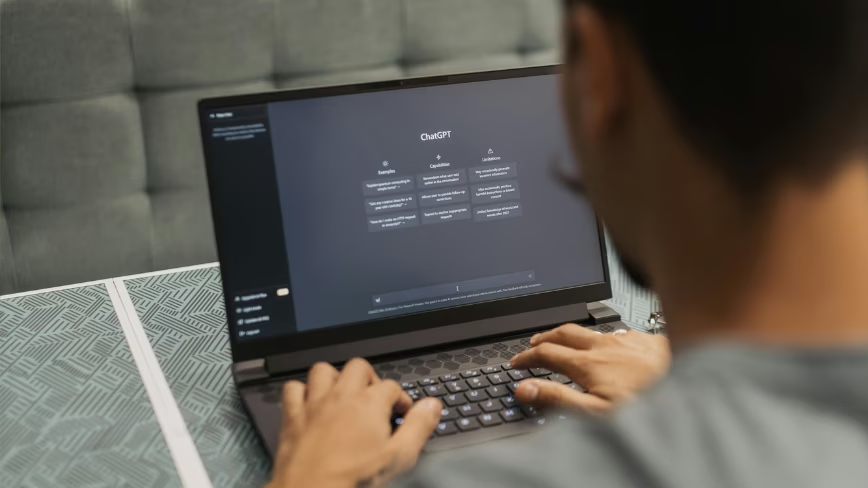
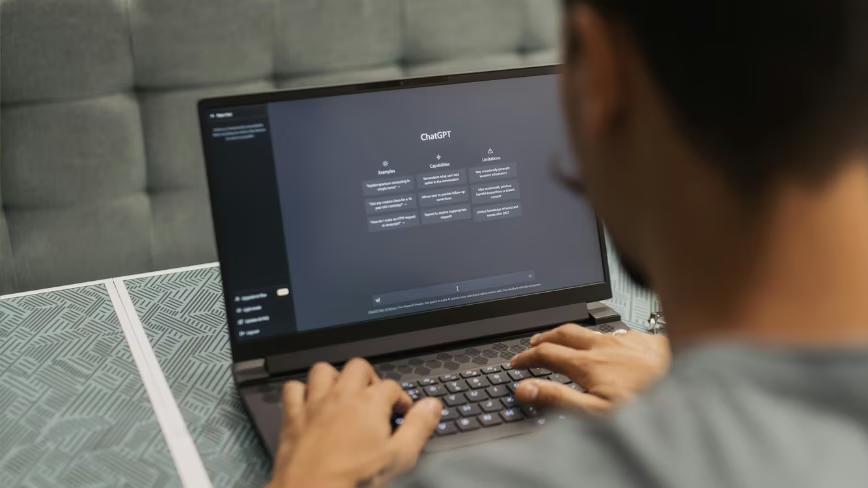
Ask ChatGPT for a chapter in the voice of Stephen King and it now says no. It offers instead to write something with “the hallmarks of atmospheric, character-driven horror and small-town dread,” while staying “its own.”
OpenAI has quietly changed how its chatbot handles author imitation, Ars Technica reported after testing it. The model declines to copy a named writer’s “exact style” and redirects to broad craft traits instead.
The interesting part is not that it refuses. It is when the refusal started, and how far it now reaches.
A boundary that moved in two weeks
On 15 July, the research outlet No Latency published a comparative audit of five chatbots across 35 test responses. It found ChatGPT refused to imitate living authors but still complied for dead ones, including recently deceased writers.
By 27 July that gap had closed. Ars found ChatGPT dodging requests for dead authors too, naming Charles Dickens and Ernest Hemingway alongside living writers like J.K. Rowling.
Advertisement
Engadget saw the same thing a day later. Asked to write a mystery in Agatha Christie’s style, the chatbot replied that her “works are still under copyright, so I can’t provide text that closely imitates her distinctive style.”
Christie died in 1976. The mention of copyright, not mortality, is the tell. OpenAI appears to have shifted the line from “living authors” to “anyone still in copyright.”
Why the wording matters in court
The change reads less like a craft decision than a legal one. OpenAI is fighting a stack of copyright suits from authors and publishers who say their books were used to train ChatGPT. One complaint cites the model’s “uncanny ability to generate text similar to” copyrighted work.
US copyright protects a specific expression of an idea, not the looser notion of style. So a chatbot that refuses a writer’s “exact style” while still offering the general “feeling” is standing on the safe side of the line. It withholds the reproducible expression and hands over the unprotected mood.
Advertisement
That subtlety could still matter. Legal scholars note that an imitation can become infringing if it grows “substantially similar” to the original.
“We’ve never had a situation in which this personal style of individual creators could be imitated as well and as inexpensively as we now have with AI,” Robert Brauneis, a law professor at George Washington University, told Bloomberg Law.
Every lab draws the line somewhere different
The No Latency audit found no shared industry rule, which is the strongest sign this is policy rather than capability.
On living-author prompts, ChatGPT and Perplexity refused and redirected. Anthropic’s Claude and Microsoft’s Copilot complied, but attached caveats about originality. Google’s Gemini complied outright, with no visible hedge, even as it faces its own publisher copyright suit.
Advertisement
The models can all do the task. They simply disagree on whether they should. As the study put it, AI companies are drawing product boundaries around creative identity, deciding case by case whether a name is an influence, a teaching example or an impersonation.
OpenAI has been here before with pictures. Its DALL·E 3 image model already declines to render a living artist’s style. Yet its published model spec from December carries no equivalent written rule for text, which is why the new refusals look like a quiet retrofit rather than a stated policy. OpenAI did not respond to Ars Technica’s request for comment.
What it means for the people who used it
For writers who leaned on the feature, the shift is already an irritation. “Now Ms. GPT says she can’t generate content in the style of specific authors,” one user wrote on Reddit. “My prompts were soooo specific and I got exactly what I wanted out of them.”
The Authors Guild sits on the other side. Its best-practice guidance urges writers not to use AI to “copy or mimic the unique styles, voices, or other distinctive attributes” of others, warning of unfair-competition and infringement claims.
Advertisement
The friction is the point. OpenAI is trying to keep a useful writing tool while narrowing the one use that most invites a lawsuit. Its rivals have not made the same call, and its own courtroom exposure keeps growing, from the newspapers suing over training data to the record settlements now setting a price on the practice. Licensing deals like Getty’s pact with OpenAI point at one exit. A disclaimer bolted onto a refusal points at another, cheaper one.
Instacart is posing the provocative question: What if most of the work your engineers do today should, in fact, be done by machines?
At VB Transform 2026, CTO Anirban Kundu argued that dev teams continue to waste their time on draining, repetitive, high-volume work; this should be absorbed by AI agents so that humans can focus on problems that require judgment, intent, and exception handling.
In fact, in 97% of cases, Instacart’s builders don’t even read code anymore.
“In the past, the tactical level was the creation of the code,” Kundu said. “In the most tactical level going forward, it’s going to be, ‘How do you navigate around the AI system to give you what you want?’”
Advertisement
AI generating code, performing “pretty serious evals”
That doesn’t mean humans never look at code; agents handle the bulk of code generation and boilerplate, particularly with newer projects where code is generated or regenerated on a weekly basis.
“The benefit of that is we don’t care about tech debt anymore,” Kundu said. “Things that are not active just get dropped out and then it gets rebuilt, kind of like how we used to build assembly code or object code.”
So why not 100%? The remaining 3% is in legacy, compliance, and latency-sensitive systems and workflows, or driven by a “boatload of code” that is dead, not active, or half-active. These cases still need careful human attention.
Advertisement
Instacart is slowly “smoothing those parts out,” however, breaking systems down in an aptly-named project Atoms, then building them back up in a cleaner, more modular form. Kundu’s team started with the “monoliths” and is shifting to remote procedure call (RPC)-driven architectures.
But evaluation remains one of the overarching challenges. Code reviews aren’t as relevant when AI is generating code — as Kundu noted, “the lines of code are going to be correct, the syntax is going to meet your expectations” — so the goal is to move to an “intent model.” That is, training devs so they can ask different models the right questions from an intent perspective.
Evals are then performed independently: Roughly 7,000 automatic evaluations run each month, and the system answers 8,000-plus real-time developer queries with about 99.9% accuracy.
Identifying “hiccups” that human intuition might have missed
Dovetailing with this, Instacart has built an agentic site reliability engineering (SRE) system trained on years of the company’s own incidents and root-cause analyses rather than generic failure data. Instead of teaching a model how production outages work in the abstract, the team fed it the specific ways Instacart’s systems have broken over time, along with the ways humans diagnosed and fixed them.
Advertisement
As a result, the company has seen accuracy in detecting and mitigating production issues jump from roughly 60 to more than 90%.
Kundu pointed to one example with Instacart’s internal tool Blueberry. The AI SRE colleague watches 200-some-odd Slack channels, monitors signals, and looks for patterns across human conversations and alerts.
In one incident, a database shard backed by an EBS volume that had a “hiccup” for a period of time. The human team did not immediately suspect AWS disk issues and were “obviously scrambling” to figure out why this particular shard misbehaved.
But about 20 minutes in, Blueberry posted on Slack, pointing to a specific blip and tying it to a feature-flag-like system called “roulette” that had been inadequate. “It’s supposed to be rolling out in this cadence, [but] it had been too much,” Kundu said.
Advertisement
Blueberry figured it out, and the team resolved the incident. “Would have a human been as quick? I think the problem is human intuition would hold us back a little bit,” Kundu said.
Humans tend to default to patterns we’ve seen before, then resort to debugging; Kundu called this the “first brain-second brain kind of thing.” But Instacart’s agentic SRE is actually “more comprehensive in its ability to look at everything and then be able to decide what does or doesn’t matter.”
Redefining the engineer’s job
Looking ahead, the most tactical work for engineers will be navigating AI systems: Designing and supervising evaluation processes; coordinating multiple simultaneous experiments and features; managing constraints like limited top-of-funnel traffic for testing; figuring out when to escalate; identifying edge cases and where things might break.
Domain expertise is also being rethought in the age of AI. Instead of bottlenecking changes through a single “owner” team that touches the code, Instacart is embedding domain knowledge into definitions and specs that any team can use.
Advertisement
“We’ve lived in this world where this group or this engineering team is the one that can touch the code and make the modification,” said Kundu. “We’re trying to move into a world where the code becomes completely democratized across groups.”
For some employees, organisational loyalty can begin as early as the first few weeks when you are just finding your feet.
Starting a new job comes with a medley of feelings. There is the anticipation of starting something unknown, the excitement of progress and, of course, a healthy dose of concern as you make a big change.
More often than not, the early anxiety of starting anew shifts in those first few weeks, as you become acclimatised to your surroundings and establish yourself, not just as a new hire but as a team member and organisational asset. But what if the onboarding process creates more doubt?
That is the question being asked by Robert Walters. The recruitment agency recently published the results of a report exploring the wider impact of onboarding strategies that fail to put the employee at the centre of the process.
Advertisement
What was discovered is that a weak or negative onboarding experience can result in an employee having a poor first impression of an organisation, with the potential to limit long-term loyalty.
Airy fairy
Robert Walters’ data indicated that 22pc of contributing junior employees would consider themselves more likely to leave their role, based on the onboarding experience.
Less than 30pc felt as though they had been adequately supported by their manager during this time and 45pc said they were more than six months in before they began to feel effective in their role.
The research also highlighted a key disconnect in sentiment, with 60pc of participating middle managers of the opinion that they had been supported by their manager during onboarding – however, only 34pc said they felt fully effective in their roles after more than six months.
Advertisement
Commenting on the results, Andrew Powell, the chief commercial officer at Robert Walters, said, “A lot of attention is rightly being paid to the challenges early-career talent is facing in securing a role. In addition to a highly competitive jobs market, the expectations placed on junior employees once they start a job are changing rapidly.
“They are often being asked to contribute sooner, navigate AI advancements and develop skills that have traditionally been associated with more experienced professionals. Effective onboarding plays a critical role in helping young people build confidence, understand expectations and become productive more quickly.”
Across the wider workforce, beyond junior employees, 33pc of all contributing professionals rated their onboarding experience as good or excellent, but 26pc described it as poor or very poor. Less than half (44pc) said their onboarding experience made them more likely to stay with their employer, while 9pc said it made them more likely to leave.
Powell added, “Onboarding is often seen as an administrative process focused on policies, systems and compliance. In reality, it is one of the most important stages of the employee experience. The first few months in a role shape how employees feel about their manager, their team, future career opportunities and the organisation as a whole.”
Advertisement
Where are the gaps?
But, for modern-day employees, what qualifies as a less than stellar onboarding experience? According to Robert Walters and the 1,000 Irish professionals who participated in the research, confusion about roles presented a significant challenge.
41pc of junior professionals identified training and role clarity as a weak area for companies. This was followed by company culture (28pc), while 23pc pointed to a lack of clear role expectations.
This was backed up by 50pc of middle managers who agreed that training and role clarity were lacking during onboarding, with 21pc of the opinion that communication before their start date could have been improved. 15pc also experienced challenges accessing the tools and systems needed to perform their role effectively.
Powell noted, “Many organisations continue to focus heavily on administrative onboarding tasks instead of seeing it as an opportunity to strengthen communication, development and support.”
Advertisement
So what does a positive onboarding experience consist of? According to Robert Walters’ Complete Guide to Onboarding, recommendations include: keeping the process focused on the new hire; equipping leaders with the tools, training and frameworks needed to support new hires effectively; creating structured consistency; extending onboarding beyond the first week; and enabling cultural immersion.
“The organisations seeing the strongest onboarding outcomes recognise that onboarding is not a one-day induction or a first-week checklist. It is a structured process that helps employees build relationships, understand expectations and develop confidence over time,” said Powell.
“At a time when many organisations are focused on building future talent pipelines and developing critical skills, onboarding has become a far more strategic business priority than many may realise.”
Don’t miss out on the knowledge you need to succeed. Sign up for the Daily Brief, Silicon Republic’s digest of need-to-know sci-tech news.
Sony on Tuesday announced the next batch of PlayStation Plus monthly games, coming in August, and these games confirm for me that gaming inside to beat the heat all summer was one of my better ideas. People online rave about Signalis, and Dying Light 2 has generally favorable reviews on Metacritic. Big Walk seems like a fun, cartoony co-op game that many people should enjoy for its silliness and puzzles. And all PlayStation Plus subscribers can play these games starting on Aug. 4.
PlayStation Plus, which is Sony’s version of Xbox Game Pass, offers a large, constantly expanding library of games. Subscribers can choose from the Essential, Extra and Premium tiers, each with unique perks and benefits. Starting at $11 per month, the plans give subscribers access to monthly games and rewards, and each month, all subscribers can access a handful of games at no additional charge.
If you subscribe to PlayStation Plus, here are the games you can play at no additional cost from Aug. 4 through Aug. 31.
Signalis
Advertisement
Some folks on Reddit call this game a “Resident Evil game that’s secretly a Silent Hill game that’s actually a love story,” which should pique the interest of many horror game enthusiasts. You play as Elster, a humanoid android called a Replika, who is searching for her lost partner and missing dreams in a dystopian solar system. You’ll explore a derelict spaceship, fight nightmarish creatures and solve puzzles along the way with limited resources. Maybe play this survival horror game with the lights on.
Dying Light 2 Stay Human: Reloaded Edition
This game takes place about 20 years after the original and – spoiler – the virus that turns people into zombies has nearly won. You play as one of the last survivors, who is tasked with delivering goods and news between settlements. But really, you’re looking for your sister in all the chaos. The only issue is you’ve got hordes of zombies to get through. Use parkour and brutal weapons to get through the undead and survive another day.
Big Walk
Advertisement
This goofy-looking game from the makers of Untitled Goose Game is all about solving puzzles, cooperation and talking. Set off with your friends in a wide world filled with puzzles and adventure, and that’s just half the fun. The other half is hanging out with your pals as you all watch a sunset, or stealing your friends’ binoculars and kicking them over a cliff. It’s all in good fun.
Zach began writing for CNET in November, 2021 after writing for a broadcast news station in his hometown, Cincinnati, for five years. You can usually find him hanging out with his wife, son and dog in their home.
See full bio
If you’ve been planning to buy a new budget or mid-range smartphone without giving in to the AI price increases, realme has announced a limited-time sale that could help you save some money. The company’s Narzo Days Sale is now live on Amazon, offering discounts and EMI offers across several smartphones in the Narzo lineup. The sale runs from July 28 to July 31 and includes devices such as the Narzo 100X, Narzo 90X, Narzo 80 Lite 4G, Narzo 100 Lite, and Narzo Power. Here’s what you should know.
realme Narzo Days Sale Offers
The biggest discount during the sale is available on the realme Narzo 100X, which receives a ₹1,000 instant discount across all storage variants, along with up to 6 months of No Cost EMI. The Narzo 80 Lite 4G also gets a ₹1,000 discount, bringing its effective price below ₹12,000. Meanwhile, buyers interested in the Narzo 90X can avail a ₹500 discount and six months of No Cost EMI. The Narzo 100 Lite and Narzo Power don’t receive any direct price cuts but are available with No Cost EMI options for up to nine months, depending on the model.
The realme Narzo Days Sale is available exclusively on Amazon until July 31. If you’re considering a new Narzo smartphone, this is a good opportunity to grab one at a lower price or take advantage of No Cost EMI offers, especially on the Narzo 100X, Narzo 90X, and Narzo 80 Lite 4G.
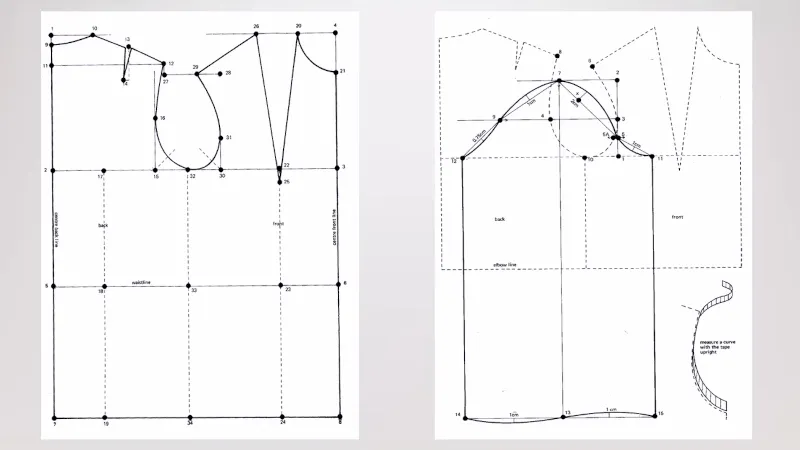
A talk from the recent Electromagnetic Field event in the UK caught our eye, in which [Amy Jeskins] looked at the overlooked engineering skill of pattern cutting. She takes us through the mechanics of creating a pattern for a piece of clothing, and asks why it is not a skill taught to engineers.
She’s a specialist in theatrical costume, and the talk takes us through some examples of her work before looking at the history of tailoring and pattern making. She explores flat cutting and draping a pattern on a form before coming into the present day with CAD packages designed for clothing work. It’s the social aspect of the talk that’s perhaps the most interesting, looking at how it has become a gendered skill and thus not something considered where it should belong, as engineering. We’re reminded of one of the most important additions for a healthy hackerspace, a textile room, as we’ve seen people there bridge this divide from both directions.
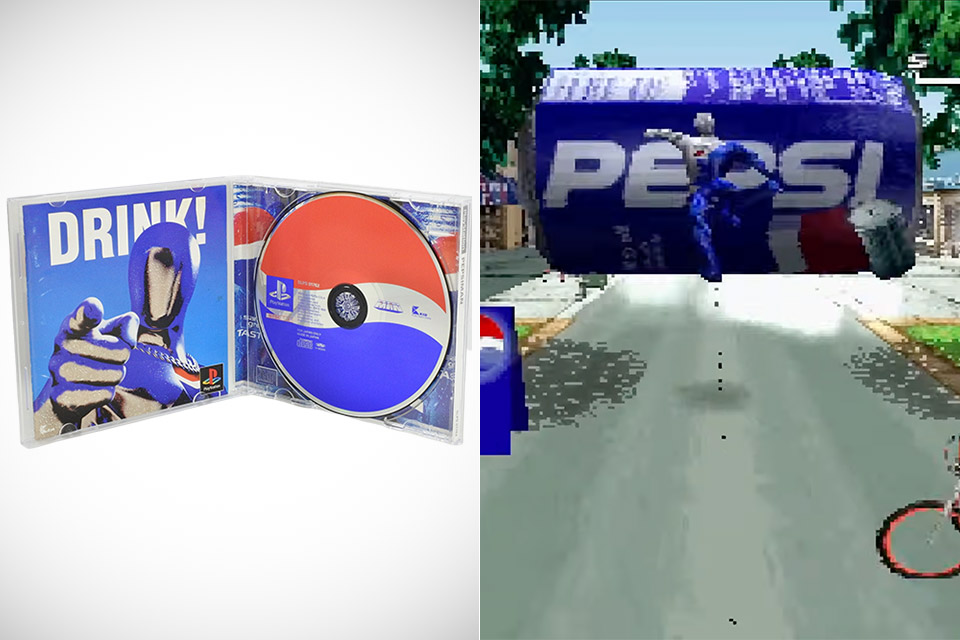
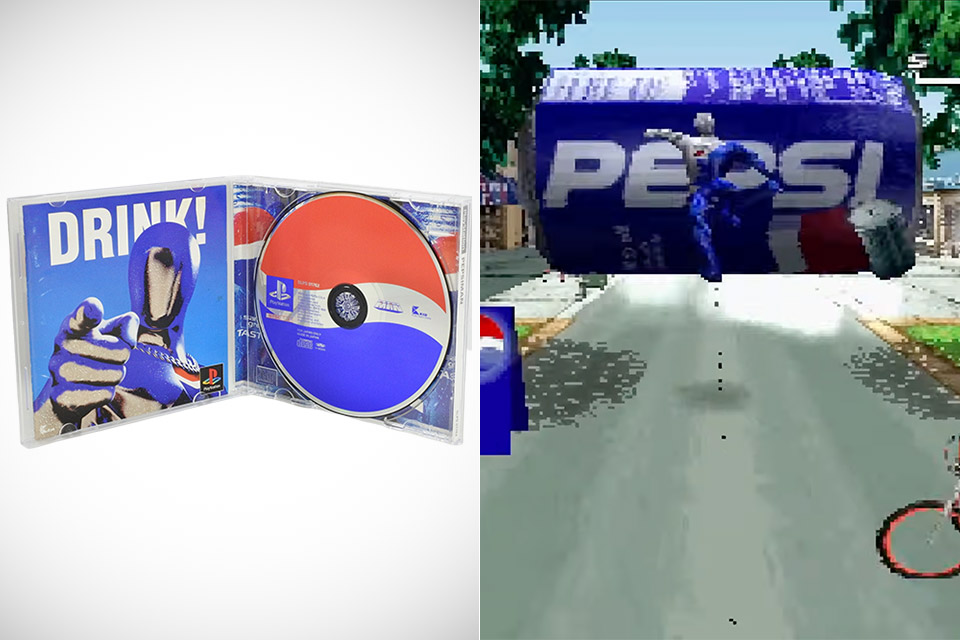
A silver-suited hero once limited to Japanese PlayStation discs now races across any modern screen you point him at. Pepsiman Recompiled takes the 1999 cult classic, turns its original code into something a browser can run directly, and lets anyone with a legal disc image jump back into the chase at a smooth 60 frames per second.
In March 1999, developer KID released Pepsiman exclusively in Japan. You play as the Pepsi mascot, physically running, sliding, and hopping your way through city streets and obstacle courses, grabbing cans and dodging trucks, roadwork, and public humiliation, all in order to reach the next vending machine. There are also live-action videos of Mike Butters drinking Pepsi to break up the action. Pepsiman never officially left Japan, but it amassed a sizable fan base thanks to imports, emulator enthusiasts, and speedrun crowds.
PlayStation 5 Console – 1TB, includes wireless controller, 1TBSSD, Disc Drive, 2 Horizontal Stand Feet, HDMI cable, AC power cord, USB cable, printed…
1TB of Storage, keep your favorite games ready and waiting for you to jump in and play
Ultra-High Speed SSD, maximize you play sessions with near instant load times for installed PS5 games
Kem0x (aka Kareem Olim) revived the old game with the PSXRecomp framework. Unlike straight-up emulators, his version recompiles the original PlayStation code into WebAssembly, allowing it to run directly in a compatible browser, eliminating the need to draw around an outdated platform. Users must bring their own CUE and BIN files, which are simply image files from a physical disc, but that’s it. It’s entirely done on your machine, with no server issues.
— 吉野@連邦(renpou.com) (@yoshinokentarou) July 24, 2026
Click on the page, then select your disk images to reveal the silver runner. The default presentation is widescreen, but if you prefer a more traditional format, there is also a 4:3 alternative. Another good detail is that the browser-based version plays at 60fps, smoothing out the animation while maintaining the original timing, physics, and music. It all only works with regular gamepads. You can also remap the keyboard controls. Another cool feature is that memory card saves occur in real time, and you can even import or export them in raw format. Just for fun, they included a pause menu with level selectors, restart, and return to title choices, which the original did not have. As you continue through the stages, you will gain access to practice sessions distinct from the saves. All of this is wrapped up as a progressive web app, so once the files are cached, you may play them offline.
Chromium desktop browsers for macOS are now the most dependable alternative, although other browsers and mobile devices still have certain flaws. They still need to test several later-stage visual options and full campaign audio looping, but despite these constraints, the game is totally playable from beginning to end. To view the source code and release notes, visit the RepsiMan GitHub website. To play, simply go to pepsiman.ol.mr, provide your own disc image, respect the rights holders, and you’ll be set. [Source]
Just as Larry Ellison and Paramount executives had worried, the state antitrust challenge to their $111 billion merger with Warner Brothers has resulted in significant delays that could prove terminal.
Two weeks ago California and eleven other states filed an antitrust lawsuit to block the merger, pointing out that the consolidation would undermine market competition, resulting in mass layoffs, higher consumer prices, and product quality hits as the merged company attempts to pay down a massive debt load. This isn’t hard to predict or prove given that every single merger that Warner Brothers has been involved with in the last quarter century has been a disastrous dud.
The judge overseeing the case granted a 14-day restraining order pausing the deal. But Paramount has now agreed to suspend the merger for far longer in the apparent belief that this could speed up the looming trial:
Paramount framed the agreement as a “significant win” that would help it close the deal. The company said the move would speed up the legal process by pushing the case to a trial sooner. It will also help avoid prolonged back-and-forth over some legal issues, like the merits of a court-ordered delay.
So as it stands, the Paramount merger will simply expire if they can’t win or dismantle the antitrust trial by June 4, 2027. That’s a problem for all sorts of reasons, the biggest being that the terms of the agreement involve Paramount being forced to pay a ticking fee of about $7 million per day (or $650 million per quarter) to investors starting in October until the deal closes (or doesn’t).
Advertisement
As mentioned previously, Larry Ellison and Oracle are also hugely over-leveraged on the AI bubble and data center investment; if that bubble pops during this window (which is broadly expected since nobody but Nvidia is making any money), that could heavily complicate his financial backing for the already very debt-heavy deal. At the same time, broadcast television isn’t magically getting more popular anytime soon.
And even if this deal does ultimately succeed, there’s been very little evidence that Paramount, much like the Trump administration that rubber-stamped the superunion, has any idea what they’re doing.
























































You must be logged in to post a comment Login